A 90-Minute Walk Around Renaissance Florence [Morning]

It seemed like a good idea on our first morning to follow the self-guided walk described in the Dorling Kindersley Eyewitness Florence and Tuscany Guide Book.

This walk takes in the Renaissance heart of the city and passes some of its greatest landmarks. Ideally it should be done early on in your visit to get a real feel for the place and if you incorporate a climb up Giotto’s Campanile, you will get a bird’s-eye view of the narrow streets, the characteristic red-tiled rooftops and the many towers that are not so easy to see from ground level.” Continue reading

Fountains Abbey to Markenfield Hall

autumn colours

Autumn colours at the start of the walk

The area around Fountains Abbey in North Yorkshire provides several opportunities for walking without the need, lovely as it is, to actually enter the grounds. This is especially important when leading a walk for Weekday Wanderers as not all group members are National Trust members. The Trust encourages walks in the area by publishing descriptive leaflets. For me the beauty is also free, reasonably safe parking and the use of facilities at the Visitor Centre. There is also interest in the buildings and landscape and walking is generally pretty level. Continue reading

Ancient Ireland [1]

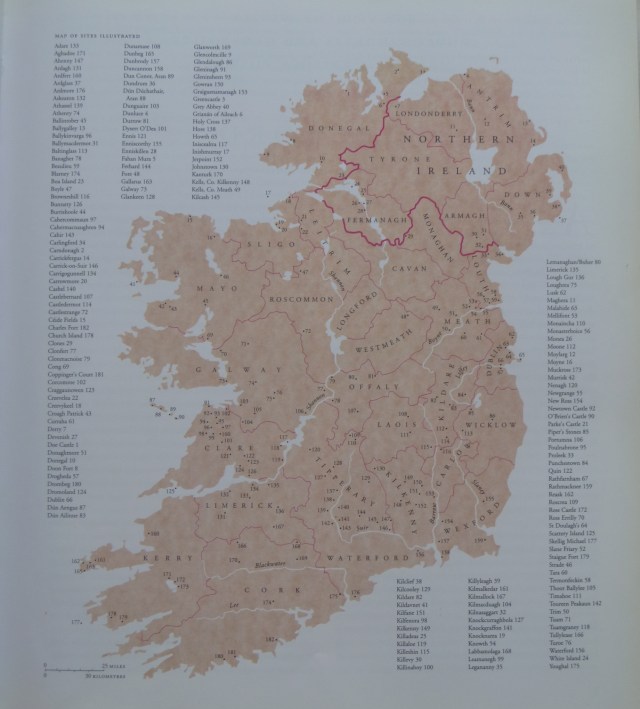
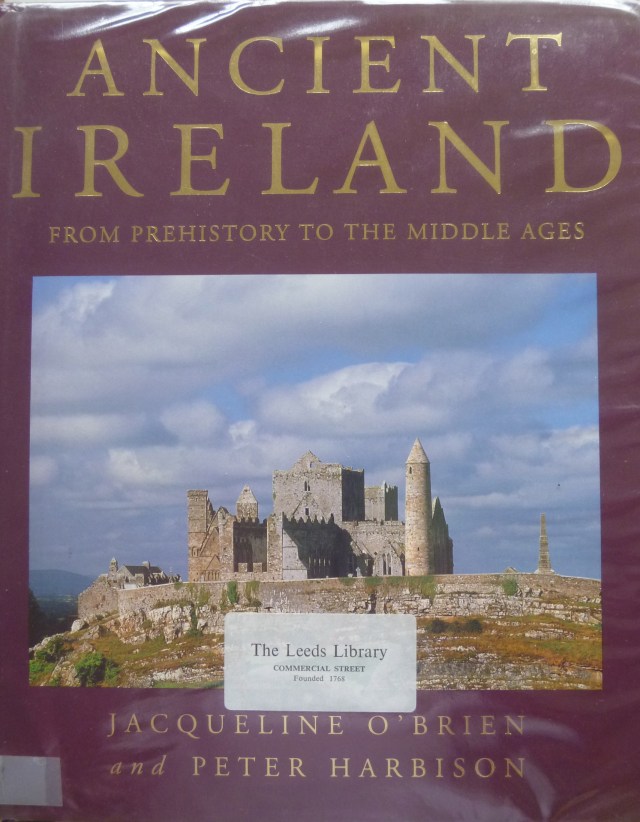
When planning my trip to Ireland in May I checked the Library Catalogue to see what was available and found this :

ancient ireland

I was quite amazed at the amount, variety and quality of ancient monuments to be found, and visited, all over Ireland.

ancient ireland map


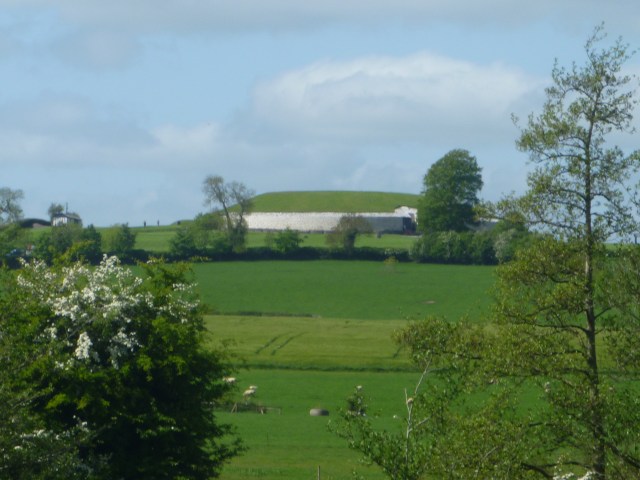
Newgrange from road

Newgrange from the approach lane

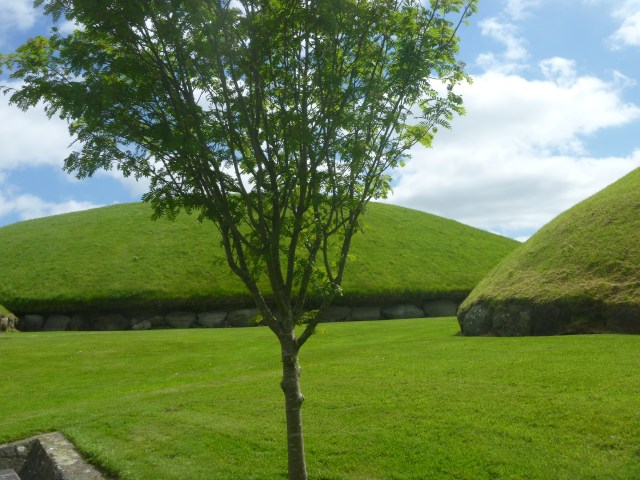
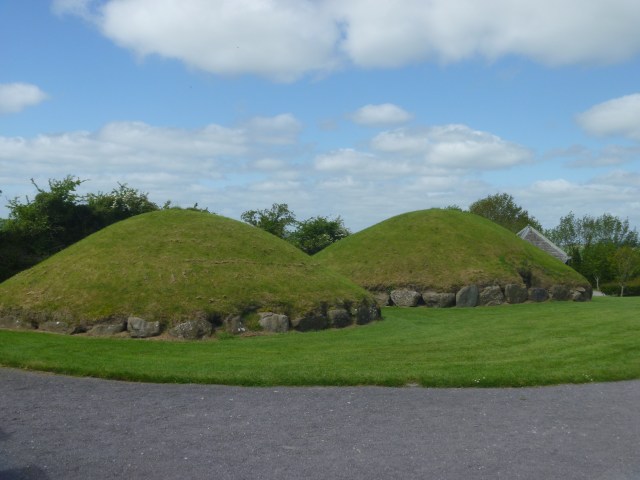
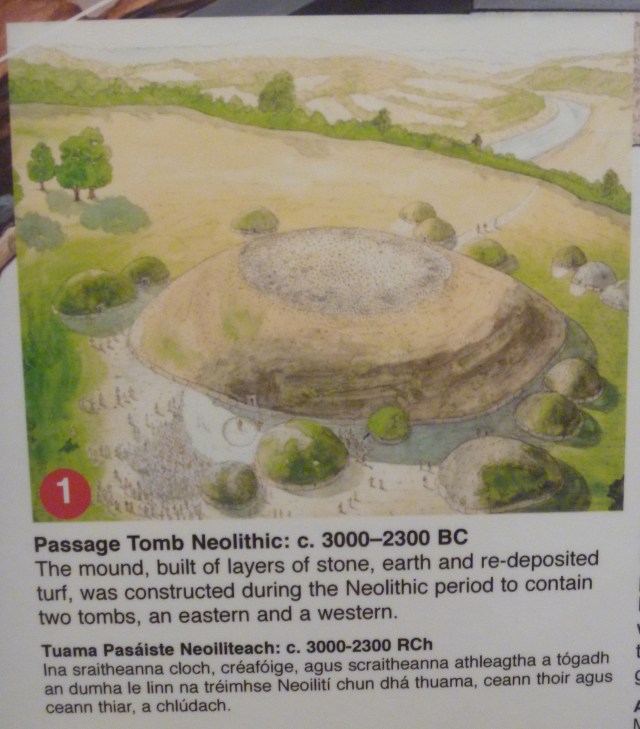
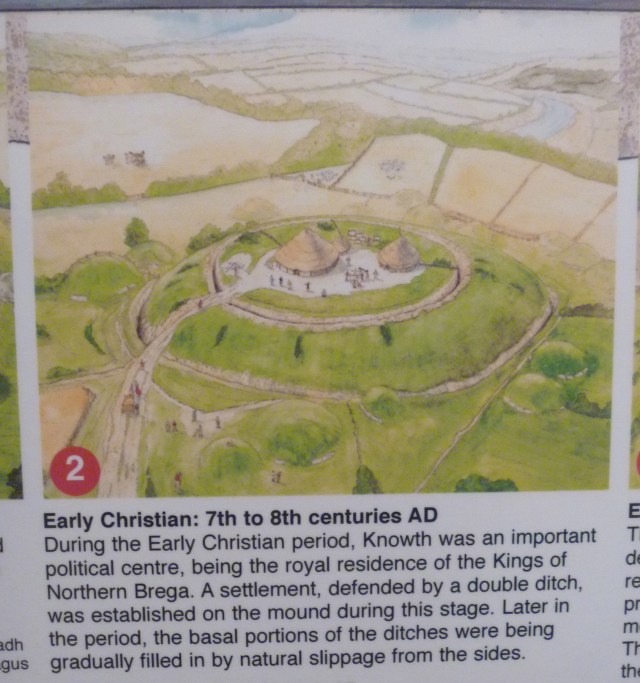
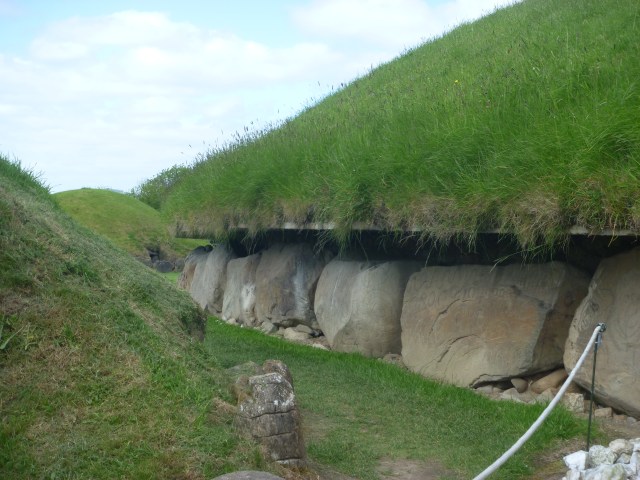
In order of age the earliest site that I visited, and featuring also at the beginning of the first chapter ‘Ireland Before History: The Stone Age’ is Knowth which, along with its, probably better known, neighbour, Newgrange, is “one of three great burial mounds erected in the ‘sacred landscape’ of the Lower Boyne Valley in Co. Meath.” The two passage-tombs under the great tumulus were probably erected before 2500BC. Around the main mound are several recently reconstructed ‘satellite’ tombs.

Knowth

Knowth Main Mound

Satellites

and Satellites

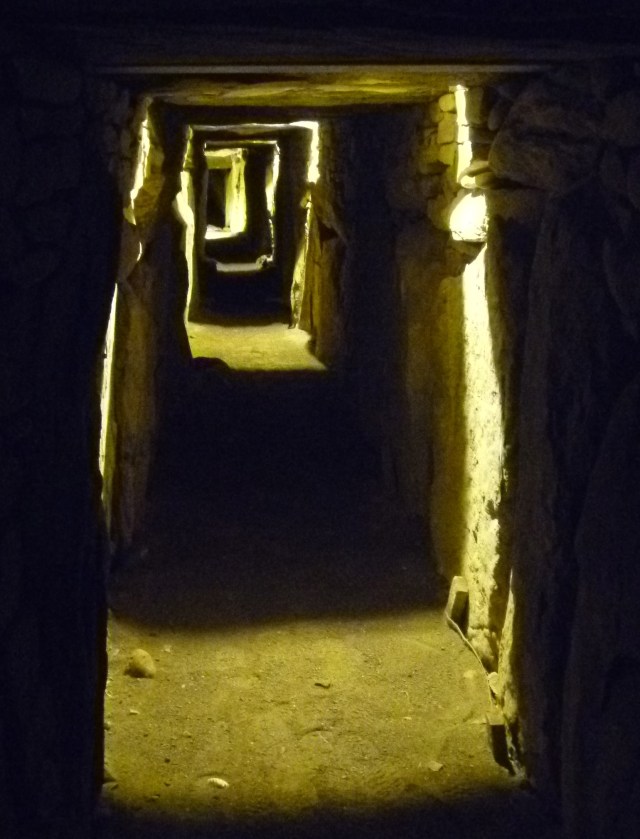
Passage tomb

One of the Passage Tombs

I didn’t have time to visit both mounds as I was travelling between Co. Kildare and Co. Fermanagh but I did manage Knowth and will definitely return to see Newgrange, especially now that I know how the system for visiting works! My Heritage Ireland Card gave me free admittance to the site.

“Please note this is a very busy site and it is important to be at the Centre early in the day to ensure a visit to the monuments, as places on the tours are limited each day. There is no direct access to either Newgrange or Knowth. All access is through the Visitor Centre and by guided tour only.”

I had arrived across country and found the approach lanes surprisingly quiet but on arrival in the crowded car park and on joining the queues at the Visitor Centre I discovered that most people and all coaches arrive via the nearby Motorway. There’s plenty to see in the Centre and then time to catch the timed minibus to Knowth where you get a very full guided tour inside and outside the tumulus.

Tomb 1

tomb 2 tomb 3 tomb 4

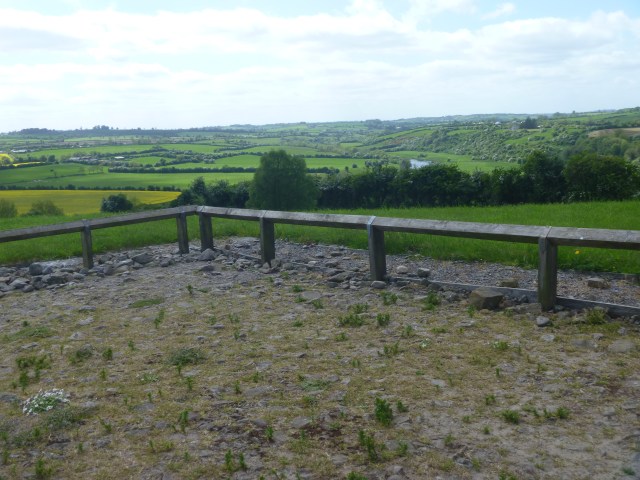
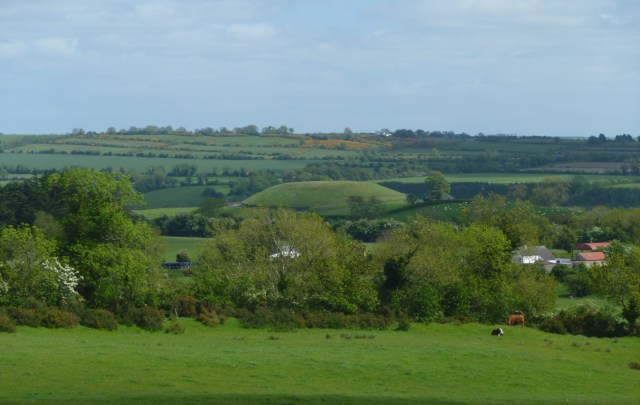
We were able to enter the tomb and to climb to the top for a wonderful view towards Newgrange and also The Hill of Tara the ‘most historic place in all Ireland, having played an important mythical and symbolic role in the country from the Stone Age to the 19th century, including the nominal centre of the ‘High Kingship’ of Ireland.’

Surface of Knowth

The Surface on the Top of Knowth

Newgrange from Knowth

Newgrange from Knowth

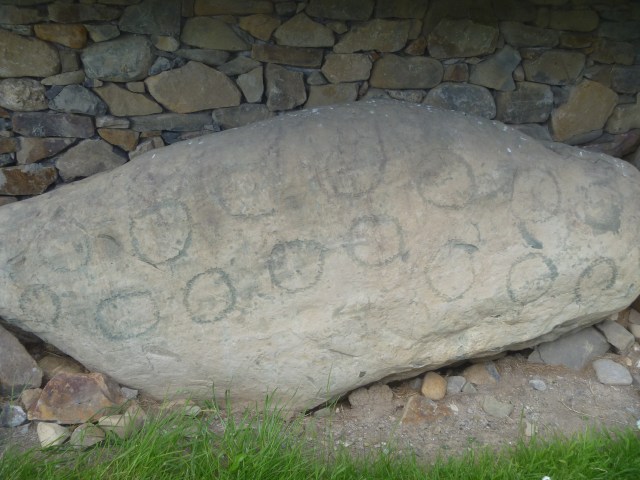
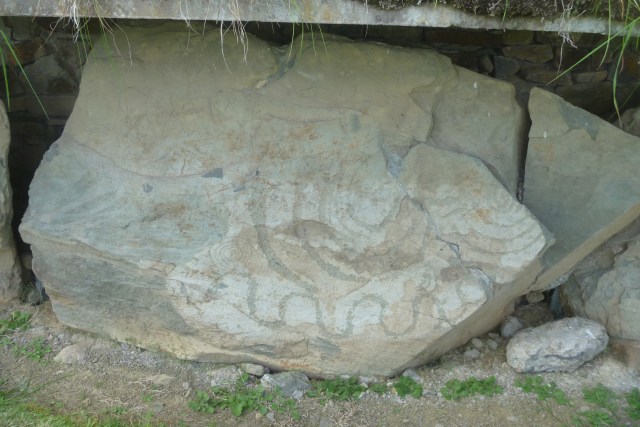
It’s quite amazing that the carved stones around the base of the mound have been preserved across the centuries.

Sone carvings

Just one example of the stone carvings!

and another

And another

Side of Knowth

Quartz and granite

Quartz from the Wicklow Mountains and Granite from the Mountains of Mourne

I will definitely visit again and get to Newgrange and maybe also the site of the Hill Tara which seems to be very little visited.


Folly! at Fountains

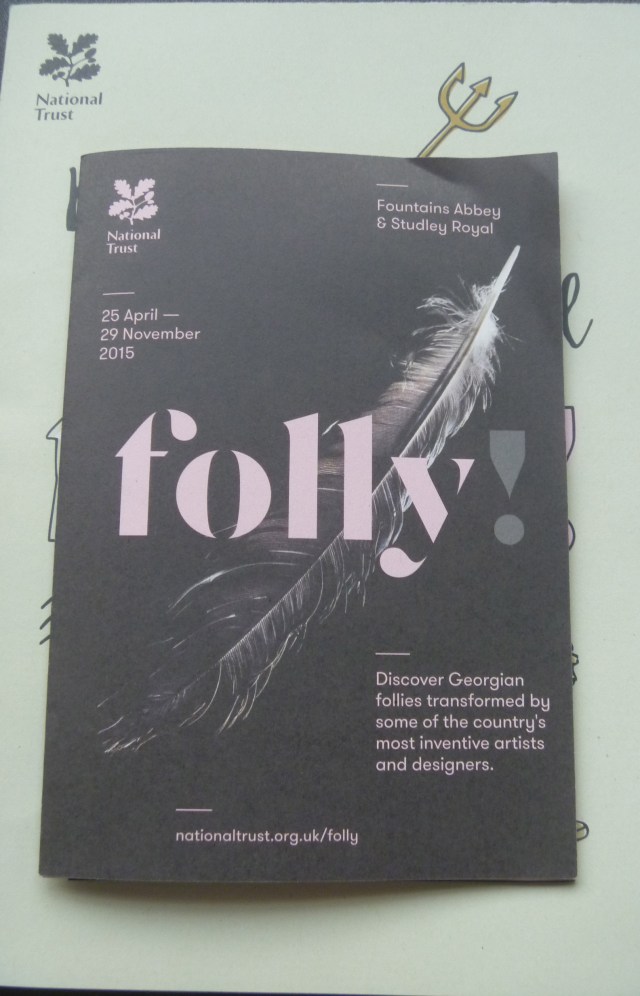
folly leaflet

Folly! is the first of a three year programme that creatively brings the stories of Studley Royal to life, through the vision of some of the country’s most innovative artists and designers.

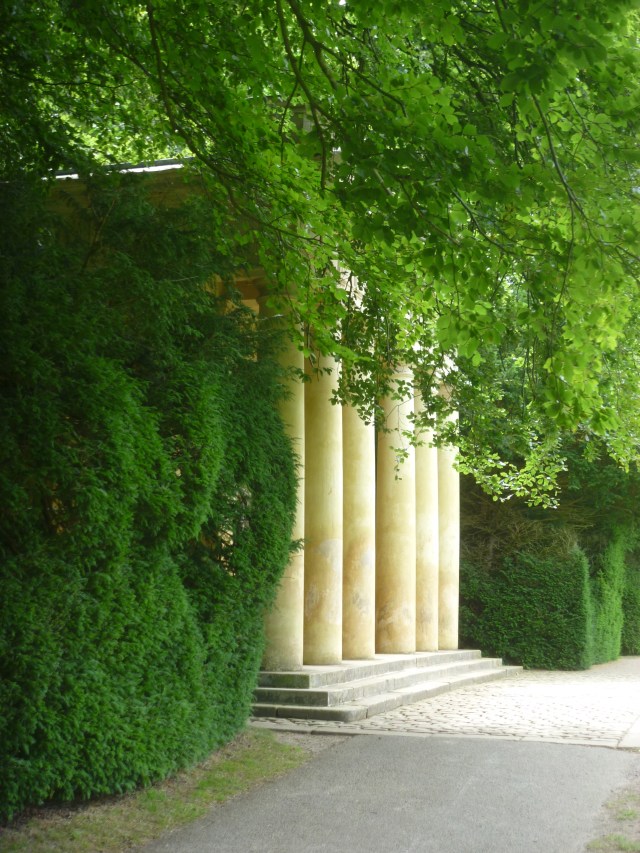
The original designers of the Studley Royal Water Garden, the Aislabie family, created many follies on this vast and beautiful estate to surprise and delight their eighteenth-century guests. These fashionable, whimsical buildings or structures were often used by garden designers to catch the eye or draw attention to a carefully created vista.

‘Folly!’ will see the temples and follies of this World Heritage Site garden dramatically re-imagined as places of visual trickery and untold histories.

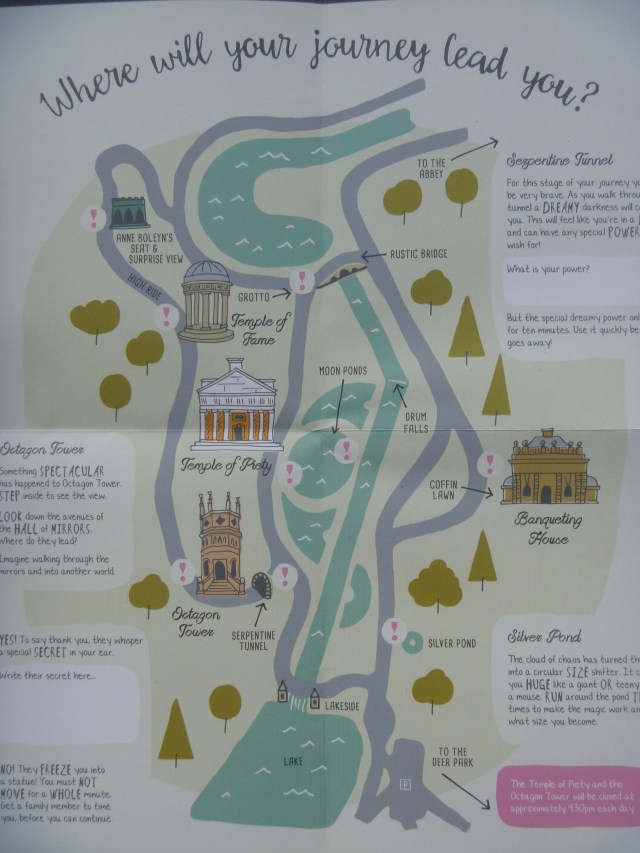
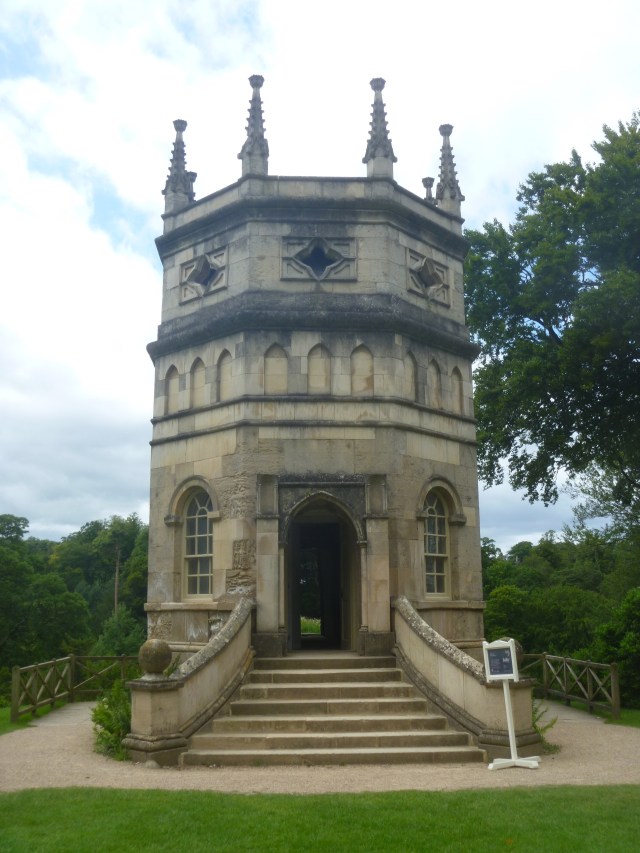
Seek out the Octagon Tower, Temple of Fame, Banqueting House and Temple of Piety this summer and be amazed by installations created by twenty-first century artists in response to the opulent past of this unique place.”

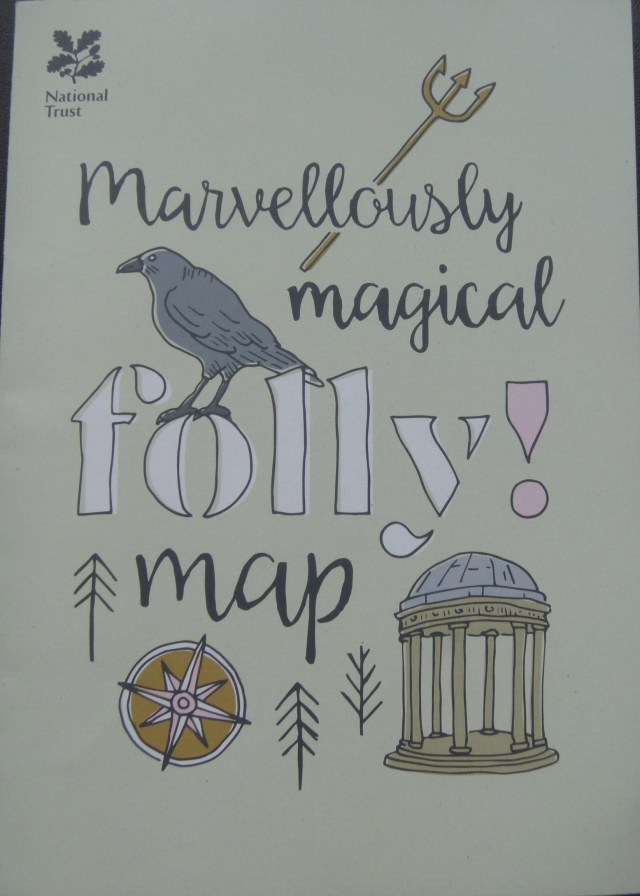
folly map

I’ve written several times here about visits to Fountains Abbey and Studley Royal – it’s one of my favourite places and easy to get to from home.

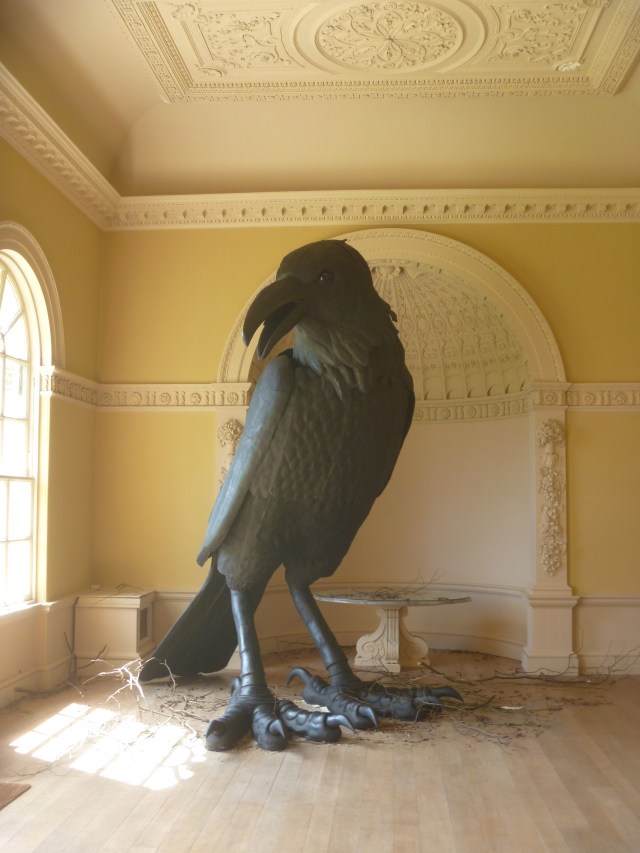
My first stop was at The Banqueting Hall. At weekends and during the school holidays the follies are open during the afternoon so I was able to go inside and see Gary McCann’s ‘Scavenger’ close to.

Scavenger

‘Scavenger’ by Gary McCann

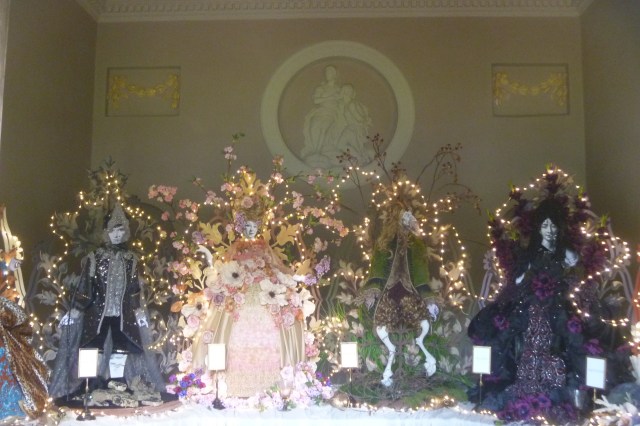
Inside The Temple of Piety, which overlooks the Moon Ponds, is The Curious Tale of the Professor and The Temple created by Simon Costin, theatre and set designer. Supported by the jewellers Swarovski, the lavish display is purportedly based on the papers of a Professor Dennistoun of Ripon who died in 1959. He thought Fountains Abbey was the ‘Ancient place of worship now in ruins’ – a line from a prophecy of Old Mother Shipton from nearby Knaresbrough.

TofP

An ancient place of worship, now in ruin, One family shall come to dwell in. But lest the old un’s are kept entertained, No male heirs shall take the reins.

in tofp

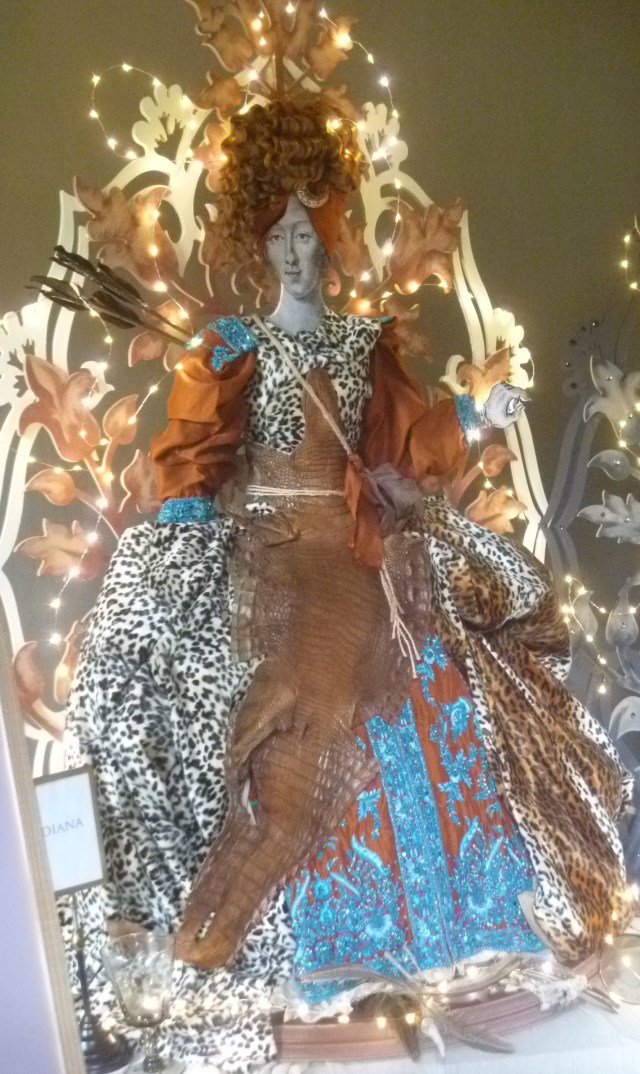
diana

Diana, the goddess of hunting

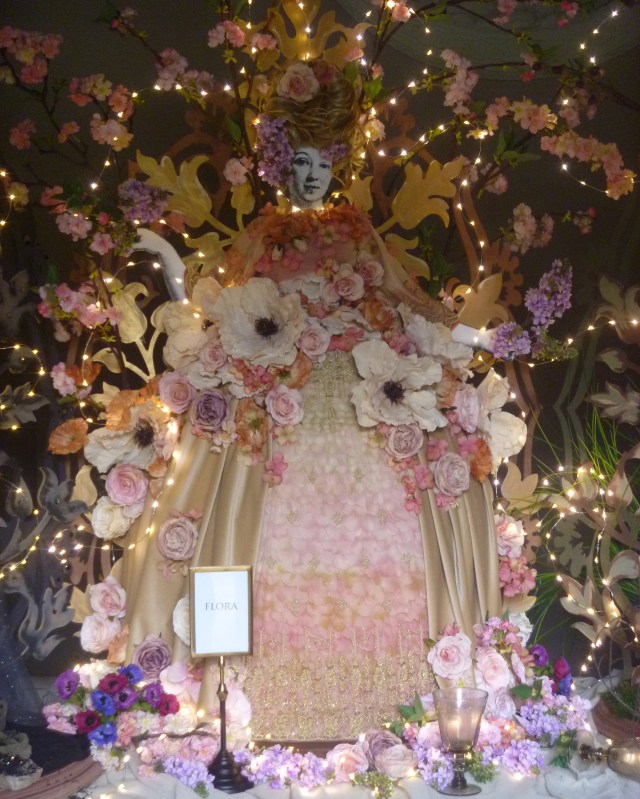
flora

I don’t know why the goddess Flora is a teapot!

Next up was The Octagon Tower and a Hall of Mirrors by Irene Brown. It was impossible to take a picture inside so here’s a little video made by the Trust :

octagon tower

The Octagon Tower

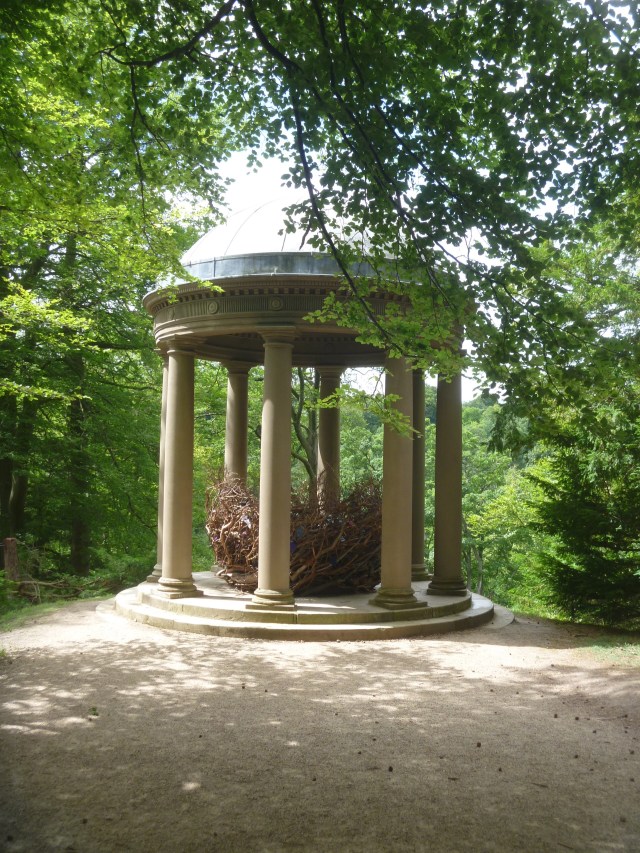
Finally, ‘Lost Property’ also by Gary McCann is the Scavenger’s ‘nest’.

lost property

Within the smooth classical pillars of the Temple of Fame the invasion of the landscape continues. Intertwined within the artist’s creation is lost property. Collected from visitors, it provides sustenance to fantastical creatures which have taken up residence in spaces previously controlled by man

folly map cover

A marvellously magical and mysterious day out. I’m still mystified by what I saw!

Libraries Big and Libraries Small [3]

Dublin is a City of Words, a UNESCO City of Literature and a city with some great libraries. On my visits in May I managed to get to two of these. I’m looking forward to future trips when I may visit other literary locations across the city.

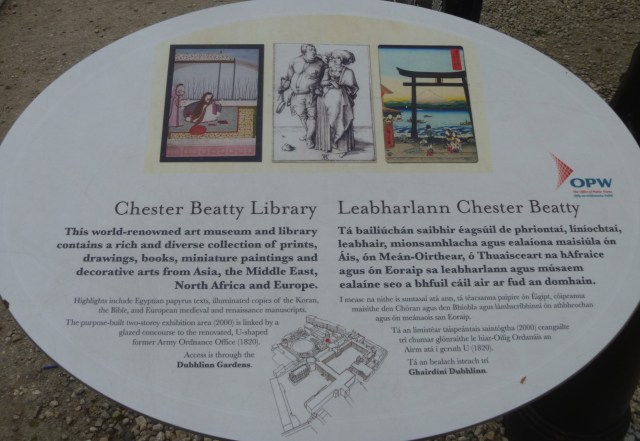
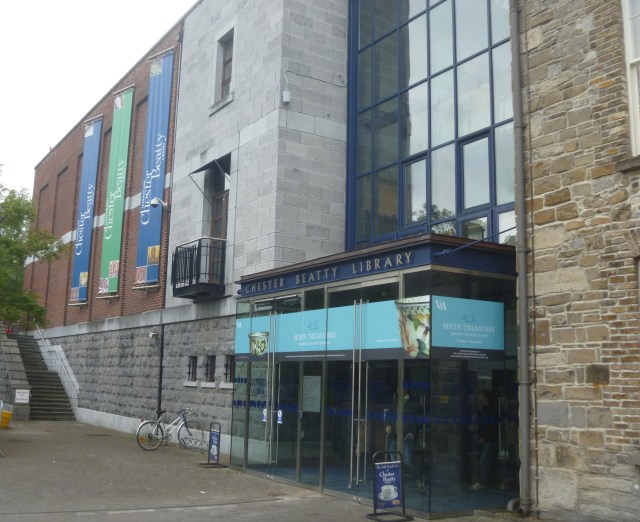
Most highly recommended to me was The Chester Beatty Library right in the centre of the city and within the walls of the grounds of Dublin Castle itself.

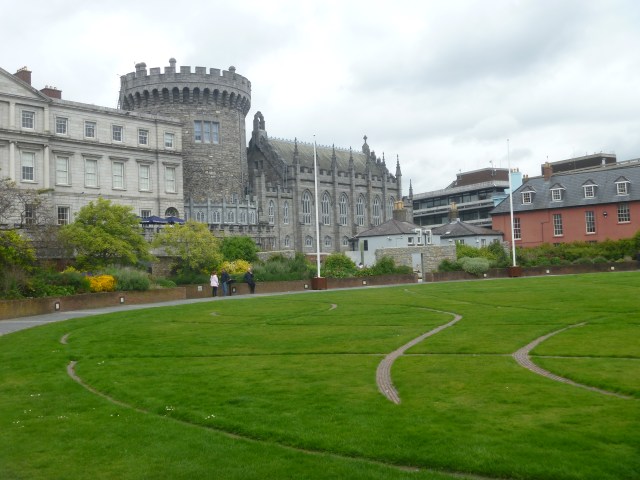
Dublin Castle 1

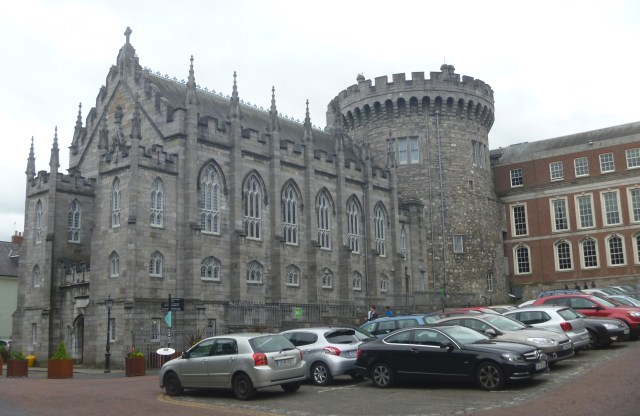
Dublin Castle

“For over 800 years Dublin Castle has been at the heart of Irish history. From the founding of the first Celtic settlement in the 1st century A.D. to every Presidential inauguration since the foundation of the state, the site has stood witness to some of the most pivotal events in the country’s history.” So it’s interesting enough just walking through the Castle precincts.

about the cbl

Chester Beatty (1875-1968) was an American mining engineer. He had been an avid collector since childhood – stamps, Chinese snuff bottles, rocks and minerals. During the first decades of the 20th century Beatty moved to Europe and began to collect European and Persian manuscripts and decorated copies of the Qur’an. He took an interest in Japan, the Orient and Egypt. He actually bought a house near the Pyramids.

CB library

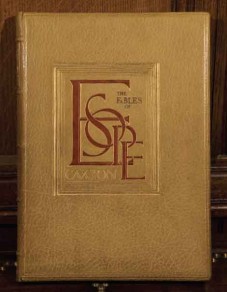
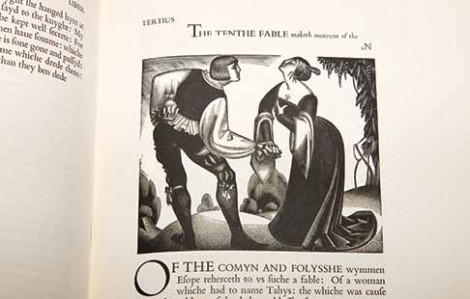
He later bought modern editions but had very conservative taste. He preferred books where the text and image formed pleasing compositions. Such as here a Gregynog Press issue of The Fables of Esope, 1931.

content-art-the-fables-of-esope-227x292

content-art-the-tenthe-fable-470x299

No photography allowed but I found the above pictures here

He loved books for their own sake as opposed to having a love for literature. He was attracted to decorated books/illustrations/iluminations and fine bindings. He didn’t like modern art and avant garde book designers, illustrators and binders are not represented in his collection. His mantra was “quality, quality, quality”. He was probably the last of the great book collectors after J. Pierpoint Morgan and Henry E. Huntington. Beatty also appreciated the 18th and 19th century print cabinets essential to the gentleman’s library.

In 1950 Chester Beatty decided to move to Ireland and he built a library for his art collection on Shrewsbury Road which opened in 1954. Upon his death, the collection was bequeathed to a trust for the benefit of the public and his priceless collection lives on as a celebration of the spirit and generosity of Chester Beatty.

I enjoyed studying the short videos demonstrating print techniques : woodcuts, engraving, etching, lithography and chromolithography. And a trust fund allows the Library to continue buying works today which complement the original collection. It was during my visit to The Chester Beatty Library that I realised that I’m really much more interested in printed books and printing methods than in the beautiful and exquisite manuscripts.

Charles Beatty summed up his life “It has all been a great adventure”.

Dublin Castle 2

The Castle Grounds and Grass Maze

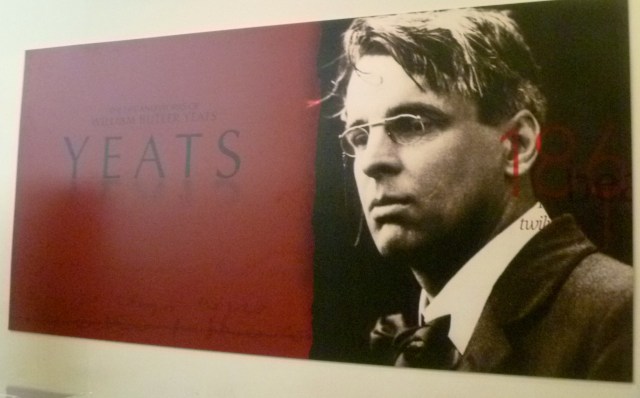
Moving on from the Chester Beatty Library I headed back through the Castle precincts and after a quick lunch in the lovely Avoca store found my way to The National Library of Ireland. A friend, and fellow member of the Leeds Library, recommended to me after a recent visit “YEATS: the life and works of William Butler Yeats” [1865-1939]. It’s an almost permanent exhibition (ongoing since 2006) but it is particularly relevant this year as 2015 is the 150th anniversary of Yeats’s birth.

Yeats

The National Library of Ireland’s collection of Yeats manuscripts is the largest collection of Yeats material in a single institution anywhere in the world. This collection is at the heart of the exhibition which you can visit for yourselves here.

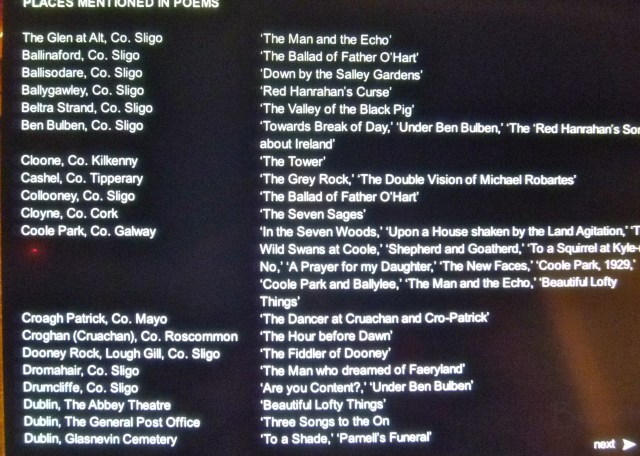
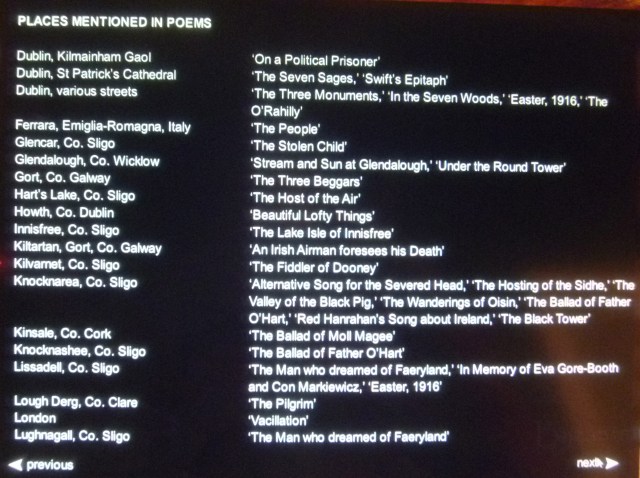
I was particularly interested to discover more about the life of Ireland’s national poet. He came from a family of artists and creatives. He played a huge role in the establishment of the Abbey Theatre in Dublin which he founded along with Lady Augusta Gregory in 1904 with the main aim of promoting Irish writers and artists which is still incorporated in its charter today. He had a great interest in the occult and Celtic mysticism. Many of his poems are about places in Ireland, and elsewhere.

places 1 places 2 places 3

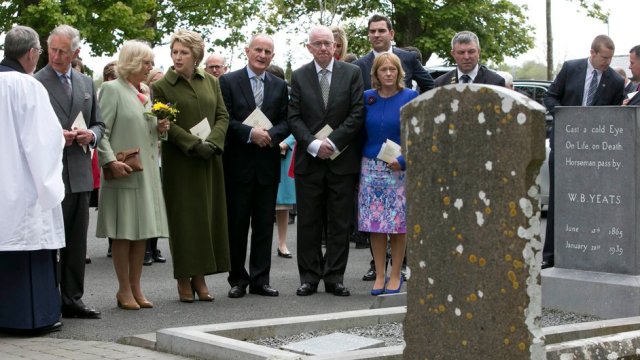
By coincidence during my trip in May HRH The Prince of Wales and his wife The Duchess of Cornwall also visited Ireland and planted a tree at the grave of William Butler Yeats at Drumcliffe, Co. Sligo.

RTE picture of Charles and Camilla

[source]


More Watery Landscapes in Tivoli : The Villa D’Este and The Villa Gregoriana

Perhaps the most famous location in the town of Tivoli itself is the Garden of the Villa D’Este. The sun was shining on my last day at Sant’ Antonio and I decided that I would visit the garden and that of the nearby Villa Gregoriana.
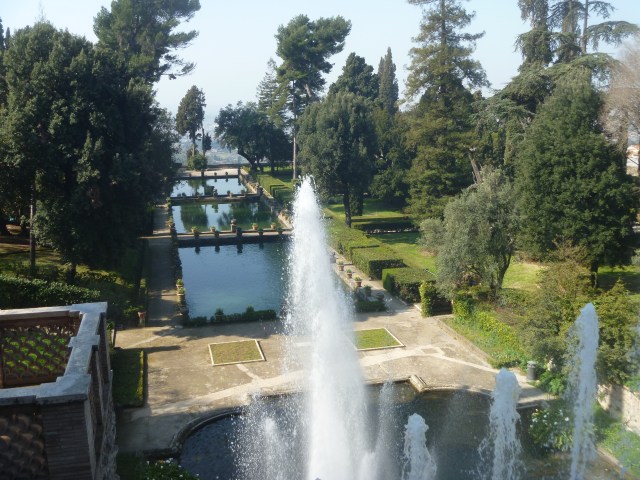
Vd'este 1

Thursday 19 March just happened to be St Joseph’s Day (Father’s Day) and a big celebration filled the town centre of Tivoli. Was this the reason why the Gardens of the Villas D’Este and Gregoriana were practically deserted that morning? Anyway, it was very pleasant to have the gardens virtually to myself.
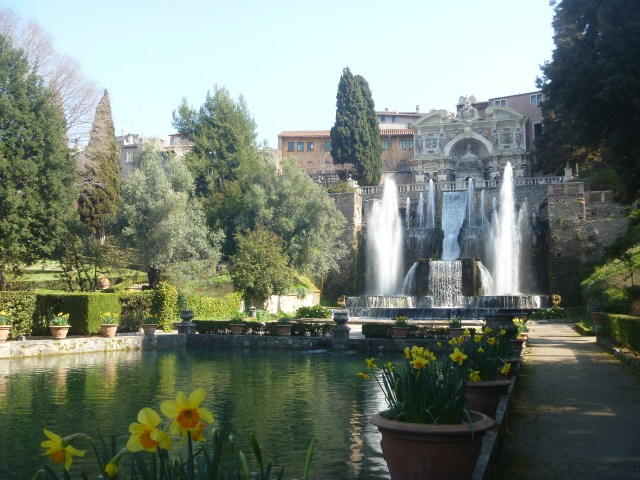
v d'este2

Cardinal Hippolyte D’Este (1509-1572) became governor of Tivoli and set about establishing a garden. Today it’s approached from the house but originally the entrance was at the bottom of the garden and visitors slowly climbed the hill to take in the wonders of the garden. Upon reaching the top, where the Cardinal would be waiting, you’d be in a ‘sense of breathless awe’. (According to Monty Don in the 2011 series of BBC programmes visiting Italian Gardens).
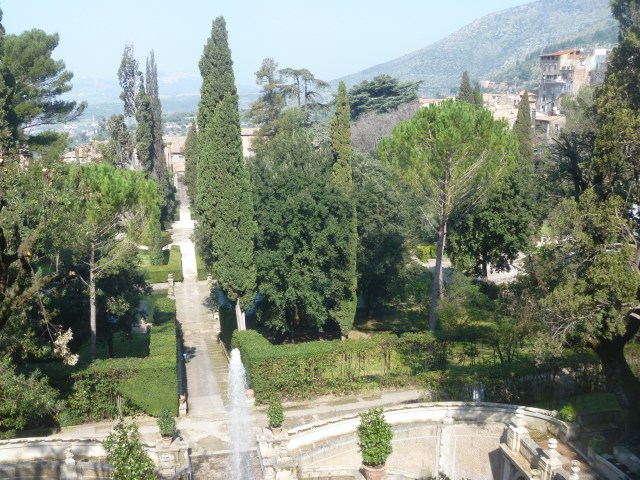
d'este gardens view

The View from the Villa

D’Este had great wealth but the one thing he wanted above all was to be Pope. He failed in 1549. So he demolished streets and had water brought to the site by a sophisticated method from a nearby aqueduct. All the water still comes from this same source and using the same methods. No pumps are used and the whole is still powered by pressure. The speed and movement of the water are still controlled by different sized pipes and spouts.
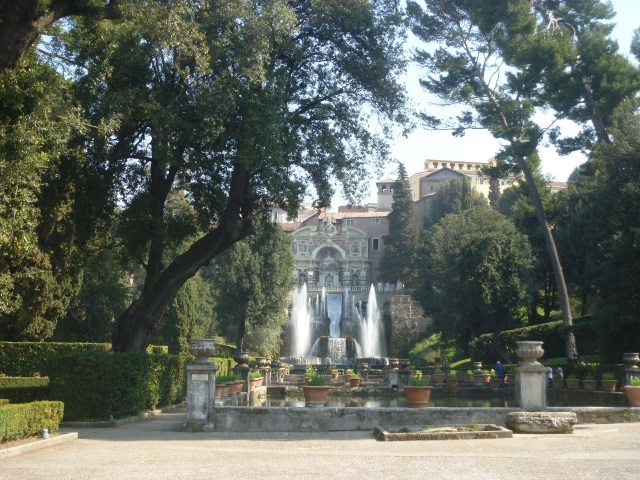
V d'este 3

The whole estate took 20 years to construct during which time the Cardinal made 5 attempts to become Pope. Here “Rometta” is his model of Rome – he never did achieve his goal. Here is an expression of power built to impress. But he ran up huge debts: the whole project is said to have cost the equivalent of £100 million in today’s money.
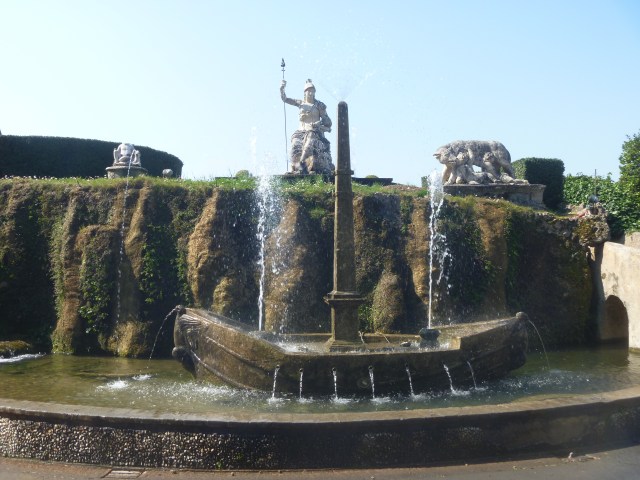
fontana di rometta

Fontana di Rometta

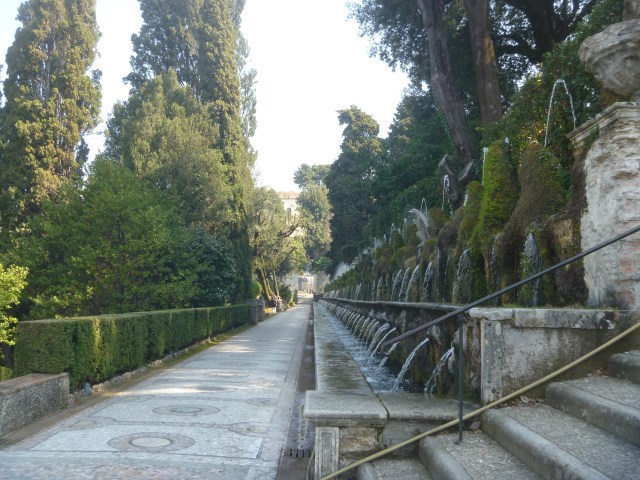
100 fountains

The 100 Fountains – they have the same rhythm and sound as you walk along beside them
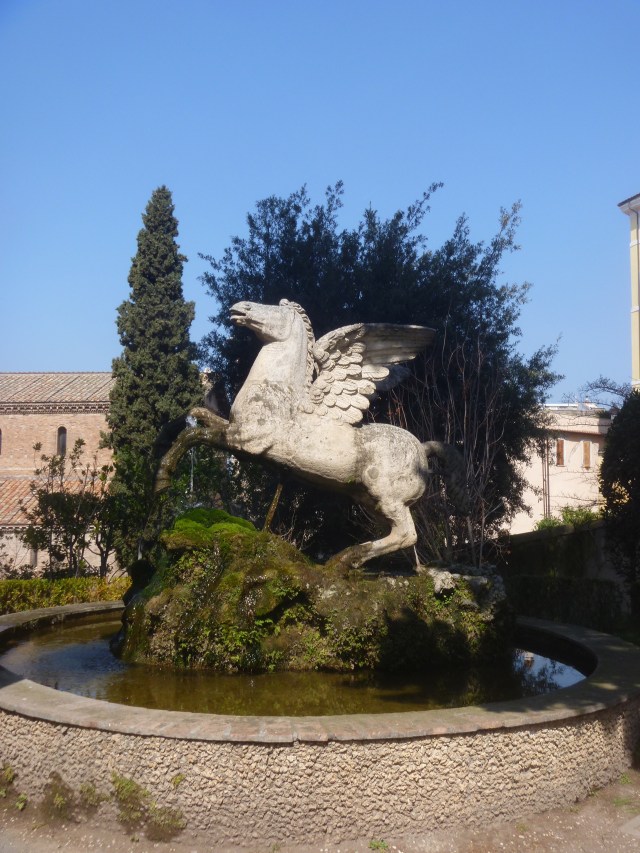
pegasus fountain

Pegasus Fountain

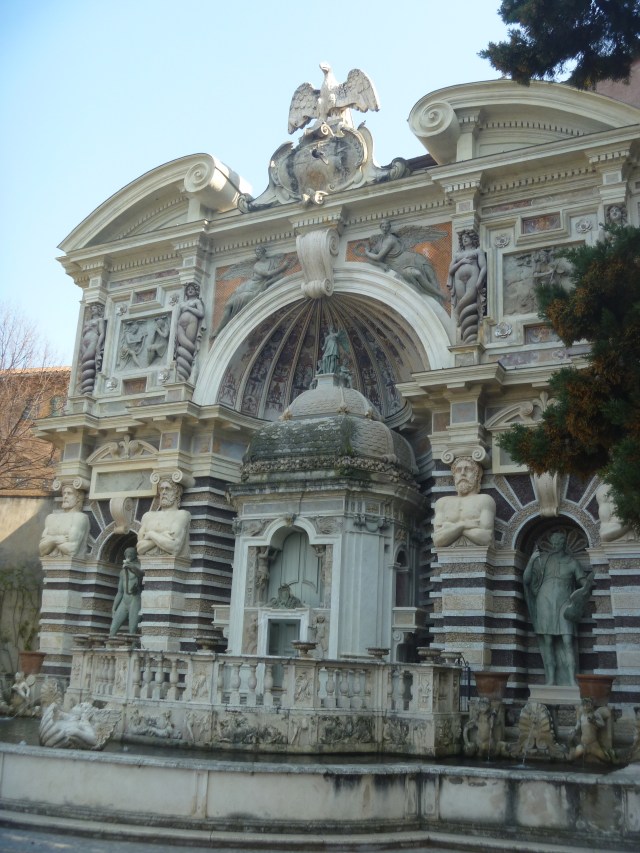
Organ fountain

The Organ Fountain Plays Every Two Hours on the Half Hour

It’s a wonderful theatrical performance full of drama and excitement; entertainment and playfulness with surprises and jokes. In addition to the gardens you can visit the mansion atop the hill the mansion is open too – room after room of breath-taking painted ceilings but little else. Like Hadrian’s Villa the Villa D’Este is a UNESCO World Heritage Site.

I spent over two hours wandering around the gardens and house but felt the call of the Villa Greogoriana and, ultimately, Sant’ Antonio.
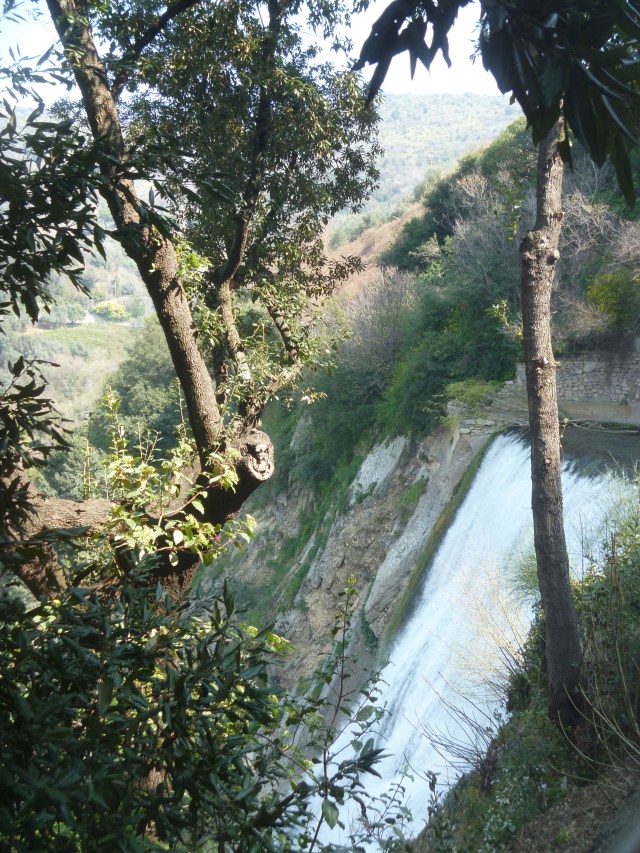
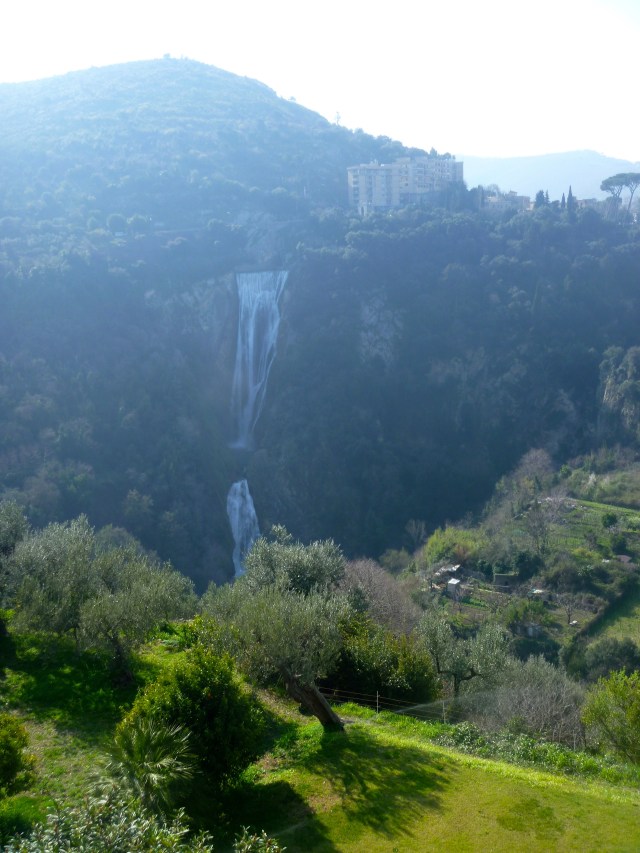
VG Grand Cascade

The Grand Cascade

Cascade from window

The Grand Cascade from my window at Sant’ Antonio

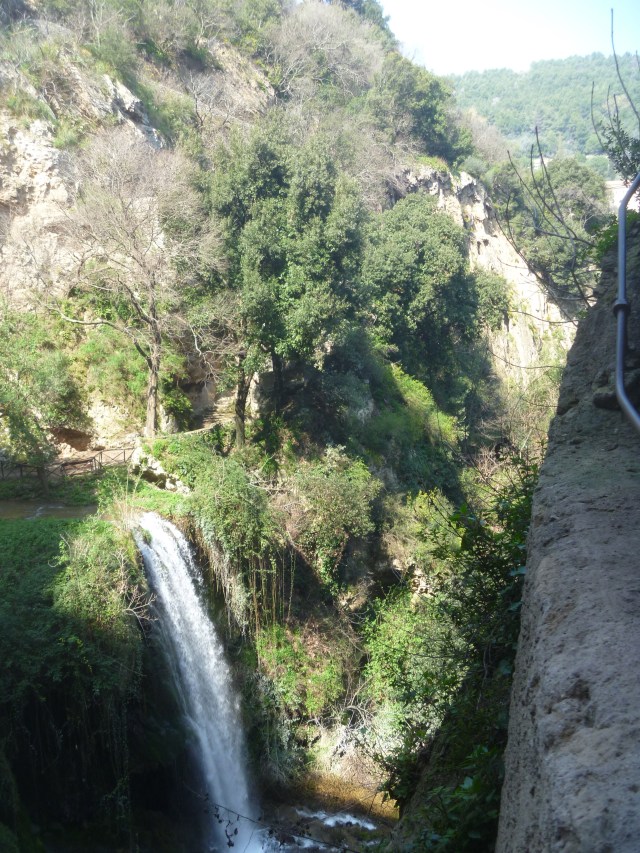
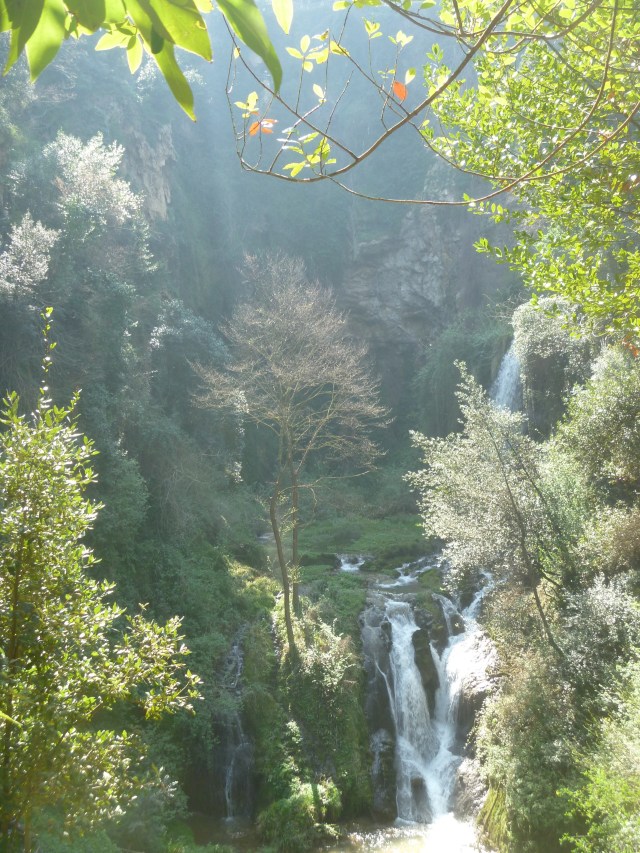
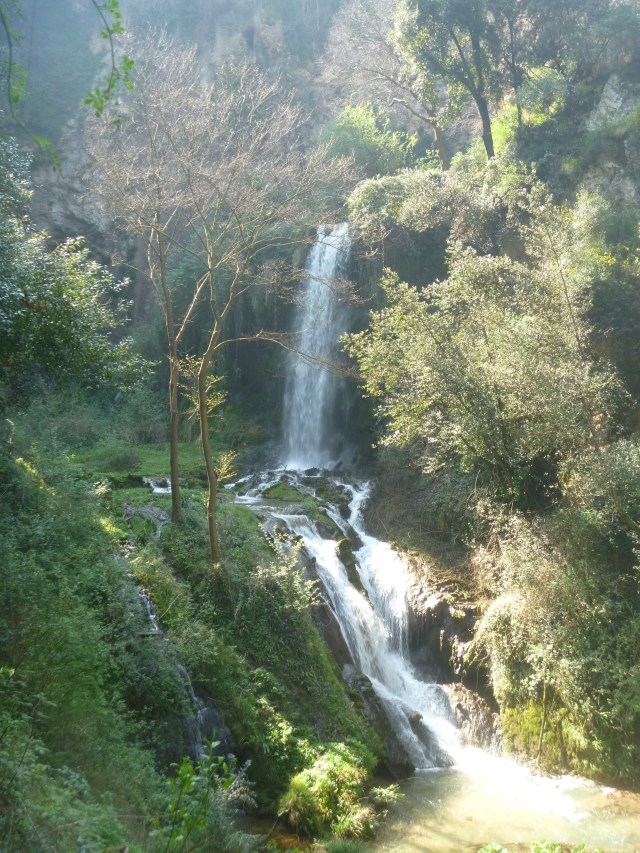
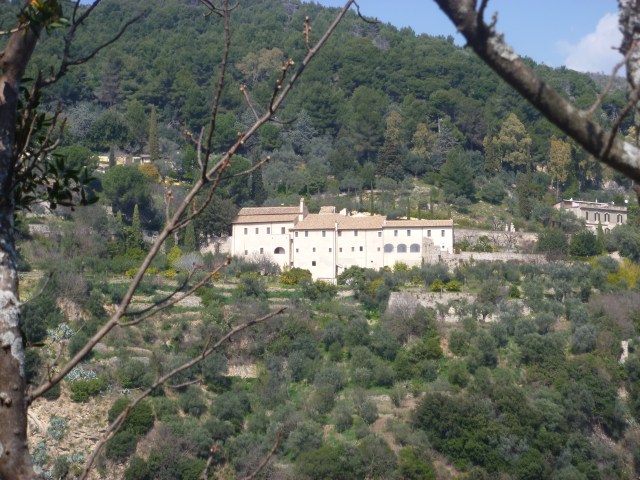
The Park of the Villa Gregoriana, for the Villa itself is no more, fills both sides of a wooded gorge where the waters of the River Aniene spill over precipices and lie still in pools in the valley bottom, is perhaps my favourite of the three gardens of Tivoli. Much of it, including the huge waterfall, can be seen from Sant’ Antonio and it appears more natural and less planned than the other two. Sant’ Antonio can be seen from the park.
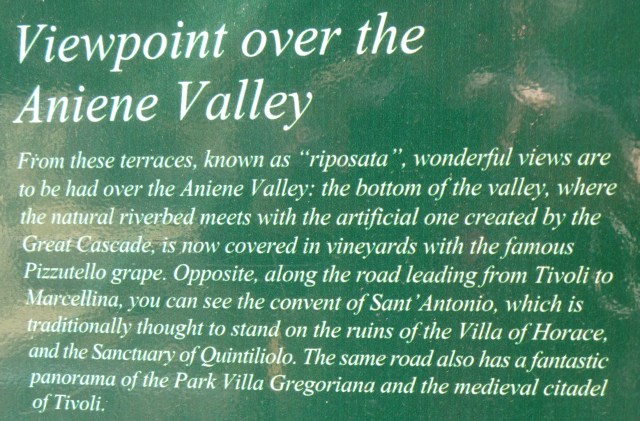
SA view info

SA view

Sant’ Antonio from the Villa Gregoriana

If you ever plan to visit be sure to wear strong, rubber-soled walking shoes as the paths and steps are uneven and slippery when wet and take your National Trust card with you, if you’re a member. Entry is free to NT members. The FAI in Italy aims to preserve Italy’s art, nature and landscape and has reciprocal arrangements with our National Trust.
Remains of VG

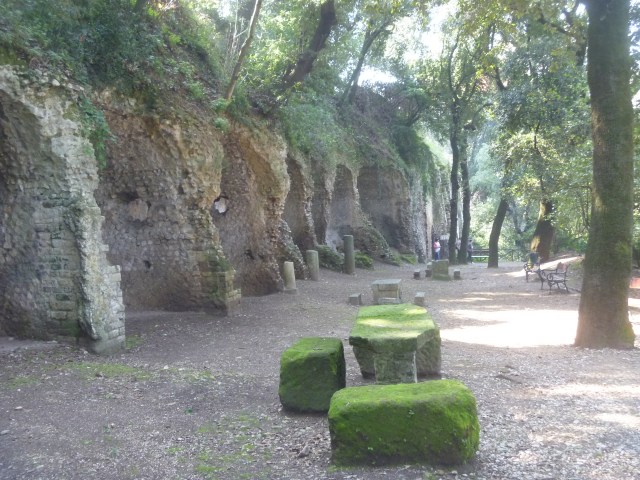
Remains of the Villa of Manlius Vopiscus
Inside the ruins

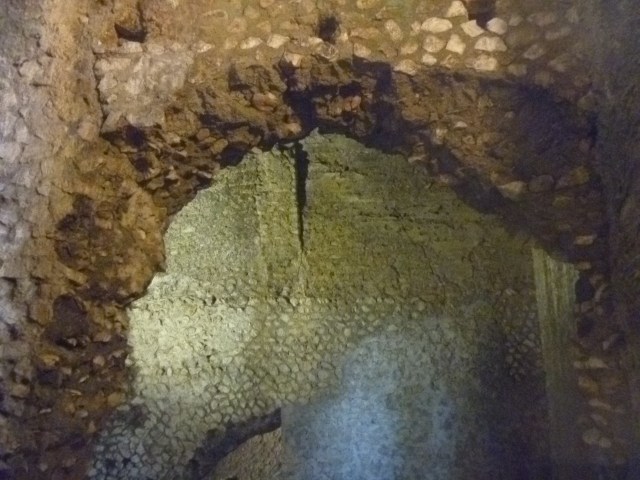
Roman Wall inside the Villa remains

The park was commissioned by Pope Gregory XVI to rebuild the bed of the Aniene River, which had been damaged by the terrible flood of 1826. It had fallen into rack and ruin by the end of the 20th century, but has been reopened to the public in 2005 thanks to a major landscape recovery project orchestrated by FAI, the Italian National Trust.

It was in 1835, after the Aniene River had burst its banks yet again, that Pope Gregory XVI decided to transform this enchanting but extremely dangerous location into a model of integration between art and nature. The project saw a tunnel being dug through Mount Catillo in order to deviate the river and thus preserve the town of Tivoli. This was then followed by the construction of an extraordinary natural garden dominated by the acropolis with Vesta and Tiburno’s Temples.

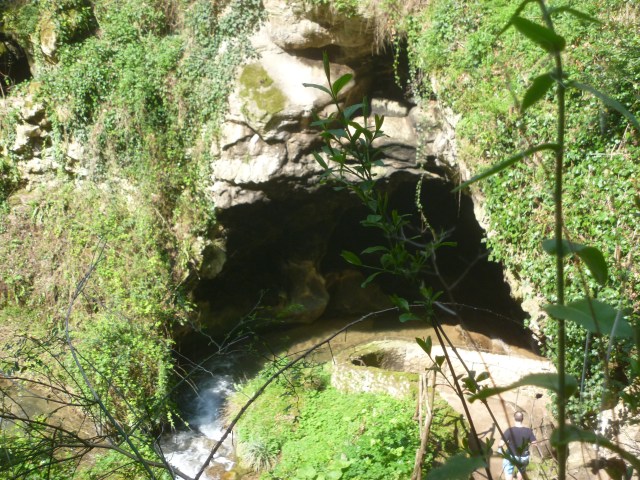
As you walk through the thick woodland of Parco Villa Gregoriana you will discover the delightful combination of the majestic landscape and the tranquillity of the paths that meander through it. En route, you will get to the caves of Neptune and of the Sirens, which form part of an incredible series of gorges and cascades, and to the Great Waterfall, with its whirling mass of water that seems to fall directly onto those who stand and gaze at it.”
cave of sirens

The Cave of the Sirens

Valley of Hell upper viewpt

valley of hell 2

valley of hell 3

valley of hell 4

Views of the Valley of Hell from Upper Viewpoints

According to the leaflet/map guide to the gardens “Goethe was among those who were amazed by the area. ‘I was recently in Tivoli, where I admired a breathtaking natural spectacle. The sight of the waterfall there, along with the ruins and the whole landscape, greatly enriches the soul’. Goethe visited during the heyday of the Grand Tour, when Italy was the destination of choice for upper-class travellers from all across Europe, affording them and unrivalled classical education.” And this was long before Pope Gregory XVI’s re-creation of the original garden.


Hadrian’s Villa, Tivoli : a UNESCO World Heritage Site

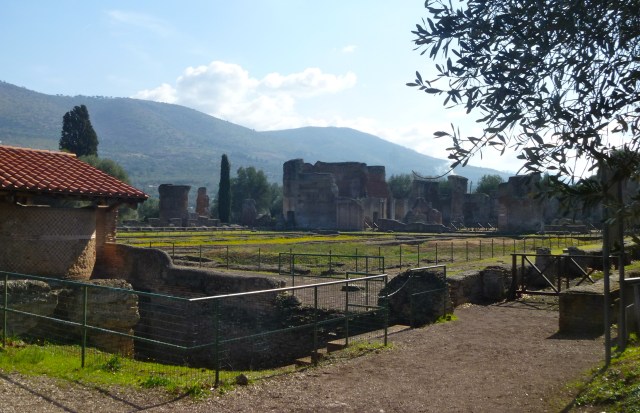
Wednesday last week dawned bright and sunny and I knew this was the day to visit the UNESCO listed Hadrian’s Villa another vast area of building remains. Although extensive today it’s thought to have been even more so originally.

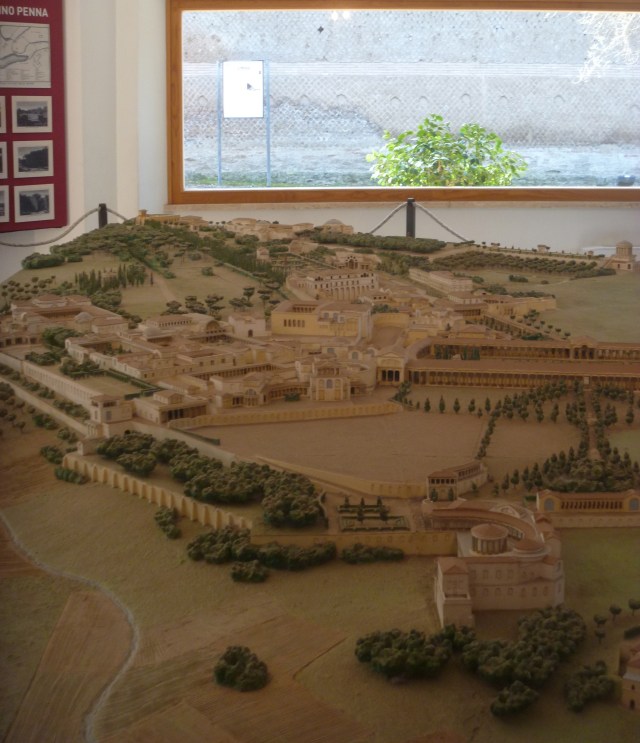
villa model

My notes here are mostly taken from the little map guide I bought. On arrival you follow a wide path up to a few modern buildings; one of which houses a model of the site as it might have looked to Hadrian. Publius Aelius Hadrianus was born in 76AD, probably in Italica (Seville). In 117AD on the death of Trajan he succeeded him at the head of the empire. He differed from previous emperors in that he tried to define the borders of the empire rather than fight to expand it. He was gifted with brilliant intelligence and a vast general knowledge but was not much liked by his contemporaries, as he was unpredictable and inconstant in character. He died in Baia in 138AD. And yes, he is the emperor in honour of whom the Wall was named.
Pecile

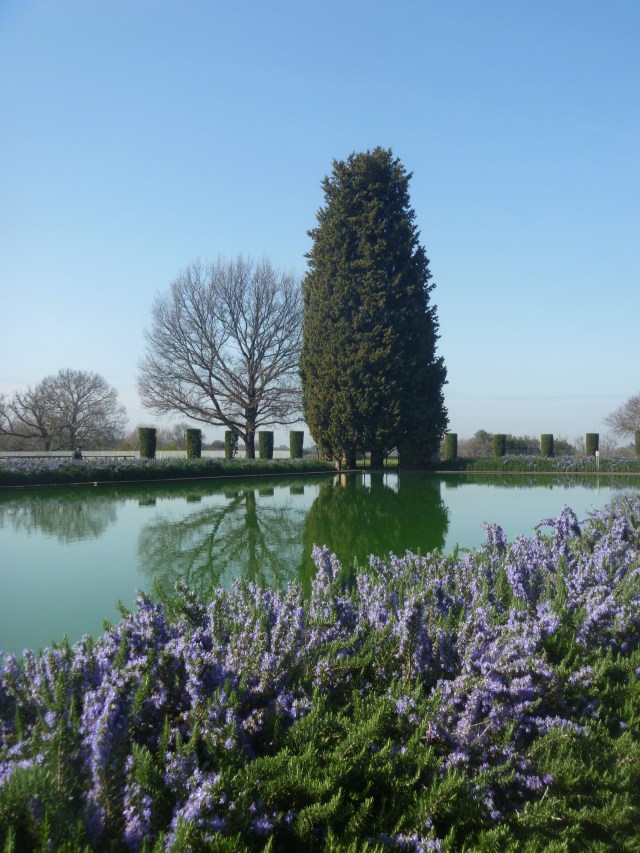
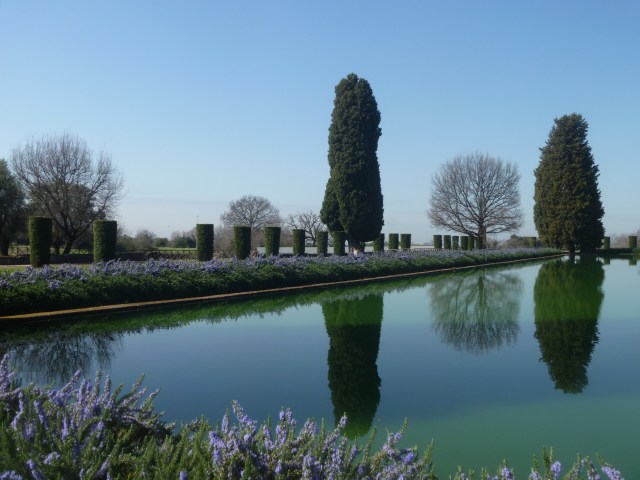
The Pecile Pool

the pecile

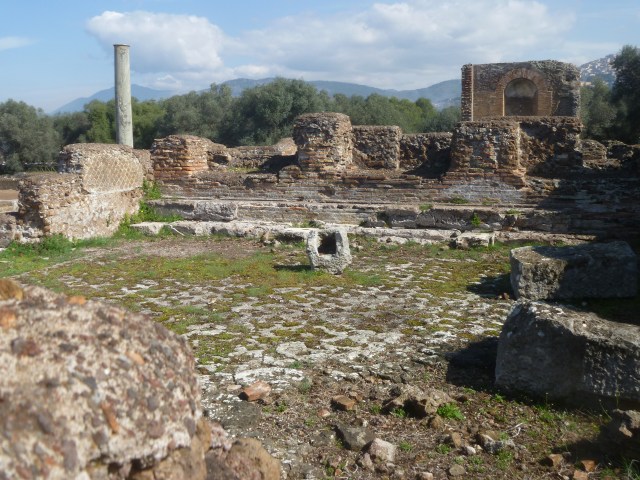
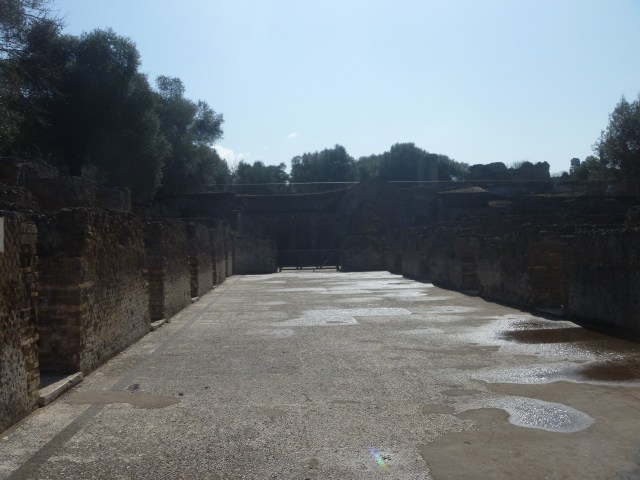
Beyond the initial modern buildings you pass through an arch in a high Roman wall into the park itself. In front is the Pecile formerly a courtyard with a pool at the centre. Then the choice of which direction to choose is yours. I headed first to the Palace and outbuildings which included the Golden Square, the Hospitalia, the Heliocaminus Baths, the Maritime Theatre (currently closed) and the Greek and Latin Libraries.

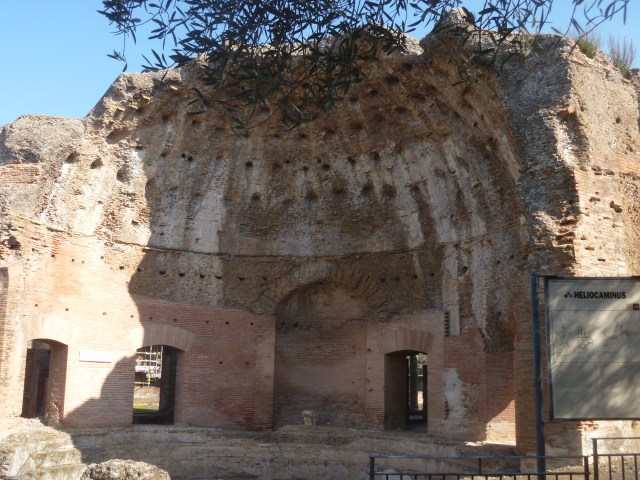
Heliocaminus

The Heliocaminus

The oldest bath complex on the site owing its name to the large circular room with a vaulted roof heated by the rays of the sun. In addition the floor was heated by the usual hot air system.

greek library

The Greek Library

hospitalia

The Hospitalia

hosp mosaics

osp mosaic

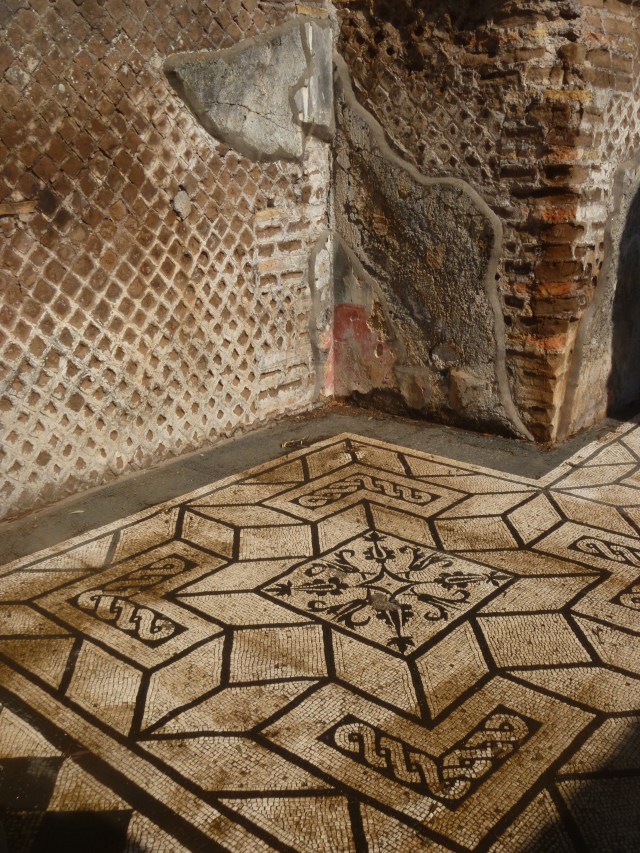
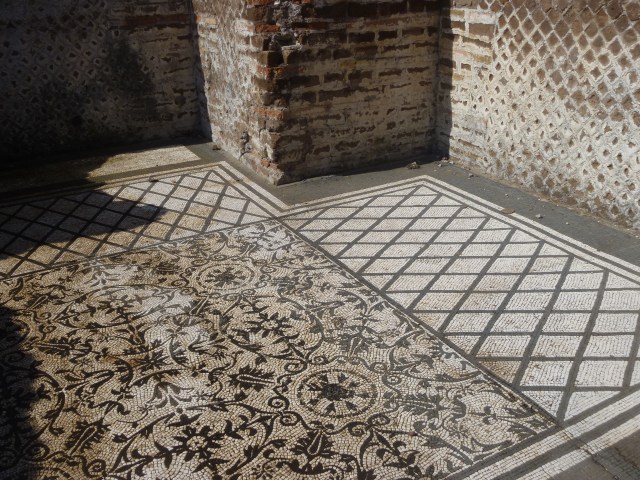
Mosaic Floors in Hospitalia Cells

golden square

The Golden Square (so called because of the richness of the archaeological finds made there)

Quadriportico

The Quadriportico

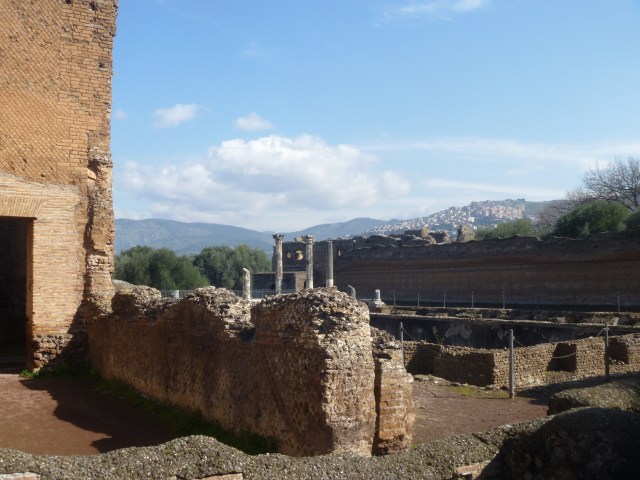
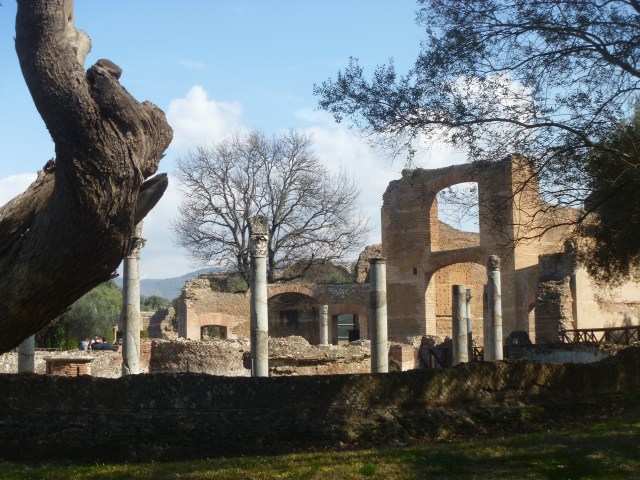
More or less in the middle of the site is the Triple Exedra Complex. According to the booklet this is nothing more than a grandiose entrance vestibule to the imperial residence.

triple exedra

The Triple Exedra

great baths

The Great Baths

small baths

The Formerly Luxurious Small Baths

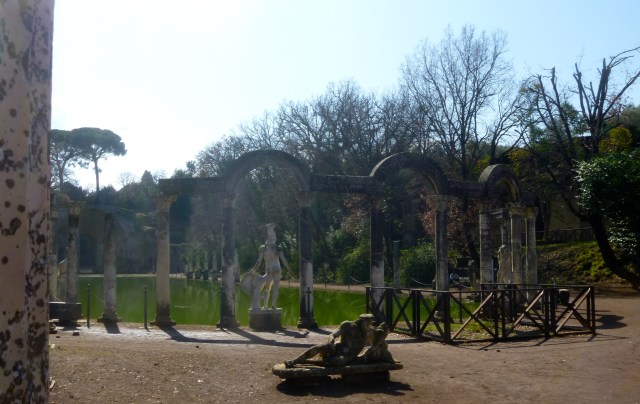
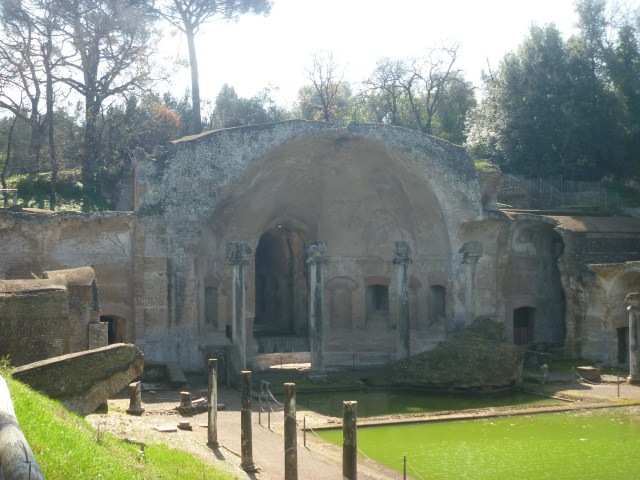
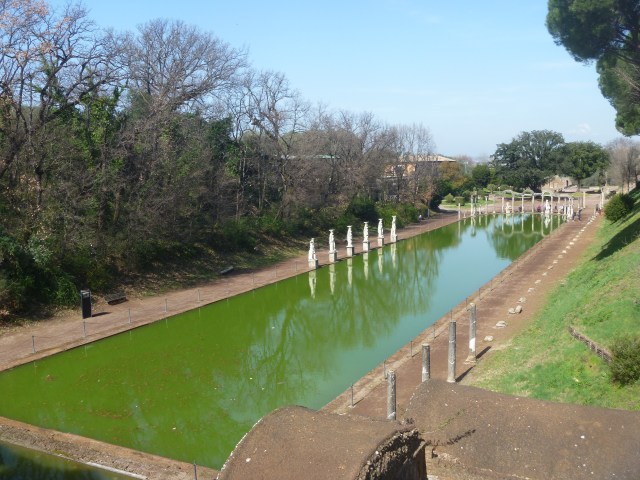
Beyond this are the Great and Small Baths and finally at the far end of the site The Canopus. This was an attempt at a copy of the channel that led from Alexandria to Canopus, a town on the Nile delta. The long basin of water is Euripus and at the far end is The Serapeum where summer banquets were held.

canopus

The Canopus

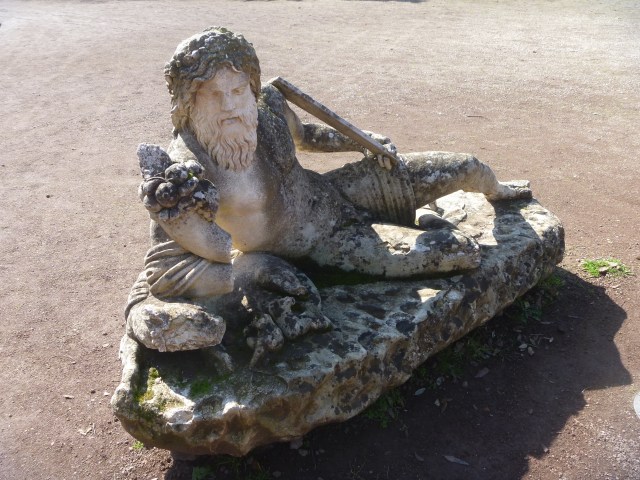
neptune

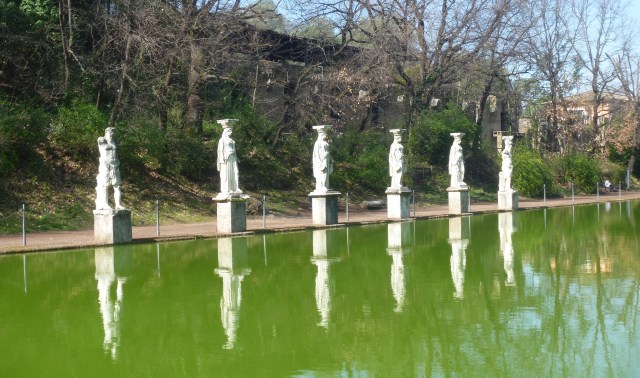
goddesses

serapeum

The Serapeum

canopus from belvedere

The Canopus from the Belvedere

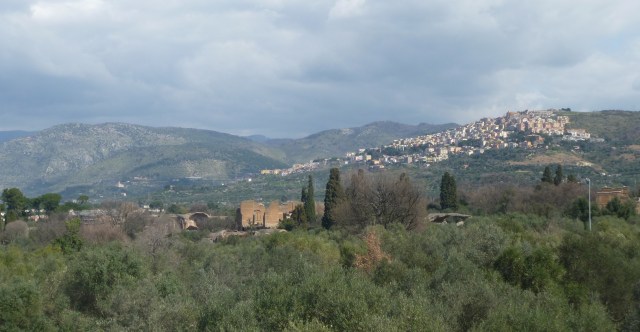
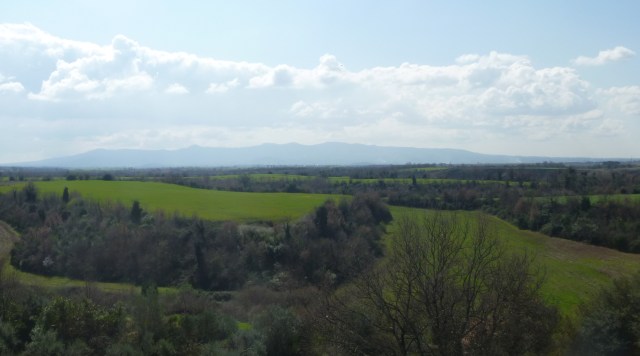
Finally I made my way to Rocca Bruna a belvedere with marvellous views over the surrounding countryside. Apparently, Hadrian had a great interest in astronomy and it is also thought that the tower could have been used as an astronomic observatory.

rocca bruna

Rocca Bruna Tower

tivoli from rb

View towards Tivoli from the Tower

mtns view rb

Mountain View From the Tower

Water, water everywhere: The Caracalla Baths and The Claudio Aqueduct

The trip to The Protestant Cemetery took less time than I had envisaged and I’d booked the Appian Way walk so, as a friend had recommended seeing the Baths of Caracalla and they were just one Metro stop away, I decided to spend a couple of hours there, even though it started to drizzle with rain.

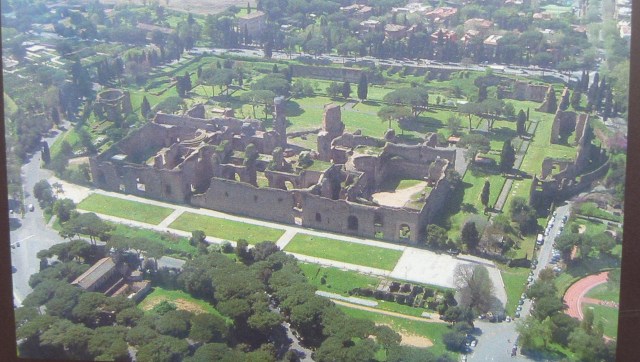
aerial view

Aerial View of the Baths

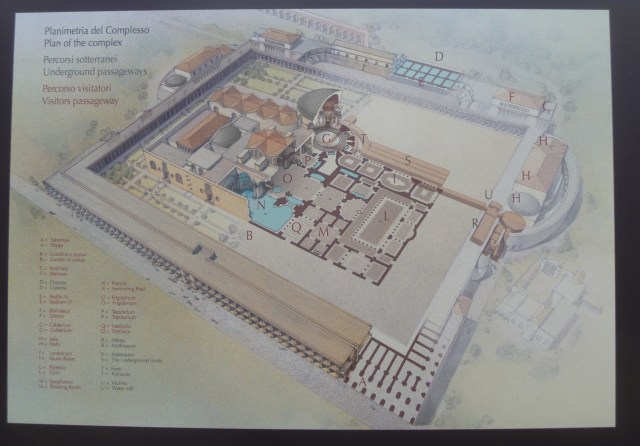
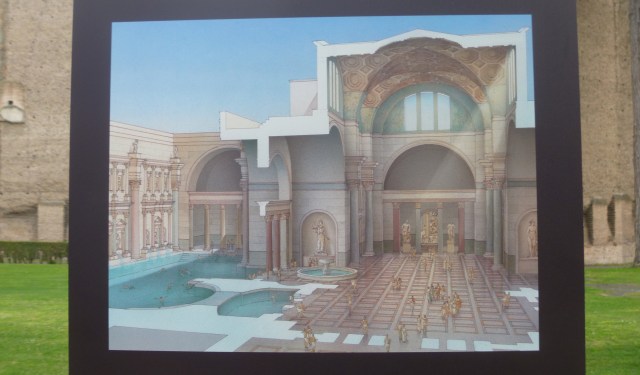
impression

Artist’s Impression of Caracalla

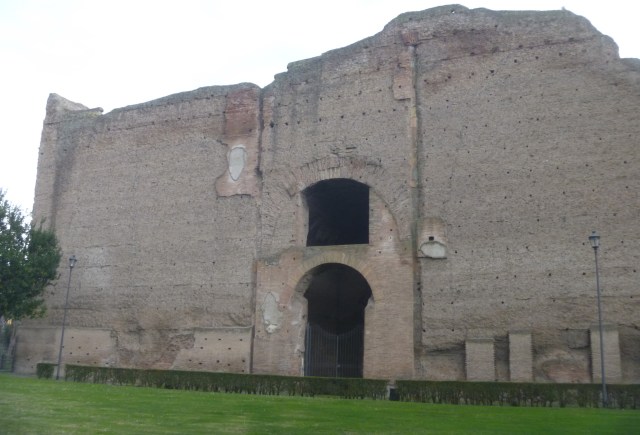
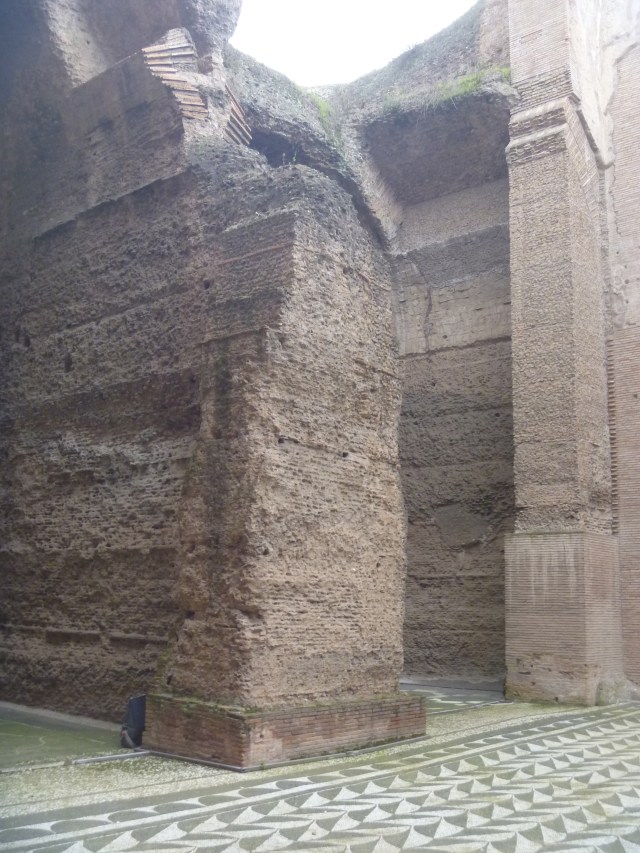
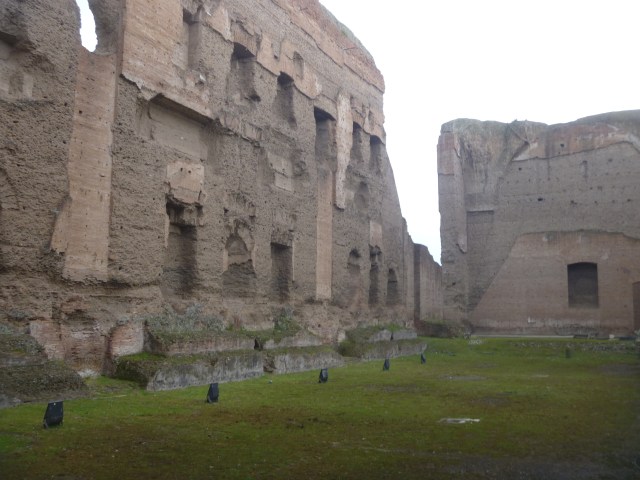
Now, Colchester may be full of Roman superlatives but, as you probably know, Rome knocks every other place that was part of the Roman Empire, into a cocked hat when it comes to remains. The Caracalla Baths are HUGE. The walls tower over you and the scale of everything was (and still is) vast.

Caracalla 1

caracalla 2

These, the largest and best preserved thermal baths, were entirely built by Emperor Caracalla since AD212. Apparently 9,000 workers were employed daily for approximately five years to create a huge platform 337m x 328m. Water was brought to the bath house by aqueduct and the whole place was abandoned after the siege of Rome when the Goths destroyed the aqueduct and cut of the supply of water to the city.

mosaic

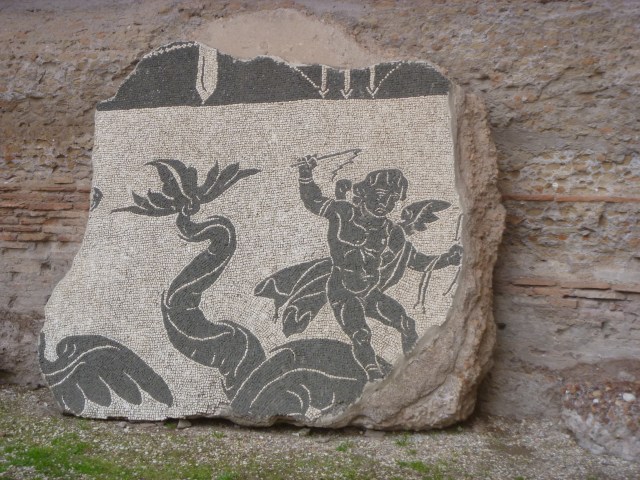
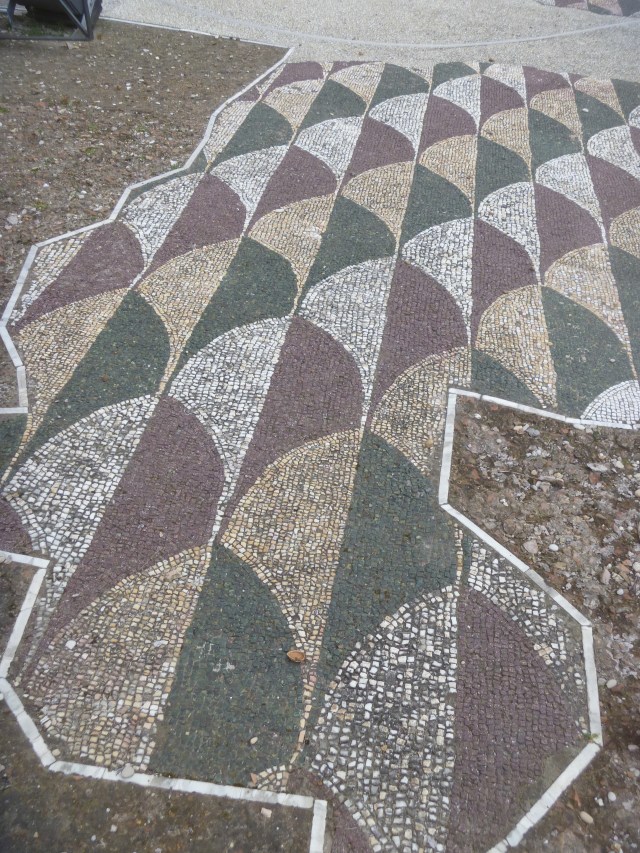
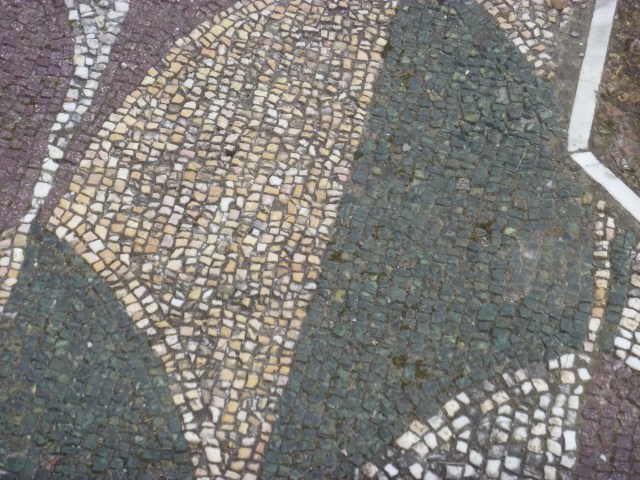
Many of the decorations and works of art were removed from the site over the centuries. There is a particularly fine collection in the Vatican Museum since several popes were involved with excavations. Some mosaics remain roughly in situ but otherwise there are few artefacts remaining. There had been bronze statues in niches, fountains, marble floors and columns and painted frescoes.

mosaic pavement

mosaic close up

Romans enjoyed board games and a tabula lusoria has been preserved here. Many such gaming boards were carved into floors and, as here, round the edges of pools. The game involved getting a walnut (or marble or knucklebone) into the holes.

natatio

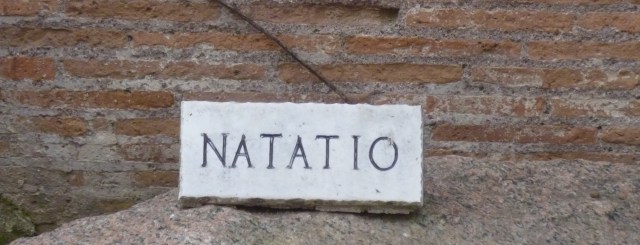
The Natatio was a huge Olympic size swimming pool – the board game is alongside – is 50m x 22m and the walls are 20m high. It was not very deep and certainly not suitable for diving.

the natatio

The Pool Today

original baths

Artist’s Impression of the Pool in its Heyday

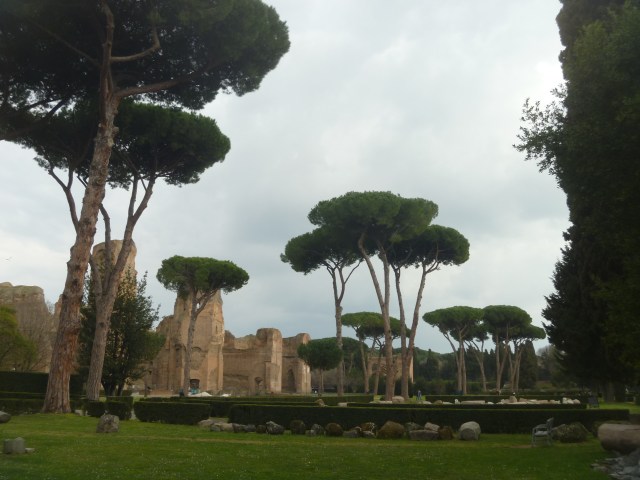
cypress trees in gardens

The Gardens – Cypress Trees – at Caracalla

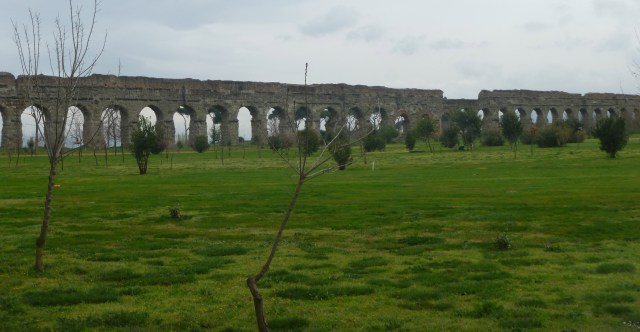
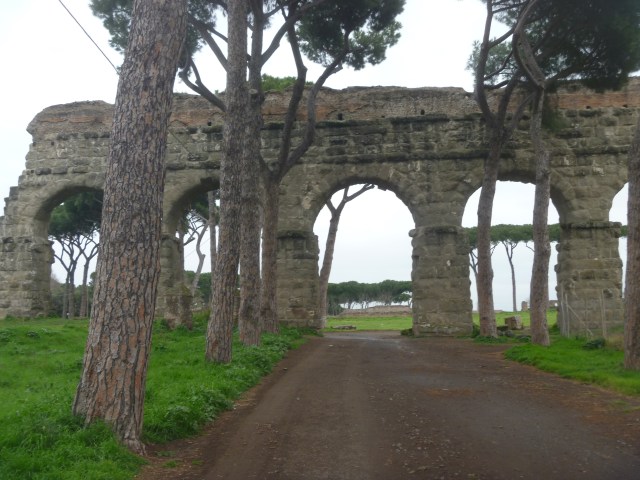
Following our visit to the Catacombs and walking along the Appian Way our Enjoy Rome Tour included a visit to the extensive remains of the Claudio Aqueduct. The aqueduct was one of several that supplied Roman Rome with its water.

Claudio Aqueduct

The Claudio Aqueduct

The Parco degli Acquedotti is a public park about 8 kilometres from the city. It is part of the Appian Way Regional Park and is of approximately 15 ha. The park is named after the aqueducts that go through it. My guess is that it’s not easy to reach by public transport but I was glad to have seen it as I had no idea of its existence before.

approaching aqueduct

Approaching the Aqueduct

Next up is a report of my visit to Hadrian’s Villa at Tivoli where there is even more Roman water!

Museum Plantin-Moretus : a UNESCO World Heritage Museum in Antwerp

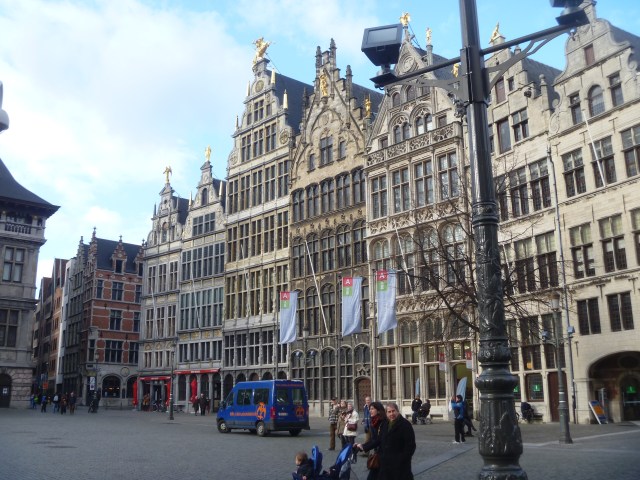
In the early afternoon after our walking tour in outer Antwerp our coach dropped us off at the car park by the River Scheldt from where we made our way to the Grote Markt and the Cathedral.

Grote Markt

The Grote Markt, Antwerp

Cathedral

Onze-Lieve-Vrouwe Kathedraal, Antwerp

From here we dispersed to find lunch. The plan then was to reassemble at the Cathedral in about an hour in order to tour the Rubens paintings which hang there, currently. However, with no persuasion from me, my friend and I decided we would rather visit the Plantin-Moretus Museum and arranged to meet the group back at the coach at 5pm.

Chocolate Box

Wrapping my purchases at The Chocolate Box

So, after a tasty pub lunch and making some chocolate purchases, we soon found the museum and were very happy with our choice. This is the only museum listed on the UNESCO World Heritage List.

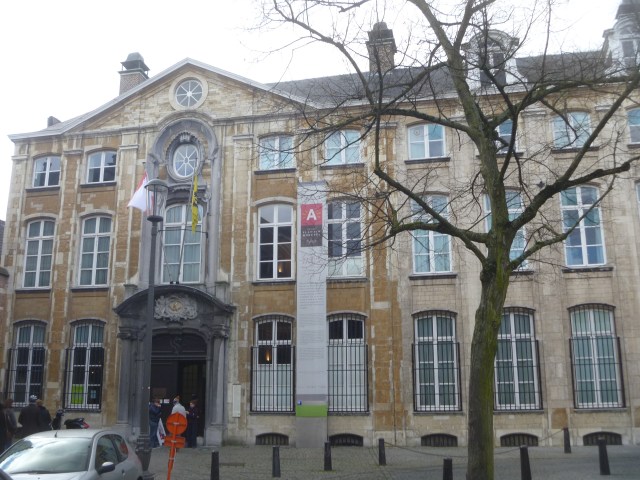
Plantin Moretus

The Plantin-Moretus Museum, Antwerp

Inner courtyard

The Elegant Interior Garden

This is one of the most interesting museums in Antwerp. It is housed in the mansion of Christophe Plantin, who set up as a printer in 1555, one of the first industrial printers in history. In the workshop, the equipment, which includes one of the oldest surviving printing presses, has been left as it was when operations ceased in the early 19th century. There is much else to see here besides, including the family home, a sumptuous patrician home with an elegant interior garden, tapestries, vellum Bible, woodcuts, copper plates, and works by Rubens. The museum’s archives, more than 100 years old, have been placed on UNESCO’s World Heritage List.” [Source : My LV City Guide to Amsterdam, Antwerp, Brussels, Zurich, 2012]

Bookshop

The Original Bookshop : books sold here from 1700

The Proofreader

The Proofreader

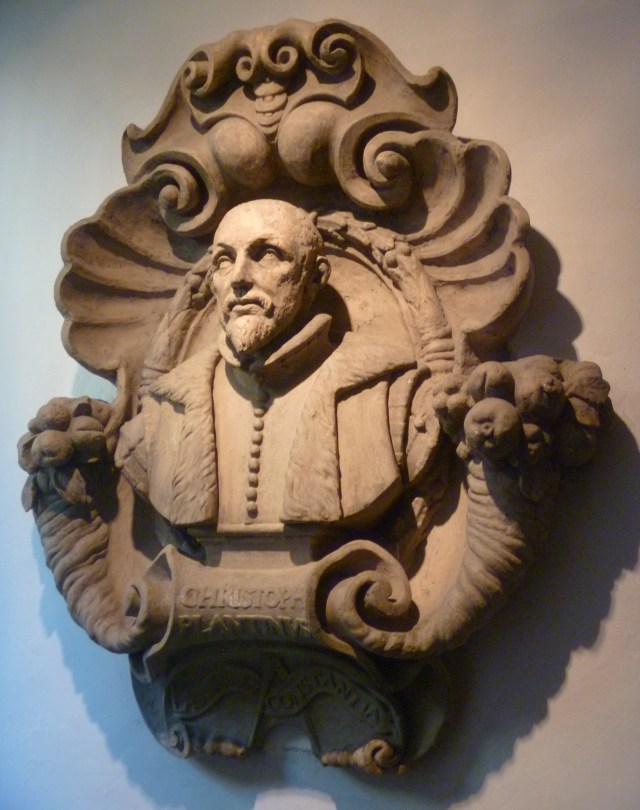
Christoph Plantin

Christoph Plantin

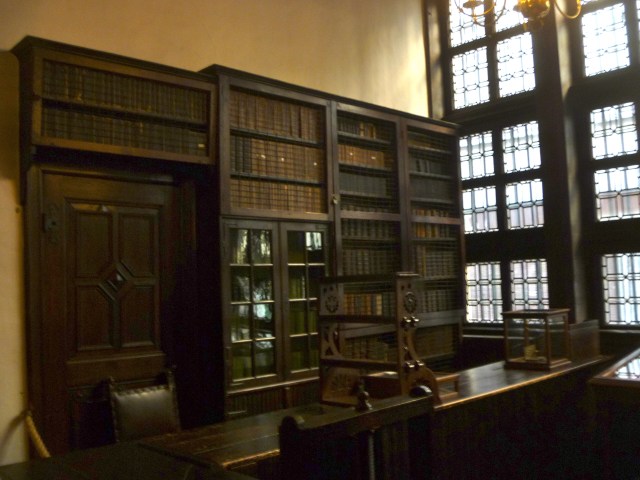
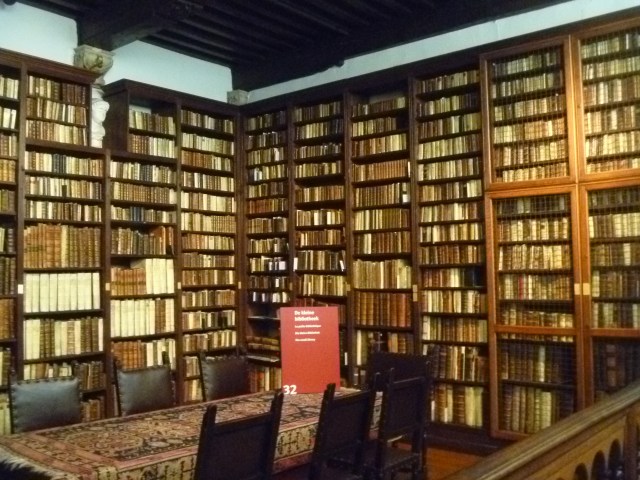
In The Great Library

In the Great Library

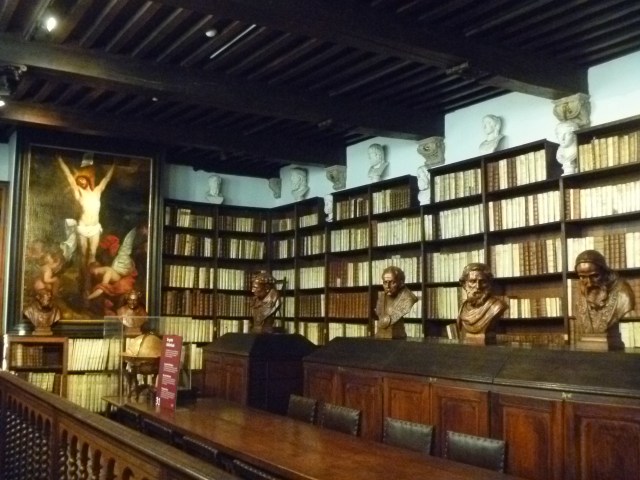
Great Library

In the Great Library/Chapel

The Moretuses’ own private book collection (1640) is an example of a humanist library. The volumes are shelved by size. By 1655 the Library was used as a Chapel.

Tournai in Belgium : A Unesco cathedral and a small town art gallery of substance

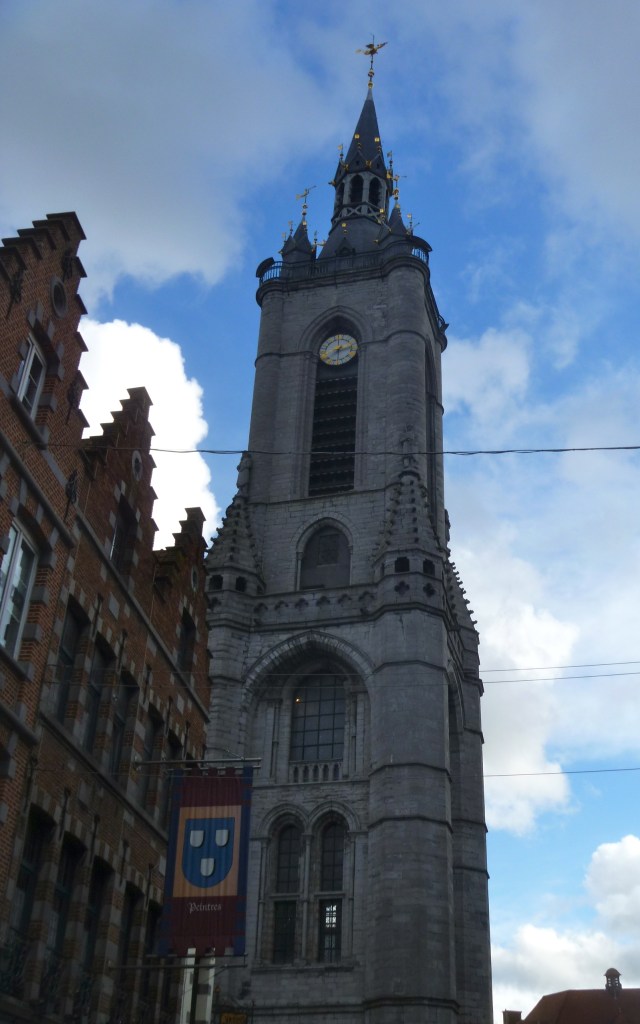
After a dip into the Roubaix swimming pool our coach transported us just over the border and into Belgium. The town of Tournai was our destination. Such a small quiet town but with so much to offer. We were given an hour and a quarter to find a luncheon venue and meet again under the towering belfry at the end of the picturesque town square.

The Belfry Tournai

A life-size black and white cow tempted us into an intimate brasserie Au Boeuf Qui Rit where we chose I salmon salad and  my companion chose cheese croquettes.

World Heritage

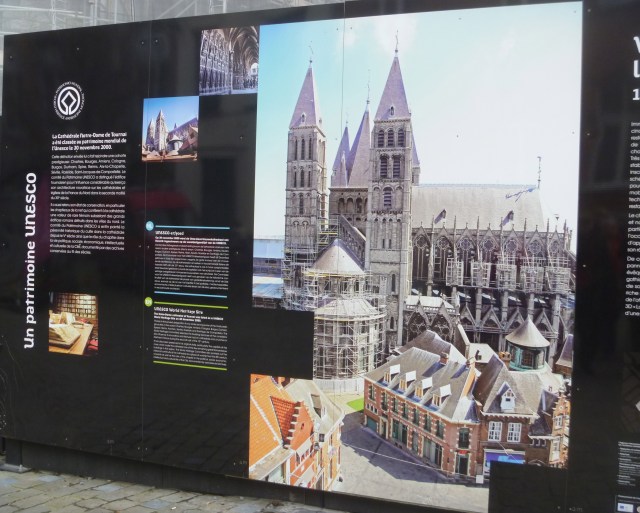
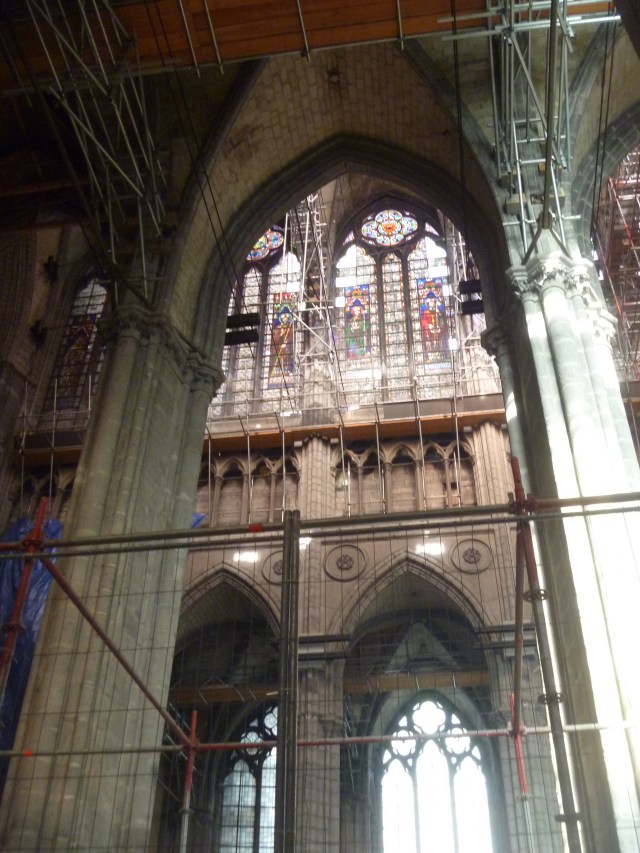
Next to the Belfry is the Cathedral of Tournai. Begun in the 12th century the cathedral’s cultural value was recognised by UNESCO and designated a World Heritage Site in the year 2000.

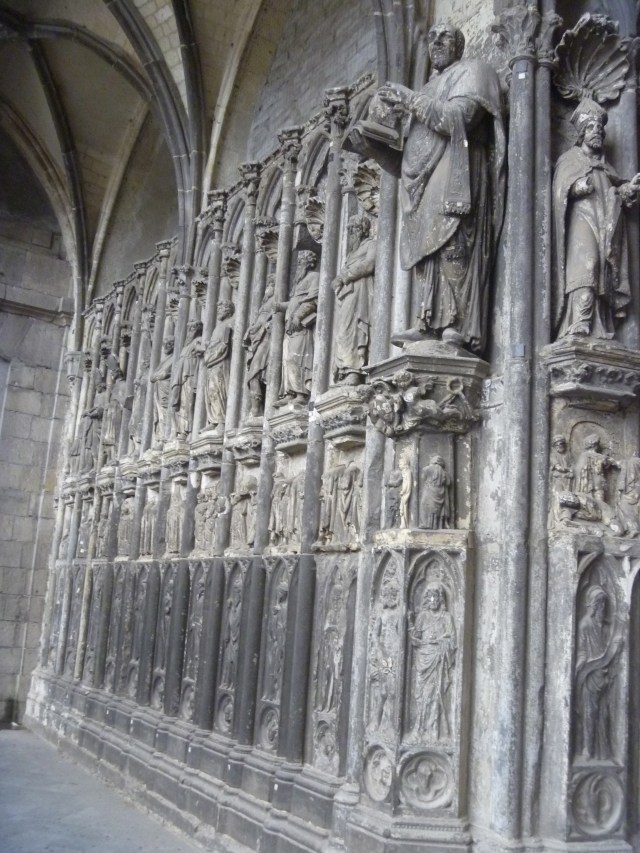
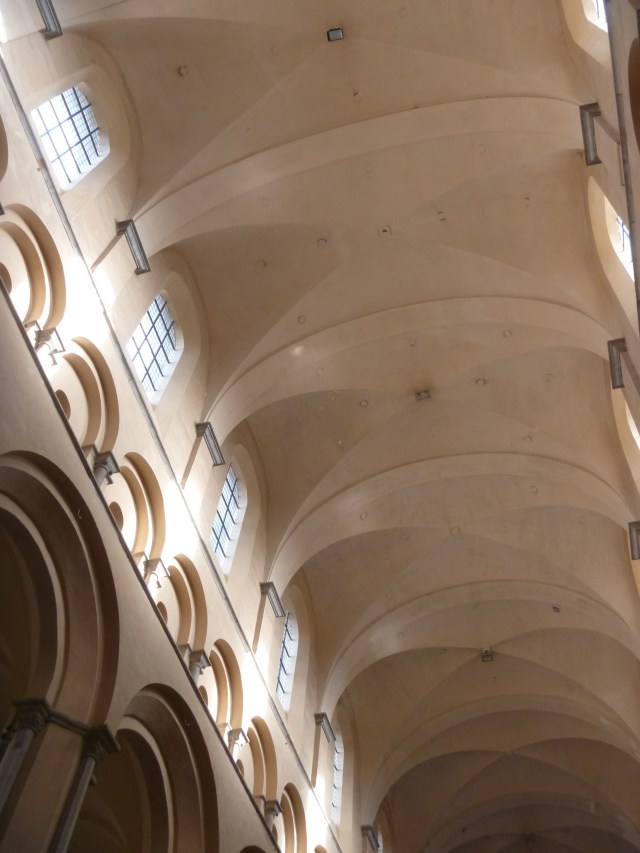
[The Cathedral] has been preserved in its original state , particularly the capitals of the nave, which makes the cathedral one of the few remaining great Romanesque buildings in this region. The World Heritage committee also pointed out the historical continuity of the cathedral as a place of worship from the 5th century onwards as well as the role of the chapter in the political, social, economic, intellectual and cultural life of the city, documented by centuries old archives.” [Poster shown above]

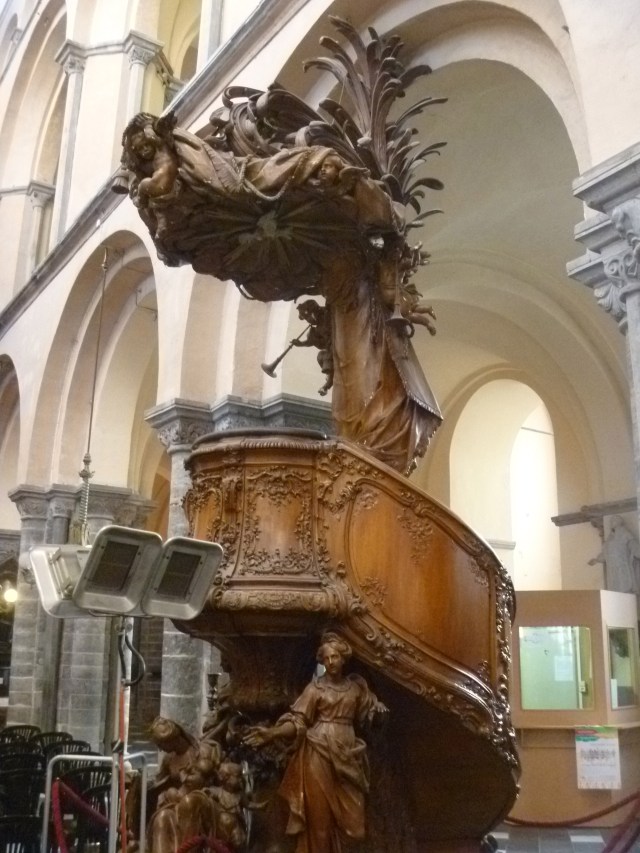
Photos at Tournai Cathedral :

Tournai 1

Tournai 2

Tournai 3

Tournai 4

Repair work on the cathedral continues but we were able to visit the main body of the church and also the Treasury. No photography was allowed inside The Treasury as almost 5 years ago to the day a priceless jewelled cross was stolen by thieves :

22/02/08 — Theft — Tournai, Cathedral — The “tresor” of the Tournai Cathedral was the victim of a major theft on Tuesday 19 February. In broad daylight, three men using baseball bats broke the glass display cases and stole, despite the attempts of several by-standers, thirteen objects including a famous Byzantine cross. This reliquary which holds a piece of the Cross and probably dates back to the VIIIth-IXth centuries was most likely brought to Tournai from Constantinople in 1205 by a Crusader. One can only hope that the object will not be dismounted in order to sell off the precious stones ornating it. ” [Source]

Beaux arts tournai

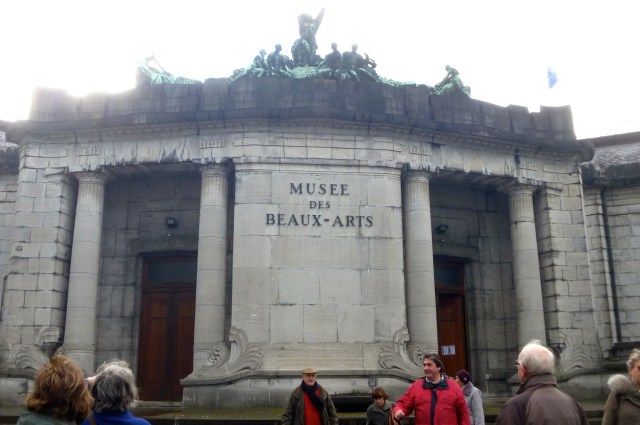
From the Cathedral it was a very short walk to the Museum of Fine Arts [Musée Beaux Arts Tournai]

Inaugurated on Sunday 17th June 1928, the Museum of Fine Arts is a building created by the genius for spatial conception, the great Belgian  Art Nouveau architect Victor HORTA. He conceived it especially for presenting the very rich collections bequeathed to the city by the Brussels patron of the arts Henri VAN CUTSEM, deceased in 1904.

The combination of the rooms that radiate from the central polygonal entrance hall is so original that the building itself deserves a visit. The collections shown include many ancient paintings, which added to the works bequeathed by Henri VAN CUTSEM, together with purchases, deposits, gifts and legacies, permit to offer the visitors an interesting overvieuw of the pictorial production history from the 15th century up to now.” [source]

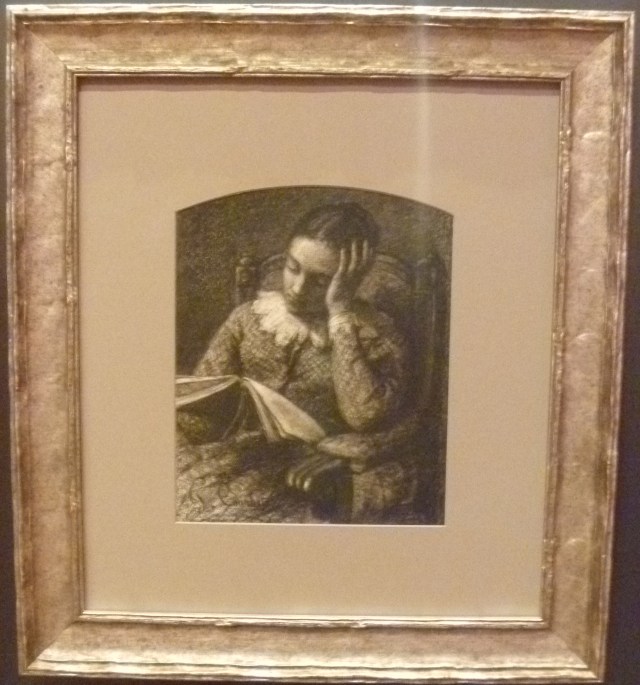
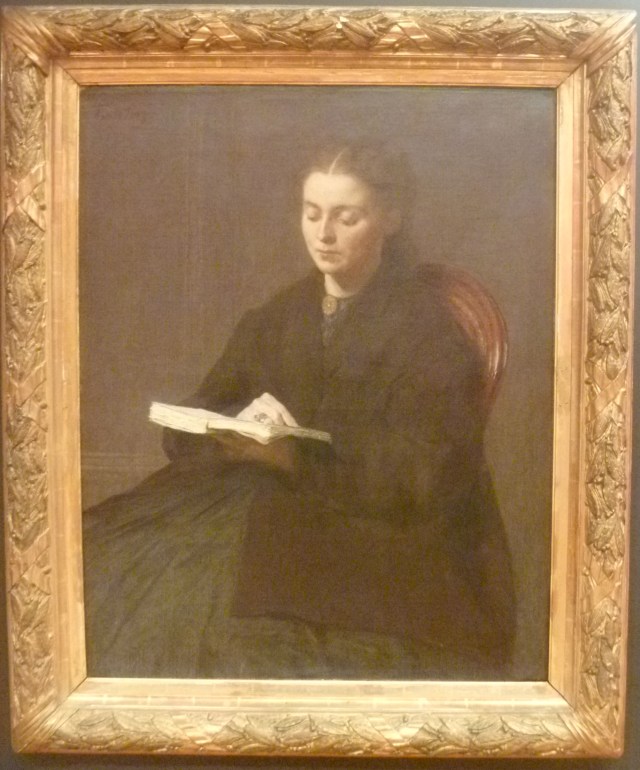
I just chose two pictures on a reading theme on show at the Museum.

Courbet The Reader

Gustave Courbet’s “La Lecture”

Fantin-Latour The Reader

Henri de Fantin-Latour “La Lecture”