Art Deco and Art Nouveau in Lille and Antwerp : Day One

Last Thursday I set off from St Pancras Station to Lille along with 23 others booked on a Travel Editions art trip to northern France and Belgium.  The train journey took just less than 1 hour 30minutes.

Lille Town Hall and belfry

Lille Town Hall and Belfry [UNESCO World Heritage listed] from the hotel balcony

Day 1 : Travel by Eurostar from St Pancras to Lille and transfer by coach to hotel for check in for 3 night stay. Afternoon walking tour of central Lille.
Welcome reception lecture “Art nouveau – an Overview” and dinner with wine at the atmospheric Art Nouveau Brasserie de la Paix located 2-3 minutes from the hotel.

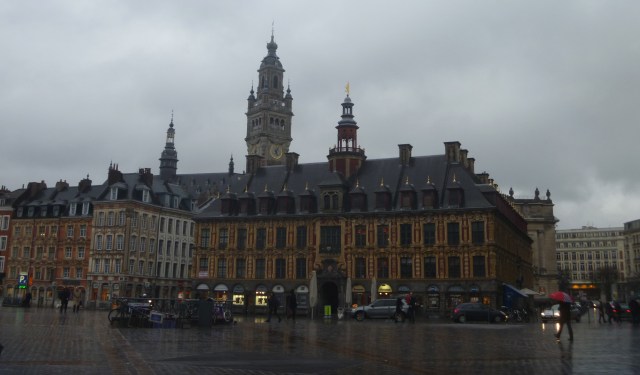
Vieille Bourse with Belfry behind

Unfortunately, it was raining hard in Lille so an hour after arrival and check-in with our brollies out we were on our first guided walk with tour guide and lecturer Mike Hope who mixed his vast knowledge with humour, patience and enthusiasm and from whom I learned all I now know about Art Deco and Art Nouveau in Lille (and nearby towns) and Antwerp during the following three days.
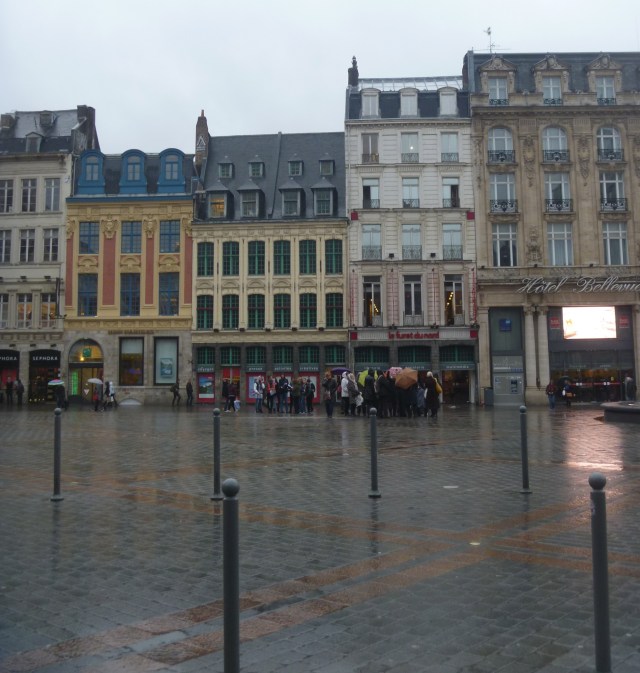
La Grand Place in the rain

The Grand Place in the rain

Once the jewel of the Spanish Netherlands, Lille is France’s most besieged city. It was incorporated into the royal domain in 1304 before passing under Burgundian (1369), then Austrian (1477), then Spanish rule under Charles V. The city became French in 1667 and remained so, except for a brief interlude from 1708 to 1713 and the absurd Nazi Aryanization (1940) from which it was delivered by its illustrious native son, a certain Charles de Gaulle. Throughout the 20th century, Lille was the capital of the French textile industry. … The city [has made] an extraordinary transformation that began with the arrival of France’s high-speed train, the TGV. [It] boasts prestigious colleges, abounds with café terraces and brasseries. Since 2004, when Lille was European City of Culture, it has stood at the forefront of the French cultural scene.” [From my LV Guide Lille, Lyon, Monaco, Toulouse 2012]

From the hotel we were just steps away from the main square and the important civic buildings – the town hall, the old bourse (now a secondhand book market), the opera and theatre – and shopping and business areas.
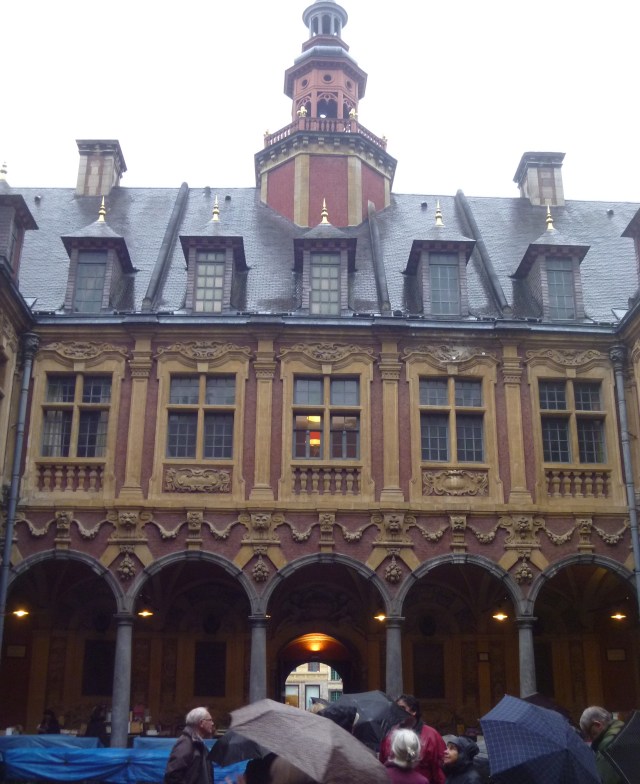
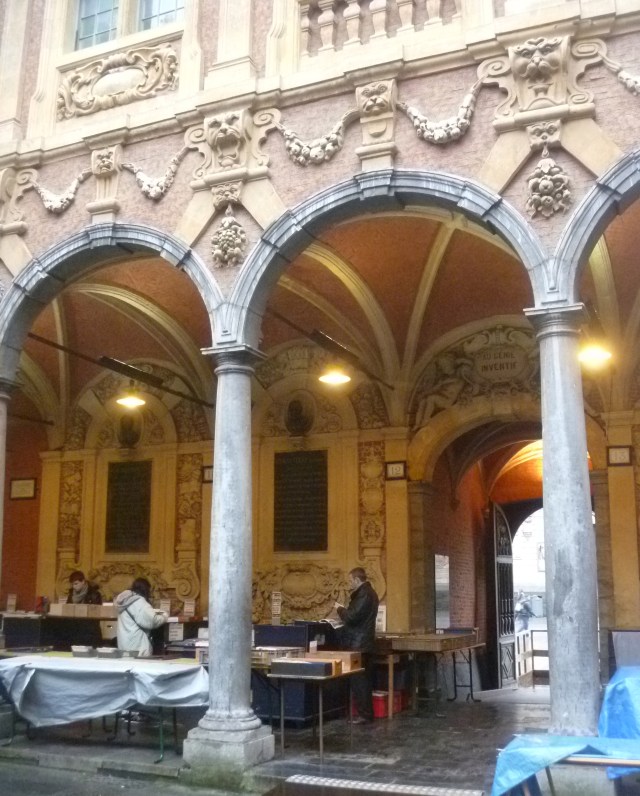
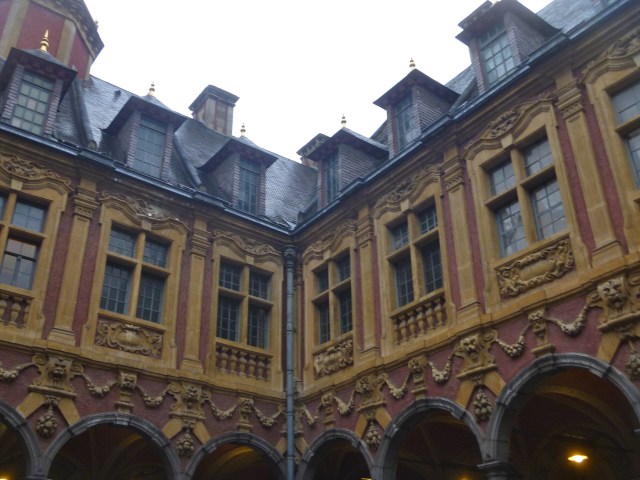
Vielle Bourse

V Bourse

VB Detail

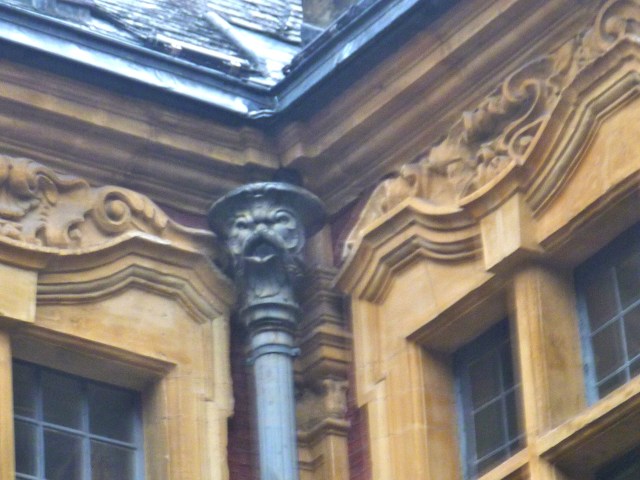
VB Drainpipe

In the Vieille Bourse

Theatre du Nord

The Voix du Nord Building: Mike points out the architectural features
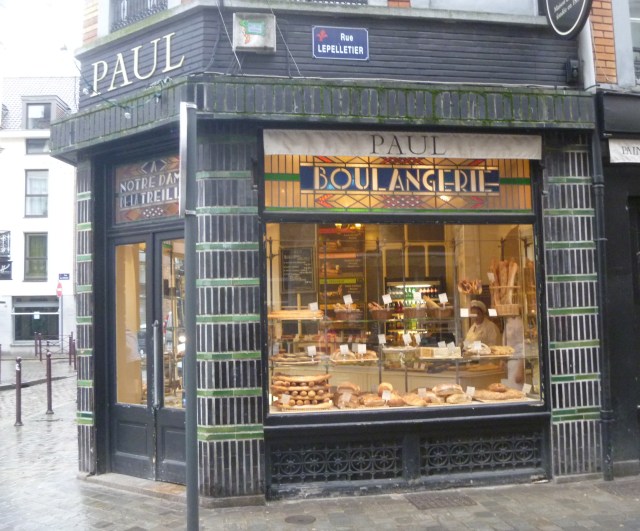
Paul, Lille

Art Deco Bakery on the rue Lepelletier – still a bakery shop
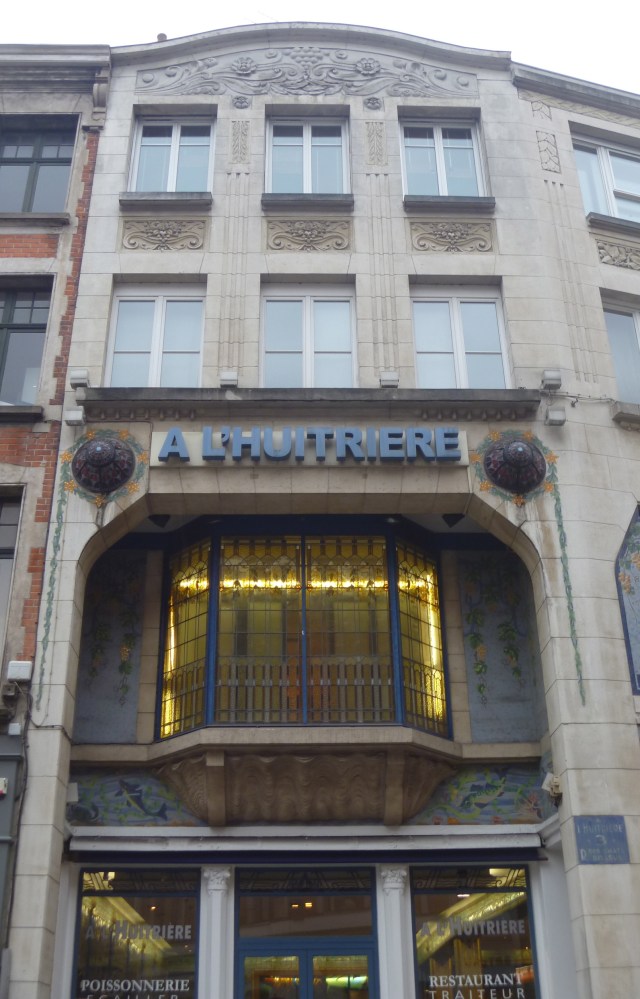
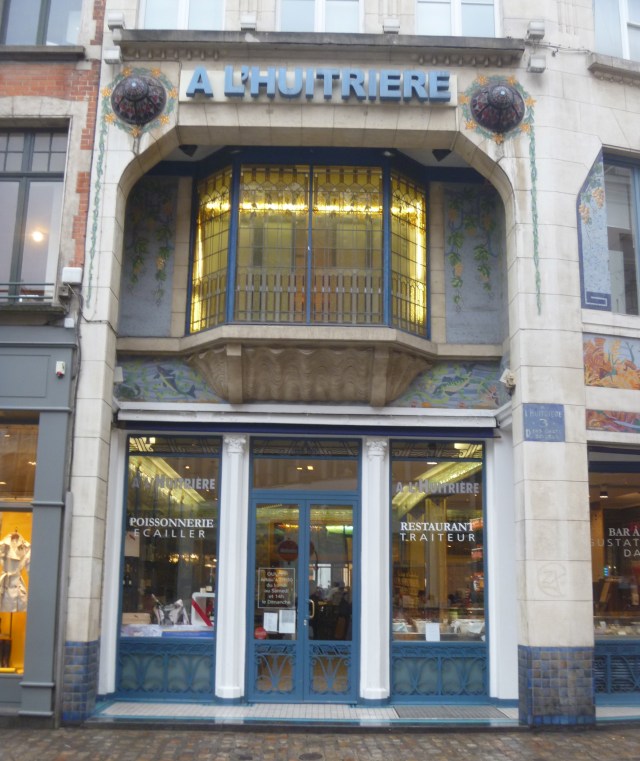
Huitriere

A L’Huitriere

A L'Huitriere

A L’Huîtriere, rue des Chats Bossus. Renowned fishmonger and restaurant with pure Art Deco decor inside and out.
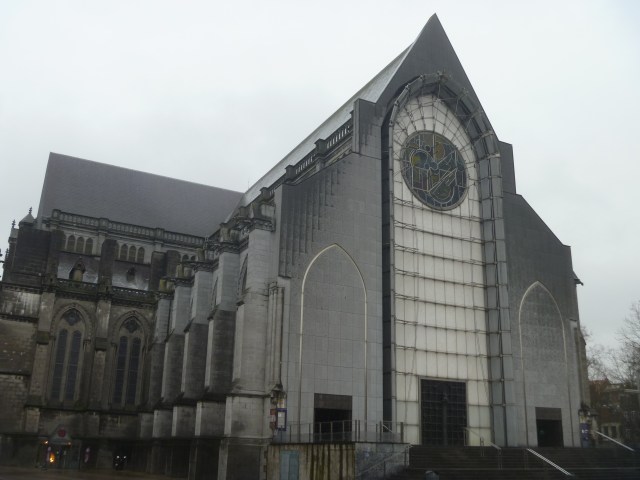
ND de la Treille

The Cathedral of Notre Dame de la Treille : building began in 1854 and was finally finished in time for Lille’s European City of Culture year 2004
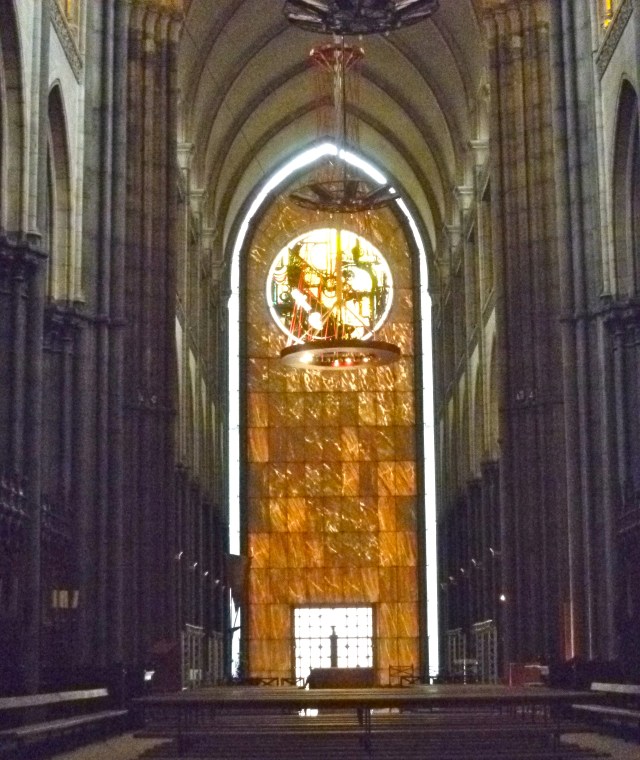
West Window

The West Window from Inside

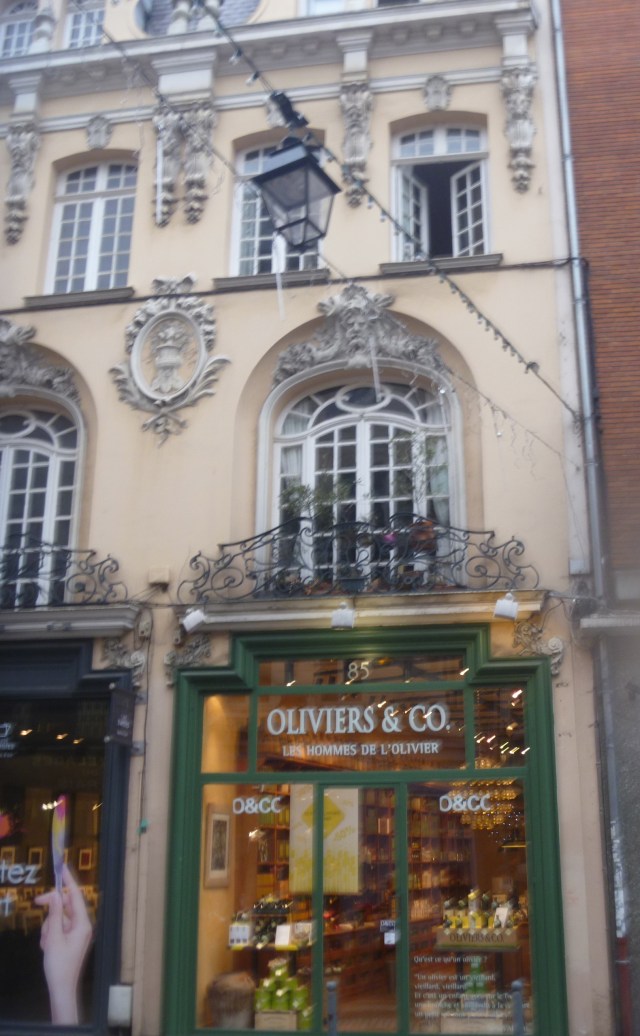
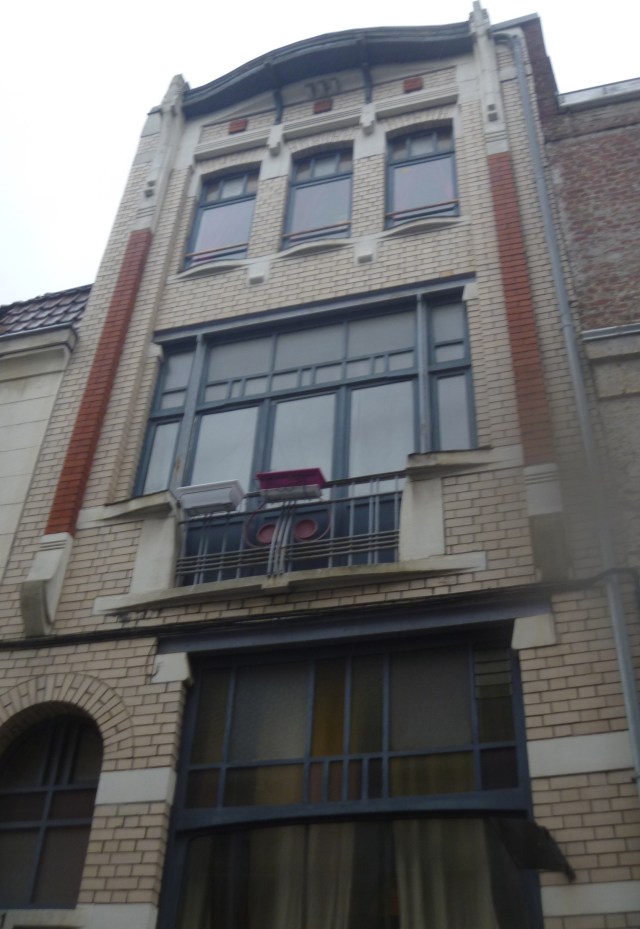
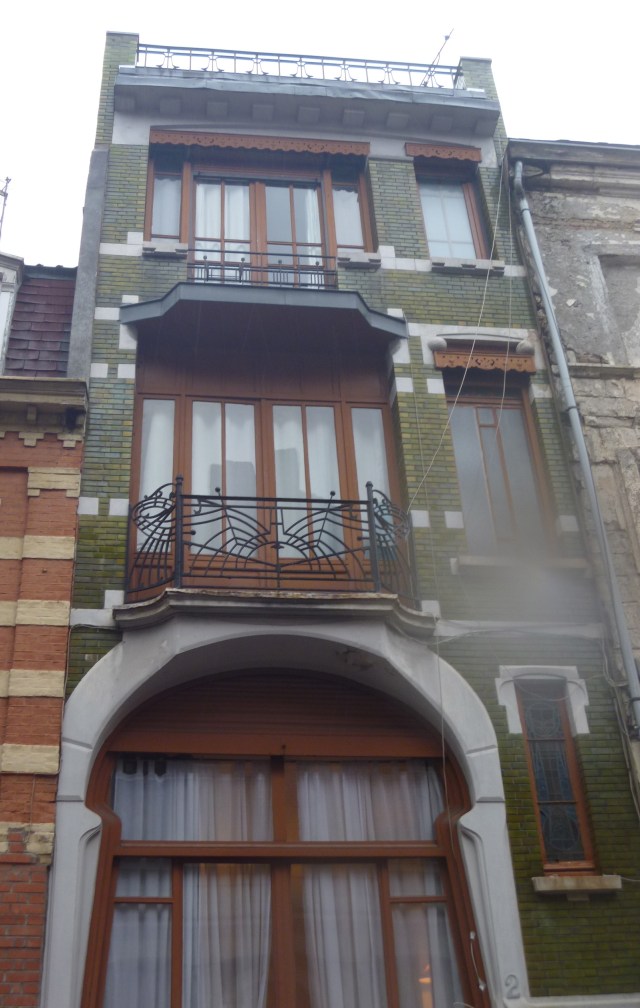
… and other Art Deco and Art Nouveau façades in Lille :
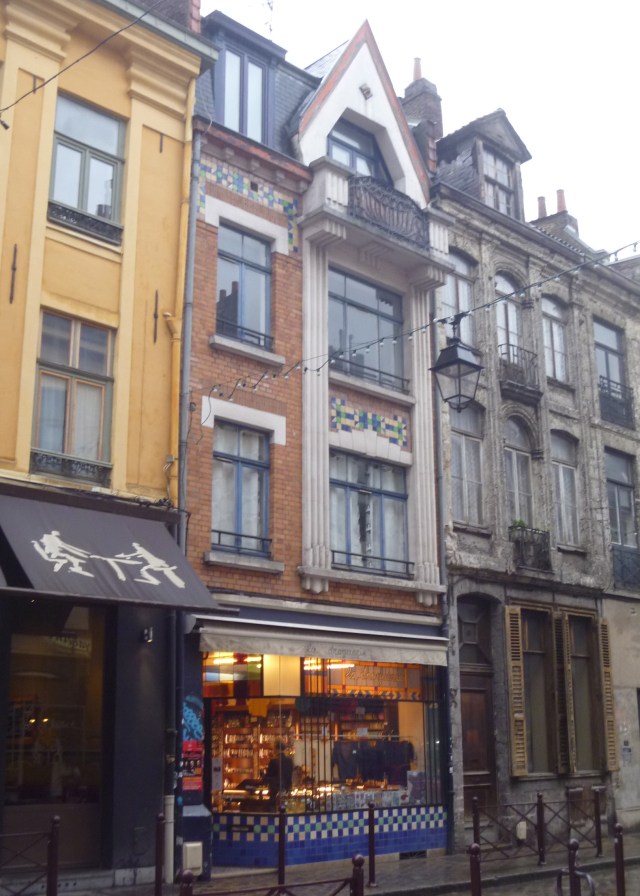
Others 1

Others 2

Others 3

Others 4

And the best place to finish is at Méert famous for its butter and vanilla waffles
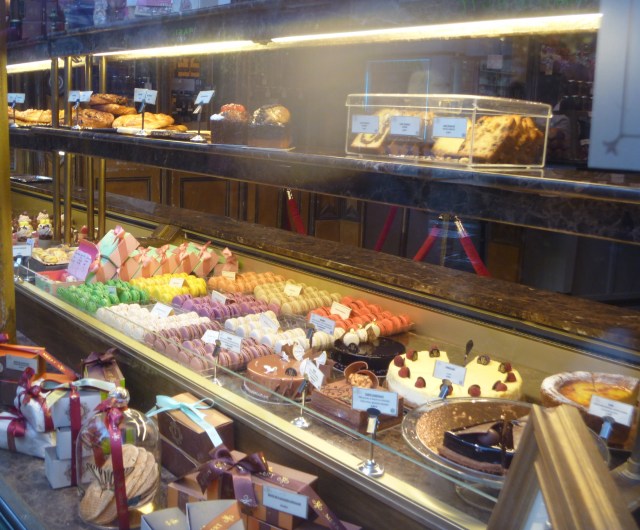
Meert

The Aislabie Walk from Fountains Abbey – The Short Route

Referring back to the Barden Moor Access Area practice walk a couple of weeks ago I’m pleased to announce that the alternative walk, which I had initially thought rather dull, was a big success so here’s a brief description of it and some photos. You will notice that the weather was exceptional that day. Several days on either side were dark and wet but the weather last Thursday was truly a gift.

Aislabie Walk

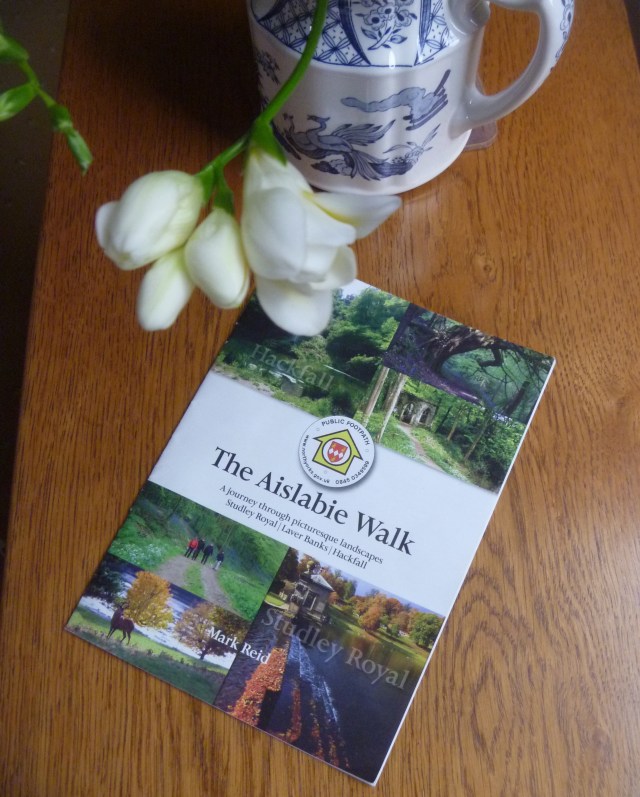
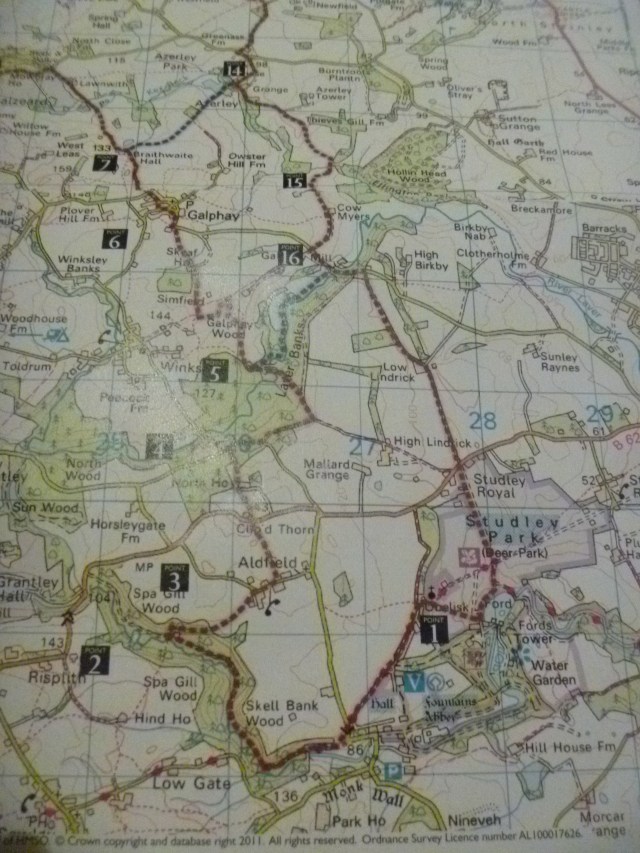
The walk was taken from a rather nice leaflet I picked up on a previous visit to Fountains Abbey. The Aislabie Walk (subtitled A journey through picturesque landscapes) is 17.5 miles (allow 8-9 hours) altogether. It’s a circular walk from Fountains Abbey (car parks and toilets) to Hackfall and back. However, along the way there are several points at which you can cut short the route and I chose the 7.5 mile option.
Aislabie map

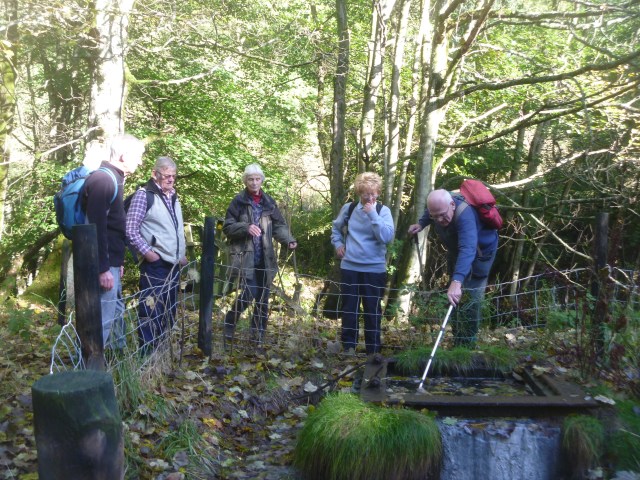
We parked at the main Visitor Centre car park and set off down the road to the River Skell following it west and then north for nearly two miles until we reached the old sulphur springs and ruined buildings of Aldfield Spa. You could smell them as you approached.
Sulphur Springs

The Wanderers disturbing the Sulphur Springs

From the Springs we headed slightly uphill to Aldfield village itself, passed through a couple of fields of kale (this had been what I remembered as the ‘dull’ part of the walk, across meadows to Laver Banks where we lunched at Woodhouse Bridge and joined the road later at Galphay Mill Bridge (point 5 to point 16 on the map).

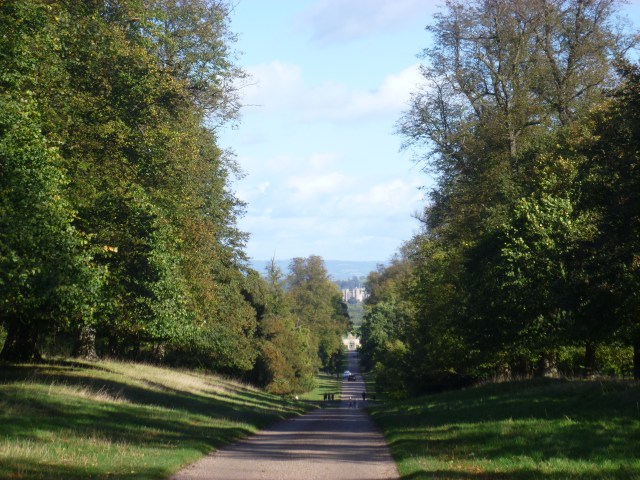
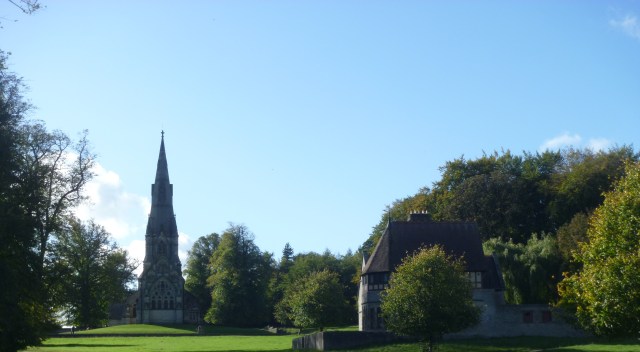
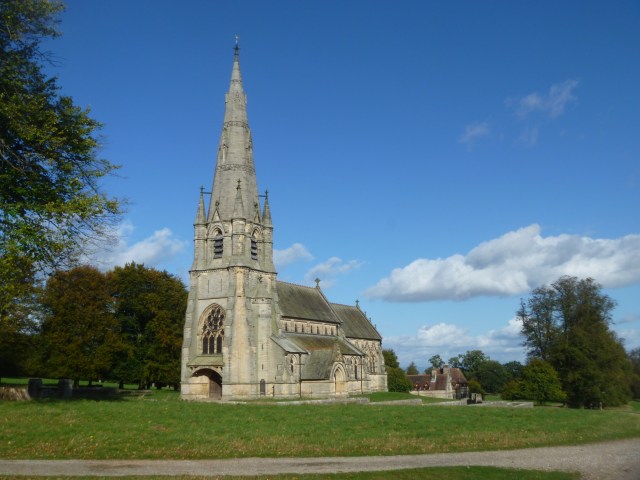
A pleasant track through former parkland, now grazed by cows, brought us back to the the gates of Studley Royal Park. We crossed the deer park (only spotted one) taking in views of the Choristers’ House, St Mary’s Church and Ripon Cathedral.

Studley Royal

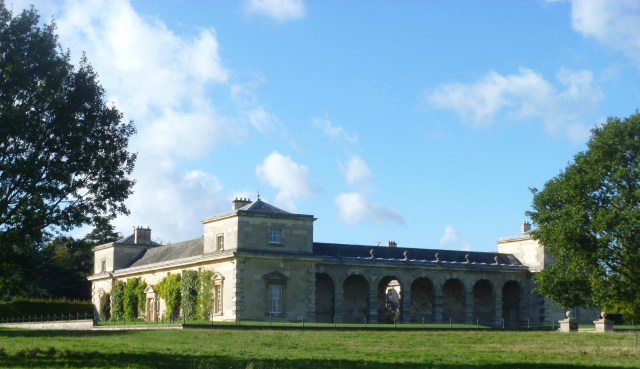
Studley Royal Hall much of which was destroyed by fire in 1946

Ripon Cathedral in the distance

Ripon Cathedral in the distance

Church and House

St Mary’s Church and the Choristers’ House

St Mary's

St Mary’s, Studley Royal Church

So my concerns about the walk were not at all justified and a good day out was had by all!

Day Tripper – To Liverpool Library

Central Library

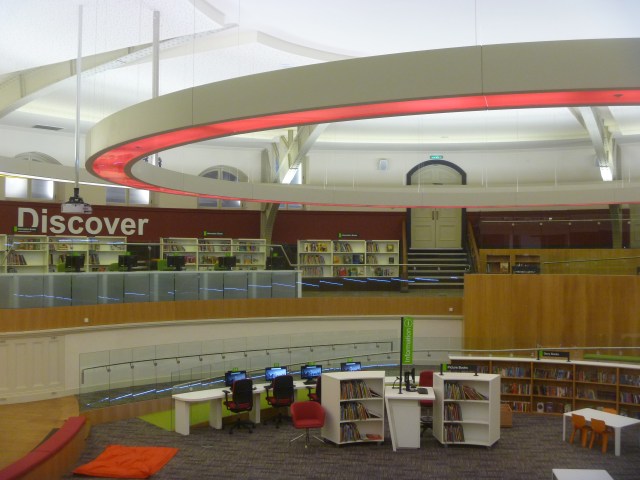
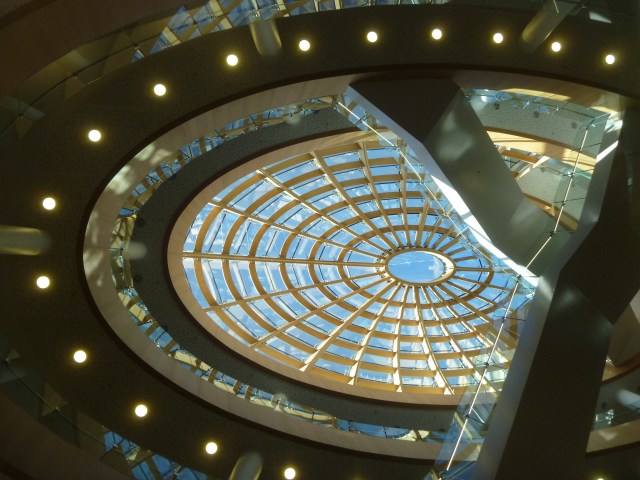
On Thursday I spent the day with a friend in Liverpool. We met at Lime Street Station and spent the morning over coffee in the cafe and admiring the ‘new’ Liverpool Public Library re-opened in May after a massive renovation project. It’s a job well done! I wanted to visit ever since I saw this blog post and the super pictures. I don’t really have much to add text-wise. We travelled up to the top and the very windy roof terrace and then inspected the building and departments as we descended. The Hornby and Oak Rooms reminded me of my own dear Leeds Library. Going into the major reference space – The Picton Library – was just like entering the old British Museum Reading Room. And the glass dome on the roof reminded me of The Reichstag in Berlin.

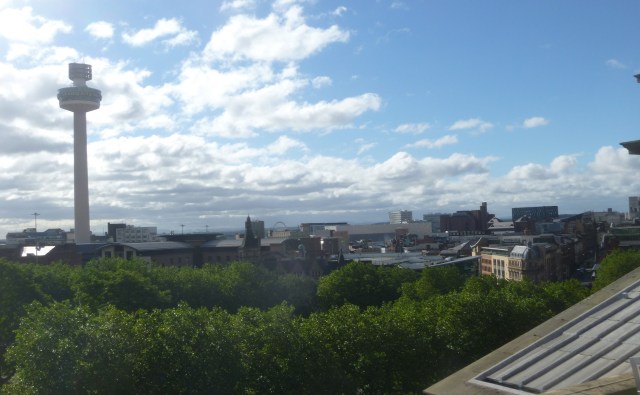
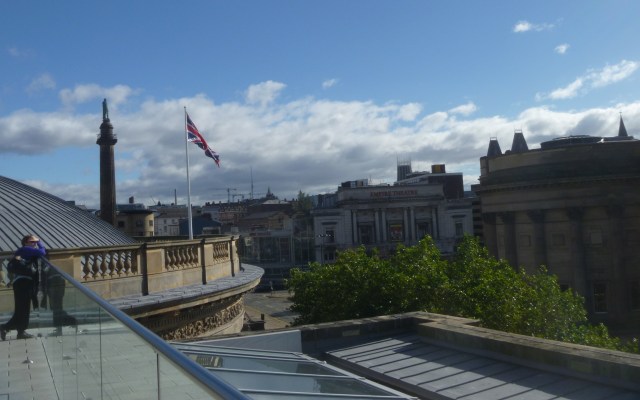
View towards River Mersey

View eastward

Views from the Roof Terrace

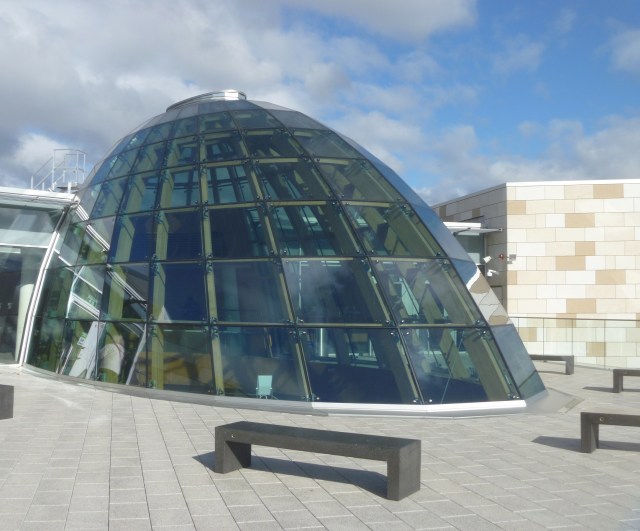
Glass Dome

The Glass Dome Exterior

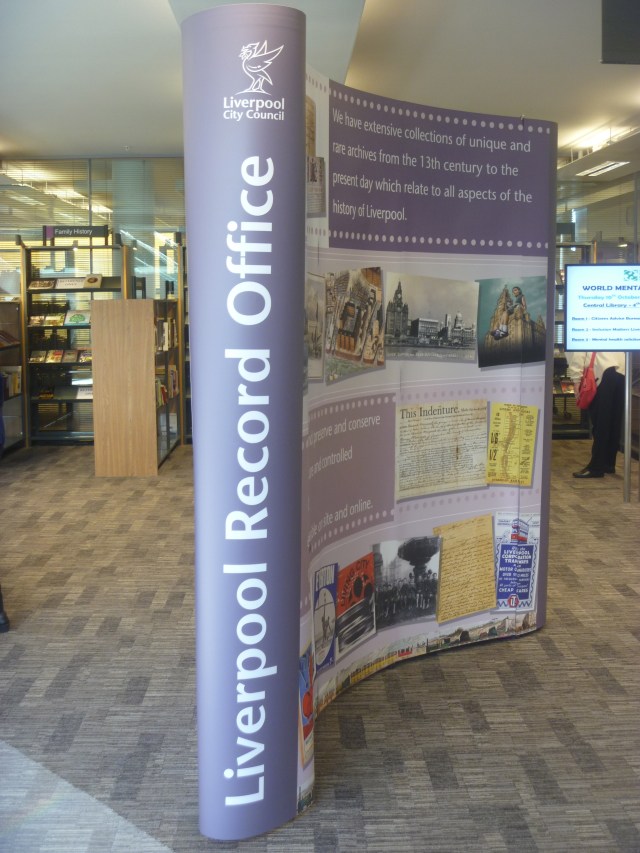
Liverpool Record Office

The Open Plan Liverpool Record Office has Beatles memorabilia and other documents on display
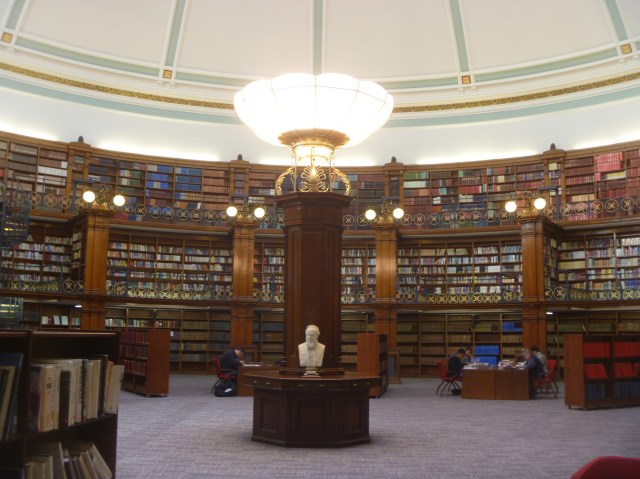
Picton Room

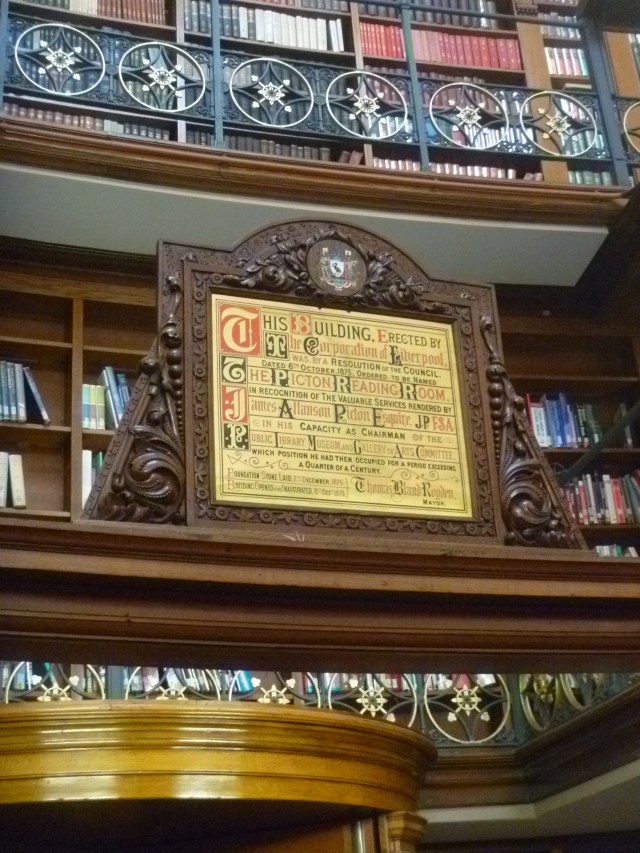
The Picton Reading Room

Picton Reading Room

Detail of the Reading Room – quality fixtures and fittings
This magnificent building and reading room was built in 1875 -79. Sir James Allanson Picton was the Chairman of the Libraries Committee, architect and author of the famous “Memorials of Liverpool”.

Based on the rotunda of the British Museum in London, the Picton reading room is 100′ in diameter and 56′ high, and was designed by Cornelius Sherlock, Corporation Surveyor, at a cost of £20,000 with seating for 200 readers.

The circular structure was nicknamed “Picton’s Gasometer” although ironically it was the first public building in Liverpool to be lit by electric lighting when opened in 1879.

Source

Hornby Room

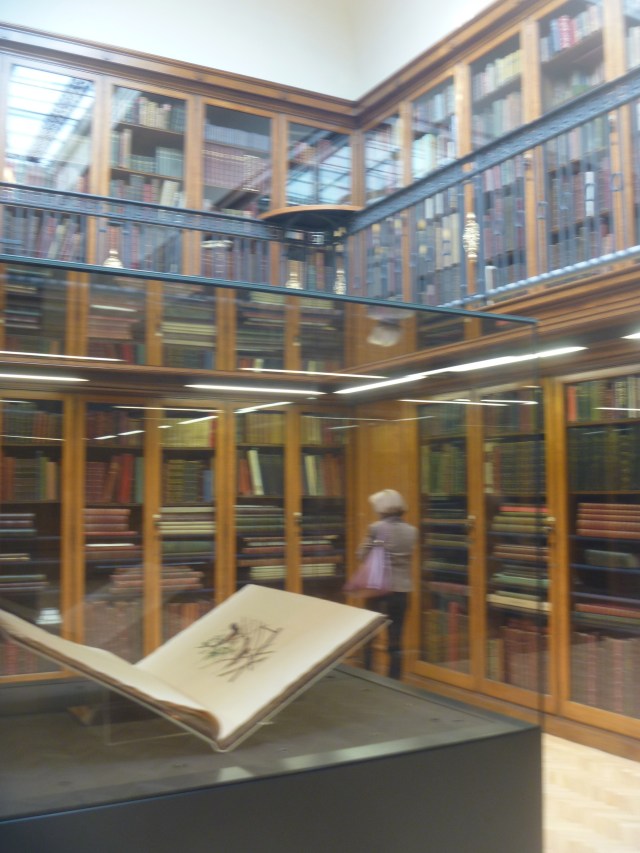
The Oak Room with Audubon Display

The Oak Room was the last addition to the Picton and was opened in 1914 as a special library for the rarest books in the building. 

It houses some 4000 books but pride of place must be the Birds of America by John James Audubon, purchased with a donation from William Brown’s partner in America, Joseph Shipley.

Source

Hornby Library

Detail of The Hornby Room

The Hornby Library was the donation of a wealthy Liverpool merchant, Hugh Frederick Hornby.

He bequeathed his collection of books, prints and autographs to the City in 1899 together with £10,000 for a building to house it.

The building is full of Edwardian opulence with ten alcoves to display the many rare bindings and a gallery above. It was designed by the Corporation Architect Thomas Shelmerdine and was opened in 1906.

Source 

P1110736

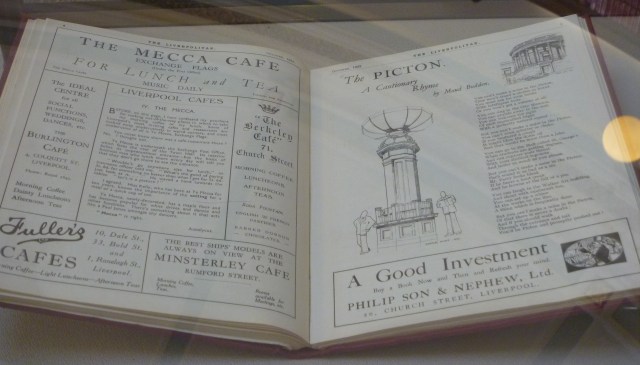
The Liverpolitan Magazine, 1932

But it’s not all restored Victorian – there’s an exciting modern children’s library in the former Picton Hall below The Reading Room.

Children's library

The Children’s Department

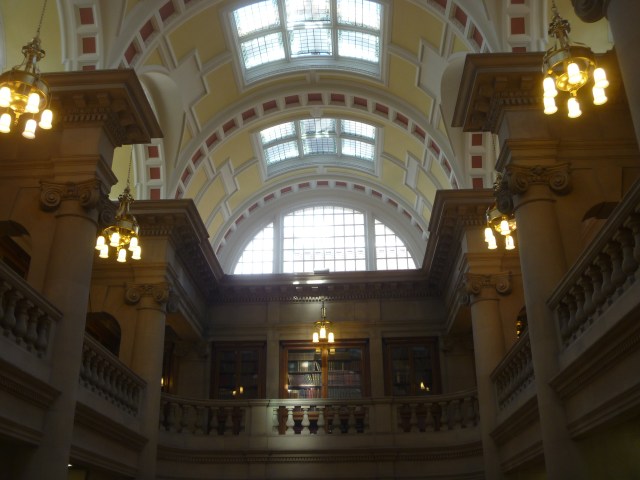
Library Dome

View of the Dome from the Ground Floor

Read more about the library and its services here. Well done, Liverpool, you have a public library worthy of your UNESCO World Heritage Site status.

Bergün and its Railway Museum

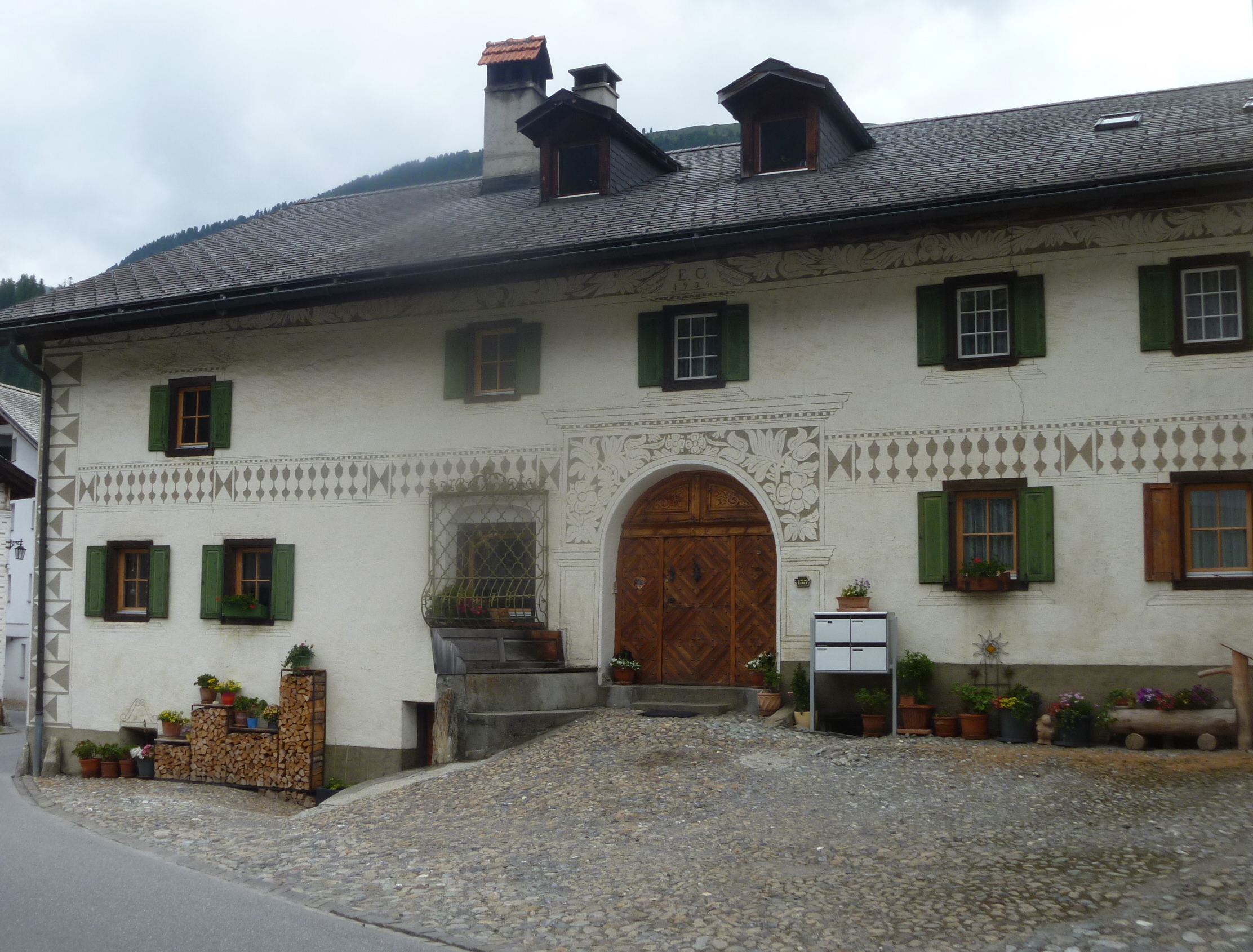
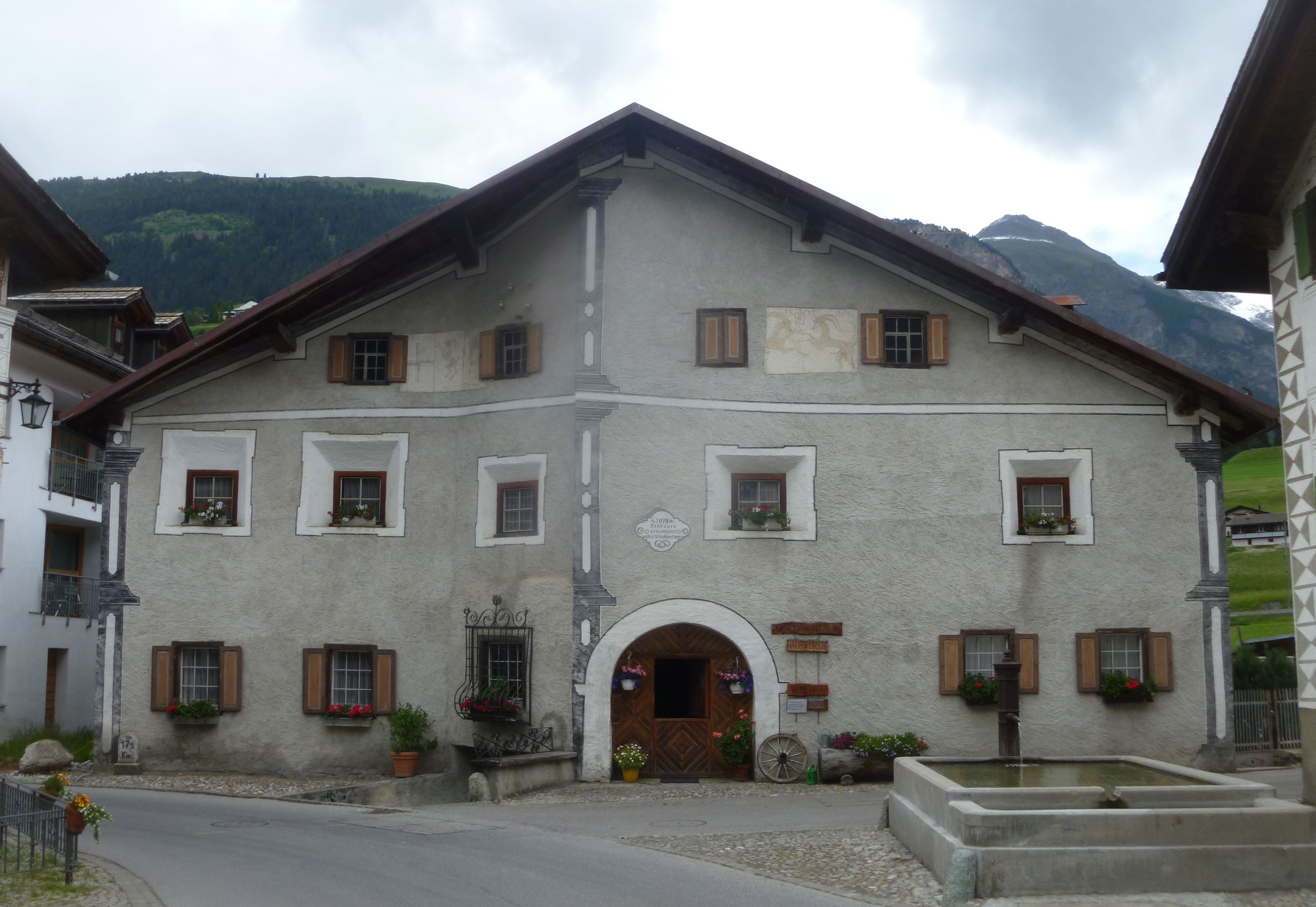
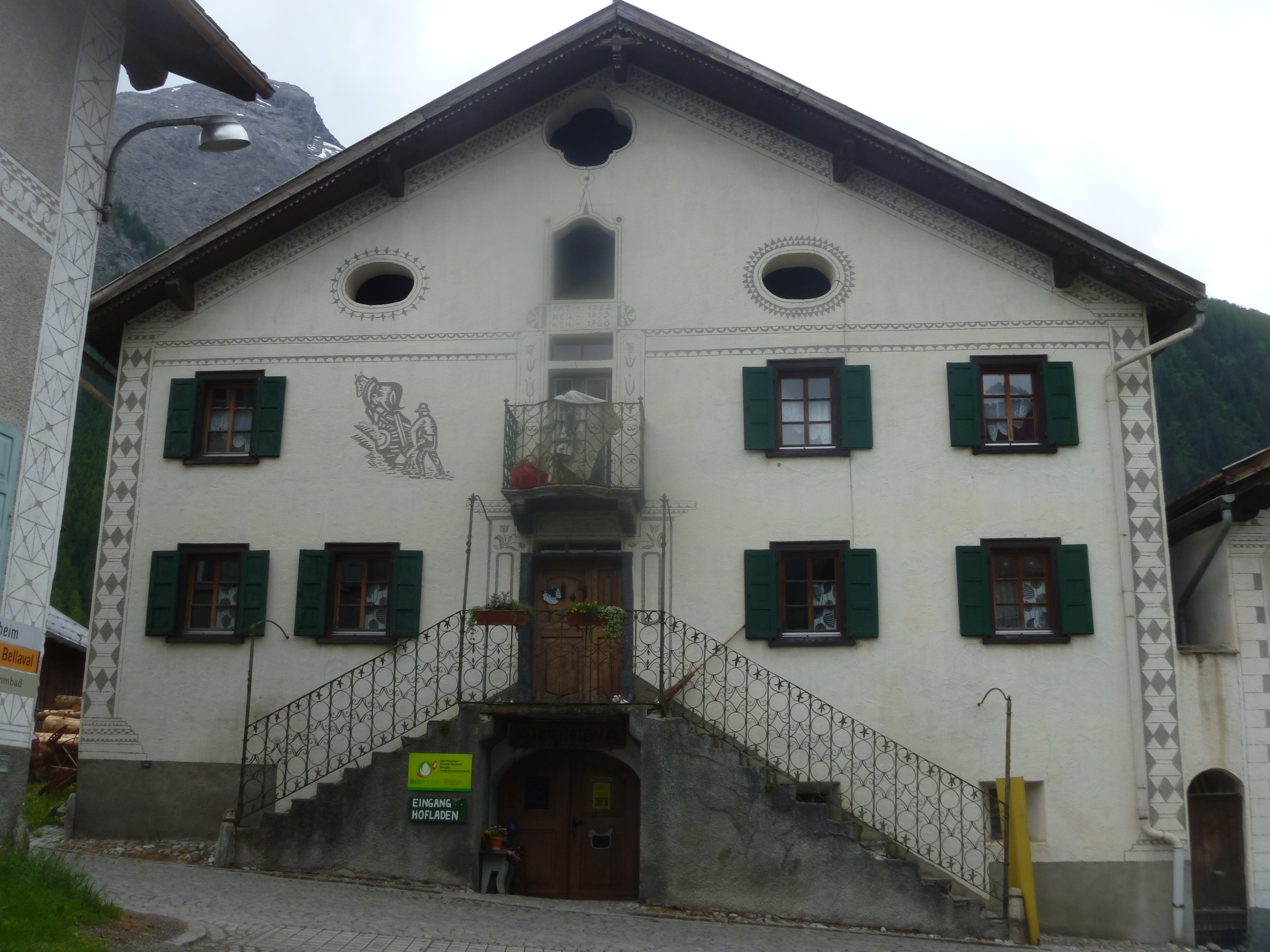
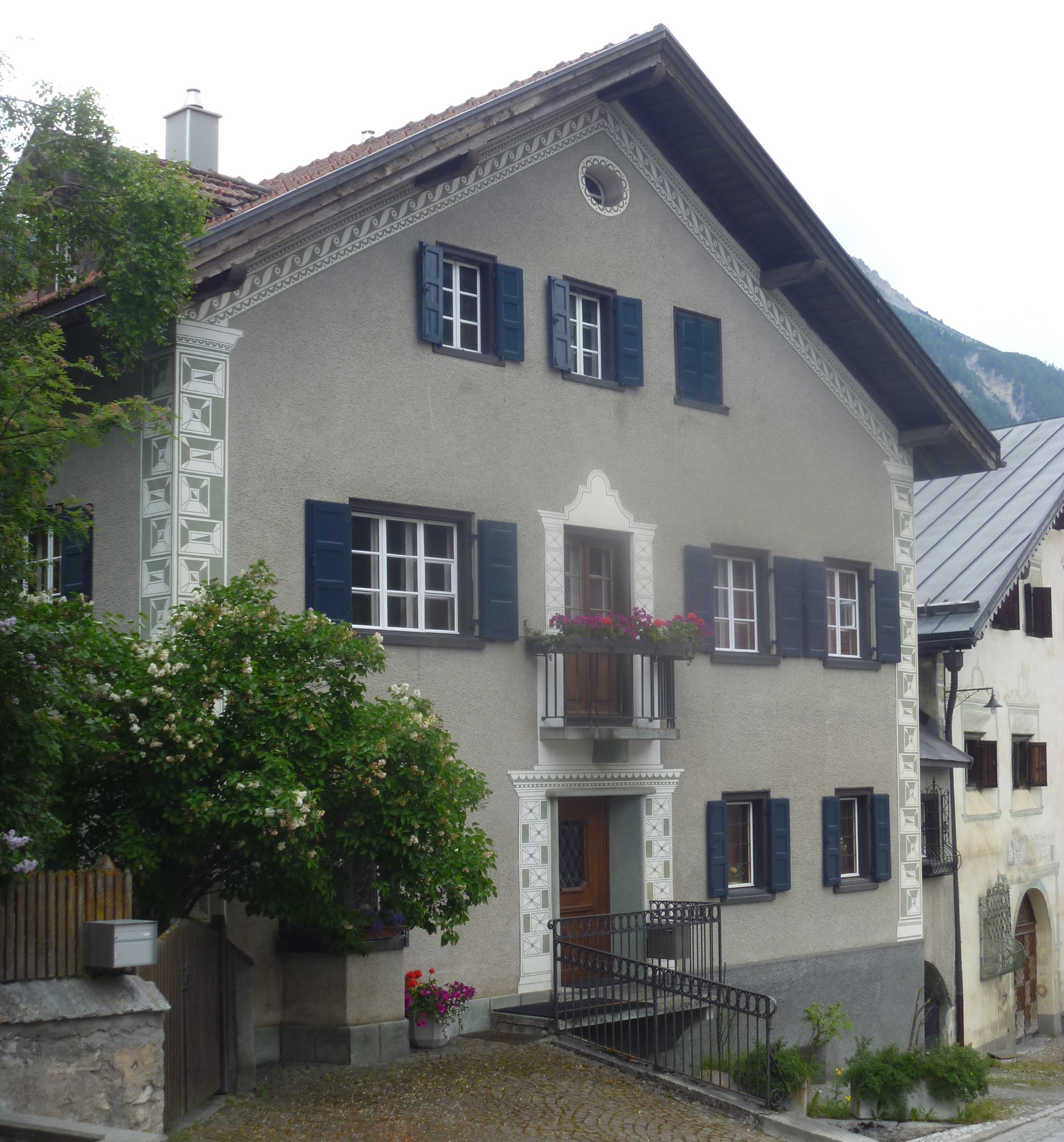
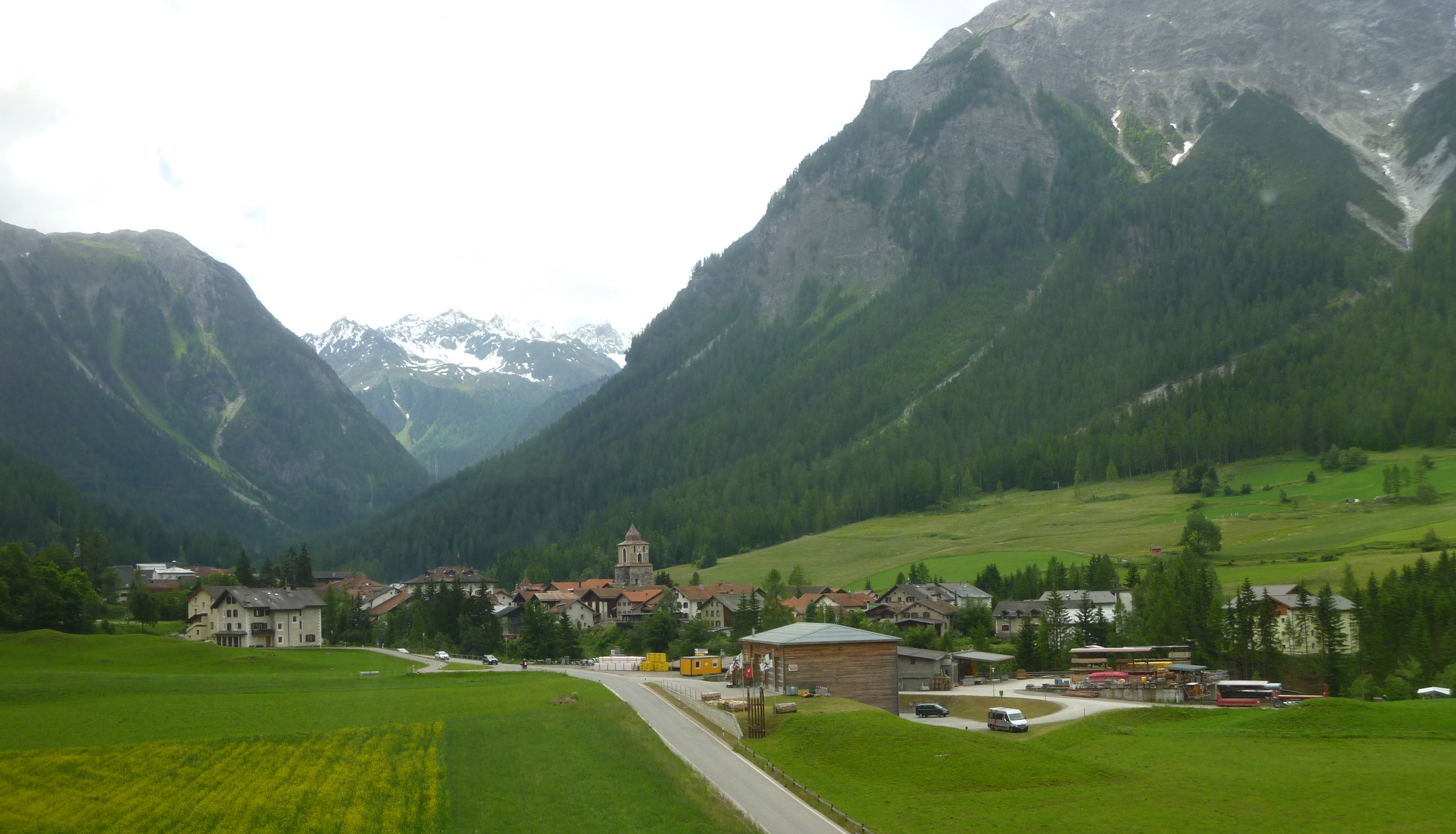
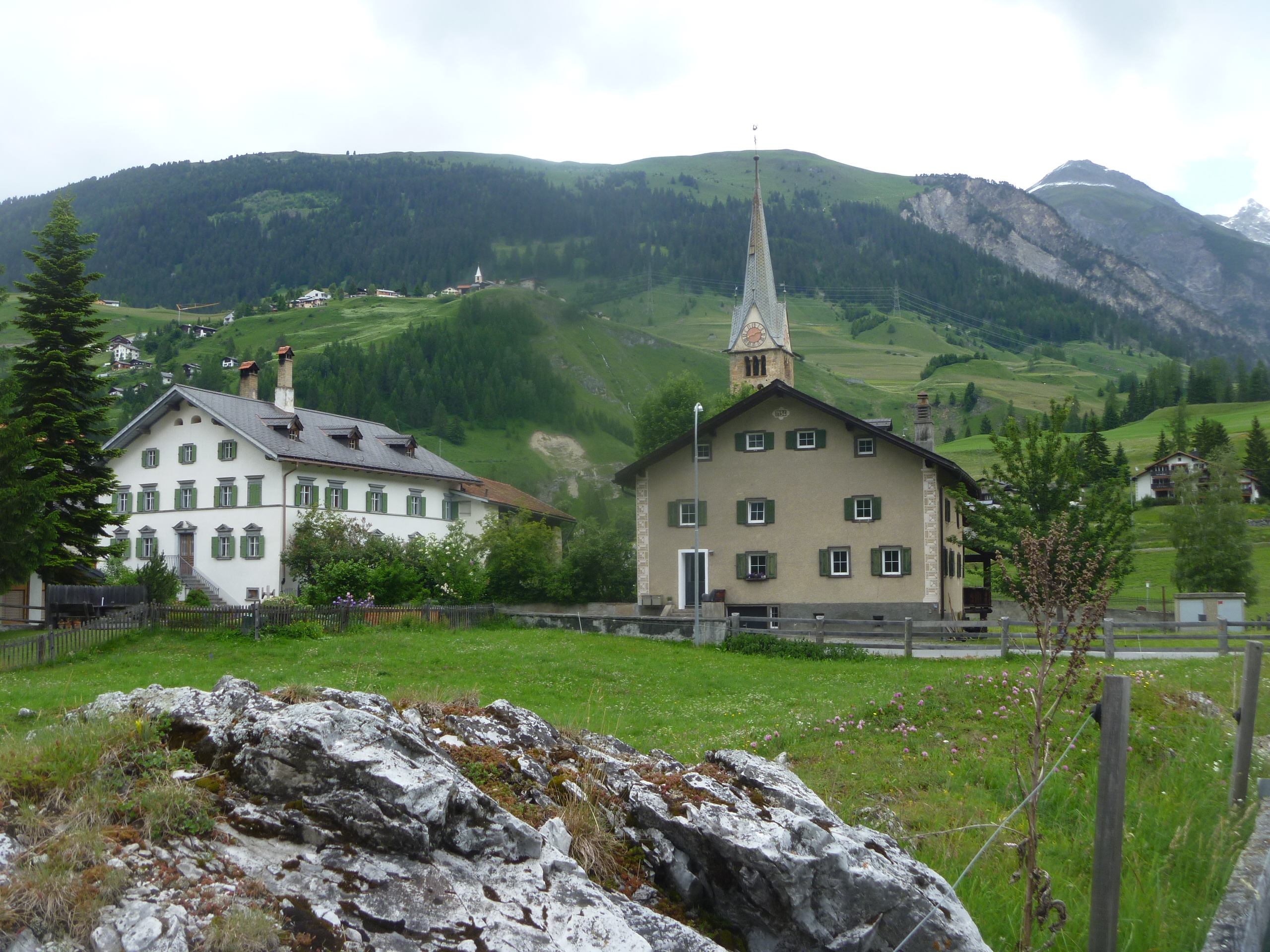
When I arrived in Bergün after the hike down from Preda along the Erlebnisweg [Historic Railway Trail] I was delighted to find such a lovely old traditional village with so many houses typical of the region. These picturesque Engadine houses are lavishly decorated with sgraffito, frescoes and oriel windows and there’s an 800 year old Romanesque church and a Roman tower all amazingly unchanged.

Engadine Farm Bergün

Engadine House 1

Engadine House 2

Engadine House 3

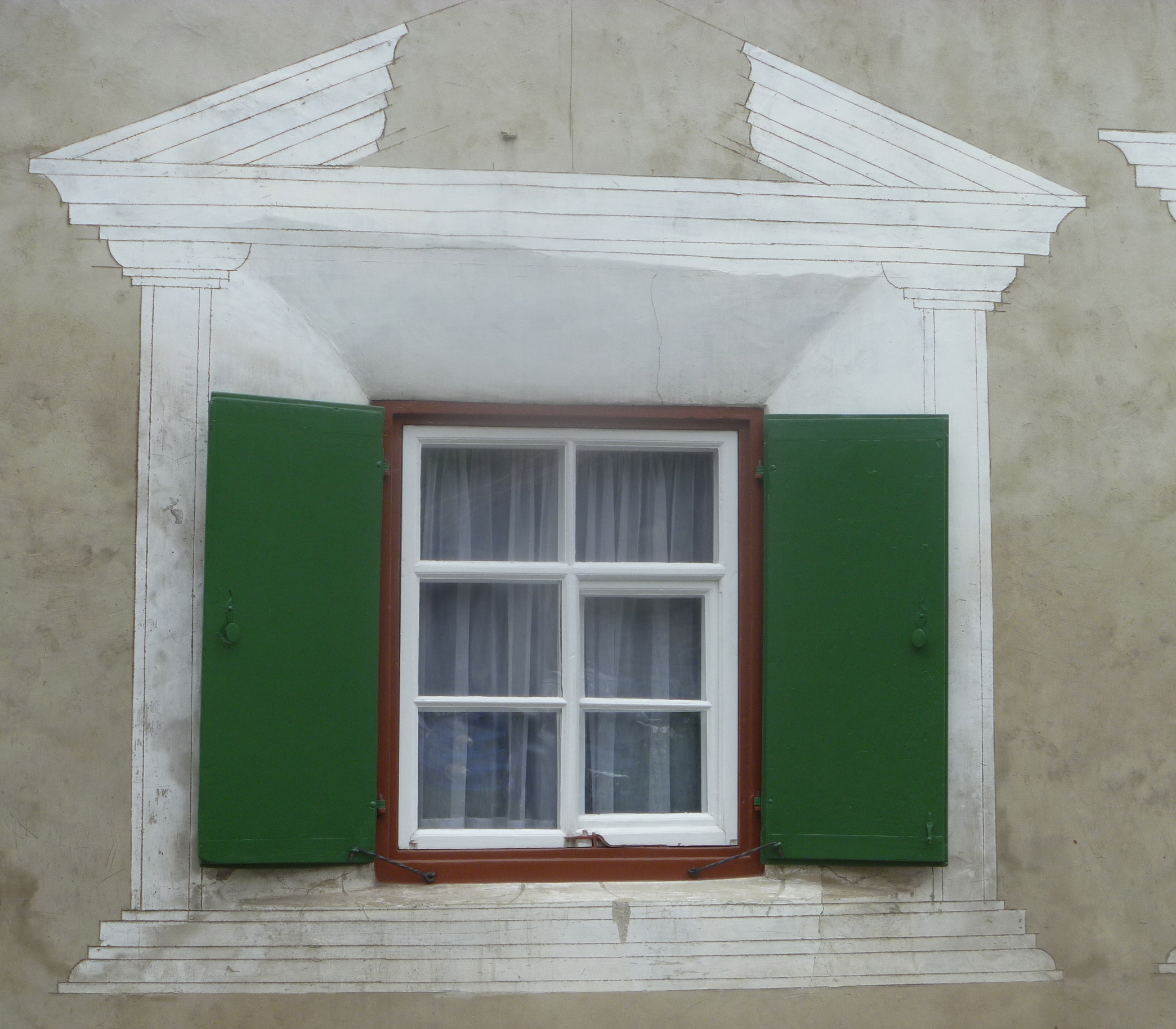
Trompe L'Oeil window

An example of the sgrafitto or trompe l’oeil window

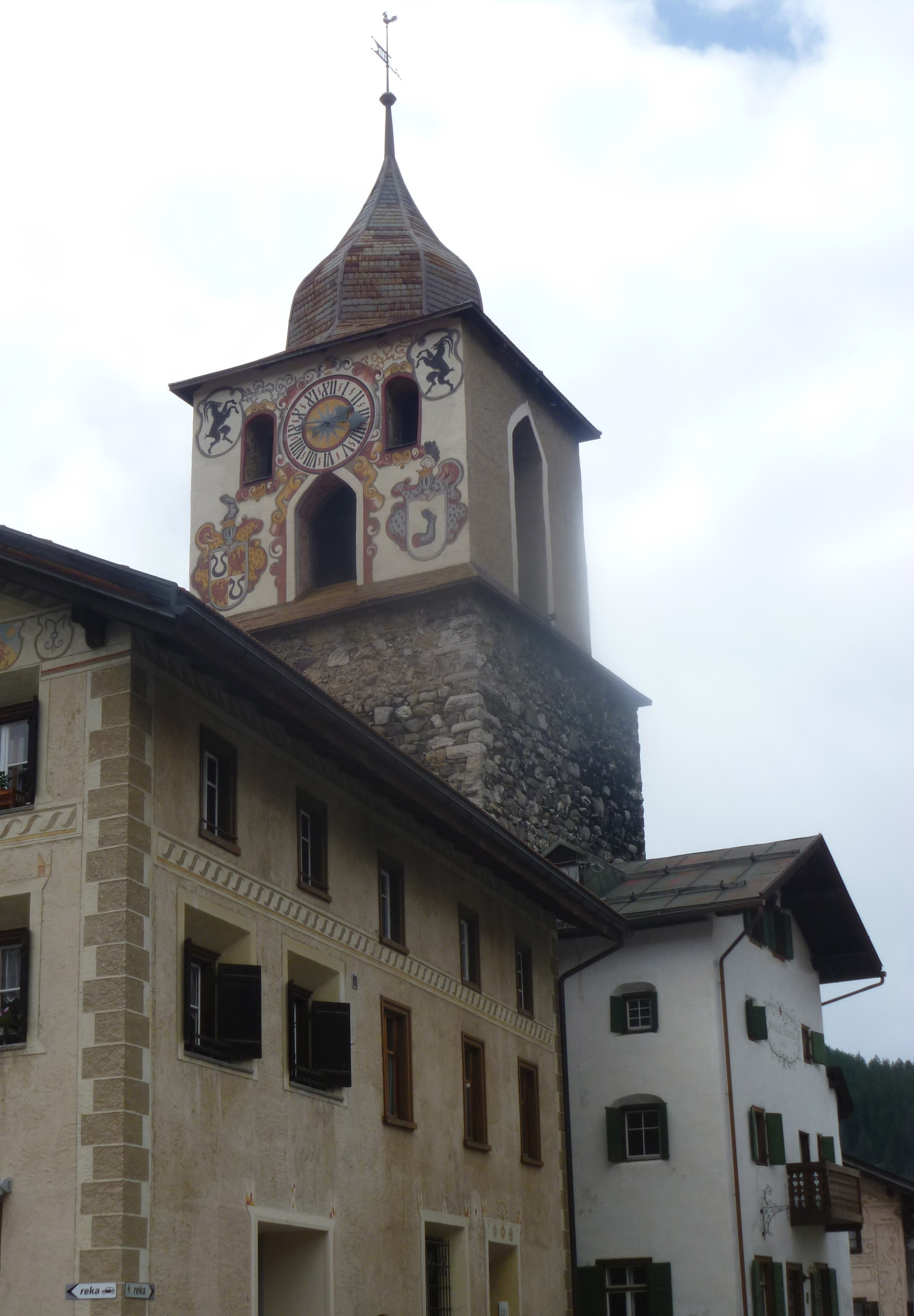
Bergün Church

The church

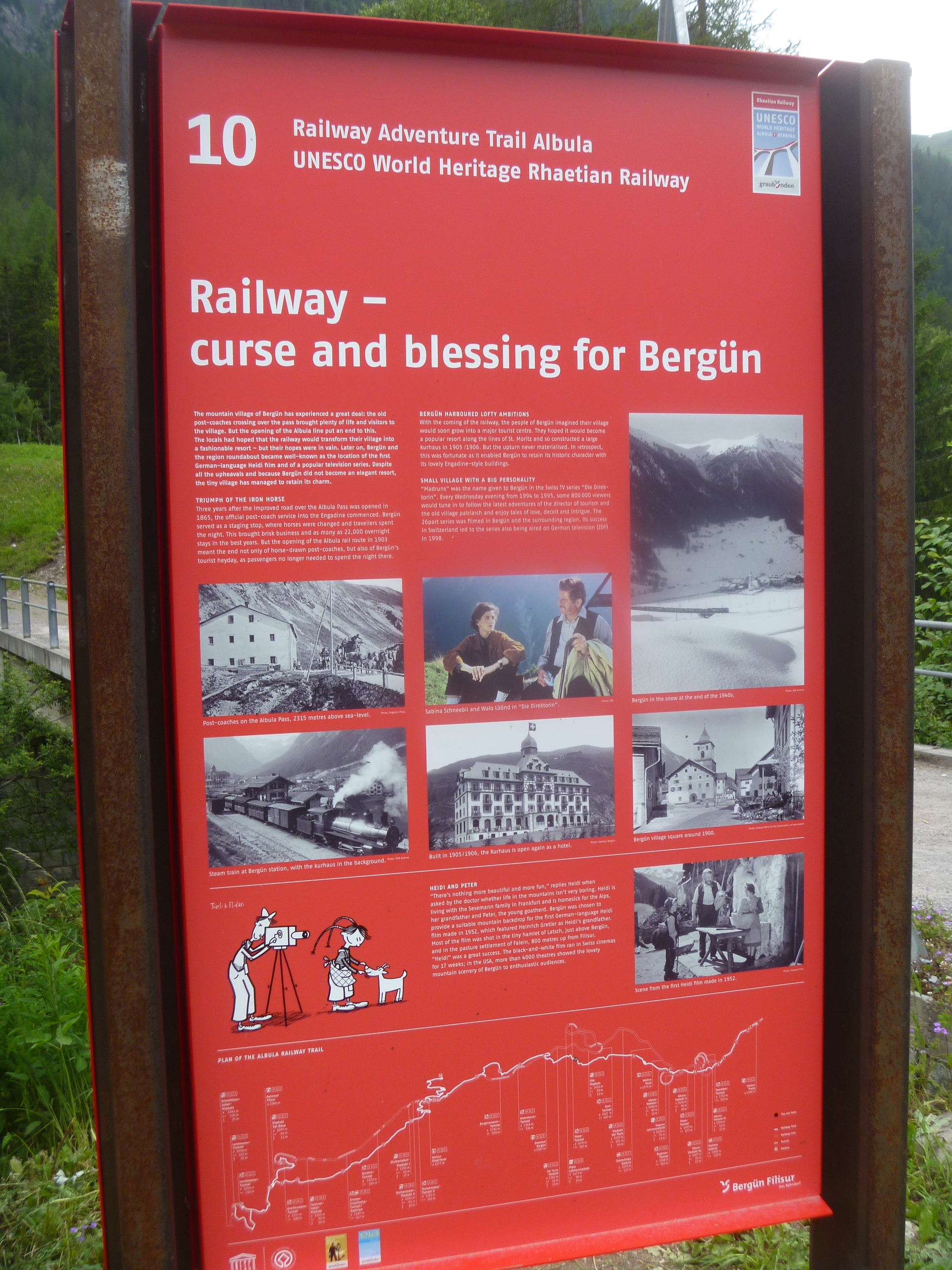
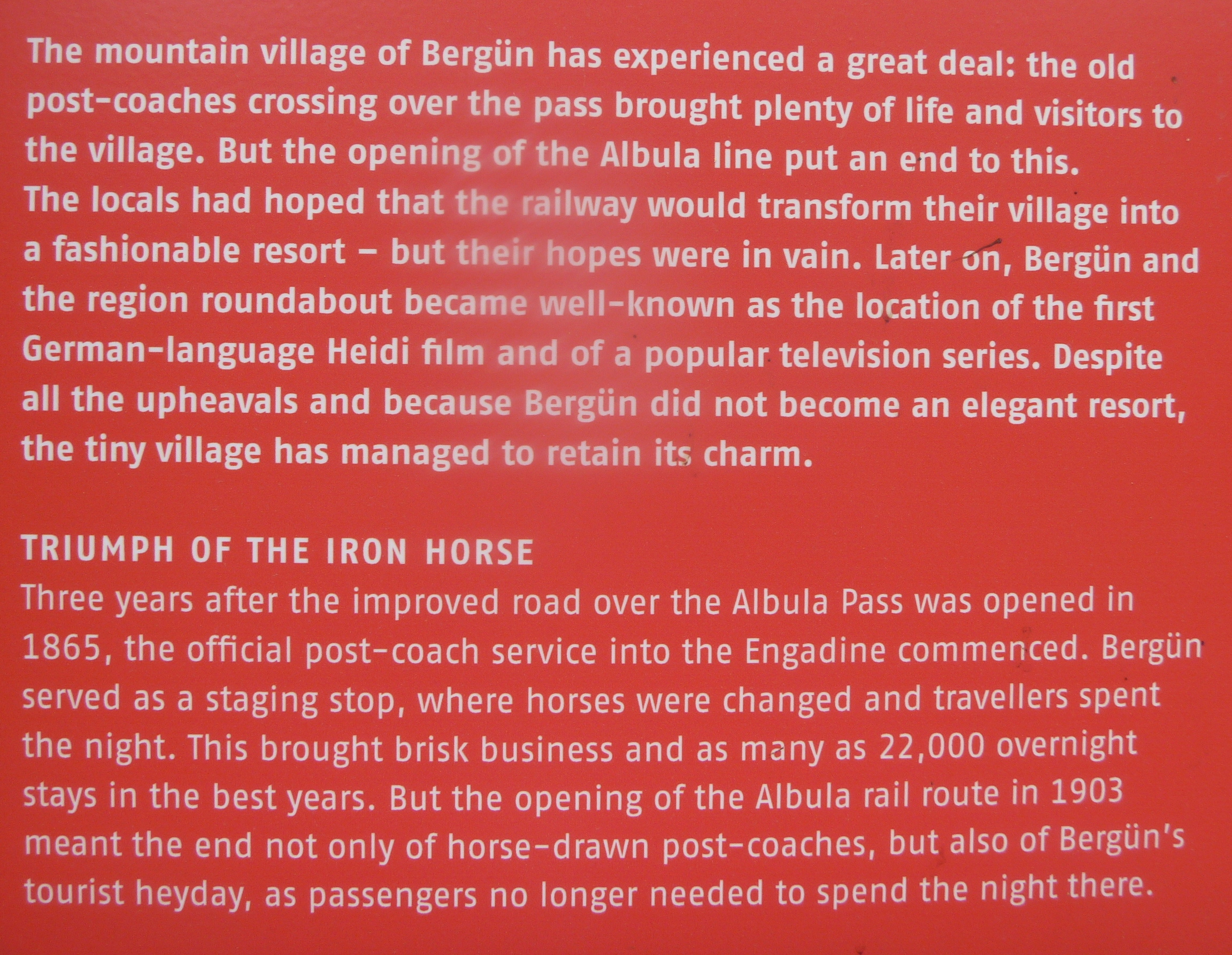
According to the Information Board just outside the village the railway has been a curse and a blessing for Bergün. Back in the nineteenth century the village did a brisk trade in accommodating overnight guests/tourists who were in transit by coach but after the opening of the railway in 1903 it was no longer necessary for horses to be rested and watered here.

Preda and Bergün are both popular for sledging in winter although quite where this is carried out is a mystery to me.

Info Board

Curse or blessing?

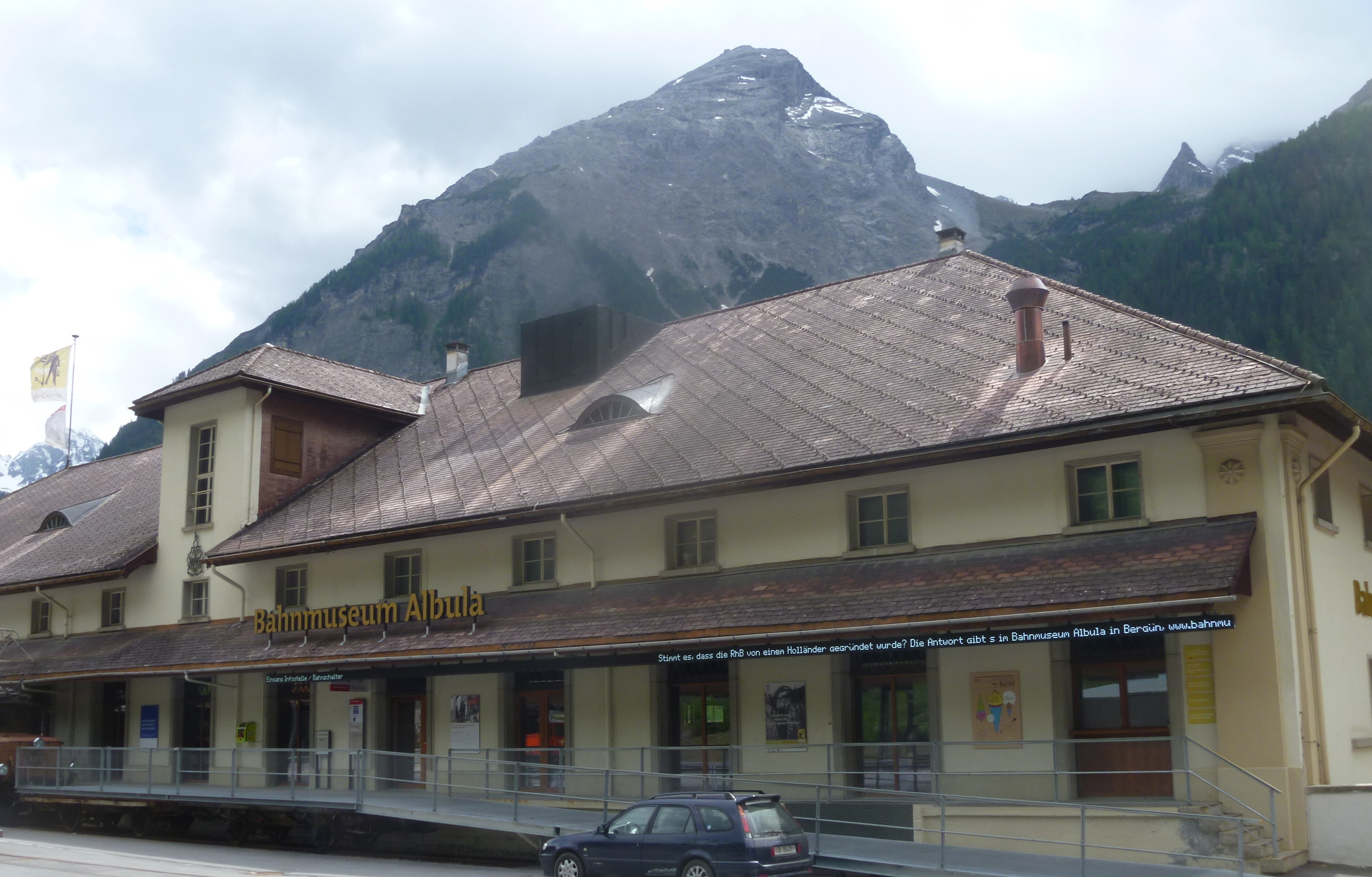
Finally, I arrived at the station where the Railway Museum is located in a converted station building. Despite all the ads for it that seemed to be appealing to children I found it a very adult museum but maybe I wasn’t viewing it from low enough down. For all that, this probably made it more interesting to me. Or would have, had I not been reading all the information boards along the footpath. A lot of the stuff was a bit repeated from them.

Museum

After the obligatory shop and cafe you enter the museum itself. The first room is filled with screens showing film of the Simla Railway. Like the Albula Line it is also protected by UNESCO World Heritage status. Built at the end of the 19th century it improved access from New Delhi to the cool summer British residence of Simla. Two Swiss artists made the films travelling on the railway itself. There is no hectic rush as the train and its passengers chug their way up from Kalka to Simla. There is no apparent Health and Safety Advice either by the looks of it. The films are actually very therapeutic and show a relaxed mode of travelling.

Simla Line

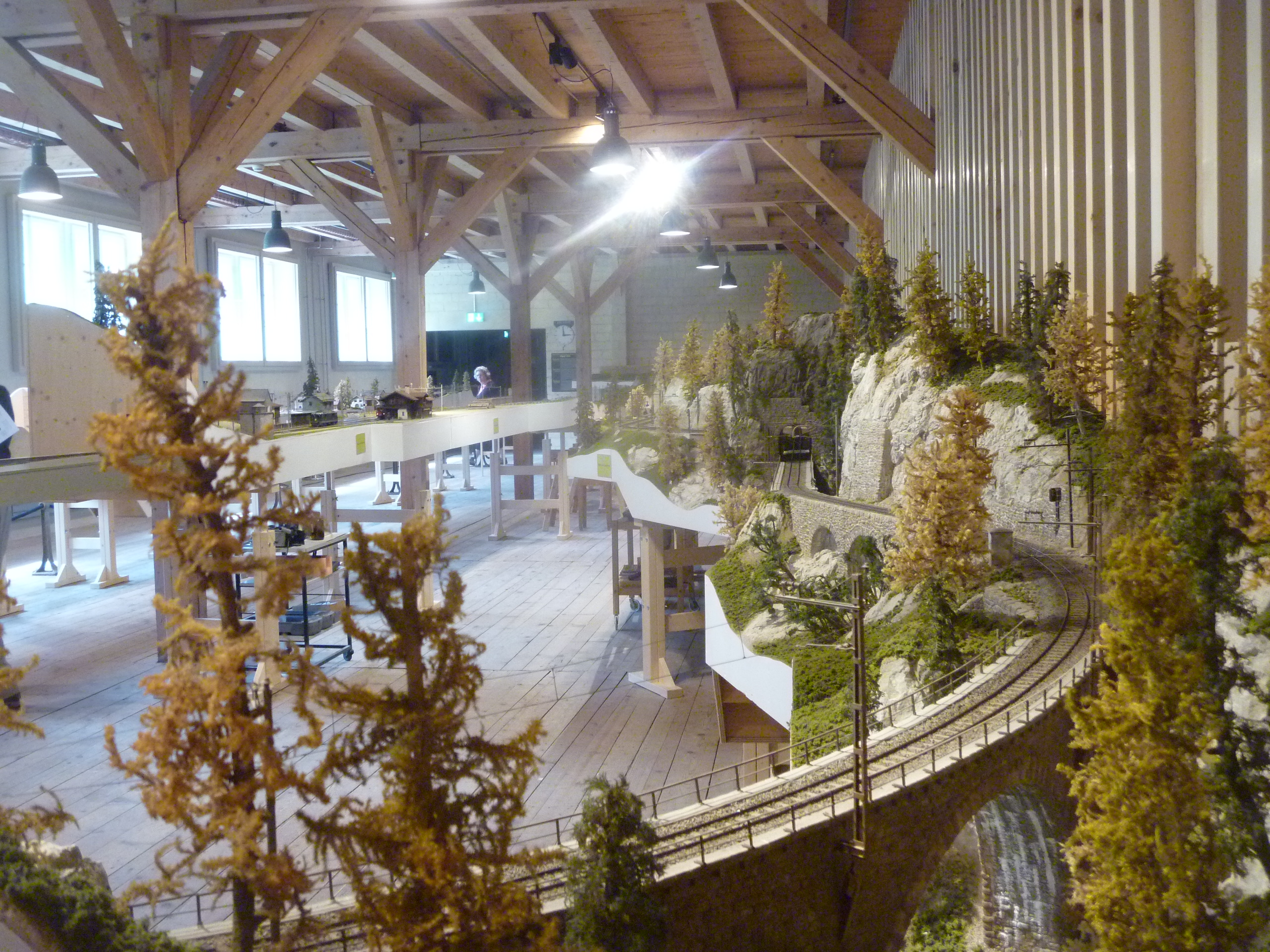
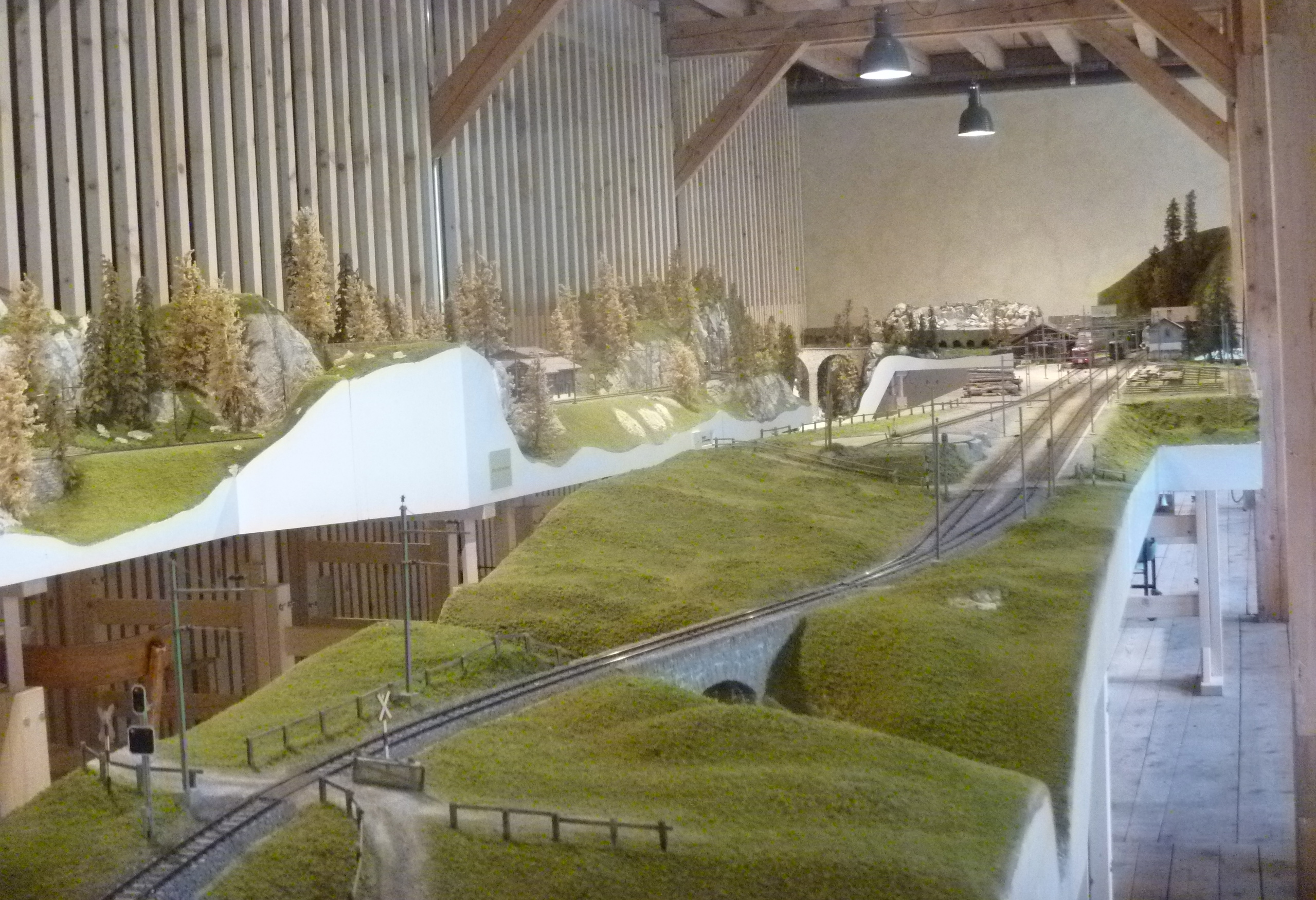
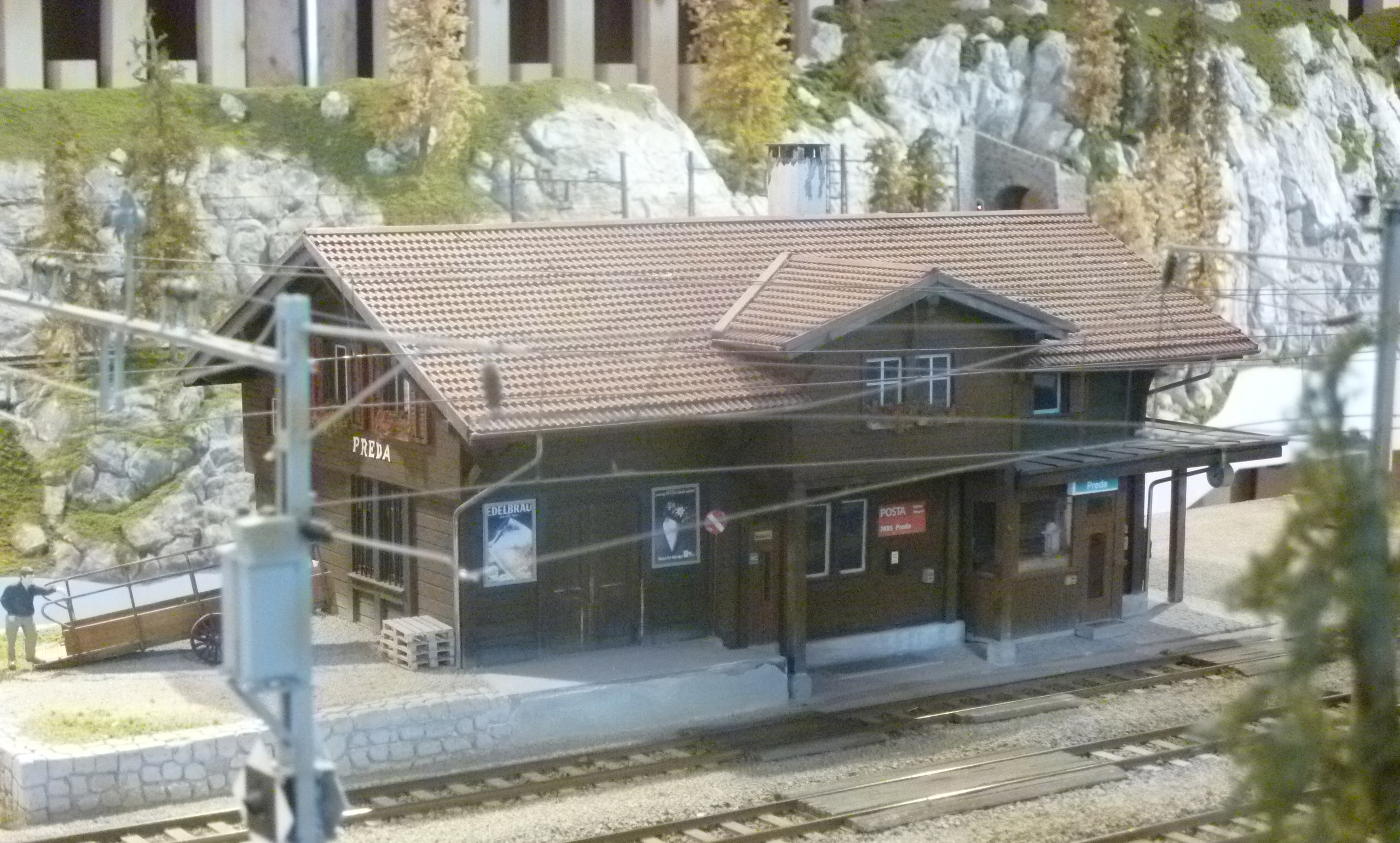
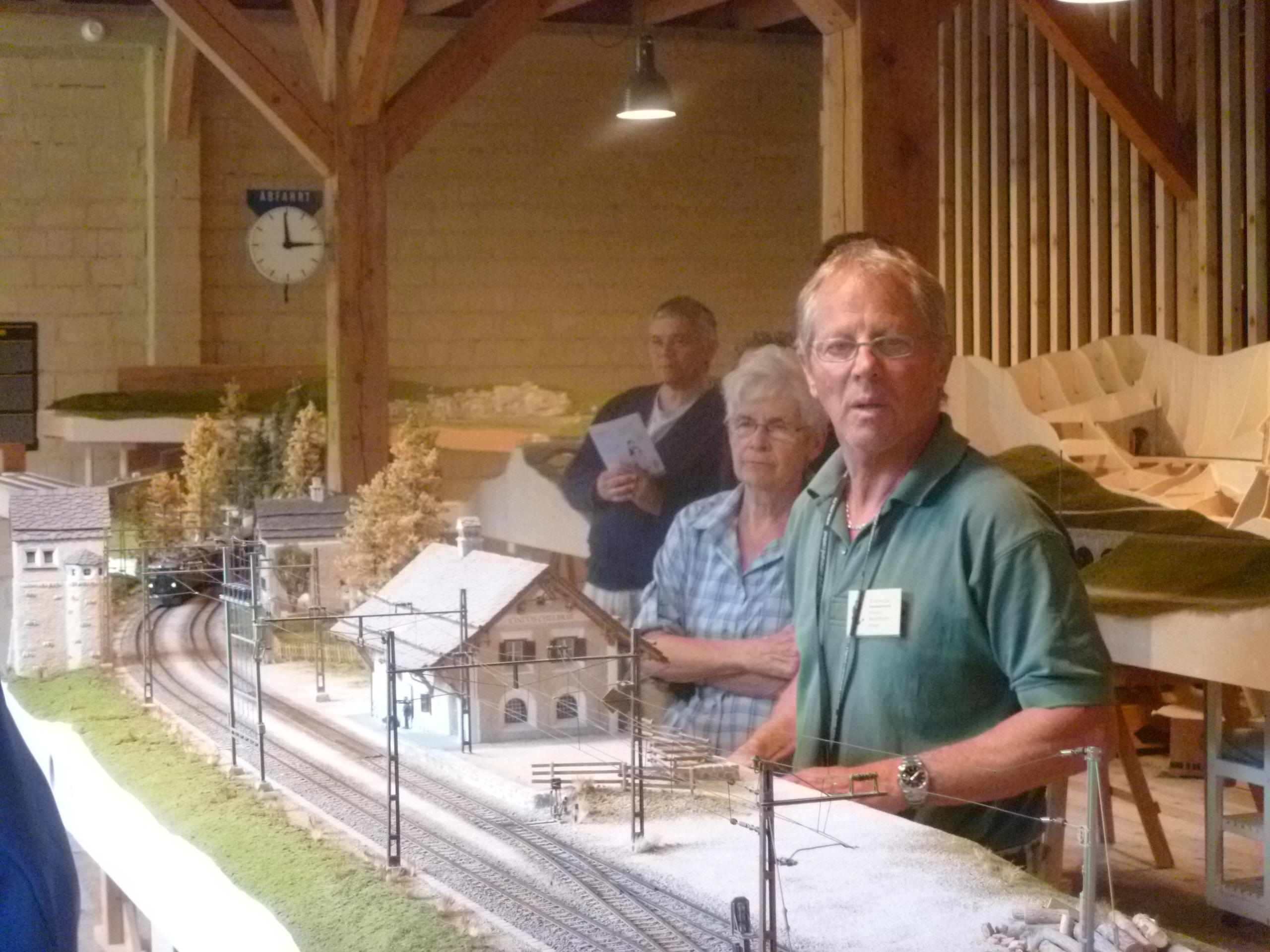
The next room is filled with Mr Bernhard Tarnutzer’s train set. Mr T is passionate about the Albula railway to such an extent that he is building his own miniature version (0m guage/Scale 1:45). He began building it at home but is so large now that it has been transferred to the Museum and has a ‘hall’ of its own. He was there on Friday demonstrating its operation to a few of us. The buildings, viaducts and tunnels have been recreated as they were in the 1950s and 1960s with every detail as near as dammit to real life. I’m not so sure however that it’s so interesting to children as it’s mounted at about a metre from the floor. There is still quite a bit of work outstanding until it’s finished.

The train set 2

The train set 1

Preda Station Scale 1:45

Mr Tarnutzer

Mr Tarnutzer explains some technical points

Upstairs there’s lots of interesting stuff and artefacts connected with the building of the line, its history and operation and the resorts that it serves. There were a few hats for children (and me) to try on but otherwise a rather dark area and somewhat adult commentaries when you press the buttons for explanation.

A fascinating day in spectacular surroundings. Most enjoyable.

“High Mountains, deep gorges, harsh winters : ideal for a railway” : The Albula Experience Way

Now and then you spot a train

Swiss Railways [SBB] always make a few special offers each month and before coming away I received notification of the June offers from the SBB. In the list was a 30% discount for a return journey from your local station to Bergün and the same off the entrance fee to The Railway Museum Albula just by Bergün Station.

Bergün from train

Bergün from the train

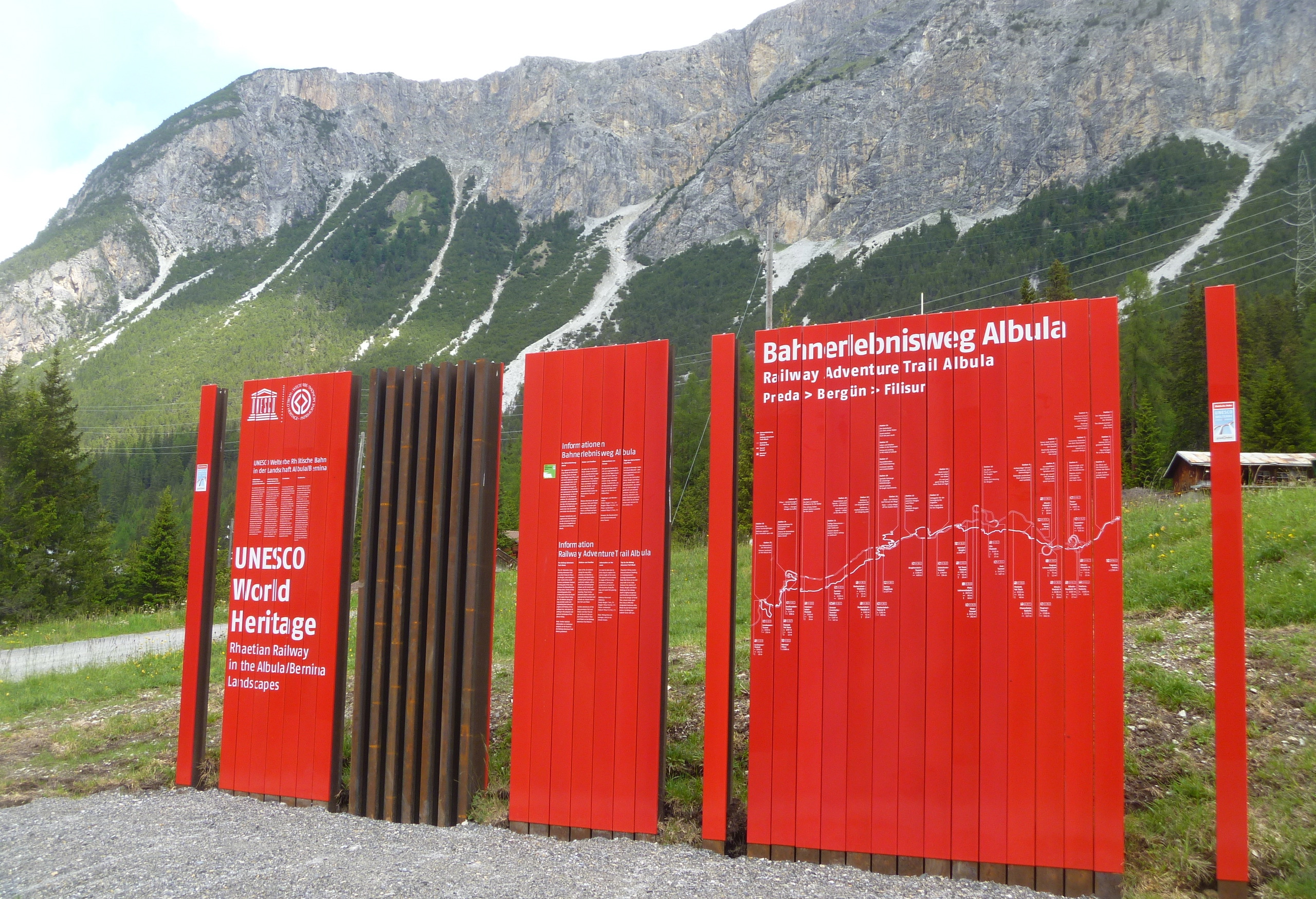
On further investigation I discovered a newly opened footpath the Albula Erlebnis Weg [The Albula Experience Footpath]. The path starts at Preda, the next station up the line. It’s all part of the UNESCO World Heritage Albula + Bernina.

UNESCO World Heritage

UNESCO World Heritage – A masterpiece of railway engineering

The line across Albula and Bernina, now more than a century old, is regarded as a truly unique masterpiece of the railway engineer’s art. Designed from the start to exist in perfect harmony with its surrounding countryside, the line stands as a monument to the pioneering days of railway-building. Since July 2008, the Albula and Bernina lines of the Rhaetian Railway have been on the UNESCO list of World Heritage sites.

Where landscape and railway blend into one: in a series of wide expanses and elegant man-made structures, along the winding route through abruptly-sloping Alpine valleys. Monumental landmarks along the way include the Landwasser Viaduct, the series of winding tunnels between Bergün and Preda and the Circular Viaduct at Brusio. The line continues to be a model of its type.” Source

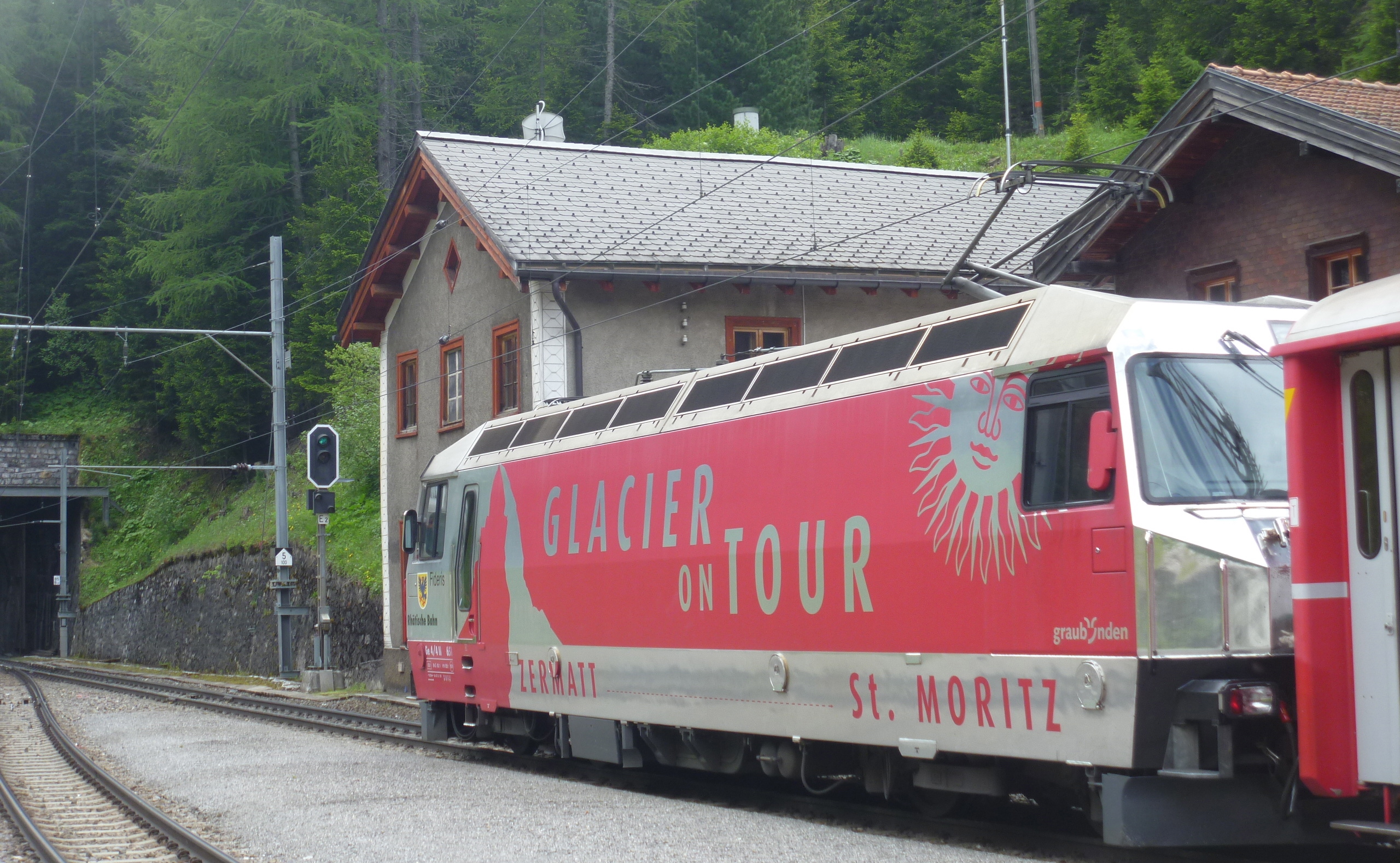
Last Friday was my day off so the perfect opportunity to take advantage of the offer whilst it was still on. The journey there and back involved 4 changes of transport. The line is up between Klosters and Davos-Glaris stations this summer so you must take two replacement bus services. Plus there is another change at Filisur for the Saint Moritz service – Glacier Express on tour.

Glacier on Tour

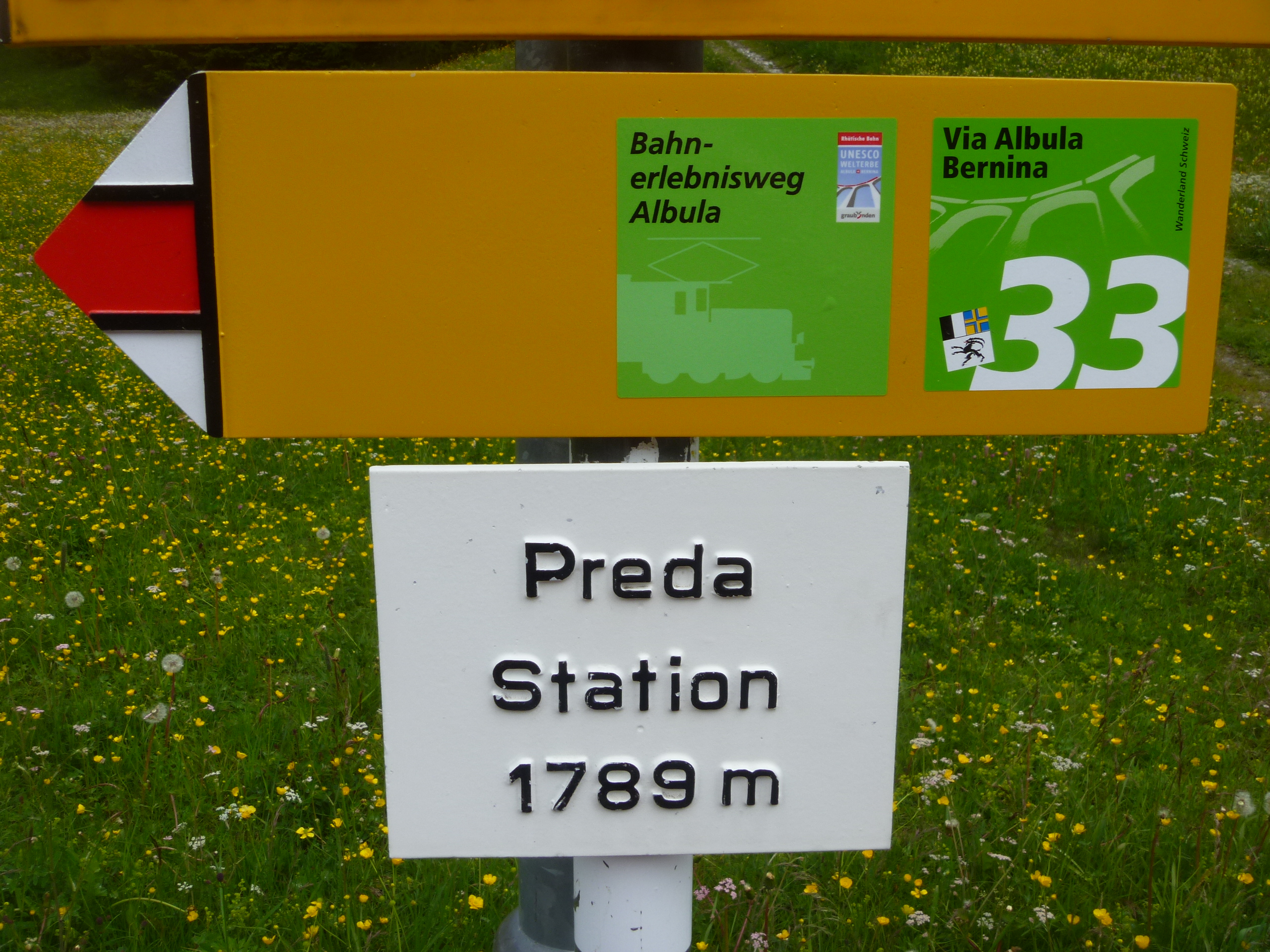
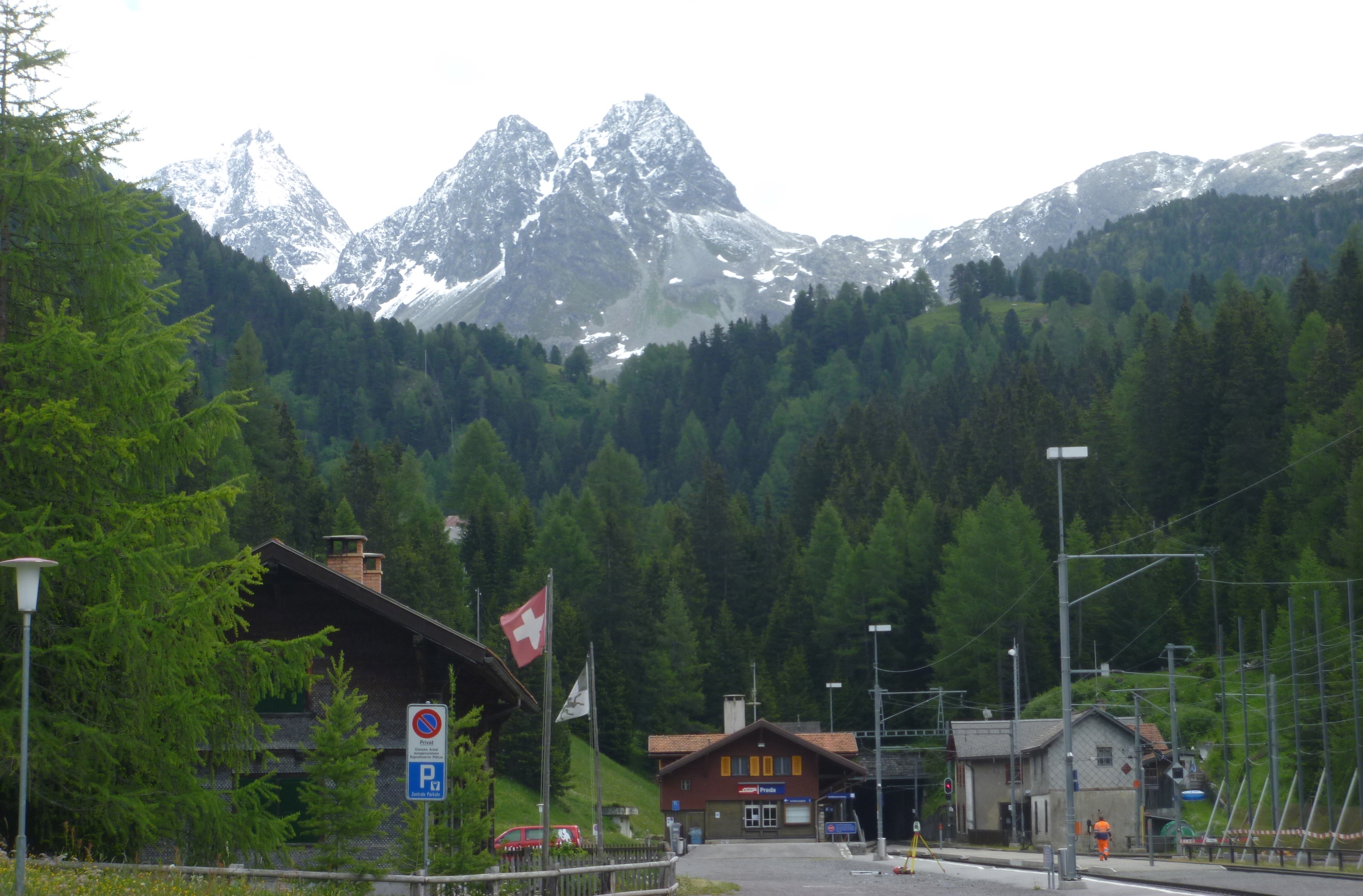
My add-on ticket took me as far as Preda. The weather this week has not been good but luckily I avoided all rain. However, I could have used a pair of gloves – it was freezing cold at Preda Station – 1789m ASL.

Leaving Preda Station

Leaving Preda Station

Preda station and sign

You can’t miss the Albula Way; it’s indicated clearly all along the route. Between Preda and Bergün there are ten information boards. The path continues down to Filisur with more boards but I only walked as far as Bergün as I had my Museum ticket.

Some features of the two hour walk :

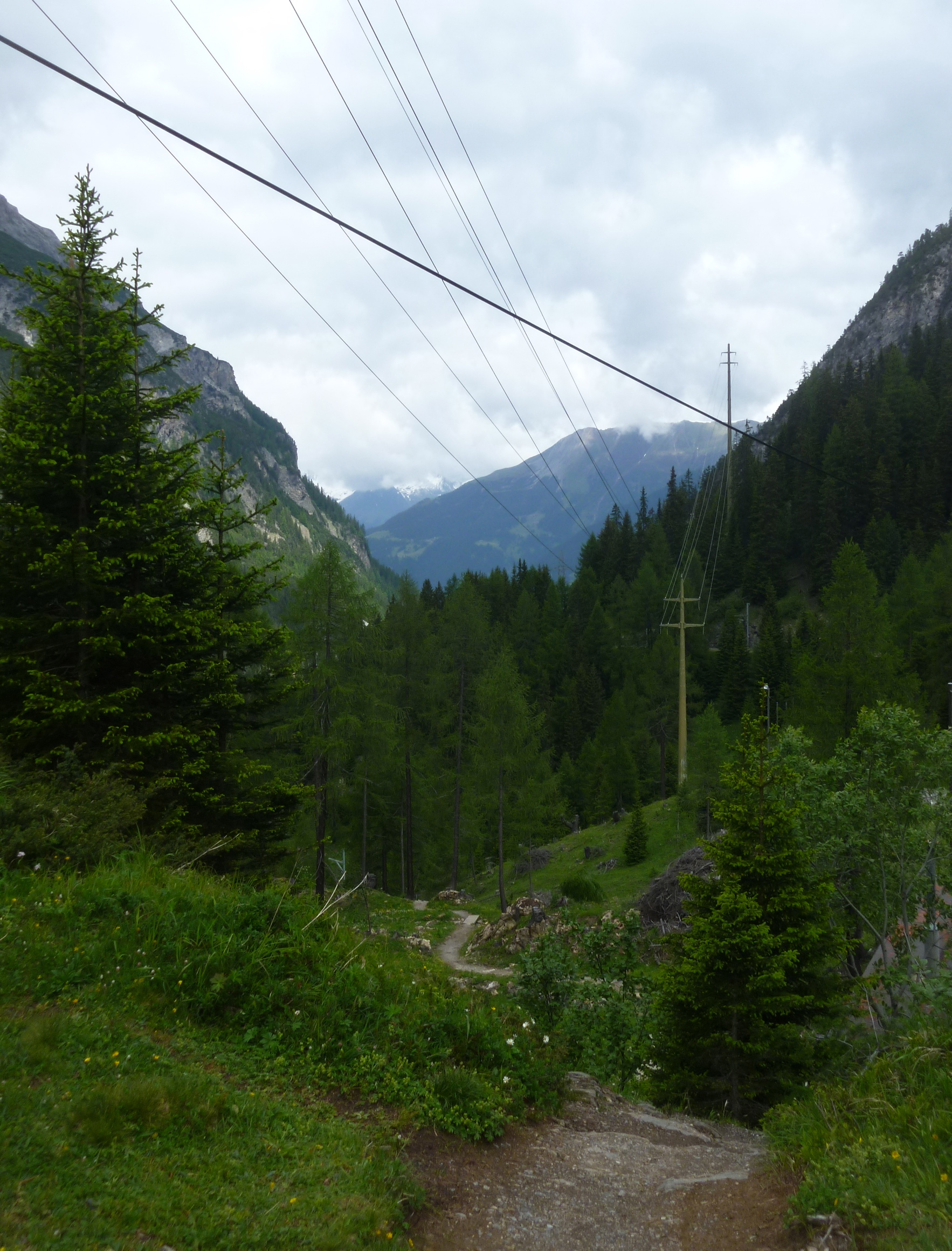
Path heads down to Bergün

The Path Heads Down to Bergün

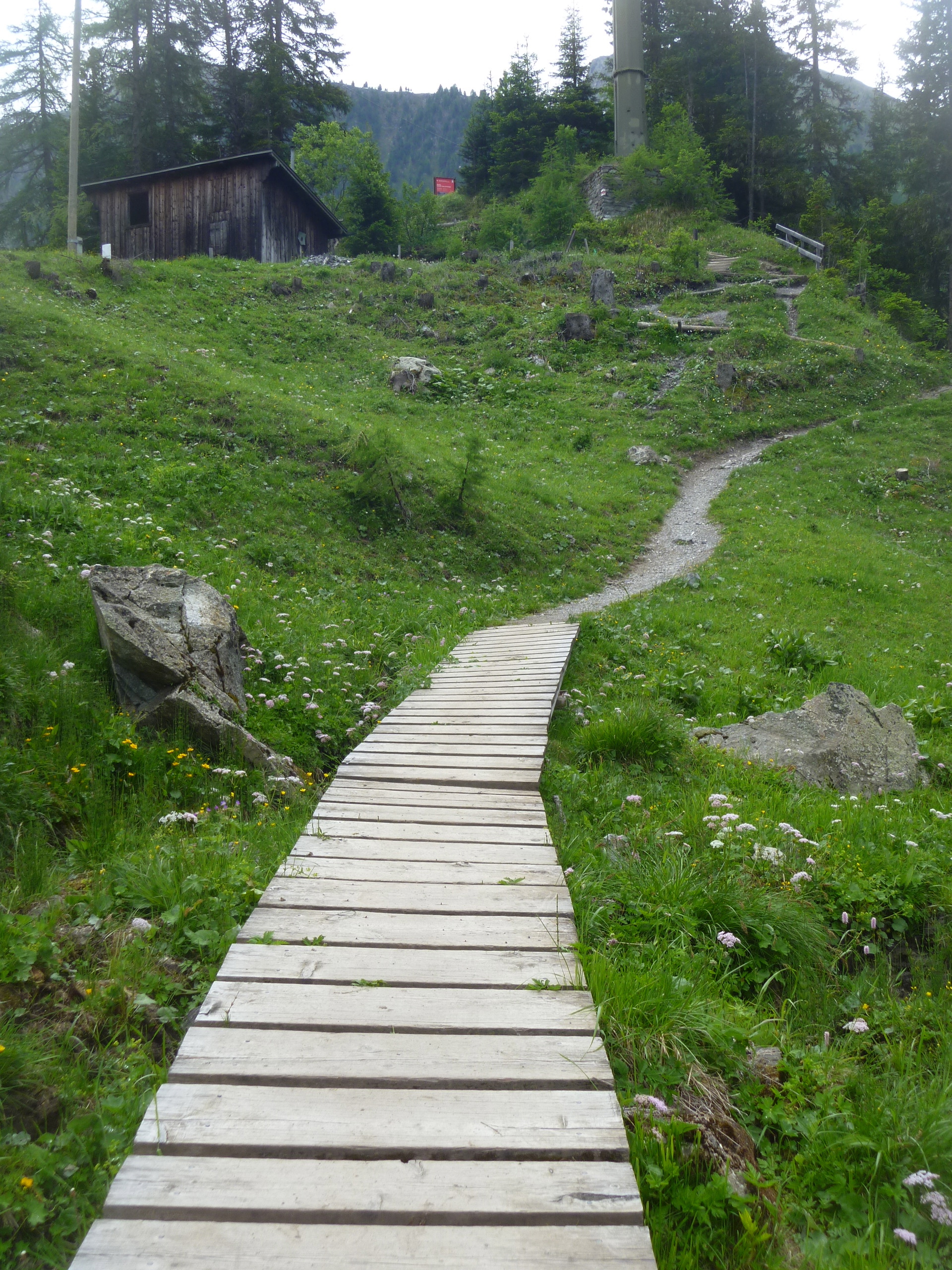
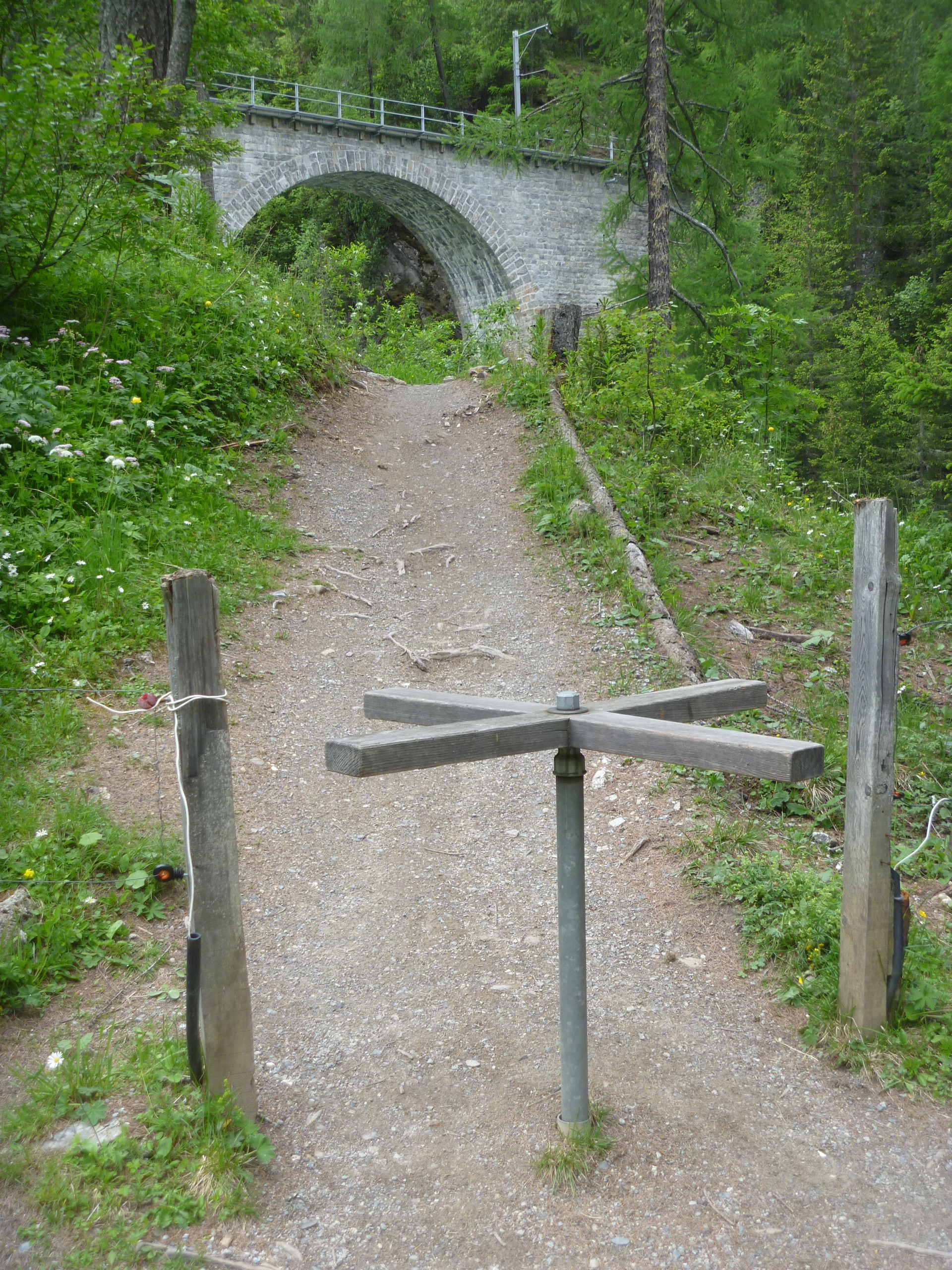
Don't worry about getting muddy!

Don’t worry about getting your boots muddy!

Swiss kissing gate

Swiss-style kissing gate

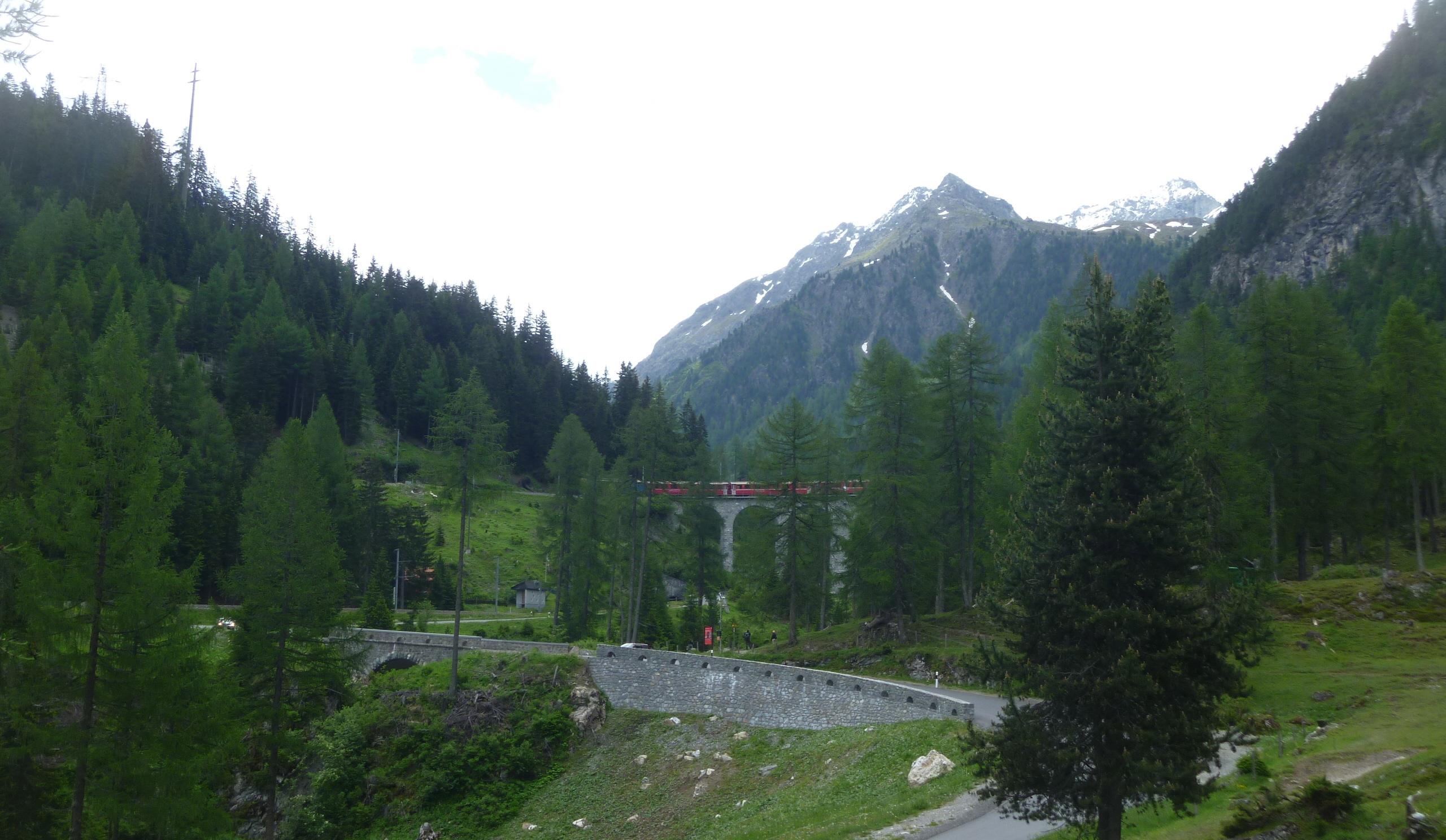
Another view of the train

Now and then you spy a train

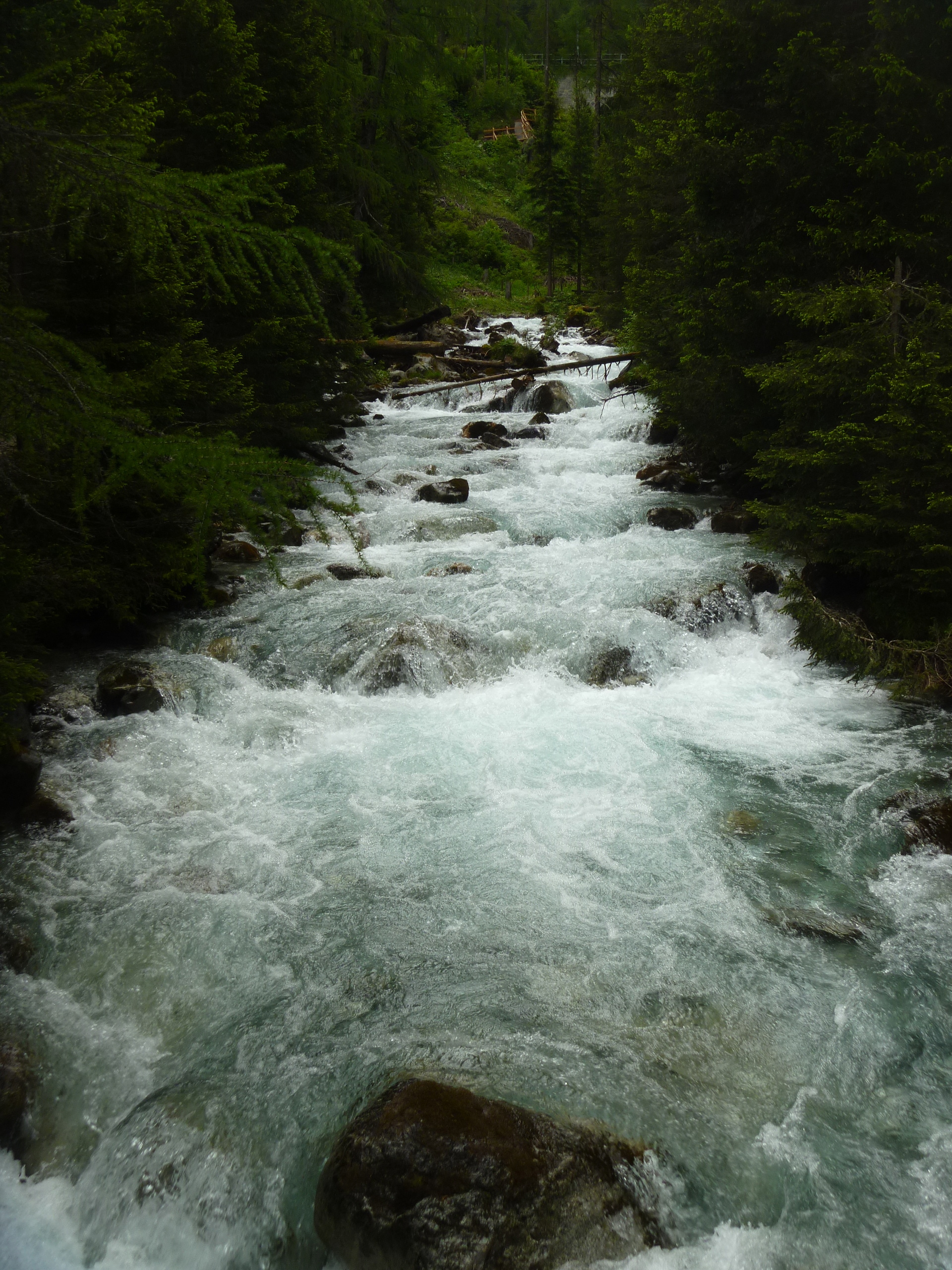
Lots of mountain torrents

You cross lots of mountain torrents

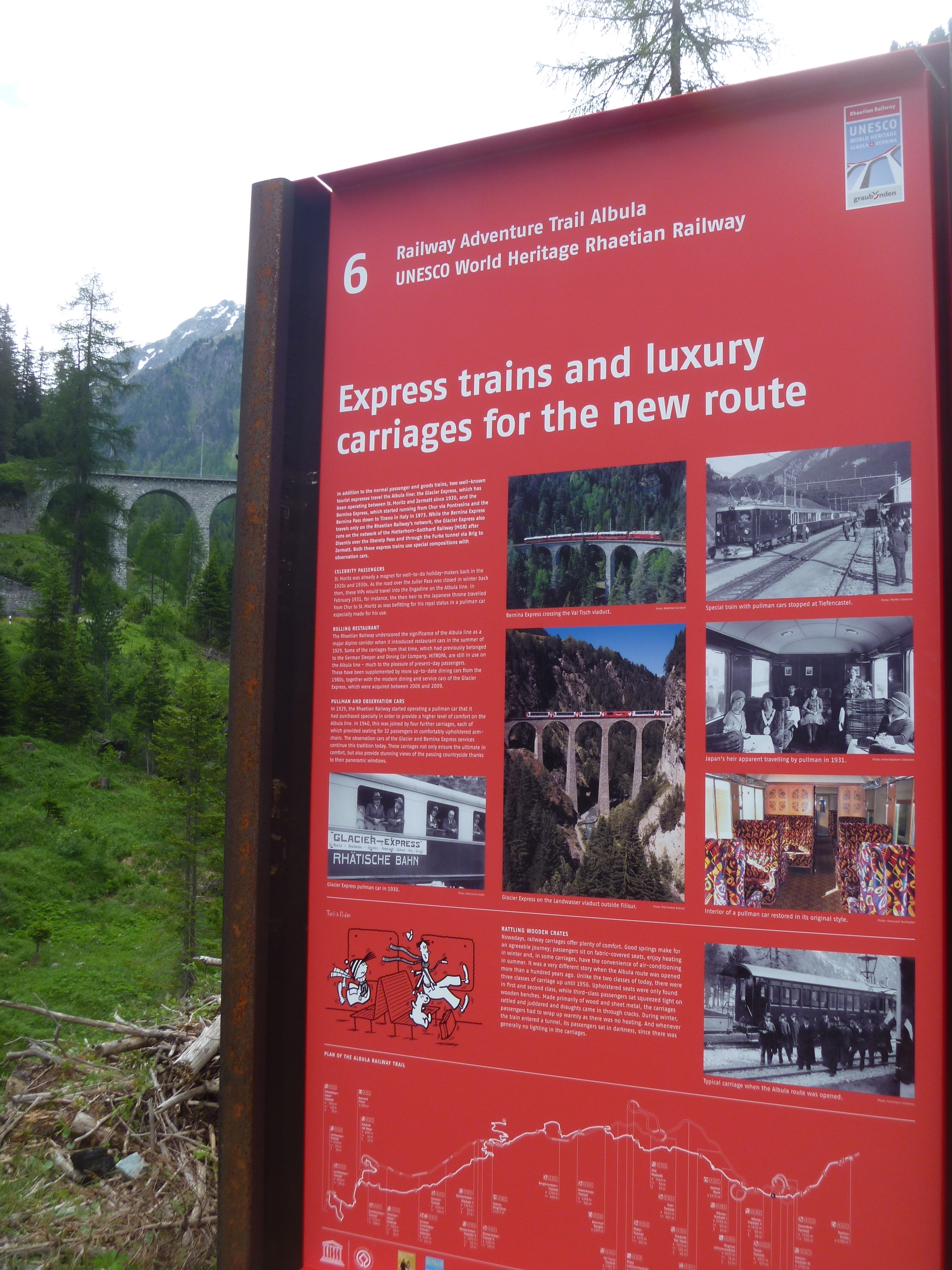
Typical Infor Board

You can stop and read the Information Boards

Arriving in Bergün

Finally, you arrive at Bergün

“Lo! Cintra’s glorious Eden” – A Day in Sintra

Here you will see that Lord Byron’s declamation still holds true today!

Our walk continued from Praia Grande for a further two days. We continued up the coast as far north as Praia de Magoito where the Sintra natural park ends and then turned inland away from the ocean views to the wine growing area of Colares. The town of Colares was  where we spent the next night and our journey on foot continued the next day to Sintra itself via a long stop at the wonderful Palace and Gardens of Monserrate.

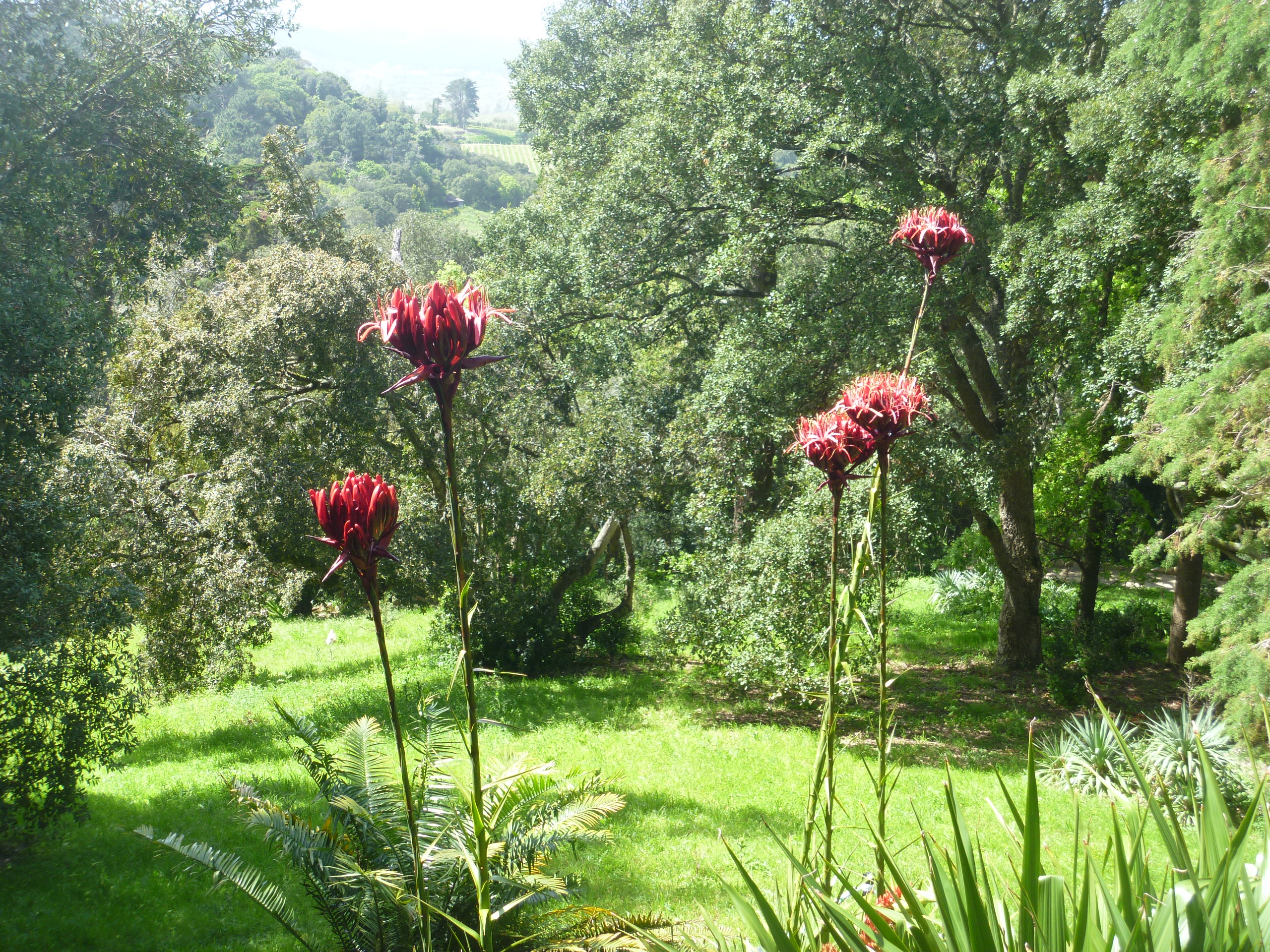
Monserrate Gardens

In the Gardens at Monserrate

Entrance Gate to Sintra

Former Entrance to Sintra

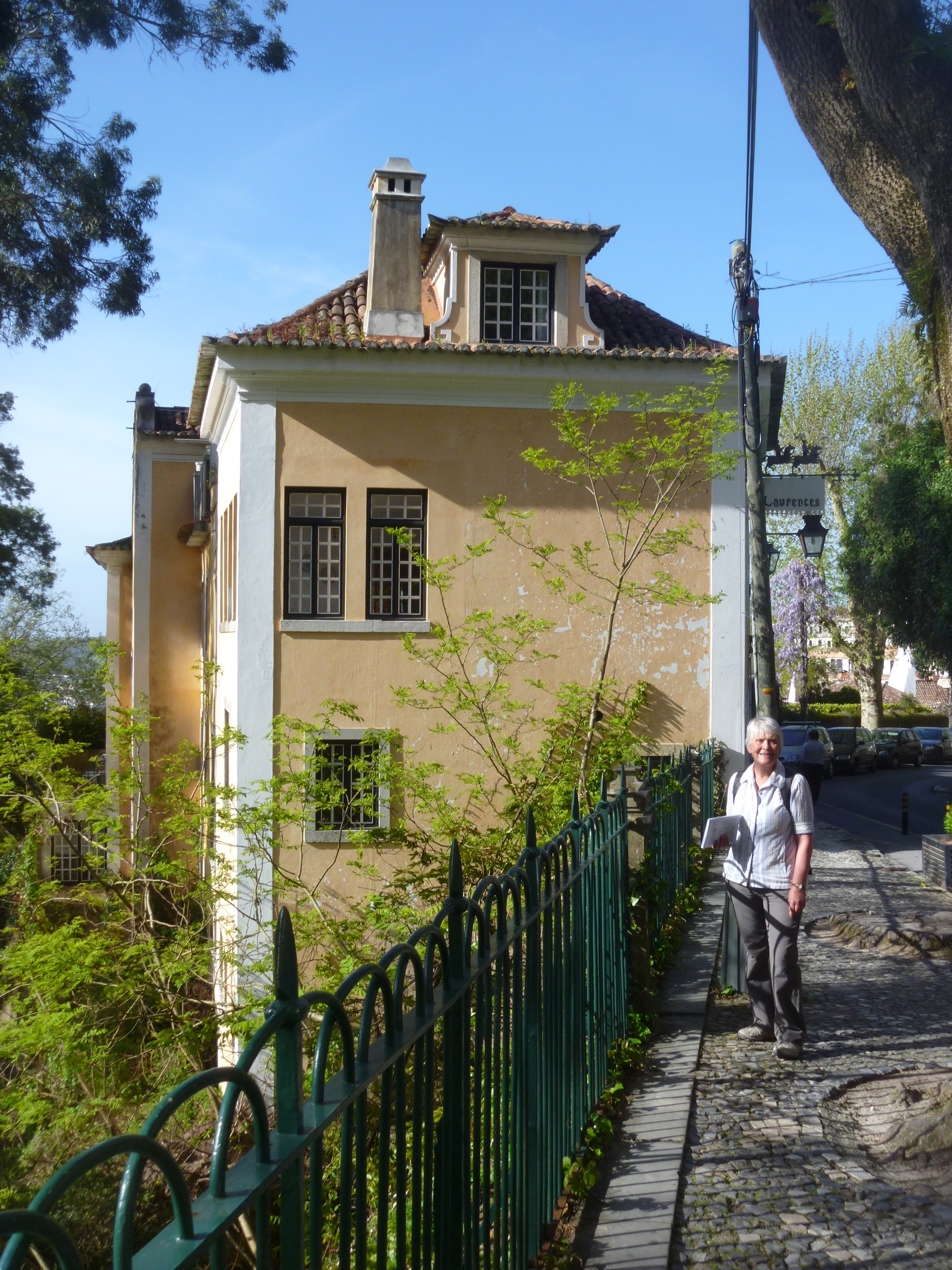
So, on the afternoon of the fifth day of walking we arrived at one of the former town gates and soon reached the famous Lawrence’s Hotel right in the old town of Sintra.

Lawrences

This hotel is the oldest in Spain and Portugal and (I believe) the second oldest in Europe. It has connections with Lord Byron who stayed here and whose portraits appear on many of the hotel and restaurant walls.

We stayed two nights at Lawrences which gave us a whole day to explore Sintra and its palaces.

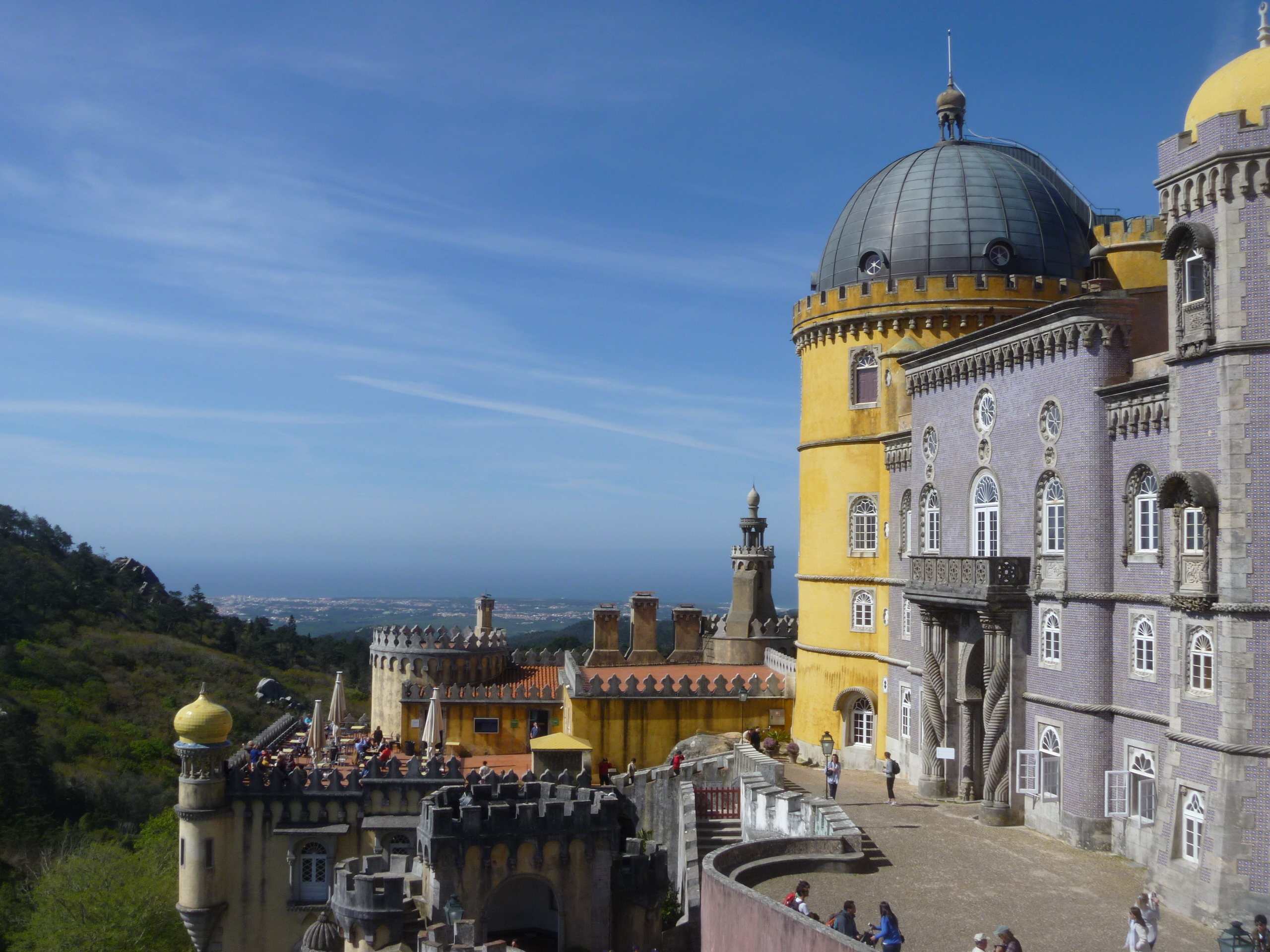
Pena Palace

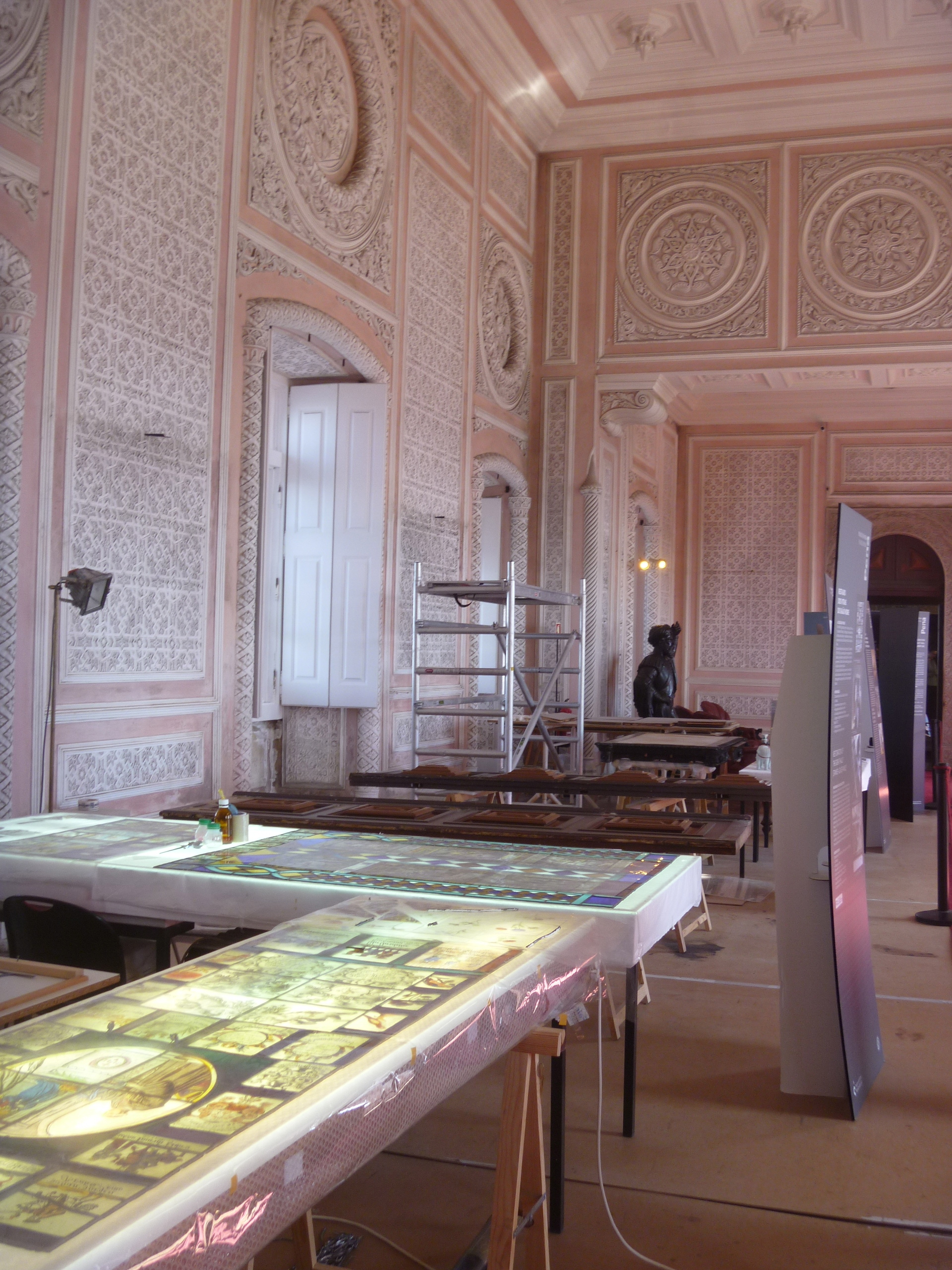
Most of our time was spent at the Park and Palace of Pena. It’s very popular; even on this Friday in April. There is lots to see in the Palace alone. Ongoing restoration could also be observed here as at Monserrate.

Open for Works at Pena

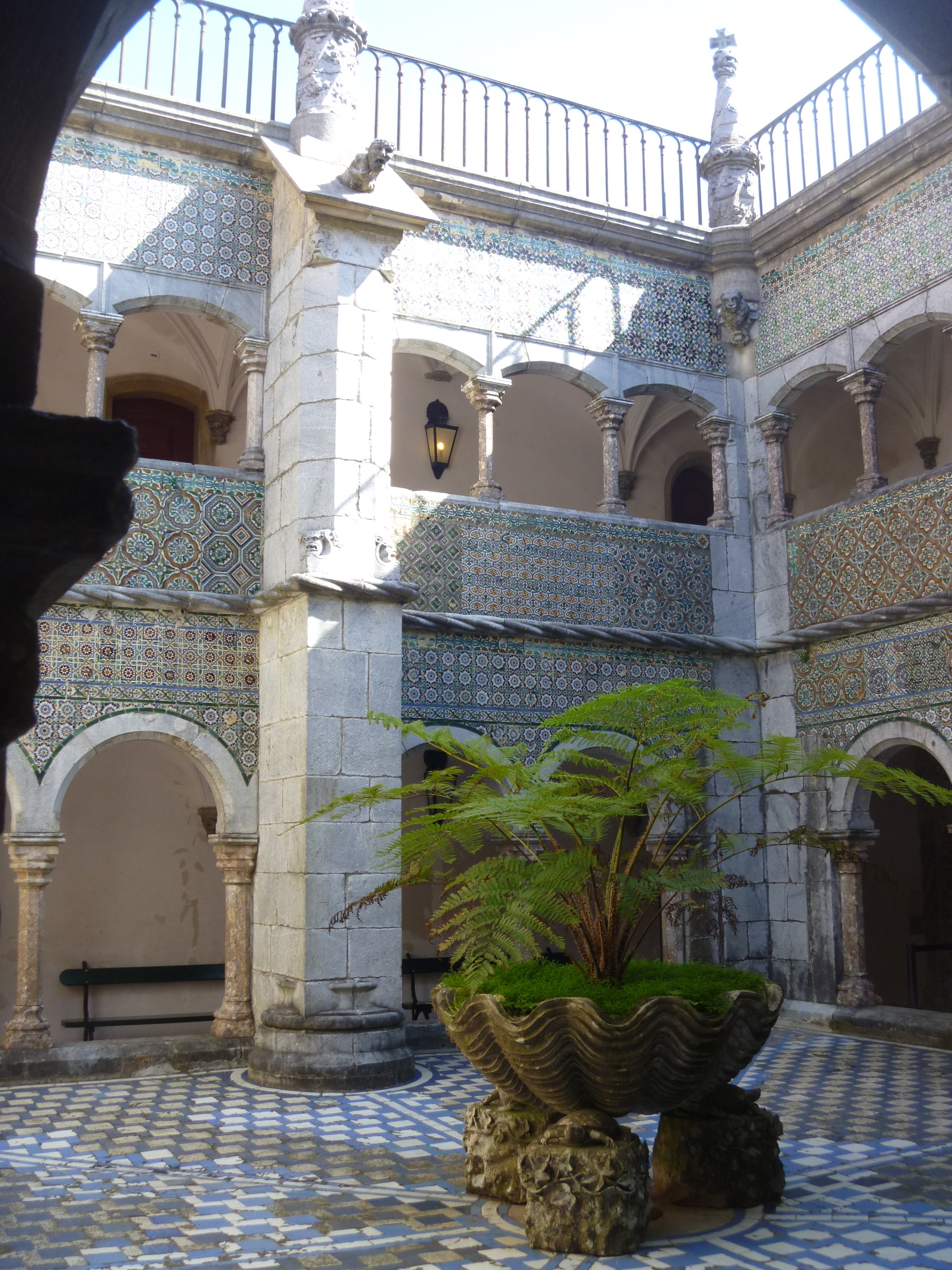
Tiled courtyard

An Inner Courtyard

The Park and Palace of Pena are the finest examples of nineteenth century Portuguese Romanticism and the integration of natural and built heritage. They constitute the most important part of the Cultural Landscape of  Sintra’s World Heritage site.” [From publicity leaflet]

Originally a chapel and later a monastery  in 1842 work began on a “New Palace” by the King Don Fernando II who left all the property on his death to his second wife the Countess Edla. The Palace and Park were acquired by the state in 1889 and converted to a museum in 1910-12.

A natural environment of rare beauty and scientific importance, the Park is remarkable as a project of landscape transformation of a hill, barren at the time, into an arboretum integrating several historic gardens. It occupies almost eighty-five hectares of exceptional geological and climatic conditions.” [From publicity leaflet]

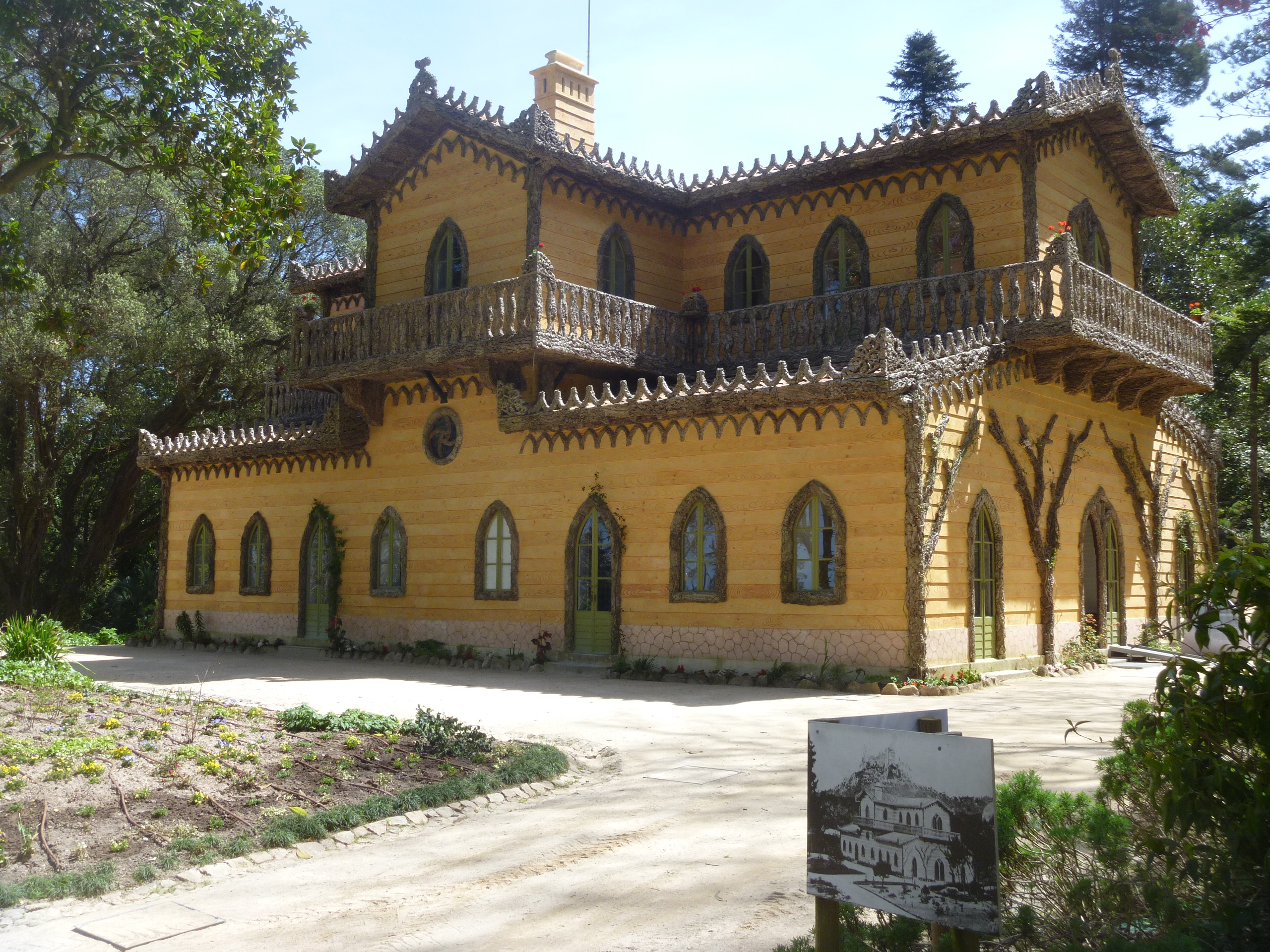
The Chalet Edla

The Chalet Edla

We could have spent hours in the grounds alone. Leaving the Palace you are soon away from the crowds and we decided on a route that would take in the Chalet Edla.

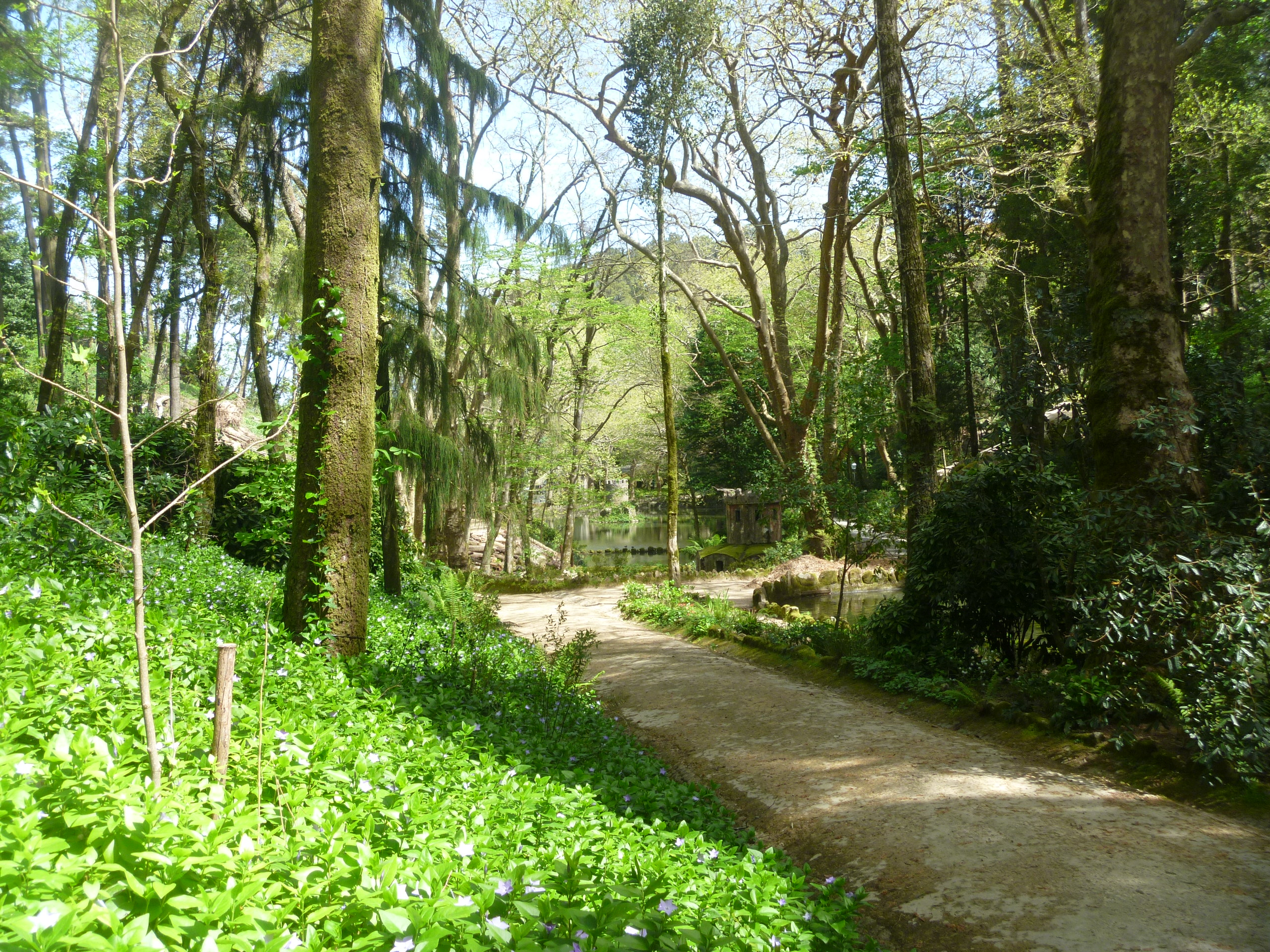
Pena Park

Lush Greenery of the Pena Park

We had understood that due to damage following the storms in January the Chalet would not be open to the public. So we were surprised and happy to find that on that very day it was reopened  to the public! We bought our tickets and took a look round this unusual summer house built by Don Ferdinand for the Countess between 1864 and 1869. The Chalet also deteriorated badly over many years and in 1999 was damaged by fire. Here, again, renovation work is still ongoing. I’m not sure to what extent the recent storms damaged the house but there’s been a magnificent effort to restore this building to its former glory.

Before renovation

Photographs show the extent of the damage

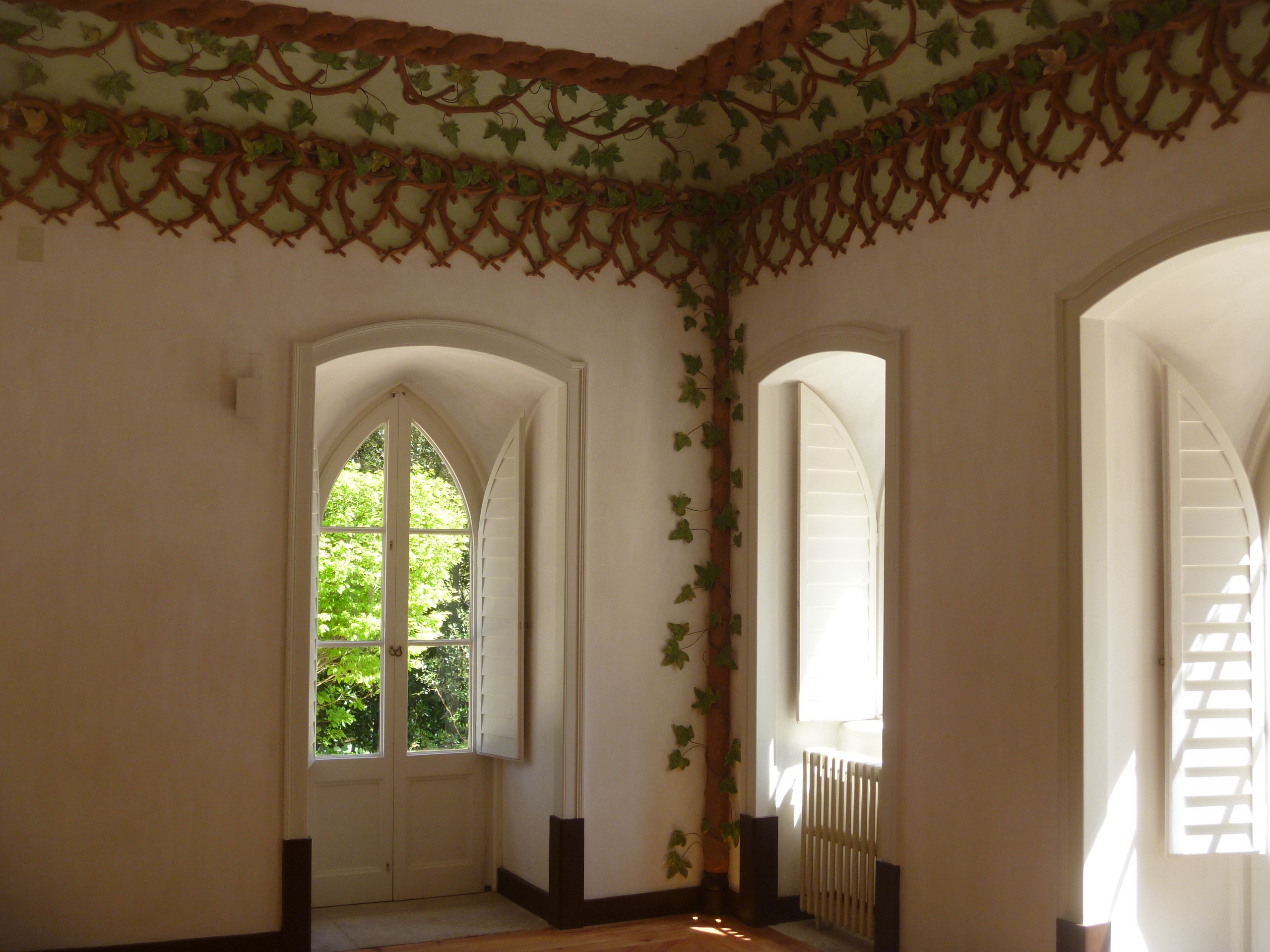
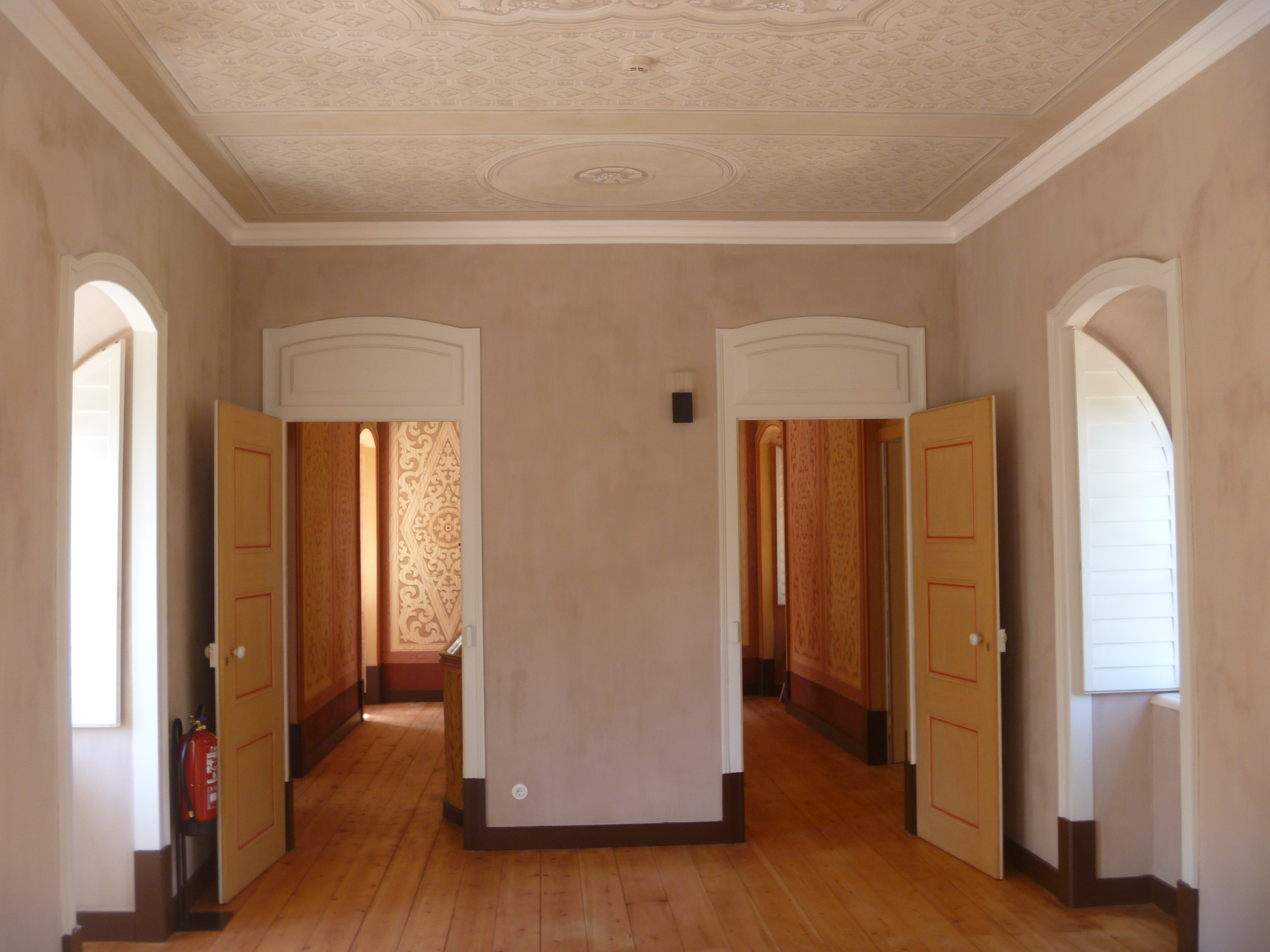
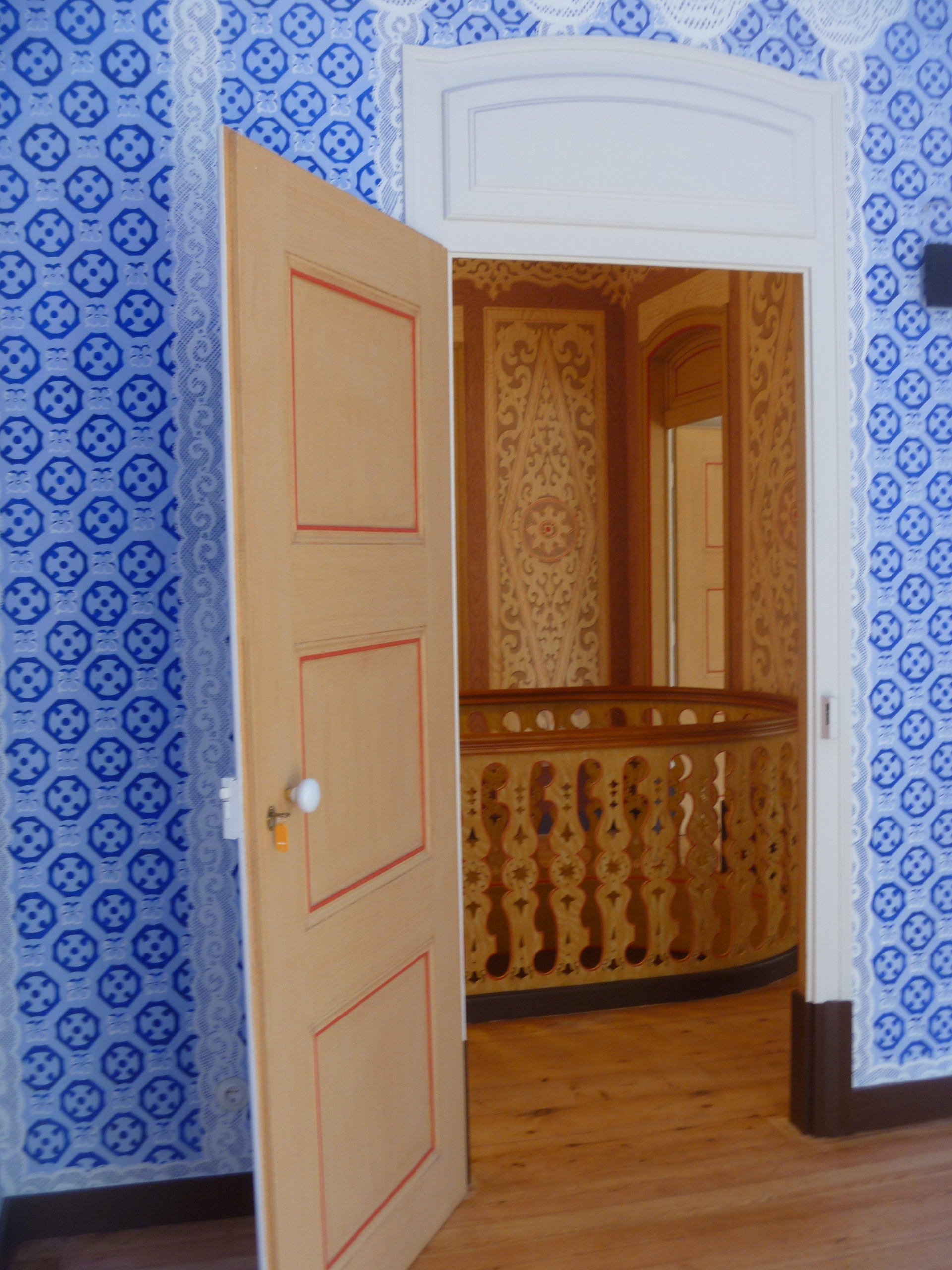
Inside Edla 1

Interior Chalet Edla

Inside Edla 2

Renovations at The Chalet Edla

Inside Edla 3

Upstairs at The Chalet Edla

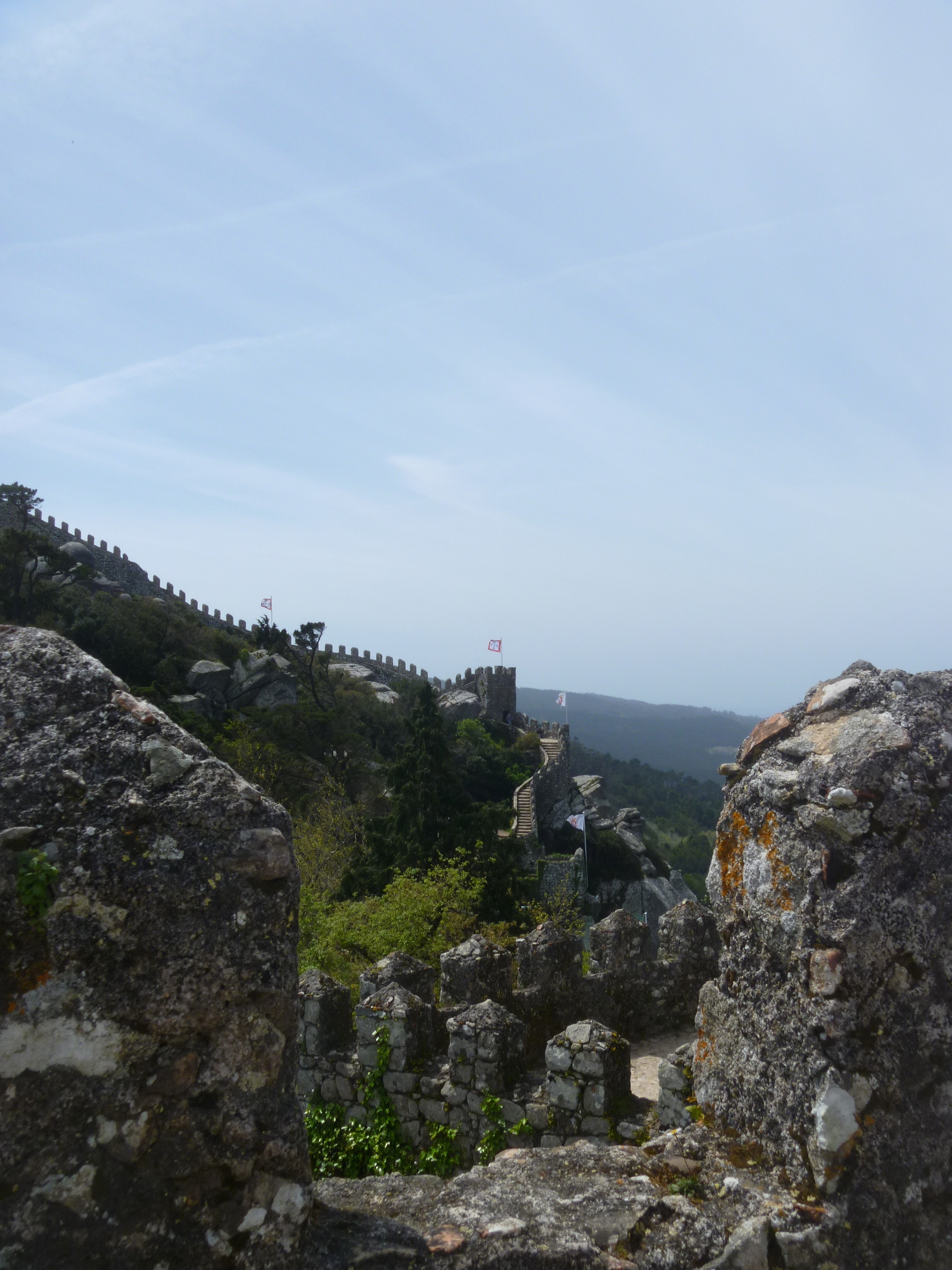
From the Pena gardens we stepped across the road to the Moorish Castle which is really just ramparts. But they are impressive  ramparts.Moorish Ramparts

The Moorish Castle Ramparts

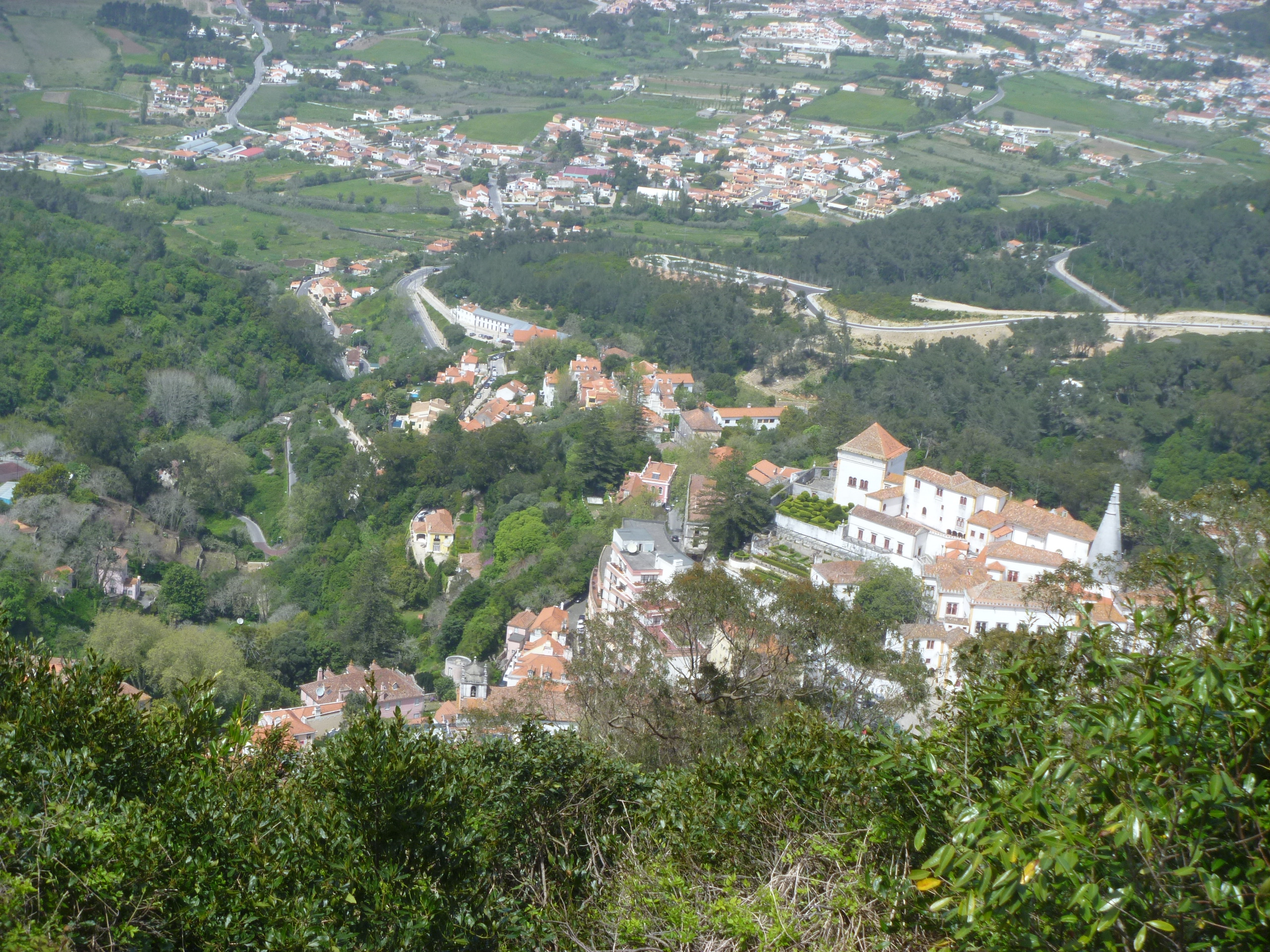
Sintra from Moorish

Sintra from the Moorish Castle Ramparts

They tower over the town and we could see them from our terrace at Lawrences.

From our terrace

The Palace of Monserrate Restoration Project

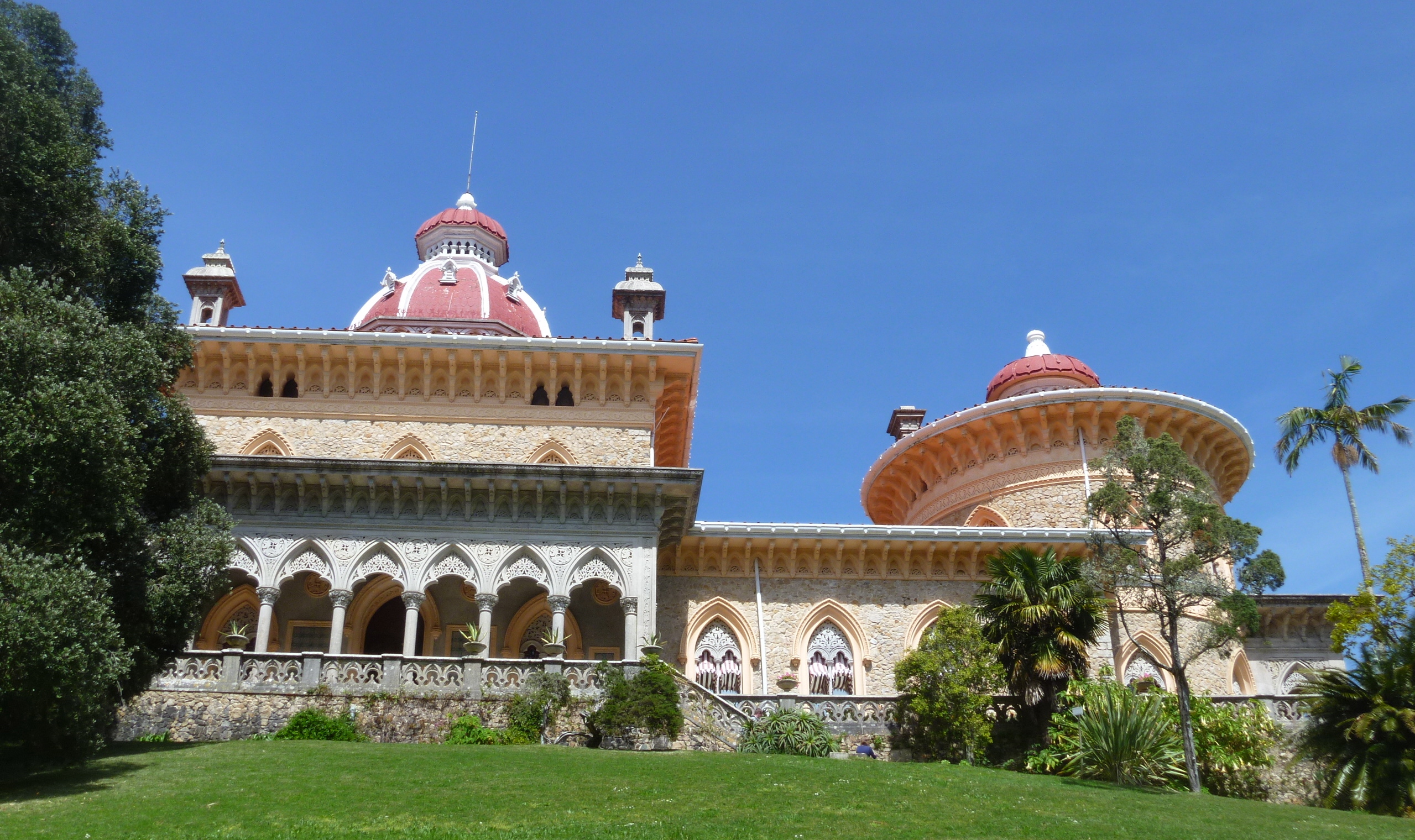
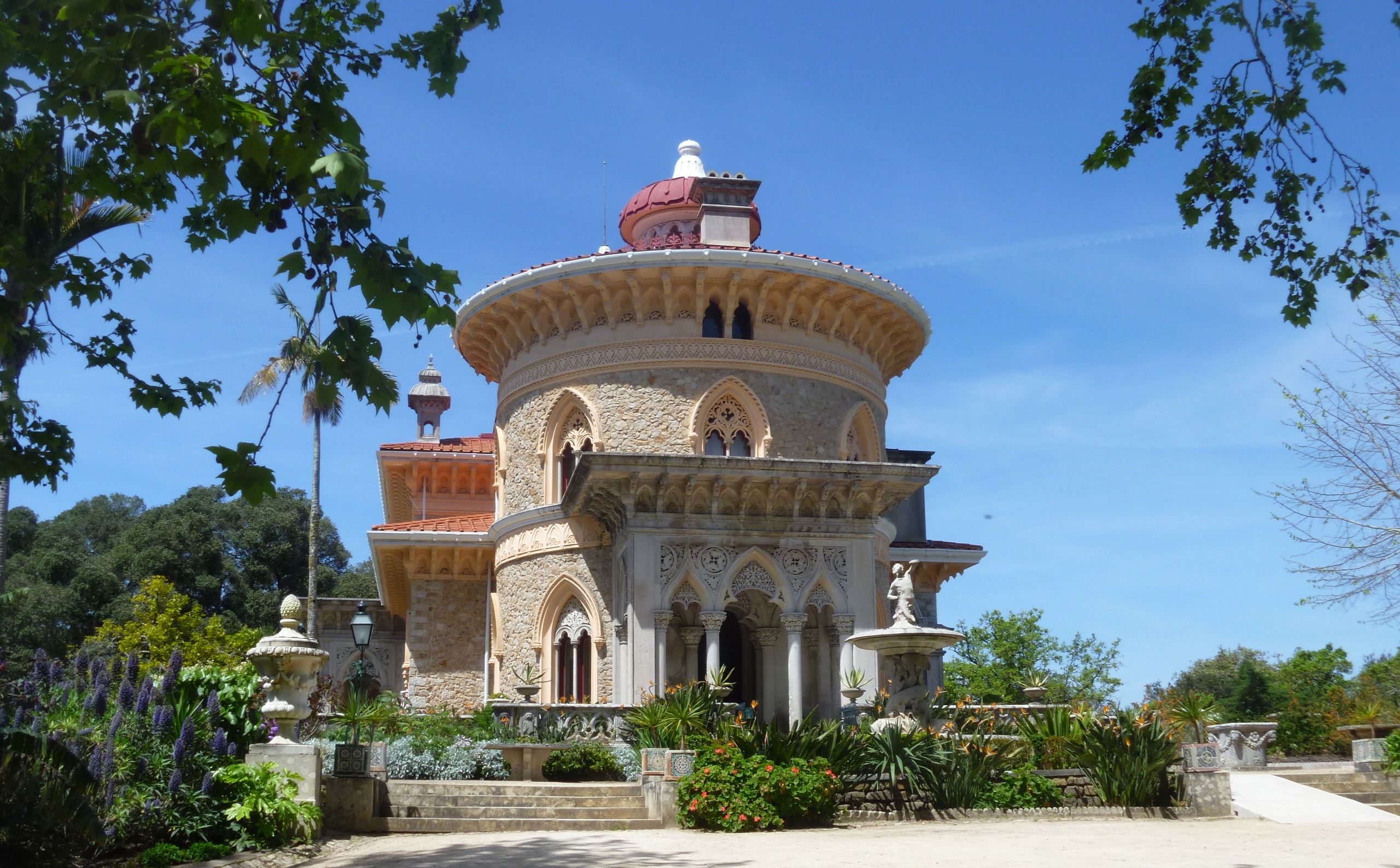
Palace of Monserrate

In 1995 the whole of the Sintra Region was awarded UNESCO World Heritage status and restoration of the various properties and conservation of the forests and parks continues to this day.

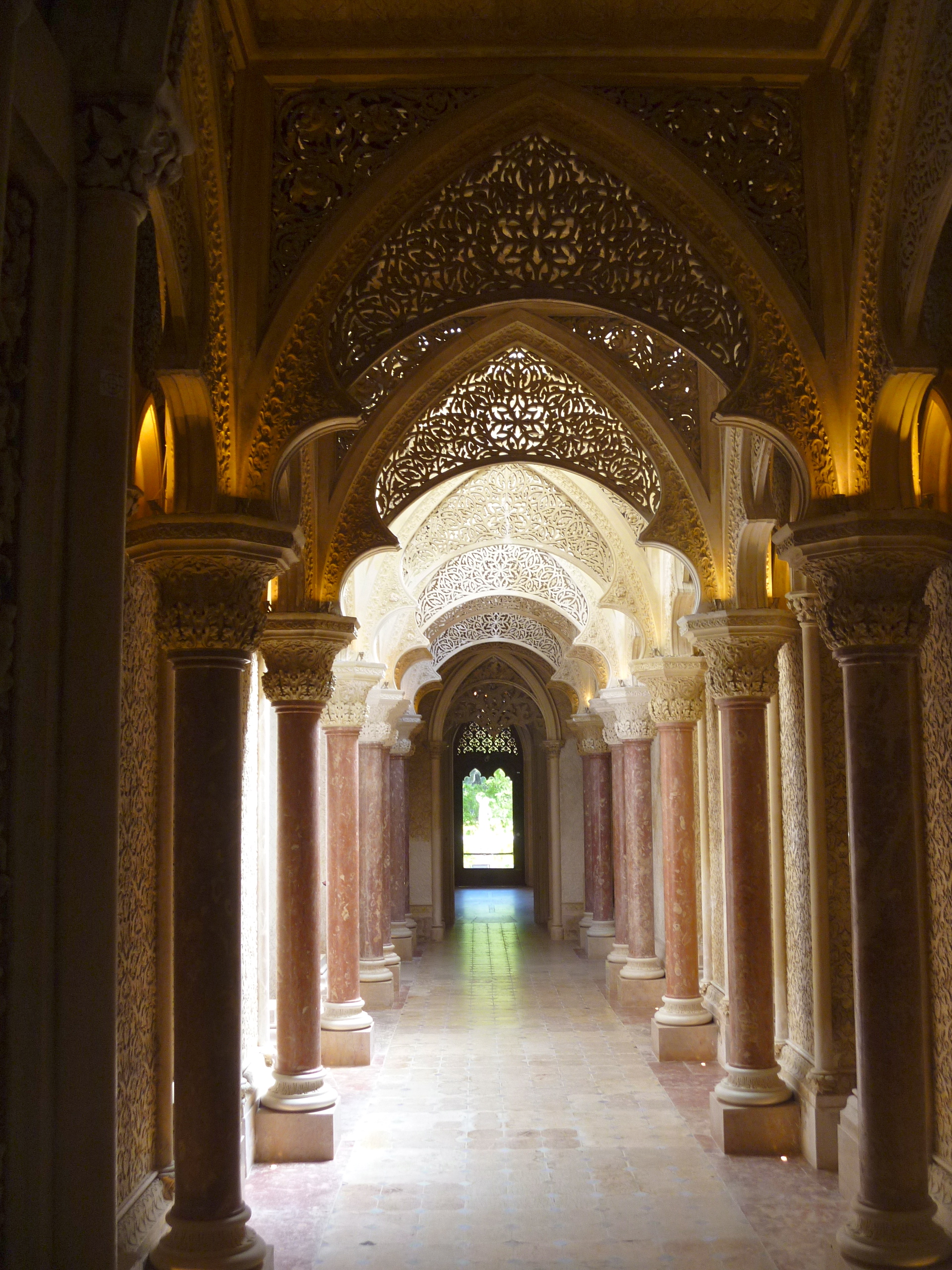
Hall at Monserrate

The Beautifully Restored Hall

Since 1949 Monserrate has been owned by the Portuguese state. Over the decades that followed the palace deteriorated but in 2001 restoration work began on the roof and facades.  After interruptions this work was finally completed in 2004 when work on the interior could begin. A successful bid for funds from EEA-Grants in 2007 enabled work to resume at a faster pace. At Monserrate this the project is called “open for works” and it allows for the Palace to be open to the public so that all may watch the ongoing ‘interventions’.

Exquisite renovation work

Fantastic renovation work

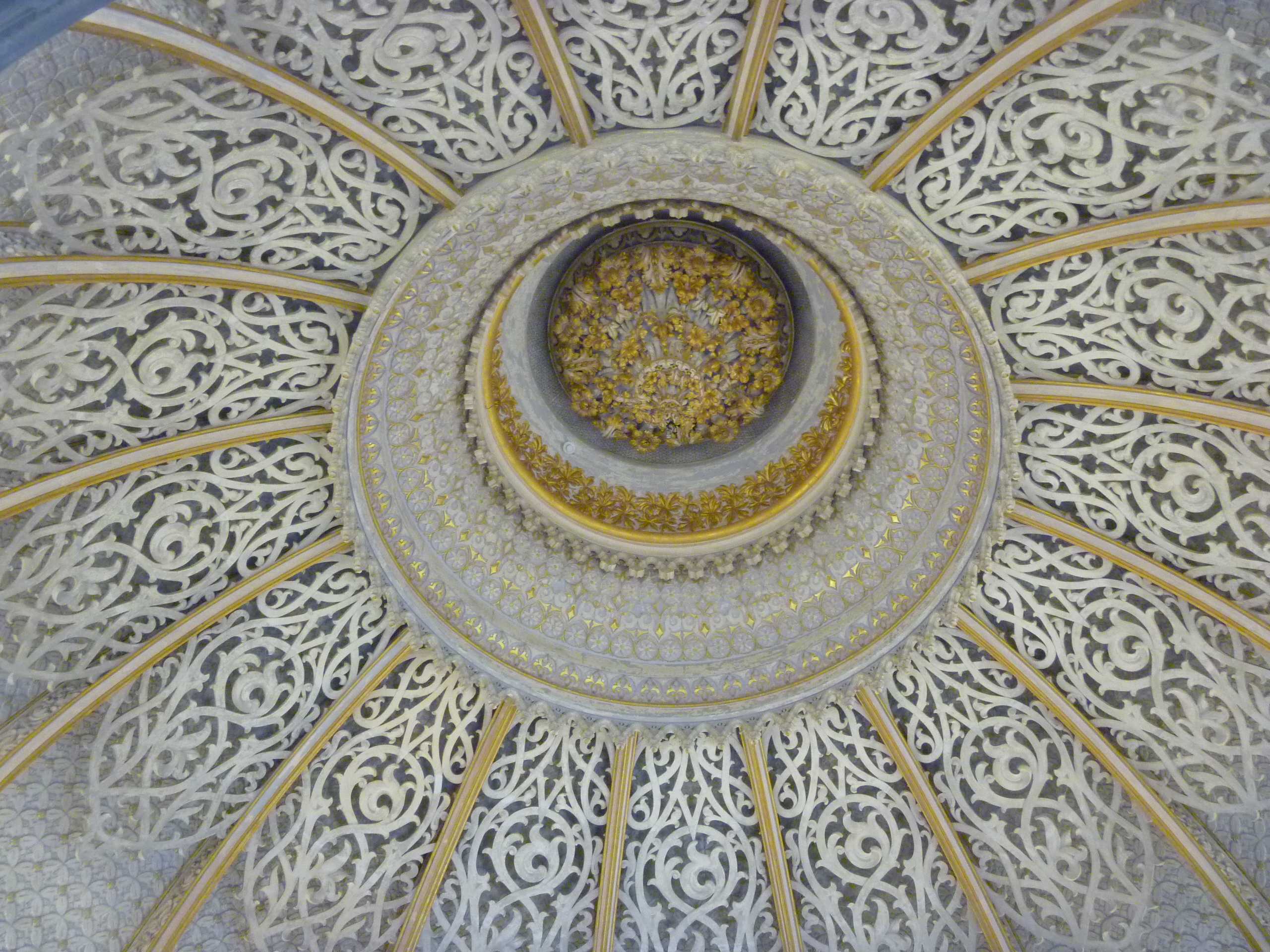
Exquisite Plasterwork

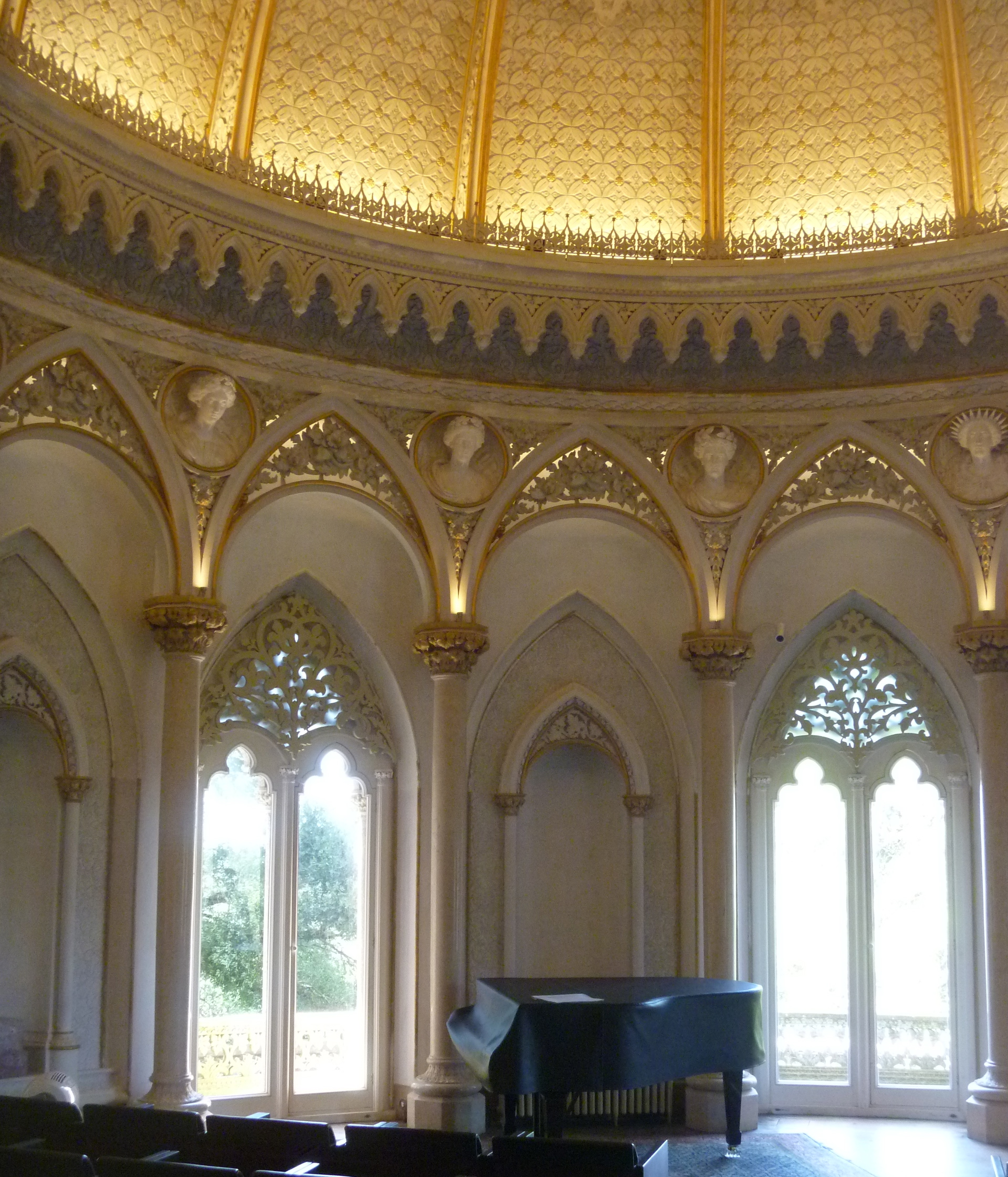
Restoration work carried out room by room allowed for the re-opening of the building to visitors. So far interventions in the Library, Chapel, Kitchen, Pantry, Wine Cellar, Larders, decorative plasterwork, cleaning of stonework, kitchen range have all been carried out in sight of the visitors. It is wonderful to see the artists and craftspeople at work and many of the rooms being brought back into use, like The Music Room for concerts.

Restoration work in the music room

Music Room Plasterwork

The music room at Monserrate

The Music Room Today

Restored Music Room ceiling

The Restored Music Room Ceiling

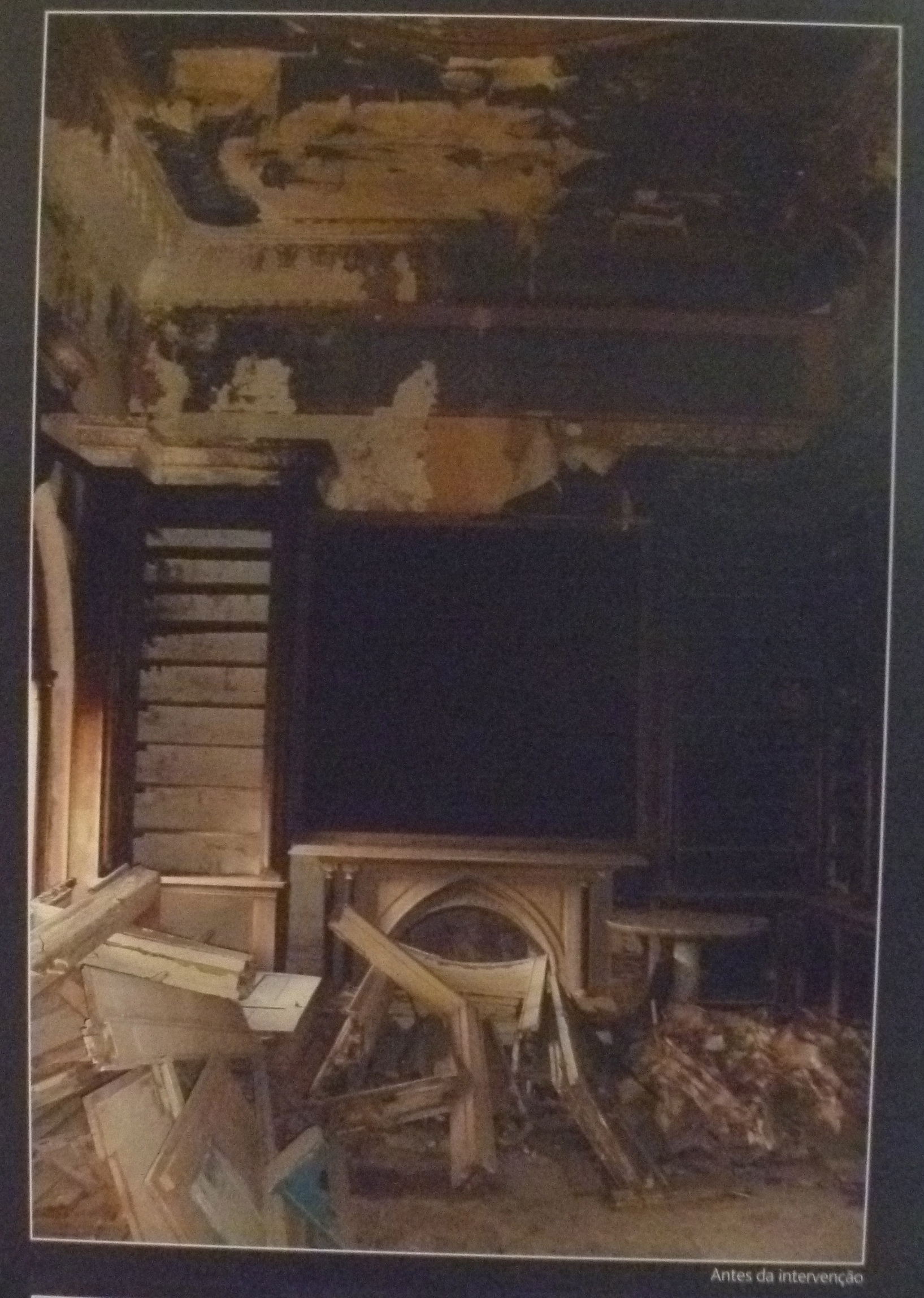
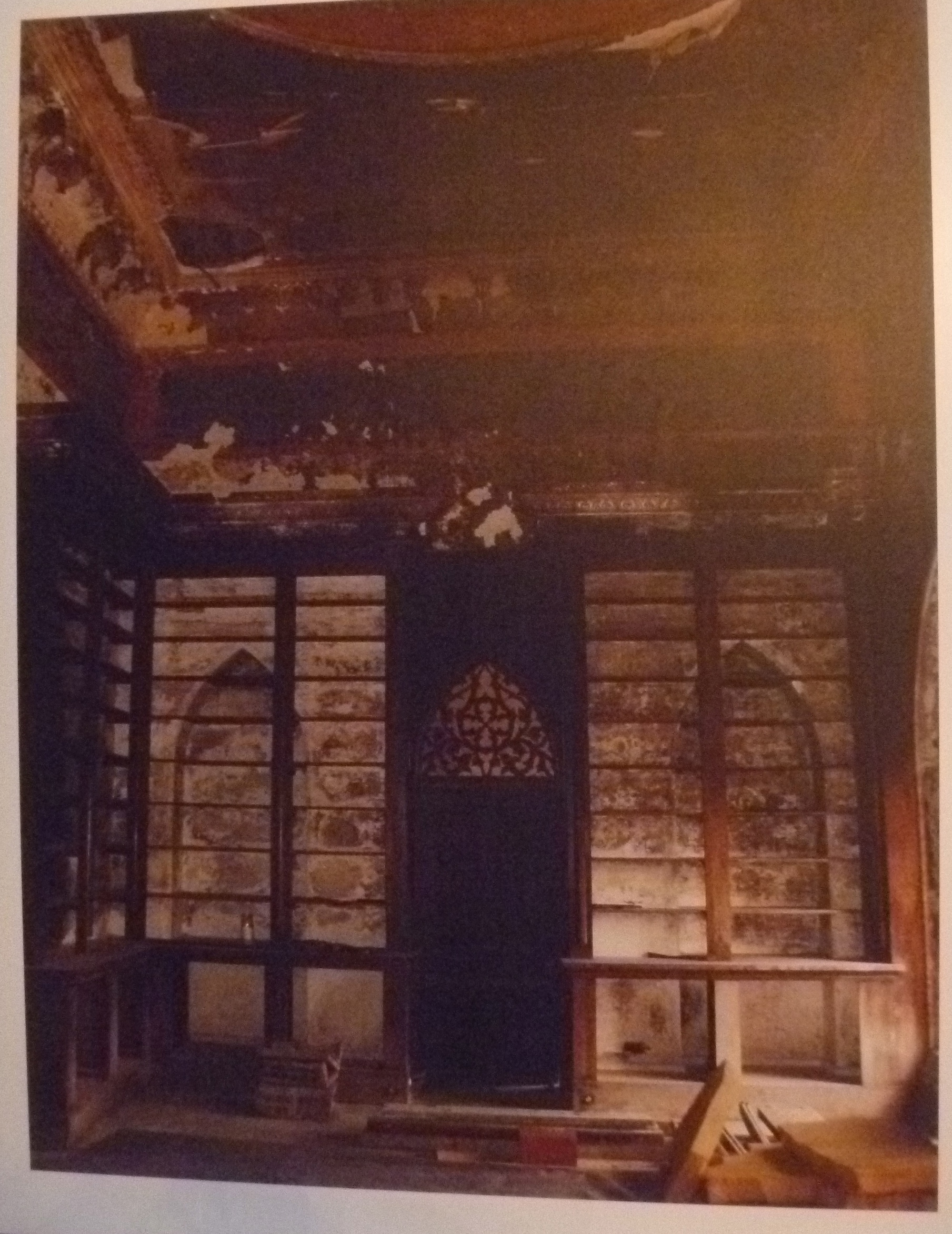
Photographs on display in the Library show just how bad the condition of this fine room became during the latter half of the 20th century. Once the roof and walls were repaired work began on the individual rooms. Paying careful attention to detail the Library has now been recreated in its former glory.

The library before renovation

The library pre-renovation

The above two photos show the extent of the damage

The library now

The Library as it looks today

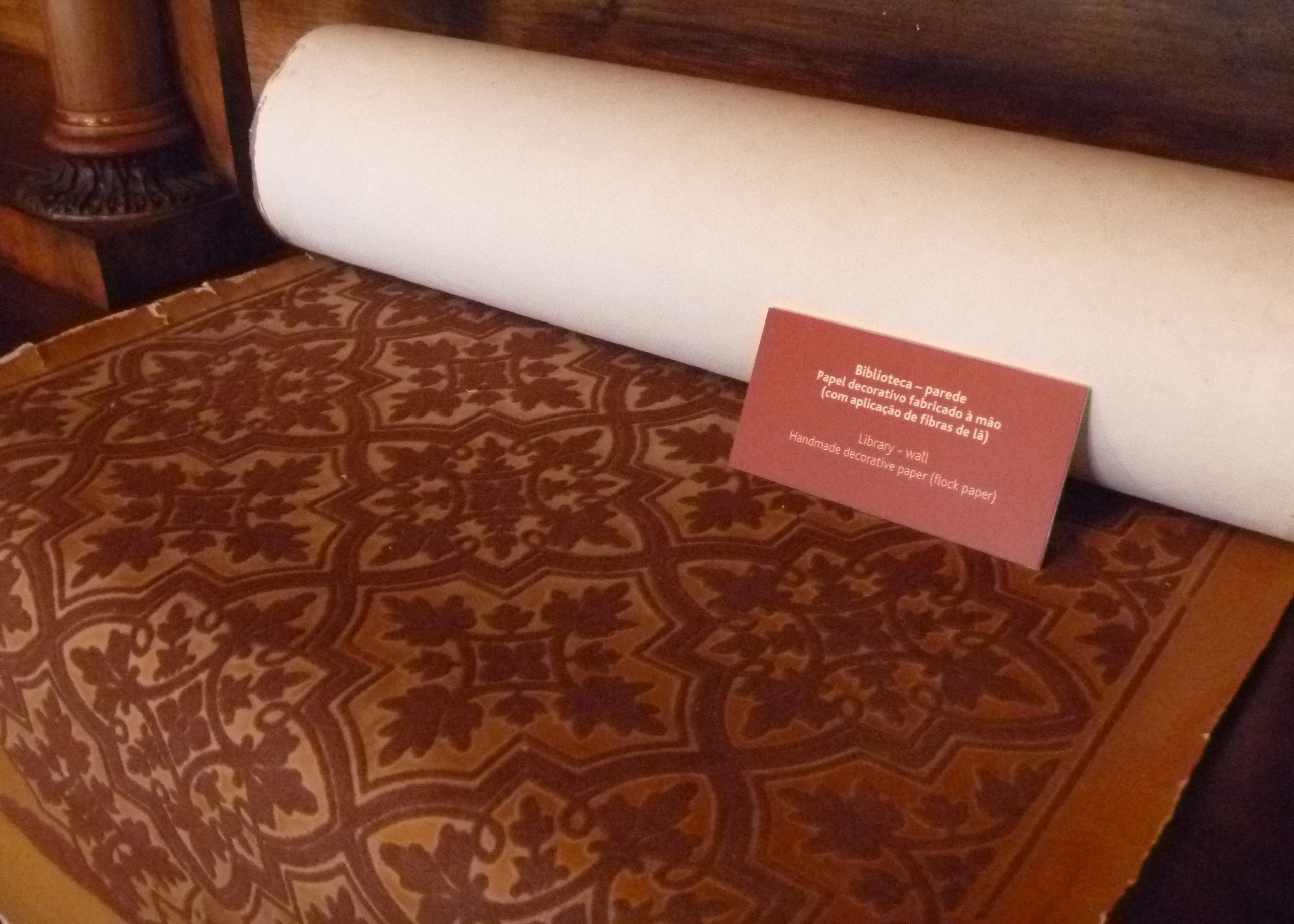
Example of library wallpaper

The Handmade Library Wallpaper

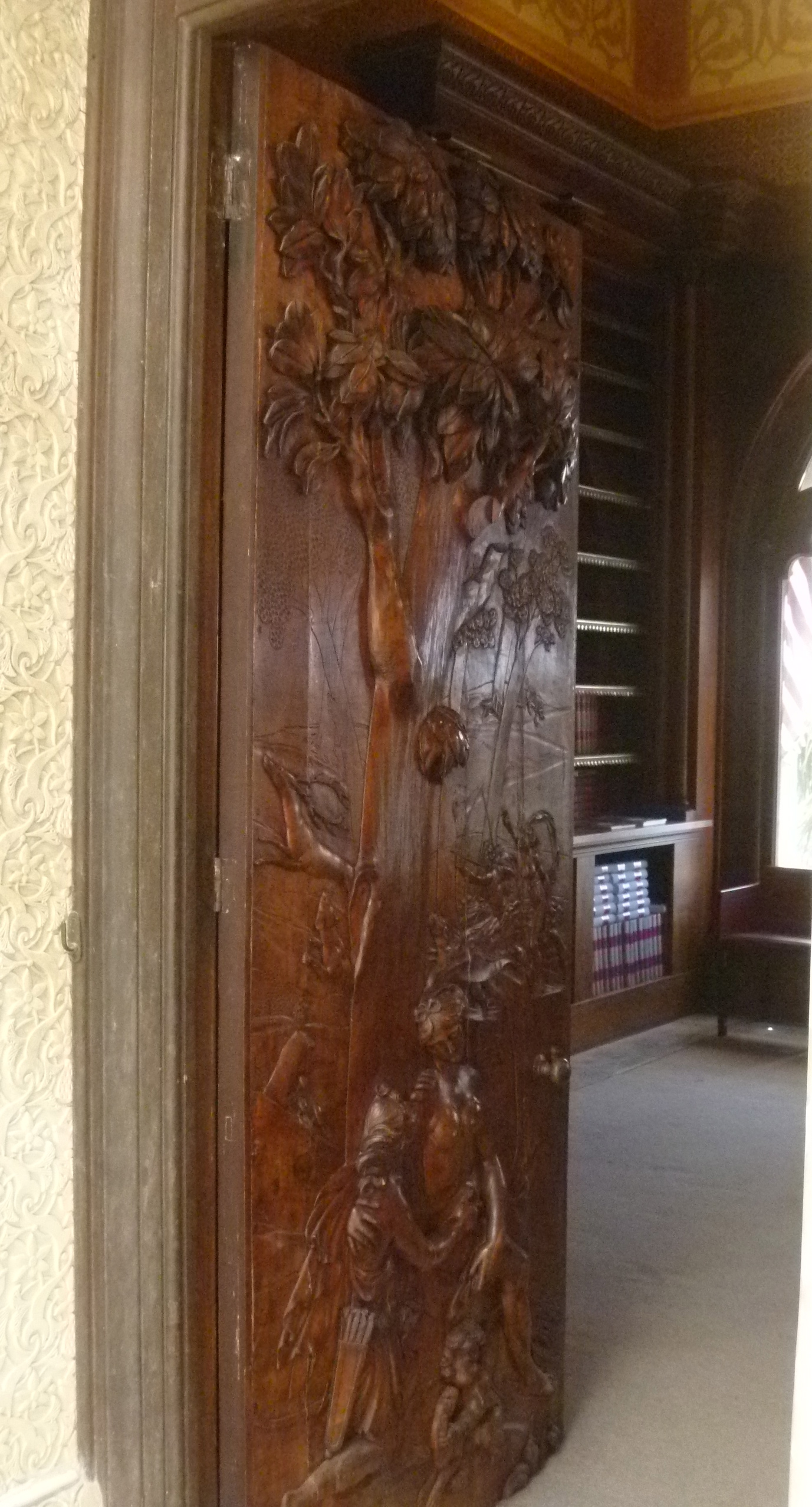
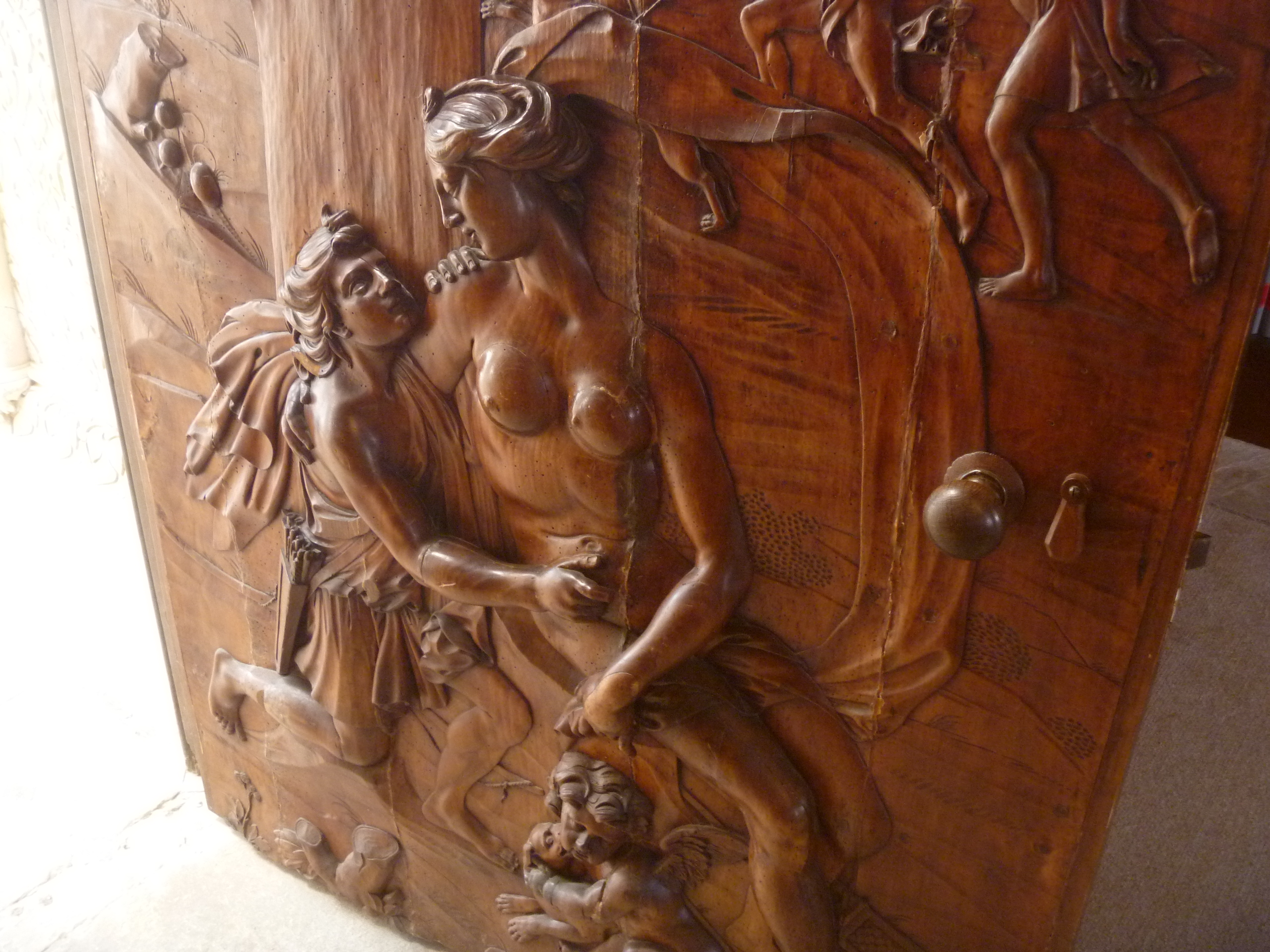
The library door

The Library Door

Library door (detail)

Detail of Library Door

The whole project makes me surprised that The Landmark Trust do not have an interest here as it definitely has the obligatory British connections that Landmark require of their overseas holdings. There are many follies and outbuildings ripe for occupation by we ‘Landmarkers’.

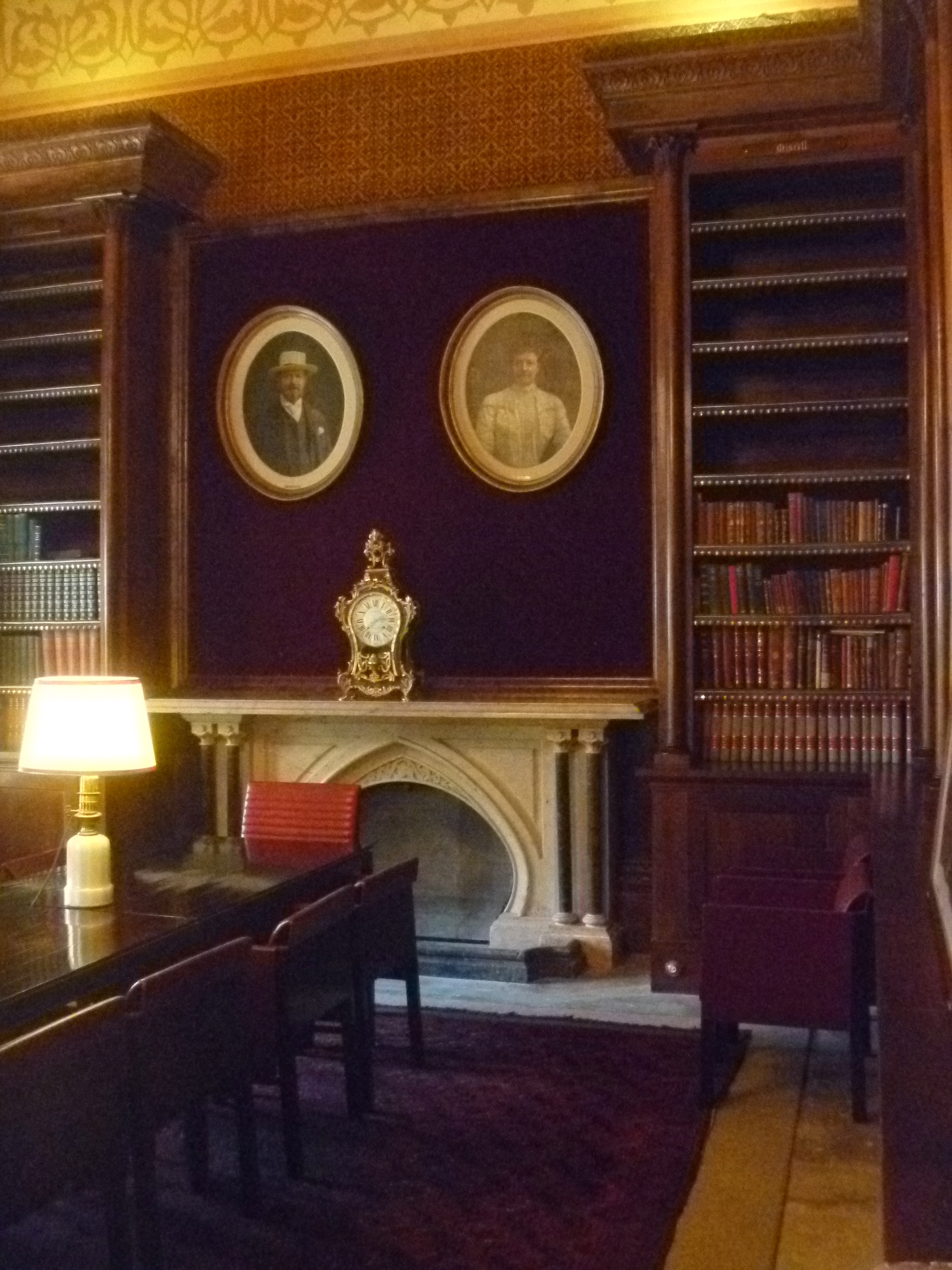
Childe Harold, Vathek and other literary inspirations of Monserrate

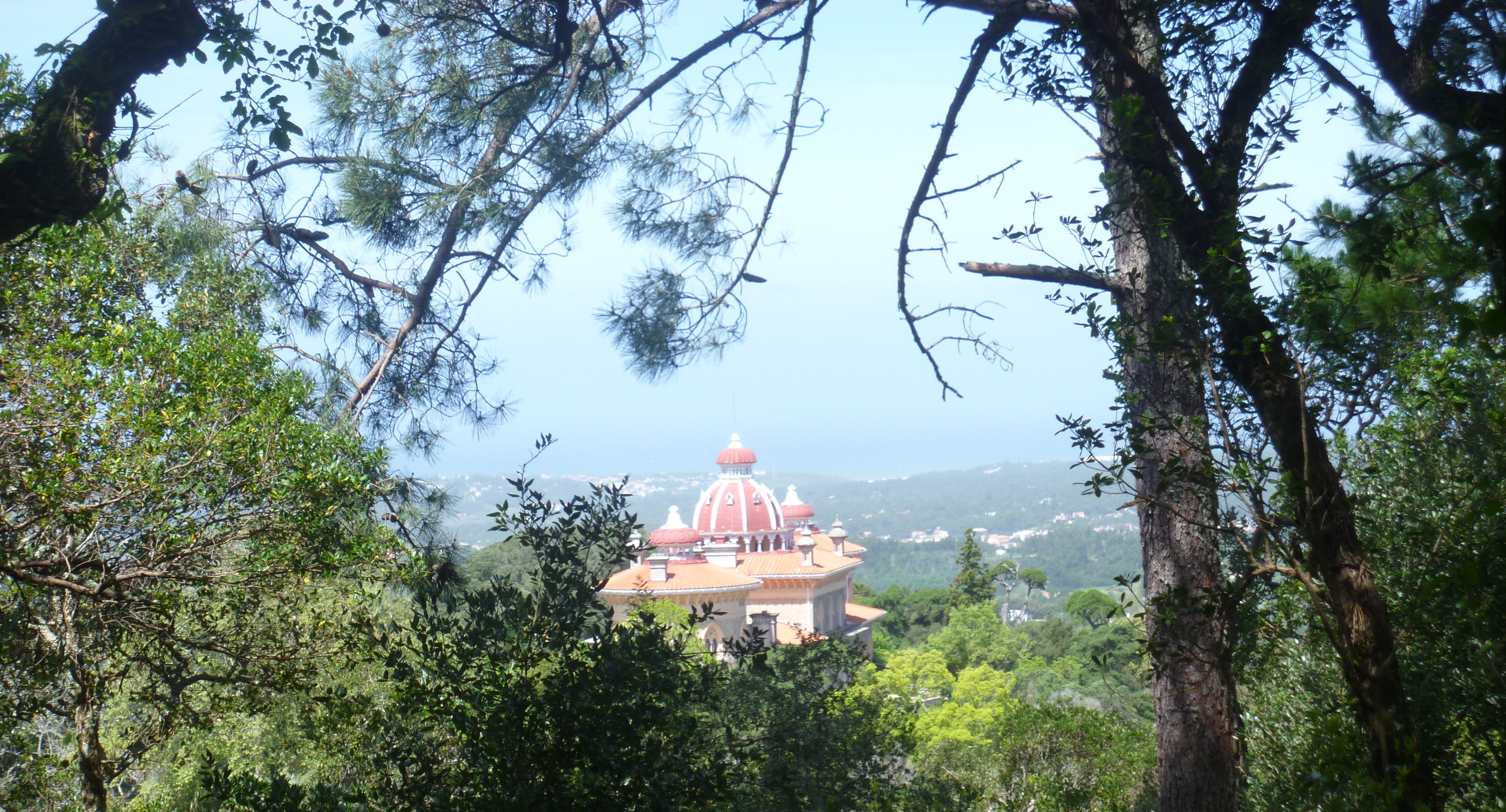
First glimpse of Monserrate Palace

On sloping mounds, or in the vale beneath,
Are domes where whilom kings did make repair;
But now the wild flowers round them only breathe:
Yet ruined splendour still is lingering there.
And yonder towers the prince’s palace fair:
There thou, too, Vathek! England’s wealthiest son,
Once formed thy Paradise, as not aware
When wanton Wealth her mightiest deeds hath done,
Meek Peace voluptuous lures was ever wont to shun.”

Childe Harold’s Pilgrimage, by Lord Byron [Canto the First XXII]

think the above verse applies to the beautiful palace and gardens of Monserrate. At least we were told in numerous books and leaflets that Lord Byron was smitten by Monserrate on his visit here in 1810 and reminisced about it in his poem ‘Childe Harold’s Pilgrimage’.

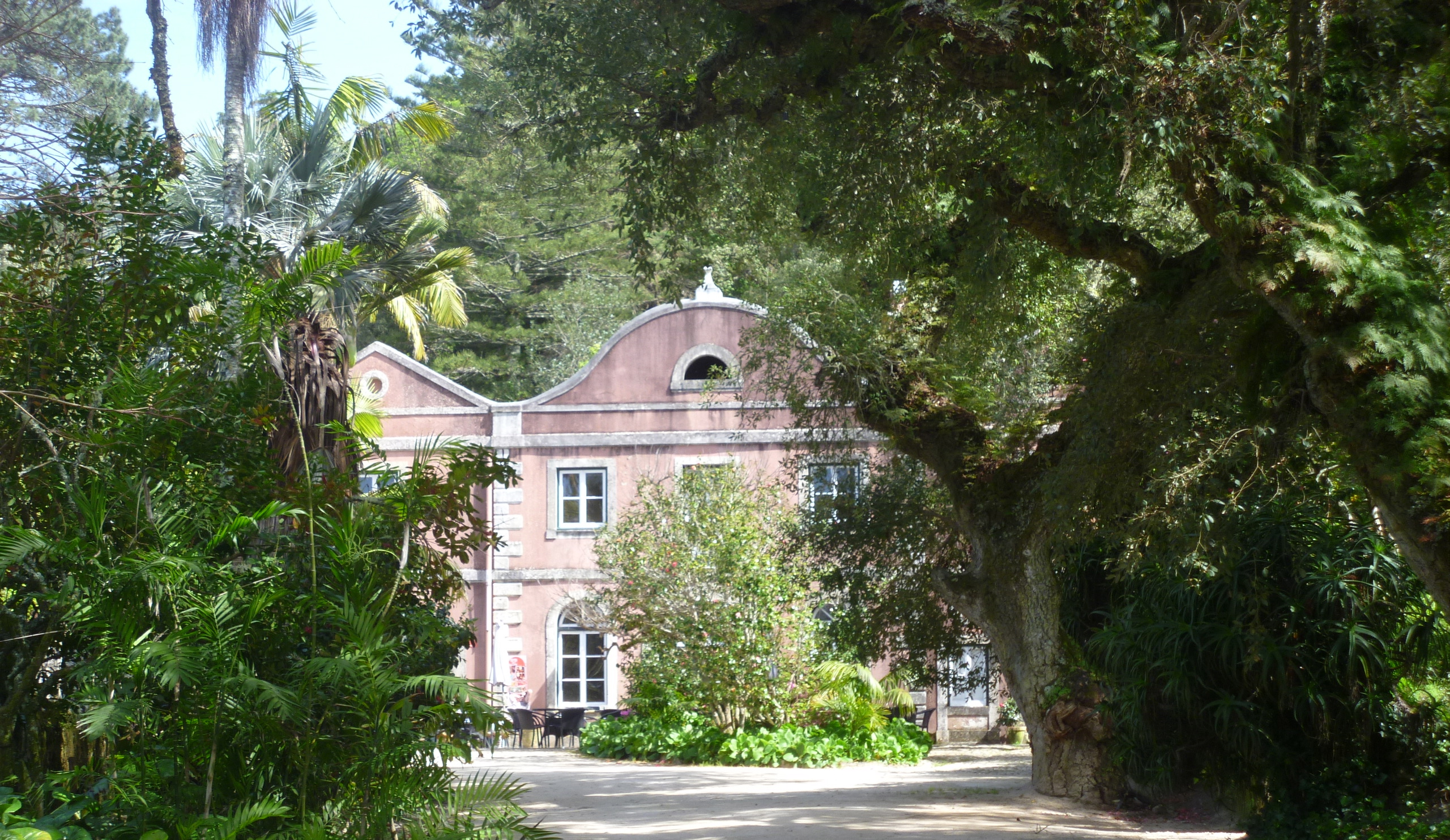
Monserrate Palace

Monserrate was probably my favourite place of the whole trip. It had everything: a palace with a library, exotic gardens(but with an English Rose Garden), a tea house, British connections, literary connections and to top it all we visited in beautiful weather!

The library today

The Library as it is today

In the gardens

In the exotic gardens

The Tea House

The Tea House

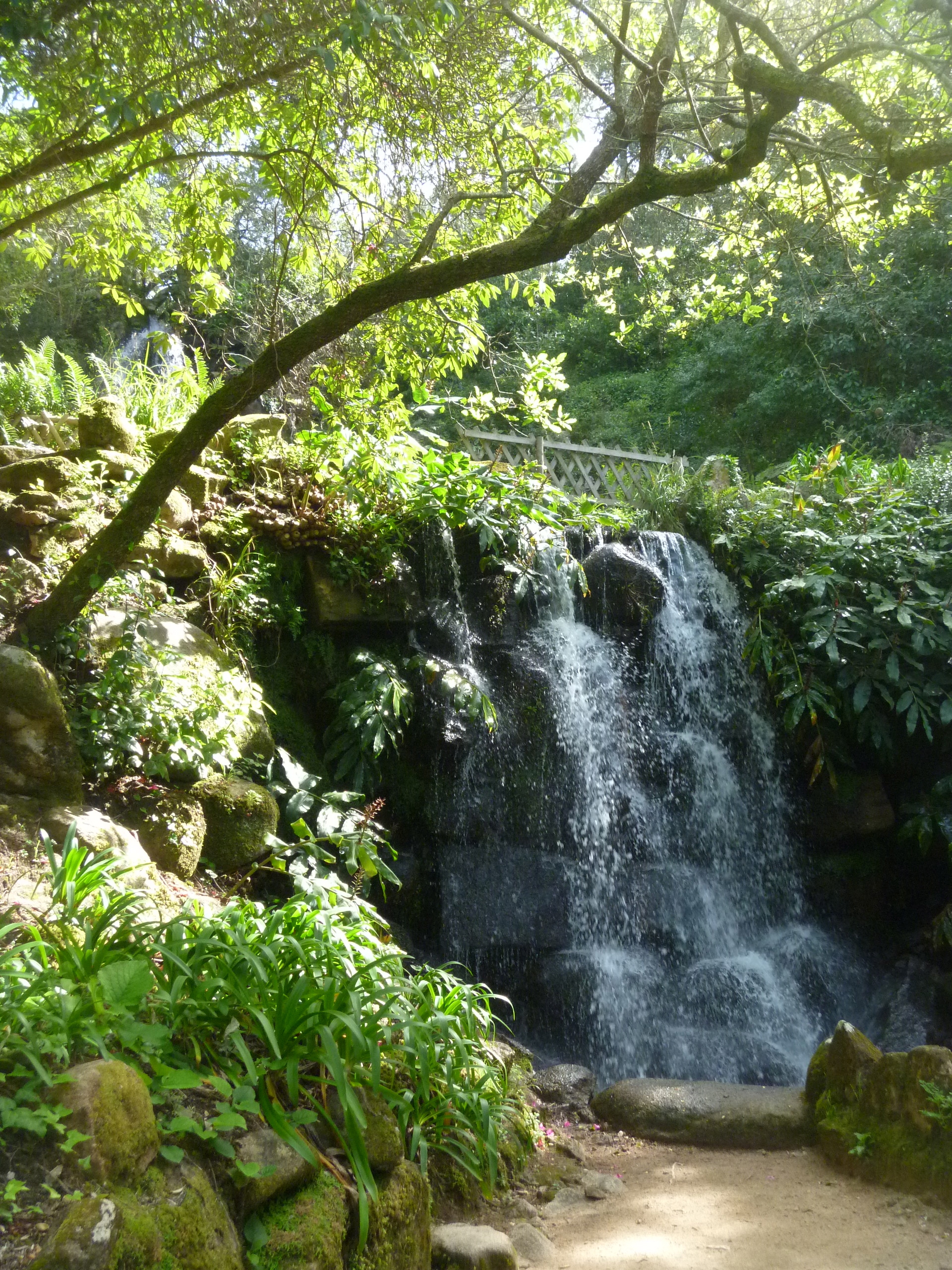
Beckford's Falls

Beckford’s Falls

William Beckford ordered this waterfall to be constructed between 1794 and 1799. Beckford, a writer who enjoyed great fame at the end of the 18th C, visited Portugal and fell in love with Sintra, where he rented this property from Gerard de Visme.” [On a nearby information board]

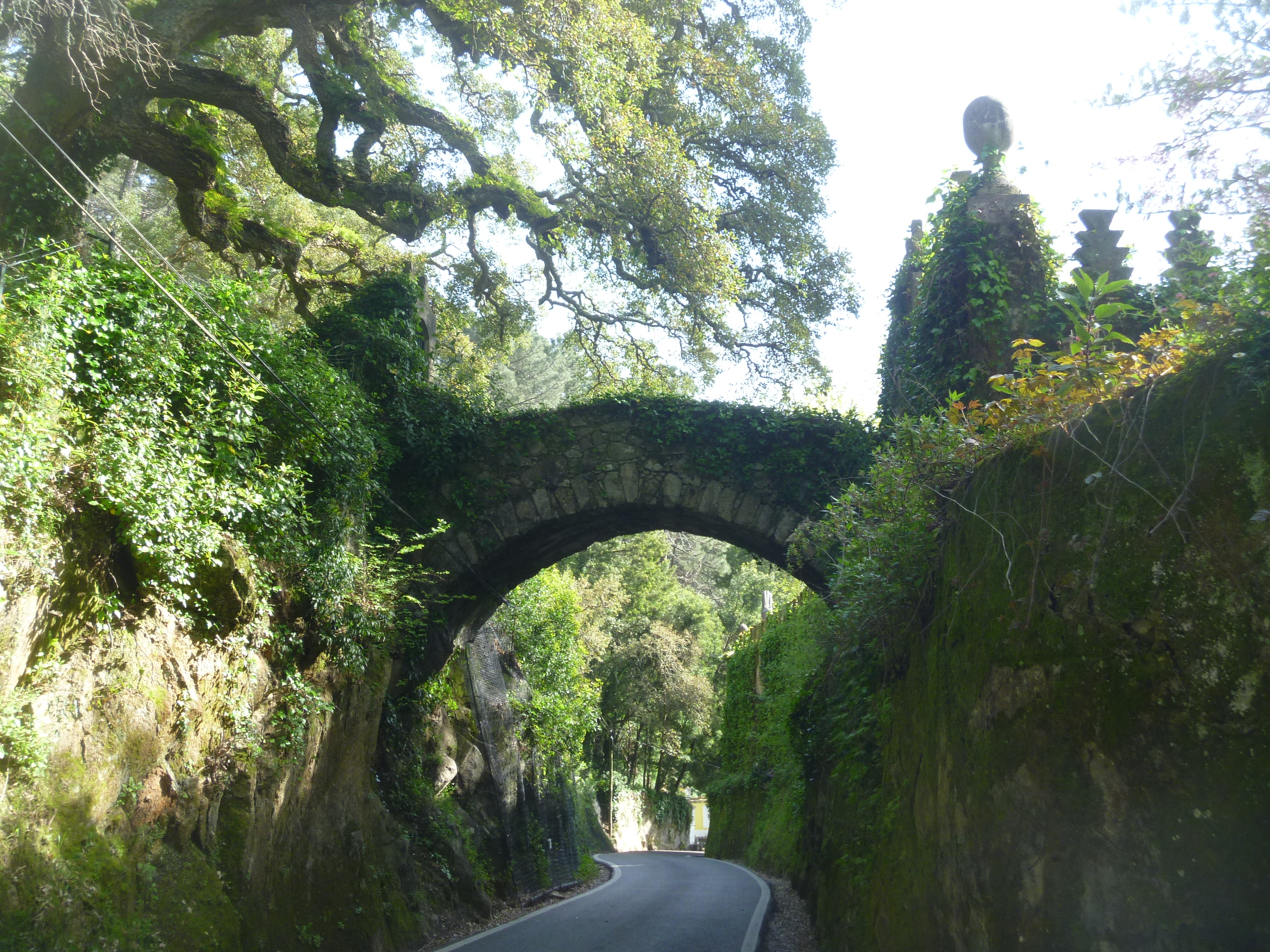
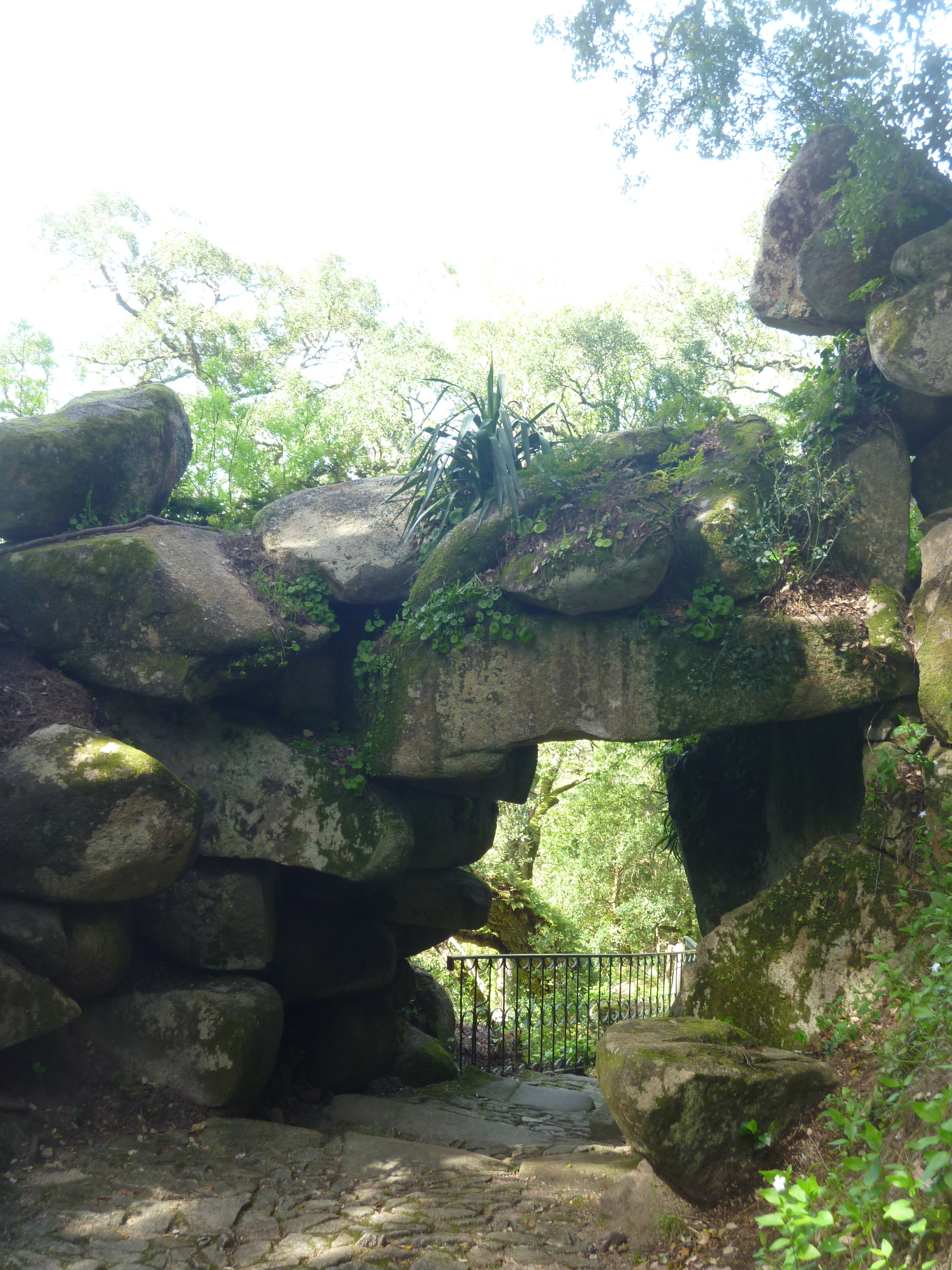
Vathek's Arch

Vathek’s Arch

This arch was built by William Beckford … We think that it could represent the entrance of the property which, at the time, was not enclosed. Beckford wrote his most famous book, Vathek, an oriental tale, in 1786 before his first visit to Portugal. Vathek was the hero of the book which is considered by many to be somehow autobiographic” [From nearby Information Board]

Gerard de Visme an English merchant holding the concession to import Brazilian teak was responsible for the construction of the first palace. Later, William Beckford, writer, novelist, art critic and eccentric lived here. There’s a waterfall named for him and an arch for his most famous character; Vathek.

Sir Francis Cooke bought the property in 1856 and had it restored by the English architect James Knowles, who employed a thousand workmen. In the 1850s the artist William Stockdale created a botanic garden there with plants including rhododendrons  from all over the world – Mexico, Australasia, Japan and the Himalayas.

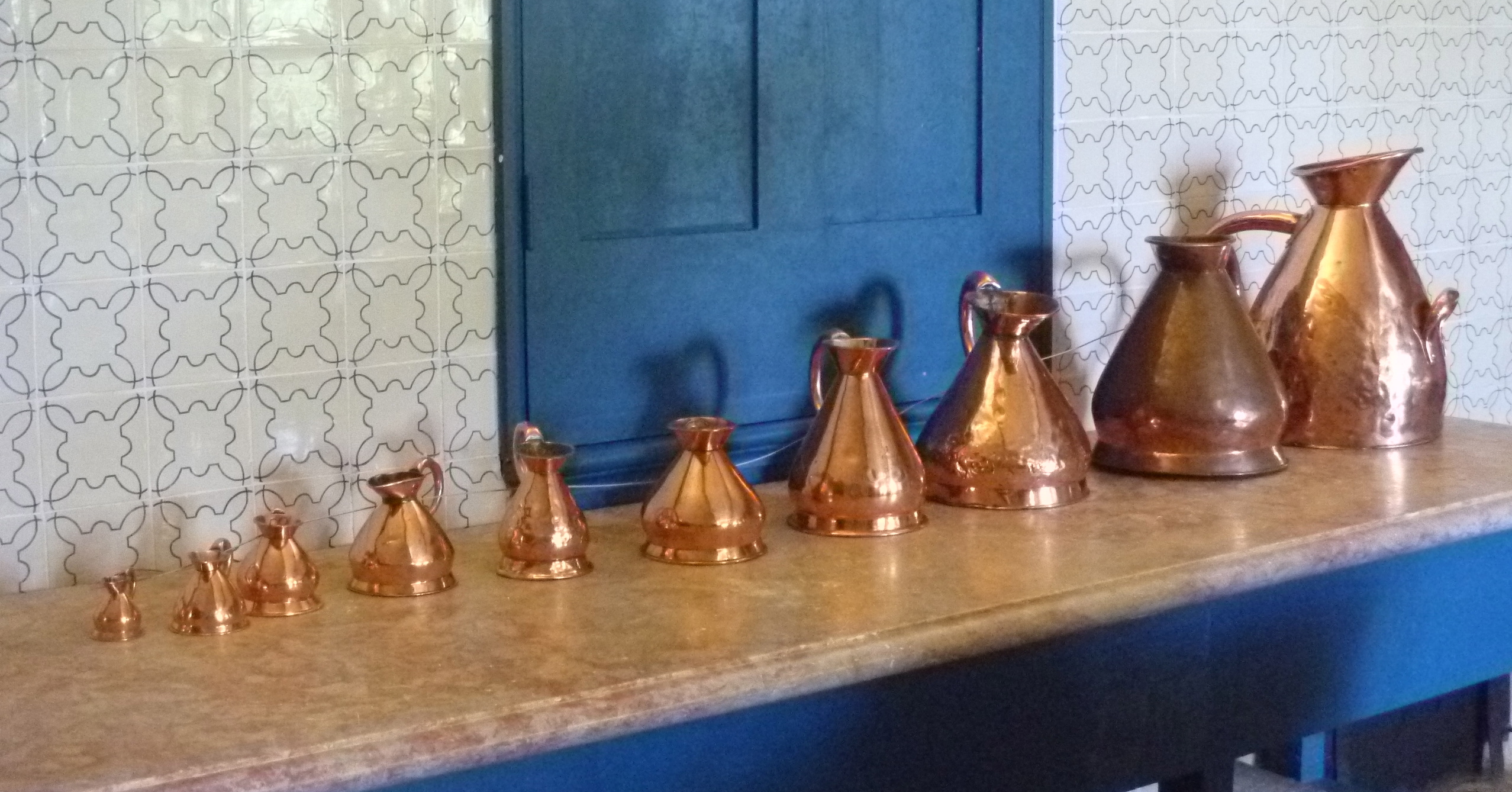
Brass jugs in kitchen

Brass jugs in the kitchen – could be Below Stairs at any National Trust property!

Along the Way – Convents

If our first day’s walking, now that I look back, was on a theme of Forts then the next day was on a theme of Convents. This was our longest day walking: over 12 miles. We left the Fortaleza after breakfast (and a personal farewell from the manager) at 9.30am and only arrived at our destination that evening at 6.30pm. Of course, we didn’t spend the whole day walking, there were several places to visit along the way, not least The Convento dos Capuchos, where we spent well over the ‘designated’ one hour suggested in our Route Booklet. The Convento (read more about it here) was the first location within the Cultural Landscape of Sintra – a UNESCO World Heritage site first designated in 1995 – on our itinerary.

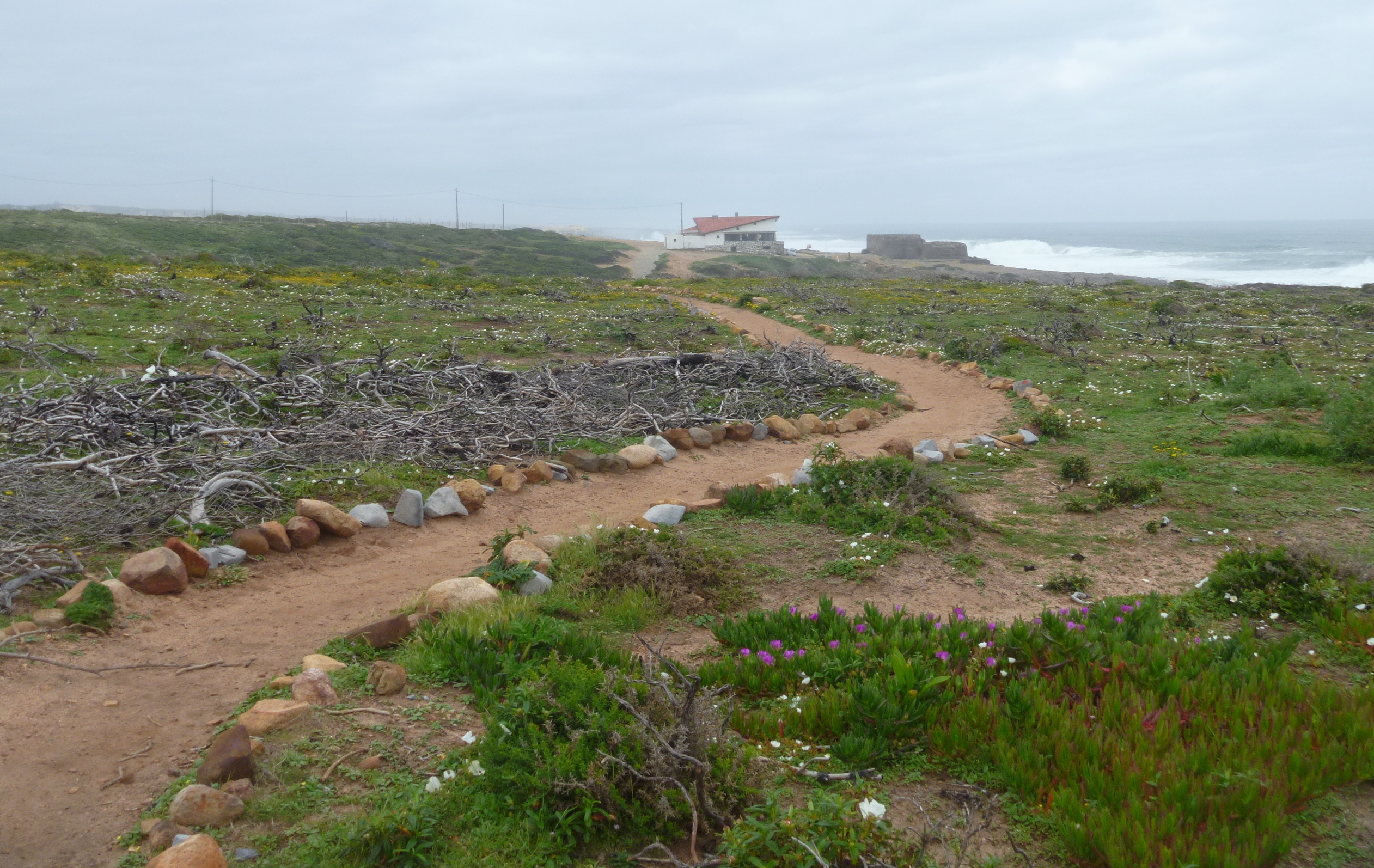
Our coastal path

Clearly marked coastal path

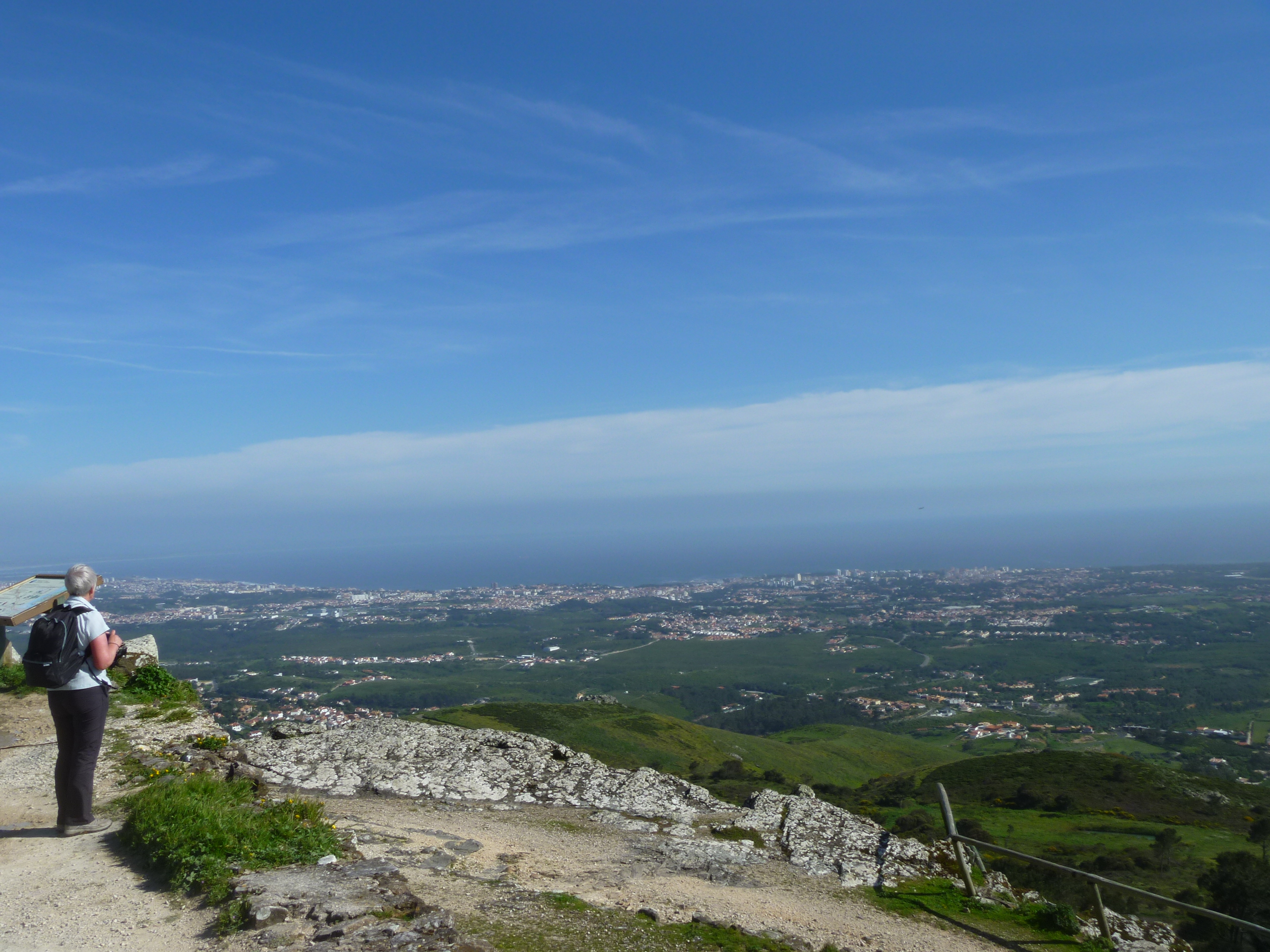
At first our route, on clearly marked paths, followed the coast northwards before turning inland and into the area known as The Serra de Sintra. There were some tough climbs but also some great views.

Viewpoint

After the first tough climb we could see the River Tagus and 25 Abril Bridge

Still see Fortaleza

In another direction we could still see the coast and the Fortaleza

This area was the worst affected by the storms in January this year and consequently our path was disrupted at one point. This took some time to negotiate and calls/texts to Ana but eventually we got back on track. We’d hoped to reach The Convento at lunchtime but in fact we ate our picnic lunch a few miles before.

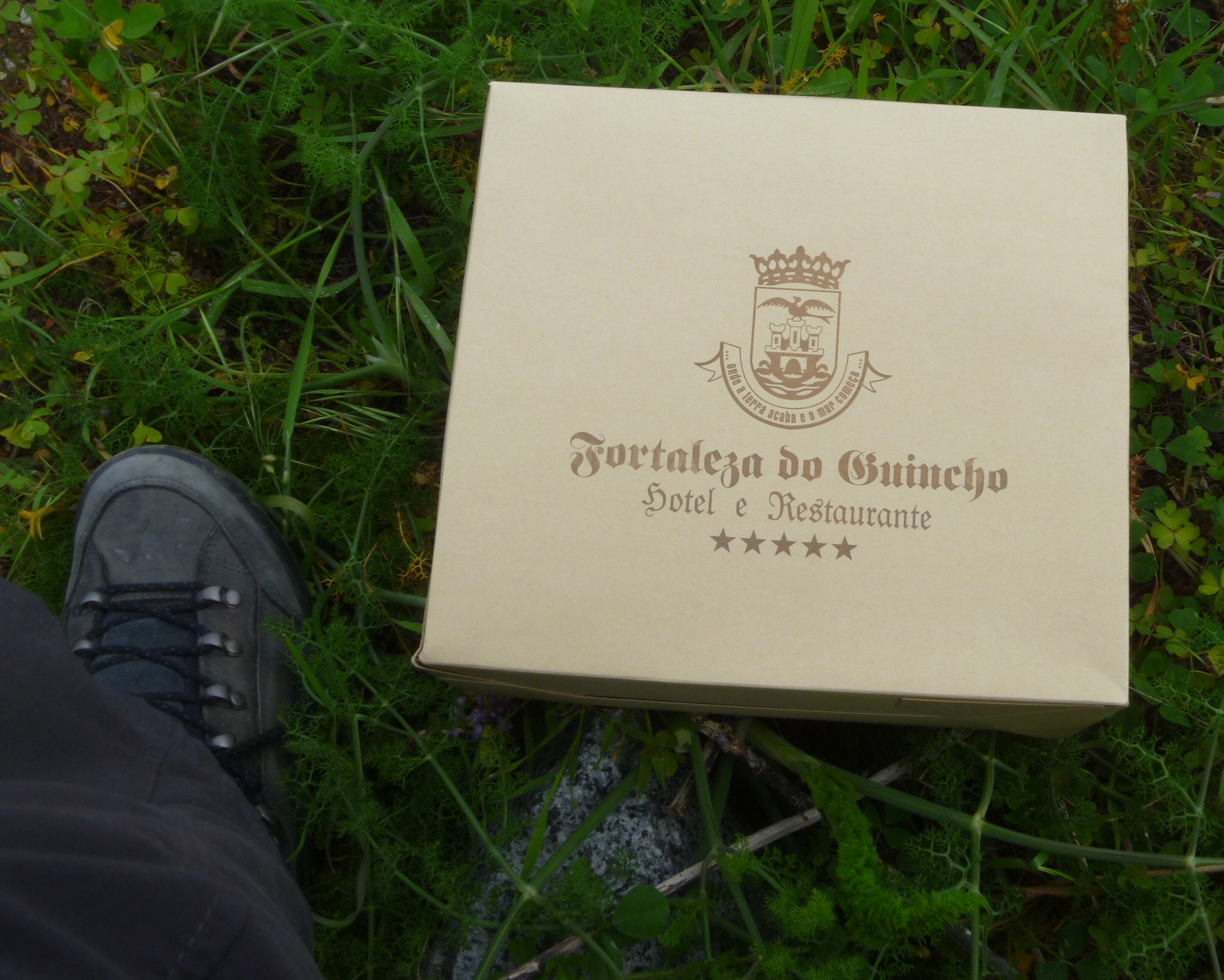
5 star picnic

Our Five Star Picnic lasted us Three Days!!

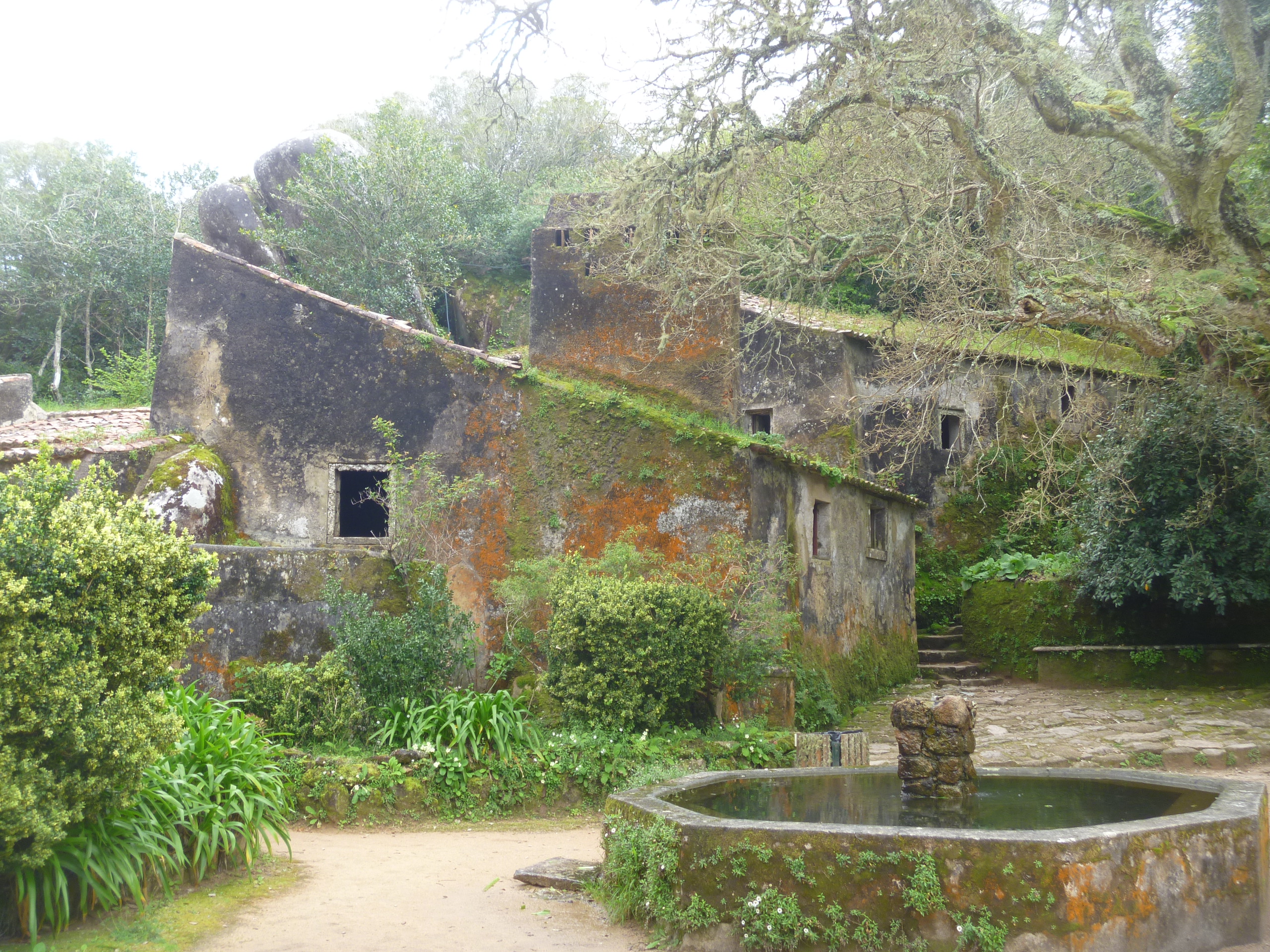
The Convento dos Capuchos dates back to 1560. It was built by Don Alvaro de Castro as a Franciscan monastery. The Capuchins were a minor ‘hooded’ order. It was built in accordance with the Franciscan (fulfilling the teachings of St Francis of Assissi) principles of living in harmony with nature. Mostly carved from the rock face, granite boulders are incorporated and cork was used as insulation, thus giving an alternative name ‘The Cork Monastery’. Here the monks lived a simple and holy life until the site was abandoned by them in 1834. The Portuguese state took responsibility for the site in 1949. Why it is called a Convento and not a Mosteiro (monastery) I have no idea!

Views of the Convento Dos Capuchos

Capuchos sign

At the Entrance – there’s also a Nature Trail, but we didn’t have time to complete it.

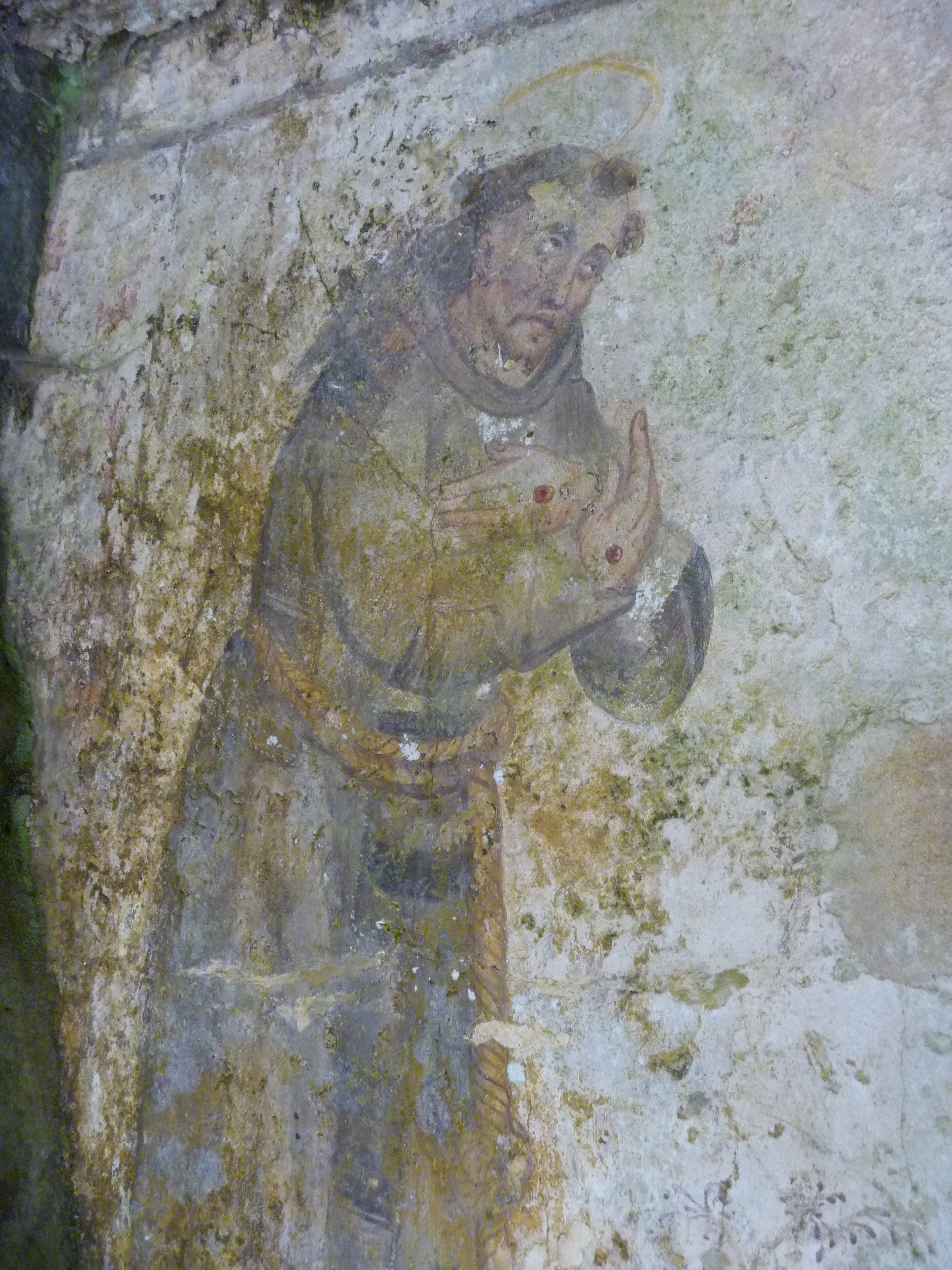
St Francis

Wall Painting of St Francis

Tiny doorways to cells

The very low doorways (indicating humility) into the tiny cells (the floor lighting guides our way)

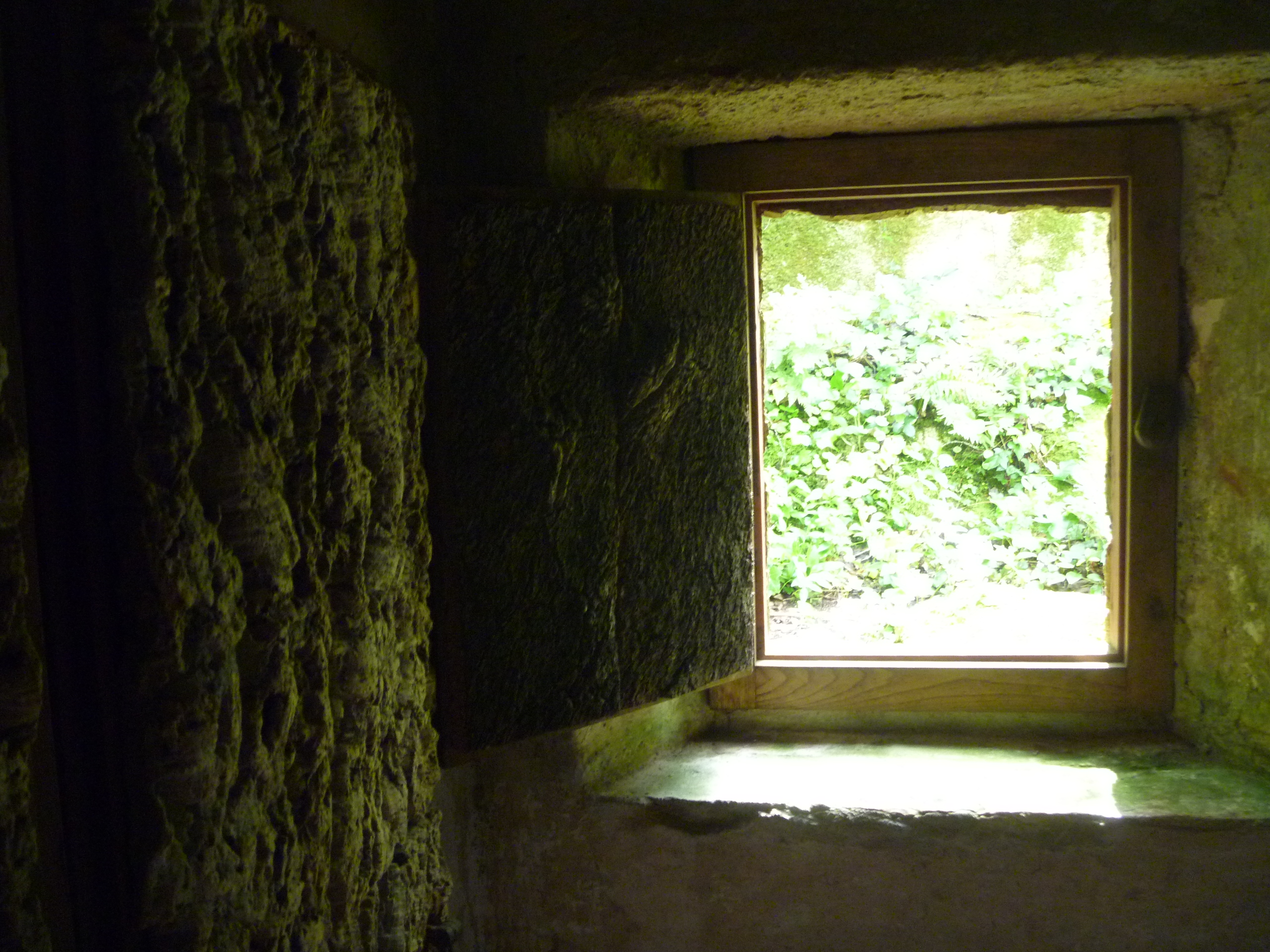
Small windows

Small Cell Windows and Cork-Insulated Walls

Cloister

The Cloister

Cork oak

A Cork Oak still grows in the Cloister

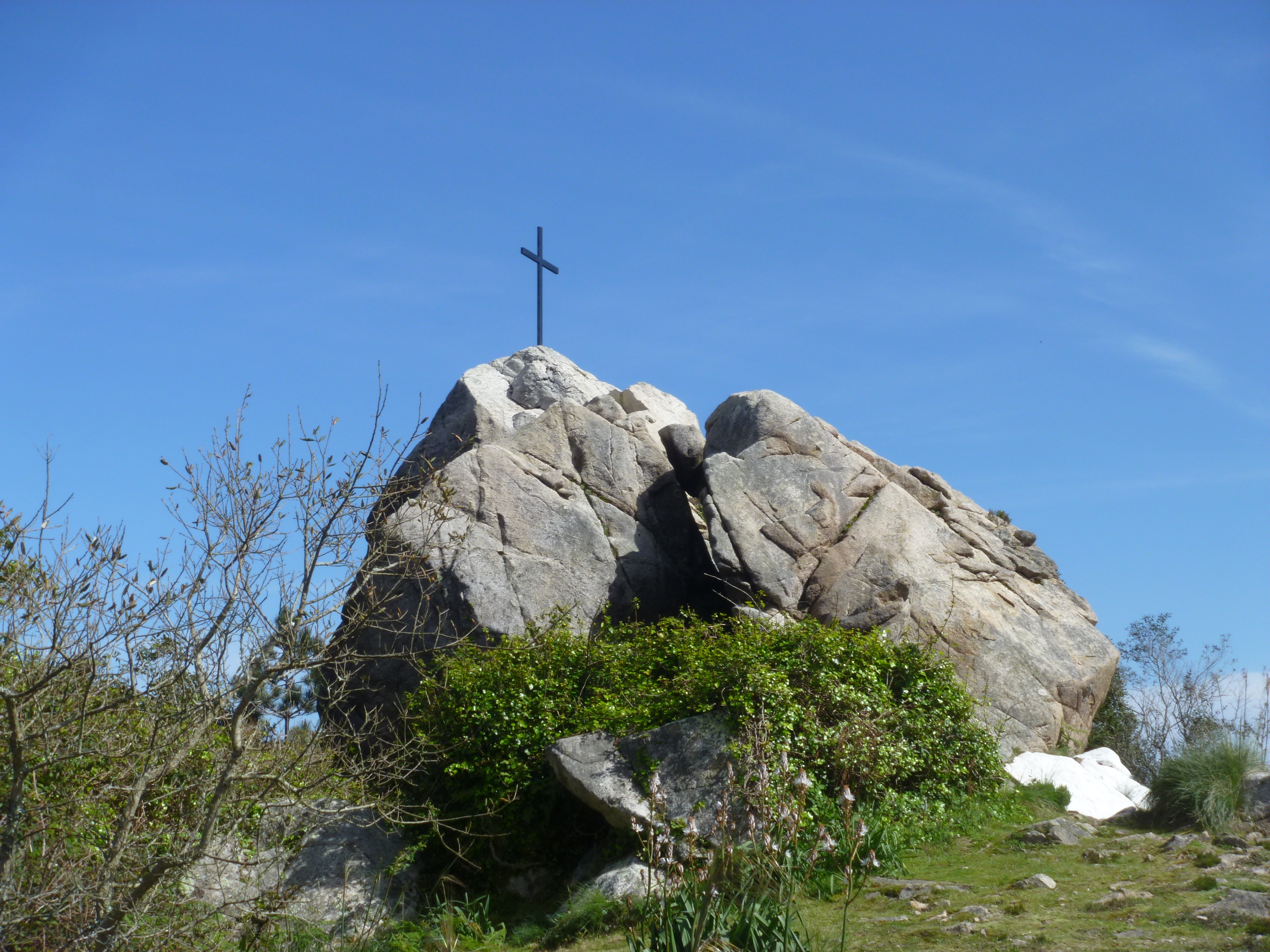
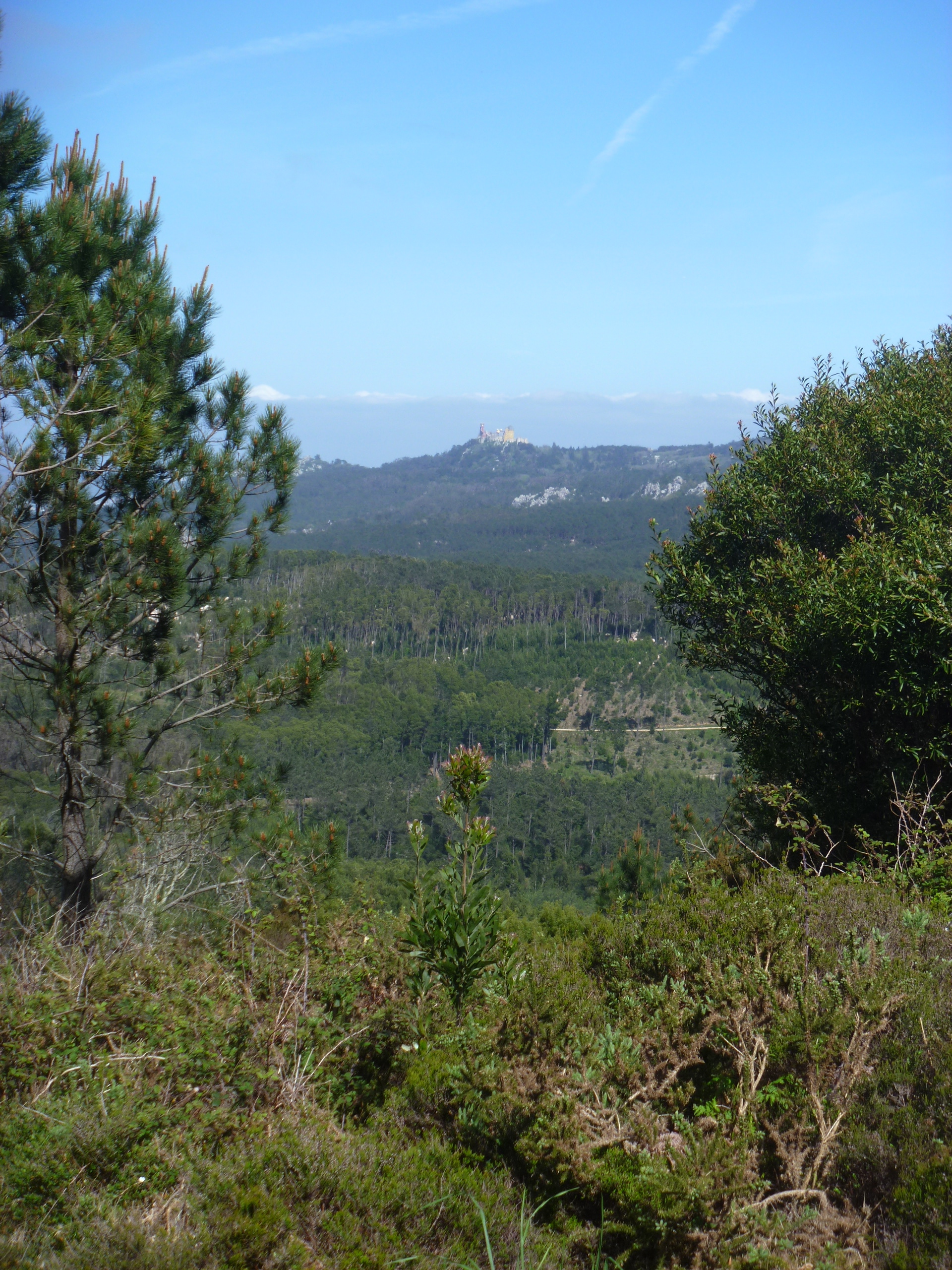
Leaving the Convento around 4pm we still had a lengthy walk ahead of us, plus two further climbs. The first was to a memorial to 23 soldiers who were killed putting out forest fires in 1966. From the cross there are more stunning views – the Pena Palace magnificent in the distance.

Memorial

Forest Fires Memorial to Servicemen

Pena Palace in the distance

Pena Palace across the Serra

“Continue ahead uphill”. We got kind of used to reading this instruction!

Yet more climbing to do!

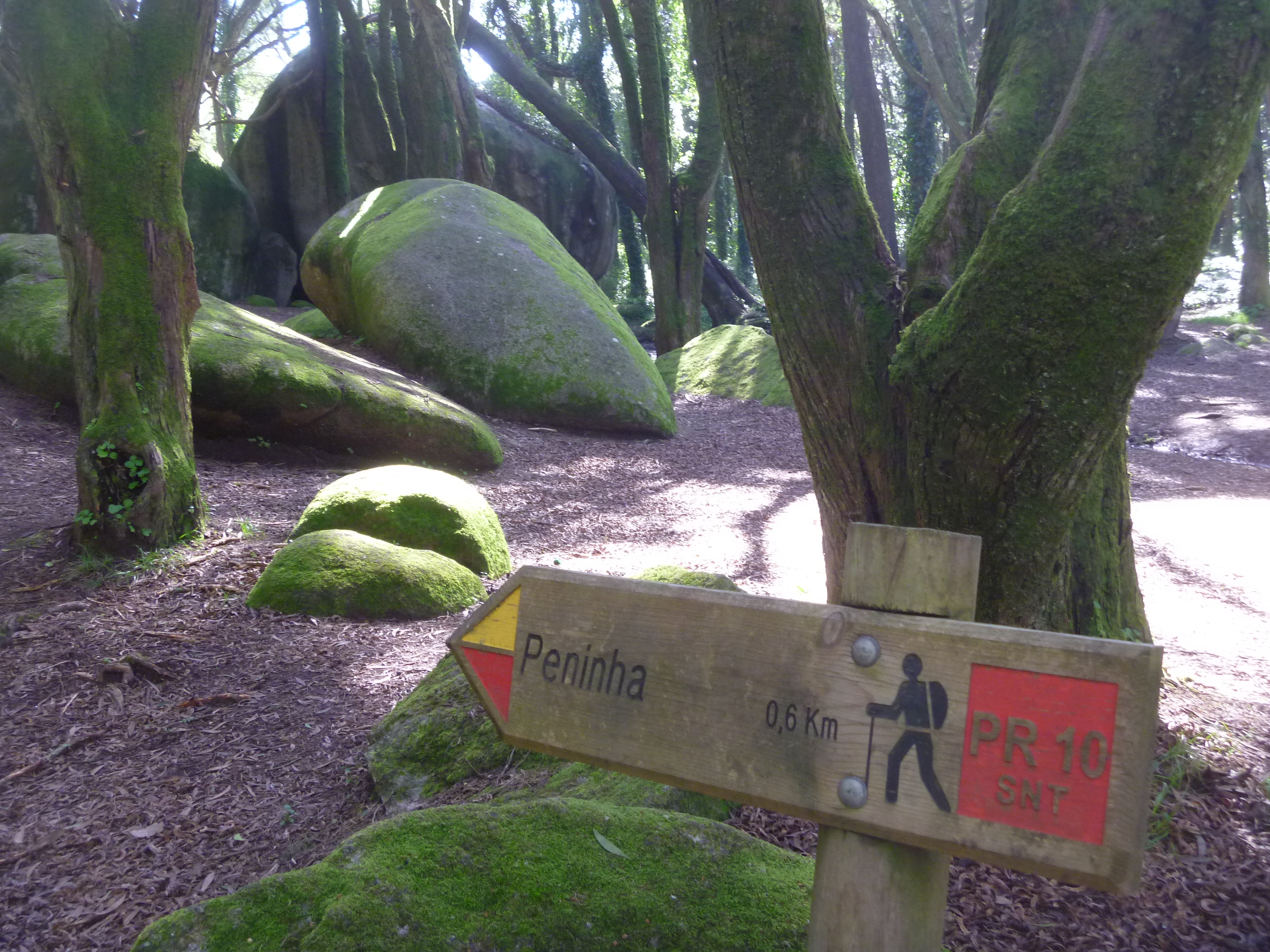
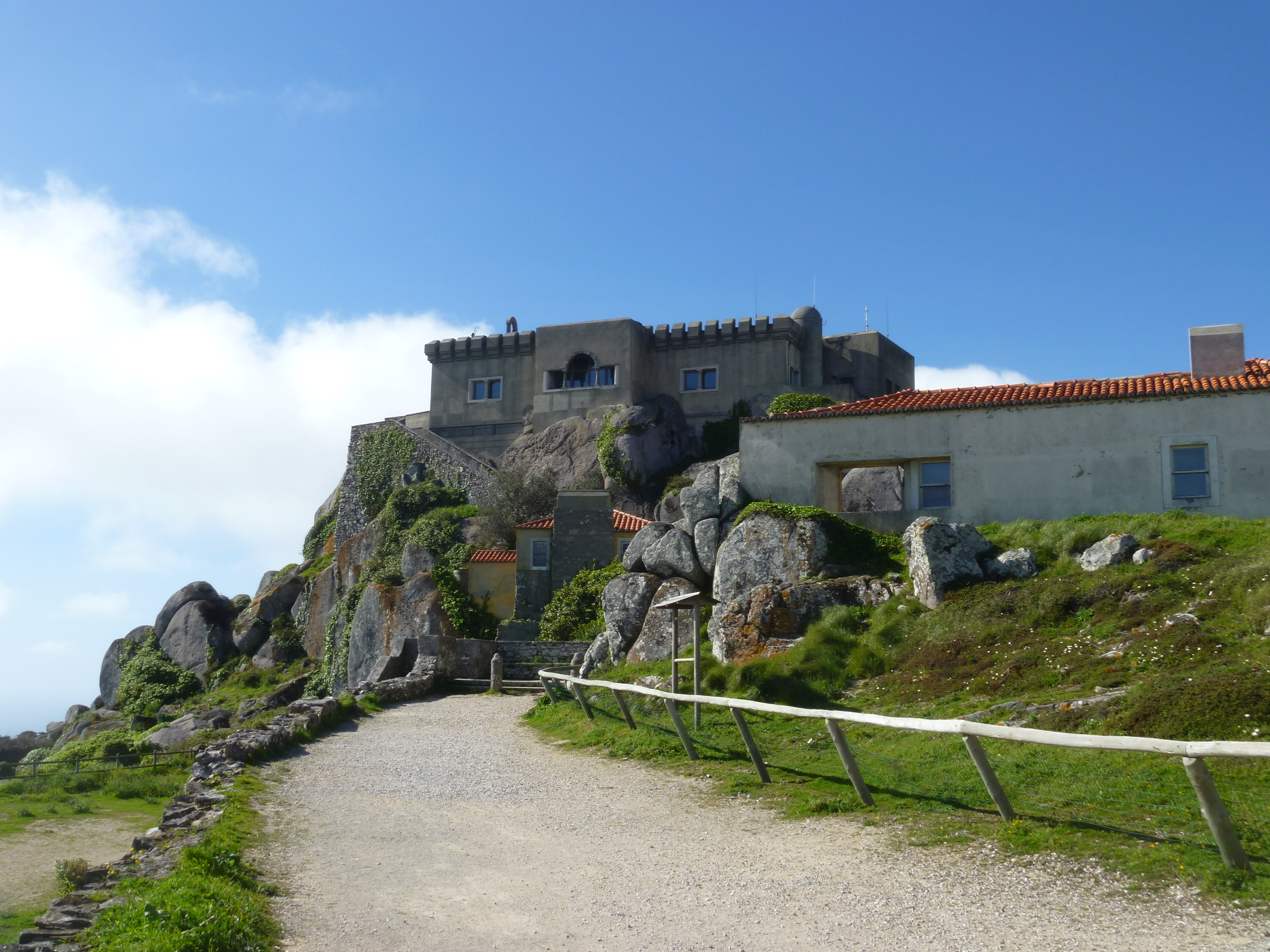
Onward and upward we continued until we reached the Peninha Chapel.

Peninha

Unfortunately the chapel wasn’t open to the public but we read that the first building on the site was a chapel to Sao Saturnino in the 12th century and that the ‘new’ chapel was built in the 17th century and apparently contains beautiful blue and white azulejos (tiles) depicting the life of Mary.

View from Peninha

Tagus view from Peninha

Again, we had magnificent views of the coast and towards the River Tagus and Lisbon. From the Peninha it was practically downhill all the way and finally, we caught a first glimpse of our destination – The Convento Sao Saturnino nestling a valley with views of the sea.

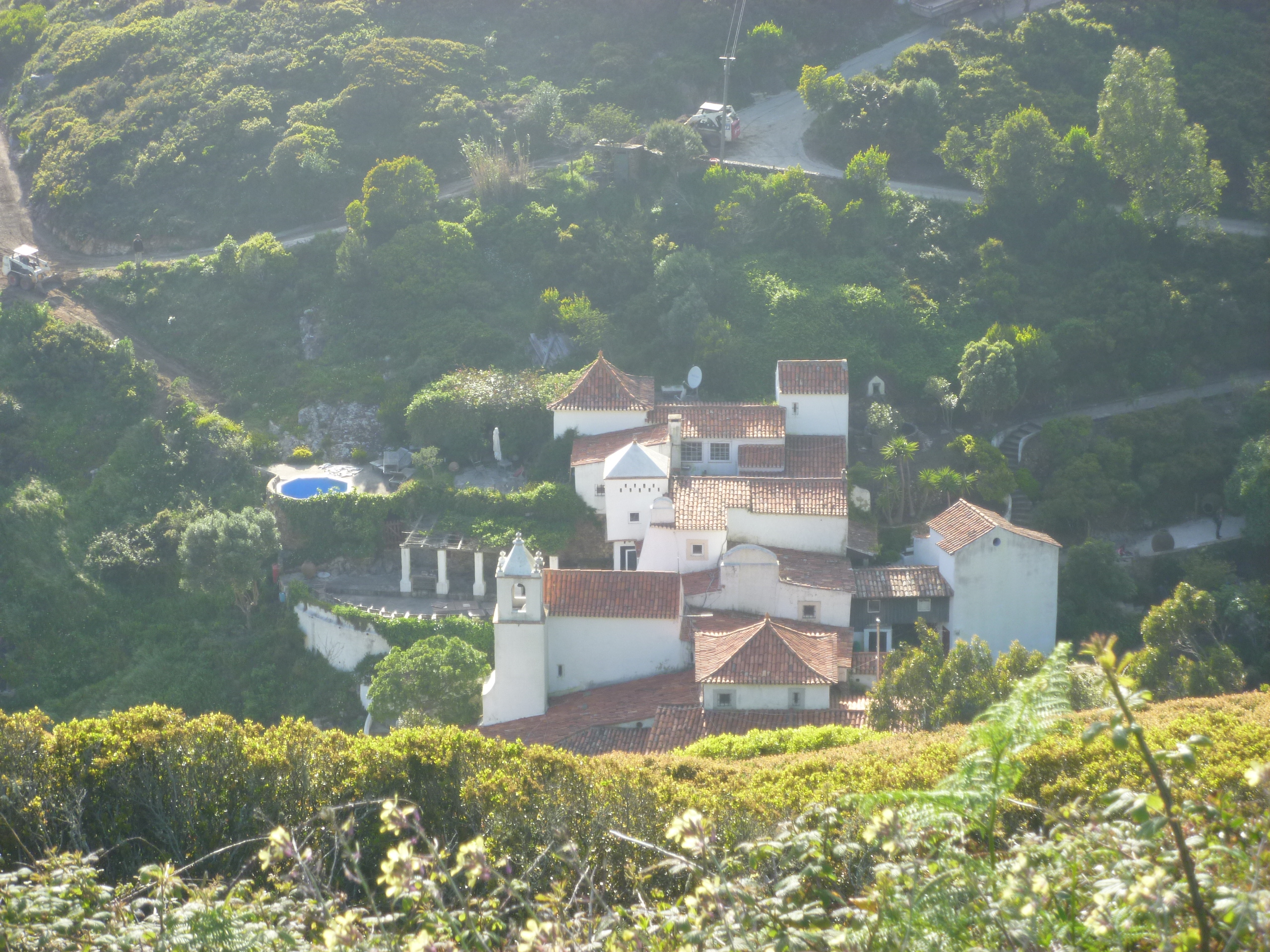
Convento da Saturnino

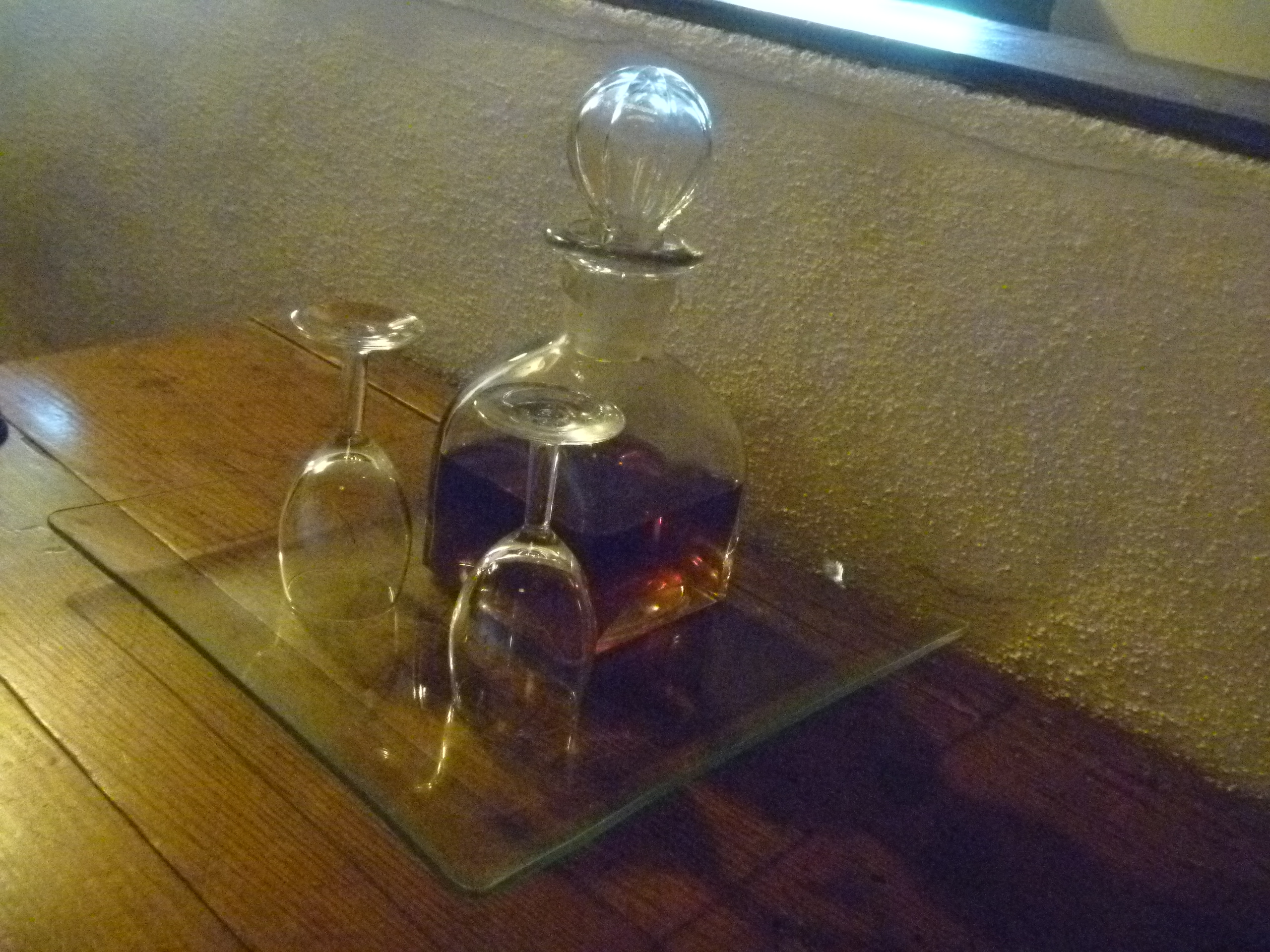
We arrived just in time for dinner – there’s a welcoming tray in the bedroom for revival of the spirits!

Nice feature in the room

The Bernese Bears and the Saturday Food Market

I’ve written about Bern and its bears here once before, about a year ago, when an article in the Independent prompted me to wander down Memory Lane not knowing, at the time, when I’d next make a visit there.

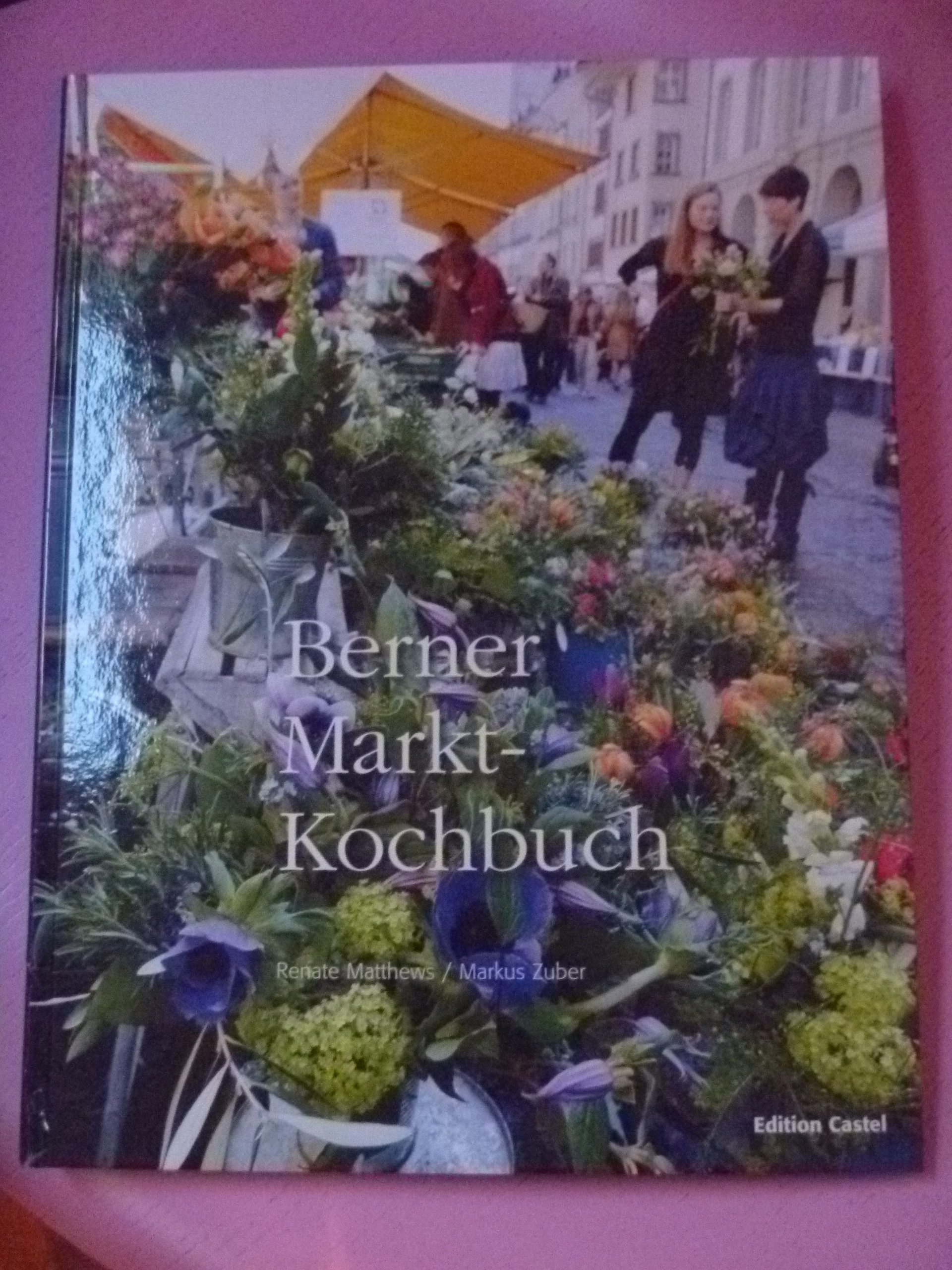
Bern Market cook book

The Old City of Bern is classed as a UNESCO World Heritage site and this is not surprising when you see it. It’s a beautiful city with lovely cobbled streets, beautiful architecture, famous shopping arcades with delightful, mostly ‘one-off’, shops but very far from being a museum-piece. It hosts lively markets and is busy and bustling. I love it.

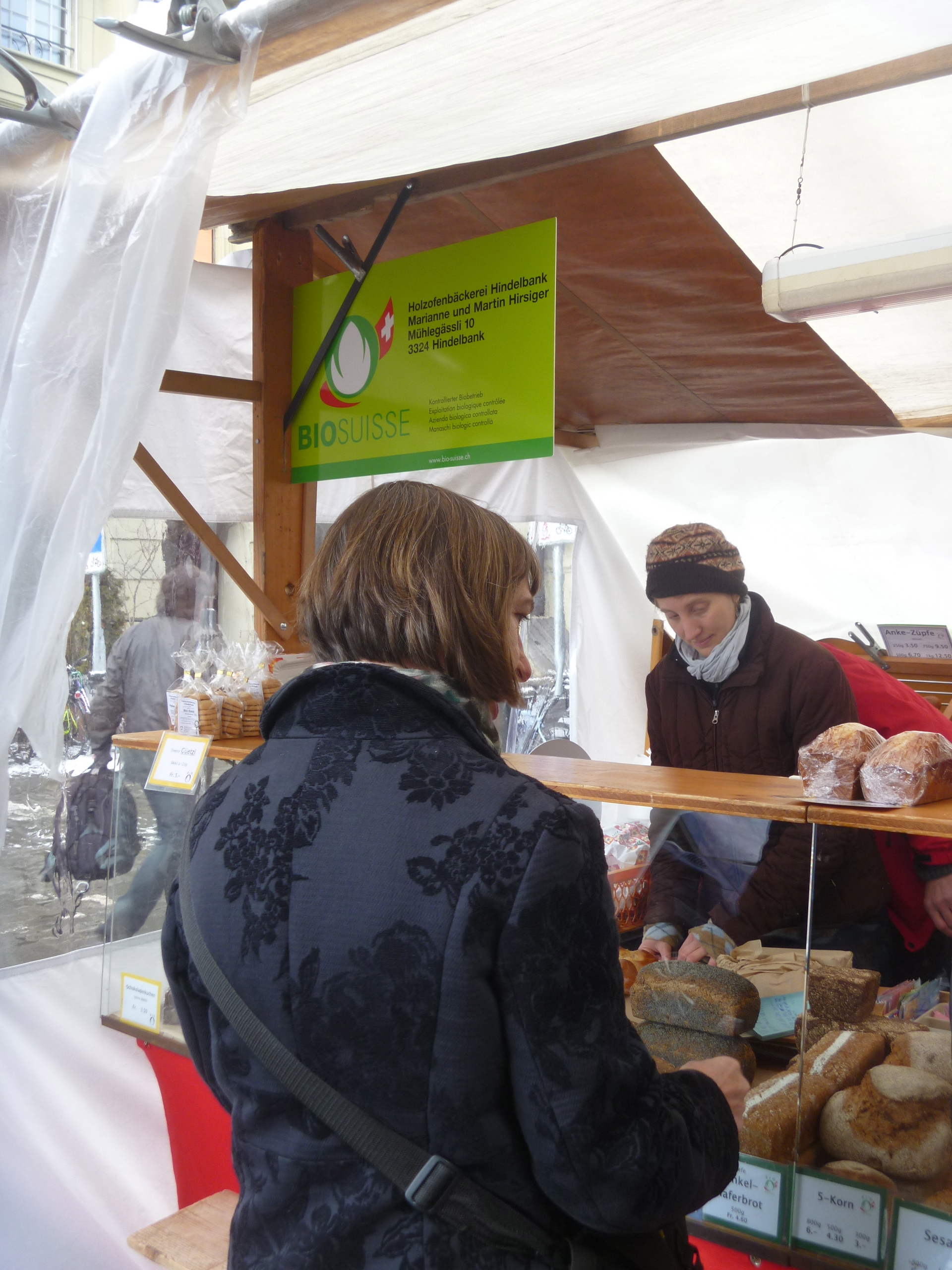
Choosing bread

Choosing breads

B had finally finished work for the week and early on Saturday we walked to the Old Town to shop at the market, have a coffee and walk along the arcaded streets down to the new ‘Bear Pits’ – or Garden, really – on the opposite bank of the River Aare. It was freezing cold and snowing but this didn’t stop anyone going about their business and the market (although very much bigger and busier in the summer months) was thriving.

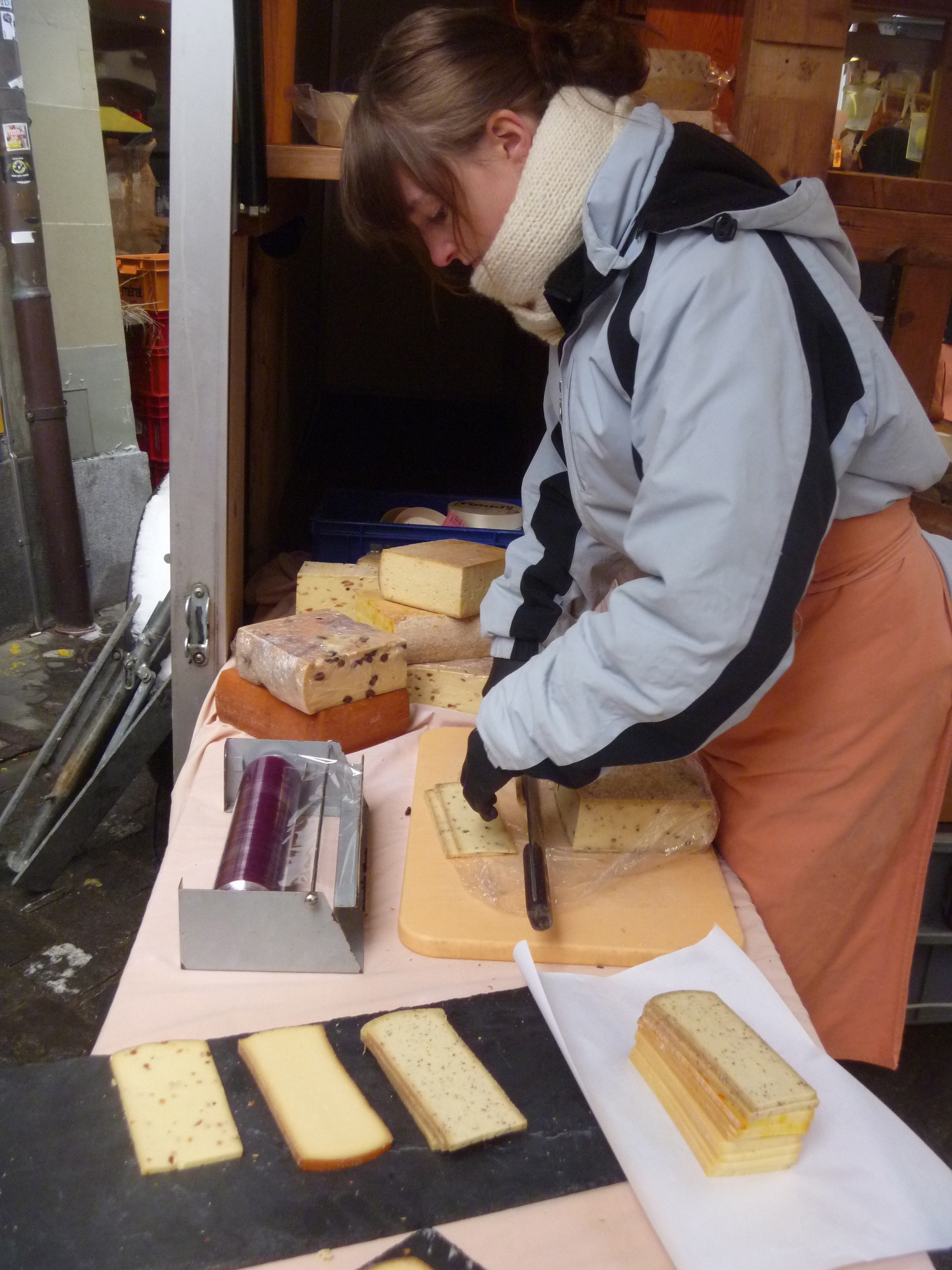
Cheese stall

Cheese stall

Meat stall

Meat stall

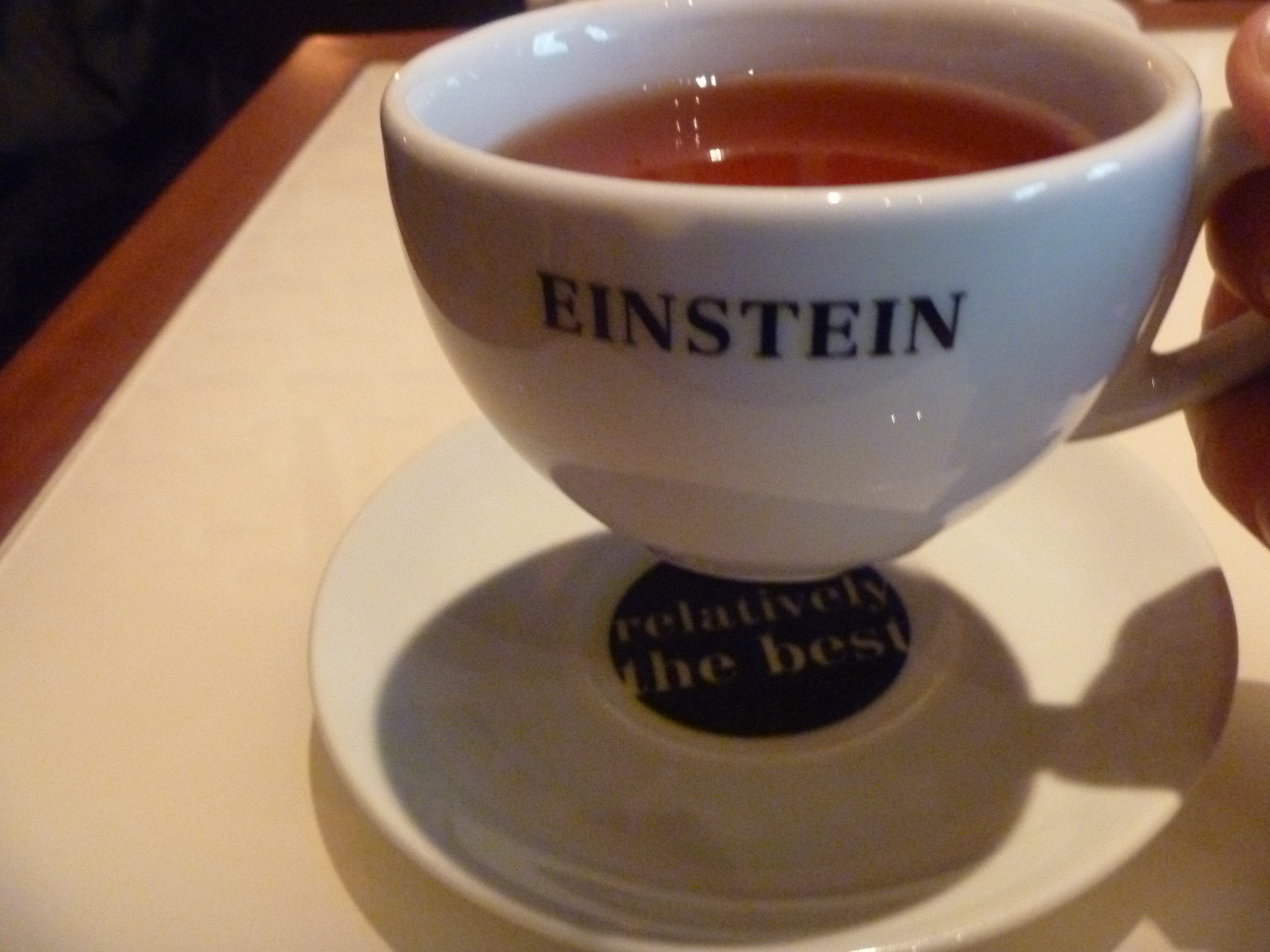
B knew all the best stalls for buying our commissions: cheese and dried meats for our Raclette evening meal, vegetables and breads. In order to defrost we nipped into the Einstein Cafe – a popular, currently trendy, cafe just by the market and under the (not open in February) Einstein House Museum. [I discovered on this visit that Einstein also lived for some time in the same street as B but as it was dark on Saturday evening I was unable to take a decent picture – next time!]

Tea at Einstein

Tea at Cafe Einstein – relatively the best

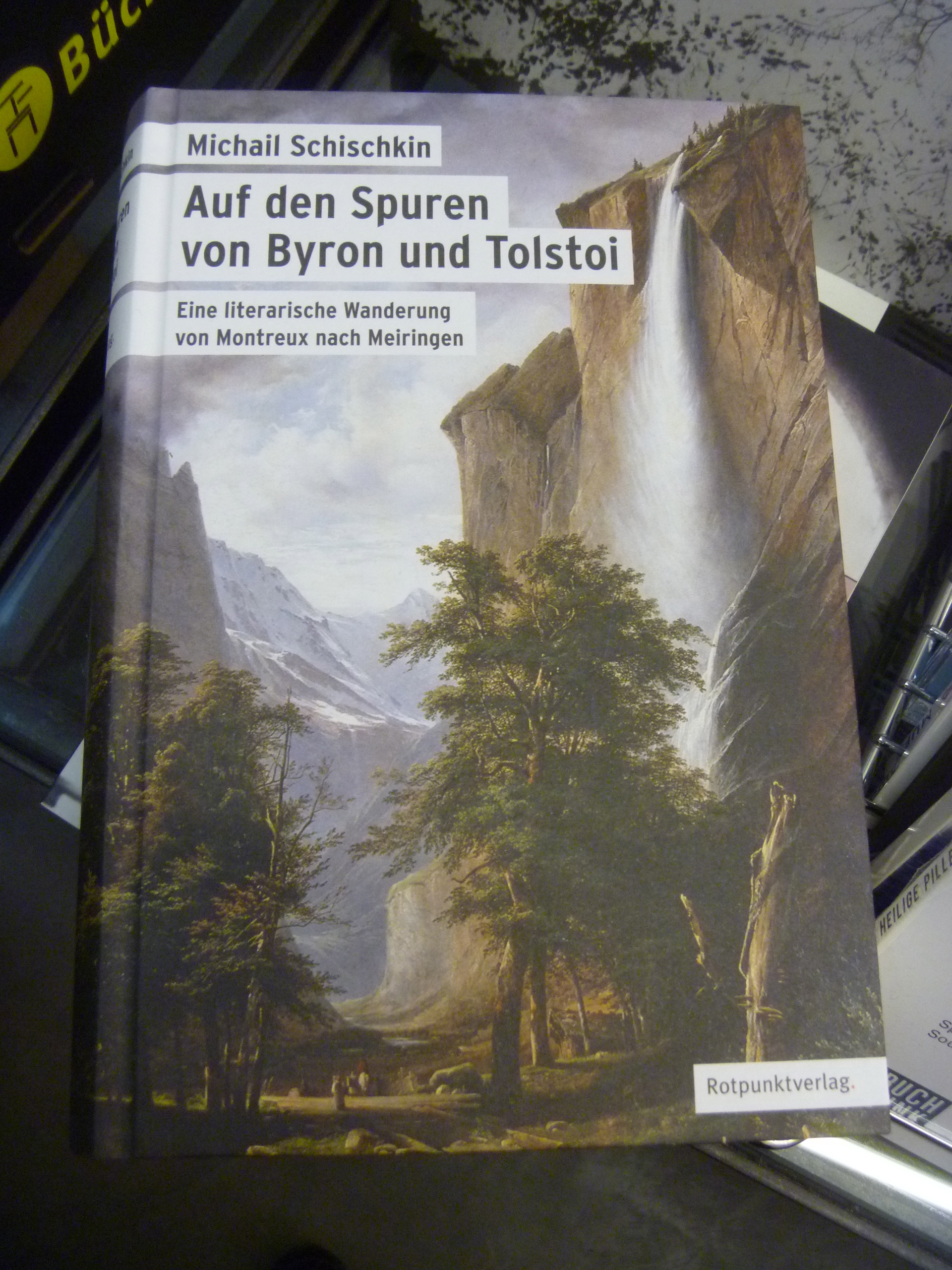
Warmed, we left the cafe to visit the bookshop over the street. Naturally, we browsed and chatted about the books and authors we saw and B ended up buying a book, which, had it been in English, I too would have succumbed to buying. Translated the title is “On the track of Byron and Tolstoy: a literary hike from Montreux to Meiringen”. I’m hoping that in the spring B and P may put this reading into action and participate in at least some of this week-long hike and report back to me on its progress.

Byron Tolstoy book

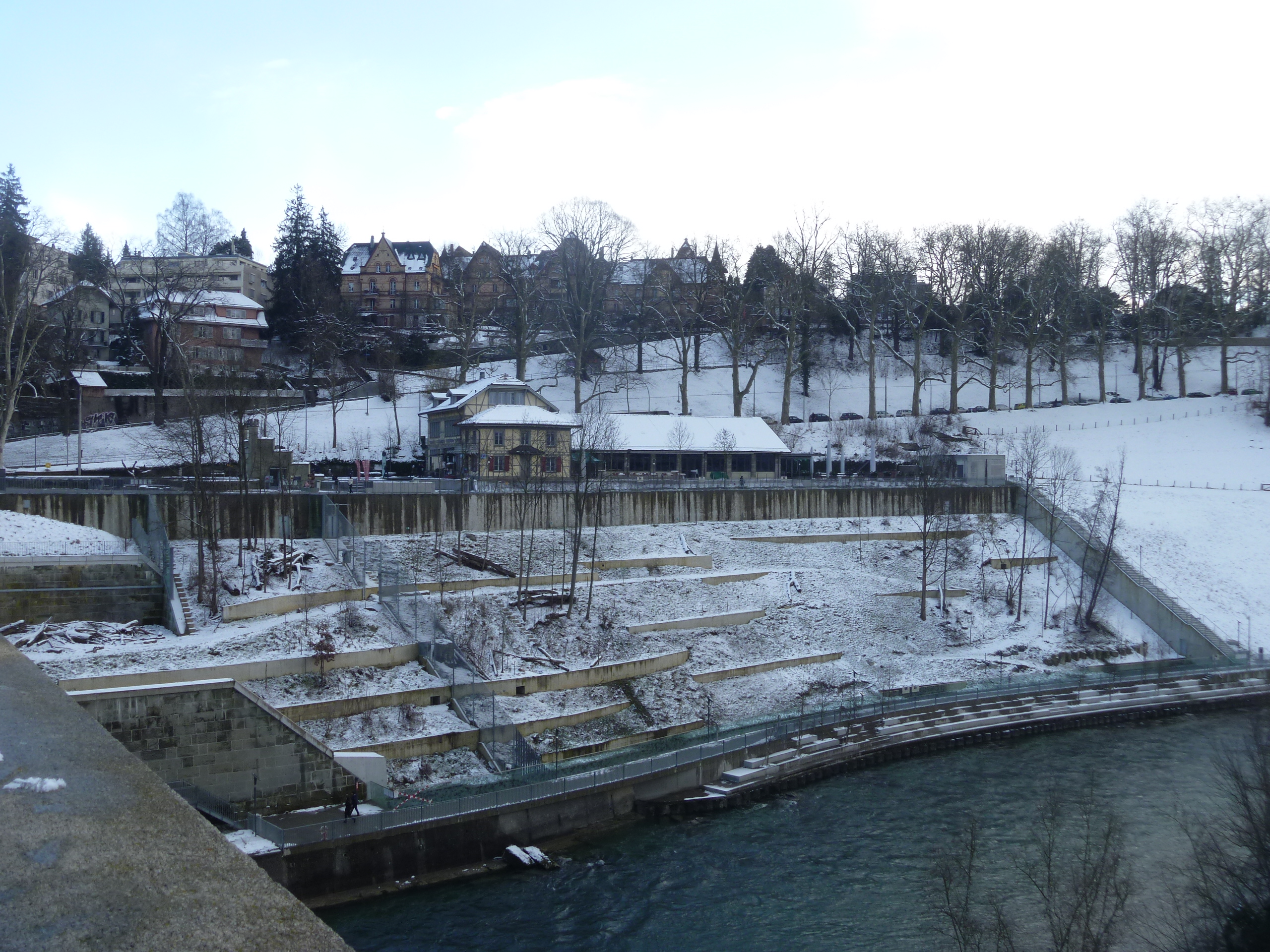
From here we walked through arcades until we finally had a view of the Bernese bears new ‘garden’ no longer a pit but a very open area alongside the river – much more pleasant for both bears and visitors. Of course, the bears were sleeping so we didn’t catch sight of any.

Bear Garden

The new Bear Garden in Bern

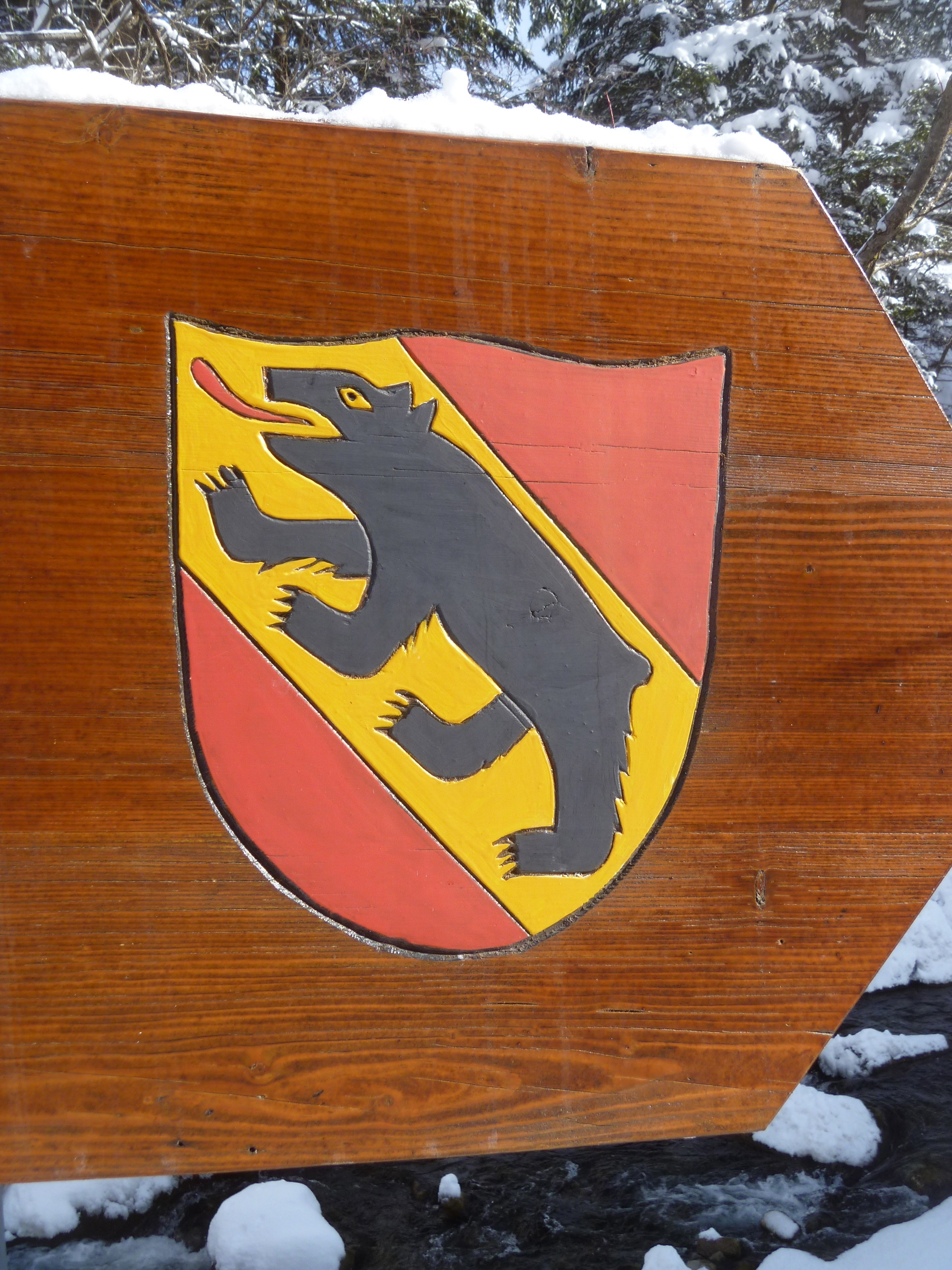
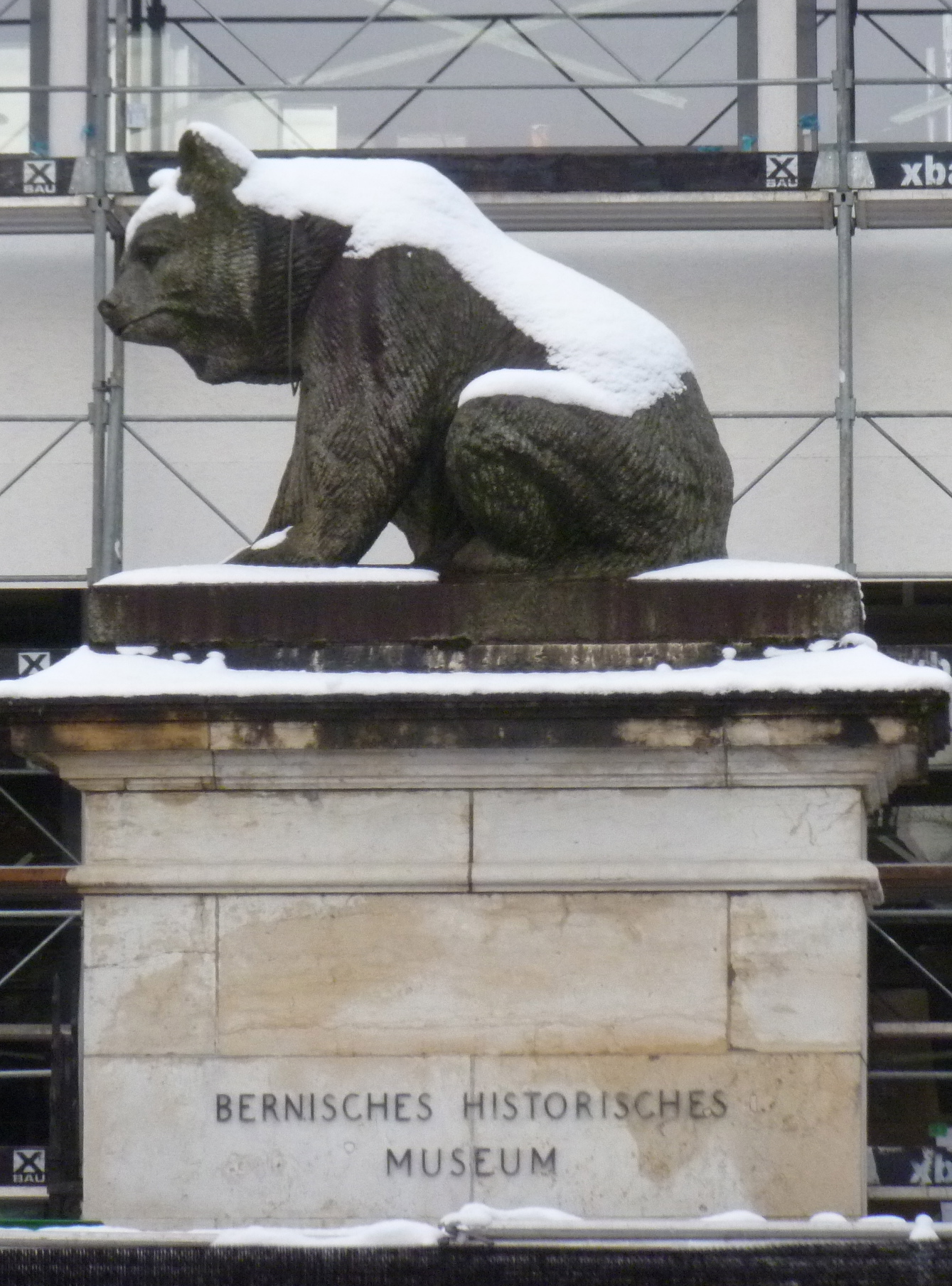
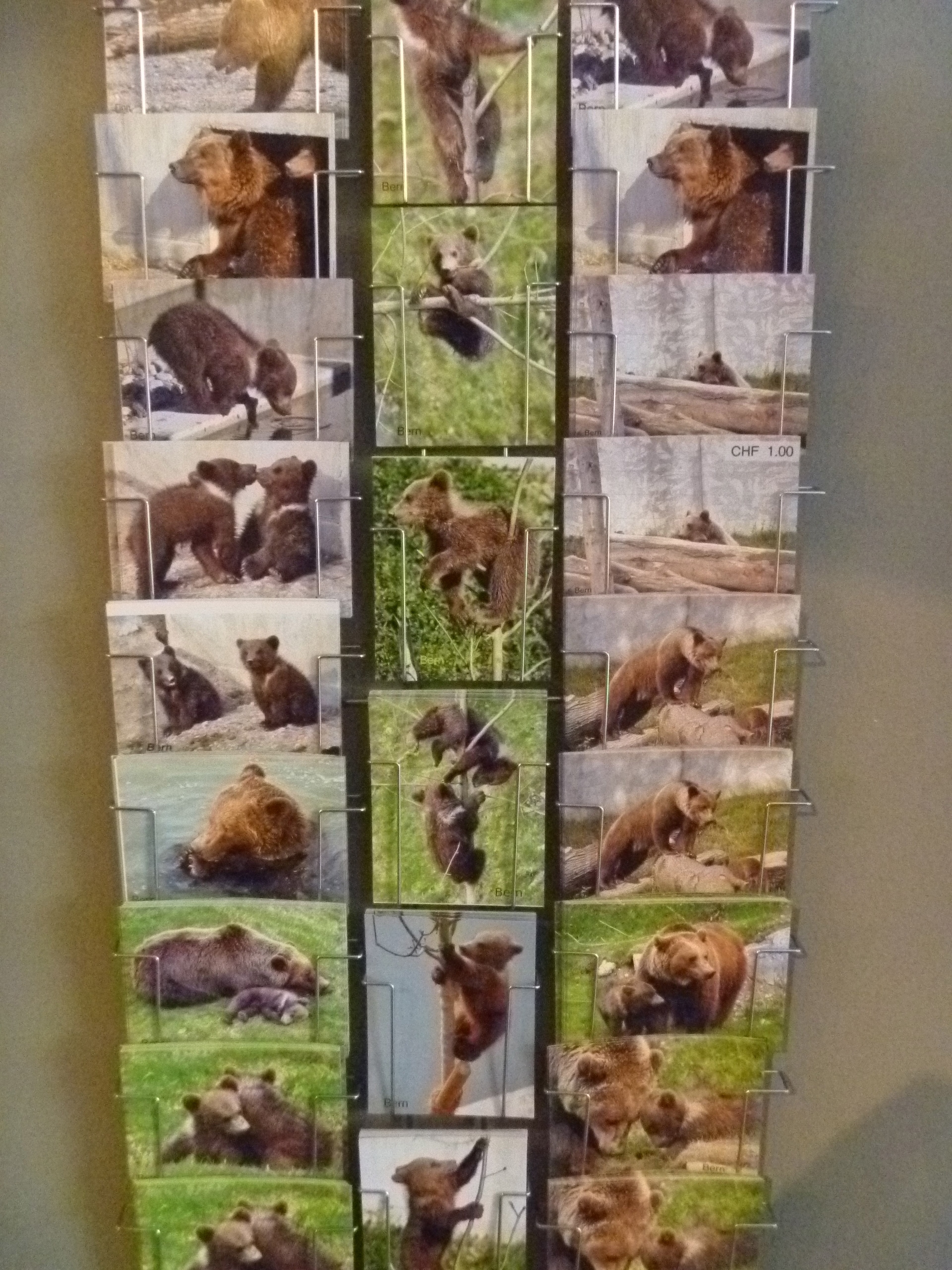
You won’t be surprised to see that bears turn up everywhere in the city and Canton of Berne.

Bern signMuseum bear

Bear postcards

Finally