Villages and Churches of Upper Nidderdale, Part 2

Subtitled : Learn some of the history of the villages of Upper Nidderdale.

Happy New Year, everyone, and welcome to another year of rambles (in more senses than one!)
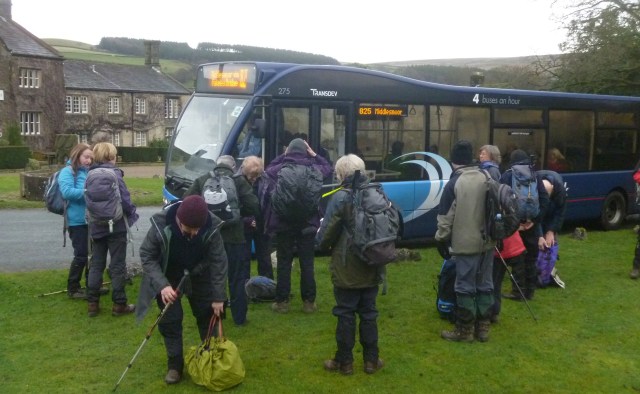
Arriving at Ramsgill

Dalesbus arriving at Ramsgill in Nidderdale

Such a pity that I missed Part 1! But I had never heard of Dalesbus Ramblers when that walk took place. At the end of last year I discovered walking with the Friends of the Settle – Carlisle Line and one the leaders told me about Dalesbus Ramblers so today I drove to Harrogate and joined my first walk with that particular group. With my new Metro Concession Bus Pass I enjoyed free travel from Harrogate up through Nidderdale where the group assembled for the walk:

SUNDAY 5th JANUARY 2014: VILLAGES & CHURCHES OF UPPER NIDDERDALE Part 2
Learn some of the history of the villages of Upper Nidderdale.
Start: Ramsgill: 11.05
Finish: Pateley Bridge: Approx: 14.20
Distance/Grading: 5 miles / Moderate
TRAVEL: Outward: Bus 823/825 from York (08.58), Tadcaster (09.20), Wetherby (09.40), Harrogate (10.05) and Pateley Bridge (10.50). Connections on bus 36 from Leeds (09.15) to Harrogate or Ripon (09.45) to Ripley.
Return: Bus 24 to Harrogate for onward connections.
Walk Leaders: Duncan & Brenda: 0796 951 2743

Naturally, our first church call was at St Mary the Virgin, Ramsgill just across the road from the bus stop.
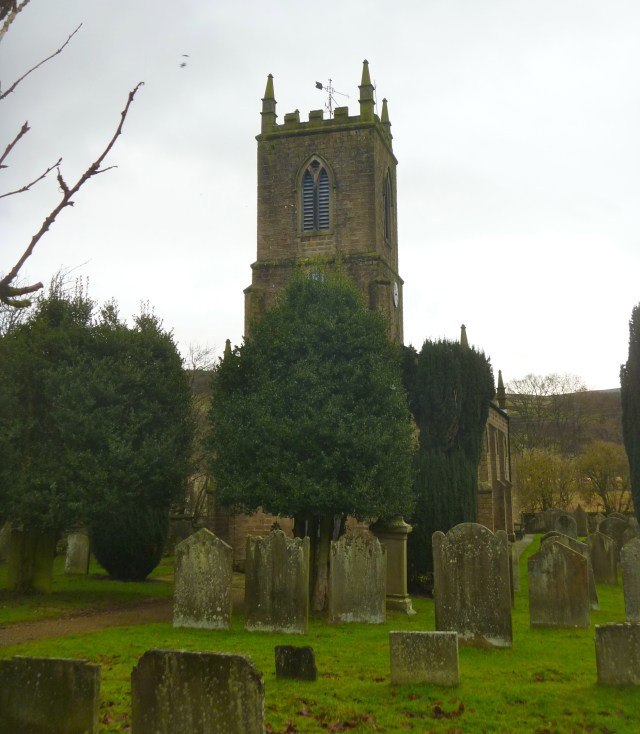
St Mary's Ramsgill

St Mary the Virgin, Ramsgill

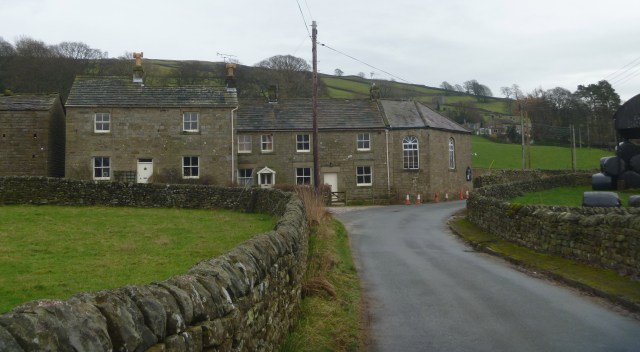
Most of the 20 or so houses in Ramsgill were built in the 19th century and the church was built in 1899 but on the much older site of a grange of Easby Abbey. The remains of the Abbey buildings are  behind the present church.
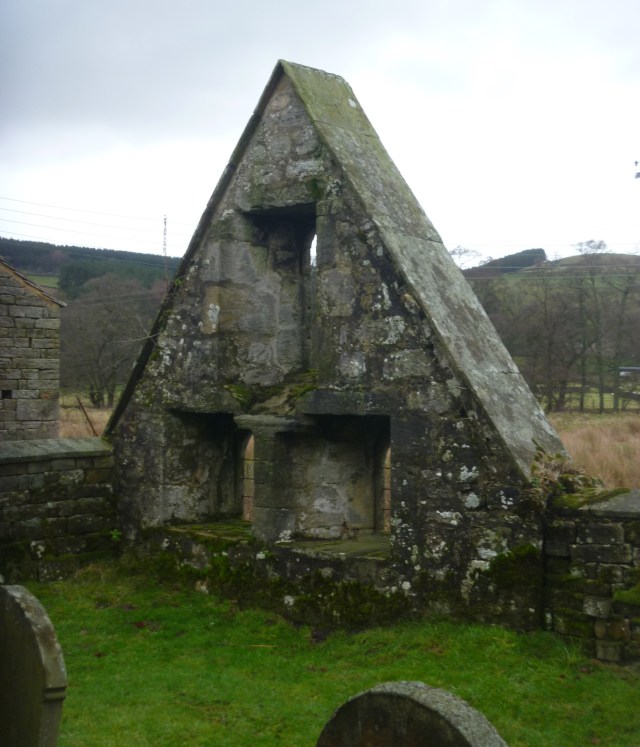
Easby grange

Remains of Easby Grange, Ramsgill

We also found out that Ramsgill had been one of the film locations for the 1997 movie ‘Fairy Tale: a true story‘ about the two little girls in Cottingley, near Bradford, who in 1917 took a photograph believed by some to be the first scientific evidence of the existence of fairies [The Cottingley Fairies]. Sir Arthur Conan Doyle was one of those who believed this to be true.

Ramsgill scenes :

Village Hall

Ramsgill Village Hall

Ramsgill Houses

Ramsgill Houses

Yorke Arms

The Yorke Arms, Ramsgill

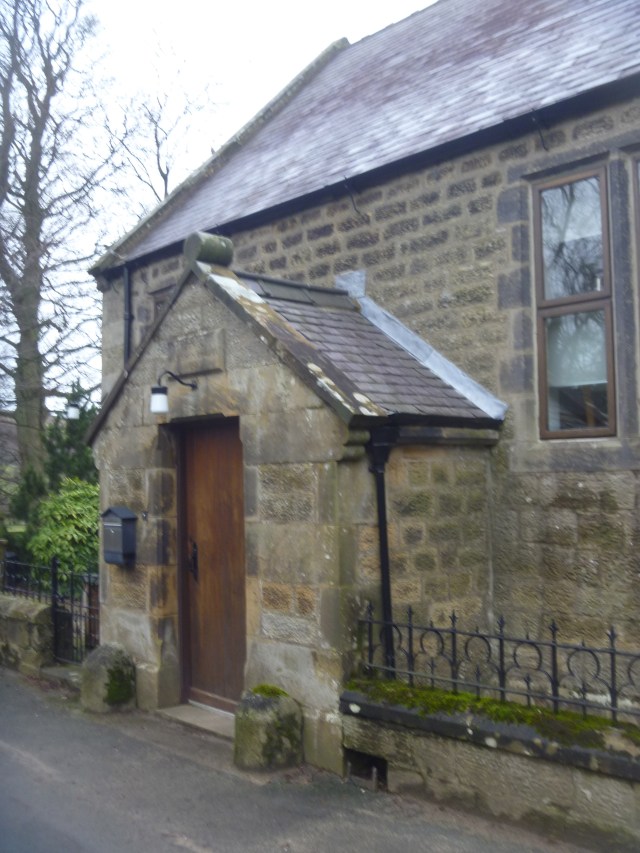
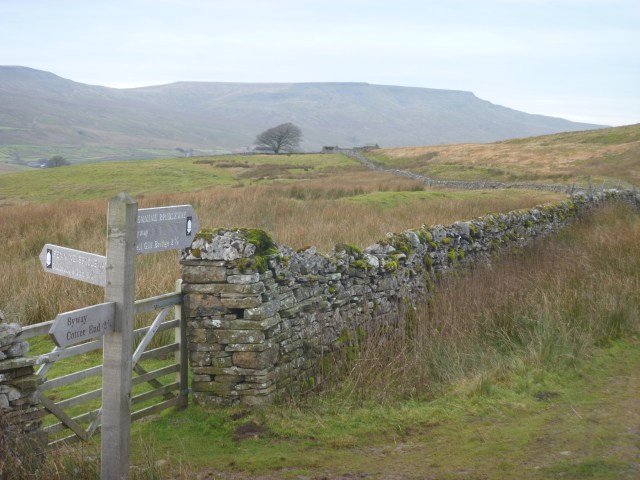
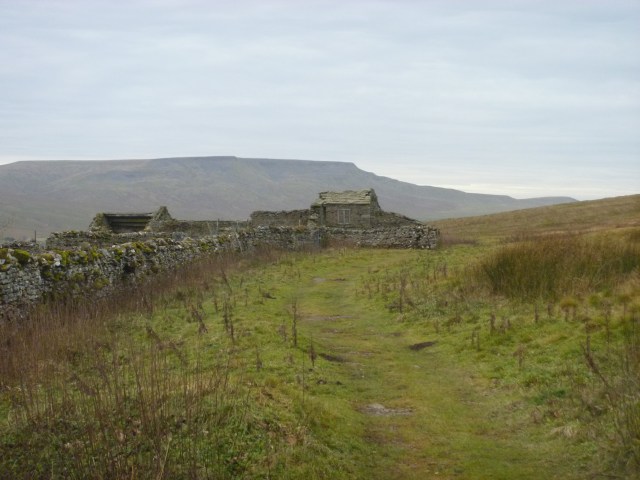
So we moved from Ramsgill to Bouthwaite where we came across our second church – the Wesley Chapel built in 1890 and joined the Nidderdale Way down to Pateley Bridge.

Bouthwaite chapel

Bouthwaite Chapel

Chapel

Wesley Chapel, Bouthwaite

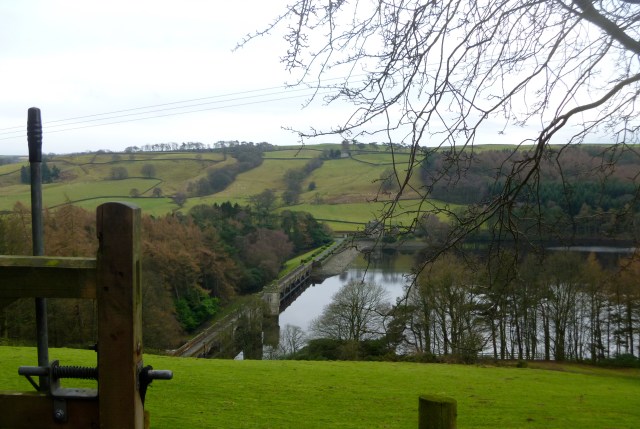
Ramsgill and Bouthwaite lie less than a mile apart at the head of Gouthwaite Reservoir. Our walk continued down the valley parallel with the reservoir and mostly overlooking it as far as Wath which lies at the southern end of the 3 mile long body of water.
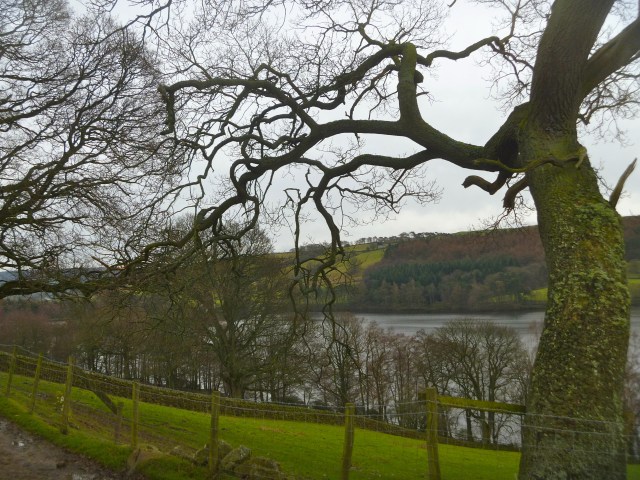
Gouthwaite 1

Gouthwaite Reservoir lunch stop

Gouthwaite 2

Looking back up Gouthwaite

Gouthwaite 3

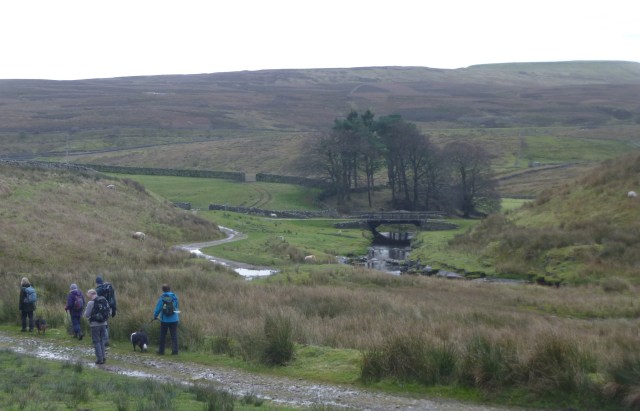
Gouthwaite and the Nidderdale Way

Gouthwaite 4

Gouthwaite Dam

The small Wesleyan chapel at Wath seats just 50 and has 5 walls. It also has links with Rudyard Kipling whose grandfather was once minister here.

Wath chapel

Walkers stop at Wath Chapel

Wath and chapel

Wath and Chapel

From Wath our path joined the trackbed of the former Nidderdale Light Railway to our destination Pateley Bridge where there was just time to have a well-deserved cuppa before catching our return bus to Harrogate. The Dalesbus system, which operates on Sundays with limited winter timetables, enables walkers and others to reach more remote and beautiful areas in North Yorkshire and I hope to make more such excursions during the year.

Old rail track

The track of the former Nidderdale Railway track approaching Pateley Bridge
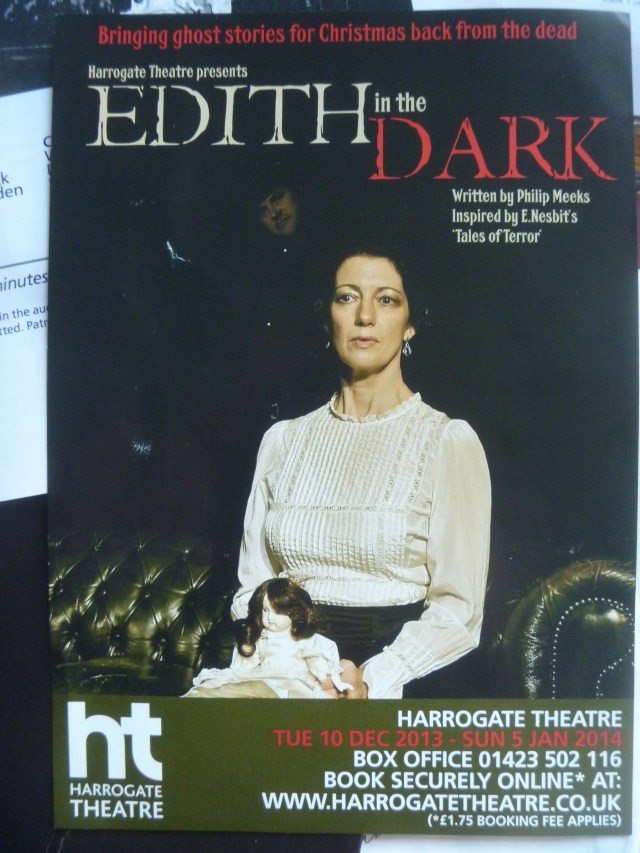
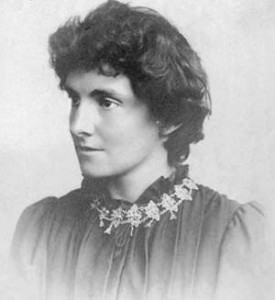
More Ghosts at Christmas : Edith in the Dark

Edith in the Dark

Celebrated children’s author Edith Nesbit escapes her annual Christmas Eve soiree and finds herself in her attic writing room with a young male guest and Biddy Thricefold, her loyal housekeeper.

The trio decide to observe the festive tradition of reading scary stories to help ward off wicked spirits, choosing the stories penned by Nesbit herself. Yet as they breathe life into these terrifying creations, all is not as it seems…

One of the people in the attic is hiding a deadly secret.

Millions have grown up with the fabled work of E Nesbit,which includes classic novels Five Children and It and The Railway Children, but she began her writing career as a mistress of horror. For the first time ever, these flesh-creeping yarns have been freely adapted for the stage.” [Source Harrogate Theatre website]

Way up on the second floor of the Harrogate Theatre (just a 20 minute train journey from home) is the intimate 50 seat Harrogate Studio Theatre. Yesterday afternoon I very much enjoyed a couple of hours in the company of the three characters playing out some of Nesbit’s ghost stories.

I had read a review in the local free paper earlier in December and was intrigued to know that Edith Nesbit, author of such children’s (and adults’) favourites as ‘The Railway Children’, ‘Five Children and It’ and ‘The Story of the Treasure Seekers’, wrote much more besides including ‘Tales of Terror’.

Edith in the dark

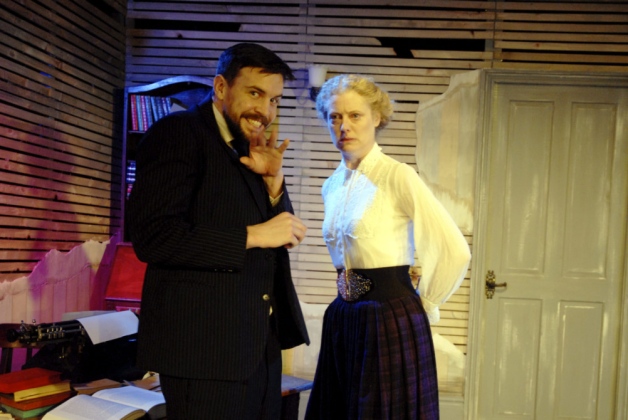
Here are Scott Ellis (as Mr Guasto) and Blue Merrick (as Edith) in Edith in the Dark [source]

Blue Merrick the actress who played Edith could have been EN herself. I had never heard of her but my friend recognised her as having played the registrar presiding over marriages in eleven separate episodes of Coronation Street on ITV.

From this new play I learned more about E. Nesbit’s life and the past that haunted her. She was an original member of the Fabian Society and named her son Fabian after it. Sadly he died at the age of 15 during a tonsil operation. She dedicated several of her books to this son including Five Children and It. She also seemed to feel very strongly that she did not want to be famous just through her children’s books. She was a keen socialist and defender of women’s rights.

I don’t know whether the play will transfer to other theatres but I was very glad to have spent the afternoon away from the shopping hordes again and in the company of Edith Nesbit.

Edith-nesbit-275x300

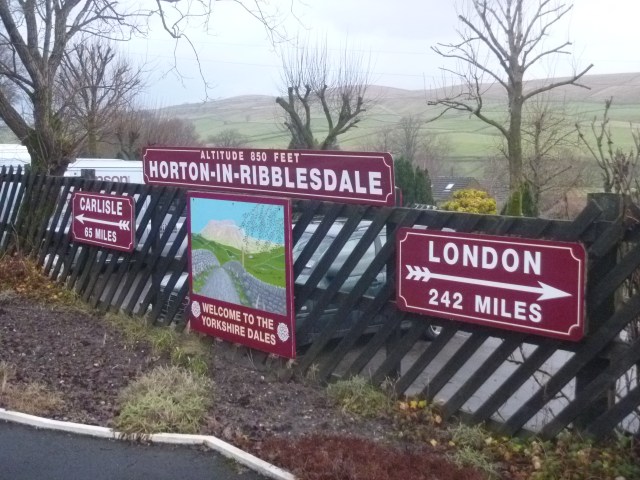
Ribblehead to Horton via Selside

On Saturday I travelled via Leeds City Station to Ribblehead leaving the shopping hordes behind in Leeds. I was joining my second walk organised by the Friends of the Settle-Carlisle Line :

Sat 21 Dec Ribblehead to Horton via Selside 6m M(oderate)

Ribblehead station – Colt Park – Selside – Borrins – Sulber Nick.

Alight Ribblehead (10.06), return Horton-in-Ribblesdale. (DW/BH) (Alias Duncan and Brenda)

As we travelled along the line from Leeds the dark clouds gathered and I was glad to have a set of waterproofs as rain was forecast for the Settle area.

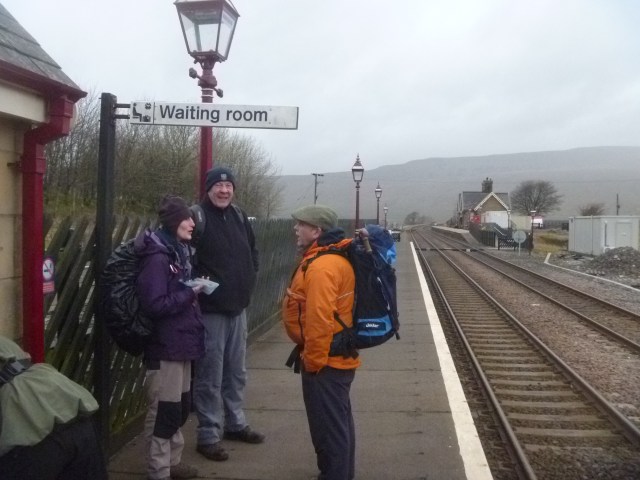
Brenda, Peter and Duncan

Brenda, Peter and Duncan at Ribblehead Station

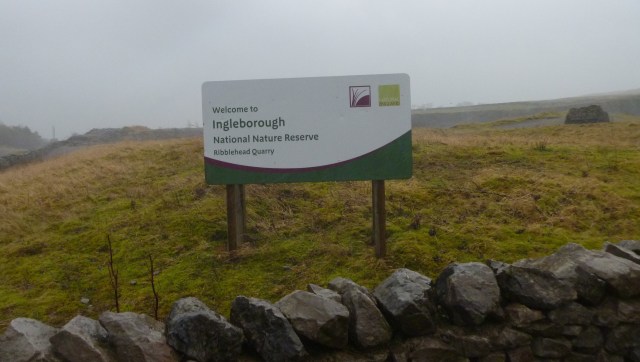
Five hardy ‘wanderers’ assembled on the platform at Ribblehead just as the heavens opened and fierce horizontal rain blew like needles in our faces. We set off though; leaving the station behind and passing through Ingleborough National Nature Reserve.

Ingleborough NNR

After about 20 minutes the rains blew over and we only had to cope with what seemed to me gale force wind. Our path followed relatively easy, grassy tracks across fields. And later stony, slippery limestone paths through limestone pavement but all very clearly marked. According to Duncan our leader it’s a wet area all year and in places, especially where we finally descended into Horton-in-Ribblesdale, we had to step across many little rivulets and some rather boggy areas. The area is very popular with pot-holers and we passed very near to the famous cave system of Alum Pot.

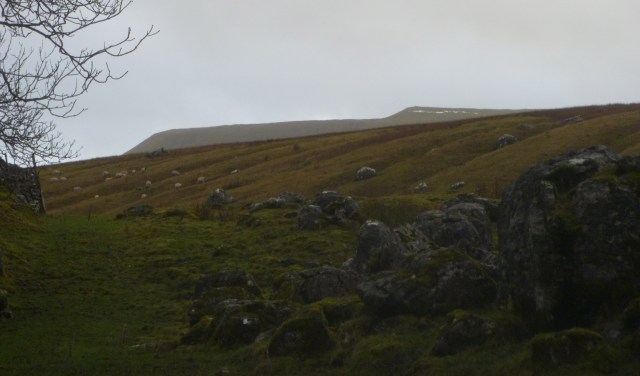
Snow

We even saw some snow!

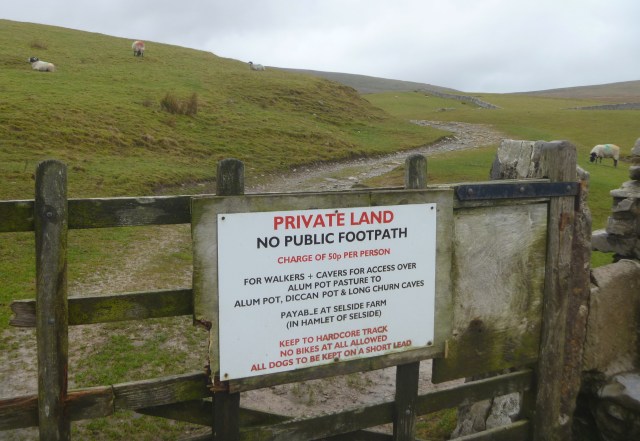
To Alum Pot

This way to Alum Pot … no fear!!

Eventually, after a brief lunch stop sheltering under a dry stone wall the sun came out and we saw some blue sky. As we turned to follow the final two miles of path down towards Horton the wind became more favourable to us battering us to the side rather than head on.

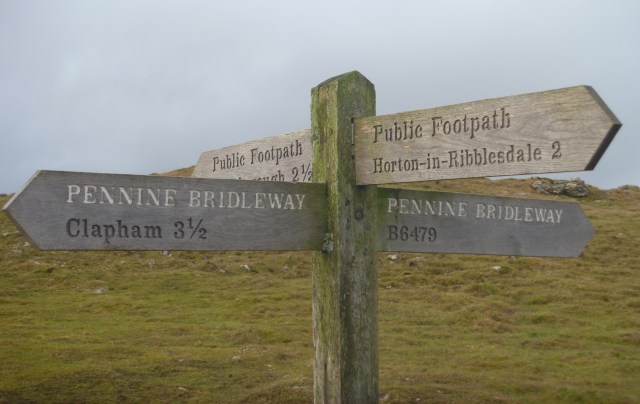
Signpost

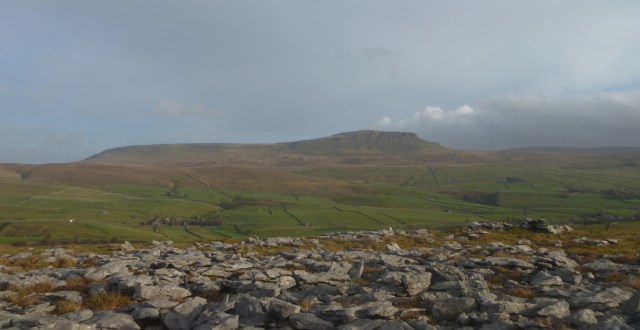
At some point near the end of the walk we had all three of the famous Three Peaks in sight : Ingleborough, Whernside and Pen-Y-Ghent.

Pen-y-gent.

Pen-Y-Ghent enjoying a little blue sky and sunshine

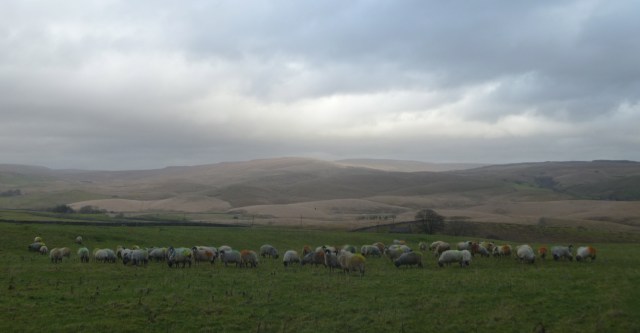
Sheep match landscape

The sheep match the background landscape

Finally we arrived at our destination in the light. Saturday was the shortest day but we managed our hike in the daylight which hadn’t seemed possible when we started.

Horton Station

Thanks to Duncan and Brenda, our indomitable volunteer leaders, for taking us out today and despite the stormy start I wouldn’t have swopped my day for a day’s shopping for anything!

Map

Ribblehead (top LH corner) to Horton (bottom middle) via paths to the west of the railway line

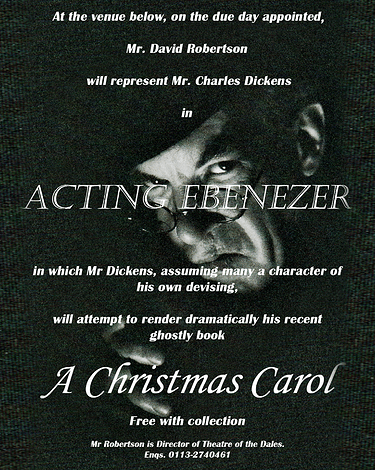
Acting Ebenezer, in which Mr Dickens assuming many a character of his own devising will attempt to render dramatically his recent ghostly book : A Christmas Carol

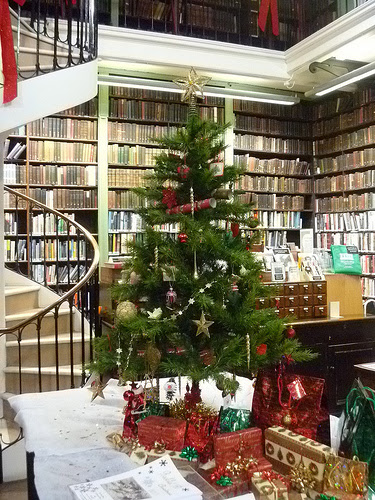
Leeds Library at Christmas

Christmas at The Leeds Library 2013

Xmas Leeds Lib

Christmas at The Leeds Library 2011

On Friday at lunchtime David Robertson of Theatre of the Dales brought his excellent one man show ‘Acting Ebenezer’ to The Leeds Library and performed his abridged version of ‘A Christmas Carol‘ very much in the style of the inimitable Mr Dickens. In addition to his powerful acting of the part of CD Mr Robertson has the distinct advantage of looking the image of Dickens himself!

It was the perfect start to Christmas week and the perfect venue for such a literary performance.

Poster

I didn’t like to take photos during the performance and at the end Mr Robertson disappeared in whoosh! So here are some quotes from the book itself and from the flyer left on our seats before the performance.

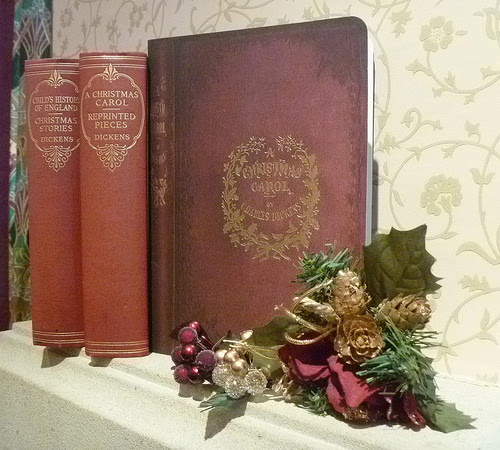
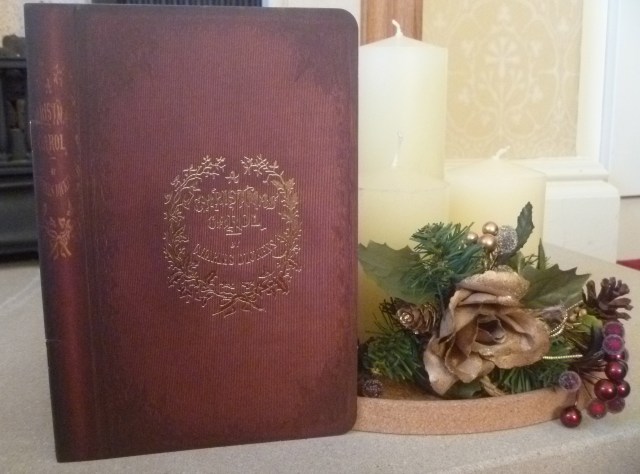
Christmas Carol

PREFACE

I HAVE endeavoured in this Ghostly little book, to raise the Ghost of an Idea, which shall not put my readers out of humour with themselves, with each other, with the season, or with me. May it haunt their houses pleasantly, and no one wish to lay it. 

Their faithful Friend and Servant,

C. D.                  December, 1843.*

” “A merry Christmas, Bob!” said Scrooge, with an earnestness that could not be mistaken, as he clapped him on the back. “A merrier Christmas, Bob, my good fellow, than I have given you for many a year! I’ll raise your salary, and endeavour to assist your struggling family, and we will discuss your affairs this very afternoon, over a Christmas bowl of smoking bishop, Bob! Make up the fires, and buy another coal-scuttle before you dot another i, Bob Cratchit!” *

[* Source of quotations from ‘A Christmas Carol’]

And David Robertson writes :

“After the success of Pickwick Papers, Oliver Twist and Nicholas Nickleby, Dickens quarrelled with his publishers, whom he suspected of taking too much of the profits, and rashly told them he himself would bear the cost of their publishing A Christmas Carol.

He wouldn’t scrap the gold embossed cover or the four coloured etchings and insisted on keeping the price to 5/- to be affordable to almost everybody. As it turned out, he landed in considerable debt because so many pirate editions, claiming to be ‘improvements’, reduced his sales. Of course, in the end, A Christmas Carol proved the most popular of all his works and has remained so this day.

I’ve been playing Scrooge in one form or another for twelve years now, starting with a recording I was commissioned to make for students learning English (in which Bah, humbug! was watered down to Oh, nonsense). But I recently met Gerald Dickens, the great great grandson of Charles, and was so impressed by his one-person enactment of Nicholas Nickleby that I’ve been tempted to (gingerly) follow in his footsteps.

I hope you’ll enjoy the result.

David”

We certainly did, thank you, David. And a Merry Christmas Everyone!

Christmas Carol

Garsdale Circular via Cotter End

When I last went over to Lancaster from Shipley (West Yorkshire) Station I noticed several people dressed for hiking in the Dales waiting on the platform. They seemed to recognise each other but were obviously not specially friends. They were joining walks organised by the Friends of the Settle Carlisle Line or Dalesrail and had obviously met each other on previous walks. It seemed like an excellent way to enjoy walking in more distant parts of the Yorkshire Dales so I decided to find out more.

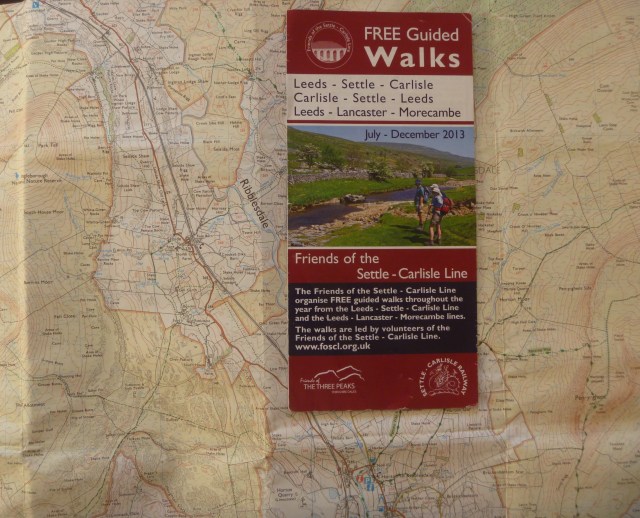
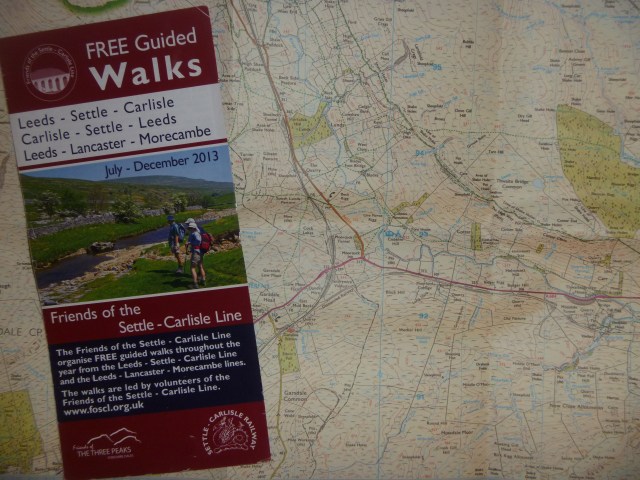
Map and leaflet

Later in the Tourist Office at Leeds Station I picked up two walks leaflets and, being aware that I was not interested in 14+ mile strenuous walks and being away or otherwise engaged some weekends, I selected a few walks on dates towards the end of 2013 that I thought I be able to manage. The first of these was today:

Walk leader: DW/BH (Bob had stepped in for Duncan W)
Garsdale Station – Yore House – Thwaite Bridge – Cotter End – High Dyke – Blades – Moorcock Inn – Garsdale Station.
Special Instructions:   Alight (10.21) and return Garsdale.

Date and time:  Sat, 30/11/2013 (All day)
Grade: M(oderate)
Length: 8 miles

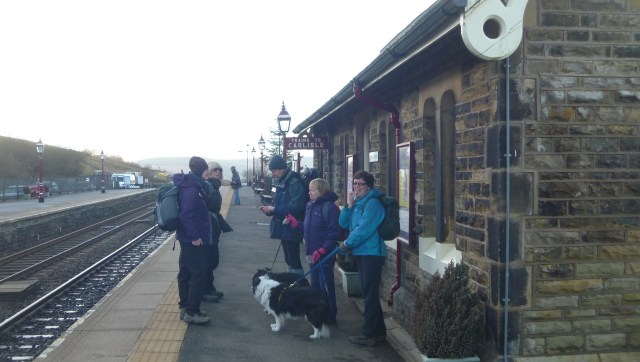
Assembling at Garsdale Station

Assembling at Garsdale Station.

Five walkers and two dogs joined two leaders (Bob and Brenda) on Garsdale Station northbound platform this morning in bright sunshine and enjoyed the 8 mile hike. There was one steepish climb – but remember ‘No pain, no gain’ – to a high ridge path with wonderful views and the perfect late November picnic spot. The day could not have been better.

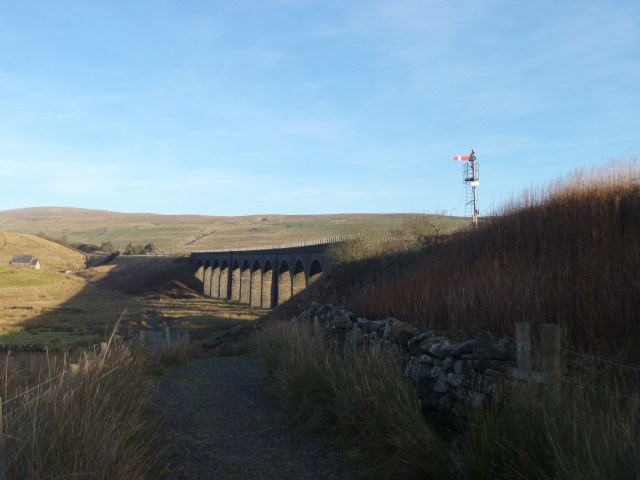
Viaduct

Our path took us under the viaduct

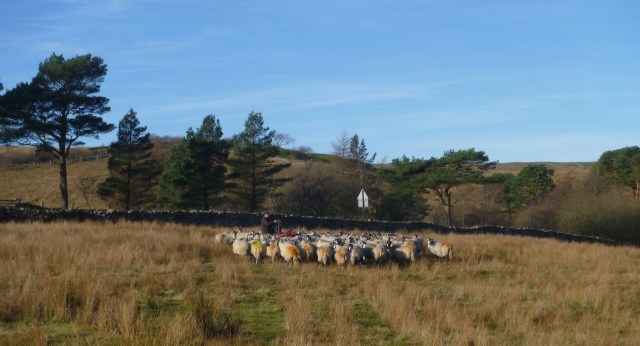
Herd of Sheep

Past a herd of sheep being assembled

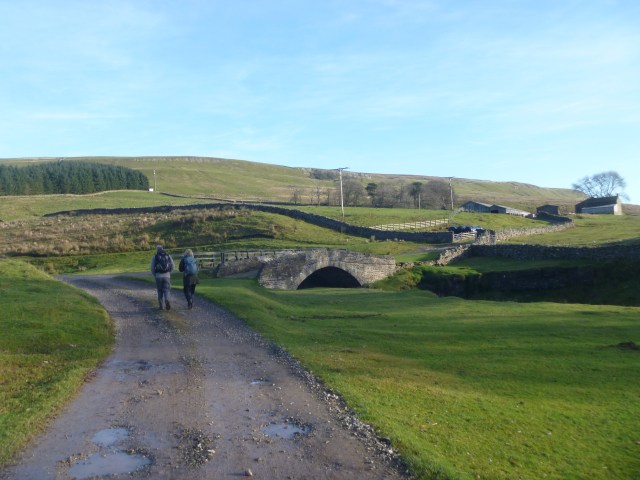
River Ure

Over the River Ure

Yore House

Past Yore House

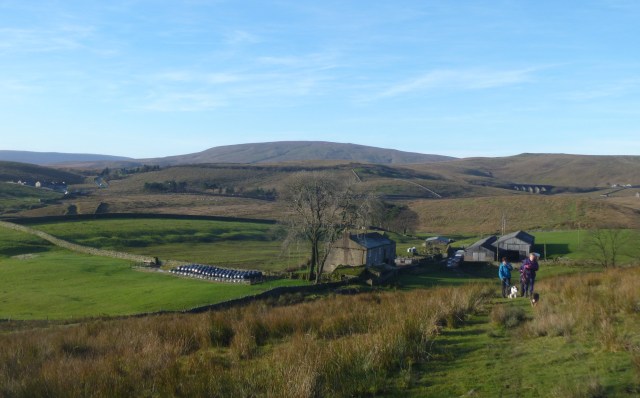
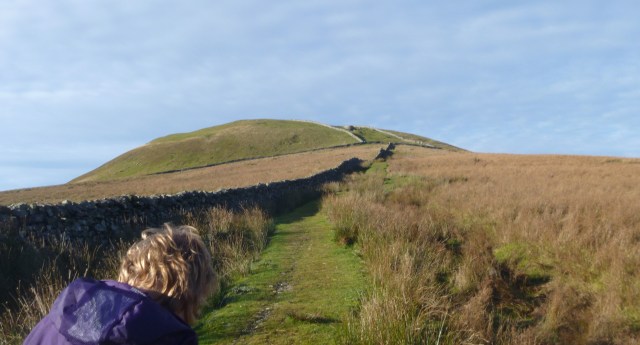
Lady Anne's High Way

After Thwaite Bridge House we climbed up to join Lady Anne’s High Way
Bench awaits

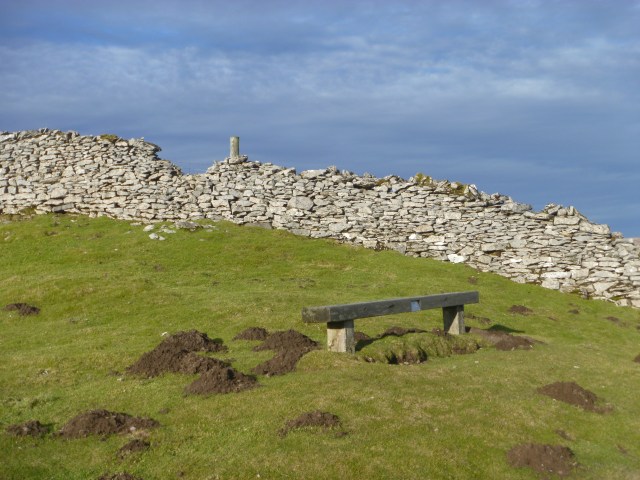
And enjoyed a picnic (our bench awaits) at the highest point of the walk – Cotter End

Extent of walk

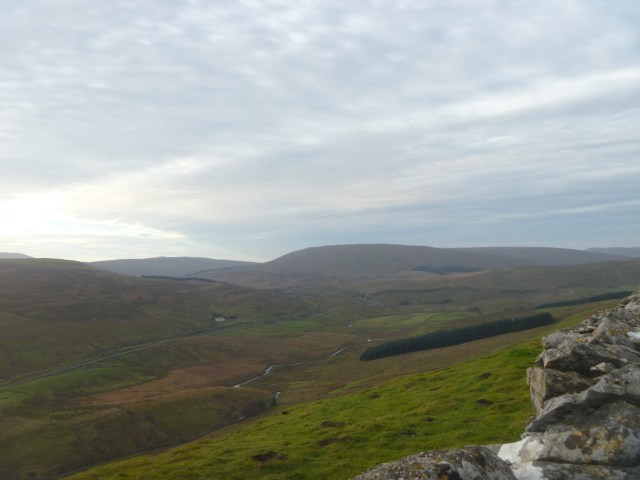
From the High Way we could see the extent of our walk

Pennine Bridleway

We descended from the High Way to join the Pennine Bridleway

Ruined INn

With plenty of time to spare we took a short detour to view the ruins of an Inn on the High Way

Former inn

Once a busy inn along a main thoroughfare for sheep drovers and the like now a ruin

Haeding back

As the sun went down we headed back down to the River Ure and …

Garsdale Station

Garsdale Station

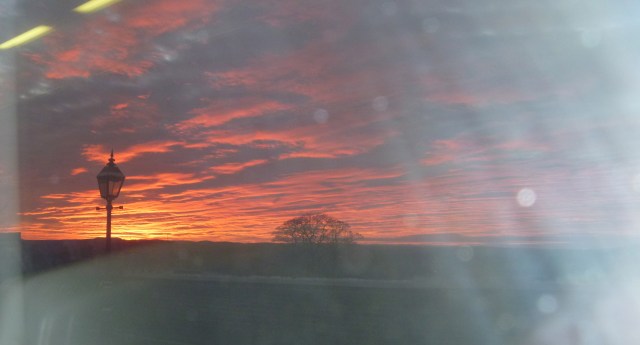
Sunset

Sunset at Settle Station from the train window

Our train left at 3.35pm and we witnessed a wonderful sunset  over the hills and moors. My photo taken through the train window doesn’t do justice to it. It was great to get out on this beautiful day in an area I was not at all familiar with and I think I will try more of these walks in future.

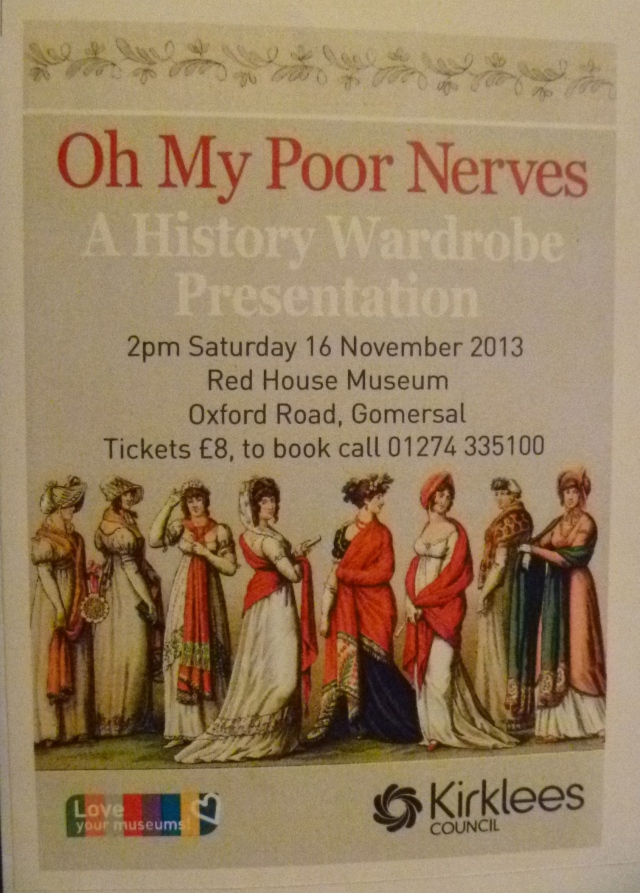
Oh My Poor Nerves! Health and Hypochondria in Jane Austen’s England

My poor nerves

Mr. Bennet, how can you abuse your own children in such a way? You take delight in vexing me. You have no compassion for my poor nerves.”
“You mistake me, my dear. I have a high respect for your nerves. They are my old friends. I have heard you mention them with consideration these last twenty years at least.

Pride and Prejudice, by Jane Austen. Chapter 1.

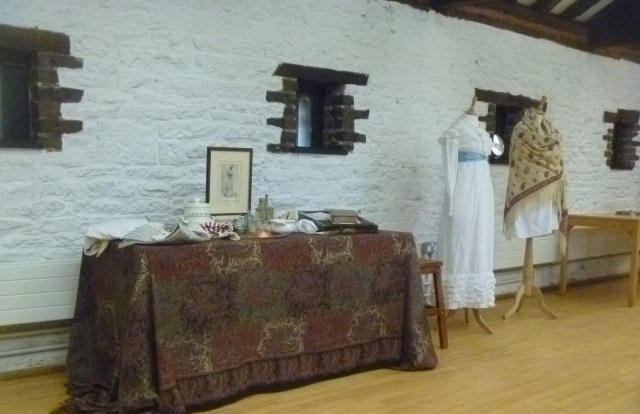
The set

The Set for Oh My Poor Nerves in the Barn at Red House

What fun I had at The RedHouse this afternoon! And not just fun – I learnt a lot too. A few weeks ago I noticed a flyer for a History Wardrobe performance this Saturday, checked their website and knew that I had to book a ticket to see what it was all about.

Lucy

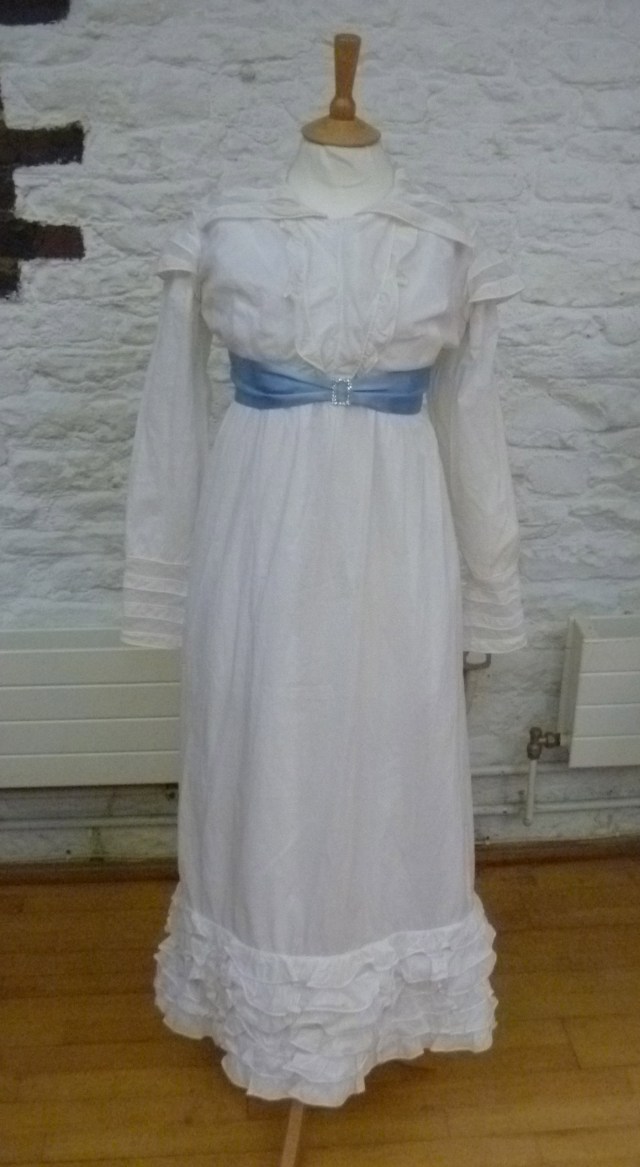
Lucy and her costumes. Left – original Georgian gown. Right – copy of Georgian maternity support corset

Here is Lucy’s witty introduction to the presentation :

This talk focuses on an often overlooked period in the history of healthcare, giving an overview of living conditions in late Georgian England that hardly squares with our usual picturesque view of Regency life. Details of home cures, quack remedies and crude surgery highlight the battle between science and superstition, putting the later medical advances into context. For those who feel faint after viewing a pregnancy corset or the leech jar, I do have plenty of ‘infallible’ Regency advice for good health and long life. And sal volatile.

Interspersed with quotations from Austen’s books (Jane Austen loves hypochondriacs) Lucy entertained us for nearly two hours with details and examples of all kinds of diseases and dangers prevalent in Georgian England and how they were treated by dubious doctors and questionable quacks.

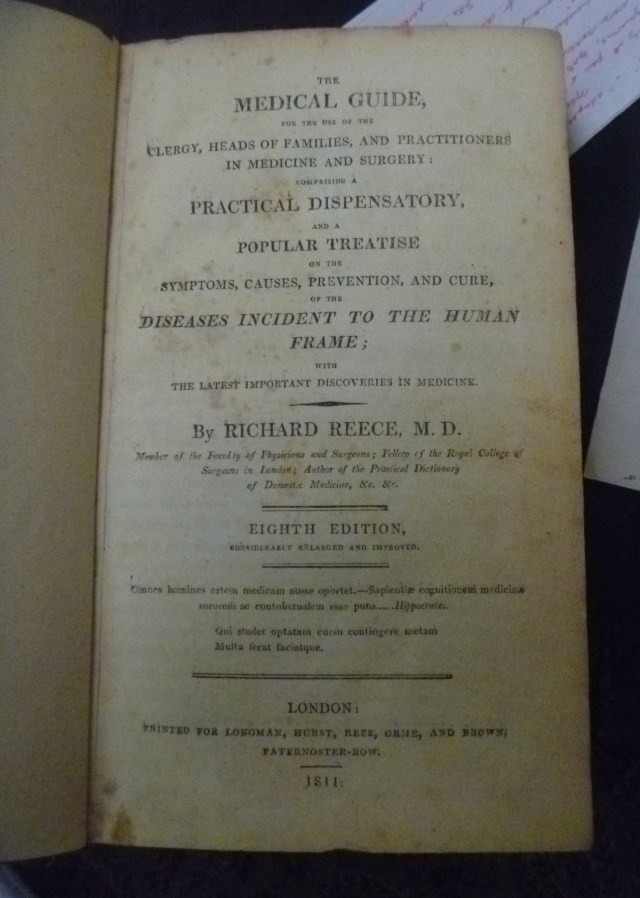
Reece's medical guide

Dr Richard Reece’s Medical Guide

She read to us the list of diseases from which one could die in the late 18th and early 19th centuries – the list extracted from Doctor Richard Reece’s “The Medical Guide” of 1811 which, along with all Lucy’s other original and reproduction props, we were able to inspect for ourselves after the performance.

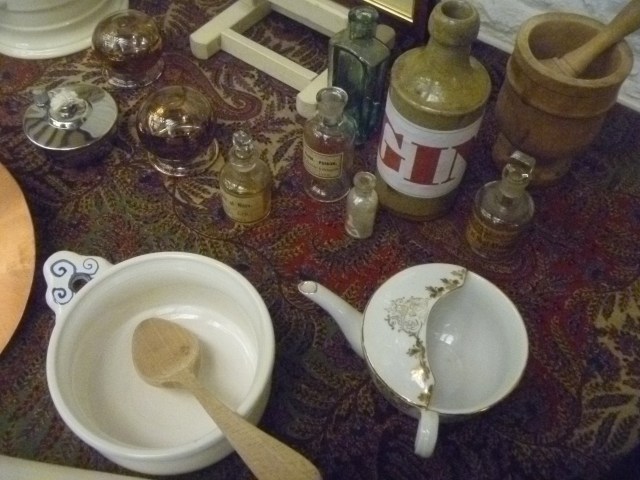
Props

Reproduction and original props

I am now highly enlightened on subjects as diverse as the dangers of red stockings (the dyes); that wallpaper killed Napoleon (arsenic); the extent of cholera epidemics and the locations of cholera burial grounds; body snatching (for medical dissection purposes); the benefits of a porringer of gruel (as recommended by Mr Woodhouse in “Emma“); the greatest danger for the Georgian militia and navy (disease); the biggest killer of women (childbirth); shifts and chemises; detoxing Georgian style; drugs and leeches; lancets and forceps; operating theatres and quack medicine.

Georgian dress

The prize item in Lucy’s collection of historic costumes must be the original Georgian gown.

Lucy’s entertaining presentation this afternoon went to prove that history, science and medicine can all be fun.

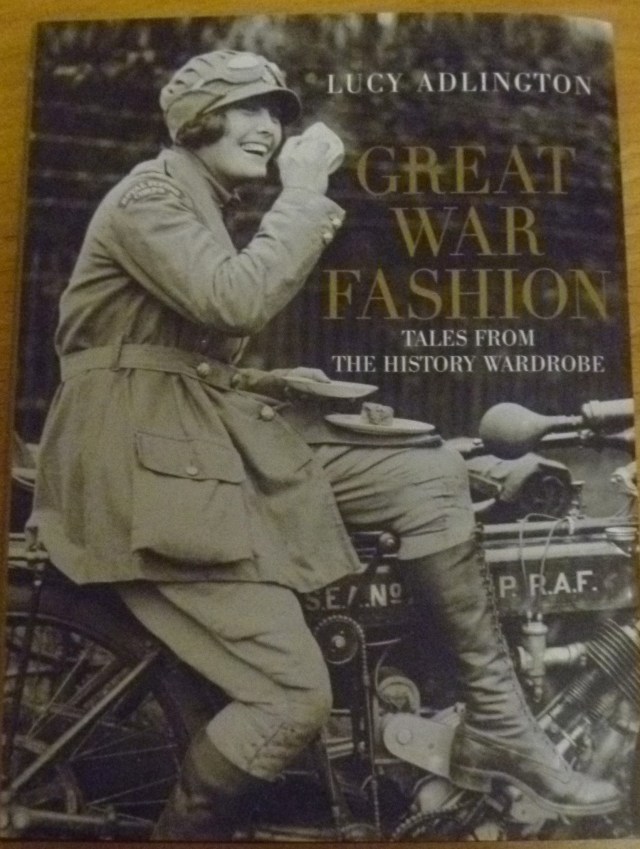
Lucy's new book

She even made reference throughout to her new book in which, although titled “Great War Fashion“, she demonstrates that even by the early decades of the 20th century some clothes, medical treatments and aspects of hygiene had never changed.

Before I left the Red House I bought a ticket for another presentation next year – Titanic!

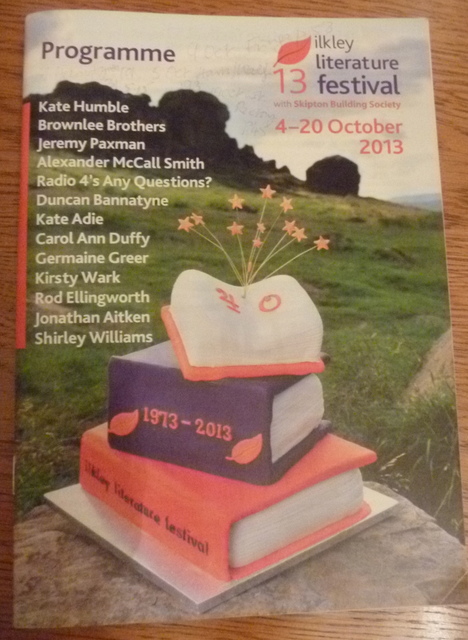
Virginia Woolf, Horace and Rectories : The Ilkley Literature Festival 2013

October is the month of The Ilkley Literature Festival. I remember when ‘all’ the events took place in one venue – a children’s weekend of ‘literary’ entertainment- poetry, puppets, that sort of thing – and a weekend of talks for adults. But that is going back nearly 30 years and I noticed that this year celebrates the 40th anniversary with 17 days of talks, walks, visits and entertainment with even free Fringe events.

P1110815-001

I usually pick a couple of talks or events to attend each year and this year was no different. On the first Saturday I chose to hear Alexandra Harris talk about her book “Virginia Woolf“.

Liverpool University cultural historian Alexandra Harris’s hugely acclaimed Romantic Moderns (Guardian First Book and Somerset Maugham Awards) overturned our picture of modernist culture. Now Harris discusses the life and work of Virginia Woolf, revealing a passionate, determined woman full of wit, vivacity and fun, whose life was shaped by her defiant refusal to submit to literary convention, social constraints and mental illness.” [ILF Programme]

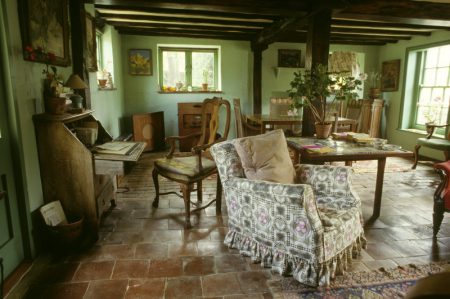
The Sitting Room at Monk's House, East Sussex

The Sitting Room at Monk’s House. The armchair was one of Virginia Woolf’s favourite reading chairs. It is upholstered in a fabric designed by her sister, Vanessa Bell. ©NTPL/Eric Crichton [As seen here]

I’m expecting to get to Monk’s House next year (and felt the need to learn more about VW) with a friend and bought the book and had Ms Harris sign it for her. She hopes we will also have a chance to walk on The Downs whilst we are there … and I hope so too!

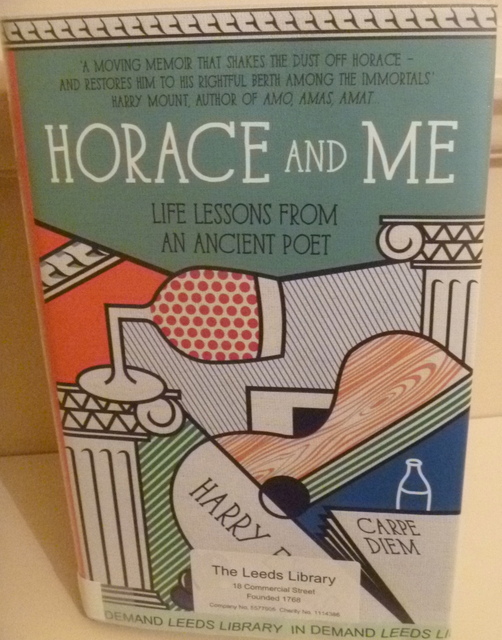
Later that afternoon I went to a Question and Answer format event featuring the FT ‘Slow Lane’ journalist and poet Harry Eyres who has recently published a book ‘Horace and me‘ a fascinating subject about whom I knew very little.

Horace

Harry Eyres, theatre critic, wine writer, poet and ‘Slow Lane’ columnist for the Financial Times, journeys into the work of the Roman poet Horace, exploring his lessons for our time. The humble son of a freed slave, Horace championed modest pleasures in the face of imperial Rome’s wealth and expansion. A celebrity in his own time, Horace influenced writers from Voltaire to Hardy – and Boris Johnson!” [ILF Programme]

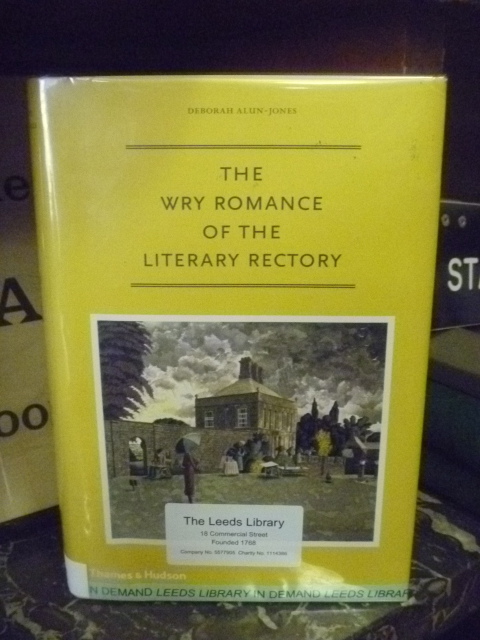
And finally last Saturday it was Deborah Alun-Jones who gave a short talk, then took questions from the presenter and then from the audience on the subject of her book (which I had read earlier this year) ‘The Wry Romance of the Literary Rectory‘.

P1110805

Author Deborah Alun-Jones strips away the idyllic exterior of the village rectory to reveal the lives of writers like Tennyson and Betjeman who lived and worked in them. She investigates hidden desire, domestic drama, bitterness and isolation – and the secrets of the highly creative environments from which some of the greatest English poetry and literature has emerged.

Ms Alun-Jones had travelled the country visiting rectories (and vicarages, parsonages and the like) and although she mentions Jane Austen and the Brontes they are not included in this book. A future book will look at women in the rectory. The only woman to feature in this publication is Dorothy L. Sayers. The male authors are Sydney Smith (at Foston in Yorkshire); Alfred Tennyson (at Somersby in Lincolnshire); Rupert Brooke (at Granchester – also now home to Lord Archer); John Betjeman (at Farnborough); R.S.Thomas (at Manafon); George Herbert and Vikram Seth (at Bemerton) and The Benson and de Waal families (at Lincoln). I haven’t visited any of these places and I don’t think any are open to the public. Such a lively speaker and interesting topic it was a pity that the room was only half full. But those of us that were there were very appreciative of the talk.

Shandy Hall

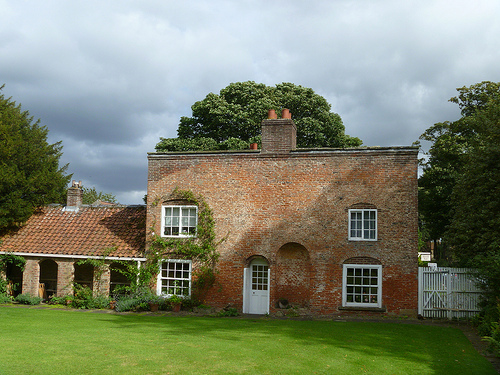
Here is Shandy Hall in North Yorkshire and former home of Lawrence Sterne vicar of Coxwold – also not included in The Wry Romance

I wonder if Simon at Stuck-in-a-book has a comment to make about the wry romance of being brought up in vicarage?

The Aislabie Walk from Fountains Abbey – The Short Route

Referring back to the Barden Moor Access Area practice walk a couple of weeks ago I’m pleased to announce that the alternative walk, which I had initially thought rather dull, was a big success so here’s a brief description of it and some photos. You will notice that the weather was exceptional that day. Several days on either side were dark and wet but the weather last Thursday was truly a gift.

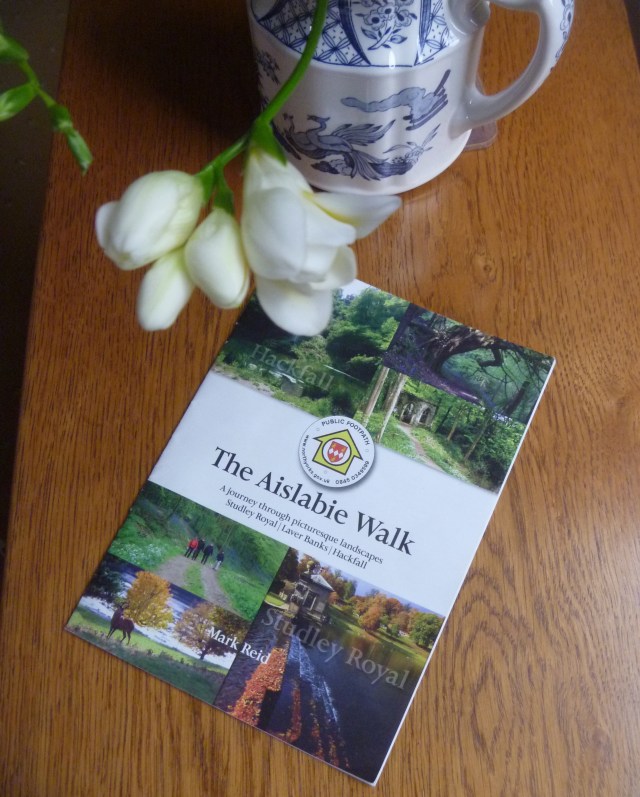
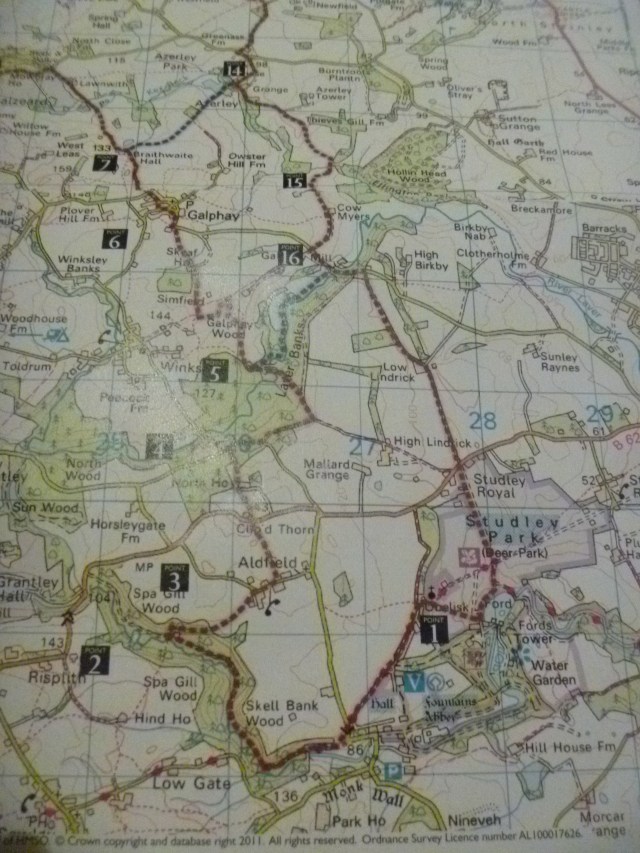
Aislabie Walk

The walk was taken from a rather nice leaflet I picked up on a previous visit to Fountains Abbey. The Aislabie Walk (subtitled A journey through picturesque landscapes) is 17.5 miles (allow 8-9 hours) altogether. It’s a circular walk from Fountains Abbey (car parks and toilets) to Hackfall and back. However, along the way there are several points at which you can cut short the route and I chose the 7.5 mile option.

Aislabie map

We parked at the main Visitor Centre car park and set off down the road to the River Skell following it west and then north for nearly two miles until we reached the old sulphur springs and ruined buildings of Aldfield Spa. You could smell them as you approached.

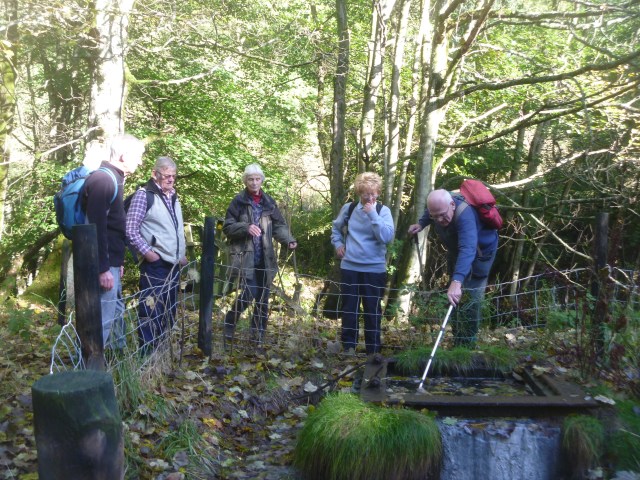
Sulphur Springs

The Wanderers disturbing the Sulphur Springs

From the Springs we headed slightly uphill to Aldfield village itself, passed through a couple of fields of kale (this had been what I remembered as the ‘dull’ part of the walk, across meadows to Laver Banks where we lunched at Woodhouse Bridge and joined the road later at Galphay Mill Bridge (point 5 to point 16 on the map).
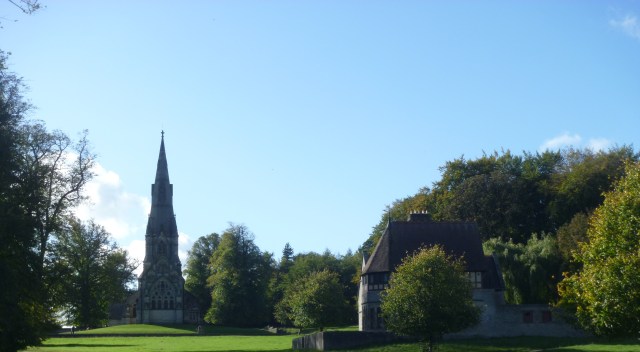
A pleasant track through former parkland, now grazed by cows, brought us back to the the gates of Studley Royal Park. We crossed the deer park (only spotted one) taking in views of the Choristers’ House, St Mary’s Church and Ripon Cathedral.

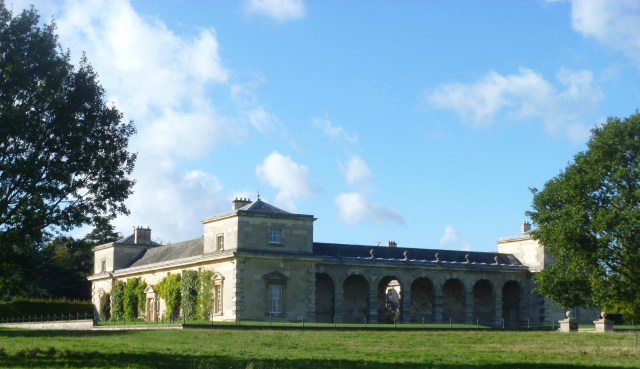
Studley Royal

Studley Royal Hall much of which was destroyed by fire in 1946

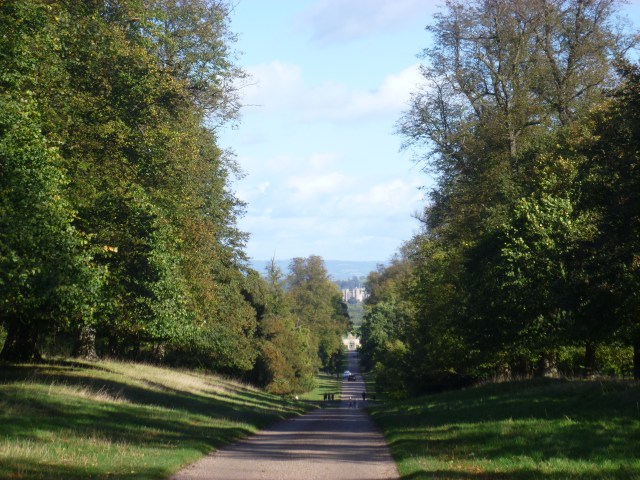
Ripon Cathedral in the distance

Ripon Cathedral in the distance

Church and House

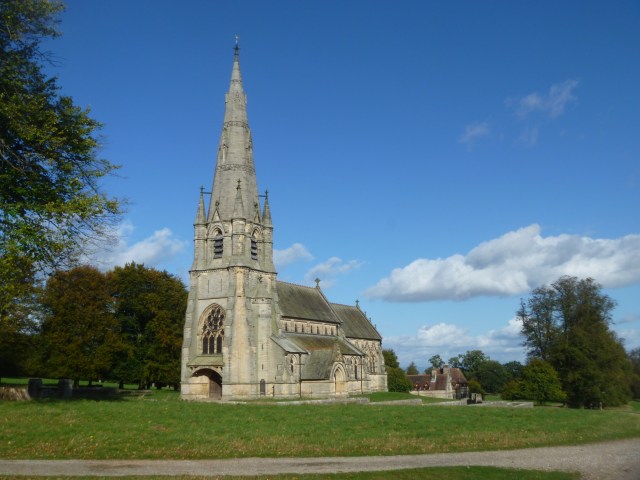
St Mary’s Church and the Choristers’ House

St Mary's

St Mary’s, Studley Royal Church

So my concerns about the walk were not at all justified and a good day out was had by all!

Albert Wainwright at The Hepworth

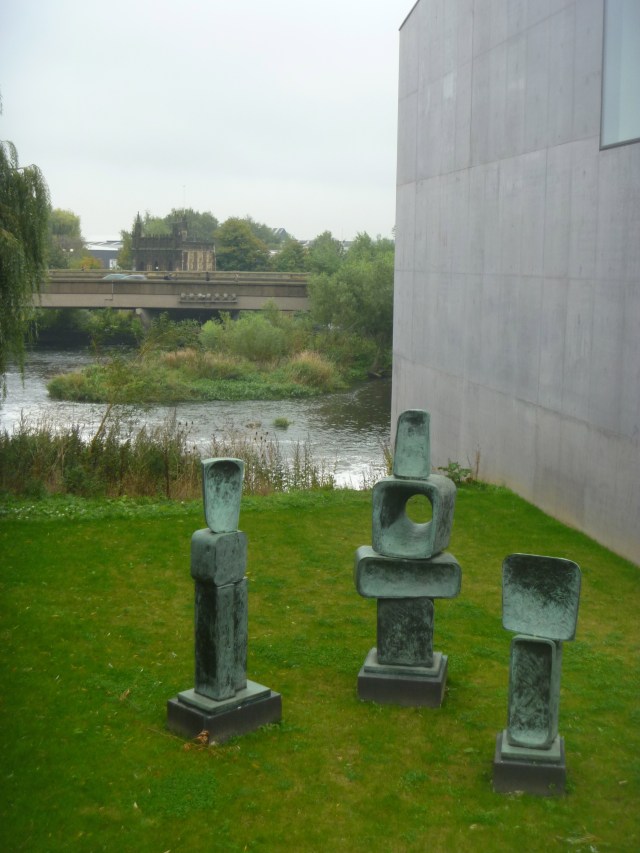
Family of Man

Family of Man by Barbara Hepworth outside The Hepworth, Wakefield

After spending some time admiring the Tissot display I decided to move on and see what else the Gallery had on show this autumn beside the spaces devoted to Barbara Hepworth herself.

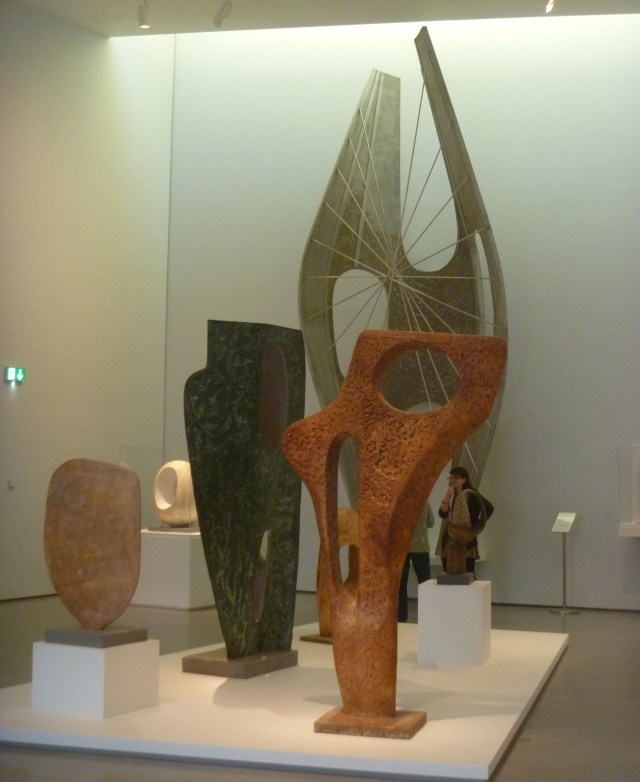
Hepworth Winged Figure

In the background Hepworth’s Winged Figure (1961-62)

I found another display centred on works from The Wakefield Art Collection – In Focus : Albert Wainwright. Wainwright was born in nearby Castleford in 1898. At the time of writing, the link to his display at The Hepworth tells you about a different so artist so here is something about him.

From his school days he was a friend of Henry Moore, who became world famous as a sculptor. Albert’s life was not a long one (he was only 45 when he died) and he never became famous like his friend, but it is easy to see from his work that he was a talented artist with a colourful imagination and a strong personal style. Throughout his life he designed programmes, stage sets and costumes for the theatre and an impressive range of this work is now in the collection at The Hepworth Wakefield.
Over 30 years Albert created a number of sketchbooks which record his travels abroad and parts of his life, such as his time with the Flying Corps in the First World War.”

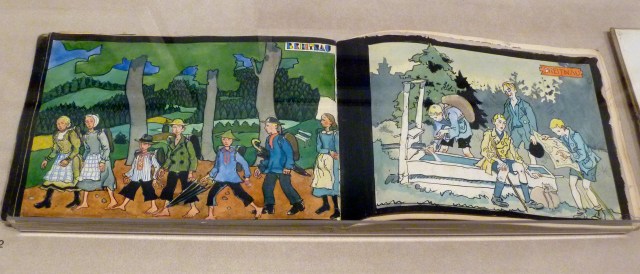
AW Sketchbooks

I particularly liked the travel ‘journals’ or sketchbooks which he made on his trips to Germany.

Whitby map

His Map of Whitby

Where's Albert?

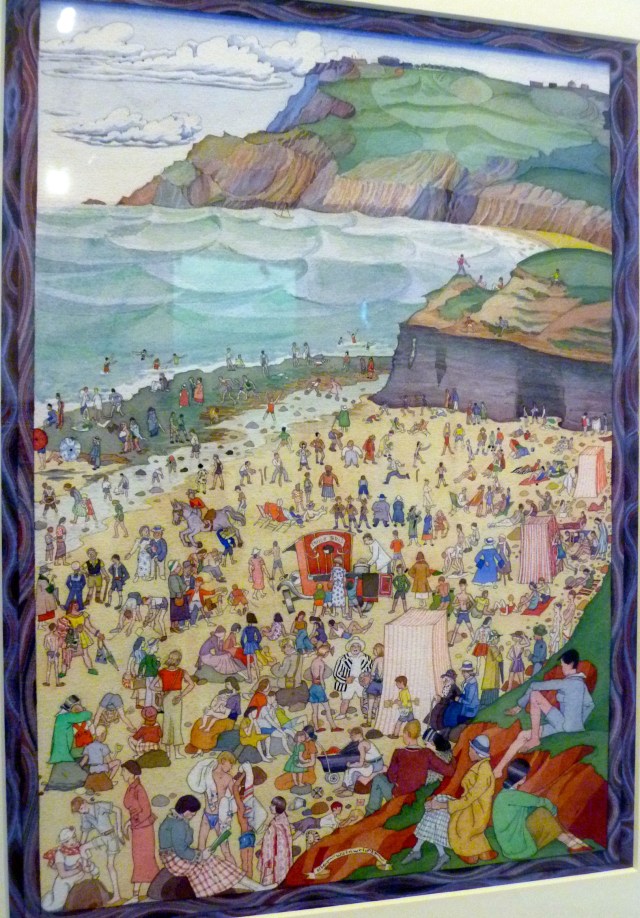
And his “Where’s Wally” or rather, Albert, at “Robin’s Hood Bay” (1930)

“The Wainwright faamily took a summer home at Robin Hood’s Bay during the 1930s. Visits to the bay became an annual occasion for the Wainwrights, who became part of the close-knit community there. Wainwright made a modest income from painting his fellow holidaymakers and their families. In this picture all are imaginary except a self-portrait of the artist centre left, wearing glasses and carrying a walking stick.” [Picture notes]

There's Albert

There’s Albert!

We don't live here any more

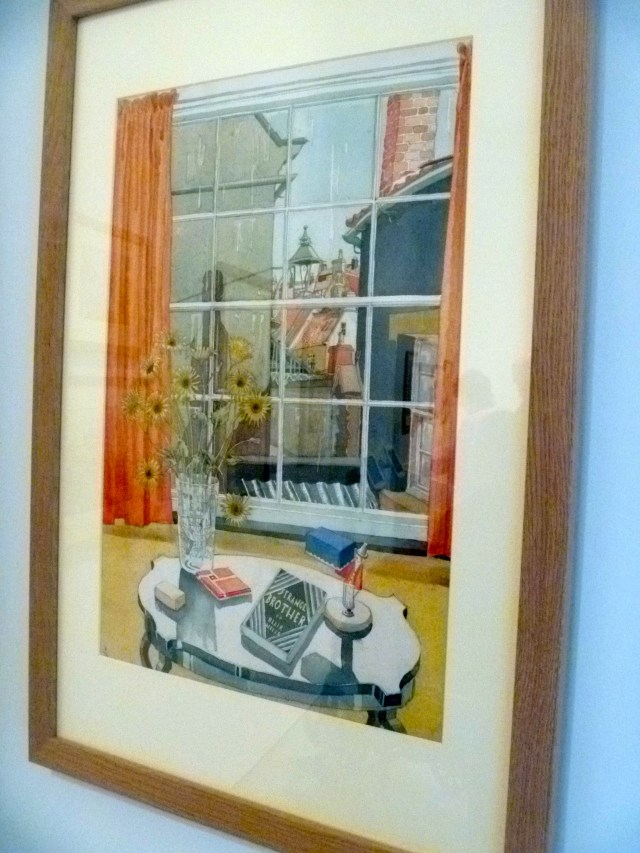
And, the poignant and wistful “We don’t live here any more” (1937)

This painting depicts the view from the window (possibly his studio) of Bramley Cottage at Robin Hood’s Bay. “The placement of the book on the table “Strange Brother” written 1931 by Blair Niles, is significant because it provides an early and objective documentation of homosexual issues in 1920s New York, and is a deliberate allusion to Wainwright’s own sexual identity.” [Picture notes]

There is a selection of books on a table for visitors to look at including a reprinted copy of “Strange Brother“.

The Hepworth Wakefield : James Tissot: Painting the Victorian Woman

Approaching The Hepworth

Approaching The Hepworth over The Aire and Calder Navigation

It was a miserable, grey, wet day last Wednesday and after my usual Nordic Walking session I decided to take a trip to Wakefield and revisit The Hepworth. Back in March I clipped a review of the Tissot exhibition from the Weekend Financial Times, Visual Arts section. Reading the review and knowing Tissot to be a Victorian artist I was intrigued that he should be showing at such a modern and avant-garde gallery as The Hepworth. The answer, as I found out upon enquiry to a steward, is simply that the Wakefield City Art Collection is also housed at The Hepworth and this show is based around pictures in the collection.

From the Tissot Exhibition webpage:

On The Thames

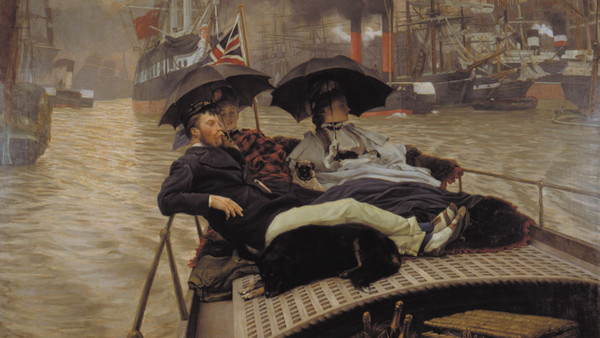
On The Thames (1876)

Taking the much cherished painting On the Thames, 1876, from our collection as a starting point, this new collection display explores the representation of women in the work of French born artist, James Tissot (1836-1902).

The display will also feature loans from Tate and several regional art galleries, and will discuss the portrayal of Victorian femininity in relation to Tissot’s life-history and the contrasting roles of women in the region’s coal industry.”

Subtitled “How happy I could be with either” the painting caused a scandal when it was exhibited at The Royal Academy.

Other paintings in this small single room show include:

Portsmouth Dockyard

Portsmouth Dockyard (1877) [Tate]

PD 1877

Portsmouth Dockyard notes

HMS Calcutta

The Gallery of HMS Calcutta (Portsmouth) (1876) [Tate]

GHC 1877

The Gallery of HMS Calcutta (Portsmouth) notes

The exhibition looks at the representation of women in Victorian England through two contrasting sets of images: the fashionable women of James Tissot’s society paintings (above) and photographs of female workers in northern coalfields (not so easy to photograph in the display cases). Costume was a key element in Tissot’s work. He was born in the French port of Nantes where both his parents worked in the fashion and textile industry.

The painting “On the Thames” was originally owned by Kaye Knowles whose wealth came from his family’s Lancashire based colliery business. The Lancashire “pit brow lass” was mostly associated with the Wigan coalfields where women worked at the pit head. Their costume was also central to the pictures since there are wearing trousers which in Victorian times were perceived as a threat  to the moral and social order.

I see from the press that another exhibition featuring James Abbot McNeil Whistler’s London and the River Thames has just opened at the Dulwich Picture Gallery in south London. I wonder whether I shall manage to get to see it before it closes on January 12th 2014?

d9198ee9-7193-43c8-a20f-8eb309d41518.img

Wapping (1860) [National Gallery of Art, Washington]