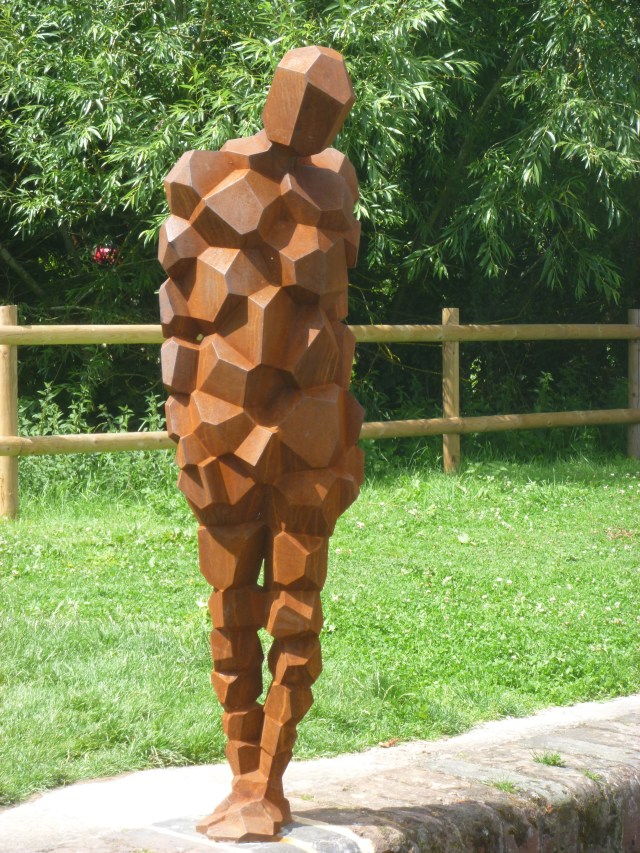
Travelling between Leeds and Cornwall last week I decided to take a detour and visit one of the LAND sculptures created by Sir Antony Gormley for The Landmark Trust in celebration of its Fiftieth Anniversary.
Travelling between Leeds and Cornwall last week I decided to take a detour and visit one of the LAND sculptures created by Sir Antony Gormley for The Landmark Trust in celebration of its Fiftieth Anniversary.
When planning my trip to Ireland in May I checked the Library Catalogue to see what was available and found this :
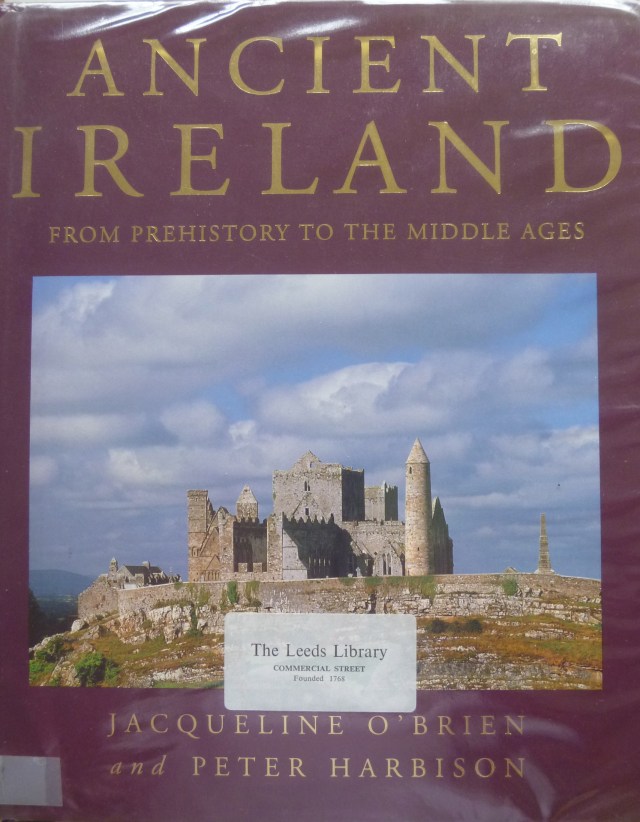
I was quite amazed at the amount, variety and quality of ancient monuments to be found, and visited, all over Ireland.
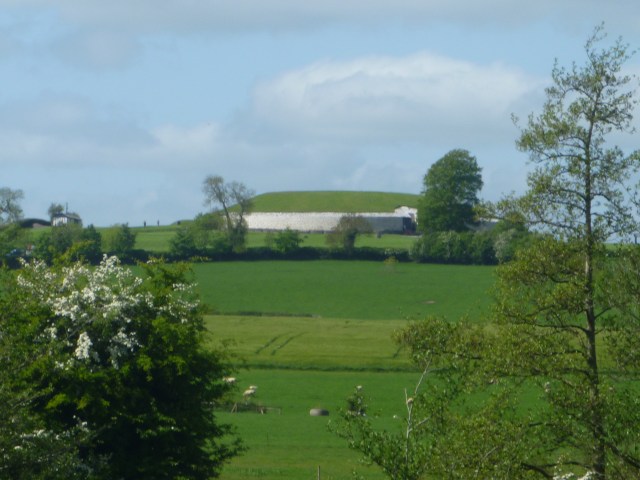
Newgrange from the approach lane
In order of age the earliest site that I visited, and featuring also at the beginning of the first chapter ‘Ireland Before History: The Stone Age’ is Knowth which, along with its, probably better known, neighbour, Newgrange, is “one of three great burial mounds erected in the ‘sacred landscape’ of the Lower Boyne Valley in Co. Meath.” The two passage-tombs under the great tumulus were probably erected before 2500BC. Around the main mound are several recently reconstructed ‘satellite’ tombs.
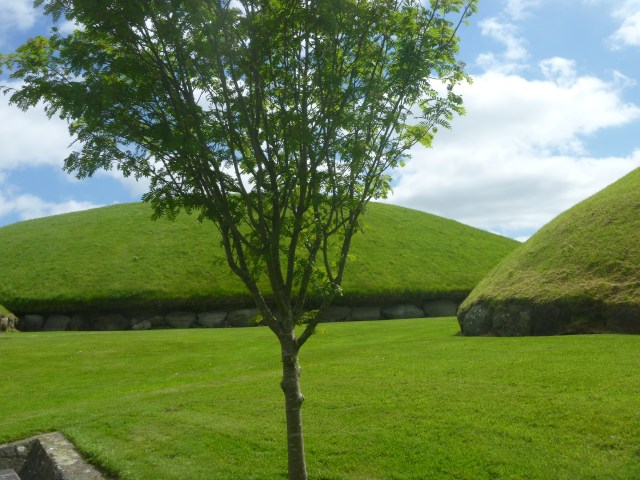
Knowth Main Mound
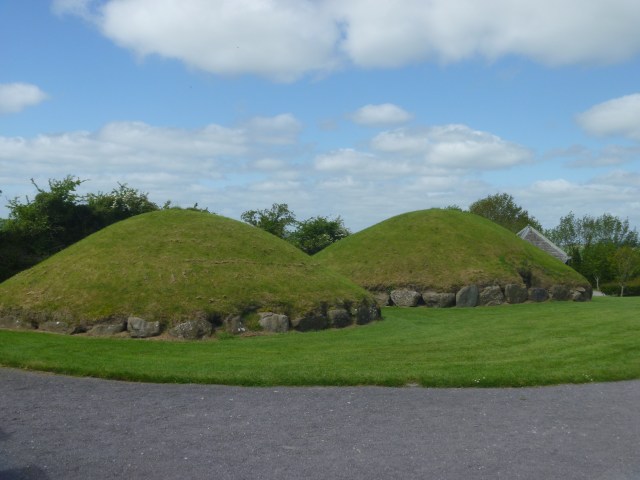
and Satellites
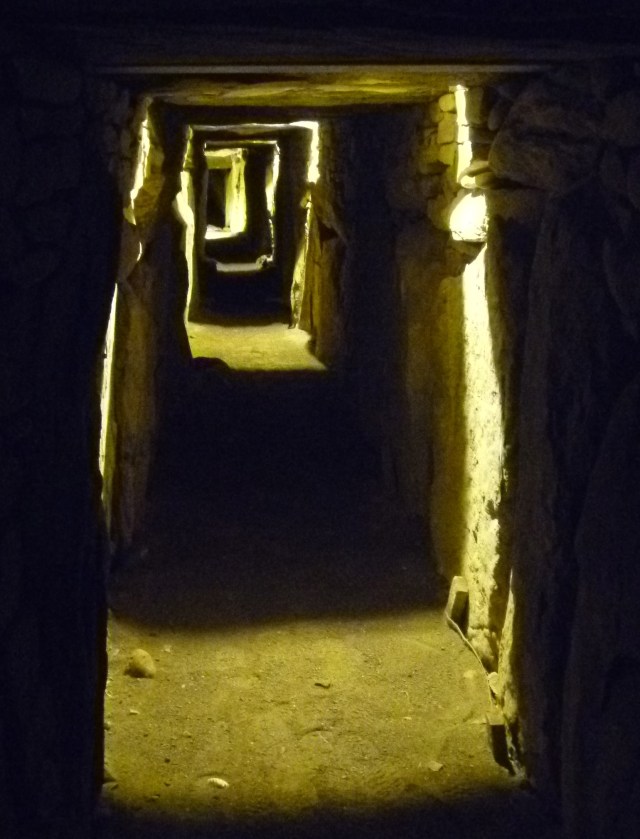
One of the Passage Tombs
I didn’t have time to visit both mounds as I was travelling between Co. Kildare and Co. Fermanagh but I did manage Knowth and will definitely return to see Newgrange, especially now that I know how the system for visiting works! My Heritage Ireland Card gave me free admittance to the site.
“Please note this is a very busy site and it is important to be at the Centre early in the day to ensure a visit to the monuments, as places on the tours are limited each day. There is no direct access to either Newgrange or Knowth. All access is through the Visitor Centre and by guided tour only.”
I had arrived across country and found the approach lanes surprisingly quiet but on arrival in the crowded car park and on joining the queues at the Visitor Centre I discovered that most people and all coaches arrive via the nearby Motorway. There’s plenty to see in the Centre and then time to catch the timed minibus to Knowth where you get a very full guided tour inside and outside the tumulus.
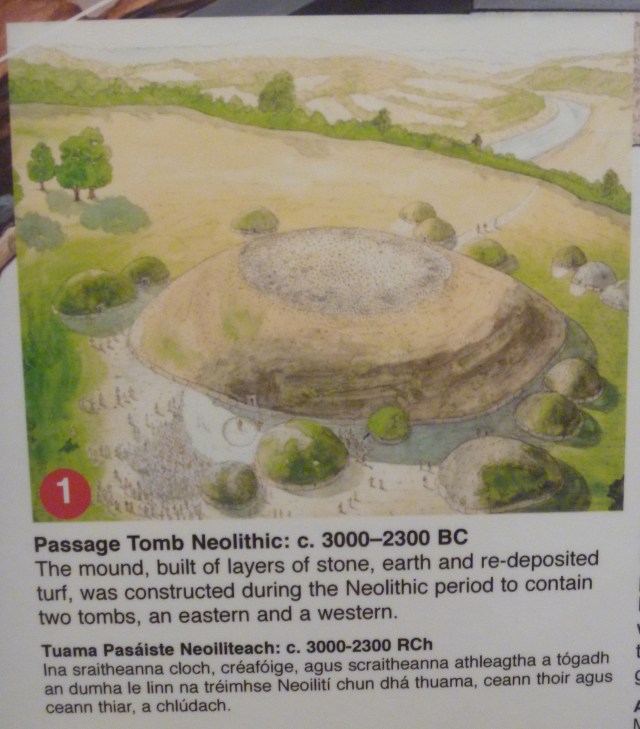
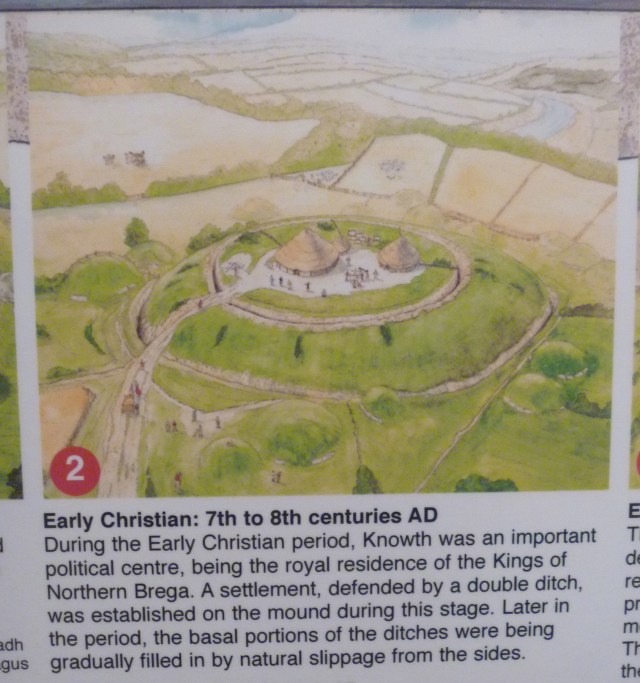
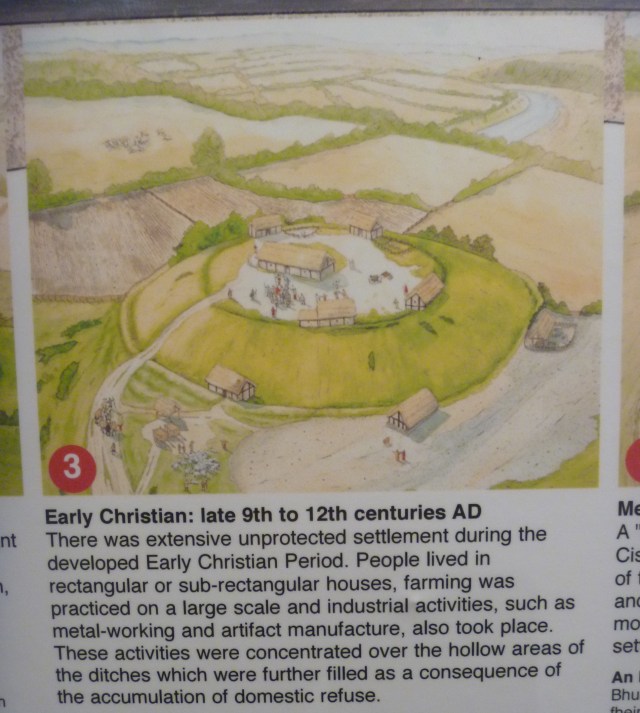
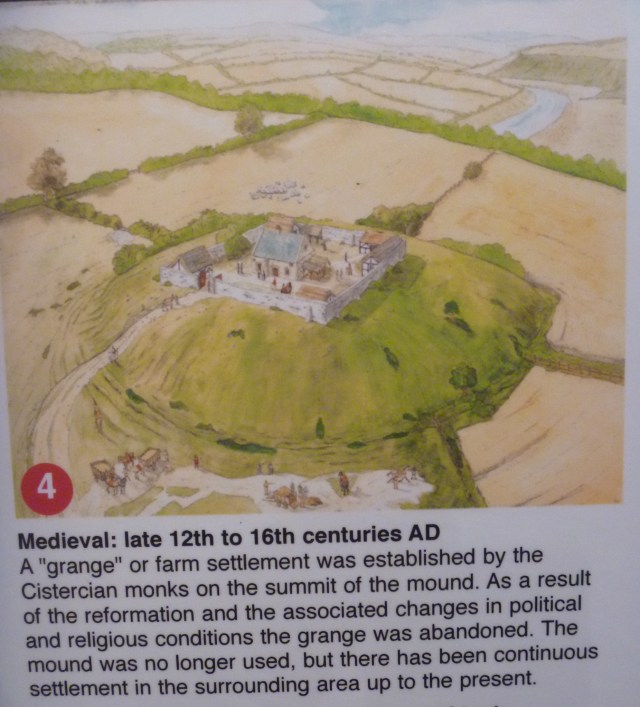
We were able to enter the tomb and to climb to the top for a wonderful view towards Newgrange and also The Hill of Tara the ‘most historic place in all Ireland, having played an important mythical and symbolic role in the country from the Stone Age to the 19th century, including the nominal centre of the ‘High Kingship’ of Ireland.’
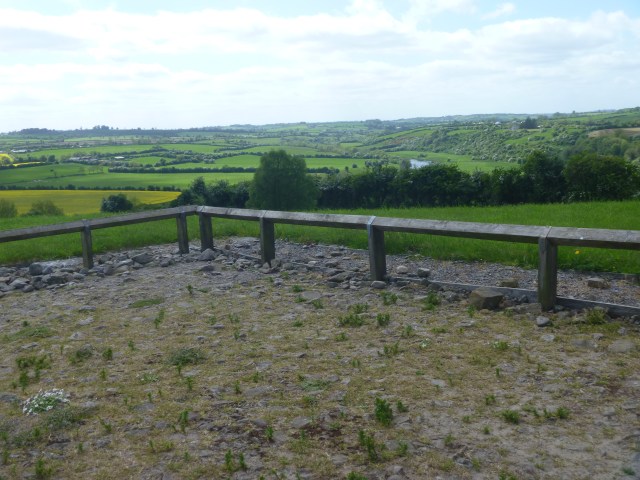
The Surface on the Top of Knowth
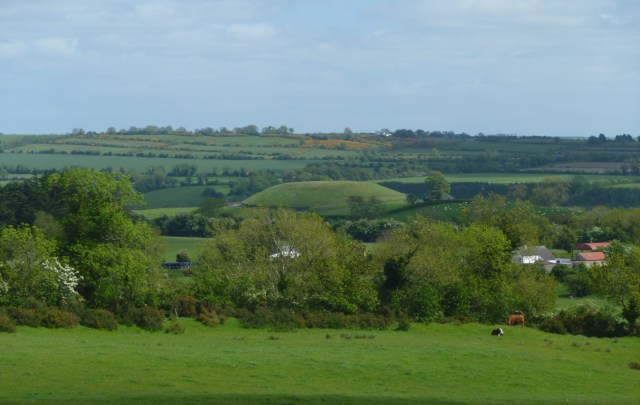
Newgrange from Knowth
It’s quite amazing that the carved stones around the base of the mound have been preserved across the centuries.
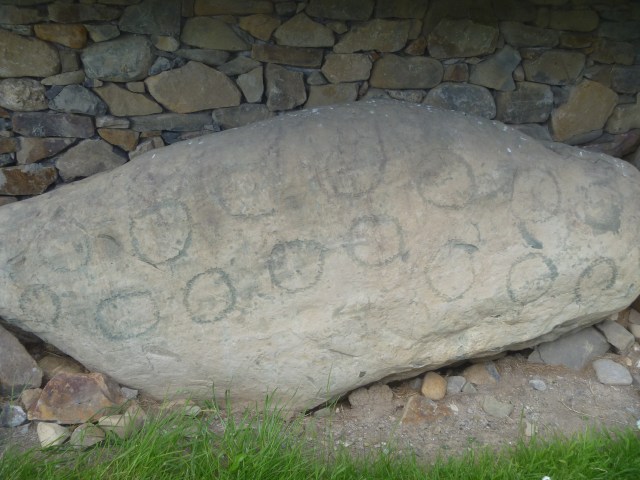
Just one example of the stone carvings!
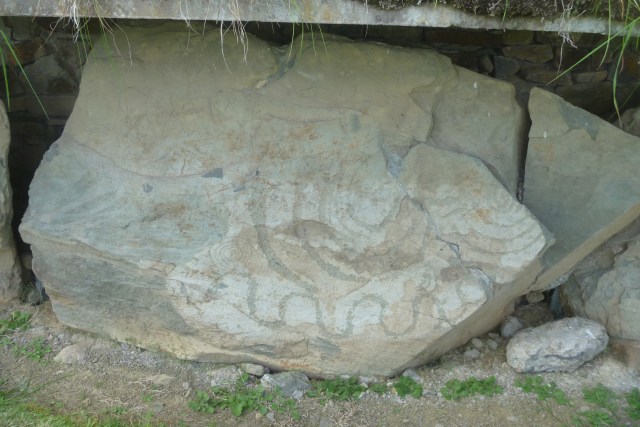
And another
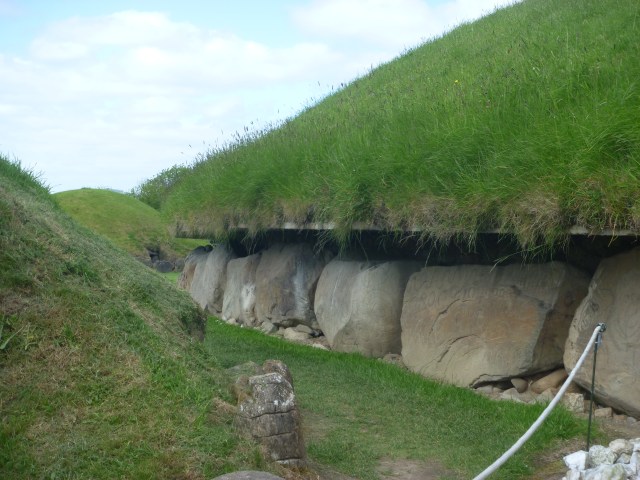

Quartz from the Wicklow Mountains and Granite from the Mountains of Mourne
I will definitely visit again and get to Newgrange and maybe also the site of the Hill Tara which seems to be very little visited.
Last weekend I ventured over to Lancashire. I’d been invited to a garden party at a friend’s allotment (dress code: fascinator and wellies) in Higher Walton, near Preston. It was raining as I left home in Yorkshire but by the time I was across the Pennines it had stopped and we enjoyed a Jacob’s Join lunch in the open air. I must say that allotment gardening, and gardening in general, look like an awful lot of hard work … but the gain is tremendous; Kath’s plot exceeded all expectations.
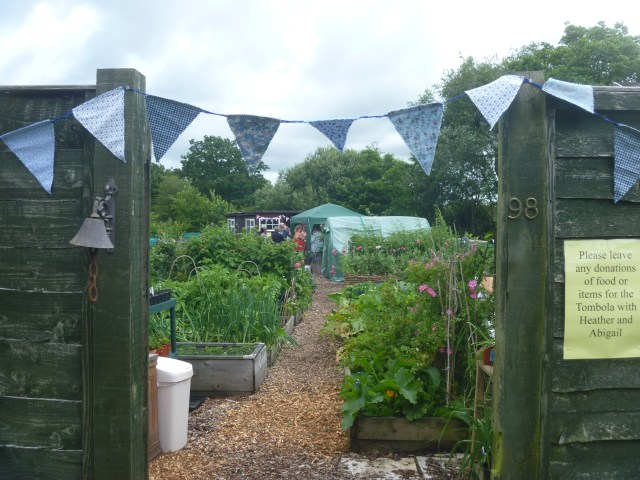
Welcome to the Party!
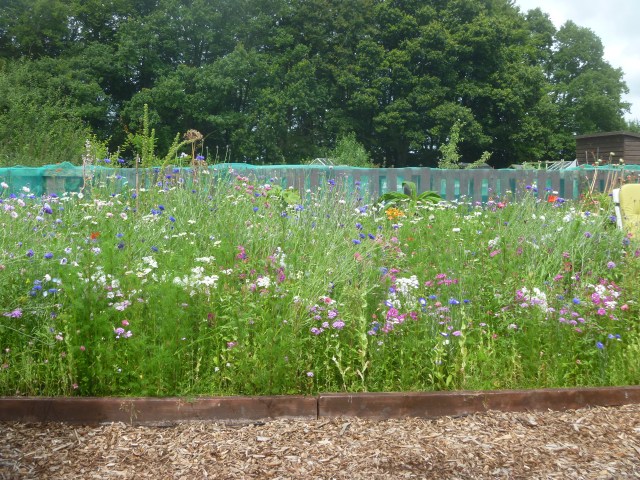
Wildflower Bed
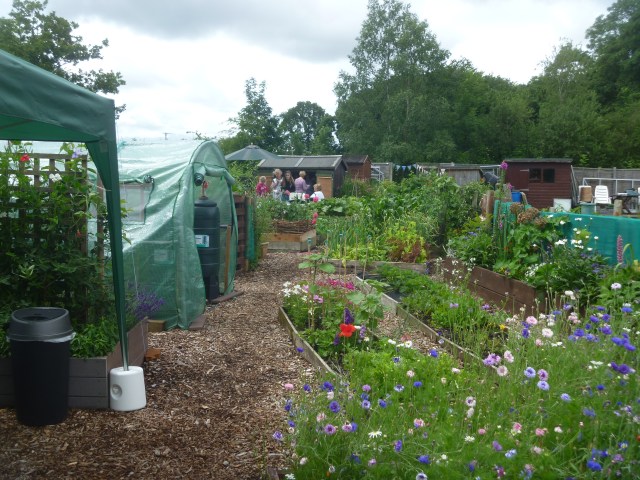
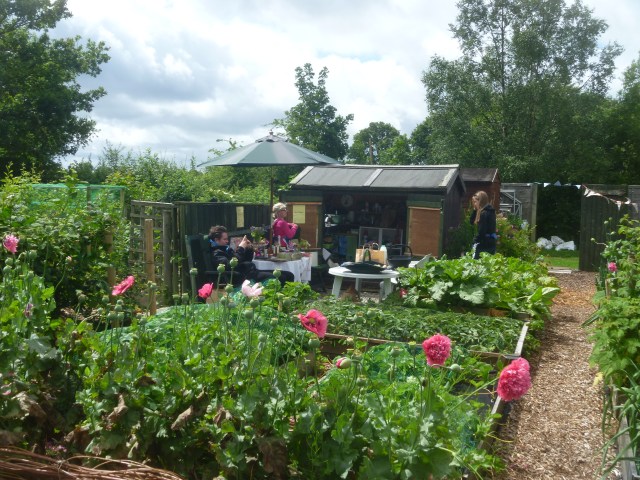
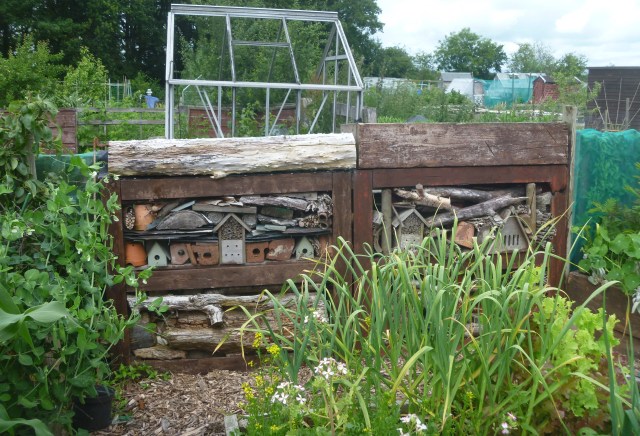
Kath’s Bee Hotel
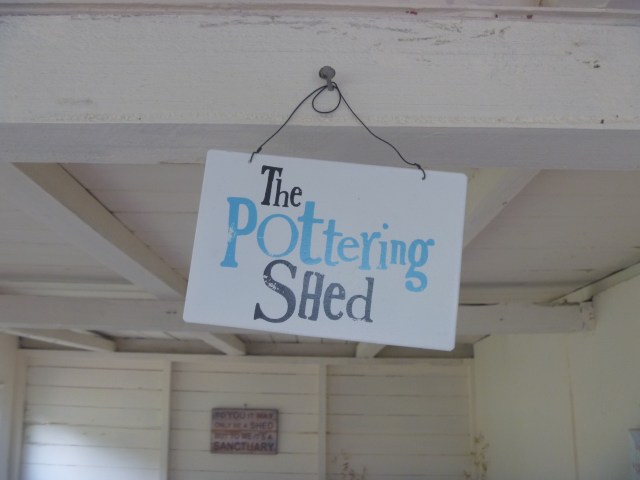
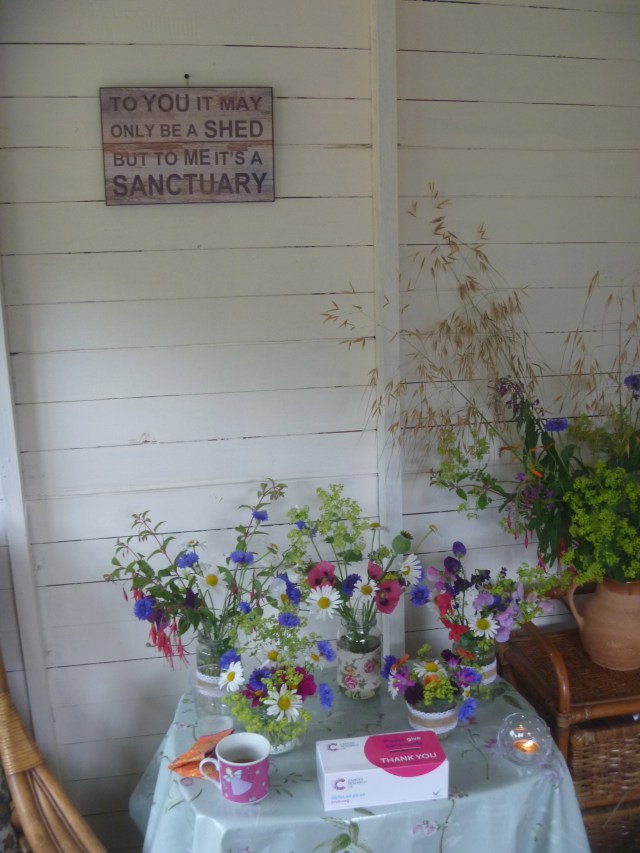
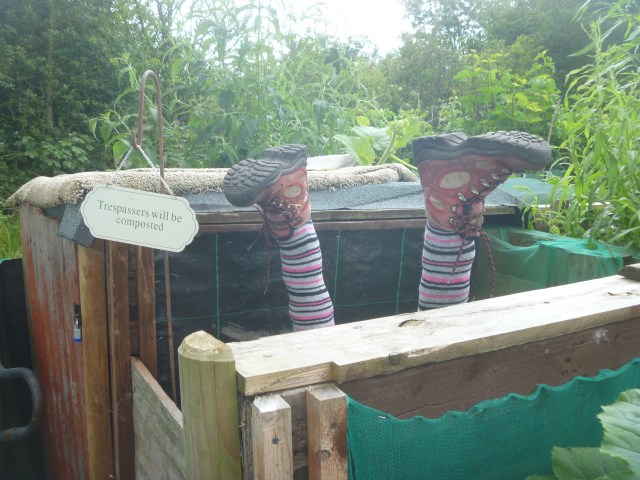
It turned out that the allotment is just a few minutes from Hoghton Tower so after lunch two of us made our way to the Tower where we came across a reenactment of the Battle of Preston (1715). Amongst the reenactors I was surprised to see the Leeds Waits a group of musicians specialising in medieval music and, incidentally, my next-door neighbours!
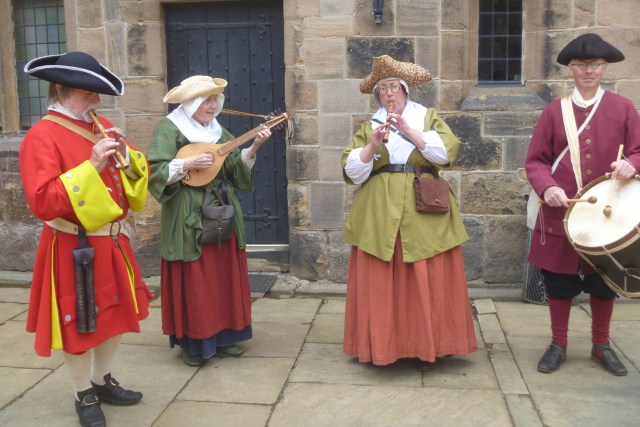
“The battle of Preston at Houghton Tower 2015 : a short film showing the musicians that used to play at executions!”
We booked a tour of the house at 2.30 and made for the tea room for refreshments beforehand.
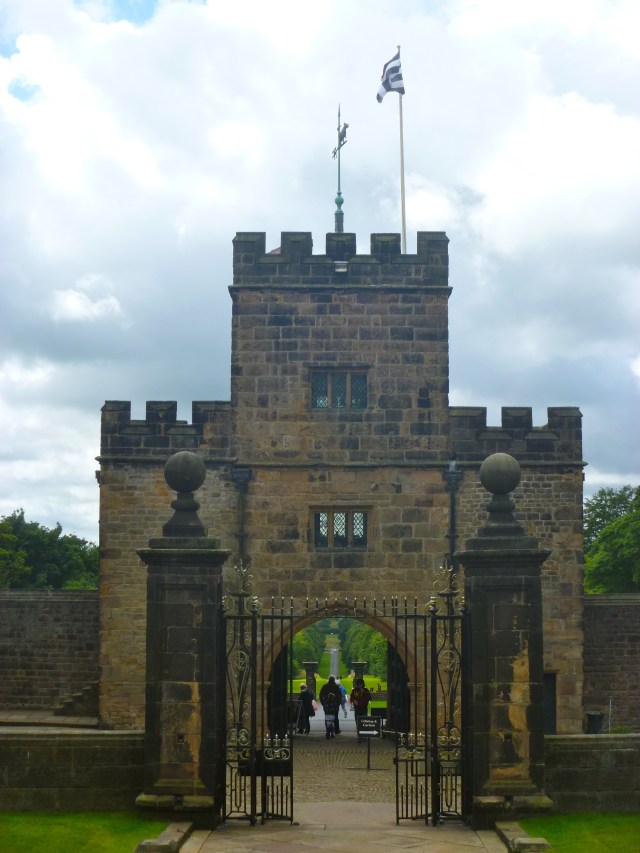
Some significant people are associated with Hoghton. In particular our guide was impressed by the James I connection. James is reported to have spent a few nights at the Tower in 1617 and it was here that he was so pleased with his roast beef dinner that he knighted the joint Sir Loin. James was apparently a small chap and instead of dismounting outside in the courtyard he rode his horse right into the house and up the stairs.
It is also reported that William Shakespeare spent some time here during the period known as his ‘lost years’.
Charles Dickens was also familiar with the house and wrote a short story centred around it including a description of the building as a farm house: George Silverman’s Explanation.
“And so, by fragments of an ancient terrace, and by some rugged outbuildings that had once been fortified, and passing under a ruined gateway, we came to the old farm-house in the thick stone wall outside the old quadrangle of Hoghton Towers.”
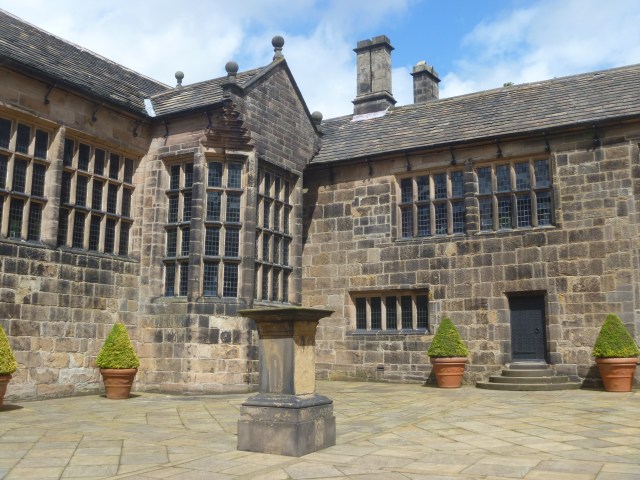
The “quadrangle” today
Read here about another blogger’s visit to Hoghton.
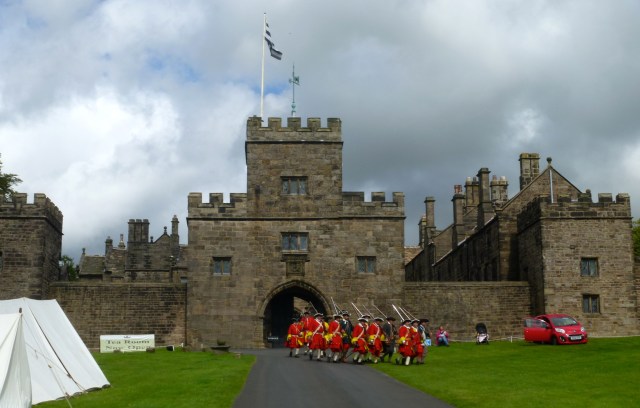
The Battle’s Over – Time to go Home
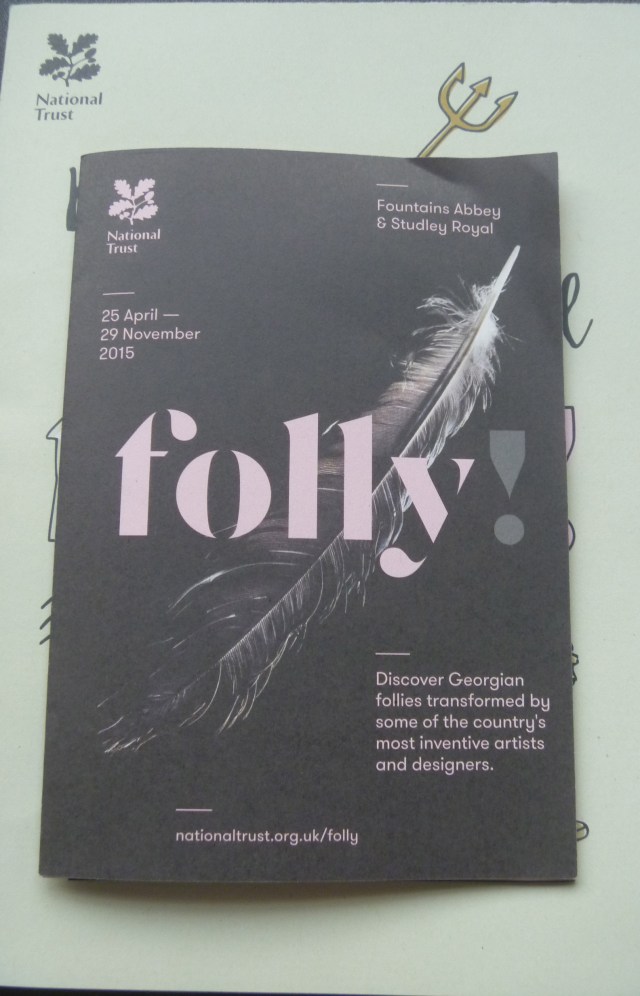
Folly! is the first of a three year programme that creatively brings the stories of Studley Royal to life, through the vision of some of the country’s most innovative artists and designers.
“The original designers of the Studley Royal Water Garden, the Aislabie family, created many follies on this vast and beautiful estate to surprise and delight their eighteenth-century guests. These fashionable, whimsical buildings or structures were often used by garden designers to catch the eye or draw attention to a carefully created vista.
‘Folly!’ will see the temples and follies of this World Heritage Site garden dramatically re-imagined as places of visual trickery and untold histories.
Seek out the Octagon Tower, Temple of Fame, Banqueting House and Temple of Piety this summer and be amazed by installations created by twenty-first century artists in response to the opulent past of this unique place.”
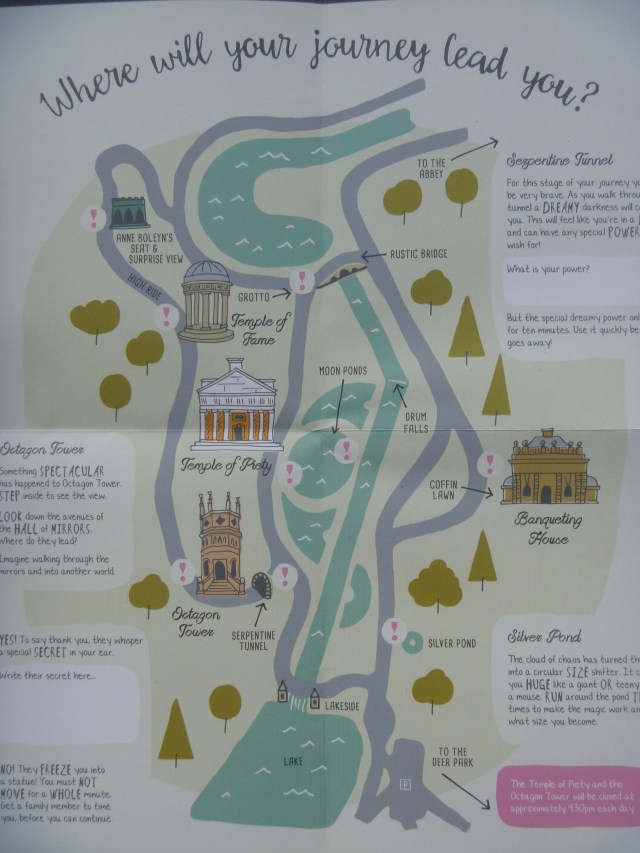
I’ve written several times here about visits to Fountains Abbey and Studley Royal – it’s one of my favourite places and easy to get to from home.
My first stop was at The Banqueting Hall. At weekends and during the school holidays the follies are open during the afternoon so I was able to go inside and see Gary McCann’s ‘Scavenger’ close to.
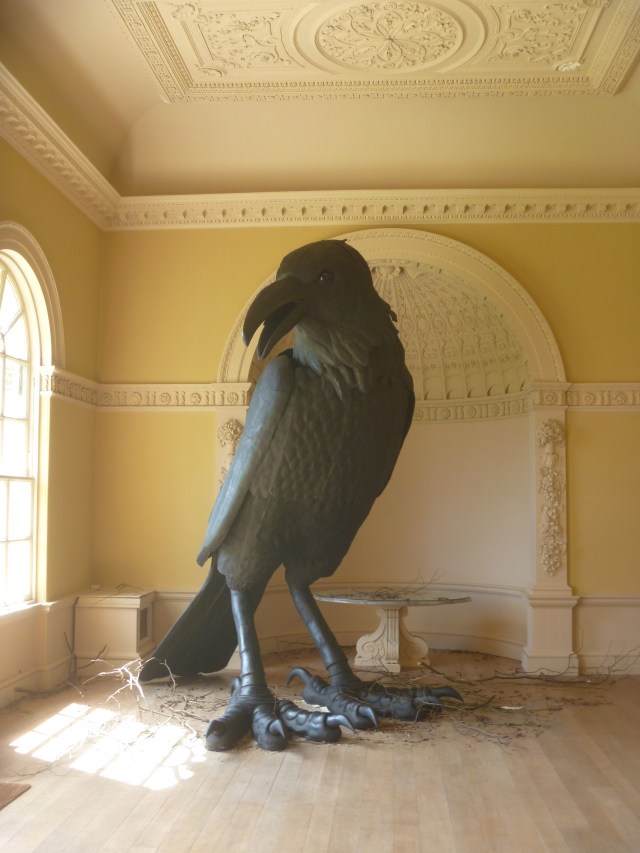
‘Scavenger’ by Gary McCann
Inside The Temple of Piety, which overlooks the Moon Ponds, is The Curious Tale of the Professor and The Temple created by Simon Costin, theatre and set designer. Supported by the jewellers Swarovski, the lavish display is purportedly based on the papers of a Professor Dennistoun of Ripon who died in 1959. He thought Fountains Abbey was the ‘Ancient place of worship now in ruins’ – a line from a prophecy of Old Mother Shipton from nearby Knaresbrough.
“An ancient place of worship, now in ruin, One family shall come to dwell in. But lest the old un’s are kept entertained, No male heirs shall take the reins.“
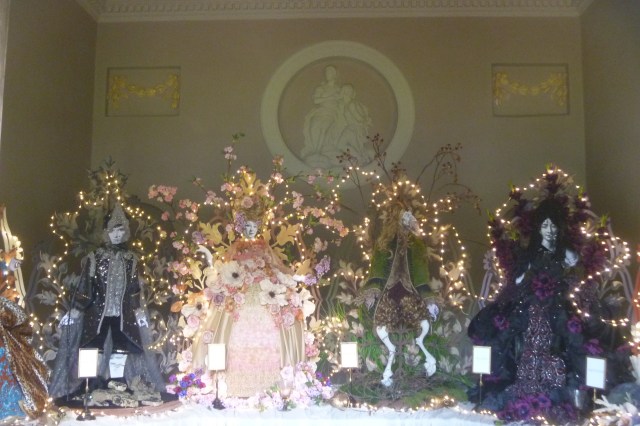
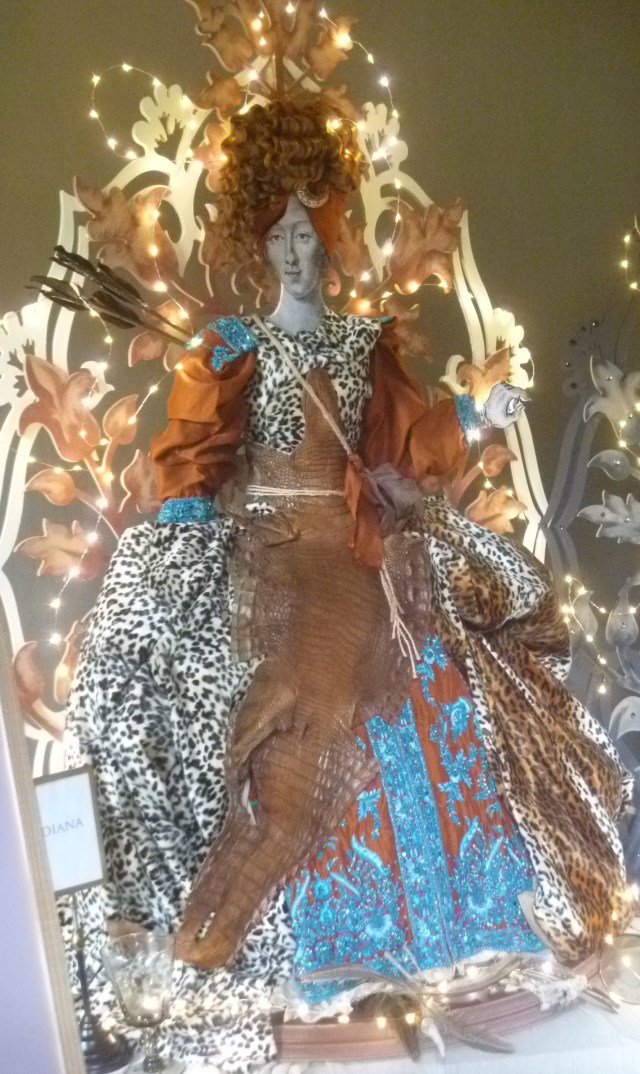
Diana, the goddess of hunting
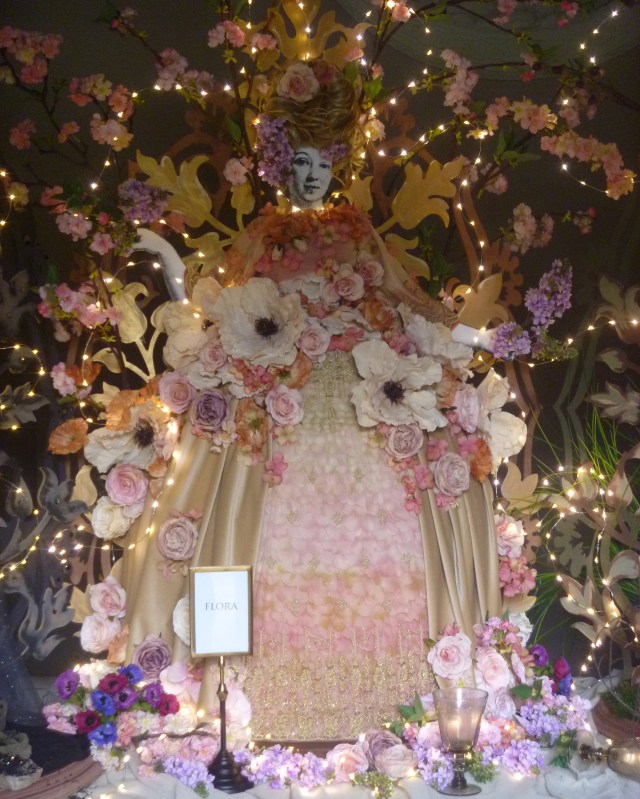
I don’t know why the goddess Flora is a teapot!
Next up was The Octagon Tower and a Hall of Mirrors by Irene Brown. It was impossible to take a picture inside so here’s a little video made by the Trust :
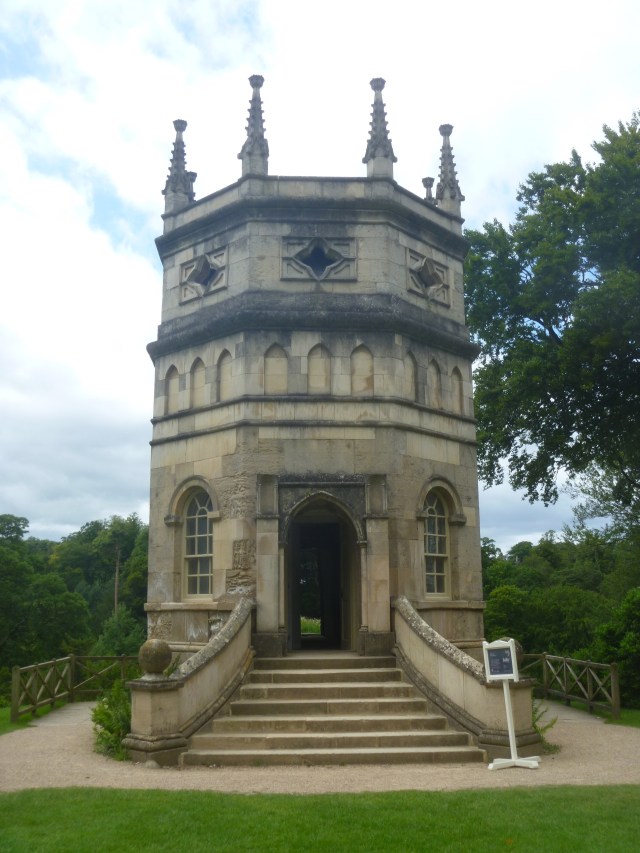
The Octagon Tower
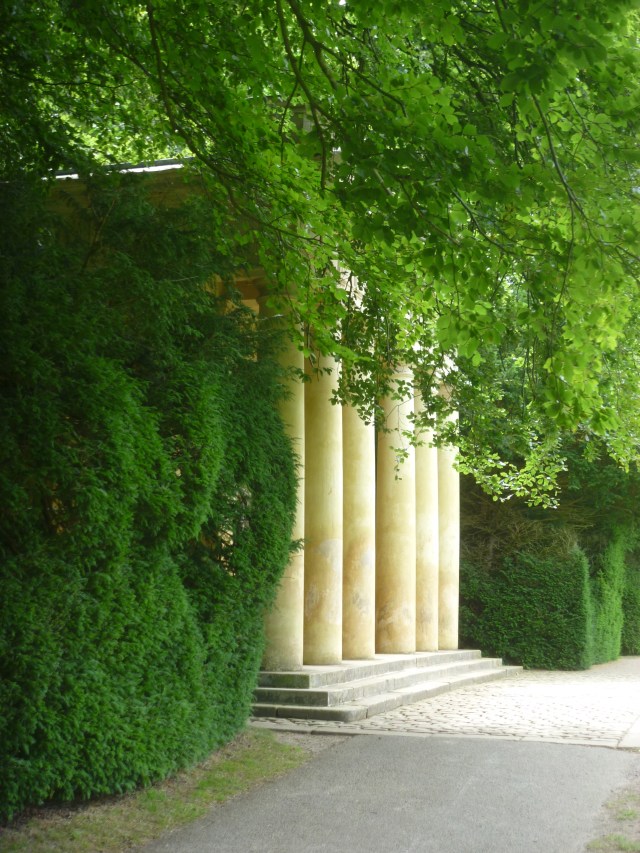
Finally, ‘Lost Property’ also by Gary McCann is the Scavenger’s ‘nest’.
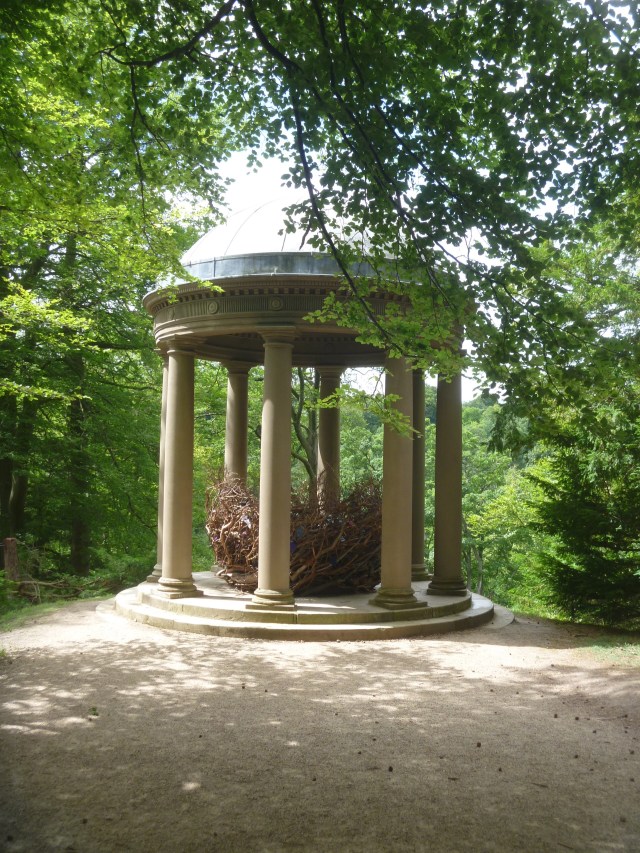
“Within the smooth classical pillars of the Temple of Fame the invasion of the landscape continues. Intertwined within the artist’s creation is lost property. Collected from visitors, it provides sustenance to fantastical creatures which have taken up residence in spaces previously controlled by man“
A marvellously magical and mysterious day out. I’m still mystified by what I saw!
WARNING These connections are very tenuous but I found them interesting and hope you do too!
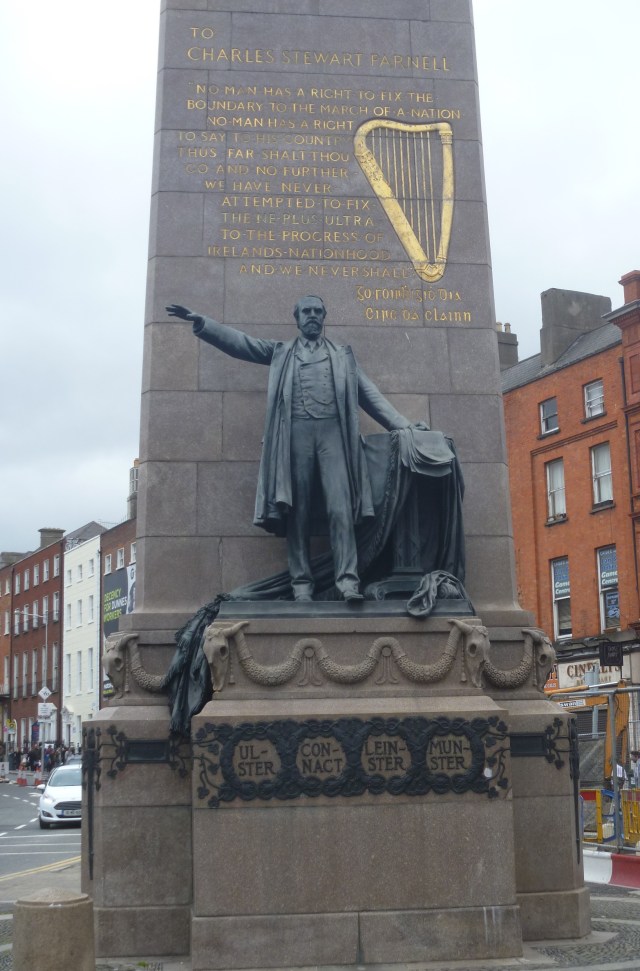
The Parnell Monument in O’Connell Street, Dublin
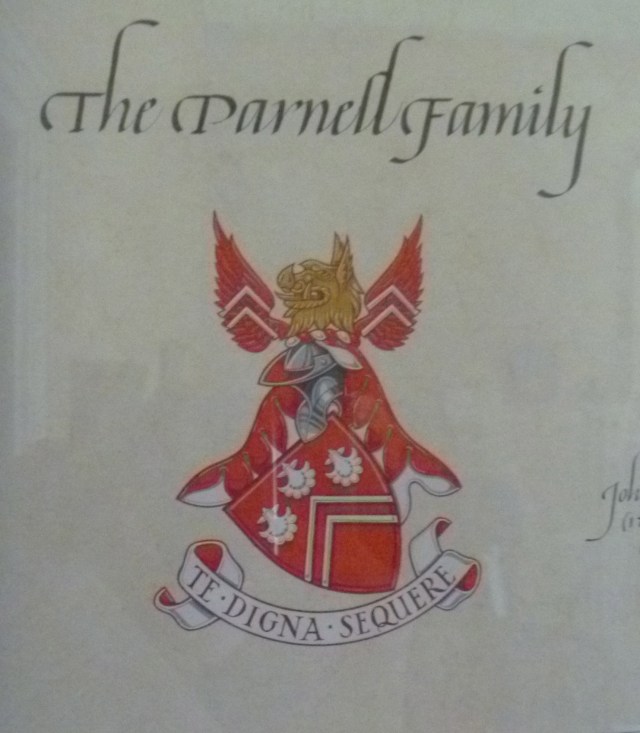
Charles Stewart Parnell was dubbed “The Uncrowned King of Ireland” despite being a Protestant landowner in Ireland. He was also famous for his ‘scandalous’ affair with the married Kitty O’Shea. Read a resumé of his life and influence in Victorian Ireland here.
My maiden name was Parnell and when my sister-in-law and husband suggested a visit to Avondale House in Co. Wicklow, Parnell’s former home, I was delighted. As far as I am aware there is no family connection.
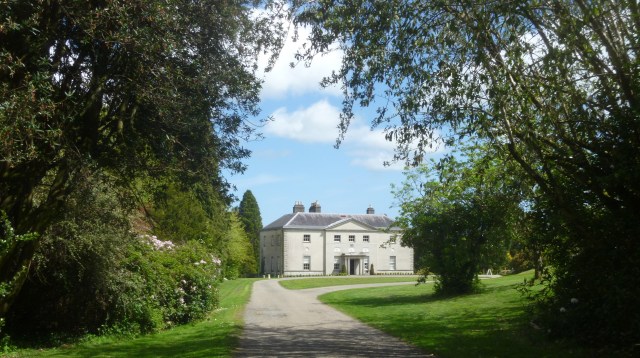
Surprisingly, Avondale House was open on weekdays in May. I’ve just looked at the website and see that it is now closed until further notice due to work being carried out.
“Avondale House, the birthplace and home of Charles Stewart Parnell (1846-1891) one of the greatest political leaders of Irish history. Set in a magnificent forest park of over 500 acres with tree trails and walks ranging in duration from one to five hours. This beautiful Georgian House designed by James Wyatt and built in 1777 contains fine plasterwork and many original pieces of furniture. The American Room is dedicated to Admiral Charles Stewart – Parnell’s American grandfather who manned the USS Constitution during the 1812 war. Visitors are introduced to this wonderful historical house by a specially commissioned audio visual presentation.”
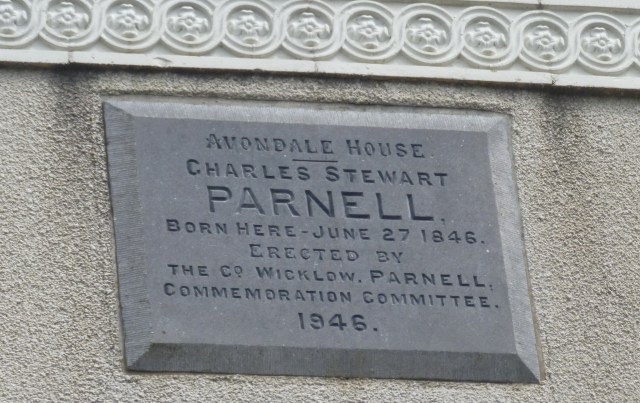
There were no other visitors but I was able to tour the house, buy postcards and we enjoyed tea and cake outside at the picnic tables. The house and grounds are now owned and managed by Coilte Outdoors (Irish Forestry). We did come across a group of walkers who were enjoying the extensive estate and woodland/forest paths. If ever I’m lucky enough to return to Avondale I’d love to take a hike there.
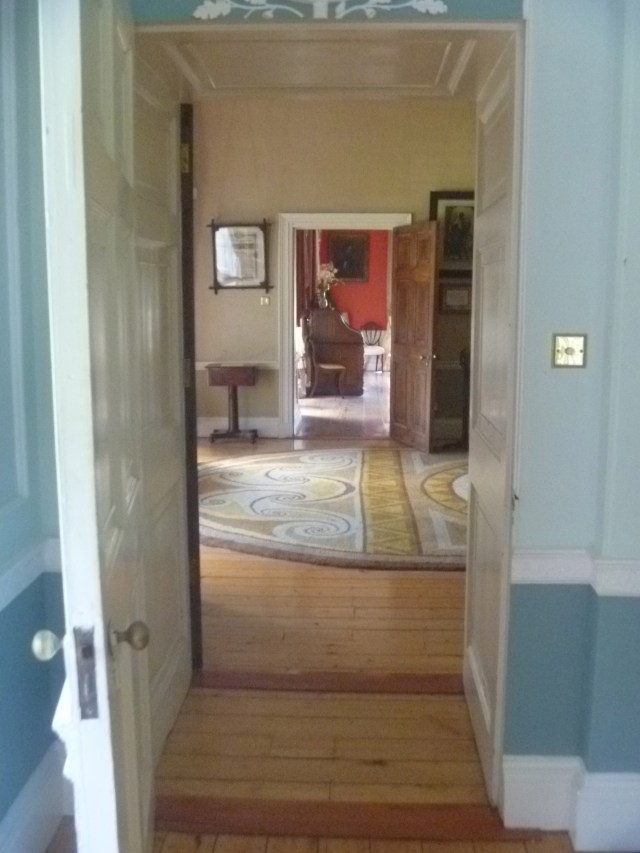
Ground Floor Appartments
The house tour begins with a specially commissioned audio visual presentation. Most of the main rooms of the house can be visited and photography is allowed.
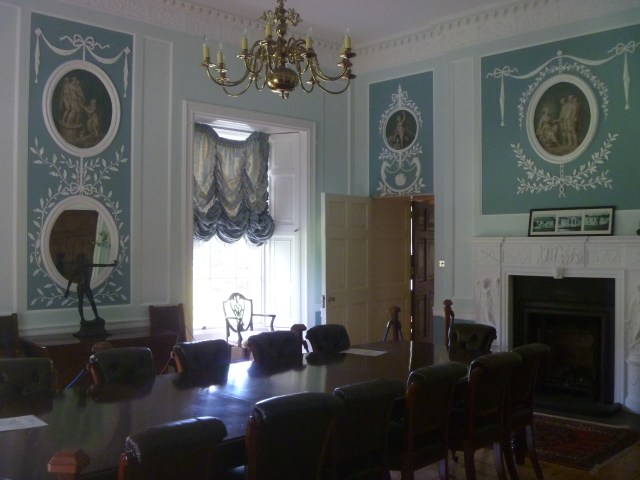
Dining Room
After visiting the ground floor apartments, which are suitably decorated and furnished for the period, the tour continues upstairs where there is some exhibition space and artefacts formerly belonging to Parnell and family.
The American Room was the bedroom in later life of Parnell’s American mother, Delia Tudor Stewart the daughter of Admiral Charles Stewart who manned the USS Constitution during the 1812 War. Both he and his ship gained the nickname “Old Ironsides”. Delia died as a result of burns which she received after a fire in this room. The Wooton Desk was originally the property of her father.
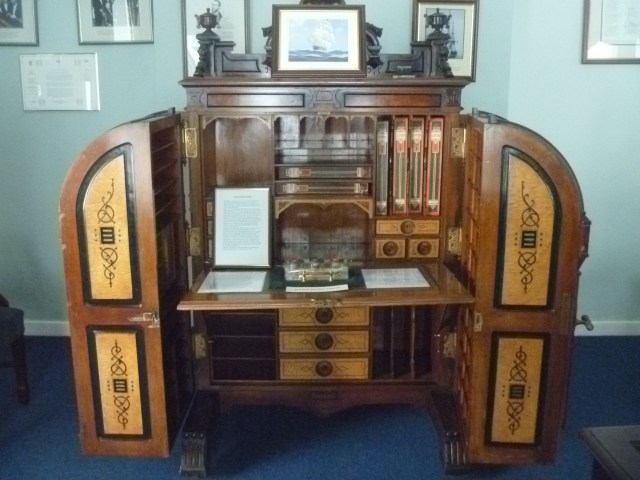
The Wooton Desk
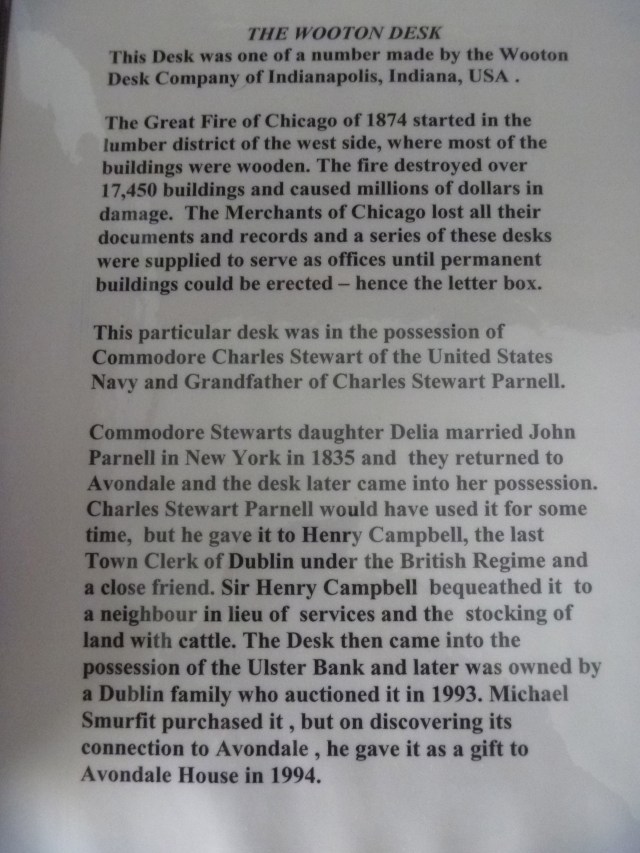
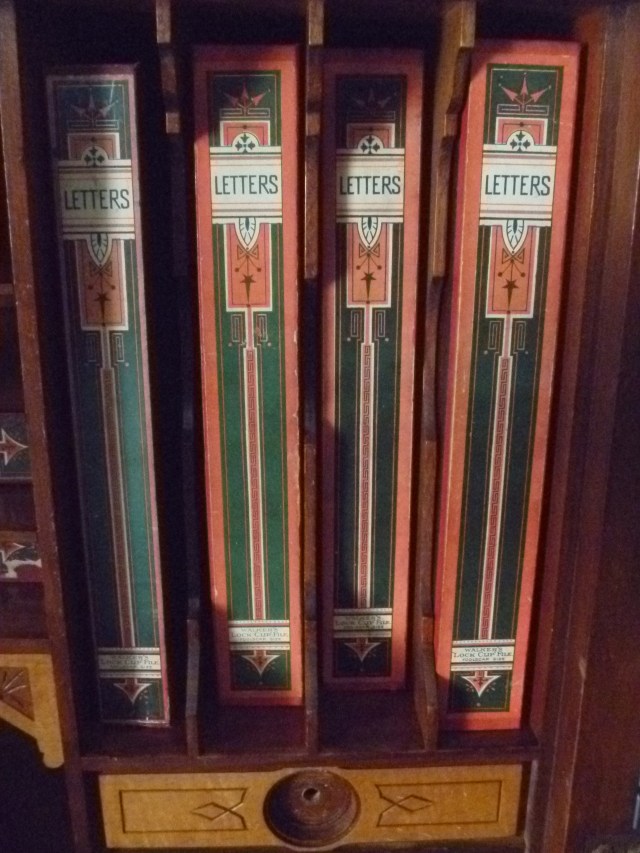
Wooton Desk Files
There is a well-known (in Ireland, anyway) song about Parnell – The Blackbird of Sweet Avondale.
“The Blackbird of Sweet Avondale Charles Stewart Parnell was imprisoned in Kilmainham Jail in Dublin in 1881 for the leading part he played in the Irish Land League. In songs of rebellion or songs that the government might consider seditions, it was common to use a synonym instead of a person’s real name. In this case, Parnell is “The Blackbird of Sweet Avondale“. [source]
It’s nice to think of this connection with Ireland
My other family connection is more real but it has been hard to find much concrete evidence.
During the War my Dad served in the RAF and for a while, early on in his career, for he spent most of the War in India, was stationed (presumably for training) in Northern Ireland. One of the places he used to talk about was Newtownbutler. Before I went to Ireland and whilst I was staying at the Crom Estate in Co. Fermanagh I tried to find out more about radar stations in the area but with no luck at all. I spoke with two chaps who were interested in finding out about what went on in the area but we were none of us able to shed any light on the situation. This was all we could find (and the date is too late for Dad as he was already on his way to India). Scroll down to two photos labelled Newtownbutler.
http://ww2ni.webs.com/countyfermanaghpart2.htm
I’ll just to divert for a moment here to mention that The Crom Estate played an important role during the Second World War and there was a good exhibition in the National Trust Visitor Centre on the site.
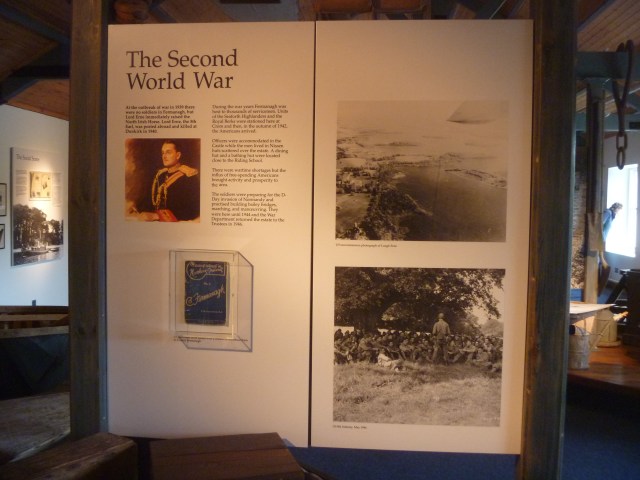
In the autumn of 1942 American soldiers arrived and used the estate to prepare for D-Day. The officers lived in the Castle and the men in Nissen huts scattered throughout the site. They practised building bayley bridges, marching and manoeuvres.
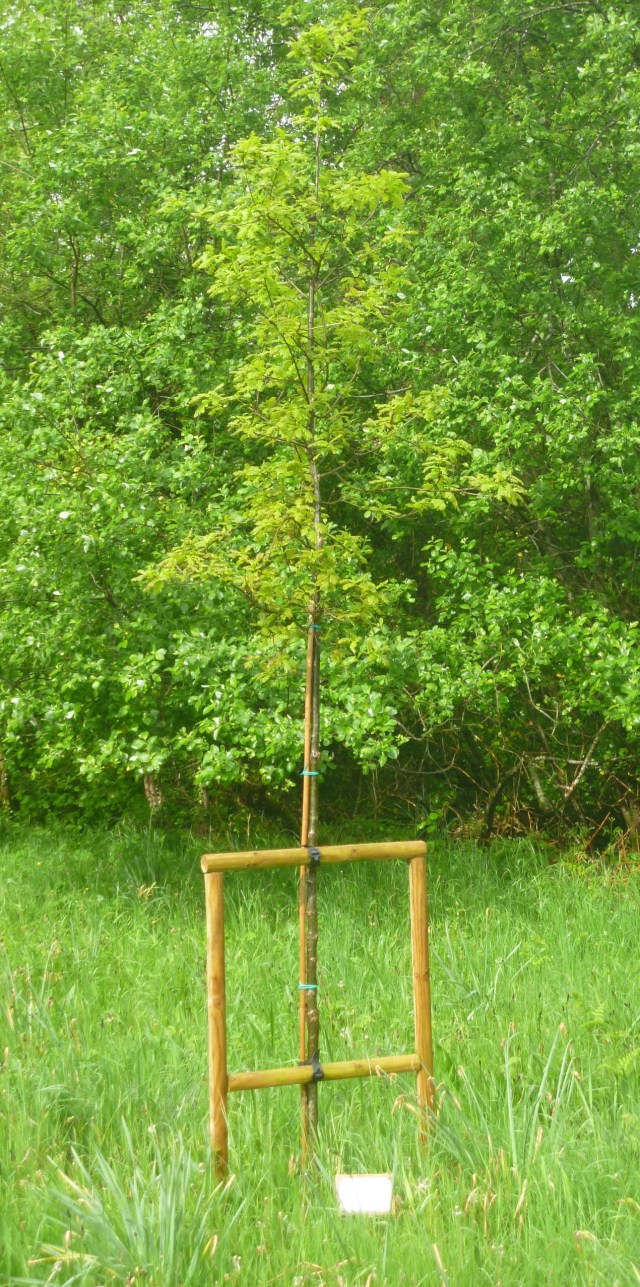
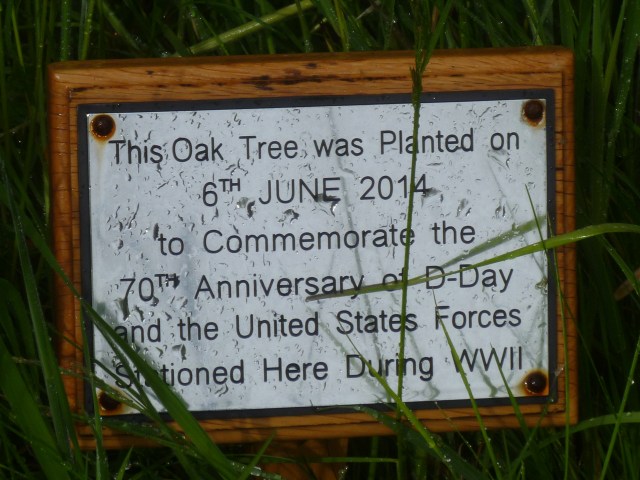
I visited Newtownbutler itself, tried to find the site of the former radar station which is now private land and not easily accessible and enquired at the Co. Fermanagh Information Bureau in nearby Lisnaskea but all to no avail. The village was really just a couple of streets leading to a crossroads.
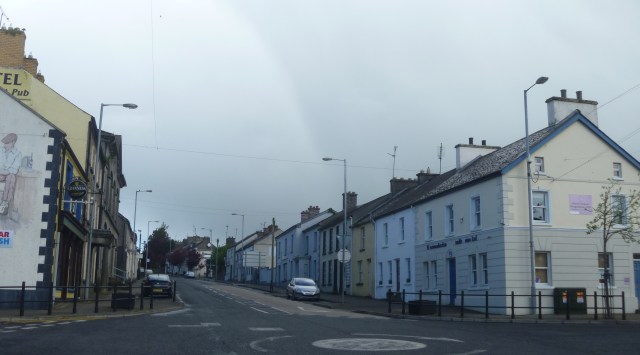
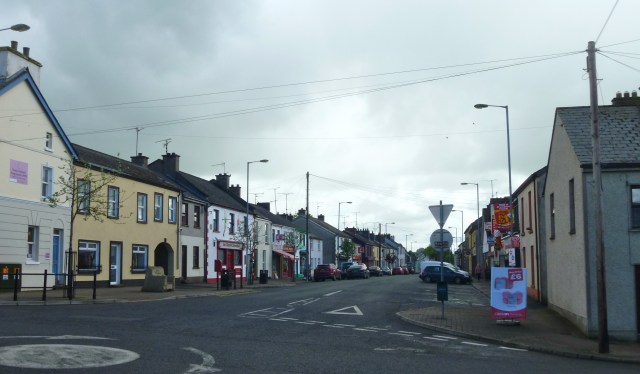
At the Crossroads in Newtownbutler
Still, I’m happy to have visited somewhere that Dad spent time and he talked about Northern Ireland with great affection. British forces, of course, were not allowed to cross the border into southern Ireland as it was a neutral country at the time.
Dublin is a City of Words, a UNESCO City of Literature and a city with some great libraries. On my visits in May I managed to get to two of these. I’m looking forward to future trips when I may visit other literary locations across the city.
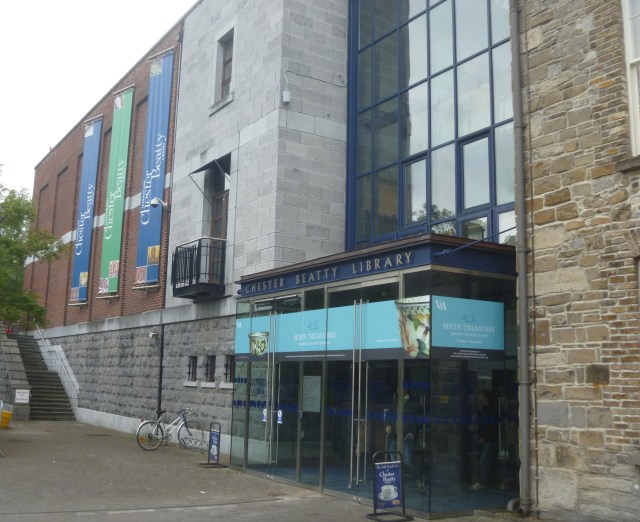
Most highly recommended to me was The Chester Beatty Library right in the centre of the city and within the walls of the grounds of Dublin Castle itself.
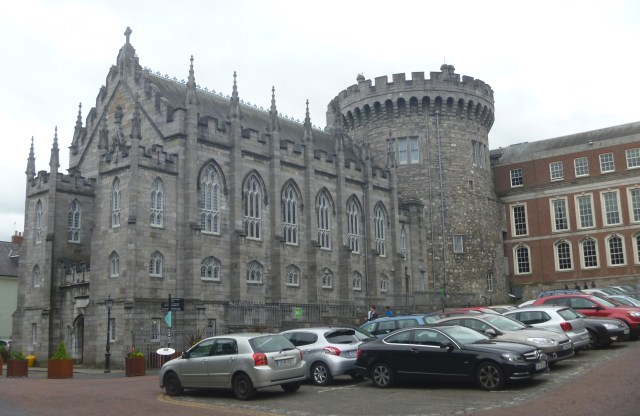
Dublin Castle
“For over 800 years Dublin Castle has been at the heart of Irish history. From the founding of the first Celtic settlement in the 1st century A.D. to every Presidential inauguration since the foundation of the state, the site has stood witness to some of the most pivotal events in the country’s history.” So it’s interesting enough just walking through the Castle precincts.
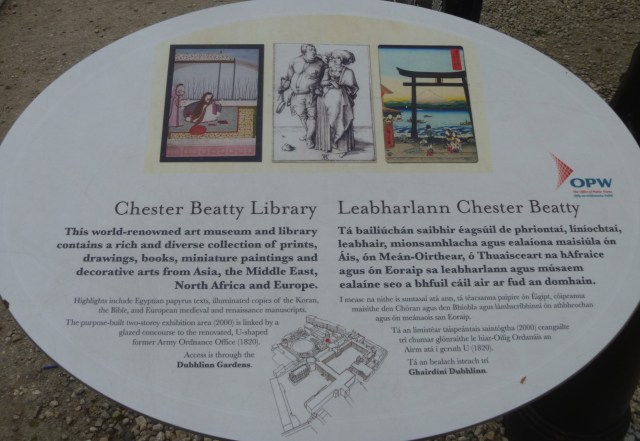
Chester Beatty (1875-1968) was an American mining engineer. He had been an avid collector since childhood – stamps, Chinese snuff bottles, rocks and minerals. During the first decades of the 20th century Beatty moved to Europe and began to collect European and Persian manuscripts and decorated copies of the Qur’an. He took an interest in Japan, the Orient and Egypt. He actually bought a house near the Pyramids.
He later bought modern editions but had very conservative taste. He preferred books where the text and image formed pleasing compositions. Such as here a Gregynog Press issue of The Fables of Esope, 1931.
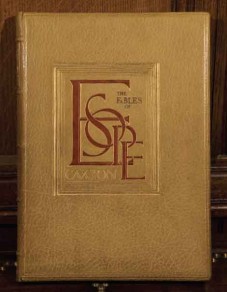
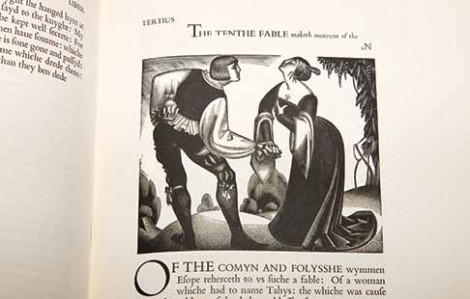
No photography allowed but I found the above pictures here
He loved books for their own sake as opposed to having a love for literature. He was attracted to decorated books/illustrations/iluminations and fine bindings. He didn’t like modern art and avant garde book designers, illustrators and binders are not represented in his collection. His mantra was “quality, quality, quality”. He was probably the last of the great book collectors after J. Pierpoint Morgan and Henry E. Huntington. Beatty also appreciated the 18th and 19th century print cabinets essential to the gentleman’s library.
In 1950 Chester Beatty decided to move to Ireland and he built a library for his art collection on Shrewsbury Road which opened in 1954. Upon his death, the collection was bequeathed to a trust for the benefit of the public and his priceless collection lives on as a celebration of the spirit and generosity of Chester Beatty.
I enjoyed studying the short videos demonstrating print techniques : woodcuts, engraving, etching, lithography and chromolithography. And a trust fund allows the Library to continue buying works today which complement the original collection. It was during my visit to The Chester Beatty Library that I realised that I’m really much more interested in printed books and printing methods than in the beautiful and exquisite manuscripts.
Charles Beatty summed up his life “It has all been a great adventure”.
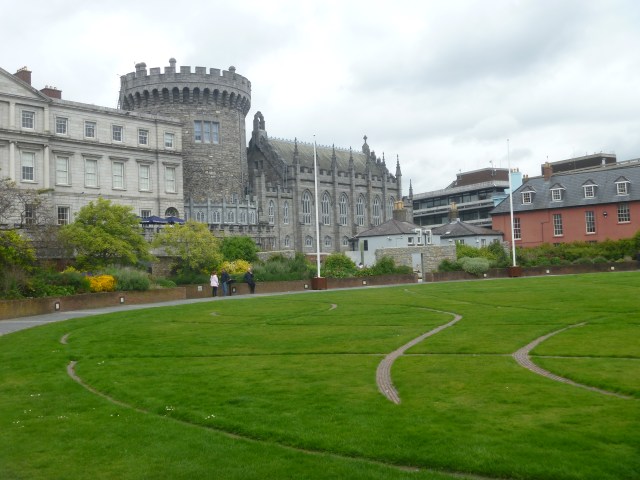
The Castle Grounds and Grass Maze
Moving on from the Chester Beatty Library I headed back through the Castle precincts and after a quick lunch in the lovely Avoca store found my way to The National Library of Ireland. A friend, and fellow member of the Leeds Library, recommended to me after a recent visit “YEATS: the life and works of William Butler Yeats” [1865-1939]. It’s an almost permanent exhibition (ongoing since 2006) but it is particularly relevant this year as 2015 is the 150th anniversary of Yeats’s birth.
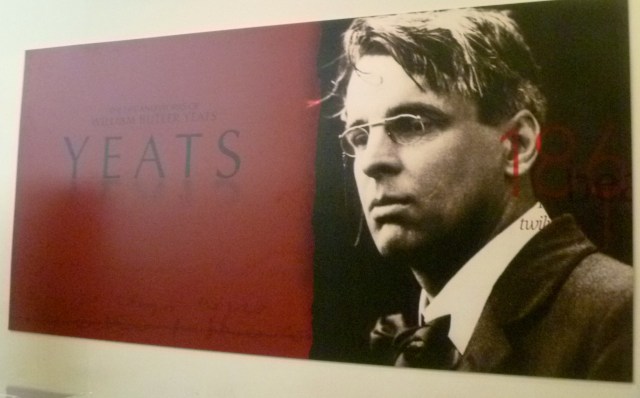
The National Library of Ireland’s collection of Yeats manuscripts is the largest collection of Yeats material in a single institution anywhere in the world. This collection is at the heart of the exhibition which you can visit for yourselves here.
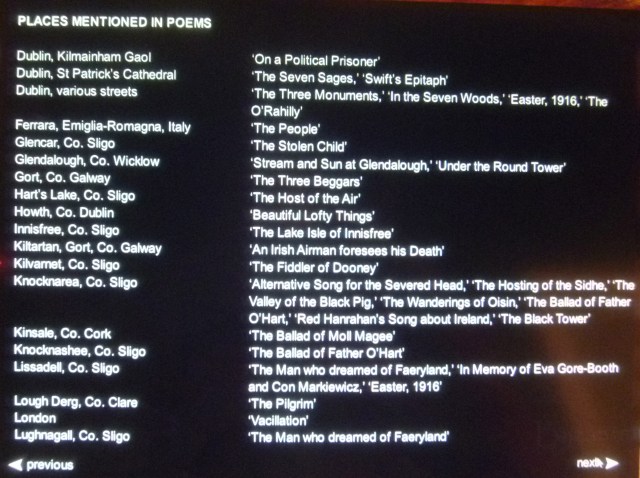
I was particularly interested to discover more about the life of Ireland’s national poet. He came from a family of artists and creatives. He played a huge role in the establishment of the Abbey Theatre in Dublin which he founded along with Lady Augusta Gregory in 1904 with the main aim of promoting Irish writers and artists which is still incorporated in its charter today. He had a great interest in the occult and Celtic mysticism. Many of his poems are about places in Ireland, and elsewhere.
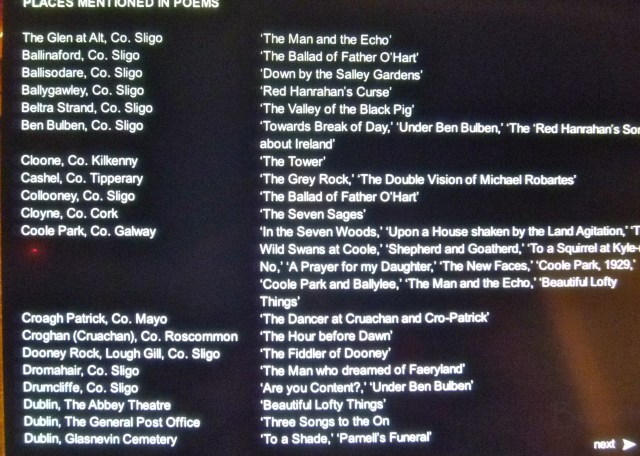

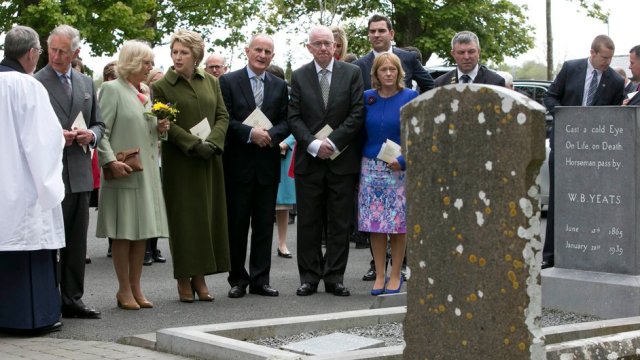
By coincidence during my trip in May HRH The Prince of Wales and his wife The Duchess of Cornwall also visited Ireland and planted a tree at the grave of William Butler Yeats at Drumcliffe, Co. Sligo.
[source]
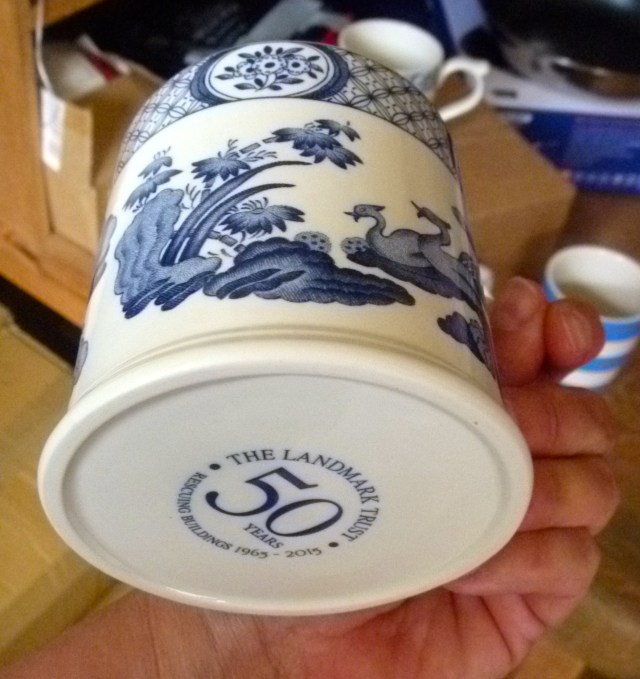
Back in May, when I was in Ireland, The Landmark Trust celebrated it’s 50th anniversary with a variety of activities and events on a Golden Weekend – the sun even shone! That weekend (16 and 17 May) properties were open to the public, Antony Gormley’s LAND sculptures were unveiled and visitors at all properties were entertained by choirs singing simultaneous performances of An Anthem for Landmark.
I was disappointed to miss this event but in the annual Friends’ mailing I received an invitation to attend “A reception for Friends to include a talk and tour about Shottesbrooke, its church and Landmark’s offices” and the date was to be the afternoon of Friday 26 June. I knew already that I’d be flying out of Gatwick on 18 June and back on 25. So I decided to drive to London, leaving the car at Belsize Park, and drive to Shottesbrooke in Berkshire on the Friday in question.
What a beautiful day it was and how lucky the Landmark Trust staff are to work in such beautiful, rural surroundings. A buffet lunch was spread before us upon arrival; and not long after the first group was assembled to have an introduction to the Estate and its deserted medieval village by local historian David Ford. You can read here his history of the Estate and his entertaining history of the Church.

Spire inspired by Salisbury Cathedral
St John’s Church, Shottesbrooke features in Simon Jenkins’s “England’s Thousand Best Churches” which I’ve mentioned here several times before. “The spire is visible rising over the woods from a distance and is a splendid feature of the landscape.” Inside there are several extraordinary tombs, including the double tomb of Sir William Trussell and his lady with a canopy of eight ogee arches, and “The floors of Shottesbrooke are littered with splendid brasses still in place. one pair, of a priest and a layman of c.1370, has them both in prayer with singularly grim expressions on their faces.”
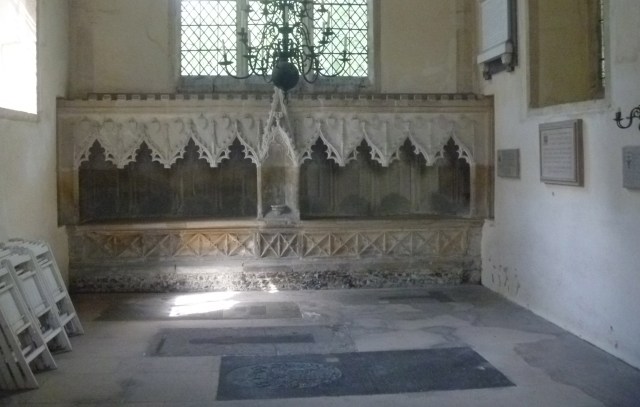
The Trussell Double Tomb
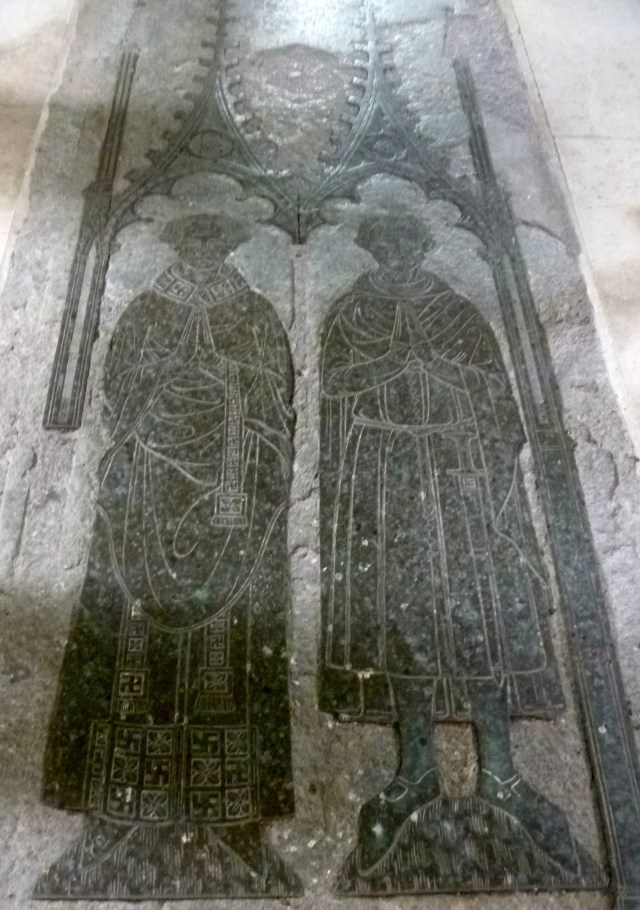
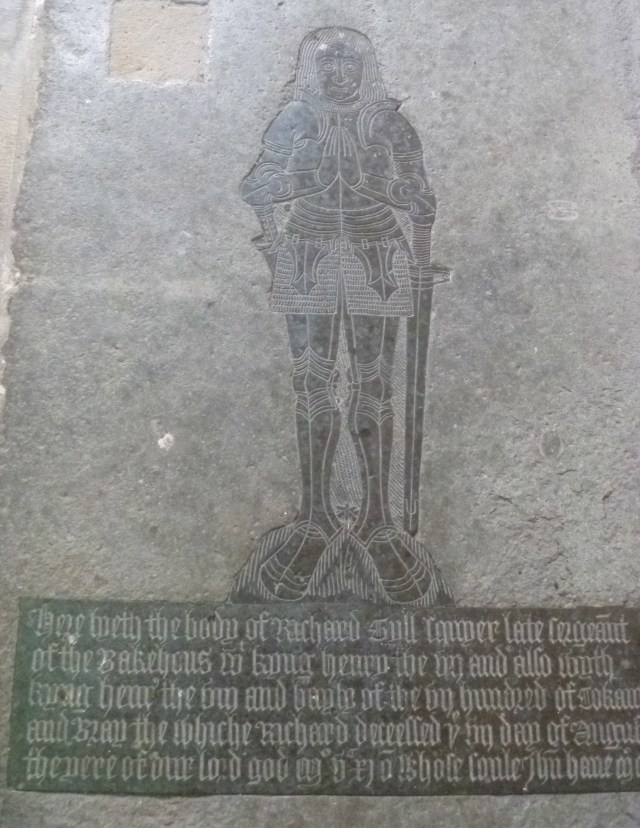
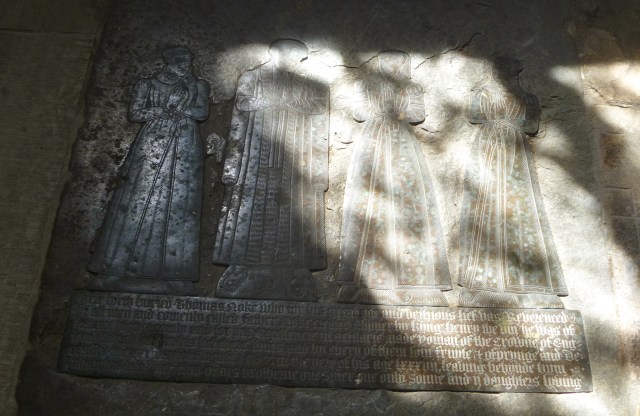
After visiting the church we were taken across the lawns to view the exterior of Shottesbrooke Park House. It is still owned by descendants of cousins of the Vansittart family who bought the property in 1716, namely the widow and son of Sir John Smith (founder of The Landmark Trust).
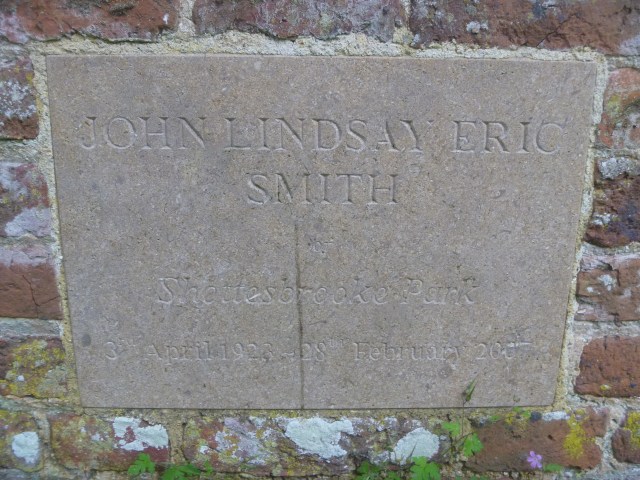
Sir John Smith Memorial in the Churchyard
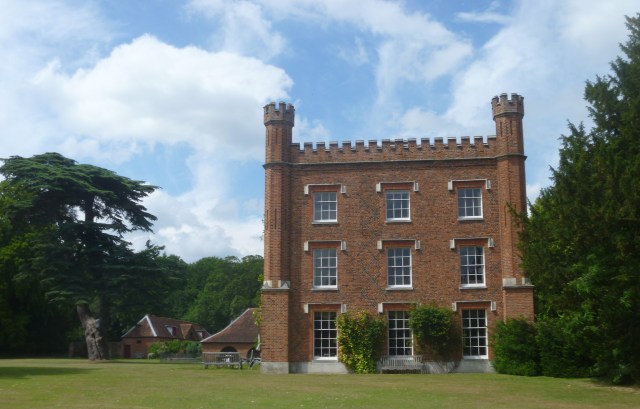
Side View of the House
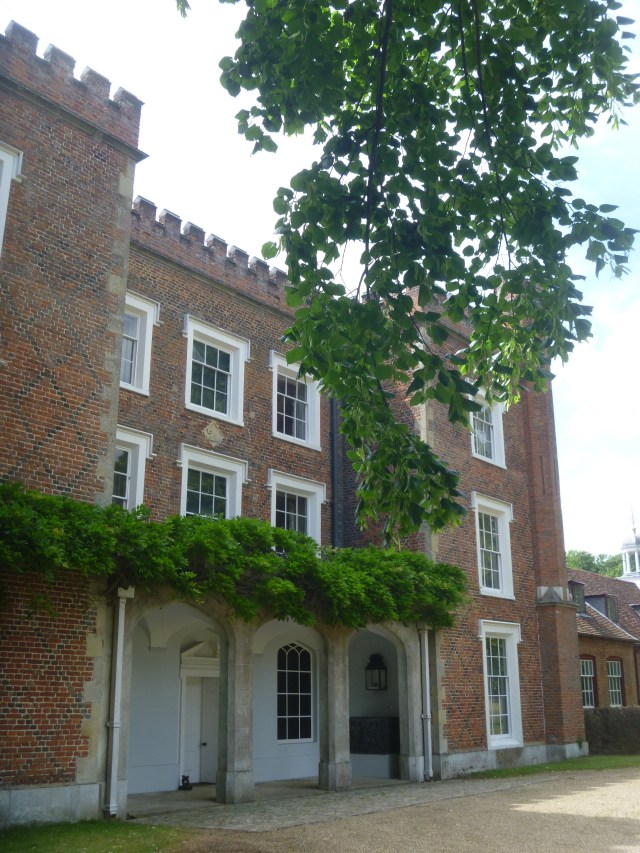
House Front
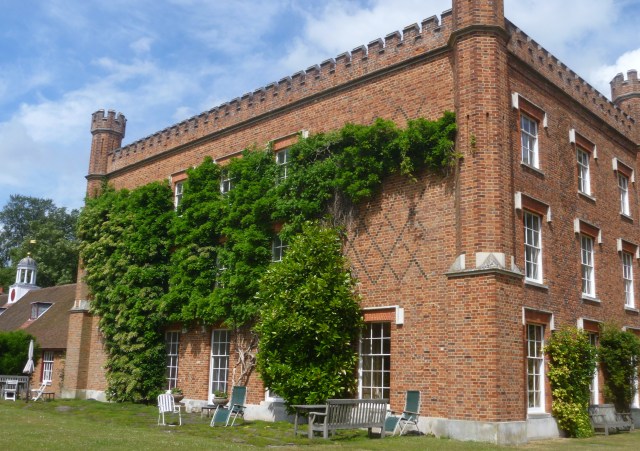
Rear of House
Following David’s tour we adjourned back to the cottage for further cups of tea and home made cake before being taken to see the anniversary exhibition in a barn, to offices in farm out-buildings and the Landmark main offices in the former farmhouse.
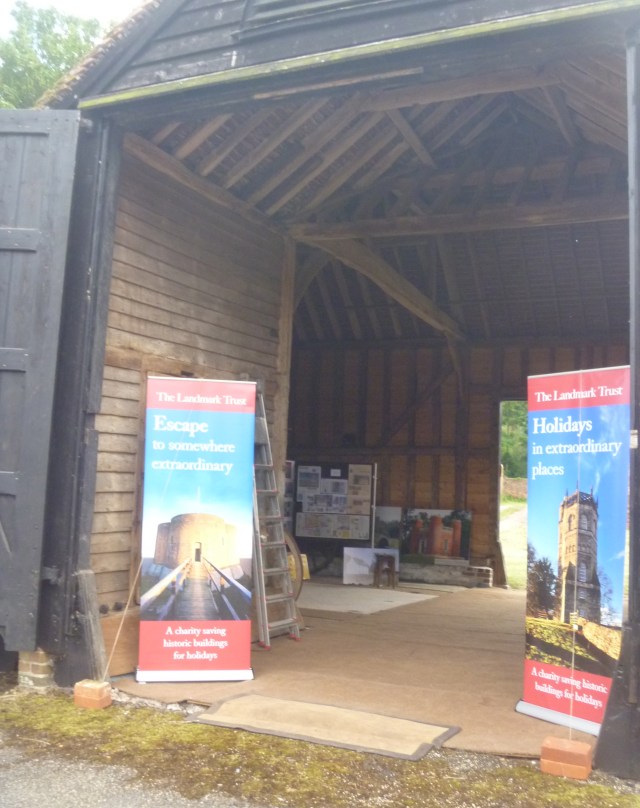
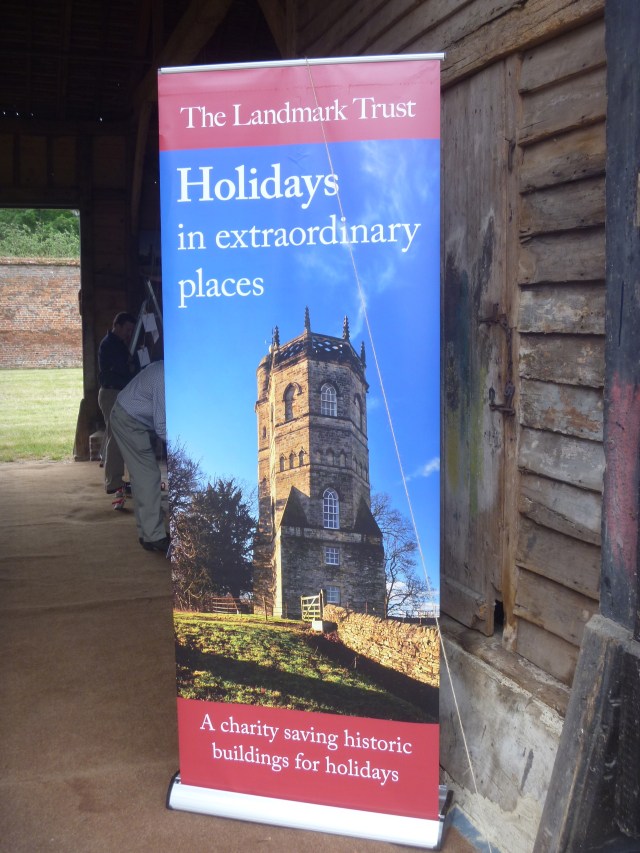
Welcome to the Exhibition
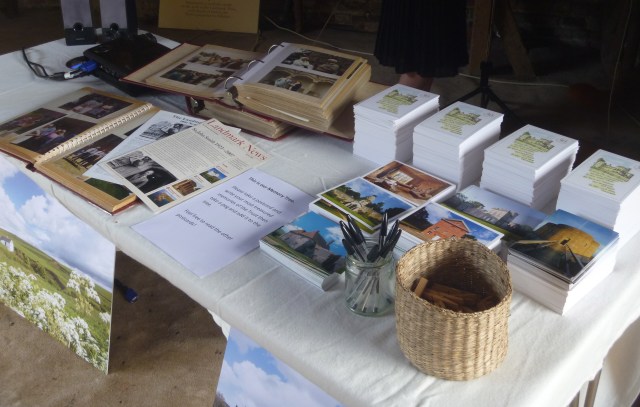
A Display Table
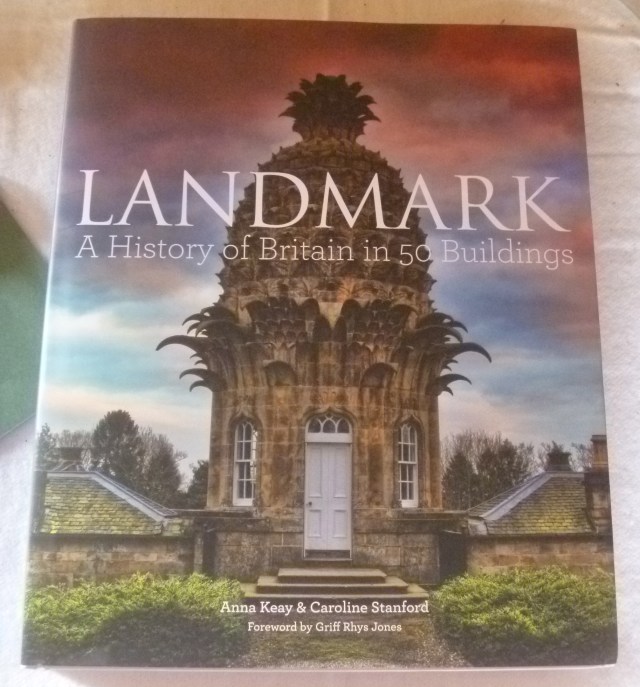
To be published soon!
The Director of The Landmark Trust, Anna Keay, then welcomed us and thanked us for our support before going on to tell us about two properties that are opening this year (Belmont at Lyme Regis and St Edward’s Presbytery at Ramsgate) and future projects. Strawberries and cream were served to round off a wonderful afternoon. Friday was the start of a weekend of festivities and receptions at Shottesbrooke including a Director’s Lunch for Landmark Patrons on the Saturday and a big anniversary celebration on the Sunday to which all staff including housekeepers and gardeners were invited.
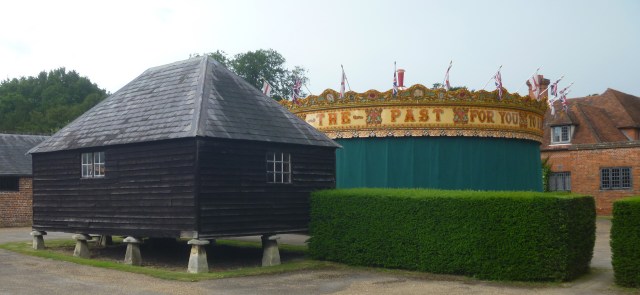
Carousel Fun on Sunday!
The next day we left the hotel by the way we had arrived but on leaving the section of main road headed off uphill, away from the sea.
“An initial climb brings you to a high point with wide views and then down along a stony, woodland track to the base of the next valley. Another climb brings you out to a high point before heading inland. You follow farm track and a short climb on road before picking up a gravel track that gently descends to your final destination with stunning panoramic views across the valley to the sea.”
At the ‘base of the next valley’ we came almost face-to-face with a family of wild boars. We knew we just could not pass through the area as they were hidden from us for the most part and making a lot of noise. In order to contact Matteo we had to retrace our steps to the ‘high point with wide views’ and wait for him to ‘rescue us’. This he did efficiently and quickly and offered to walk through the wild boars area with us. We declined his offer with the excuse that we had already lost quite a bit of time and could he put us back on the track a little further along the route.
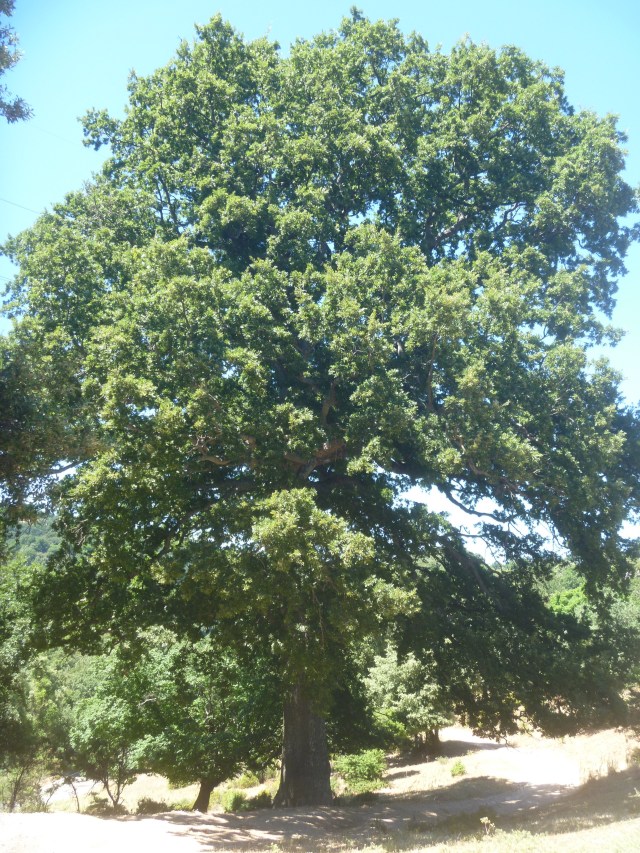
The Turkish Oak
Matteo dropped us off on the track (just by a monumental Turkish Oak tree: read more about this species here) that leads over several kilometres to the very remote Agriturismo farm Masseria Sgarrazza at San Salvatore where we were to spend that night.
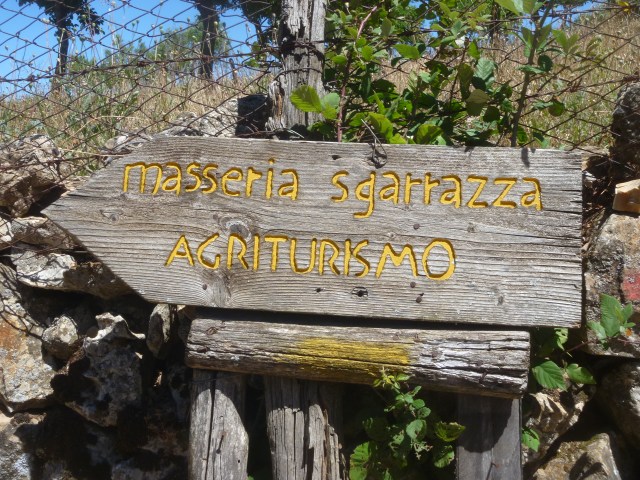
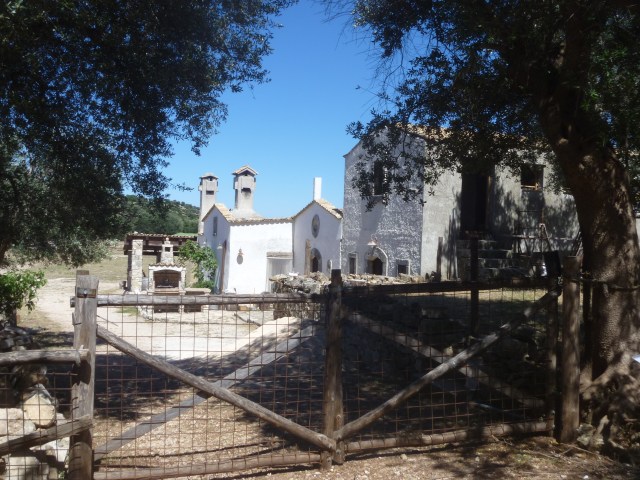
Arriving at the Masseria Sgarrazza
This amazing place – it was like stepping back in time – has existed as a farm here since 1820. The name comes from the local dialect word ‘sgarra’ meaning split or crevasse, because of the way that the sea splits the horizon where it joins the land. I think the way of life has changed little here; but as we dined that evening we could hear the telly. Access to water sources is a problem throughout the Gargano due to the quick draining cretaceous limestone that makes up the area. Here at San Salvatore water is delivered by truck to a huge water store.
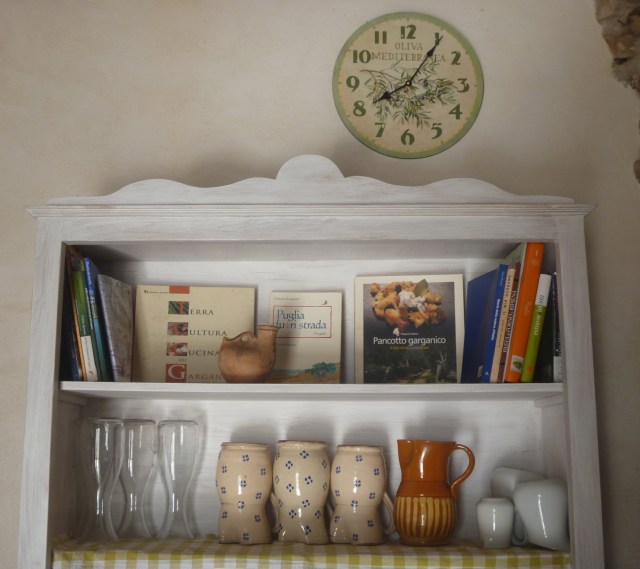
The olive oil served at dinner was all produced here and they make the wine served themselves (but they don’t own any vines). The delicious Caciocavallo cheese is a speciality of the farm and is produced from the limited supply of milk from their Podolico cows.
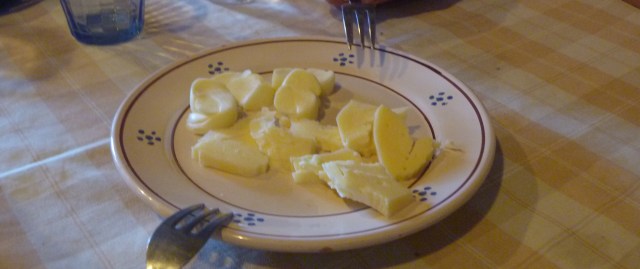
Caciocavallo cheese
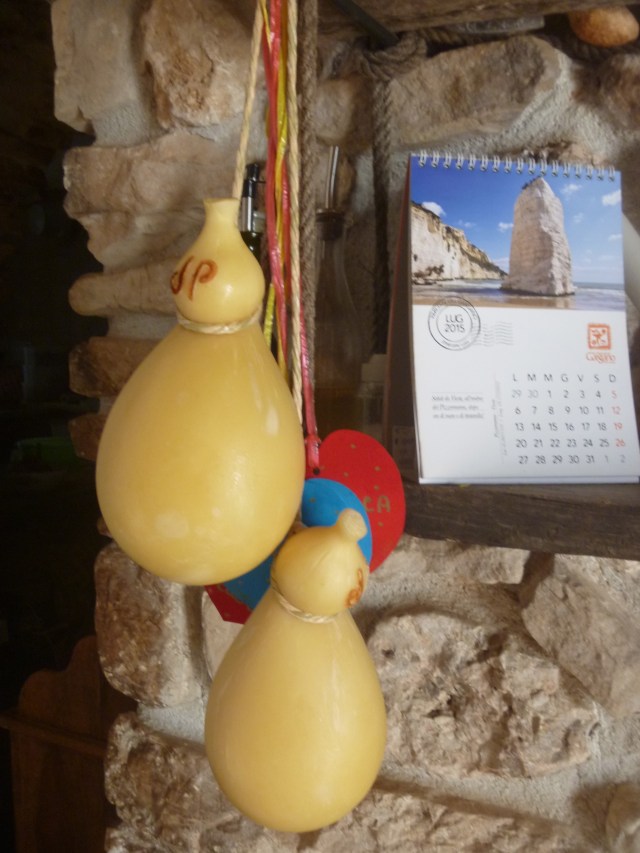
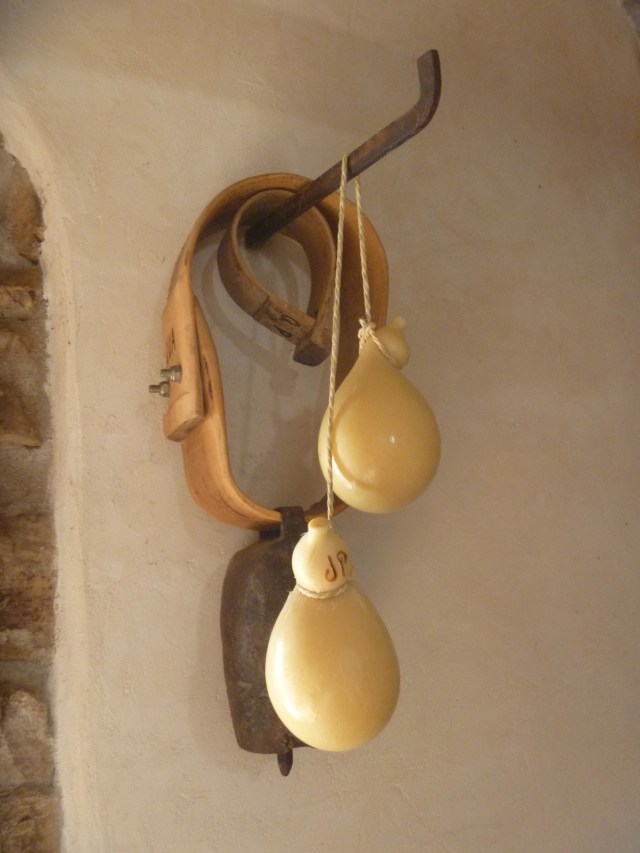
Cheese maturing everywhere
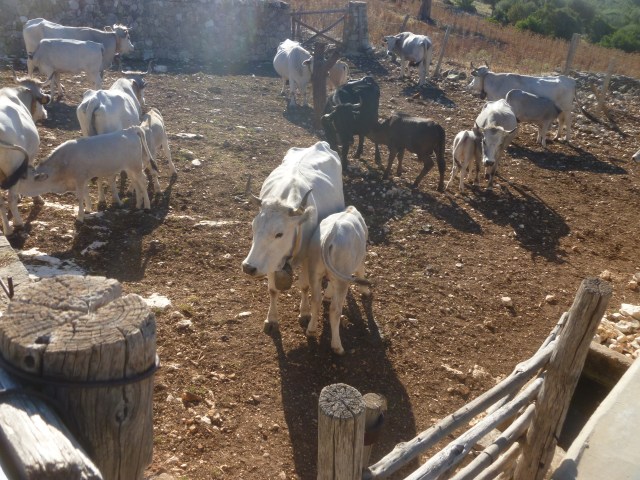
Podolico cows
Guests (just us) are accommodated in converted old stables and the arrangements were primitive to say the least! The original farmhouse (where the farmer and family ate, cooked and lived) is now just the dining room of the much expanded house.
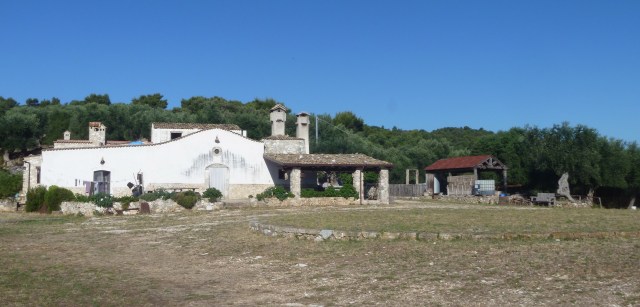
The Farm and Threshing Floor
The large stone circle in the middle of the farmyard is an aia (threshing floor). There was once a little grain production and when this had been cut it was brought to the threshing floor where horses were led round in circles separating the grain from the straw with their hooves. Then it was manually tossed in the air so that lighter straw would be blown away and the grain remained on the threshing floor. At 254 sq m it is one of the biggest and best preserved in the Gargano. Another aia can be seen in the Pagliaio photo in the previous post.
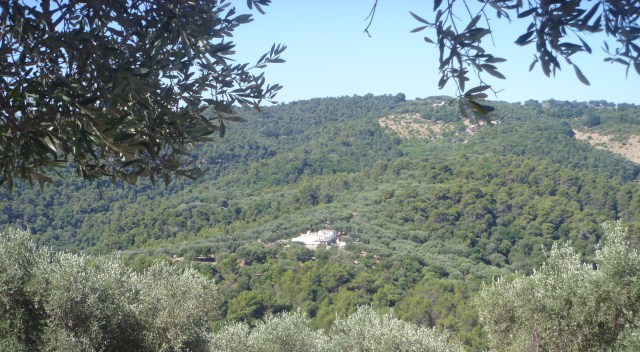
The Masseria Sgarrazza – miles from anywhere!
A short detour from the next day’s route took us to the 2,500 year old necropolis of San Salvatore. I think we thought we had seen sufficient tombs and necropolises on our ATG walk last year (Etruscan Lanes to Orvieto) but it seemed not and we added a further 2.5km to the day’s walking. Matteo worked this excursion out himself and he writes in the notes :
“The necropolis was built by the Daunian Civilization between the sixth and fourth centuries BC. During the 1950s it was stripped by grave robbers; but archaeologists managed to save some finds (eg small pots, tools, funeral ornaments). These are now kept in the Archaeological Museum in the Castle at Manfredonia. It seems, though, that the Daunian inhabitants of this area were less evolved than at otehr Daunian centres (eg Siponto/Manfredonia and Ascoli Satriano). Nowadays, you can only see the square stones cut to form tombs … but to visit a 2500 year old cemetery remains a unique experience … don’t you think?”
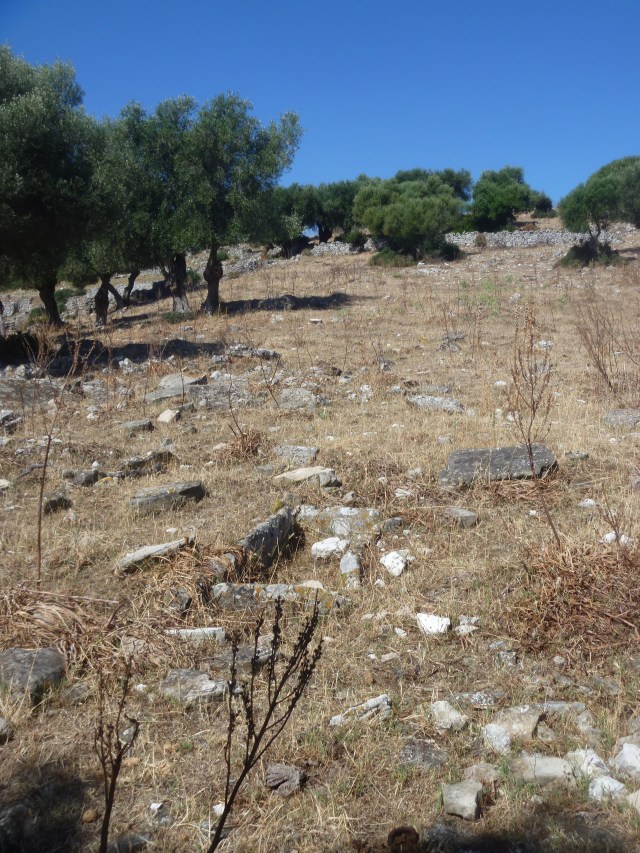
The Site (hard to capture the look of the place)
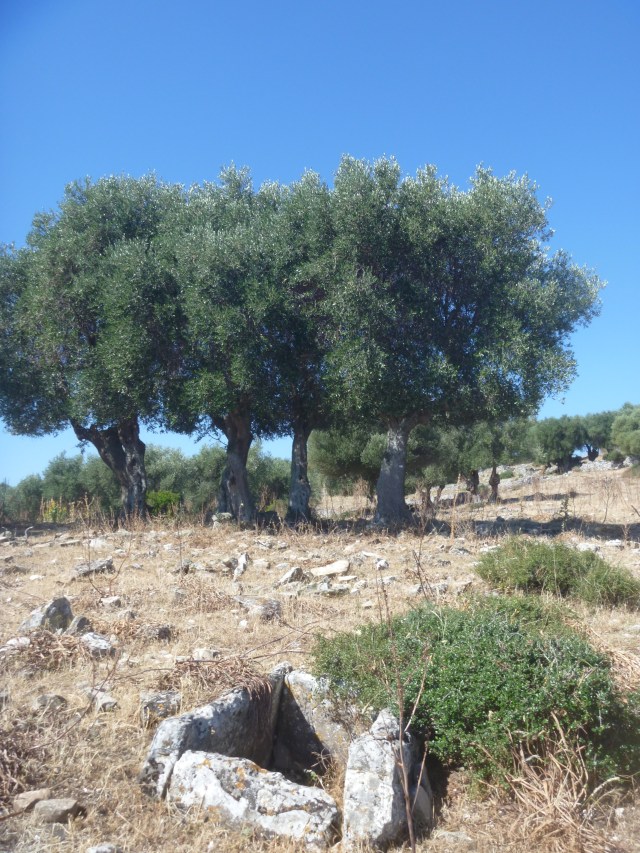
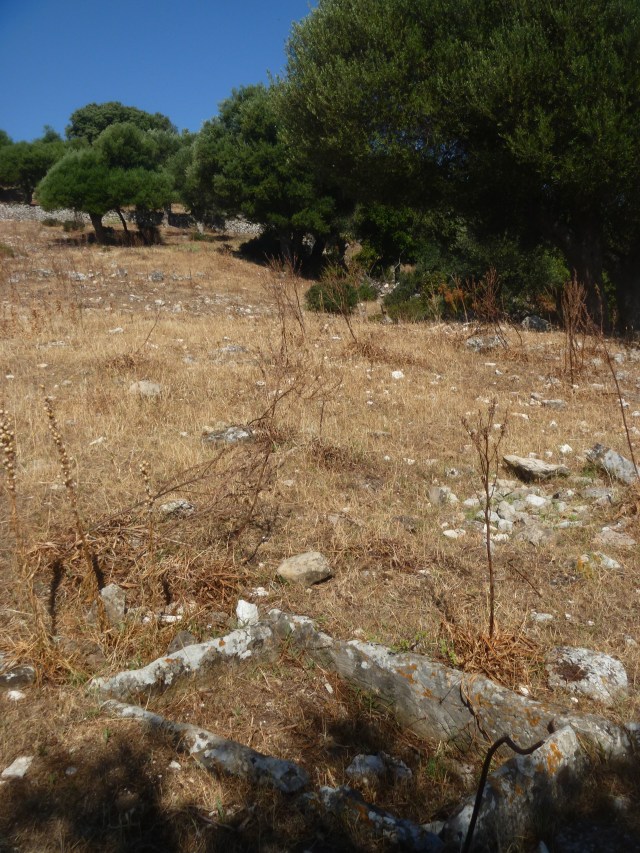
Tombs and Graves
After the detour the route is described thus :
“A gravel track descends gently through the valley with wonderful panoramic views across to Vieste (our final destination) passing farms along the way. Then a rolling ridge track with splendid views carries you down to sea level, and the walk is completed along the long beach or seafront of the town.”
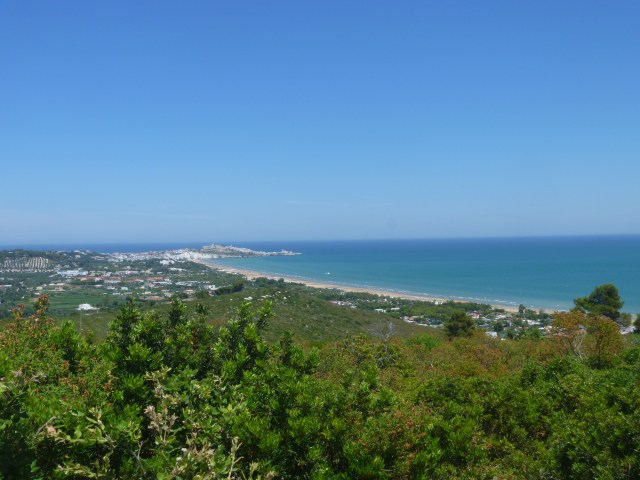
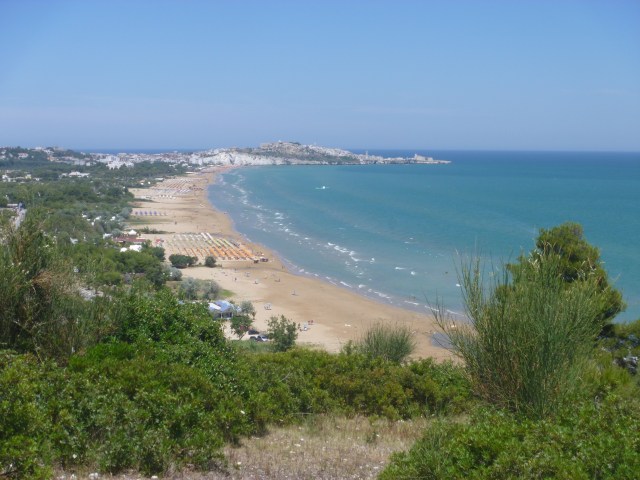
So, lots of ups and downs, super sea and town views and finally arriving at the seaside and straight into the first beach cafe for a pizza lunch. Then it was just a few more kilometres and a climb up into the town to the Palace Hotel very conveniently situated and handy for town, old town and harbour.
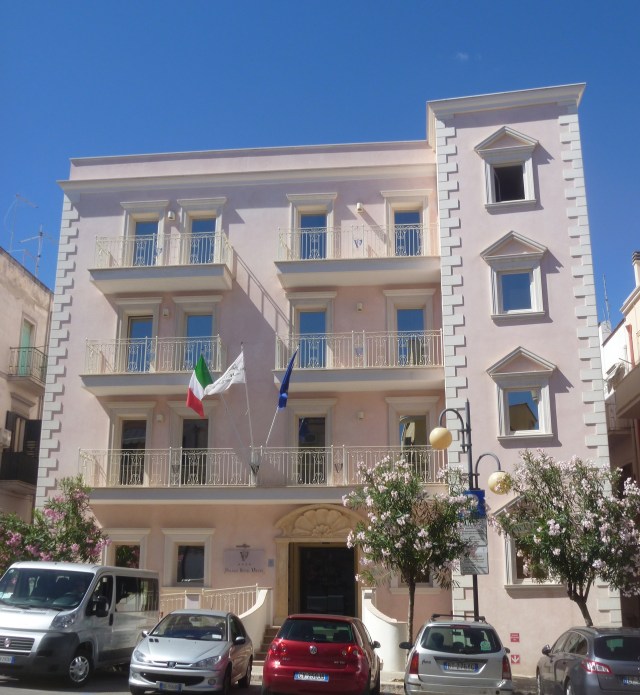
The Palace Hotel, Vieste
That evening we went with Matteo’s suggestion to eat at Taverna Al Cantinone in the Old Town. The Route Booklet says :
“Fresh and tasty local food. Traditional dishes from the Gargano revisited with a bit of fantasy. Good value for money.”
What it doesn’t tell you about is the lovely homely atmosphere and decor and the friendly, helpful and charming owners; a chef and his Spanish partner who serves at front of house. In fact, we ate there both evenings.
On the seven night ATG walking holidays there is always a free day so this meant we spent two nights at Vieste. On our free day we’d expected to take a boat trip to visit caves and spend a few hours with our reading at the Palace Hotel private beach. But the day dawned cloudy and windy with rain threatening so at breakfast a quick decision was made, the receptionist consulted for timetables and we took the local bus along the coast road to nearby Peschici. It’s another characterful old town with a castle (due to rain we visited the grisly Museum of Torture! – torture in itself!!), church of Sant’Ella (with Bauhaus style paintings of the Stations of the Cross), bell towers, town walls, narrow streets and plenty of craft and souvenir shops.
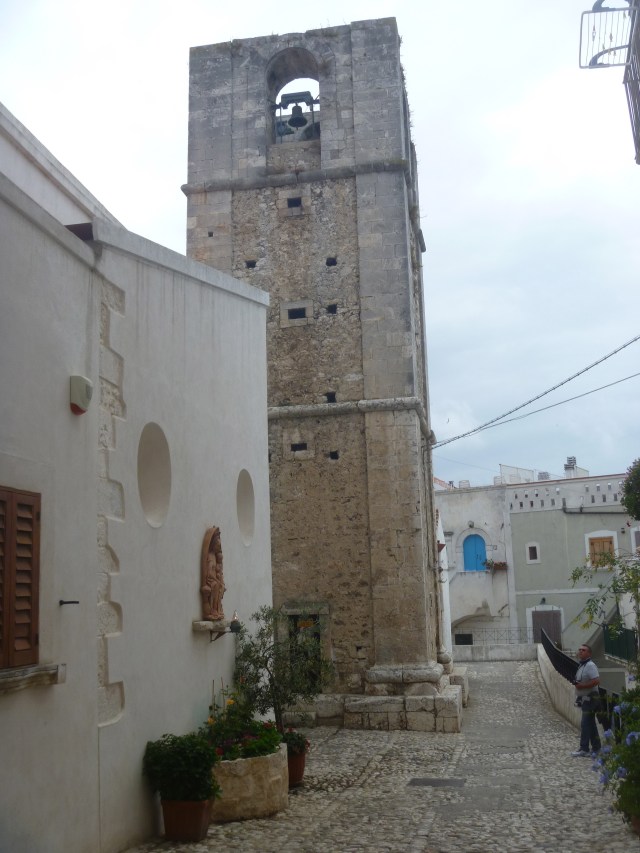
Bell Tower at Sant’Ella
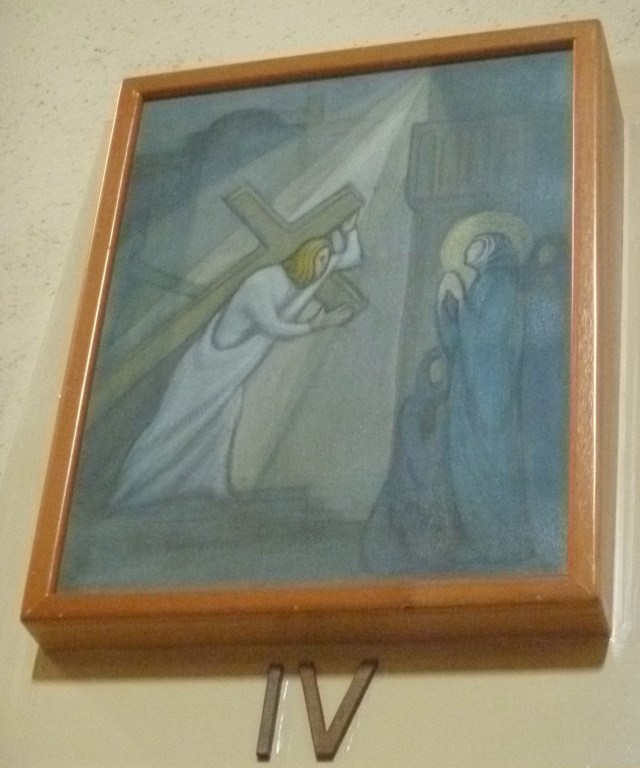
Stations of the Cross
Typical souvenirs are wooden Pinocchio-style puppets and these dolls :
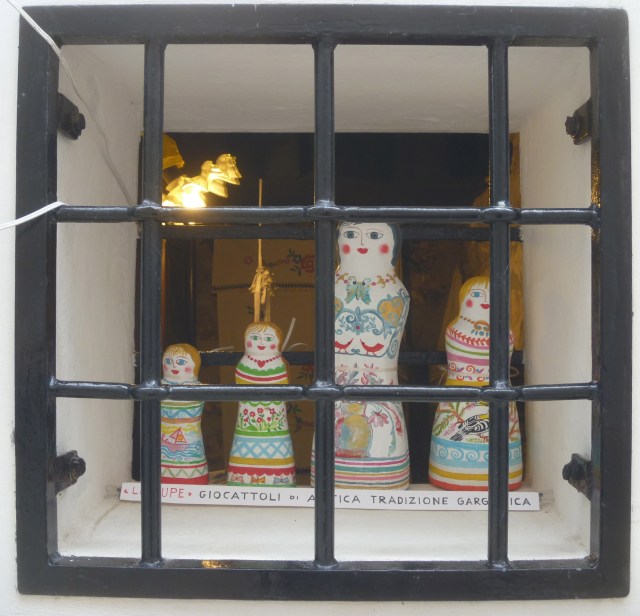
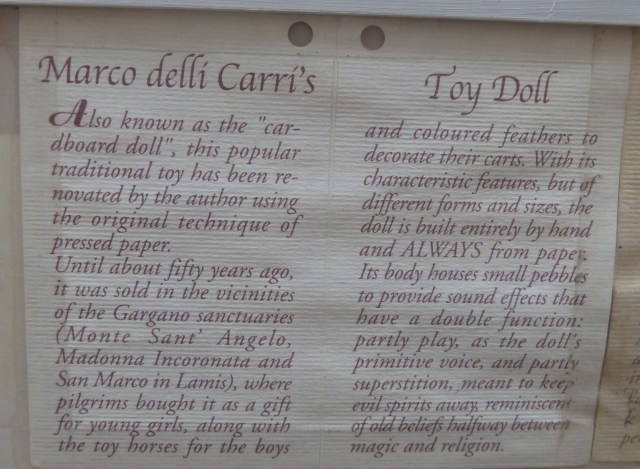
and models of trabucchi :
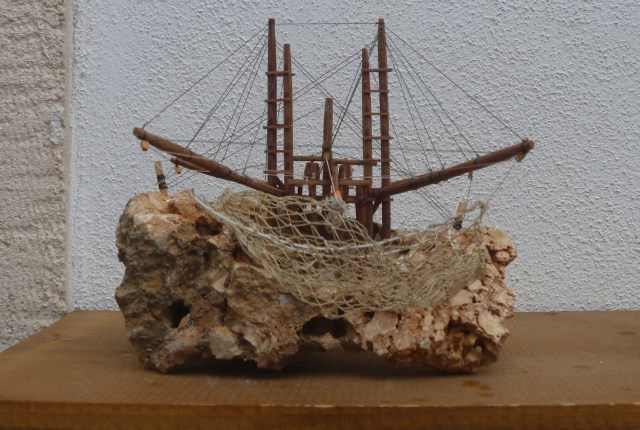
Trabucchi are wooden structures submerged in the sea. They are an ancient form of fishing technique consisting of large platforms anchored to the rocks and long wooden poles, ropes and pulleys. These days they are no longer used, except as a hobby, but they strongly symbolise the tradition and culture that was once fundamental to the economy of Vieste and the immediate region.
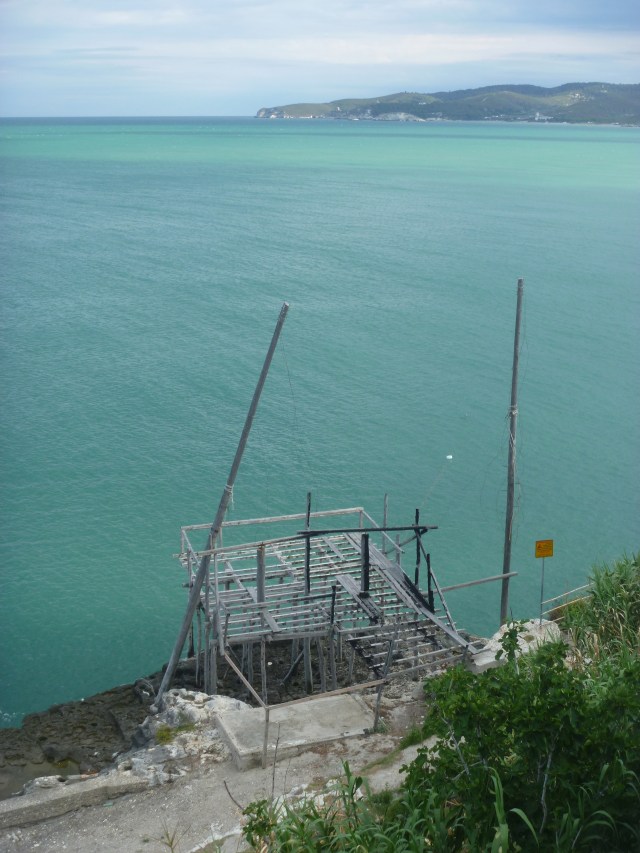
A trabuccho at Vieste
By early afternoon we were back in Vieste where the sun was beginning to come out so we walked round the old town looking for the trabuccho, the Pizzomunno stack and visiting the Cathedral.
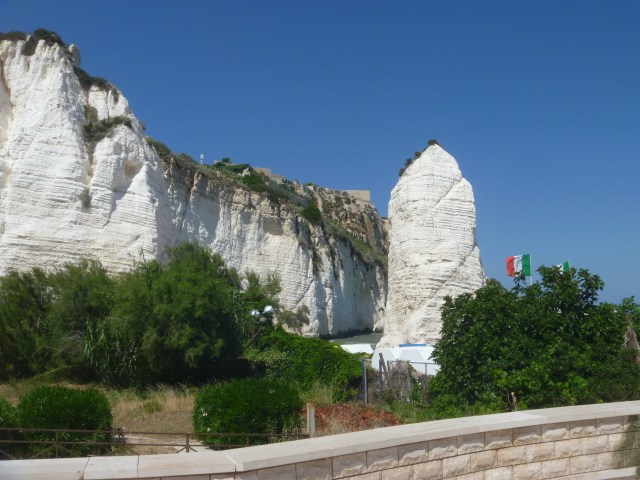
Il Faraglione ‘Pizzomunno’
This is a magnificent example of a calcareous monolith that stands 25m high next to the cliff side on the Castle Beach. It has become a symbol of Vieste. The rock’s name is taken from the legend associated with it. Read the story here.
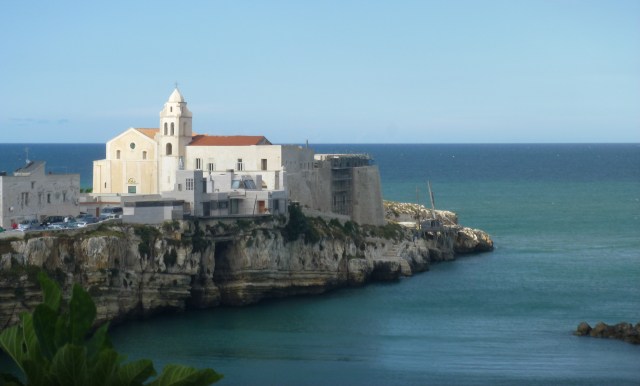
The Cathedral
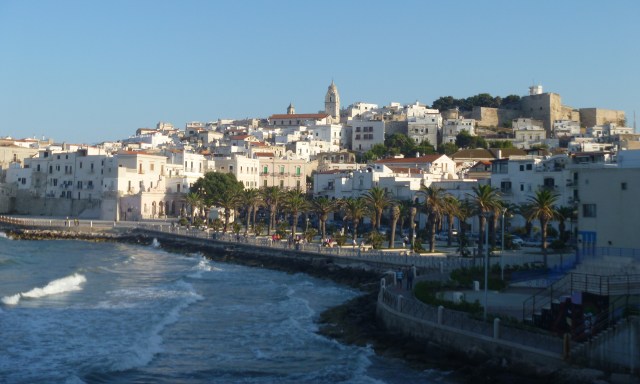
The Old Town of Vieste
And so, after a week of walking the paths of Gargano our trip was soon at an end. On the final evening we met again with Matteo to give our feedback and the next morning our taxi driver, Giancarlo, picked us up to whizz us along the autostrada to Bari Airport in his comfortable air conditioned Audi limousine, telling us proudly on the way how his grandfather began the family taxi business with a horse and cart.
What an adventure and what an achievement!
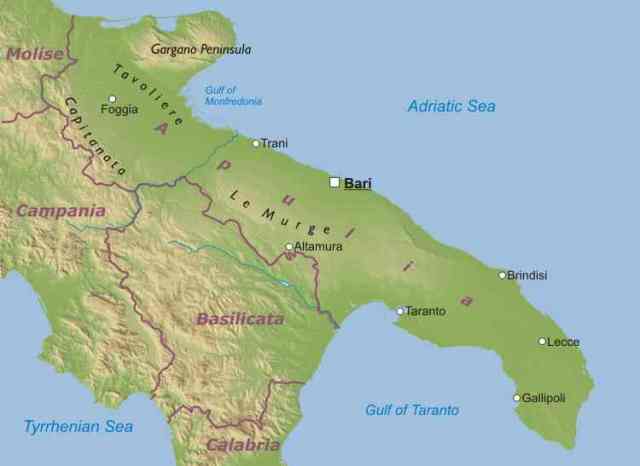
[source]
Whilst staying at Sant’Antonio in March I picked up a copy of H V Morton’s “The Traveller in Southern Italy”. It fell open at p.150 where the first sentence of part 8 of chapter 4 reads “The best way to see a country is on foot …”. By coincidence, or design, this sentence constitutes the strap line for ATG (Alternative Travel Group) of whose walking holidays I am a keen advocate. I also read Morton’s description of his visit to the “unexplored” Gargano Peninsula. My reason was, of course, that this June I was already booked on an ATG Footloose trip to explore the Gargano Peninsula. This part of Italy is still relatively unknown although some tour companies do visit and ATG have been sending walkers there for quite a number of years. We chose flights to Bari from Gatwick and ATG made our taxi arrangements for us. We had to go in June since we already had a family wedding on 13th and I had booked the month of May to be Ireland. So we had an inkling that this trip might be harder work, due to warmer weather, than previous walking holidays. In fact, I think I would say that, this one turned out to be the most strenuous of them all. However, as they say, “no pain, no gain”, we felt that we had made a great achievement as we walked along the designated route. 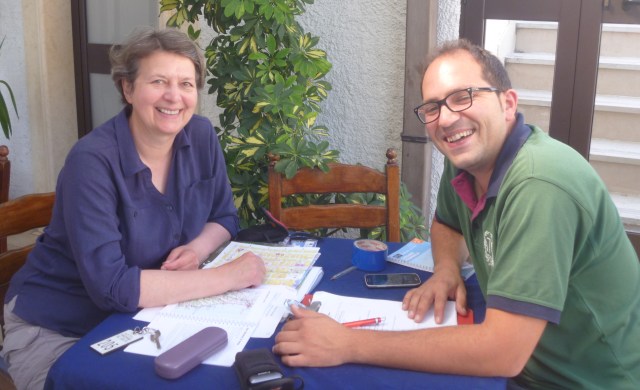
Initial Route Planning with Matteo
Yet again we had a great Route Manager to help us along the way, give advice, transport our bags and generally be a presence in the background in case of need. The Route Booklet explains the route step by step and we are now very familiar with the distances and what to expect. However, the ever-helpful Matteo explained that in certain places he had attached ‘environmentally-friendly’ blue tape not to show us the way but just to confirm that we were on the right track. It was always a relief to spot this tape! 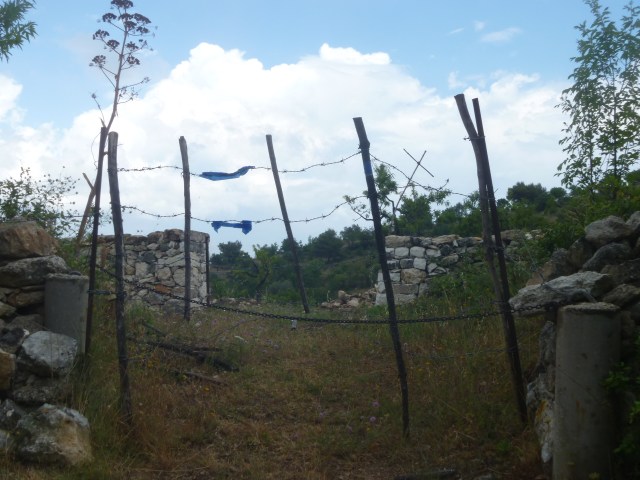
Spotting Matteo’s blue tape
In brief, we walked from Manfredonia to Vieste officially a distance of 41.1 miles but we are positive that we walked a lot further than that! (… and I have the Fitbit to prove it!). ATG sum up the walk thus : “Limestone hills rising to 2,700 feet with coastal paths, quiet lanes, farm and woodland tracks and pilgrim routes leading up to Monte Sant’ Angelo. Occasionally rough under foot.” 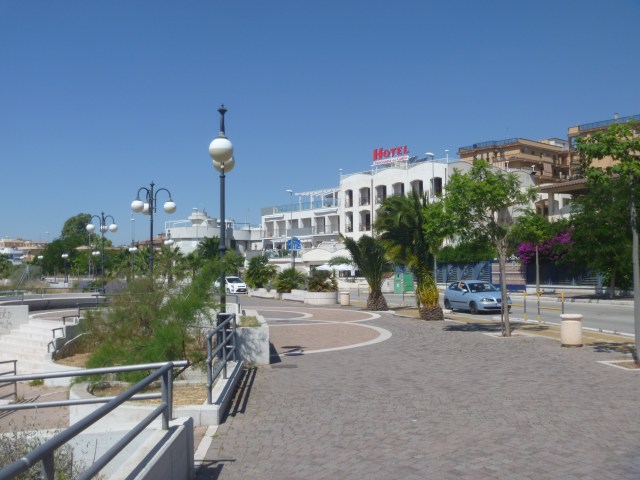
Leaving our first hotel
There was a long, but pleasant, walk from the first hotel along the promenade into the town centre of Manfredonia. Here we lingered a while viewing the Cathedral, the Castle and Town Hall Courtyard and Museum. 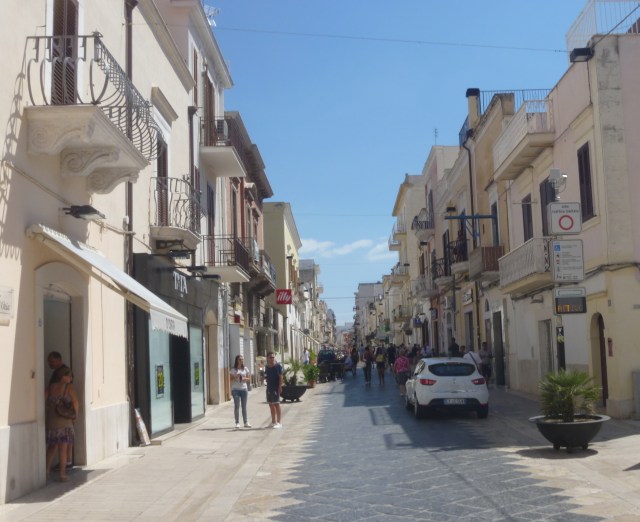
‘The Corso Manfredi’, Manfredonia
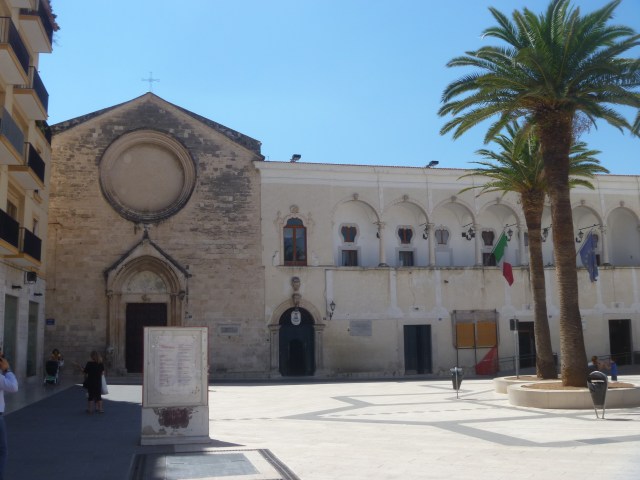
Town Hall
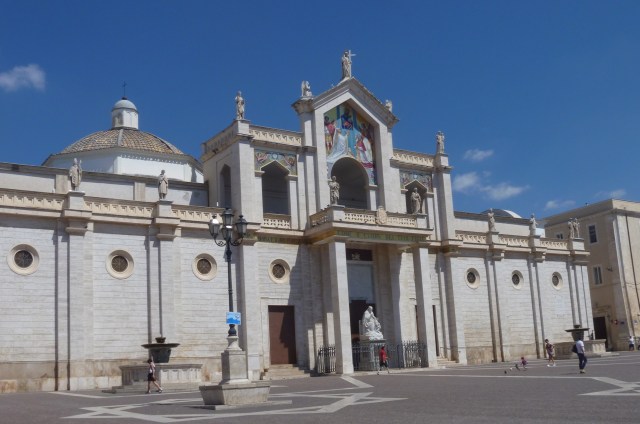
Cathedral
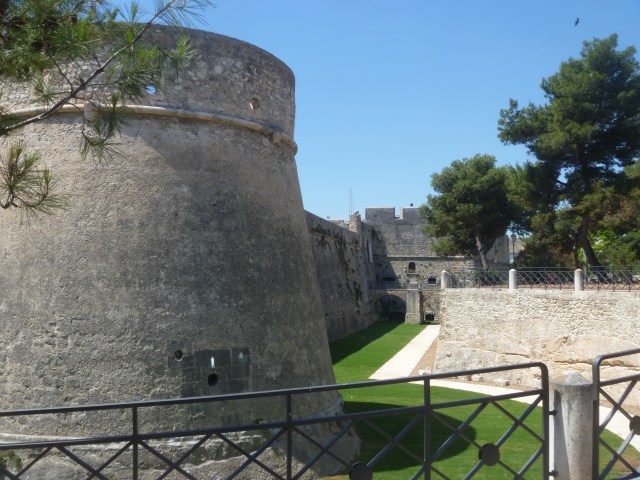
Castle
There followed an even longer walk out of the town and through olive groves across the coastal plain before we even started on the “Jazzo Ognissanti” the historical and natural path.
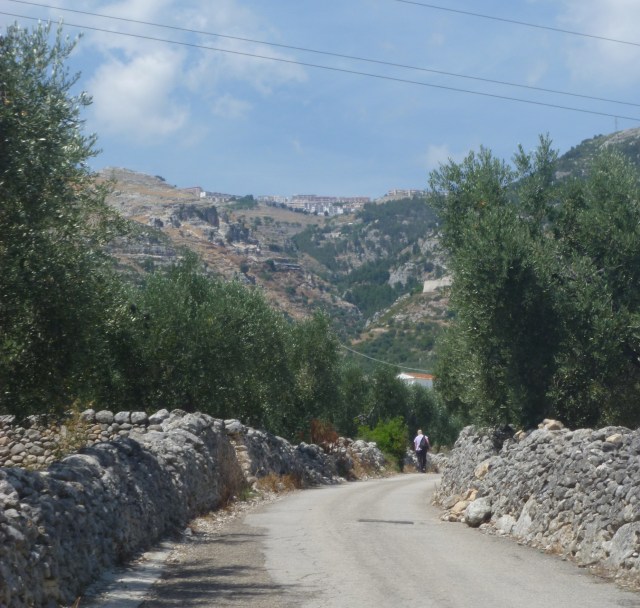
We Climbed Right Up There!
“Walk along the coast then across a small plain before ascending an ancient pilgrim route, once used by crusaders before they embarked for the Holy Land. The route, now a grassy ravine with ruined monasteries on either side, leads to the ancient town of Monte Sant’Angelo (2,755ft), with its whitewashed houses, steep narrow alleys and stairways, and views across the bay of Manfredonia and coast to the south.” 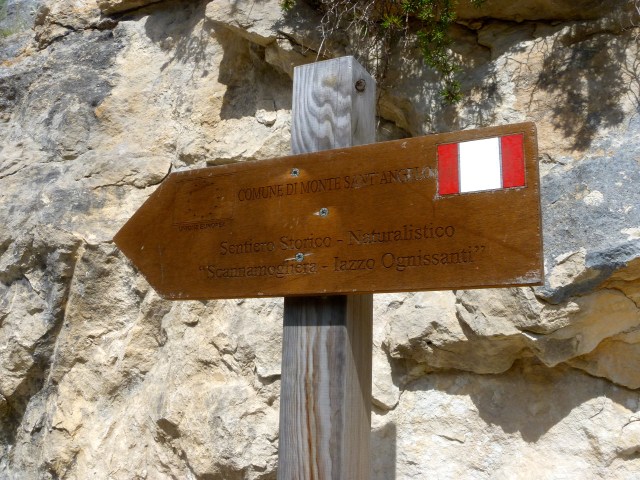
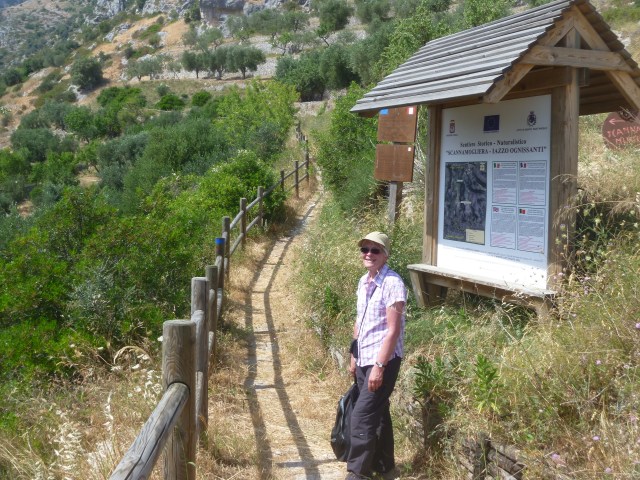
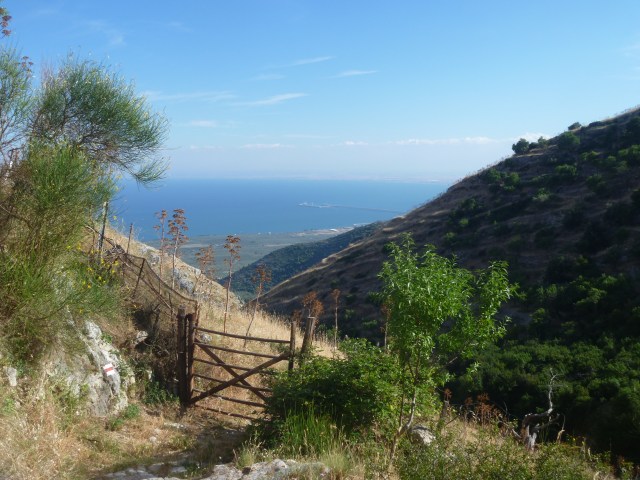 The Pilgrim Route to Monte Sant’Angelo was memorably tough but very special and we enjoyed exploring the town the next day visiting the Sanctuary of St Michael the Archangel, churches and the Old Town (the JUNNO Medieval District) before heading off on the next stage (and getting soaking wet twice in the process) to our next stop, Mattinata.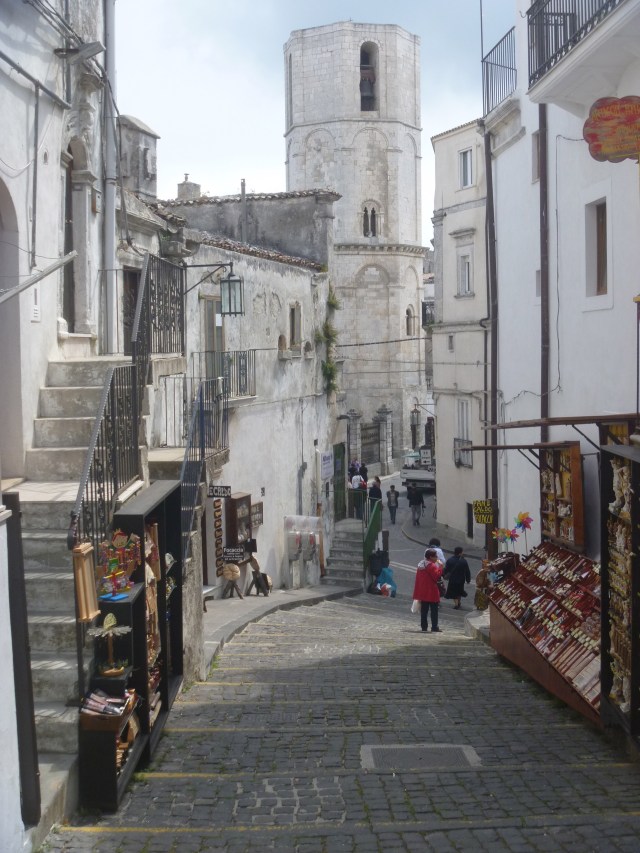
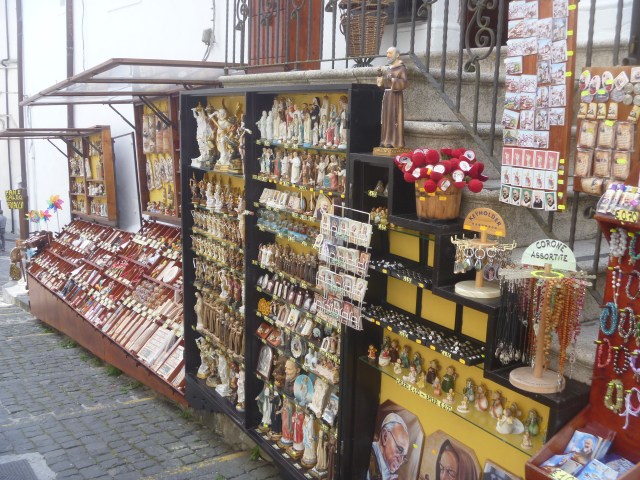
Shops selling religious mementoes abound in Monte Sant’Angelo
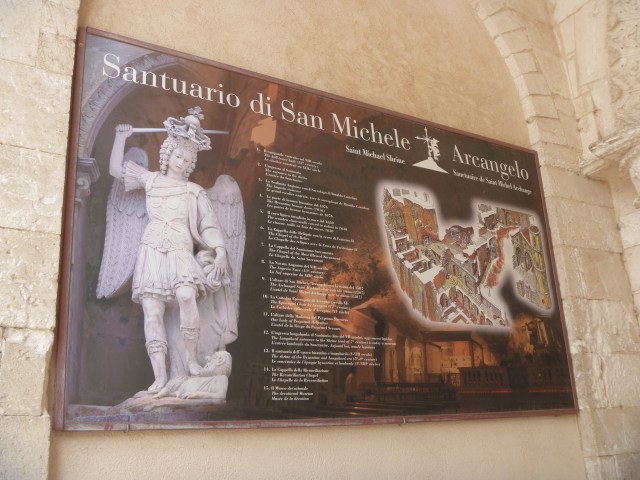
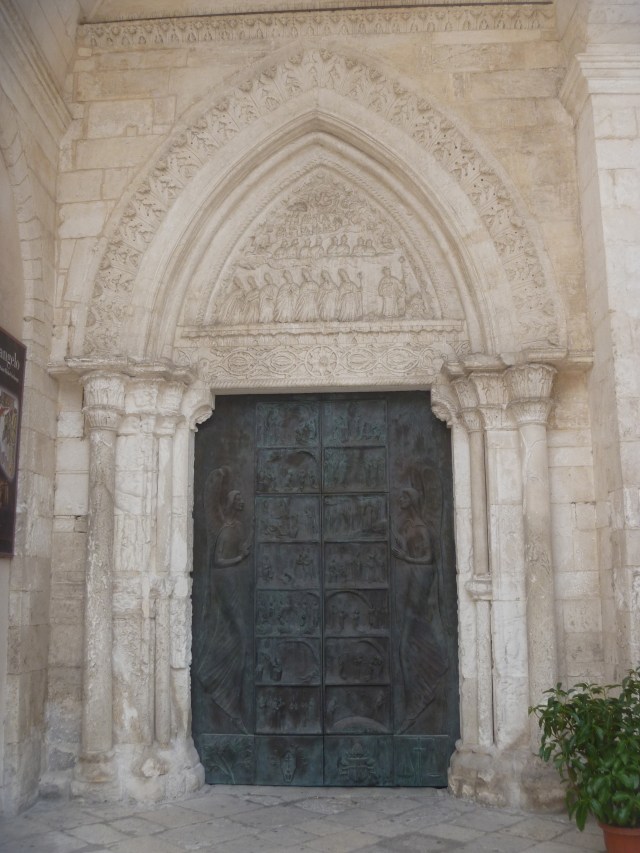
The Santuario Door
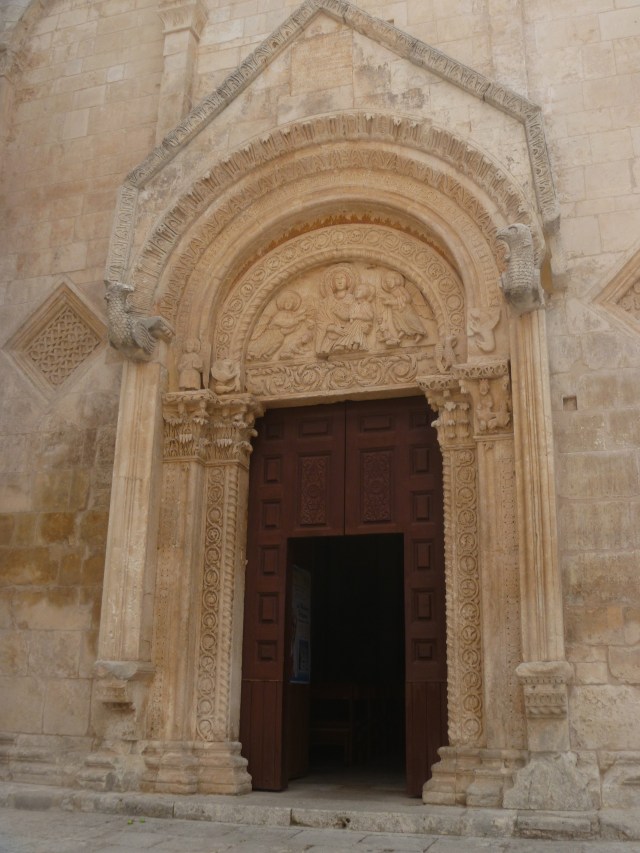
Door to the Church of Santa Maria Maggiore
“Time to explore the town and visit the famous cave church, venerated as being the last place St Michael appeared on earth in 491 AD, before setting off down a well-made pilgrim path to the small town of Mattinata (650ft) set in olive groves, close to the coast.” “You descend from 800m to sea level on rocky paths, stony mountainsides and through woods, with wide views of Mattinata and the coast, following the remains of an old mule track called ‘Strada Comunale Mattinata – Monte Sant’Angelo’, which was once the only way up!” 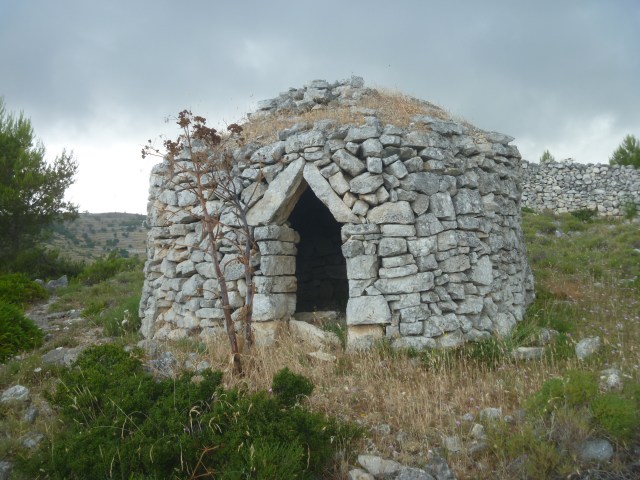 On this section we came across pagliaio: shelters that were once used by shepherds to keep grain and straw for their herds and to sleep in if necessary. We had lunch in the shelter of one as it poured with rain. Later in another, even worse, downpour we sheltered under some trees but these made little or no difference.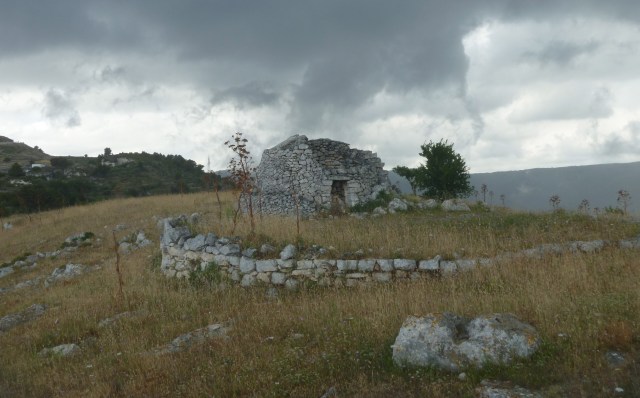
A Pagliaio with storm clouds brewing
Mattinata looked like a nice town but we didn’t stop to find out as the shops were closed in the early Saturday afternoon and we needed badly to dry out our boots and clothes. The local museums had strange opening hours. The Museo Civico 5-10pm Tuesdays and Saturdays and a Museum in the local pharmacy was also open on that Saturday evening. In the end we just couldn’t face getting wet again.
Sunday dawned bright and clear and the walk on that lovely day was virtually over by lunchtime when we arrived at the beach. We ate a leisurely lunch then hiked the final couple of kilometres to our hotel. 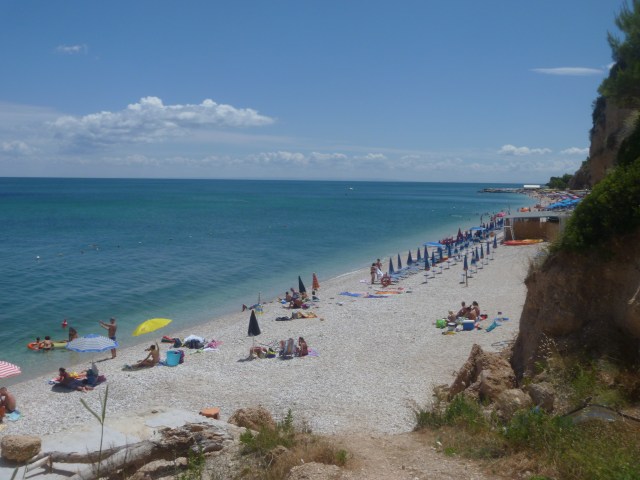
We looked rather out of place in our hiking gear!
“The route undulates across two valleys following surfaced road, grassy and stony paths and along a high ridgeline path with wide views east and west to the sea, before descending and across a wide plain. The route brings you close to the shore and along it before a brief section on road to the hotel.” 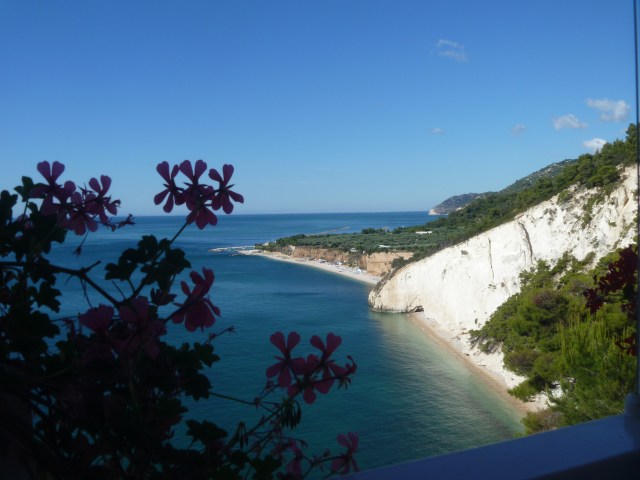
The Beach from our dinner table
Except for Monte Sant’Angelo and Vieste our hotel arrangements were on a half board basis. This is ATG policy when a hotel is not near a choice of good restaurants. The Hotel Villa Scapone is set on a cliff: walk down to the pool and up to the restaurant from our individual room with separate entrance and private terrace. It was a wonderful place to spend a relaxing Sunday evening halfway through our journey. 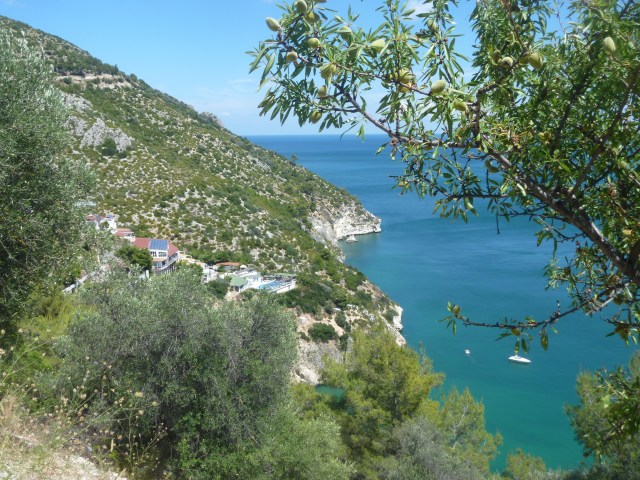
The Hotel Villa Scapone, Baia Fontana delle Rose
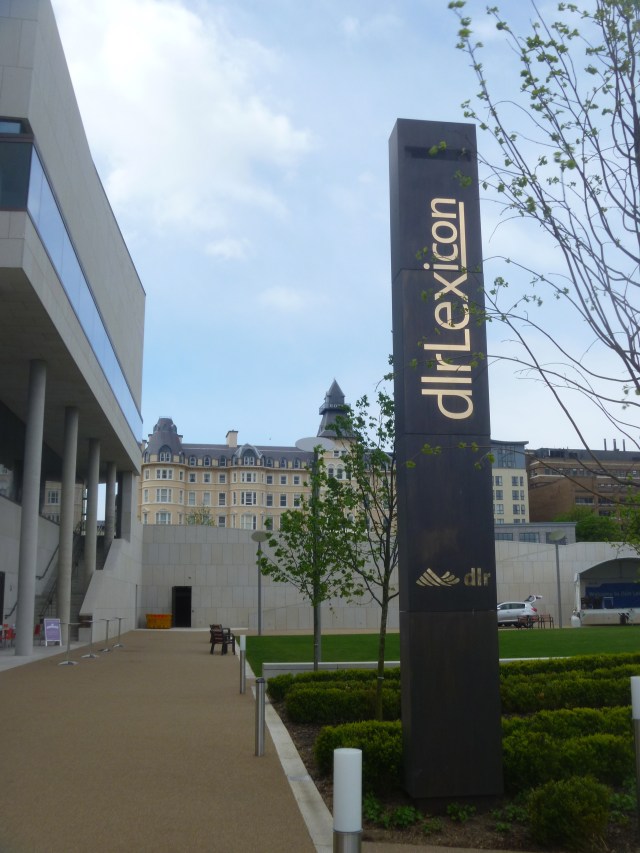
dlrLexicon
There’s a regular two-page spread in the Independent Traveller section of Saturday’s Independent called “Travel Agenda : Where to Go, What to Know” that gives a few pithy lines about what’s going on in the world of travel.
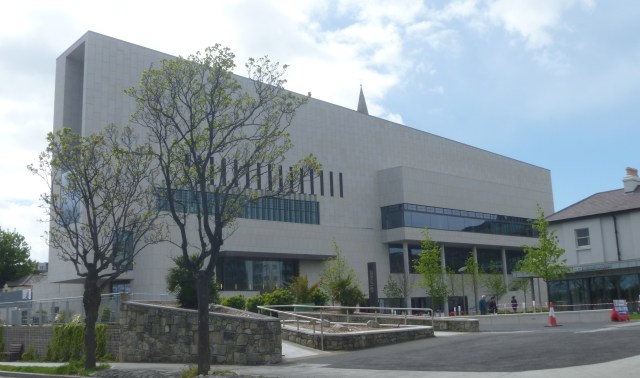
Approaching dlrLexicon
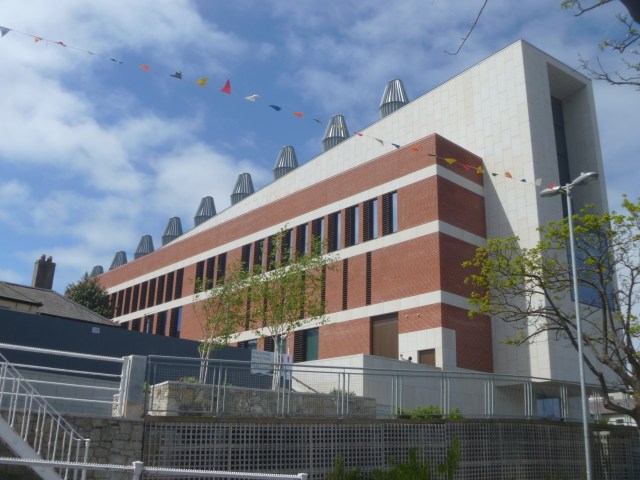
The ‘back’ of dlrLexicon
A few months ago I spotted a brief mention of the dlrLexicon, the newly opened Dun Laoghaire public library. The library was said to greet drivers as they disembarked from the Holyhead ferry. In fact there is no longer a ferry terminal at Dun Laoghaire but I knew exactly the location of the Library as many times in the past I’ve arrived at Dun Laoghaire from North Wales.
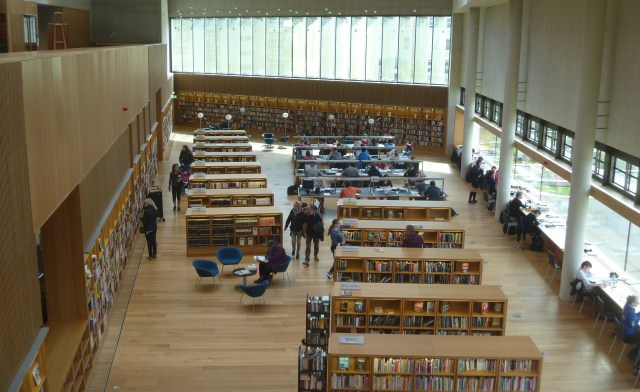
Light and airy for studying and browsing
DLR stands for Dun Laoghaire and Rathdown. On my visit we started the day with coffee and delicious cake in Brambles Cafe on the ground floor. Later in the day we explored the other floors, looking at the views and the stock.
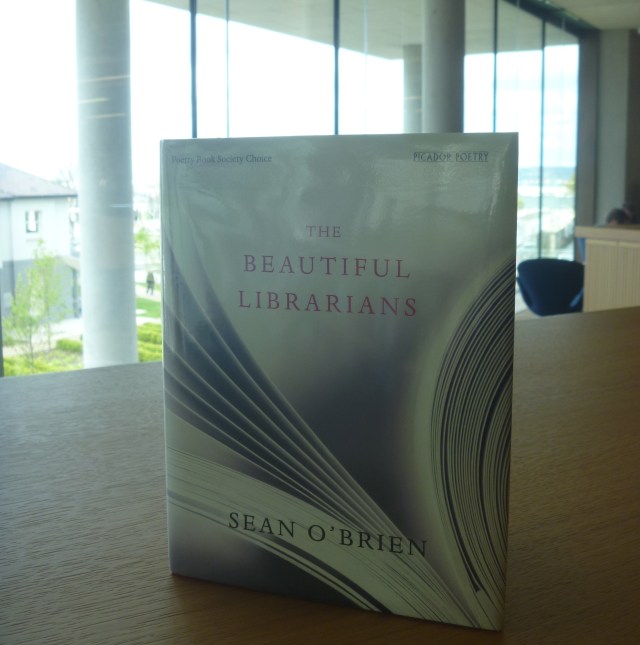
The Beautiful Librarians – dlrLexicon book stock
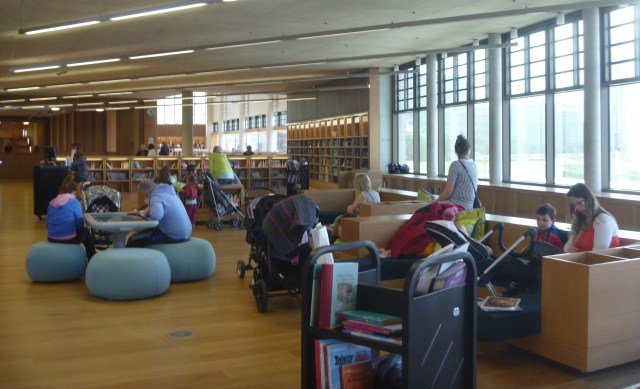
Popular with all ages
The massive building is shaped like a liner, which is rather apt since a partnership has been struck between dlrLexicon and Dun Laoghaire Harbour Company in order to promote the town as a leading cruise destination. Indeed, on the day of our visit an Irish cultural variety show – music, song and dance – was laid on in the garden area. Not for cruise passengers only; free access is also offered to the public.
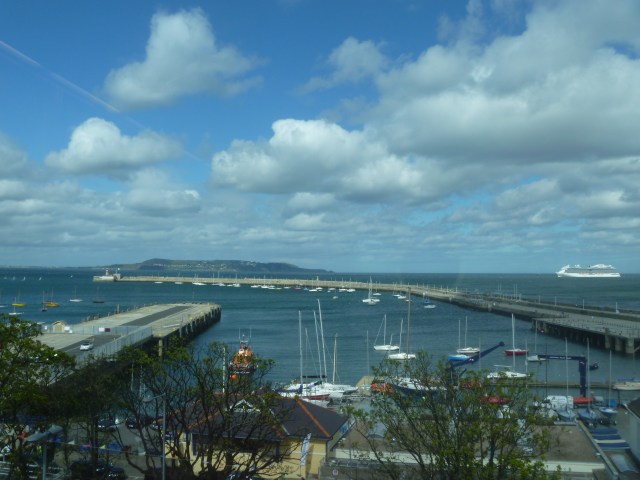
Dun Laoghaire Marina, East Pier and Cruise Liner
The Bolton Library, Cashel
On my first visit to Cashel as I travelled from Co. Waterford up to Co. Kildare I stopped off in Cashel. As I was leaving The Rock of Cashel I noticed this poster :
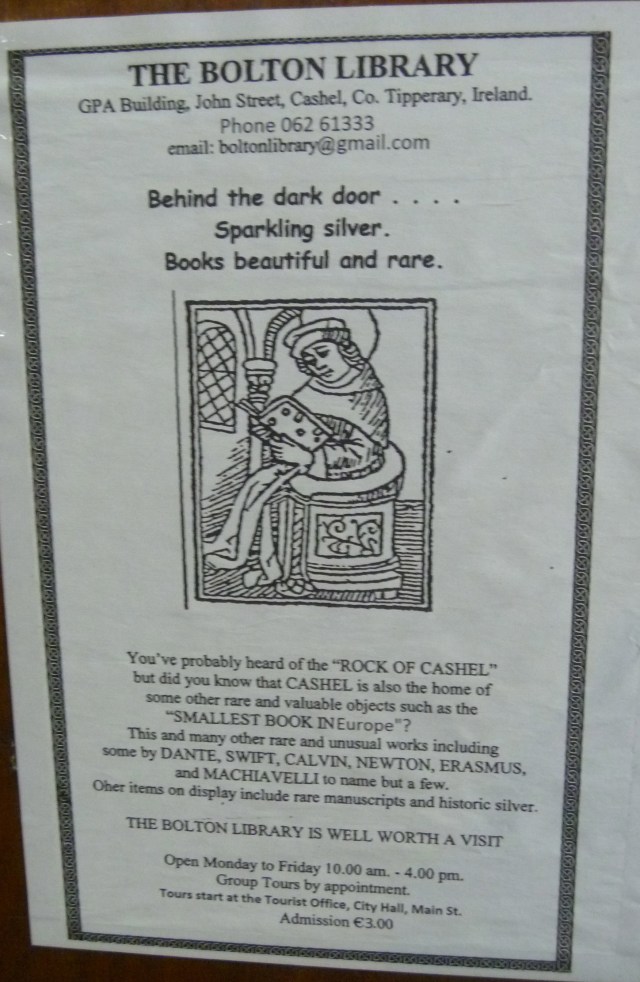
Well, how could I resist when a couple of days later I found myself heading back down to Co. Cork? What an amazing treasure trove! I could hardly believe this place existed. Upstairs is even fitted out as an exact replica in miniature of Trinity College Library in Dublin where the famous Book of Kells is now housed. Bolton Library Upper Floor [Picture source]
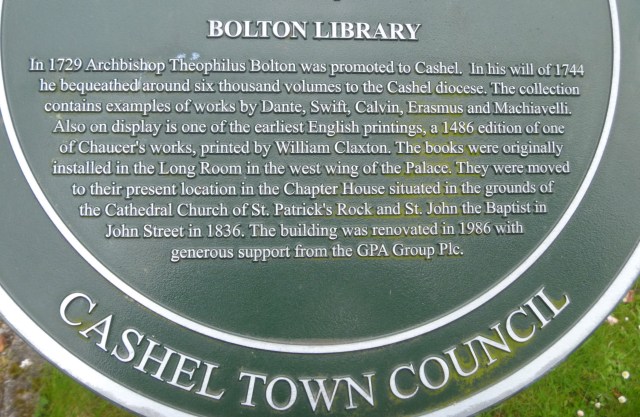
I think they mean William Caxton!
I parked up in Cashel and headed for the Tourist Office where a very helpful young lady rang Martin, the curator, who said he would be happy to show me around the library so drove straight to the St John’s Cathedral and was met by the enthusiastic Martin.
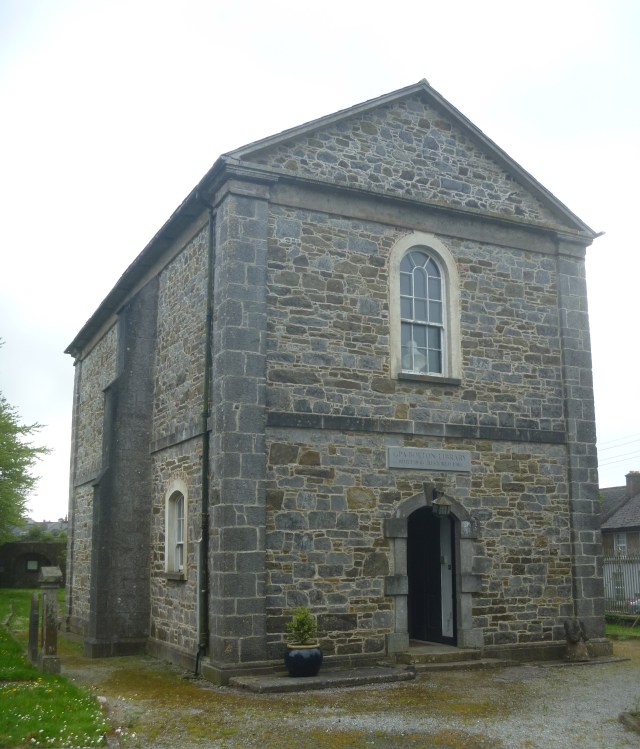
The Bijou Bolton Library
You can read more about the treasures Bolton Library Document but I was amazed to see the world’s tiniest book – The Lord’s Prayer in German; an early Caxton printing of Chaucer; the earliest use of the word Zero; the 1493 Nuremburg Chronicle and many more treasures besides.
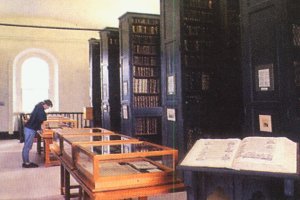
The Upper Floor [source]
NOTE : The Bolton Library is now in the care of The University of Limerick
http://www.ul.ie/ullinks/features-opinions/bolton-library
4 March 2017
 miladysboudoir