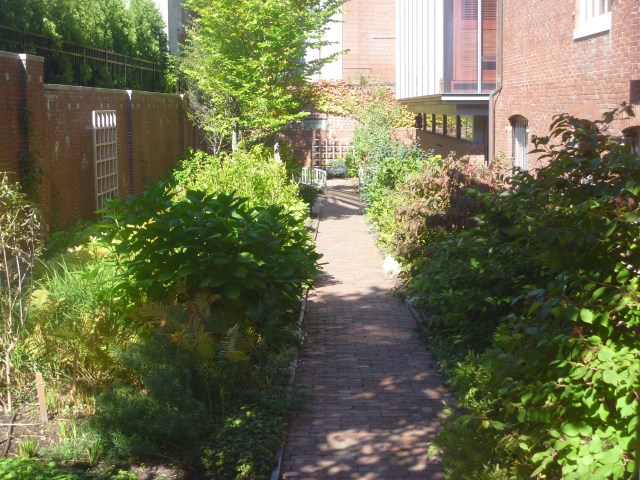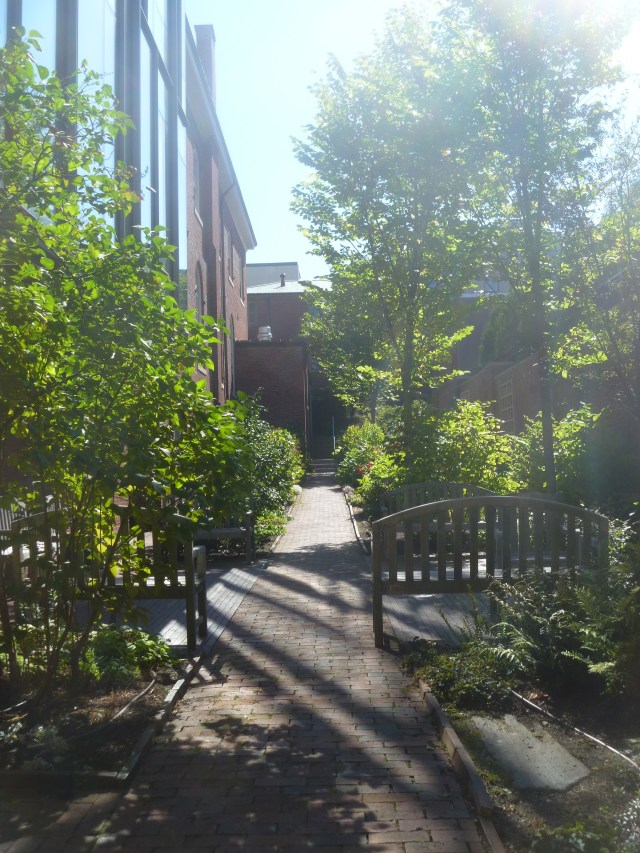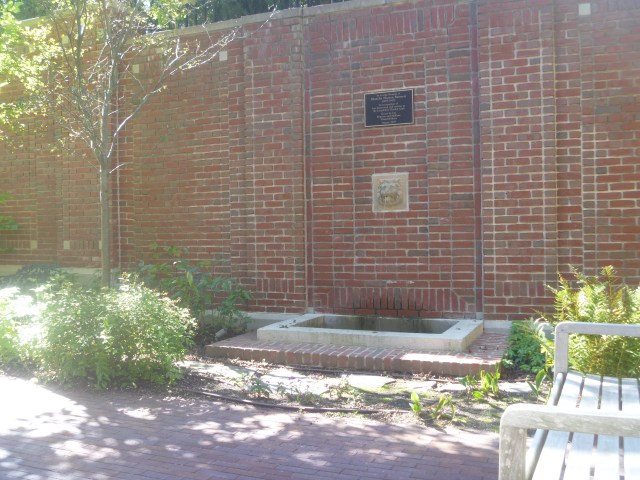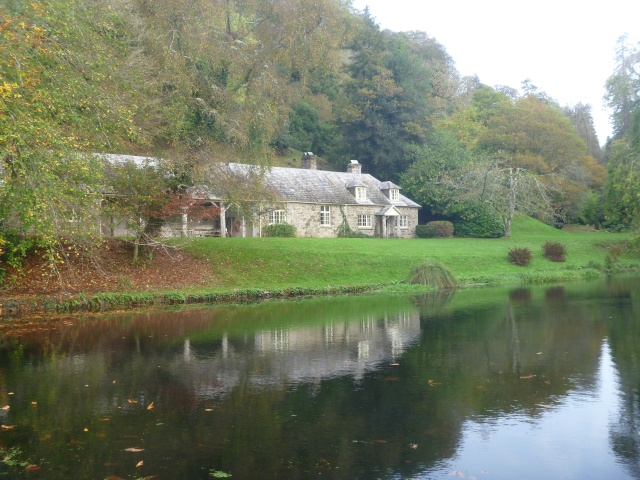
‘Embosomed in all the sublimity of umbrageous majesty’ : The Dairy Dell and Pond Cottage

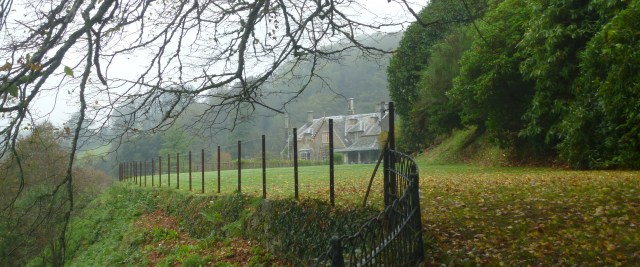
Better view of PC

Thus wrote Humphry Repton in his “The landscape gardening and landscape architecture of the late Humphry Repton, esq. : being his entire works on these subjects”; edited by J. C. Loudon. [London : Printed for the editor, and sold by Longman, 1840.] I think he meant that it was nestled in the shade of majestic trees and landscape. Or something like that.

I wasn’t staying at the Endsleigh Hotel. Oh no, I had the good fortune to be invited to join my Landmarking friends at Pond Cottage one of two Landmark Trust properties in the grounds of Endsleigh House.
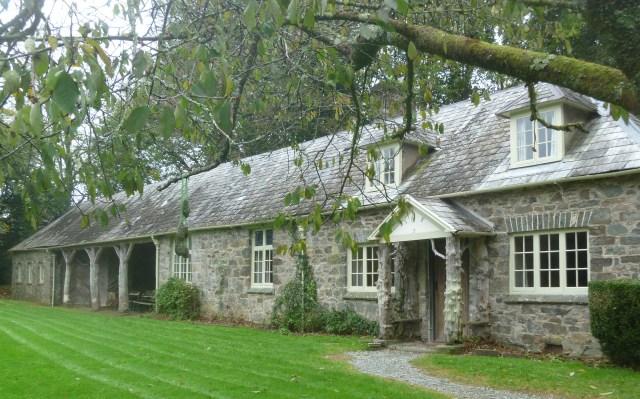
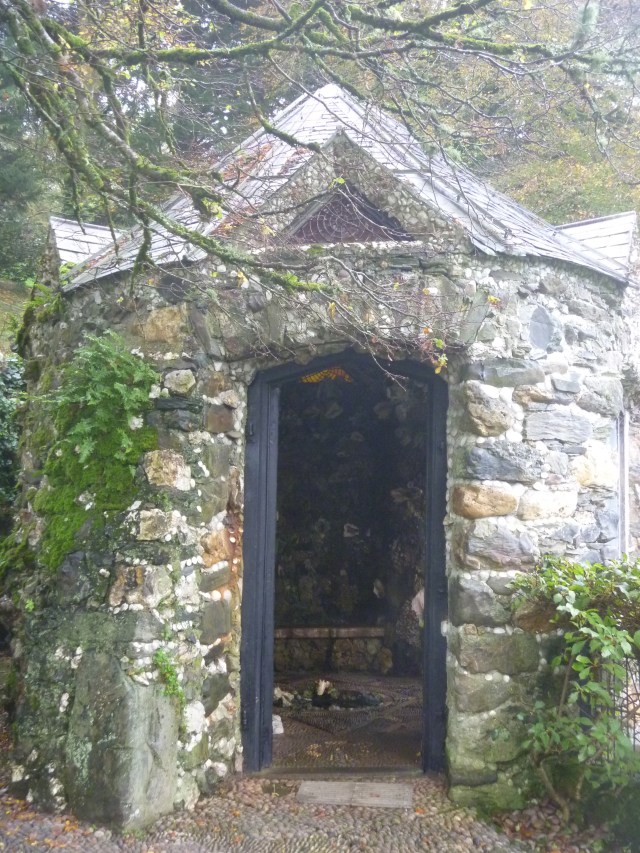
Pond Cottage exterior

A purposely Rustic cottage designed by Jeffrey Wyatville beside a pond, Pond Cottage is set within the ornamental gardens of Endsleigh with its streams and cascades.  Endsleigh is still a complete example of that most imaginative and English taste, the Picturesque.  Pond Cottage has a Rustic porch, with tree-trunk columns and cosy rooms.” [Source]
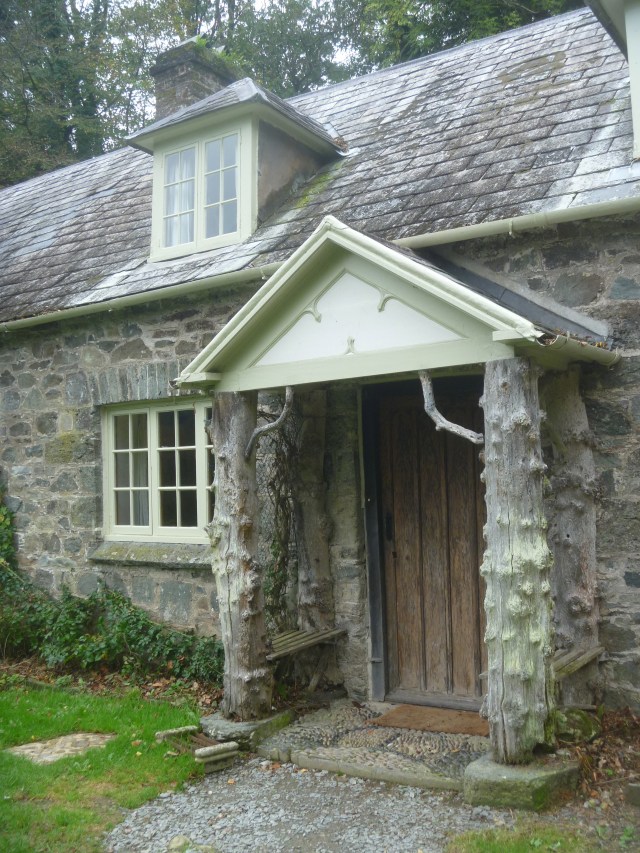
Welcome to Pond Cottage

Rustic Porch

Fireplace at PC

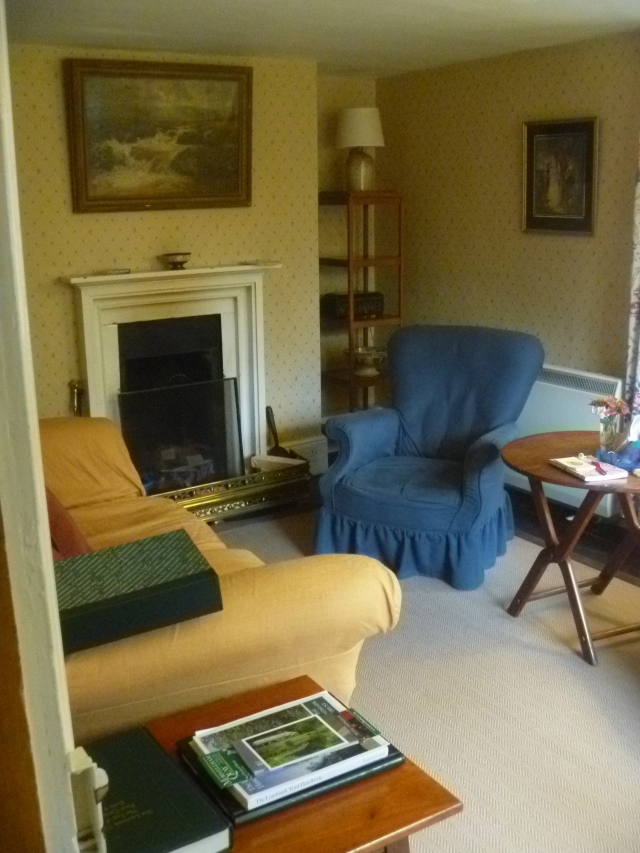
Cosy Sitting Room

Pond Cottage and its surroundings had, and still has, all the quintessential ingredients of the 18th and early 19th century Picturesque landscape. Here at Dairy Dell are the favoured ingredients of such a landscape – water, both moving and still; splendid trees; antiquity, represented by the well and its inscription; rural industry, the Dairy itself.
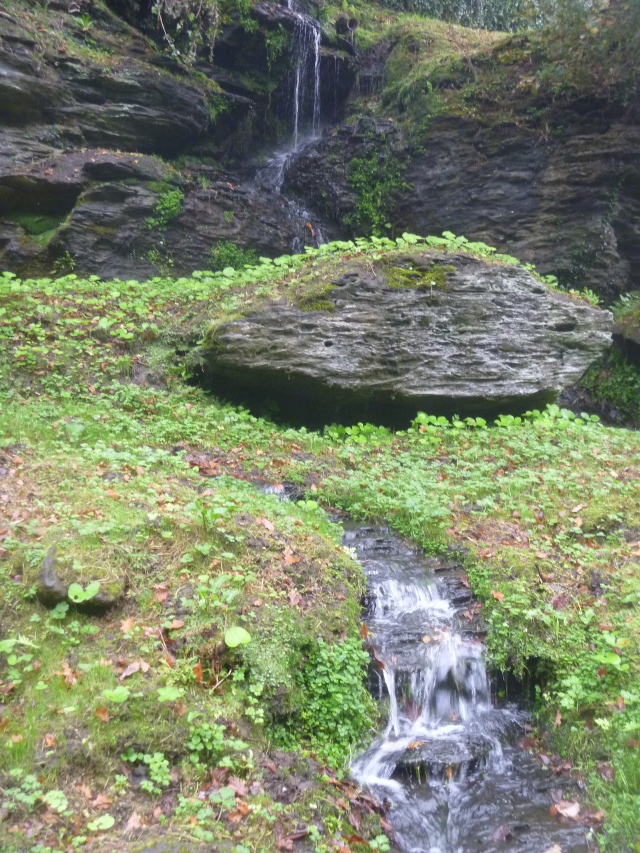
Moving water

Moving Water

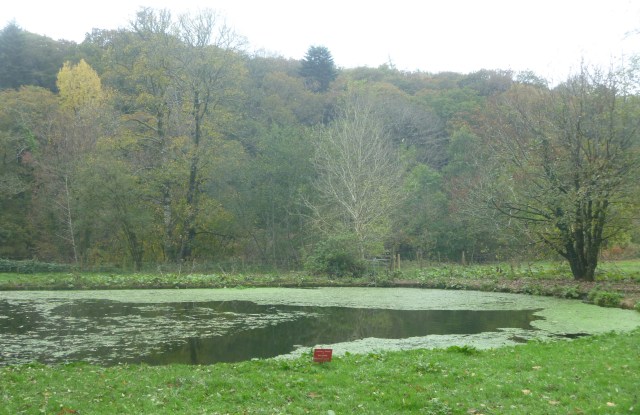
PC Pond

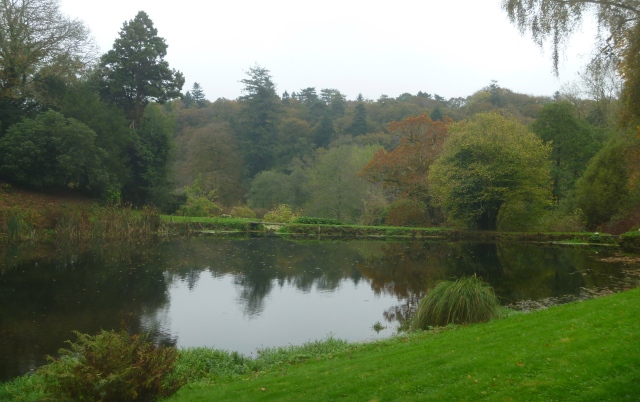
Still Water : The Pond

The well

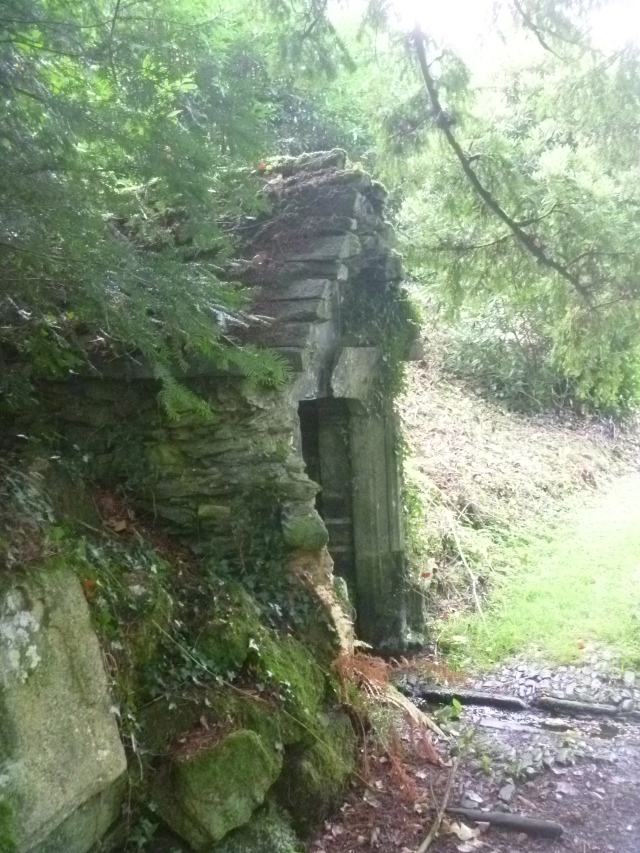
The Ancient Well with inscription stone on the left
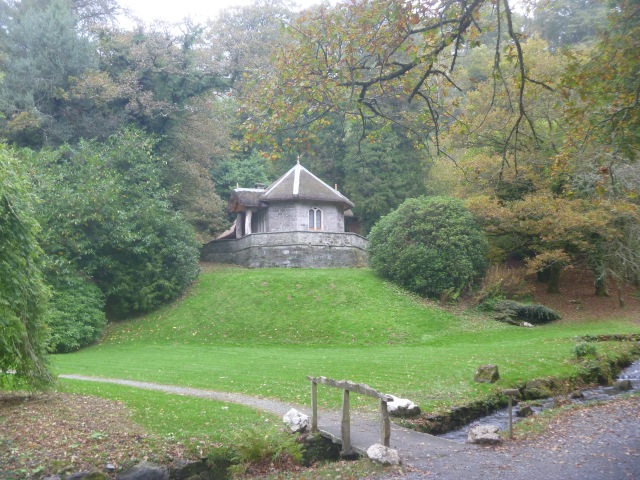
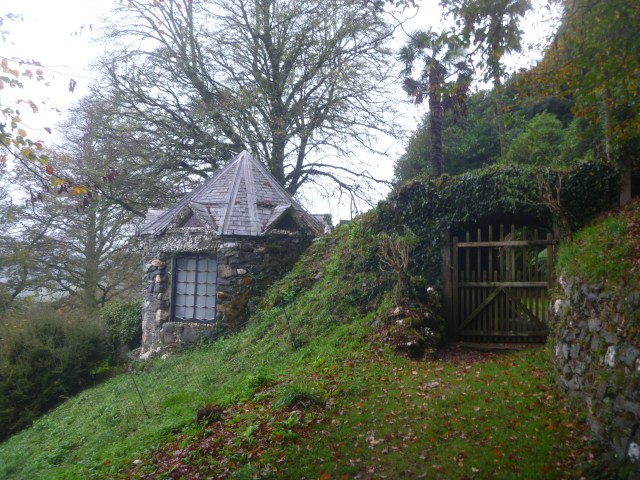
The Dairy

The Dairy

Facilities & features : there is a sunny loggia for outside dining and you can fly-fish in the pond. The tiny model Dairy stands nearby, from whose verandah you can enjoy spectacular views.” [Source] I enjoyed reading the cottage fishing diary where fishermen young and old made comments on their success, or lack of it, when fishing the Pond.
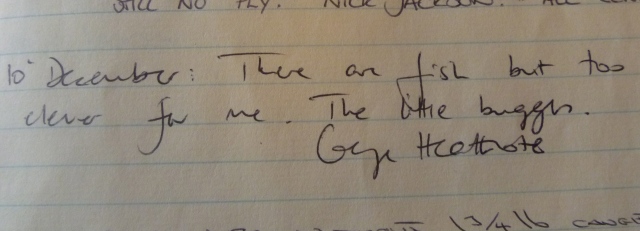
Fishing Diary

Pond Cottage has a Rustic porch, with tree-trunk columns and honeysuckle, and cosy rooms. The Dairy, which had to be rescued from the undergrowth, is perched on a knoll above, a cool chamber of marble (a local variety) and ivy-leaf tiles. From its verandah, ‘embosomed’, as Repton put it, ‘in all the sublimity of umbrageous majesty’, you may open yourself to those keen responses to the surrounding scene that were so carefully planned by its creators – while contemplating the making of a very superior butter.” Source
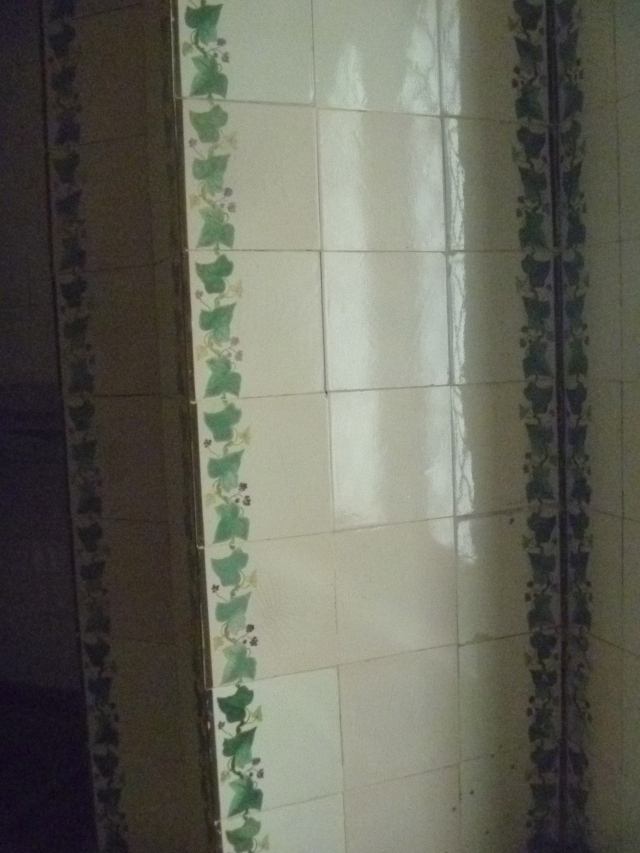
Ivy tiles

Inside The Dairy : The Ivy Tiles

Ivy close up

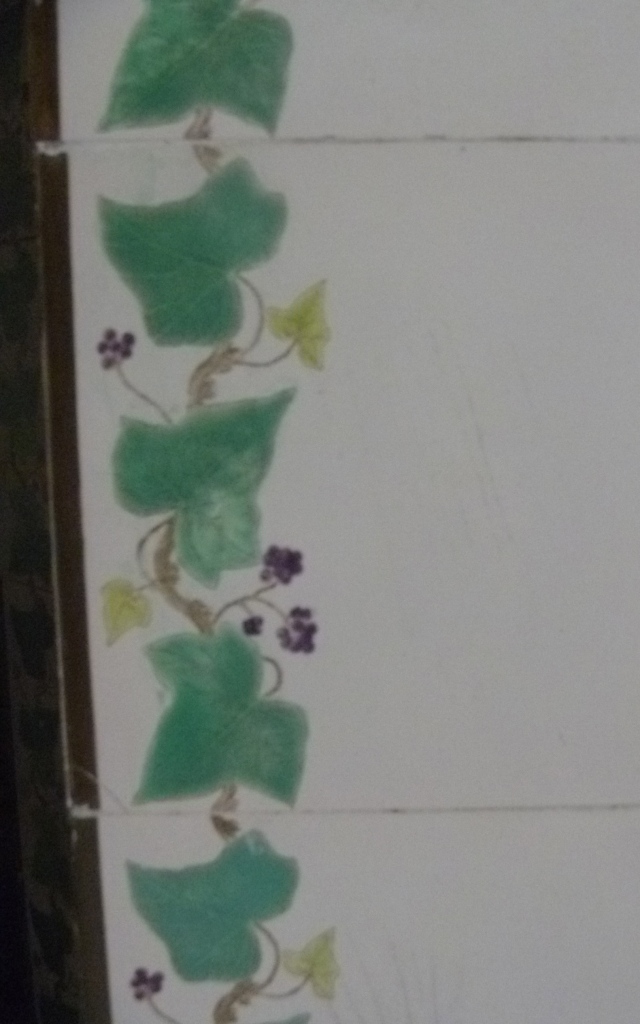
Close-up of the tiles. During restoration Kate Evans a potter from Shropshire who specialises in reproducing old glazes made copies to replace irreparable broken tiles.
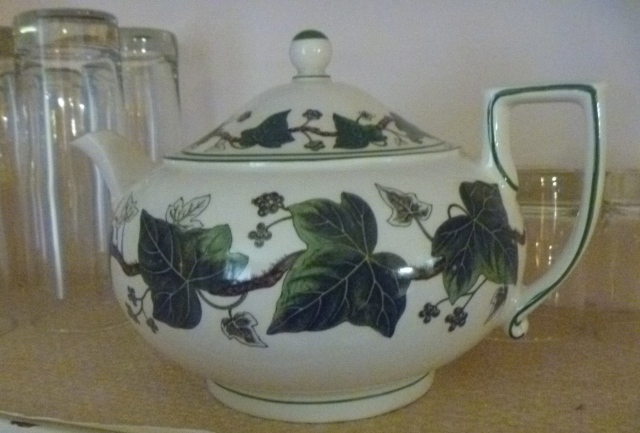
Pond Teapot

The Ivy Pattern Repeated in the Pond Cottage Crockery (Wedgwood Napoleon Ivy Design as used by Napoleon at St Helena 1815)
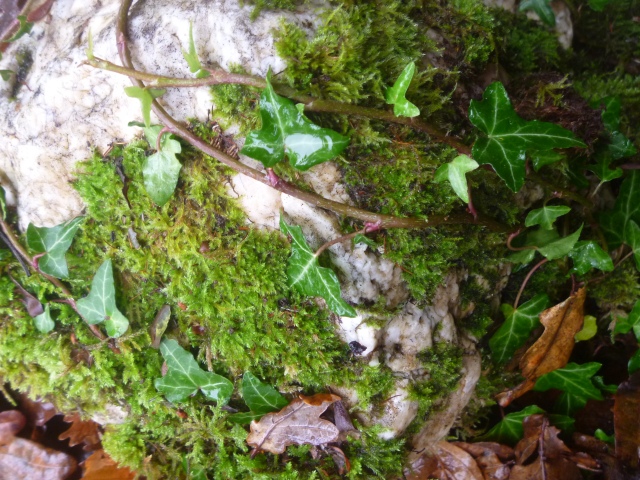
Real Endsleigh Ivy

Real Live Endsleigh Ivy
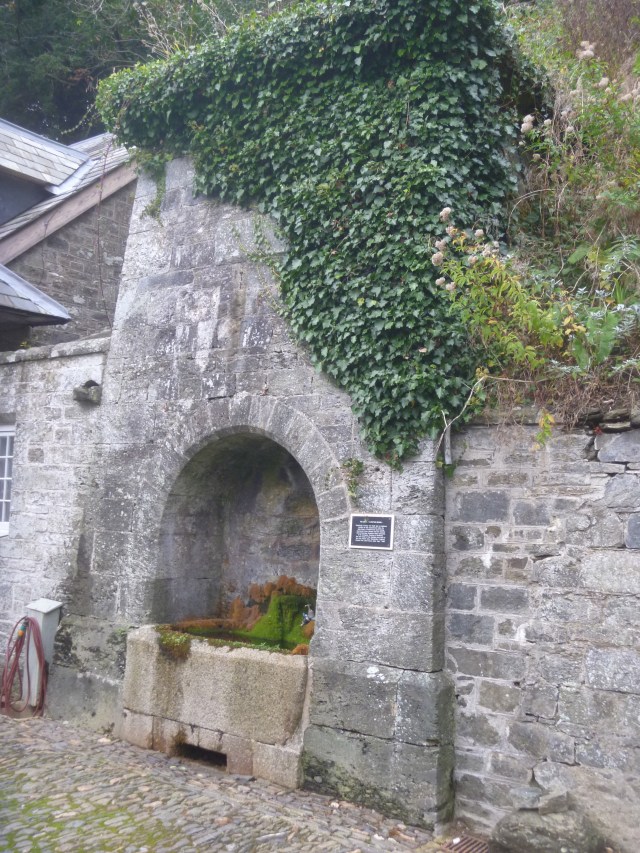
“One of the Loveliest Places Possible – Endsleigh” : an introduction

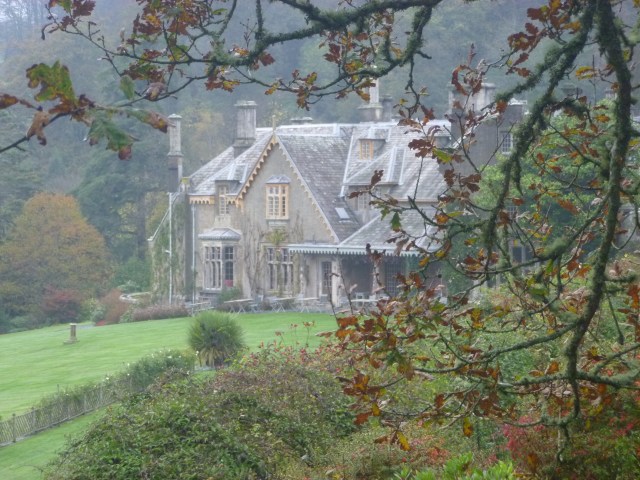
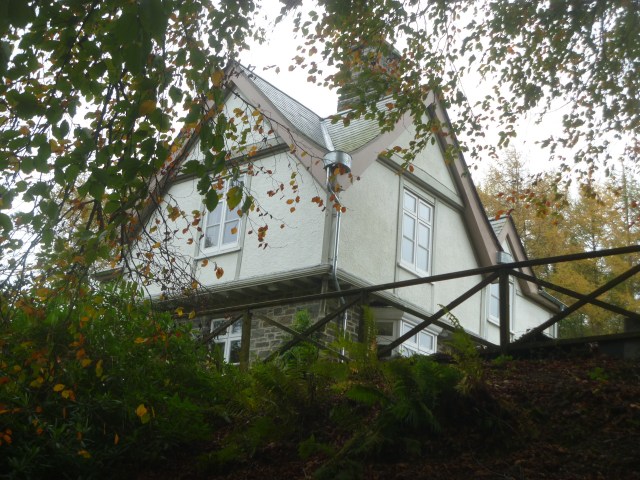
House closer

Today the original Endsleigh Cottage is a 16 bedroom luxury hotel.

“We saw yesterday one of the loveliest places possible – Endsleigh – the Duke of Bedford’s, about twenty miles from here”. Thus wrote Queen Victoria in her diary on 14 August 1856.

The result of the work of Humphry Repton and Jeffry Wyattville this truly beautiful estate on Devon’s border with Cornwall is still lovely today. It’s a private and secluded place which has been remarkably well-documented in the estate accounts still kept at Woburn Abbey home the Dukes of Bedford the original developers of Endsleigh.

The  Picturesque taste was popular in England between 1790 and 1840 and Endsleigh is one of its prime examples.

Repton first visited Endsleigh in 1809 and he encouraged the development of a more ‘natural landscape’ than the formality of Capability Brown. Repton proposed the buildings and Wyattville designed them. The main ‘cottage’ dates from 1810 and the subsidiary buildings 1812-1816.  Endsleigh was his first large scale work which was a collaboration with Georgina second wife of the 6th Duke of Bedford.

Whilst at Endsleigh I read her fascinating story in the book “Mistress of the Arts: The Passionate Life of Georgina, Duchess of Bedford” by Rachel Trethewey (Headline Review, 2003).

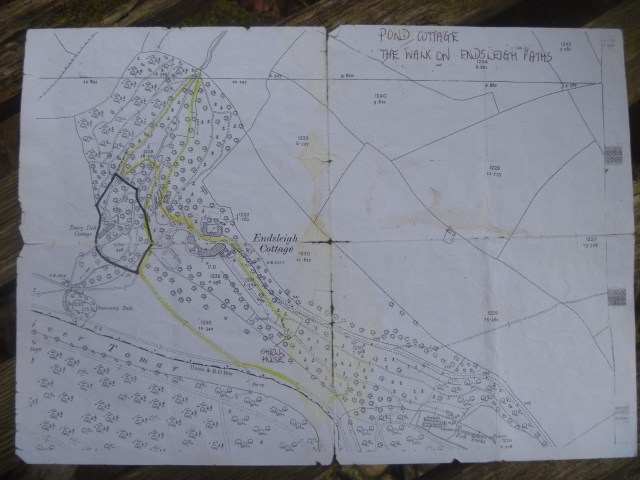
Endsleigh map

Within limits as a guest I could walk within the estate, down to the Tamar River and in the formal gardens close to the house. I also took tea one afternoon and enjoyed inspecting the various manmade features of the landscape which include a Swiss Chalet, a Shell Grotto and a Dairy. More about the Chalet and the Dairy in future posts.

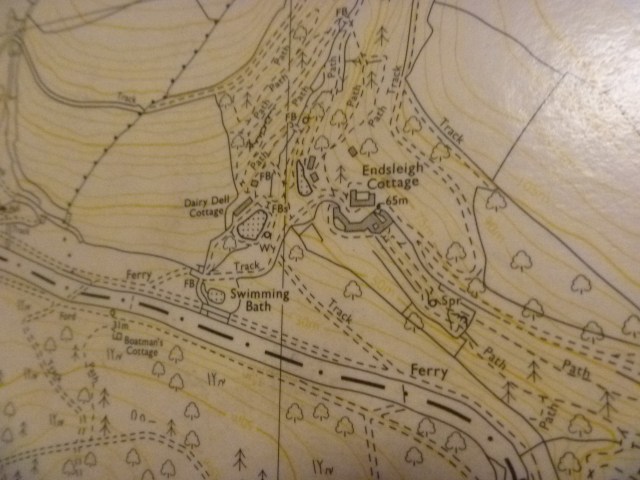
Endsleigh map close-up

Stepping down the track from the house to the river a stream and muddy path made it impossible to go beyond the former swimming pool so I headed to the river bank and followed it downstream as far as possible. Eventually a notice on a gate prevents you going any further.

Former swimming pool

 The Former Swimming Pool

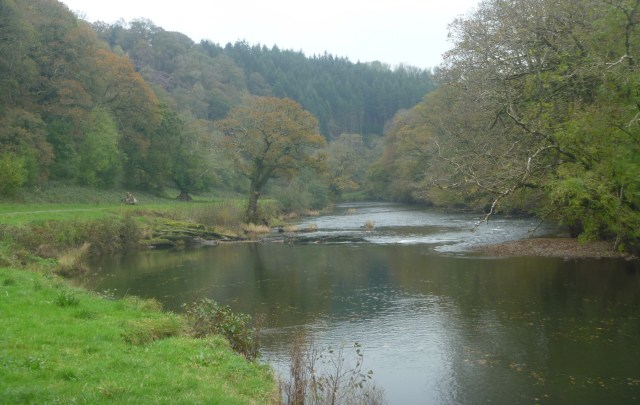
River Tamar

The peaceful River Tamar


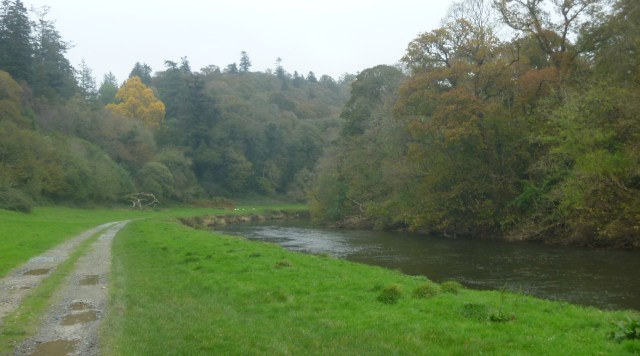
Tamar path

River Tamar and Path heading downstream

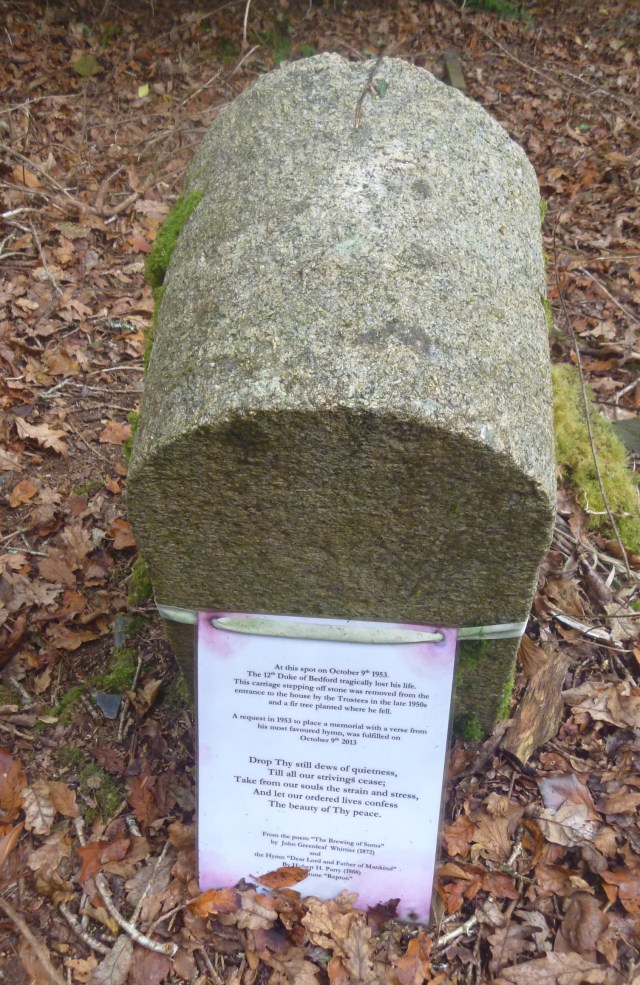
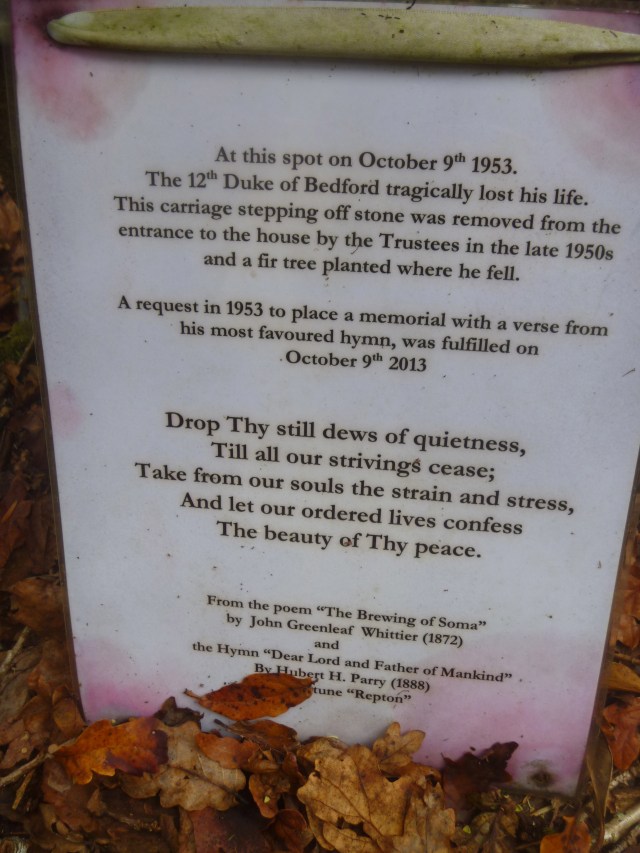
I returned along the path until I found a track leading up, up, up the valley side to a footpath which I hoped might lead to the Swiss Cottage. It didn’t; but I did find the memorial stone commemorating the spot where the 12th Duke was found dead in 1953.

Memorial to 12th Duke of B

Memorial wording

I’d read about this tragedy in another book “Endsleigh: the memoirs of a riverkeeper” by Horace Adams and edited by Clive Murphy [Braunton : Merlin Books, 1994]. I had the impression that Adams spoke or answered questions about his long life working first for various Dukes of Bedford and later for the Fshing Syndicate that took over the ‘cottage’ when the Bedfords needed to raise Death Duties. Murphy just transliterated Adams’s words to the page.

Fishery Cottage

Fishery Cottage overlooking the Tamar Valley

I didn’t manage to get more than a glimpse of the Swiss Cottage but nearby is Fishery Cottage at one time the estate home of Horace Adams. It’s now up for sale. Horace would be staggered – by the price and by the elegance!

From the main drive it’s possible to go into the formal gardens that surround the Hotel. They are now still beautifully maintained by about half a dozen full- and part-time staff. I didn’t make a note of the numbers of gardeners during the Bedfords’ tenure but there were probably around 5o.

Shell Grotto

A rough path leads to The Shell Grotto set on a cliff high above the river.

The grotto

The Shell Grotto

House view

View of Endsleigh from Shell Grotto

With the rise of the Romantic Movement in the 18th century and the return of the great explorers, building grottoes became increasingly fashionable … Some took the form of artificial underground caves;  others were built above ground in some picturesque spot deep in the woods or overlooking a beautiful view. The chief ingredients remained the same. They must be dark, have water, preferably a cascade or spring and be decorated with shells and minerals. … The grotto at Endsleigh is a rather late example … It is believed that the original intention was for it to be decorated with shells and minerals from Devon and Cornwall. … Obviously this scheme was not carried out as the grotto is full of tropical shells and corals. … It has been lately carefully restored and other shells and minerals have filled the gaps where the originals had crumbled away.” Patricia, Viscountess Boyd, October 1984 [Adapted from the description in the grotto]

Garden bower

Tamar Valley from the Grotto

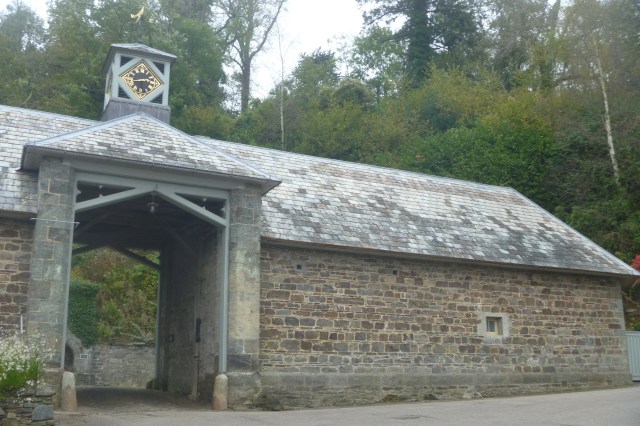
From the Grotto and formal gardens I returned to the main drive and behind the house are the former stables.

Stables

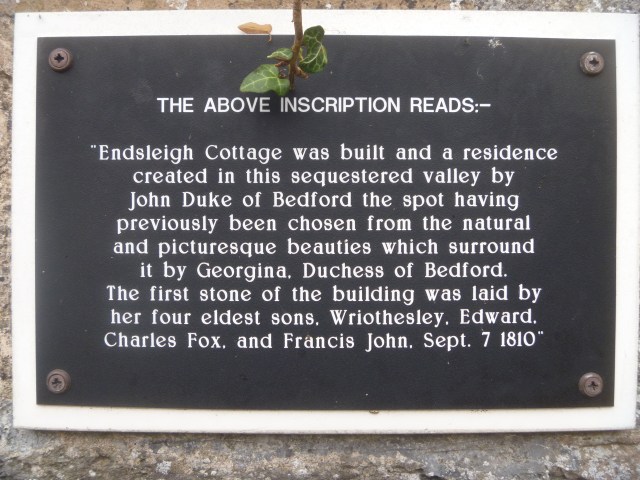
There’s a plaque in the stables commemorating the laying of the foundation stone by her four eldest sons.

Foundation stone

The Foundation Stone above the arch is nearly covered with ivy
Foundation stone words

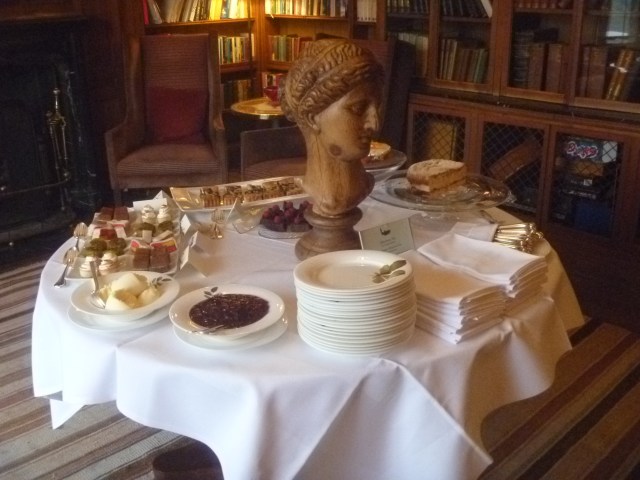
There is an arboretum with little bridges crossing streams and which contains unusual trees from around the world. But after further garden exploration in the damp weather and on slippery footpaths with the light beginning to fade even in the early October afternoon it was a relief to take tea in the library at Endsleigh Hotel.
Time for tea

Time for Afternoon Tea

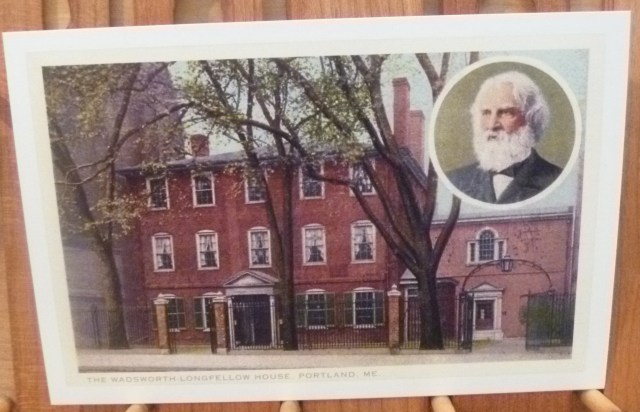
The Wadsworth-Longfellow House, Portland, Maine

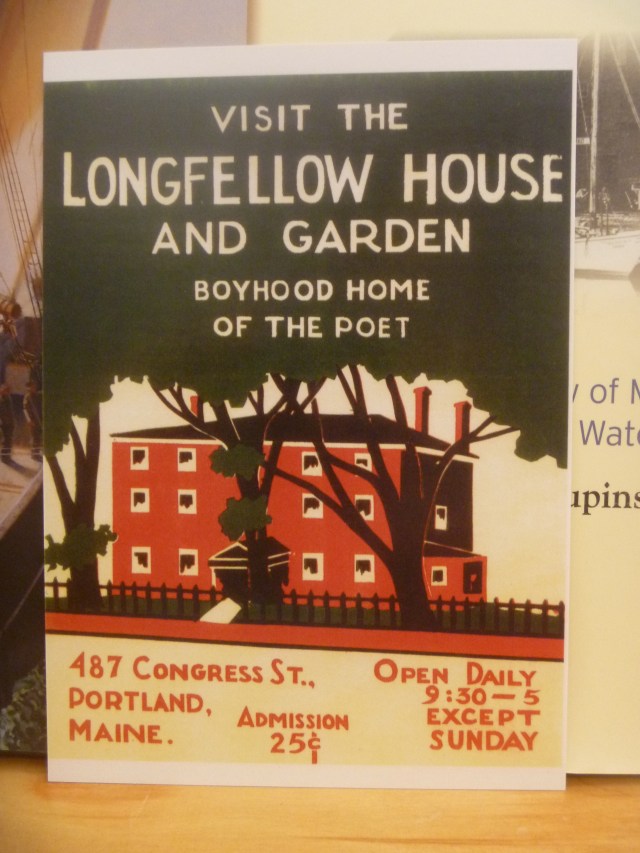
Visit the HWL House

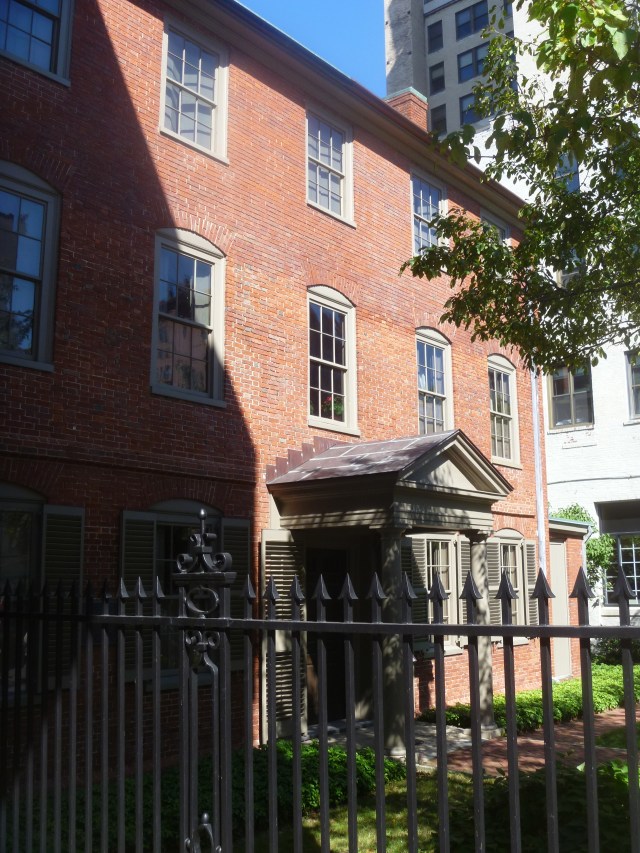
On our last full day in New England, before heading off to LLBean, I joined a morning tour of the Wadsworth-Longfellow House, located right in the middle of Portland on Congress Street. The house is not his birthplace. Although he was born in Portland that house has now been demolished.

HLW House postcard


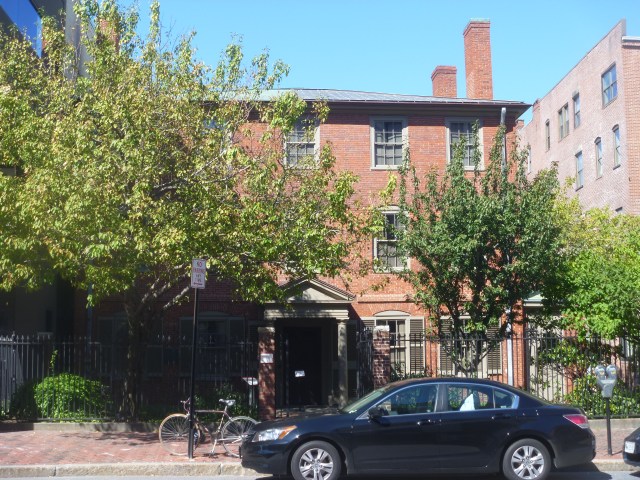
No Parking but always a car

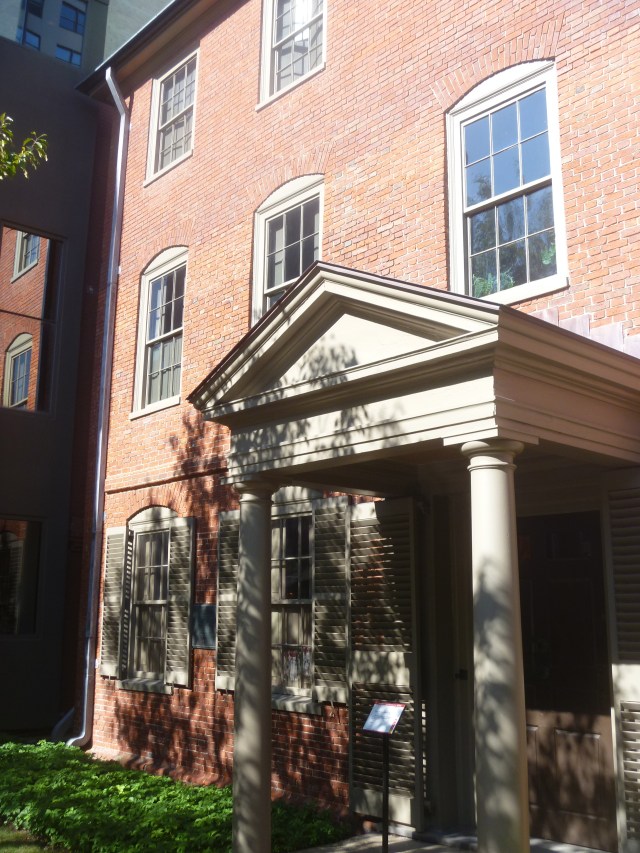
Faithfully restored to the 1850s, the Wadsworth-Longfellow House was the childhood home of Henry Wadsworth Longfellow. Built in 1785-86 by the poet’s grandfather, the house is decorated with original furnishings and family memorabilia. Tours offer a unique glance into the poet’s family, as well as into the cultural and social history of mid-19th century Portland.” [Information Board outside the house]

WLF House door

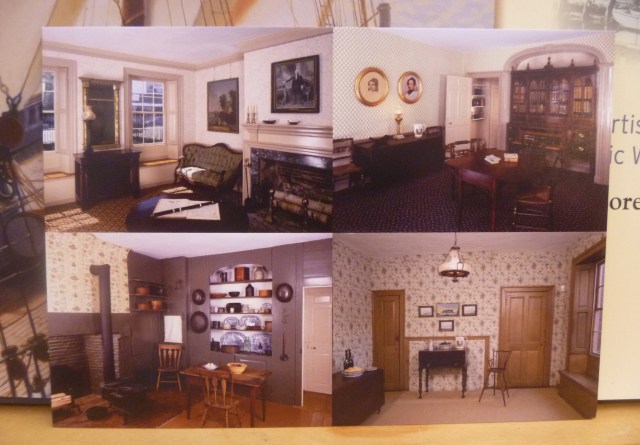
Yet again I enjoyed an entertaining and informative tour. No photography was allowed but there are pictures and descriptions of the rooms on the website and postcards of a selection were available in the excellent bookshop attached to the house.

Inside HWL House


Postcard shows the interior of Wadsworth-Longfellow House

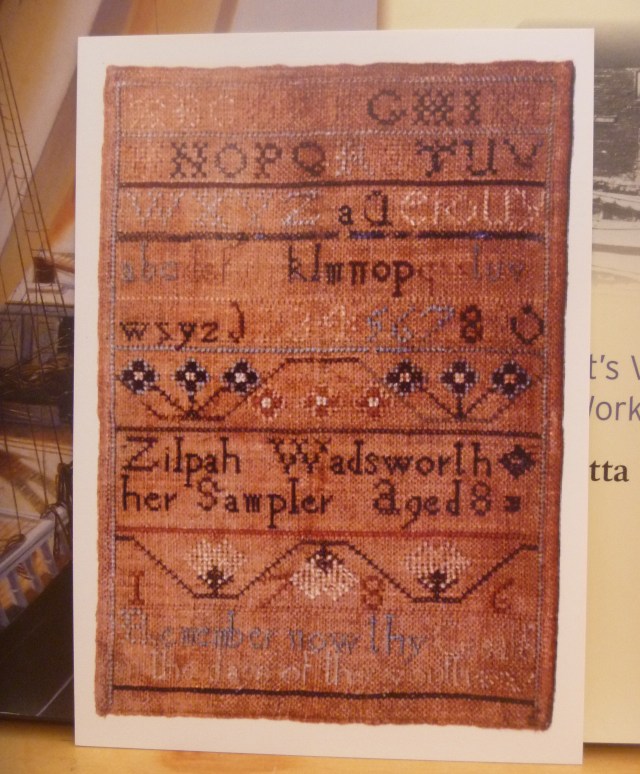
Zilpa sampler

Zilpa’s Sampler (still on display in the house)

Peleg (love that name!) and Elizabeth Wadsworth, Henry’s grandparents, built the house in 1785-86 and Henry, born in February 1807, lived there from just a few months later throughout his childhood. With 9 siblings his father Stephen (and mother Zilpa) extended the house by adding another floor. Henry entered Bowdoin College in Brunswick, ME in 1822. After graduation in 1825 he moved to Cambridge, Massachusetts where his home there is also a national historical monument and open to the public : Longfellow National Historic Site, 105, Brattle Street, Cambridge, MA. He made regular return visits to his family home although, except for once, he and his wife never actually stayed there overnight.

Henry’s sister Anne lived here for almost all her long life; and when she died in 1901 left the house to the Maine Historical Society (MHS) requesting that the rooms “be kept with appropriate articles for a memorial of the Home of Longfellow” insisting that certain items be left where they had been during Henry’s residence.

There were interesting displays in the museum next door concerning the Emergence and History of Portland and about the Wadsworth-Longfellow Family.

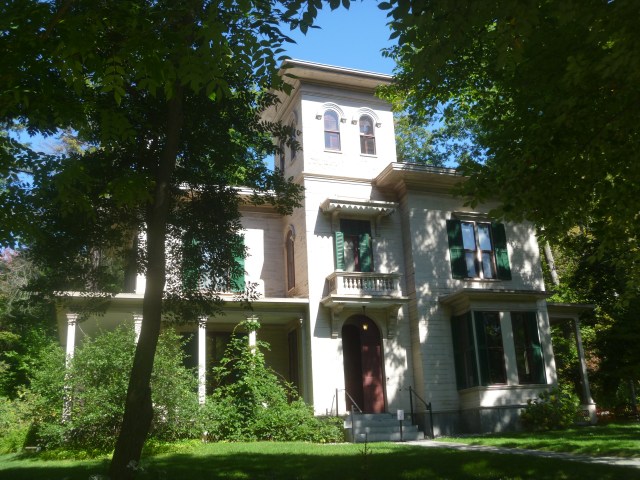
Longfellow House

I also learned that :

In 1884, Longfellow became the first non-British writer for whom a commemorative sculpted bust was placed in Poet’s Corner of Westminster Abbey in London; he remains the only American poet represented with a bust. [Wikipedia]

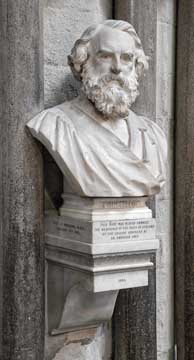
The over life-size white marble bust of the poet Henry Wadsworth Longfellow was unveiled in Poets’ Corner Westminster Abbey in 1884, on a pillar near to the tomb of Geoffrey Chaucer. It is by the sculptor Sir Thomas Brock and the main inscription reads:

Longfellow bust, Westminster Abbey

LONGFELLOW. This bust was placed amongst the memorials of the poets of England by the English admirers of an American poet.1884″

On the left and right sides of the plinth is inscribed:

“Born at Portland, U.S.A. February 27th 1807. Died at Cambridge, U.S.A. March 24th 1882”.

Longfellow’s ancestor, William Longfellow, had emigrated to New England in 1676 from Yorkshire. His parents were Stephen, a lawyer, and Zilpah. Henry taught at Harvard University and his prose romance Hyperion was published in 1839 after the death of his first wife. Ballads and other Poems includes ‘The Village Blacksmith’ and ‘The Wreck of the Hesperus’. The Song of Hiawatha is one of his best known works and he was second only to Lord Tennyson in popularity. His grave is in Cambridge, Massachusetts.

A photograph of his bust can be purchased from Westminster Abbey Library.

Further reading:

“England’s homage to Longfellow” by E.C.Lathem, 2007

[source of text and photo]

Before the tour, after the  tour or at any time during opening hours anyone may visit the Longfellow Garden behind the house.

HWL better garden

The secluded Longfellow Garden located behind the House is an oasis of green and quiet in the heart of downtown Portland. Beautifully landscaped, the public is welcome.” [Information Board]

Looking back up garden

Looking back up the garden towards the house

The members of the Longfellow Garden Club have tended this oasis of peace and calm in the centre of the bustling city of Portland for 90 years. These volunteers weed the beds, prune the overgrowth, plant annuals, maintain the soil and much much more.  In 1924 Mrs Pearl Wing set about restoring the garden. She encouraged the local community to help her and to donate plants and create a fountain in the garden. She also established the bye-laws and operating principles of the Club.

Presnt day fountain

Present day fountain

Naturally, there have been changes in the area and garden surroundings since then. Until 1980 the garden was only visited by those touring the house but the Club convinced the MHS to allow public access during house opening hours. It is a popular quiet retreat and “hidden treasure”.

Read more about the life and works of the author of The Song of Hiawatha (possibly his best-known work here in the UK) here and see whether you can recognise his many quotations here.

“The love of learning, the sequestered nooks, and all the sweet serenity of books”

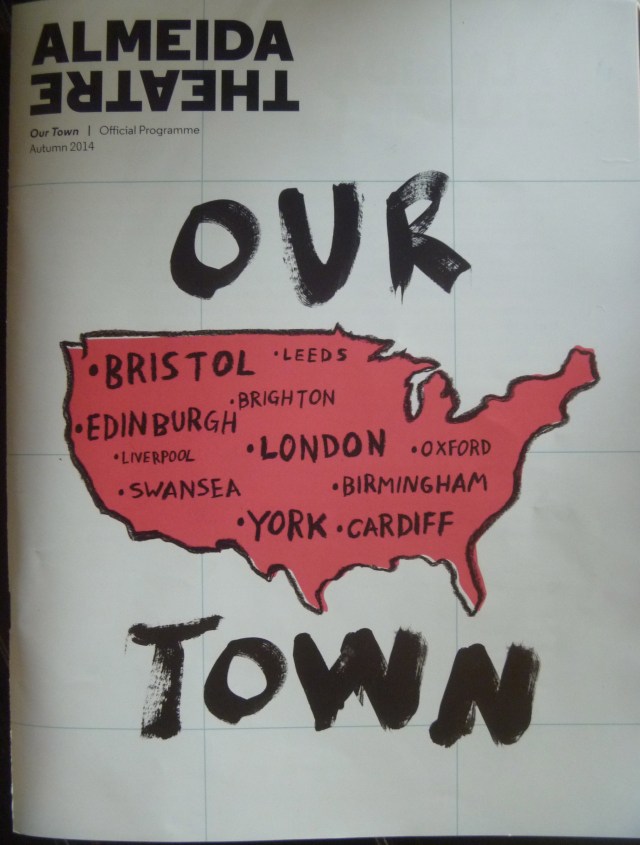
Our Town : From Peterborough, New Hampshire to London, England

OUR TOWN prog

The weekend after we arrived home from New England at the end of September I spotted a small listing in the newspaper for the play “Our Town” by Thornton Wilder. At first I thought the play was due to tour and was actually coming to Leeds but an online search proved fruitless so I checked the dates again and saw that it was showing at The Almeida Theatre in London during dates I was going to be  in town.

The notice had particularly caught my eye because the week before in Vermont we had made an excursion into New Hampshire from Brattleboro which is literally on the border between the two states. They are separated only by the Connecticut River.

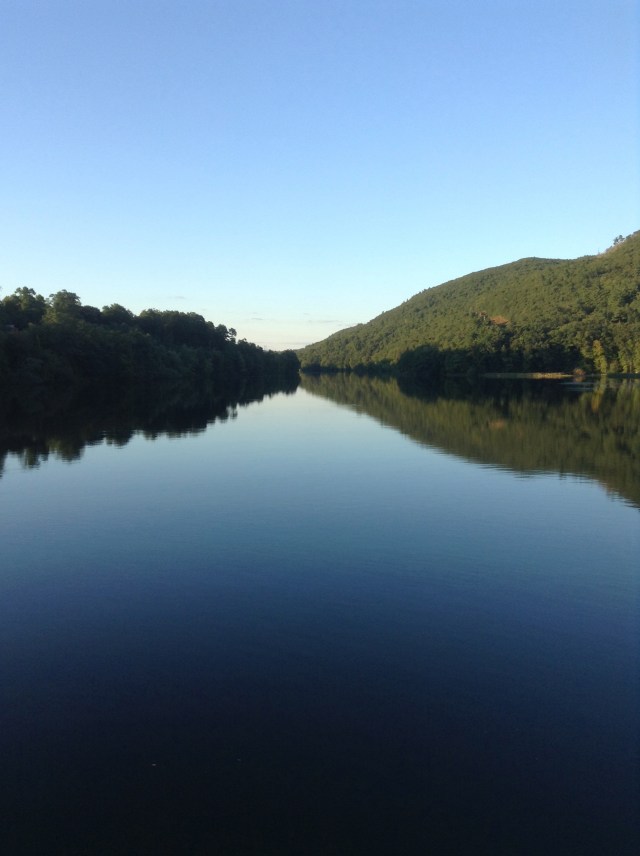
Connecticut River

The Connecticut River

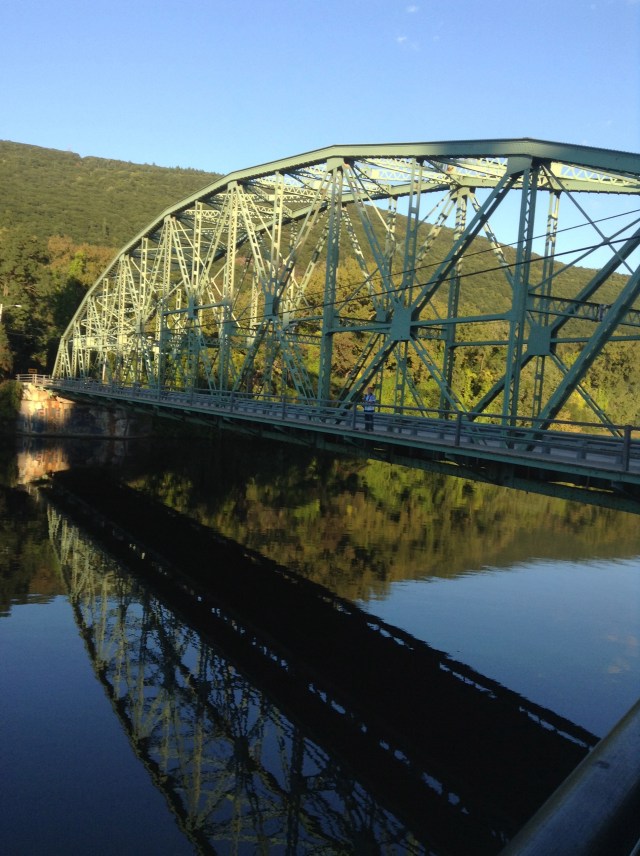
Bridge linking VT and NH

The Brattleboro Road Bridge Linking VT and NH

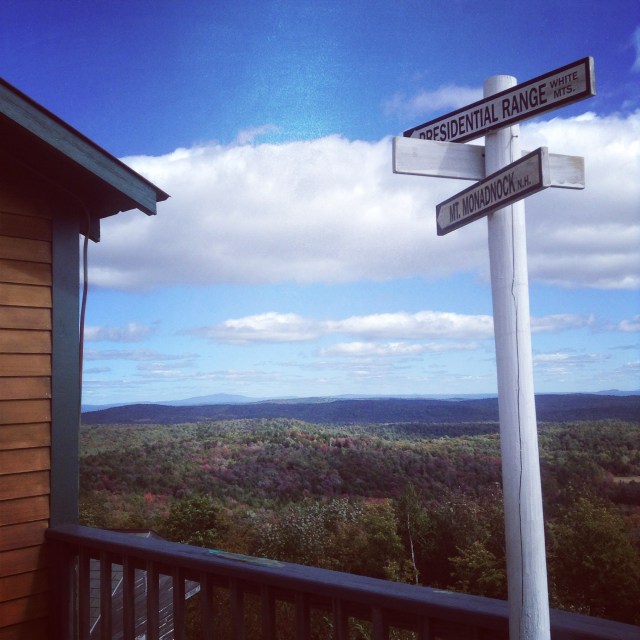
Our intention had been to visit a mountain we had seen on the previous day from another trip to Wilmington VT and the viewpoint at Hog Back Mountain.

Monandnock from hog back

 View from Hog Back Mountain – 100 Mile View

But when we arrived at Mount Monadnock the State Park Warden told us that, although it is the most visited mountain peak in the USA [A magnet for hikers, Monadnock is said to be the world’s third most climbed mountain, following Japan’s Mount Fuji and China’s Mount Tai.], we might find ourselves limited by time (it’s really a full day hike) and advised us to drive a few miles further to Miller State Park where it is possible to drive right to the top and take a shorter trail from the peak car park.

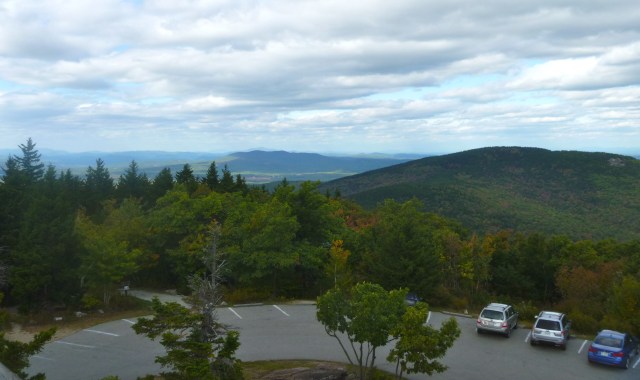
View from Miller

View from Miller State Park

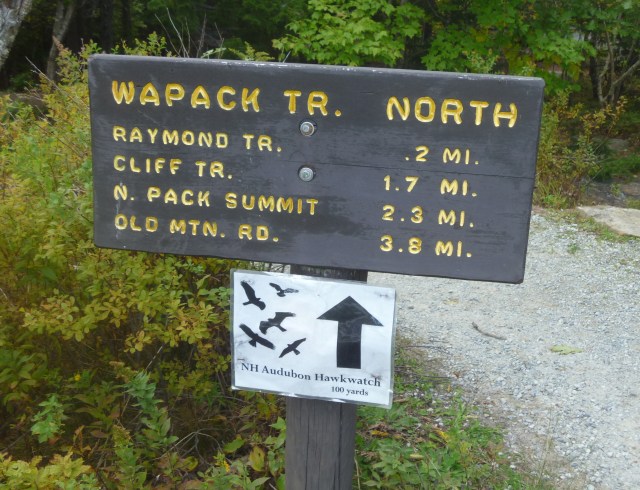
Trail to hawk watch

Miller State Park is located on the 2,290-foot summit and flank of Pack Monadnock in Peterborough and is the oldest state park in New Hampshire. A winding 1.3-mile paved road leading to the scenic summit is open for visitors to drive in summer and on spring and fall weekends. Three main hiking trails ascend Pack Monadnock to the summit. The best known is the Wapack Trail, which is a 21-mile footpath that extends from Mt. Watatic in Ashburnham, Massachusetts to North Pack Monadnock in Greenfield. It is believed Native Americans named the area’s mountains, and that “pack” means little. On clear days views reach to Mount Washington, the skyscrapers of Boston, and the Vermont hills.”

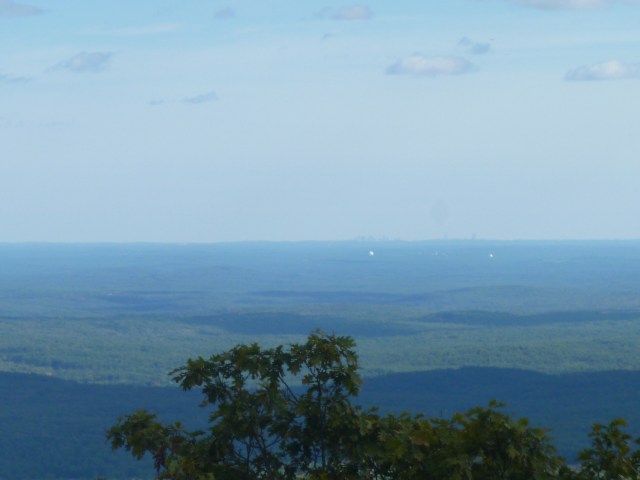
Boston skyline

Boston Skyline just visible (slightly right)

Yes, indeed, it was amazing to see the skyscrapers of Boston on the horizon from a distance of 55 miles away!

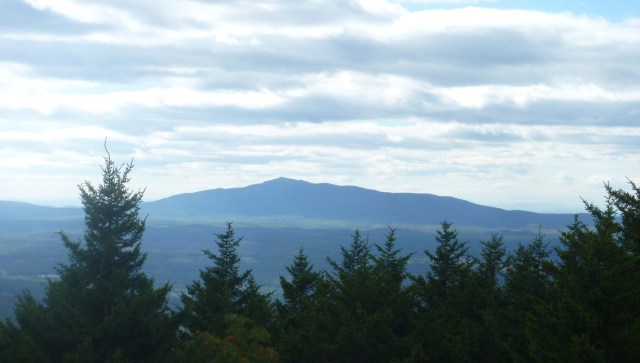
This could be Mt Washington

Could this be Mount Washington?

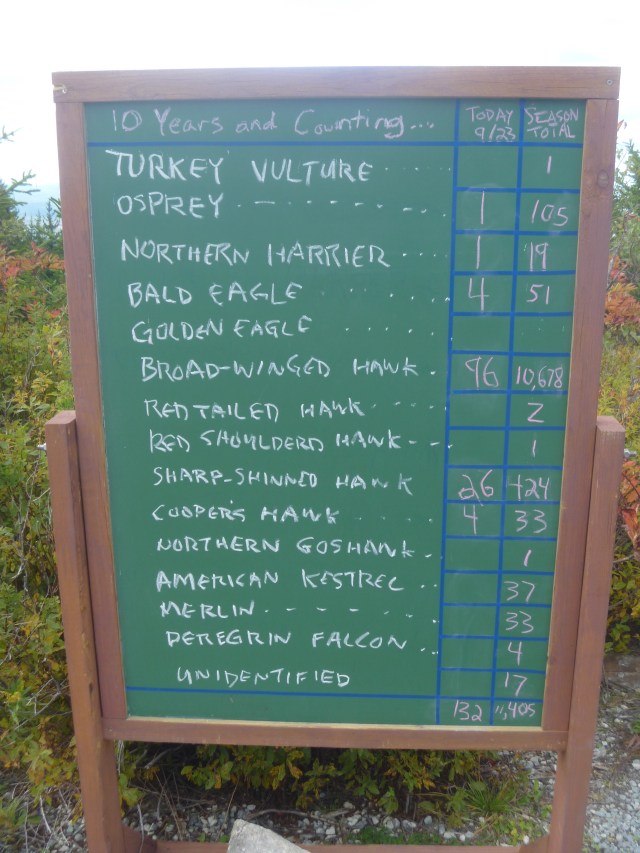
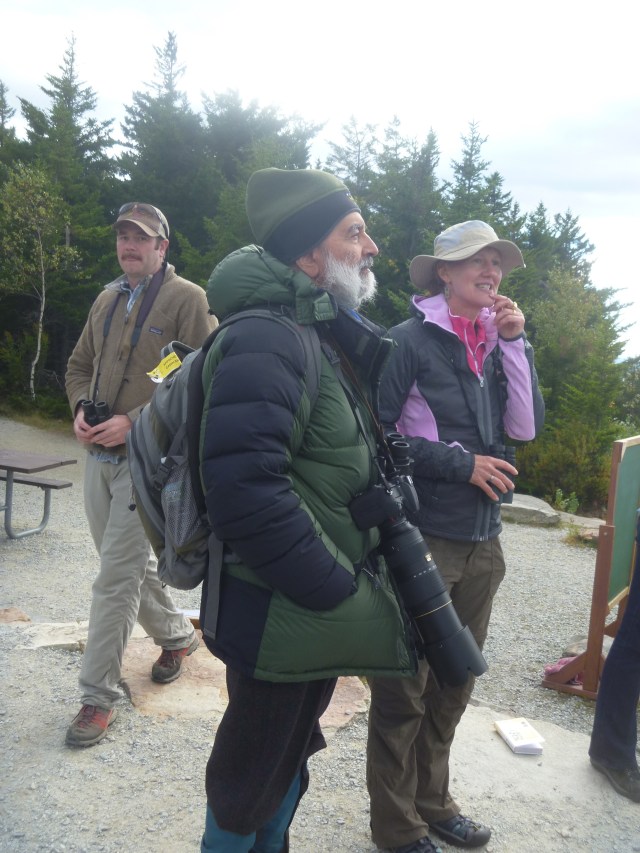
We were fascinated by the Audubon Hawk Watch set up in a clearing. It reminded me of the Malhamdale Hills and Hawks Walk in July. Just like the RSPB The Audubon Society had set up an area with information boards, information table, binoculars and telescopes on tripods and staff and volunteers ready to answer questions and tell about the project. We felt very under-equipped!

Birds seen

Birds Spotted

Serious twitchers

A Serious Twitcher

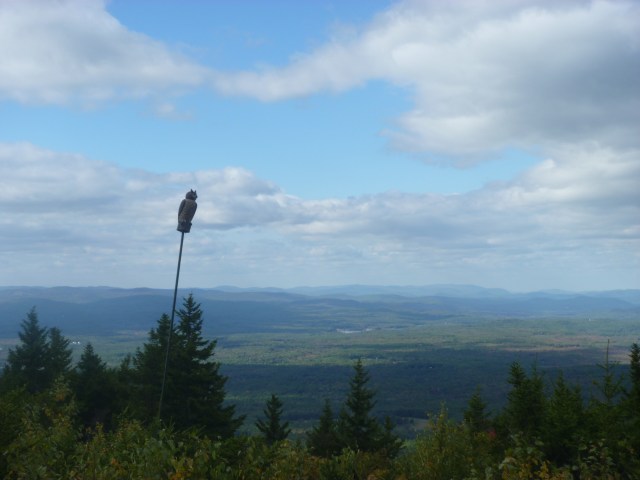
owl to attract

Owl Decoy

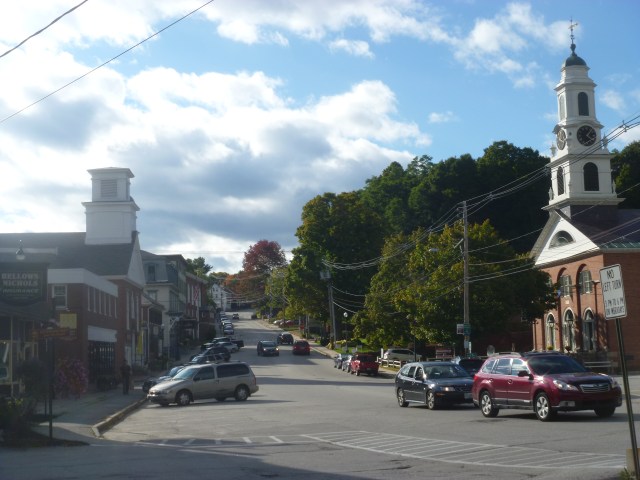
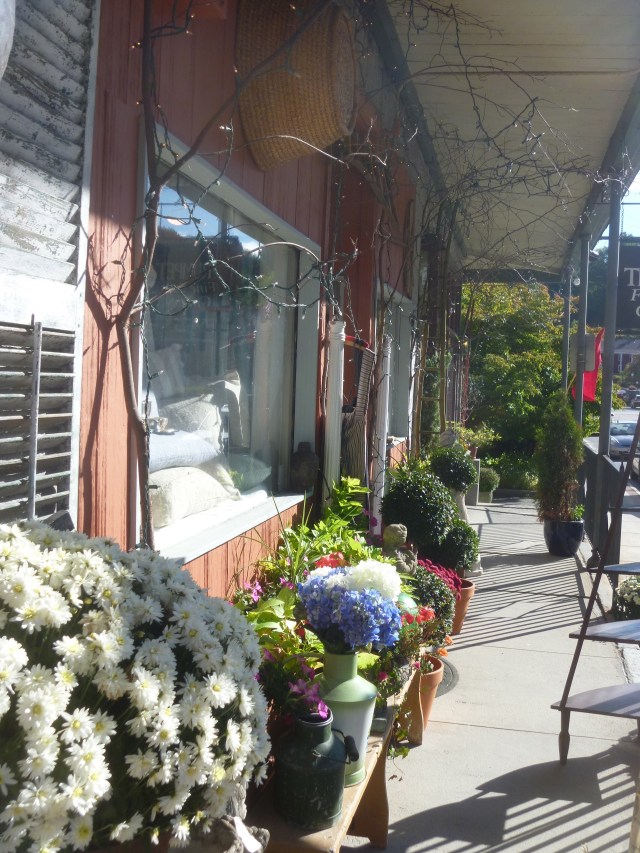
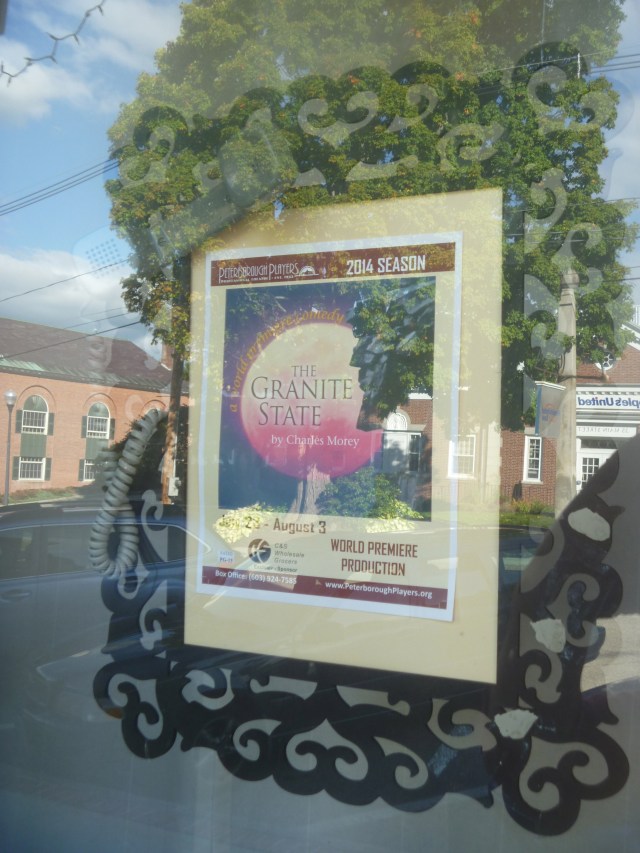
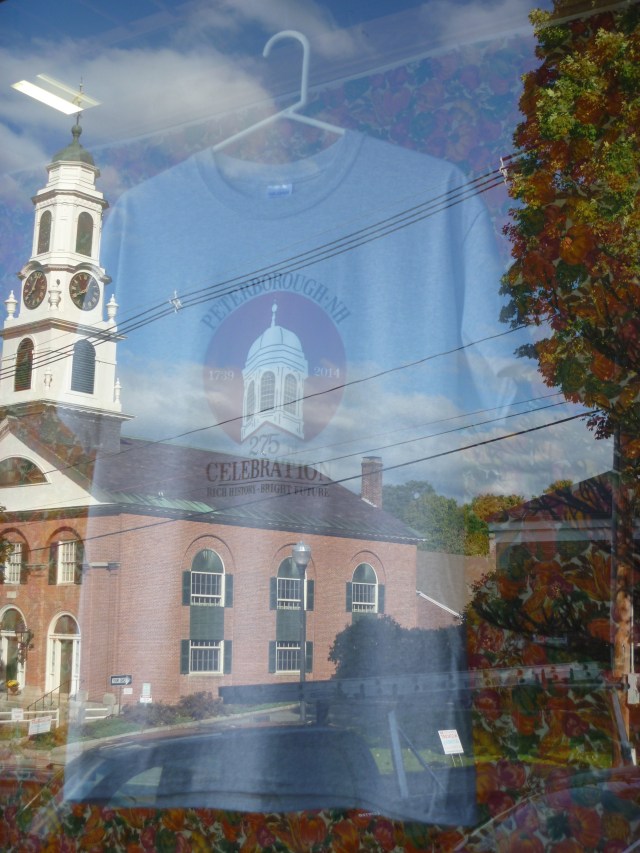
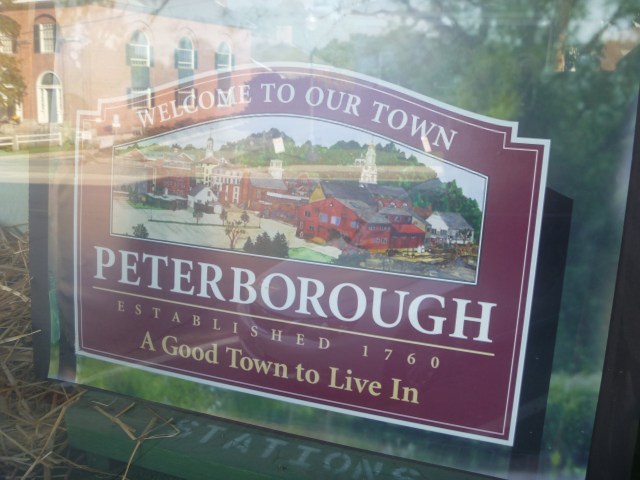
As we left the park and drove back towards Brattleboro I suggested we stop at the town of Peterborough. A good friend and reader of posts here, Sarah, had told me some time ago about the pretty town which served as the inspiration for Thornton Wilder’s play “Our Town”.

Views of Peterborough

main st peterboro

Peterboro 1

Peterboro 2

Peterboro 3

Peterboro 4

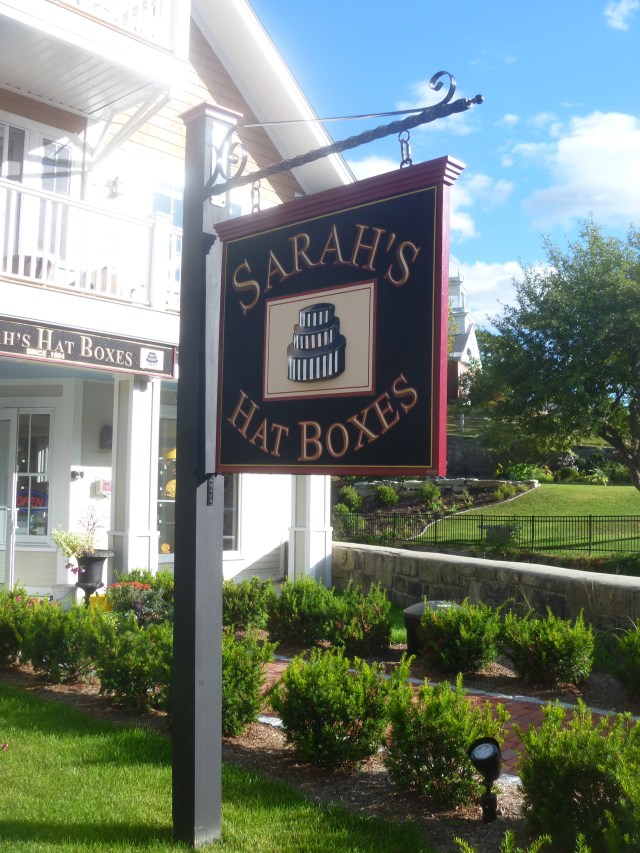
Sarah's Hat Boxes

“We all grow up, we fall in love, we have families and we all die. That is our story”

And that is the story of “Our Town”.

Remembrance : Horsforth WW1 Trail

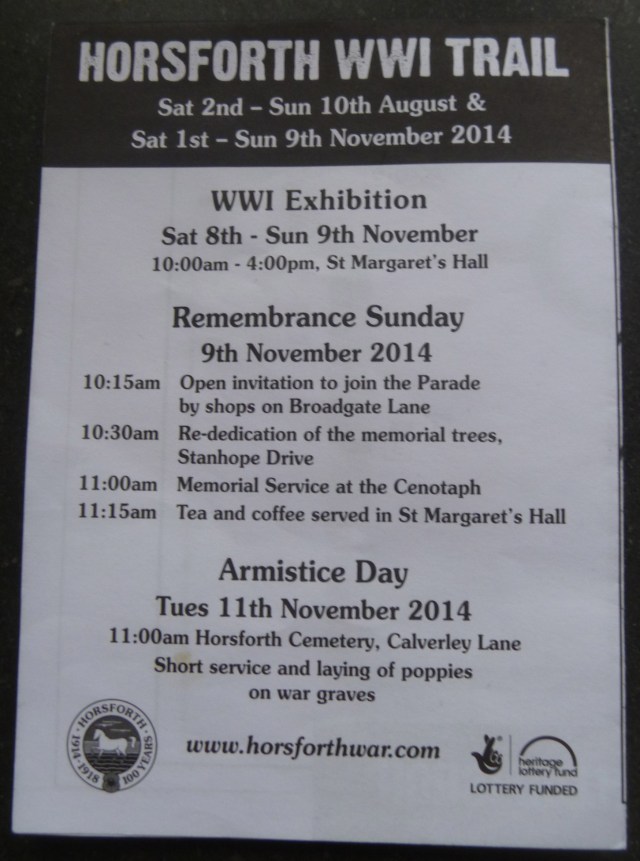
Trail leaflet

All round the country there are commemorations this year to honour those hundreds of thousands of men and women killed during the First World War. They range from the now very well-known, much-visited and publicised “Blood Swept Lands and Seas of Red” [the ‘evolving installation marking the centenary of the outbreak of the First World War. Created by ceramic artist Paul Cummins, with setting by stage designer Tom Piper, 888,246 ceramic poppies progressively fill the Tower’s famous moat’] (here is what Lynne – alias Dovegreyreader – wrote about her visit to the Tower) to our very own local WW1 trail along the main thoroughfare of Horsforth near Leeds.

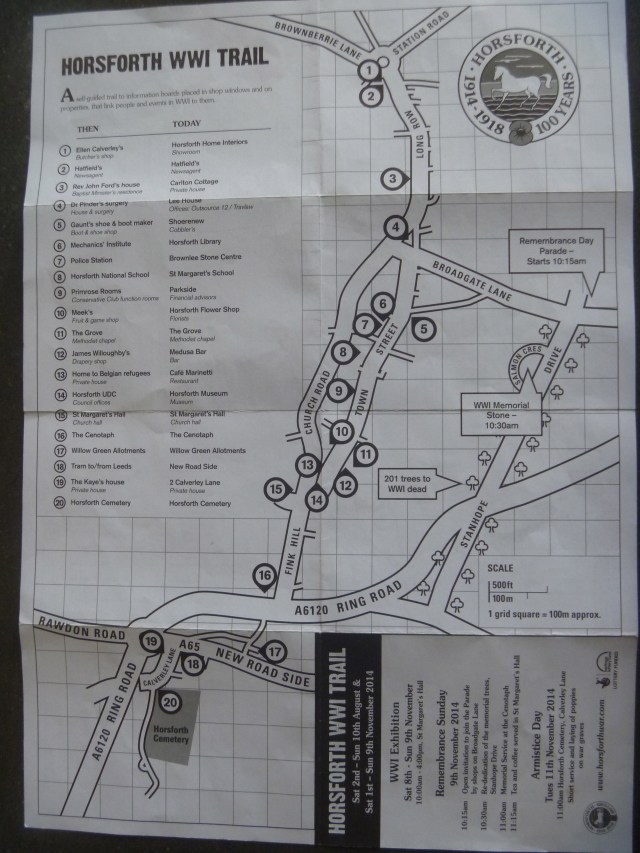
Trail Map

My neighbour and I followed the trail last Tuesday and on Saturday I visited the related Exhibition in the local church hall. Somehow even though I have lived here much longer than I ever lived in Norwich I don’t feel as attached to Horsforth as I do to the place where I grew up.

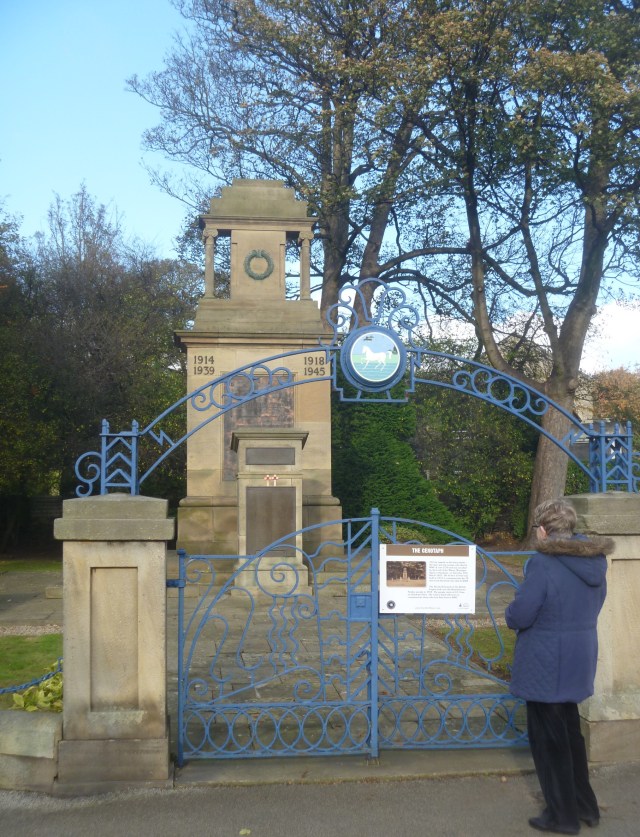
Horsforth Cenotaph

212 are named on the brass panels the men and one woman who died in the first world war . It cost £720 and was unveiled by The Lord of the Manor Montague Spencer-Stanhope on Saturday 11th March 1922. The lectern in front was built in 1953 to honour the men from Horsforth who died in World War II.

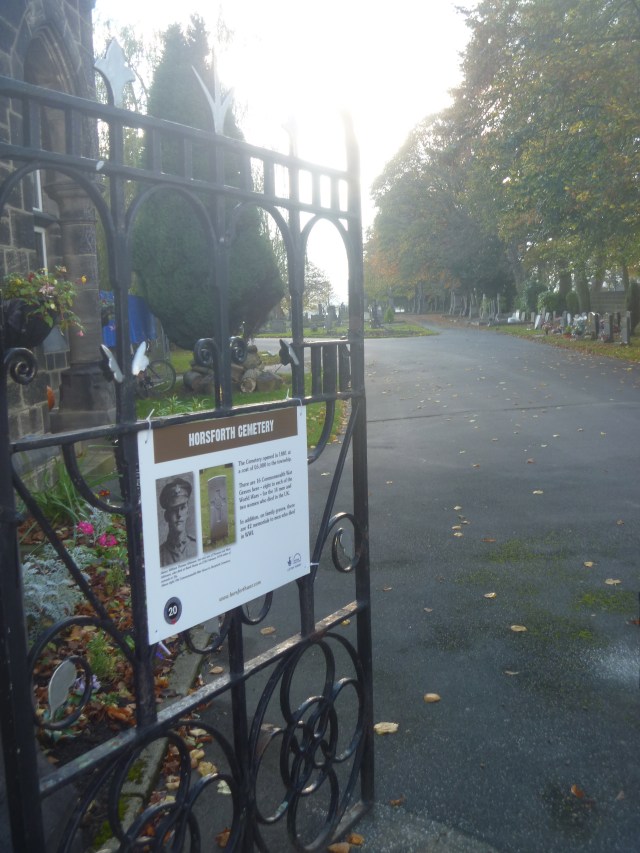
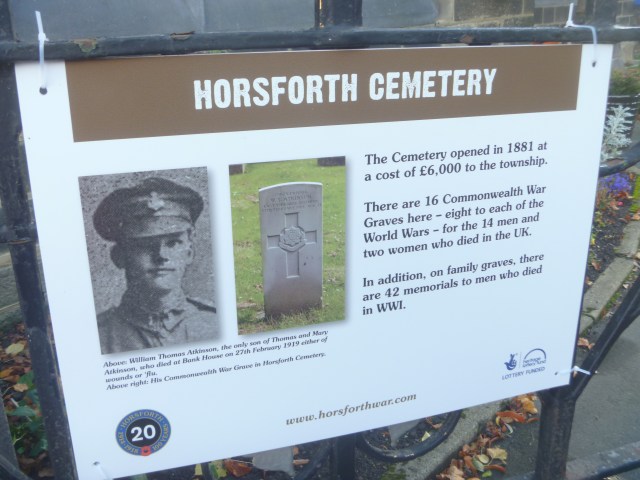
Horsforth Cemetery


Cemetery Board

However, the trail and boards are very well done and tell some very sad tales and, interestingly, one woman is commemorated which, I believe, was unusual for the time.

F;lorence Hogg

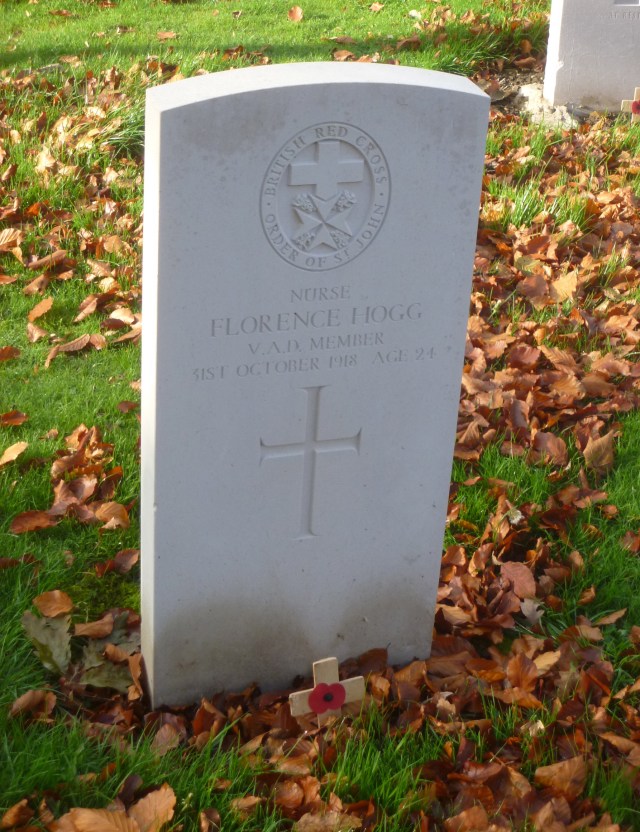
Nurse Florence Hogg

Serving as a nurse didn’t make a woman immune from the effects of war. Florence Hogg, who worked at Horsforth Laundry, died of the ‘flu that she caught at Berrington War Hospital in Shrewsbury from a soldier, wounded at the Front. The following month it killed her mother too. The ‘flu virus killed over 20 million in 1918 and 1919 – even more than died in the war itself.

Florence Hogg

Florence Hogg’s Commonwealth War Grave in Horsforth Cemetery

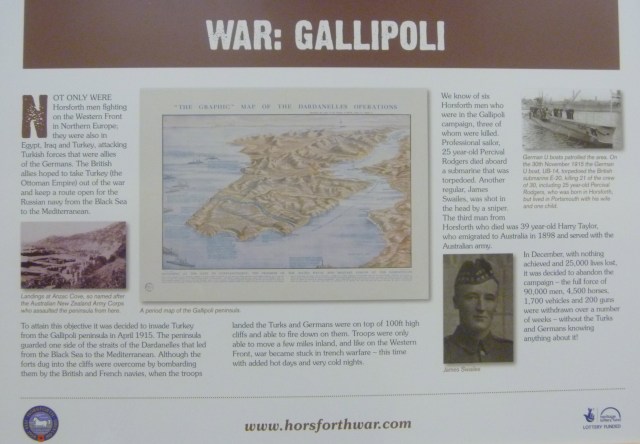
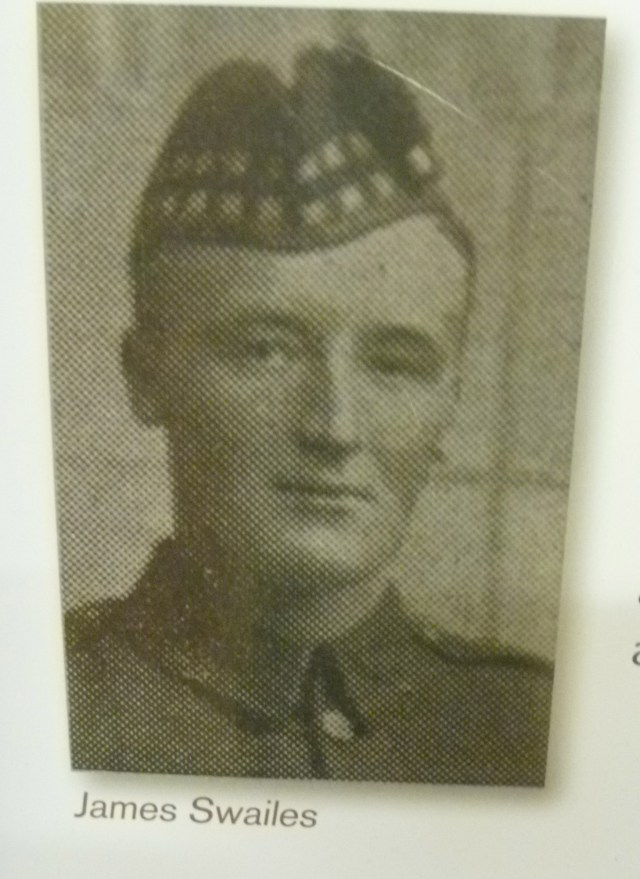
We know of six Horsforth men who were in the Gallipoli Campaign, three of whom were killed. Professional sailor, 25 year old Percival Rodgers was killed aboard a submarine that was torpedoed. Another regular, James Swailes, was shot in the head by a sniper. The third man from Horsforth who died was 39 year old, Harry Taylor, who emigrated to Australia in 1898 and served with the Australian army.

War Gallipoli

James Swailes

James Swailes killed in the Gallipoli Campaign

In addition to further information boards and displays of medals and other artefacts from the First World War at the Exhibition we were able to watch a half hour documentary programme recorded for TV and published on 1 Oct this year.

This documentary film travels around the Ypres (Ieper) area of Belgium looking at locations that Yorkshire troops were involved in. Geoff Druett is taken around by an official tour guide. They set-off in the square in front of Ypres Cloth Hall, go to Essex Farm and learn about John McCrae’s “In Flanders Field” poem; cross the Yser Canaal to the Yorkshire Trench. Across town they wander around Hill 60 and visit Tyne Cot. Back in Ypres, Geoff visits the English Memorial Church and the film ends with the nightly ceremony at the Menin Gate.
Music : “World War I In Poetry And Music” by David Moore, John McCormack, Robert Donat, Siegfried Sassoon

IN FLANDERS FIELDS POEM
The World’s Most Famous WAR MEMORIAL POEM
By Lieutenant Colonel John McCrae

Between the crosses, row on row,
That mark our place: and in the sky
The larks still bravely singing fly
Scarce heard amid the guns below.

We are the dead: Short days ago,
We lived, felt dawn, saw sunset glow,
Loved and were loved: and now we lie
In Flanders fields!

Take up our quarrel with the foe
To you, from failing hands, we throw
The torch: be yours to hold it high
If ye break faith with us who die,
We shall not sleep, though poppies grow
In Flanders fields

Composed at the battlefront on May 3, 1915  during the second battle of Ypres, Belgium

Cape Cod : Woods Hole and Martha’s Vineyard and More

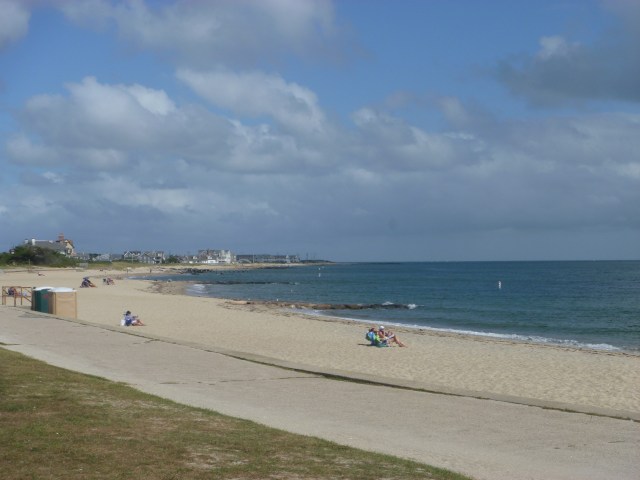
Beach at Falmouth

The Beach at Falmouth

It’s time to re-visit my summer holiday and go right back to the first week and a half that we spent on Cape Cod. We had marvellous weather and it’s strange to us but after Labor Day (the first Monday in September) many places close down and the locals more or less have the place to themselves again. It’s the way we like it. The weather is still good but you can find a table at a restaurant without queuing, the roads and beaches are almost empty but most of the local shops are still open.

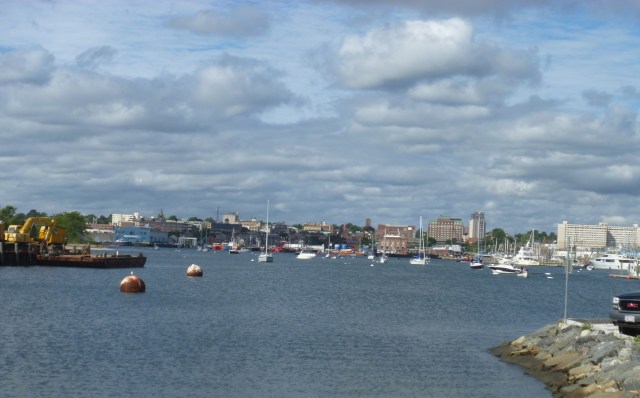
Estuary Fairhaven

The Estuary at Fairhaven

We don’t usually travel far from our digs but we always make one excursion out of our Cape Cod Comfort Zone and that is to visit my online book group friend sherry who lives in Marion, Massachusetts on the other side of Buzzards Bay. This time our excursion included a new activity as my husband has taken up sailing and as it was impossible for us to find a sailing school open on the Cape he signed up for 16 hours tuition over two days (and including a one hour written exam at the end) at Sail Buzzards Bay  (Fair Winds and We’ll See You on the Water!) based in Fairhaven, Mass. just a few miles from Marion.

101 Main St Fairhaven

Sail Buzzards Bay HQ, Main Street, Fairhaven

Preparation for sailing

Preparation for Sailing School

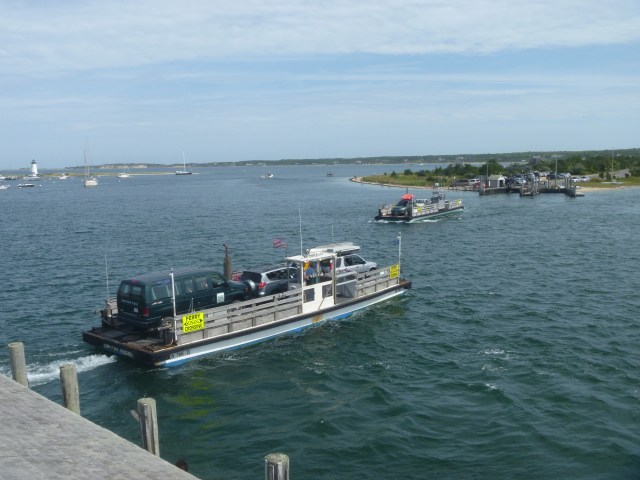
Needless to say the watery theme continued throughout the trip. One day we took the ferry to nearby Martha’s Vineyard. The ferry from Falmouth to Oak Bluffs on the Vineyard takes just 35 minutes and during the autumn season there are just two sailings in each direction each day (Monday to Thursday – more sailings at the weekend). We understood that it was worth taking the bus to Edgartown where we had lunch, watched the three vehicle five minute journey Chappaquidick Ferry and had a wander around the compact centre of town.

Main St Edgartown

The Main Street, Edgartown, MV

Here’s how the tourist leaflet describes Edgartown :

“One of New England’s most elegant communities, Edgartown was the Island’s first colonial settlement and it has been the county seat since 1642. The stately white Greek Revival houses built by the whaling captains have been carefully maintained. They make the town a museum-piece community, a seaport village preserved from the early 19th century.”

Chappaquidick Ferry

The Tiny Chappaquidick Ferry

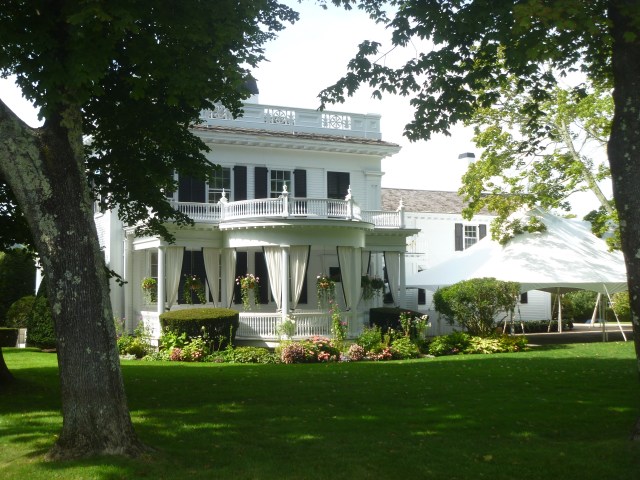
Daniel Fisher House

The Grand Daniel Fisher House (1840)

I’d hoped to visit the Whaling Church but it was included on an organised tour from the museum (which also included a visit to Daniel Fisher House) and we just didn’t have time before taking the bus back to Oak Bluffs for our return to the mainland.

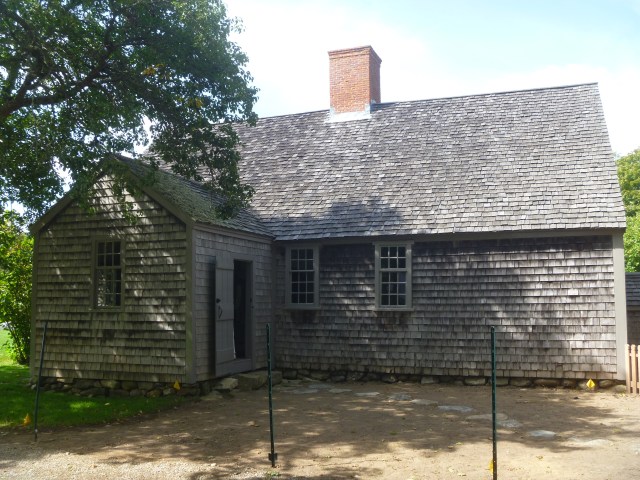
MV Museum

The Very Old Vincent House Museum

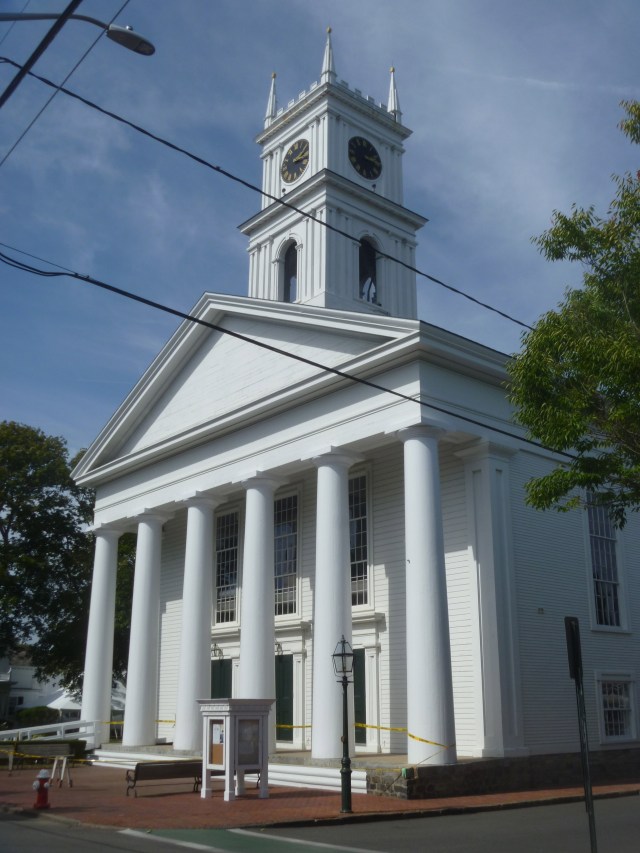
Whaling Church Edgartown

The Impressive Whaling Church

On several days we would drive down to Woods Hole the village attached to the extensive Woods Hole Oceanographic Institute that dominates the area. There are some good seafood restaurants with docks onto the marina – all very nautical.

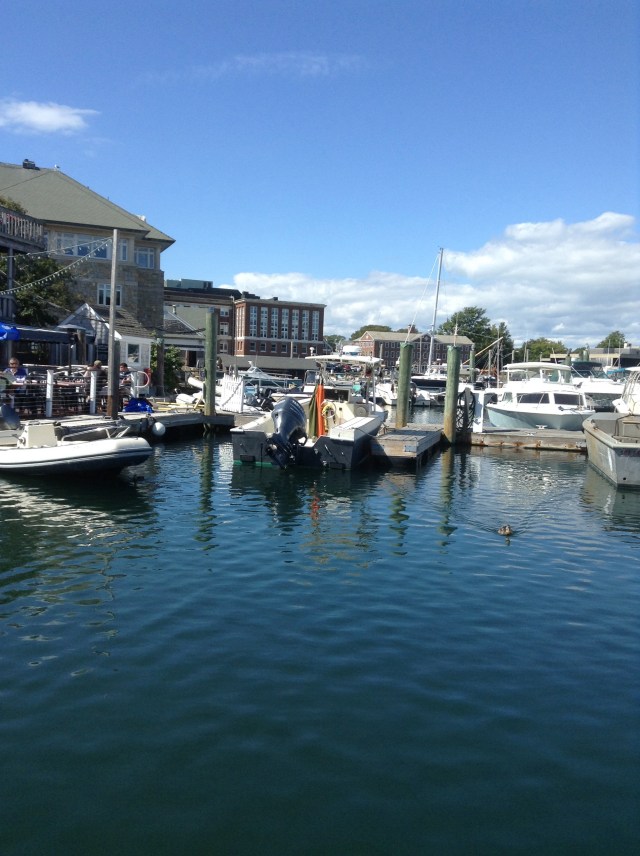
Woods Hole Marina


Dining at Woods Hole Marina

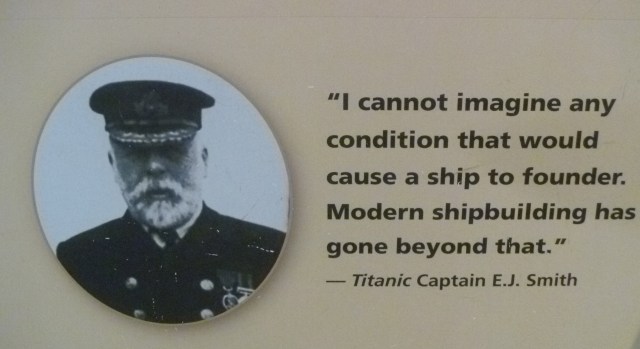
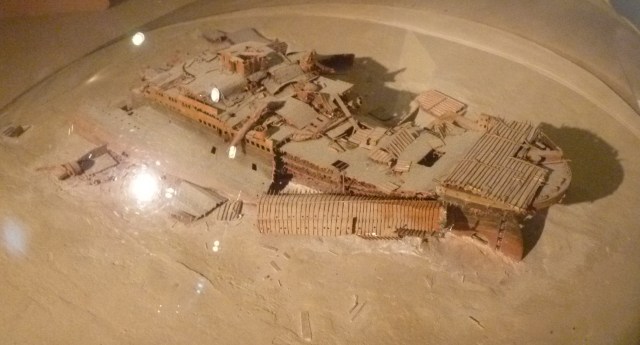
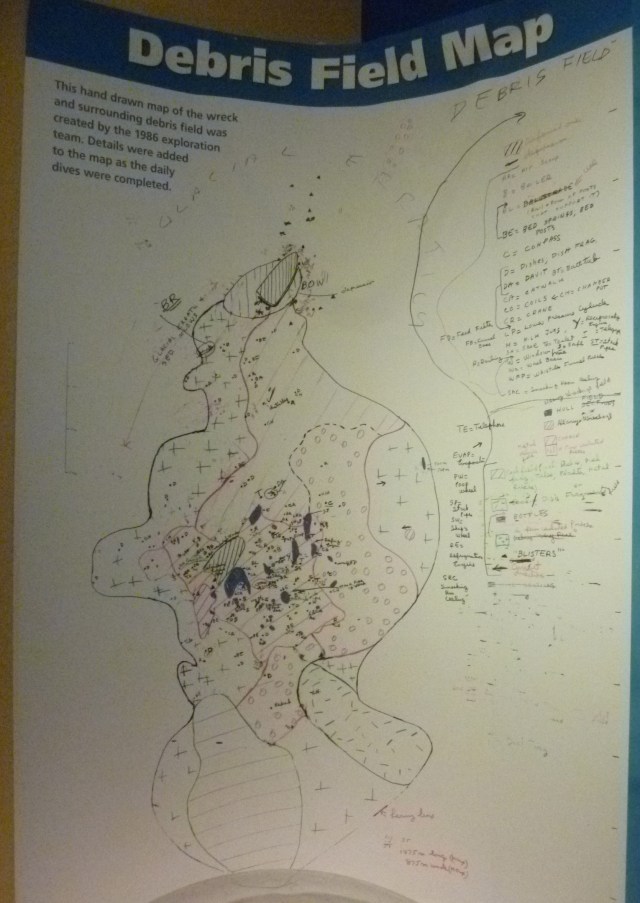
We also called in to see the displays at the WHOI Visitor Centre. The main exhibition highlight is the 1985-1986 discovery and exploration of the wreck of the Titanic.

Titanic 1


Titanic 2


Titanic 3

“This 1/570 scale model of the Titanic stern is on loan to WHOI from Roy Mengot of Plano, TX. Roy’s model is based on WHOI data and imagery and is among the best representations of the Titanic wreck as it was found during the 1985 and 1986 WHOI expeditions. The completed bow and stern models took 3,000 hours to build.”

Titanic 4

In addition to the Oceanographic Institute Woods Hole is also home to The Marine Biological Laboratory (MBL), The National Marine Fisheries Service, the Sea Education Association, The United States Geological Survey and the Woods Hole Research Center. Wow! That’s home to a lot of eggheads.

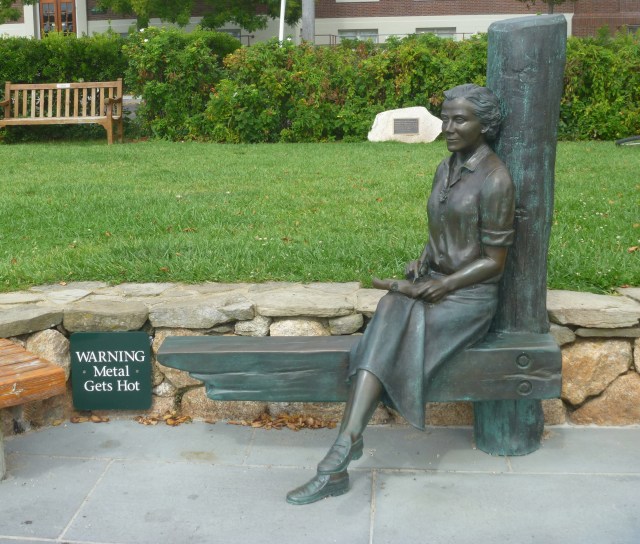
There’s a memorial statue to Rachel Carson author the far-reaching text “The Silent Spring”.

“I had my first prolonged contact with the sea at Woods Hole. I never tired of watching the tidal currents pouring through the Hole – that wonderful place of whirlpools, and eddies and swiftly racing water” Rachel Carson, author of  The Sea Around Us; The Edge of the Sea; Under the Sea Wind; Silent Spring. Scientist, writer and colleague at MBL, NOAA and WHOI 1907-1964

Rachel Carson on the hot seat

Rachel Carson on the hot seat!

Finally, I still haven’t got round to reading it but maybe I should read this first :

Moby Dick Book


LLBean: Bike, Boat, Ski, Hunt, Fish, Hike and kit out your Cabin or Home


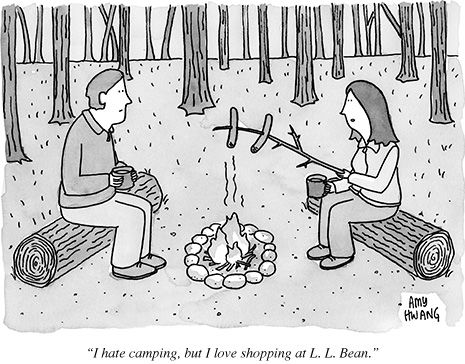
I hate camping ...


Don’t you just love this cartoon which I saw in The New Yorker earlier this year? It really sums up the last full day of our holidays this year. We stayed at a rather smart hotel in Portland, Maine for the final two nights and spent the afternoon at one of our favourite stores. It’s an amazing place and this was our third visit.

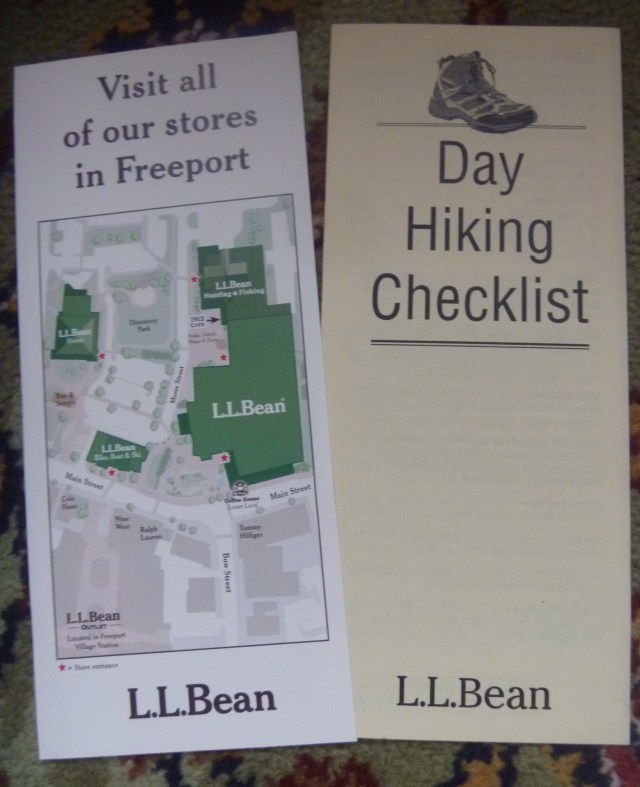
Hiking list

To make sure you don’t forget anything

About a twenty minute drive north of Portland is the town of Freeport. And Freeport is the home of LLBean. In fact Freeport is given over almost entirely to shopping (there are many outlet and other stores) with some hotels and restaurants thrown in. I suppose some people live there but you wouldn’t notice.

LLBean 2009

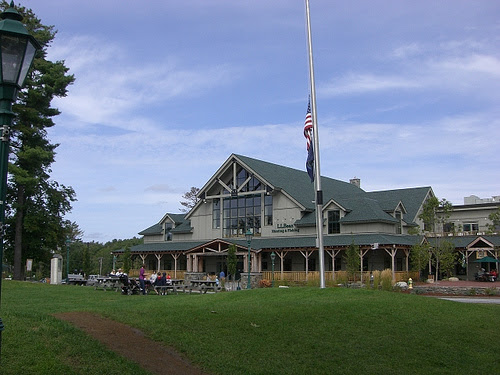
The Flagship Store : we visited on 11 September 2009 (hence the flag at half-mast)

LLB Main entrance

The Main Entrance

L.L.Bean, Inc. has been a trusted source for quality apparel, reliable outdoor equipment and expert advice for over 100 years. Founded in 1912 by Leon Leonwood Bean, the company began as one-man operation. With L. L.’s firm belief in keeping customers satisfied as a guiding principle, the company eventually grew to a global organization with annual sales of $1.56 billion. Our company headquarters are in Freeport, Maine, just down the road from our original store.

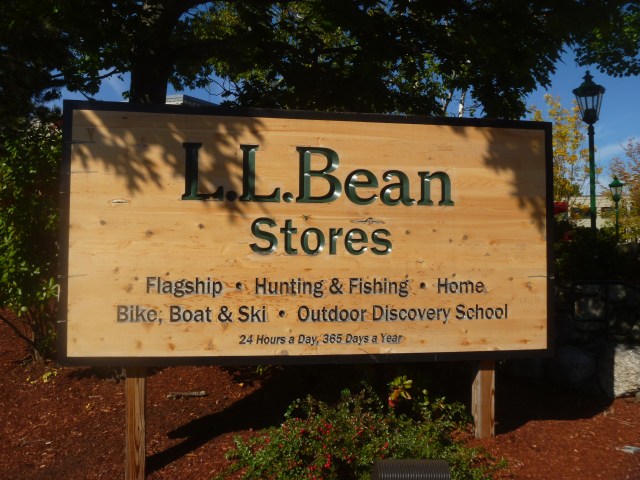
LLBean sign

With over a century in business, a satisfied customer is still our most important goal. We’re proud of our heritage and values, and we invite you to celebrate with exciting events and activities throughout the year. In the meantime, you’re welcome to browse the stories, facts and figures in this section and learn more about our company, our heritage and our history.” [From the website]

140711_BootmobileLander_TwitterSlice

Bean Boot MoBile

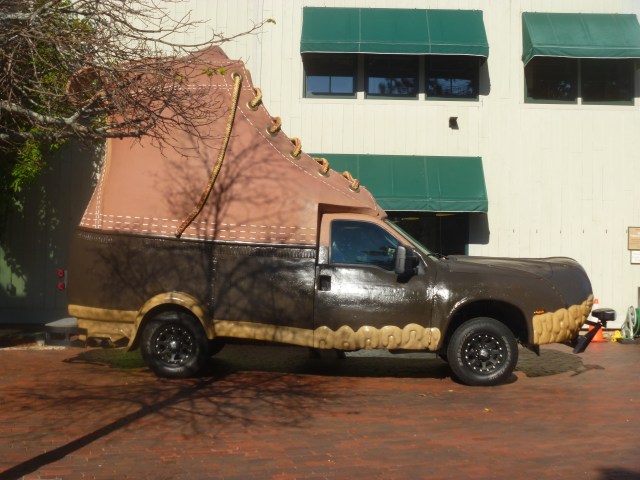
The Bootmobile

LLBean never closes! There are no locks on the doors and it’s even open on Christmas Day. However, although all of this sounds like a gimmick the goods are all excellent quality and, with the current exchange rate, reasonably priced. I came away with a couple of pairs of walking trousers (trail pants) and another fleece (I have bought four of these altogether on different visits). In the past I have bought a tote bag, waterproof over trousers, other casual trousers etc all of which are still in use.

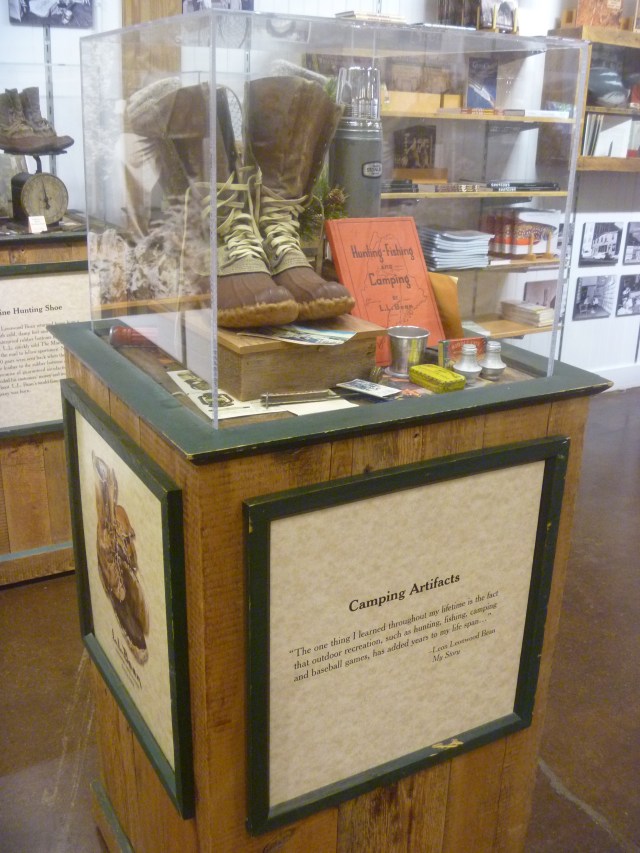
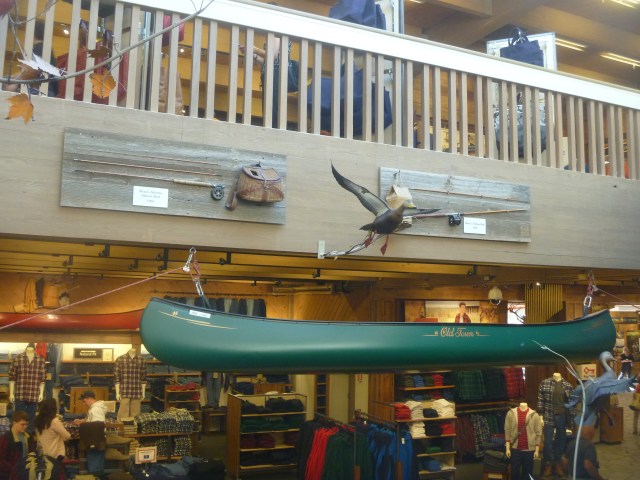
But the main store is not just of interest to me as shopper. There’s also lots of history : how they enjoyed the outdoor life in the past and how it’s all come a long way since!

Camping artefacts

Camping Artefacts

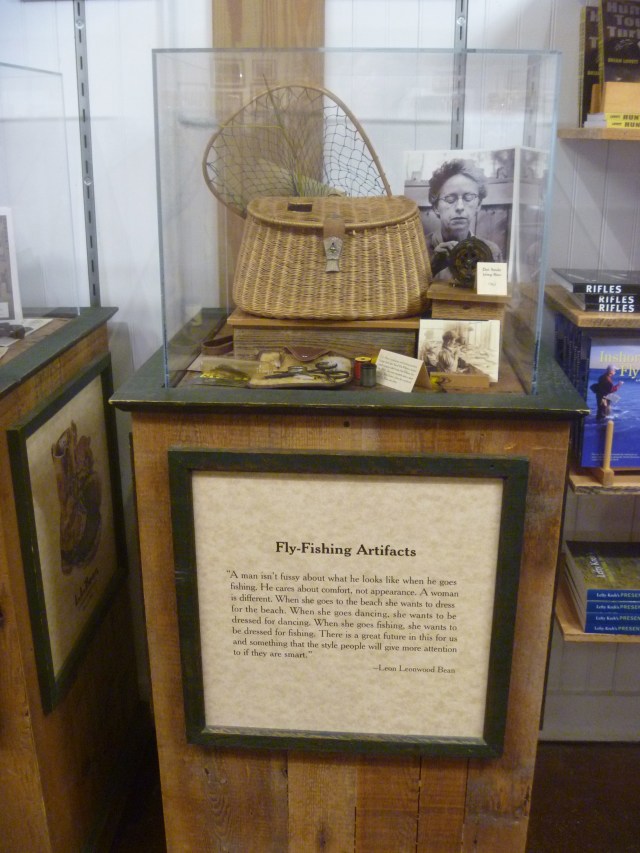
Fly fishing artefacts

Fly Fishing Artefacts

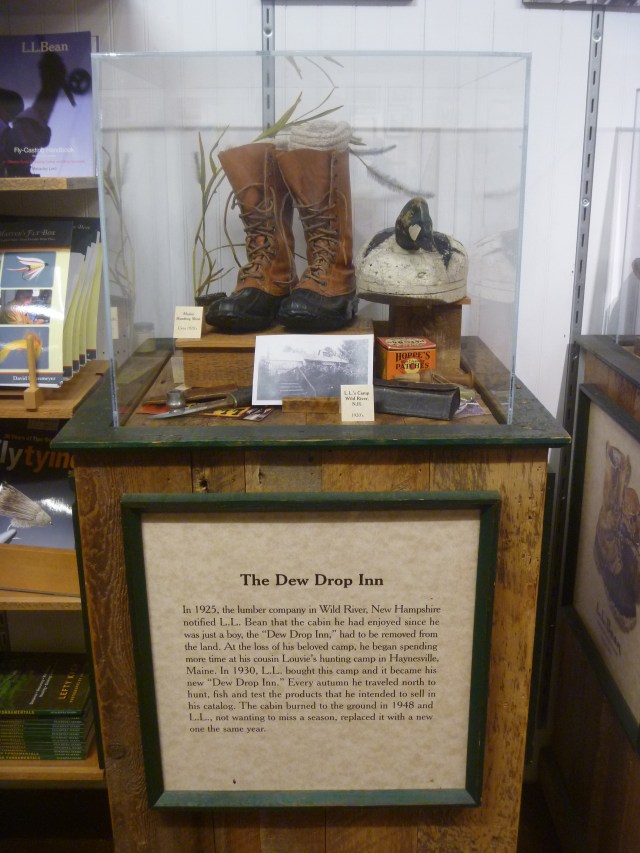
Dew Drop Inn

One of LL’s early camps “The Dew Drop Inn”

Kayak

LLB 3

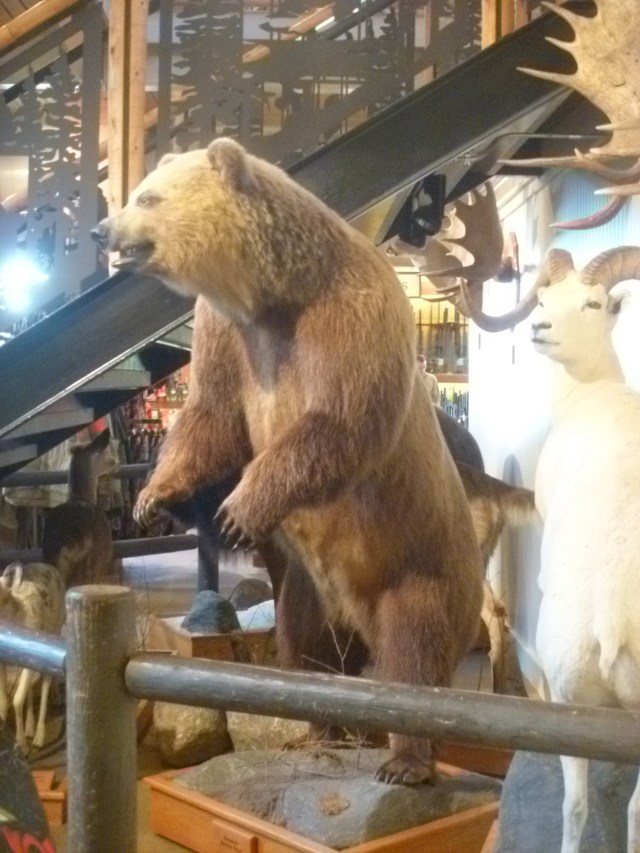
Nearest I came to a bear

The Nearest I came to a Bear!

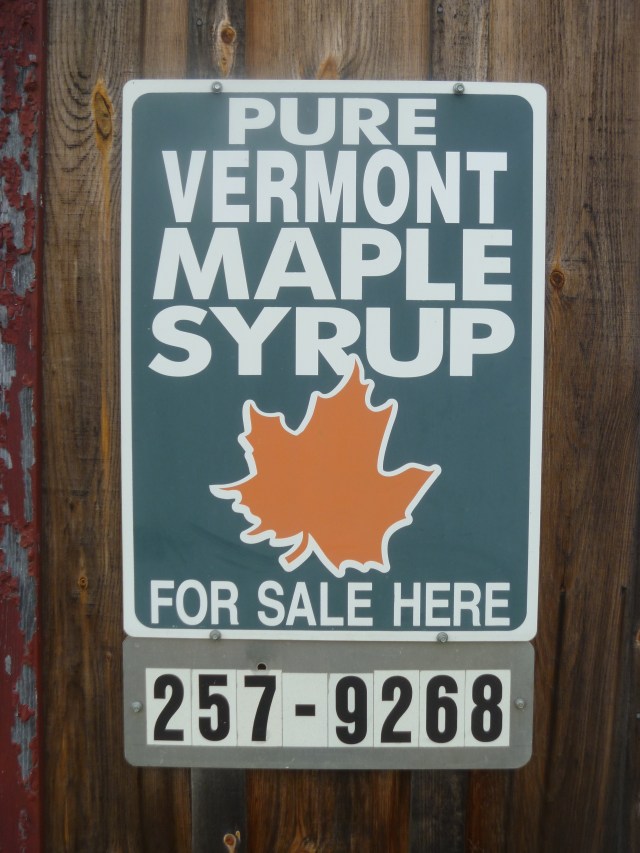
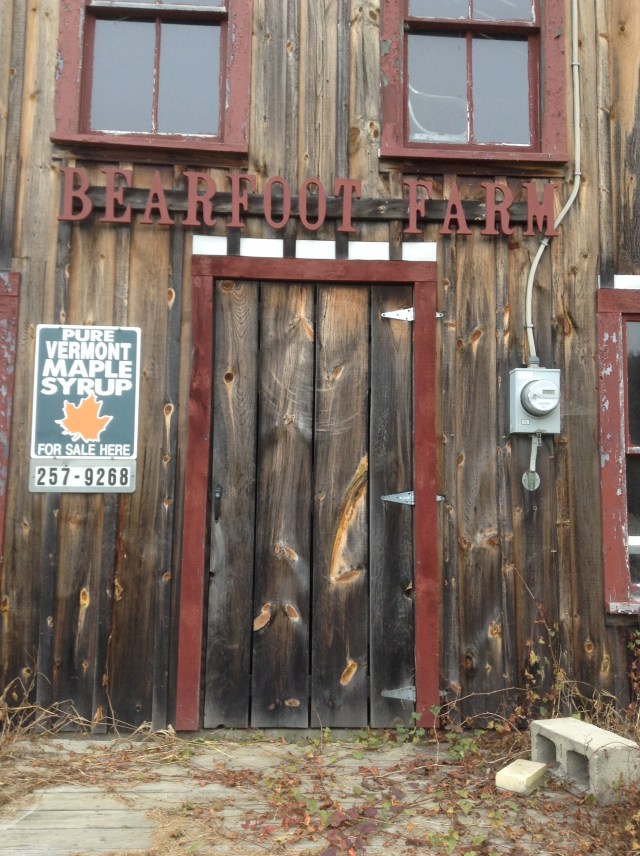
Pure Vermont Maple Syrup

Pure Vermont Maple Syrup

Do you know about maple syrup? Vermont is famous for it. You see farms and smallholdings with ‘maple syrup for sale’ everywhere in the Brattleboro and Dummerston townships.

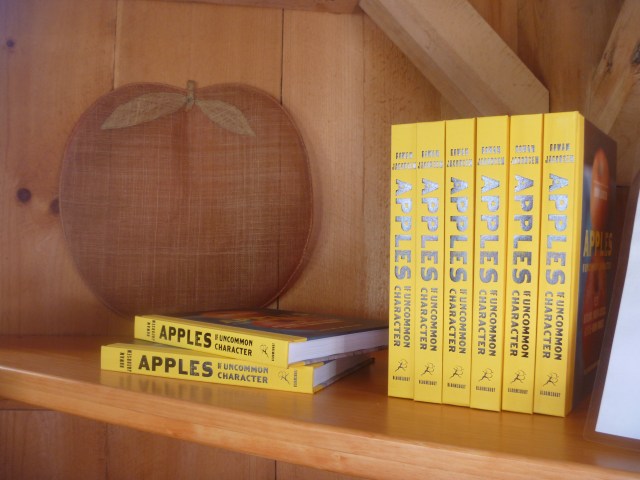
Apple books

 Apple books for sale at the Farm Shop

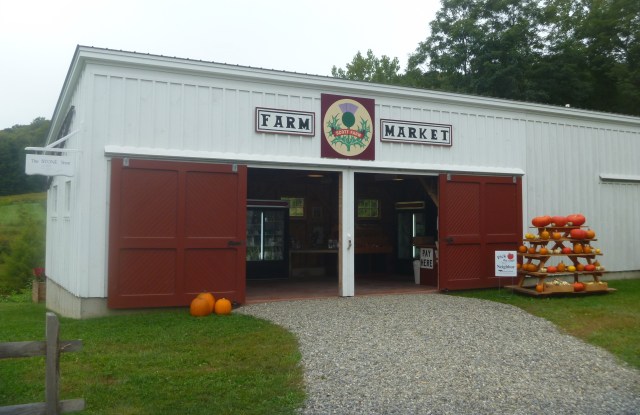
You can also buy it at the Scott Farm, Dummerston where the Landmark Trust USA have their offices. I always like to visit the farm and shop as it is a pleasant walk along the quiet, dusty road from Naulakha/The Carriage House.

Scott Farm Shop

The Scott Farm Shop

I wrote about my previous visits to the farm and Landmark Trust offices here.

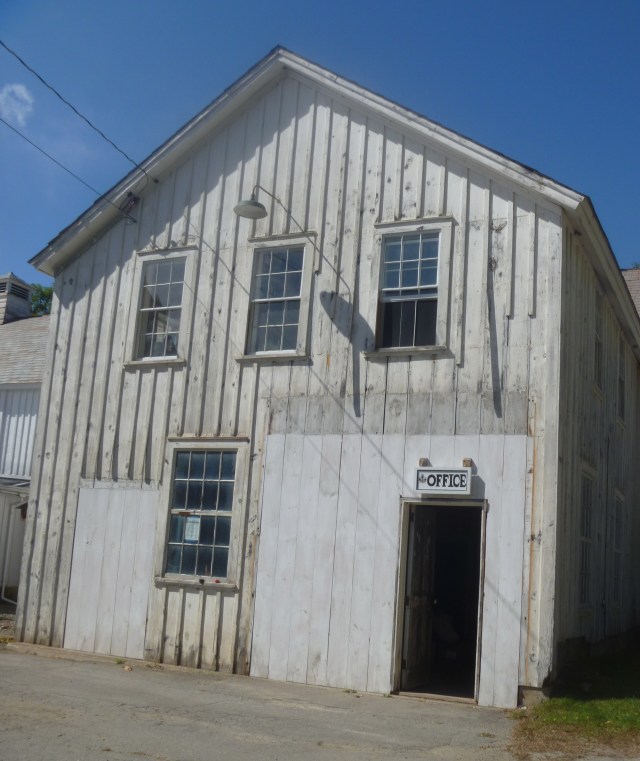
LMT USA Office

Landmark Trust USA Offices at Scott Farm

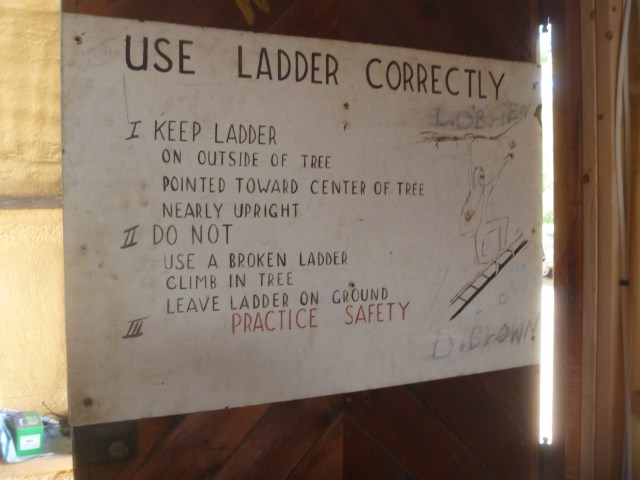
Ladder instructions

Ladder Instructions Notice in the Offices

On Dummerston Road

Just beyond the Scott Farm is an old sugarhouse. It doesn’t look as if it used any more although there’s a decent wood pile alongside.

Maple Syrup door

In order to try to find out more about the life of Emily Dickinson I took with me the novel “The Sister” by Paola Kaufmann. I found this excellent book a lighter read than perhaps a serious biography (and certainly a lot lighter to carry than Lives Like Loaded Guns the biography by Lyndall Gordon). In an early chapter Lavinia describes a local expedition to collect maple syrup (this was in northern Massachusetts in about the 1850s). I reproduce these paragraphs here :

“The history of the maples is a beautiful one. Throughout the summer, and thanks to the sun that for so many hours bronzes the tree canopy, sugars begin to accumulate in the leaves, which later are converted into sap, amassing like treasure in the trunks of the trees. This is the sweet soul of the maple. Towards the end of the summer and during autumn, the maple sheds these very leaves that have acted as sponges, soaking up sunlight. These leaves – some reddish, others yellowish – fall with the first frosts. Then, sweet soul of sap, protected behind layer after layer of living tissue; dead pulp and bark, remains intact, becoming sweeter and sweeter while the snow builds up on the dry, dead-looking branches and against the sleeping trunks; and the farmers keep the surrounding area clear so that should a tree fall it should not damage one of the young maples.

Maple leaves?

Then spring arrives, and thanks to the sweet sap hidden away on the inside, the maples return to life; the new shoots appear timidly to greet the sun that slowly grows more and more yellow, and this is when the work of the sugar-maker really begins: the maple harvest. Sometimes, if spring comes early or if winter has not been too severe, the operation begins in the middle of February, but normally the maple harvest is during March, although there is no one simple precise sign: the time is usually called the “sugar season”. Some believe that the sugar season is announced during the day by the crows, unable to wait in silence for the arrival of warmth.

The sugar-men know exactly where, amidst the dense woodlands, the edible syrup is to be found: it takes 40 years for a tree to grow from planting to sugar production. The men head off to these places with the sledges, as snow is still thick in the drifts, armed with wooden pails girdled to perfection with metal rings. The night before the first harvest they hang these pails outside the cabins full of hot water, then cold water, so that the slats swell into each other, helping to seal them. And they go, with their sledges, their pails and their tools, to bore into the maples a hole no more than three inches wide, three feet up, like a small wound through which the soul of the tree willingly bleeds. The healthiest and largest of the maples will tolerate up to three of these holes, and the sugar-men try never to wound the tree twice in the same place, always allowing wounds of the previous year to scar over completely. The pails hang from the spouts and they are left to collect the clear sap that drips down, slowly at first, then as time goes by, much quicker, until there is none left. When the pails are full, their collective contents are poured into enormous boilers, and either fires are lit in special spots in the forest, or the pails are carried to the cabins, where a more industrialized system helps to evaporate the water from the sap. In the forest, when the harvest is small, the dense liquid is poured into metal receptacles that are placed like gigantic kettles above the fire, boiling the syrup. And when it is at the right point, it can be thrown onto the snow, where the syrup acquires its wax-like consistency. If two drops melt as they fall, it means that the syrup is ready to be jarred.

And in this way, each spring, pails are hung from their small taps, and the maples, day after day, continue with their slow and sweet bleeding.”

I usually buy a couple of small bottles to pack in my suitcase and give to our sons. Like liquid gold it is probably just as heavy.


Emily Dickinson Museum : The Homestead and The Evergreens

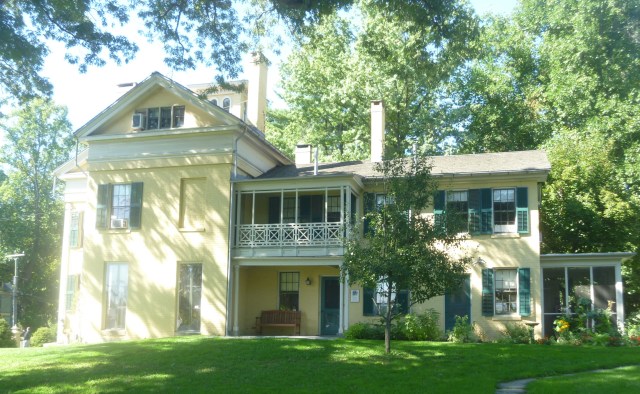
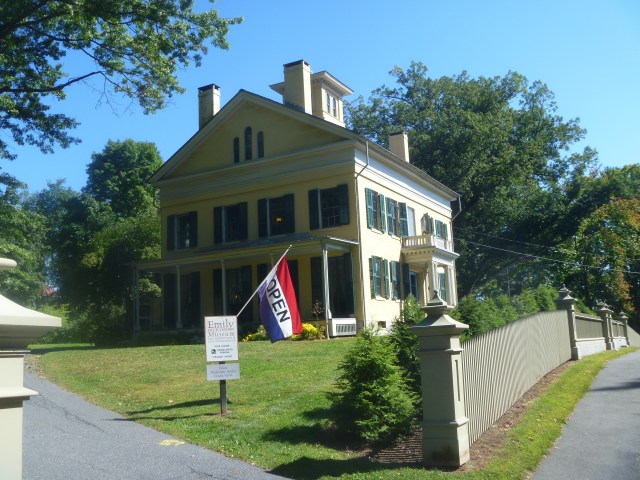
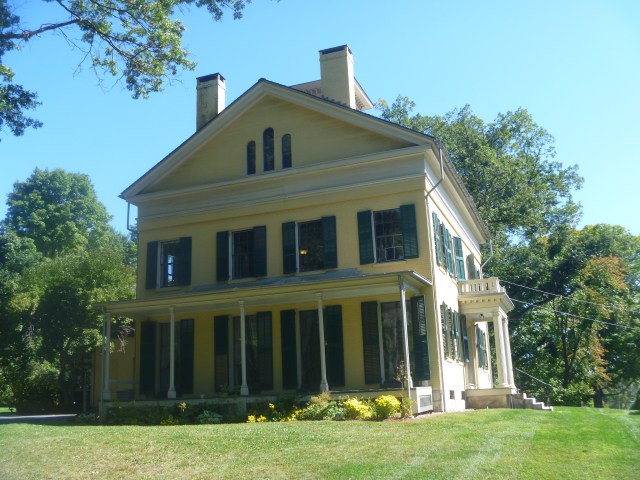
The Emily Dickinson Home

This year we made our third visit to Brattleboro, Vermont and on each visit I have wanted to make the trip an hour south to Amherst where the former home of the poet Emily Dickinson is open to the public as a museum. Amherst is an attractive College town – five in all in the area – with some interesting shops and plenty of eateries.

Emily Dickinson Homestead

On the Friday of our stay I drove myself back down into Massachusetts. The museum was easy to find and I was able to book onto the second tour of the day : Emily Dickinson’s World a 90-minute guided tour of both the Homestead (Emily Dickinson’s house) and The Evergreens (Austin and Susan Dickinson’s home). This constitutes an in-depth focus on Emily Dickinson’s life and family and the major influences on her writing. Includes the parlors, library, and the poet’s bedroom at the Homestead; the library, parlor, dining room, kitchen, maid’s room, water closet, nursery, and “Emily Room” at The Evergreens.

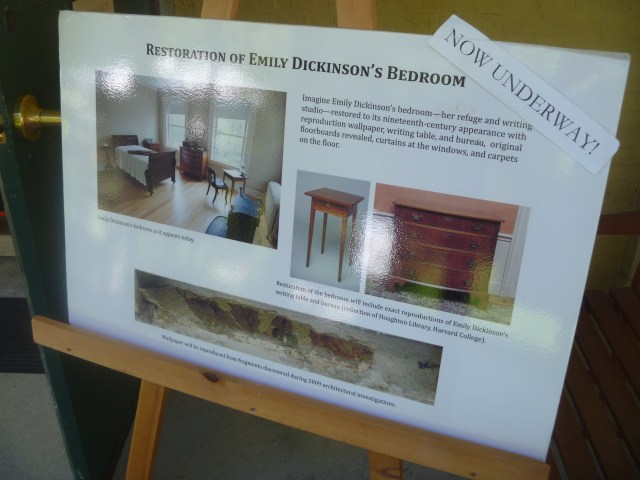
Emily Dickinson room

The Poet’s Bedroom is currently under renovation

As I had just missed the first tour by a few minutes I decided to buy the tour of the grounds which is an audio and self-guided.

“Grounds of Memory: a guide to the Dickinson landscape” The audio tour of the outdoor Dickinson grounds (duration of full-length tour is 60 minutes; visitors may tailor the tour to fit their needs) Explores Emily Dickinson’s fascination with the natural world and her family’s deep interest in the land and  includes eighteen stops outside the Homestead and The Evergreens. Stops may be visited in any order. Each stop offers a 2- or 3-minute narration and at least one Dickinson poem appropriate to that stop.

Narrated by poet laureate Richard Wilbur
Voice of Emily Dickinson provided by poet Mary Jo Salter

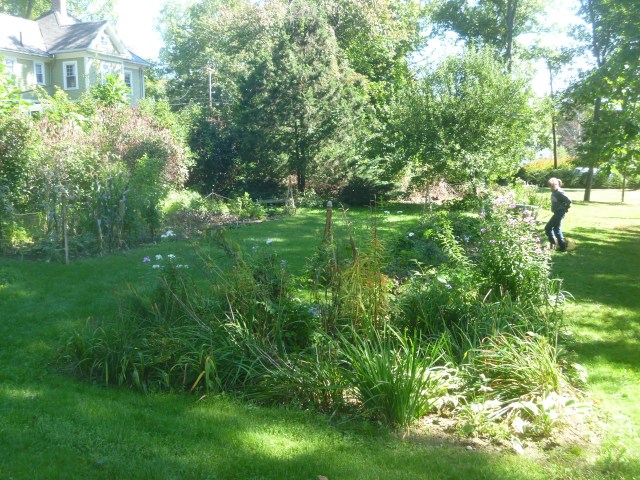
The Flower Garden

 First three stops are at the Flower Garden

Flower Garden and Home

The Ornamental Flower Garden and the Homestead

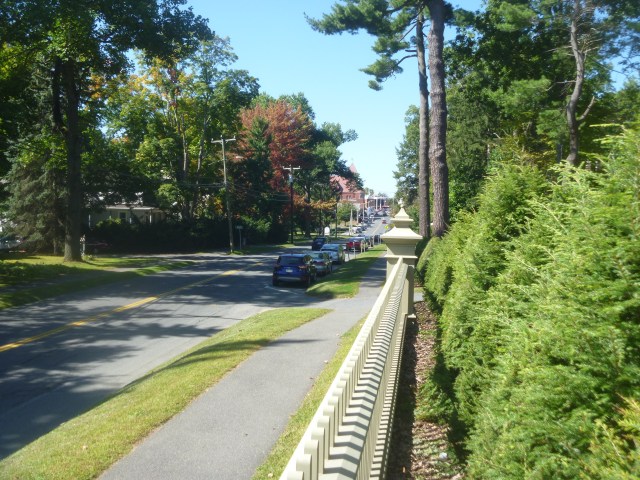
Main St and Amherst

Main Street looking towards Amherst

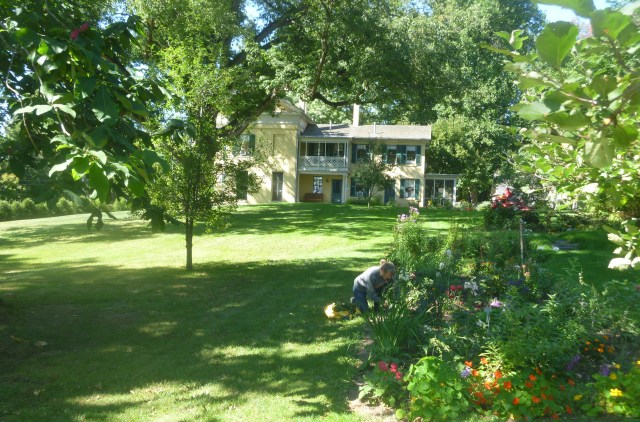
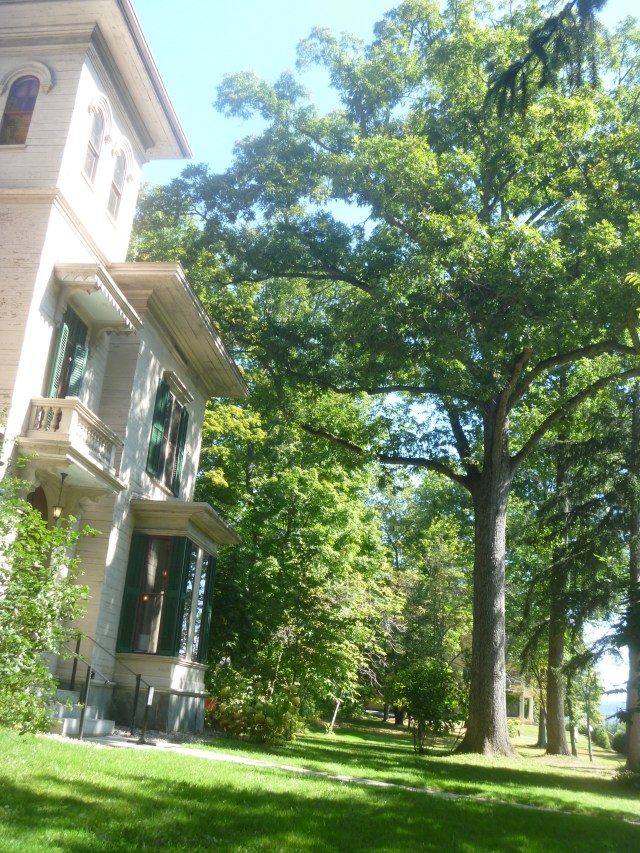
Evergreens

The West Bedroom (1st floor, RHS) was Emily’s

The Evergreens

The Evergreens – built by Edward Dickinson as a wedding gift to his son and daughter-in-law on their marriage

The grassy path

The grassy path between the two homes – “Just wide enough for two who love” (ED)

Here is a brief biography of the poet but the tour really brought to life her life and the lives of her family in particular her sister, Lavinia, her mother and father and her brother, Austen and his family.

EMILY DICKINSON was born in Amherst at the Homestead on December 10, 1830. Her quiet life was infused with a creative energy that produced almost 1800 poems and a profusion of vibrant letters.

Her lively childhood and youth were filled with schooling, reading, explorations of nature, religious activities, significant friendships, and several key encounters with poetry. [She was not always the recluse that many choose to characterise her – at one  time she called herself The Belle of Amherst.] Her most intense writing years consumed the decade of her late 20s and early 30s; during that time she composed almost 1100 poems. She made few attempts to publish her work, choosing instead to share them privately with family and friends. In her later years Dickinson increasingly withdrew from public life. Her garden, her family (especially her brother’s family at The Evergreens) and close friends, and health concerns occupied her.

With a few exceptions, her poetry remained virtually unpublished until after she died on May 15, 1886. After her death, her poems and life story were brought to the attention of the wider world through the competing efforts of family members and intimates.” [source]

This was a house visit par excellence. The 90 minute houses tour was filled with interest and insight into the lives. The Dickinson Landscape self-guided audio tour complete with poetry readings added to almost complete immersion into ED’s life and thoughts. Our house guide was entertainment herself and added poetry quotations and a quick ‘class’ in the importance of word choice in a ‘schoolroom’ – in which we all participated. No photography was allowed in the house but the tour was such fun and so informative that I will forgive them for that. Having visited the home of a poet I had barely heard of I came away feeling as if I met her myself. Well done, Emily Dickinson House Museum!

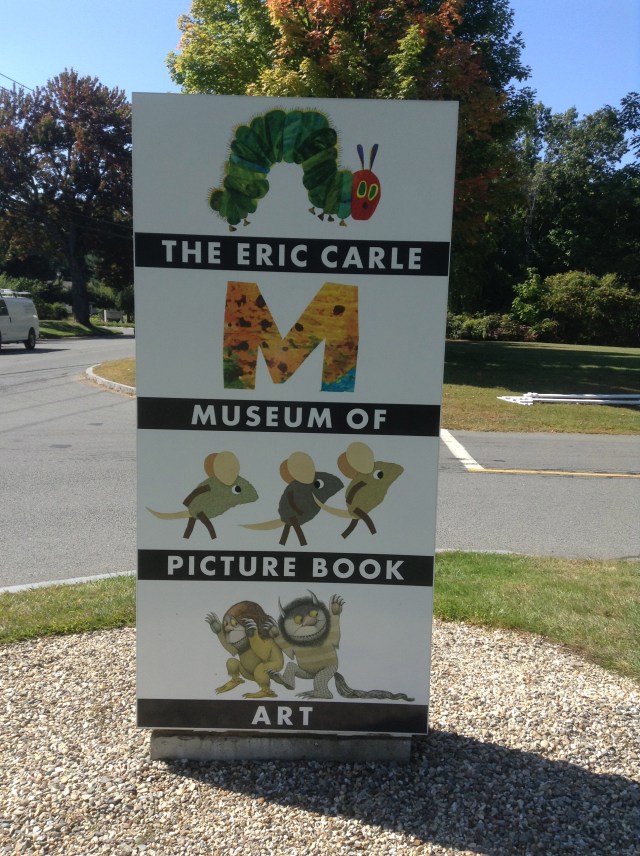
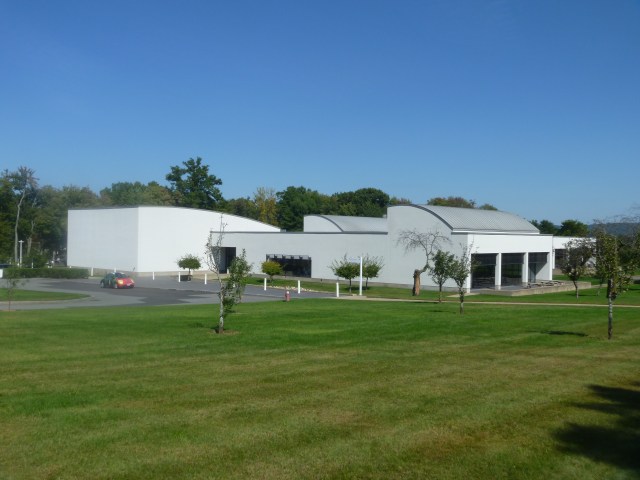
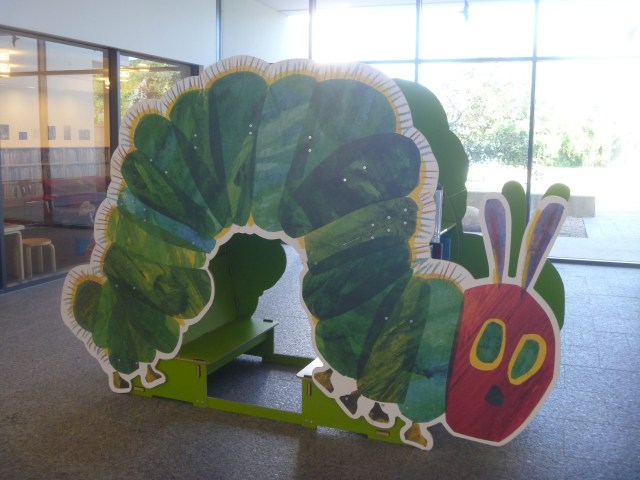
On leaving the Museum I couldn’t resist a quick visit to another nearby museum – almost from the sublime to the ridiculous – The Eric Carle Museum of Picture Book Art. A purpose-built centre devoted to the art of contemporary children’s book illustrator Eric Carle. We still have a very dog-eared copy of The Very Hungry Caterpillar at home.

Picture Book Art


Carle Museum

 The Eric Carle Museum

The very hungry caterpillar

This is what a Very Hungry Caterpillar looks like!

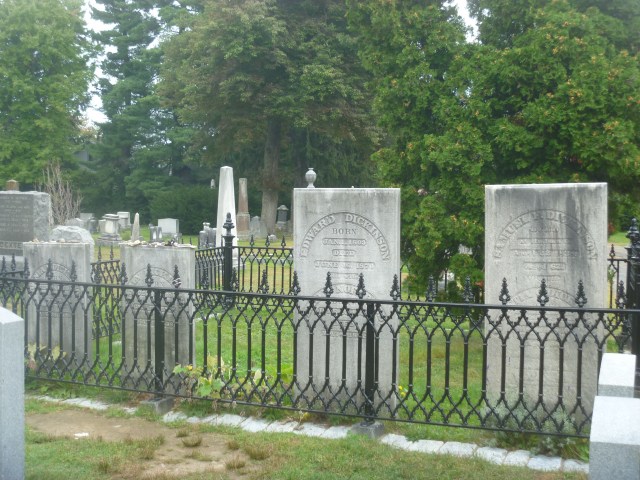
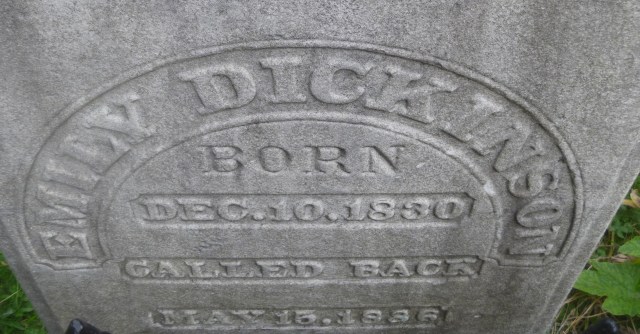
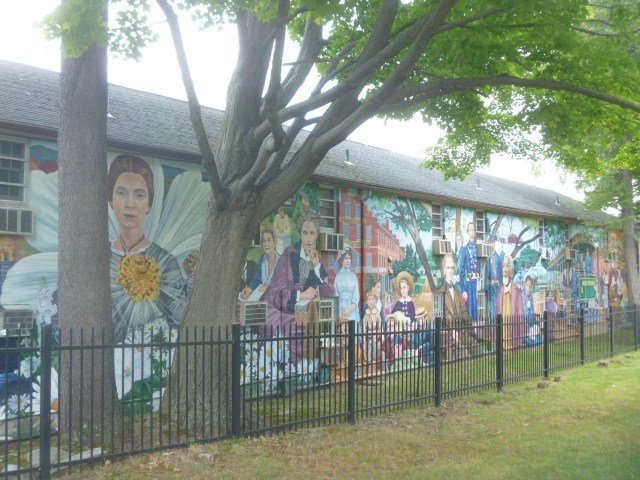
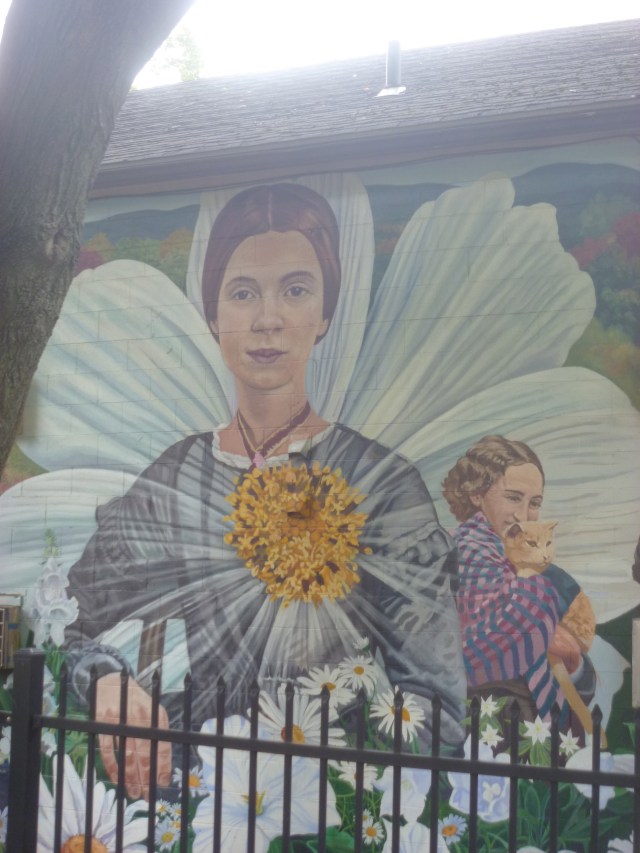
And finally, the next day we both made the journey back down to Amherst, enjoyed a decent lunch and I tracked down the Dickinson graves in West Cemetery where there is also a Community History Mural featuring characters from the Amherst story from all fields of experience (farming, literature, domestic life, education, military, industry and economic life) and including, of course, Emily Dickinson herself.

Dickinson family graves

The Dickinson Graves in West Cemetery, Amherst

Emily Dickinson grave stone

Wording on Emily’s Gravestone

History Mural West Cemetery Amherst

The Amherst Community Mural, West Cemetery

Emily Dickinson on History Mural

Emily Dickinson (Lavinia behind) on the Community Mural

Jervaulx Abbey – Thornton Steward – Cover Bridge Walk

Historic, tranquil, beautiful

It’s nearly 40 miles to Jervaulx Abbey near Middleham, North Yorkshire and Thursday morning dawned rather grimly with rain and dark clouds. It seemed a long way to drive in order to get soaking wet all day.

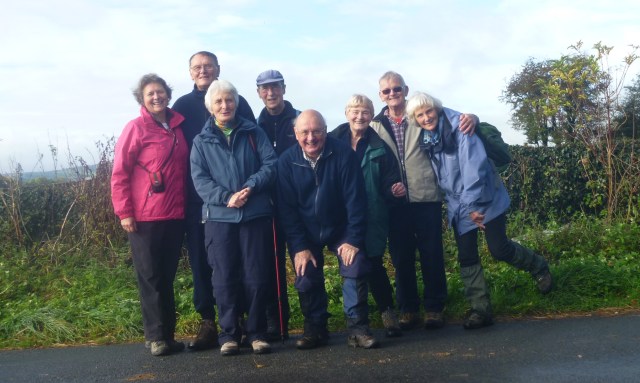
But the Weekday Wanderers were not deterred and we met as usual at 9am at The Grove Church Car Park and two cars – eight of us in all – set off northwards. The rain had stopped and I lead a very successful ramble:

Jervaulx Abbey – Thornton Steward – The Cover Bridge

“Easy walking  – no hills. Field and riverside paths plus a pleasant walk through parkland at Jervaulx. Distance – 7.5 miles. Car parking at Jervaulx (£1 in honesty box)”

Jervaulx ruins

The Abbey Ruins

I had for a long time I had wanted to do this walk – always attracted by abbey ruins and other features of the landscape. I copied the walk from a book of walks from the library over a decade ago and unfortunately did not make a note of the title and author. Some of the features had changed slightly – a hedge was now a fence and a stile now a gate – but the bulk remains the same and the route was easy to find.

a bit of blue sky

A Glimpse of Blue Sky

We always take it upon ourselves to do a “recce’ or “walk out” in advance of leading and I was only able to do this with a friend in August. Believe me the weather on Thursday was a huge improvement on The Saturday in August when we got soaked to the skin.

Wanderers

At Jervaulx we took the public footpath signposted To the Abbey but kept straight on through the park and fields of sheep to the lodge and gates at the far end. There we joined a small, quiet lane that crosses the River Ure (the river of Wensleydale) at Kilgram Bridge just after which we diverted from the lane to cross fields to arrive at Thornton Steward.

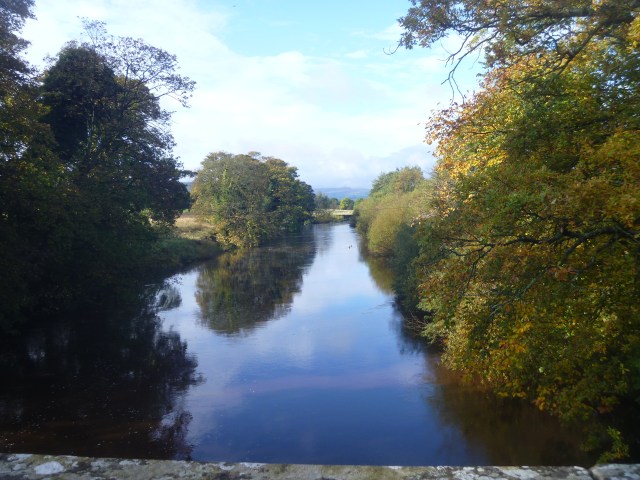
R Ure at kilgram bridge

River Ure at Kilgram Bridge

thornton steward

What a lovely and kind village Thornton Steward is! In August as we lunched on the village green the heavens opened and we rushed to the nearby bus shelter. There we found a bag of fresh damsons with the message – Please take these – free to good cooks – or words to that effect. We took them, shared them and left a message of thanks in the village noticeboard. There we read :

Notice

So we noted the Institute and the benches outside and decided that this was the perfect picnic place for the October walk.

TS Villag institute

Thornton Steward Village Institute

Teas inside

Please make your own teas

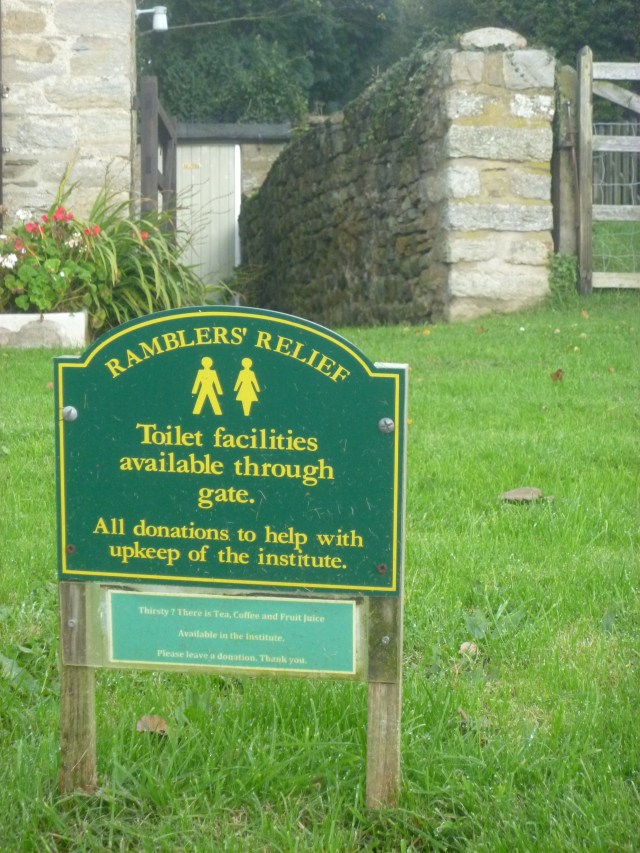
Ramblers Relief

The Ramblers’ Relief was also very welcome!

Sited around a small village green, the village enjoys a wonderful southerly aspect with views across the broad valley to Jervaulx Abbey, Ellingstring and Witton Fell. Sheltered from the north by the higher land towards Finghall, it is surrounded by fertile farmland including the interesting Manor Farm and Danby Hall.

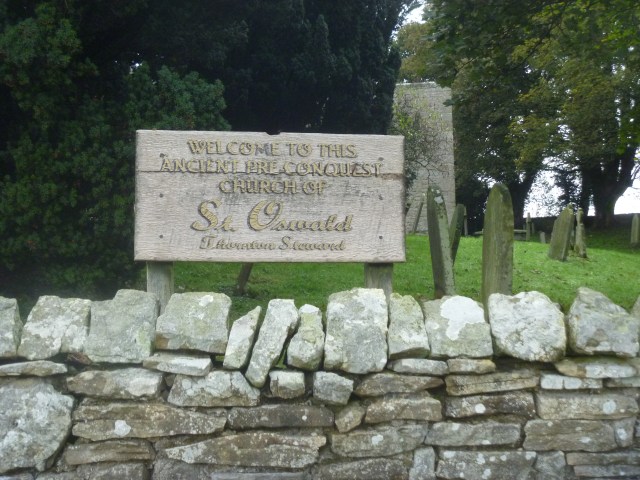
St Oswald's

The small ancient church is situated on lower land a quarter of a mile away, and centuries ago may have been in the centre of the original settlement. The recently discovered thirteen hundred year old graves to the west of the present church suggest ancient settlement in the area.

The church

The “neat, Gothic structure” dedicated to St. Oswald was part of the [Ripon] Diocese and in the patronage of the Bishop of Chester in 1823. The Reverend John Ewbank lived in the fine vicarage in the village, and between 1917 and 1953 the ministry of the blind Reverend Swayne was well known throughout the Ripon Diocese. This church is one of the oldest and most attractive in the country, abounding in history and interesting architecture. The surrounding area is preserved for wild plant and animal life and is a haven of peace and solitude.

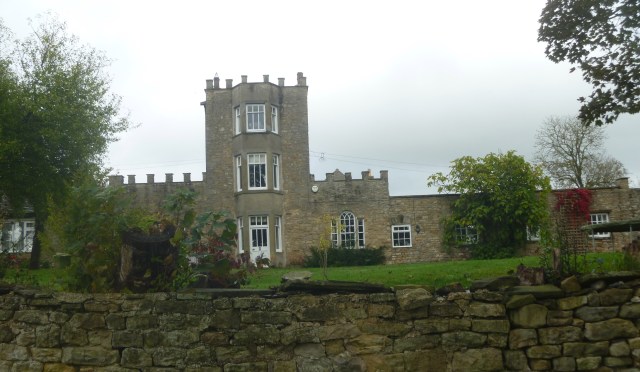
Fort Horn

Fort Horn

In 1815 the school was erected by Captain George Horn, Esquire, [builder of the folly, now a private dwelling, Fort Horn] when the population of the parish was two hundred and sixty five. He was the wealthy “gentleman” of the village and provided a neat School House for John Story the schoolmaster, and an endowment of ten shillings per annum for the education of the poor children of the parish.” [source]

Danby

Danby Hall

After make use of facilities and leaving our donations we headed west out of the village down the private track that leads to the ancient church and thence across the parkland of Danby Hall and out onto quiet lanes which eventually cross the River Ure again and soon after the River Cover (hence, the Cover Bridge). Bothe rivers join to become the Ure and we followed its banks for the final stretch back to Jervaulx Car Park.

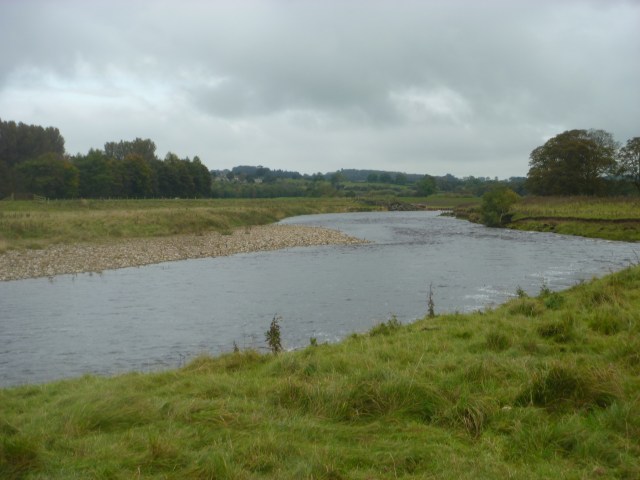
River Ure near Cover Bridge

River Ure at The Cover Bridge

River near end of walk

River Ure near the end of our walk

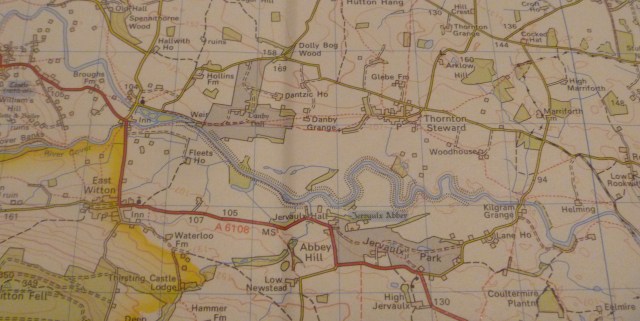
OS Sheet 99

OS Sheet 99

On our walk out we had ice creams at the nearby Brymor Dairy but the majority vote was to head to Masham and the Theakston’s Brewery Visitor Centre where we actually sat outside in the warm sunshine at the end of a most enjoyable and varied walk.