In and Around Anderton House : a Photo Album, 2

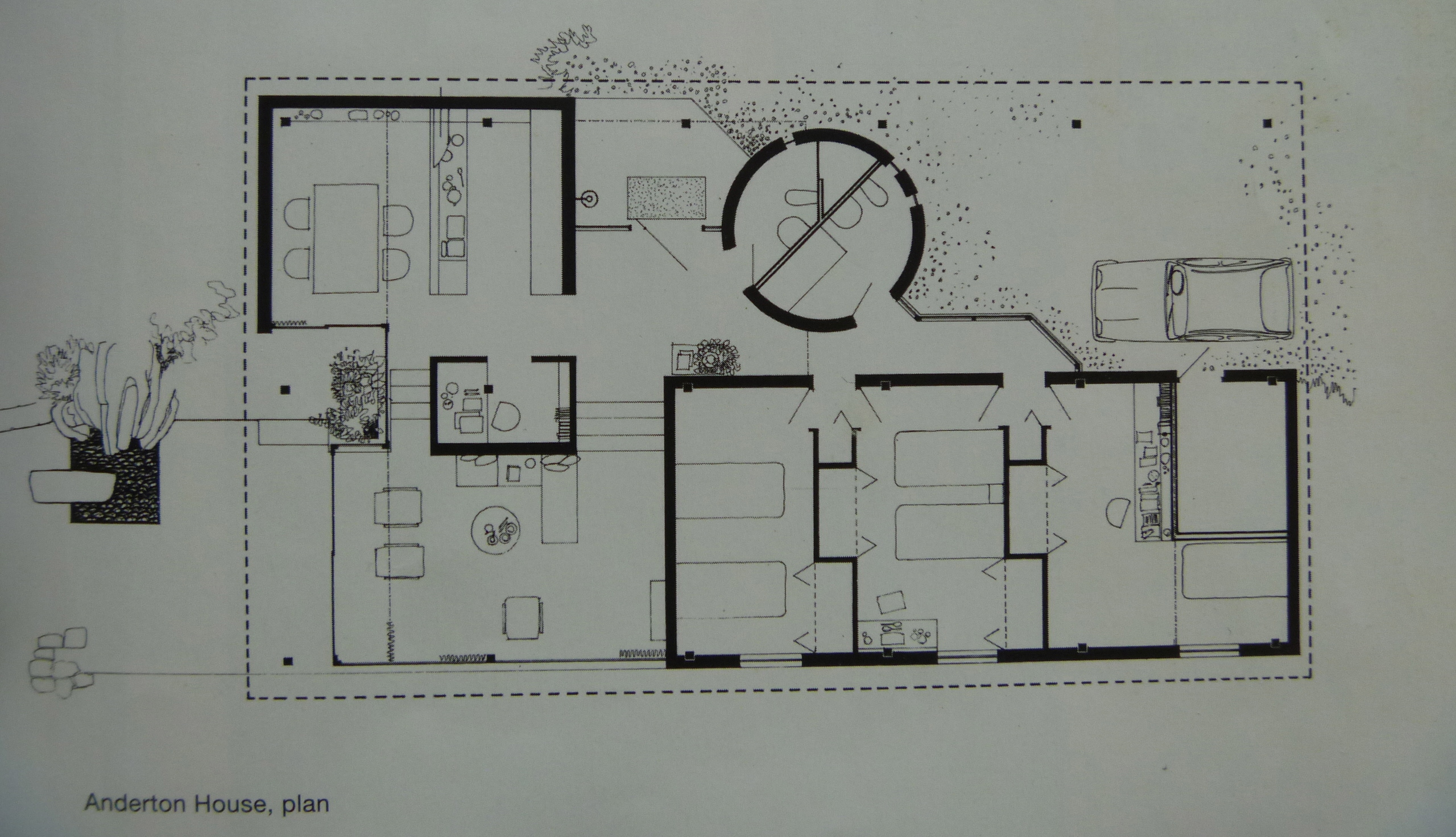
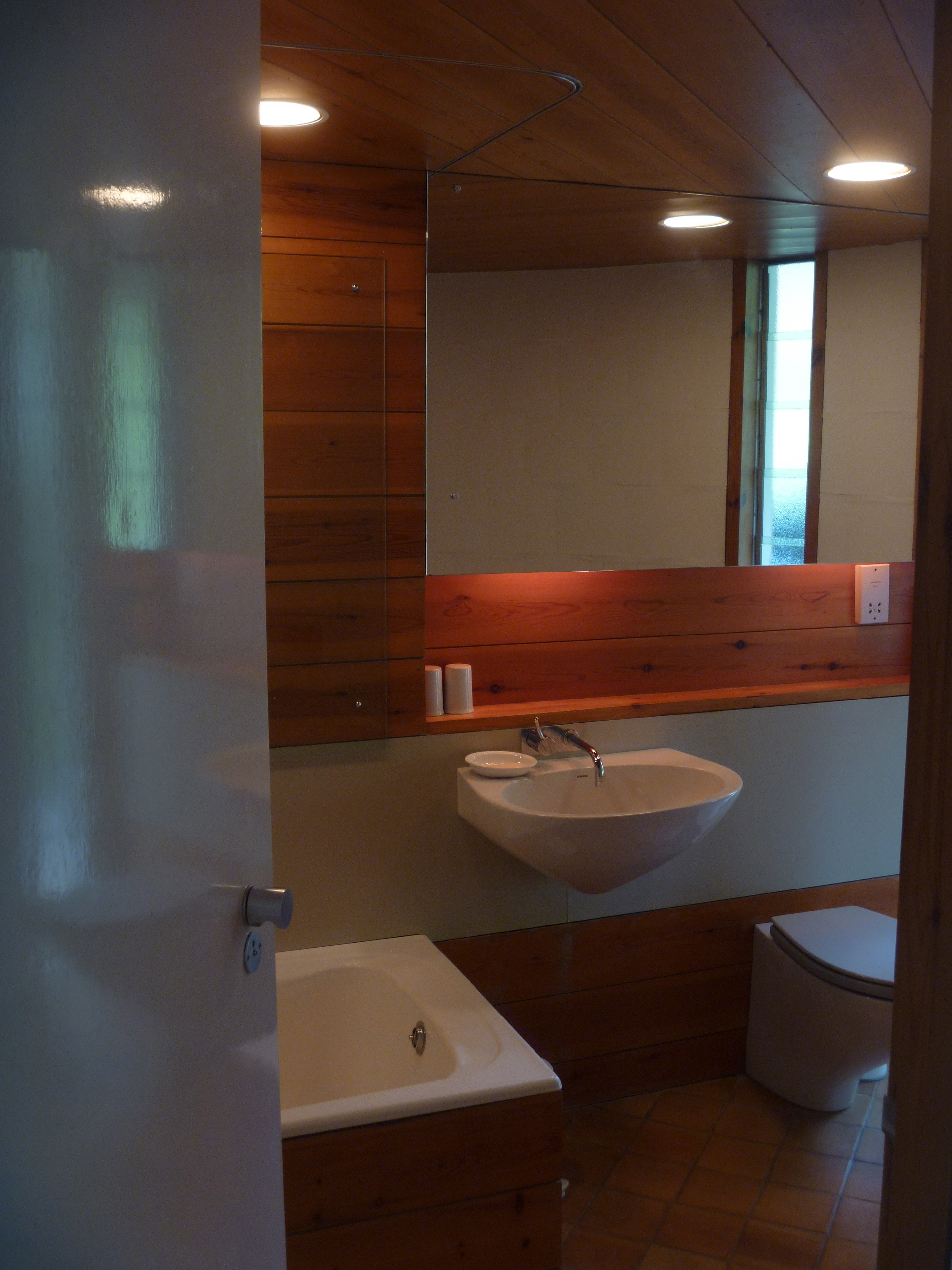
You’ll notice on the plan shown in the previous post that there’s a circular pod containing a guest cloakroom and house bathroom. This pod narrows the corridor between the ‘public’ areas – sitting room, dining area, kitchen – and the ‘private’ sleeping quarters. It’s simple but effective.

Anderton House bathroom

The House Bathroom

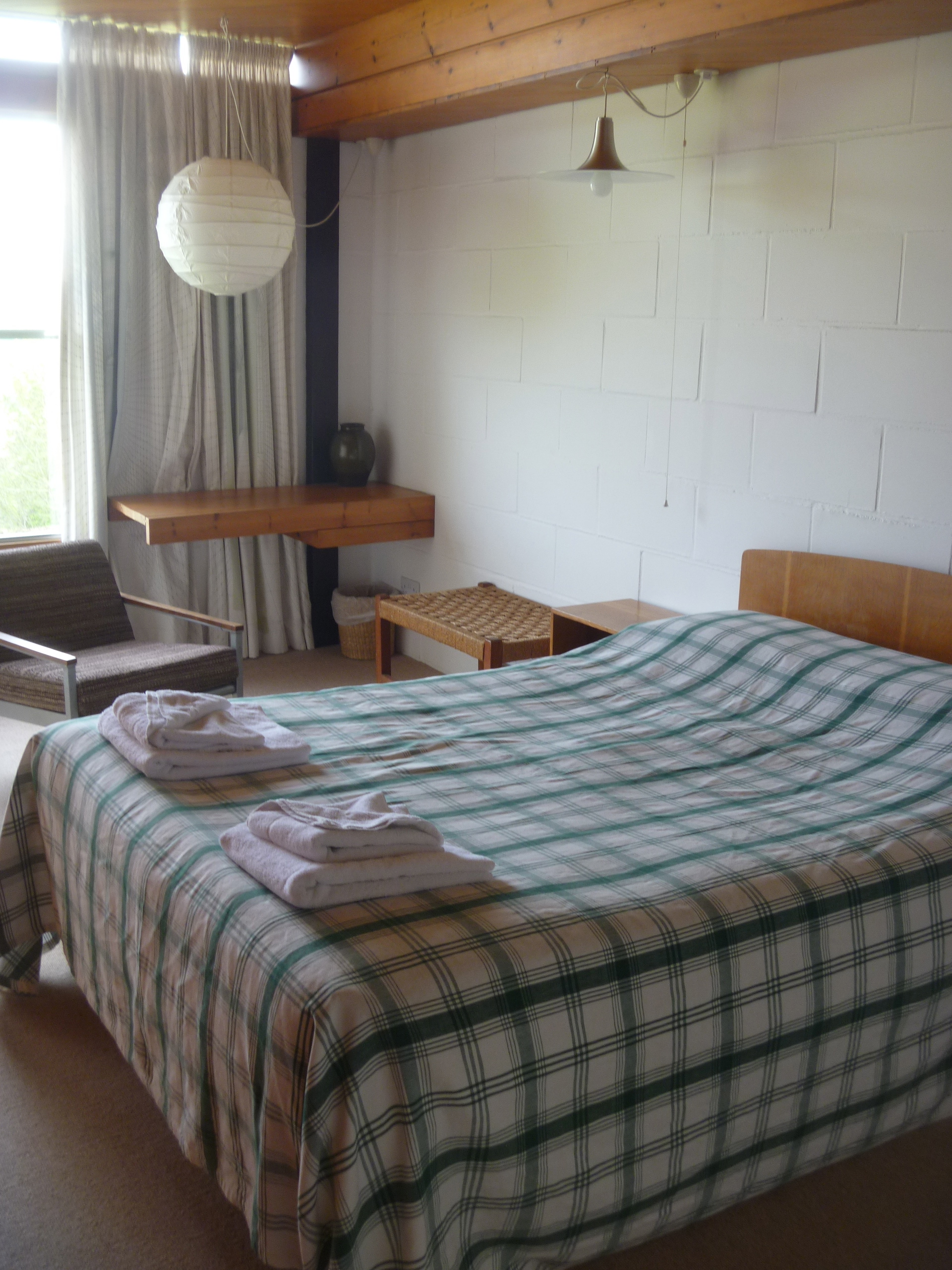
There are three bedrooms: a double, a twin and the single study bedroom (designed for the Andertons’ teenage daughter) that reminds me so much of my student days at The Lawns, Cottingham.

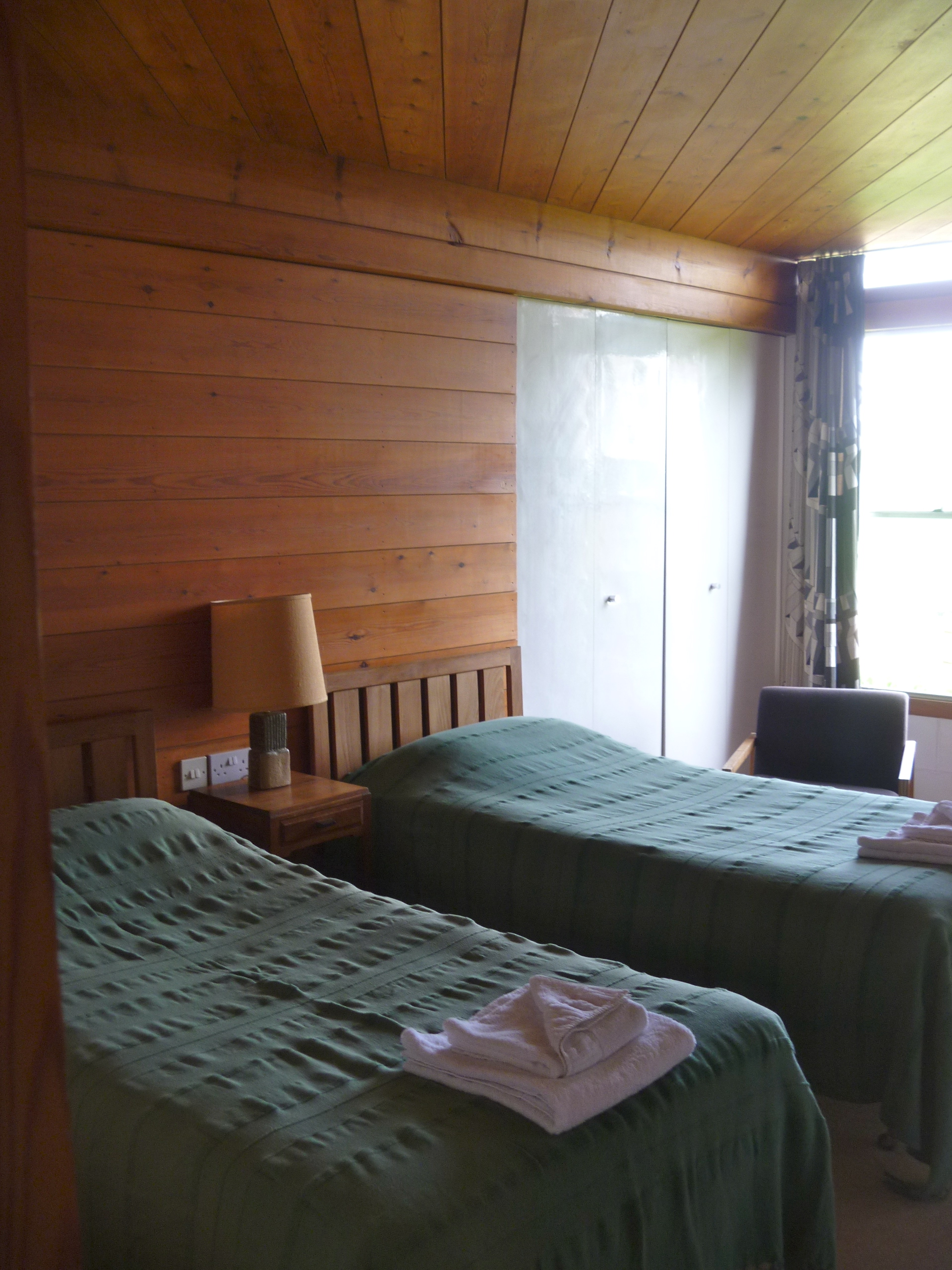
Anderton House double bedroom

The Double Bedroom

Anderton House Curtain fabric 'Palm Trees' by Liberty

Double Bedroom Curtain Fabric – Palm Trees by Liberty

Anderton House twin room

The Twin Bedroom

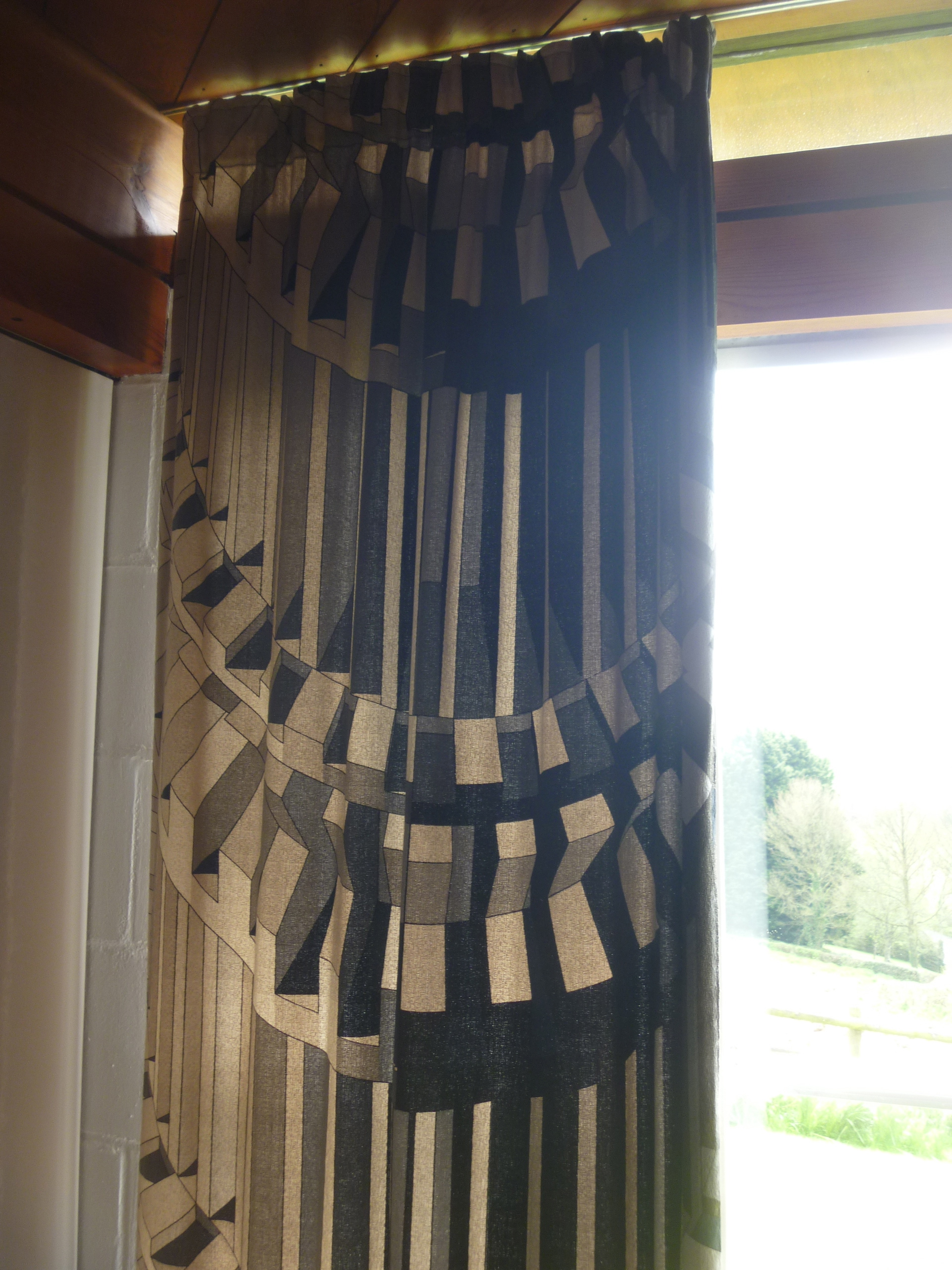
Anderton House Curtain fabric 'Cogwheels' by Heals

Twin Bedroom Curtain Fabric – Cogwheels by Heals

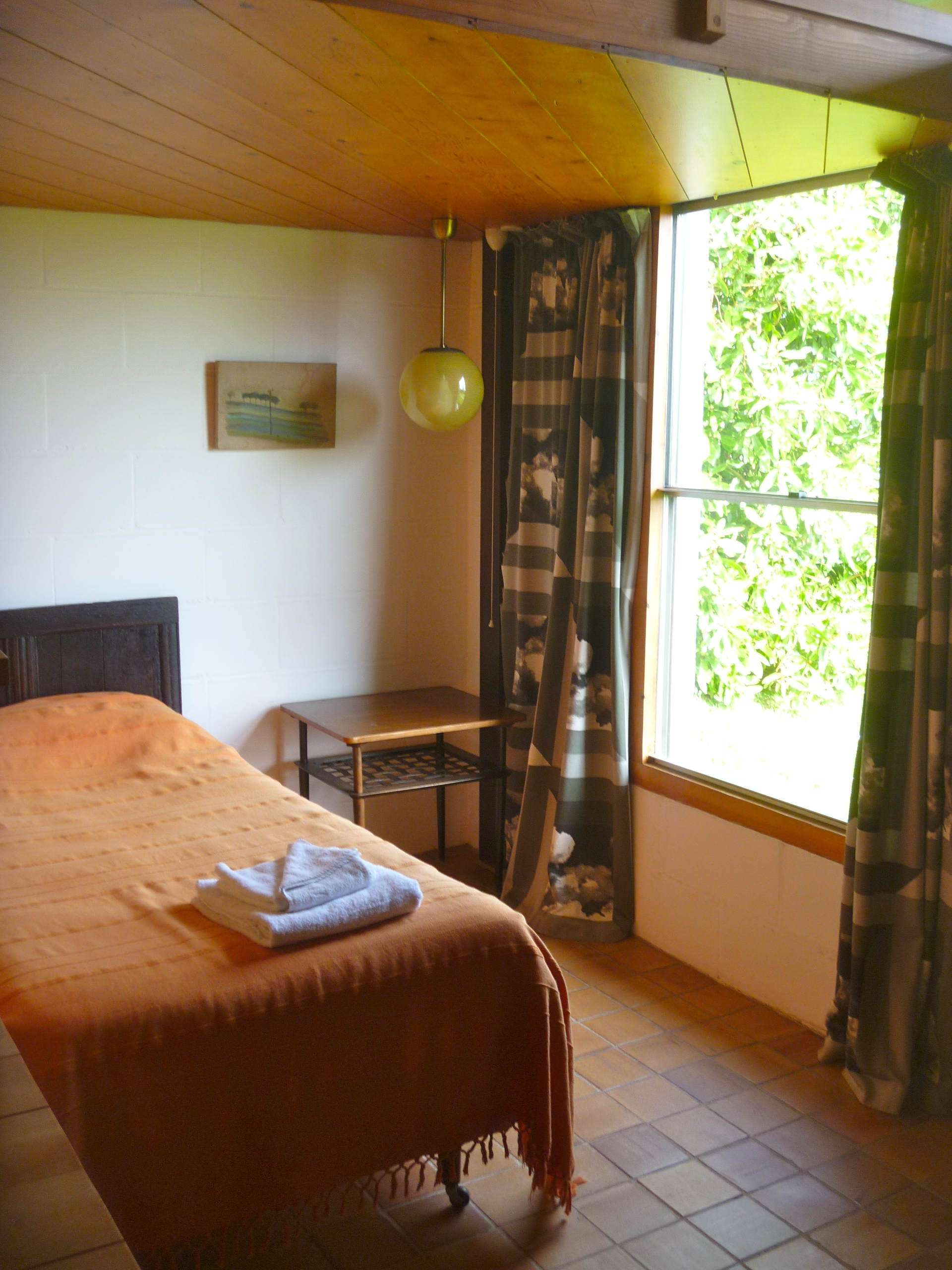
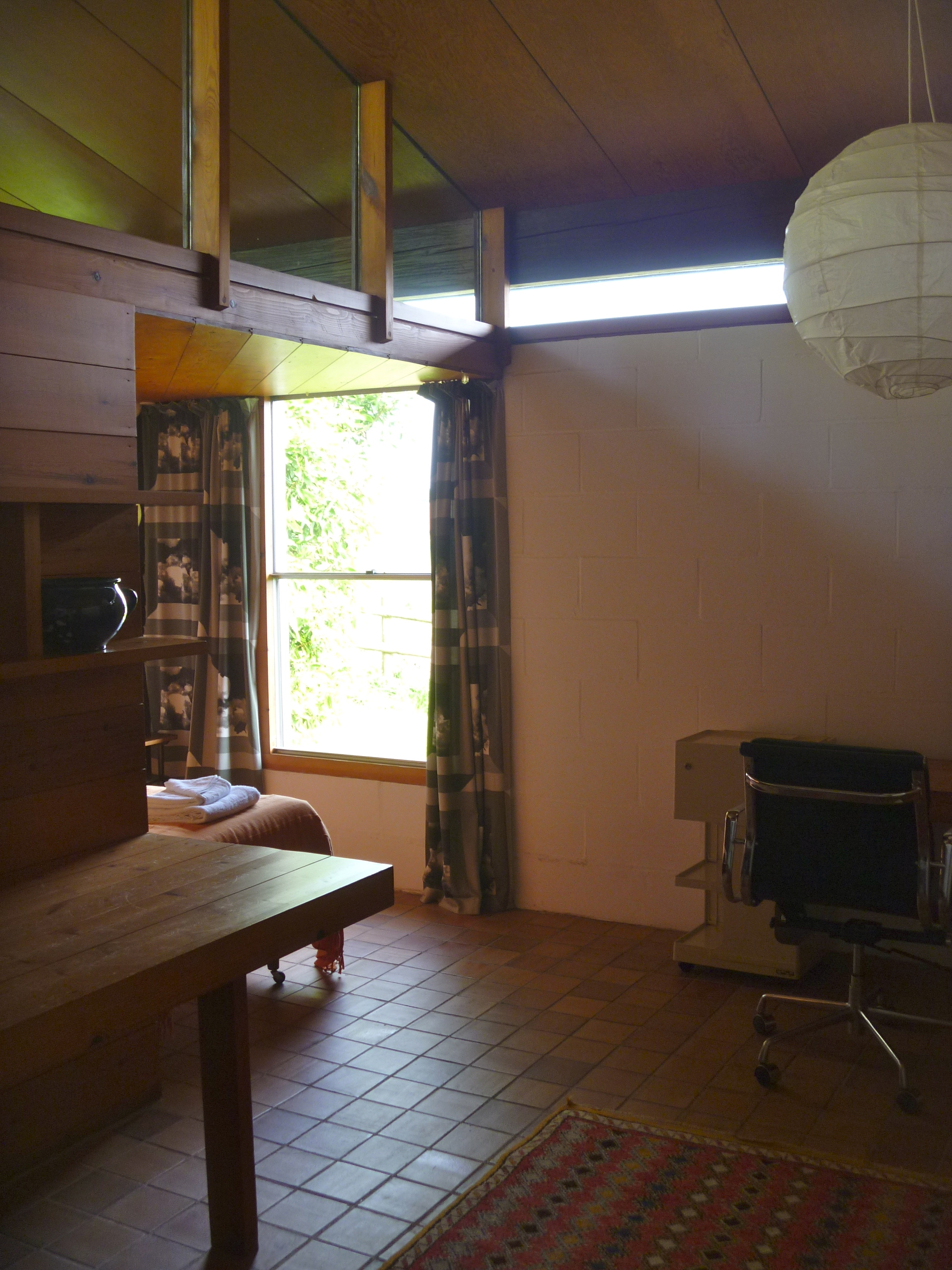
Anderton House single bedroom

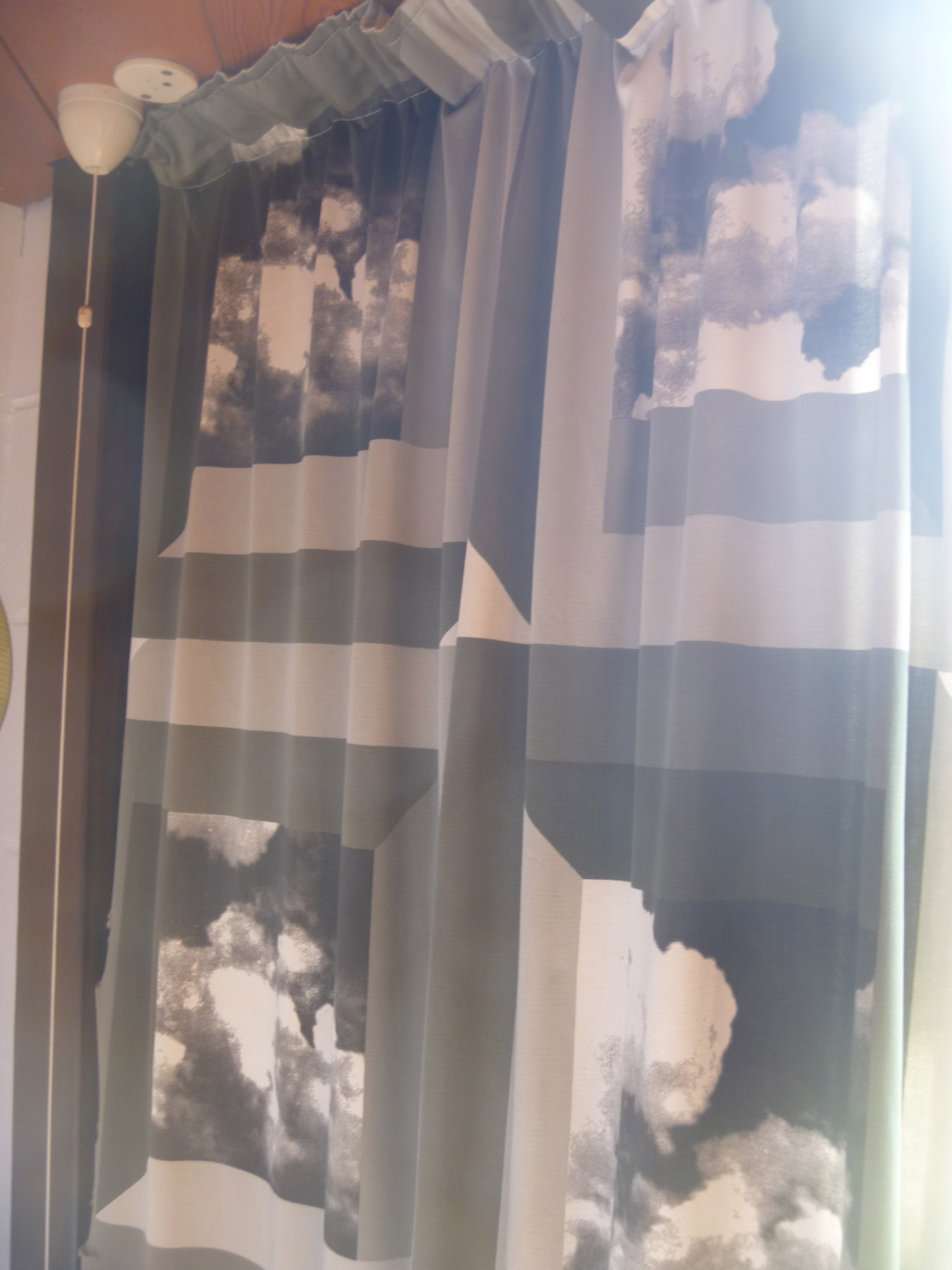
Single Bedroom with Curtain Fabric Nimbus by Heals

Anderton House 'Nimbus' curtains by Heals

Curtain Fabric, Nimbus by Heals

Anderton House single room

Single Bedroom

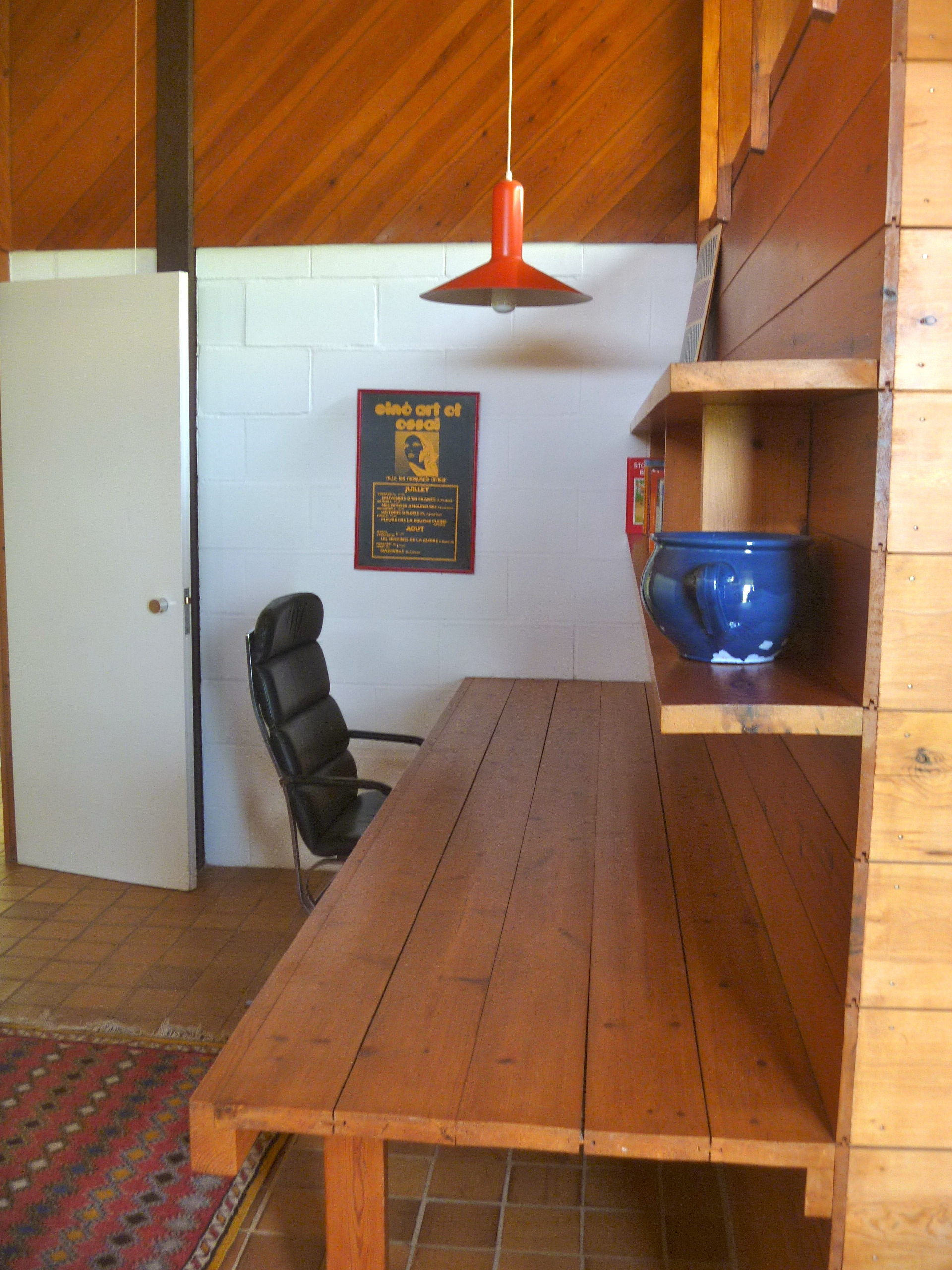
Anderton House single study bedroom

Study Desk in the Single Bedroom

I was intrigued to see a separate selection of fiction on the single study bedroom shelf. Many of the titles/authors I knew had Devonian connections – Ted Hughes, Sylvia Plath, Williamson’s ‘Tarka the Otter’, Thomas hardy, Charles Kingsley. Some I have made a note to read in future in order to discover whether or not there’s a connection or whether the connection is merely the decade of publication  e.g. Dodie Smith’s ‘It ends in revelations’ and David Garnett’s ‘Plough over the bones: a novel about a French village in the Great War’.

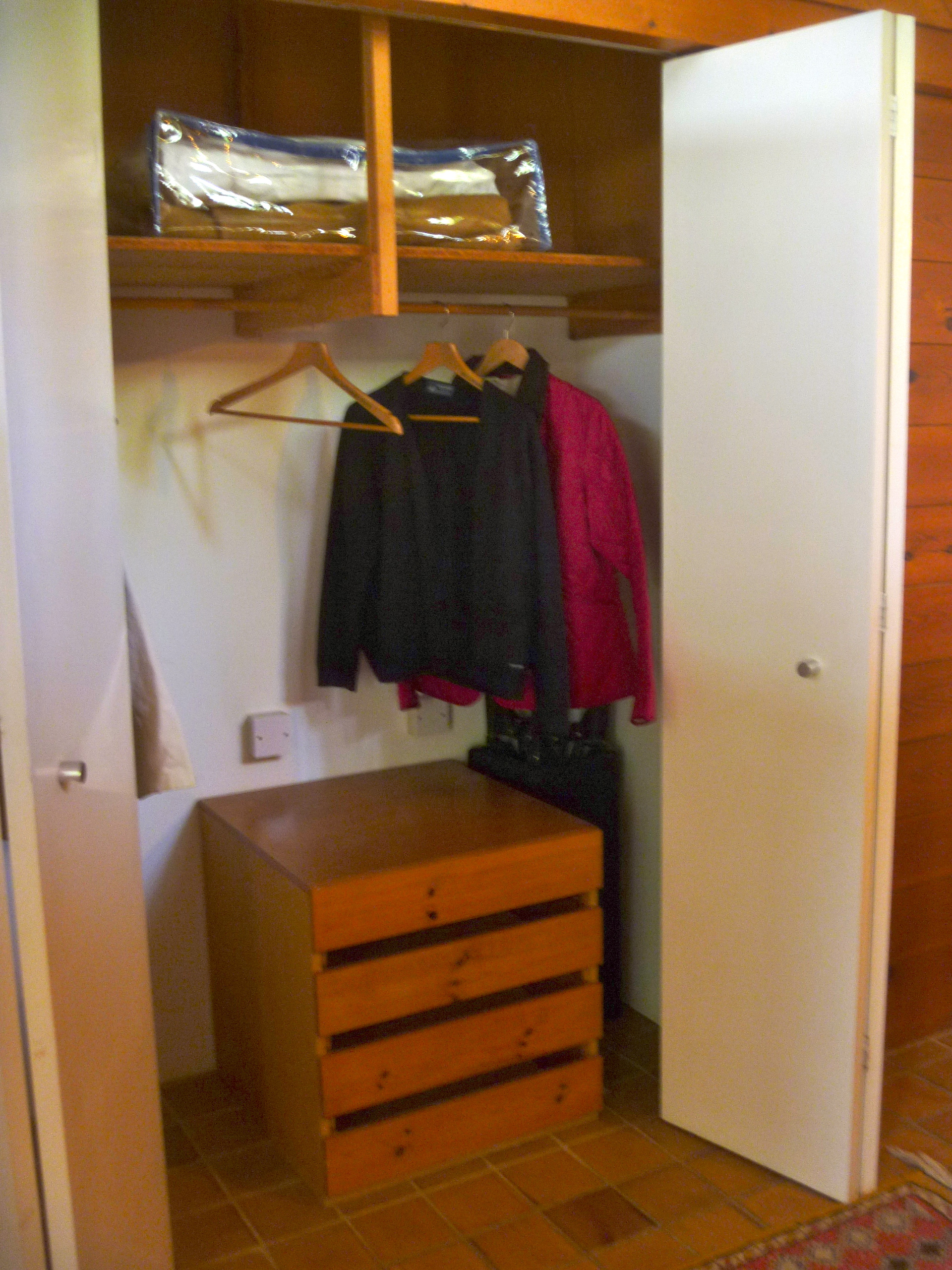
Sometimes I find that hanging space at Landmark properties is at a premium. Not the case here at Anderton House. Each room had a decent built-in cupboard and set of drawers.

Anderton House decent hanging space

In and Around Anderton House : a Photo Album, 1

The Landmark Libraries and the accompanying literature supplied by the Trust always add to my enjoyment of any Landmark stay. At Anderton House it was no exception.

On the non-fiction shelves in the sitting room, alongside the usual reference books such as the local edition of Pevsner, I enjoyed reading ‘a garden & three houses‘; words by Jane Brown; pictures by Richard Bryant; captions by Peter and Margaret Aldington (Garden Art Press, 1999). This is the story of the Aldington’s designing and building of their home Turn End (and the two neighbouring houses) in Buckinghamshire. Also, ‘Aldington, Craig and Collinge: twentieth century architects; by Alan Powers (RIBA, 2009) and ‘Frank Lloyd Wright’s houses‘ by Thomas A. Heinz (Grange Books, 2002).

There was a choice of jigsaw puzzles in the study area called The Dog House (see photos below) but none appealed, and besides, I was too busy reading. However, I discovered this selection of 300 piece puzzles any one of which looks more attractive to me!

Here is a photographic tour of the main features of the house and its contents and environment.

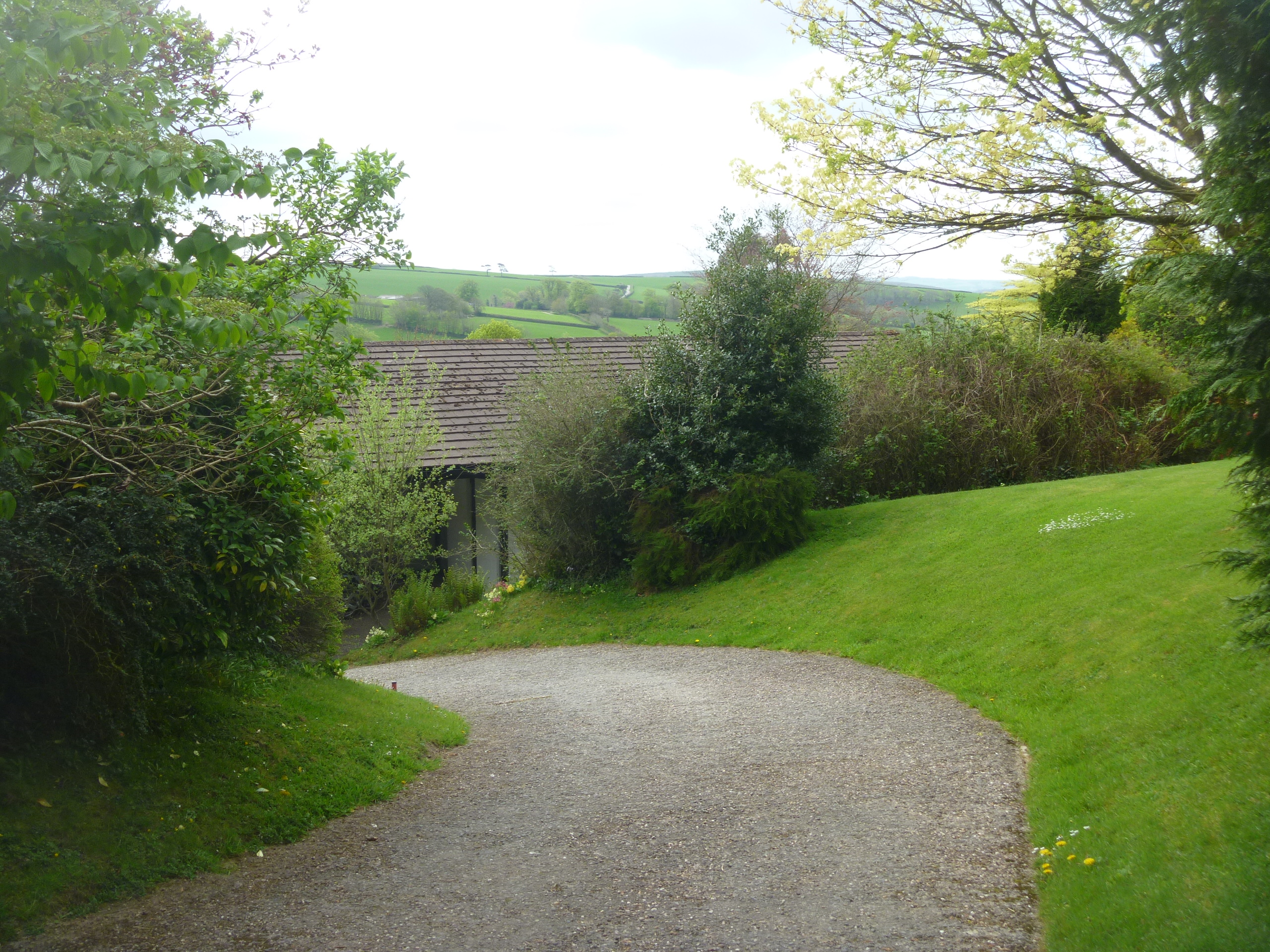
Anderton House the drive

The Approach Drive after a sharp bend from the road

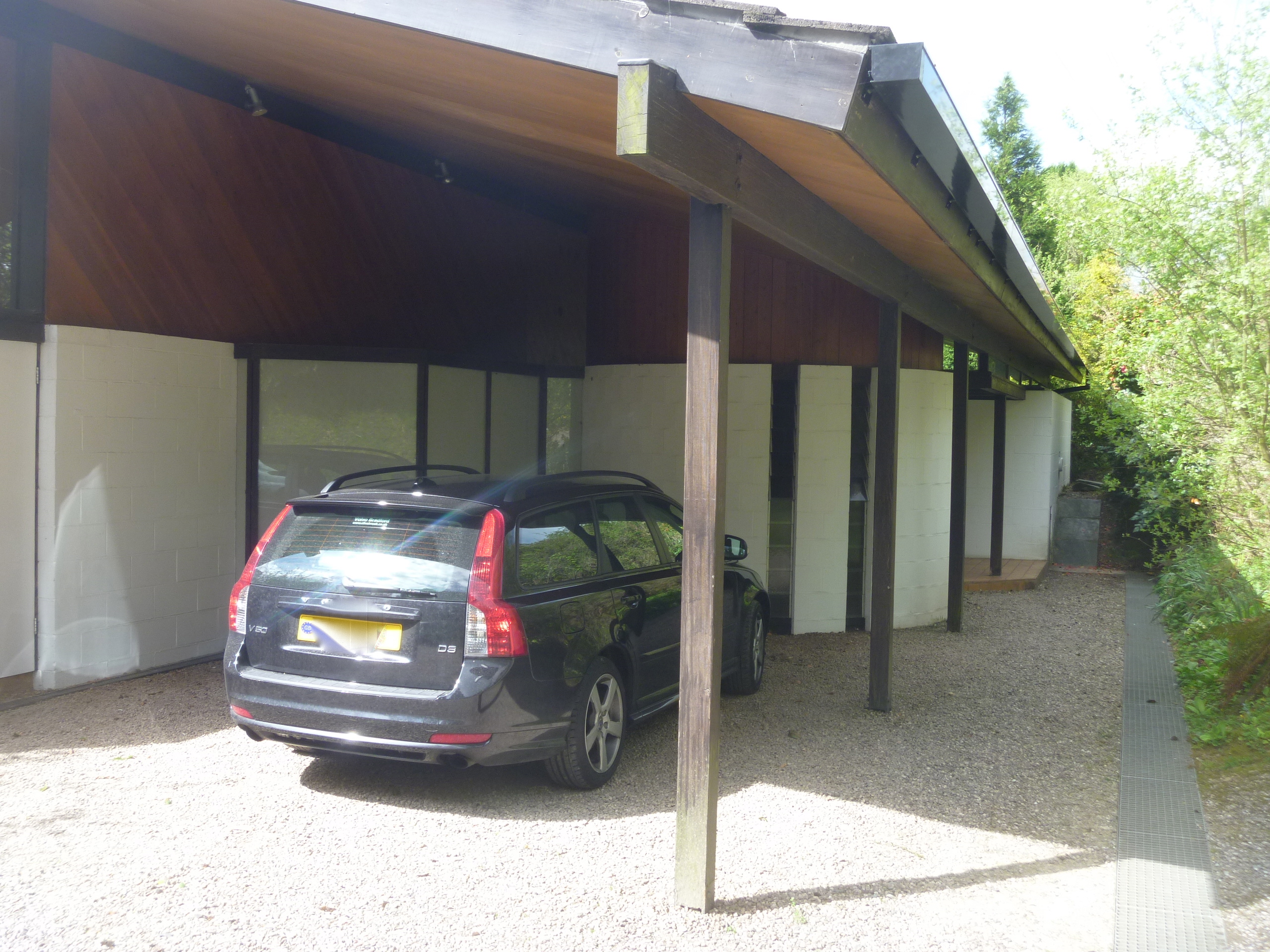
Rear of Anderton House

Another tightish turn to get into the Car Port

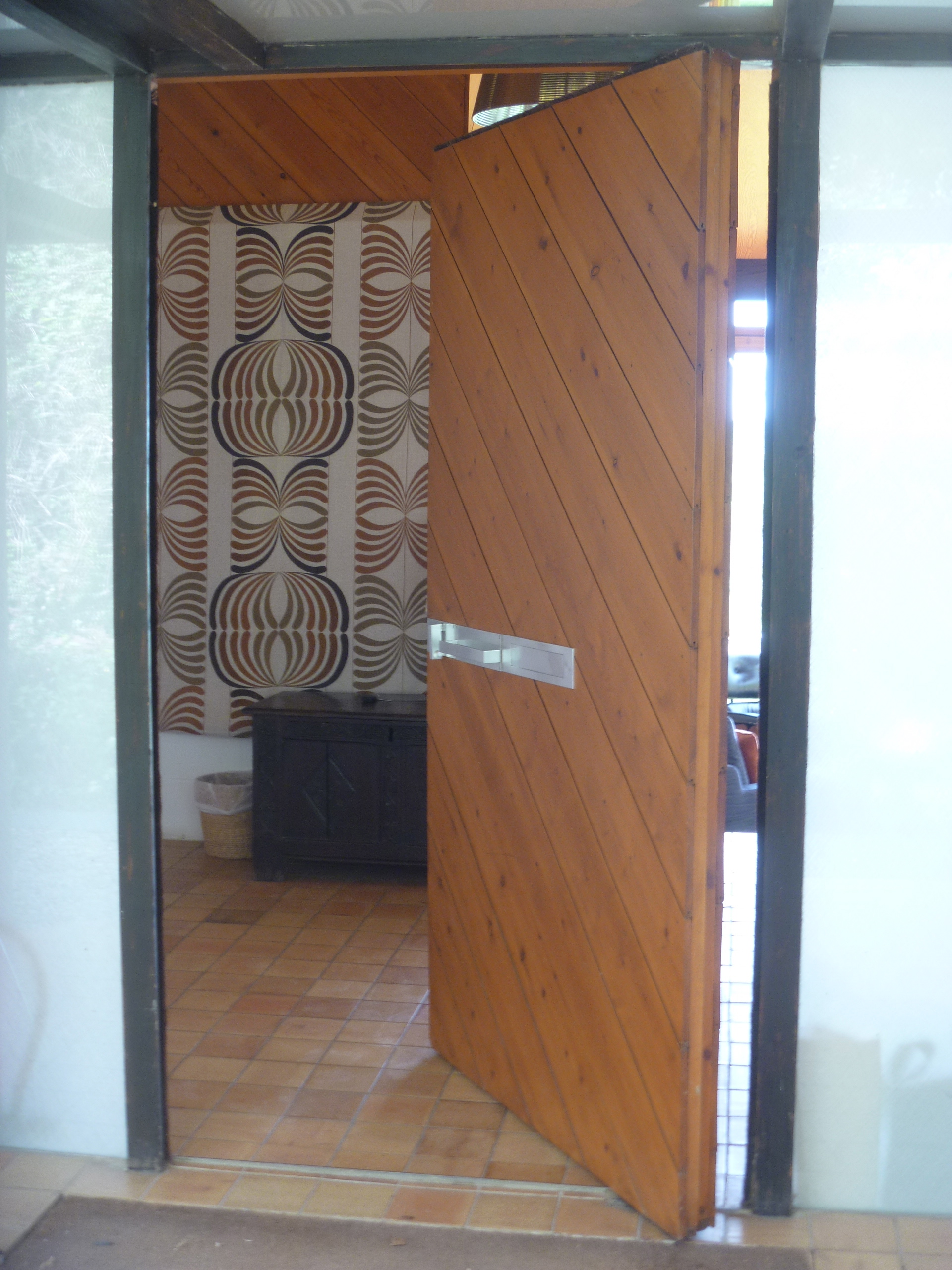
Weclome to the Anderton House Come inside

Welcome to Anderton House, come inside

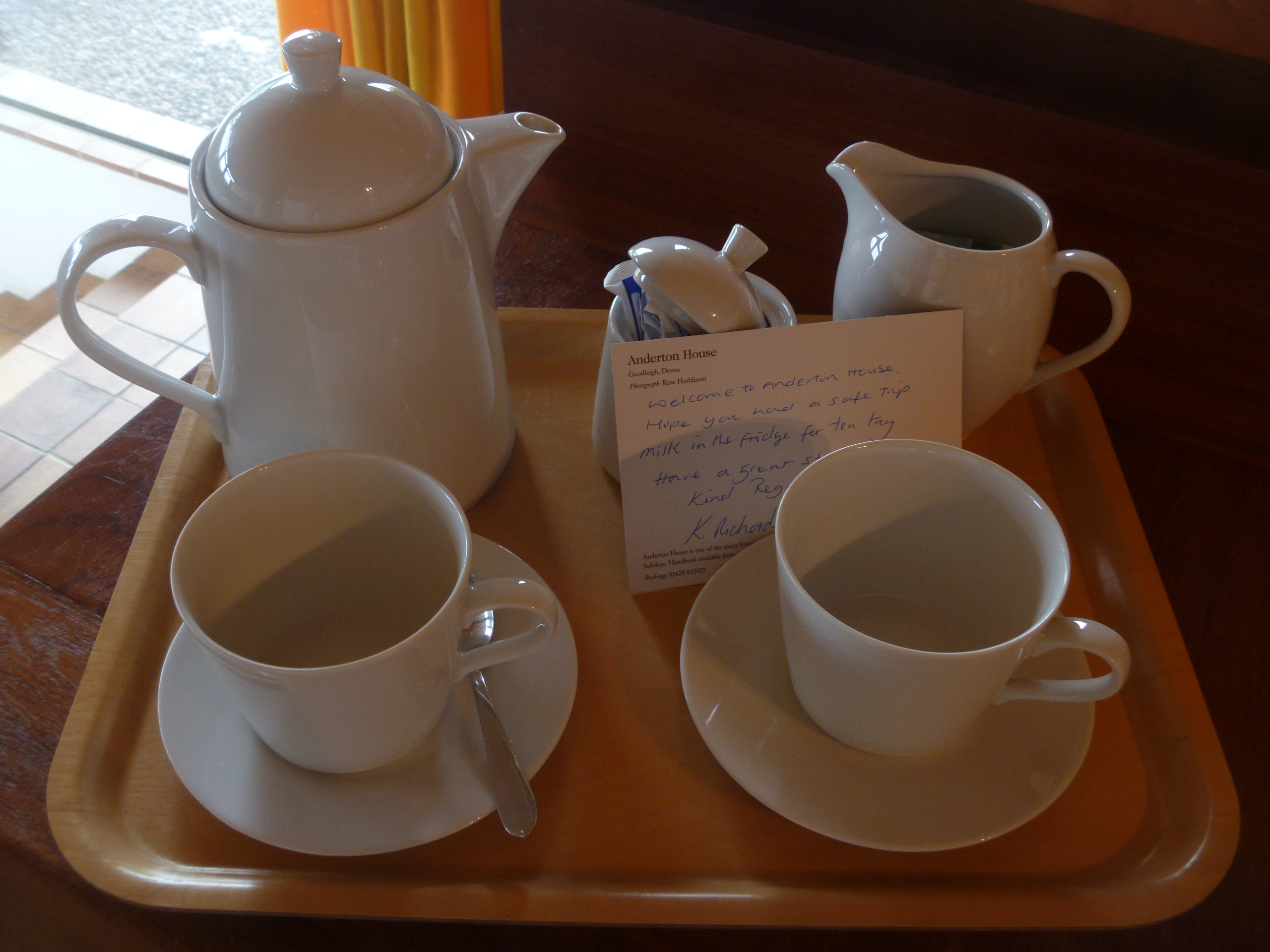
Welcome to Anderton House

The Housekeeper’s Welcome Tray [note plain white LSA International crockery]

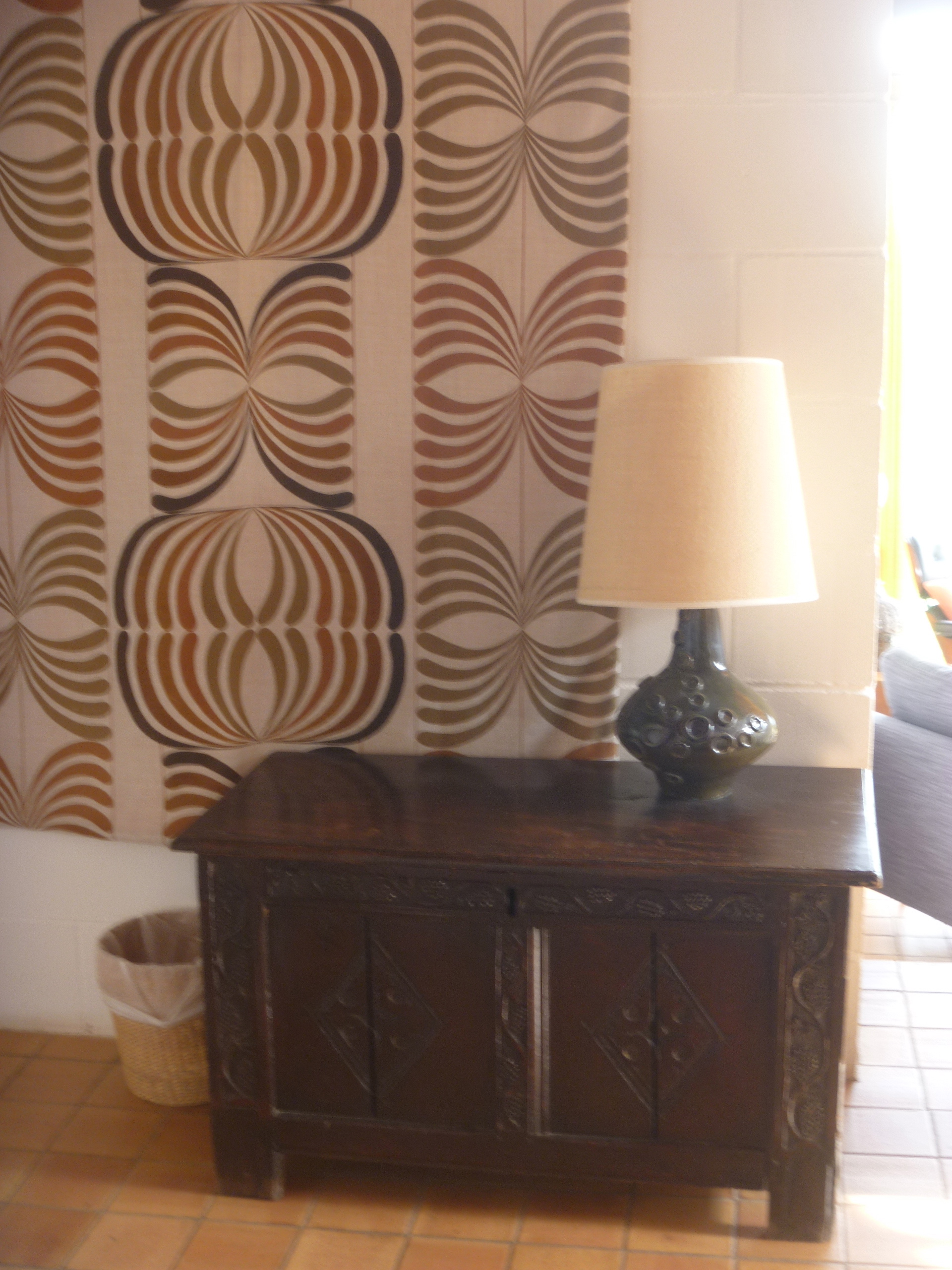
Anderton House ancient and modern

Entrance Hall contains a mixture of ancient and modern

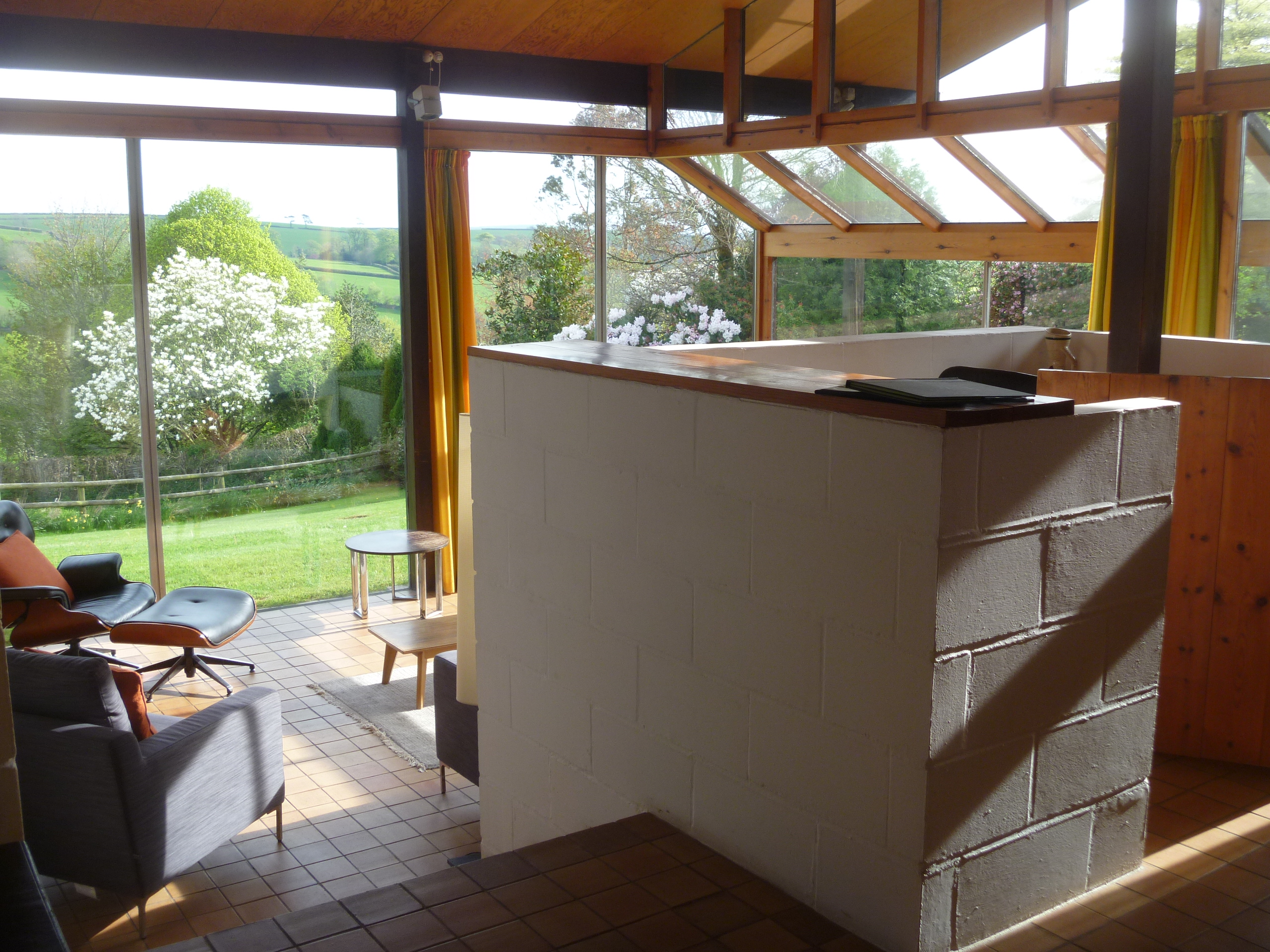
Anderton House the dog house and sitting room

Down the steps is the glass-walled sitting area

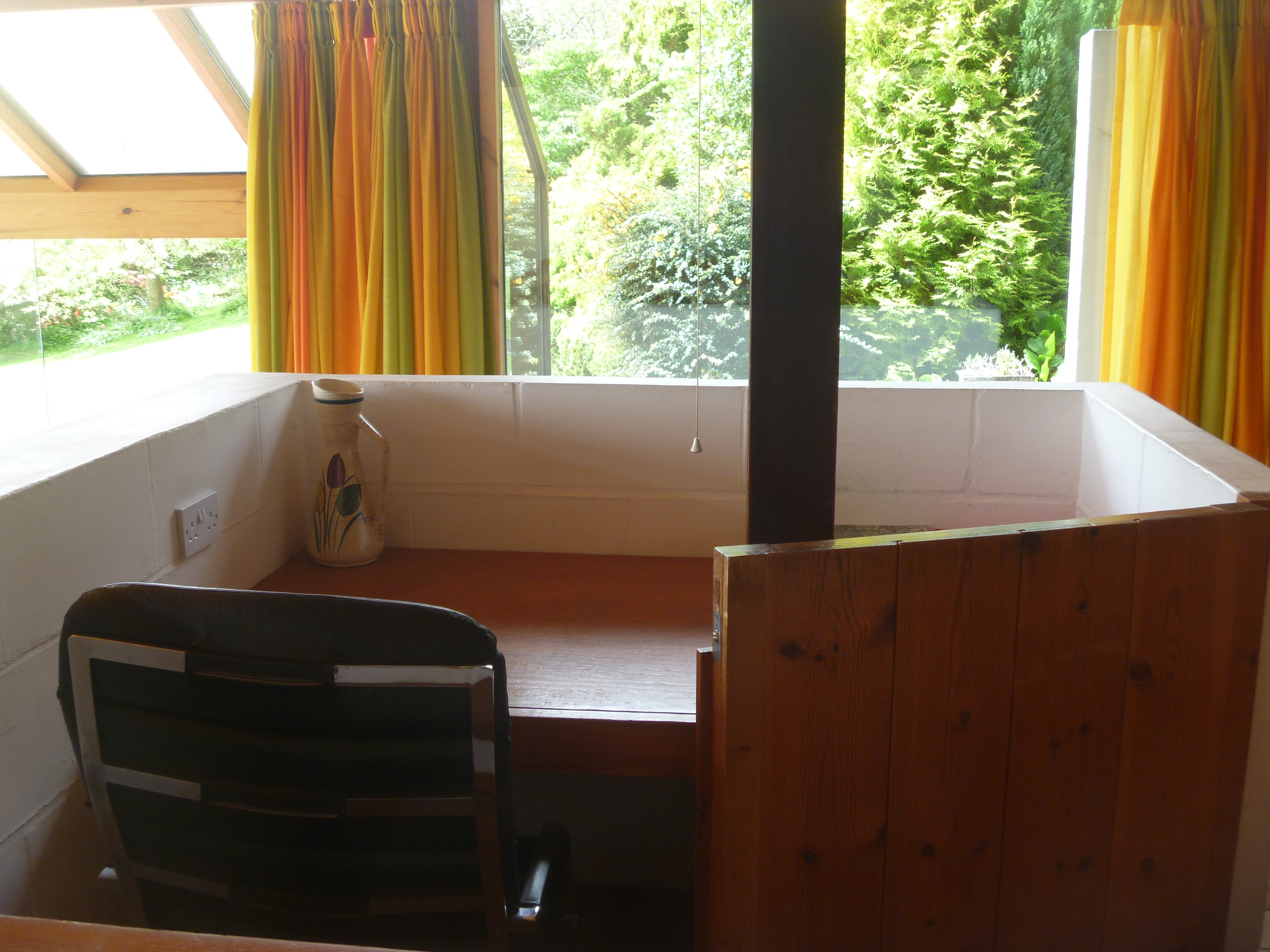
On the right is the ‘Dog House’ a study area where Mr Anderton could work with his papers and not mess up the sitting room with them, could still be part of the house company and also appreciate the stunning hillside views.

Anderton House The Dog House Study

The Dog House

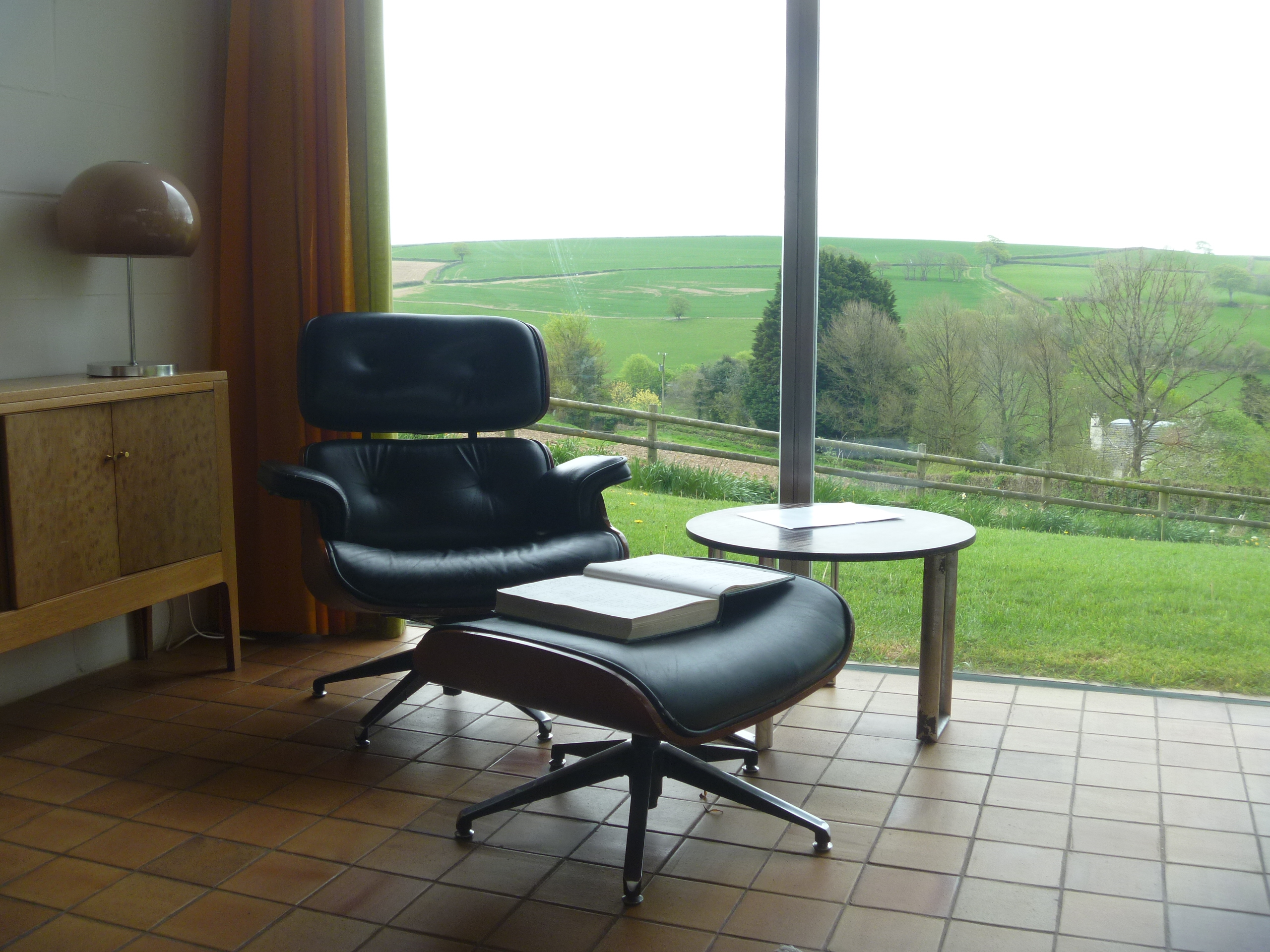
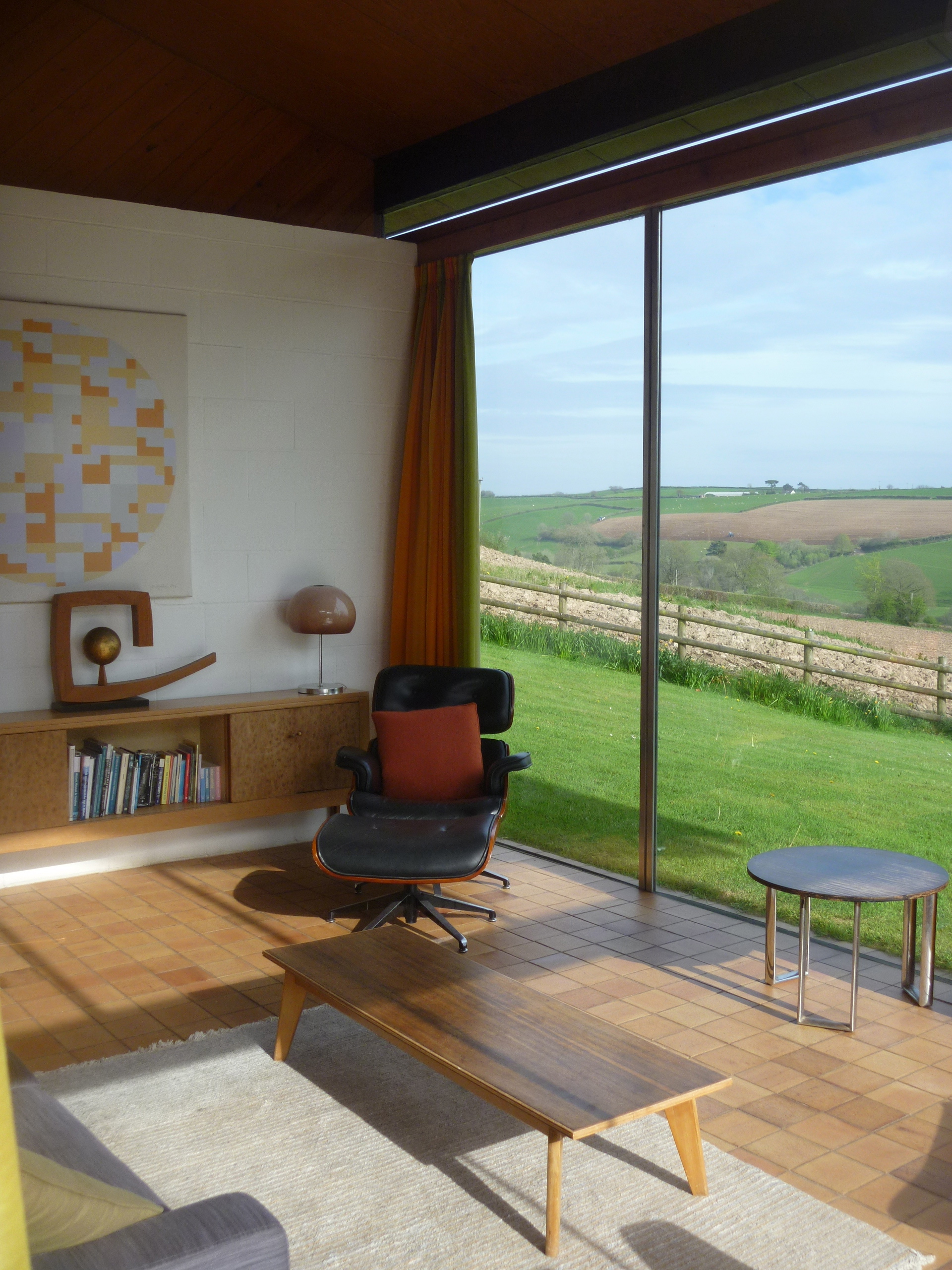
Anderton House Eames Chair

There are iconic Eames Chairs in the Sitting Room …

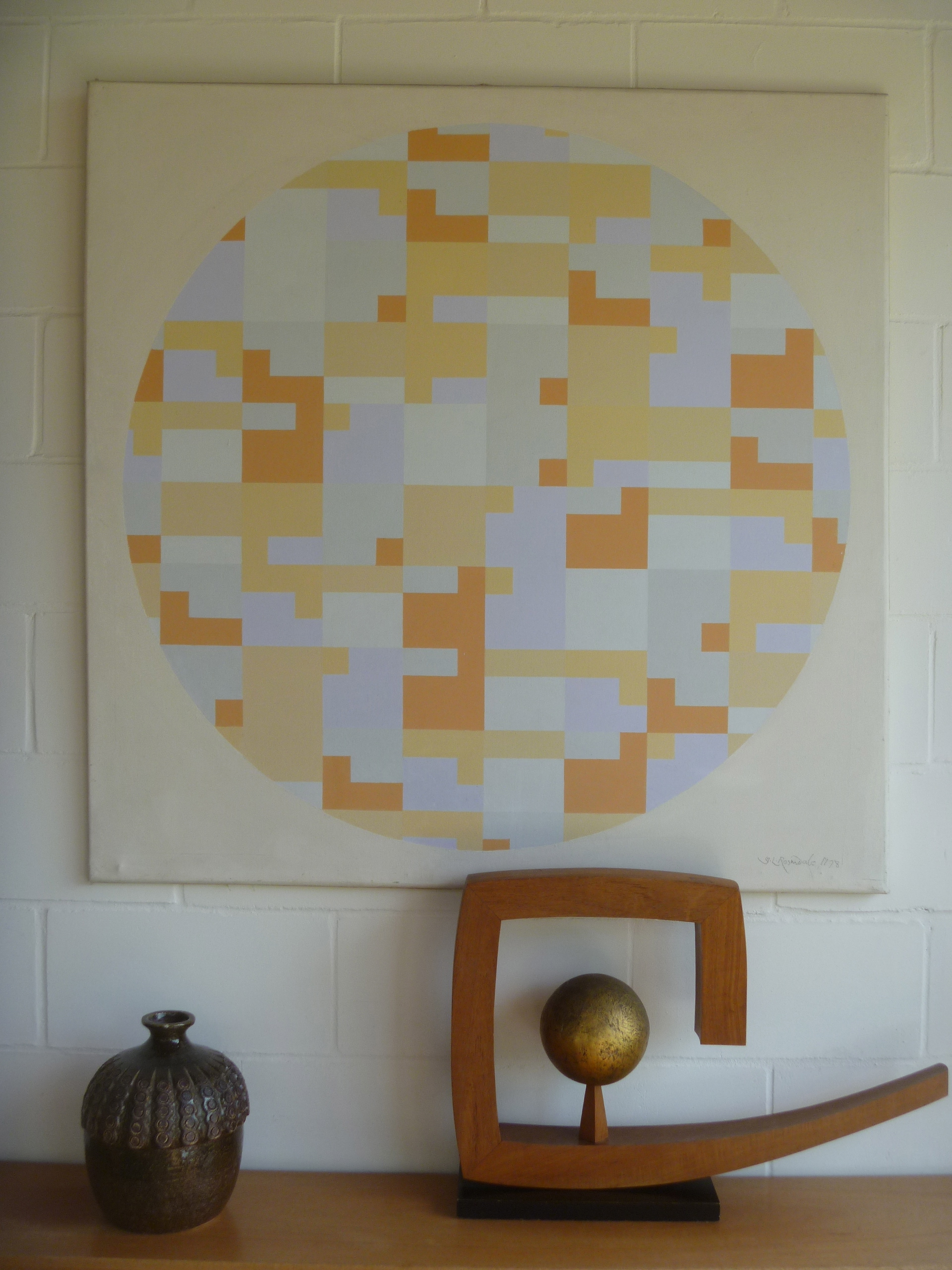
Anderton House sitting area modern art

… and some modern art

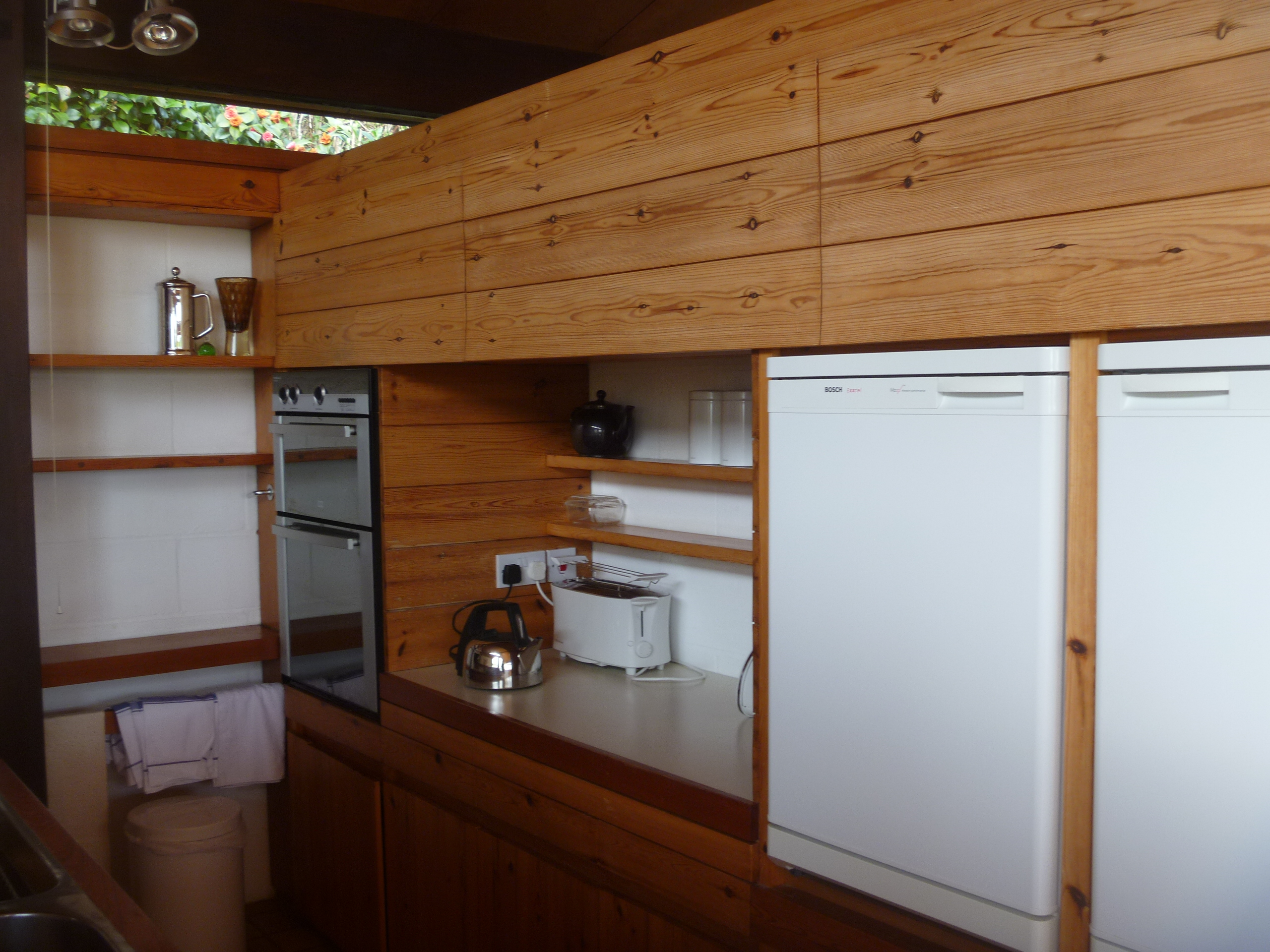
Anderton House kitchen area

The efficient kitchen

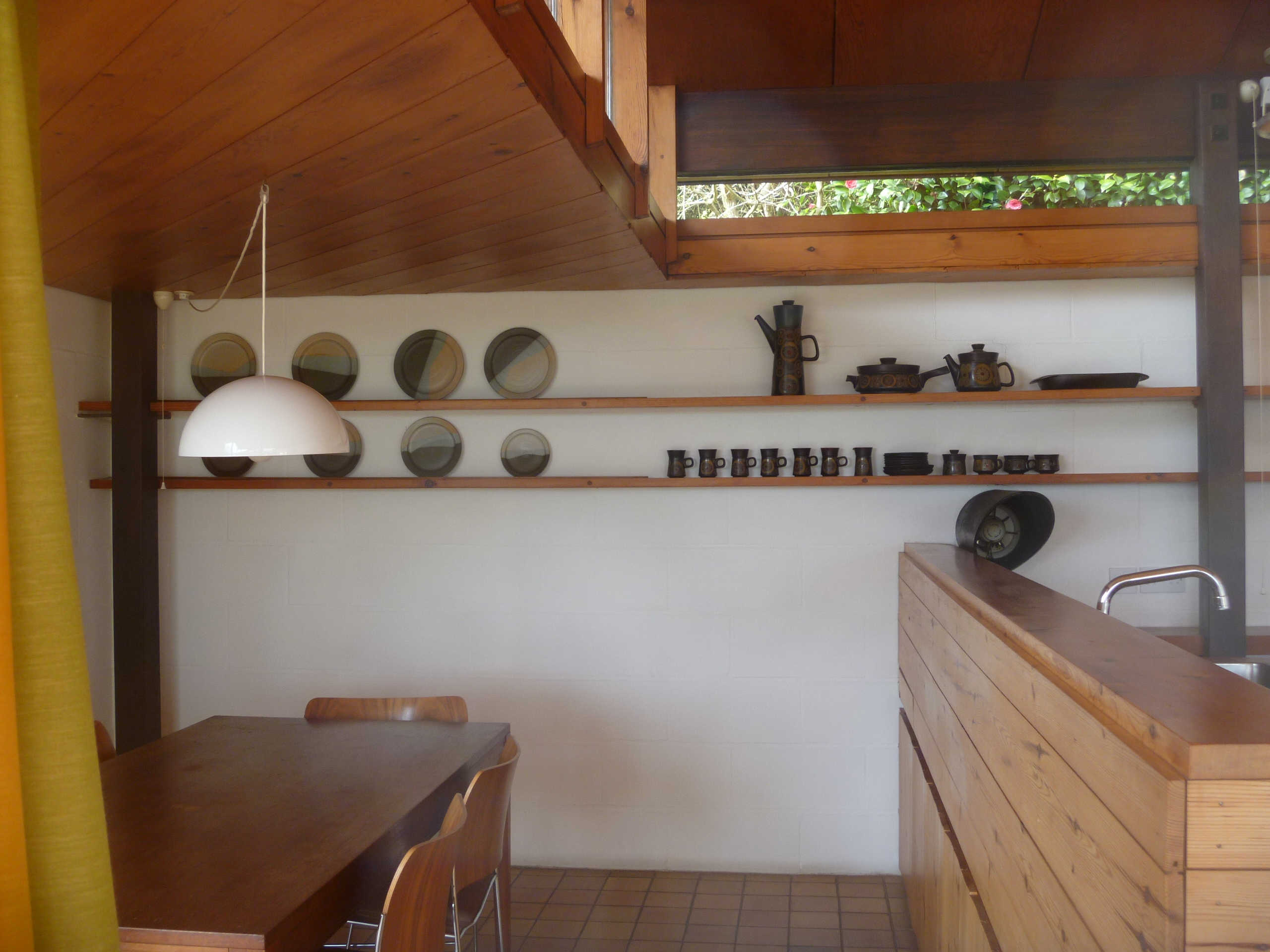
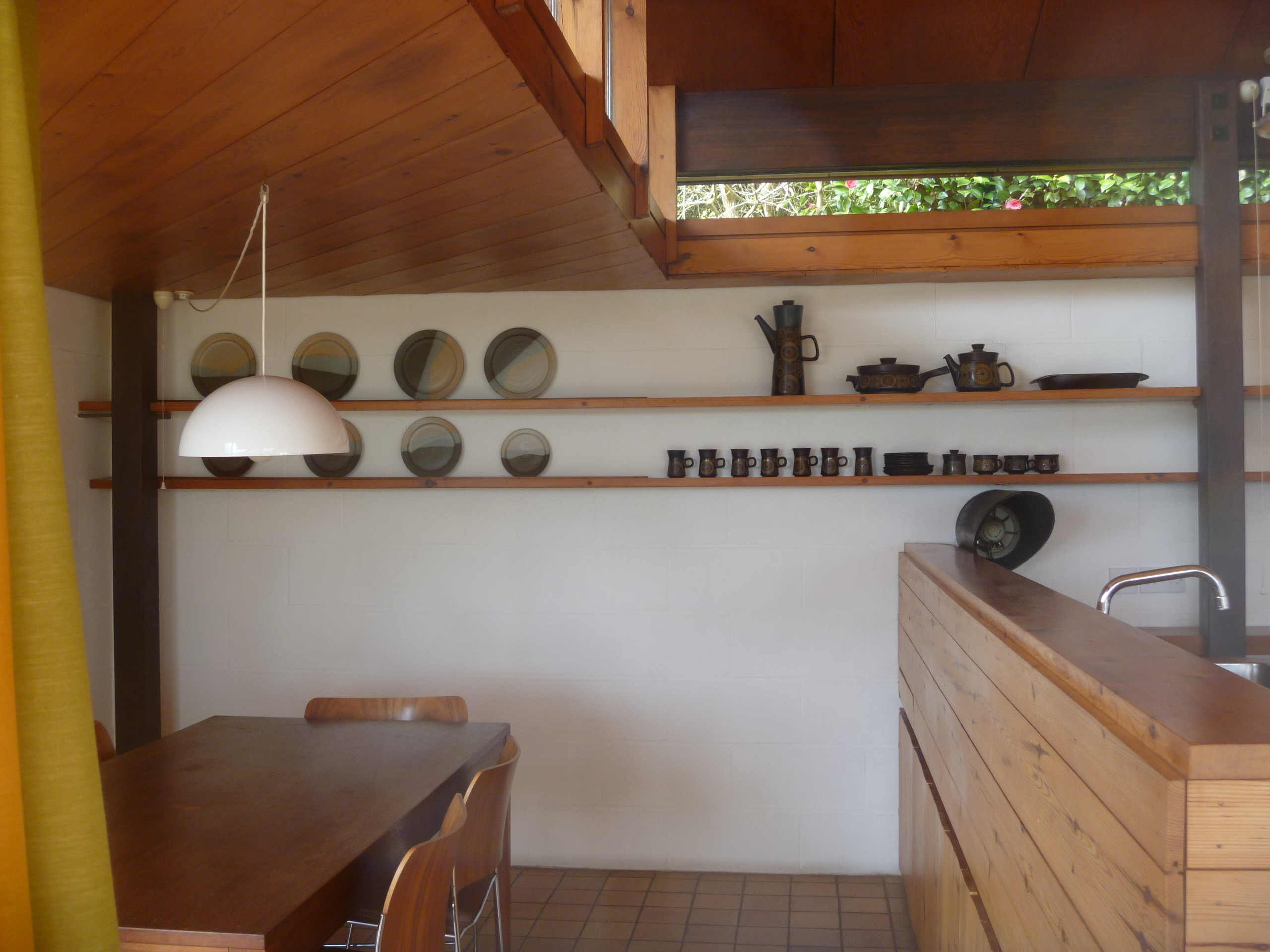
Anderton House dining area

The Dining Area with 1970s Denby Arabesque display

An original plan of Anderton House

And here is the original plan of the house from Powers’ book showing the ‘public’ areas quite separate from the ‘private’ areas

Landmarking in North Devon : Anderton House

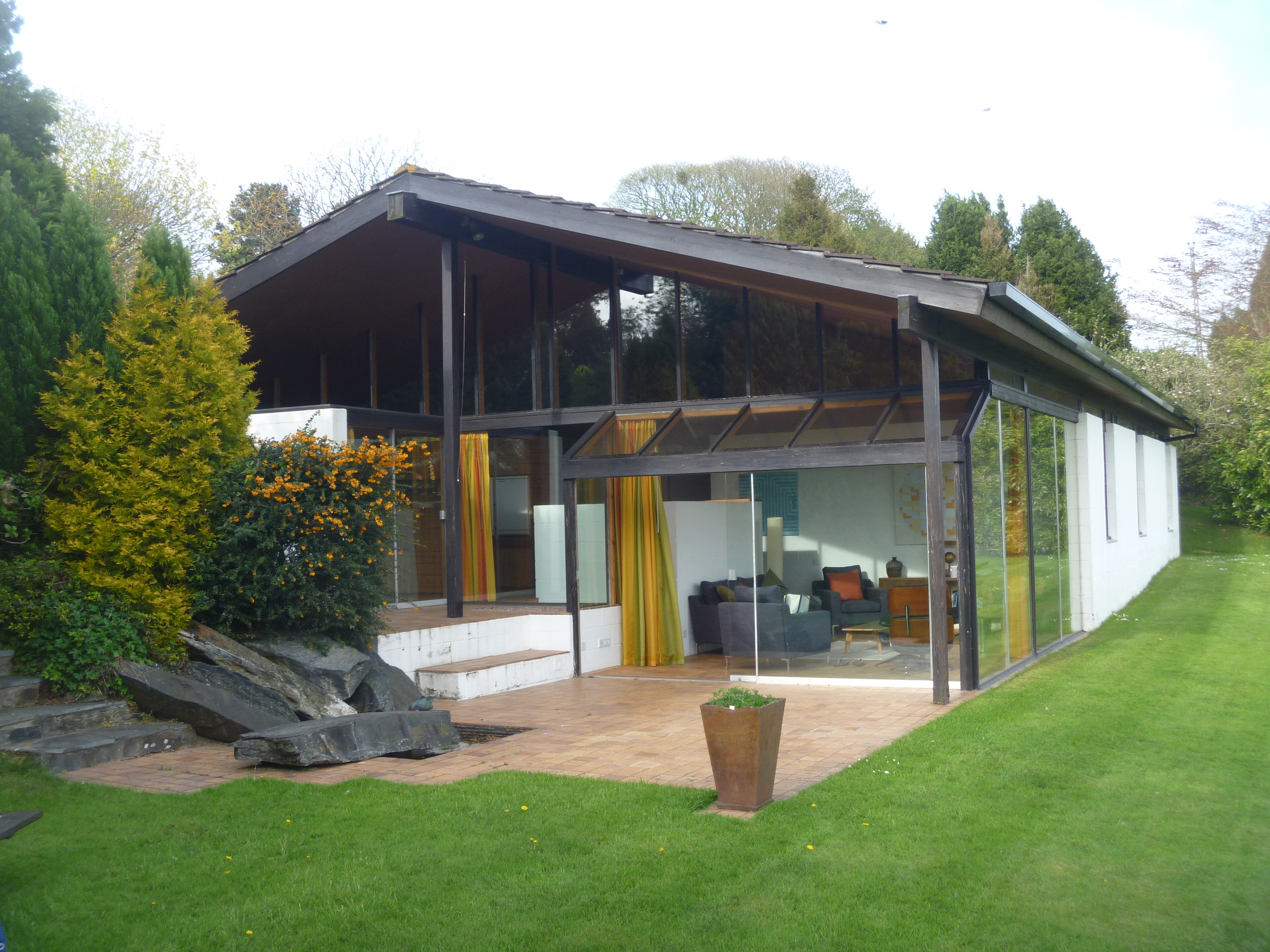
Staying at Anderton House in North Devon these last few days reminded me of visits that I have recently made to Modernist houses and also sleeping in the single study bedroom took me back to my student days at Hull University in the 1970s.

2 Willow Road

2, Willow Road, NW3, 1939 [National Trust]

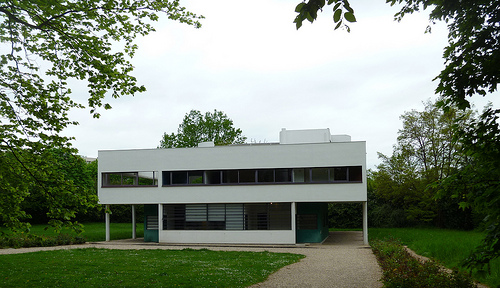
Villa Savoye

The Villa Savoye, 1928-1931

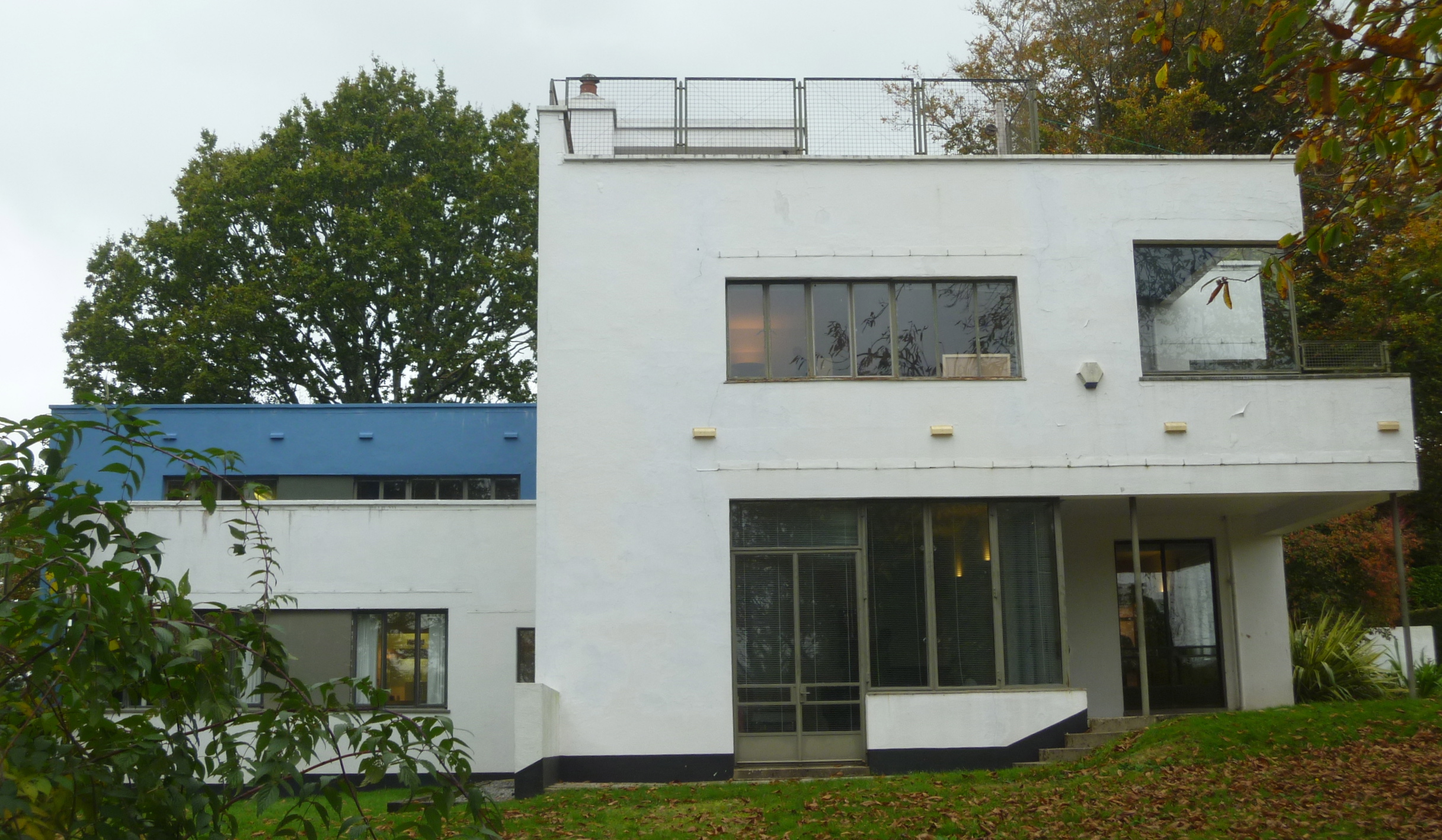
high-cross-house

High Cross House, 1932 [National Trust]

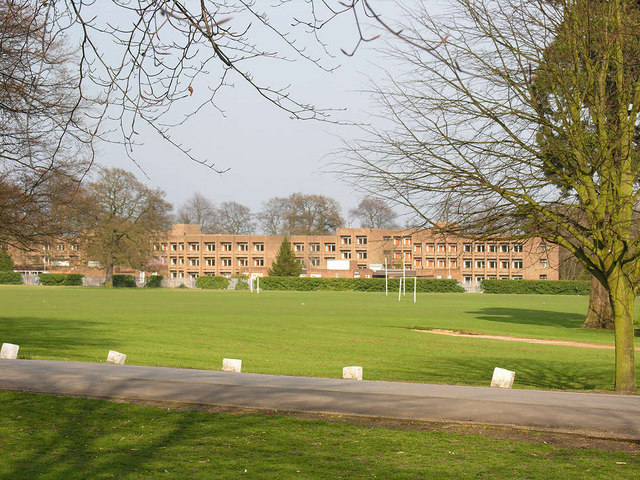
The_Lawns_Hall_of_Residence

The Lawns, student residences, Cottingham near Hull [Source]

The Lawns was built in the 1960s and I lived there for two years between 1970 and 1972. The Villa Savoye, High Cross House and 2, Willow Road were both built in the 1930s and seemed way ahead of their time. Even more ahead of their time are the American houses designed and built by Frank Lloyd Wright, an influence on the architect of Anderton House, Peter Aldington.

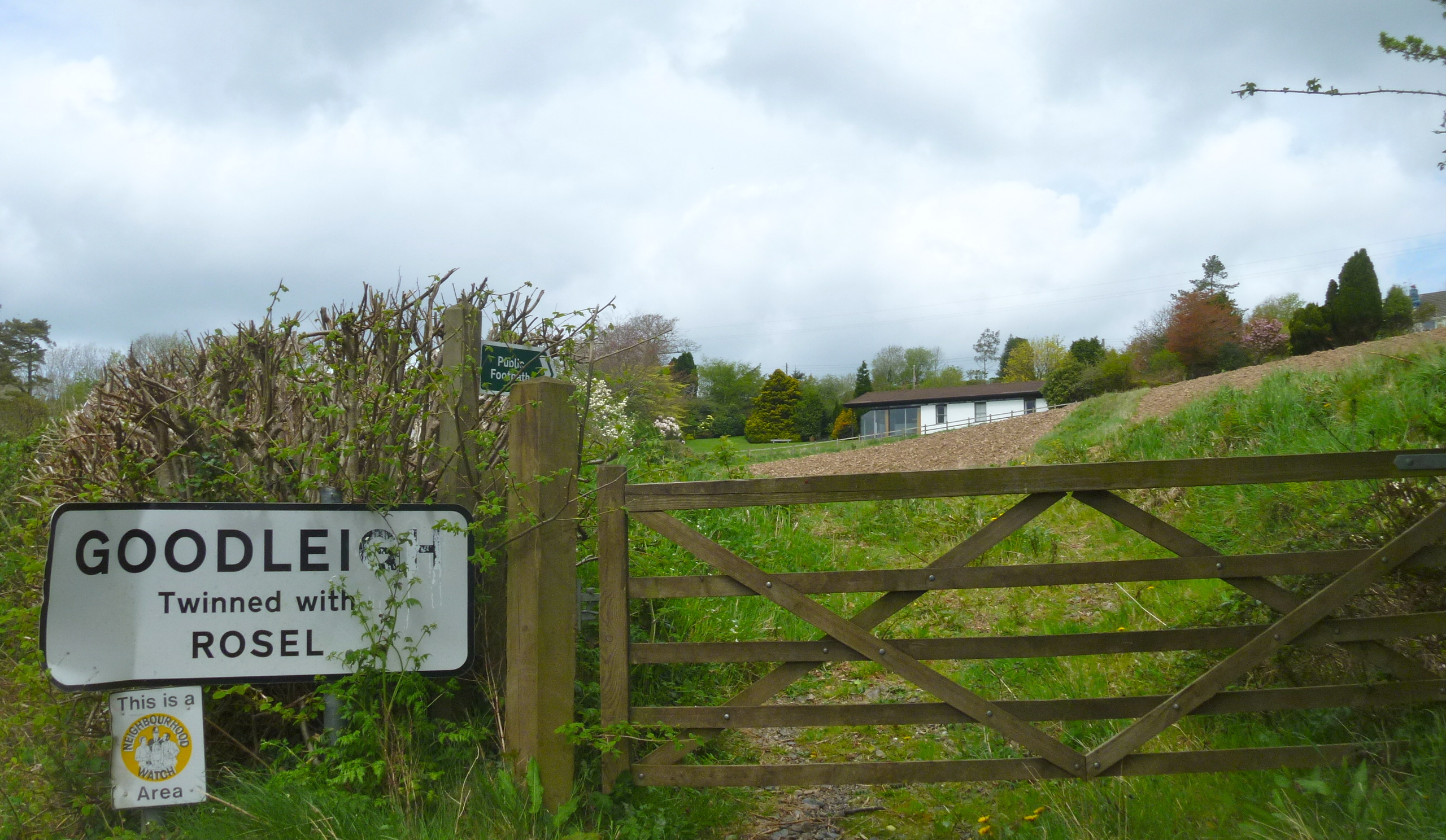
Anderton House on arrival

Here is how the Landmark Trust introduce Anderton House (above) on their website and their justification (if any were needed) for adding this unusual property to their portfolio:

AH and Goodleigh sign

Anderton House appeals to anyone who enjoys modern architecture or wishes to be transported back to the 1970s. The integration of inside and outside spaces makes the open plan living area a grandstand for the changing lights on the Devon hills beyond. A large open plan kitchen, dining and sitting area are carefully planned on two levels with furnishings that evoke the period.

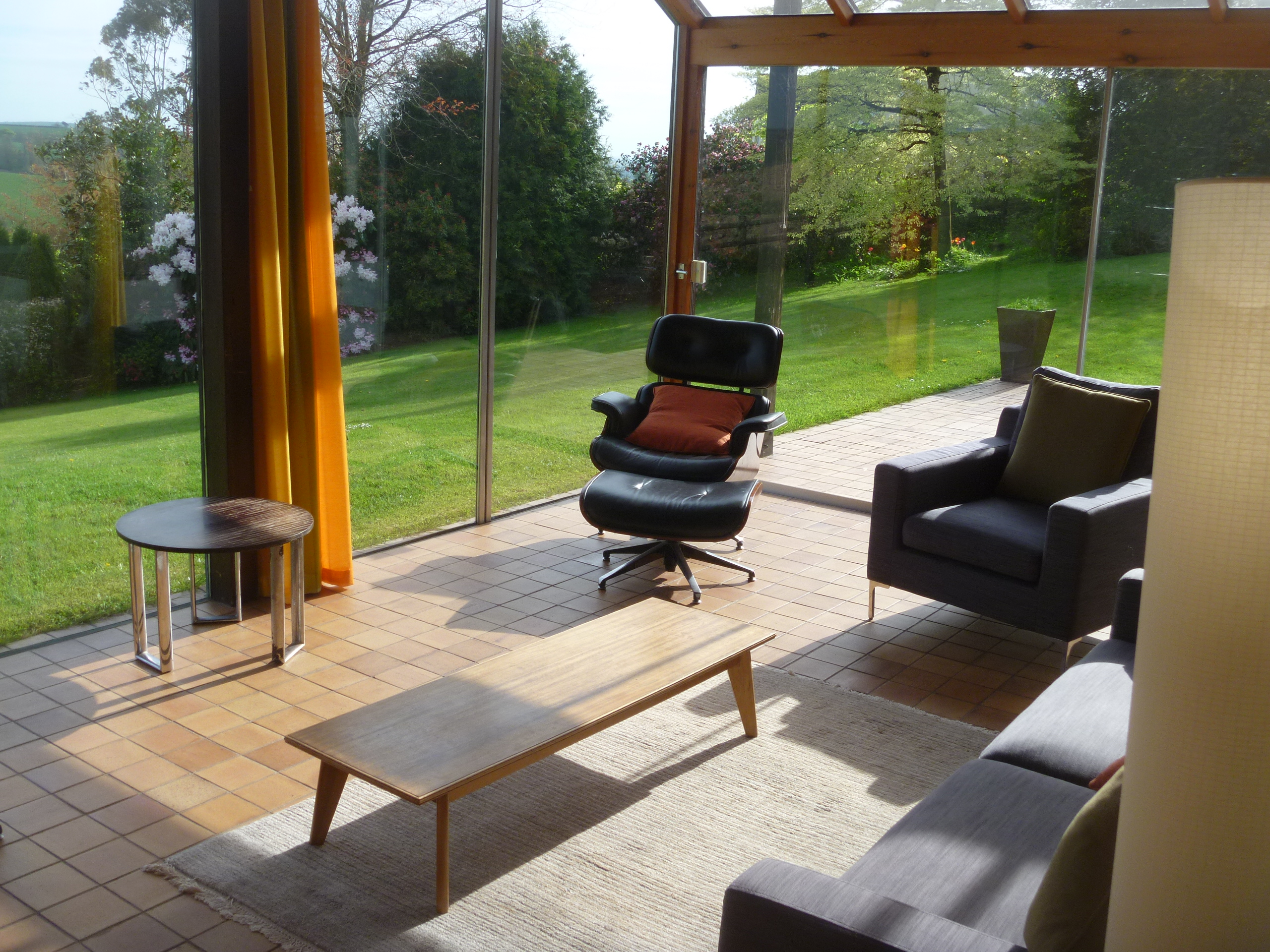
Anderton House Sitting room 3

AH sitting room

The Sitting Area

Anderton House dining area

Dining Area overlooked by the Kitchen

B and W pics Anderton House 2

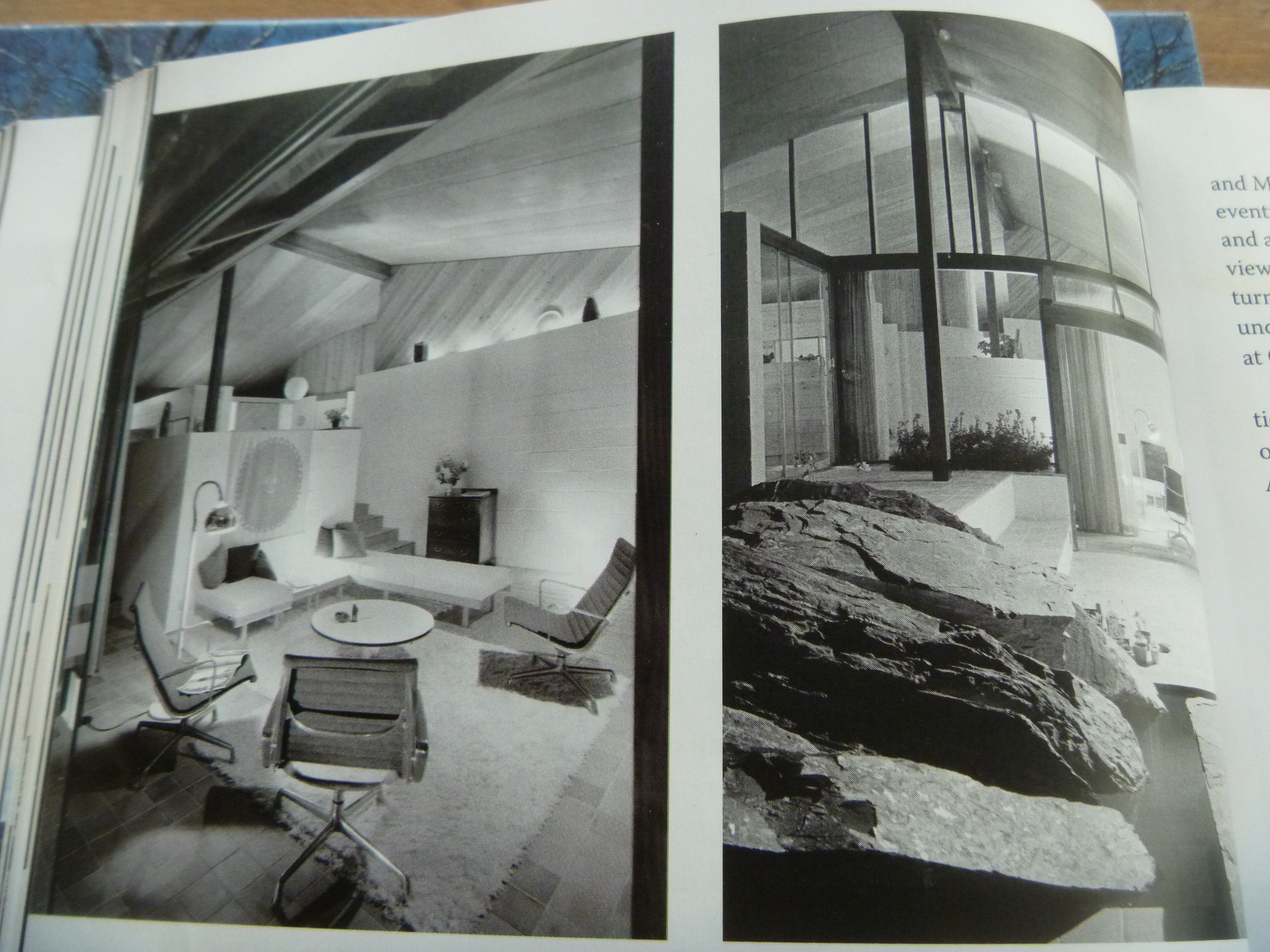
Original black and white photos of Anderton House (reproduced in “Aldington, Craig and Collinge” by Alan Powers)

For all its modernity, Anderton House is as much at home in the rolling Devon landscape it overlooks as the longhouses that inspired its profile. It is an exceptional example of uncompromisingly modern design executed in simple materials. The roof appears to float cleverly over the spacious open plan living area with its sliding glass walls. The house retains all its contemporary materials and detailing and is furnished to match.

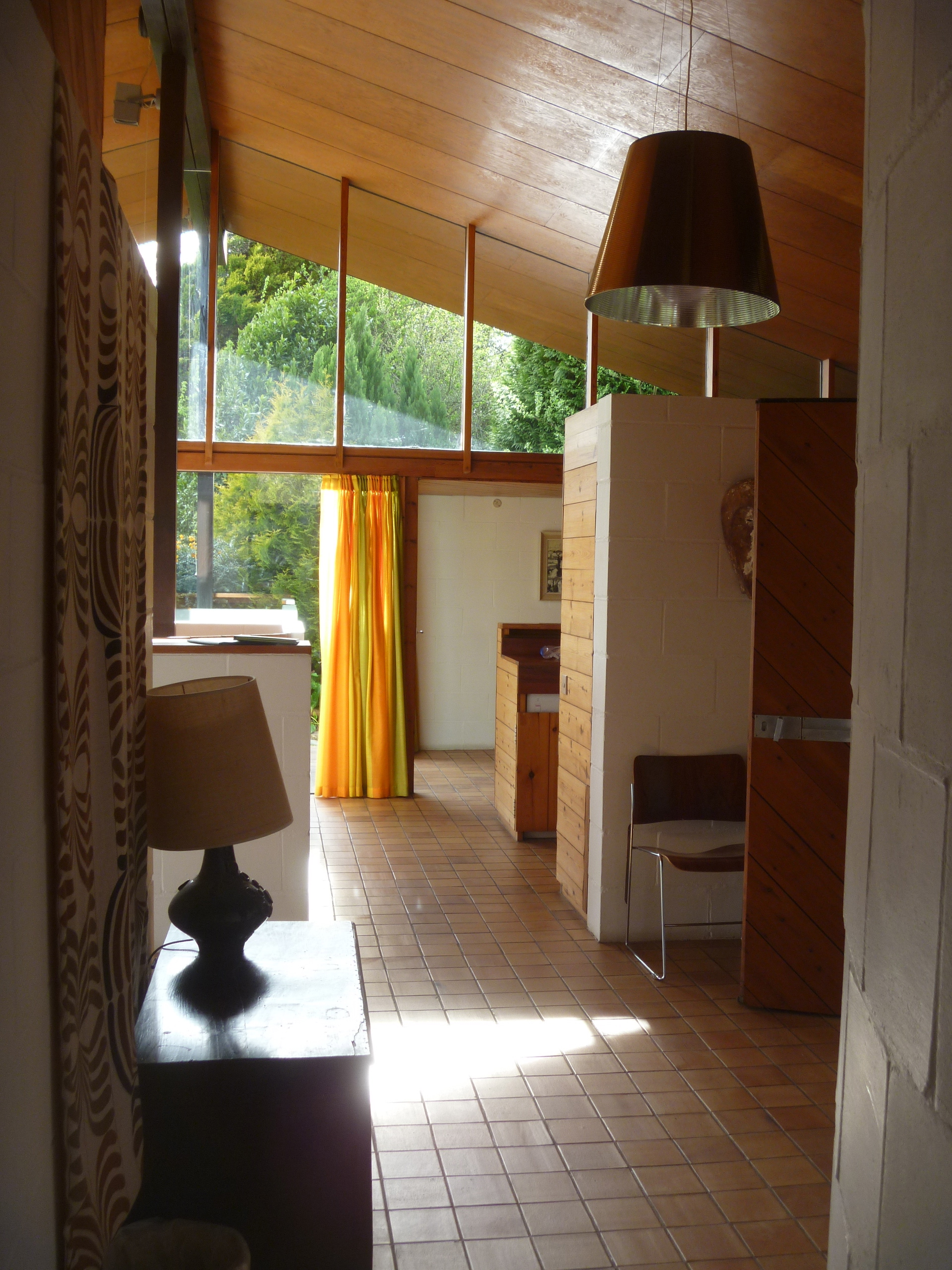
Anderton House the hall

The Hall linking ‘public’ with ‘private’ areas

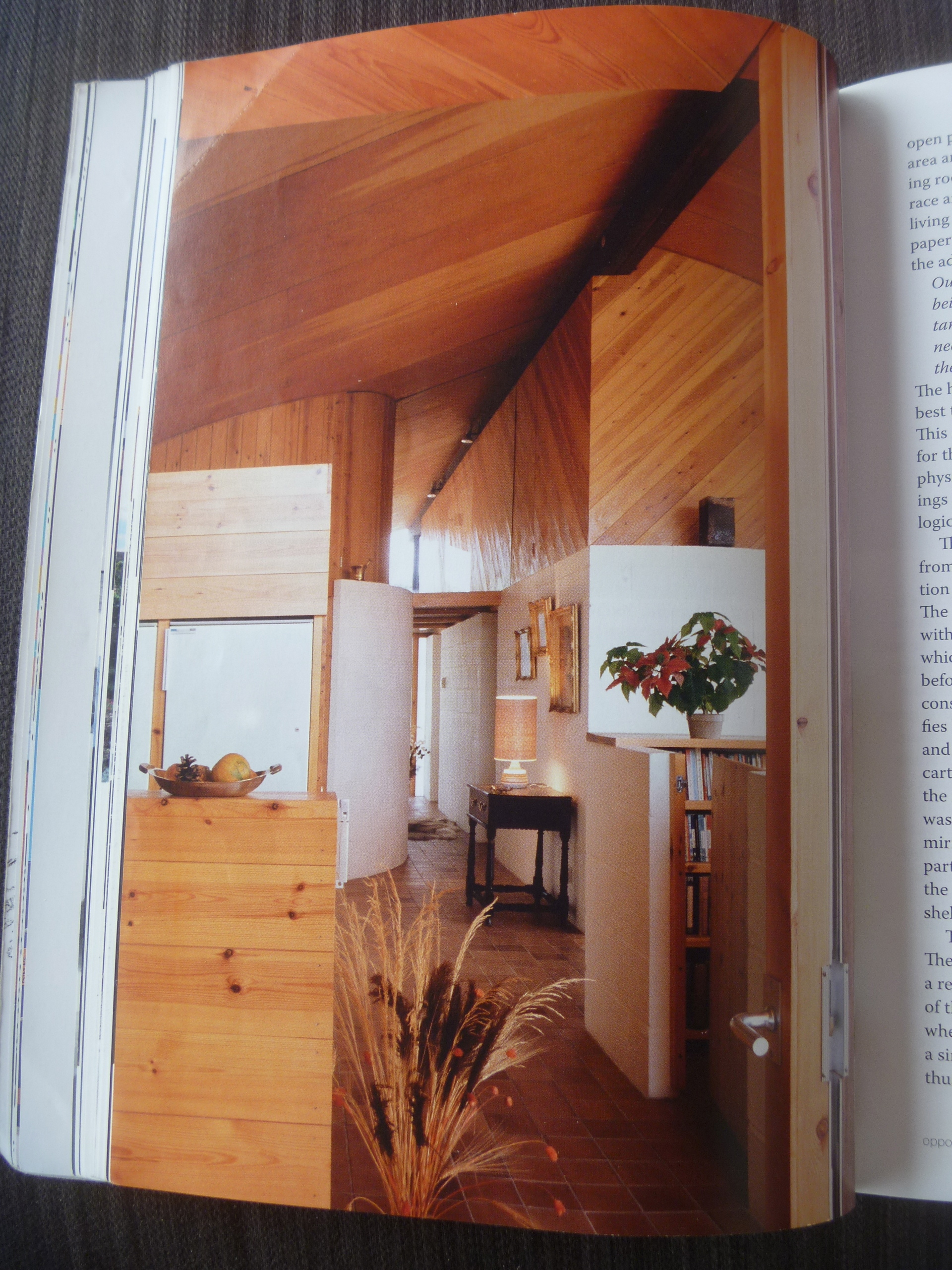
Anderton House original photo of hall

Photo of the Hall from the Kitchen in “Aldington, Craig and Collinge”

Buildings of any age can find themselves at risk. As a building designed by a living architect, Anderton House was a new departure for us when we acquired it in 2000. We chose it for all the reasons we usually apply to older buildings and happily caught it before changing tastes had been allowed to blur its clean lines or site drainage problems to damage its fabric. It is listed Grade II*.”

Even before staying here I had always thought it an excellent choice.

Bolsover Castle to Hardwick Hall, and back, and on foot

This month’s ATG Saturday Walk is a new one for them (and for me) : ‘Bolsover and Hardwick Hall’.

Here’s the itinerary :

Starting alongside the impressive 17th century castle of Bolsover, this walks heads south along the Doe Lea, passing the Saxon church at Ault Hucknall en route to the impressive Elizabethan home of Bess of Hardwick – Hardwick Hall. After strolling through the extensive grounds, we head north back to Glapwell for lunch. After lunch, quiet farmland tracks take us back to Bolsover for tea. 12.75 miles.” [ATG brochure]

I was so attracted by the idea of the walk and its route and the fact that today I would be travelling down the M1 from Leeds to Leicester with a whole day to spare that I failed to register quite the distance involved! There are opportunities to be picked up and returned comfortably to the start/end from both at Hardwick and at Glapwell but most of us soldiered on to the end. Luckily the route is not too demanding as regards climbs but it’s quite a long tramp and I’m now happily down in Leicetershire.

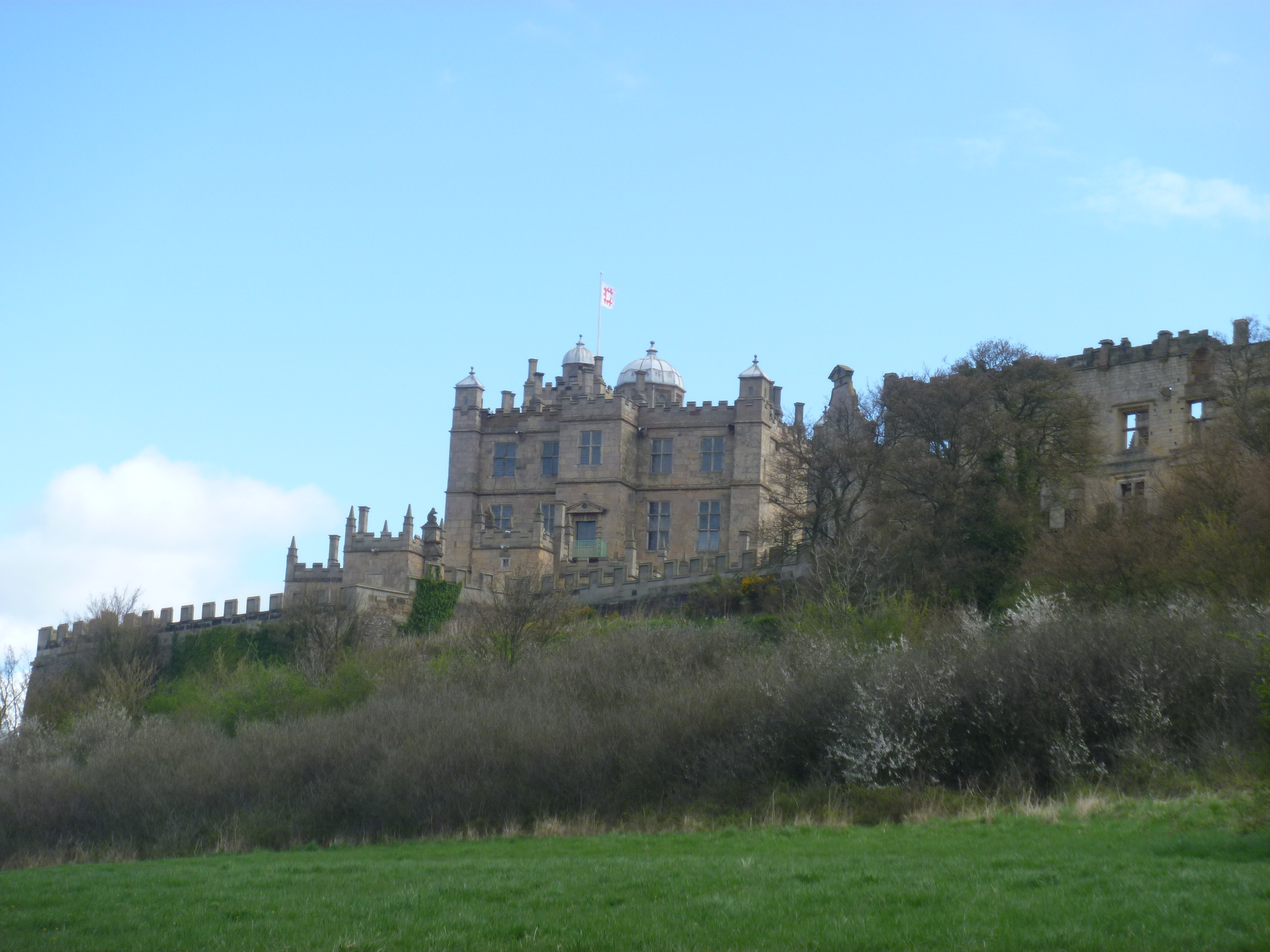
Bolsover Castle

I’ve written about Bolsover Castle before – a misty, foggy visit in November 2011. Today we passed through several weathers but only one brief shower otherwise sunshine, cloud, heavy black threatening cloud and cold winds all took it in turns.

New Bolsover

New Bolsover

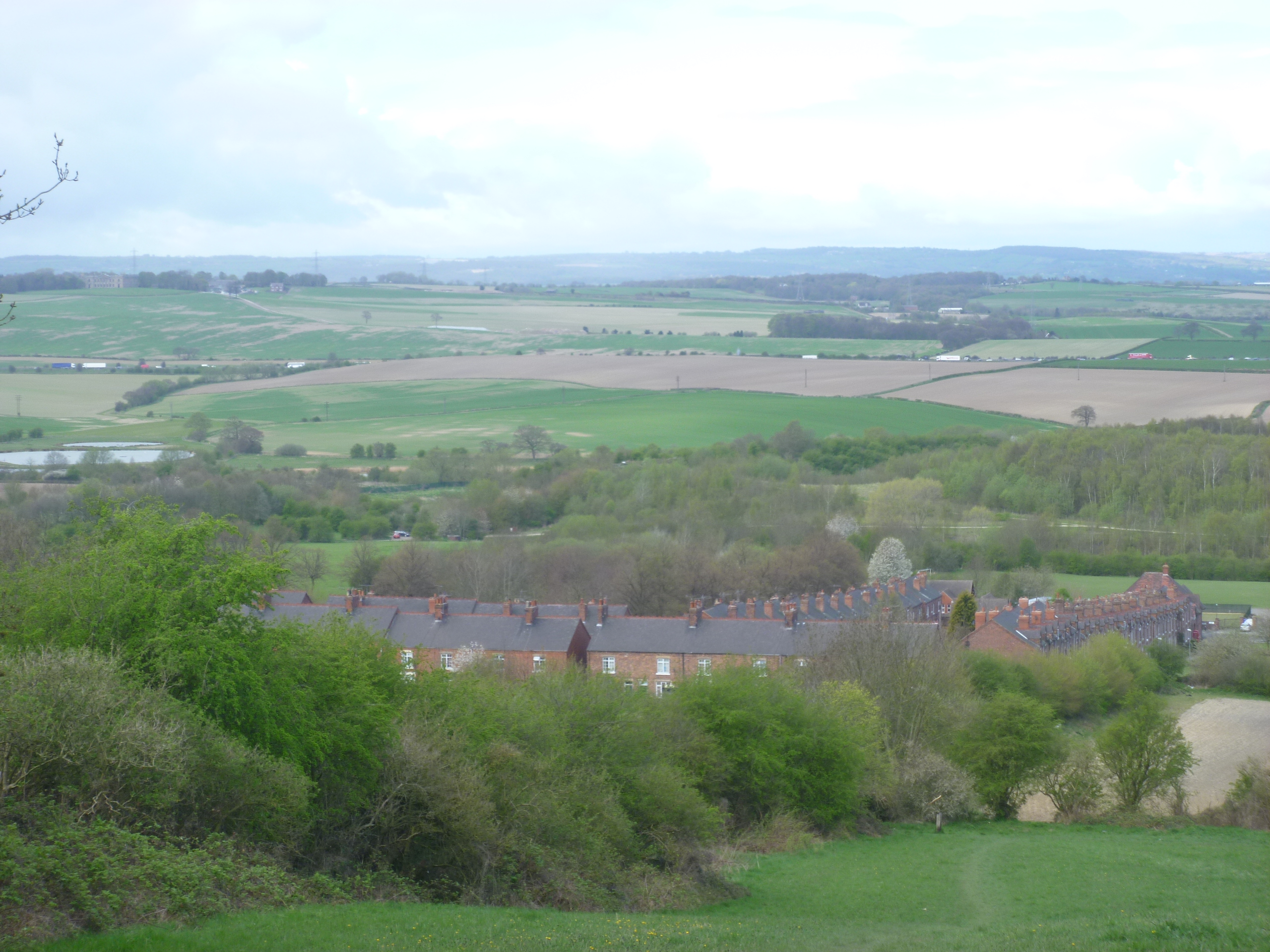
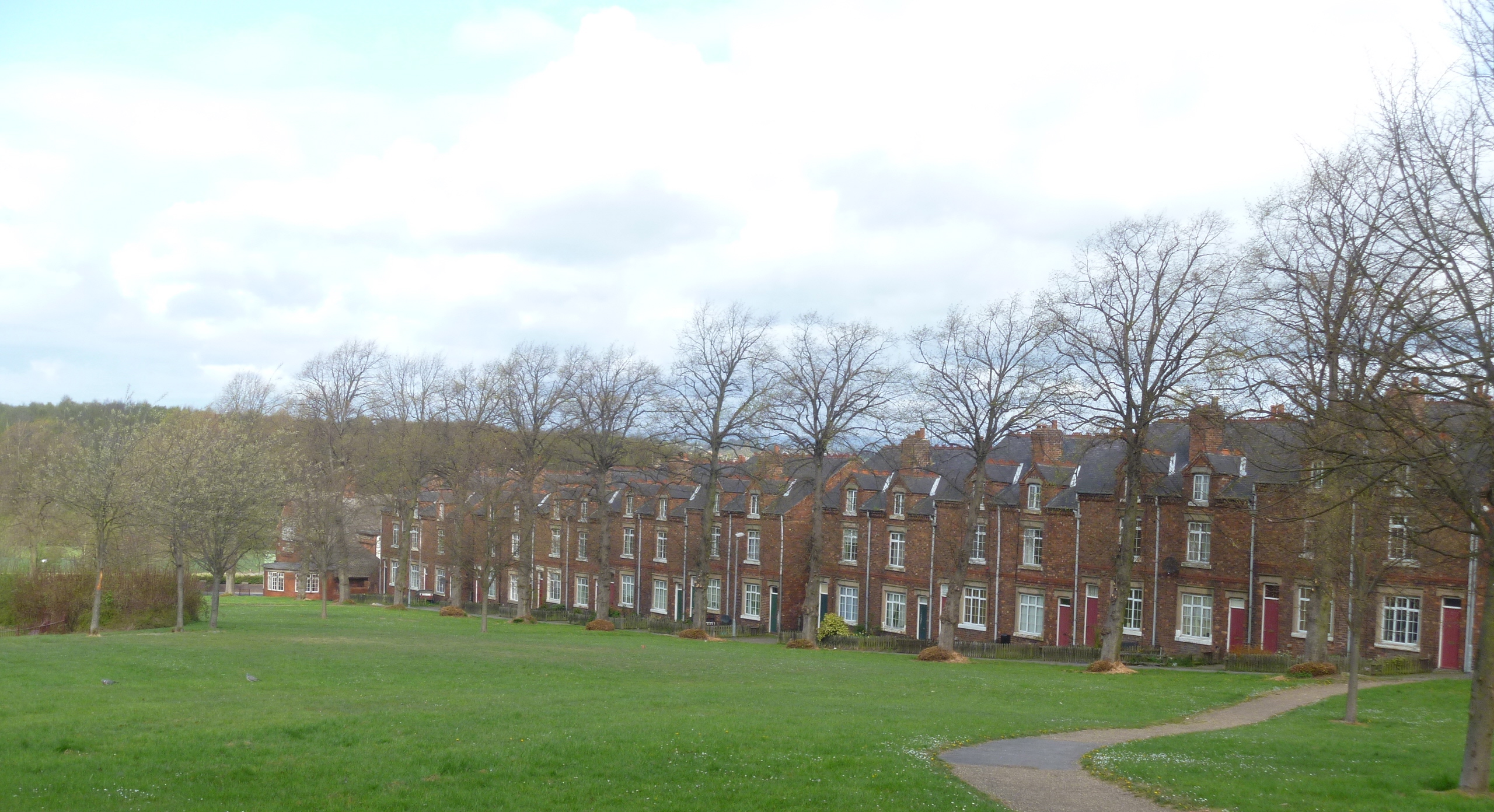
From Bolsover town we headed down below the Castle to New Bolsover which is actually not so new just newer than the old settlement around the Castle. It was a purpose-built miners’ village of neat red-brick terrace houses enclosing a large grassy area and is still occupied today even though the pits around this coalfield closed in the 1990s.

In New Bolsover

In New Bolsover

The theme of much of the walk was past or along the remains of the coal industry: along a disused railway track and past grassed over open cast mines on the Stockley Ponds and Trail maintained by Bolsover Countryside Partnership.

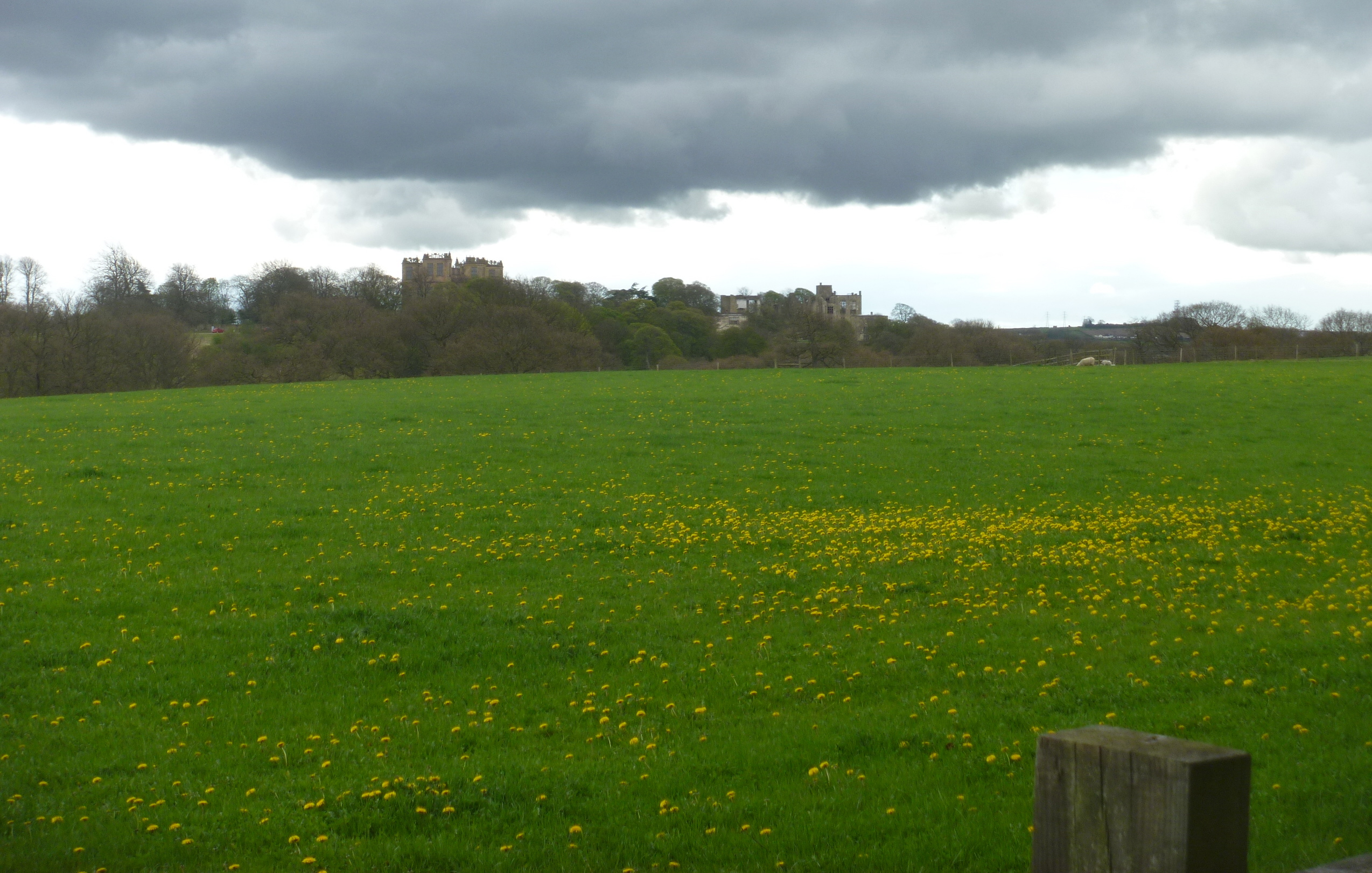
We could still see Bolsover Castle

We could still see Bolsover Castle

The Stockley Trail

The Stockley Trail

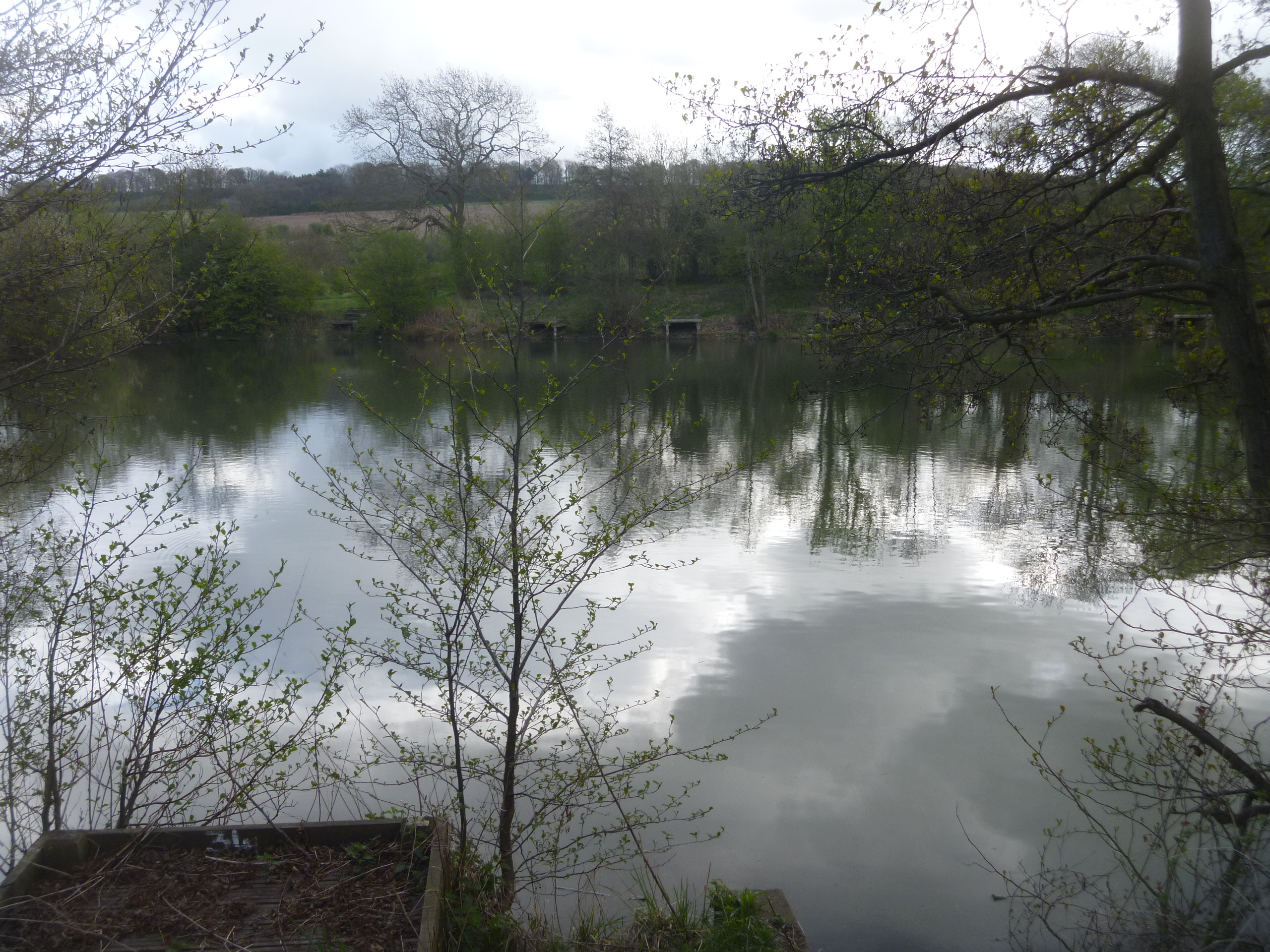
Stockley Ponds

The Stockley Ponds (Beware! Contaminated water) no fishing today

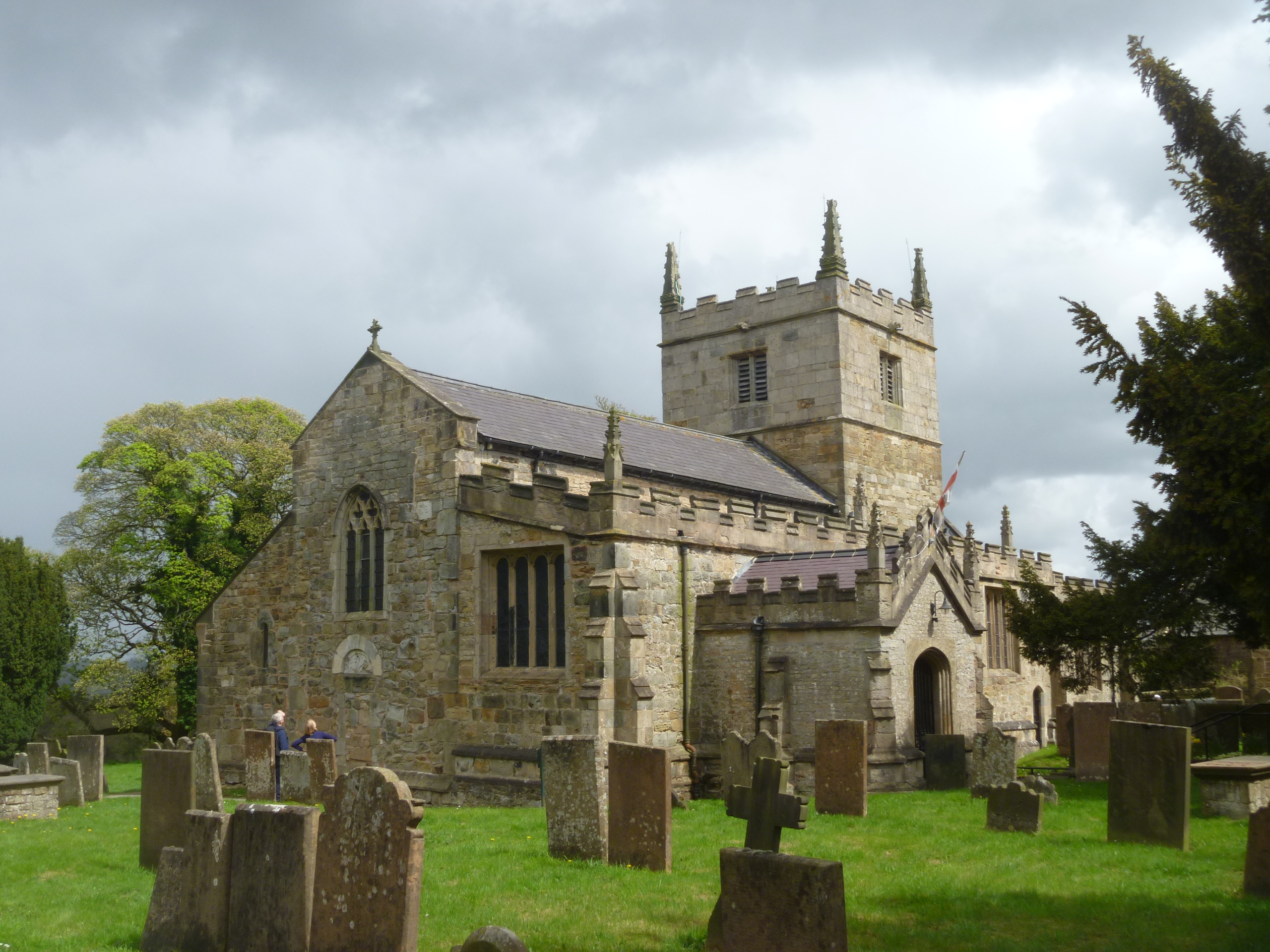
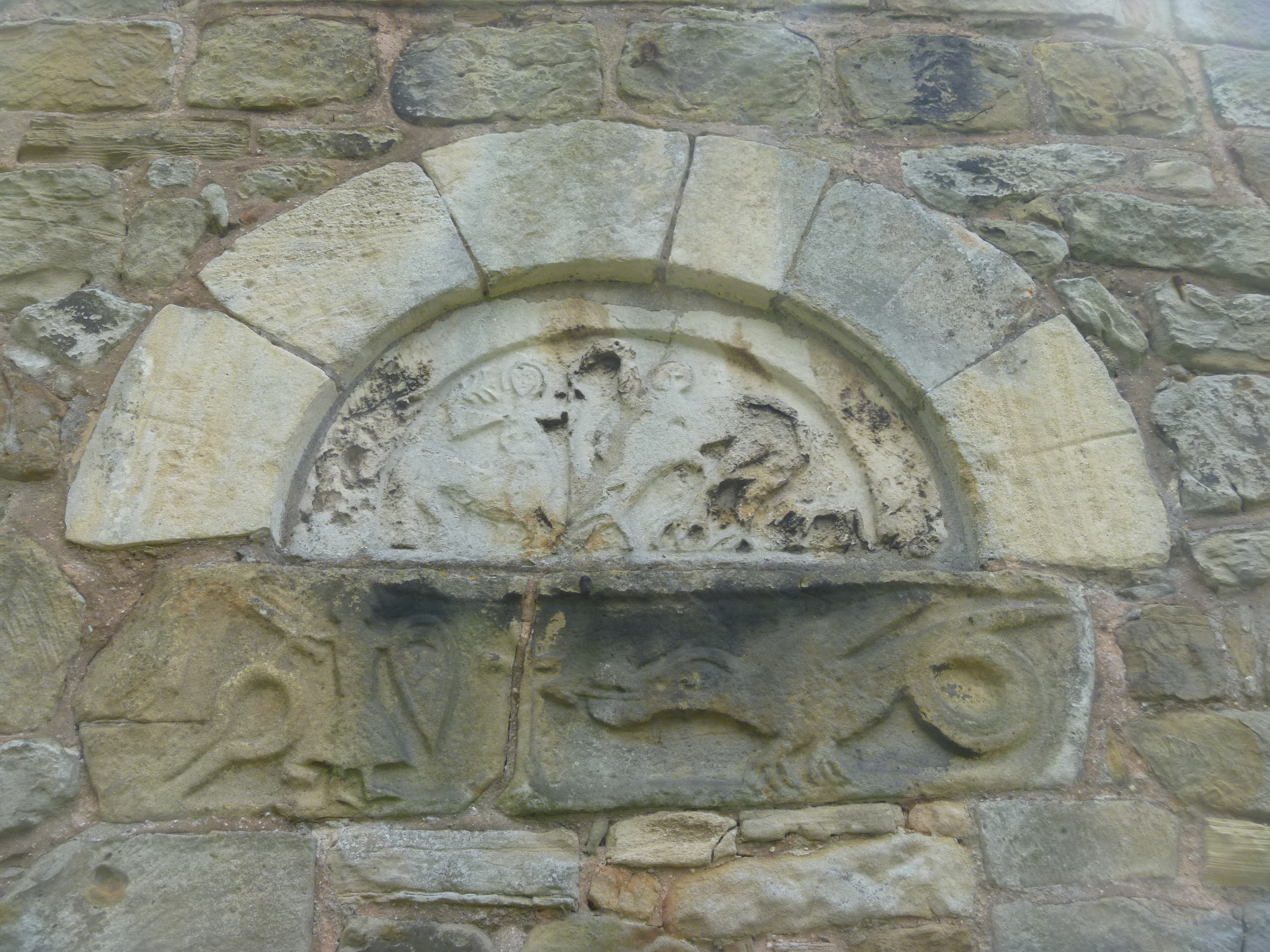
Apart from the two very significant buildings – Hardwick Hall (NT) and Bolsover Castle – we stopped by a small Saxon Church. The Church of St John the Baptist at Ault Hucknall was closed unfortunately but it would have been good to get inside. Read more about its chapel, windows and the grave of Thomas Hobbes, the author of The Leviathan, here.

St John's Ault Hucknall

St John the Baptist Church, Ault Hucknall

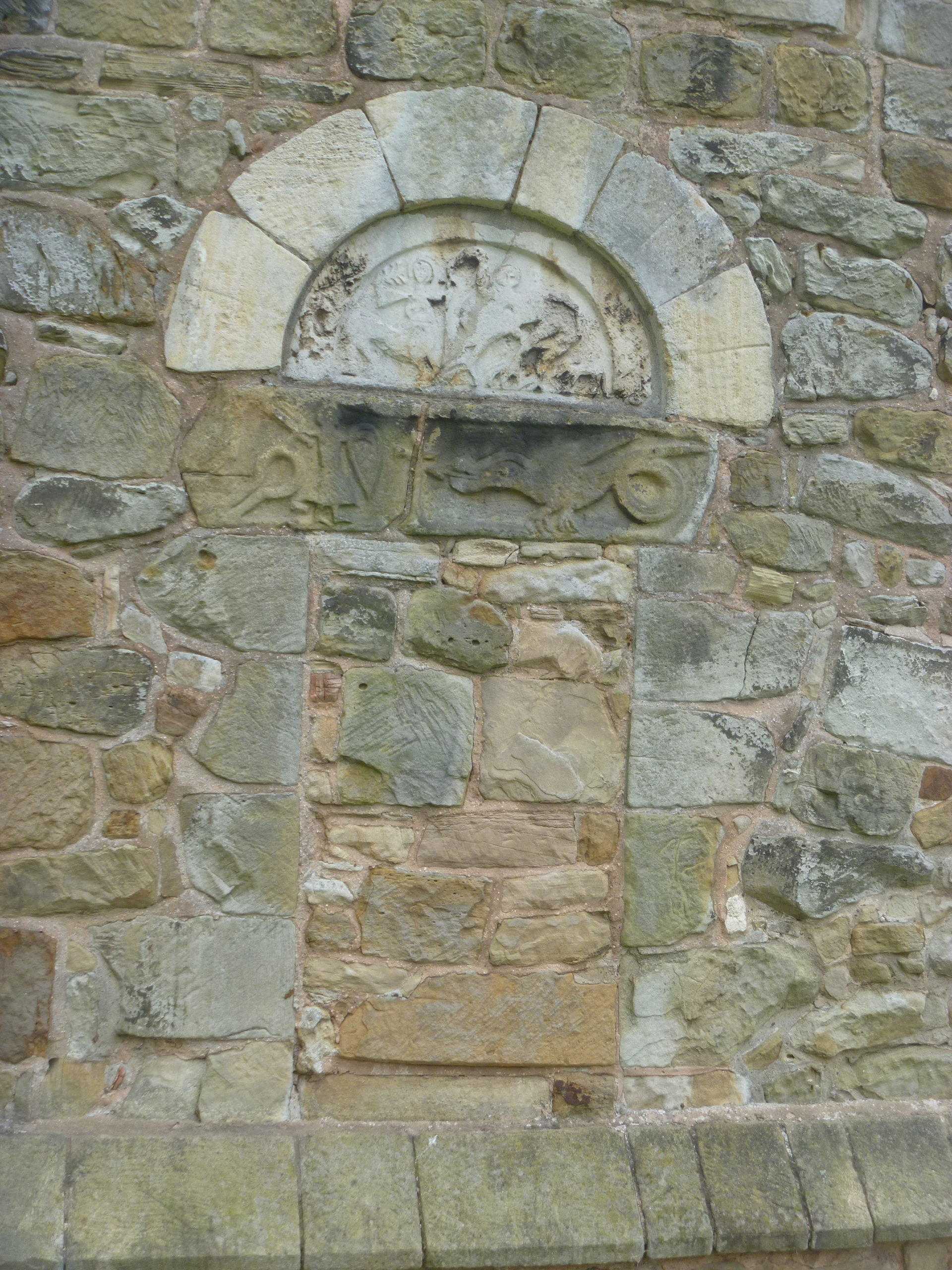
Saxon Arch and figures

Saxon Arch with figures

Close-up of the Saxon Arch

Saxon Arch details

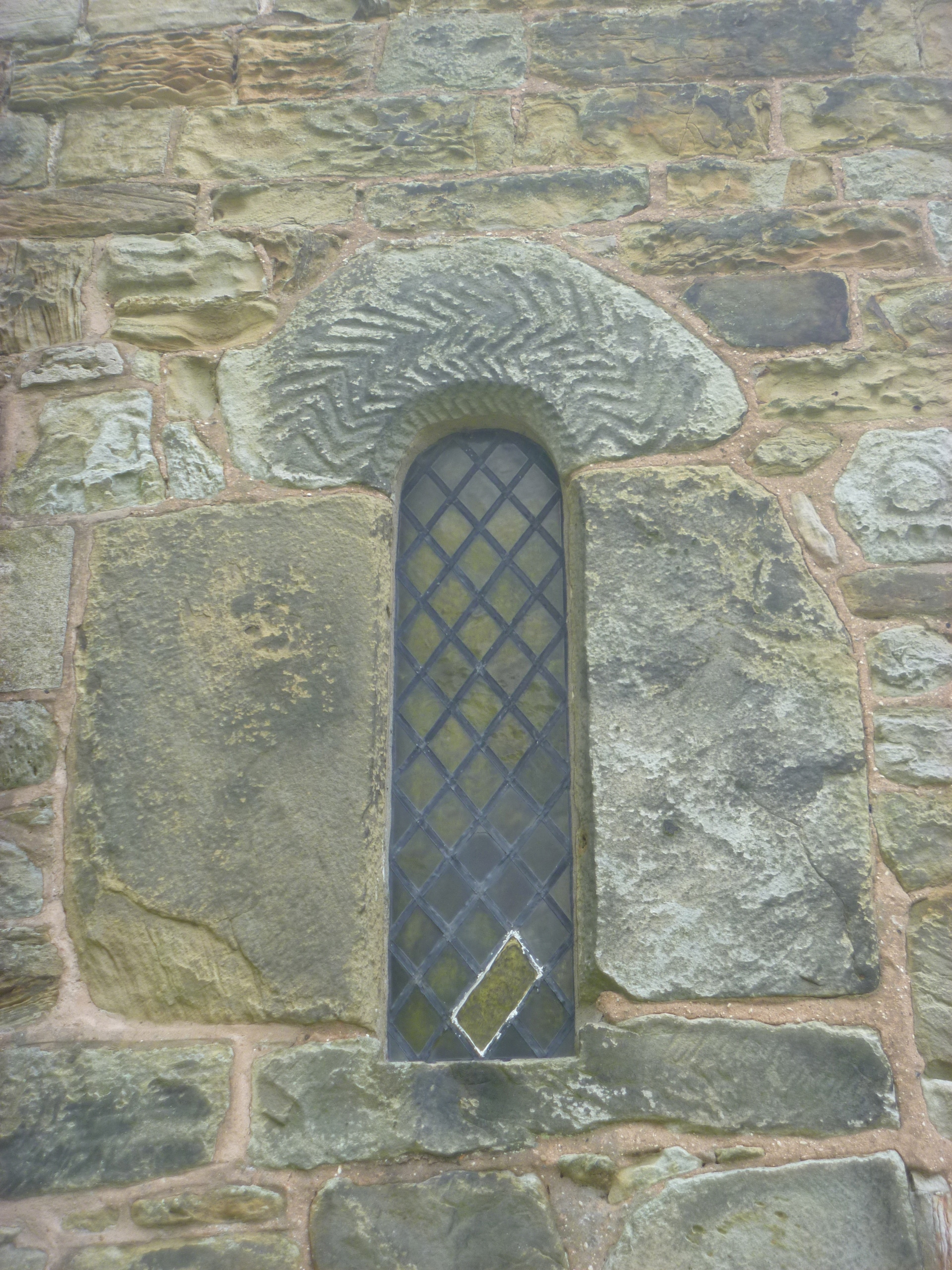
Saxon Window

Saxon Window

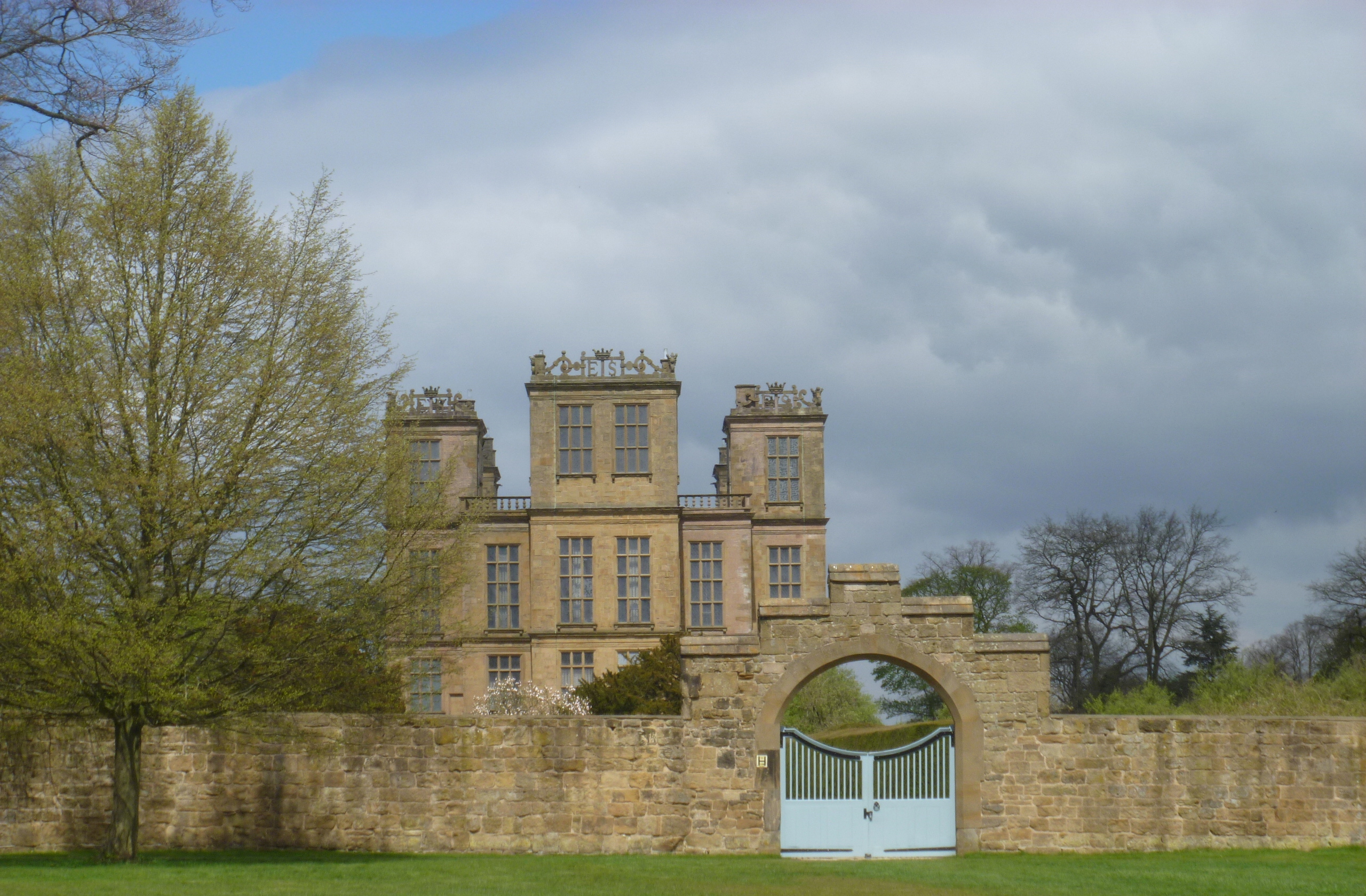
By lunchtime we’d arrived at Hardwick Hall, “more glass than wall”.

Approaching Hardwick Hall

Approaching Hardwick Hall

Hardwick Hall More Glass than Wall

Hardwick Hall

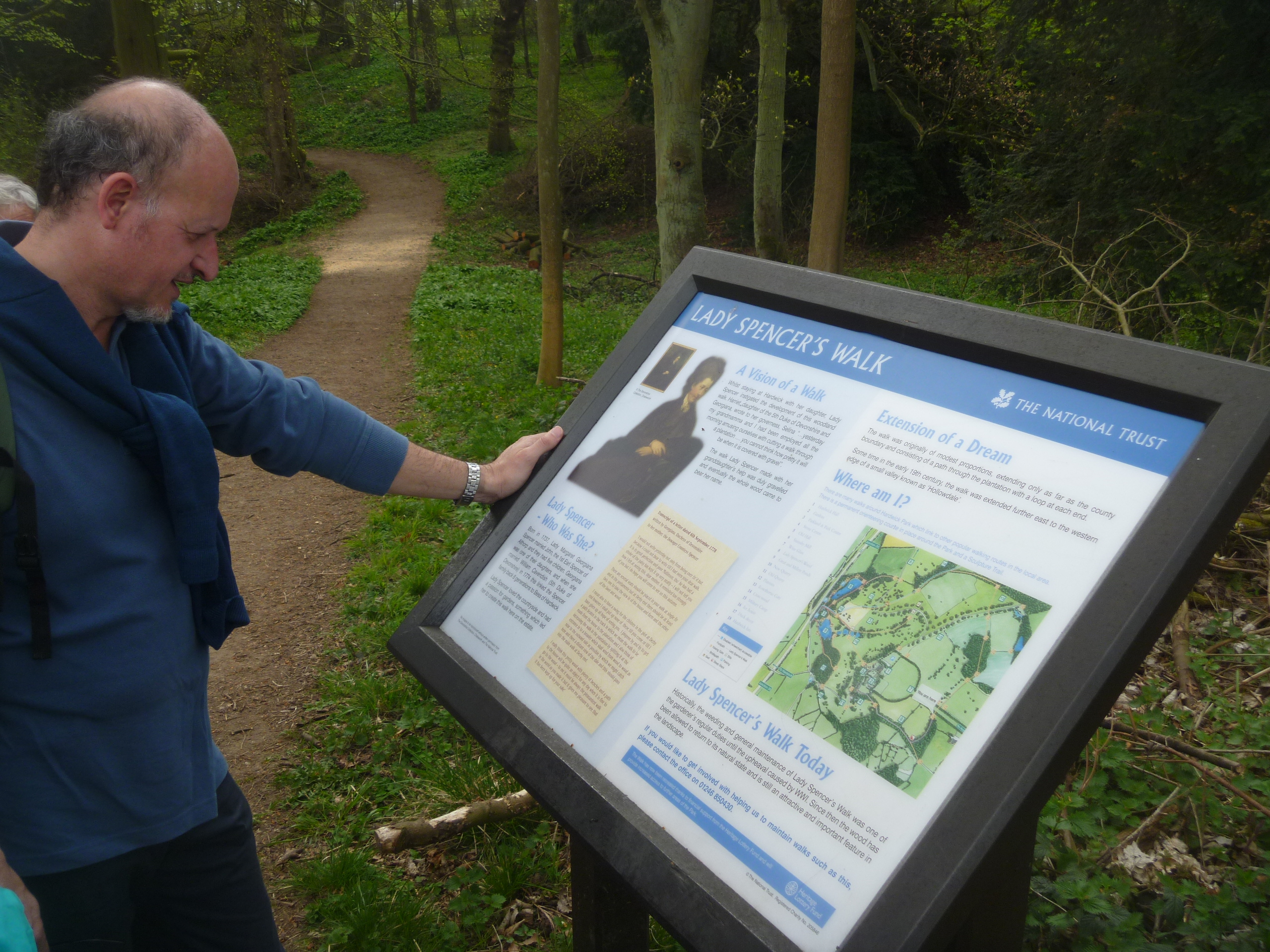
But it wasn’t our lunchtime so we just walked through the grounds, admiring the house as we went and continued along Lady Spencer’s Walk and other tracks on the estate finally arriving at Glapwell where lunch was waiting for us in the Community Centre.

Lady Spencer's Walk

Our Leader, Rob

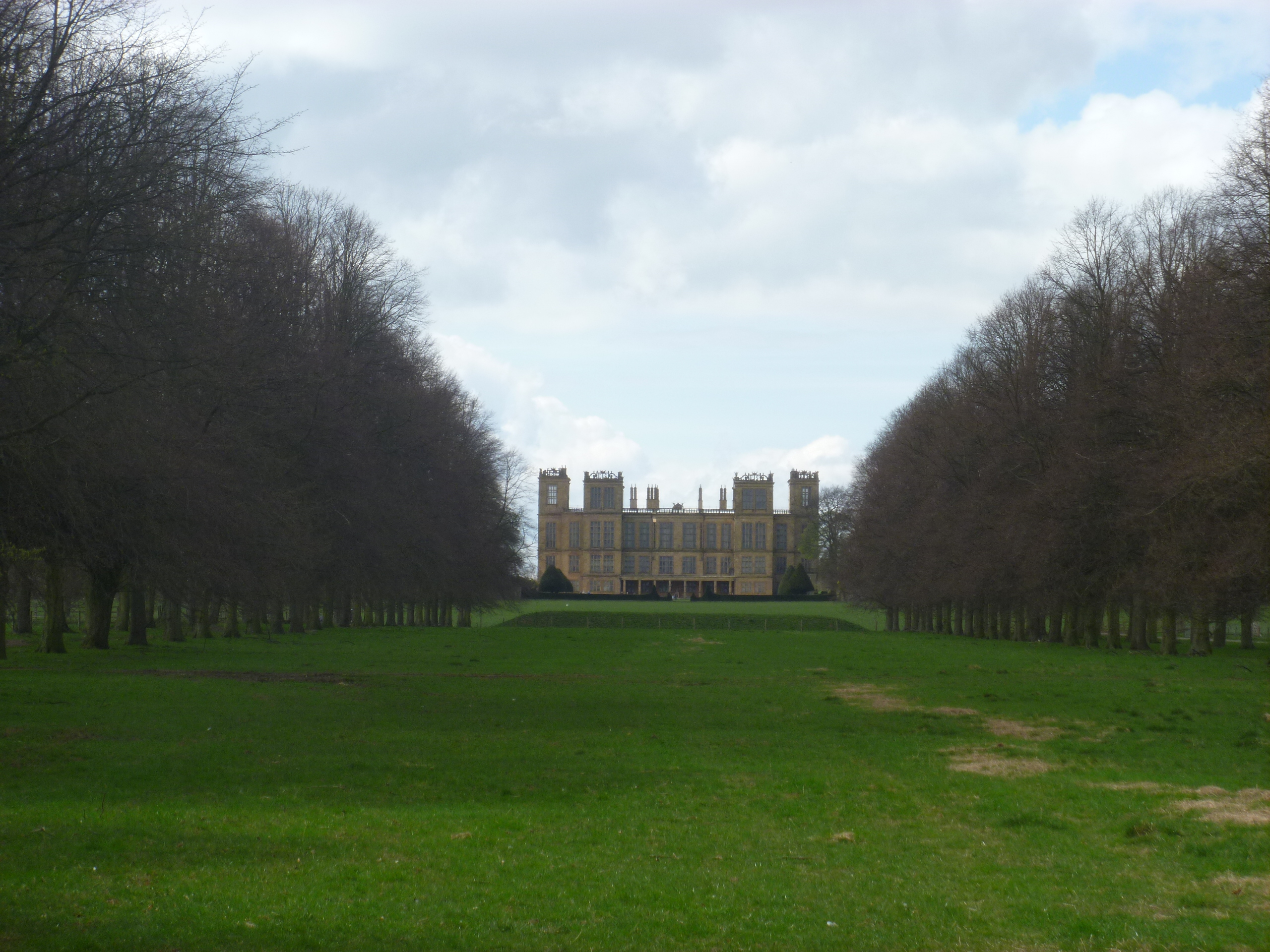
Hardwick Hall avenue

Hardwick Hall from the Avenue of Trees

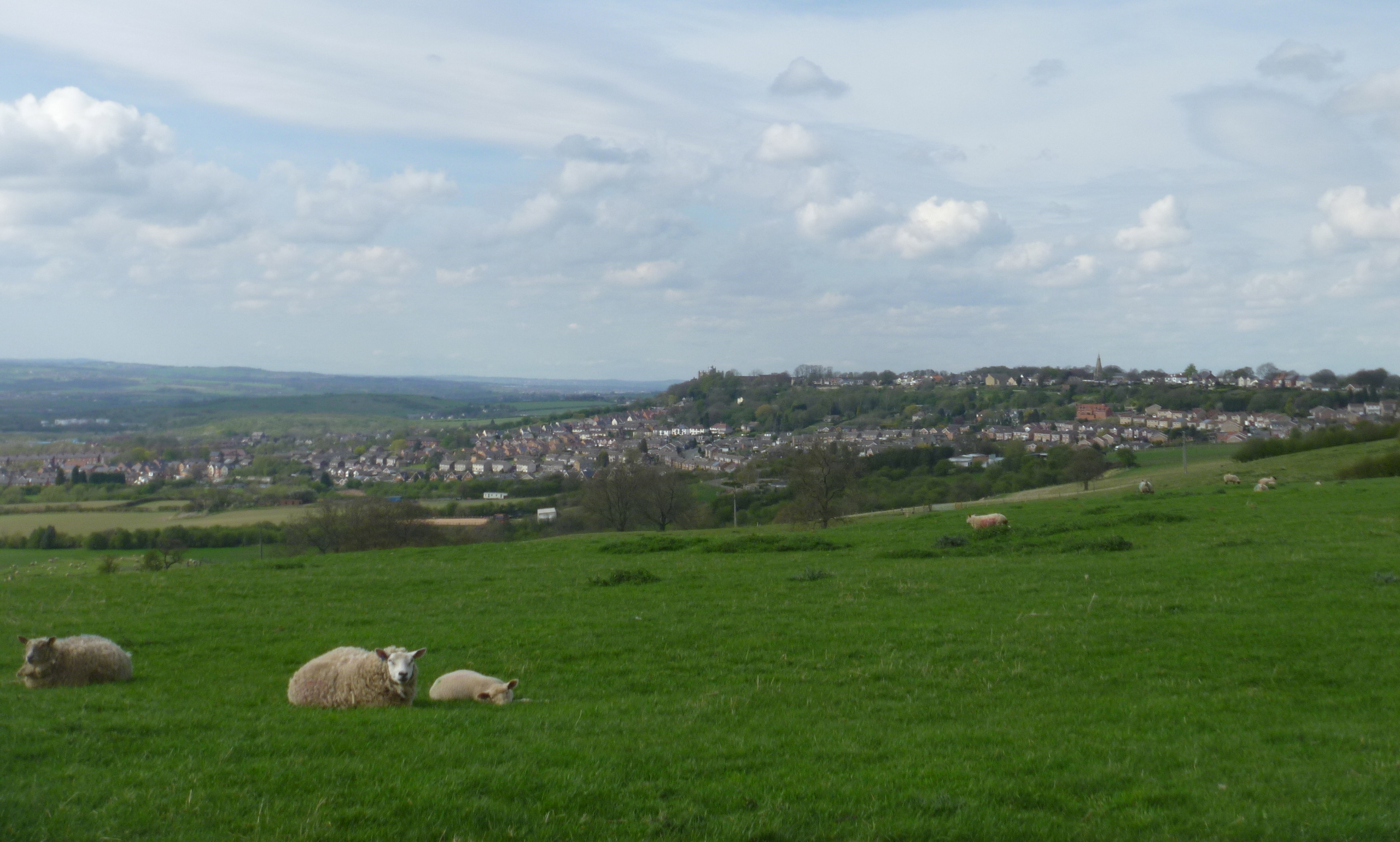
Comfortably refreshed, the best part of the walk, although fairly short now, lay ahead. After crossing several fields we followed a ridge directly back up to Bolsover with magnificent views west right across to the Derbyshire Dales.

Return to Bolsover

Return to Bolsover

Arriving in Bolsover more sustenance awaited us at The Bluebell pub – a generous spread of home baked scones, butter, cream and jam and pots of tea, to boot.

Less than an hour’s drive I am comfortably ensconced in my homely B&B for the night!

Footloose in Lisbon : walking and climbing in the city

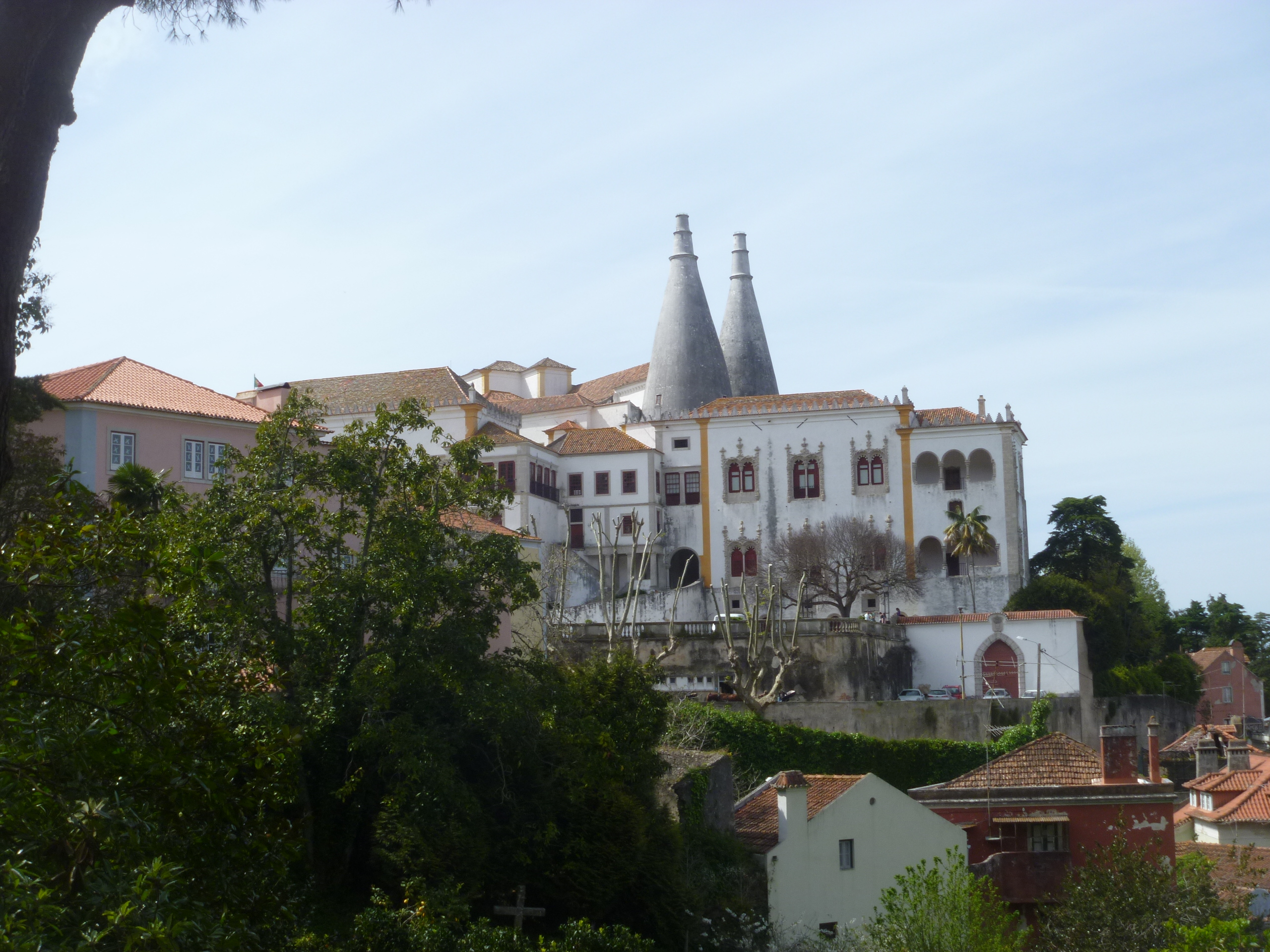
The ATG holiday finished after breakfast on Saturday morning. We’d eaten early and walked down to Sintra Station for the 40 minute train journey to Lisbon Rossio Station. We passed the National Palace on our way. It’s on my list for my next visit!
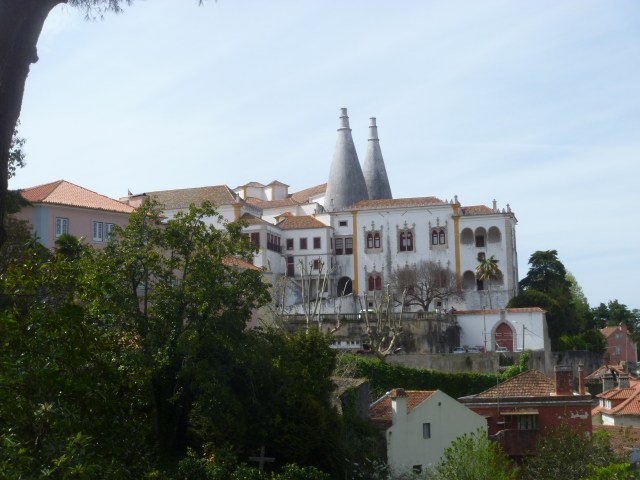
National Palace Sintra

The National Palace, Sintra

We’d added an extra night to the trip so that we might gain a flavour of Portugal’s capital city. From Rossio Square it was a 20 minute walk to our B&B in the shadow of the Sé Cathedral in the medieval Alfama district. Our hostess Teresa met us and let us leave our bags giving us a local map and a few suggestions for a day’s walking in Lisbon.

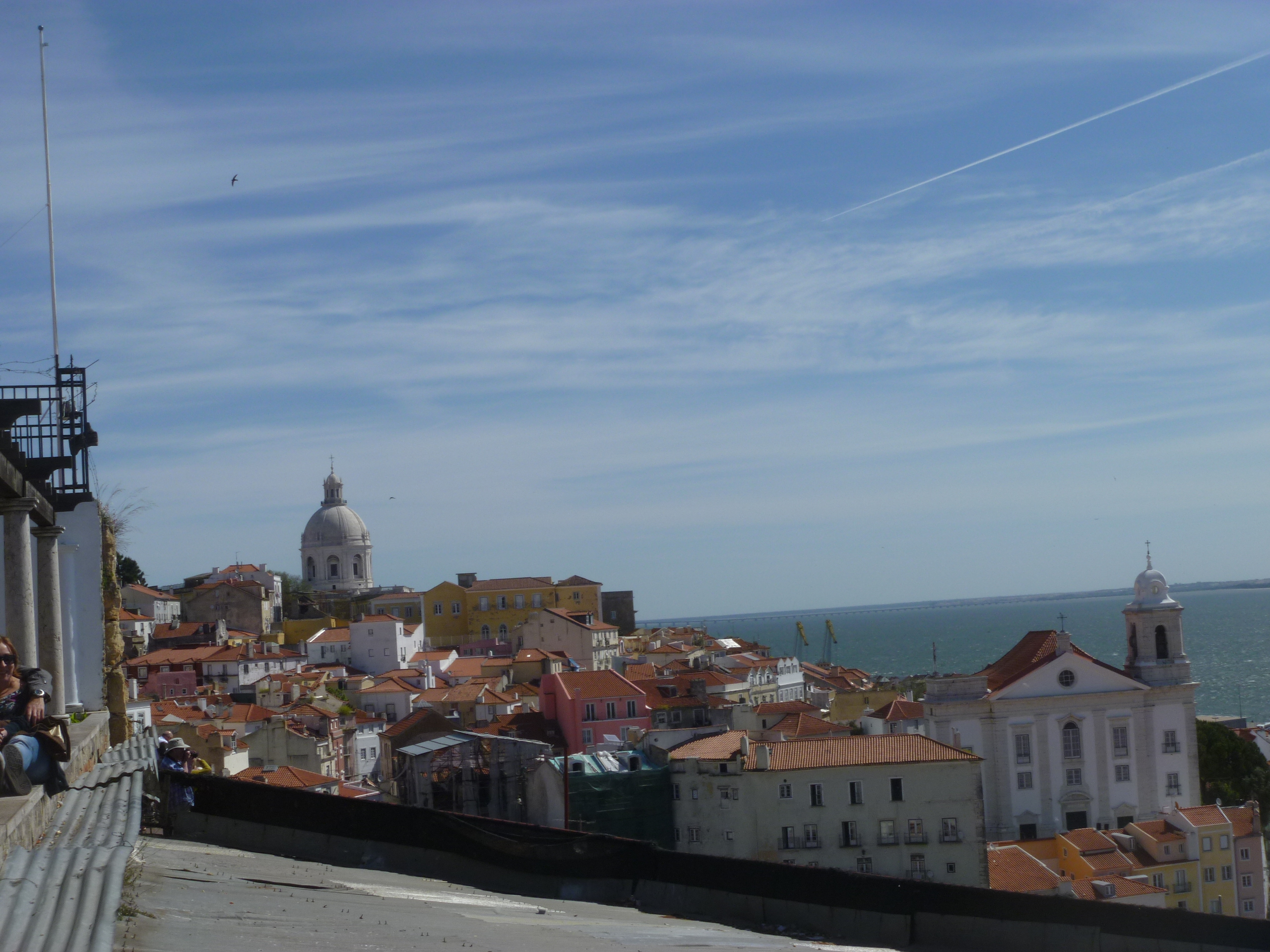
The hill and step climbing didn’t stop at the end of the walking holiday. Lisbon is a hilly city. First off we walked along the route of the famous old 28 tram up to the viewpoints at Santa Luzia and Portas do Sol Squares. Fantastic views over Lisbon and its port, Alfama and the River Tagus.
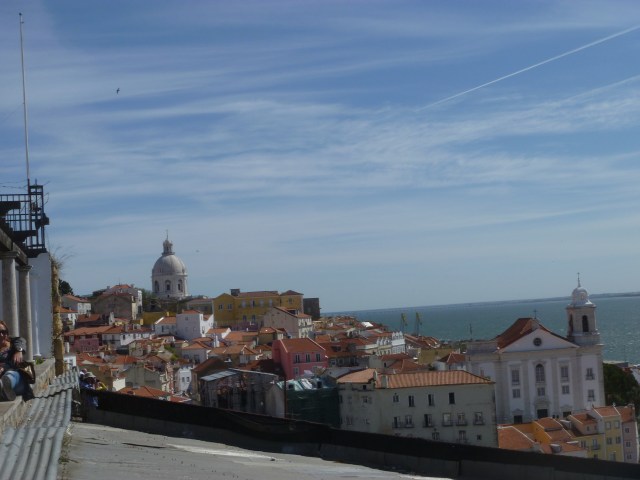
Alfama from Sta Luzia Square

Alfama District from Santa Luzia Square
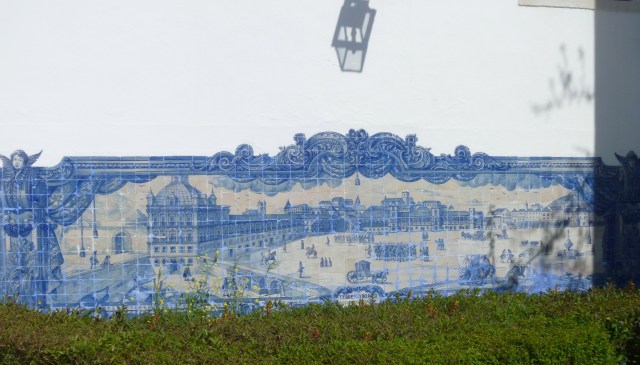
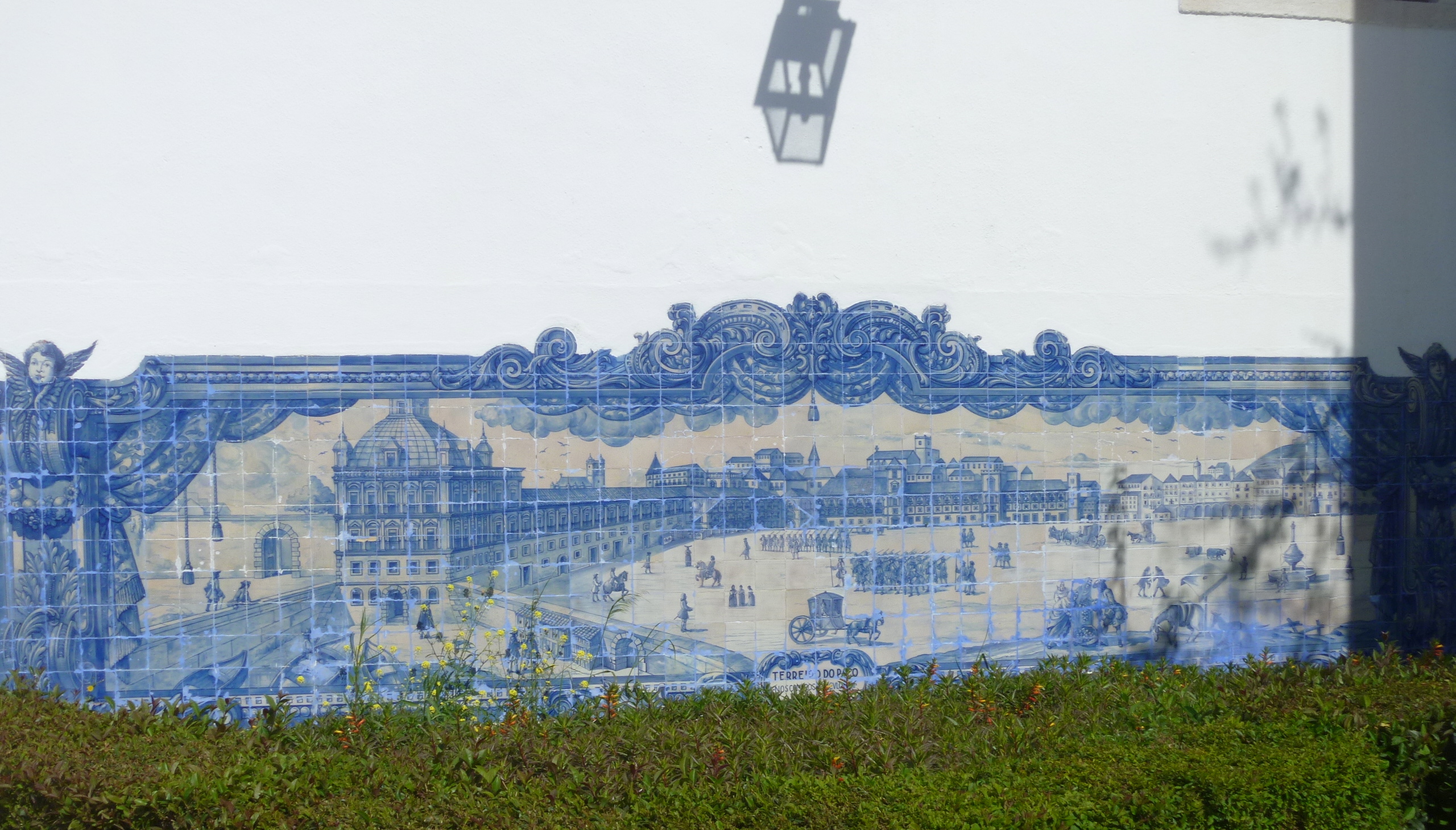
Tiled wall at Santa Luzia Square

Tiled wall at Santa Luzia Square

Tram 28 at the busy Portas do Sol

Tram 28 at the busy Portas do Sol

Portas do Sol Square

Portas do Sol Square

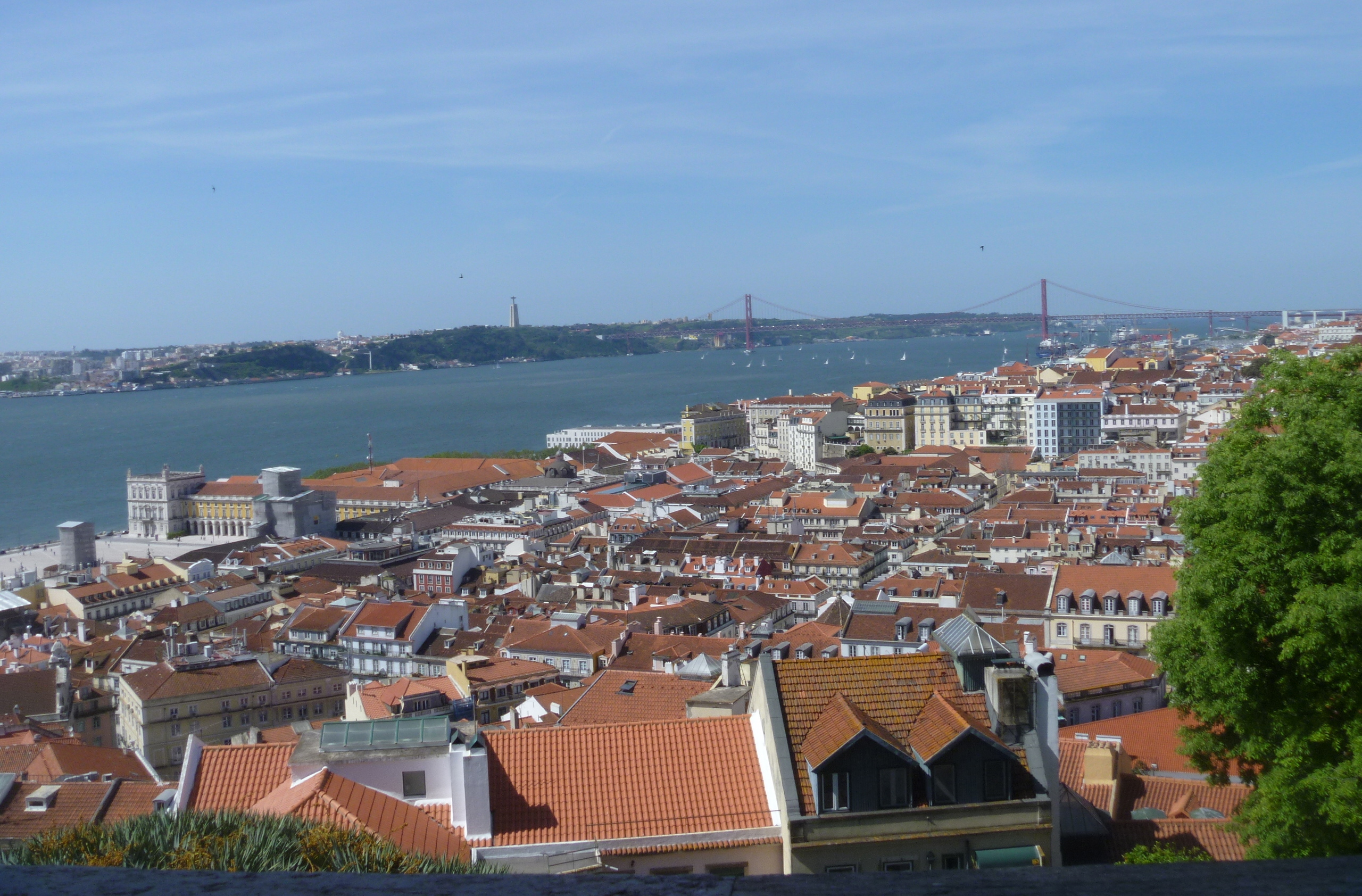
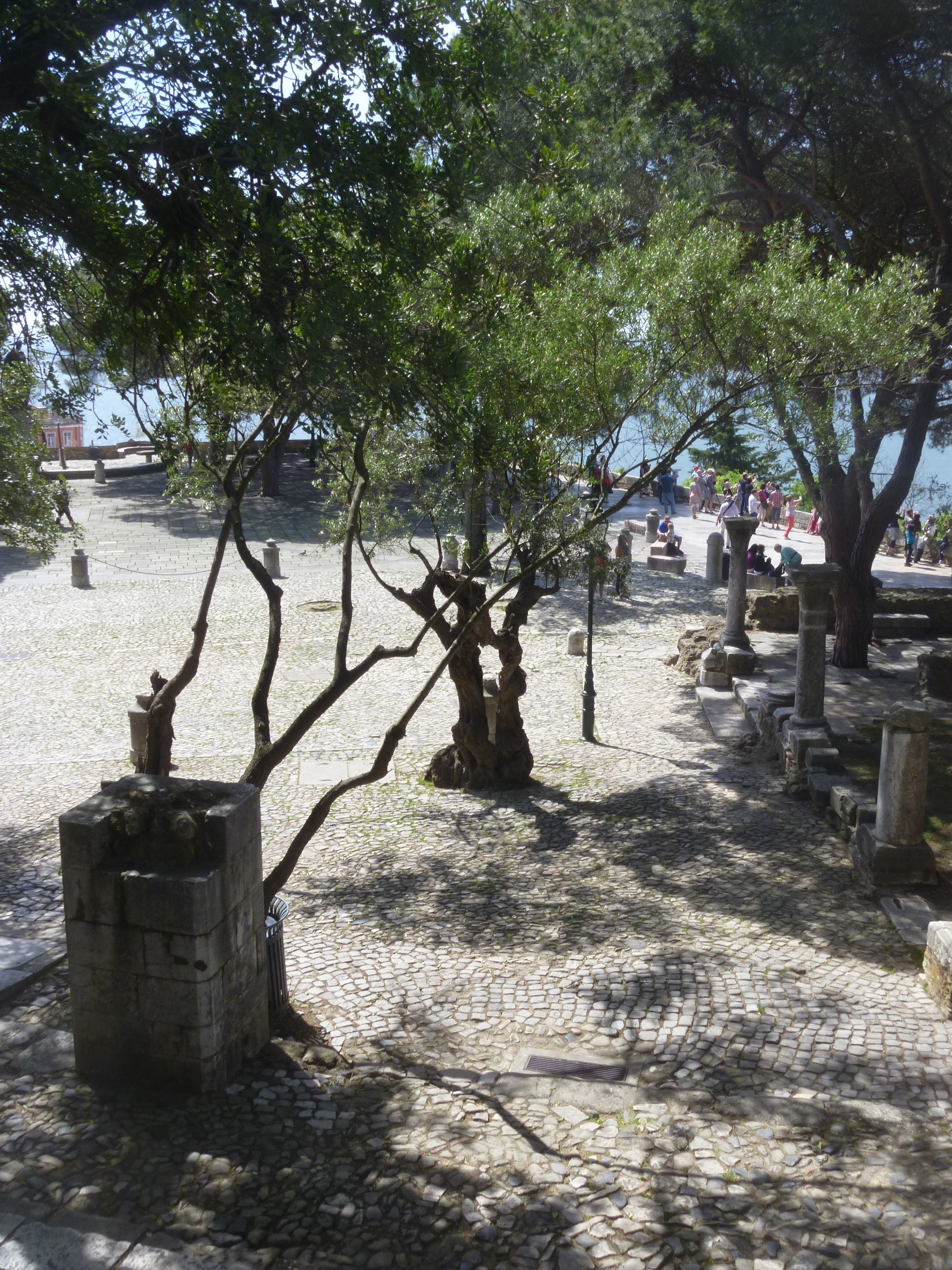
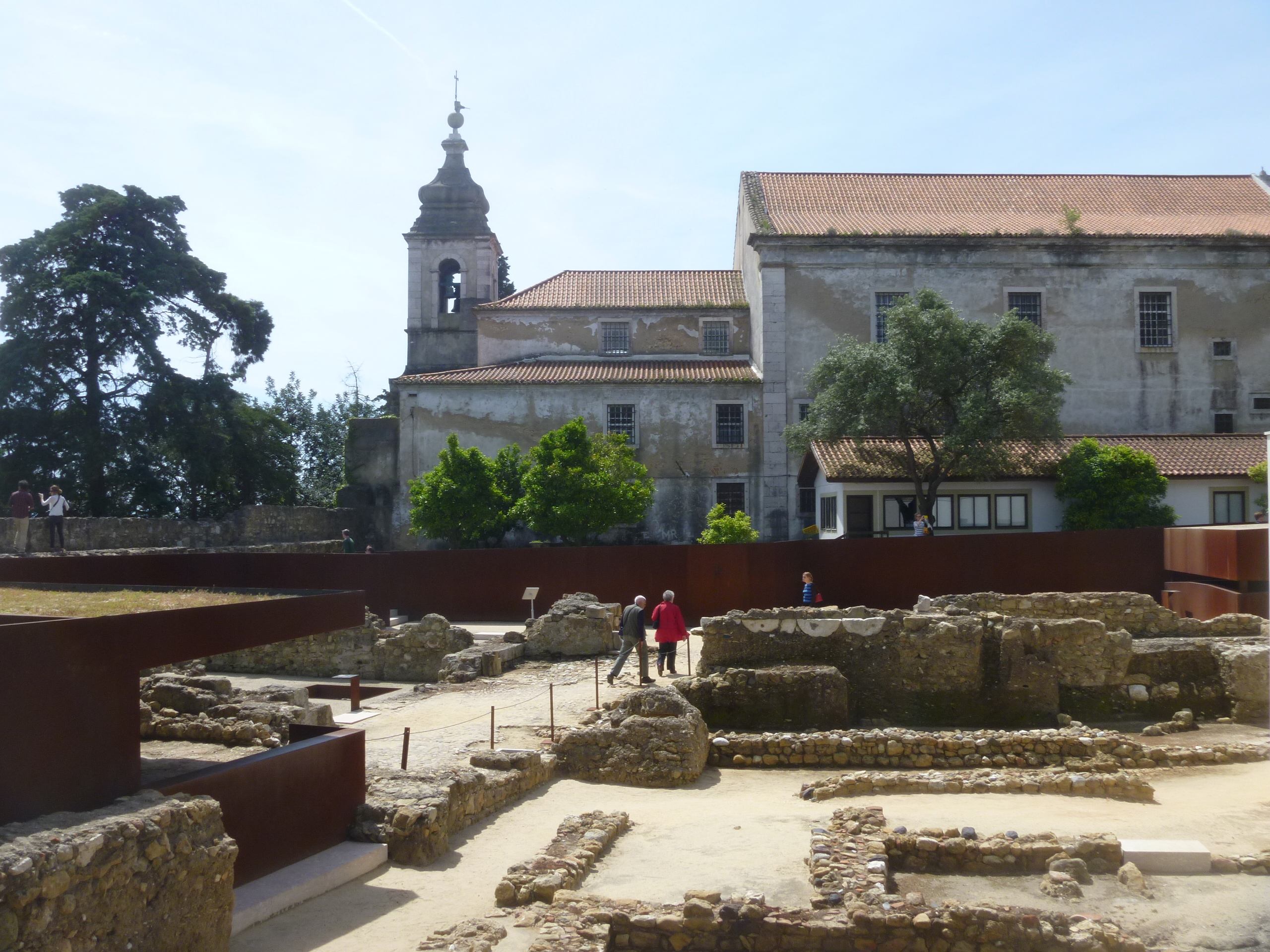
Further climbing brought us to the end of the queue for the ticket office for the Castelo Sao Jorge. Once inside the Castle grounds you can take in fantastic city views from the busy esplanade, visit the archaeological museum, walk the battlements and see the ongoing Moorish excavations and shady gardens. Considered to be the site of the founding settlement of Lisbon recent archaeological finds date back to the late 6th C BC. The castle remains themselves are from the Moorish era (11th and 12th C). St George’s Castle was a royal residence until 1511. For centuries then it was neglected but today it’s an attractive place to visit and we spent the best part of the morning until the early afternoon exploring and admiring the views at every turn.
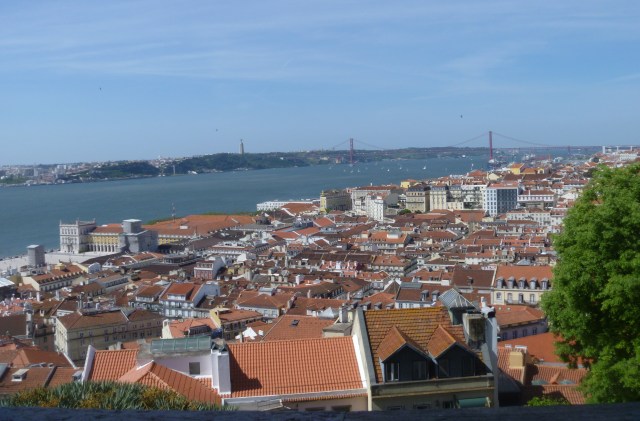
Lisbon, River Tagus and  25 April Bridge from the Castle Esplanade
Lisbon, River Tagus and  25 April Bridge from the Castle Esplanade

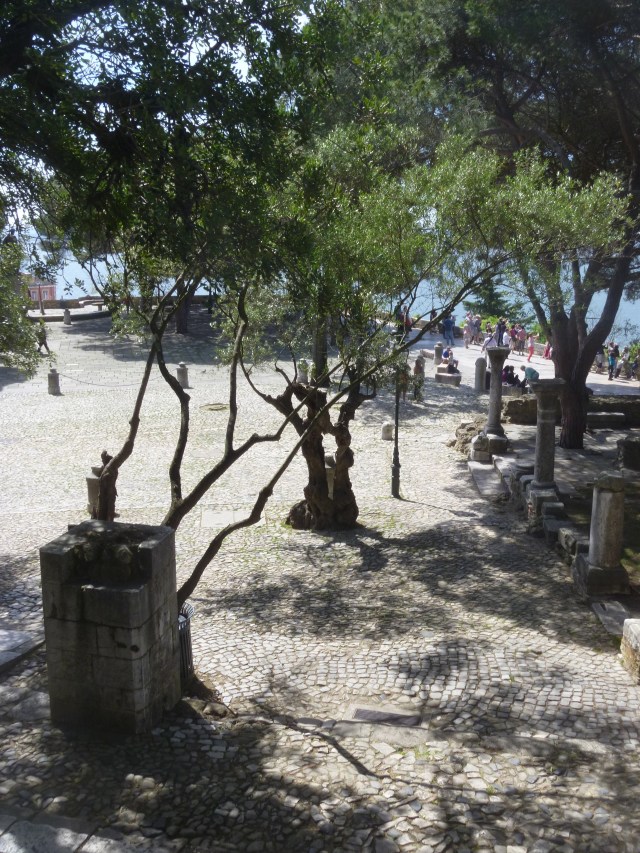
Shady Esplanade at S Jorge Castle
Shady Esplanade at S Jorge Castle

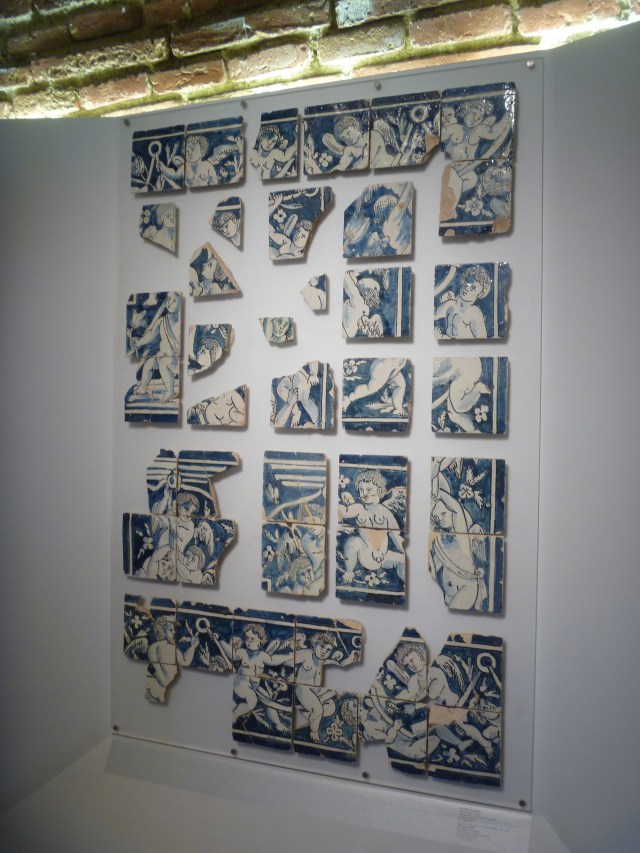
Tile Frame Border in the Archeaological Museum

Tile Frame Border in the Archeaological Museum

This is a representation of angels. Blue and white tiles with manganese. Produced domestically. Late 17th C. [Exhibit notes]
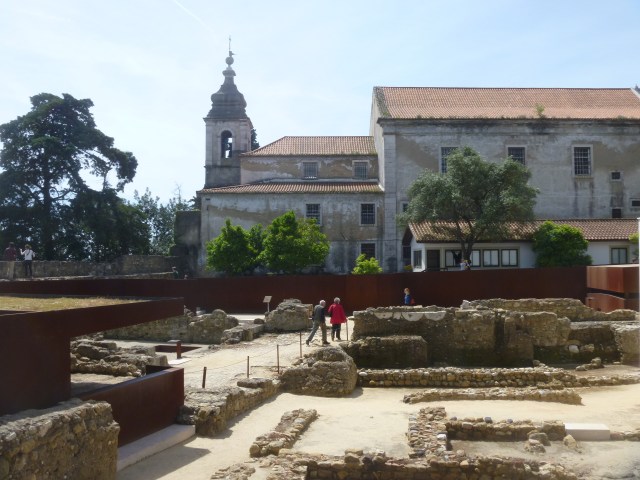
Moorish Excavations

Moorish Excavations

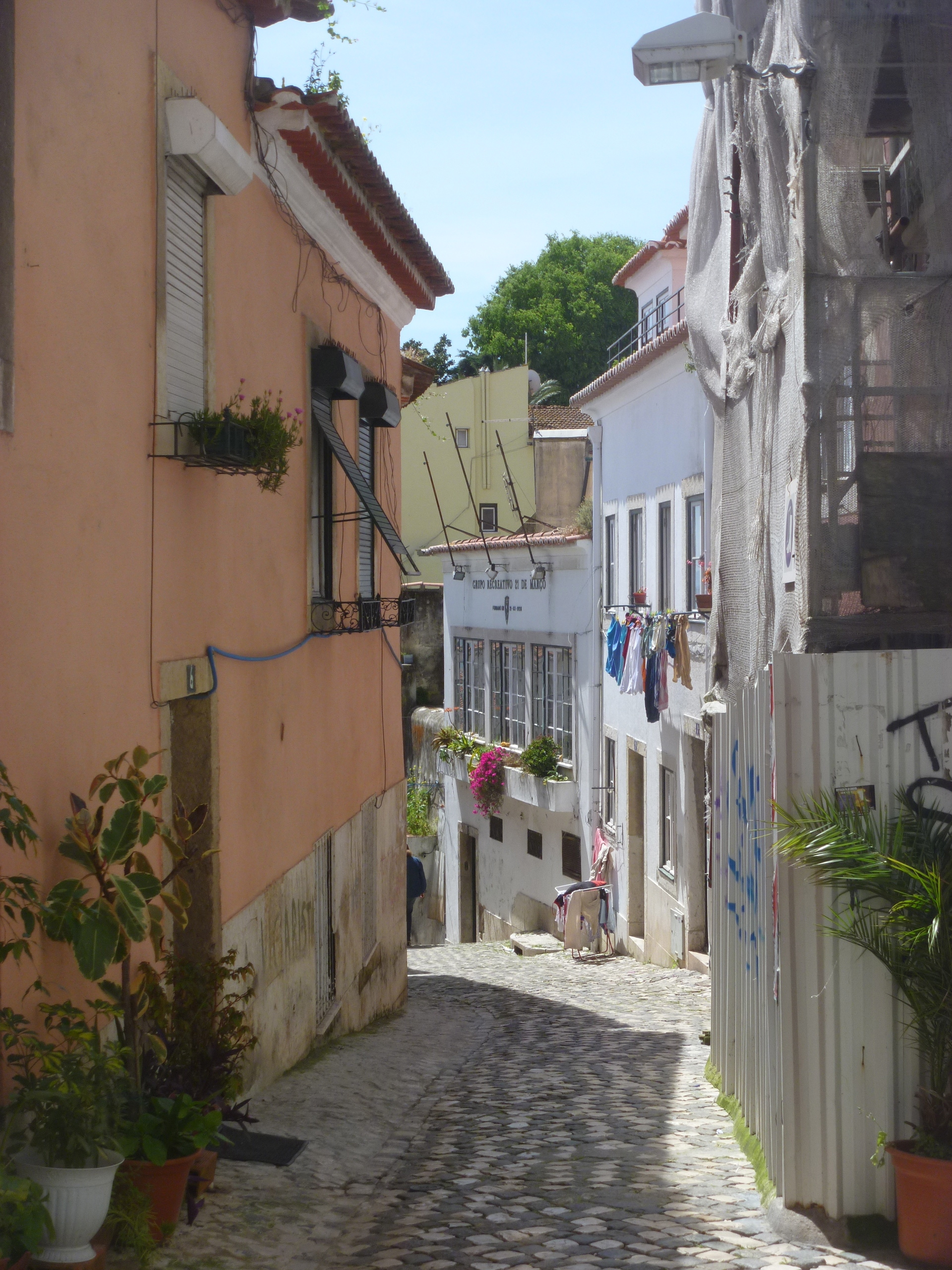
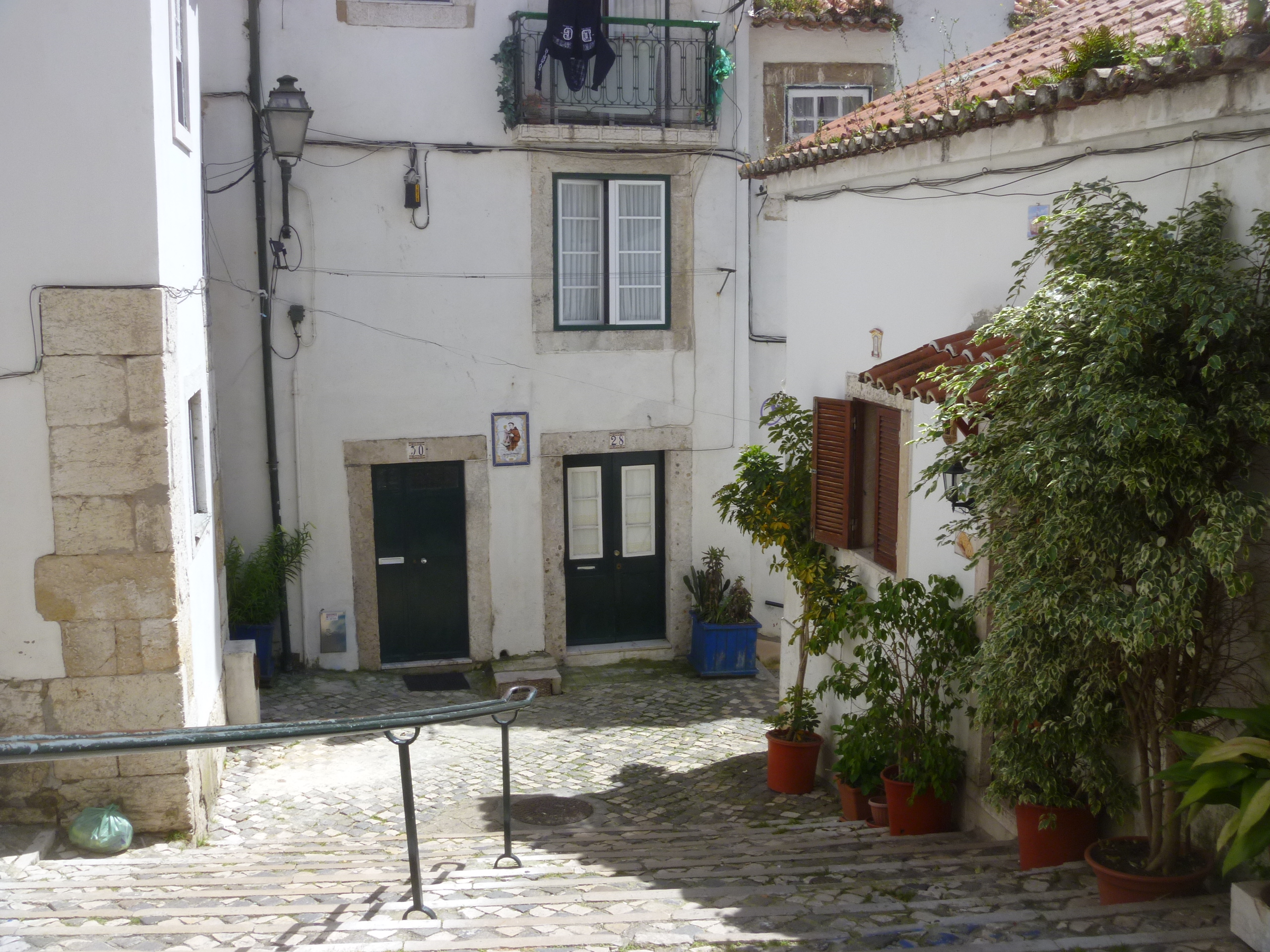
Next up was a wander around Alfama – taking note of possible evening meal locations – and ending up at the popular, Bohemian-style Pois Cafe very near Sé Cathedral the next place on our itinerary.
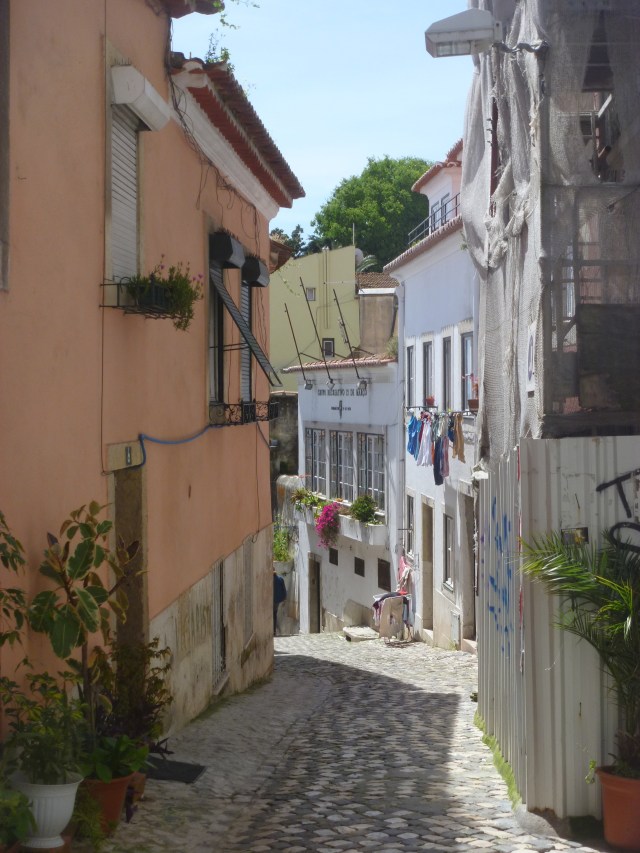
Street in Alfama 1
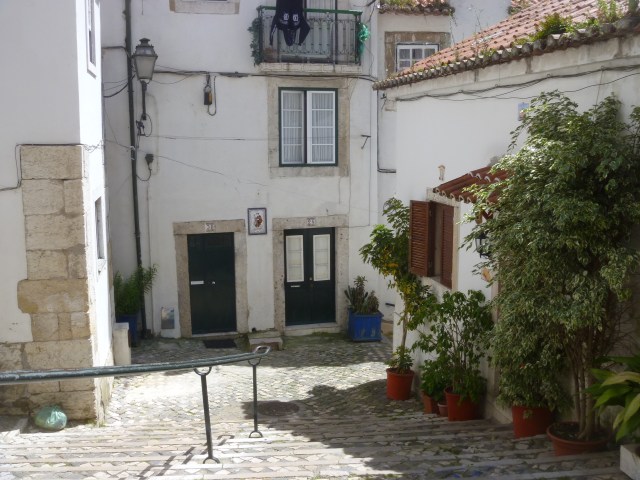
Street in Alfama

Street in Alfama 2

Quiet Square in Alfama

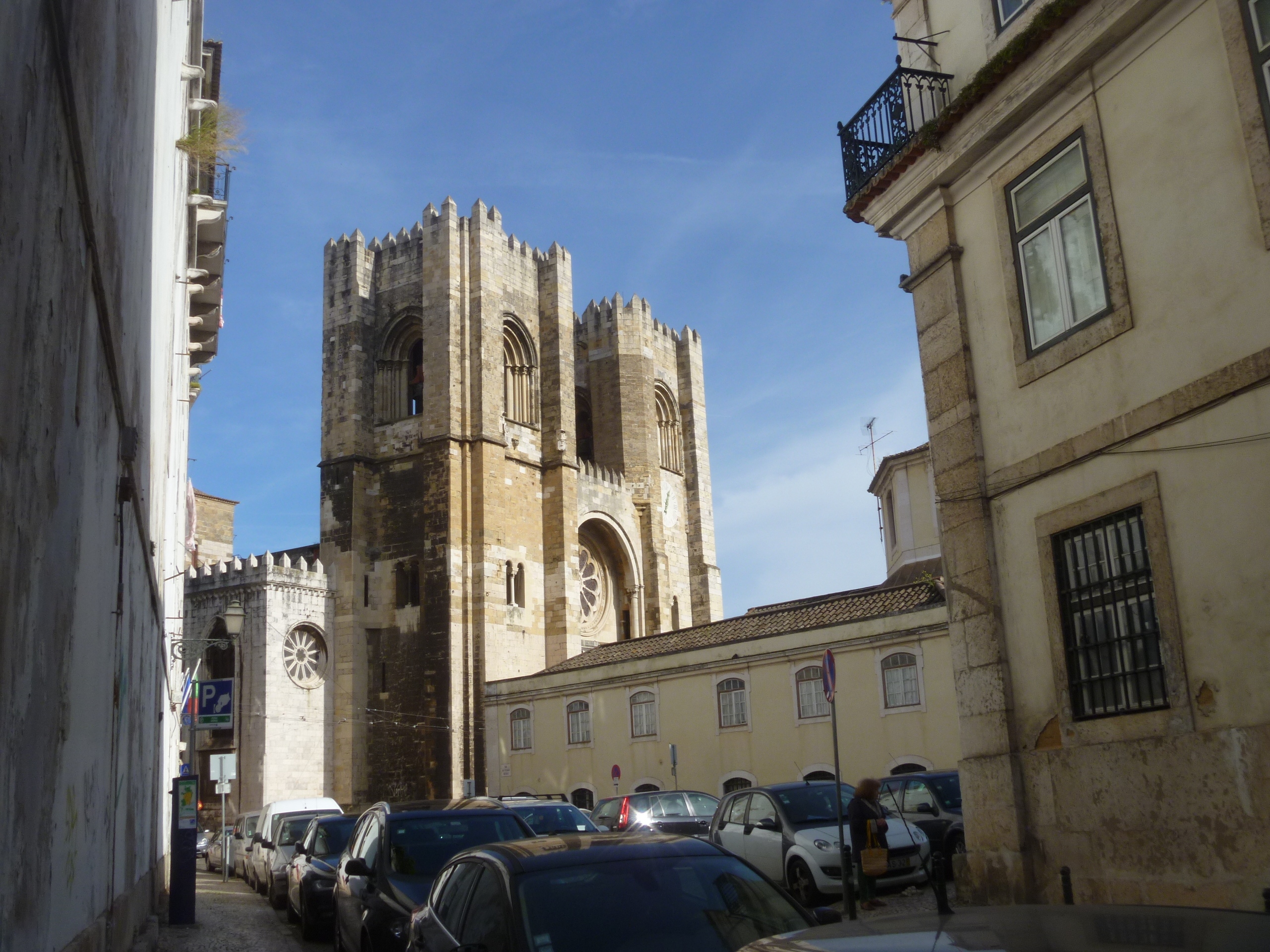
Lisbon’s Cathedral, built not long after Dom Afonso Henriques took Lisbon from the Moors in 1147, stands on the site of city’s main mosque. The crenellated Romanesque building is a reconstruction and restoration since most of Lisbon was destroyed by earthquake in 1755.
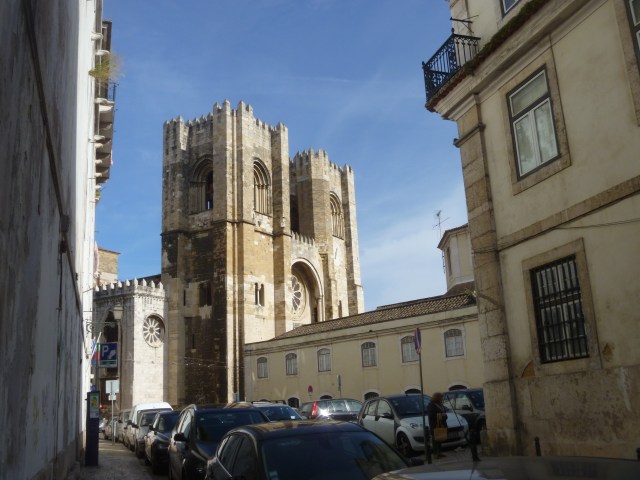
Se Cathedral near our B&B

Sé Cathedral near our B&B

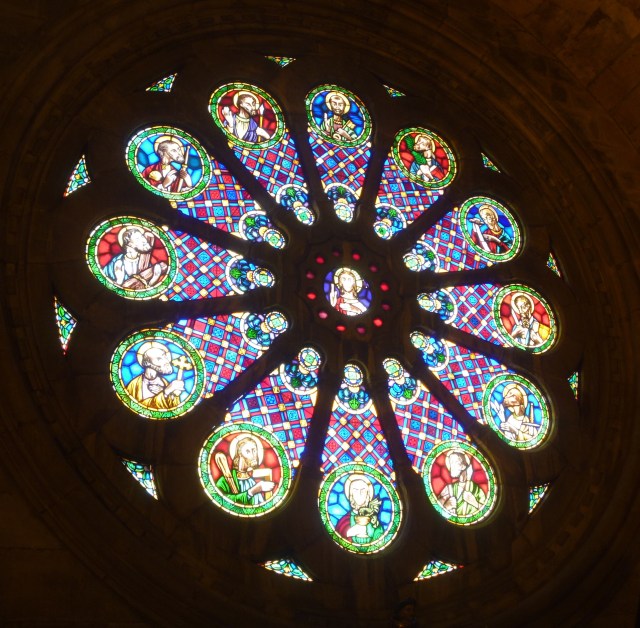
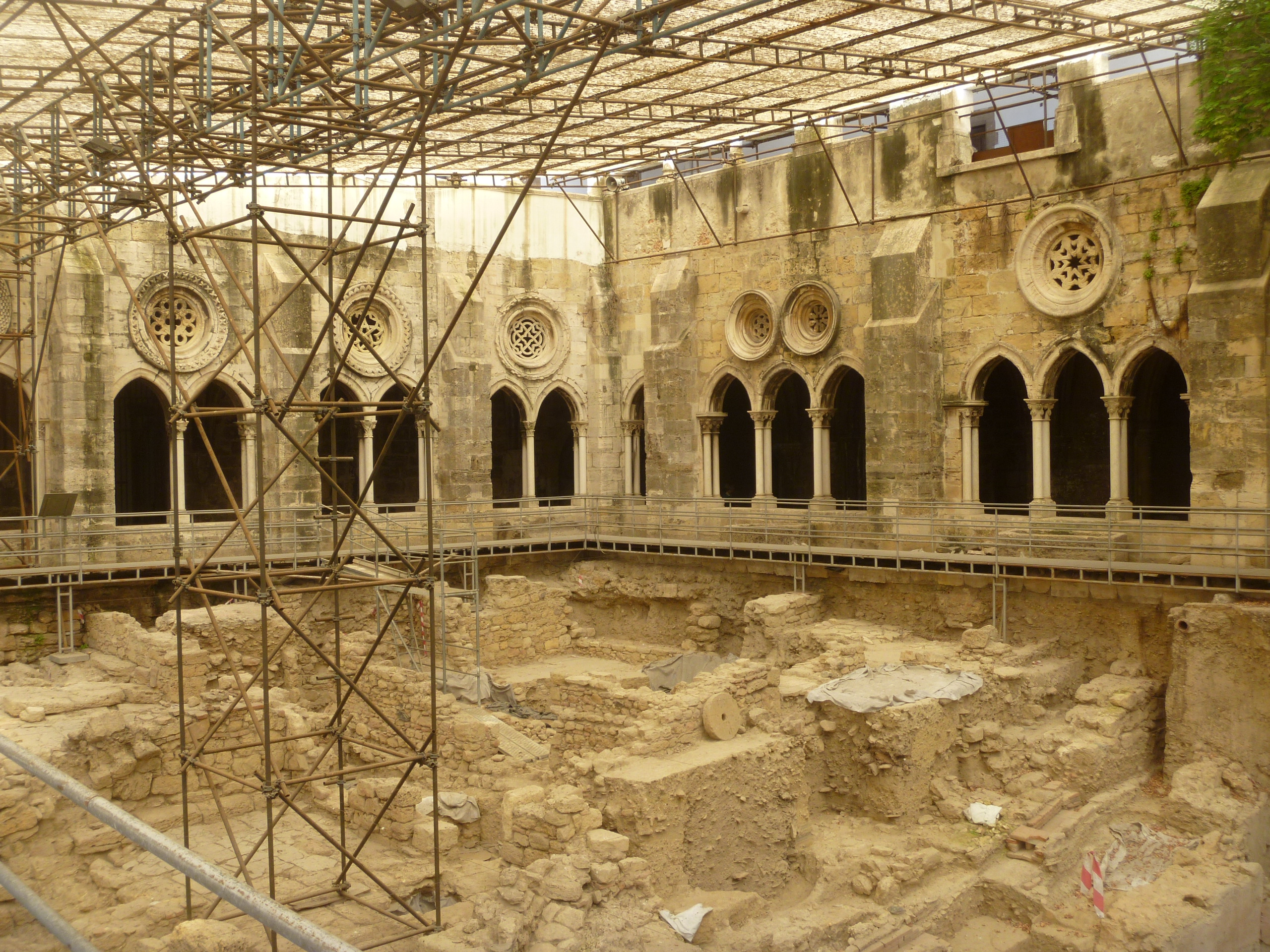
It is also an important archaeological site and new finds are constantly being added to the inventory from the cloister excavations originally started to reinforce the building’s foundations. We explored the Cloister and the Treasury at extra charge. The highlight of the church is the Rose Window.
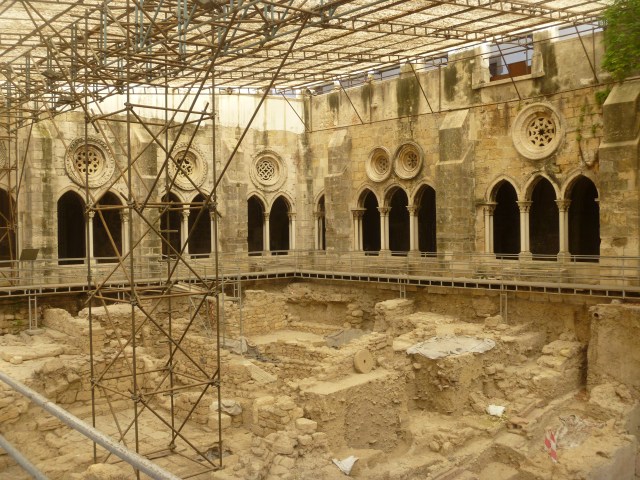
Excavations in Se Cathedral Cloister

Excavations in Sé Cathedral Cloister

The Rose Window

The Rose Window

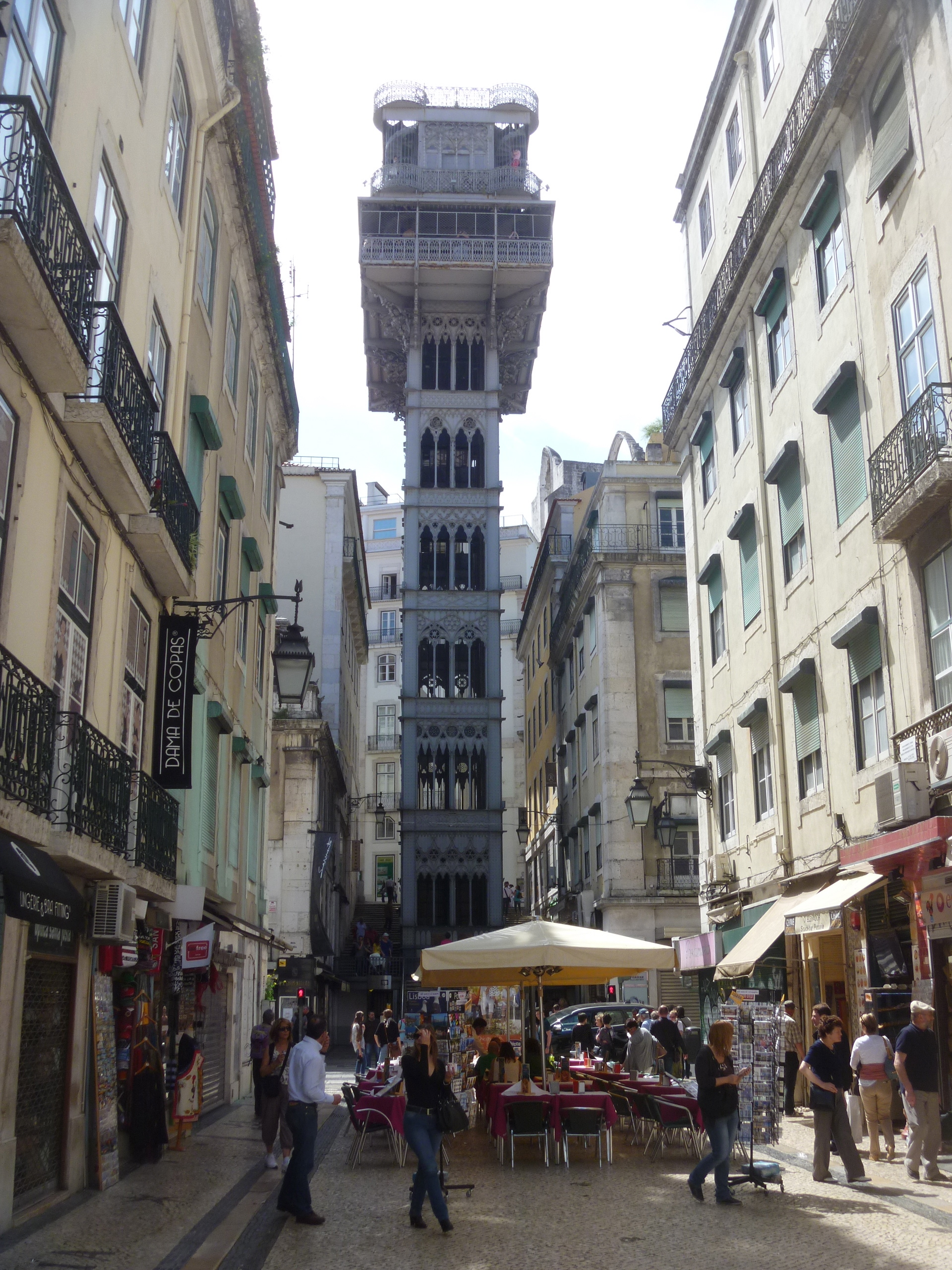
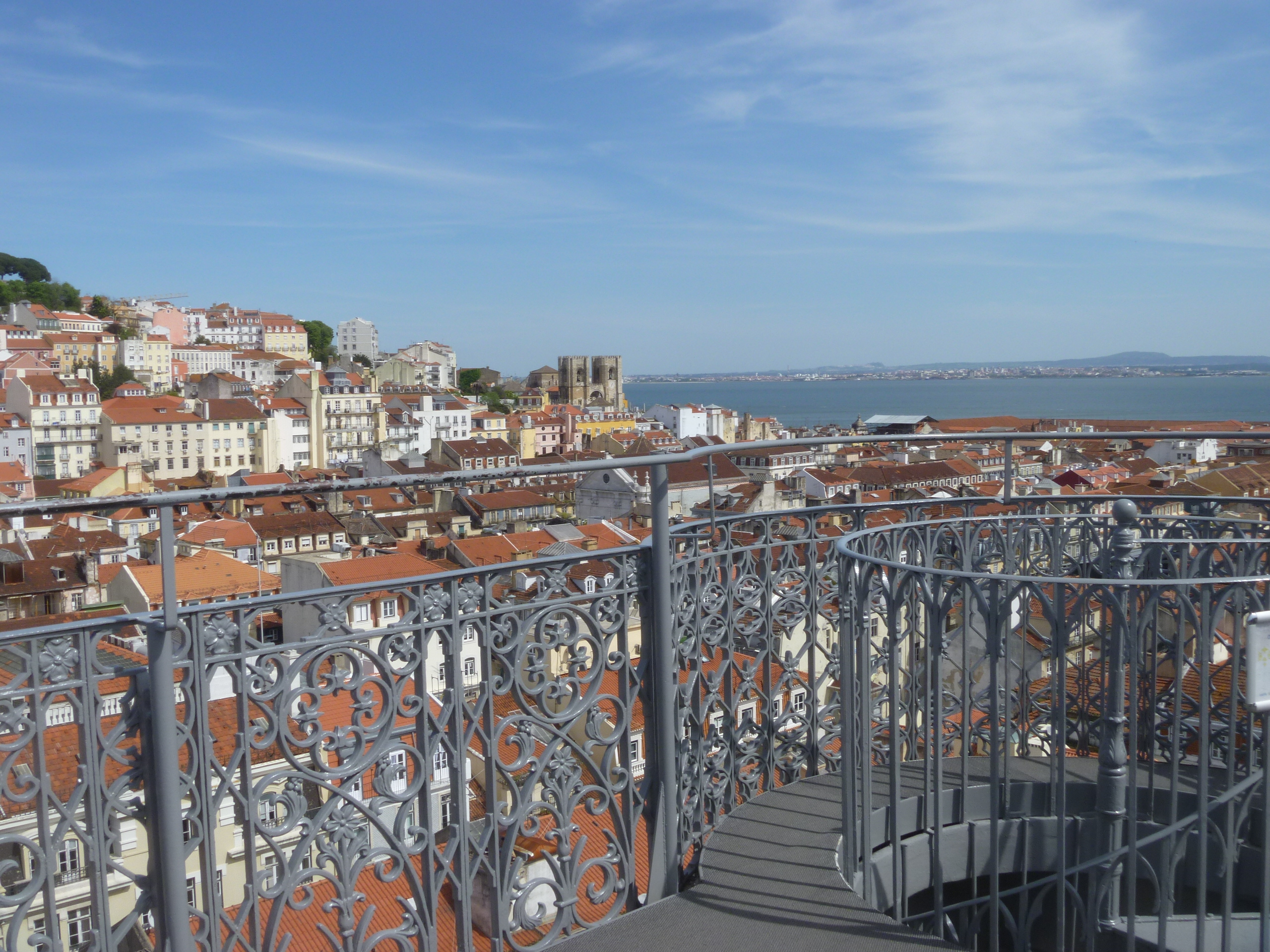
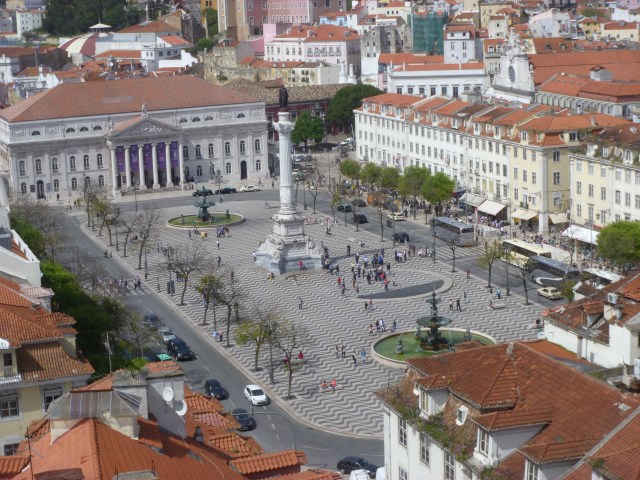
The cathedral is very dark inside and so we blinked when eventually we emerged into the sunny Lisbon afternoon. We then walked across the main shopping streets, the pedestrianised rua Augusta is the main shopping drag, to the famous Elevador da Santa Justa. This lift, designed by the Portuguese pupil of Gustave  Eiffel (and you can see the connection!) Raoul Mesnier de Ponsard, takes you up in its neo-Gothic lift to the ruin of Carmo and its busy square. When you come out of the lift there’s a tight little iron spiral staircase that takes you up to yet another amazing viewpoint.
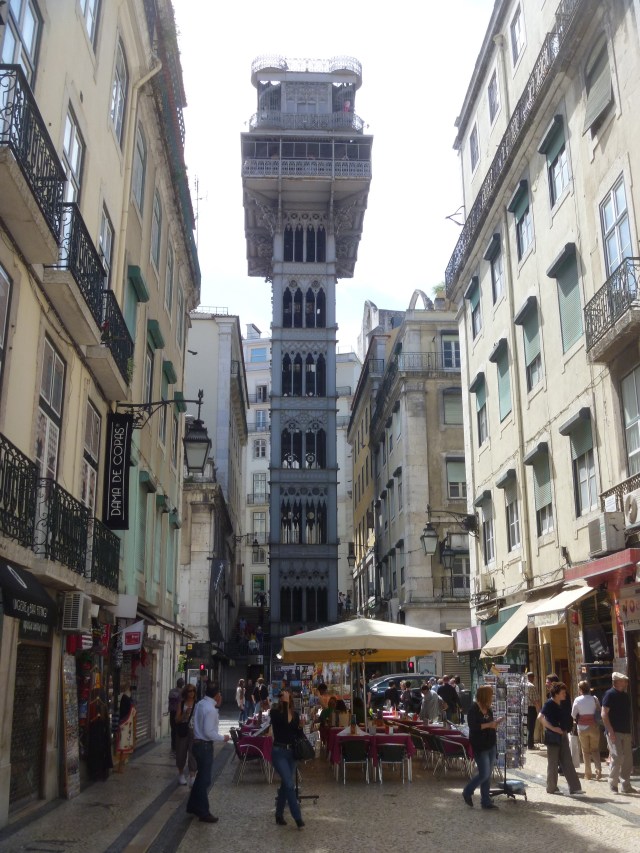
Elevador de Santa Justa
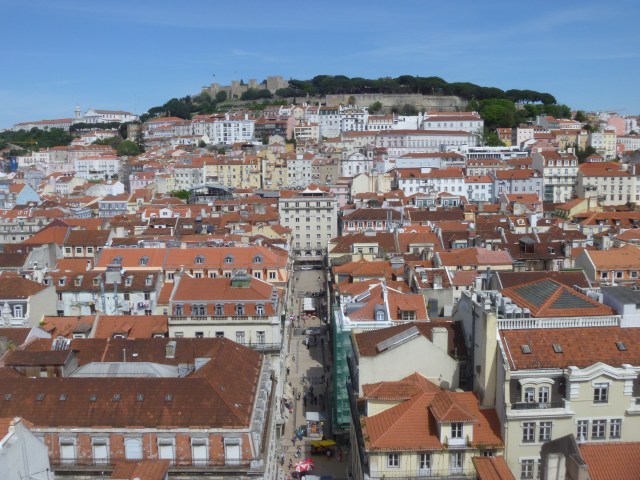
Elevador de Santa Justa

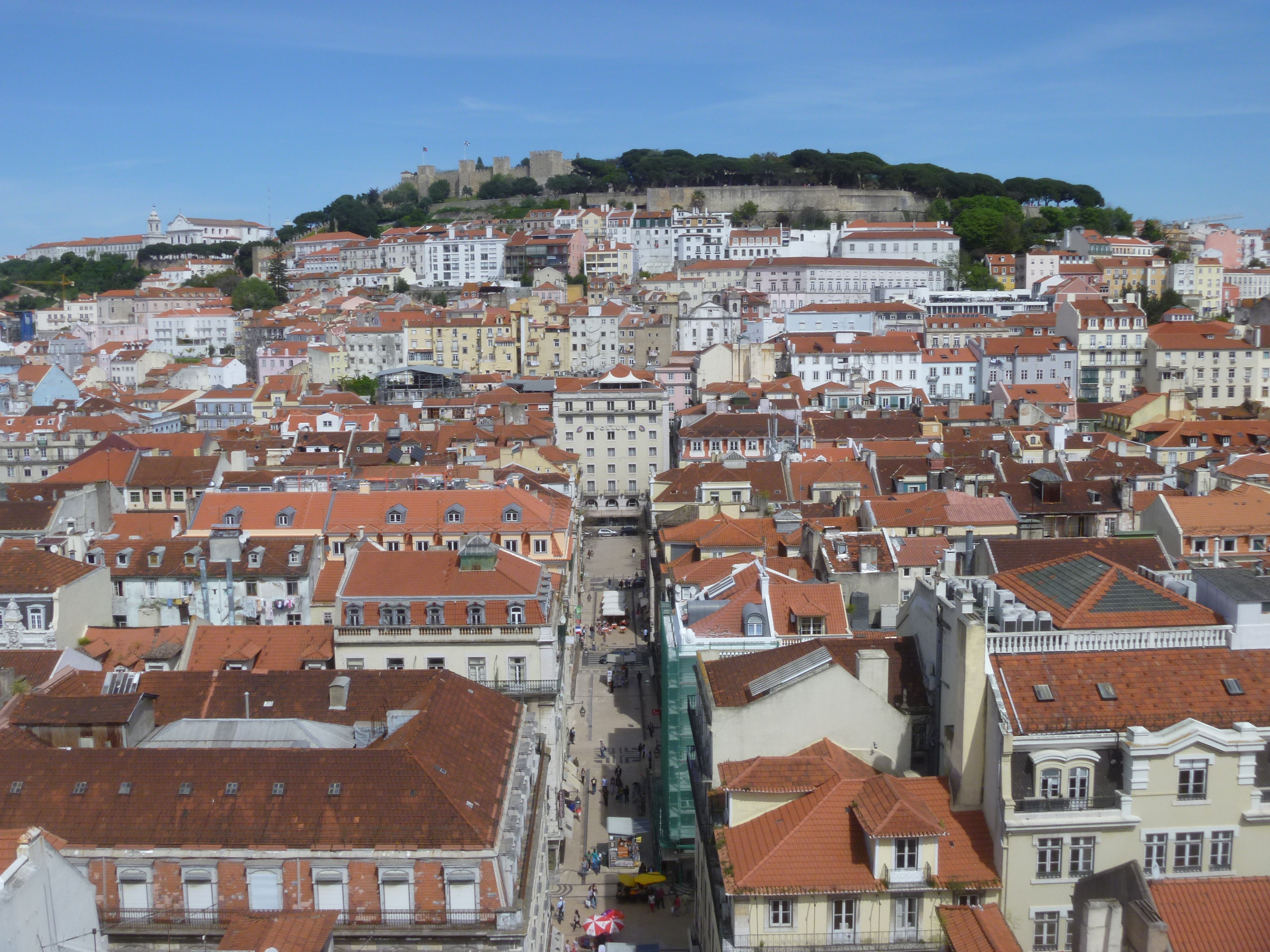
Castle from the viewing platform

Castle from the viewing platform of the Elevador
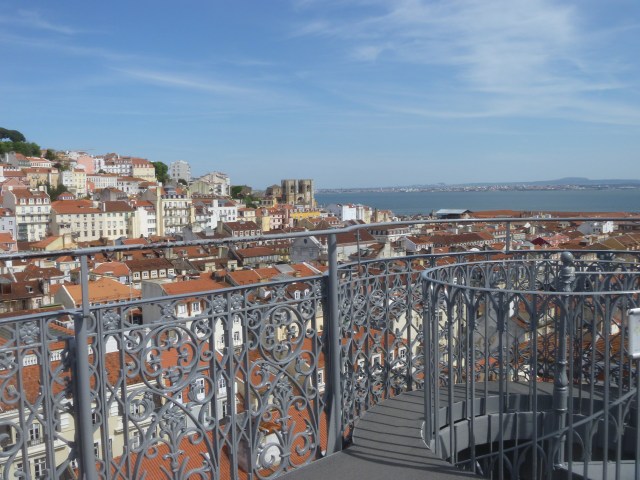
The Cathedral and Tagus from the Viewing Platform
The Cathedral and Tagus from the Viewing Platform

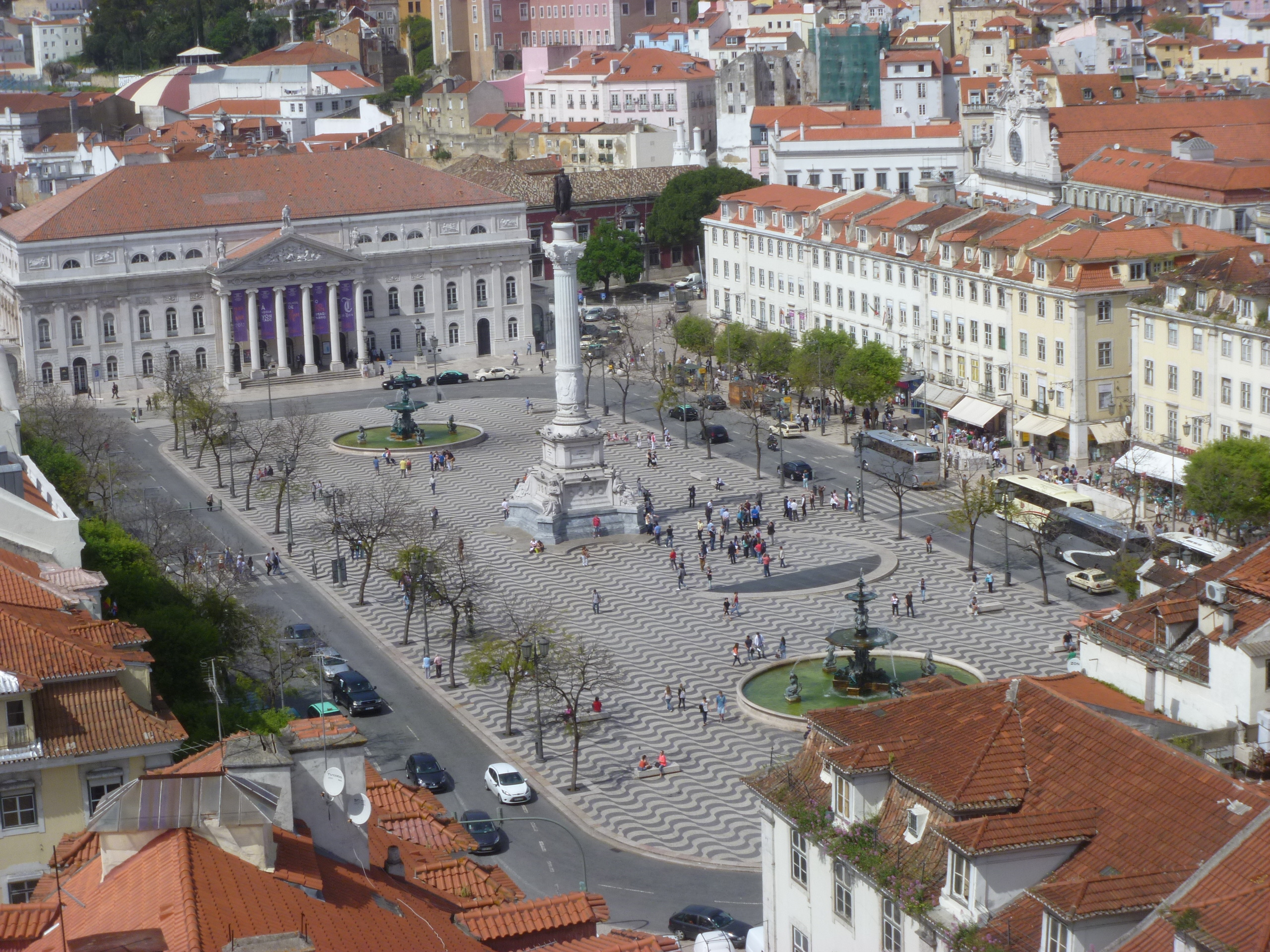
Rossio Square from the Viewing Platform

Rossio Square from the Viewing Platform (note the wavy pavements which seem to reflect the watery nature of the city)

As time was tight we decided that we would have to forego a visit to Belem – highly recommended by both Teresa and Ana. As I always say – “One must leave something for one’s next visit”.
“Lo! Cintra’s glorious Eden” – A Day in Sintra

Here you will see that Lord Byron’s declamation still holds true today!

Our walk continued from Praia Grande for a further two days. We continued up the coast as far north as Praia de Magoito where the Sintra natural park ends and then turned inland away from the ocean views to the wine growing area of Colares. The town of Colares was  where we spent the next night and our journey on foot continued the next day to Sintra itself via a long stop at the wonderful Palace and Gardens of Monserrate.

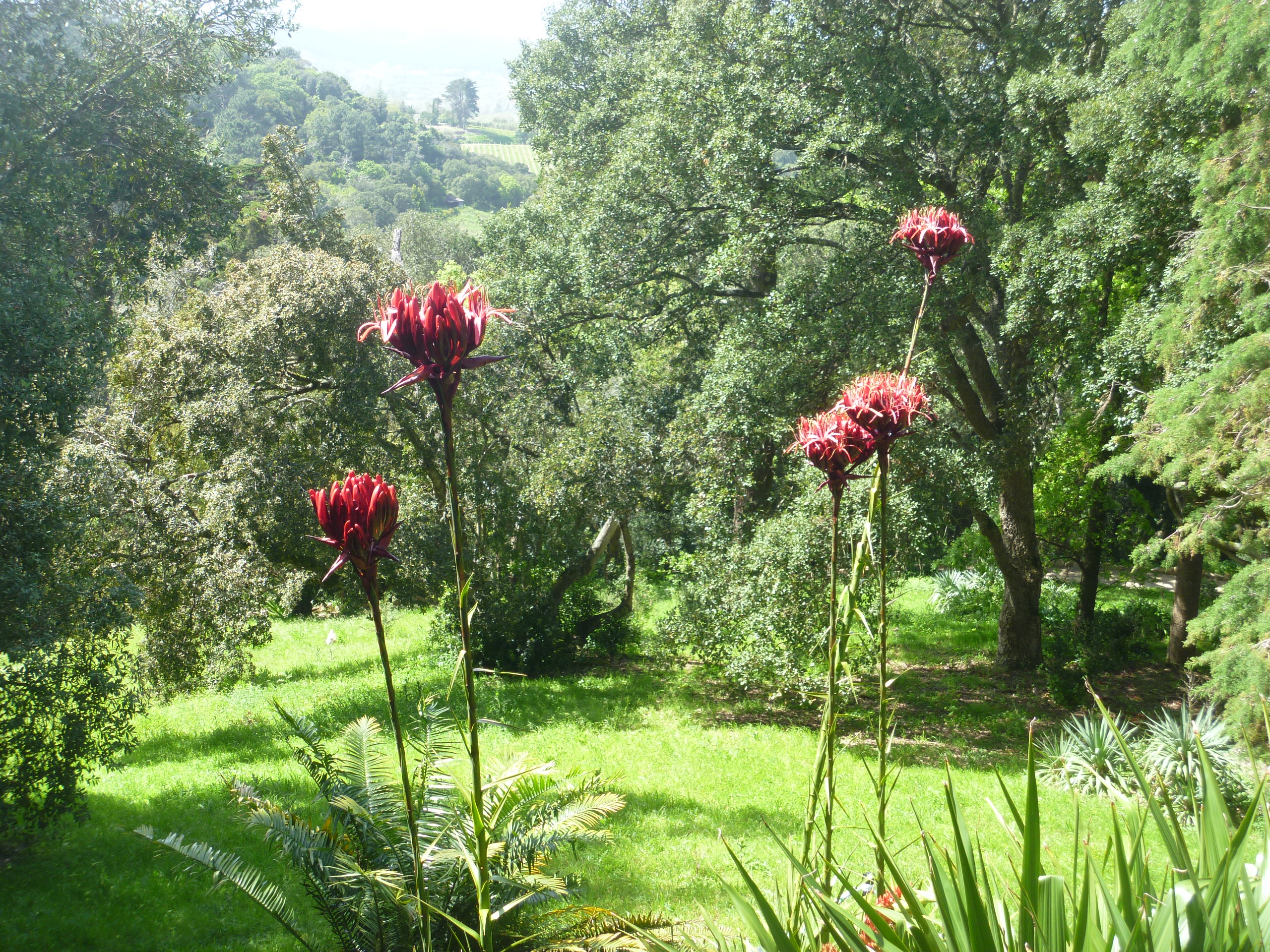
Monserrate Gardens

In the Gardens at Monserrate

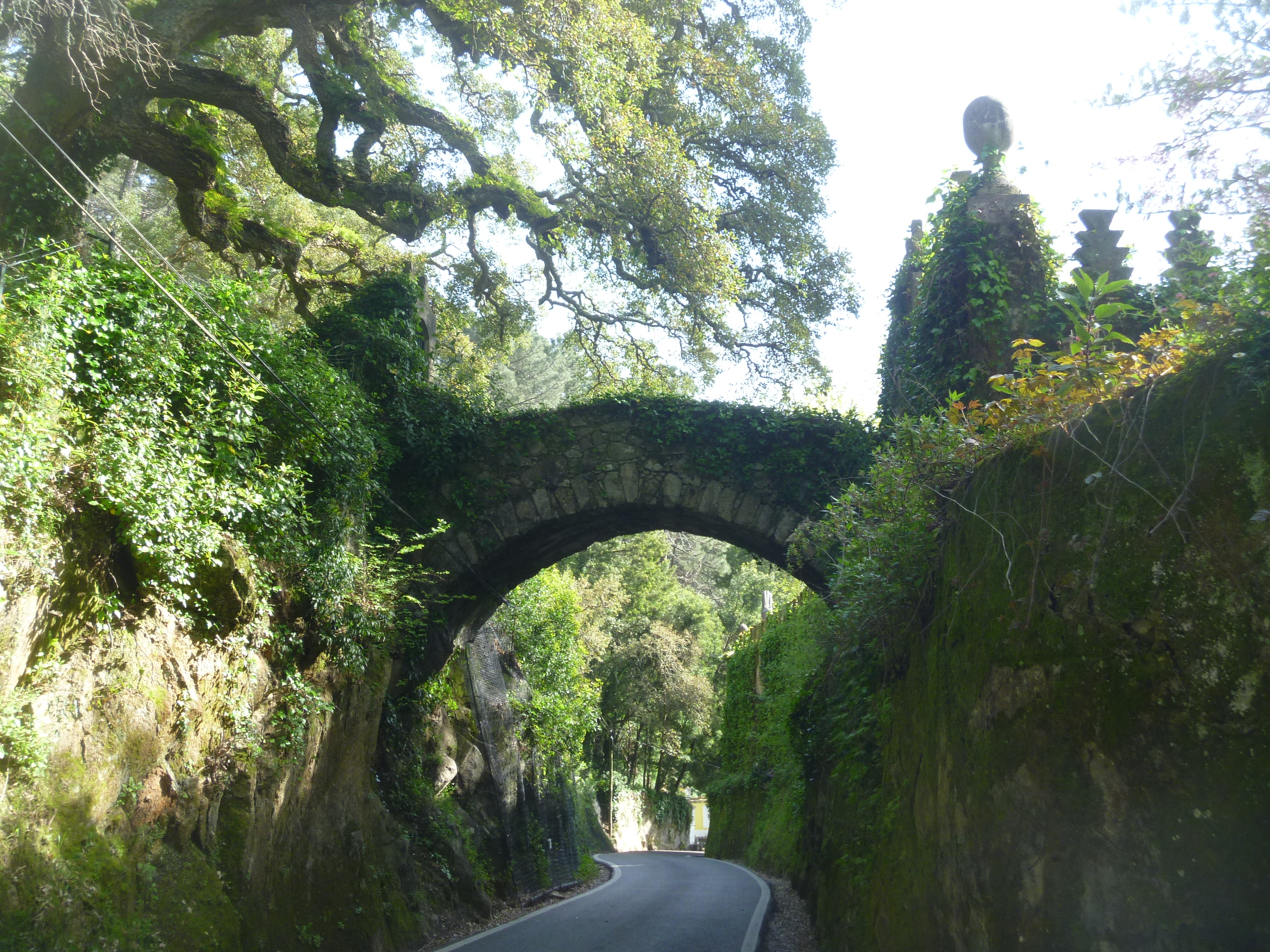
Entrance Gate to Sintra

Former Entrance to Sintra

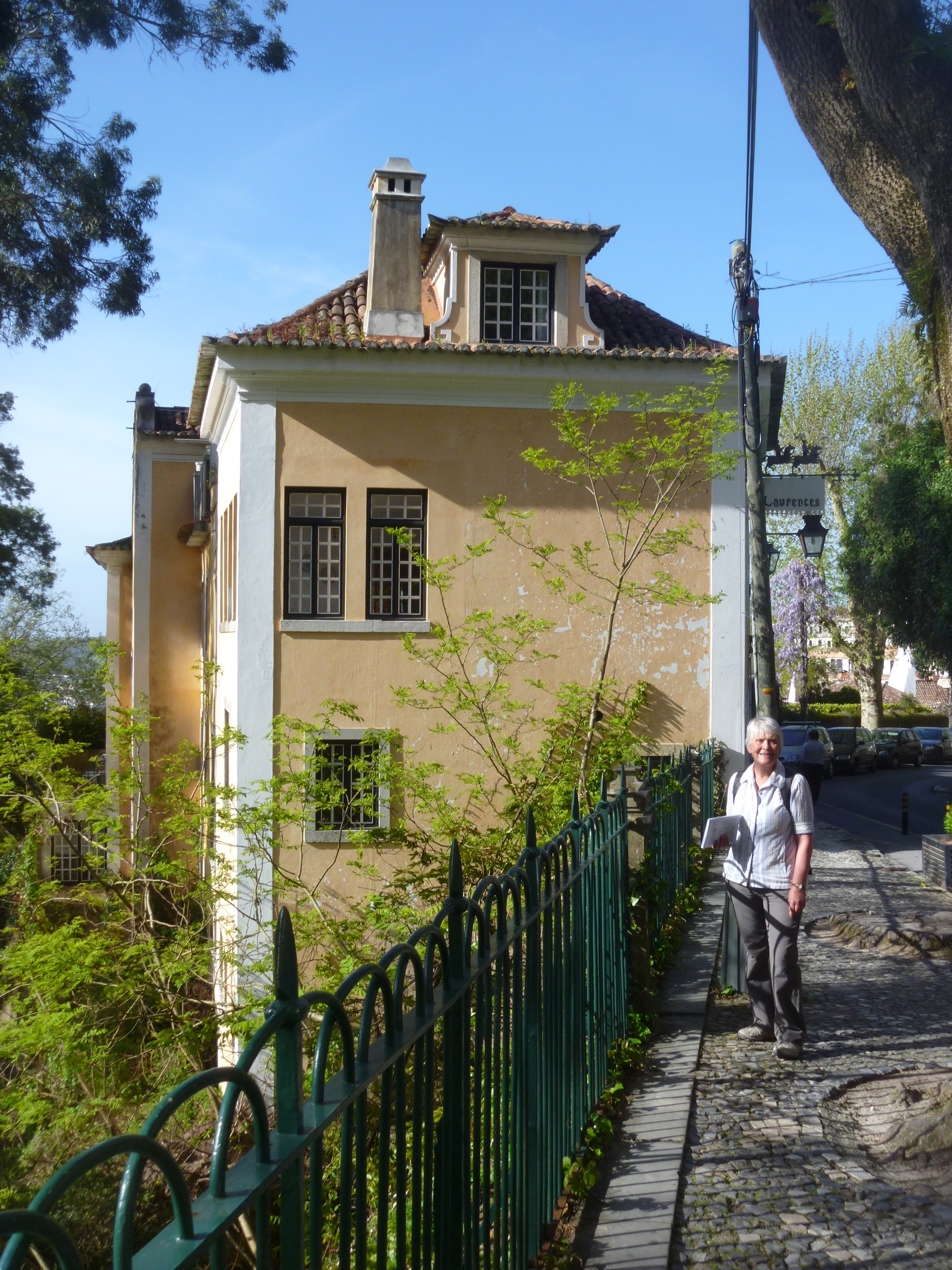
So, on the afternoon of the fifth day of walking we arrived at one of the former town gates and soon reached the famous Lawrence’s Hotel right in the old town of Sintra.

Lawrences

This hotel is the oldest in Spain and Portugal and (I believe) the second oldest in Europe. It has connections with Lord Byron who stayed here and whose portraits appear on many of the hotel and restaurant walls.

We stayed two nights at Lawrences which gave us a whole day to explore Sintra and its palaces.

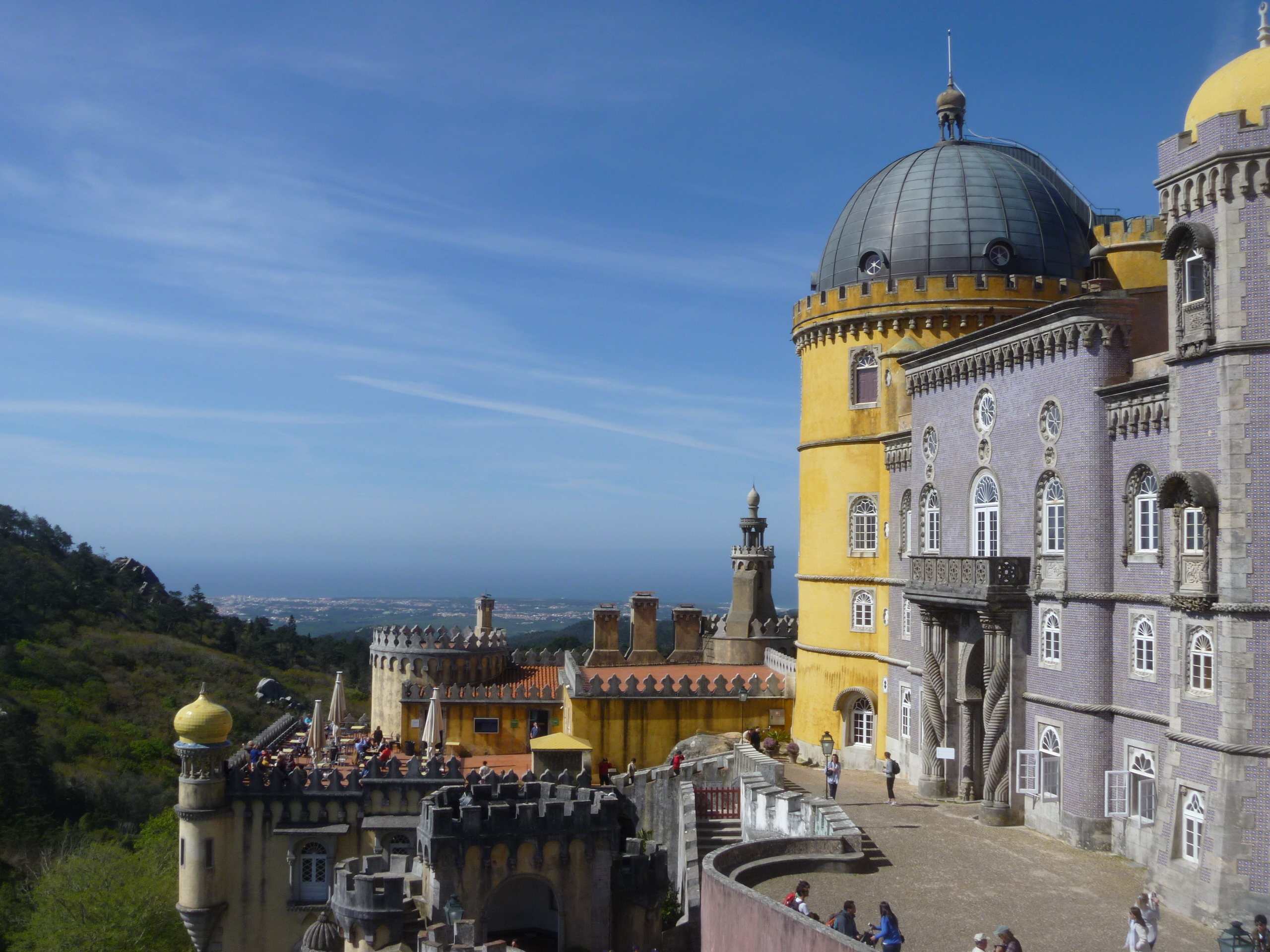
Pena Palace

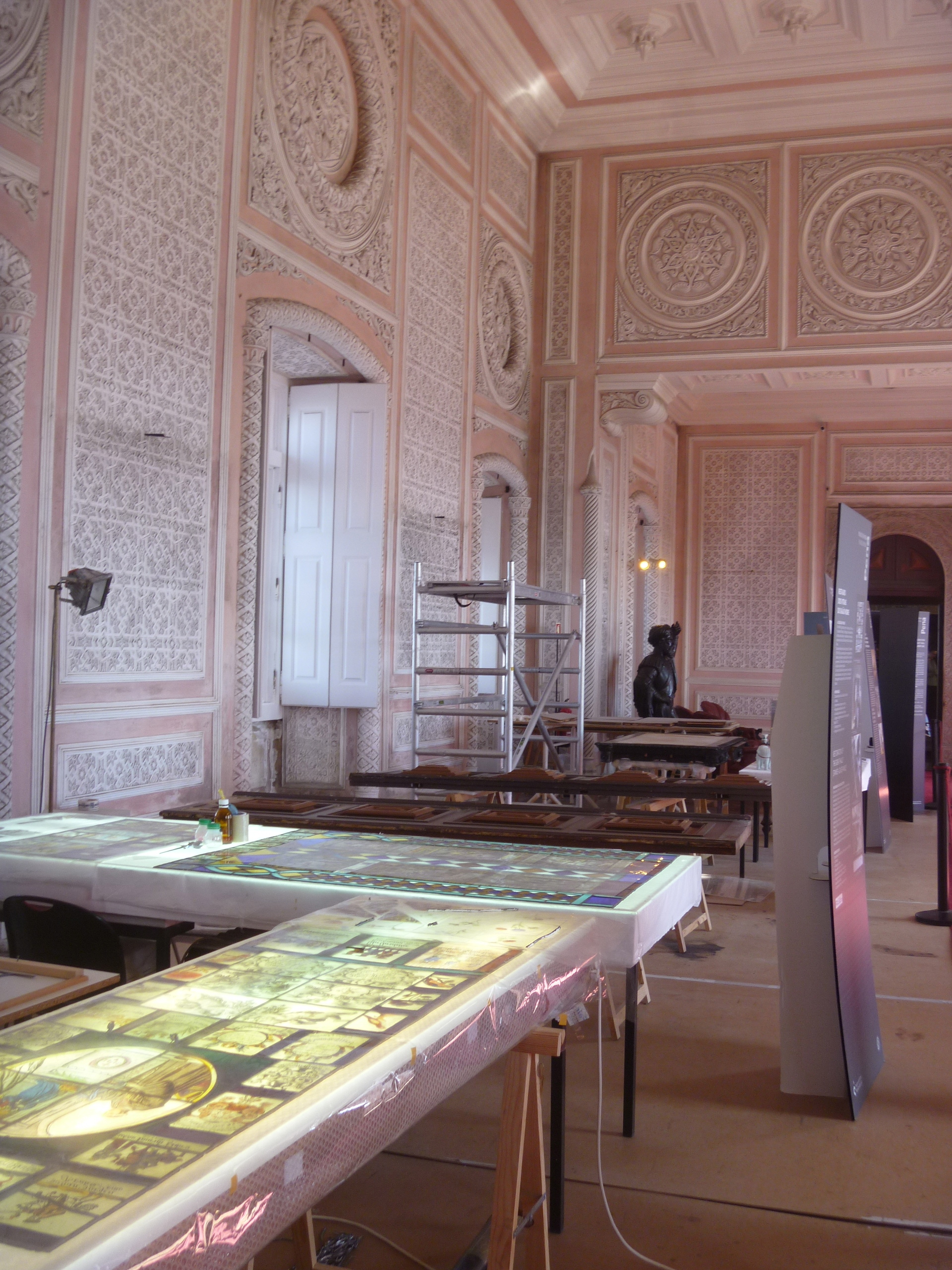
Most of our time was spent at the Park and Palace of Pena. It’s very popular; even on this Friday in April. There is lots to see in the Palace alone. Ongoing restoration could also be observed here as at Monserrate.

Open for Works at Pena

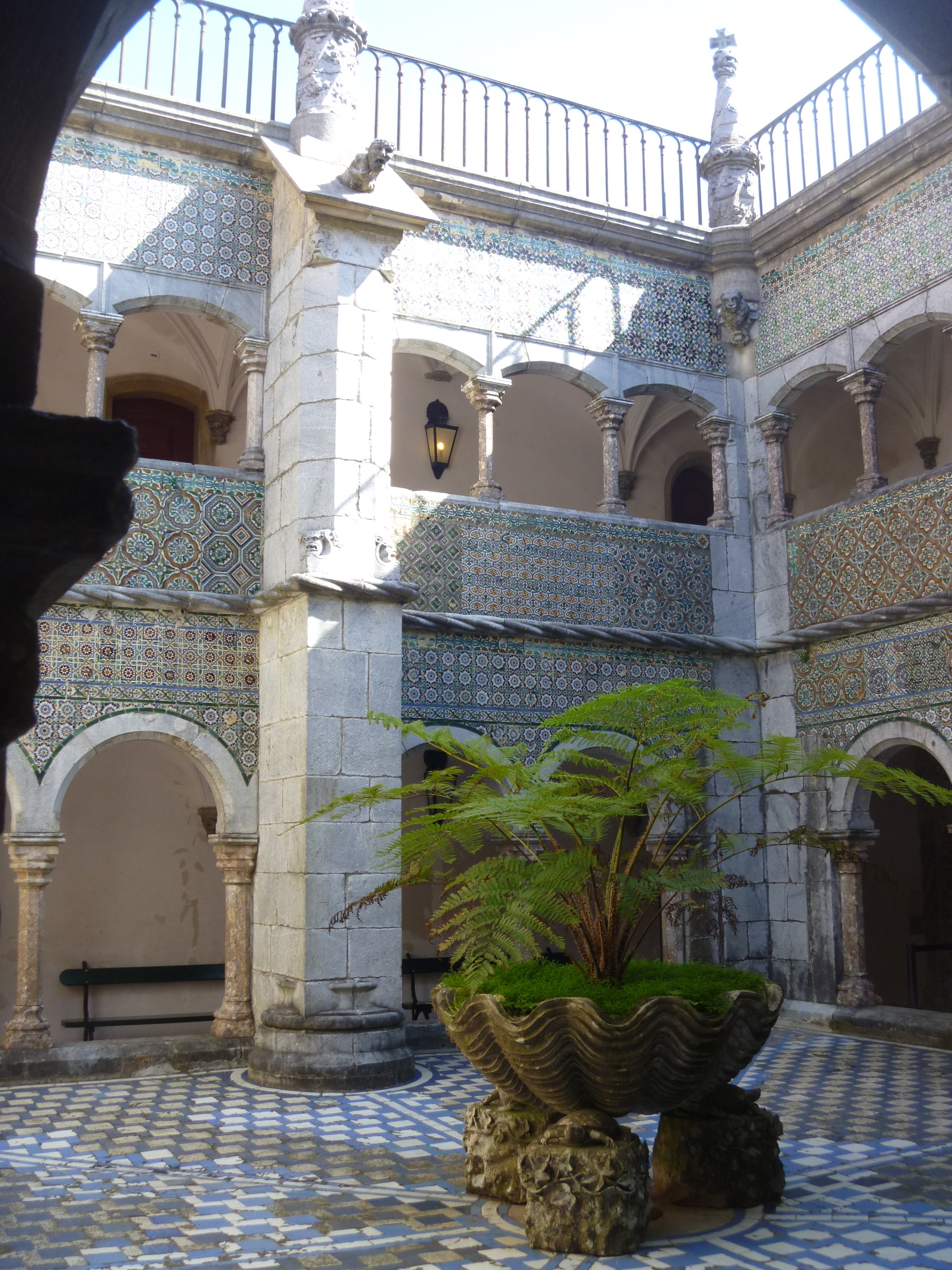
Tiled courtyard

An Inner Courtyard

The Park and Palace of Pena are the finest examples of nineteenth century Portuguese Romanticism and the integration of natural and built heritage. They constitute the most important part of the Cultural Landscape of  Sintra’s World Heritage site.” [From publicity leaflet]

Originally a chapel and later a monastery  in 1842 work began on a “New Palace” by the King Don Fernando II who left all the property on his death to his second wife the Countess Edla. The Palace and Park were acquired by the state in 1889 and converted to a museum in 1910-12.

A natural environment of rare beauty and scientific importance, the Park is remarkable as a project of landscape transformation of a hill, barren at the time, into an arboretum integrating several historic gardens. It occupies almost eighty-five hectares of exceptional geological and climatic conditions.” [From publicity leaflet]

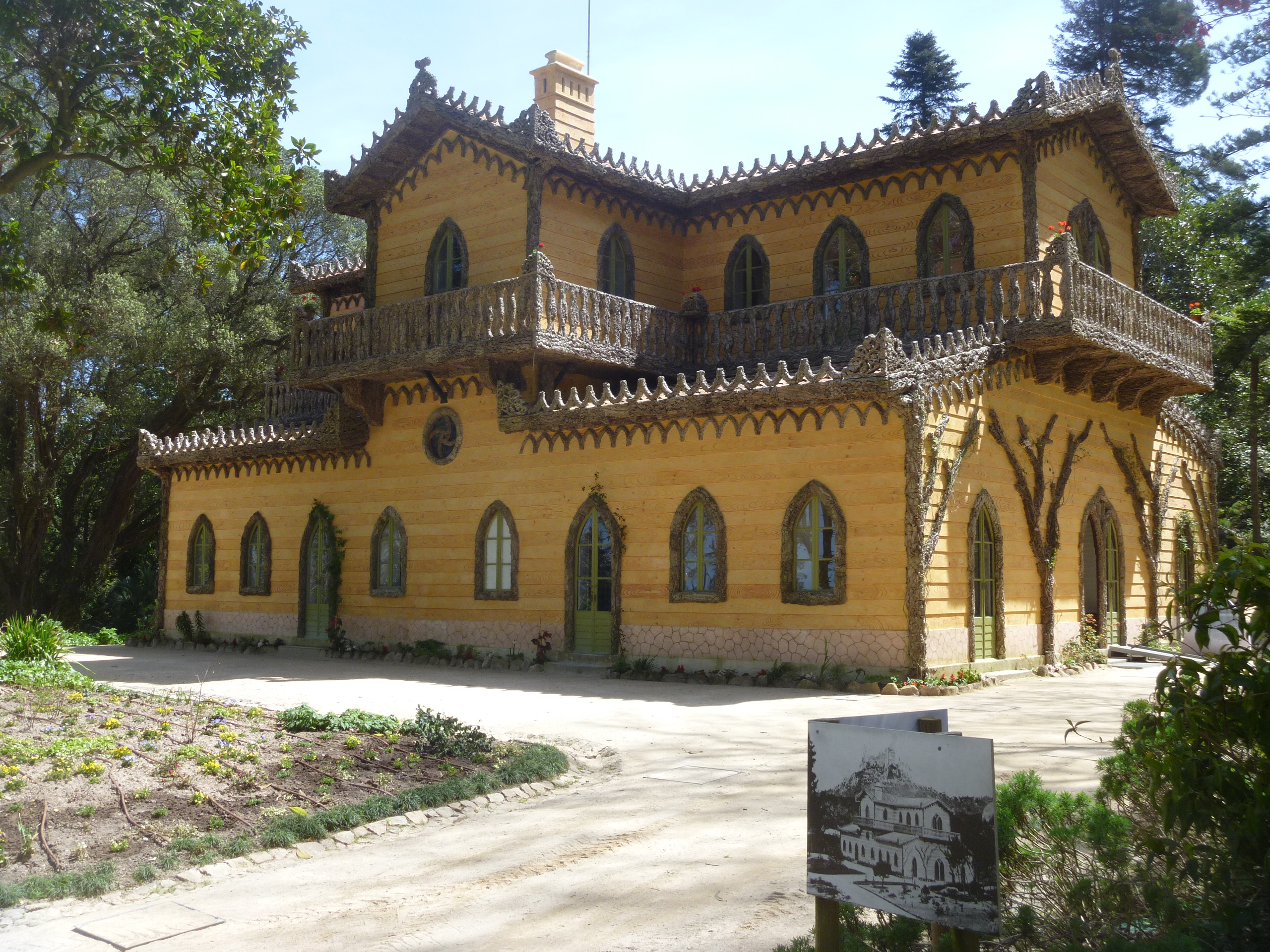
The Chalet Edla

The Chalet Edla

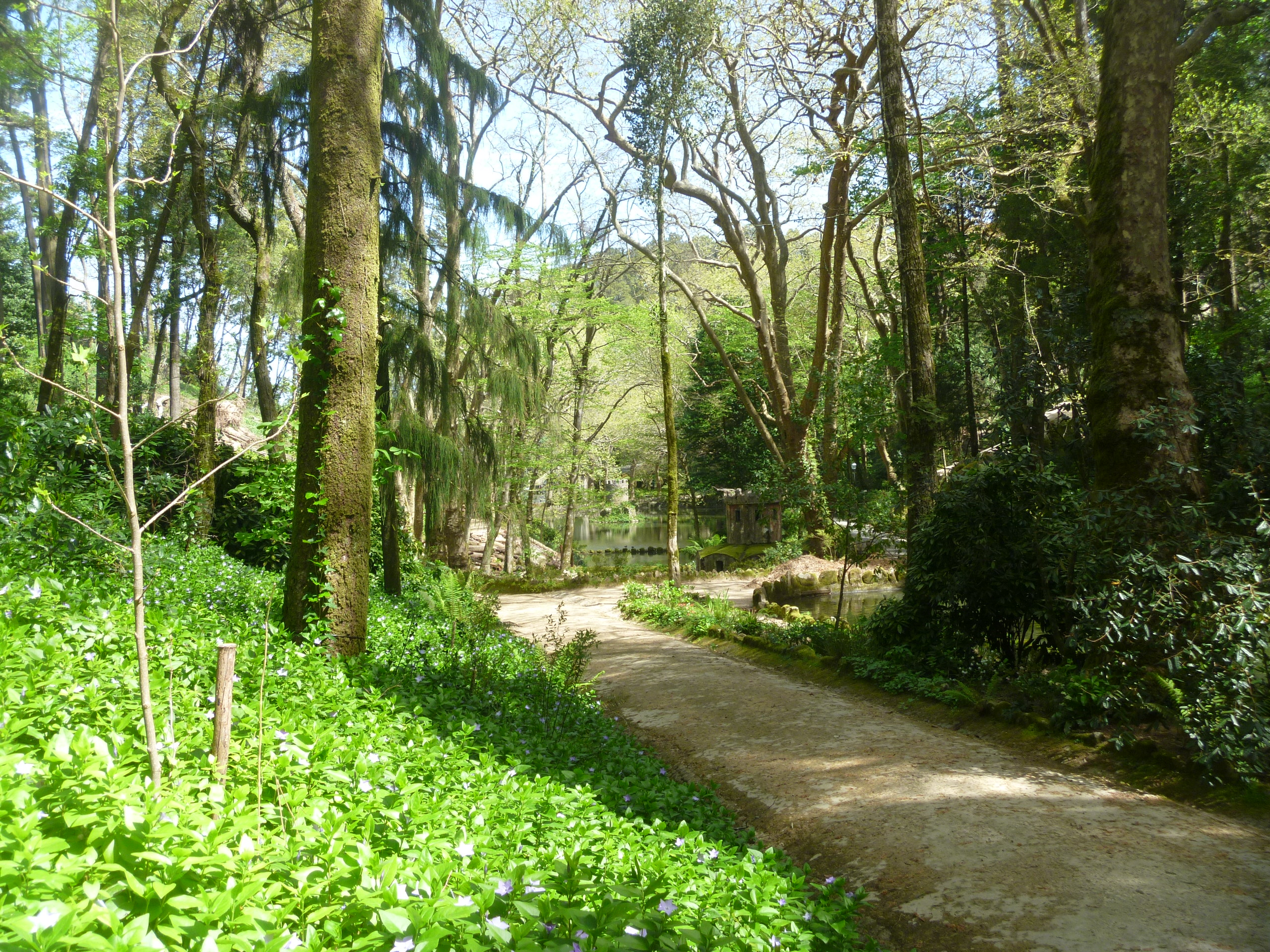
We could have spent hours in the grounds alone. Leaving the Palace you are soon away from the crowds and we decided on a route that would take in the Chalet Edla.

Pena Park

Lush Greenery of the Pena Park

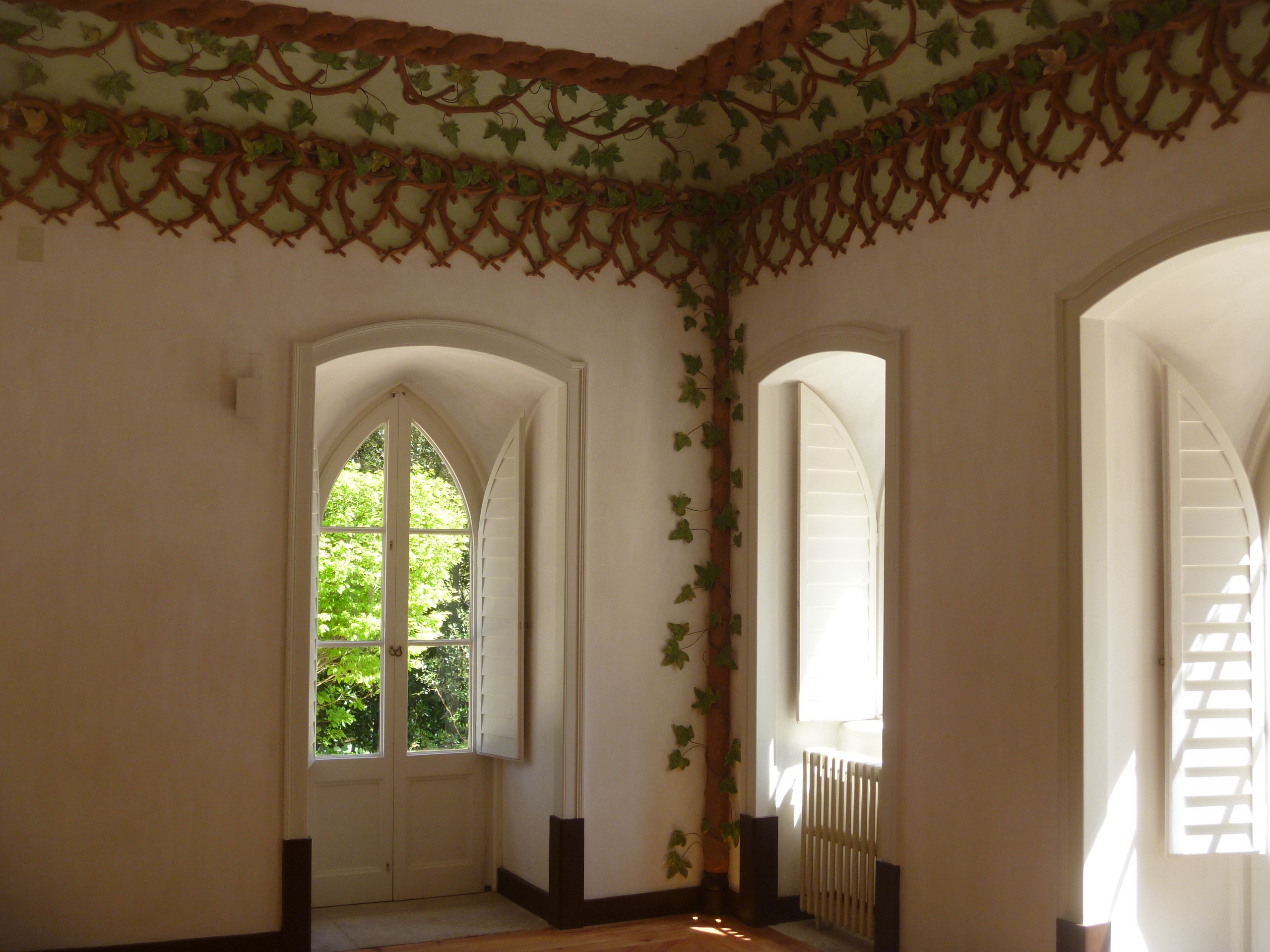
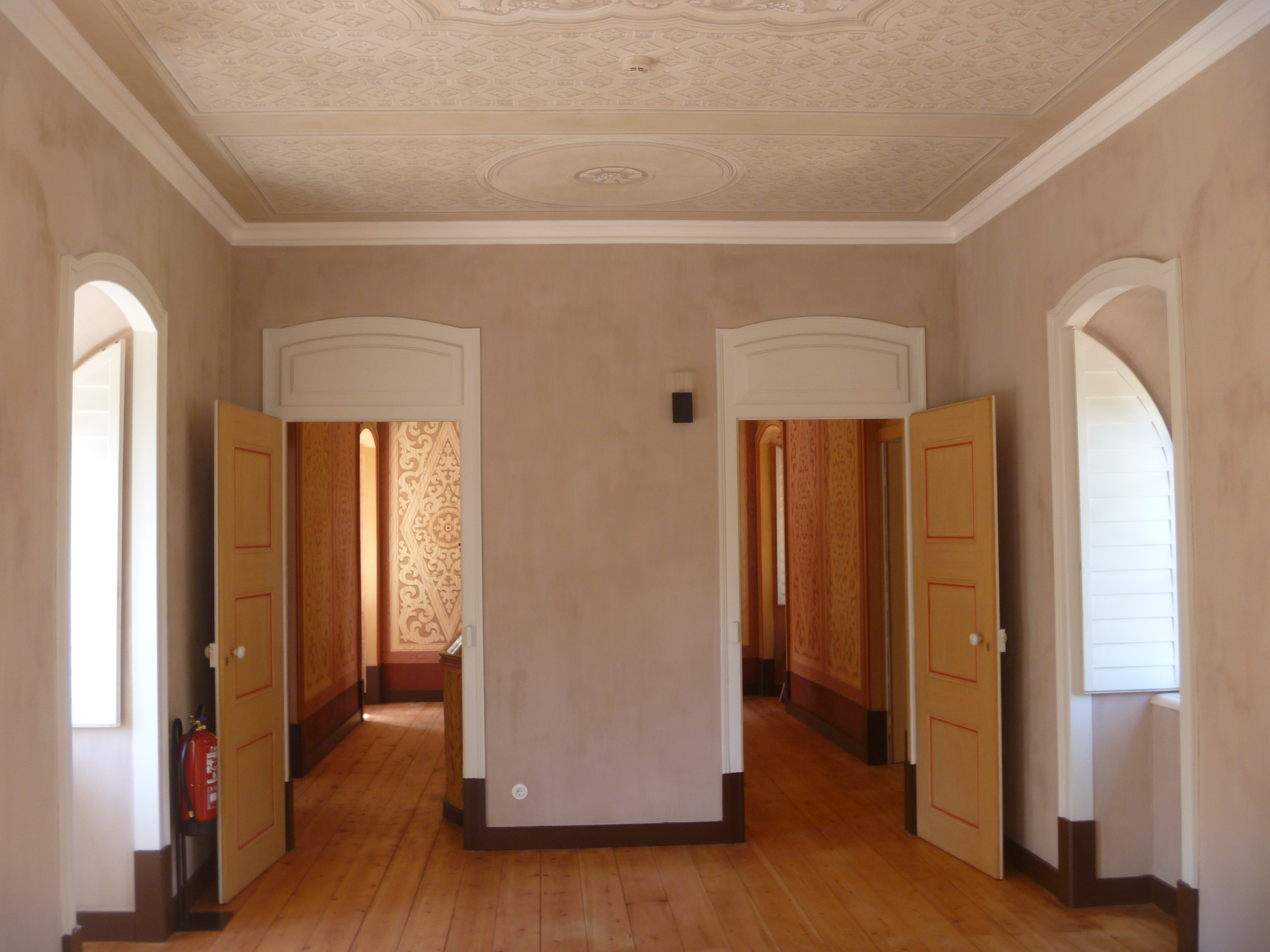
We had understood that due to damage following the storms in January the Chalet would not be open to the public. So we were surprised and happy to find that on that very day it was reopened  to the public! We bought our tickets and took a look round this unusual summer house built by Don Ferdinand for the Countess between 1864 and 1869. The Chalet also deteriorated badly over many years and in 1999 was damaged by fire. Here, again, renovation work is still ongoing. I’m not sure to what extent the recent storms damaged the house but there’s been a magnificent effort to restore this building to its former glory.

Before renovation

Photographs show the extent of the damage

Inside Edla 1

Interior Chalet Edla

Inside Edla 2

Renovations at The Chalet Edla

Inside Edla 3

Upstairs at The Chalet Edla

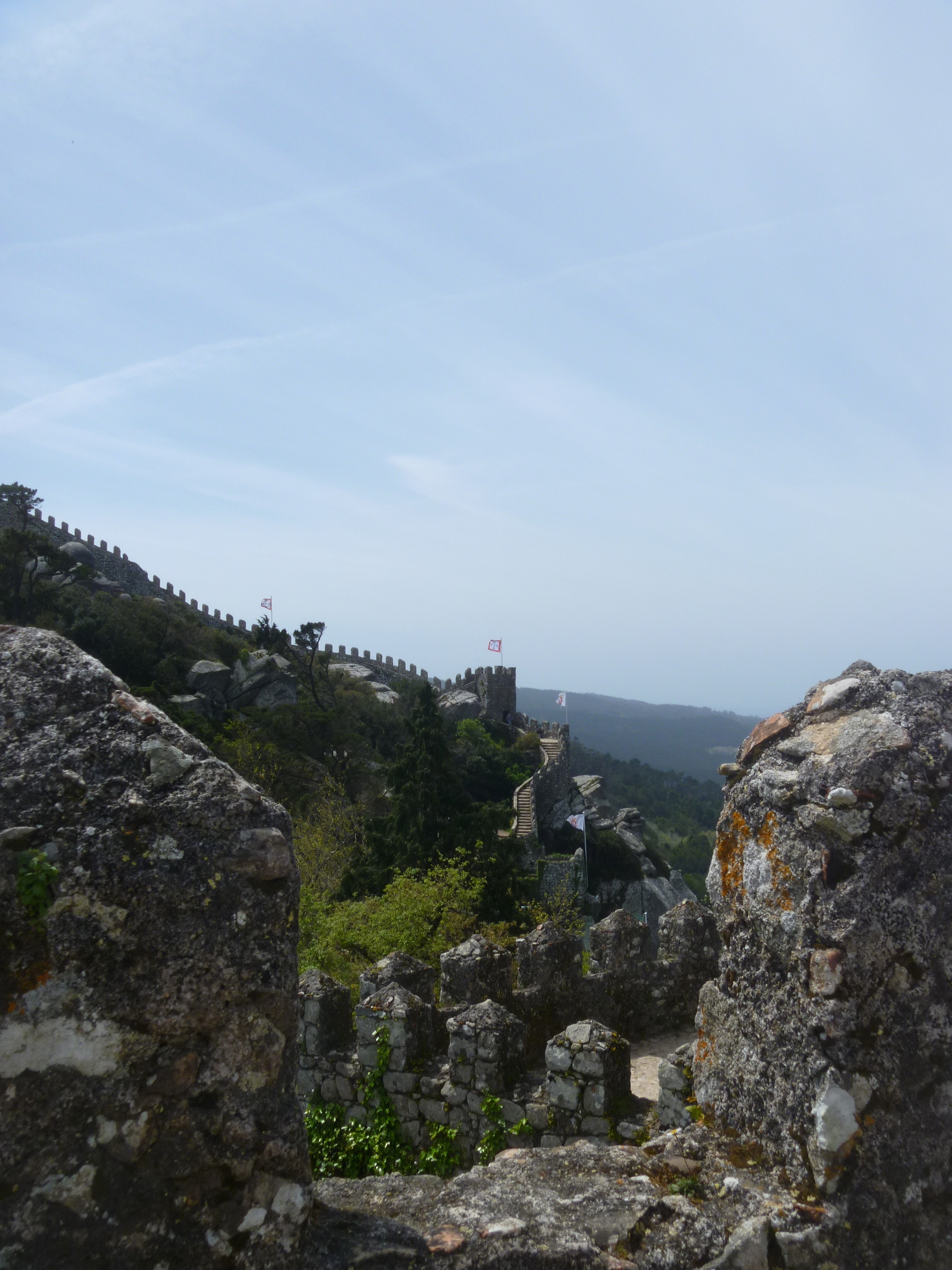
From the Pena gardens we stepped across the road to the Moorish Castle which is really just ramparts. But they are impressive  ramparts.Moorish Ramparts

The Moorish Castle Ramparts

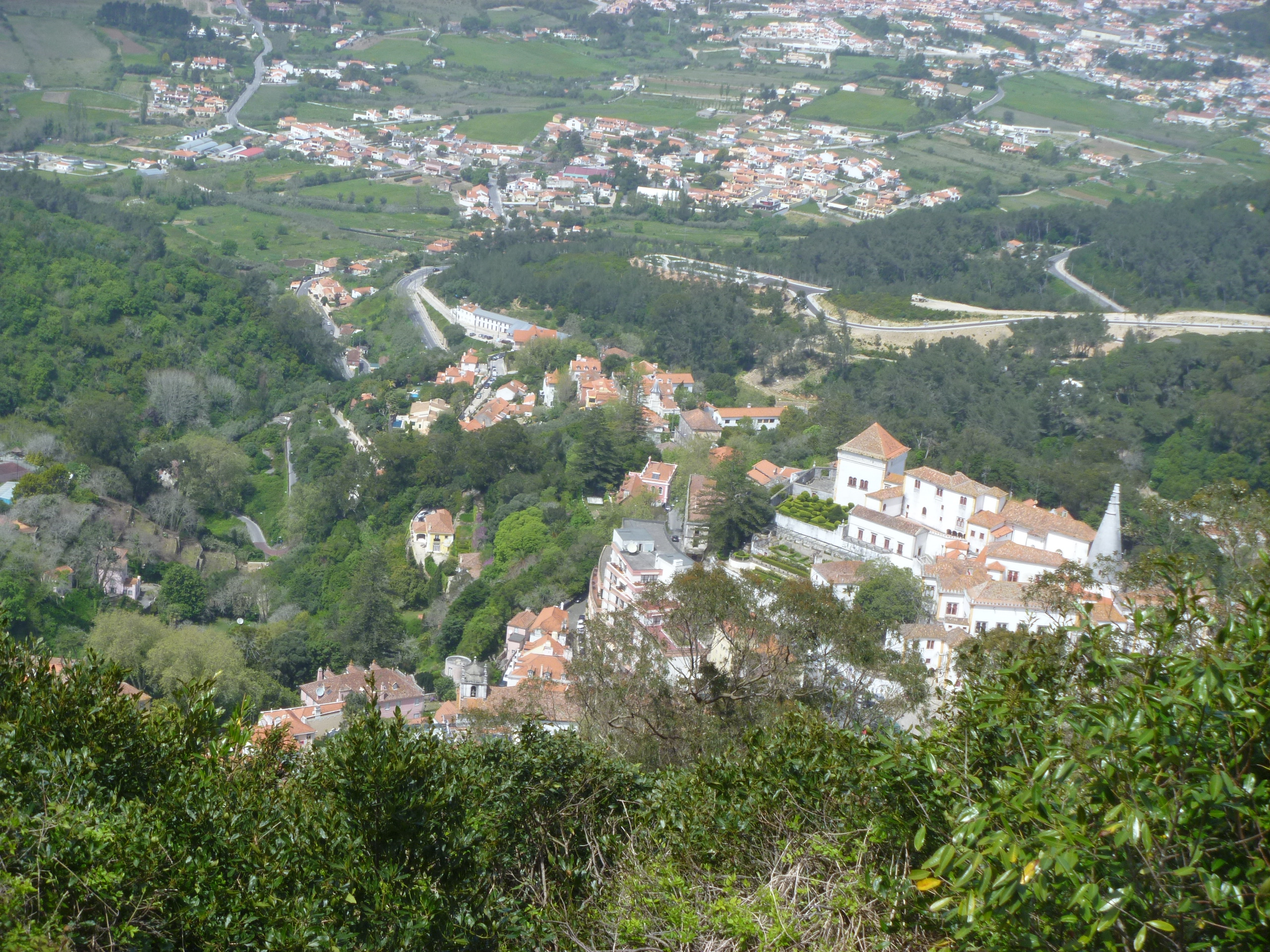
Sintra from Moorish

Sintra from the Moorish Castle Ramparts

They tower over the town and we could see them from our terrace at Lawrences.

From our terrace

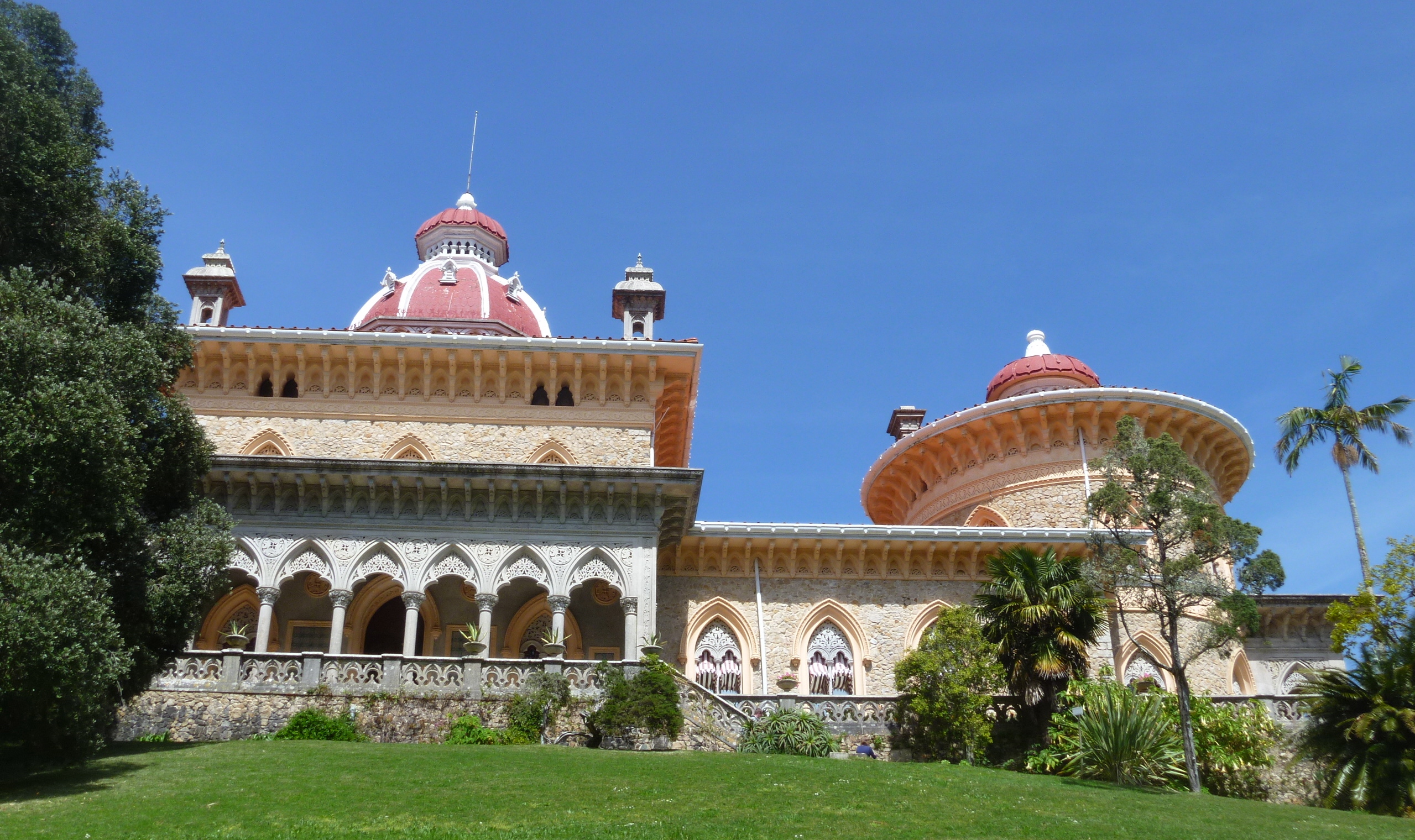
The Palace of Monserrate Restoration Project

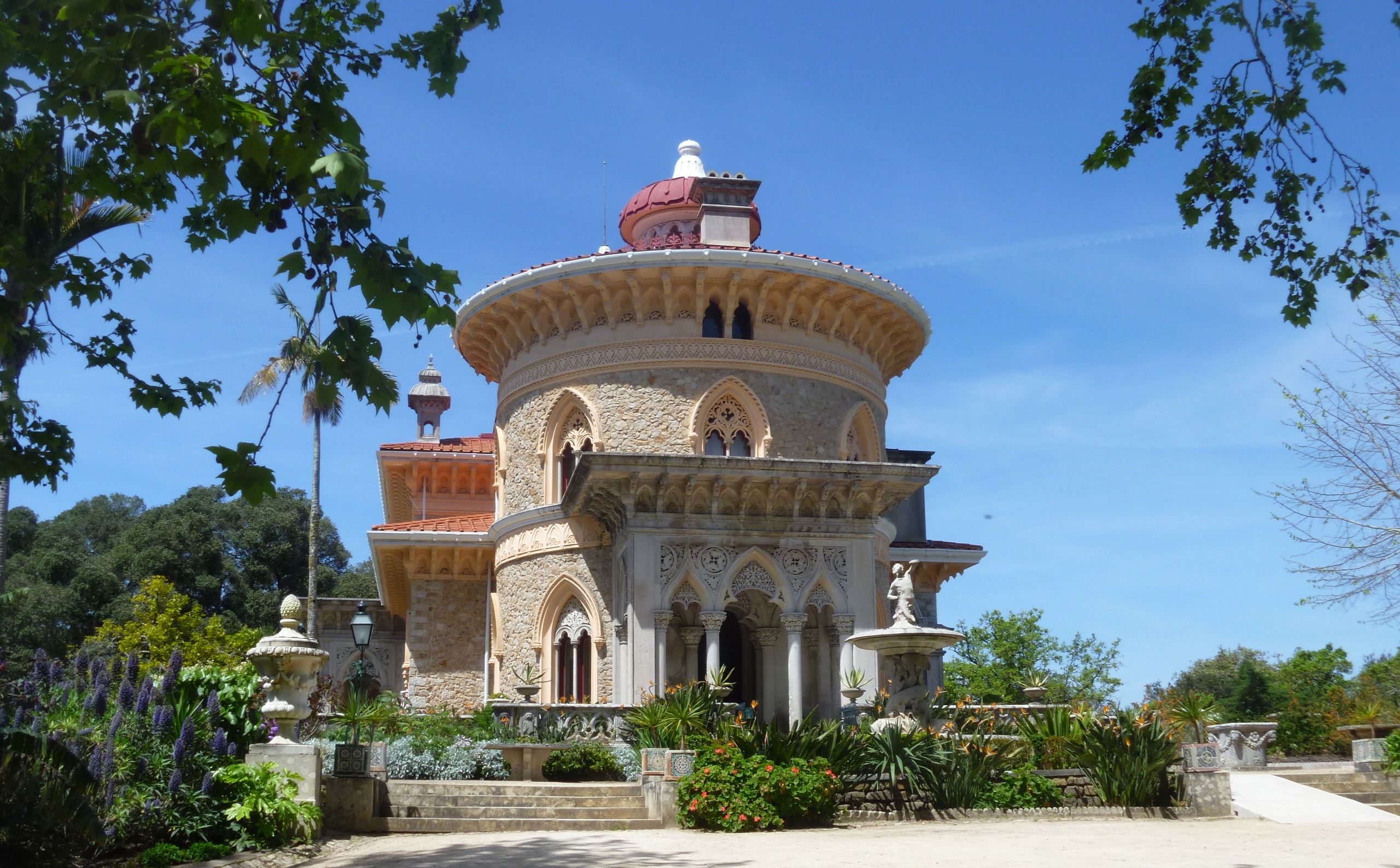
Palace of Monserrate

In 1995 the whole of the Sintra Region was awarded UNESCO World Heritage status and restoration of the various properties and conservation of the forests and parks continues to this day.

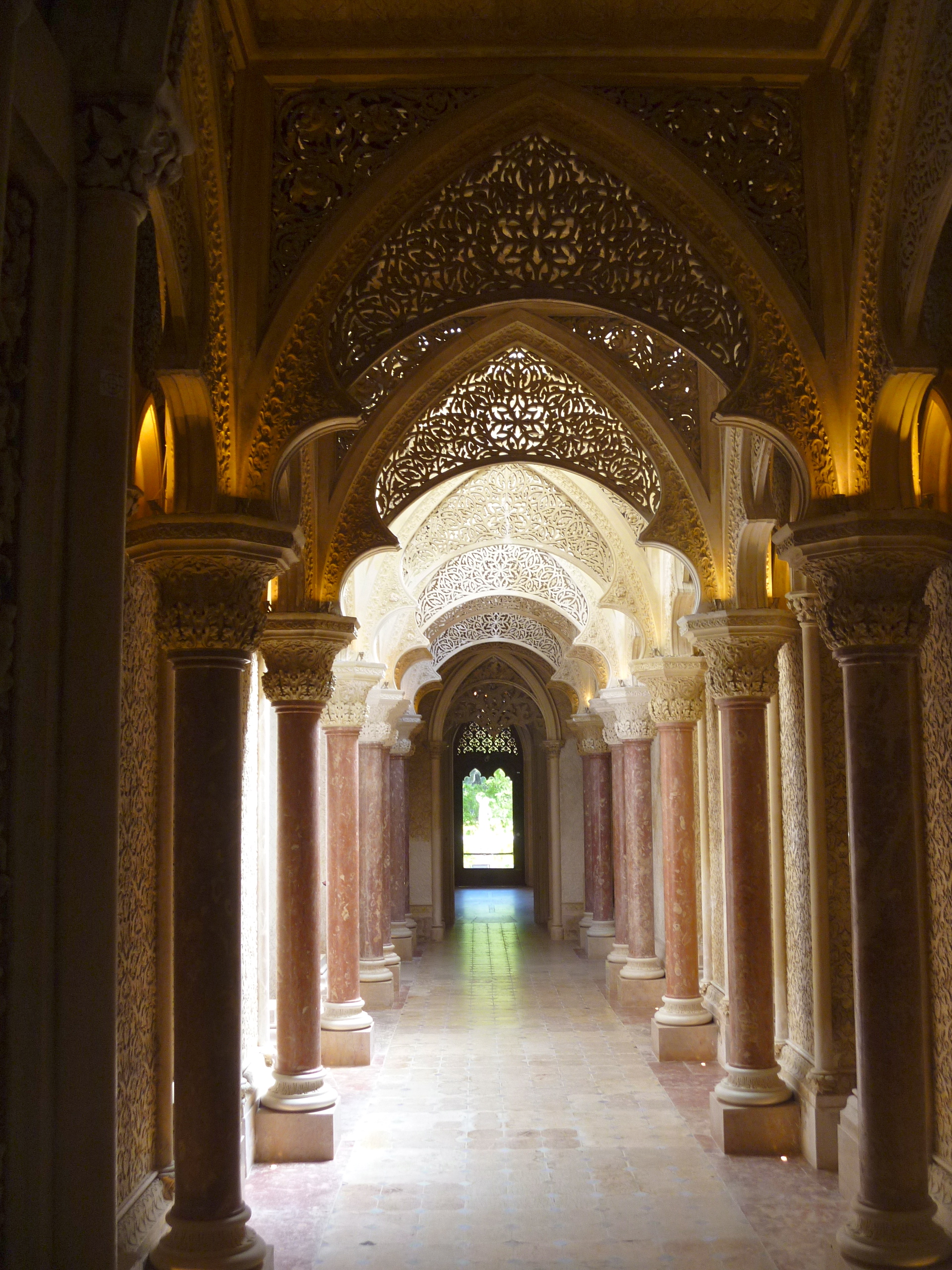
Hall at Monserrate

The Beautifully Restored Hall

Since 1949 Monserrate has been owned by the Portuguese state. Over the decades that followed the palace deteriorated but in 2001 restoration work began on the roof and facades.  After interruptions this work was finally completed in 2004 when work on the interior could begin. A successful bid for funds from EEA-Grants in 2007 enabled work to resume at a faster pace. At Monserrate this the project is called “open for works” and it allows for the Palace to be open to the public so that all may watch the ongoing ‘interventions’.

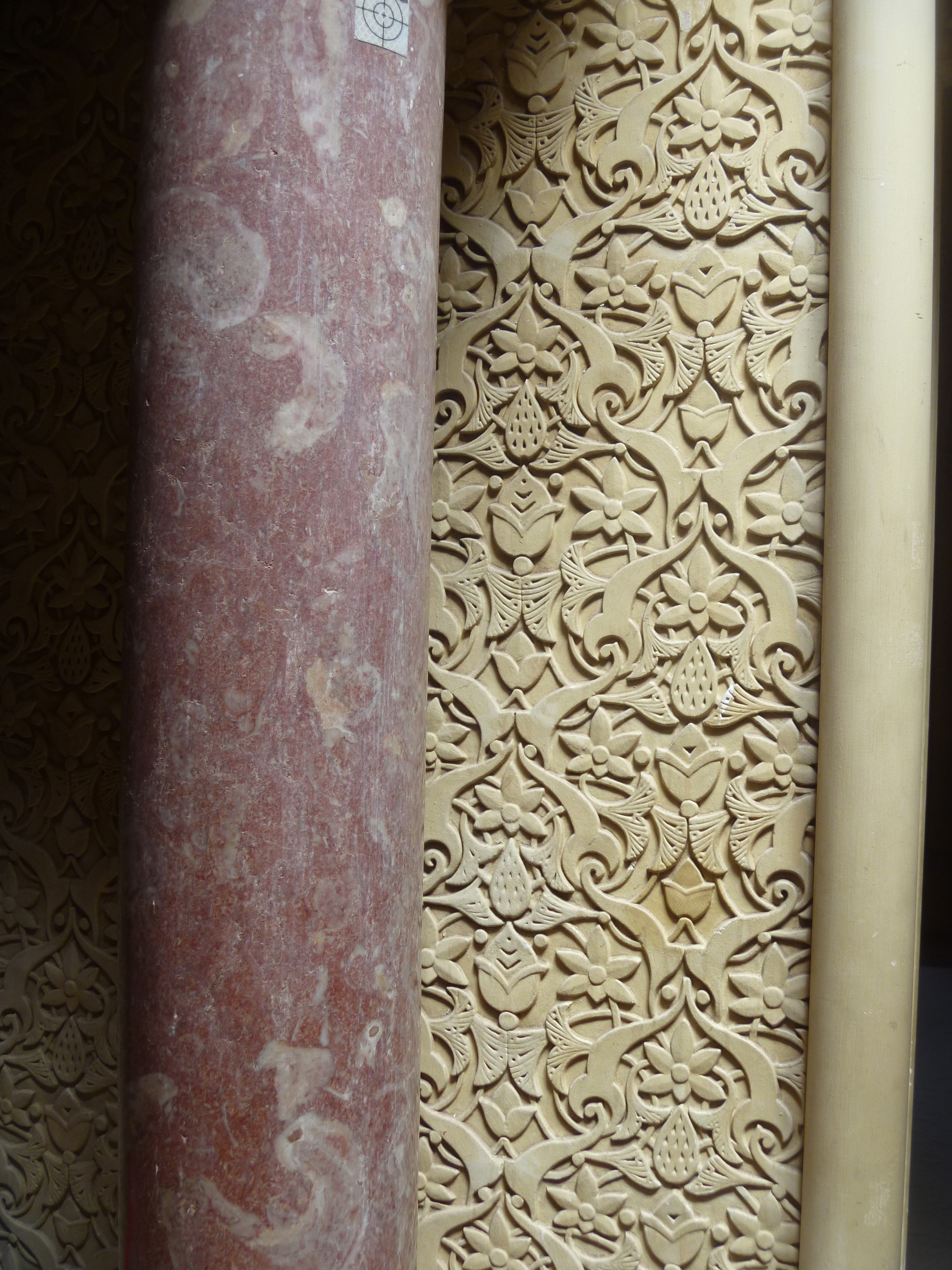
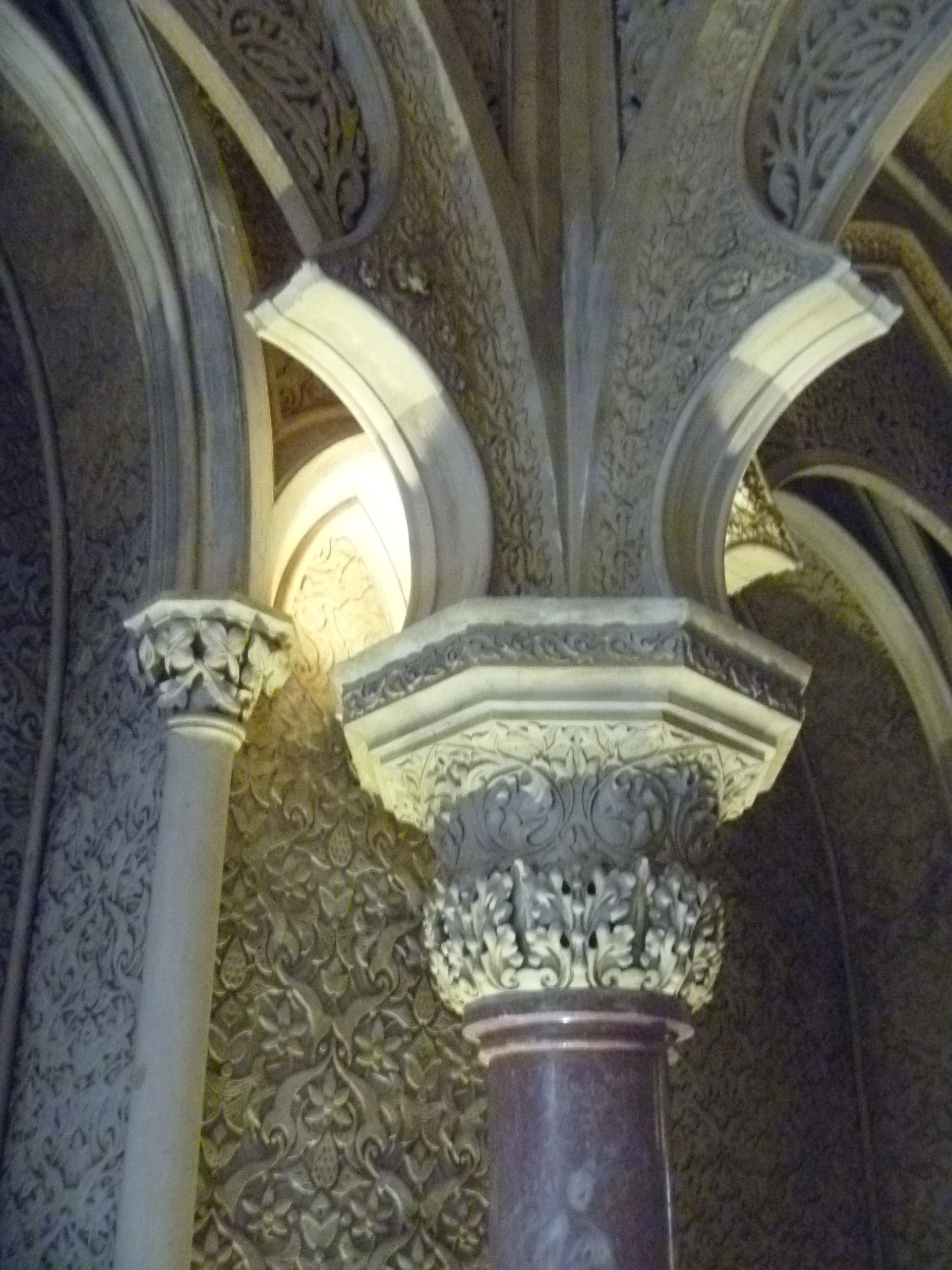
Exquisite renovation work

Fantastic renovation work

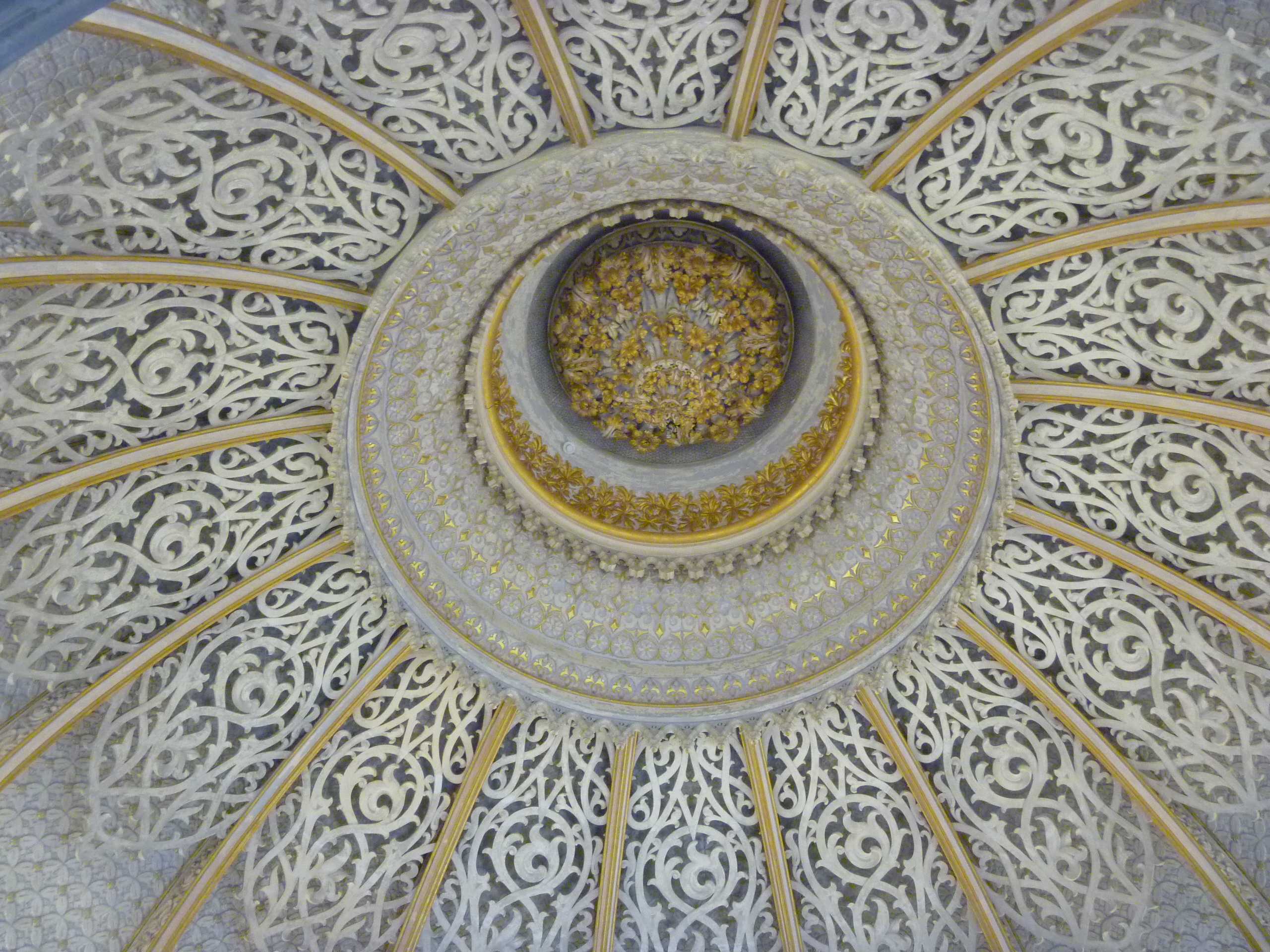
Exquisite Plasterwork

Restoration work carried out room by room allowed for the re-opening of the building to visitors. So far interventions in the Library, Chapel, Kitchen, Pantry, Wine Cellar, Larders, decorative plasterwork, cleaning of stonework, kitchen range have all been carried out in sight of the visitors. It is wonderful to see the artists and craftspeople at work and many of the rooms being brought back into use, like The Music Room for concerts.

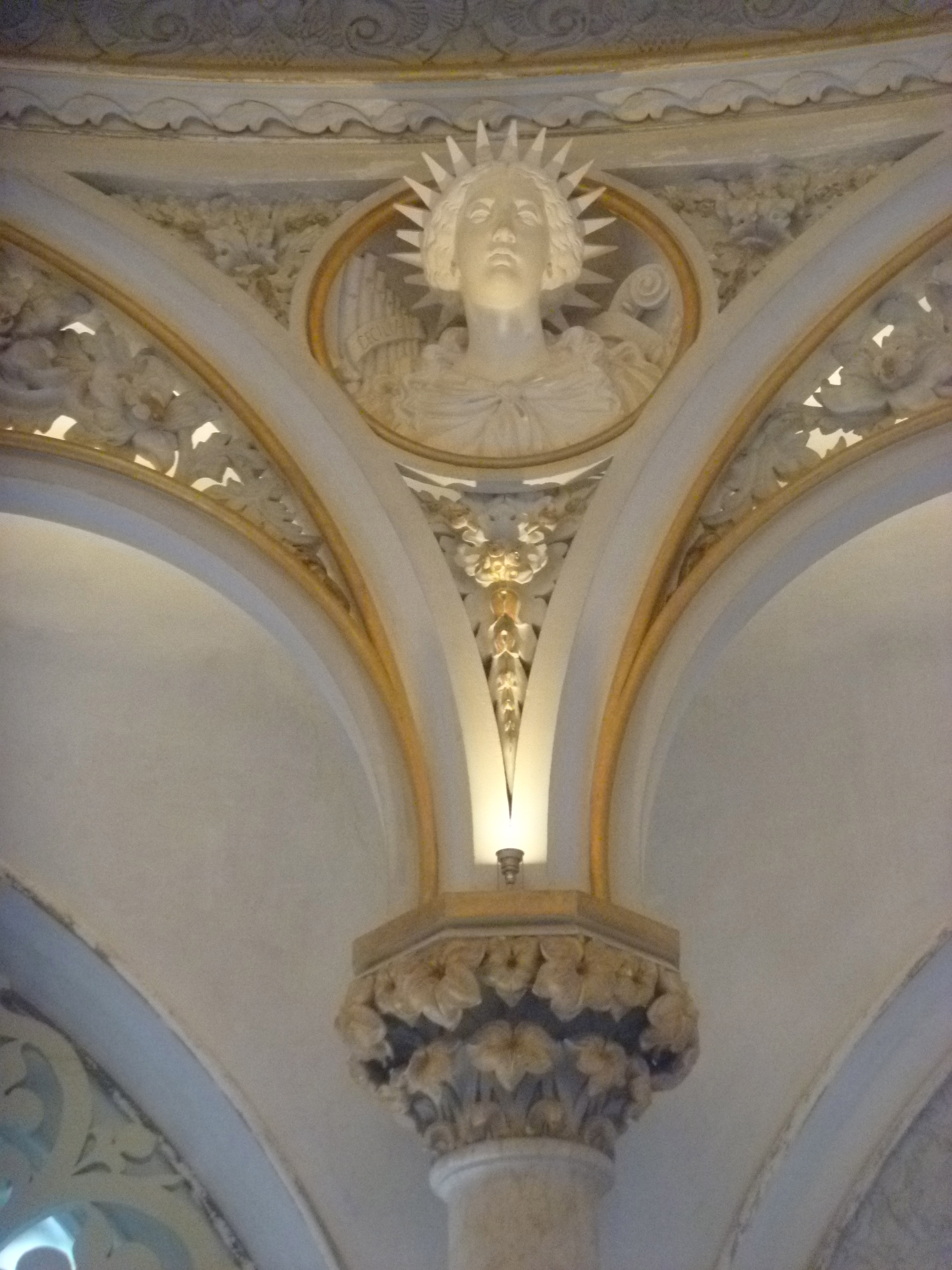
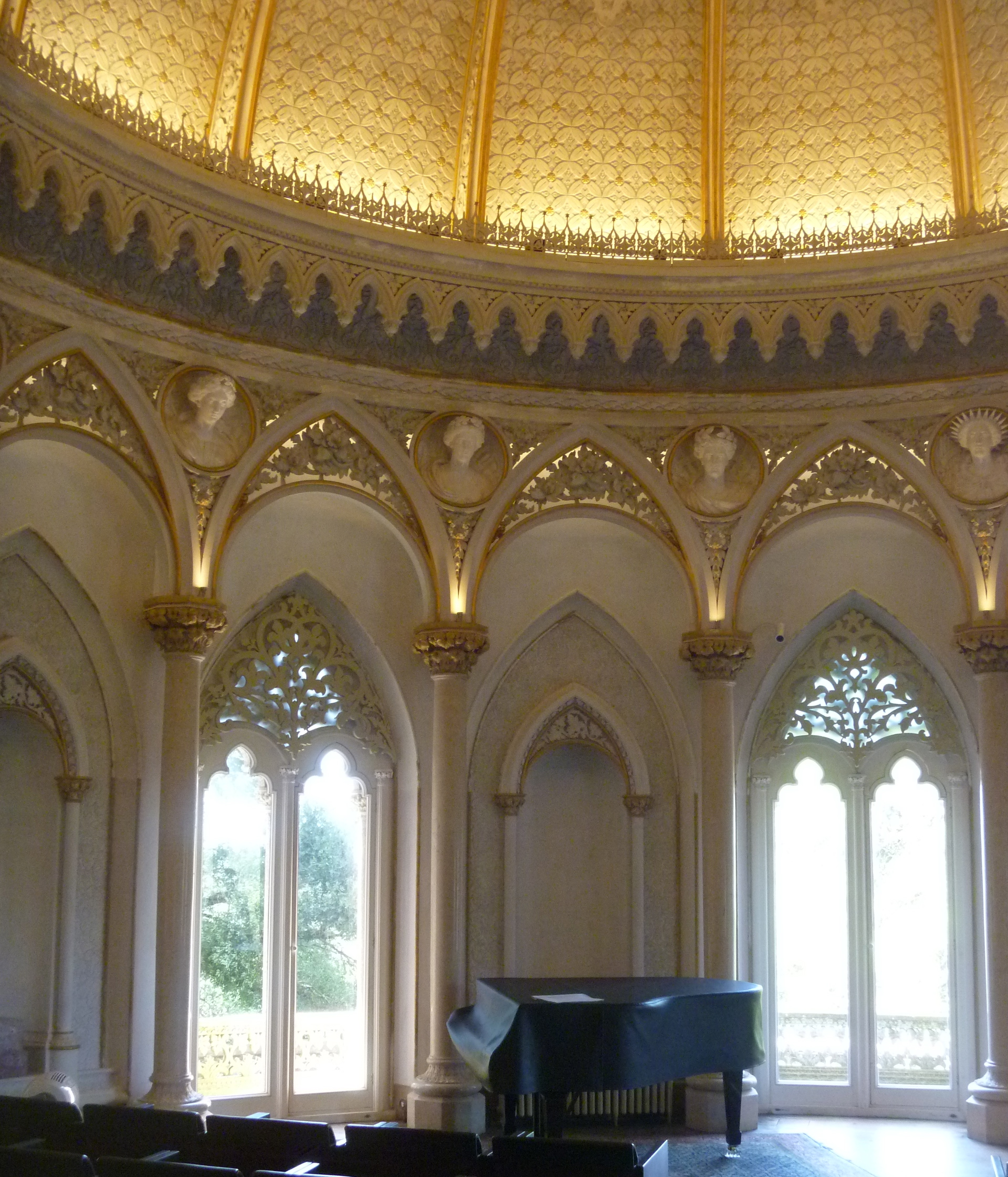
Restoration work in the music room

Music Room Plasterwork

The music room at Monserrate

The Music Room Today

Restored Music Room ceiling

The Restored Music Room Ceiling

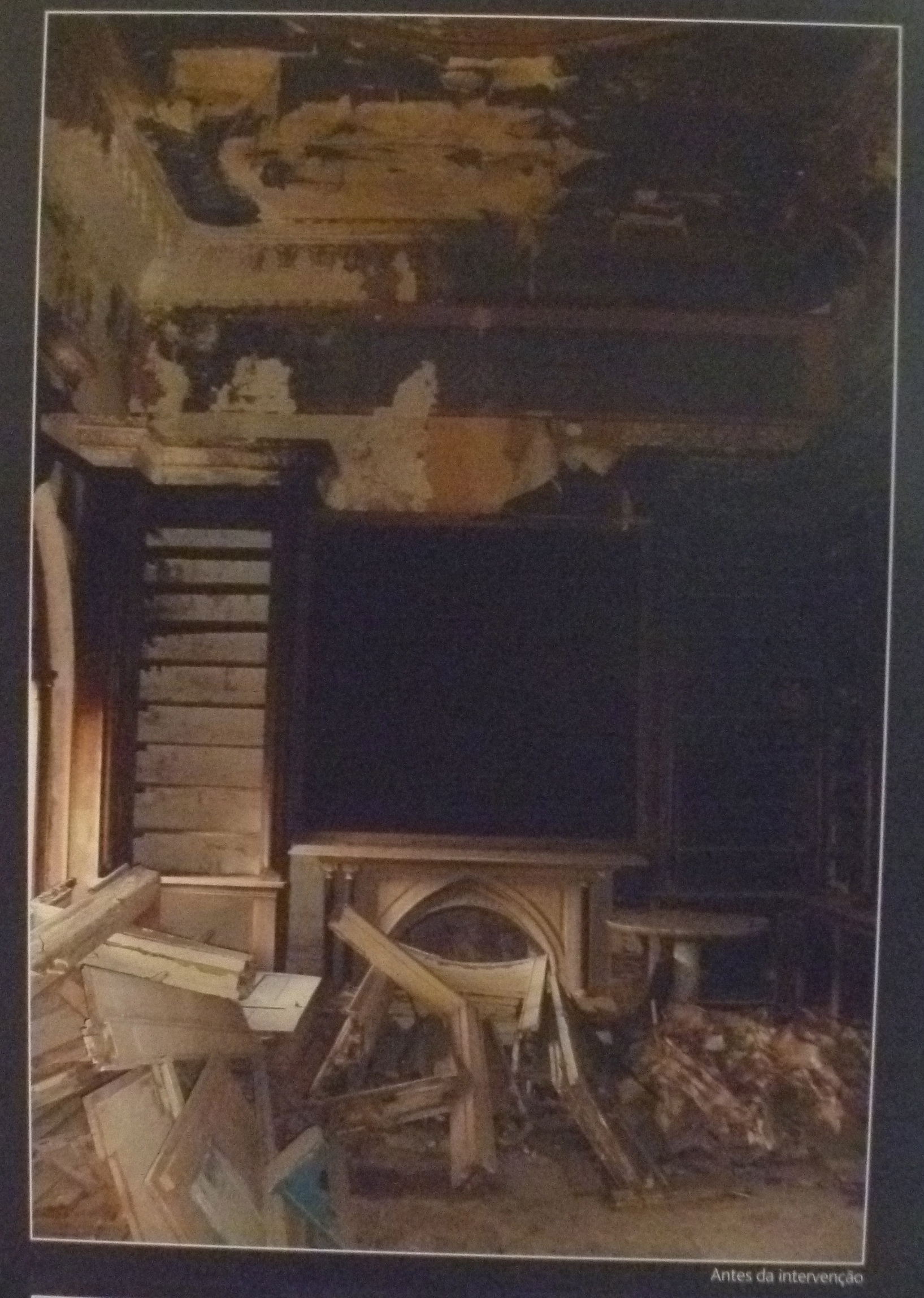
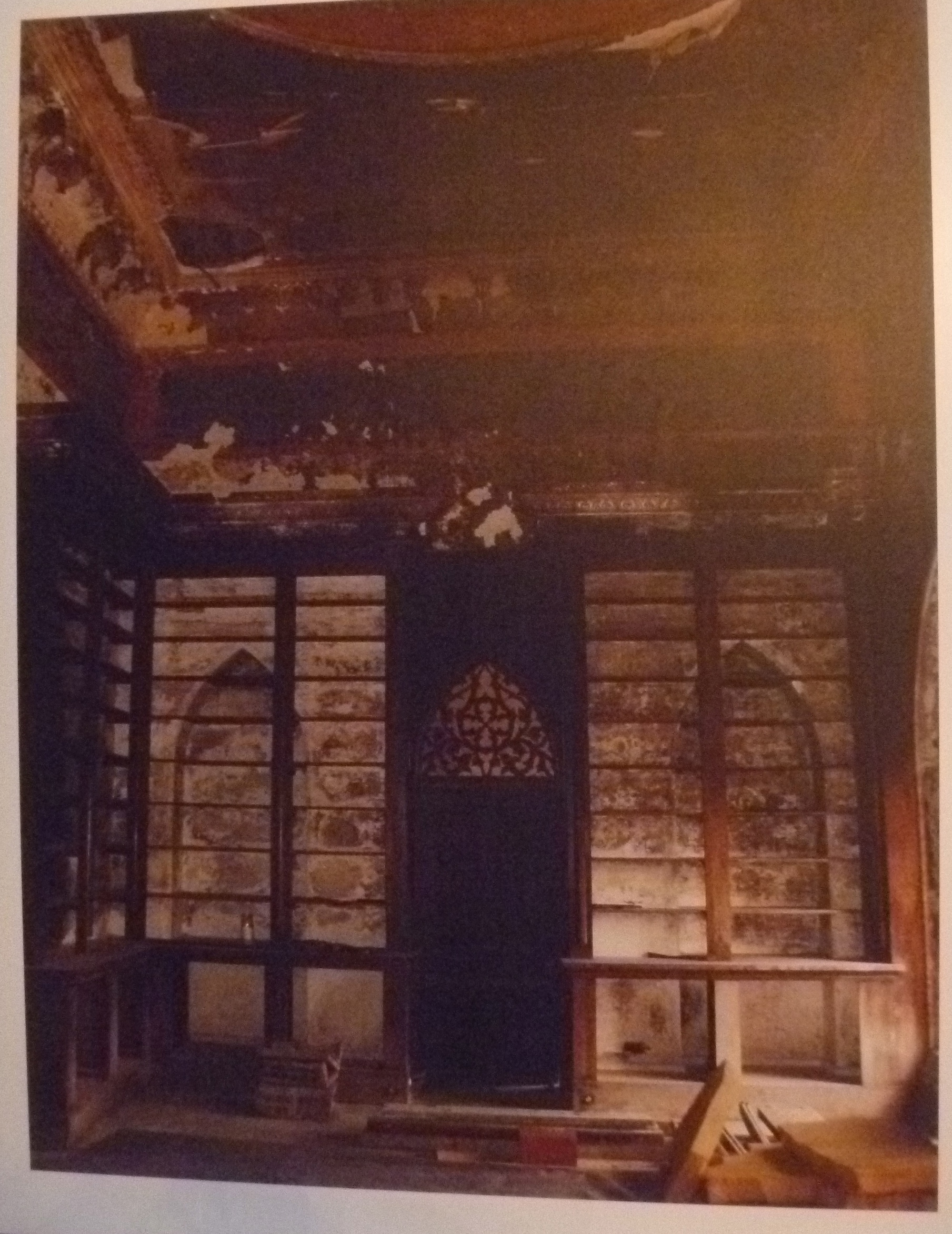
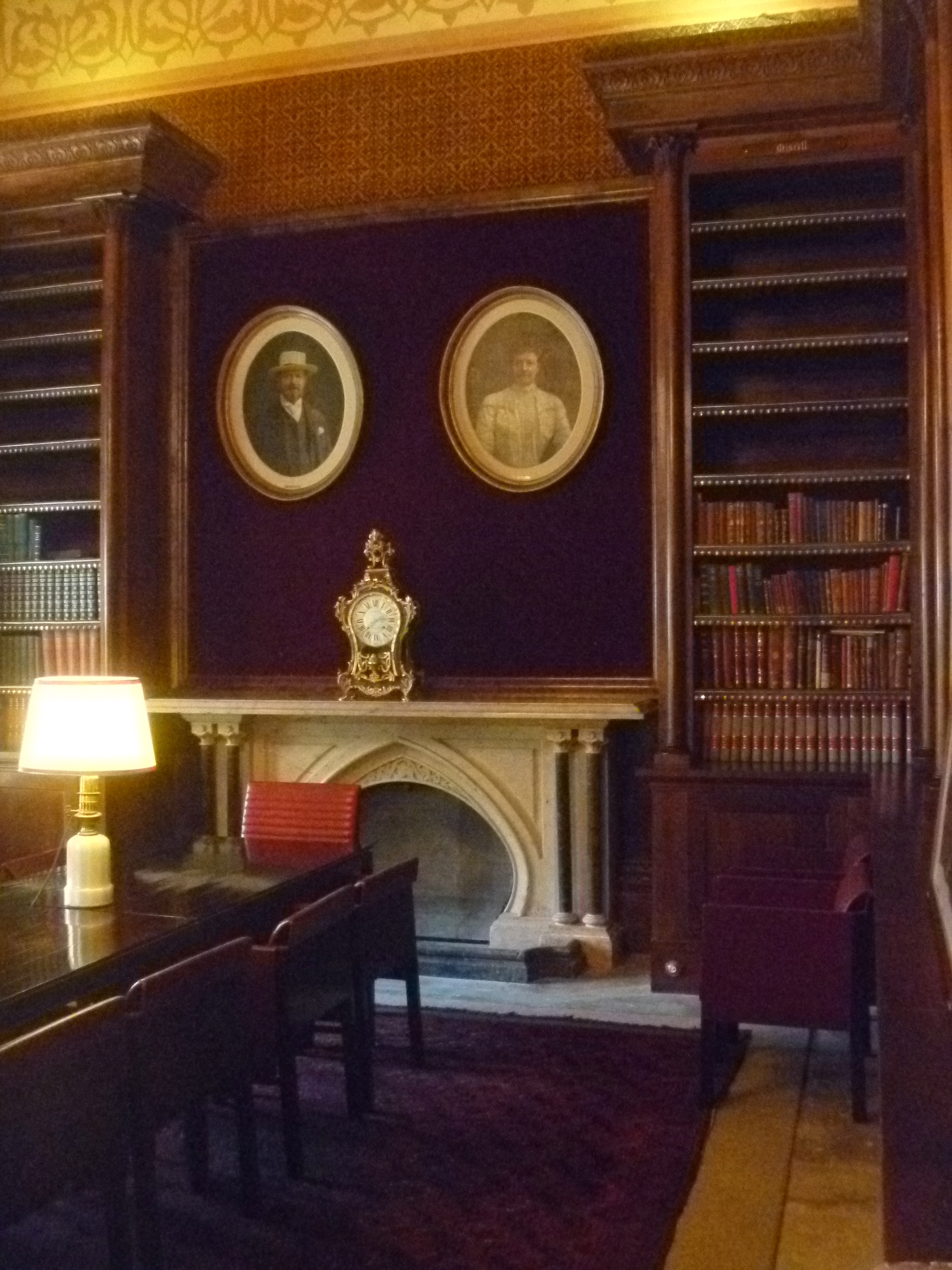
Photographs on display in the Library show just how bad the condition of this fine room became during the latter half of the 20th century. Once the roof and walls were repaired work began on the individual rooms. Paying careful attention to detail the Library has now been recreated in its former glory.

The library before renovation

The library pre-renovation

The above two photos show the extent of the damage

The library now

The Library as it looks today

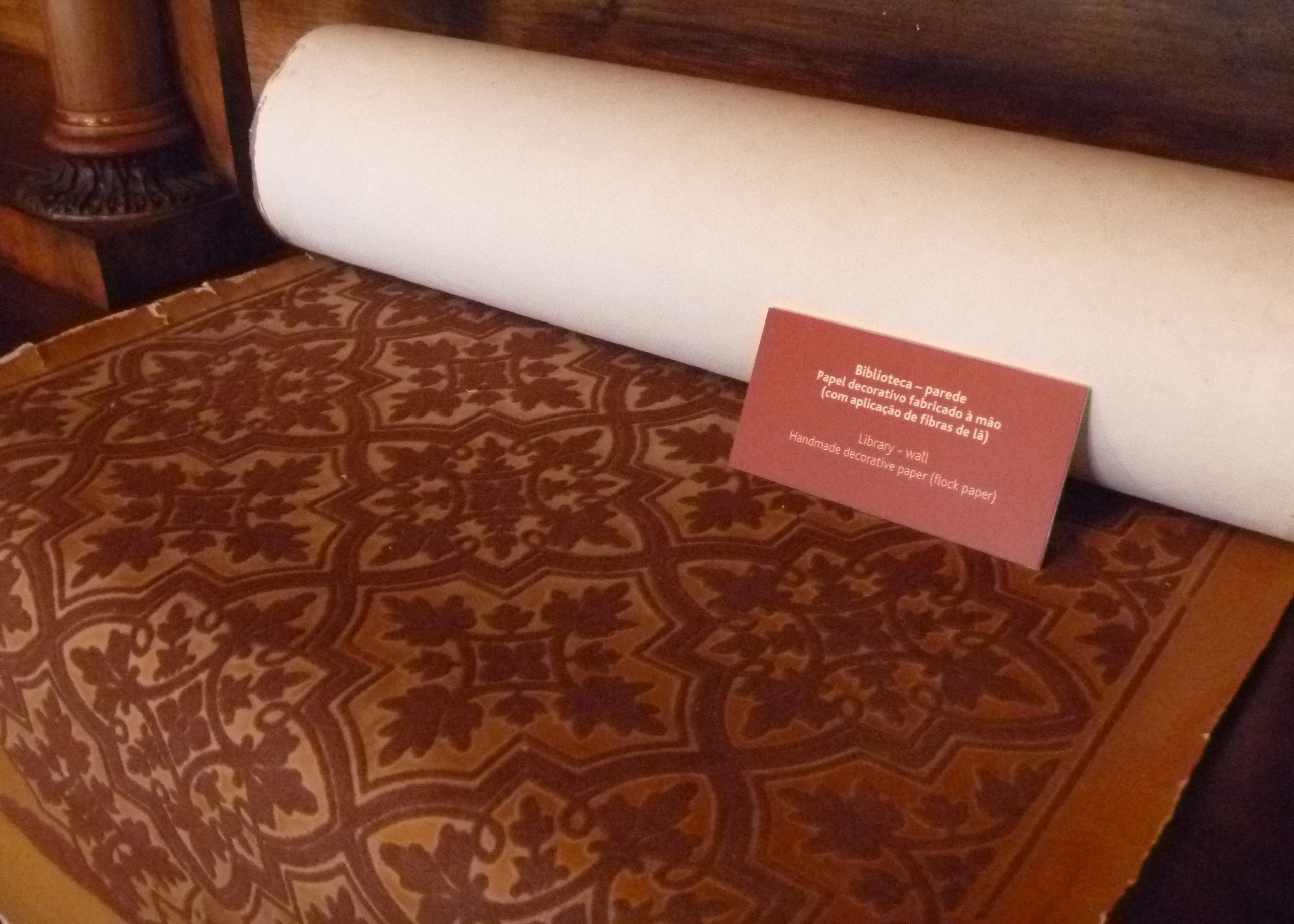
Example of library wallpaper

The Handmade Library Wallpaper

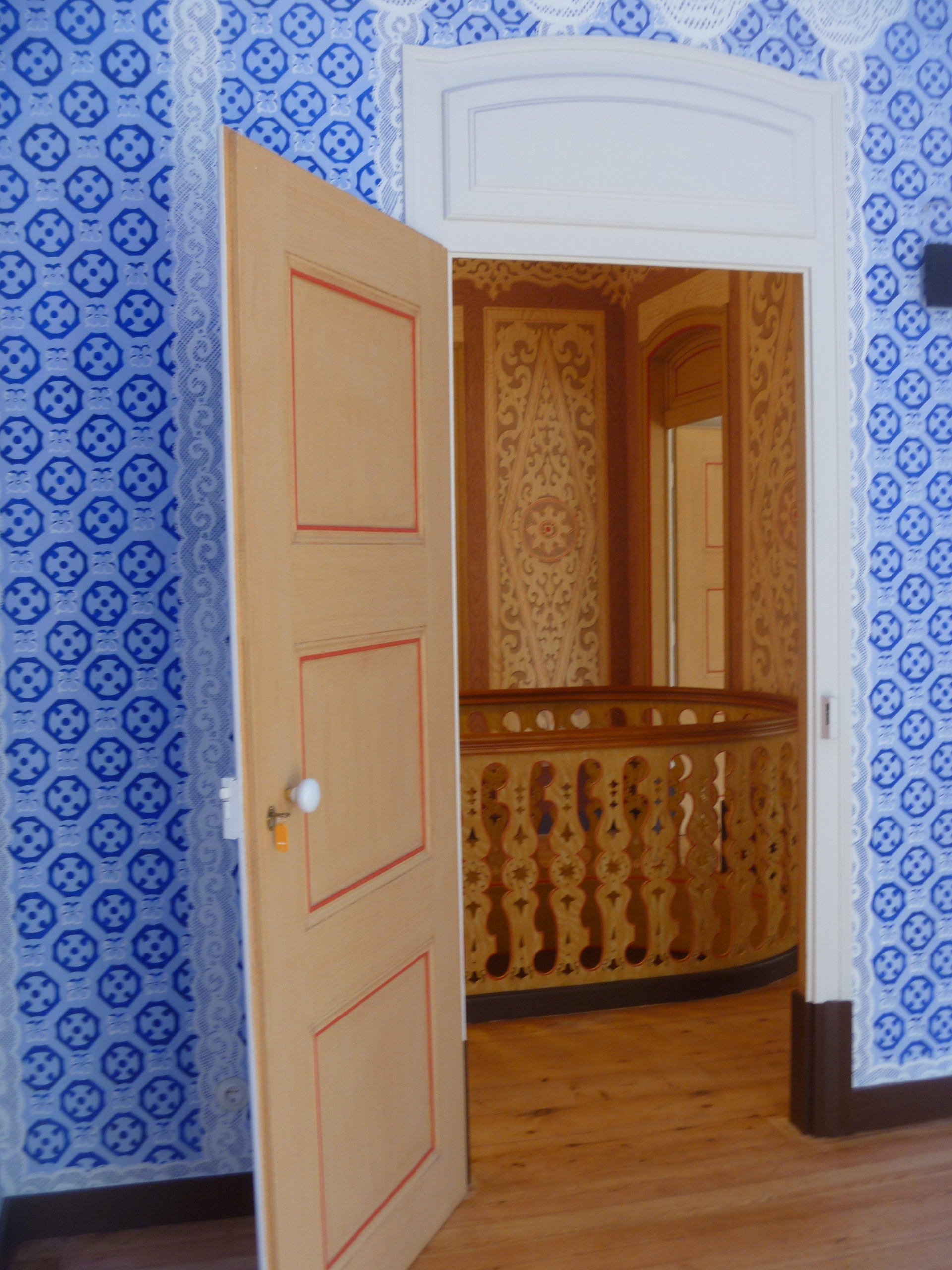
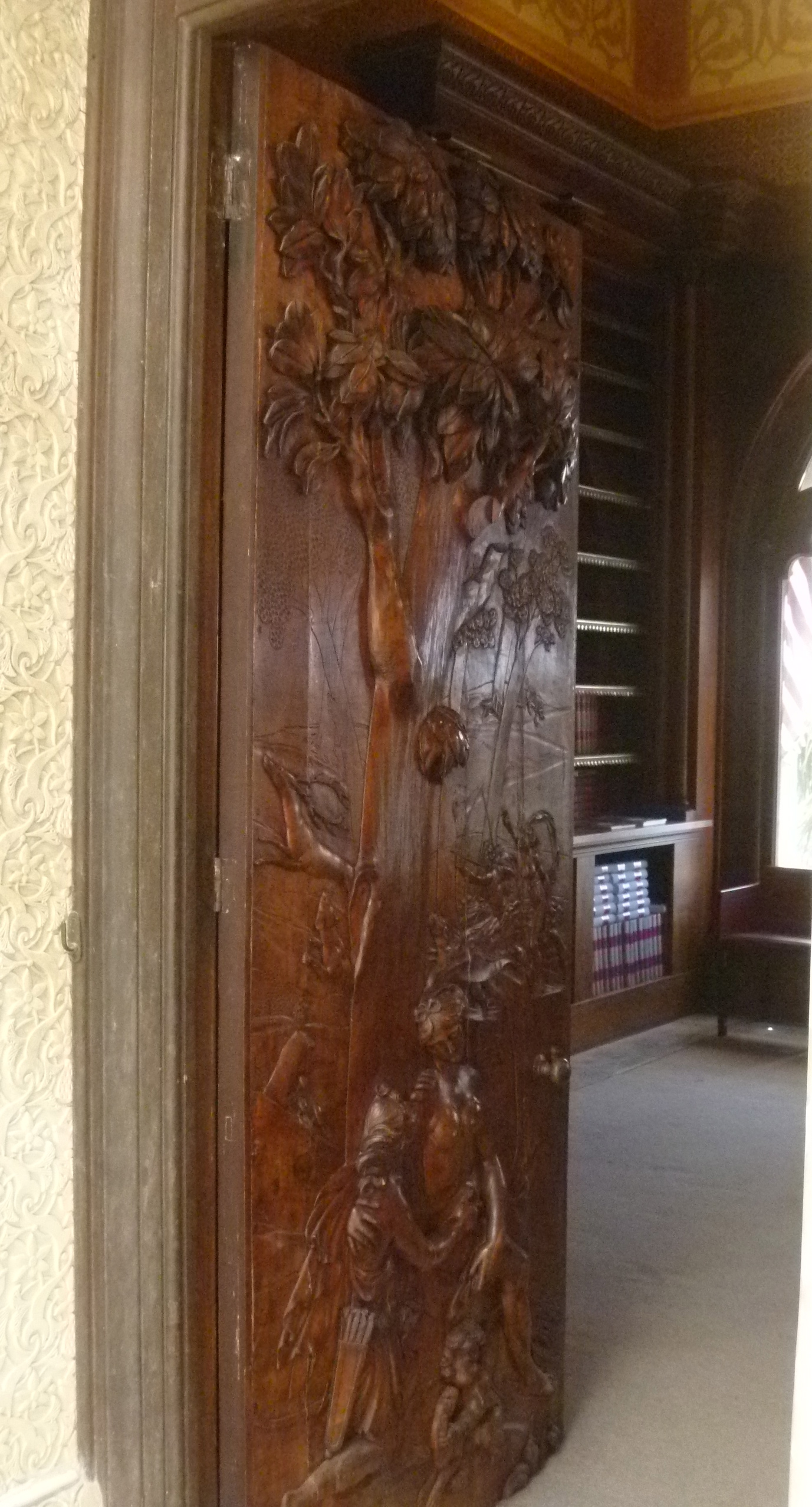
The library door

The Library Door

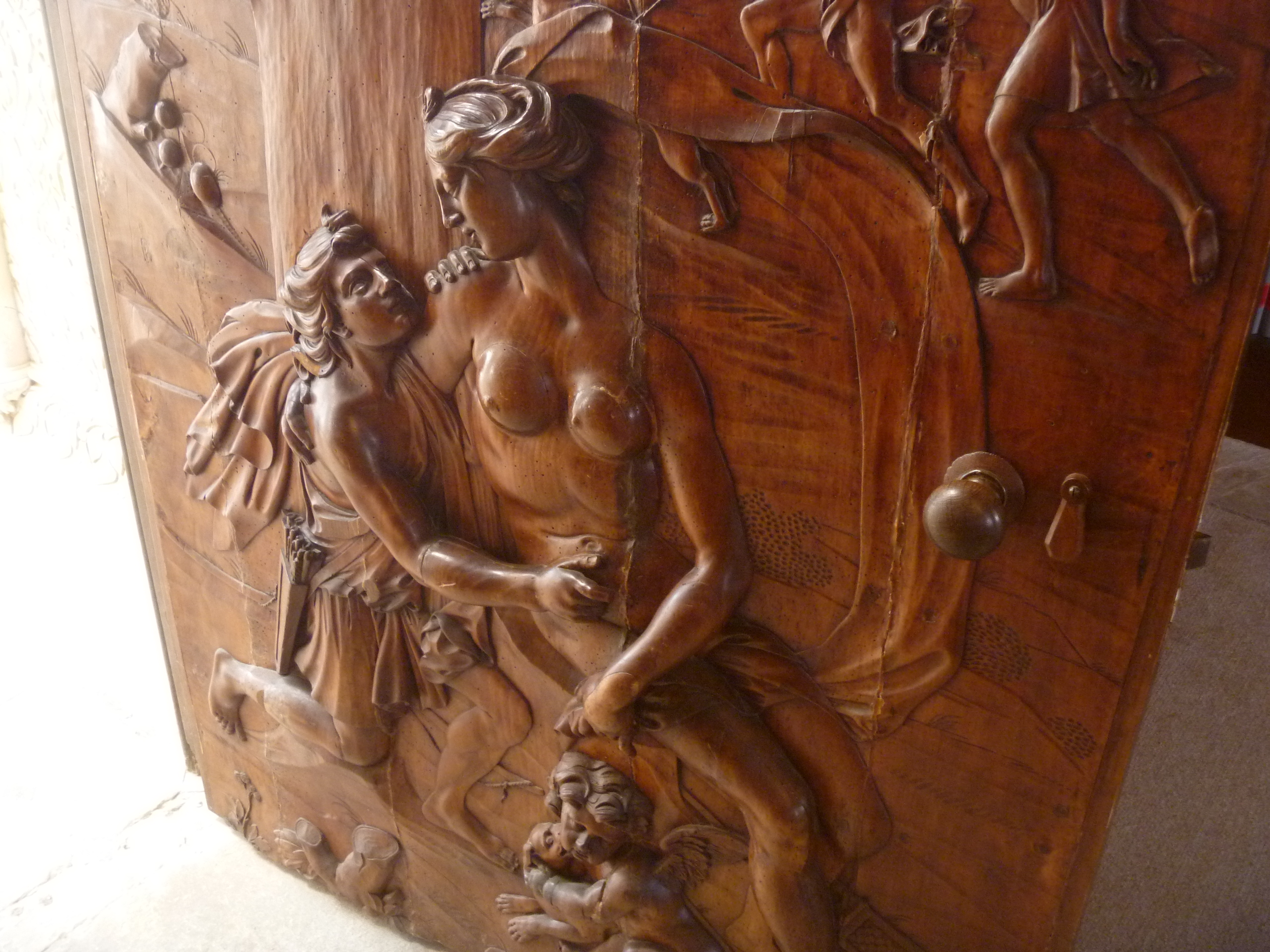
Library door (detail)

Detail of Library Door

The whole project makes me surprised that The Landmark Trust do not have an interest here as it definitely has the obligatory British connections that Landmark require of their overseas holdings. There are many follies and outbuildings ripe for occupation by we ‘Landmarkers’.

Childe Harold, Vathek and other literary inspirations of Monserrate

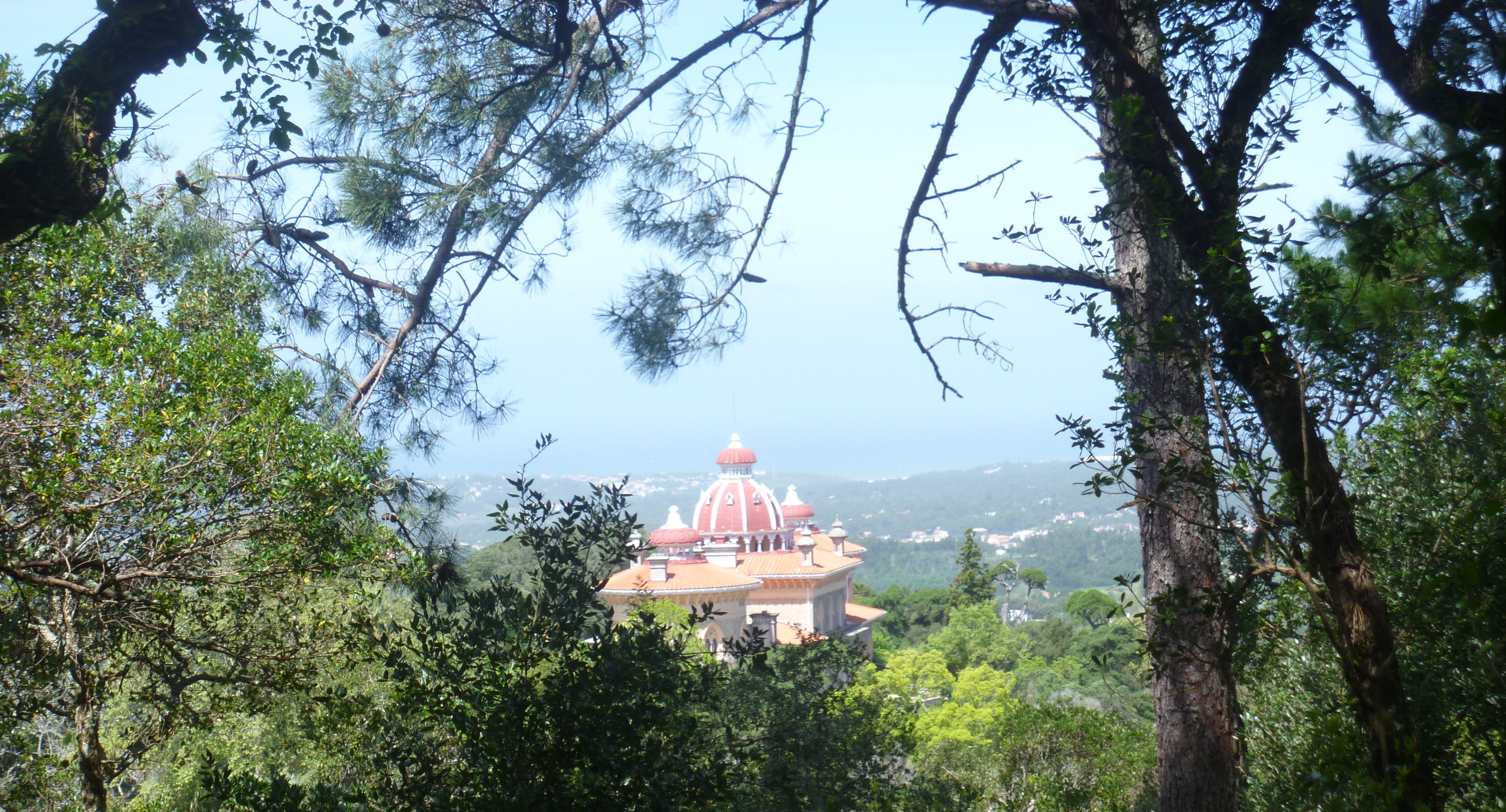
First glimpse of Monserrate Palace

On sloping mounds, or in the vale beneath,
Are domes where whilom kings did make repair;
But now the wild flowers round them only breathe:
Yet ruined splendour still is lingering there.
And yonder towers the prince’s palace fair:
There thou, too, Vathek! England’s wealthiest son,
Once formed thy Paradise, as not aware
When wanton Wealth her mightiest deeds hath done,
Meek Peace voluptuous lures was ever wont to shun.”

Childe Harold’s Pilgrimage, by Lord Byron [Canto the First XXII]

think the above verse applies to the beautiful palace and gardens of Monserrate. At least we were told in numerous books and leaflets that Lord Byron was smitten by Monserrate on his visit here in 1810 and reminisced about it in his poem ‘Childe Harold’s Pilgrimage’.

Monserrate Palace

Monserrate was probably my favourite place of the whole trip. It had everything: a palace with a library, exotic gardens(but with an English Rose Garden), a tea house, British connections, literary connections and to top it all we visited in beautiful weather!

The library today

The Library as it is today

In the gardens

In the exotic gardens

The Tea House

The Tea House

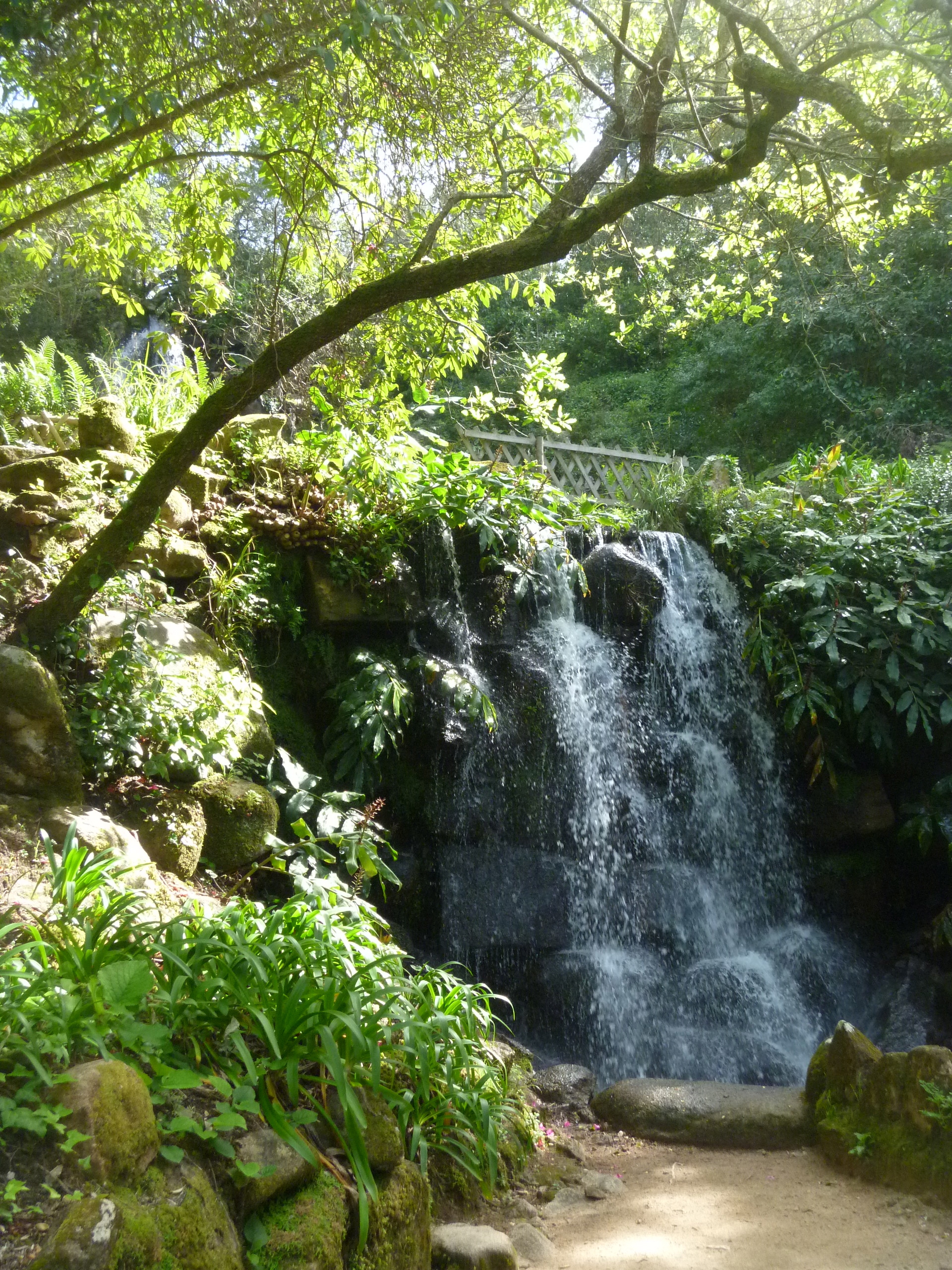
Beckford's Falls

Beckford’s Falls

William Beckford ordered this waterfall to be constructed between 1794 and 1799. Beckford, a writer who enjoyed great fame at the end of the 18th C, visited Portugal and fell in love with Sintra, where he rented this property from Gerard de Visme.” [On a nearby information board]

Vathek's Arch

Vathek’s Arch

This arch was built by William Beckford … We think that it could represent the entrance of the property which, at the time, was not enclosed. Beckford wrote his most famous book, Vathek, an oriental tale, in 1786 before his first visit to Portugal. Vathek was the hero of the book which is considered by many to be somehow autobiographic” [From nearby Information Board]

Gerard de Visme an English merchant holding the concession to import Brazilian teak was responsible for the construction of the first palace. Later, William Beckford, writer, novelist, art critic and eccentric lived here. There’s a waterfall named for him and an arch for his most famous character; Vathek.

Sir Francis Cooke bought the property in 1856 and had it restored by the English architect James Knowles, who employed a thousand workmen. In the 1850s the artist William Stockdale created a botanic garden there with plants including rhododendrons  from all over the world – Mexico, Australasia, Japan and the Himalayas.

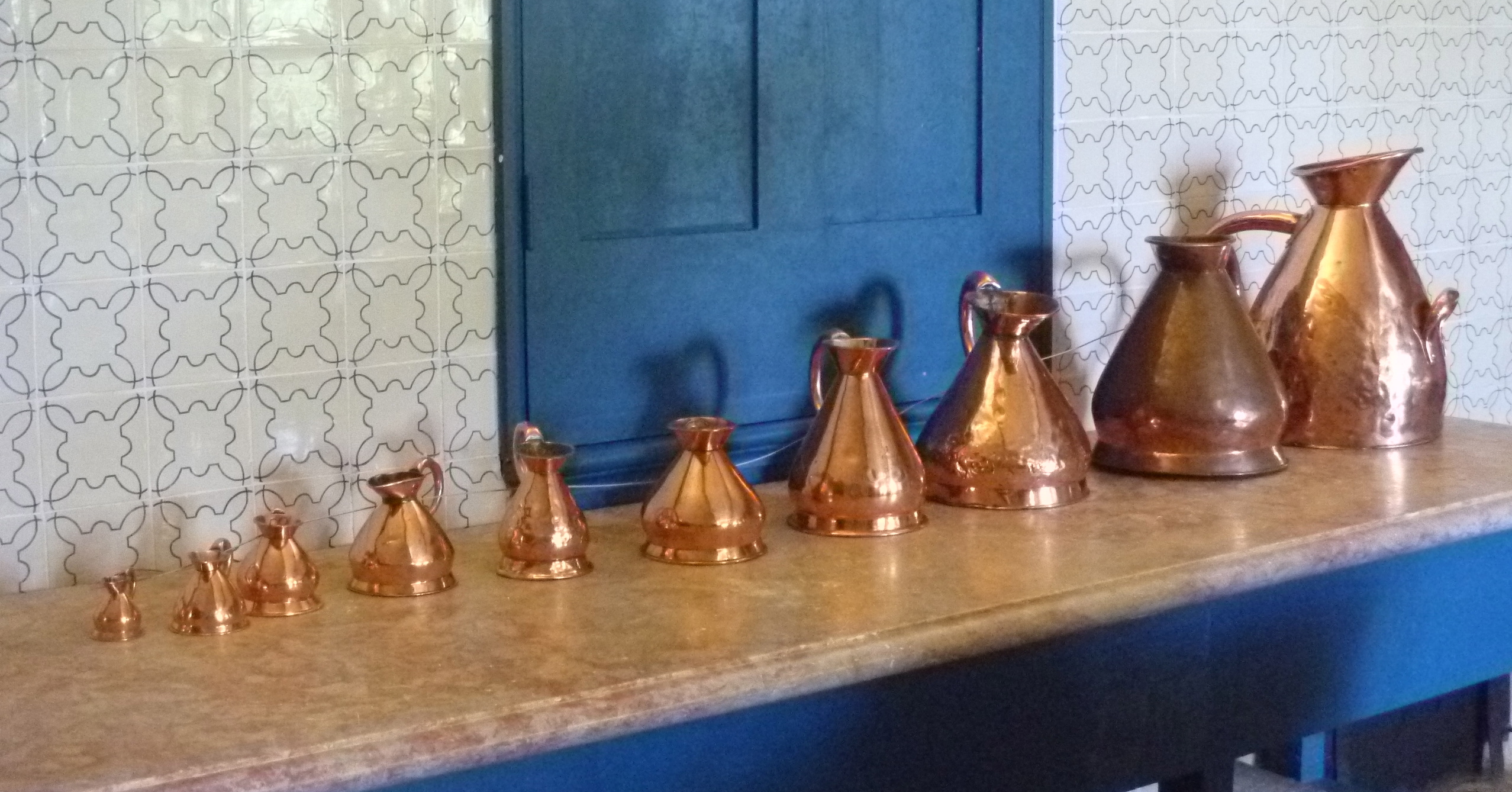
Brass jugs in kitchen

Brass jugs in the kitchen – could be Below Stairs at any National Trust property!

Cabo da Roca or Promontorium Magnum : The Edge of the World

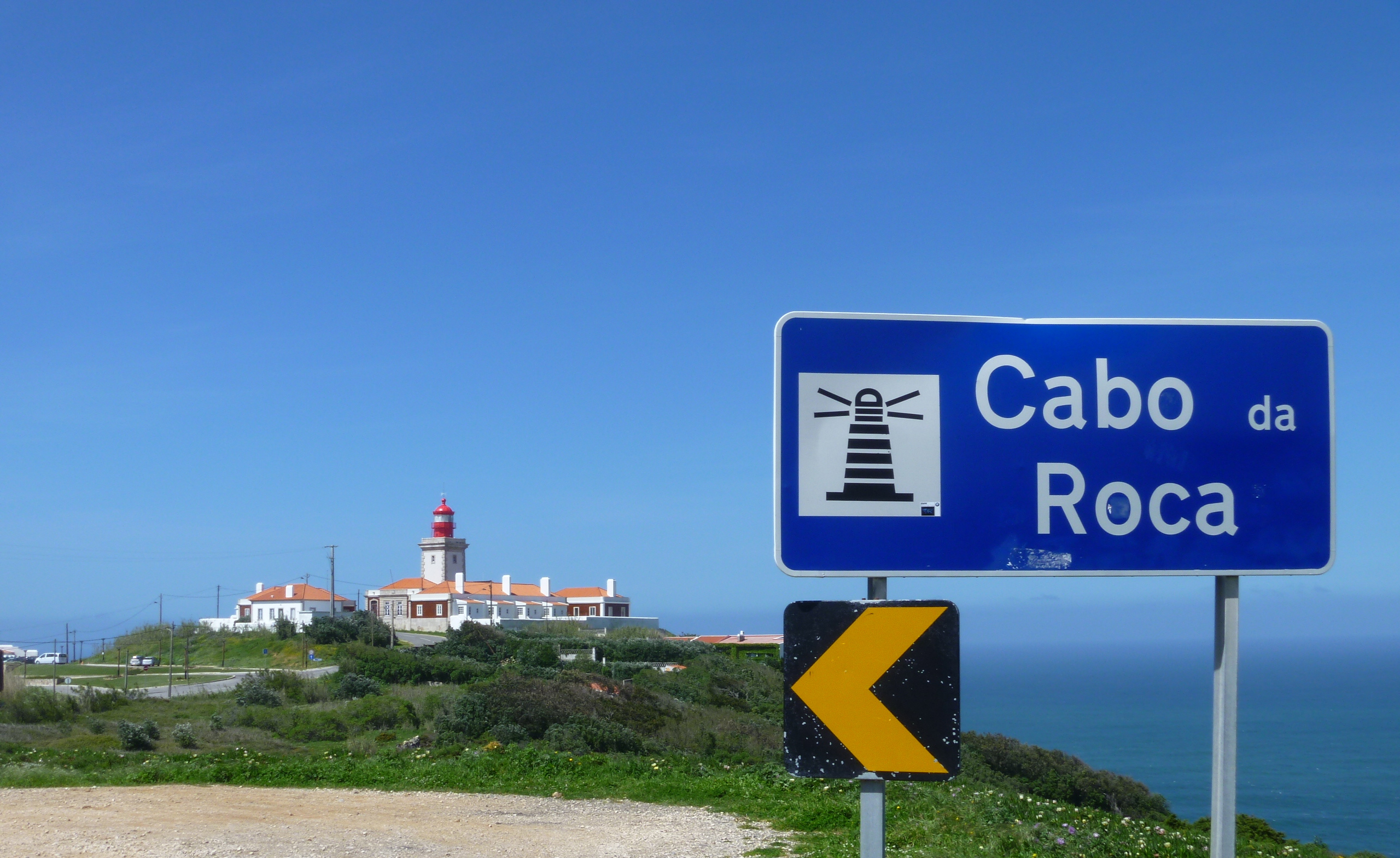
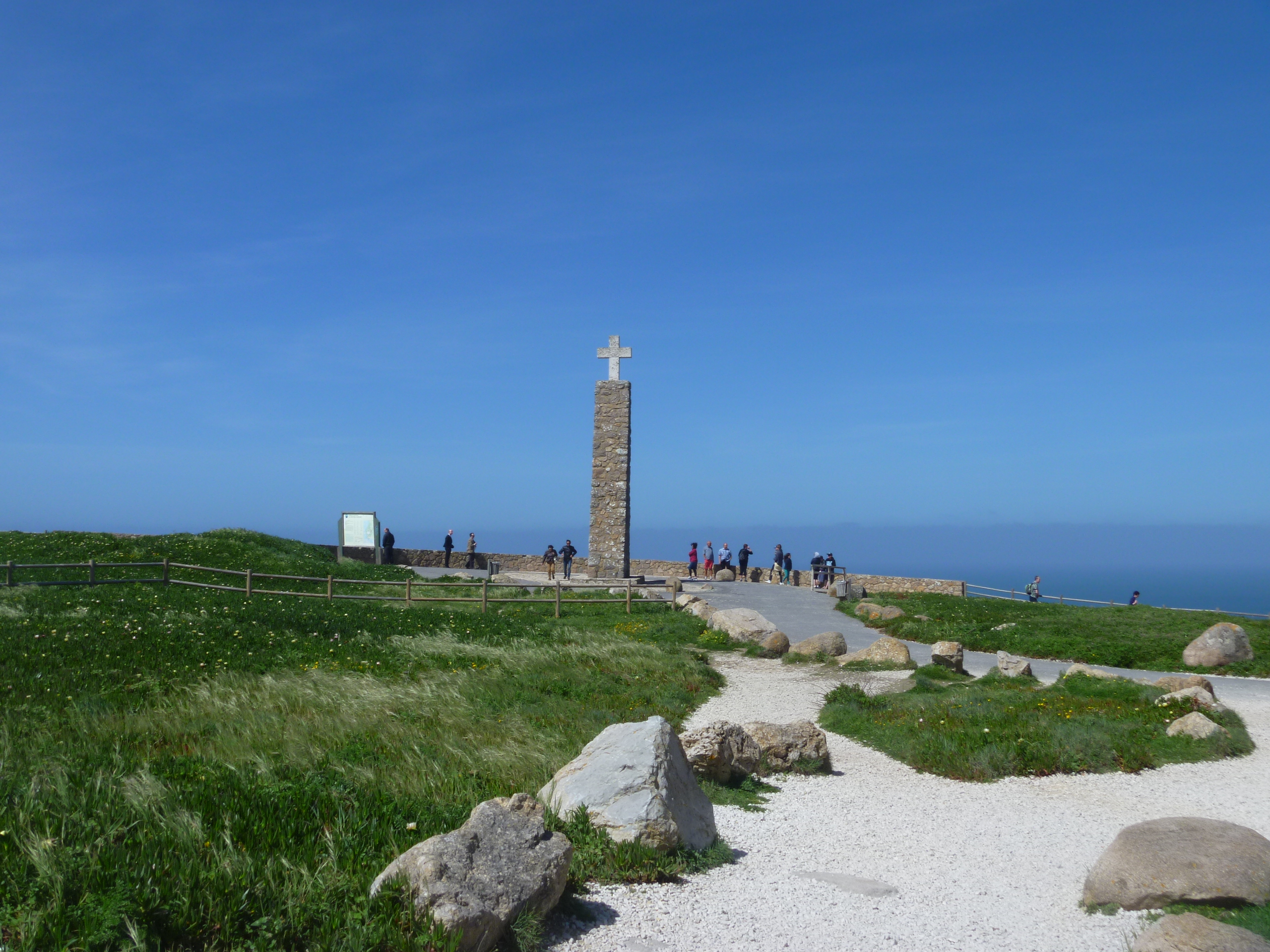
The highlight of the next day’s walking was to visit the Cabo Do Roca – the westernmost point of the European mainland. Called Promontorium Magnum by the Romans and before the Age of the Explorers was thought to be the Edge of the World.

Cabo da Roca sign

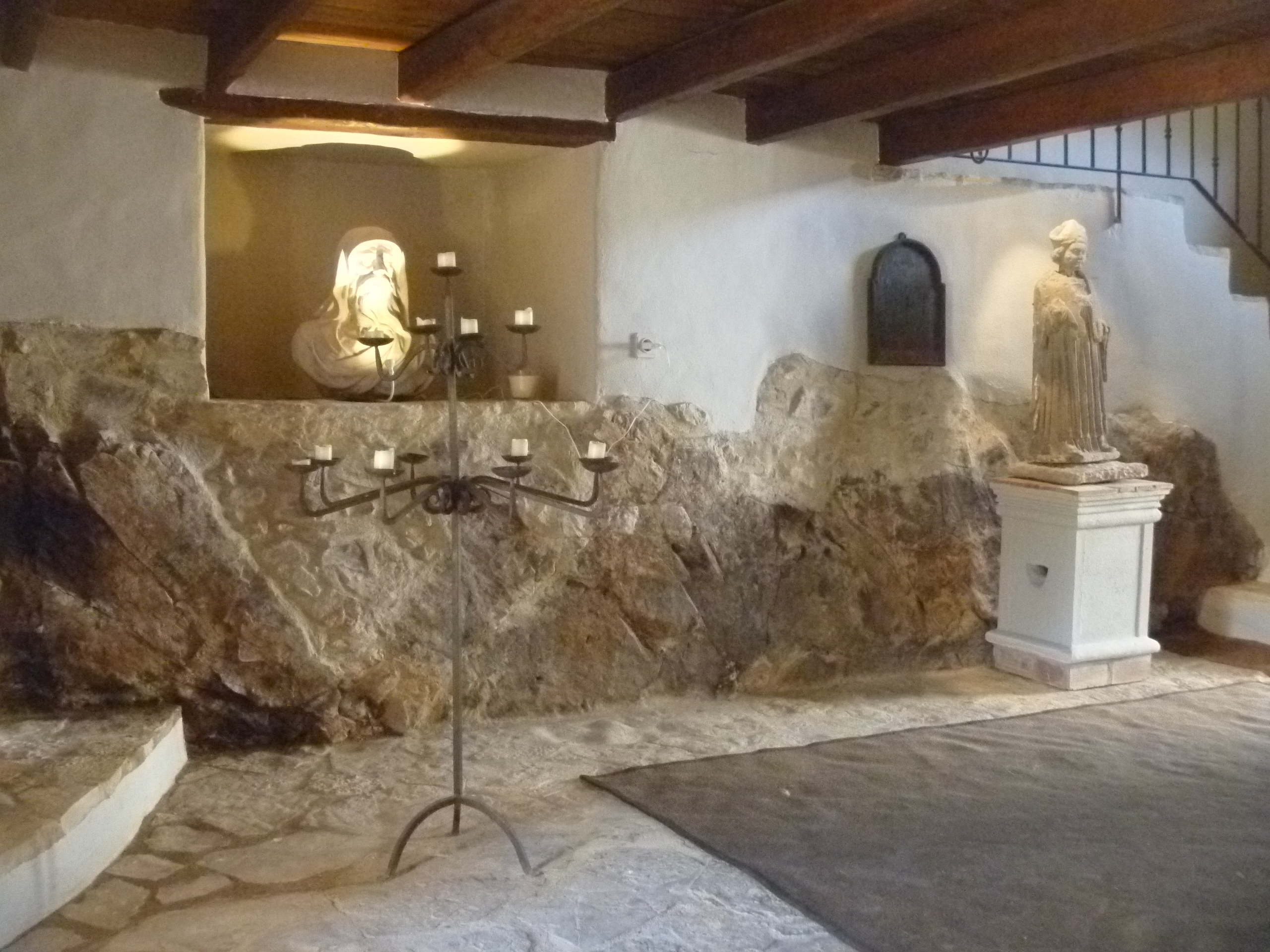
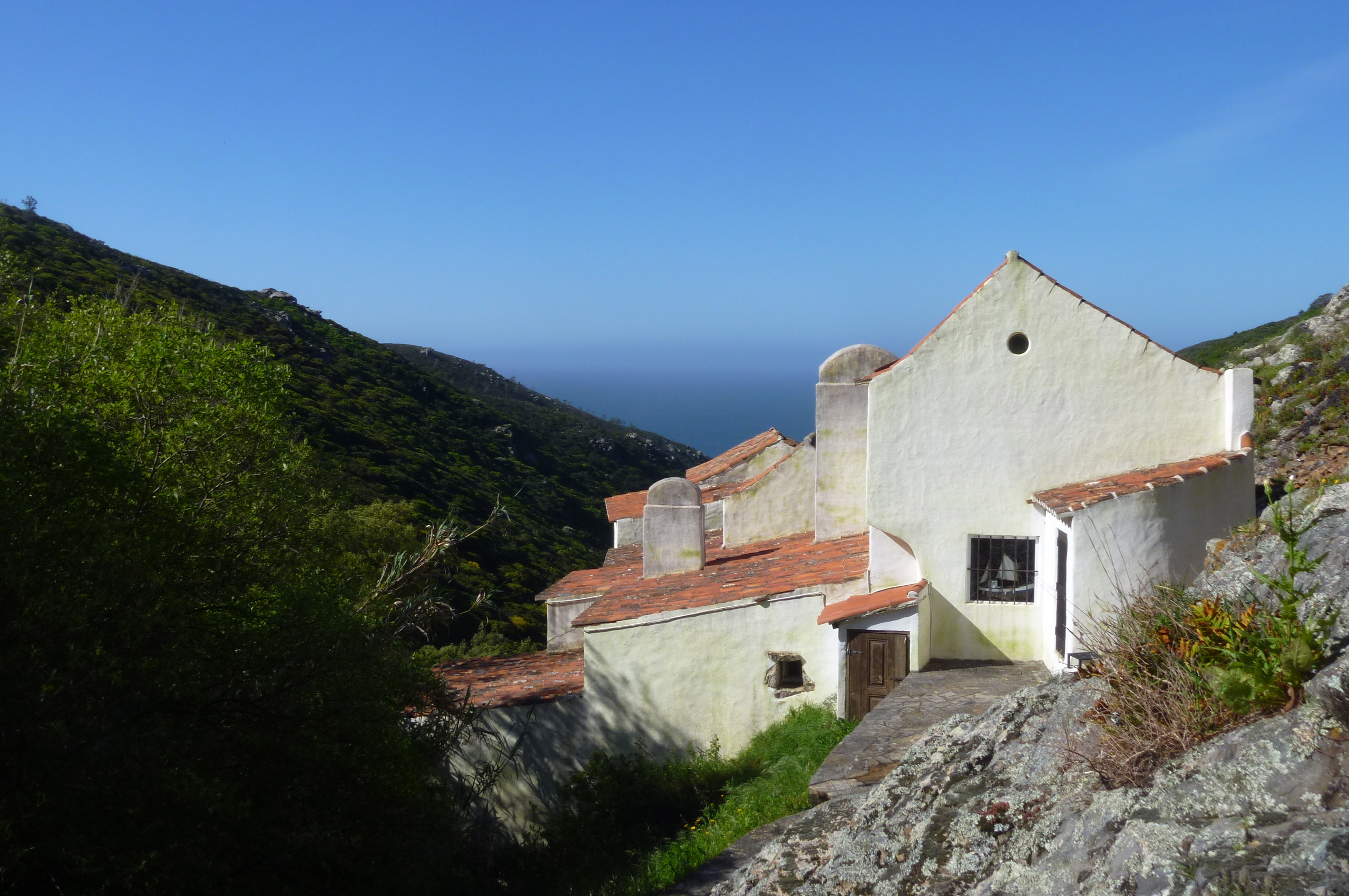
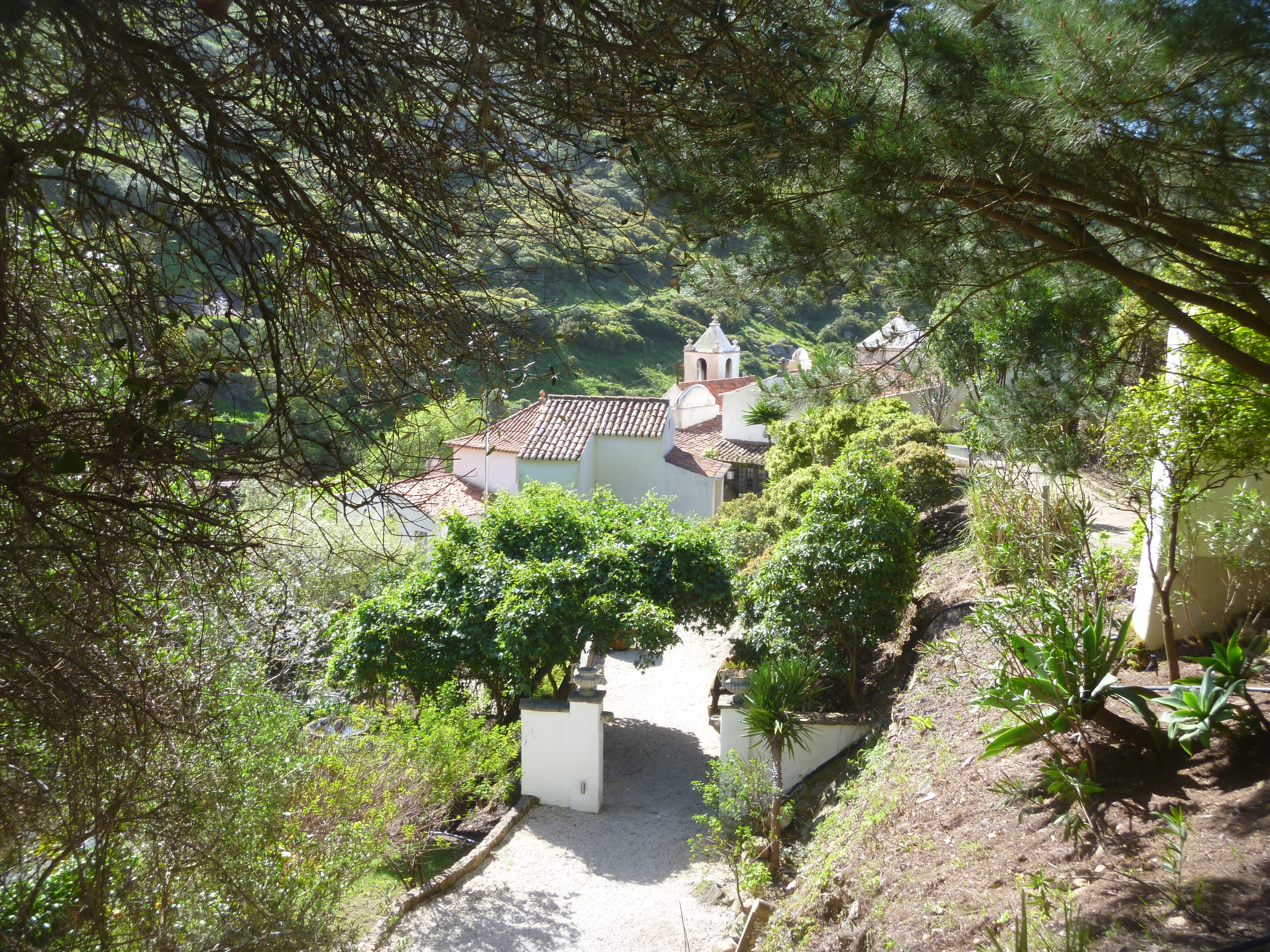
But before heading off on the next sector of our walk we spent a relaxing morning at The Sao Saturnino. Breakfast isn’t served until after 9am and we also wanted to wander around the maze of buildings and the gardens. Here are some pictures of this beautiful location.

Entrance Saturnino

Sao Saturnino Entrance

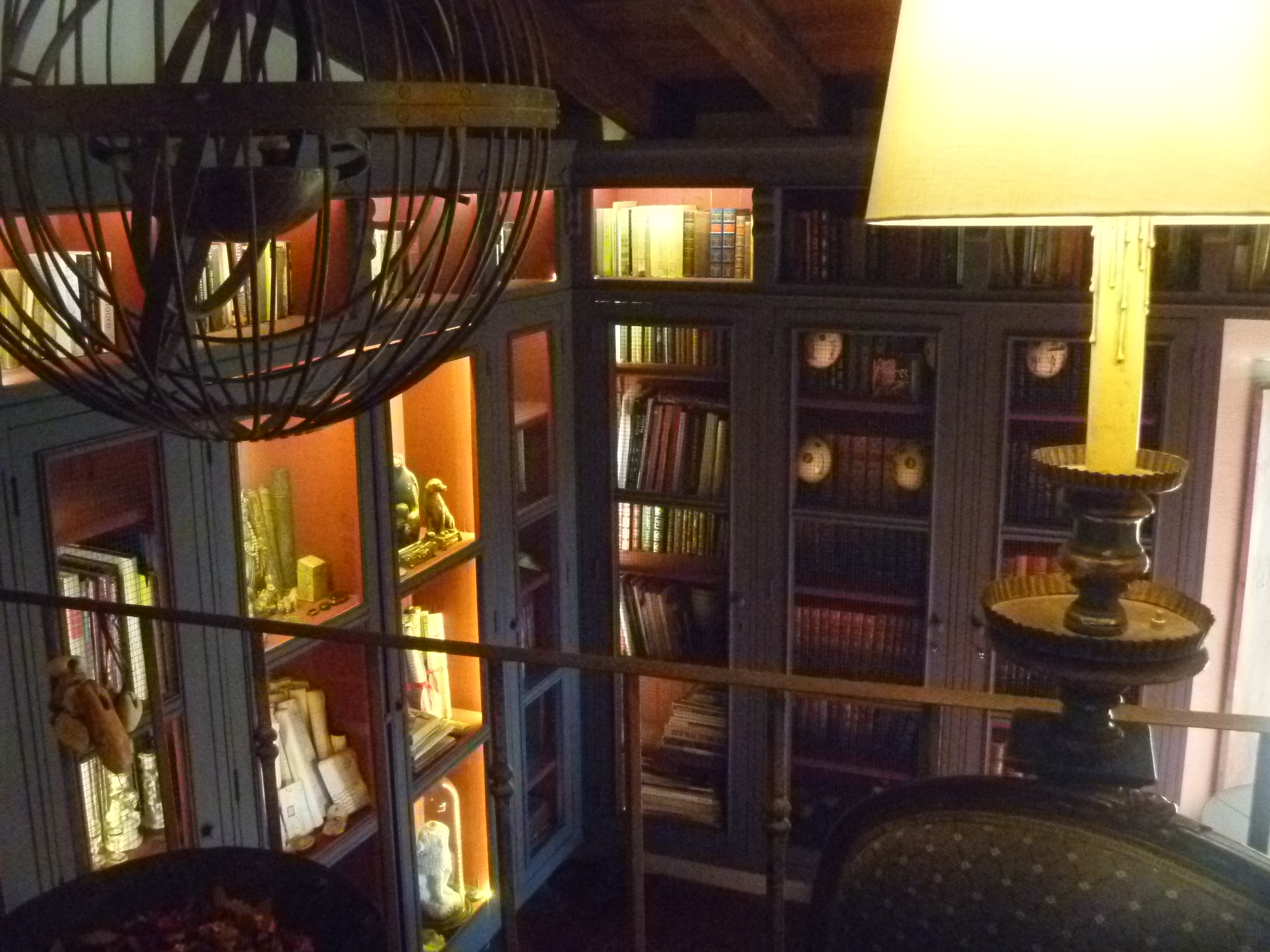
Saturnino library

Sao Saturnino Library

Convento sea views

Sea Views from The Sao Saturnino

Leaving the C da SS

Leaving The Convento da Sao Saturnino

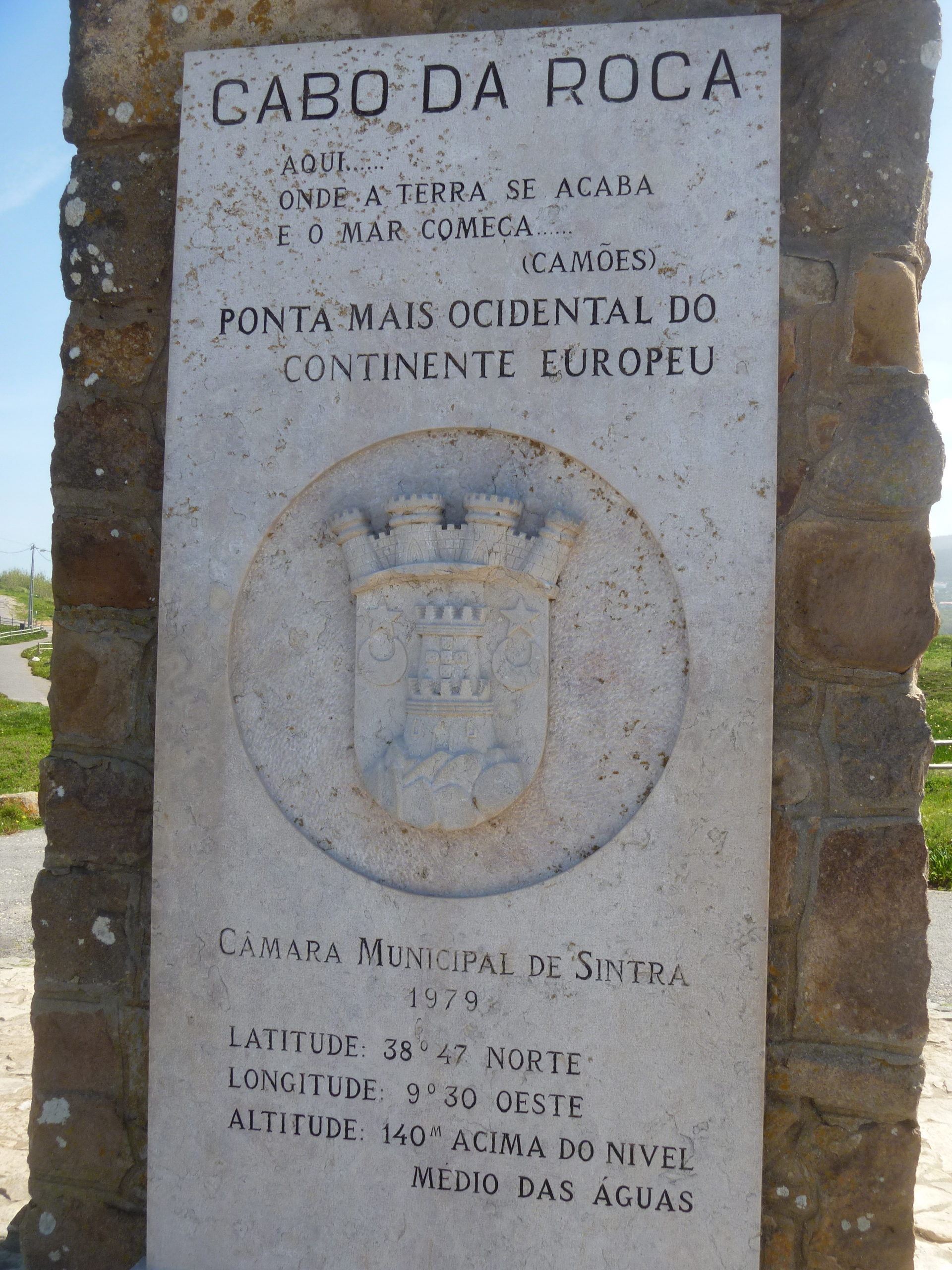
So, late morning we headed off from the Convento, through the village of Azoia, to the Cabo da Roca. “The phrase that is most attached to this outcrop is ‘where the land ends and the sea begins’ which was coined by Luis de Camoes, the 16th century Portuguese poet.” [Route Brochure].

Approaching Cabo da Roca

Approaching the Cabo da Roca

Cabo da Roca

Cabo da Roca

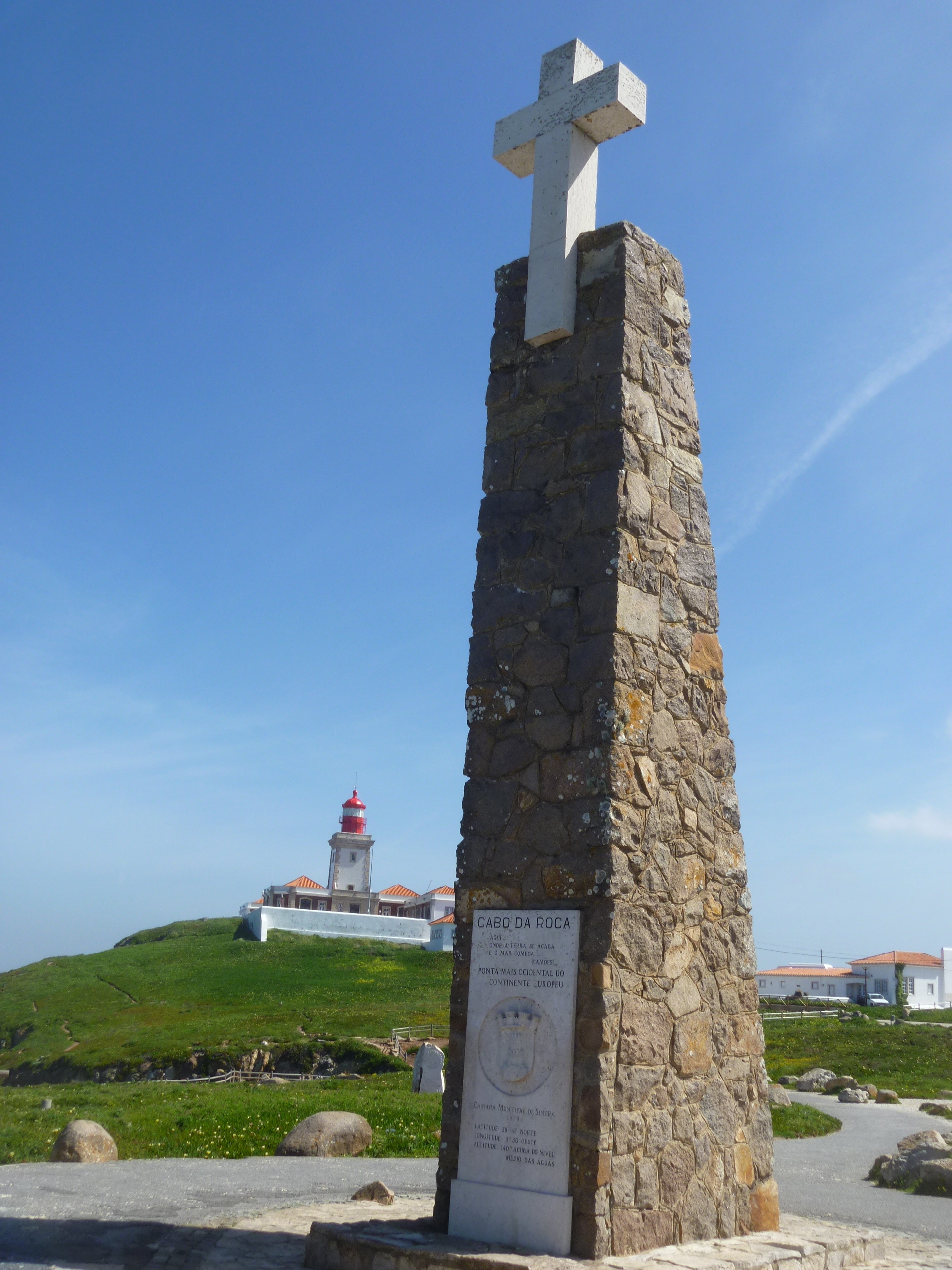
Cabo de Roca Monument

The Monument at Cabo da Roca

Cabo da Roca sign

What it says on the Monument

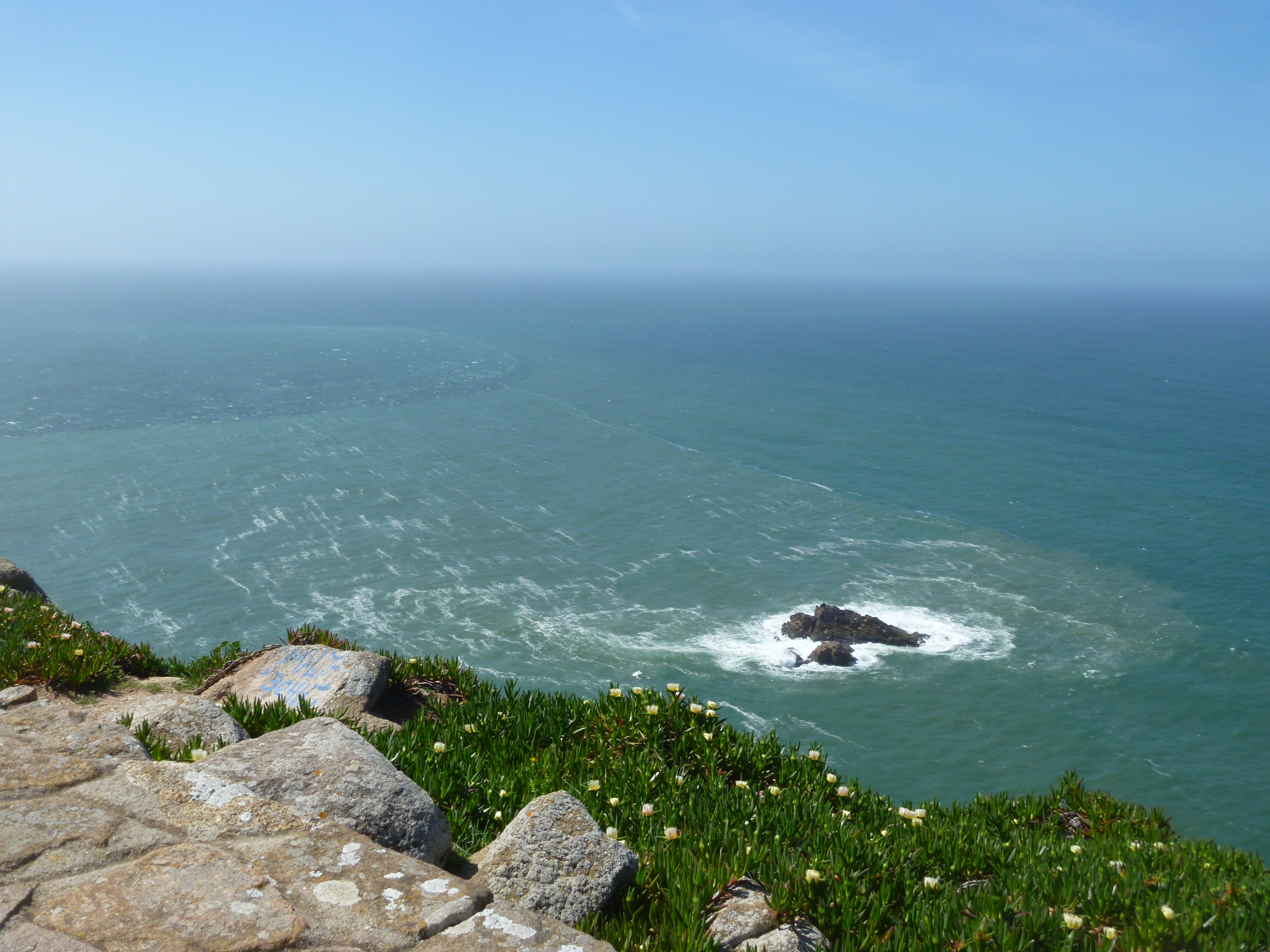
The Atlantic Ocean at Cabo da Roca

The Atlantic Ocean at Cabo da Roca

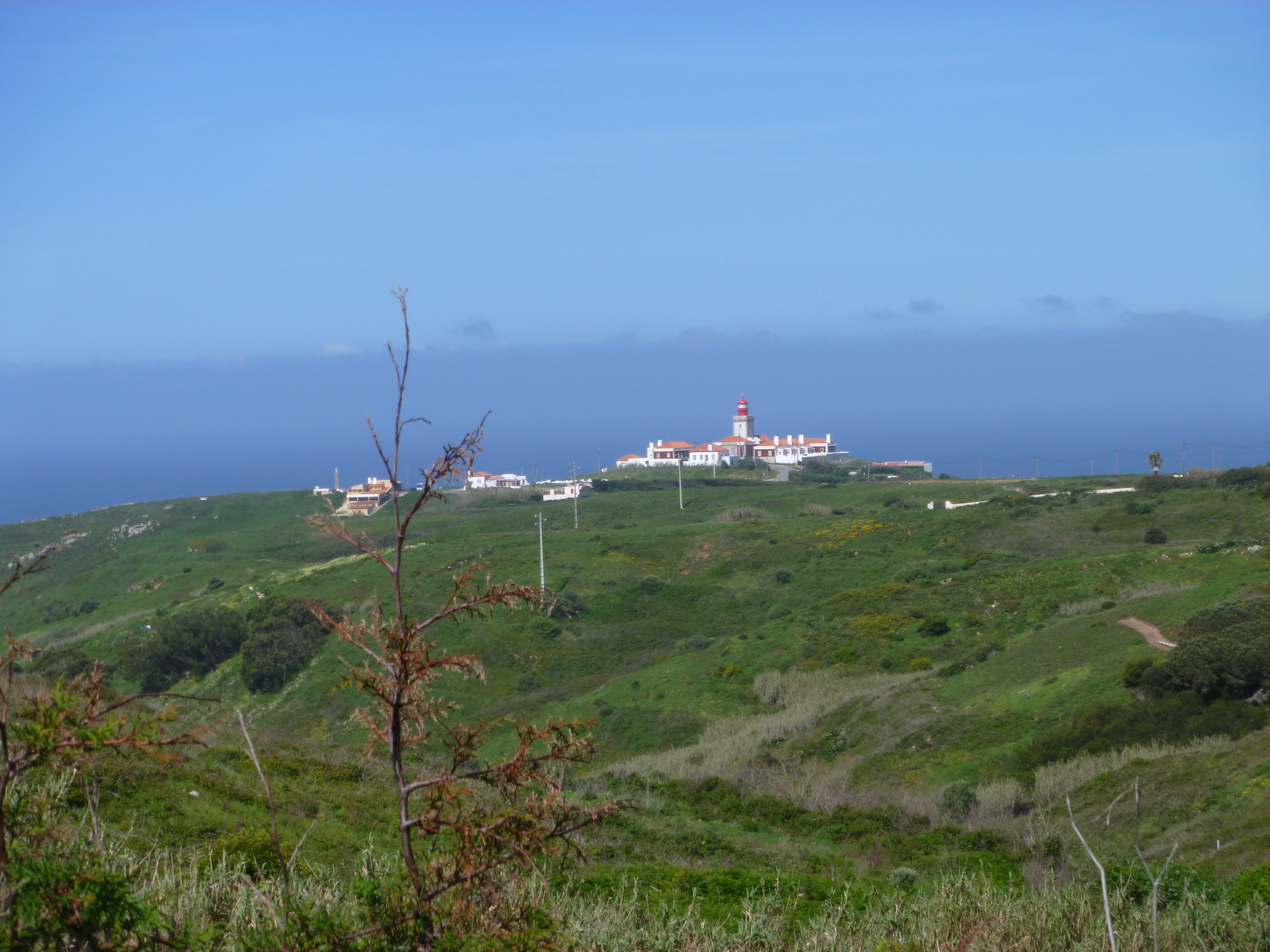
The Lighthouse at Cabo da Roca

The Lighthouse at Cabo da Roca

The lighthouse was built in 1772 and stands 144 metres above the cape which itself stands 140 metres above sea level.

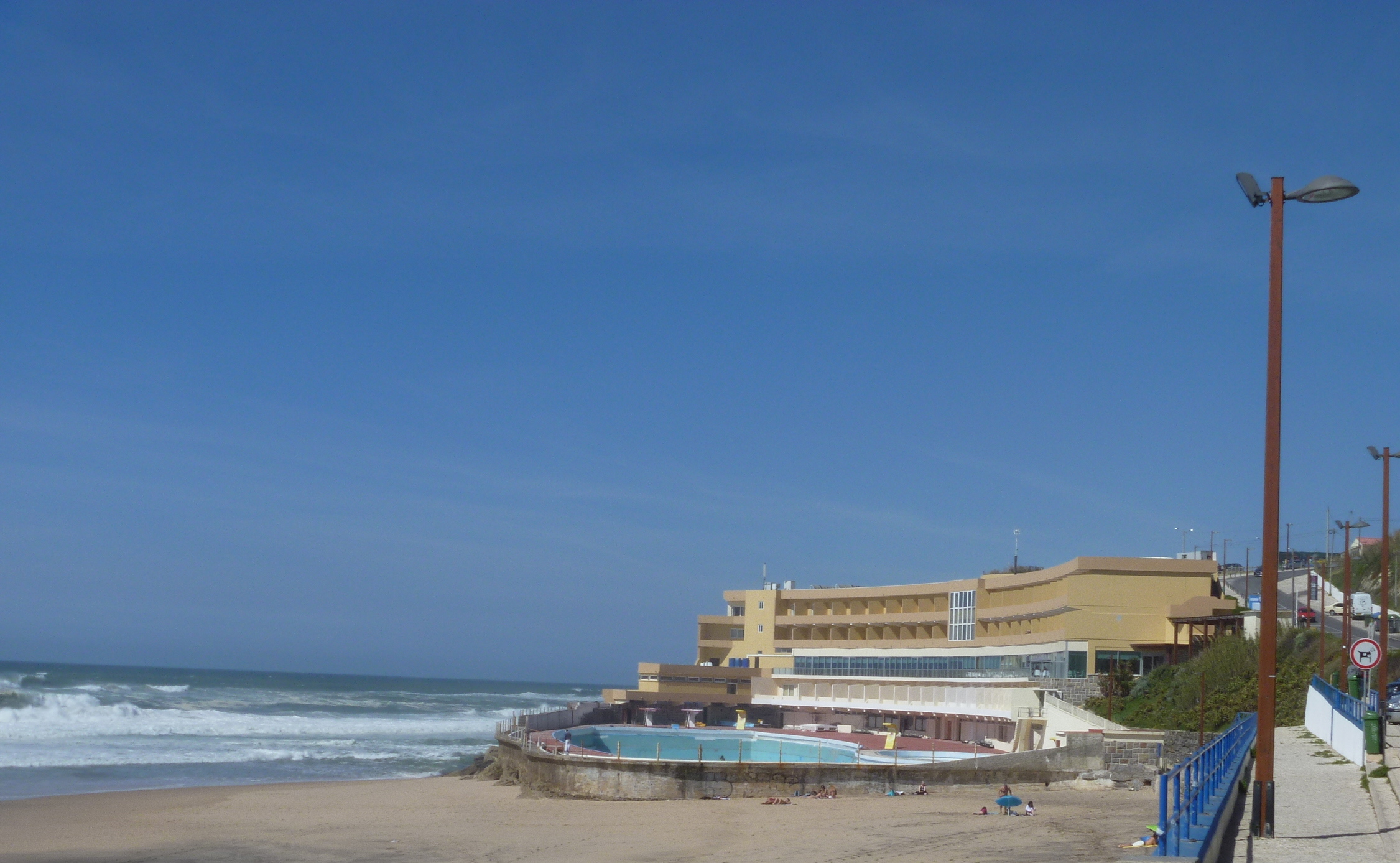
Our paths continued, with some diversions due to the January storms, mostly along the coastline to the famous Praia Grande. PG is one of the largest stretches of sandy beach on the Portuguese coast. The name means Big Beach and is extremely popular  with surfers all year round. Our hotel was perfectly situated right on the beach and our room overlooked the pounding waves and the hotel’s huge 100 metre swimming pool.

Arribas Hotel

Along the Way – Convents

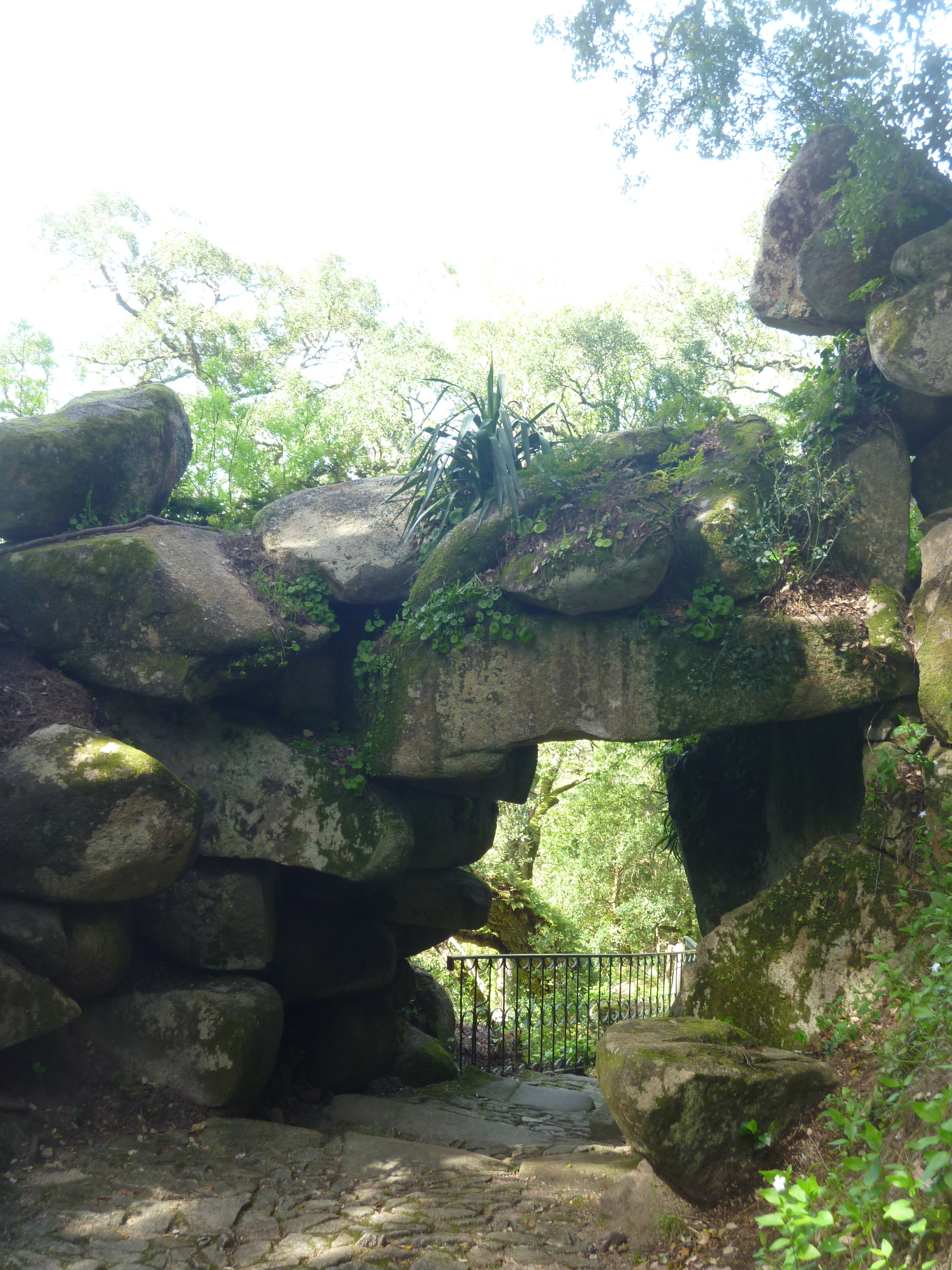
If our first day’s walking, now that I look back, was on a theme of Forts then the next day was on a theme of Convents. This was our longest day walking: over 12 miles. We left the Fortaleza after breakfast (and a personal farewell from the manager) at 9.30am and only arrived at our destination that evening at 6.30pm. Of course, we didn’t spend the whole day walking, there were several places to visit along the way, not least The Convento dos Capuchos, where we spent well over the ‘designated’ one hour suggested in our Route Booklet. The Convento (read more about it here) was the first location within the Cultural Landscape of Sintra – a UNESCO World Heritage site first designated in 1995 – on our itinerary.

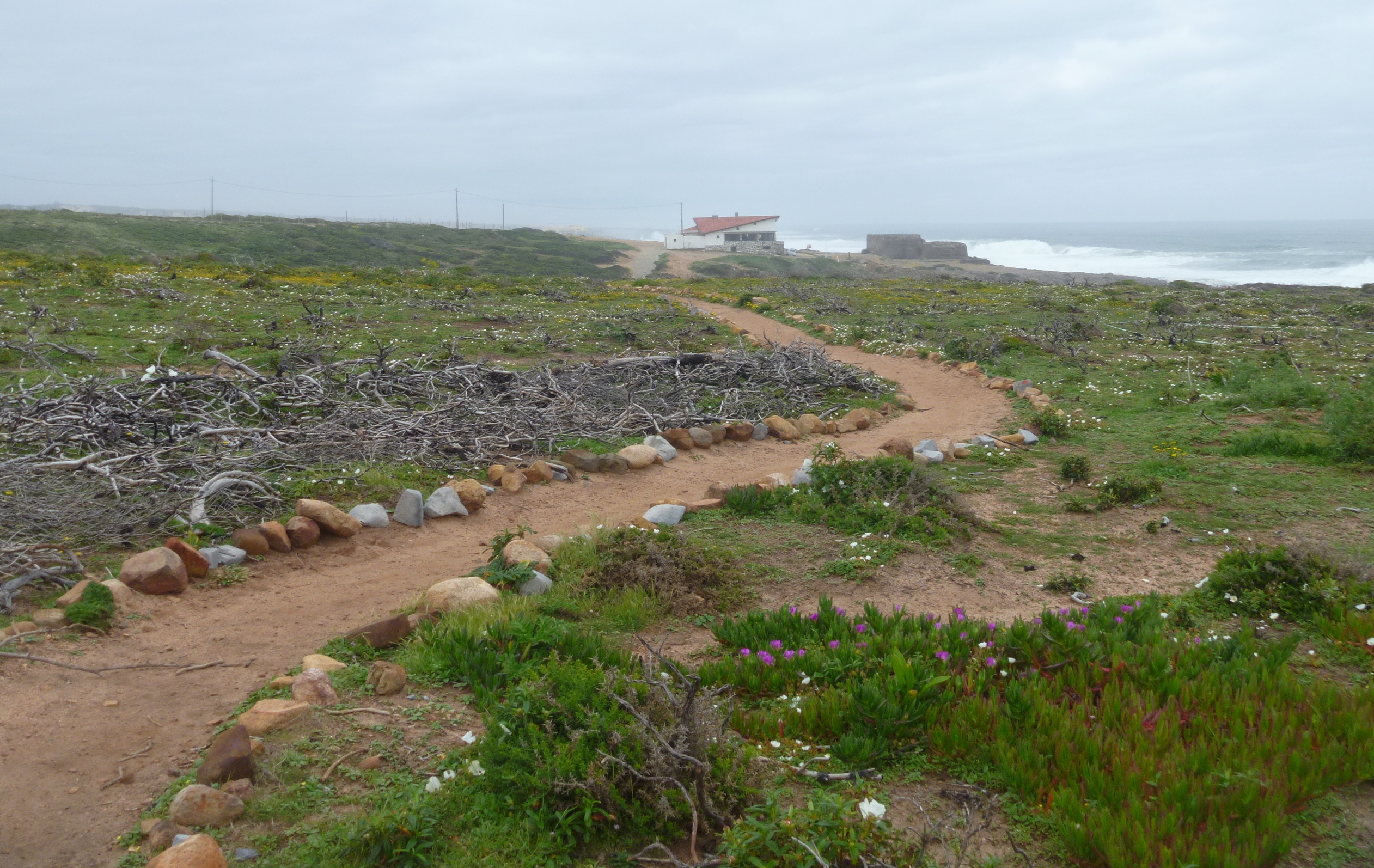
Our coastal path

Clearly marked coastal path

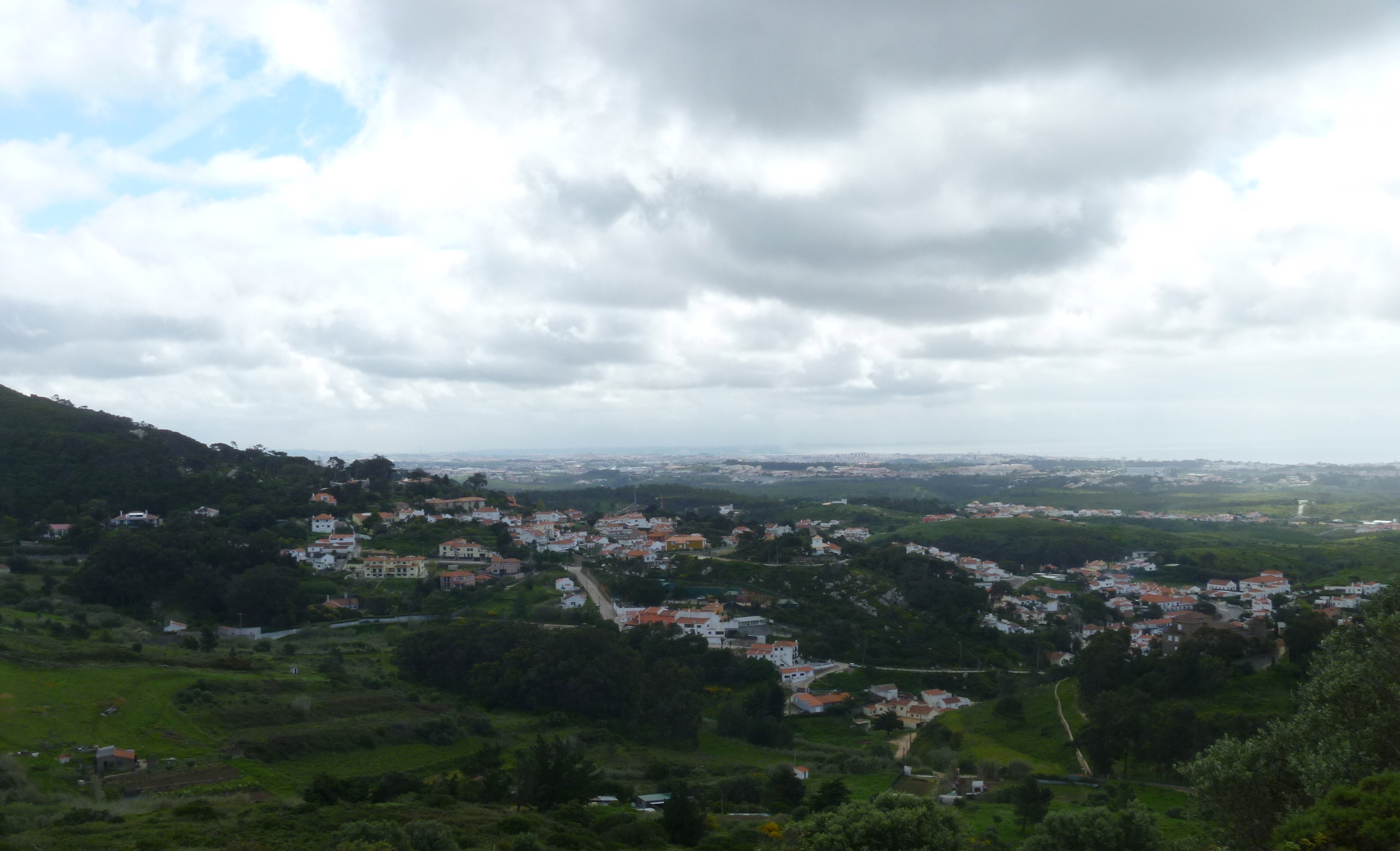
At first our route, on clearly marked paths, followed the coast northwards before turning inland and into the area known as The Serra de Sintra. There were some tough climbs but also some great views.

Viewpoint

After the first tough climb we could see the River Tagus and 25 Abril Bridge

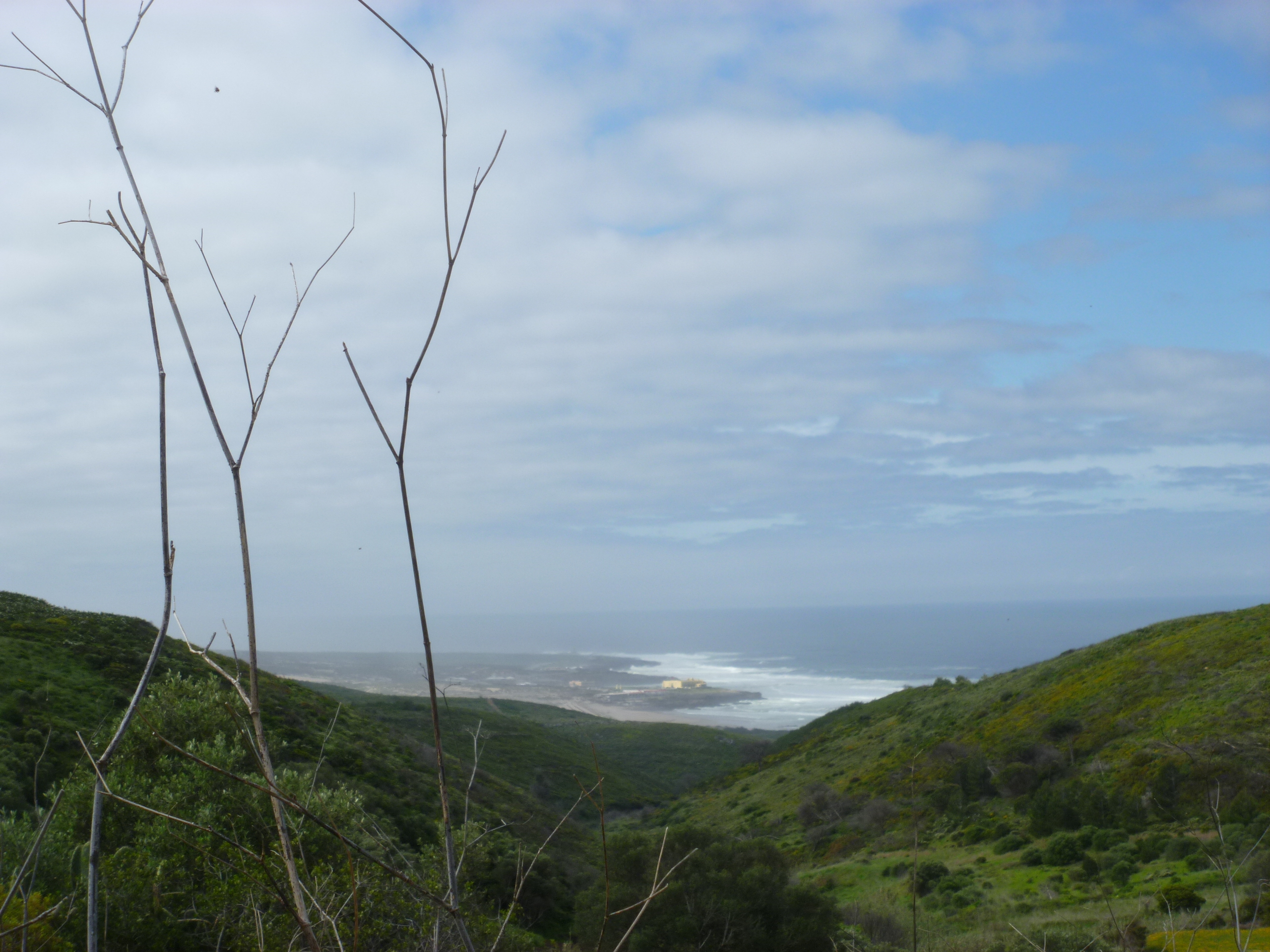
Still see Fortaleza

In another direction we could still see the coast and the Fortaleza

This area was the worst affected by the storms in January this year and consequently our path was disrupted at one point. This took some time to negotiate and calls/texts to Ana but eventually we got back on track. We’d hoped to reach The Convento at lunchtime but in fact we ate our picnic lunch a few miles before.

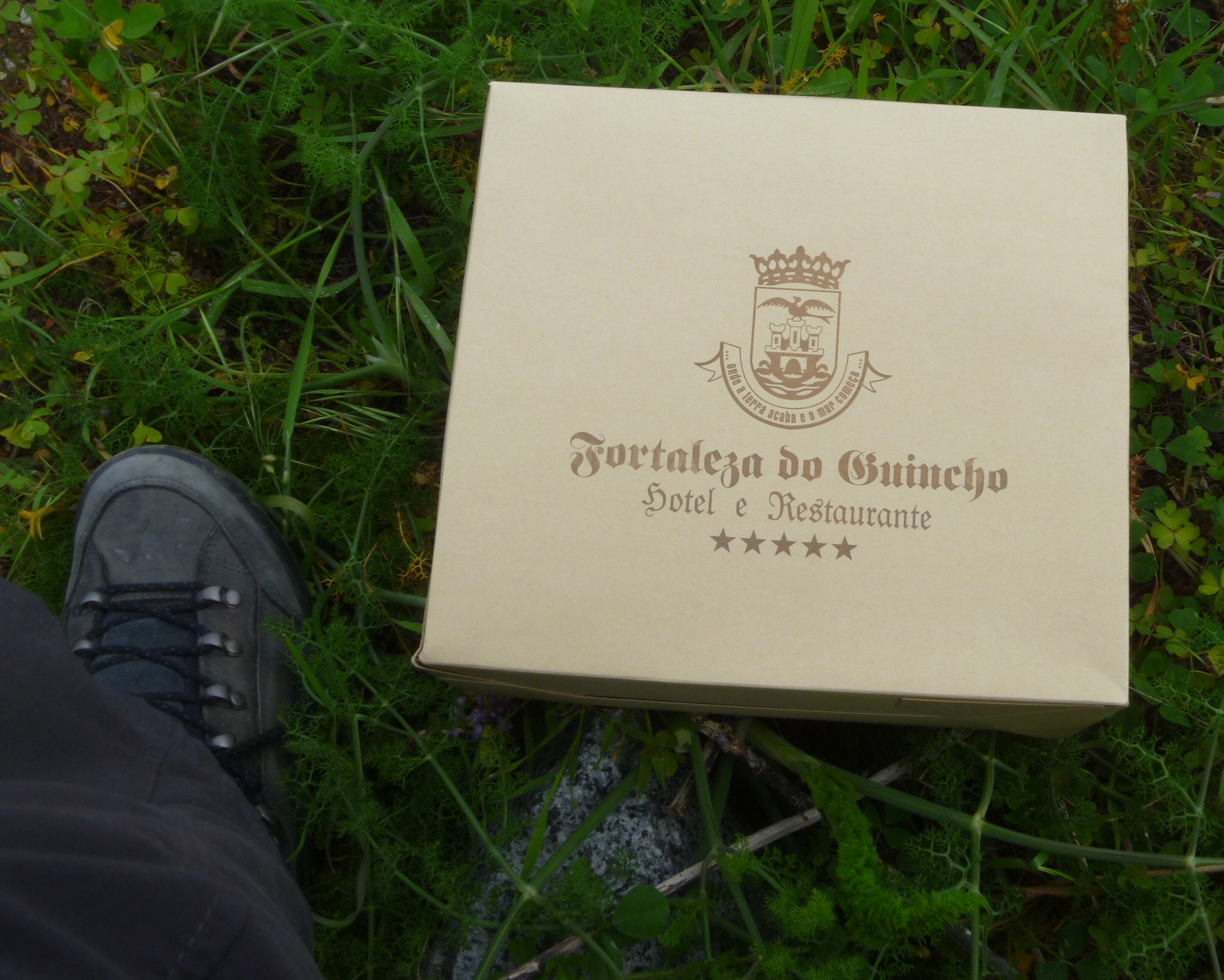
5 star picnic

Our Five Star Picnic lasted us Three Days!!

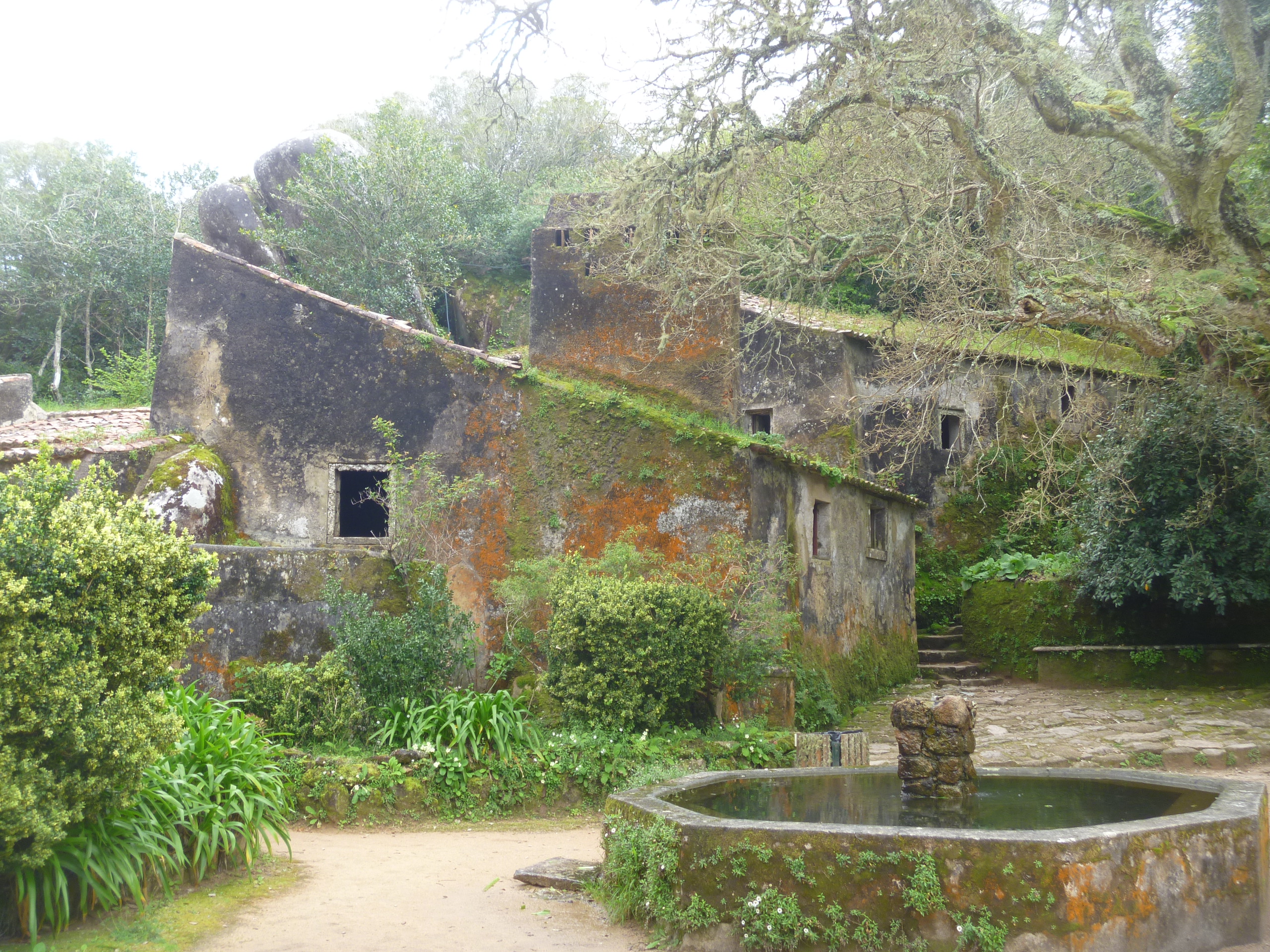
The Convento dos Capuchos dates back to 1560. It was built by Don Alvaro de Castro as a Franciscan monastery. The Capuchins were a minor ‘hooded’ order. It was built in accordance with the Franciscan (fulfilling the teachings of St Francis of Assissi) principles of living in harmony with nature. Mostly carved from the rock face, granite boulders are incorporated and cork was used as insulation, thus giving an alternative name ‘The Cork Monastery’. Here the monks lived a simple and holy life until the site was abandoned by them in 1834. The Portuguese state took responsibility for the site in 1949. Why it is called a Convento and not a Mosteiro (monastery) I have no idea!

Views of the Convento Dos Capuchos

Capuchos sign

At the Entrance – there’s also a Nature Trail, but we didn’t have time to complete it.

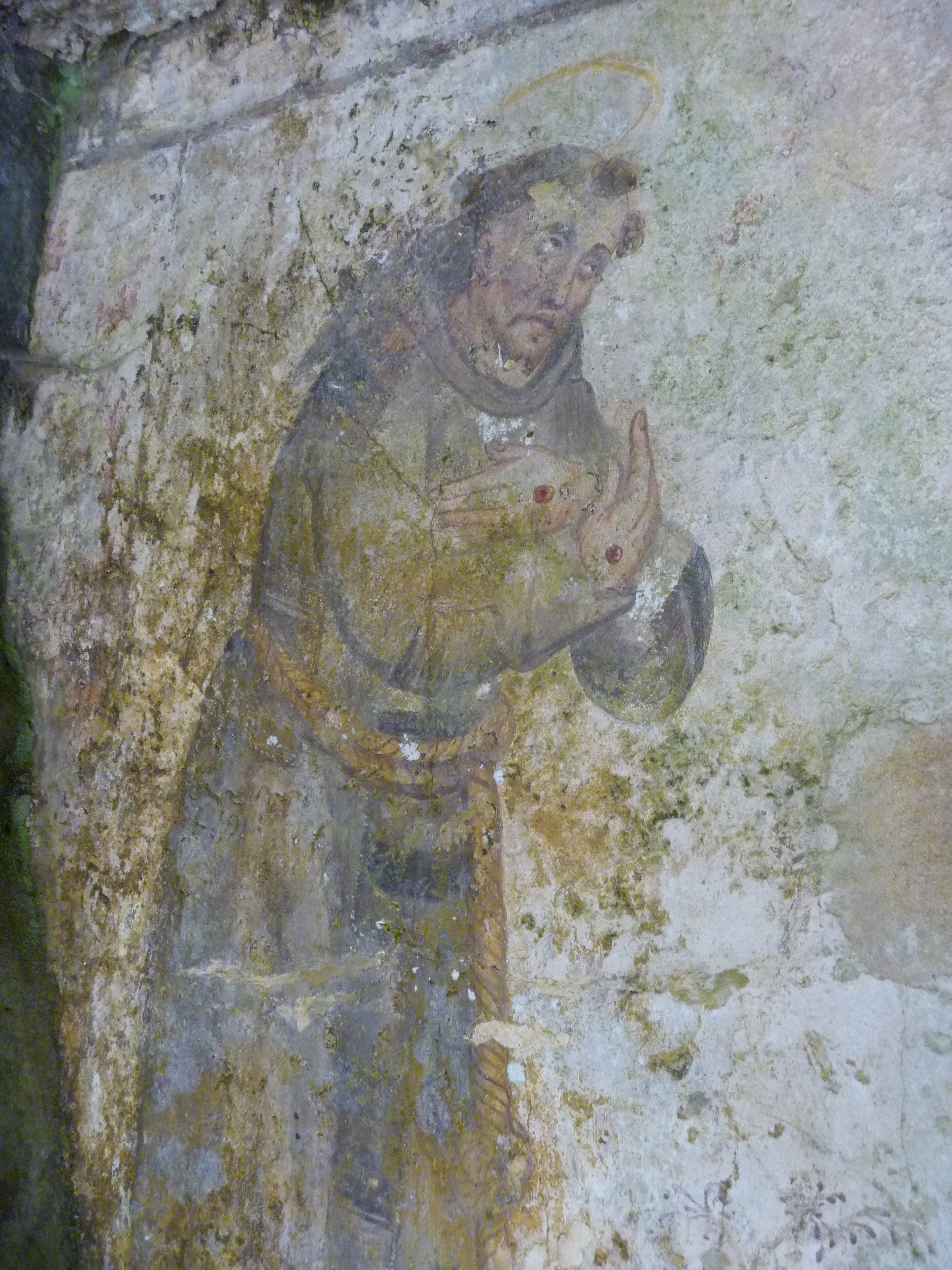
St Francis

Wall Painting of St Francis

Tiny doorways to cells

The very low doorways (indicating humility) into the tiny cells (the floor lighting guides our way)

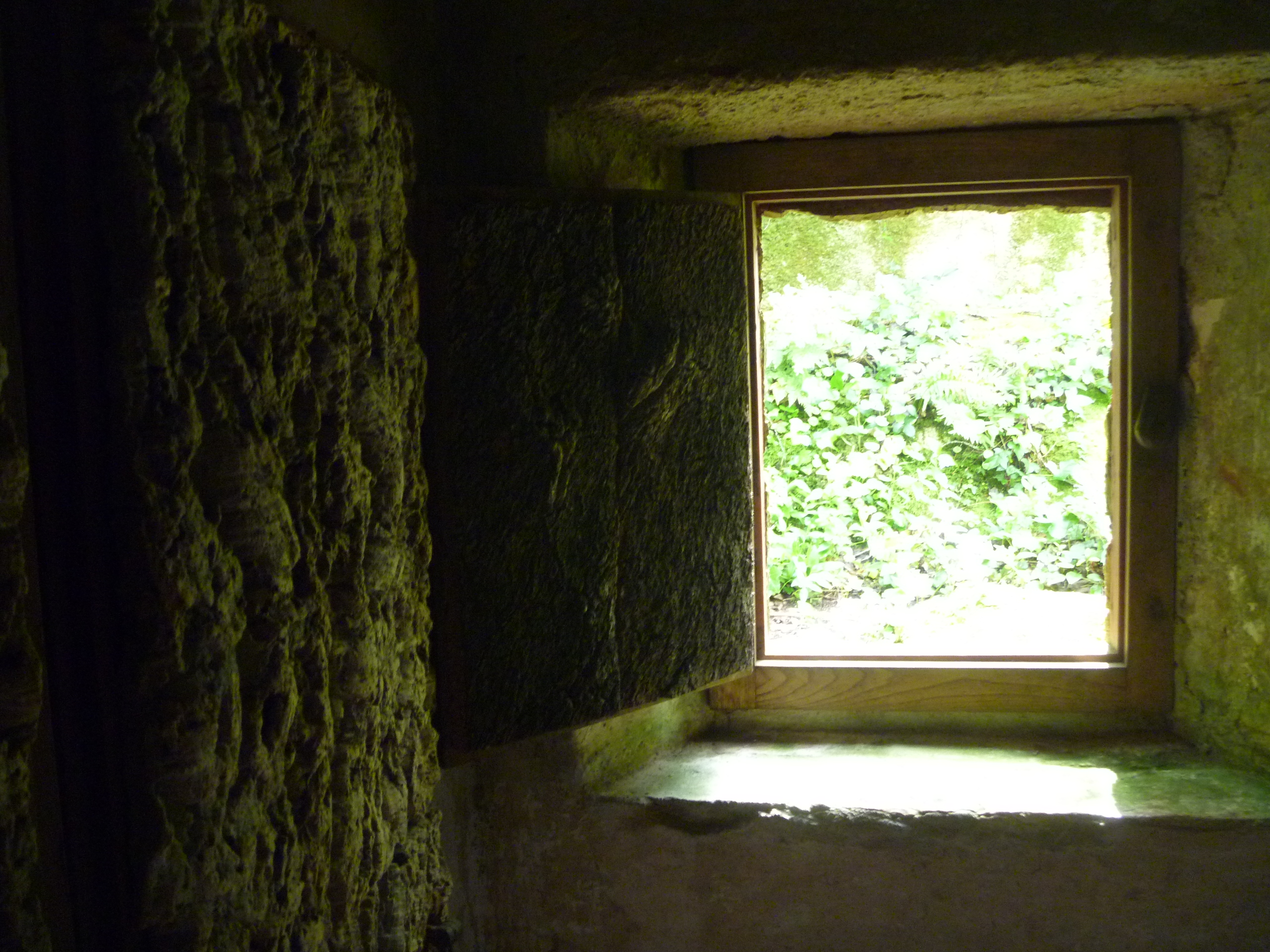
Small windows

Small Cell Windows and Cork-Insulated Walls

Cloister

The Cloister

Cork oak

A Cork Oak still grows in the Cloister

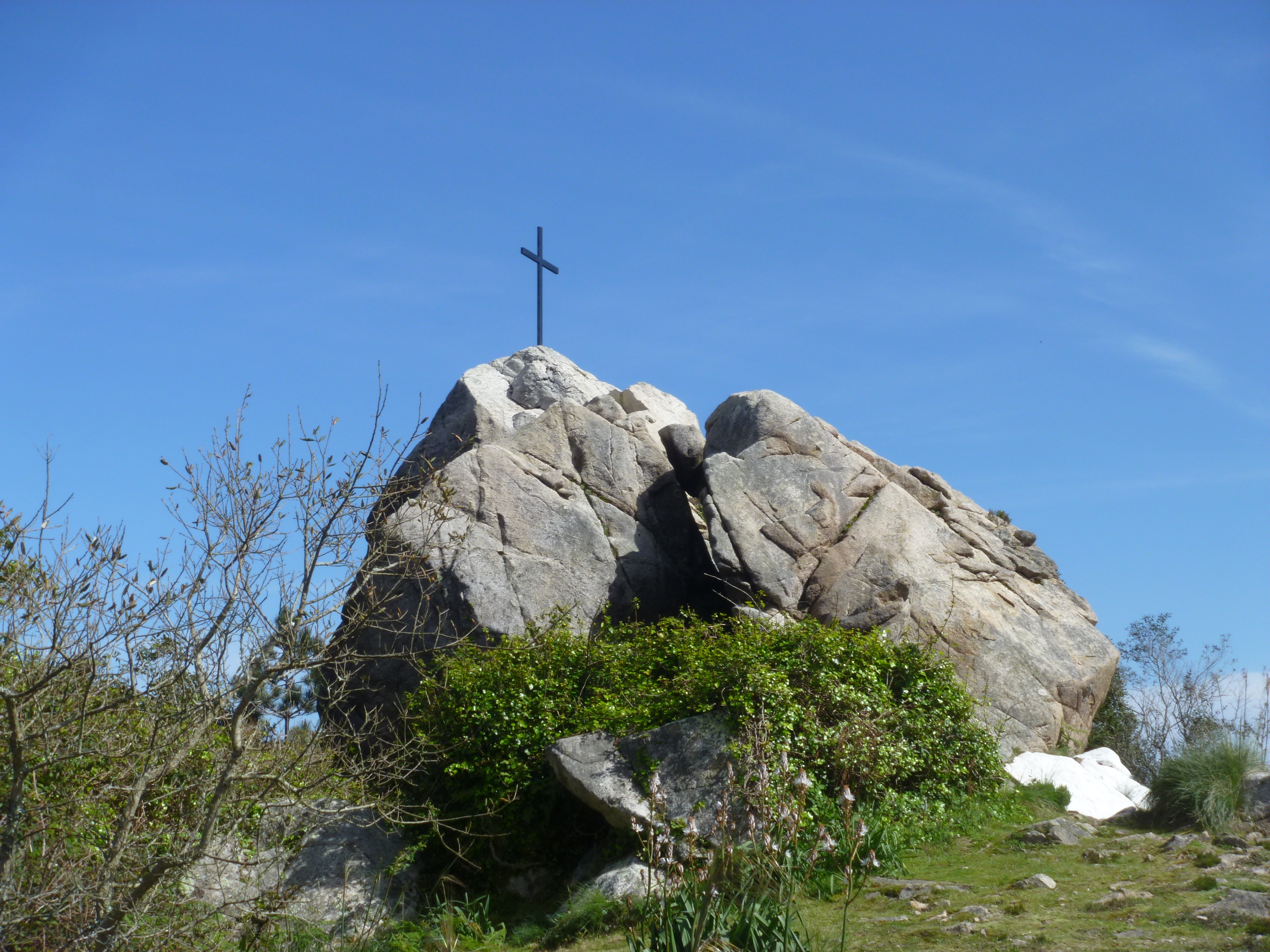
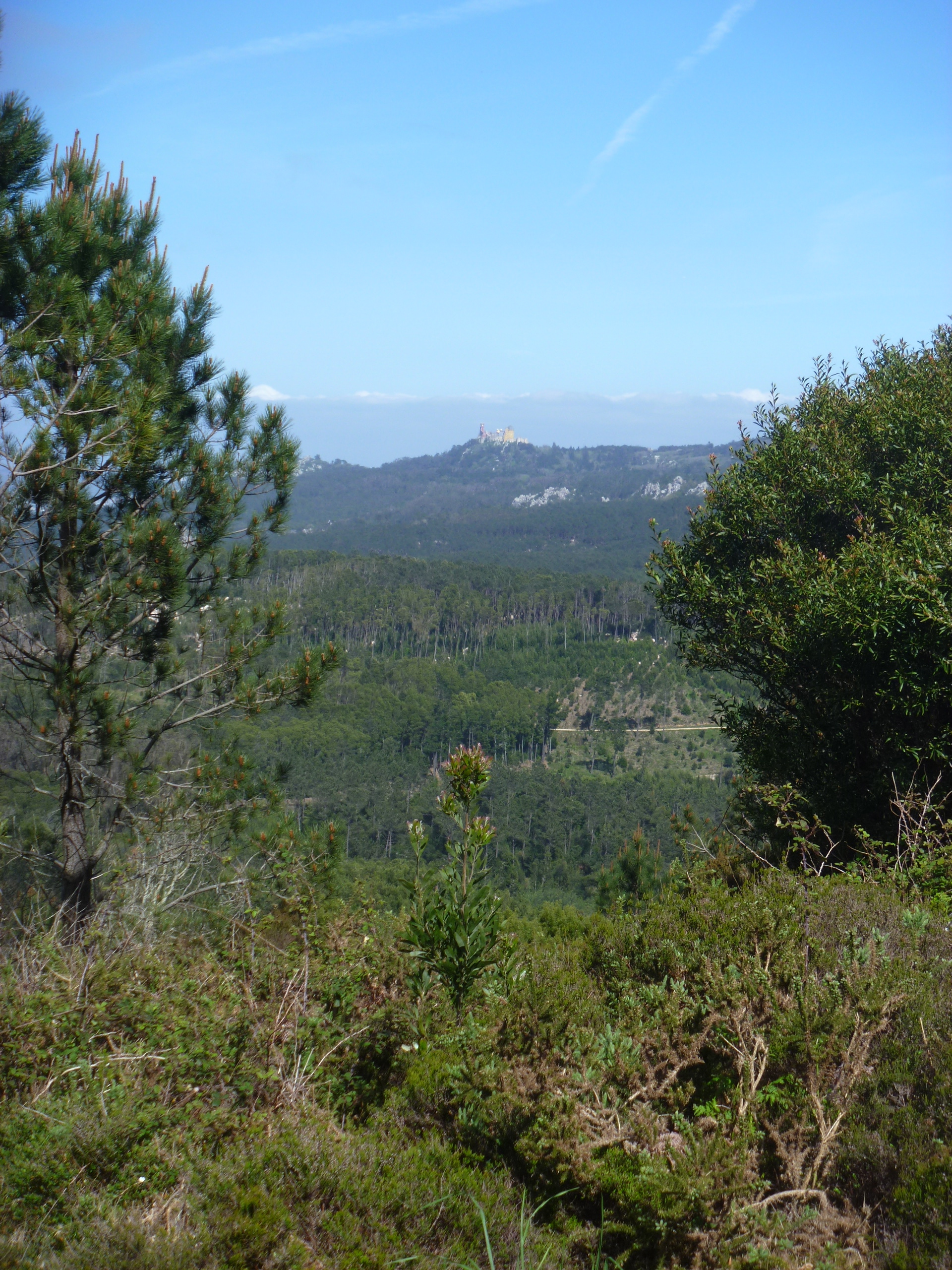
Leaving the Convento around 4pm we still had a lengthy walk ahead of us, plus two further climbs. The first was to a memorial to 23 soldiers who were killed putting out forest fires in 1966. From the cross there are more stunning views – the Pena Palace magnificent in the distance.

Memorial

Forest Fires Memorial to Servicemen

Pena Palace in the distance

Pena Palace across the Serra

“Continue ahead uphill”. We got kind of used to reading this instruction!
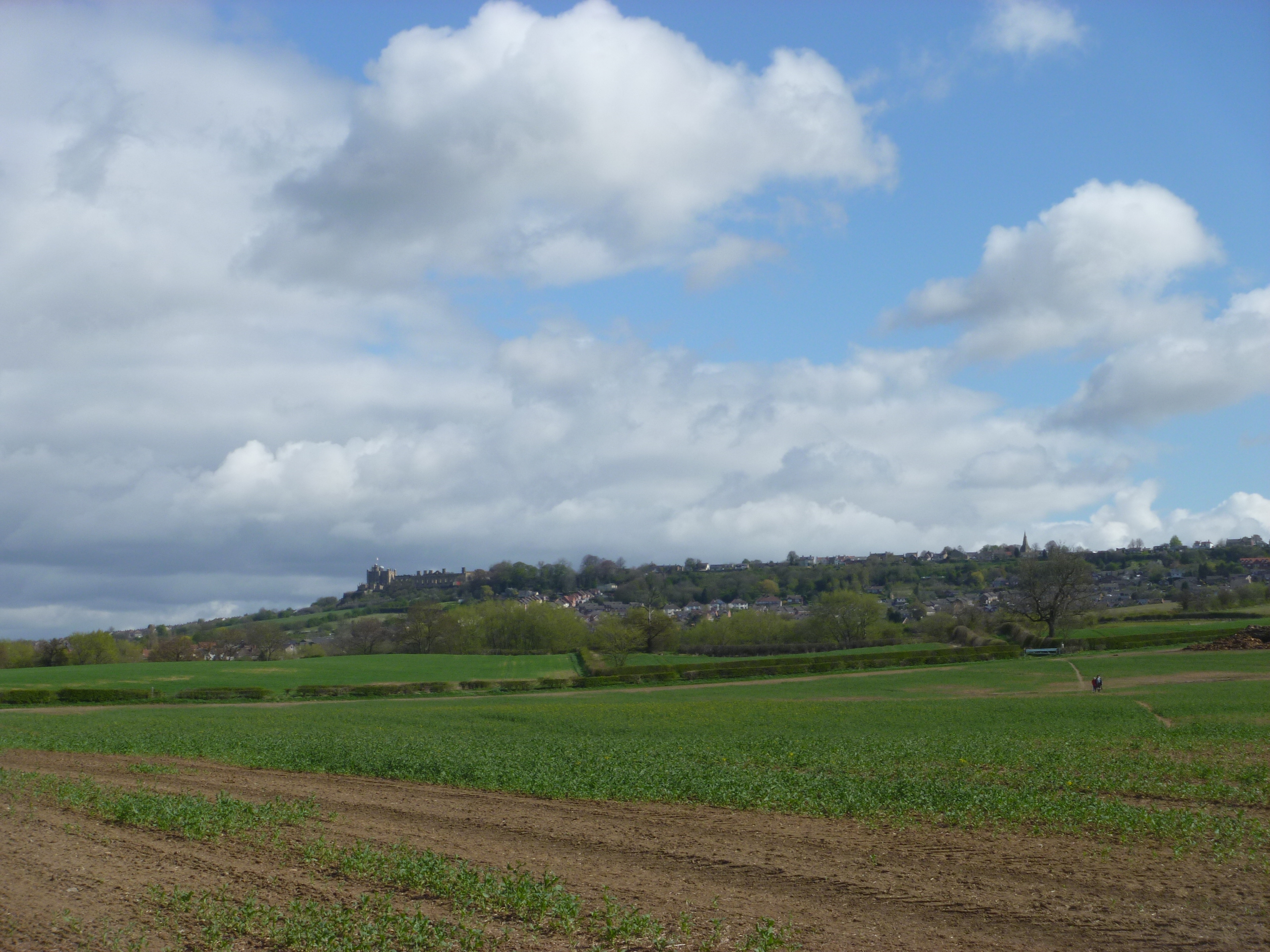
Yet more climbing to do!

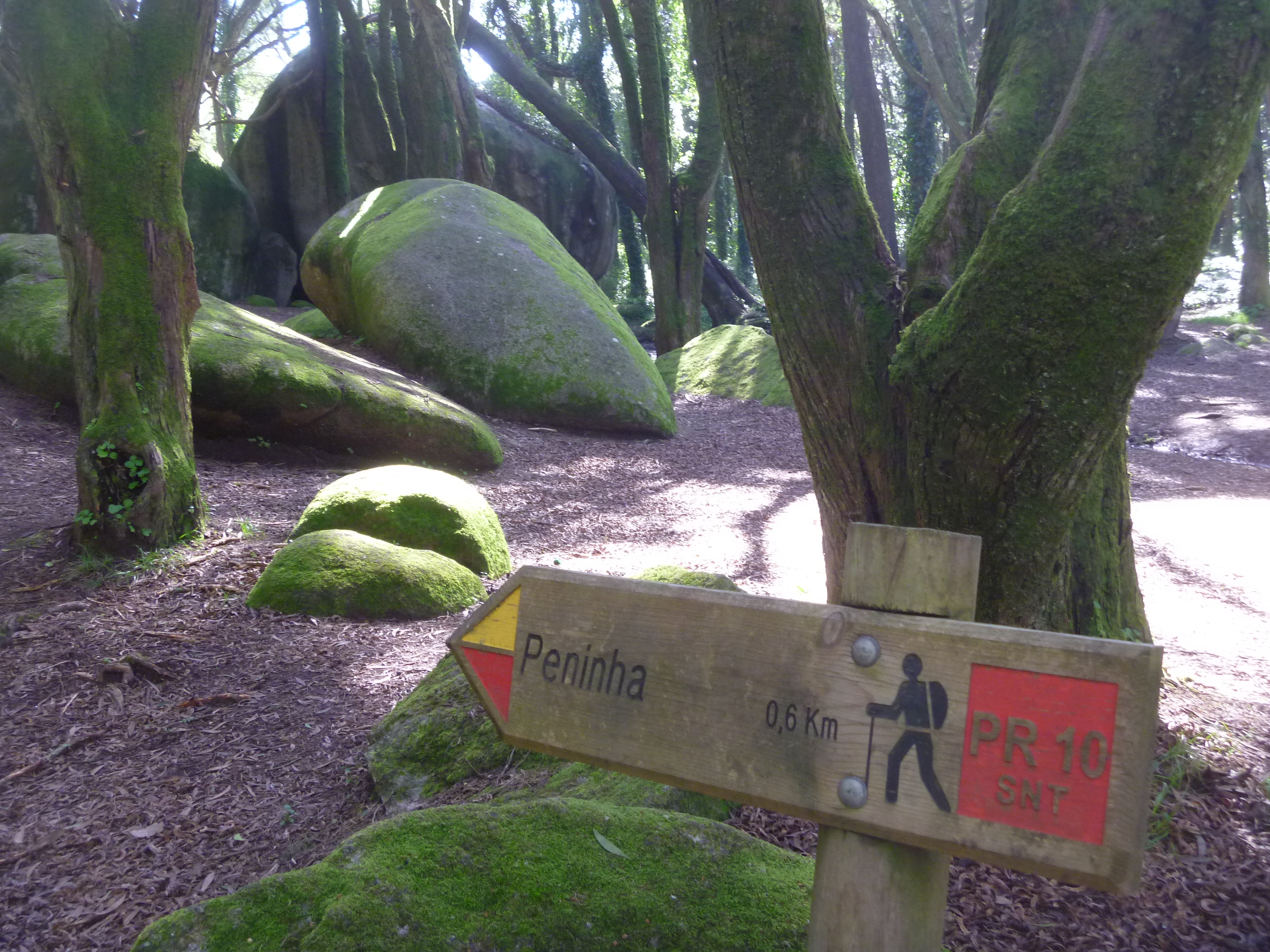
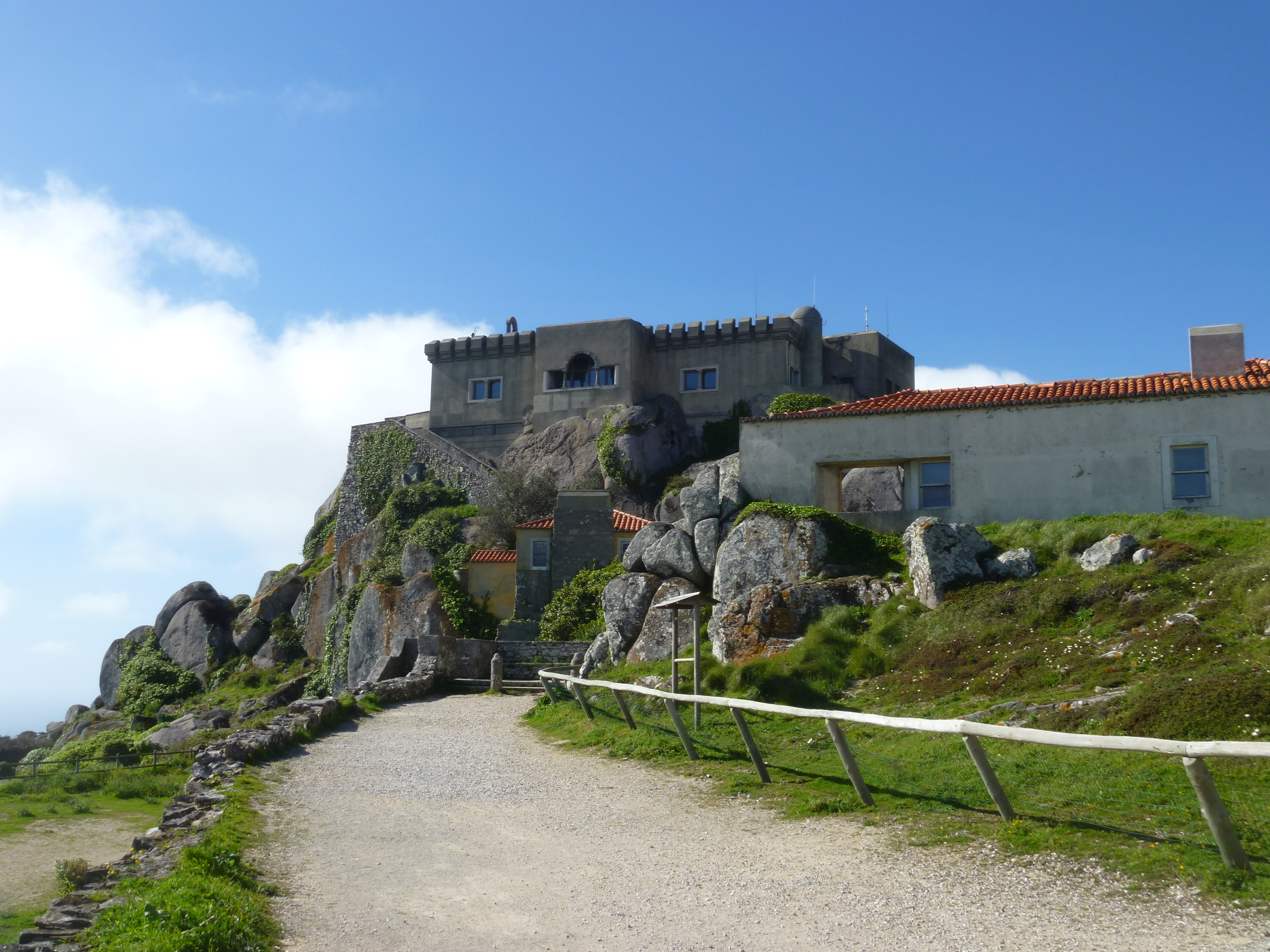
Onward and upward we continued until we reached the Peninha Chapel.
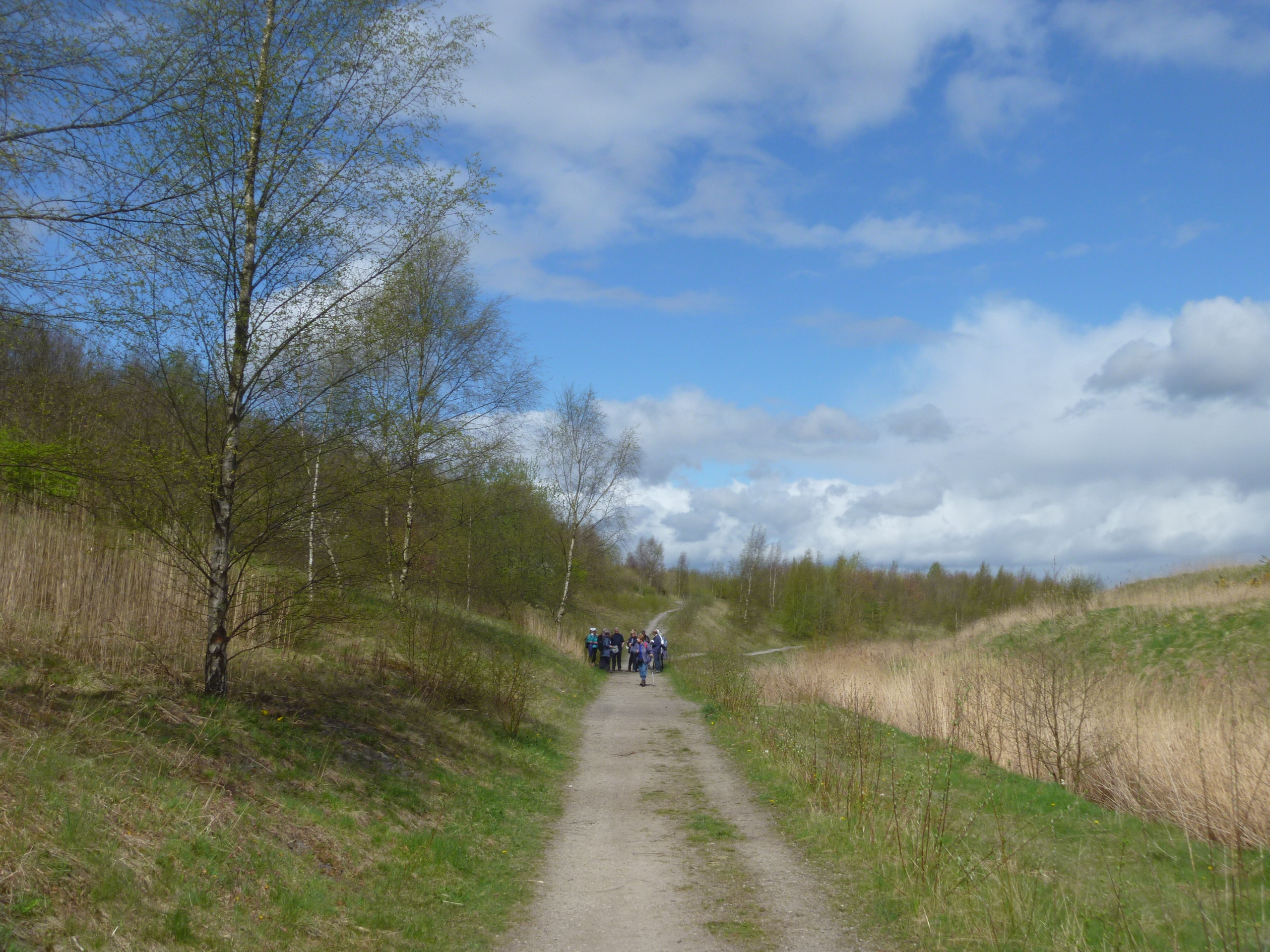
Peninha

Unfortunately the chapel wasn’t open to the public but we read that the first building on the site was a chapel to Sao Saturnino in the 12th century and that the ‘new’ chapel was built in the 17th century and apparently contains beautiful blue and white azulejos (tiles) depicting the life of Mary.
View from Peninha

Tagus view from Peninha

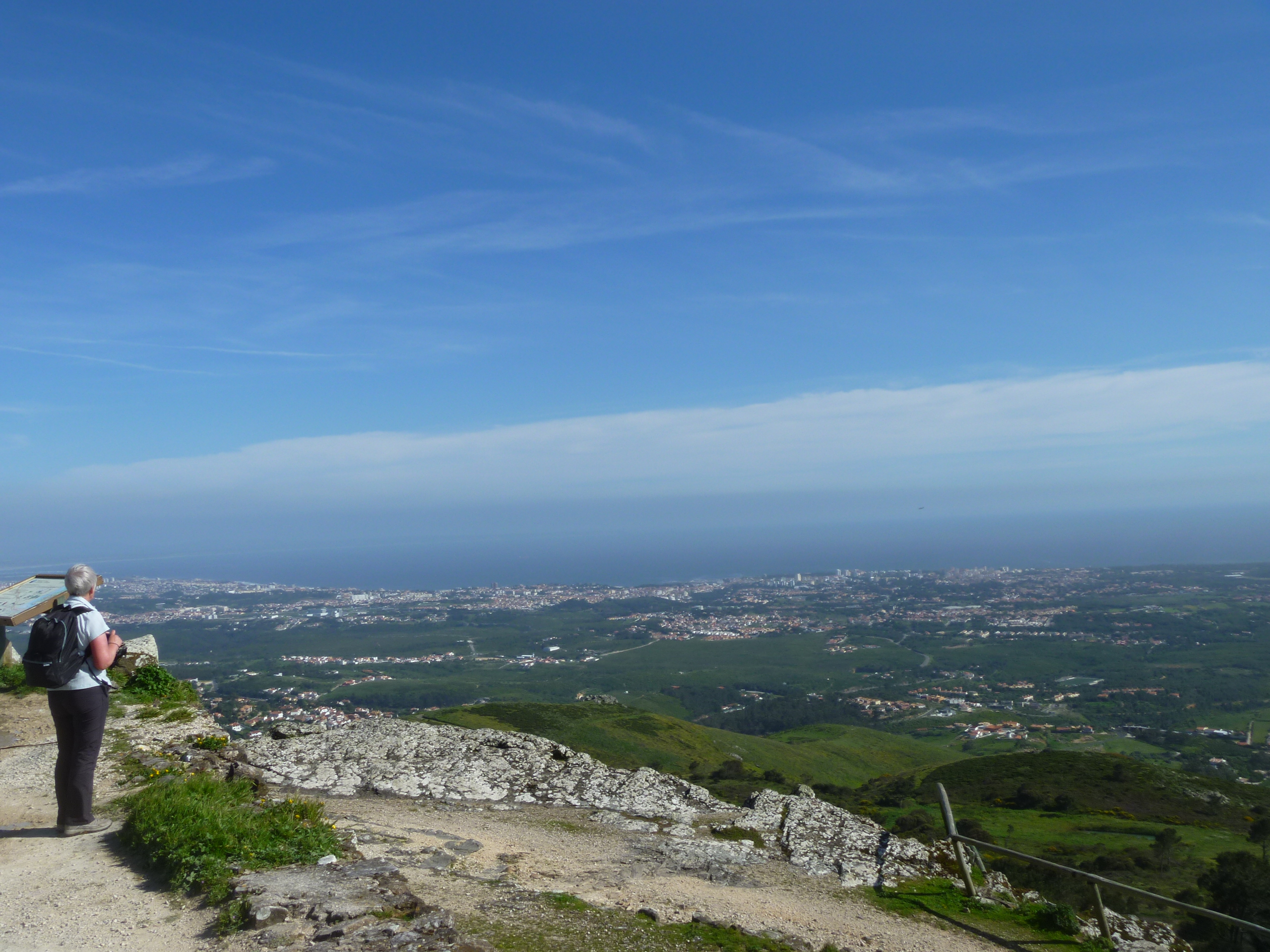
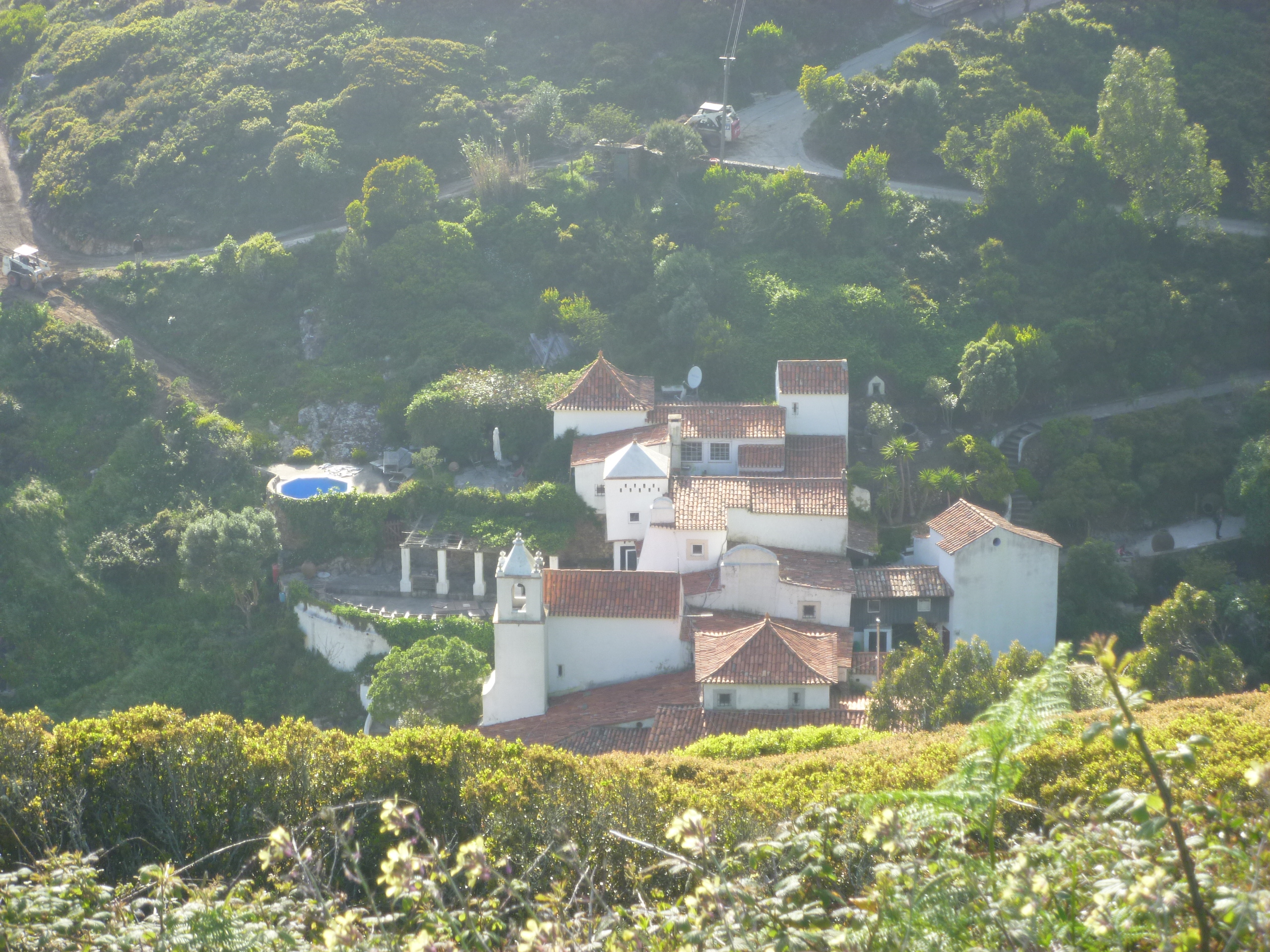
Again, we had magnificent views of the coast and towards the River Tagus and Lisbon. From the Peninha it was practically downhill all the way and finally, we caught a first glimpse of our destination – The Convento Sao Saturnino nestling a valley with views of the sea.

Convento da Saturnino

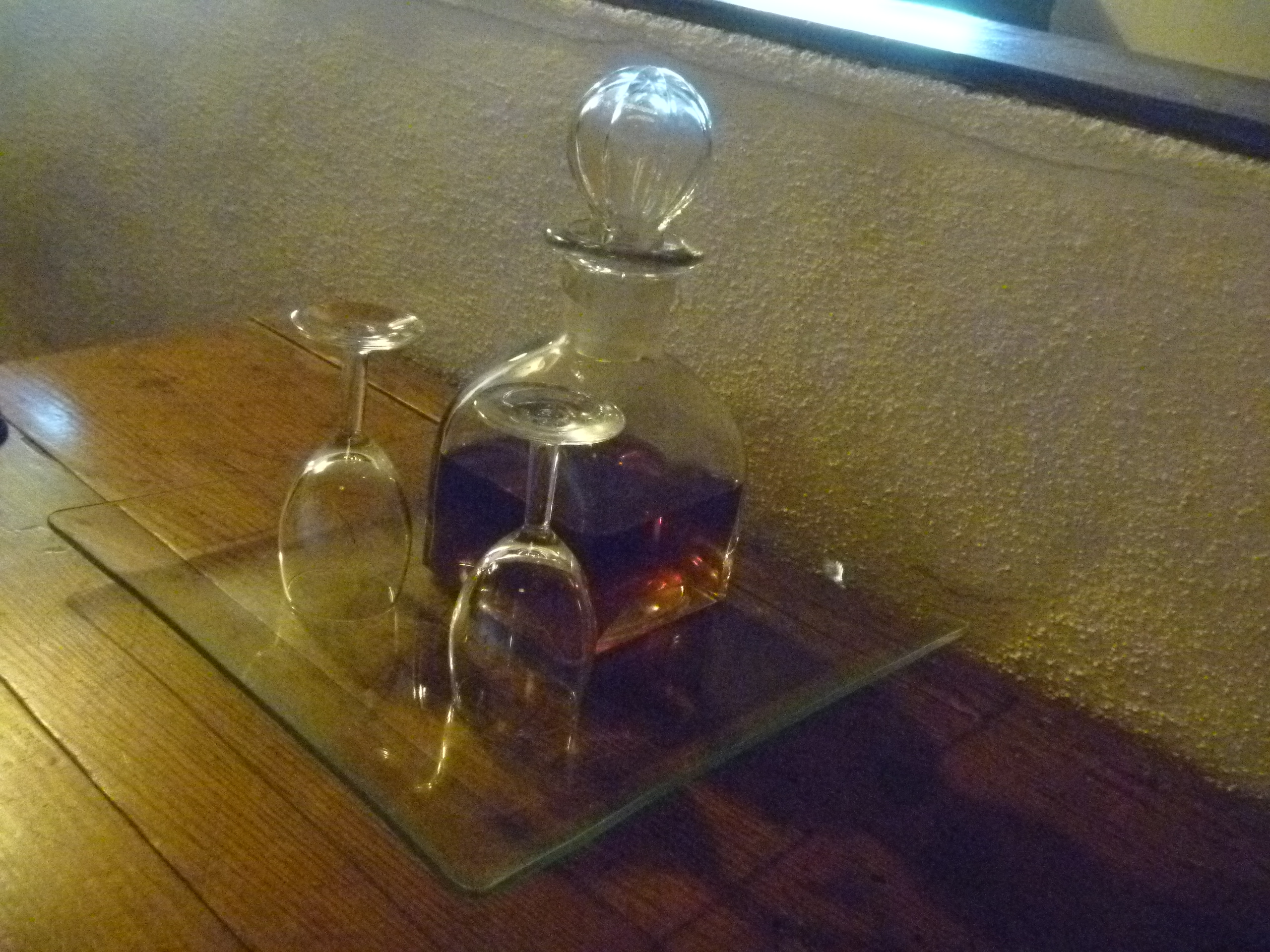
We arrived just in time for dinner – there’s a welcoming tray in the bedroom for revival of the spirits!

Nice feature in the room