Chelsea Physic Garden : Where Plants Really Matter

On Friday my sister arrived to join me for the weekend and we checked into our hotel just behind Harrods. This was a relatively new area for us. We had decided to avoid the Central London and City areas as the London Marathon on the Sunday meant big crowds and closed roads and limited access everywhere.

So, being in the Belgravia area seemed a good opportunity to visit lesser known places in the Chelsea area. For many years I’ve wanted to visit the Chelsea Physic Garden but haven’t been in the right place at the right time. Friday being beautifully warm and sunny we decided to step out down Sloane Street and Royal Hospital Road where, next door to the Royal Hospital (think, Chelsea Pensioners), we found the high walls surrounding another oasis of peace and calm.
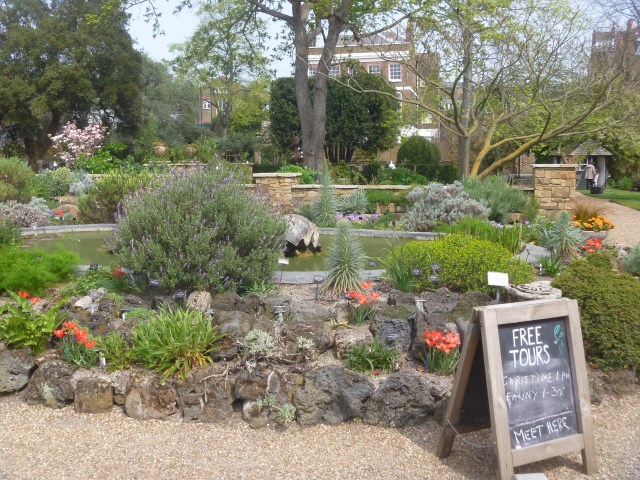
CPG Rock gdn

The rock garden of basalt rocks is a listed monument

Tucked away beside the Thames, Chelsea Physic Garden is a celebration of the beauty and importance of plants. This walled Garden was founded in 1673 by the Worshipful Society of Apothecaries for its apprentices to study the medicinal qualities of plants and it became one of the most important centres of botany and plant exchange in the world. Today, as an independent charity the Garden relies on the support of visitors and Friends to help protect and nurture the Garden for future generations.” [From the website]
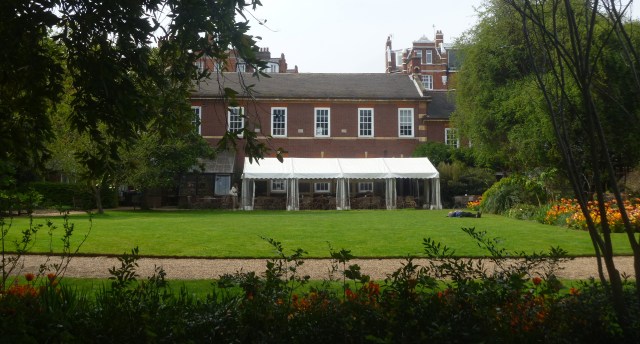
tangerine dream

The Cafe in the 17th century curator’s house

There are free tours every half hour with a volunteer guide so we decided to join one of these first, before having lunch outside the Tangerine Dream Cafe.
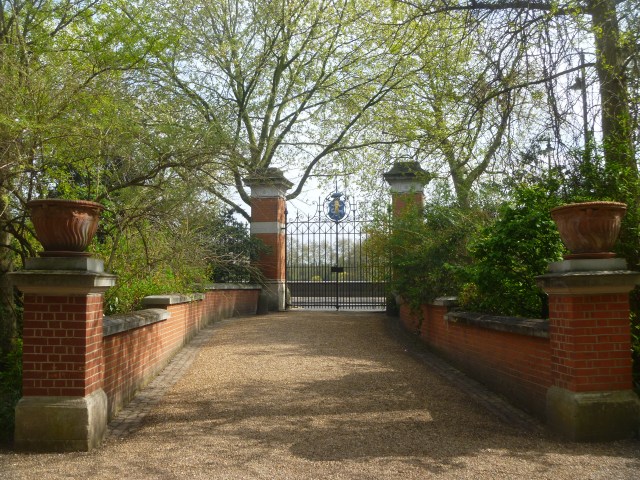
CPG gates

The Gates lead to the Chelsea Embankment and beyond that to the River Thames which was so important to the Garden bringing boats alongside with their cargoes of exotic plants
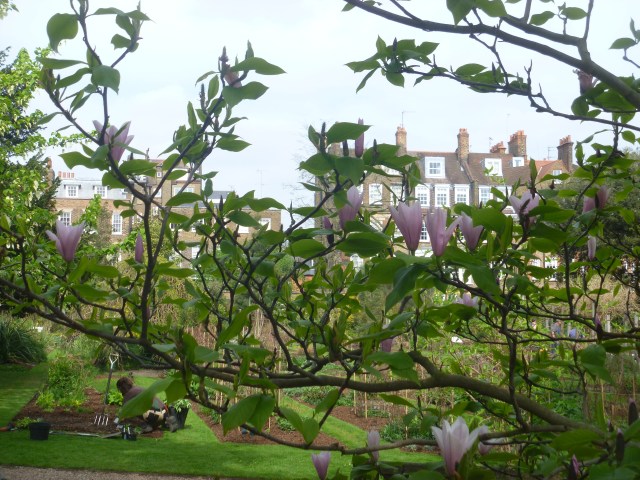
volunteers and gardeners at work

Gardeners and volunteers at work in the Systematic Order Beds

It was impossible for our introductory tour to include all of the gardens on the site :

Garden of Medicinal Plants
The Pharmaceutical Garden
World Woodland Garden
The Garden of World Medicine
The Garden of Edible and Useful Plants
Historical Walk
Botanical Order Beds
Island Endemic Flora

[Each garden is explained on the website.]

so after lunch we visited most of the rest – the greenhouses, the new world woodland garden and had a closer look at the two information point caravans devoted to Sir Hans Sloane and the Swedish plantsman Linnaeus.
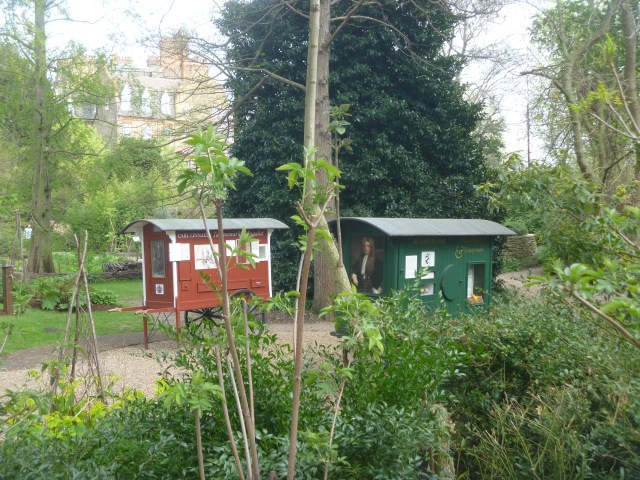
Sloane and Linnaeus

Each cart contains information about Carl Linnaeus and Sir Hans Sloane
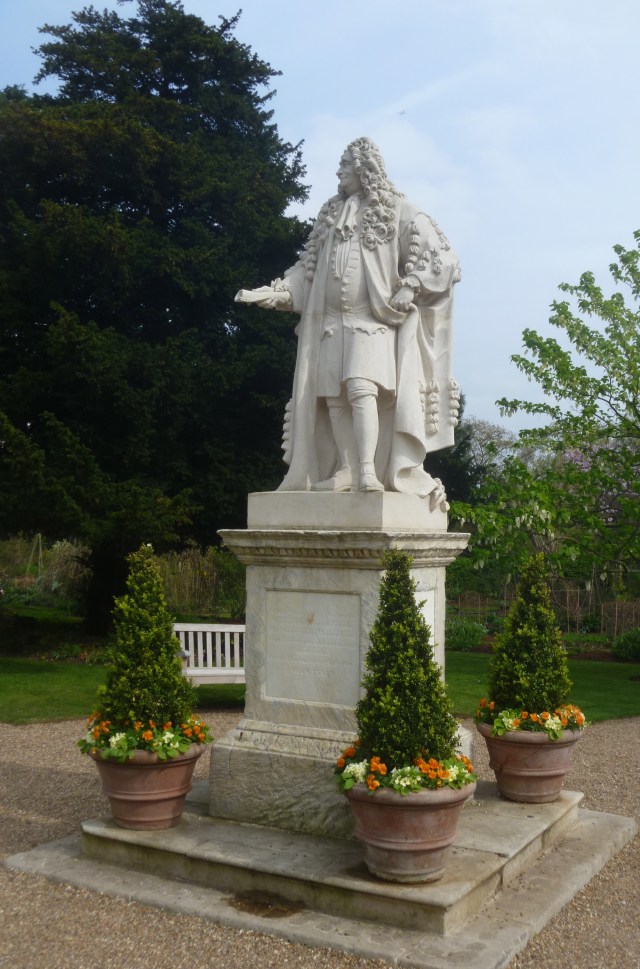
Hans Sloane

Sir Hans Sloane (a copy of the original)

Dr. Hans Sloane, after whom the nearby locations of Sloane Square and Sloane Street were named, purchased the Manor of Chelsea from Charles Cheyne. This purchase of about 4 acres was leased to the Society of Apothecaries for £5 a year in perpetuity. Sloane was also a founder of the British Museum.

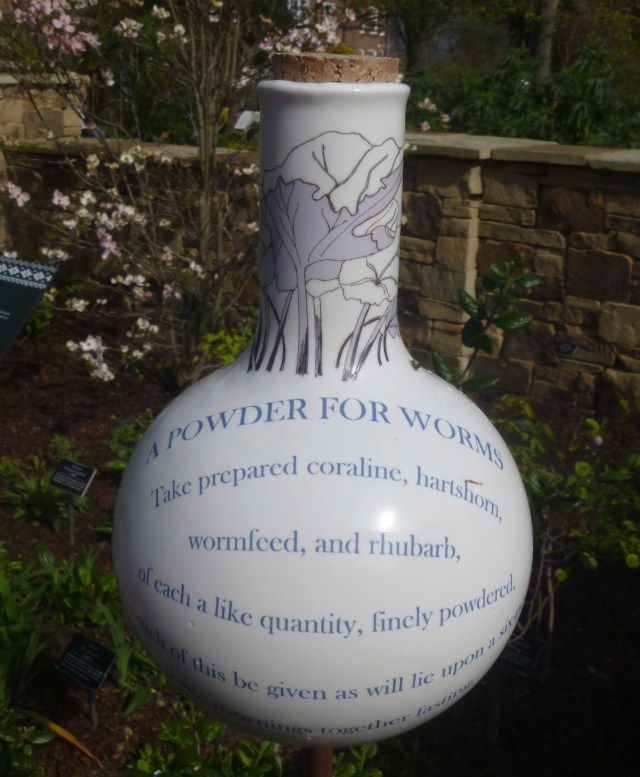
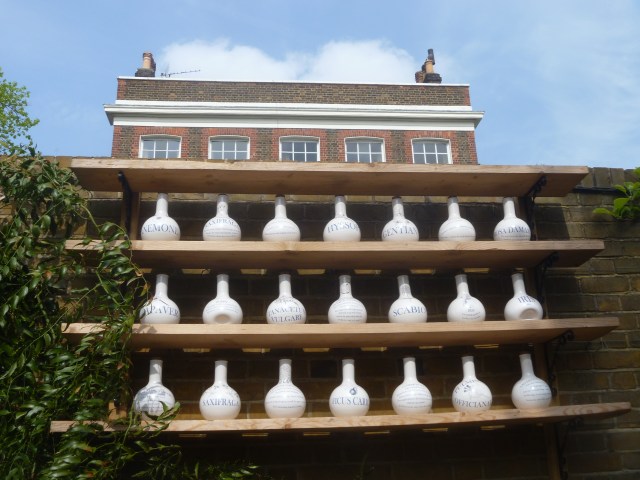
‘Curse or Cure?’ is the title of the 2015 temporary outdoor art installation created for the Garden by ceramic artist Nici Ruggiero. It consists of a trail of 15 inscribed apothecary jars displayed on metal spikes amongst the plants and a larger display of 21 jars against the wall.
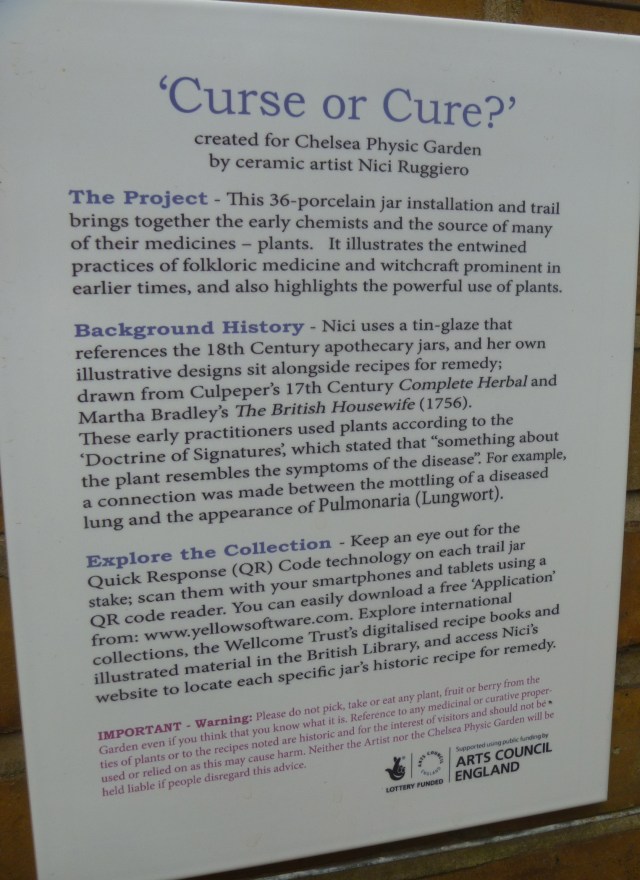
curse or cure descrip

Description of the Installation

curse or cure jar

A Jar on a Spike

curse or cure jars

The 21 Jars

Read here an article by Lisa Jardine which appeared in the Financial Times Magazine in 2013. You may need to register to read.


A Beautiful Oasis of Peace and Tranquility in the Heart of Durham City : Crook Hall and Gardens

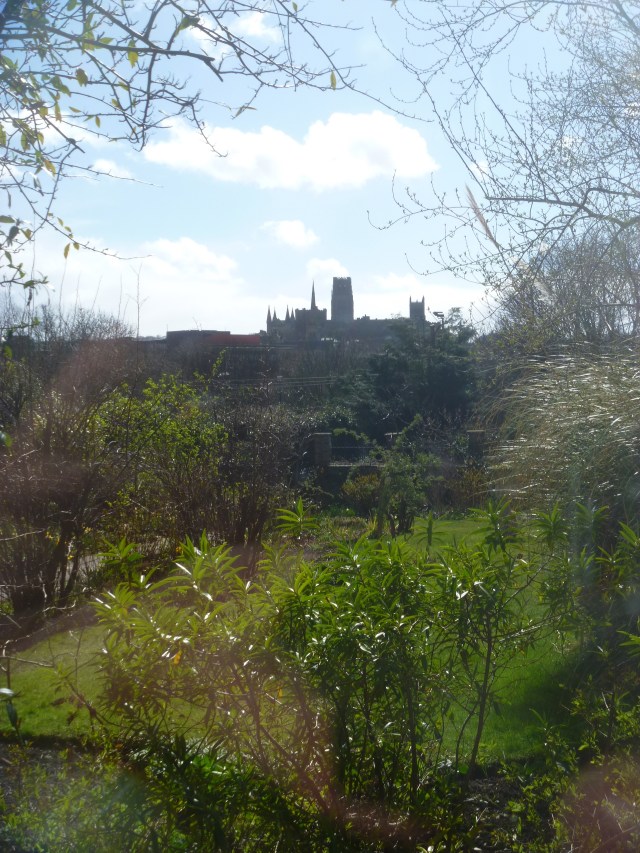
Durham Cathedral

Durham Cathedral from Crook Hall Tea Room

Writing this on a warm sunny Easter Monday it’s hard to believe that last Tuesday in Durham I managed to avoid snow showers whilst meeting a friend from my online book group for a day out at Crook Hall and Gardens in Durham.

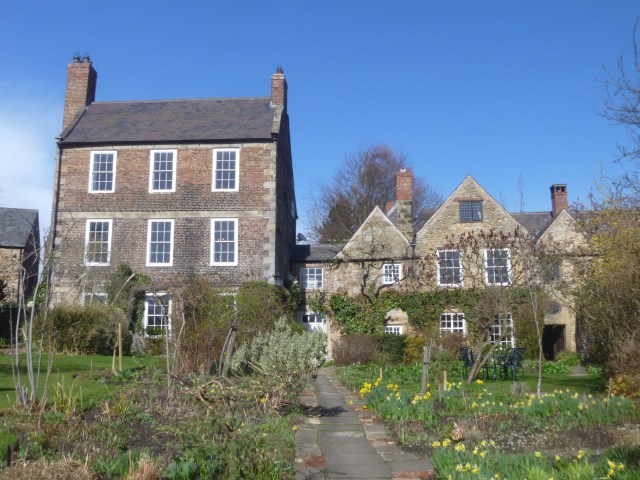
Crook Hall

This fascinating house and garden deserve another visit in the summer time when there will be more colour and a less forbidding sky. However, we did manage to visit each garden and delighted in what we saw.

The Hall


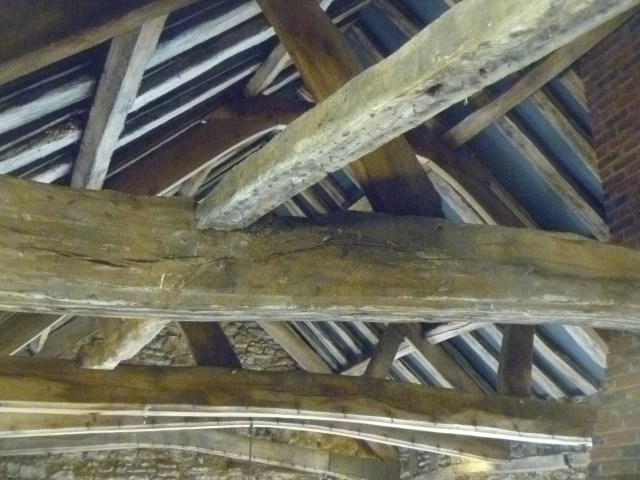
Beams

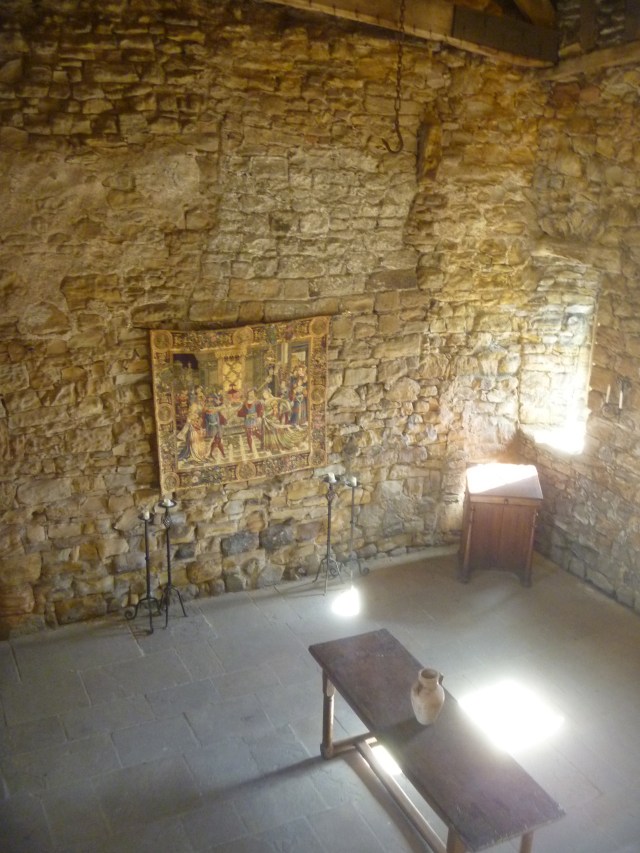
The Hall is 13th century and provides a spectacular backdrop to the stunning gardens. It’s a short walk from the bustling city centre to this oasis of peace. There’s a tea room in the Georgian wing served by the house kitchen and you can visit many of the rooms in the house including the medieval hall with exposed beams.

The Orchard

The Orchard

Shakespeare garden

The Shakespeare Garden inspired by a book on plants in Shakespeare’s plays

Shakespeare in his garden

Shakespeare in his garden

Moat

The Moat Pool

Cathedral garden

The Cathedral Garden : the beds echo stained glass windows

Monks in garden

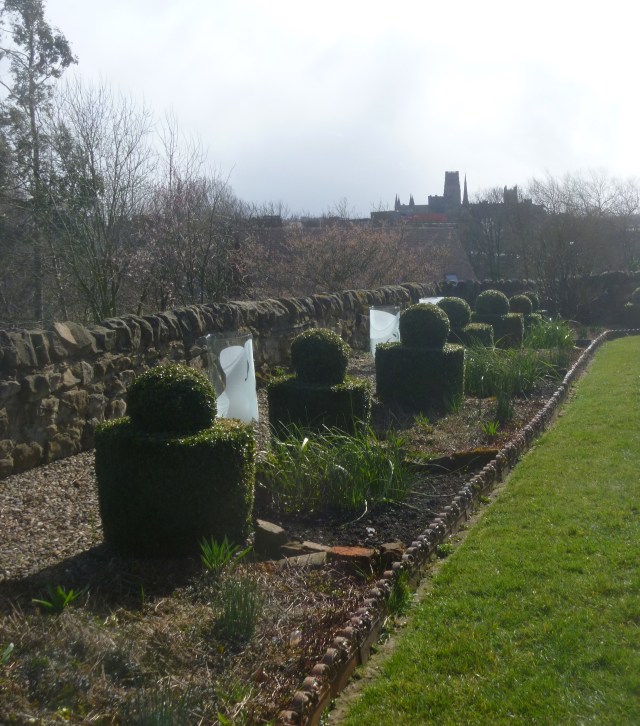
Durham Cathedral from the Cathedral Garden: the Topiary Box represent the Monks

Be entertained by Clare Balding as she takes a walk with the owners of Crook Hall and finds out about the history of Crook Hall and Gardens :

Crook Hall on Ramblings

More Watery Landscapes in Tivoli : The Villa D’Este and The Villa Gregoriana

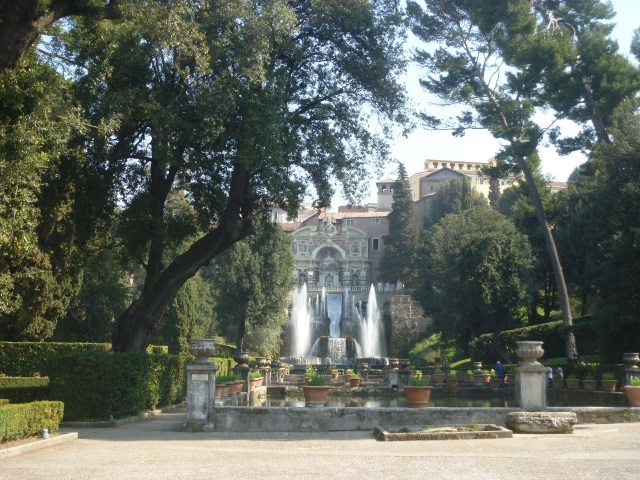
Perhaps the most famous location in the town of Tivoli itself is the Garden of the Villa D’Este. The sun was shining on my last day at Sant’ Antonio and I decided that I would visit the garden and that of the nearby Villa Gregoriana.

Vd'este 1

Thursday 19 March just happened to be St Joseph’s Day (Father’s Day) and a big celebration filled the town centre of Tivoli. Was this the reason why the Gardens of the Villas D’Este and Gregoriana were practically deserted that morning? Anyway, it was very pleasant to have the gardens virtually to myself.

v d'este2

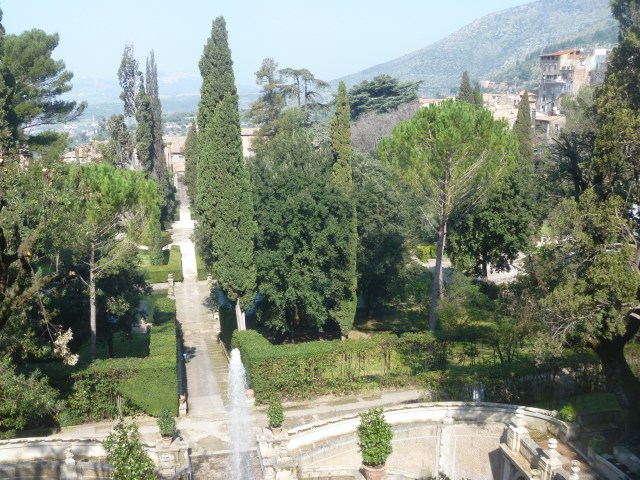
Cardinal Hippolyte D’Este (1509-1572) became governor of Tivoli and set about establishing a garden. Today it’s approached from the house but originally the entrance was at the bottom of the garden and visitors slowly climbed the hill to take in the wonders of the garden. Upon reaching the top, where the Cardinal would be waiting, you’d be in a ‘sense of breathless awe’. (According to Monty Don in the 2011 series of BBC programmes visiting Italian Gardens).

d'este gardens view

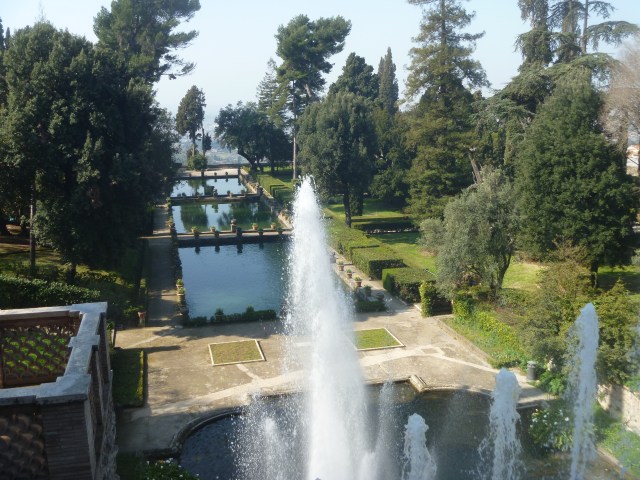
The View from the Villa

D’Este had great wealth but the one thing he wanted above all was to be Pope. He failed in 1549. So he demolished streets and had water brought to the site by a sophisticated method from a nearby aqueduct. All the water still comes from this same source and using the same methods. No pumps are used and the whole is still powered by pressure. The speed and movement of the water are still controlled by different sized pipes and spouts.

V d'este 3

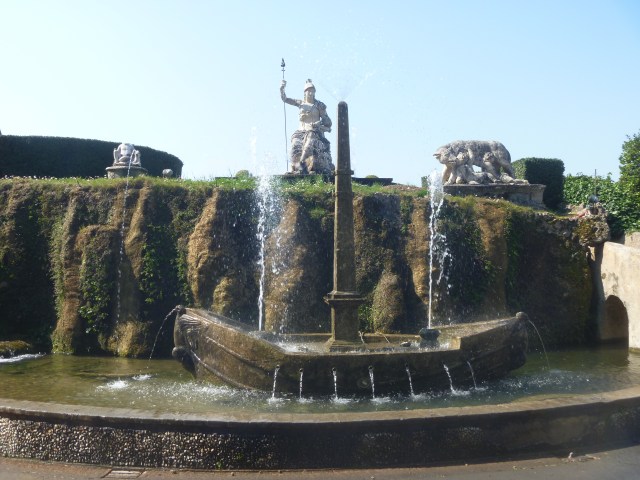
The whole estate took 20 years to construct during which time the Cardinal made 5 attempts to become Pope. Here “Rometta” is his model of Rome – he never did achieve his goal. Here is an expression of power built to impress. But he ran up huge debts: the whole project is said to have cost the equivalent of £100 million in today’s money.

fontana di rometta

Fontana di Rometta

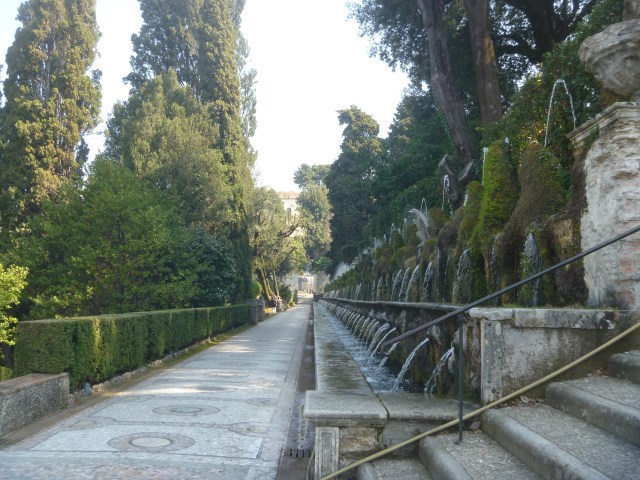
100 fountains

The 100 Fountains – they have the same rhythm and sound as you walk along beside them

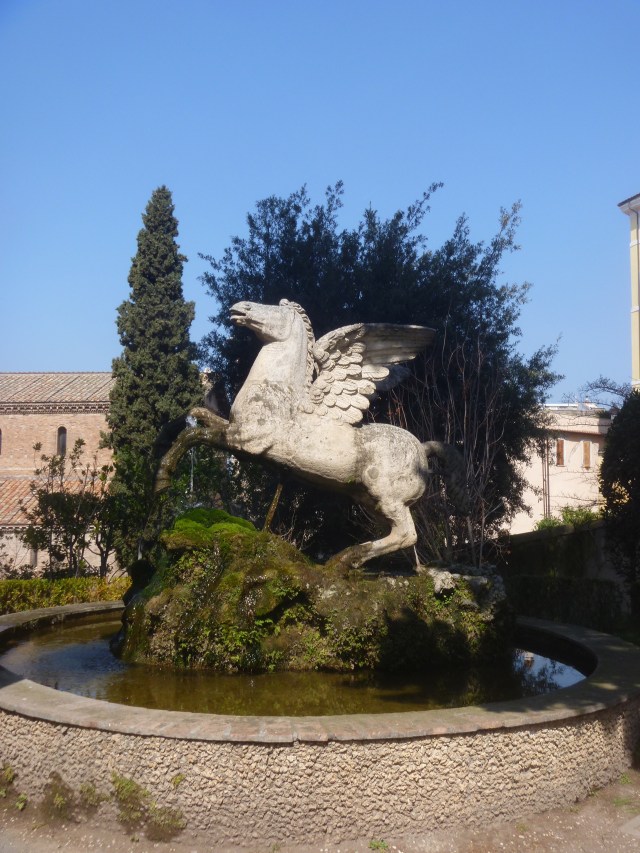
pegasus fountain

Pegasus Fountain

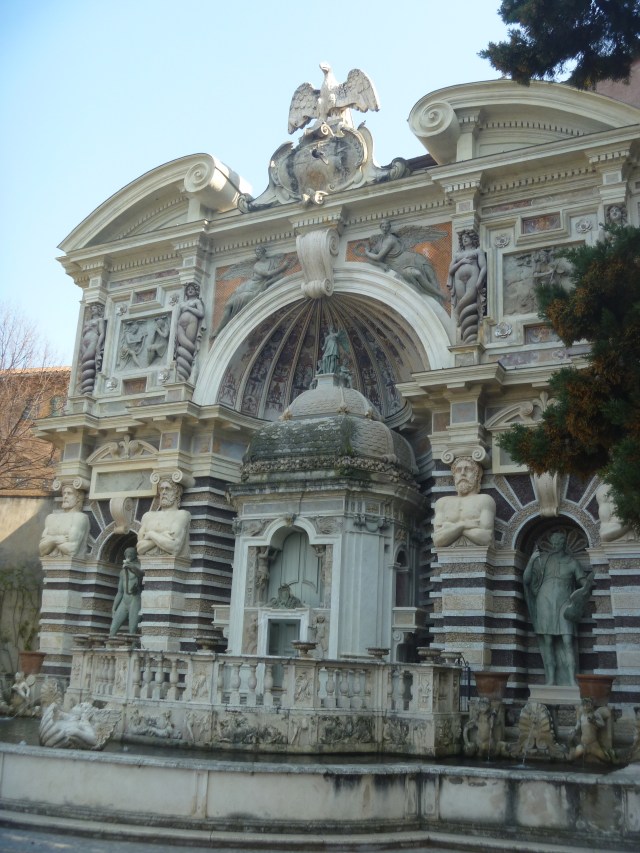
Organ fountain

The Organ Fountain Plays Every Two Hours on the Half Hour

It’s a wonderful theatrical performance full of drama and excitement; entertainment and playfulness with surprises and jokes. In addition to the gardens you can visit the mansion atop the hill the mansion is open too – room after room of breath-taking painted ceilings but little else. Like Hadrian’s Villa the Villa D’Este is a UNESCO World Heritage Site.

I spent over two hours wandering around the gardens and house but felt the call of the Villa Greogoriana and, ultimately, Sant’ Antonio.

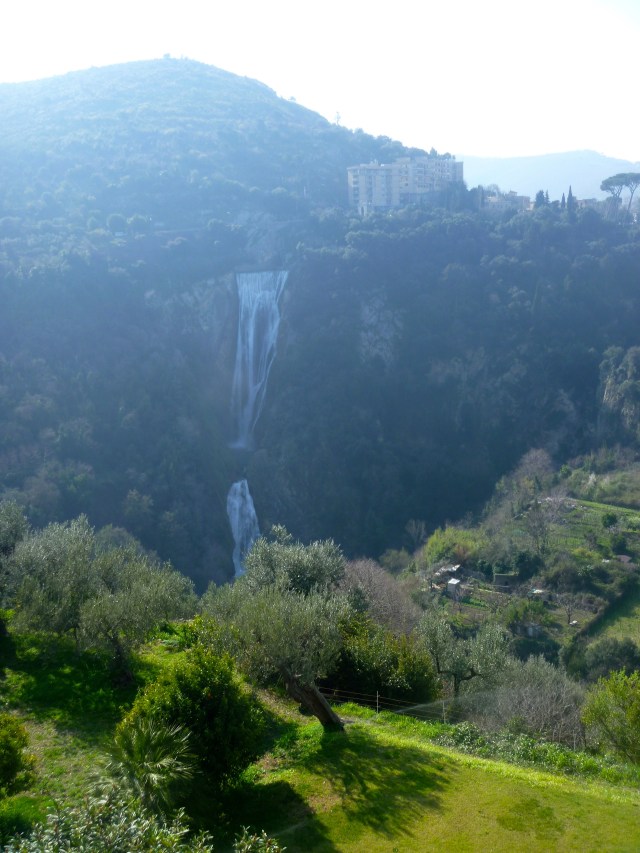
VG Grand Cascade

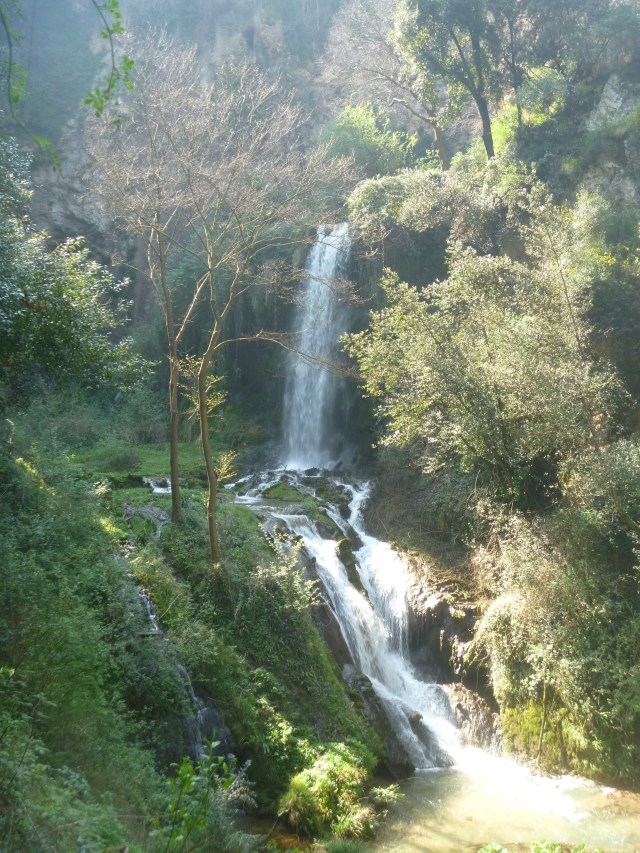
The Grand Cascade

Cascade from window

The Grand Cascade from my window at Sant’ Antonio

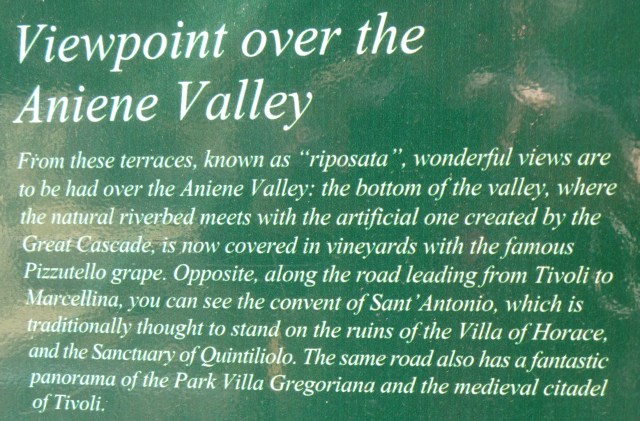
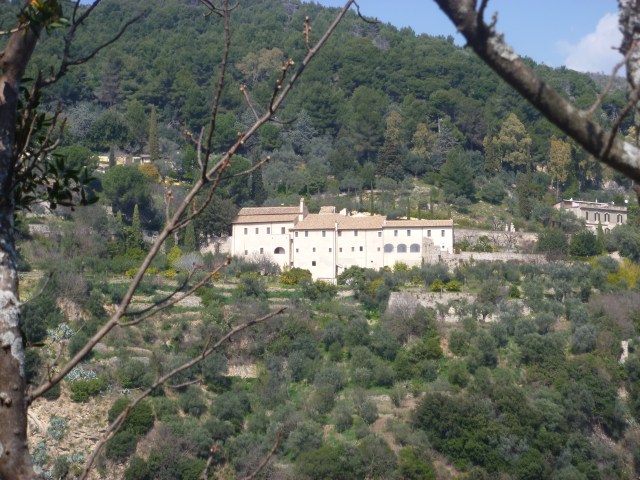
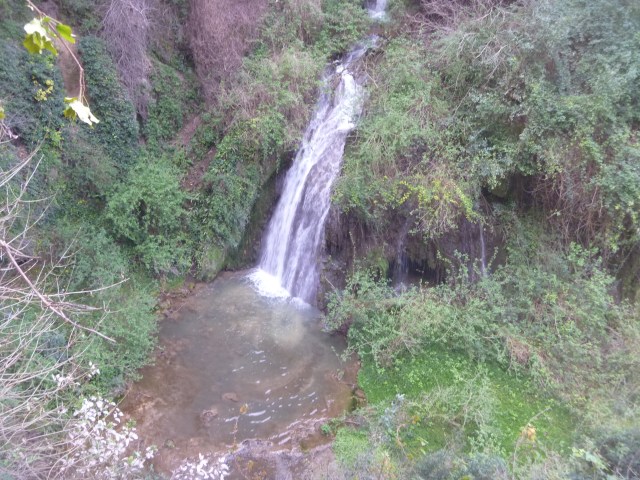
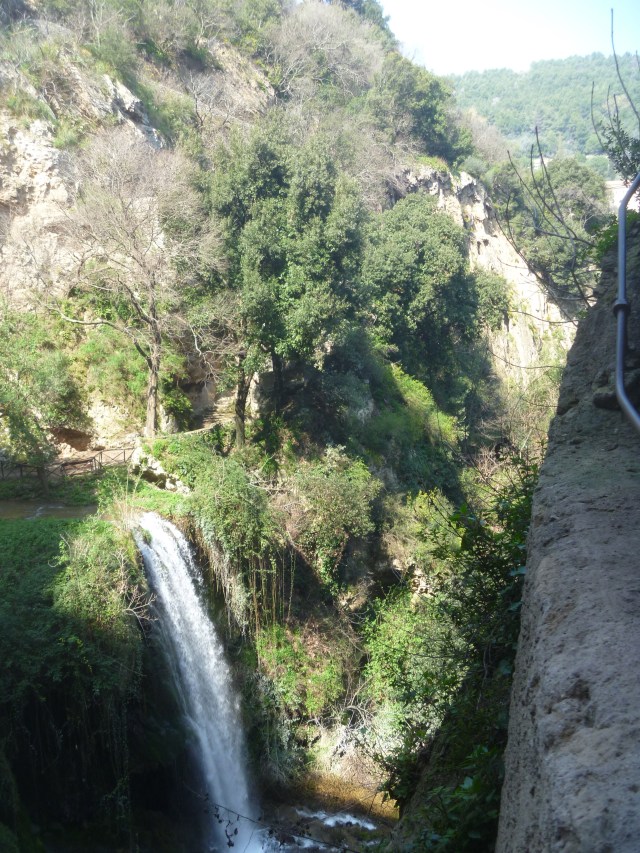
The Park of the Villa Gregoriana, for the Villa itself is no more, fills both sides of a wooded gorge where the waters of the River Aniene spill over precipices and lie still in pools in the valley bottom, is perhaps my favourite of the three gardens of Tivoli. Much of it, including the huge waterfall, can be seen from Sant’ Antonio and it appears more natural and less planned than the other two. Sant’ Antonio can be seen from the park.

SA view info

SA view

Sant’ Antonio from the Villa Gregoriana

If you ever plan to visit be sure to wear strong, rubber-soled walking shoes as the paths and steps are uneven and slippery when wet and take your National Trust card with you, if you’re a member. Entry is free to NT members. The FAI in Italy aims to preserve Italy’s art, nature and landscape and has reciprocal arrangements with our National Trust.

Remains of VG

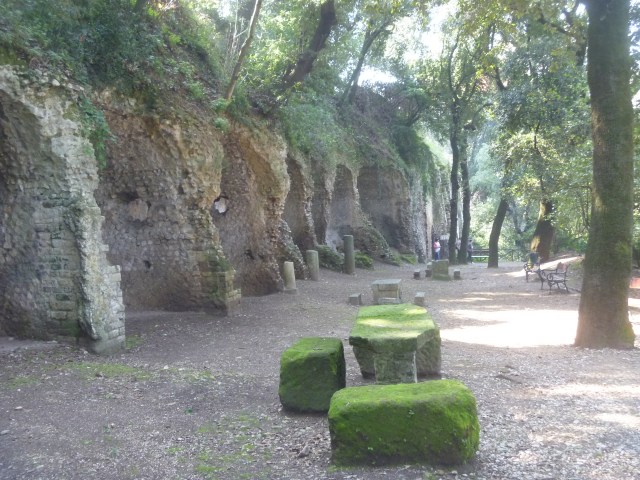
Remains of the Villa of Manlius Vopiscus

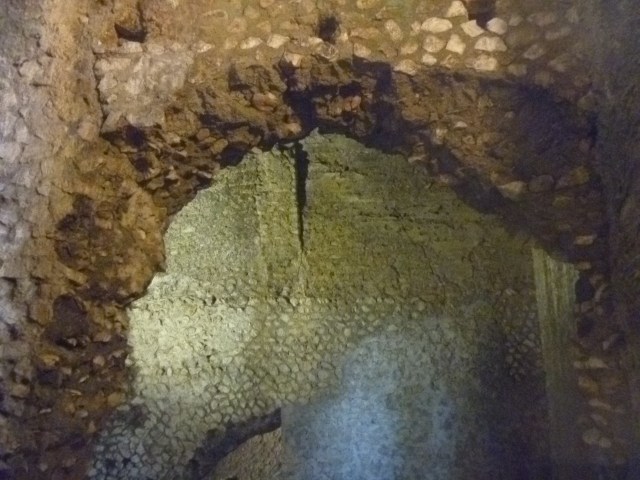
Inside the ruins

Roman Wall inside the Villa remains

The park was commissioned by Pope Gregory XVI to rebuild the bed of the Aniene River, which had been damaged by the terrible flood of 1826. It had fallen into rack and ruin by the end of the 20th century, but has been reopened to the public in 2005 thanks to a major landscape recovery project orchestrated by FAI, the Italian National Trust.

It was in 1835, after the Aniene River had burst its banks yet again, that Pope Gregory XVI decided to transform this enchanting but extremely dangerous location into a model of integration between art and nature. The project saw a tunnel being dug through Mount Catillo in order to deviate the river and thus preserve the town of Tivoli. This was then followed by the construction of an extraordinary natural garden dominated by the acropolis with Vesta and Tiburno’s Temples.

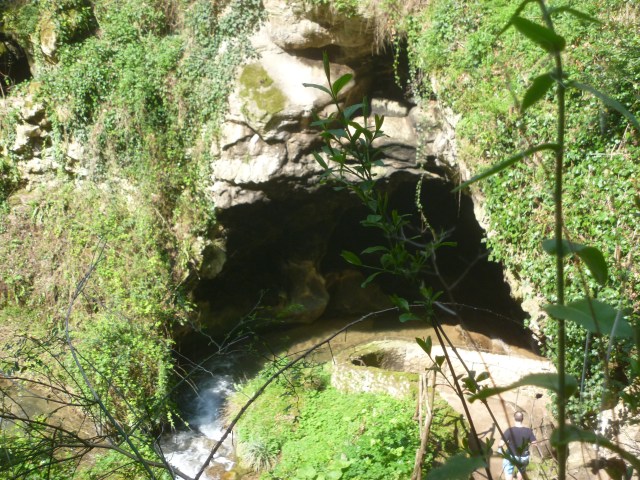
As you walk through the thick woodland of Parco Villa Gregoriana you will discover the delightful combination of the majestic landscape and the tranquillity of the paths that meander through it. En route, you will get to the caves of Neptune and of the Sirens, which form part of an incredible series of gorges and cascades, and to the Great Waterfall, with its whirling mass of water that seems to fall directly onto those who stand and gaze at it.”

cave of sirens

The Cave of the Sirens

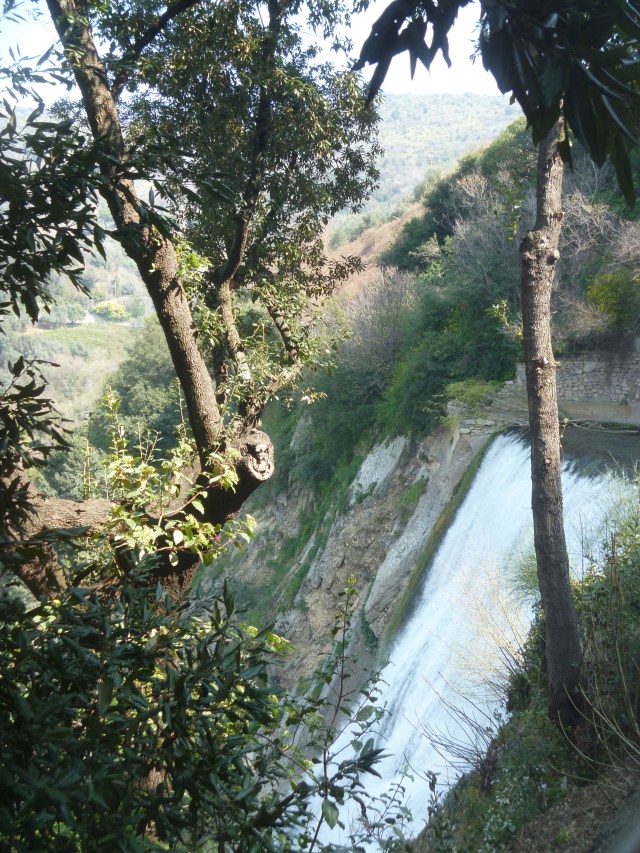
Valley of Hell upper viewpt

valley of hell 2

valley of hell 3

valley of hell 4

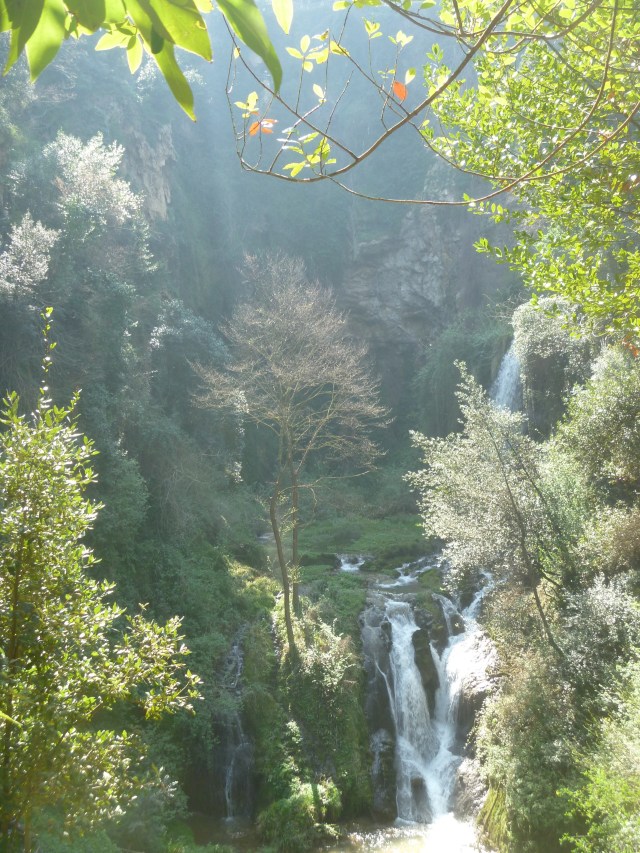
Views of the Valley of Hell from Upper Viewpoints

According to the leaflet/map guide to the gardens “Goethe was among those who were amazed by the area. ‘I was recently in Tivoli, where I admired a breathtaking natural spectacle. The sight of the waterfall there, along with the ruins and the whole landscape, greatly enriches the soul’. Goethe visited during the heyday of the Grand Tour, when Italy was the destination of choice for upper-class travellers from all across Europe, affording them and unrivalled classical education.” And this was long before Pope Gregory XVI’s re-creation of the original garden.


Hadrian’s Villa, Tivoli : a UNESCO World Heritage Site

Wednesday last week dawned bright and sunny and I knew this was the day to visit the UNESCO listed Hadrian’s Villa another vast area of building remains. Although extensive today it’s thought to have been even more so originally.

villa model

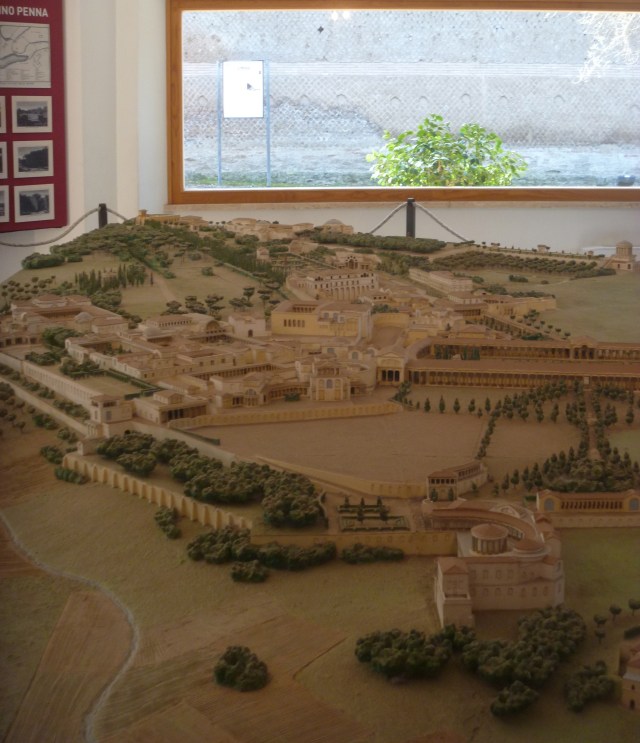
My notes here are mostly taken from the little map guide I bought. On arrival you follow a wide path up to a few modern buildings; one of which houses a model of the site as it might have looked to Hadrian. Publius Aelius Hadrianus was born in 76AD, probably in Italica (Seville). In 117AD on the death of Trajan he succeeded him at the head of the empire. He differed from previous emperors in that he tried to define the borders of the empire rather than fight to expand it. He was gifted with brilliant intelligence and a vast general knowledge but was not much liked by his contemporaries, as he was unpredictable and inconstant in character. He died in Baia in 138AD. And yes, he is the emperor in honour of whom the Wall was named.
Pecile

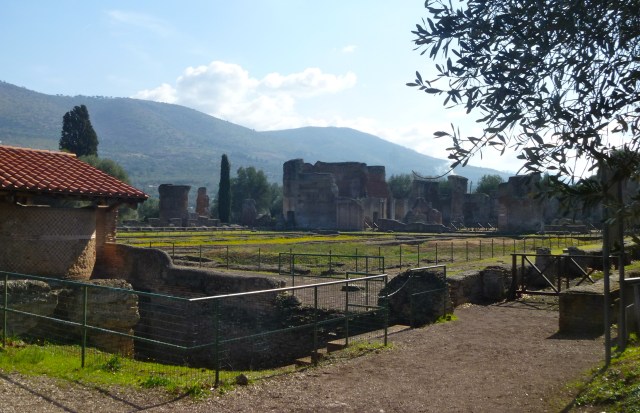
The Pecile Pool

the pecile

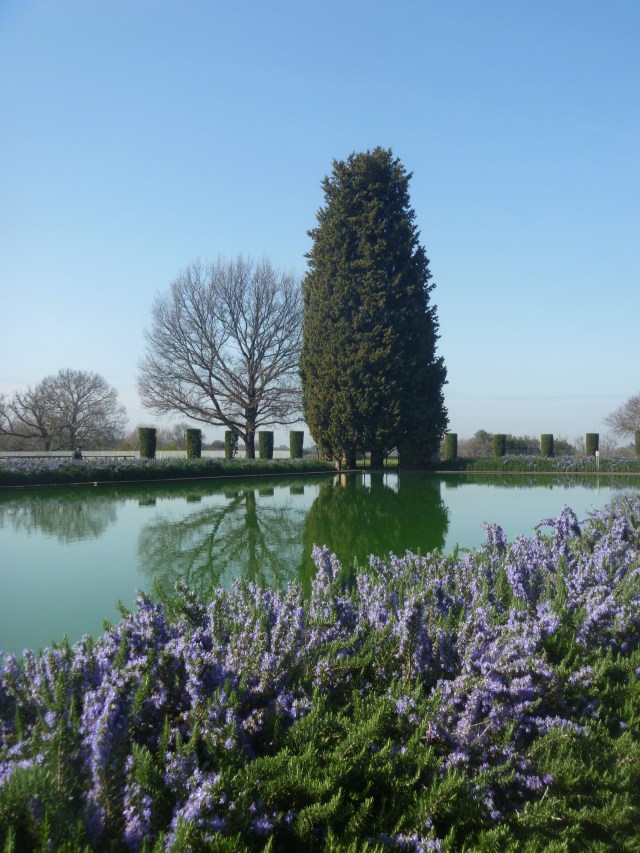
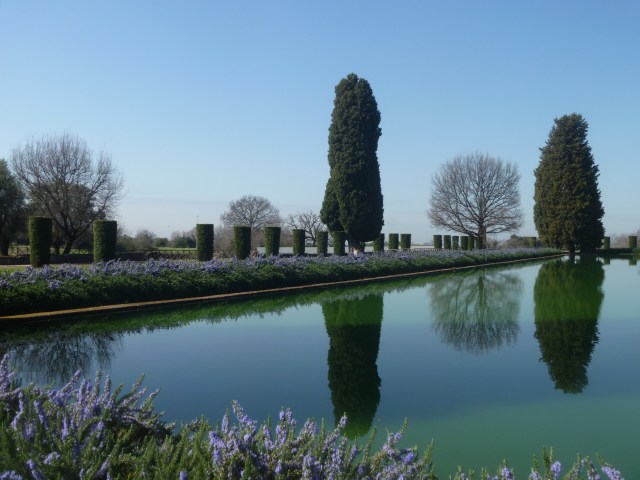
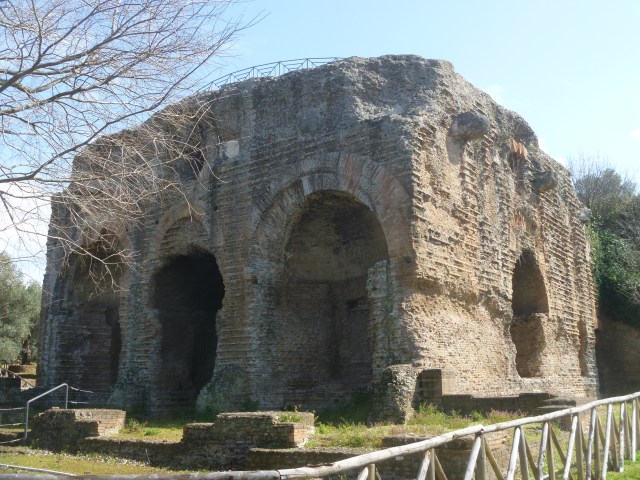
Beyond the initial modern buildings you pass through an arch in a high Roman wall into the park itself. In front is the Pecile formerly a courtyard with a pool at the centre. Then the choice of which direction to choose is yours. I headed first to the Palace and outbuildings which included the Golden Square, the Hospitalia, the Heliocaminus Baths, the Maritime Theatre (currently closed) and the Greek and Latin Libraries.
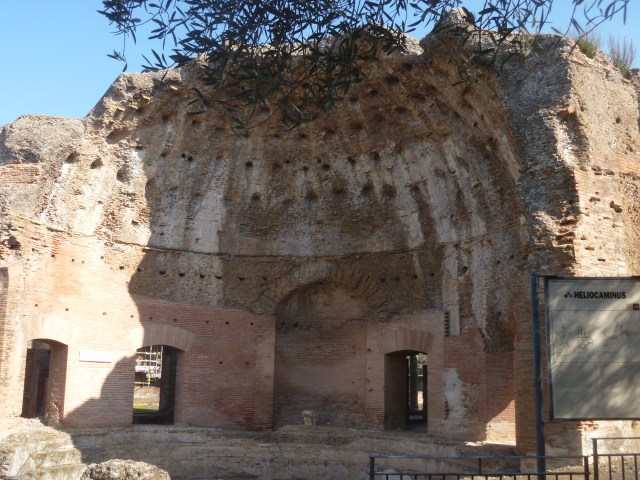
Heliocaminus

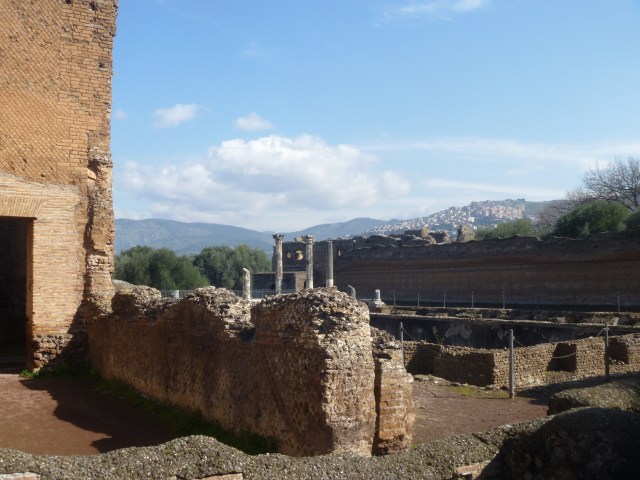
The Heliocaminus

The oldest bath complex on the site owing its name to the large circular room with a vaulted roof heated by the rays of the sun. In addition the floor was heated by the usual hot air system.

greek library

The Greek Library

hospitalia

The Hospitalia

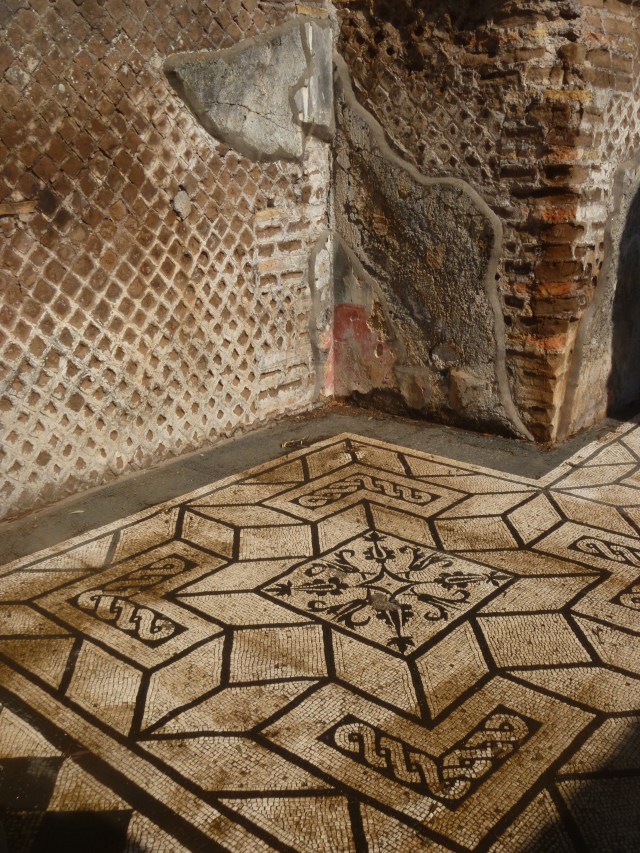
hosp mosaics

osp mosaic

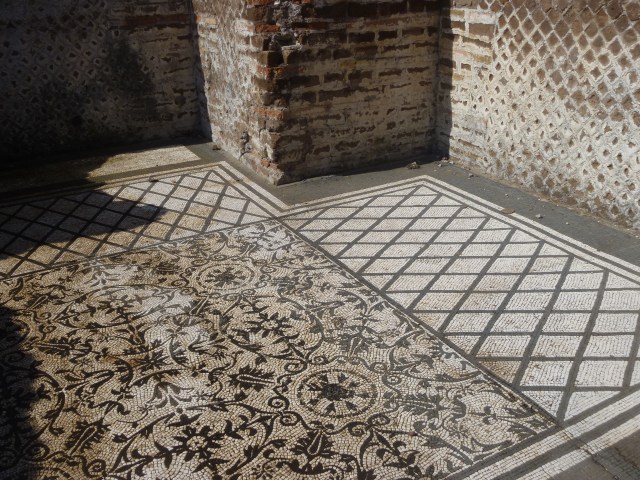
Mosaic Floors in Hospitalia Cells

golden square

The Golden Square (so called because of the richness of the archaeological finds made there)

Quadriportico

The Quadriportico

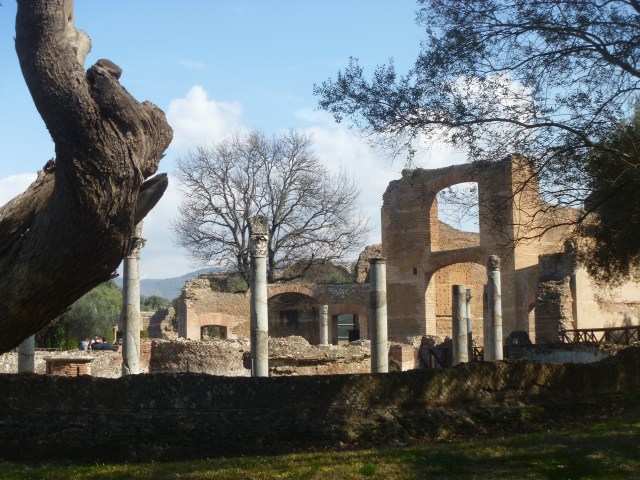
More or less in the middle of the site is the Triple Exedra Complex. According to the booklet this is nothing more than a grandiose entrance vestibule to the imperial residence.

triple exedra

The Triple Exedra

great baths

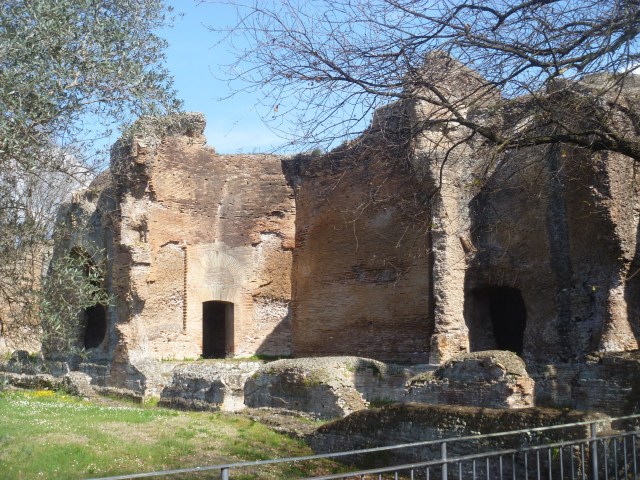
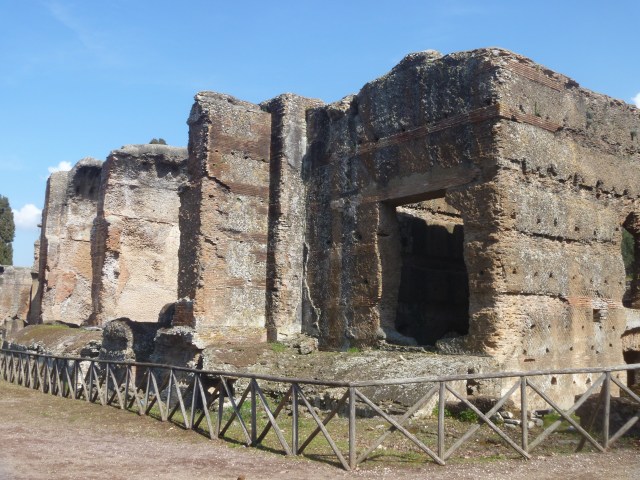
The Great Baths

small baths

The Formerly Luxurious Small Baths

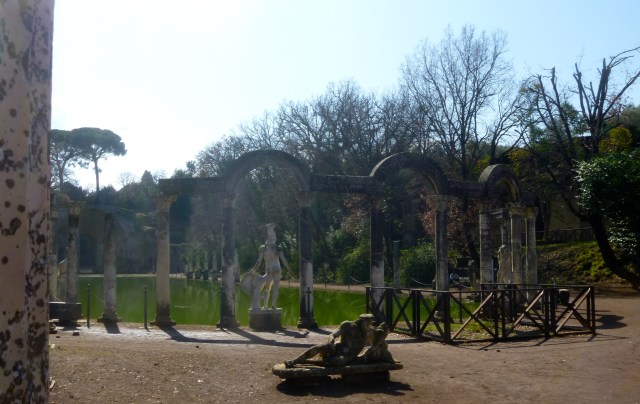
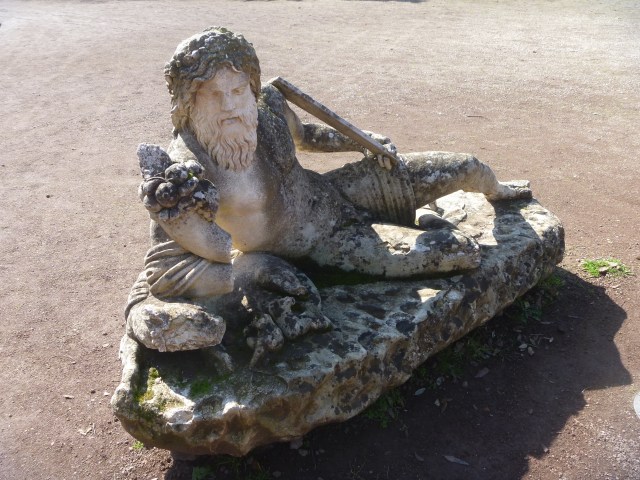
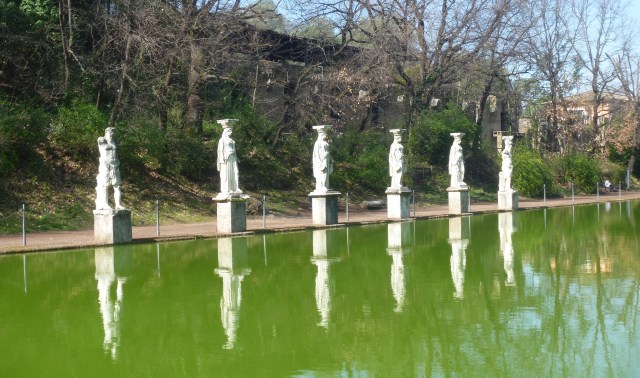
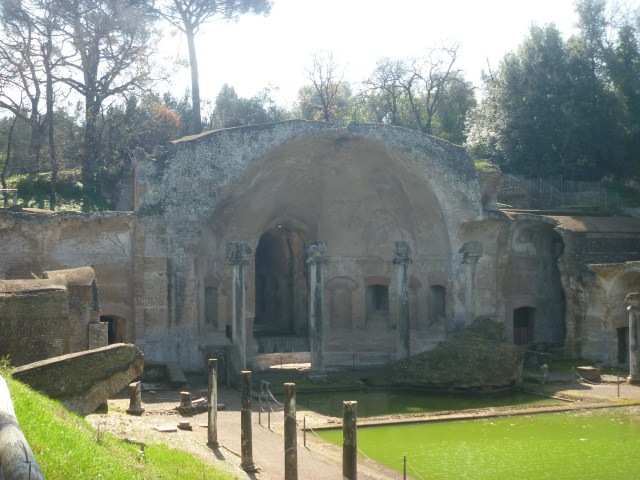
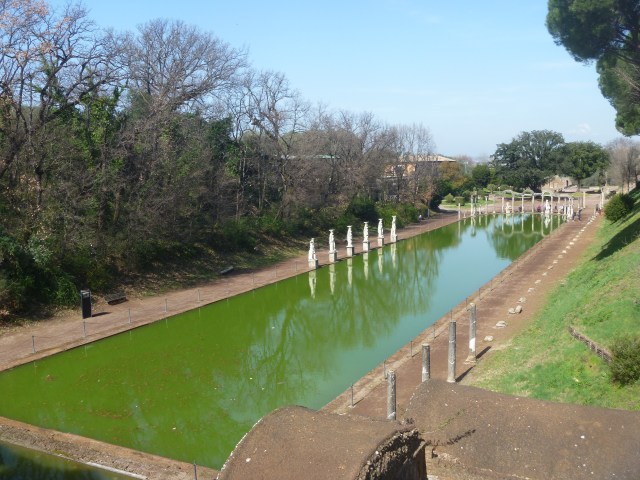
Beyond this are the Great and Small Baths and finally at the far end of the site The Canopus. This was an attempt at a copy of the channel that led from Alexandria to Canopus, a town on the Nile delta. The long basin of water is Euripus and at the far end is The Serapeum where summer banquets were held.
canopus

The Canopus

neptune

goddesses

serapeum

The Serapeum

canopus from belvedere

The Canopus from the Belvedere

Finally I made my way to Rocca Bruna a belvedere with marvellous views over the surrounding countryside. Apparently, Hadrian had a great interest in astronomy and it is also thought that the tower could have been used as an astronomic observatory.
rocca bruna

Rocca Bruna Tower

tivoli from rb

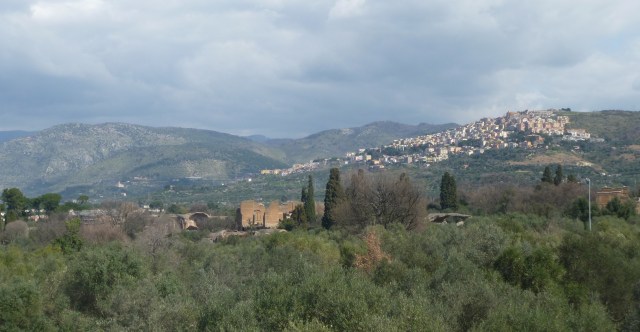
View towards Tivoli from the Tower

mtns view rb

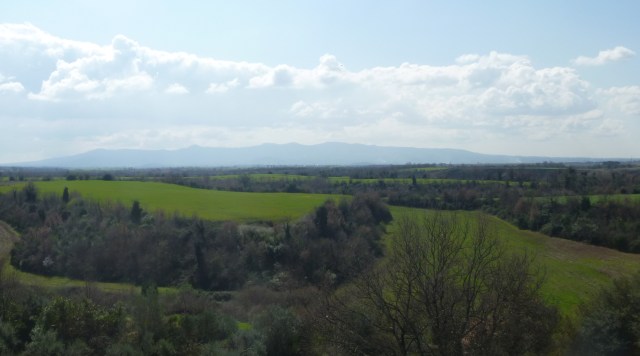
Mountain View From the Tower

Walking and Talking on Hampstead Heath : The Garden of the Finzi-Continis

Walking Book Group

This post is not a discussion or review of the book in question: Emily does that so much better than I could.

The Garden of the Finzi-Continis

Rather, I’d like to tell you about how a Walking Book Club works.

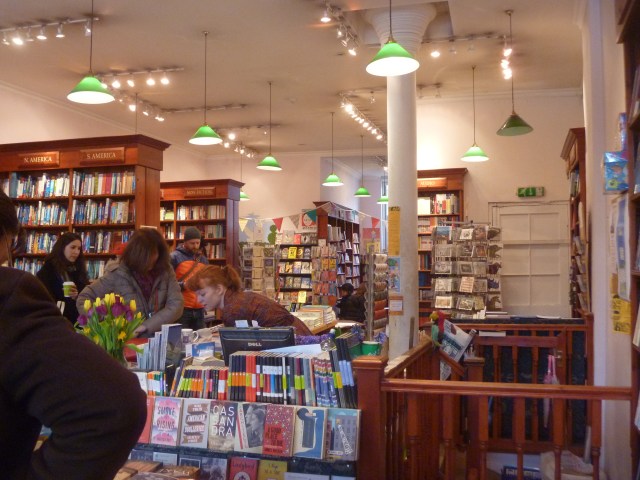
Daunt Shop

 Inside Daunt Books South End Road

You may remember that I mentioned  Daunt Books‘ Walking Book Group in a previous post. Well, at last I have managed to coincide my visit to London with a Sunday meeting of the group. Only a couple of weeks ago did I discover that the group was back in action after Emily’s baby, Vita, was born just 4 months ago.

A group of about a dozen or so keen walker-readers gathered together at the shop on Sunday 22 February to walk on Hampstead Heath to talk about the chosen book – The Garden of the Finzi-Continis by Giorgio Bassani. As I’d only discovered this about a week before and as it wasn’t available from my library ordered a copy directly from Daunts. I just managed to finish reading it on the train down from Leeds. This was good as it meant that the book was fresh in my mind. Also, the evening before I had just watched the dvd version of the 1970 film.

Finzi-Continis

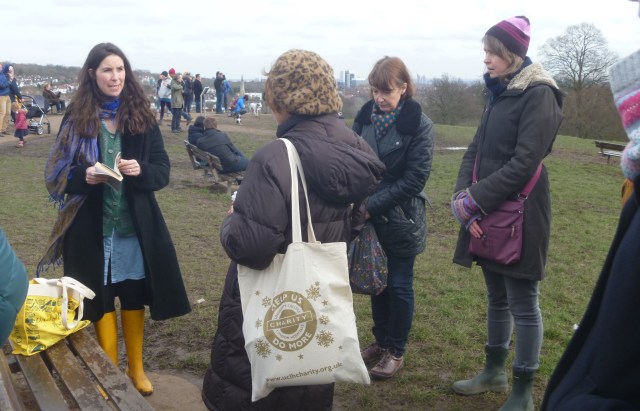
At 11.30 we left the shop, crossed the road and before setting off Emily introduced herself : some of the group were regular reader-walkers, some occasional and others, like me, were there for the first time. The only man was later joined by a couple more; we were delighted to have two Italian nationals amongst us who had read the book in its original and were able to offer us other insights into Italian life and culture relevant to our discussions.

Emily Left

Book talk with Emily [left]

We set off walking and talking in pairs or small groups and every ten minutes or so Emily would bring us all together to sum up, ask questions, provide answers and suggest further topics for conversation. We would then find we started discussion with someone else. The formula works very well. At the highest point of the walk, with long views over London, Emily shared her home-baked cake with us.

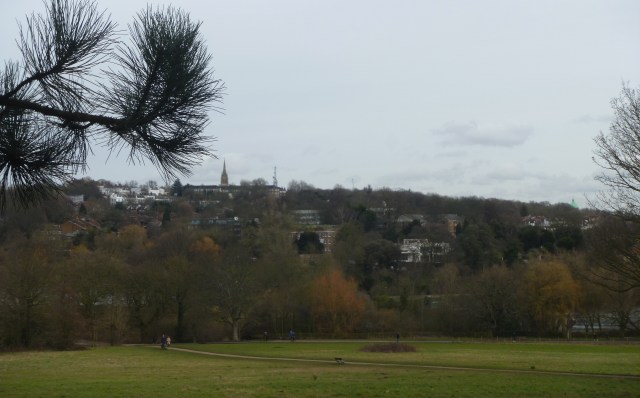
Highgate

Highgate from The Heath

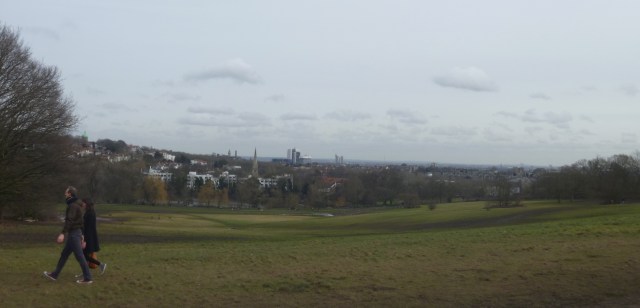
London from Heath

View from the Heath

Somehow after about an hour we found ourselves back where we started and Emily summed up the discussion, distributed copies of the 2015 2nd Daunt Books Festival programme (there’ll be a walking book group from the Marylebone shop on 20 March) and told the group the next date and book for the regular Sunday Heath walk : 19th April “the Living Mountain” by Nan Shepherd :

“Shepherd wrote a short nonfiction book, The Living Mountain, during the 1940s. The Living Mountain is a reflection her experiences walking in the Cairngorm Mountains. Having completed it, Shepherd chose not to publish the book until 1977.” (Source)

If you’d like to hear a Walking Book Club session in progress you can listen here to Clare Balding who joined Emily on one of her walks in February two years ago.

Writers’ Gardens

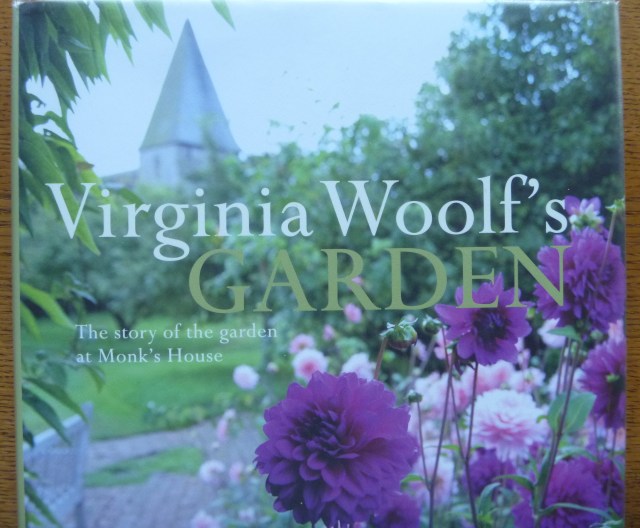
In these the dull, grey February days it’s been a great pleasure for me to read two coffee table-style books back-to-back with glorious photographs but also very informative text. VW's Garden The first was Virginia Woolf’s Garden by Caroline Zoob. There’s lots of nice background information about Leonard and Virginia Woolf but also about the author. Caroline Zoob and her husband were the National Trust tenants in the house for about 10 years. They also took responsibility for the garden. Endpaper VW's

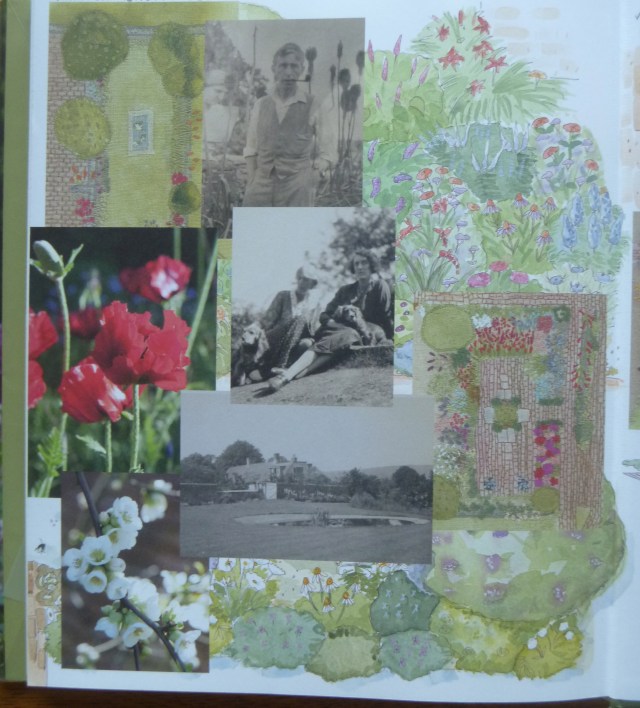
Endpaper Collage

Really the book should be called Leonard Woolf’s Garden since it was almost entirely his creation and Virginia admits to doing little more than a bit of dead-heading and, of course, being inspired by gardens in general for her writing.

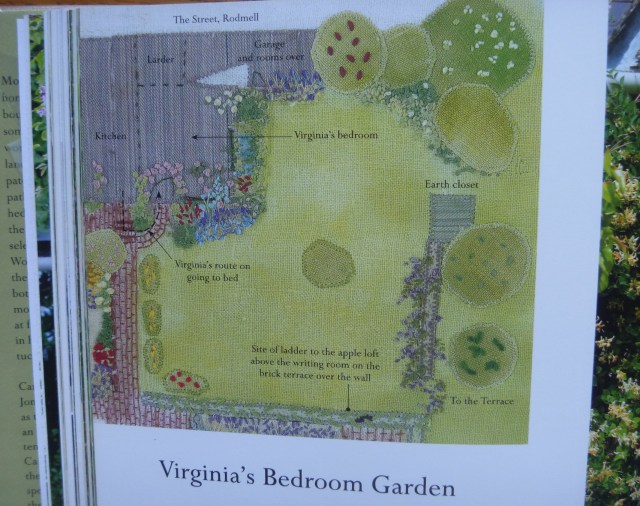
VW Bedroom Garden
VW bedroom garden
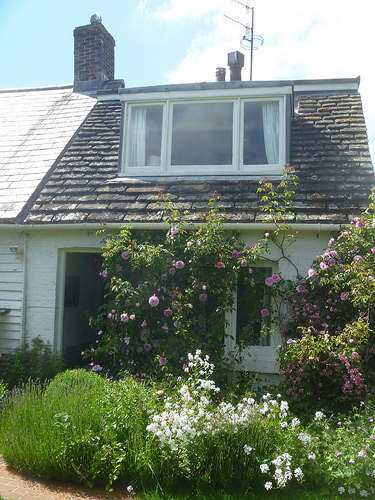
Virginia Woolf’s Bedroom Garden May 2014
Reading it and studying the lovely photos I was reminded of my visit to Monk’s House last May. I preferred it to Charleston as it had a very much more relaxed atmosphere. I’ve written here already about my visit to Virginia and Leonard Woolf’s home and garden at Rodmell in East Sussex.
The writer's garden
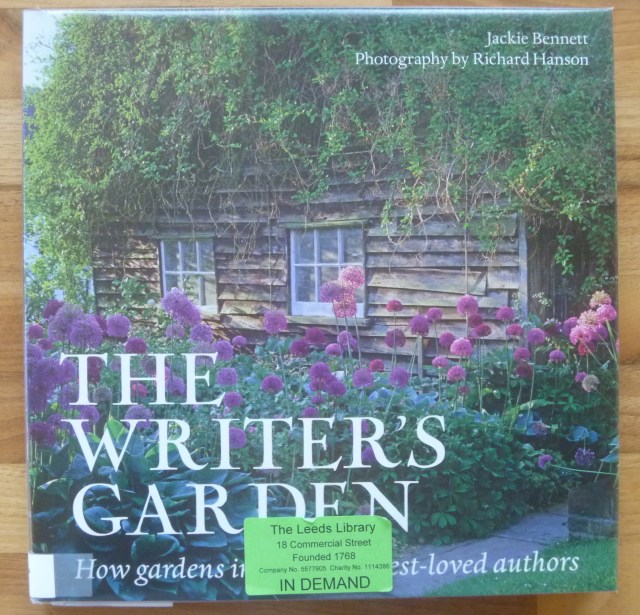
The Writer’s Garden : how gardens inspired our best-loved authors is by Jackie Bennett.
Writer's garden
Title Page – Near Sawrey in the Lake District with Beatrix Potter’s Hill Top in the Bottom Left Corner
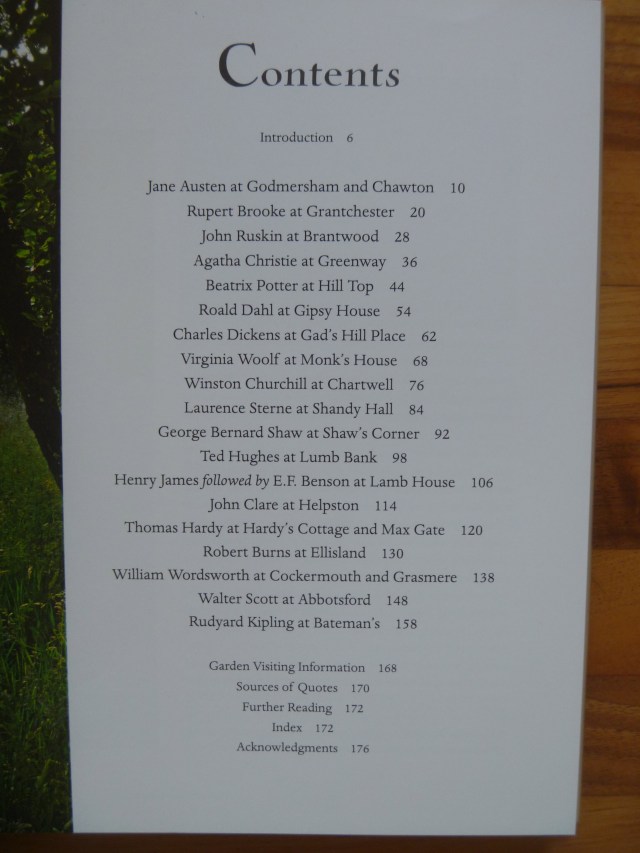
Contents Page
Contents Page
Many of the gardens mentioned I have already visited – Jane Austen’s in Chawton in Hampshire long before the digital photography; same goes for Ruskin’s Brantwood which we approached from Lake Coniston by Gondola; Agatha Christie’s Greenway in 2009; Beatrix Potter’s Hill Top in 2005 or 2006; Laurence Sterne’s Shandy Hall the topic of one my first posts here and, of course, Virginia Woolf’s garden mentioned above.  I do hope I can get to the ones I haven’t visited some time as all were inspiring, not to say, beautiful.
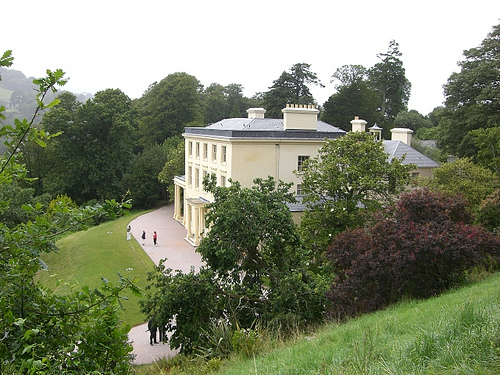
Greenway
Agatha Christie’s Greenway overlooking the Dart Estuary in Devon
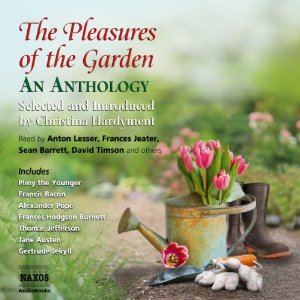
I borrowed both books from the library but also by coincidence my current audio listen is Christina Hardyment’s The Pleasures of the Garden: an anthology. It’s selected and introduced by Christina and includes passages by Pliny The Younger, Francis Bacon, Frances Hodgson Burnett (The Secret Garden, of course), Thomas Jeffereson, Jane Austen and Gertrude Jekyll.
51KTun4xj8L._SL300_
Having said all this – I am not, myself, a gardener! I love to visit gardens and read about them but I know nothing at all about plants and their care.
unnamed
My title for this photo on Flickr is “You won’t catch me gardening!”

‘Embosomed in all the sublimity of umbrageous majesty’ : The Dairy Dell and Pond Cottage

Better view of PC

Thus wrote Humphry Repton in his “The landscape gardening and landscape architecture of the late Humphry Repton, esq. : being his entire works on these subjects”; edited by J. C. Loudon. [London : Printed for the editor, and sold by Longman, 1840.] I think he meant that it was nestled in the shade of majestic trees and landscape. Or something like that.

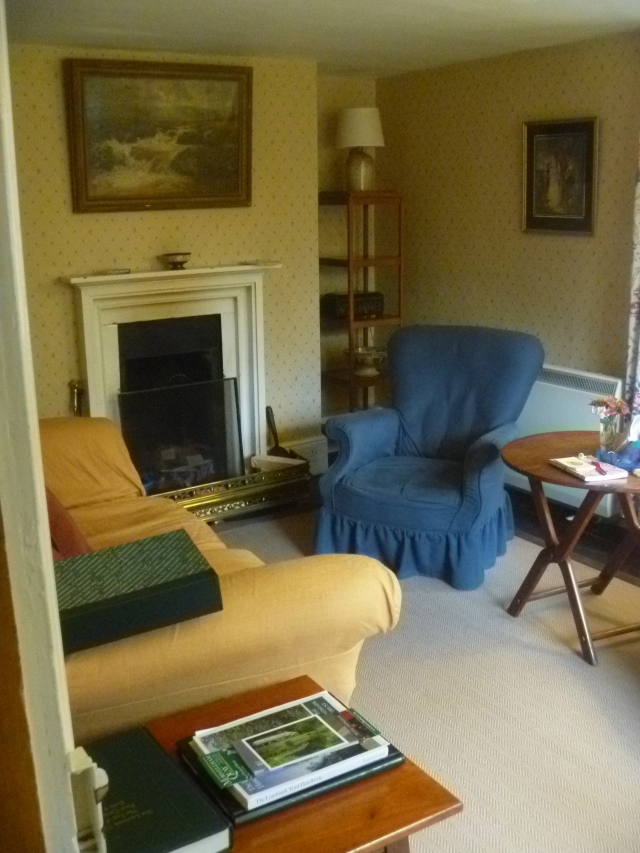
I wasn’t staying at the Endsleigh Hotel. Oh no, I had the good fortune to be invited to join my Landmarking friends at Pond Cottage one of two Landmark Trust properties in the grounds of Endsleigh House.

Pond Cottage exterior

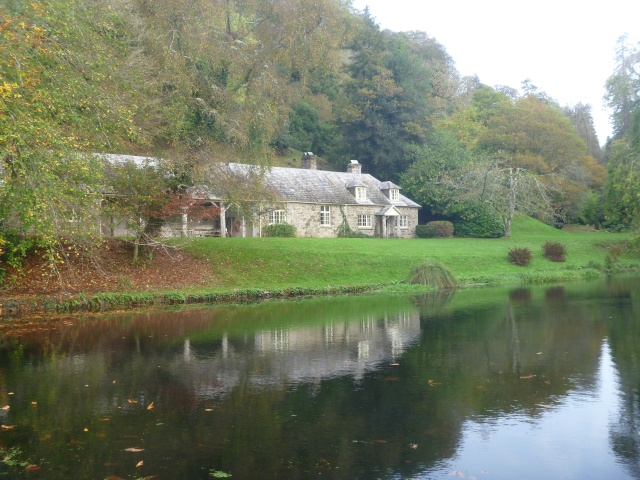
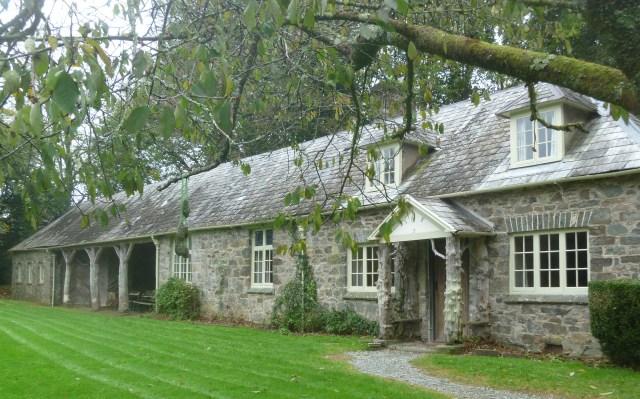
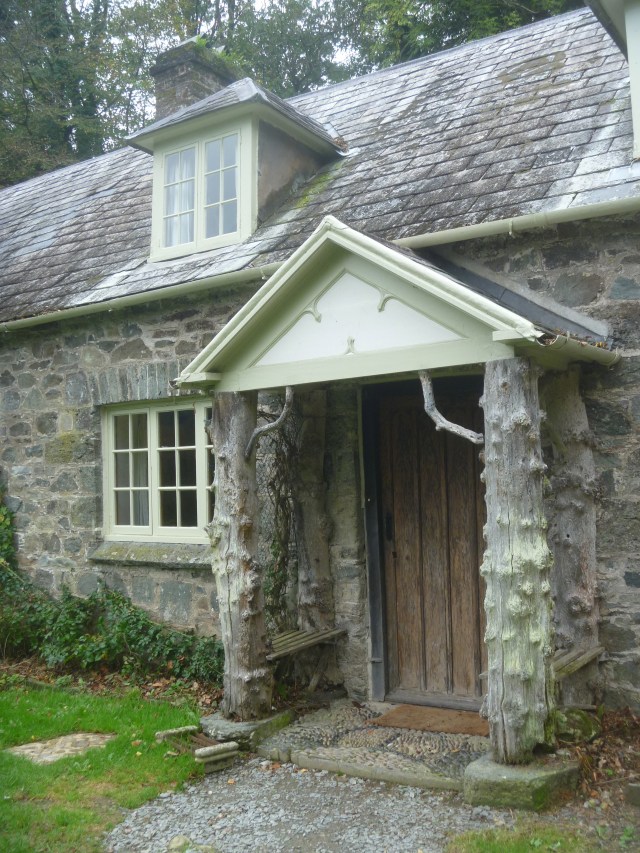
A purposely Rustic cottage designed by Jeffrey Wyatville beside a pond, Pond Cottage is set within the ornamental gardens of Endsleigh with its streams and cascades.  Endsleigh is still a complete example of that most imaginative and English taste, the Picturesque.  Pond Cottage has a Rustic porch, with tree-trunk columns and cosy rooms.” [Source]

Welcome to Pond Cottage

Rustic Porch

Fireplace at PC

Cosy Sitting Room

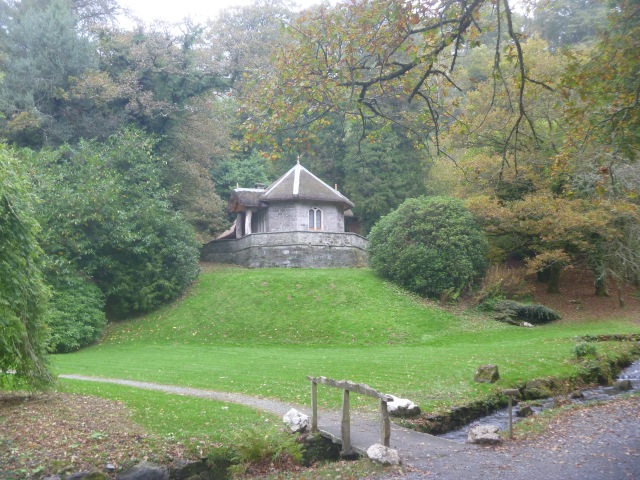
Pond Cottage and its surroundings had, and still has, all the quintessential ingredients of the 18th and early 19th century Picturesque landscape. Here at Dairy Dell are the favoured ingredients of such a landscape – water, both moving and still; splendid trees; antiquity, represented by the well and its inscription; rural industry, the Dairy itself.

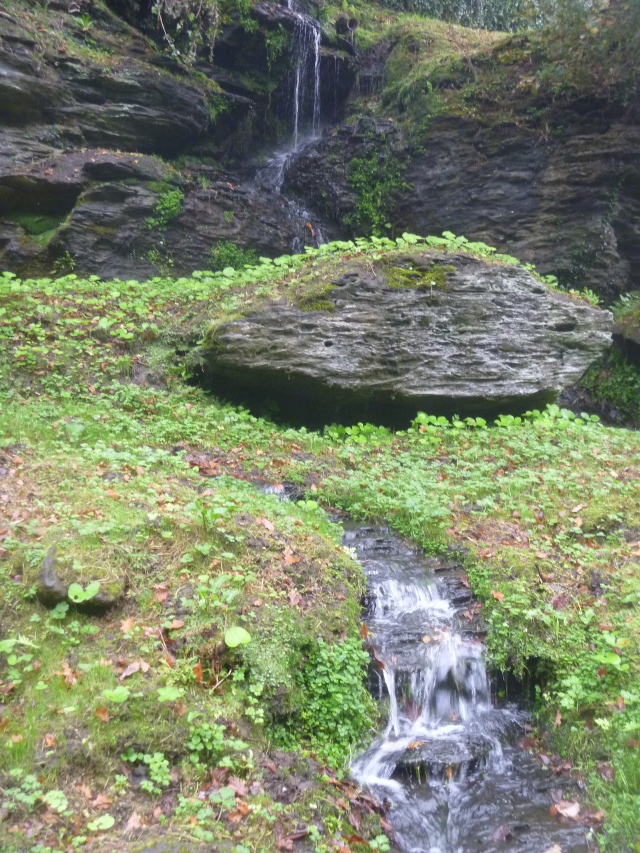
Moving water

Moving Water

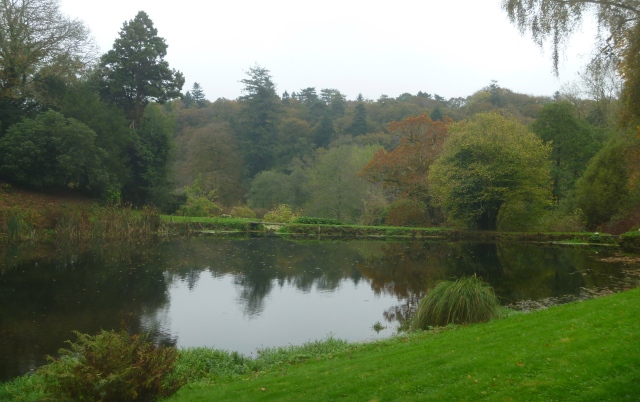
PC Pond

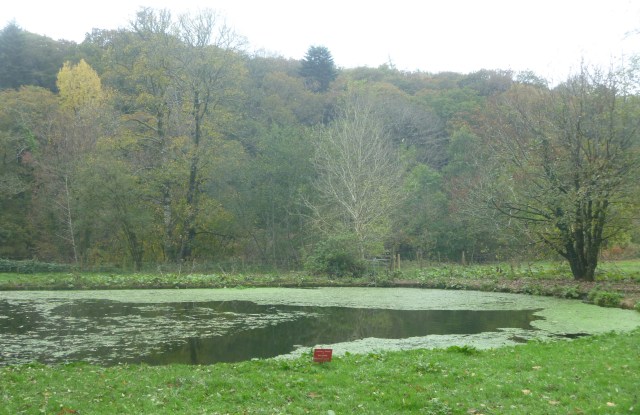
Still Water : The Pond

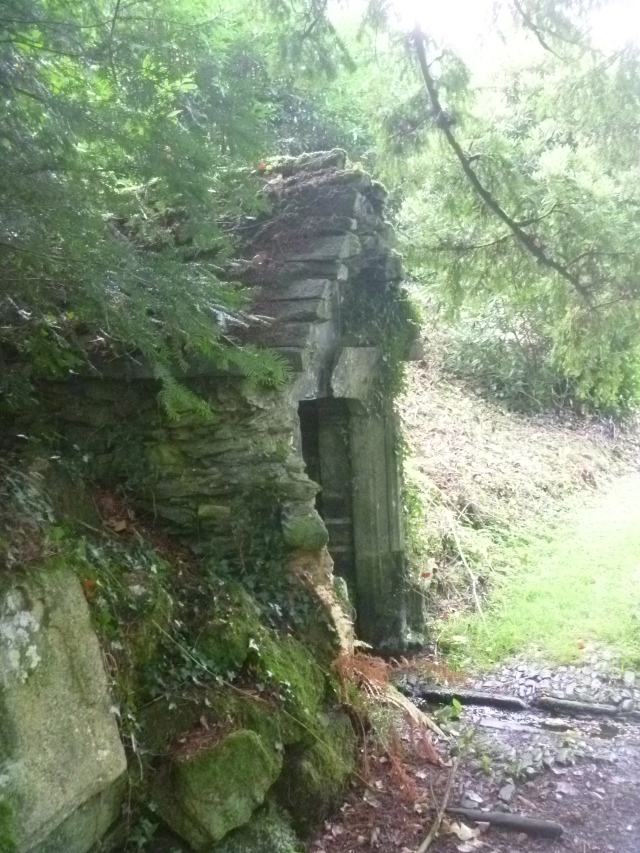
The well

The Ancient Well with inscription stone on the left

The Dairy

The Dairy

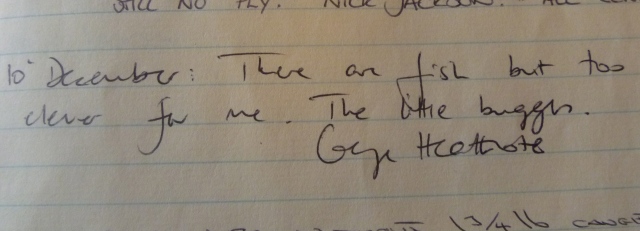
Facilities & features : there is a sunny loggia for outside dining and you can fly-fish in the pond. The tiny model Dairy stands nearby, from whose verandah you can enjoy spectacular views.” [Source] I enjoyed reading the cottage fishing diary where fishermen young and old made comments on their success, or lack of it, when fishing the Pond.

Fishing Diary

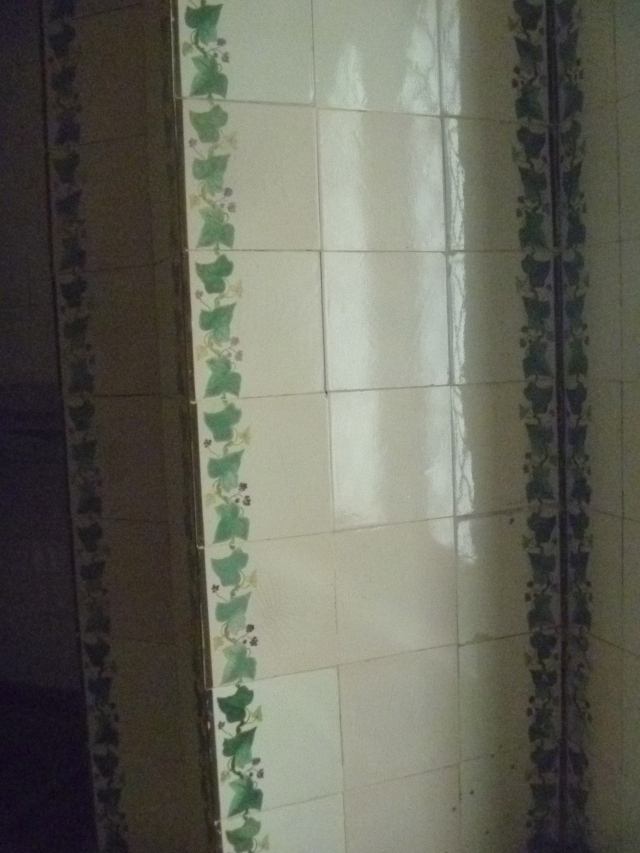
Pond Cottage has a Rustic porch, with tree-trunk columns and honeysuckle, and cosy rooms. The Dairy, which had to be rescued from the undergrowth, is perched on a knoll above, a cool chamber of marble (a local variety) and ivy-leaf tiles. From its verandah, ‘embosomed’, as Repton put it, ‘in all the sublimity of umbrageous majesty’, you may open yourself to those keen responses to the surrounding scene that were so carefully planned by its creators – while contemplating the making of a very superior butter.” Source

Ivy tiles

Inside The Dairy : The Ivy Tiles

Ivy close up

Close-up of the tiles. During restoration Kate Evans a potter from Shropshire who specialises in reproducing old glazes made copies to replace irreparable broken tiles.

Pond Teapot

The Ivy Pattern Repeated in the Pond Cottage Crockery (Wedgwood Napoleon Ivy Design as used by Napoleon at St Helena 1815)

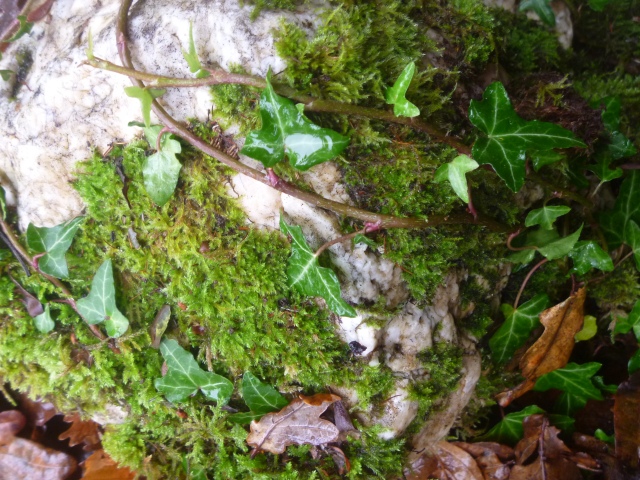
Real Endsleigh Ivy

Real Live Endsleigh Ivy

“One of the Loveliest Places Possible – Endsleigh” : an introduction

House closer

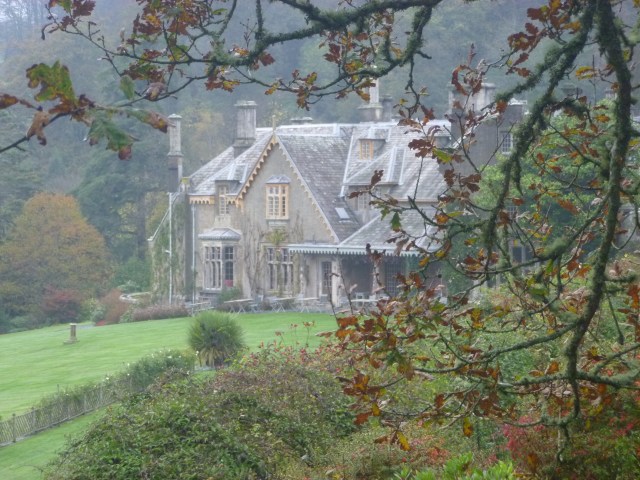
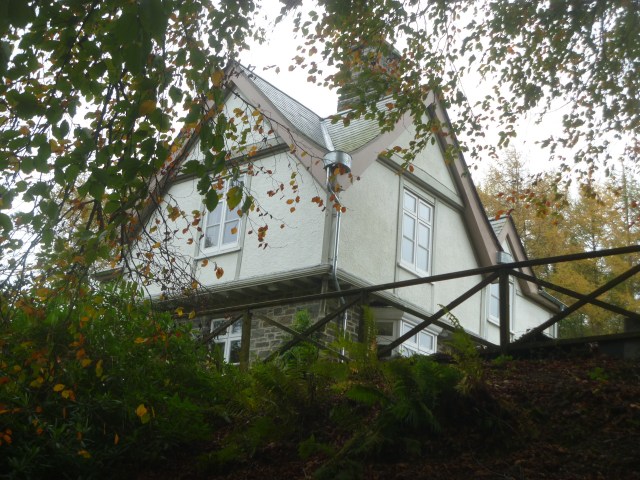
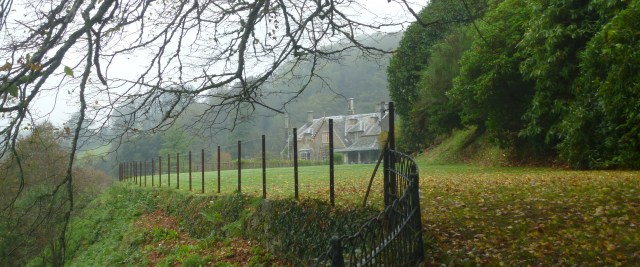
Today the original Endsleigh Cottage is a 16 bedroom luxury hotel.

“We saw yesterday one of the loveliest places possible – Endsleigh – the Duke of Bedford’s, about twenty miles from here”. Thus wrote Queen Victoria in her diary on 14 August 1856.

The result of the work of Humphry Repton and Jeffry Wyattville this truly beautiful estate on Devon’s border with Cornwall is still lovely today. It’s a private and secluded place which has been remarkably well-documented in the estate accounts still kept at Woburn Abbey home the Dukes of Bedford the original developers of Endsleigh.

The  Picturesque taste was popular in England between 1790 and 1840 and Endsleigh is one of its prime examples.

Repton first visited Endsleigh in 1809 and he encouraged the development of a more ‘natural landscape’ than the formality of Capability Brown. Repton proposed the buildings and Wyattville designed them. The main ‘cottage’ dates from 1810 and the subsidiary buildings 1812-1816.  Endsleigh was his first large scale work which was a collaboration with Georgina second wife of the 6th Duke of Bedford.

Whilst at Endsleigh I read her fascinating story in the book “Mistress of the Arts: The Passionate Life of Georgina, Duchess of Bedford” by Rachel Trethewey (Headline Review, 2003).

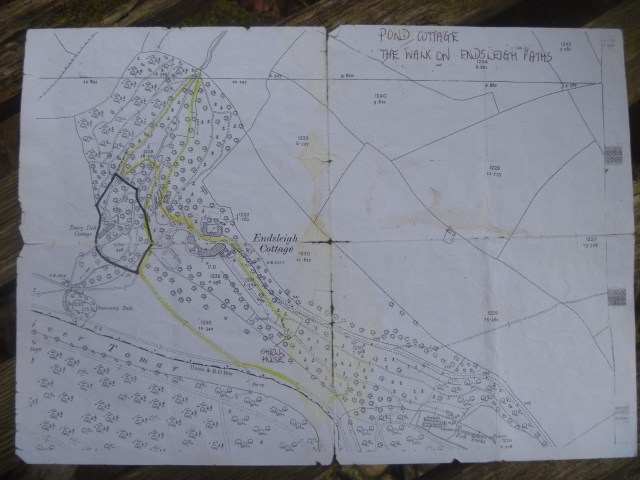
Endsleigh map

Within limits as a guest I could walk within the estate, down to the Tamar River and in the formal gardens close to the house. I also took tea one afternoon and enjoyed inspecting the various manmade features of the landscape which include a Swiss Chalet, a Shell Grotto and a Dairy. More about the Chalet and the Dairy in future posts.

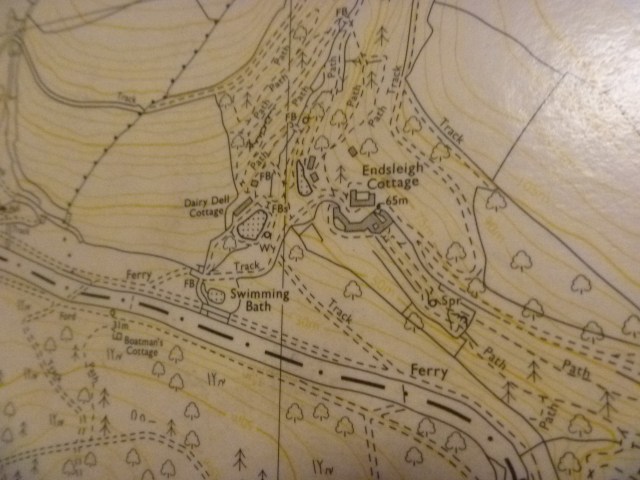
Endsleigh map close-up

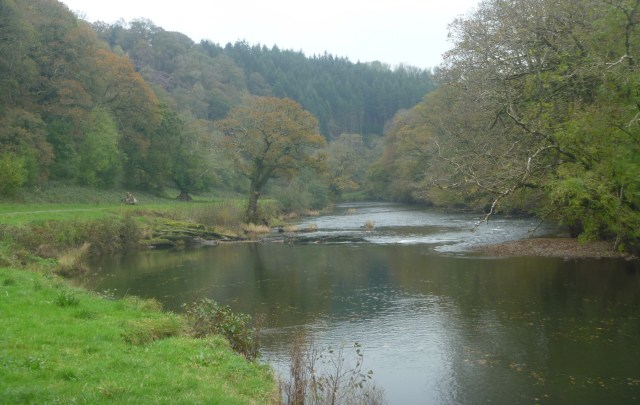
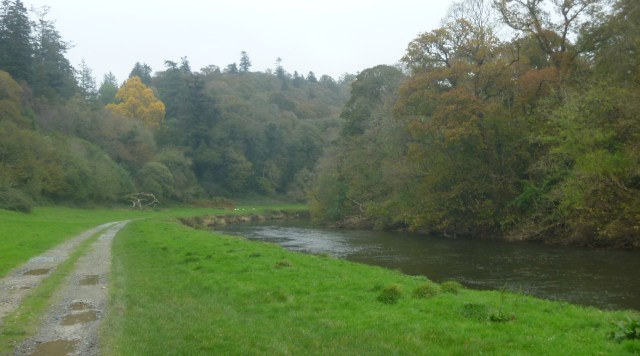
Stepping down the track from the house to the river a stream and muddy path made it impossible to go beyond the former swimming pool so I headed to the river bank and followed it downstream as far as possible. Eventually a notice on a gate prevents you going any further.

Former swimming pool

 The Former Swimming Pool

River Tamar

The peaceful River Tamar


Tamar path

River Tamar and Path heading downstream

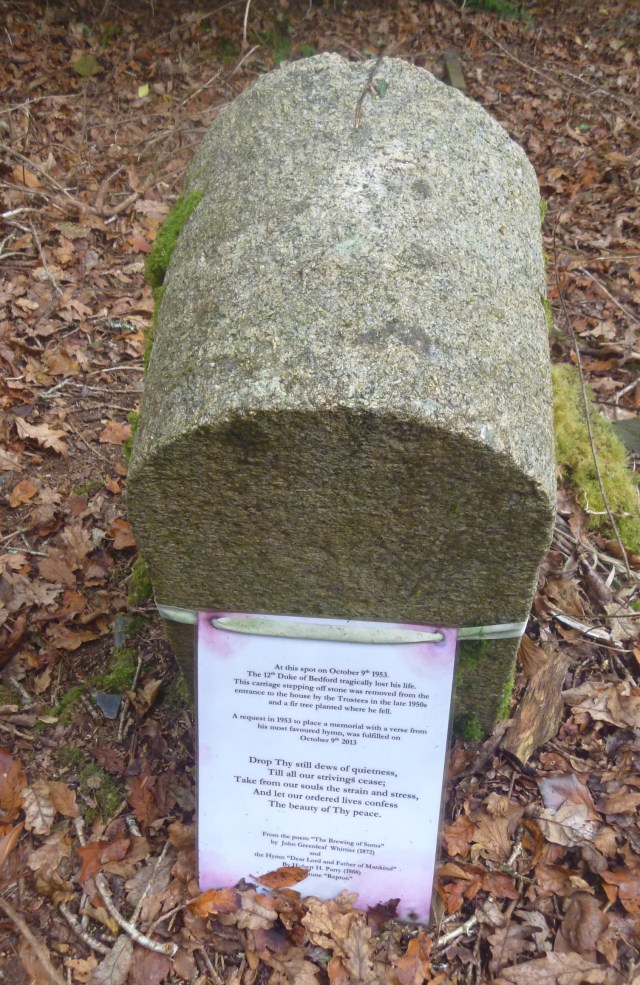
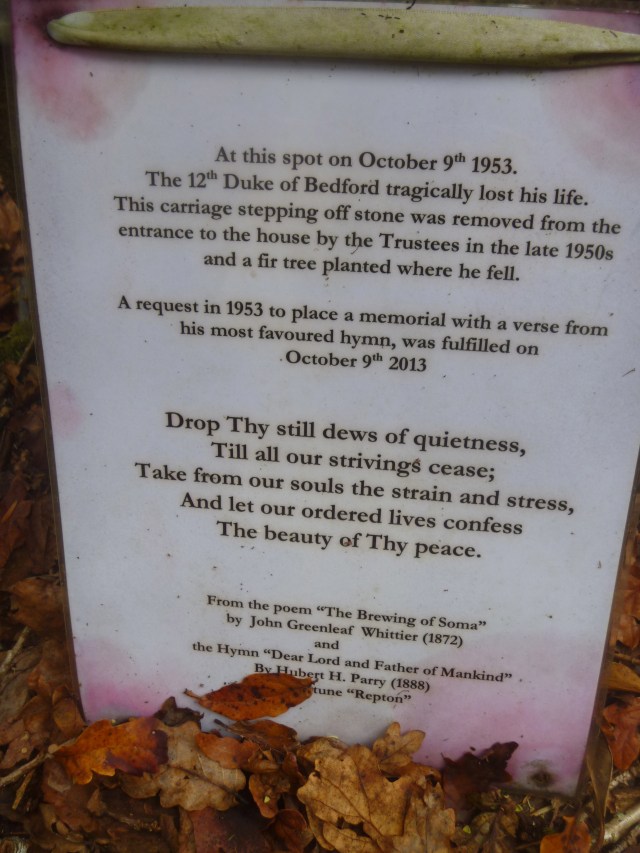
I returned along the path until I found a track leading up, up, up the valley side to a footpath which I hoped might lead to the Swiss Cottage. It didn’t; but I did find the memorial stone commemorating the spot where the 12th Duke was found dead in 1953.

Memorial to 12th Duke of B

Memorial wording

I’d read about this tragedy in another book “Endsleigh: the memoirs of a riverkeeper” by Horace Adams and edited by Clive Murphy [Braunton : Merlin Books, 1994]. I had the impression that Adams spoke or answered questions about his long life working first for various Dukes of Bedford and later for the Fshing Syndicate that took over the ‘cottage’ when the Bedfords needed to raise Death Duties. Murphy just transliterated Adams’s words to the page.

Fishery Cottage

Fishery Cottage overlooking the Tamar Valley

I didn’t manage to get more than a glimpse of the Swiss Cottage but nearby is Fishery Cottage at one time the estate home of Horace Adams. It’s now up for sale. Horace would be staggered – by the price and by the elegance!

From the main drive it’s possible to go into the formal gardens that surround the Hotel. They are now still beautifully maintained by about half a dozen full- and part-time staff. I didn’t make a note of the numbers of gardeners during the Bedfords’ tenure but there were probably around 5o.

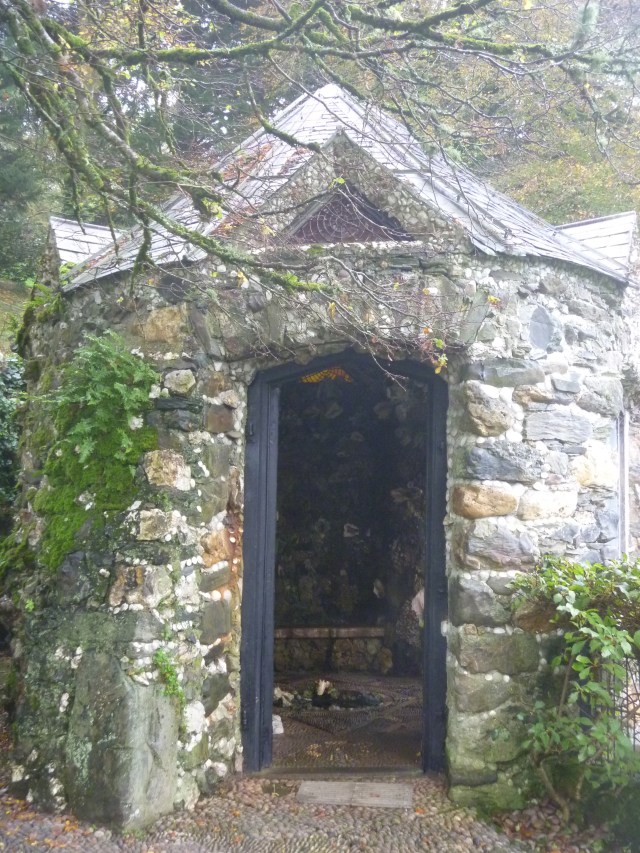
Shell Grotto

A rough path leads to The Shell Grotto set on a cliff high above the river.

The grotto

The Shell Grotto

House view

View of Endsleigh from Shell Grotto

With the rise of the Romantic Movement in the 18th century and the return of the great explorers, building grottoes became increasingly fashionable … Some took the form of artificial underground caves;  others were built above ground in some picturesque spot deep in the woods or overlooking a beautiful view. The chief ingredients remained the same. They must be dark, have water, preferably a cascade or spring and be decorated with shells and minerals. … The grotto at Endsleigh is a rather late example … It is believed that the original intention was for it to be decorated with shells and minerals from Devon and Cornwall. … Obviously this scheme was not carried out as the grotto is full of tropical shells and corals. … It has been lately carefully restored and other shells and minerals have filled the gaps where the originals had crumbled away.” Patricia, Viscountess Boyd, October 1984 [Adapted from the description in the grotto]

Garden bower

Tamar Valley from the Grotto

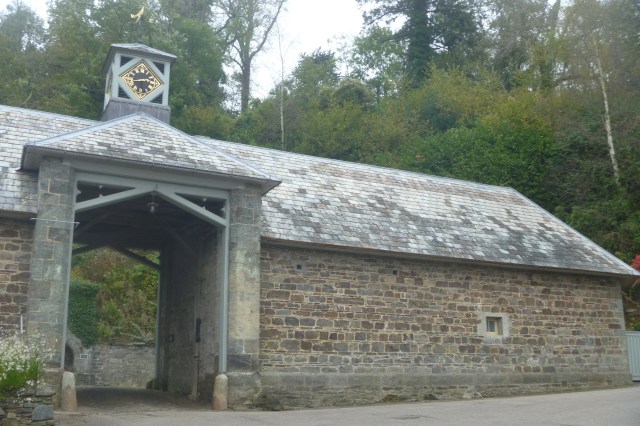
From the Grotto and formal gardens I returned to the main drive and behind the house are the former stables.

Stables

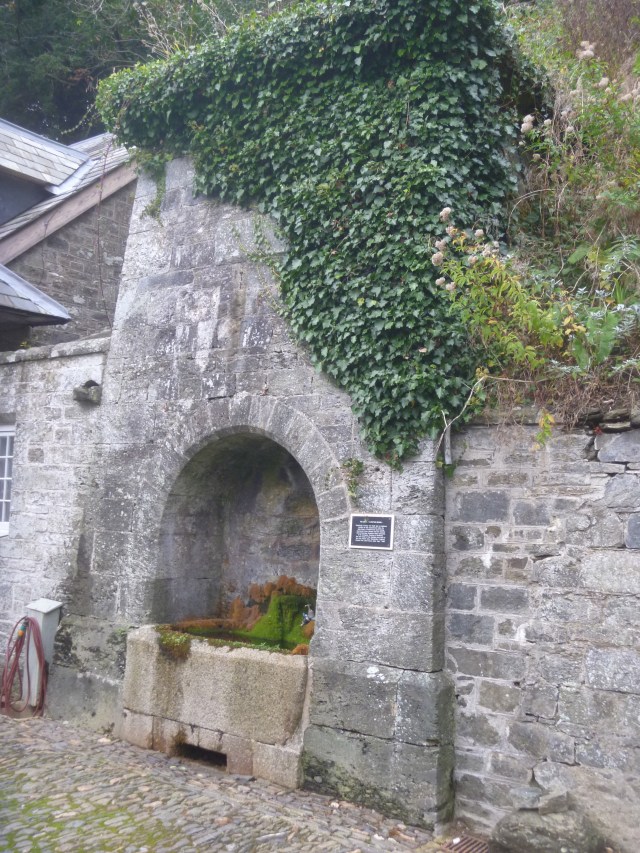
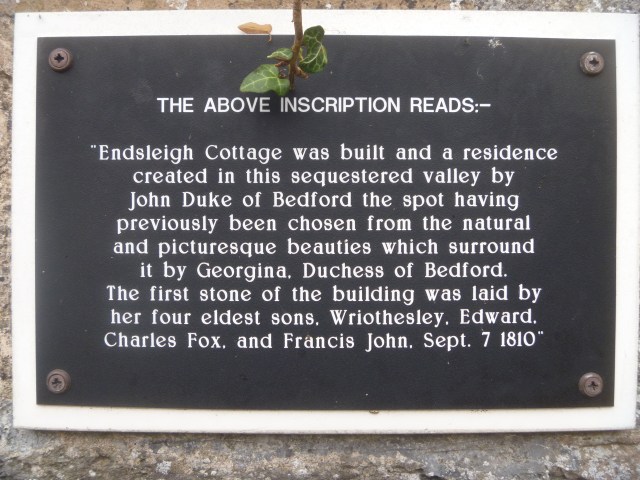
There’s a plaque in the stables commemorating the laying of the foundation stone by her four eldest sons.

Foundation stone

The Foundation Stone above the arch is nearly covered with ivy

Foundation stone words

There is an arboretum with little bridges crossing streams and which contains unusual trees from around the world. But after further garden exploration in the damp weather and on slippery footpaths with the light beginning to fade even in the early October afternoon it was a relief to take tea in the library at Endsleigh Hotel.

Time for tea

Time for Afternoon Tea

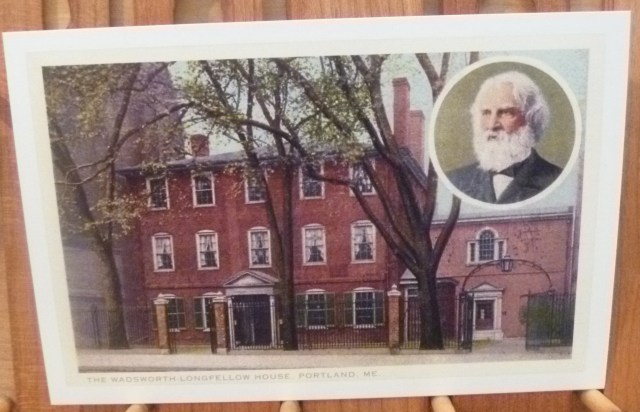
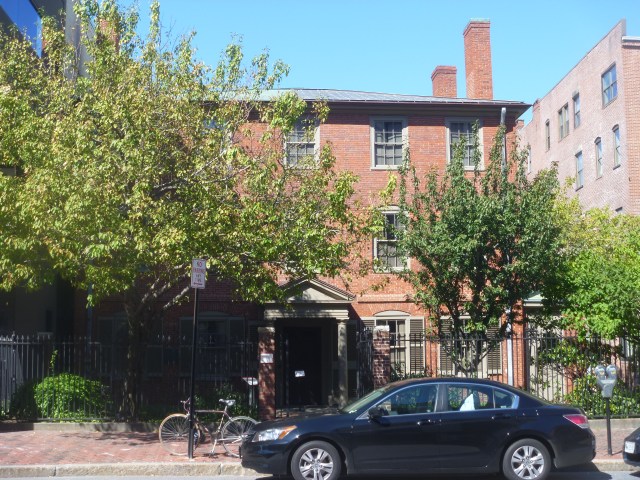
The Wadsworth-Longfellow House, Portland, Maine

Visit the HWL House

On our last full day in New England, before heading off to LLBean, I joined a morning tour of the Wadsworth-Longfellow House, located right in the middle of Portland on Congress Street. The house is not his birthplace. Although he was born in Portland that house has now been demolished.

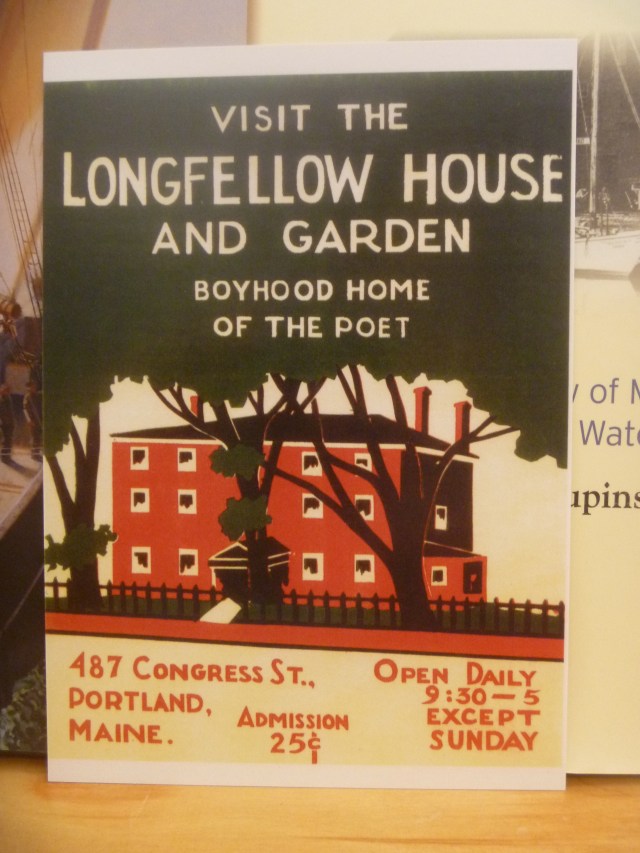
HLW House postcard


No Parking but always a car

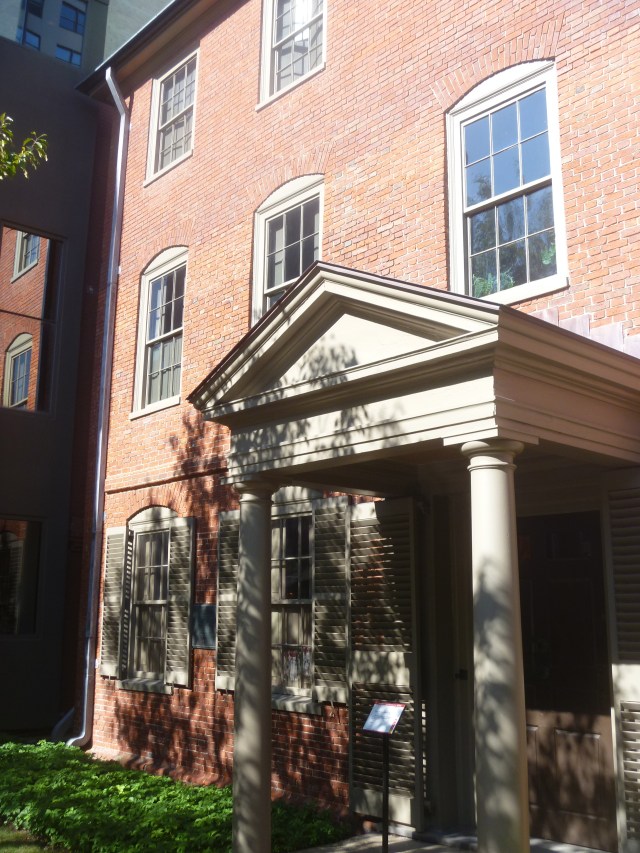
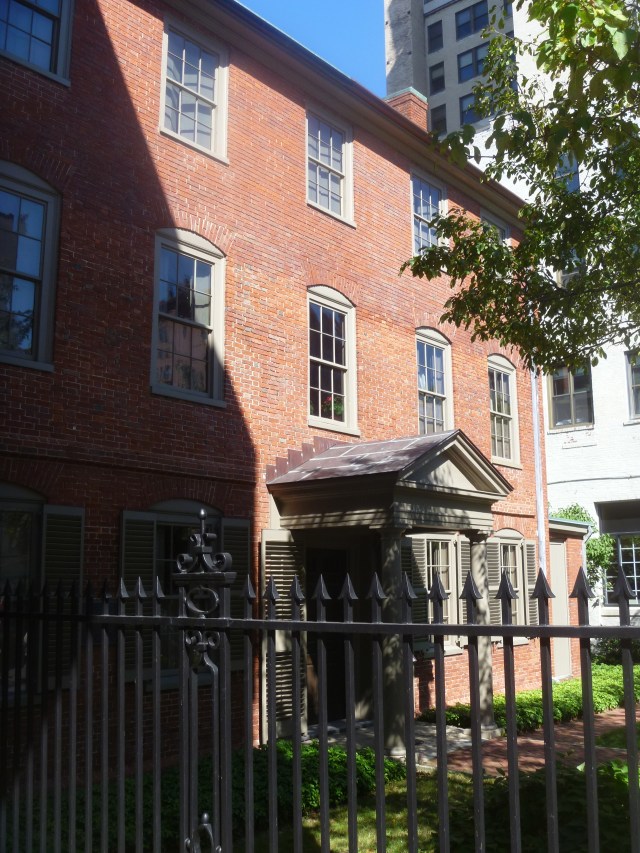
Faithfully restored to the 1850s, the Wadsworth-Longfellow House was the childhood home of Henry Wadsworth Longfellow. Built in 1785-86 by the poet’s grandfather, the house is decorated with original furnishings and family memorabilia. Tours offer a unique glance into the poet’s family, as well as into the cultural and social history of mid-19th century Portland.” [Information Board outside the house]

WLF House door

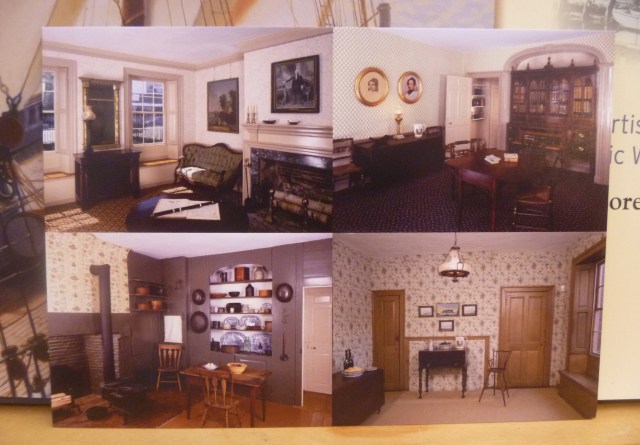
Yet again I enjoyed an entertaining and informative tour. No photography was allowed but there are pictures and descriptions of the rooms on the website and postcards of a selection were available in the excellent bookshop attached to the house.

Inside HWL House


Postcard shows the interior of Wadsworth-Longfellow House

Zilpa sampler

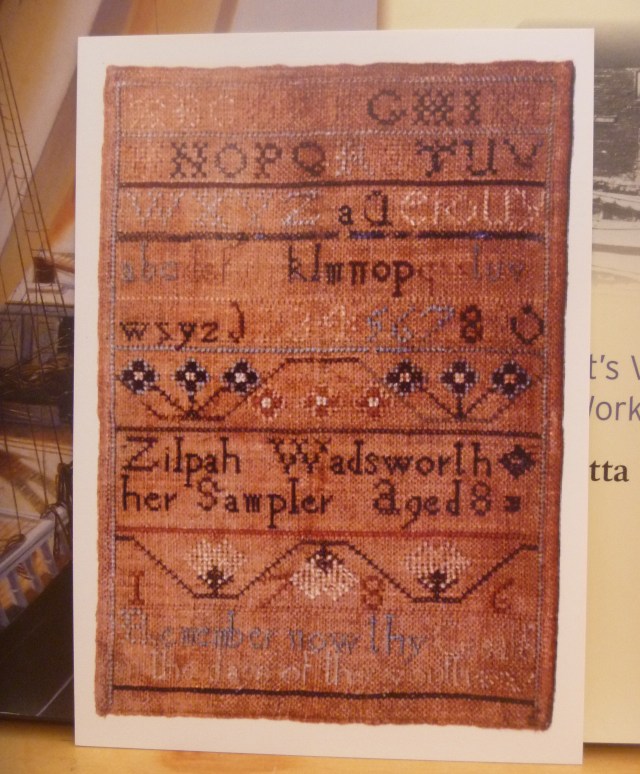
Zilpa’s Sampler (still on display in the house)

Peleg (love that name!) and Elizabeth Wadsworth, Henry’s grandparents, built the house in 1785-86 and Henry, born in February 1807, lived there from just a few months later throughout his childhood. With 9 siblings his father Stephen (and mother Zilpa) extended the house by adding another floor. Henry entered Bowdoin College in Brunswick, ME in 1822. After graduation in 1825 he moved to Cambridge, Massachusetts where his home there is also a national historical monument and open to the public : Longfellow National Historic Site, 105, Brattle Street, Cambridge, MA. He made regular return visits to his family home although, except for once, he and his wife never actually stayed there overnight.

Henry’s sister Anne lived here for almost all her long life; and when she died in 1901 left the house to the Maine Historical Society (MHS) requesting that the rooms “be kept with appropriate articles for a memorial of the Home of Longfellow” insisting that certain items be left where they had been during Henry’s residence.

There were interesting displays in the museum next door concerning the Emergence and History of Portland and about the Wadsworth-Longfellow Family.

Longfellow House

I also learned that :

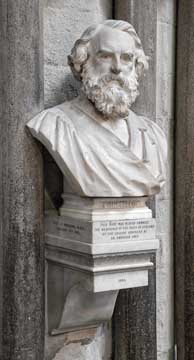
In 1884, Longfellow became the first non-British writer for whom a commemorative sculpted bust was placed in Poet’s Corner of Westminster Abbey in London; he remains the only American poet represented with a bust. [Wikipedia]

The over life-size white marble bust of the poet Henry Wadsworth Longfellow was unveiled in Poets’ Corner Westminster Abbey in 1884, on a pillar near to the tomb of Geoffrey Chaucer. It is by the sculptor Sir Thomas Brock and the main inscription reads:

Longfellow bust, Westminster Abbey

LONGFELLOW. This bust was placed amongst the memorials of the poets of England by the English admirers of an American poet.1884″

On the left and right sides of the plinth is inscribed:

“Born at Portland, U.S.A. February 27th 1807. Died at Cambridge, U.S.A. March 24th 1882”.

Longfellow’s ancestor, William Longfellow, had emigrated to New England in 1676 from Yorkshire. His parents were Stephen, a lawyer, and Zilpah. Henry taught at Harvard University and his prose romance Hyperion was published in 1839 after the death of his first wife. Ballads and other Poems includes ‘The Village Blacksmith’ and ‘The Wreck of the Hesperus’. The Song of Hiawatha is one of his best known works and he was second only to Lord Tennyson in popularity. His grave is in Cambridge, Massachusetts.

A photograph of his bust can be purchased from Westminster Abbey Library.

Further reading:

“England’s homage to Longfellow” by E.C.Lathem, 2007

[source of text and photo]

Before the tour, after the  tour or at any time during opening hours anyone may visit the Longfellow Garden behind the house.

HWL better garden

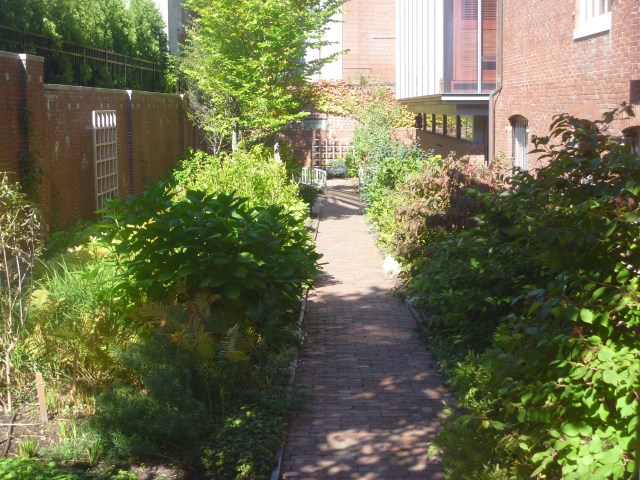
The secluded Longfellow Garden located behind the House is an oasis of green and quiet in the heart of downtown Portland. Beautifully landscaped, the public is welcome.” [Information Board]

Looking back up garden

Looking back up the garden towards the house

The members of the Longfellow Garden Club have tended this oasis of peace and calm in the centre of the bustling city of Portland for 90 years. These volunteers weed the beds, prune the overgrowth, plant annuals, maintain the soil and much much more.  In 1924 Mrs Pearl Wing set about restoring the garden. She encouraged the local community to help her and to donate plants and create a fountain in the garden. She also established the bye-laws and operating principles of the Club.

Presnt day fountain

Present day fountain

Naturally, there have been changes in the area and garden surroundings since then. Until 1980 the garden was only visited by those touring the house but the Club convinced the MHS to allow public access during house opening hours. It is a popular quiet retreat and “hidden treasure”.

Read more about the life and works of the author of The Song of Hiawatha (possibly his best-known work here in the UK) here and see whether you can recognise his many quotations here.

“The love of learning, the sequestered nooks, and all the sweet serenity of books”

Emily Dickinson Museum : The Homestead and The Evergreens

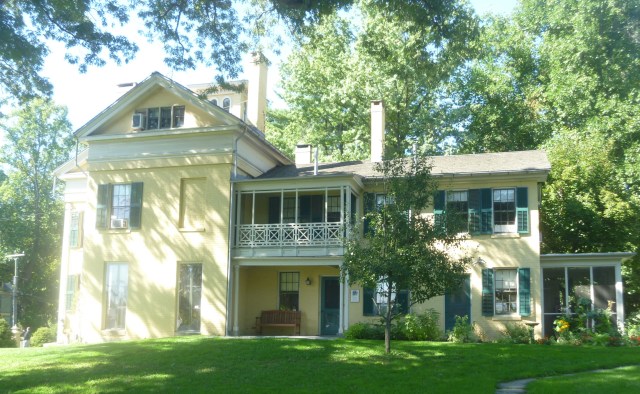
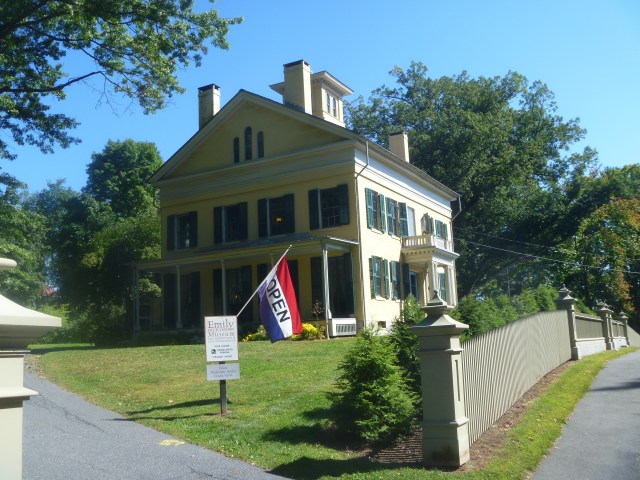
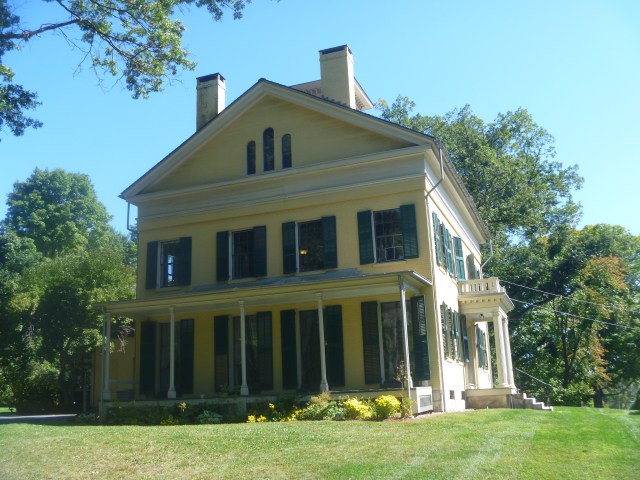
The Emily Dickinson Home

This year we made our third visit to Brattleboro, Vermont and on each visit I have wanted to make the trip an hour south to Amherst where the former home of the poet Emily Dickinson is open to the public as a museum. Amherst is an attractive College town – five in all in the area – with some interesting shops and plenty of eateries.

Emily Dickinson Homestead

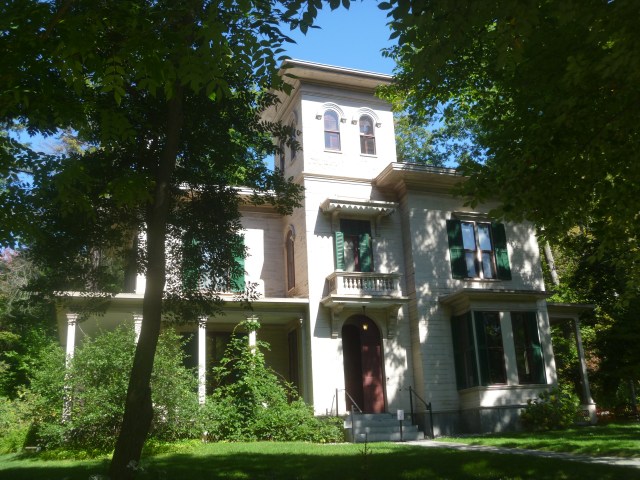
On the Friday of our stay I drove myself back down into Massachusetts. The museum was easy to find and I was able to book onto the second tour of the day : Emily Dickinson’s World a 90-minute guided tour of both the Homestead (Emily Dickinson’s house) and The Evergreens (Austin and Susan Dickinson’s home). This constitutes an in-depth focus on Emily Dickinson’s life and family and the major influences on her writing. Includes the parlors, library, and the poet’s bedroom at the Homestead; the library, parlor, dining room, kitchen, maid’s room, water closet, nursery, and “Emily Room” at The Evergreens.

Emily Dickinson room

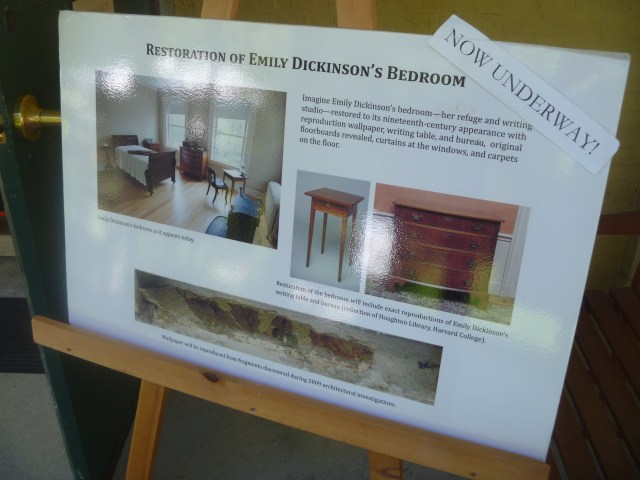
The Poet’s Bedroom is currently under renovation

As I had just missed the first tour by a few minutes I decided to buy the tour of the grounds which is an audio and self-guided.

“Grounds of Memory: a guide to the Dickinson landscape” The audio tour of the outdoor Dickinson grounds (duration of full-length tour is 60 minutes; visitors may tailor the tour to fit their needs) Explores Emily Dickinson’s fascination with the natural world and her family’s deep interest in the land and  includes eighteen stops outside the Homestead and The Evergreens. Stops may be visited in any order. Each stop offers a 2- or 3-minute narration and at least one Dickinson poem appropriate to that stop.

Narrated by poet laureate Richard Wilbur
Voice of Emily Dickinson provided by poet Mary Jo Salter

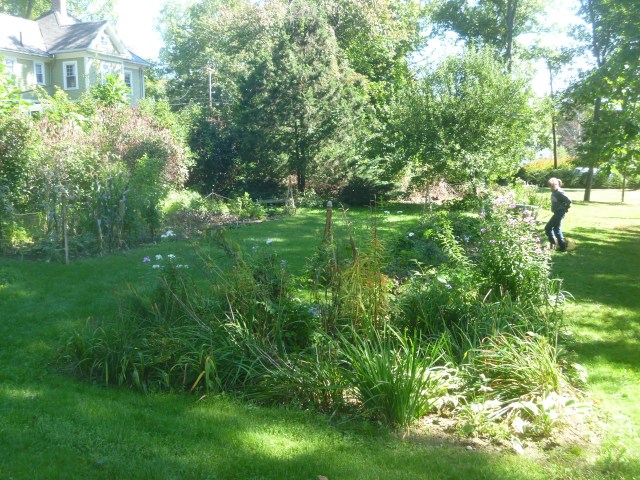
The Flower Garden

 First three stops are at the Flower Garden

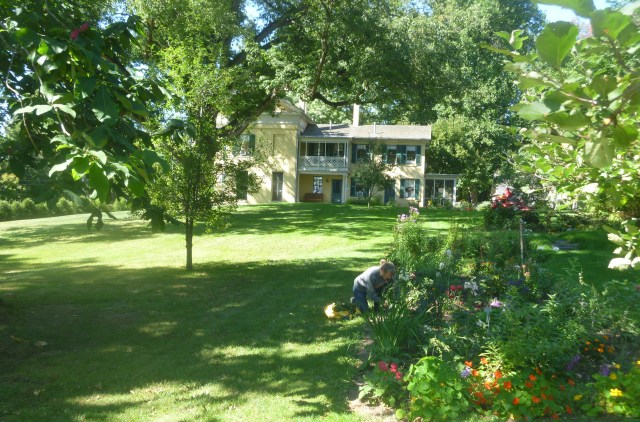
Flower Garden and Home

The Ornamental Flower Garden and the Homestead

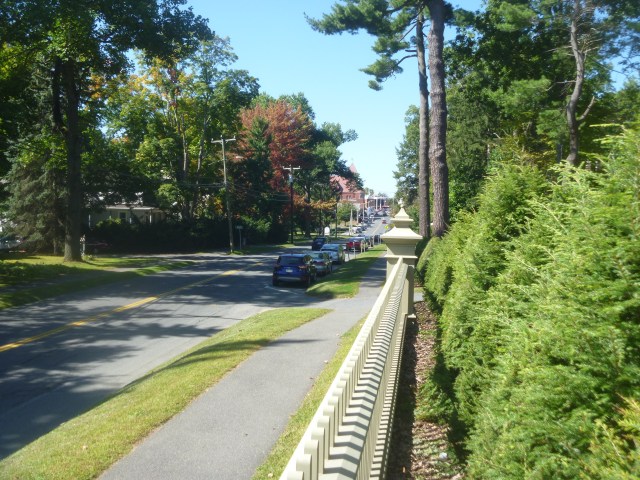
Main St and Amherst

Main Street looking towards Amherst

Evergreens

The West Bedroom (1st floor, RHS) was Emily’s

The Evergreens

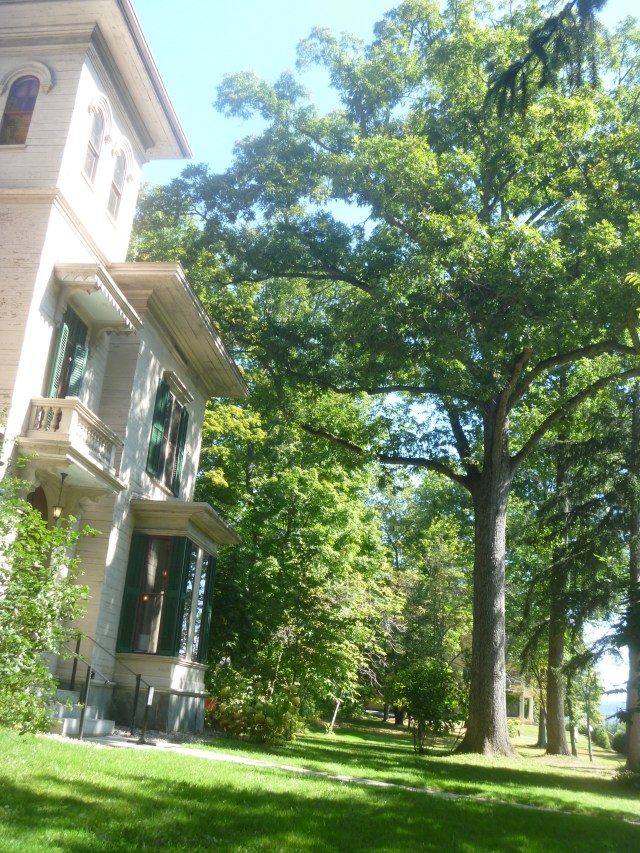
The Evergreens – built by Edward Dickinson as a wedding gift to his son and daughter-in-law on their marriage

The grassy path

The grassy path between the two homes – “Just wide enough for two who love” (ED)

Here is a brief biography of the poet but the tour really brought to life her life and the lives of her family in particular her sister, Lavinia, her mother and father and her brother, Austen and his family.

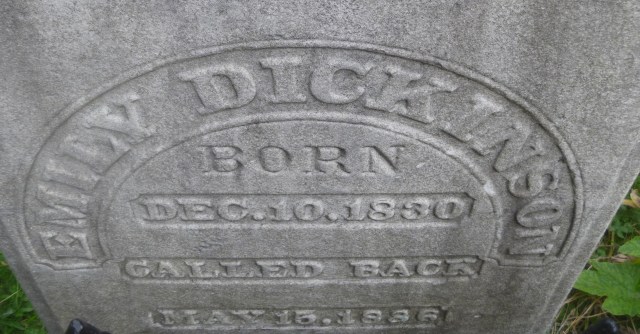
EMILY DICKINSON was born in Amherst at the Homestead on December 10, 1830. Her quiet life was infused with a creative energy that produced almost 1800 poems and a profusion of vibrant letters.

Her lively childhood and youth were filled with schooling, reading, explorations of nature, religious activities, significant friendships, and several key encounters with poetry. [She was not always the recluse that many choose to characterise her – at one  time she called herself The Belle of Amherst.] Her most intense writing years consumed the decade of her late 20s and early 30s; during that time she composed almost 1100 poems. She made few attempts to publish her work, choosing instead to share them privately with family and friends. In her later years Dickinson increasingly withdrew from public life. Her garden, her family (especially her brother’s family at The Evergreens) and close friends, and health concerns occupied her.

With a few exceptions, her poetry remained virtually unpublished until after she died on May 15, 1886. After her death, her poems and life story were brought to the attention of the wider world through the competing efforts of family members and intimates.” [source]

This was a house visit par excellence. The 90 minute houses tour was filled with interest and insight into the lives. The Dickinson Landscape self-guided audio tour complete with poetry readings added to almost complete immersion into ED’s life and thoughts. Our house guide was entertainment herself and added poetry quotations and a quick ‘class’ in the importance of word choice in a ‘schoolroom’ – in which we all participated. No photography was allowed in the house but the tour was such fun and so informative that I will forgive them for that. Having visited the home of a poet I had barely heard of I came away feeling as if I met her myself. Well done, Emily Dickinson House Museum!

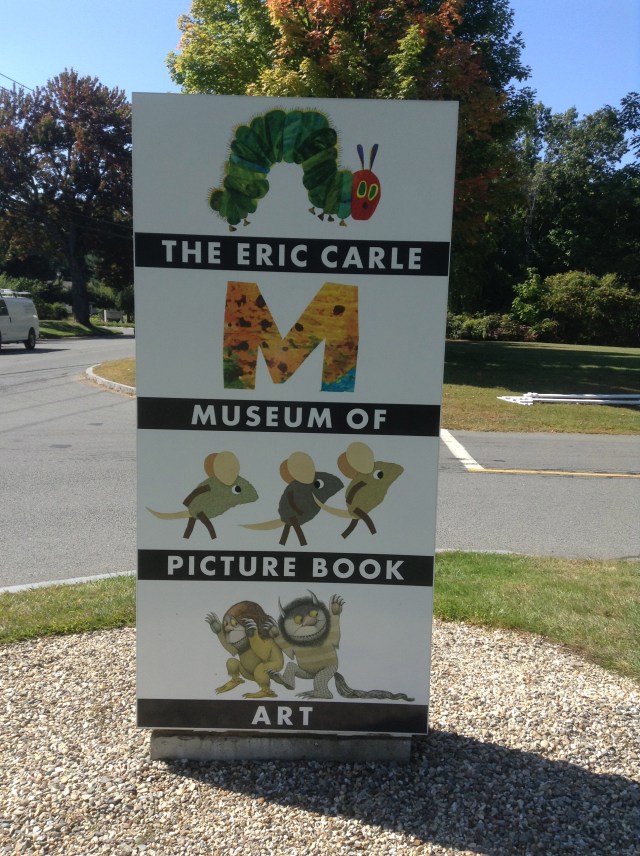
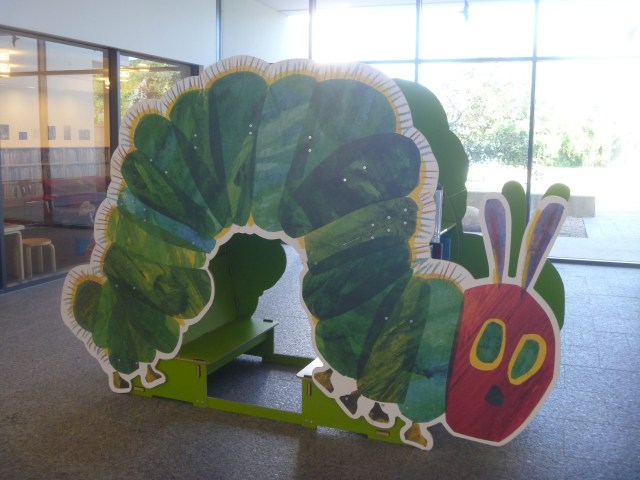
On leaving the Museum I couldn’t resist a quick visit to another nearby museum – almost from the sublime to the ridiculous – The Eric Carle Museum of Picture Book Art. A purpose-built centre devoted to the art of contemporary children’s book illustrator Eric Carle. We still have a very dog-eared copy of The Very Hungry Caterpillar at home.

Picture Book Art


Carle Museum

 The Eric Carle Museum

The very hungry caterpillar

This is what a Very Hungry Caterpillar looks like!

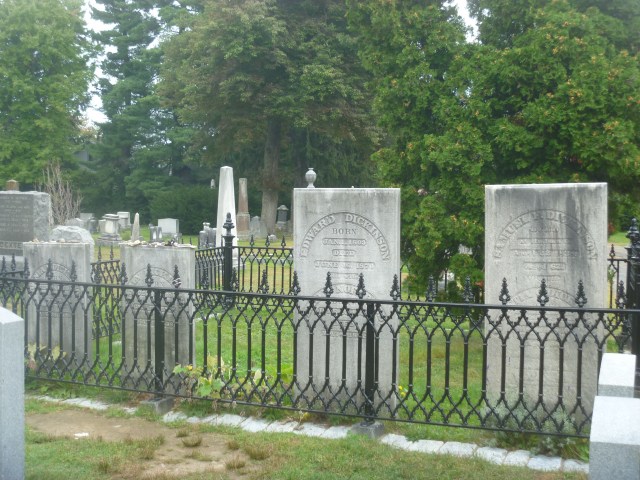
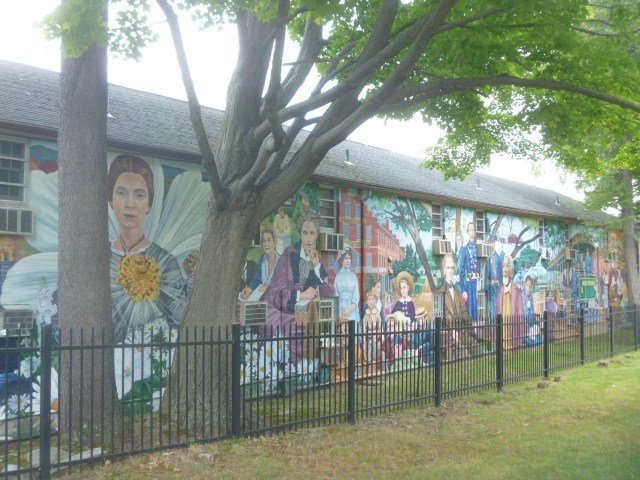
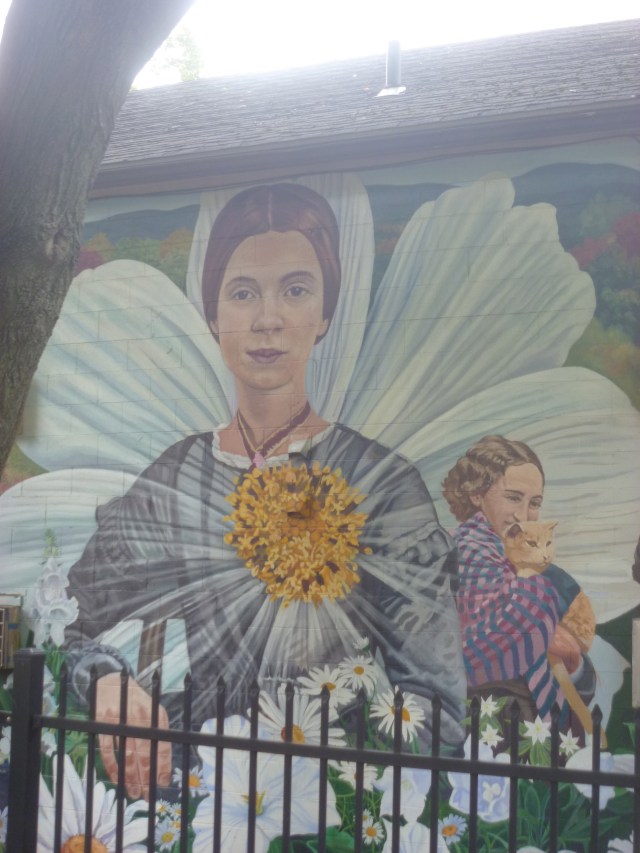
And finally, the next day we both made the journey back down to Amherst, enjoyed a decent lunch and I tracked down the Dickinson graves in West Cemetery where there is also a Community History Mural featuring characters from the Amherst story from all fields of experience (farming, literature, domestic life, education, military, industry and economic life) and including, of course, Emily Dickinson herself.

Dickinson family graves

The Dickinson Graves in West Cemetery, Amherst

Emily Dickinson grave stone

Wording on Emily’s Gravestone

History Mural West Cemetery Amherst

The Amherst Community Mural, West Cemetery

Emily Dickinson on History Mural

Emily Dickinson (Lavinia behind) on the Community Mural