Museum Plantin-Moretus : a UNESCO World Heritage Museum in Antwerp

In the early afternoon after our walking tour in outer Antwerp our coach dropped us off at the car park by the River Scheldt from where we made our way to the Grote Markt and the Cathedral.
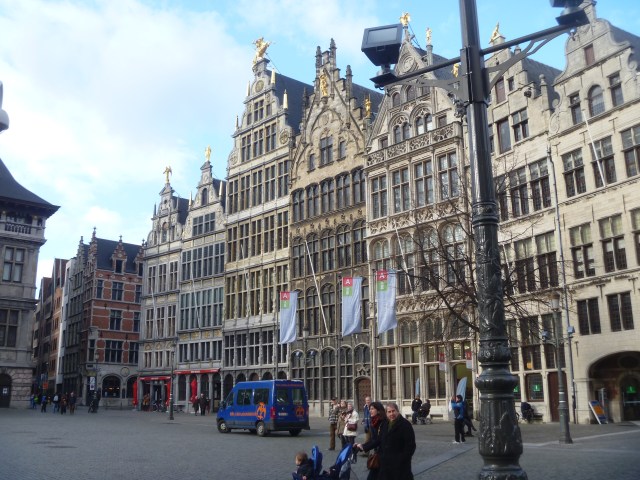
Grote Markt

The Grote Markt, Antwerp

Cathedral

Onze-Lieve-Vrouwe Kathedraal, Antwerp

From here we dispersed to find lunch. The plan then was to reassemble at the Cathedral in about an hour in order to tour the Rubens paintings which hang there, currently. However, with no persuasion from me, my friend and I decided we would rather visit the Plantin-Moretus Museum and arranged to meet the group back at the coach at 5pm.

Chocolate Box

Wrapping my purchases at The Chocolate Box

So, after a tasty pub lunch and making some chocolate purchases, we soon found the museum and were very happy with our choice. This is the only museum listed on the UNESCO World Heritage List.
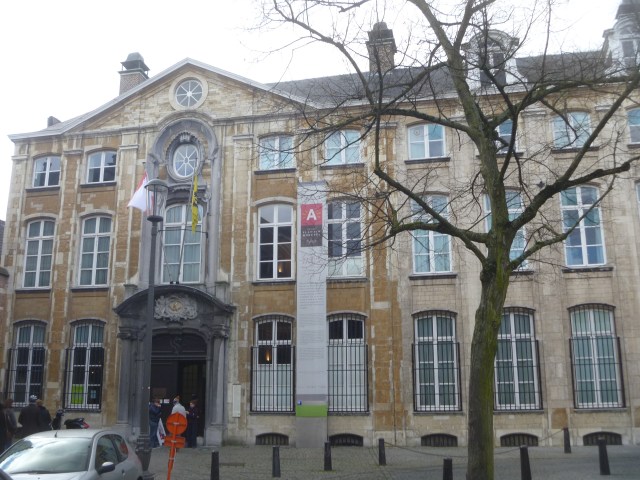
Plantin Moretus

The Plantin-Moretus Museum, Antwerp

Inner courtyard

The Elegant Interior Garden

This is one of the most interesting museums in Antwerp. It is housed in the mansion of Christophe Plantin, who set up as a printer in 1555, one of the first industrial printers in history. In the workshop, the equipment, which includes one of the oldest surviving printing presses, has been left as it was when operations ceased in the early 19th century. There is much else to see here besides, including the family home, a sumptuous patrician home with an elegant interior garden, tapestries, vellum Bible, woodcuts, copper plates, and works by Rubens. The museum’s archives, more than 100 years old, have been placed on UNESCO’s World Heritage List.” [Source : My LV City Guide to Amsterdam, Antwerp, Brussels, Zurich, 2012]
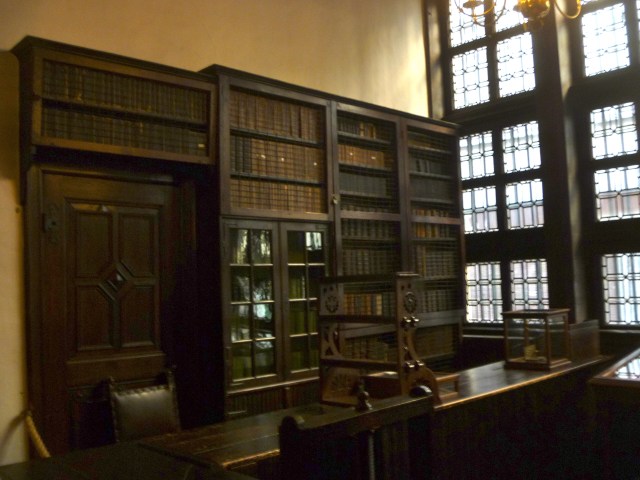
Bookshop

The Original Bookshop : books sold here from 1700

The Proofreader
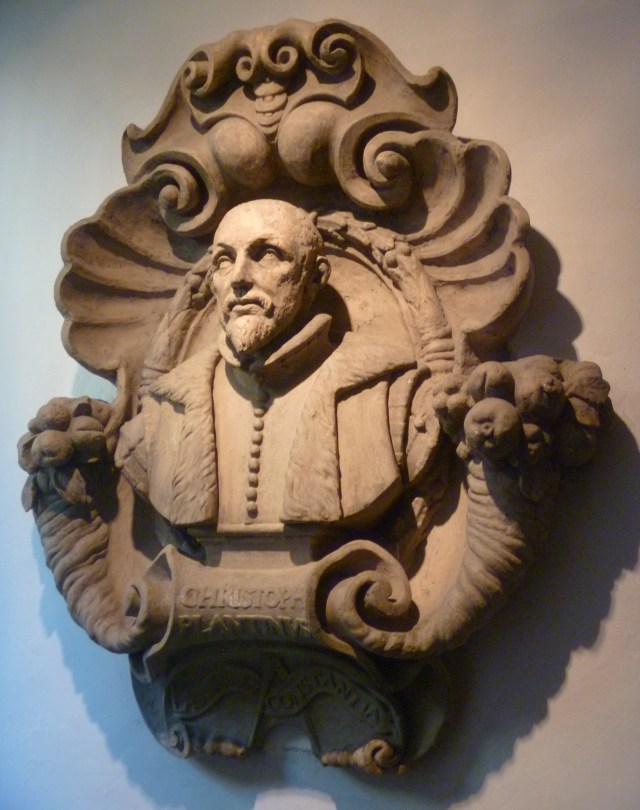
The Proofreader

Christoph Plantin

Christoph Plantin

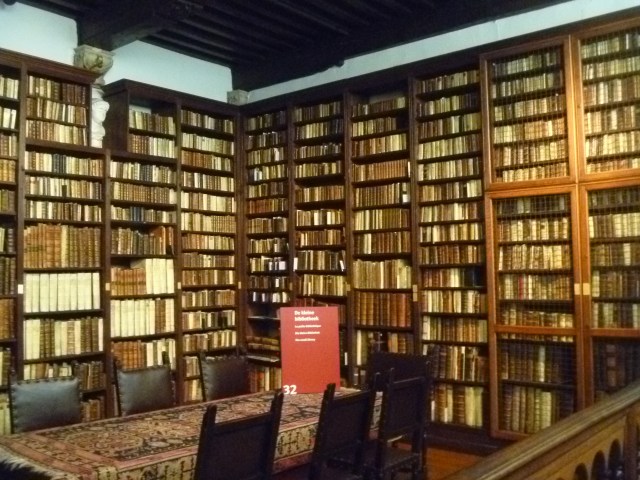
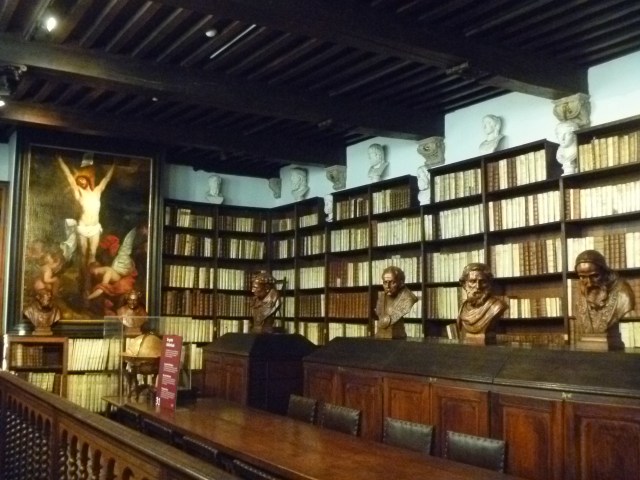
In The Great Library

In the Great Library

Great Library

In the Great Library/Chapel

The Moretuses’ own private book collection (1640) is an example of a humanist library. The volumes are shelved by size. By 1655 the Library was used as a Chapel.
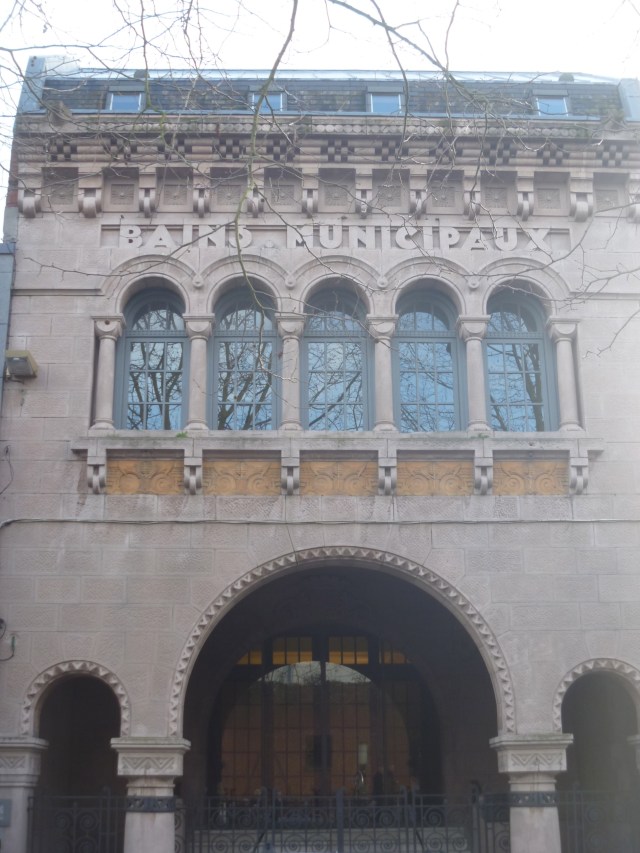
La Piscine – The Swimming Pool Gallery

On completion of our morning walking tour of Lille we met our coach and were taken the few miles out of the centre of Lille to the nearby city of Roubaix (twinned with nearby Bradford, West Yorkshire) which is now incorporated into the Lille conurbation.

Original pool entrance

The Original 1932 Art Deco Entrance

La P exterior

The Swimming Pool Museum Entrance Today

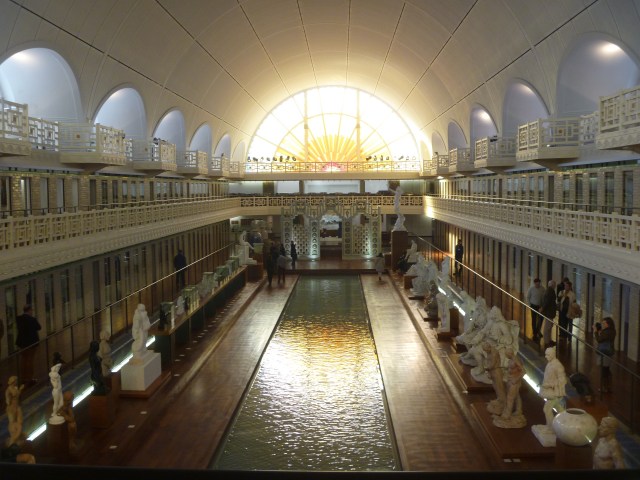
In October 2011, Lille’s Musée d’Art et d‘Industrie celebrated its tenth birthday, and a hugely successful decade of existence. Architect Jean-Paul Philippon converted the splendid Art Deco swimming baths into a museum, transforming the former changing rooms and cabins into “curiosity cabinets” overlooking the partly covered former swimming pool. The collections include paintings by Gérome, Fantin-Latour, Dufy and Tamara De Lempicka, and sculpture by François Pompon and Camille Claudel, plus ceramics by Pablo Picasso and an exceptional collection of textile samples and designs. Visitors come here from all over Europe for the acclaimed temporary exhibitions; recent subjects include The Bloomsbury Group, Pierre Loti, sculpture by Degas and the work of Paul Signac” [Adapted from my 2012 LV City Guide Lille, Lyon, Monaco, Toulouse]

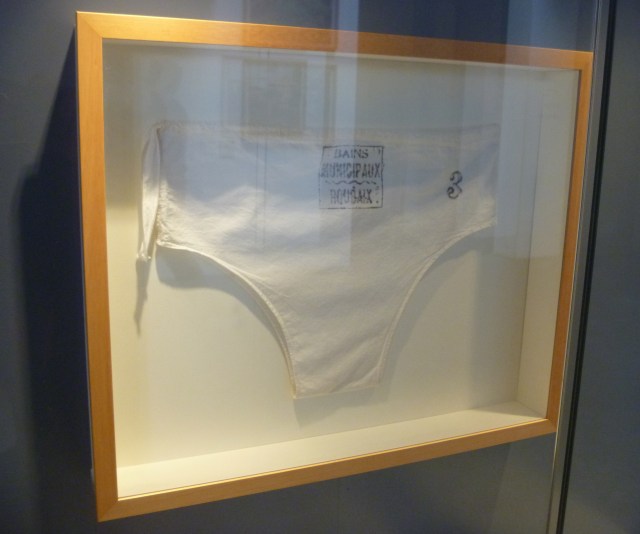
Trunks

Oh-La-la!

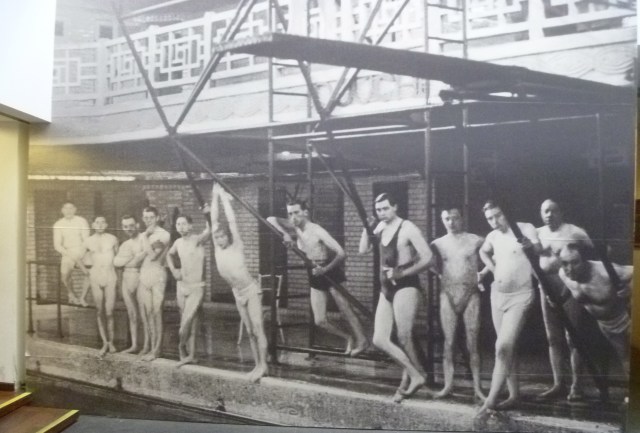
B&W swimmers

Original Swimming Displays in the Museum

The main entrance lobby and display don’t prepare you for the museum itself. After the lobby and reception you step through the ‘showers’ and ‘footbaths’ and into the pool proper. There’s still some water but much reduced in size and even on the dull overcast Friday the area was filled with light.

La Piscine

La Piscine

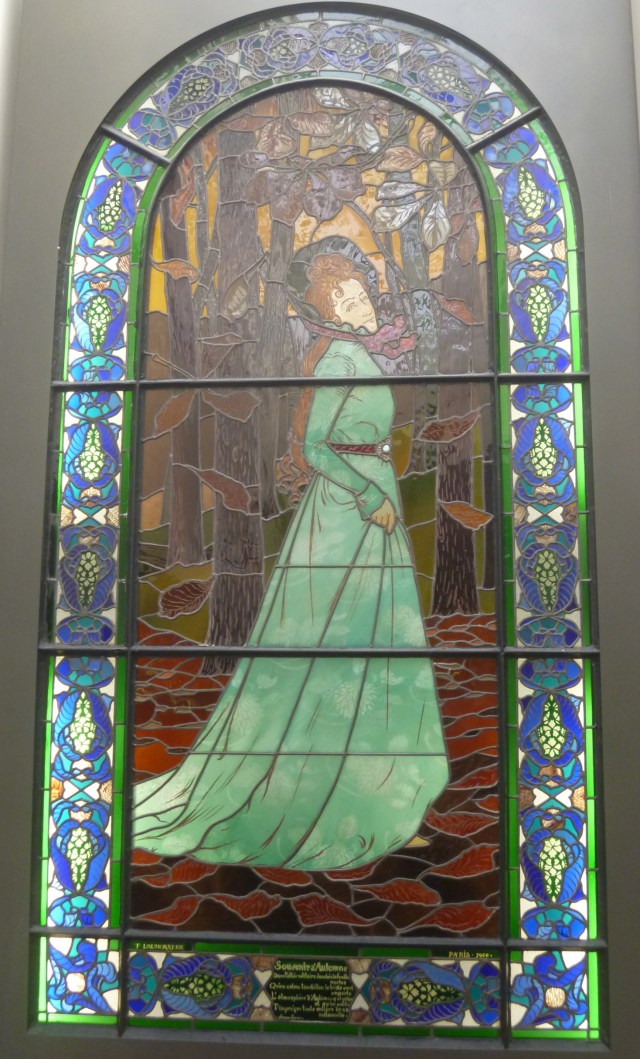
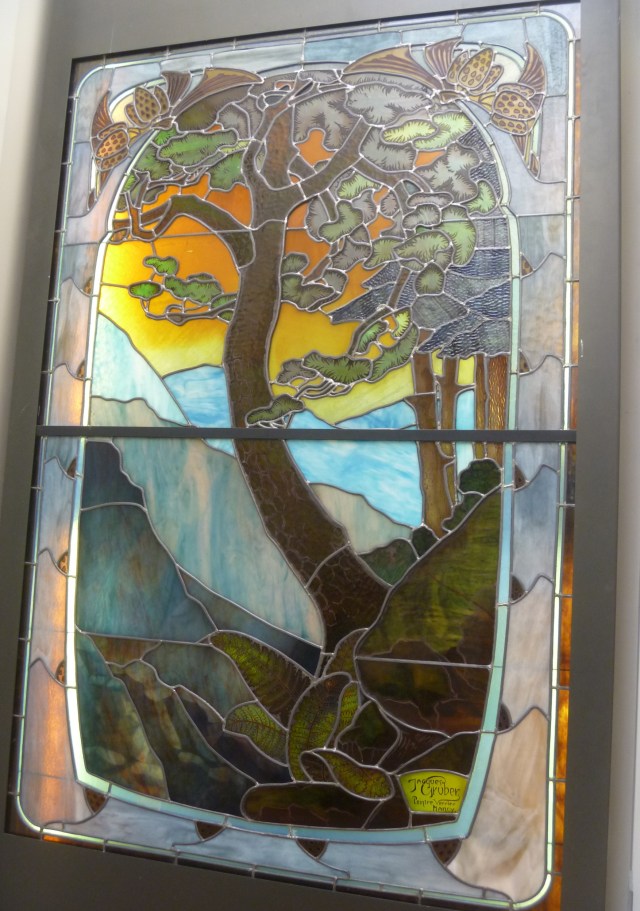
On arrival Mike introduced us to the gallery and to two Art Nouveau stained glass windows on display then left us to our own devices for an hour before meeting us in the picture gallery and talking about several paintings relevant to our themes.

T. Laumonnerie

Théophile Laumonnerie – Memory of Autumn

J Gruber

By Jacques Gruber of Nancy

Young woman on lute

Stylised Art Deco: Part of the Debussy Monument : Young Woman Playing a Lute (1932)

Eric Kennington

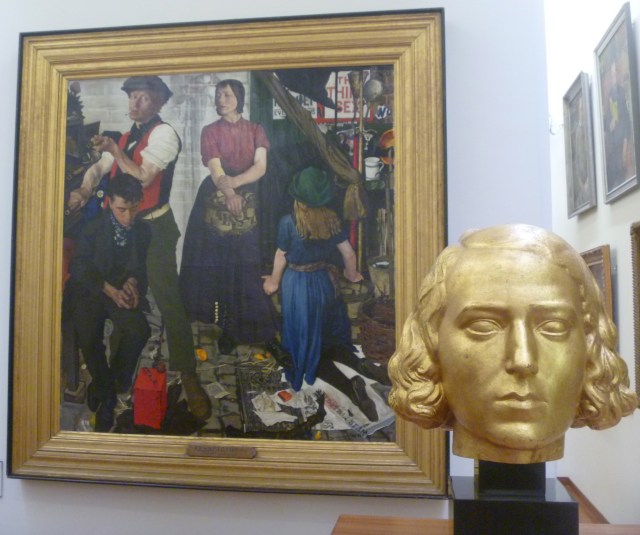
Eric Kennington of The New English Art Club: La Cuisine Ambulante (1914)

Rothenstein

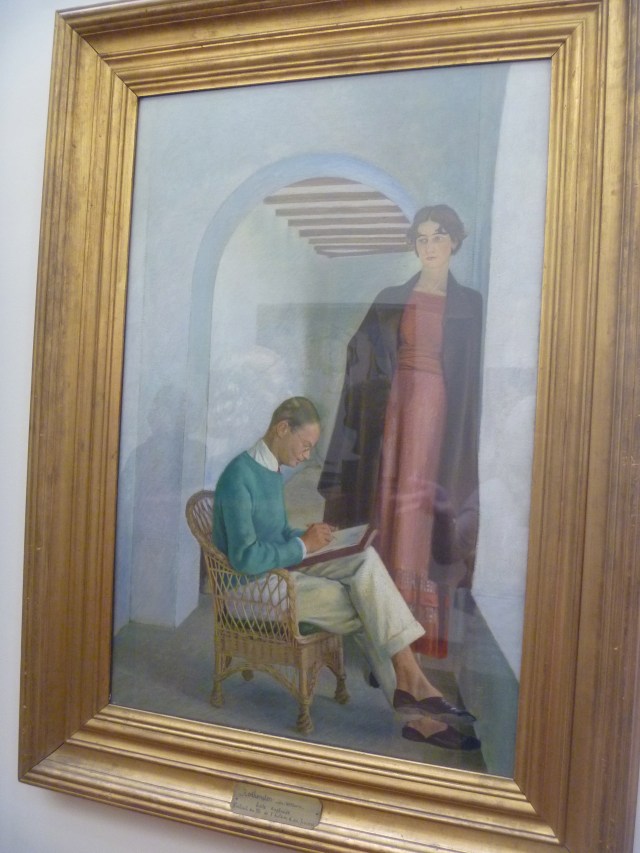
Sir William Rothenstein’s The Artsist’s Son and his Wife

And I always find time to check out the quirky gifts and buy postcards in the Museum Shop – La Piscine no exception!

Museum shop

A Visit to The Freud Museum in London

20 Maresfield Gardens

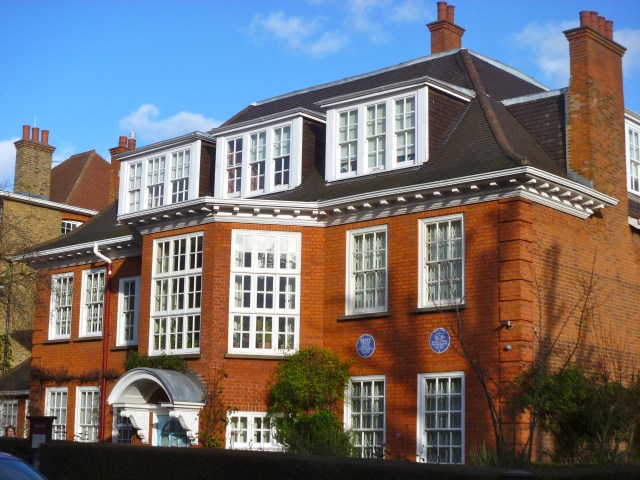
20, Maresfield Gardens  NW3 : The Freud Museum

Today I visited The Freud House Museum just up the road from where I am staying in Belsize Park. It has limited opening hours and days so I haven’t managed to get there before. If you show your National Trust Card you get half price admission and if you are, like me, over 60, it is only £2.25 as opposed to the full £6.

2 blue plaques

Anna Freud and her father Sigmund Freud lived here

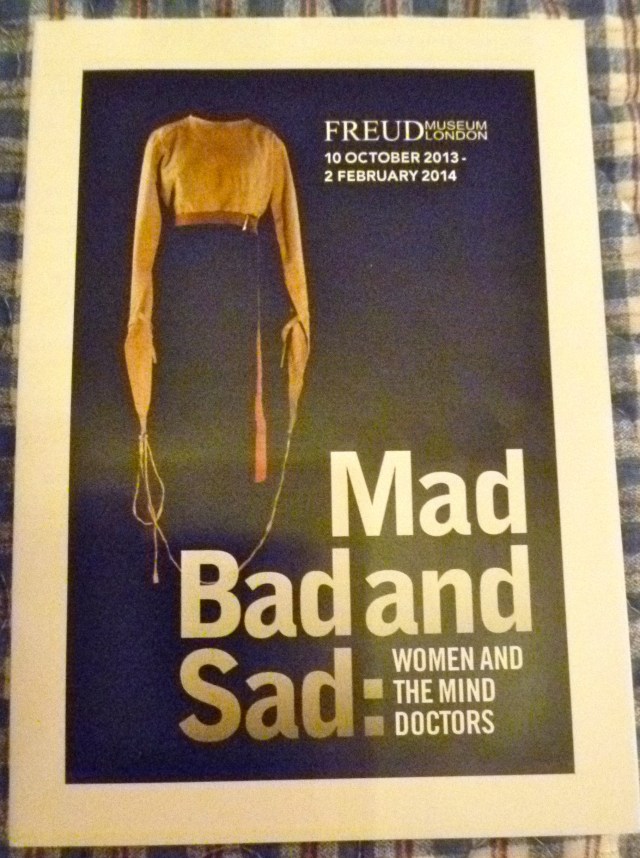
I thought £2.25 was enough to pay, really. There are only really one and half rooms worth seeing plus an introduction to the house and family in the Dining Room and a video room. Two upstairs bedrooms are devoted to the temporary exhibition, Mad, Bad and Sad: Women and the Mind Doctors, which was partly interesting. I could have done with fewer subjects and a more full portrait of each.

Mad sad and bad

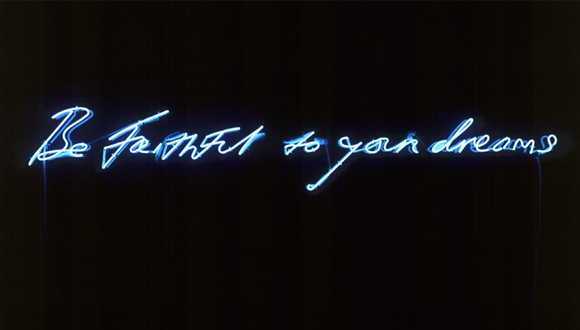
Women featured included Sylvia Plath, Marilyn Monroe, Mary Lamb and Virginia Woolf. Virginia and Leonard Woolf visited Freud here at his home. The exhibition was accompanied by modern art and installations mainly by women. On the staircase wall and in lights was Tracy Emin’s “Be Faithful to your Dreams”

be-faithful-to-your-dreams

[Source]

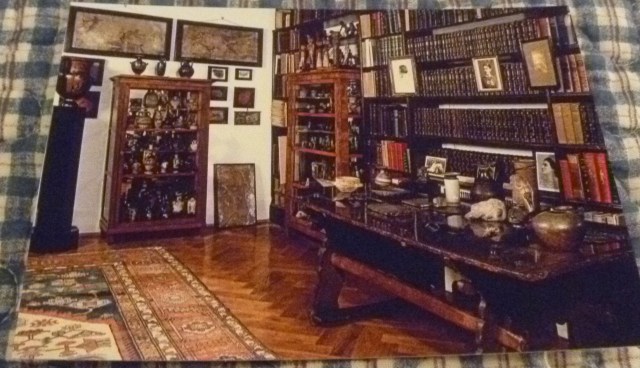
The most interesting room to me was Freud’s ground floor study and consulting room with his famous couch and the green chair in which he sat to listen to his patients baring their souls.

Freud's study

The Freuds were fortunate in being able to leave Vienna in 1938 after the annexation of Austria by Adolf Hitler. They were even able to bring their furniture, hundreds of books (although Sigmund Freud sold 800 before he left) and household ornaments and Freud’s collection of antiquities also including his daughter Anna’s traditional painted Austrian country furniture now on show in the Dining Room. The study is jam-packed with stuff and books and is set up just as it was in Berggasse, 19 his former Viennese home and now another Freud Museum.

Freud couch

Freud’s Couch and Chair

On asking I was told that no photography was allowed in the house. So I bought postcards and these are reproduced here. However I found it very annoying that people were ignoring this and snapping away with their smart phones.

With other rooms having the curtains closed I found the half-landing refreshing and bright – the sun shining through the window. It was an area loved by Freud’s wife, Martha, for afternoon tea and chat. See the bay window above the front door in the top photo.

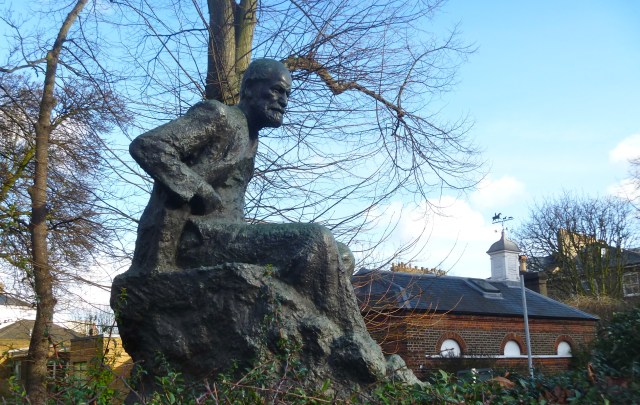
Between the flat and  Maresfield Gardens is a statue of Sigmund Freud. It’s in the grounds of The Tavistock Clinic for Mental Health Care and Education.

Freud Statue 1

Freud was already sick with throat cancer when he arrived in Britain and he was to die just a year later on 23 September 1939 just a few weeks after war was declared on Germany. The couch on which he died is also displayed at the house. His wife and his unmarried daughter Anna lived on in the house. Anna was also a well respected practising psychoanalyst.

Fellow Blogger ‘Down by the Dougie‘ got there before me!

Slow Train to Switzerland: One Tour, Two Trips, 150 Years and a World of Change Apart

It’s my birthday and I have received some lovely gifts including this book :

Slow train

You may remember that last summer I spent a month in Switzerland and posted each day about my experiences here.

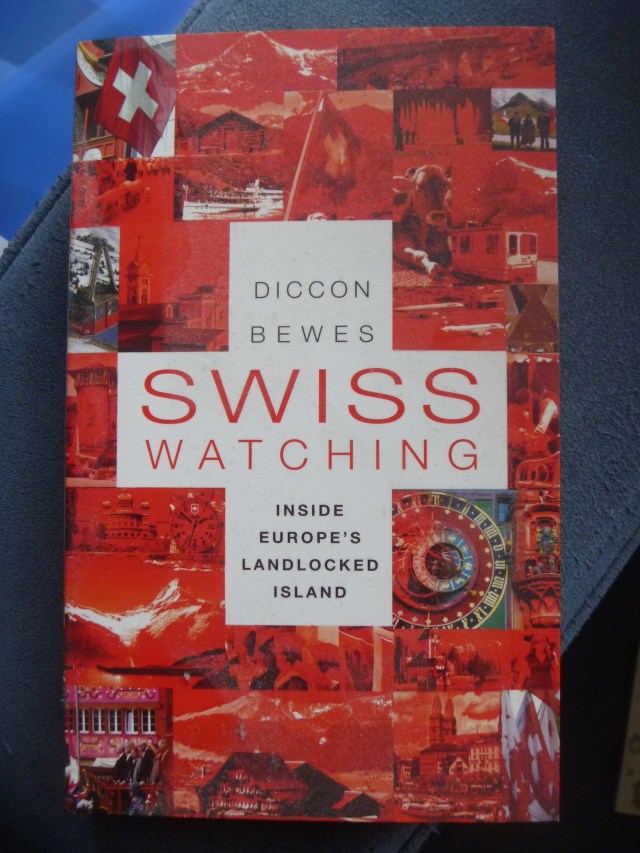
I still haven’t read Bewes’s ‘Swisswatching’ [below] but I think ‘Slow Train’ will jump the queue as I’m a seasoned traveller on Swiss trains and I remember there was feature about Miss Jemima’s diary on the Myswitzerland.com website and in the Financial Times around the time that I made my trip. I see there is now a fancy app. to accompany anyone wishing to emulate Miss J and D Bewes.

Swiss Watching

It was the tour that changed the way we travel. In the summer of 1863 seven people left London on a train that would take them on a thrilling adventure across the Alps. They were The Junior United Alpine Club and members of Thomas Cook’s first Conducted Tour of Switzerland. For them it was an exciting novelty: for us the birth of mass tourism and it started with the Swiss.” [From the fly -leaf of Slow Train to Switzerland]
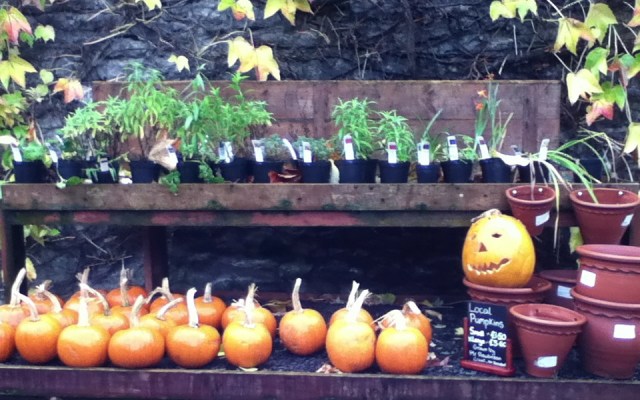
Bewes followed in the footsteps of this group and is able to do so because one member, Miss Jemima from Yorkshire kept a diary that was lost for decades but survived as a unique record a historic tour.

Alpines Museum

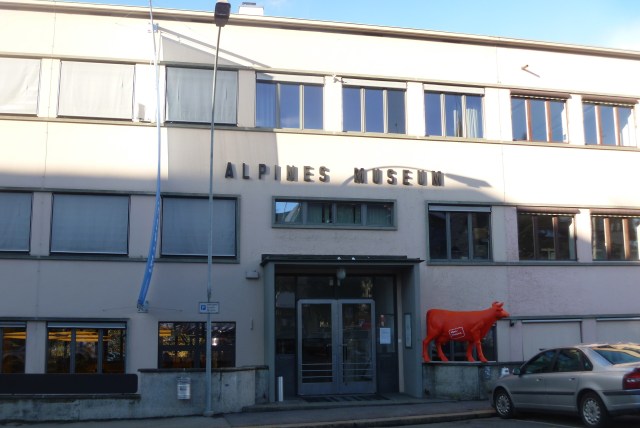
Reading about this I’m remembering my very disappointing visit to The Swiss Alpine Museum in Bern last February. I had expected to be able to see displays and dioramas illustrating the history of alpinism with particular reference to Switzerland (and including, of course, the British contribution) through books, maps, photographs, hotels, transport, clothes and footwear, transport, personalities, and other displays and artefacts. What I was presented with was a series of enlarged photographs and a heap of broken skis. My disappointment was so great that I  wrote to the Museum Director and here is part of his response :

“We decided to start up a new concept dealing much more with contemporary issues for people who like to face the reality of the alps. “Intensive care stations” is an example of this new approach … The reality of the alps today is packed with debates and very discursive issues, so our museum concept tries to shape a platform for contemporary themes around mountains.”

It was nice to get a personal response and good luck to them but I still felt cheated of my 12 Swiss francs entry fee!

Packaging

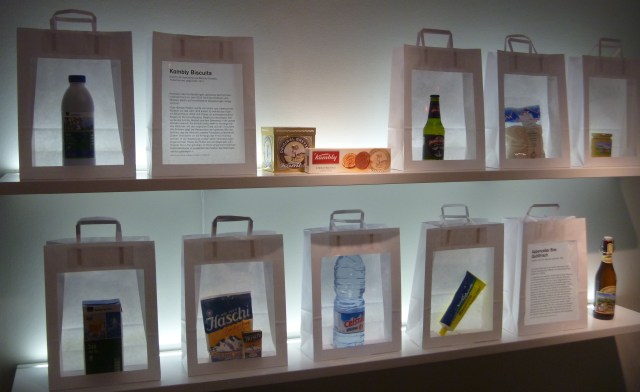
Actually, this small display of Swiss products featuring mountains was quite interesting but this was small compensation to me!

“Uproar!” The first 50 years of The London Group 1913-1963

Ben Uri sign

Ben Uri : Art, Identity and Migration – The Art Museum for Everyone

I’m in London for a few days and this morning I walked from the flat between Belsize Park and Swiss Cottage to The Ben Uri Art Museum in St John’s Wood. It’s a 20 minute walk; unfortunately today it was pouring with rain.

The Ben Uri

Until 2nd March the Gallery is hosting a special exhibition of which I read favourable reviews in the FT Weekend and The Independent. I had never heard of the London Group but it seemed to fit in well with recent exhibitions visited in Kendal and in Leeds.

The Gallery is very small, entrance is free and there is currently no permanent display as ‘Uproar!’ fills all three rooms. Here is a short video introduction from the Gallery website.

To celebrate The London Group’s momentous centenary year in 2013, Ben Uri and The London Group are working together with two simultaneous exhibitions. Ben Uri has curated and is hosting a major historical exhibition, “Uproar!”: The first 50 years of The London Group 1913-1963, examining the first half century in the group’s turbulent history, while The London Group is holding a separate, complementary, contemporary exhibition showcasing work by its current members at The Cello Factory, London SE1 8TJ.” [source]

It was amazing to see side by side paintings and sculptures by such diverse artists as L S Lowry, Duncan Grant, Walter Sickert, Vanessa Bell, Henry Moore, Barbara Hepworth, C R W Nevinson, Jacob Epstein, Mark Gertler, Roger Fry, Euan Uglow and Leon Kosoff. I was lucky enough to turn up on the day of a tour and introduction by the curator of this small but powerful exhibition. The above video gives a feel of the intimacy of the small gallery and the importance of the works on display. And here are some of my photos of notable works.

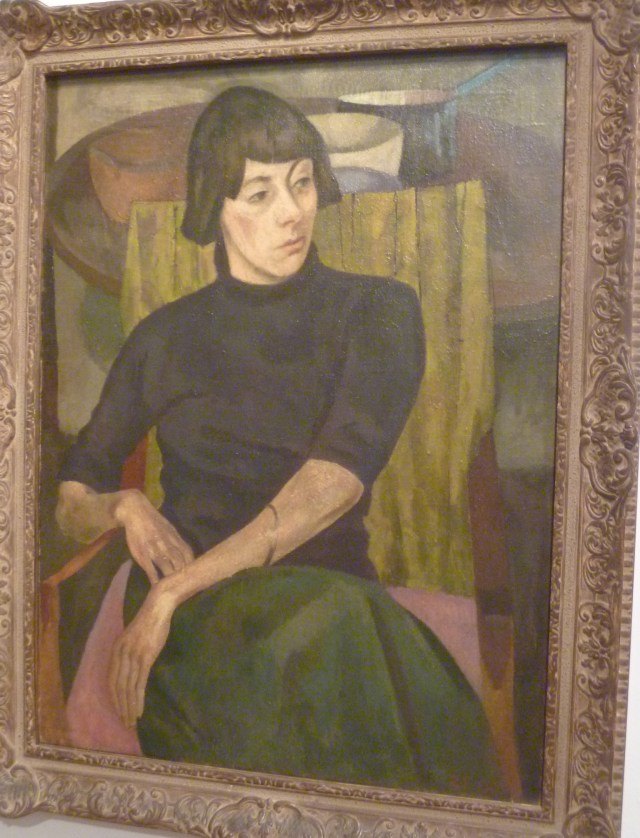
Nina Hamnett

Roger Fry’s Portrait of Nina Hamnett (1917)

Returning to the trenches

Nevinson’s Returning to the Trenches ((1915)

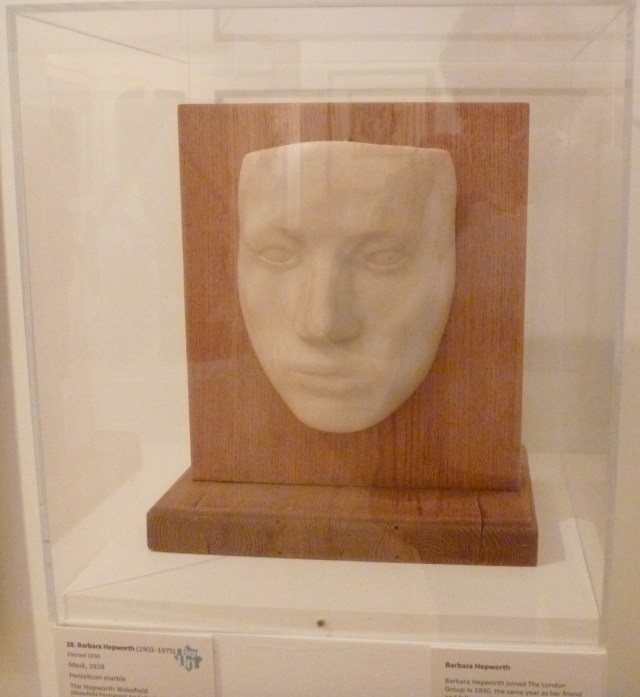
Pentelicon marble

Mask in Pentelicon marble by Barbara Hepworth (1928)

Iron sculpture

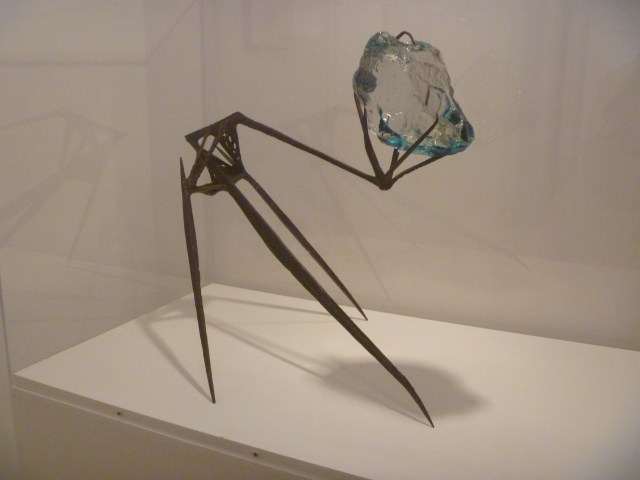
Untitled (Iron Sculpture) by Lynn Chadwick

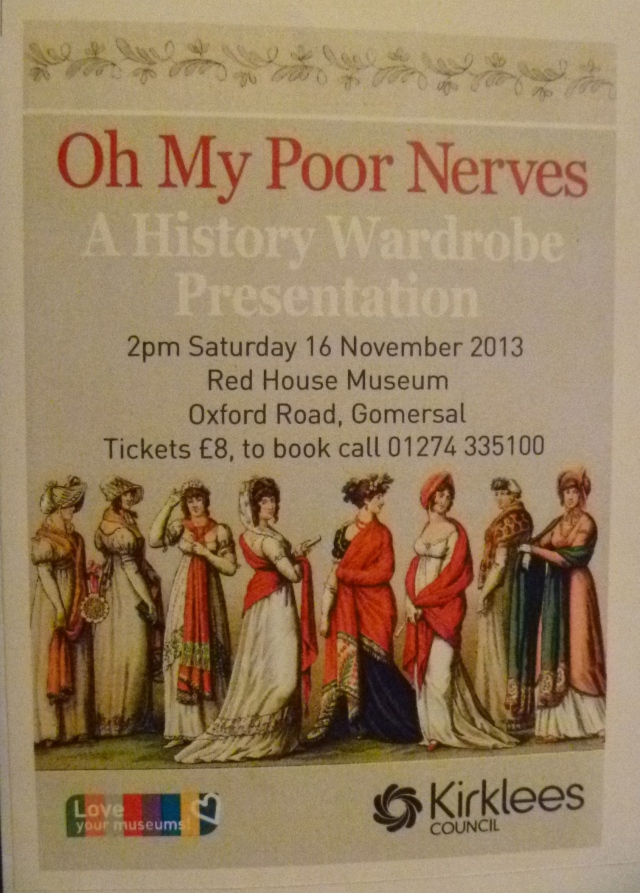
Oh My Poor Nerves! Health and Hypochondria in Jane Austen’s England

My poor nerves

Mr. Bennet, how can you abuse your own children in such a way? You take delight in vexing me. You have no compassion for my poor nerves.”
“You mistake me, my dear. I have a high respect for your nerves. They are my old friends. I have heard you mention them with consideration these last twenty years at least.

Pride and Prejudice, by Jane Austen. Chapter 1.

The set

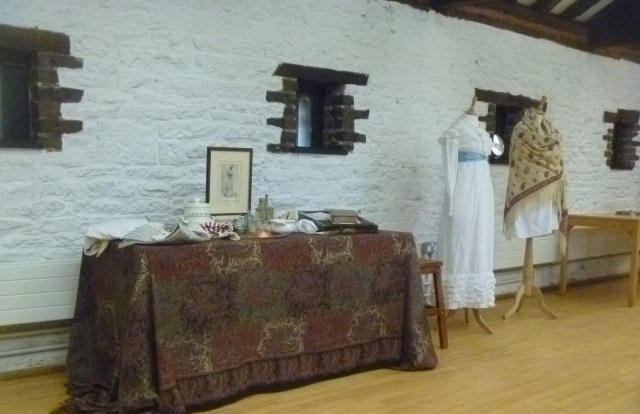
The Set for Oh My Poor Nerves in the Barn at Red House

What fun I had at The RedHouse this afternoon! And not just fun – I learnt a lot too. A few weeks ago I noticed a flyer for a History Wardrobe performance this Saturday, checked their website and knew that I had to book a ticket to see what it was all about.

Lucy

Lucy and her costumes. Left – original Georgian gown. Right – copy of Georgian maternity support corset

Here is Lucy’s witty introduction to the presentation :

This talk focuses on an often overlooked period in the history of healthcare, giving an overview of living conditions in late Georgian England that hardly squares with our usual picturesque view of Regency life. Details of home cures, quack remedies and crude surgery highlight the battle between science and superstition, putting the later medical advances into context. For those who feel faint after viewing a pregnancy corset or the leech jar, I do have plenty of ‘infallible’ Regency advice for good health and long life. And sal volatile.

Interspersed with quotations from Austen’s books (Jane Austen loves hypochondriacs) Lucy entertained us for nearly two hours with details and examples of all kinds of diseases and dangers prevalent in Georgian England and how they were treated by dubious doctors and questionable quacks.

Reece's medical guide

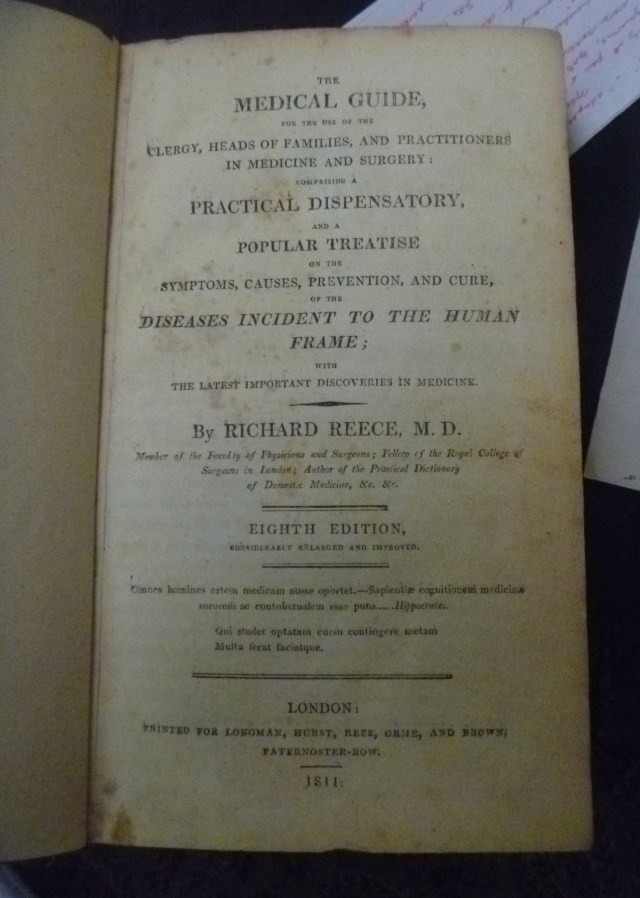
Dr Richard Reece’s Medical Guide

She read to us the list of diseases from which one could die in the late 18th and early 19th centuries – the list extracted from Doctor Richard Reece’s “The Medical Guide” of 1811 which, along with all Lucy’s other original and reproduction props, we were able to inspect for ourselves after the performance.

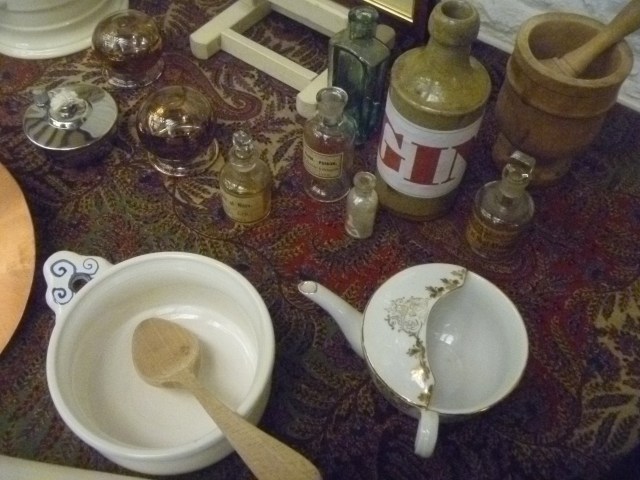
Props

Reproduction and original props

I am now highly enlightened on subjects as diverse as the dangers of red stockings (the dyes); that wallpaper killed Napoleon (arsenic); the extent of cholera epidemics and the locations of cholera burial grounds; body snatching (for medical dissection purposes); the benefits of a porringer of gruel (as recommended by Mr Woodhouse in “Emma“); the greatest danger for the Georgian militia and navy (disease); the biggest killer of women (childbirth); shifts and chemises; detoxing Georgian style; drugs and leeches; lancets and forceps; operating theatres and quack medicine.

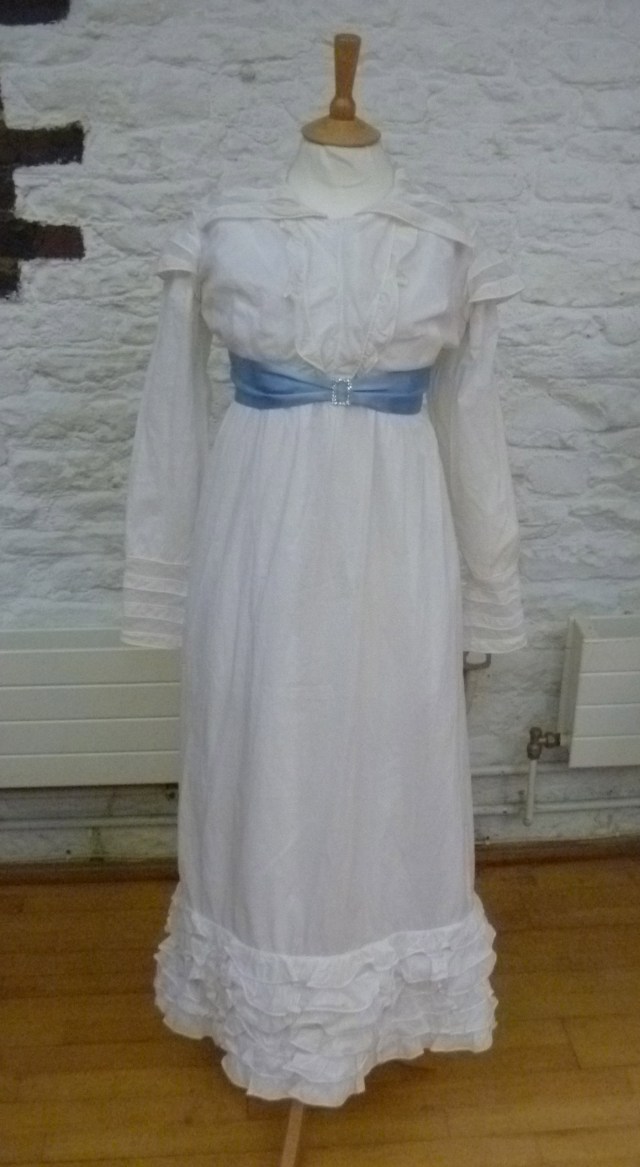
Georgian dress

The prize item in Lucy’s collection of historic costumes must be the original Georgian gown.

Lucy’s entertaining presentation this afternoon went to prove that history, science and medicine can all be fun.

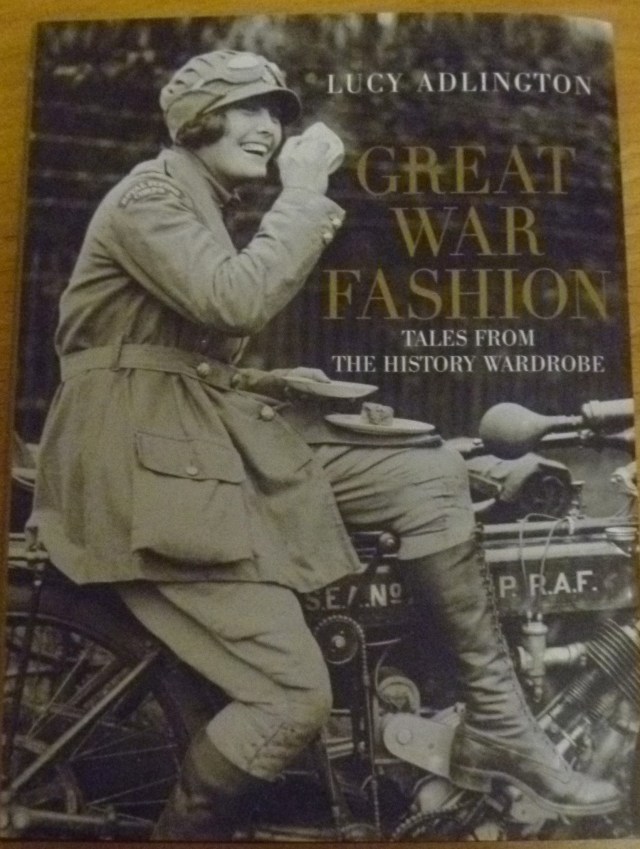
Lucy's new book

She even made reference throughout to her new book in which, although titled “Great War Fashion“, she demonstrates that even by the early decades of the 20th century some clothes, medical treatments and aspects of hygiene had never changed.

Before I left the Red House I bought a ticket for another presentation next year – Titanic!

Bloomsbury and Beyond : The Radev Collection in Cumbria

Abbot Hall Gallery

The Abbot Hall Gallery, Kendal

Today I went on a Yorkshire Branch of The Art Fund trip over to Cumbria. Our main intention was to view The Radev Collection at Kendal’s Abbot Hall Art Gallery. We travelled to Kendal by coach from Leeds picking up in Ilkley and Gargrave on the way. The first stop was for lunch at the Strickland Arms just by the gates to Sizergh Castle. We arrived way ahead of schedule so some members went to view the exterior of the Castle (it doesn’t open until 1pm) but I remembered the nearby Low Sizergh Farm Shop and took my companion for a brisk walk and some retail therapy in the well-stocked deli.

At Low Sizergh Farm Shop

Welcome to The Farm Shop

After the soup and sandwich lunch we headed off for nearby Abbot Hall where the curator was ready and waiting to tell us about the Radev Collection and point out some of the highlights.

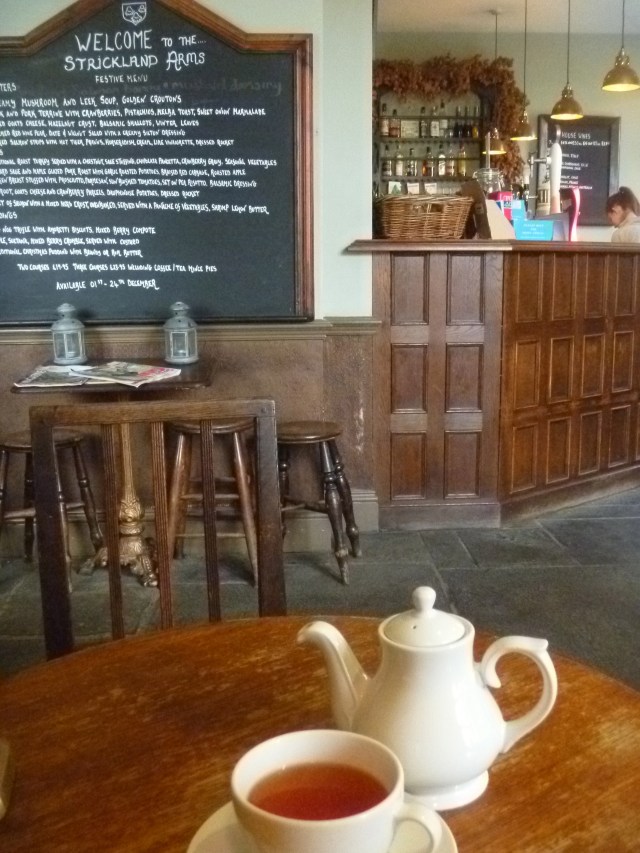
Inside Strickland Arms

Inside The Strickland Arms

The Radev Collection

The collection takes it name from Mattei Radev, a native of Bulagria who arrived in Britain in the 1950s as a stowaway on a cargo ship after fleeing from communism.

Radev went on to build a new life in England, becoming a leading picture framer for the London Galleries and mixing in the influential Bloomsbury circle which included writers, philosophers and artists, such as Virginia Woolf and E. M. Forster.

He inherited most of the works from his friend the artist-dealer Eardley Knollys, who had in turn inherited them from music critic Eddy Sackville-West, following his death in 1965.

The impressive collection includes works by an array of notable artists including Duncan Grant, Alfred Wallis, Ivon Hitchens, Ben Nicholson, Keith Vaughan, Graham Sutherland, Pablo Picasso, Lucien Pissarro and Vanessa Bell.” [Source]

Photography was not allowed in the exhibition but the complete collection can be seen on the Radev Collection website of which 60 were selected for this touring exhibition. I had to be content with a photo from the gallery window.

River Kent from Abbot Hall

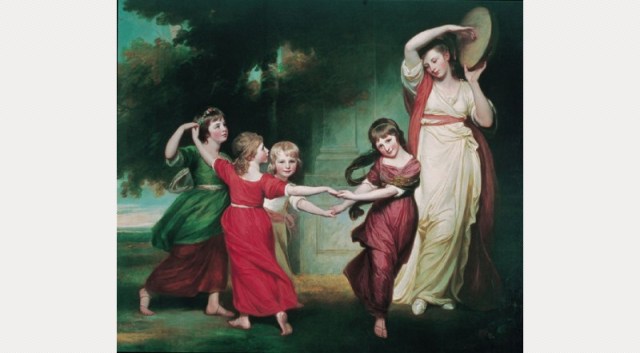
The Abbot Hall has an interesting permanent collection which includes a room of works by Kendal-born George Romney including the huge Gower Family in rooms furnished with a collection by local furniture-makers Gillows.

Gower Family

Romney’s The Gower Family

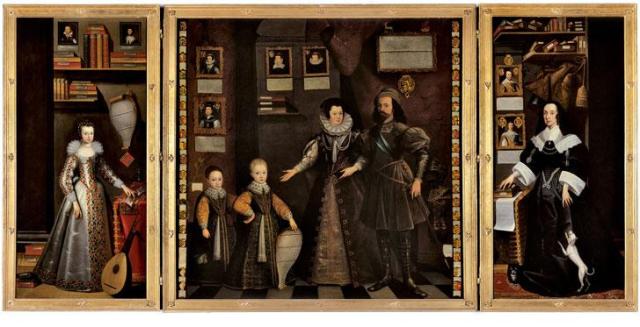
There’s also The Great Picture a magnificent tryptich of Lady Anne Clifford which used to hang in Appleby Castle. Read all about it here.

AH-Great-Picture-Header

The Great Picture

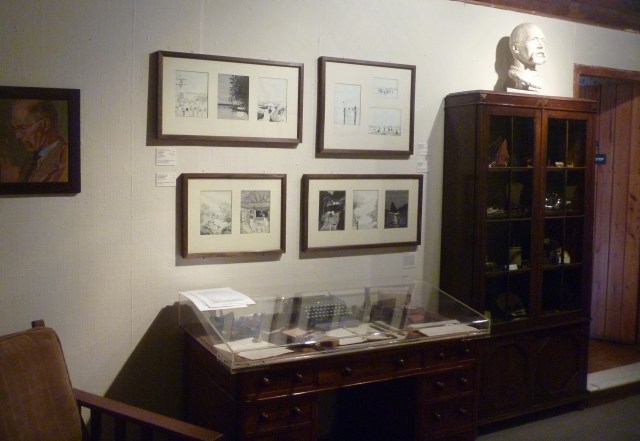
Our entry ticket to the Gallery also allowed us to visit The Museum of Lakeland Life and Industry where I’d remembered seeing years ago the display of Arthur Ransome memorabilia, books and prints and his desk. It’s still there.

Ransome's desk

We didn’t have time to inspect all the displays and it was soon time to return to the coach for journey back to Leeds.

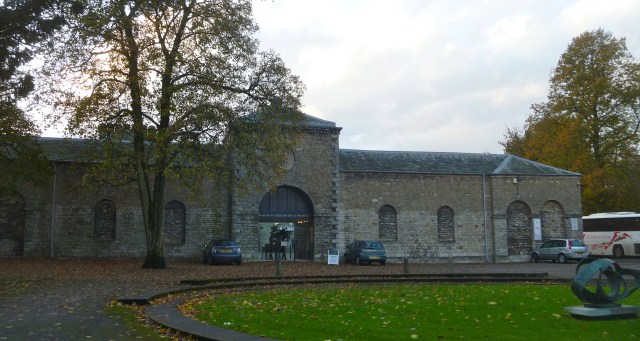
Museum of Lakeland life

The Museum of Lakeland Life and Industry

Lancaster II : The Ashton Memorial in Williamson Park and The Judges’ Lodging

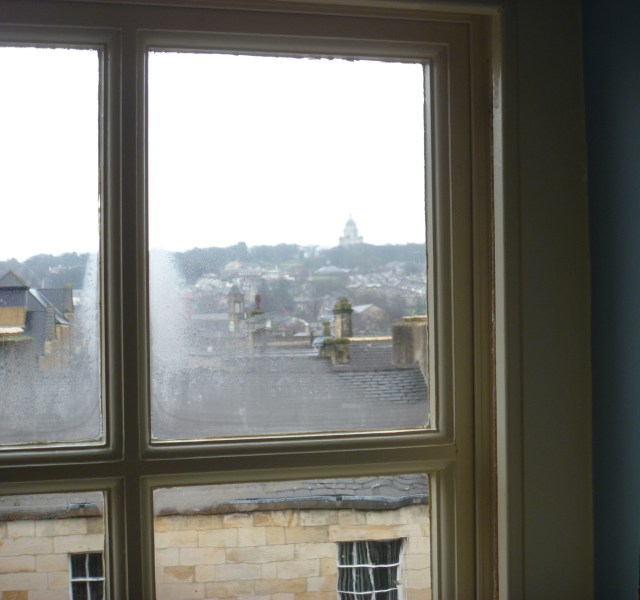
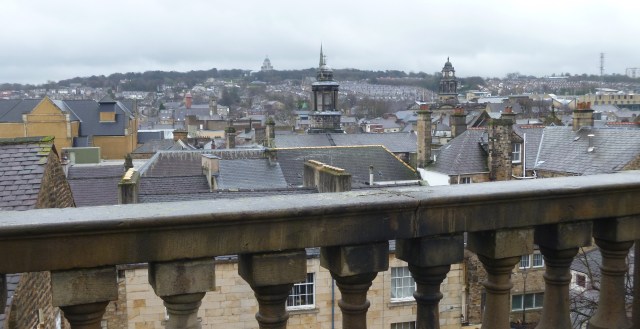
A couple of weeks ago I paid my second visit to Lancaster. The main purpose of my visit last March was meet a friend and visit the newly refurbished Landmark property The Music Room. From the Music Room roof we could see across the city Williamson Park and the very prominent Ashton Memorial. We promised each other that later this year we’d meet again and visit the Memorial.
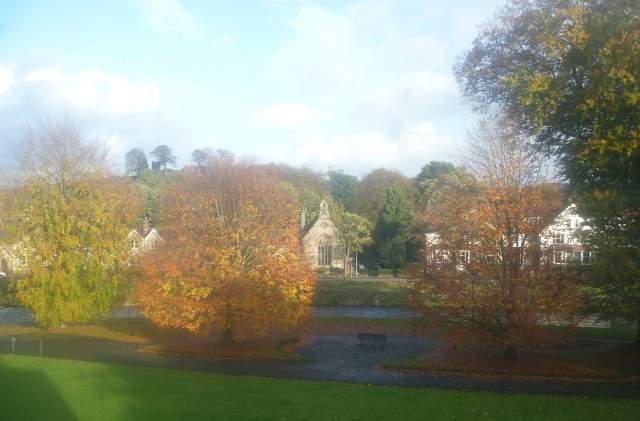
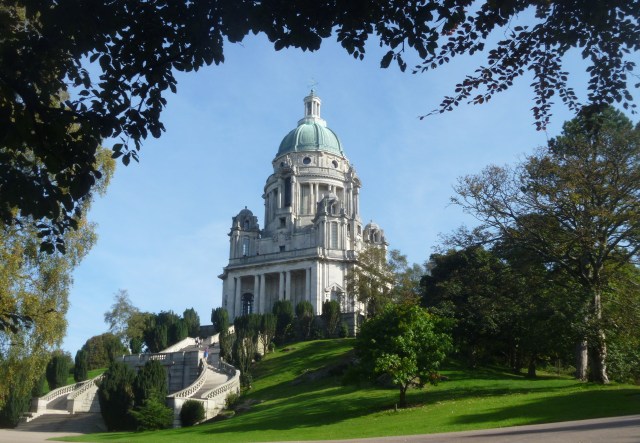
Ashton M Ashton M from MR

The Ashton Memorial from Music Room Window and Roof

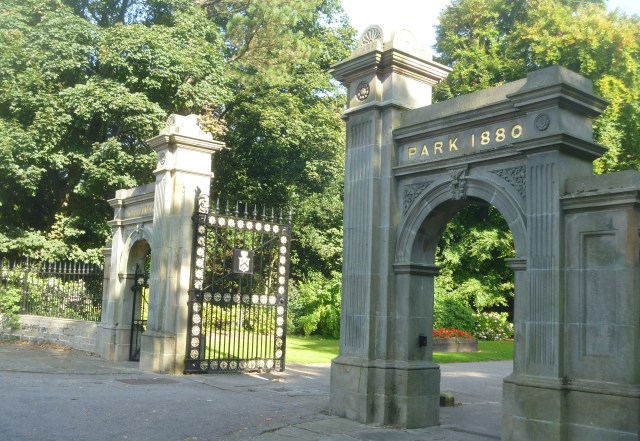
So that is what we did. Again we met at the Railway Station and headed for coffee and catch-up. Then we took the bus out of the city and up Wyresdale Road to the entrance to the park. In September the weather proved to be drier and sunnier than in March.

Gate Williamson Park

Williamson Park Gates

The Ashton Memorial was commissioned by Lord Ashton as a tribute to his late wife. It was designed by John Belcher and completed in 1909, the restored interior hosts exhibitions and concerts and can be hired for private functions, including wedding ceremonies.

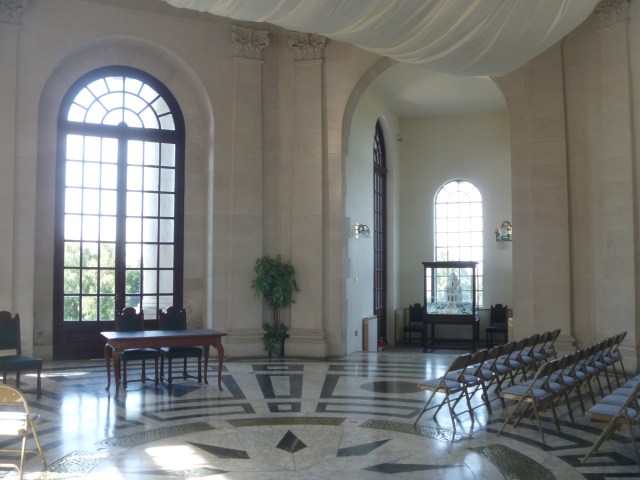
Externally, the dome is of copper. The main stone used in the building is Portland stone although the steps are of granite from Cornwall. Externally around the dome are sculptures representing “Commerce”, “Science”, “Industry” and “Art” by Herbert Hampton. The interior of the dome has allegorical paintings of “Commerce”, “Art” and “History” by George Murray. The ceiling is presently undergoing restorative works and has been covered with drapes.

Ground Floor Wedding Venue

The Ground Floor Wedding Venue

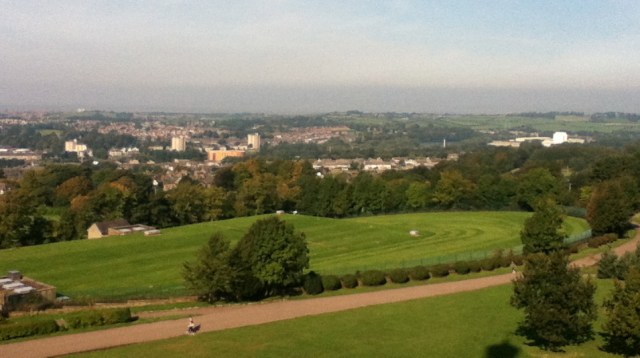
At around 150 feet tall it dominates the Lancaster skyline. The first floor outdoor viewing gallery provides superb views of the surrounding countryside and across Morecambe Bay.

[From The City Council website]

Ashton Memorial

The Ashton Memorial in Williamson Park

Hazy view to coast and Morecambe

Hazy View from the Gallery to Coast at Morecambe

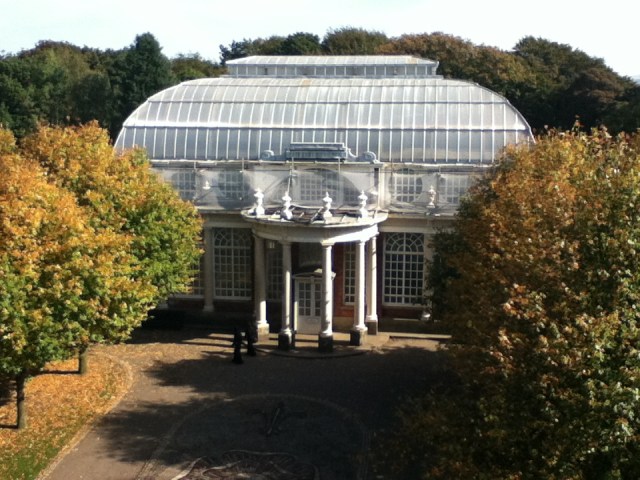
It’s a lovely park with lakes and follies, woodland paths and a Butterfly House in the original Edwardian Palm House. We ate our lunch from the very nice Pavilion Cafe out on the sunny terrace.

Butterfly House

Butterfly House

We decided to walk back to the city centre and had a peep at the Lancaster Grammar School Hall and the Roman Catholic Cathedral of St Peter on our way.

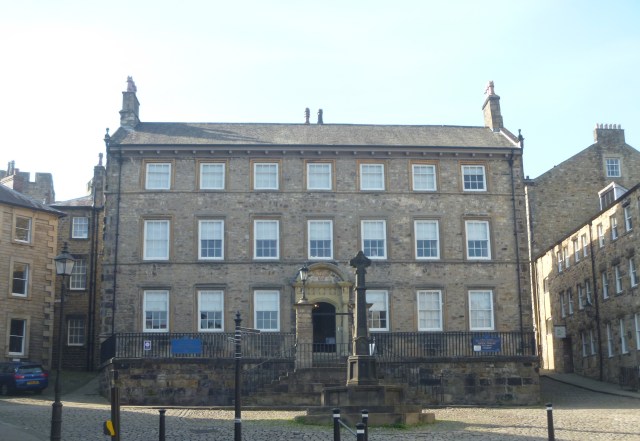
The Judges’ Lodging is so called because it was where until the 1970s the circuit judge would be accommodated during his visit to the Assize Court in the Castle.

Judges' Lodging

Discover the treasures of Lancaster’s oldest town house

Built in the centre of Lancaster against the backdrop of Lancaster Castle and Lancaster Priory this elegant, Grade I listed building is Lancaster’s oldest town house. The house was originally home to Thomas Covell, Keeper of Lancaster Castle and notorious witch hunter. Between 1776 and 1975 the house became an impressive residence for judges visiting the Assize Court at nearby Lancaster Castle.

The museum is now home to a renowned collection of Gillow furniture which is displayed in fabulous Regency period room settings, fine art and also the enchanting Museum of Childhood which explores toys and games from the 18th century to the present.”

[From the Judges’ Lodging website]

Gillow Lancaster

Gillow Plaque

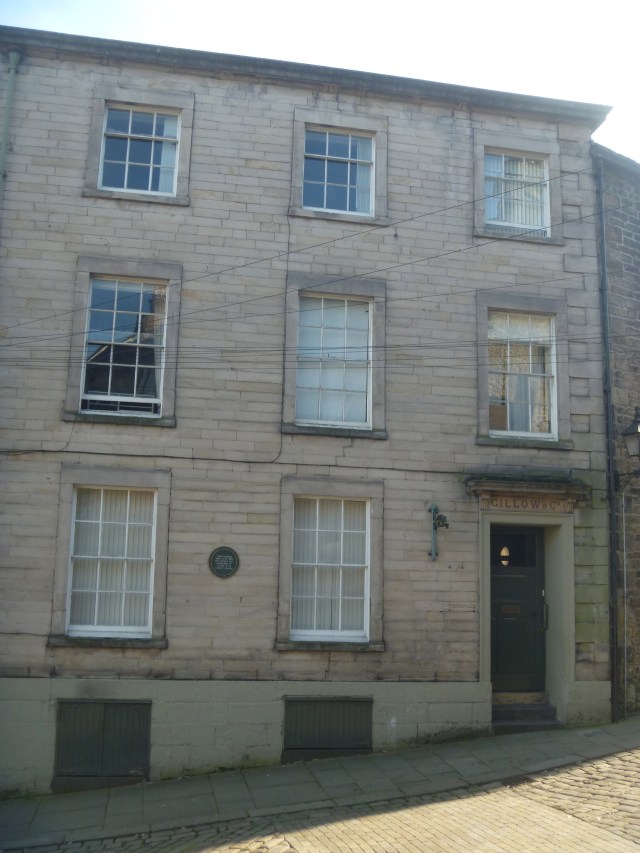
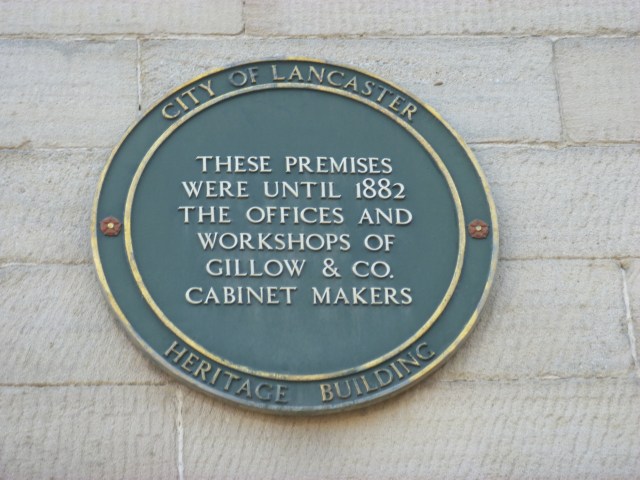
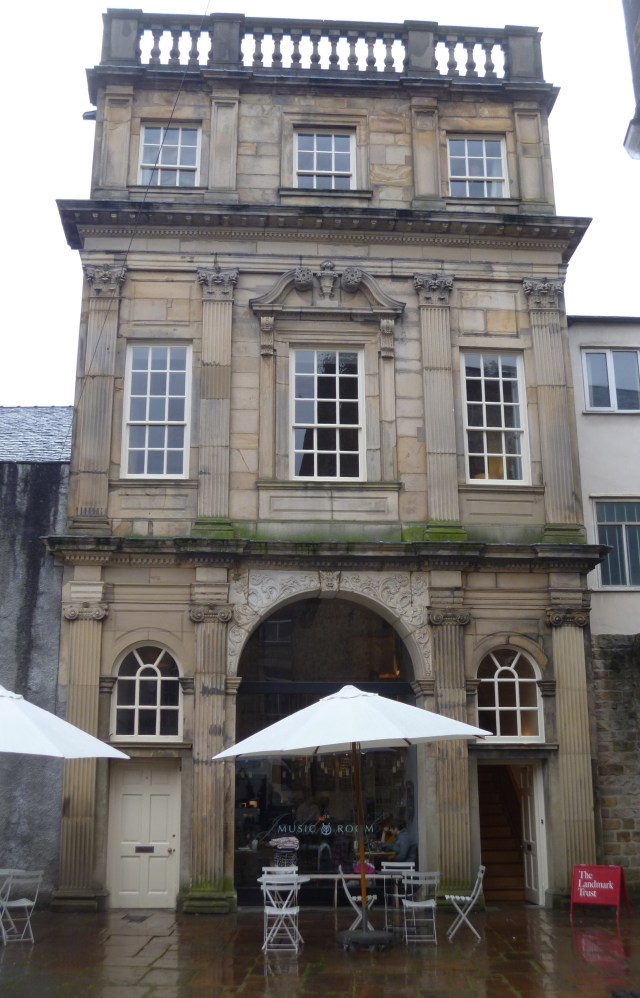
The former Gillow and Co. workshop and offices is next door to The Judges’ Lodging.  After our visit (No Photography Allowed) there was just time for a cup of tea outside the cafe below the Music Room in what is now called Lancaster’s “Coffee Quarter”.

Music Room Cafe

It was warm and sunny on our last visit!

The Wandering Walsers

Wondering what to do in Liechtenstein besides visiting the Postage Stamp Museum in the capital Vaduz I read the following lines in the Liechtenstein section of my Rough Guide to Switzerland :

… pretty TRIESENBERG, perched on a sunny hillside above the Rhine [is] best known as the adopted home of a community of Walser people, who left their homes in [Canton] Wallis (German-speaking Valais) in the thirteenth century to spread across central Europe. Many of the houses are wooden chalets built in the Walser style. The modern, well-presented Walser Heimatmuseum documents Walser history and culture.”

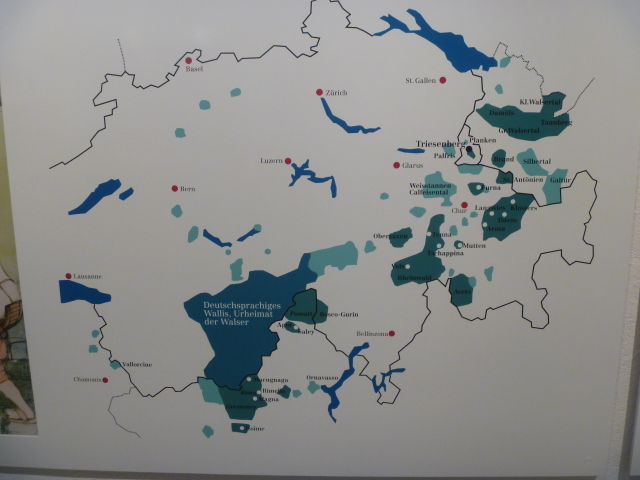
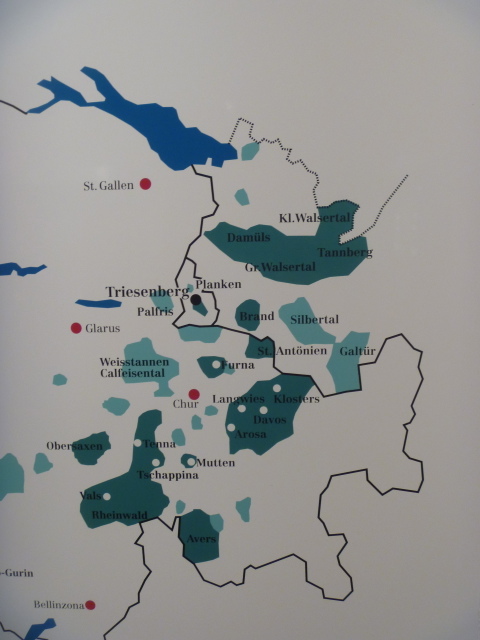
Walsers in Switzerland

The spread of Walsers in Switzerland

Walsers in Eastern Switzerland

The Distribution of  Walsers in eastern Switzerland, Liechtenstein and western Austria

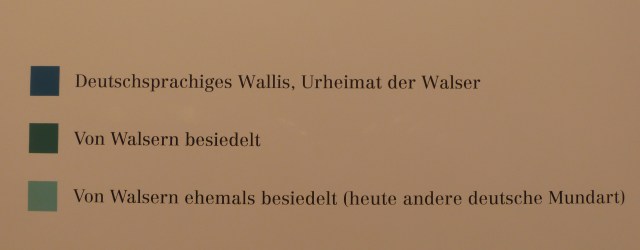
Key to maps

Key to Above Two Maps

1. German-speaking Valais : original homeland

2. Settled by Walsers

3. Settled in the past by Walsers (nowadays have a different dialect)

I had heard of this resettlement of the Walliser folk in other areas of Graubünden during my stay (St Antonien and near Davos) but was very surprised to see a map at the museum showing the extent of the diaspora.

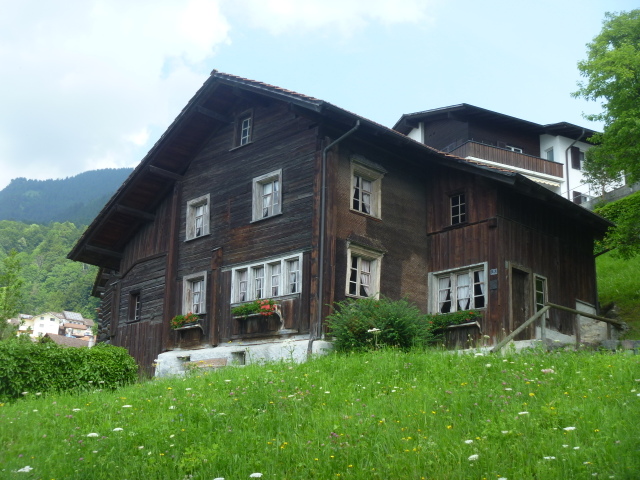
There’s also a 400 year-old Walser house preserved in Triesenberg and open to the public occasionally. It wasn’t open on the day of my visit.

Walser House

The Walser House in Triesenberg

If I find myself with a few hours to spare next time I’m in Liechtenstein I’ll give the Walser Sagen Weg walk a go.

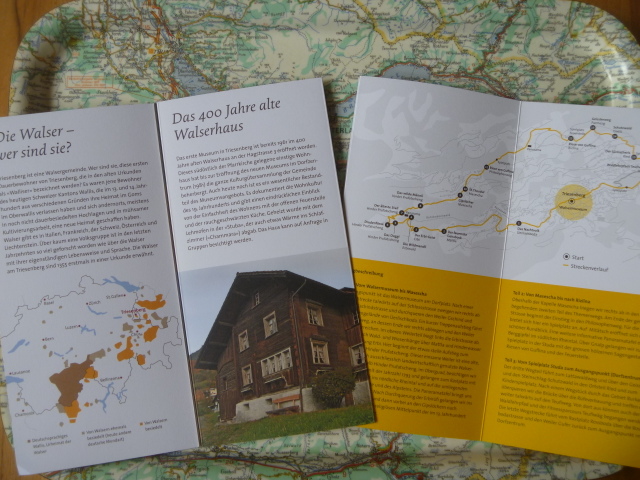
Walser Leaflets

Heidi’s Years of Learning and Travel

After our morning at the dramatic Tamina Gorge and fascinating Bad Pfäfers Museum we returned by Schluchtenbus to Bad Ragaz town centre for a lunch in the sunny main square – a Swiss speciality cheese and onion tart with salad. We then caught a local post bus  to Maienfeld just a few miles away.

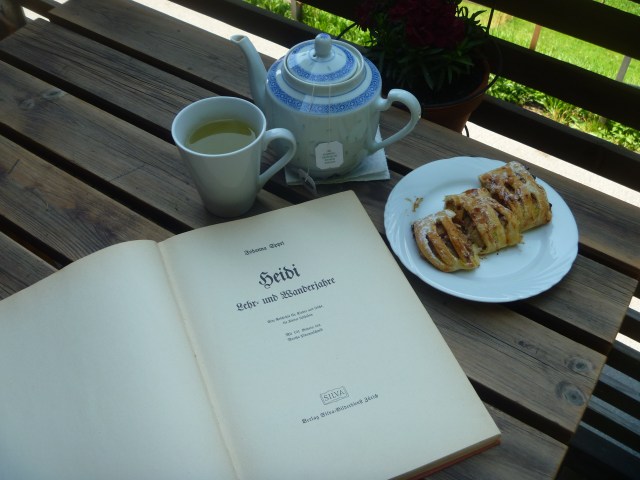
Heidi in German

Agnes’s Version of Heidi : Lehr- und Wanderjahre

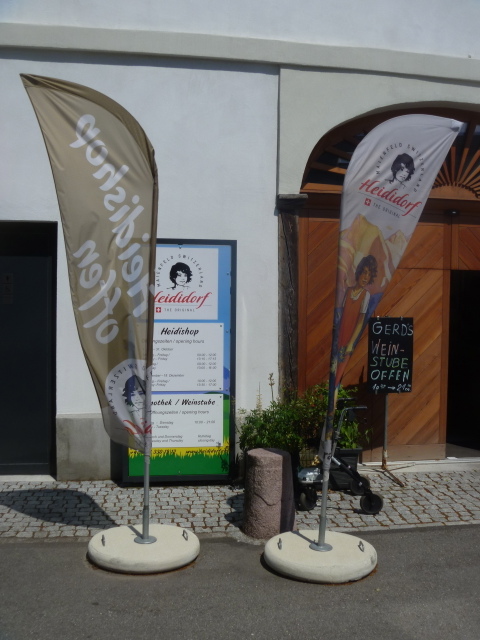
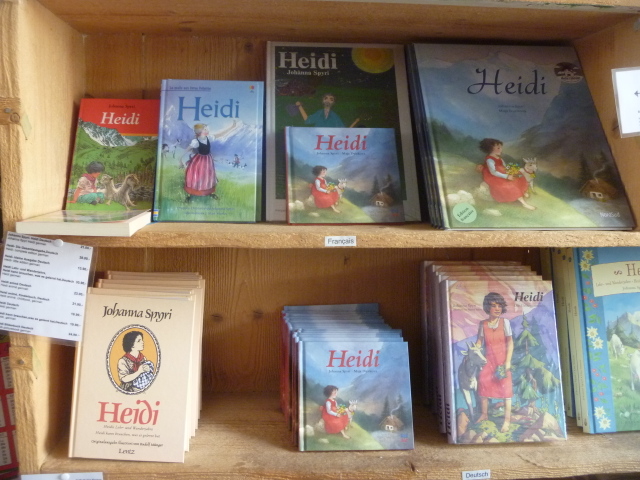
Maienfeld was the inspiration to Joanna Spyri for her Heidi books; the first of which had the same title as this post. From the train and bus station it’s just a few steps to the Heidi Shop and Wine Bar [Maienfeld is in a significant Swiss wine-growing region]. The shop stocks every kind of souvenir thinkable with a Heidi connection and is surprisingly kitsch for Switzerland. There is also, naturally, a wide choice of Heidi titles and editions in various languages. This region “Heidiland” is relentlessly marketed throughout the area and throughout Switzerland in general and overseas.

Heidi shop (and wine bar)

The Heidi Shop and Wine Bar

Heidis for sale

Various Heidi titles for sale

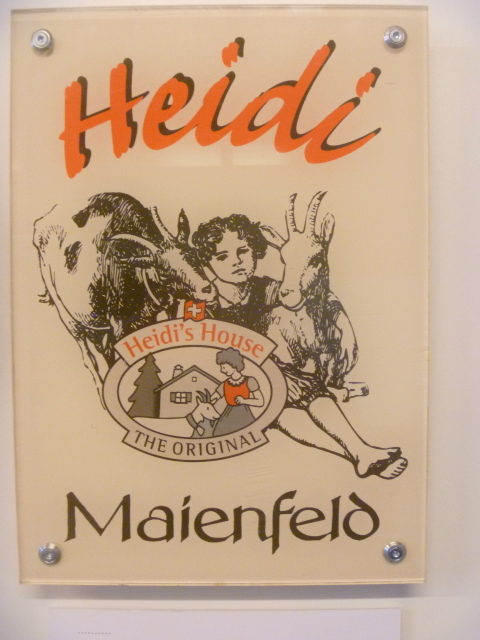
Original marketing

Original Heidi Marketing Logo

Today's marketing

Today’s Logo Version

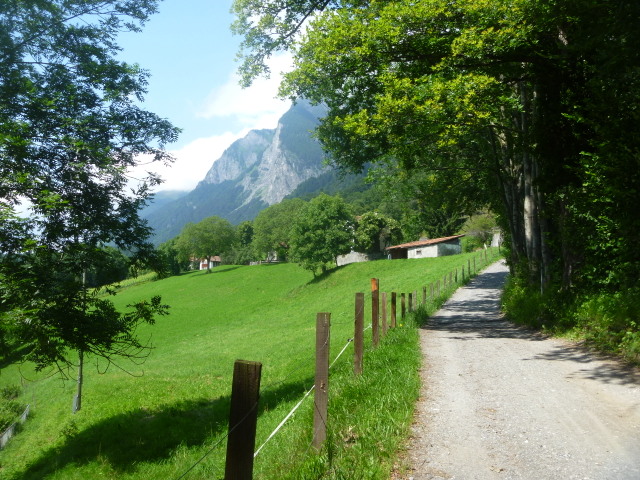
We took the route marked uphill towards the Heidi House and Johanna Spyri Museum. It’s a quiet road and track and steepish in places with no-one else about.

Heidi Way

The Heidi Way is in this direction

This way to Heidi House

The quiet track up to Dörfli

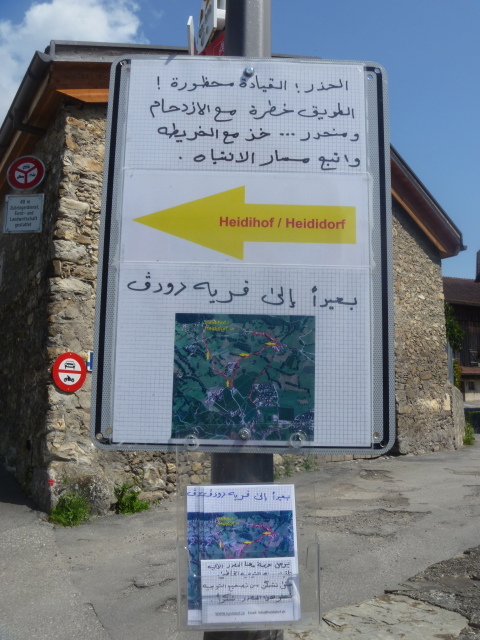
So we were surprised as we neared the house to see crowds of people. On our alternative route back to Maienfeld we passed a big bus and car park from where the nations of the world had emerged with just a short, level path to the ‘village’ – Dörfli, in the books, but now renamed Heididorf.

Arabic signs

Signs in Arabic?

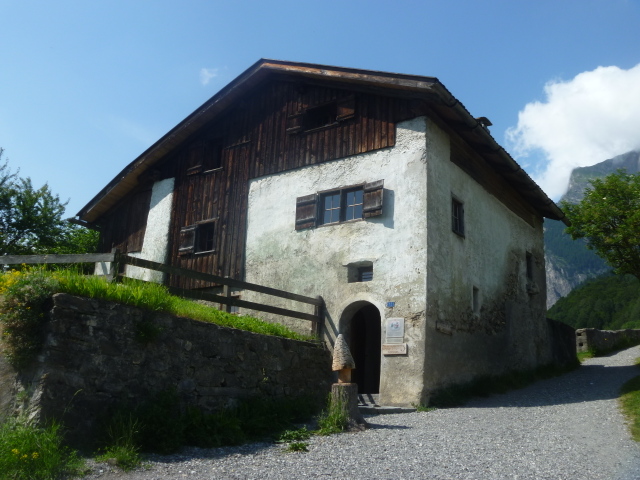
Heidi House

Arriving at the Heidi House

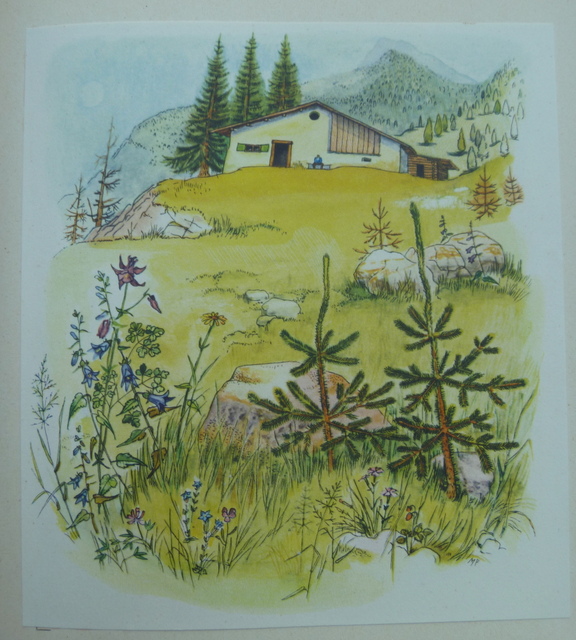
Heidi House illustration

Heidi House illustration from Agnes’s book

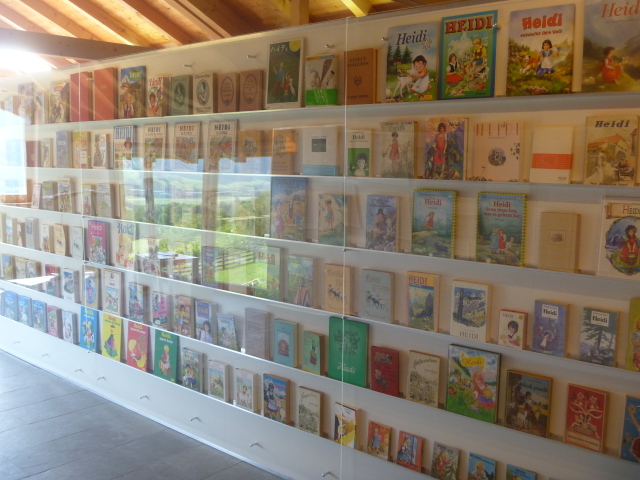
Not so much interested in all things ‘Heidi’ Susanne and I wanted to visit the Johanna Spyri Museum housed above (another) Heidi Gift Shop. There’s another Spyri Museum at her birthplace in Hirzel near Zurich. They must have any and all artefacts relating to her as there was very little here, near Maienfeld. Mostly, the museum consisted of information panels, a large collection of old and foreign editions of ‘Heidi‘ and video loops of extracts from Heidi movies made during the last century.

Heidi editions

Heidi editions in the Spyri Museum

Johanna Spyri reminds me of Louisa M. Alcott who is famous for her Little Women books but has written and done so much more that is generally not known to the world at large. Spyri was born in 1827 and died in Zurich in 1901. Heidi was first published in Germany in 1879 and was a huge success. It is reputed to be the most-translated book in the world after the Bible and the Koran. But Spyri wrote much more besides and this is otherwise glossed over at the Dörfli Museum although there is a full list of these titles there are no actual examples; just a wall full of old and foreign editions of Heidi.

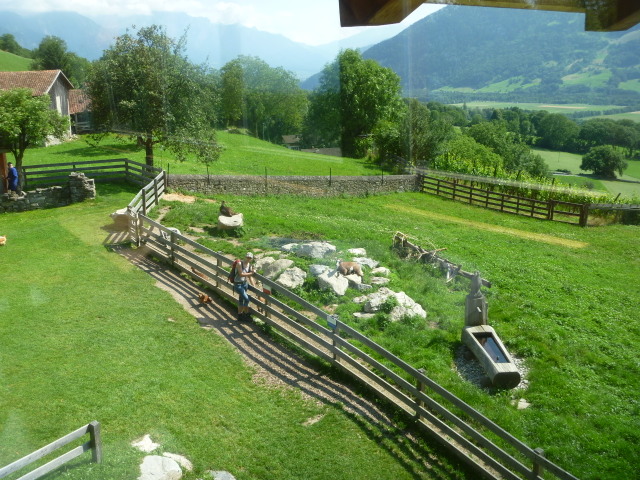
Peter's goats

Descendants of Peter’s Goats? (from the museum window)

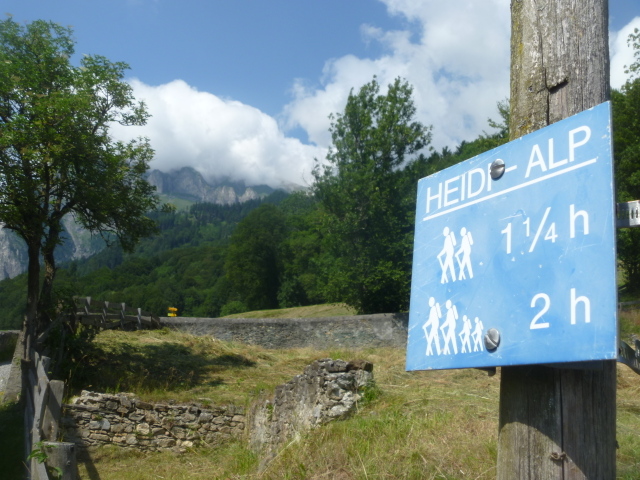
After the Spyri Museum and a quick walk around the exterior of the reputed Heidi House we decided to forego the longer walks up to the Heidi Alp and returned on foot to Maienfeld and by train to Schiers.

Further walking if you have the time and energy

Further Hiking Opportunities in Heidiland if you have the time and the energy