Ancient Ireland [3] : Lismore

Other features of ancient Ireland are the stones – carvings and standing. We saw the carvings on the stones at Knowth but there are more carved stones scattered across the countryside. Or … maybe not scattered at all but strategically or symbolically placed monuments. There are wells dedicated to saints. There are ancient churches, cathedrals, monasteries and abbeys – the earliest religious foundations.

Some of these ancient sites I came across on my walks.

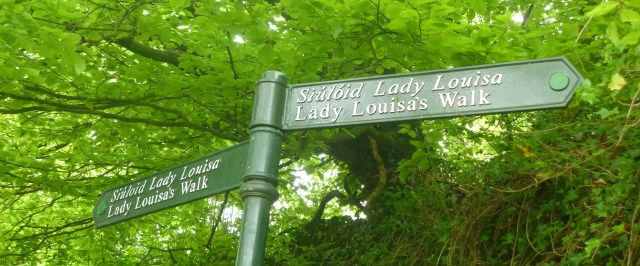
Lady Louisa’s Walk, Lismore

LL Walk Lismore

[Following description is from here.]

Lady Louisa’s walk is a gentle and picturesque walk which takes you, for the most part, on a woodland walk along the river bank. Continue reading

Wentworth Castle Gardens Revisited

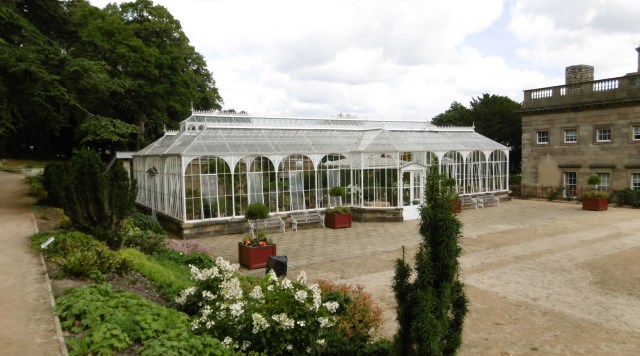
In June 2013 I wrote about my visit to Wentworth Castle Gardens mentioning that I hoped to return to inspect the completed restoration of the Victorian Glasshouse. Yesterday, at last, I managed to get back there and noticed that the trust, the employees, contractors and volunteers had made many further improvements and additions.

Glasshouse

The Fully Restored Victorian Glasshouse

Continue reading

Continuing Footloose in the Gargano Peninsula

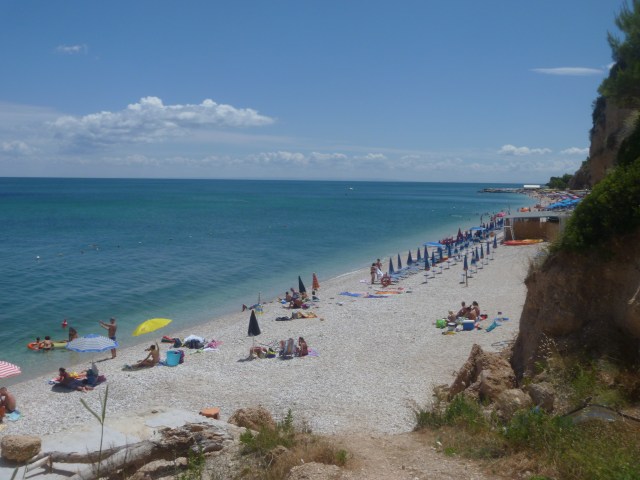
The next day we left the hotel by the way we had arrived but on leaving the section of main road headed off uphill, away from the sea.

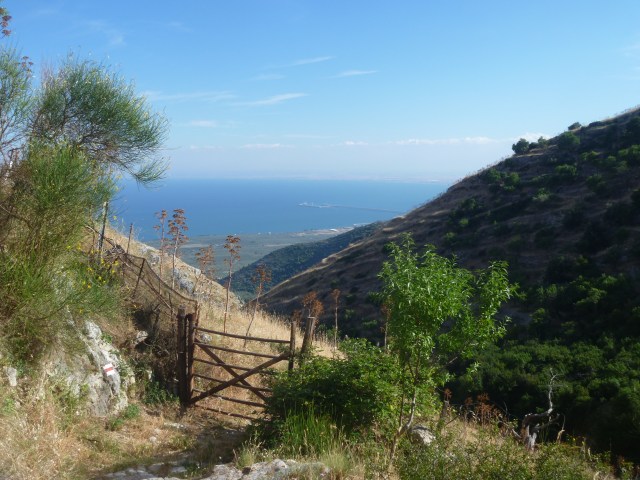
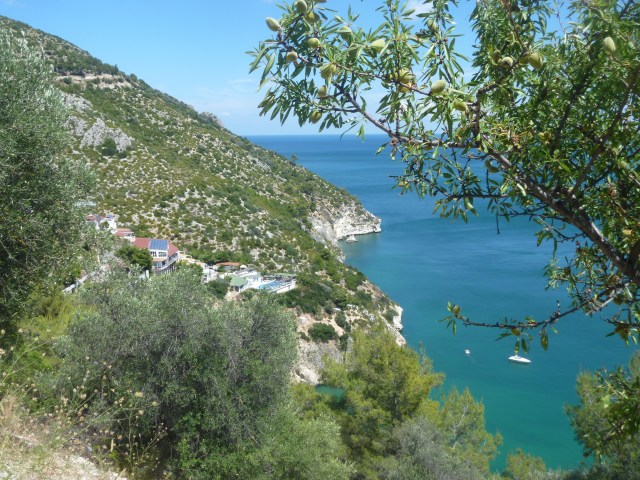
An initial climb brings you to a high point with wide views and then down along a stony, woodland track to the base of the next valley. Another climb brings you out to a high point before heading inland. You follow farm track and a short climb on road before picking up a gravel track that gently descends to your final destination with stunning panoramic views across the valley to the sea.”

At the ‘base of the next valley’ we came almost face-to-face with a family of wild boars. We knew we just could not pass through the area as they were hidden from us for the most part and making a lot of noise. In order to contact Matteo we had to retrace our steps to the ‘high point with wide views’ and wait for him to ‘rescue us’. This he did efficiently and quickly and offered to walk through the wild boars area with us. We declined his offer with the excuse that we had already lost quite a bit of time and could he put us back on the track a little further along the route.

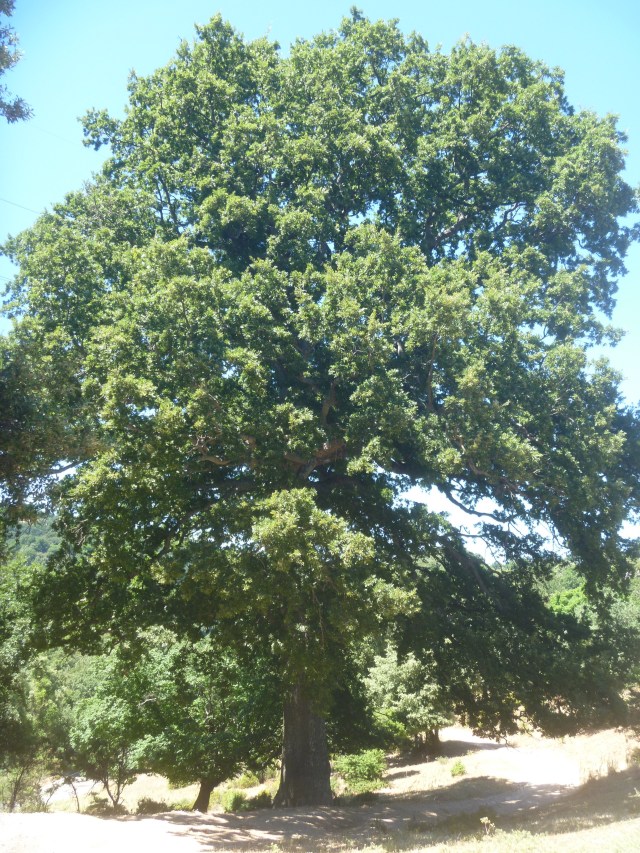
Turkish oak

The Turkish Oak

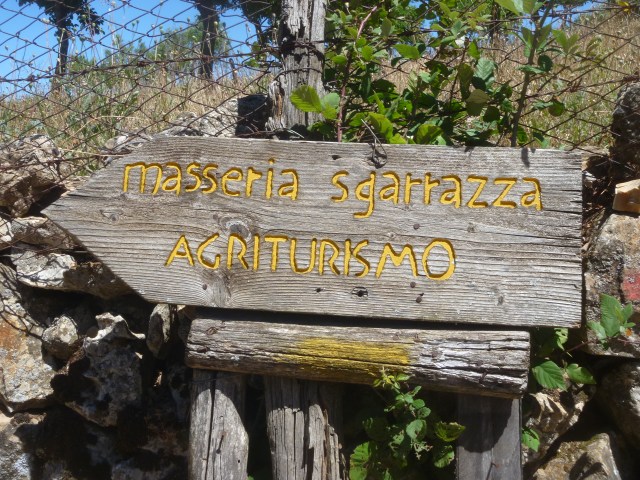
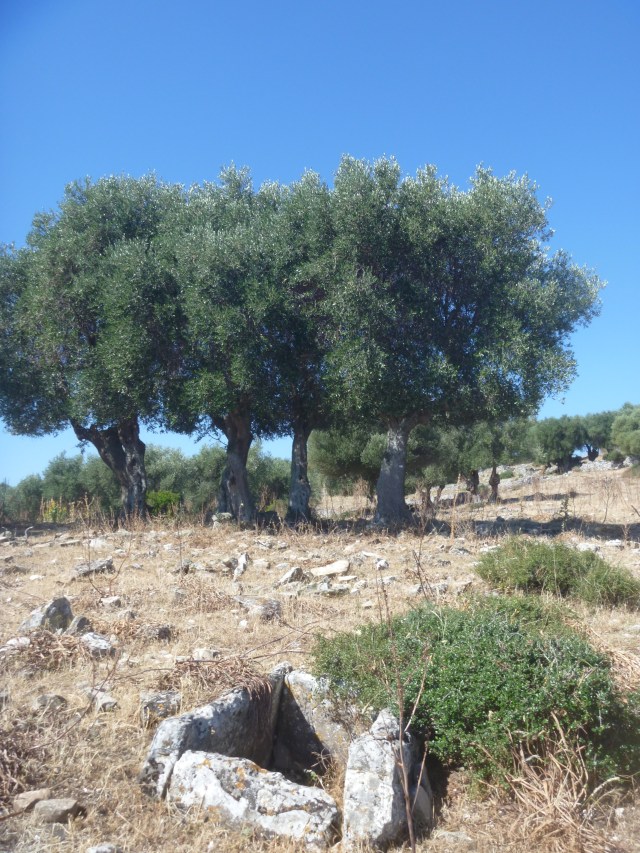
Matteo dropped us off on the track (just by a monumental Turkish Oak tree: read more about this species here) that leads over several kilometres to the very remote Agriturismo farm Masseria Sgarrazza at San Salvatore where we were to spend that night.

Sgarrazza sign

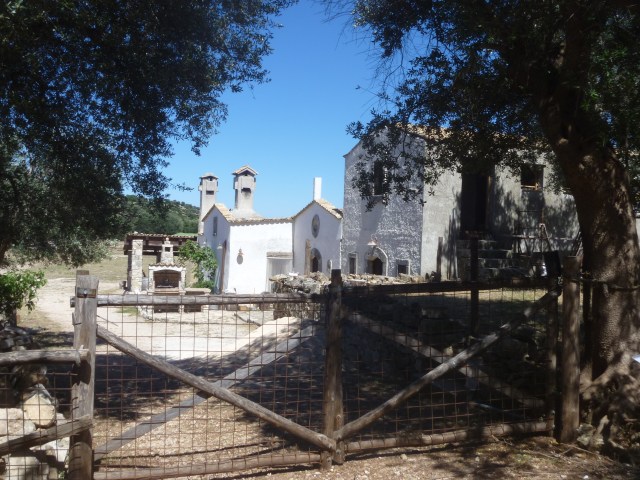
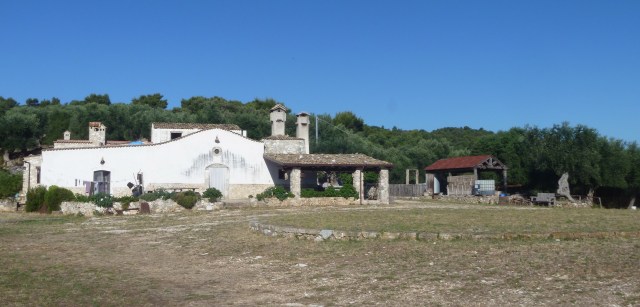
arriving at sgarrazza

Arriving at the Masseria Sgarrazza

This amazing place – it was like stepping back in time – has existed as a farm here since 1820. The name comes from the local dialect word ‘sgarra’ meaning split or crevasse, because of the way that the sea splits the horizon where it joins the land. I think the way of life has changed little here; but as we dined that evening we could hear the telly. Access to water sources is a problem throughout the Gargano due to the quick draining cretaceous limestone that makes up the area. Here at San Salvatore water is delivered by truck to a huge water store.

in the dining room

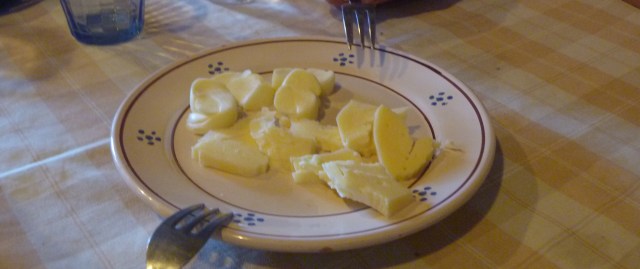
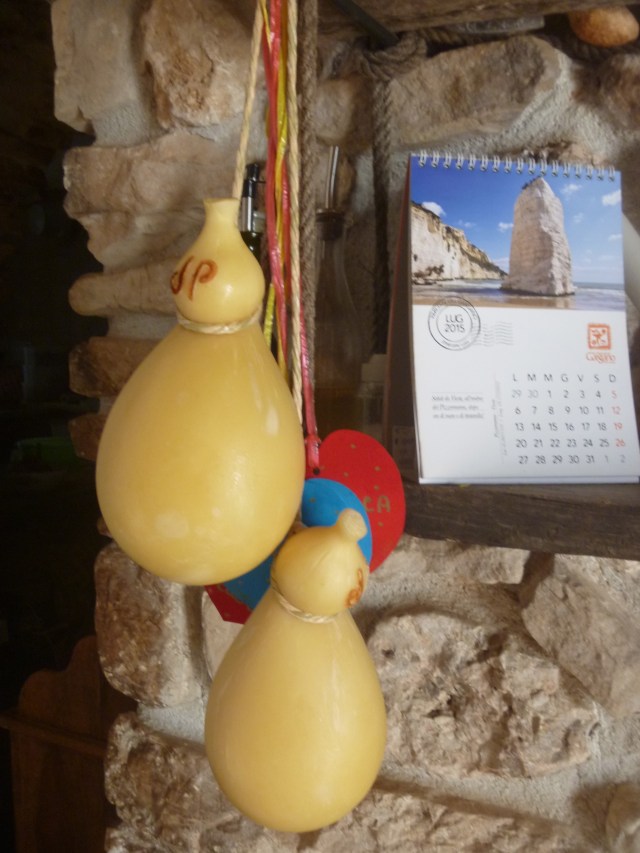
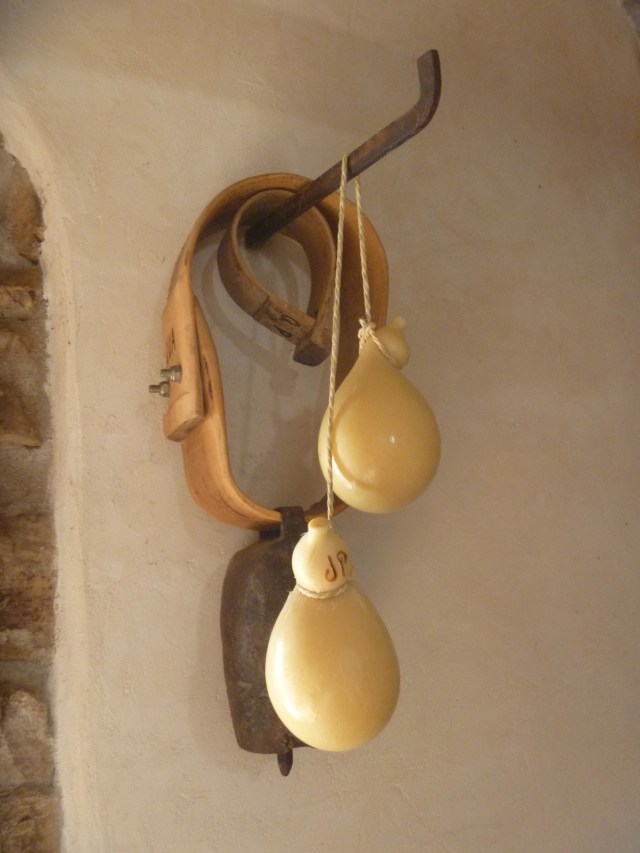
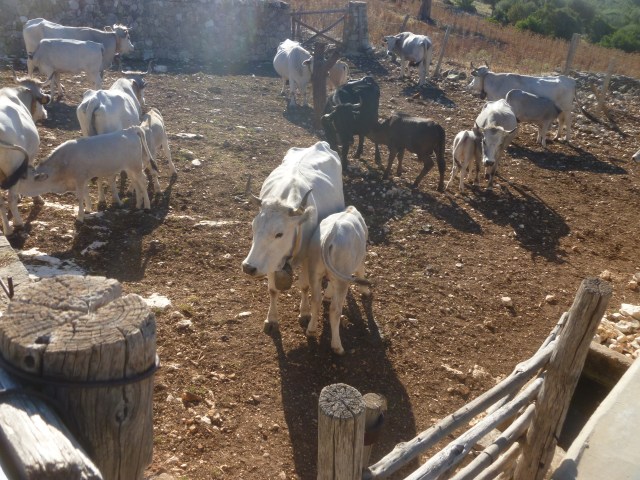
The olive oil served at dinner was all produced here and they make the wine served themselves (but they don’t own any vines). The delicious Caciocavallo cheese is a speciality of the farm and is produced from the limited supply of milk from their Podolico cows.

chees

Caciocavallo cheese

more cheese

cheese hanging everywhere

Cheese maturing everywhere

podolicos

Podolico cows

Guests (just us) are accommodated in converted old stables and the arrangements were primitive to say the least! The original farmhouse (where the farmer and family ate, cooked and lived) is now just the dining room of the much expanded house.

threshing floor

The Farm and Threshing Floor

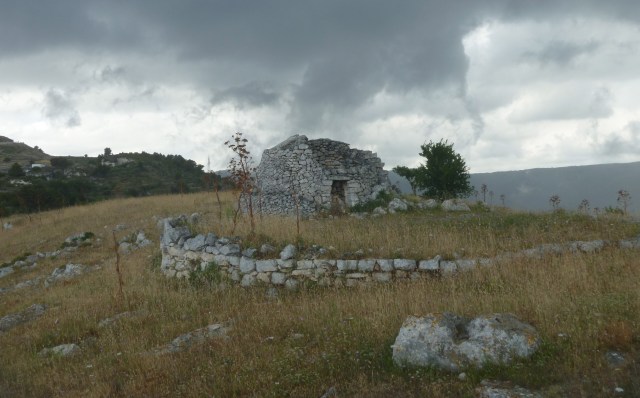
The large stone circle in the middle of the farmyard is an aia (threshing floor). There was once a little grain production and when this had been cut it was brought to the threshing floor where horses were led round in circles separating the grain from the straw with their hooves. Then it was manually tossed in the air so that lighter straw would be blown away and the grain remained on the threshing floor. At 254 sq m it is one of the biggest and best preserved in the Gargano. Another aia can be seen in the Pagliaiphoto in the previous post.

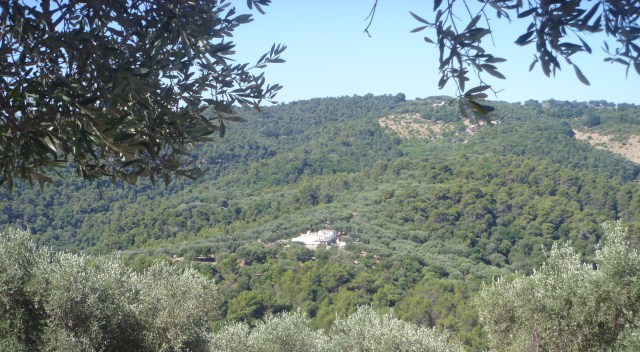
sgarrazza view

The Masseria Sgarrazza – miles from anywhere!

A short detour from the next day’s route took us to the 2,500 year old necropolis of San Salvatore. I think we thought we had seen sufficient tombs and necropolises on our ATG walk last year (Etruscan Lanes to Orvieto) but it seemed not and we added a further 2.5km to the day’s walking. Matteo worked this excursion out himself and he writes in the notes :

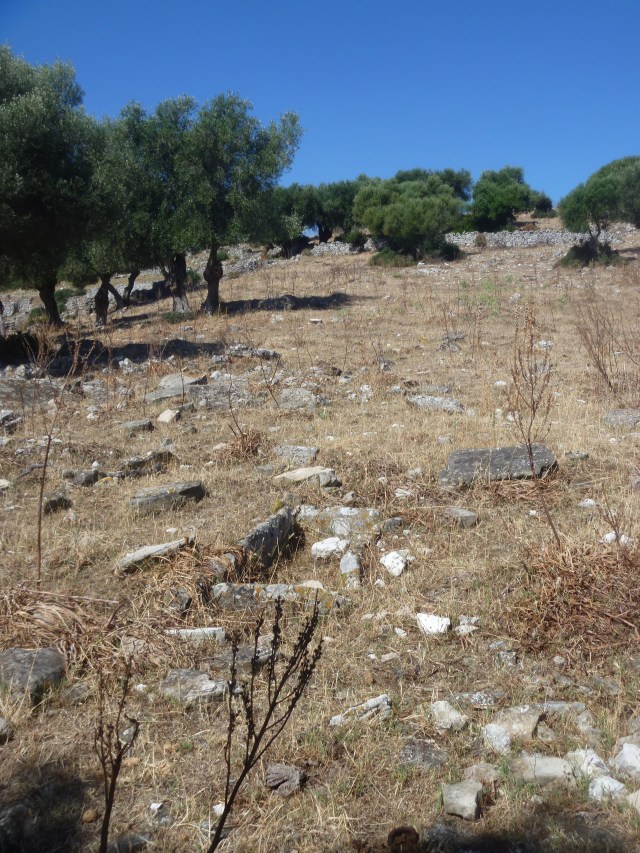
The necropolis was built by the Daunian Civilization between the sixth and fourth centuries BC. During the 1950s it was stripped by grave robbers; but archaeologists managed to save some finds (eg small pots, tools, funeral ornaments). These are now kept in the Archaeological Museum in the Castle at Manfredonia. It seems, though, that the Daunian inhabitants of this area were less evolved than at otehr Daunian centres (eg Siponto/Manfredonia and Ascoli Satriano). Nowadays, you can only see the square stones cut to form tombs … but to visit a 2500 year old cemetery remains a unique experience … don’t you think?”

necropolis site

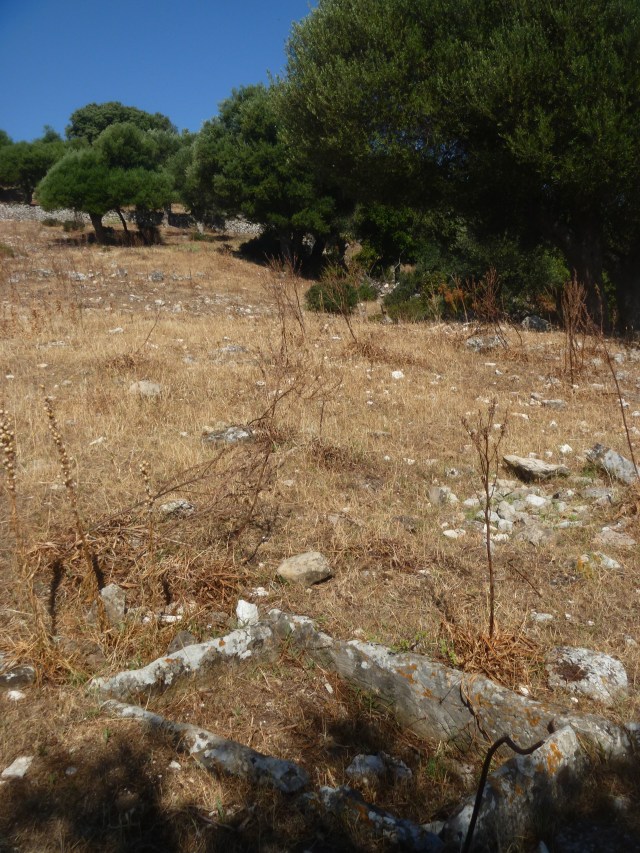
The Site (hard to capture the look of the place)

necropolis

grave

Tombs and Graves

After the detour the route is described thus :

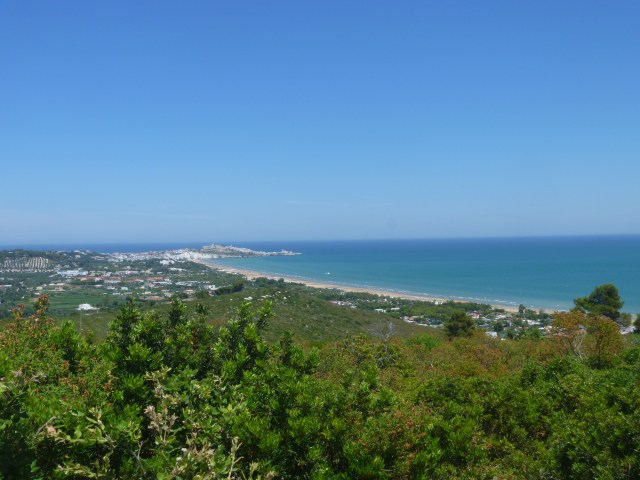
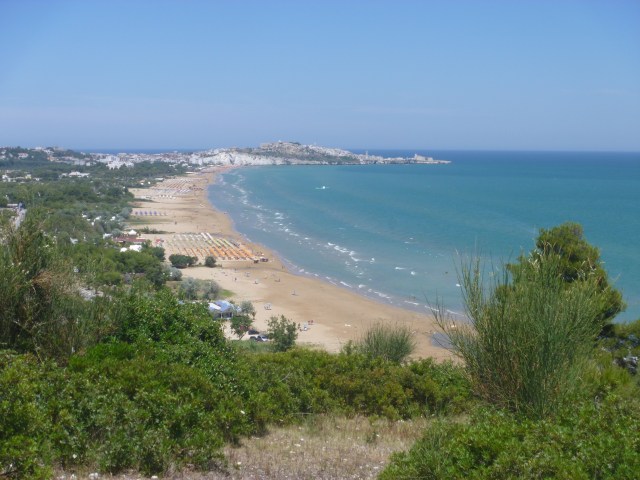
A gravel track descends gently through the valley with wonderful panoramic views across to Vieste (our final destination) passing farms along the way. Then a rolling ridge track with splendid views carries you down to sea level, and the walk is completed along the long beach or seafront of the town.”

vieste and sea view

nearly there

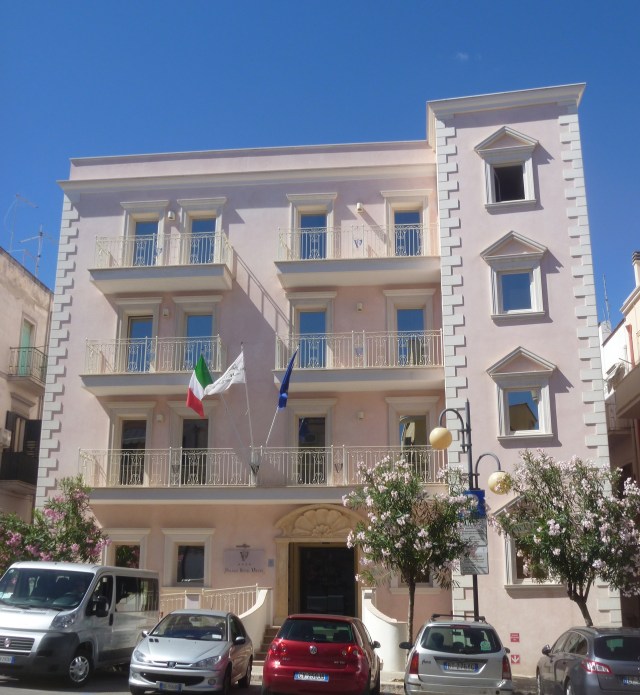
So, lots of ups and downs, super sea and town views and finally arriving at the seaside and straight into the first beach cafe for a pizza lunch. Then it was just a few more kilometres and a climb up into the town to the Palace Hotel very conveniently situated and handy for town, old town and harbour.

palace hotel

The Palace Hotel, Vieste

That evening we went with Matteo’s suggestion to eat at Taverna Al Cantinone in the Old Town. The Route Booklet says :

Fresh and tasty local food. Traditional dishes from the Gargano revisited with a bit of fantasy. Good value for money.”

What it doesn’t tell you about is the lovely homely atmosphere and decor and the friendly, helpful and charming owners; a chef and his Spanish partner who serves at front of house. In fact, we ate there both evenings.

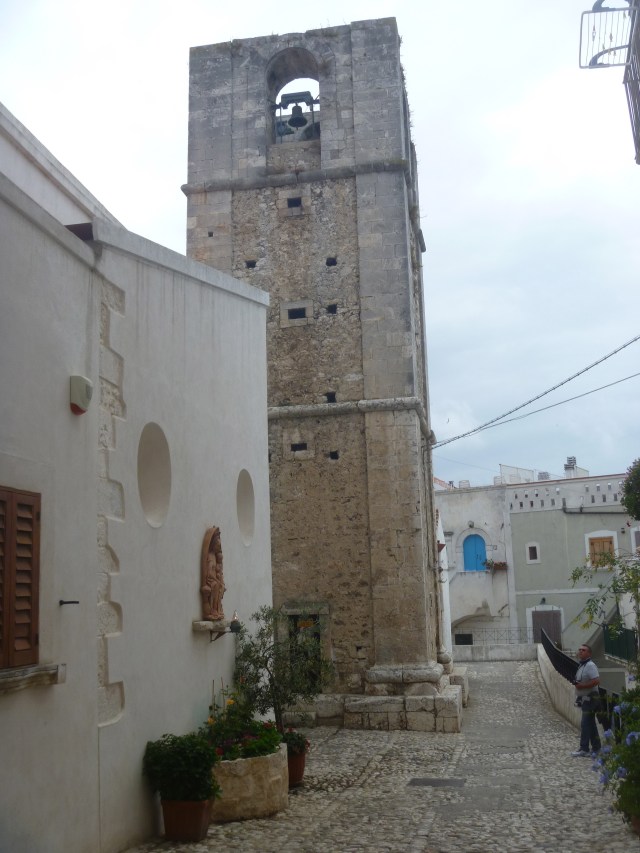
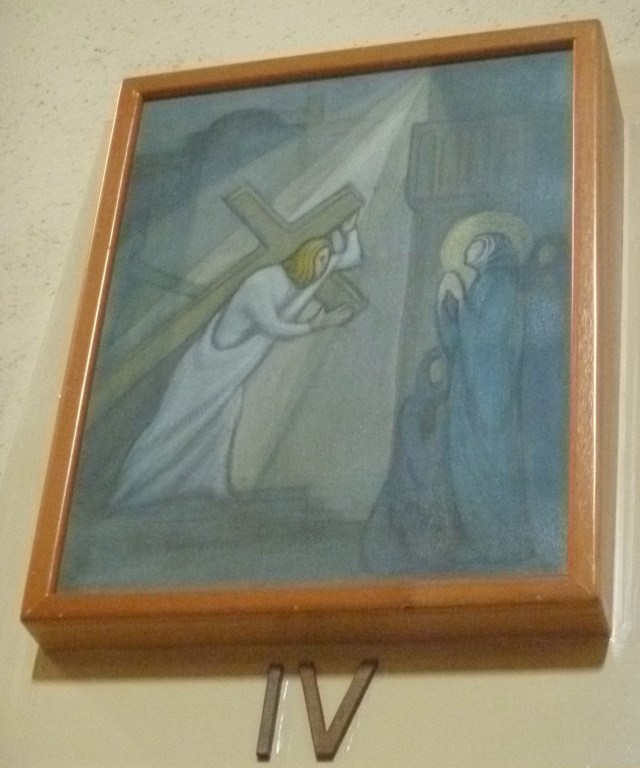
On the seven night ATG walking holidays there is always a free day so this meant we spent two nights at Vieste. On our free day we’d expected to take a boat trip to visit caves and spend a few hours with our reading at the Palace Hotel private beach. But the day dawned cloudy and windy with rain threatening so at breakfast a quick decision was made, the receptionist consulted for timetables and we took the local bus along the coast road to nearby Peschici. It’s another characterful old town with a castle (due to rain we visited the grisly Museum of Torture! – torture in itself!!), church of Sant’Ella (with Bauhaus style paintings of the Stations of the Cross), bell towers, town walls, narrow streets and plenty of craft and souvenir shops.

bell tower

Bell Tower at Sant’Ella

stations of cross

Stations of the Cross

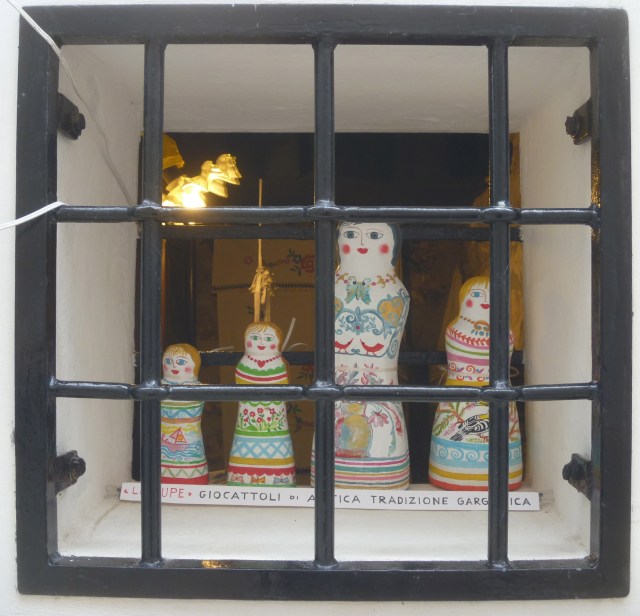
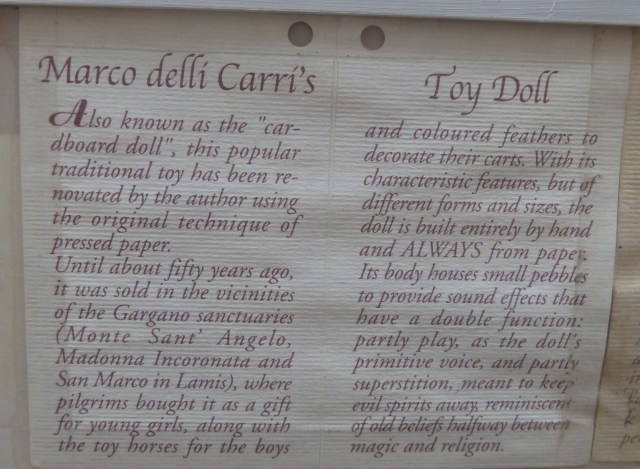
Typical souvenirs are wooden Pinocchio-style puppets and these dolls :

the dolls

about the dolls

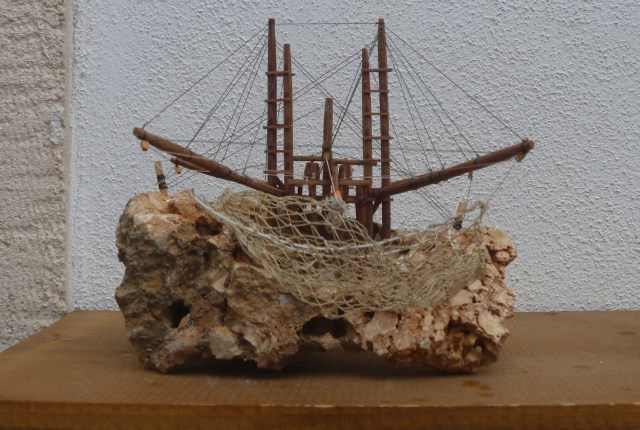
and models of trabucchi :

model trabucco

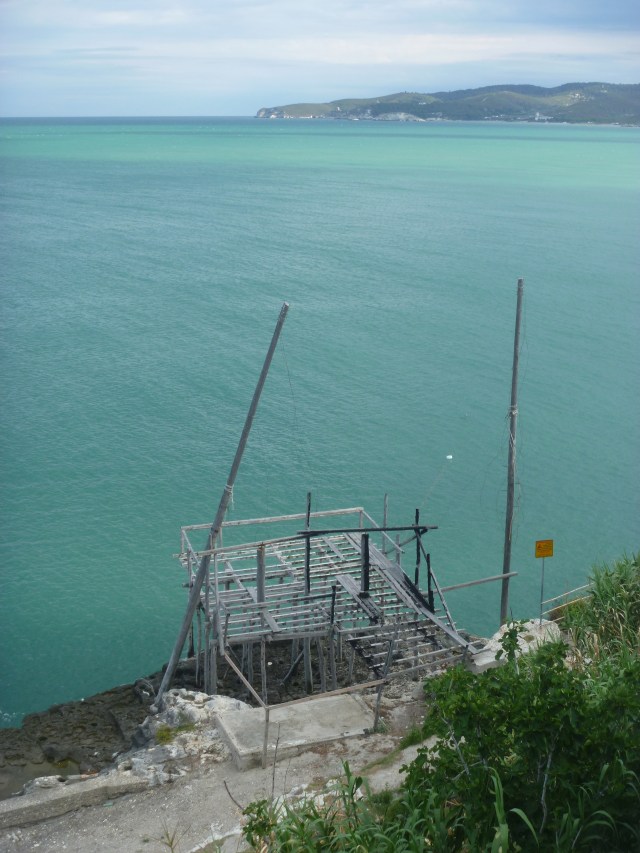
Trabucchi are wooden structures submerged in the sea. They are an ancient form of fishing technique consisting of large platforms anchored to the rocks and long wooden poles, ropes and pulleys. These days they are no longer used, except as a hobby, but they strongly symbolise the tradition and culture that was once fundamental to the economy of Vieste and the immediate region.

Vieste trabucco

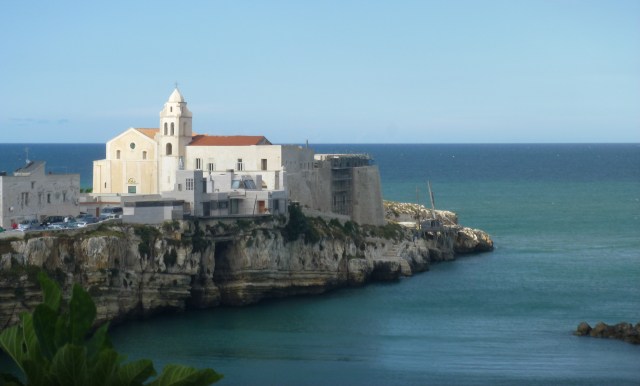
A trabuccho at Vieste

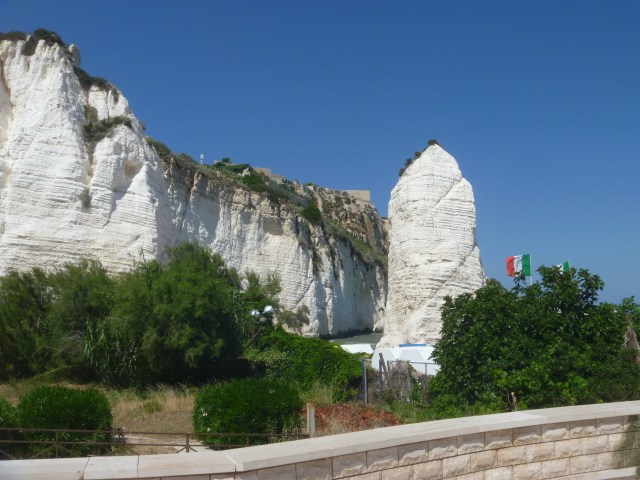
By early afternoon we were back in Vieste where the sun was beginning to come out so we walked round the old town looking for the trabuccho, the Pizzomunno  stack and visiting the Cathedral.

Pizzomunno

Il Faraglione ‘Pizzomunno’

This is a magnificent example of a calcareous monolith that stands 25m high next to the cliff side on the Castle Beach. It has become a symbol of Vieste. The rock’s name is taken from the legend associated with it. Read the story here.

cathedral

The Cathedral

old town

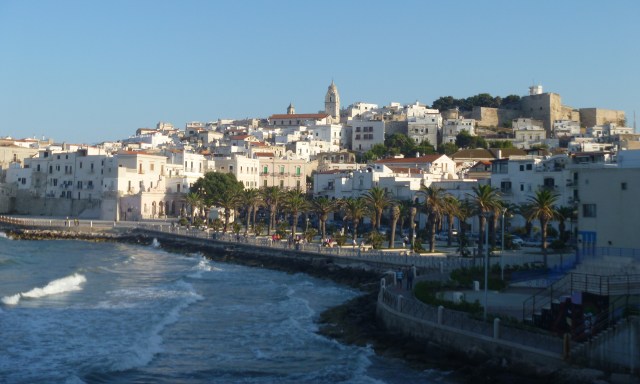
The Old Town of Vieste

And so, after a week of walking the paths of Gargano our trip was soon at an end. On the final evening we met again with Matteo to give our feedback and the next morning our taxi driver, Giancarlo, picked us up to whizz us along the autostrada to Bari Airport in his comfortable air conditioned Audi limousine, telling us proudly on the way how his grandfather began the family taxi business with a horse and cart.

What an adventure and what an achievement!


Footloose in the Gargano Peninsula

apulia

[source]

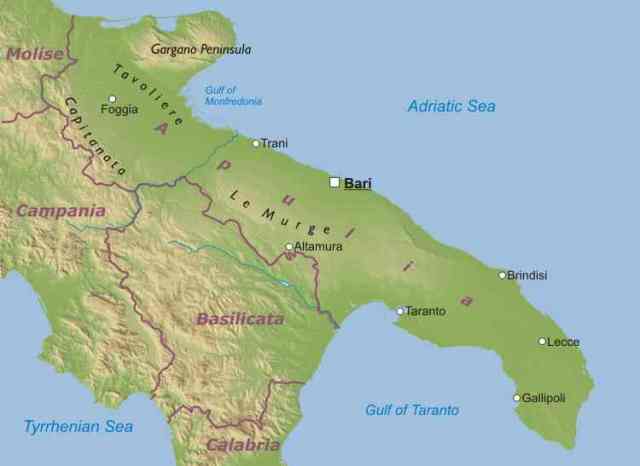
Whilst staying at Sant’Antonio in March I picked up a copy of H V Morton’s “The Traveller in Southern Italy”. It fell open at p.150 where the first sentence of part 8 of chapter 4 reads “The best way to see a country is on foot …”. By coincidence, or design, this sentence constitutes the strap line for ATG (Alternative Travel Group) of whose walking holidays I am a keen advocate. I also read Morton’s description of his visit to the “unexplored” Gargano Peninsula. My reason was, of course, that this June I was already booked on an ATG Footloose trip to explore the Gargano Peninsula. This part of Italy is still relatively unknown although some tour companies do visit and ATG have been sending walkers there for quite a number of years. We chose flights to Bari from Gatwick and ATG made our taxi arrangements for us. We had to go in June since we already had a family wedding on 13th and I had booked the month of May to be Ireland. So we had an inkling that this trip might be harder work, due to warmer weather, than previous walking holidays. In fact, I think I would say that, this one turned out to be the most strenuous of them all. However, as they say, “no pain, no gain”, we felt that we had made a great achievement as we walked along the designated route. Planning route

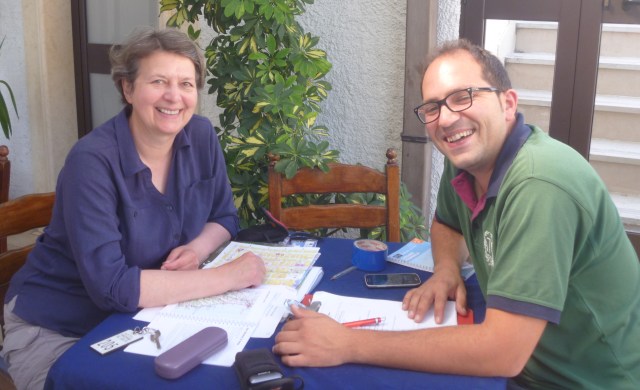
Initial Route Planning with Matteo

Yet again we had a great Route Manager to help us along the way, give advice, transport our bags and generally be a presence in the background in case of need. The Route Booklet explains the route step by step and we are now very familiar with the distances and what to expect. However, the ever-helpful Matteo explained that in certain places he had attached ‘environmentally-friendly’ blue tape not to show us the way but just to confirm that we were on the right track. It was always a relief to spot this tape! blue tape

Spotting Matteo’s blue tape

In brief, we walked from Manfredonia to Vieste officially a distance of 41.1 miles but we are positive that we walked a lot further than that! (… and I have the Fitbit to prove it!). ATG sum up the walk thus : “Limestone hills rising to 2,700 feet with coastal paths, quiet lanes, farm and woodland tracks and pilgrim routes leading up to Monte Sant’ Angelo. Occasionally rough under foot.” leaving first hotel

Leaving our first hotel

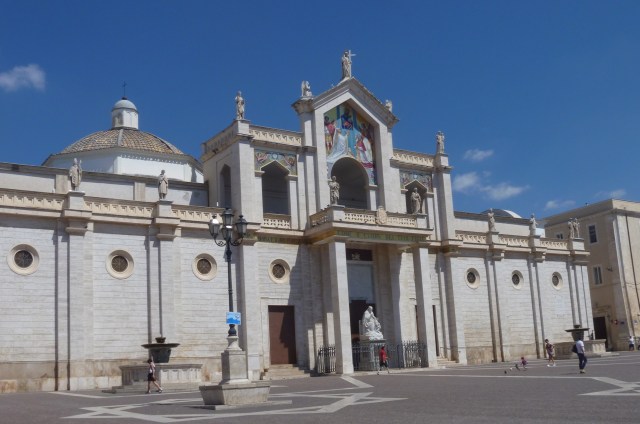
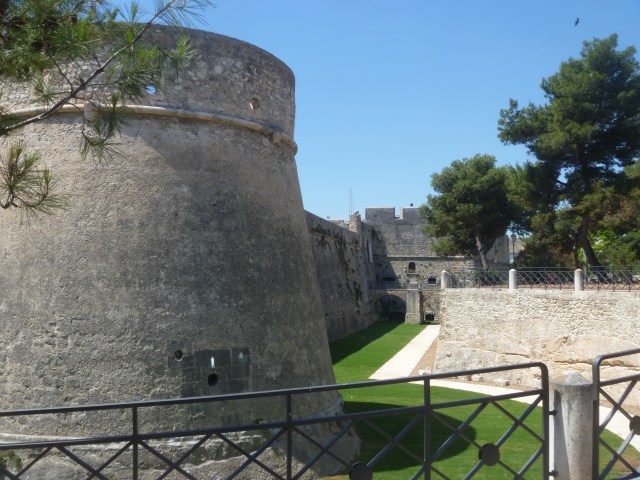
There was a long, but pleasant, walk from the first hotel along the promenade into the town centre of Manfredonia. Here we lingered a while viewing the Cathedral, the Castle and Town Hall Courtyard and Museum. Main Street Manfredonia

‘The Corso Manfredi’, Manfredonia

City Hall and Museum Manfredonia

Town Hall

Cathedral Manfredonia

Cathedral

Castle Manfredonia

Castle

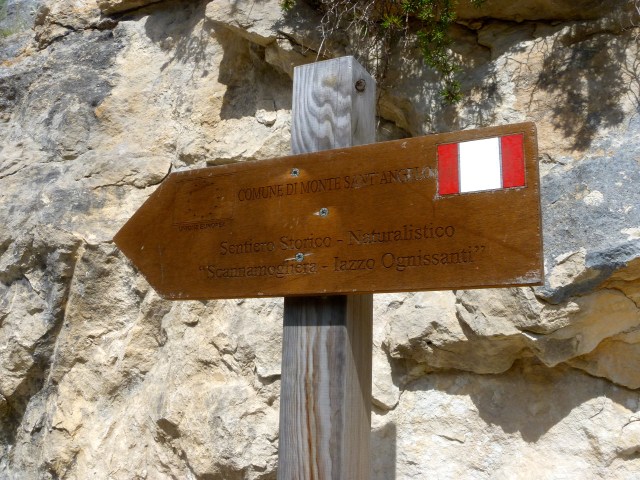
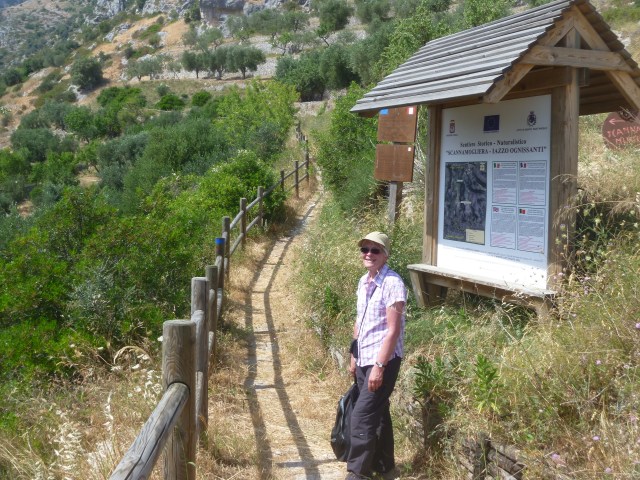
There followed an even longer walk out of the town and through olive groves across the coastal plain before we even started on the “Jazzo Ognissanti” the historical and natural path.

There's Mont St Angelo

We Climbed Right Up There!

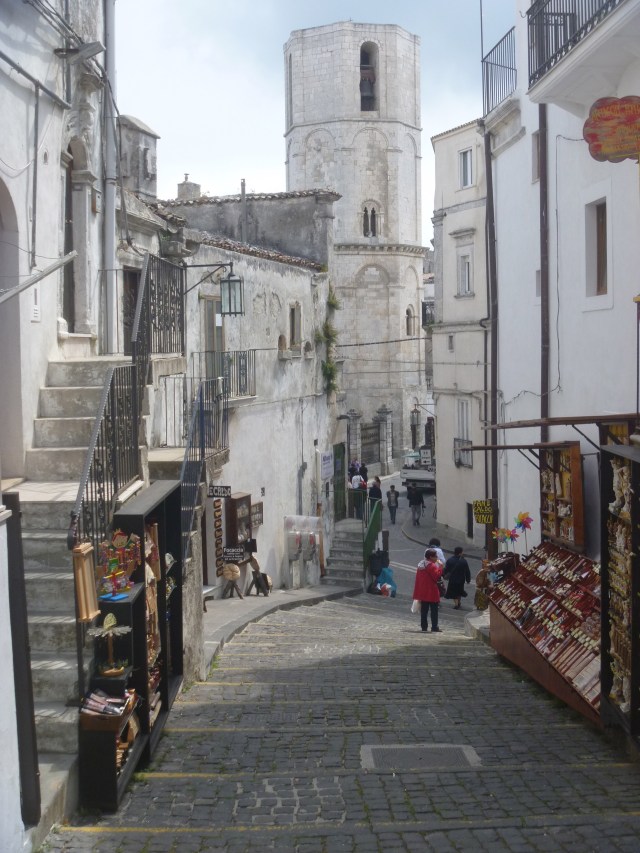
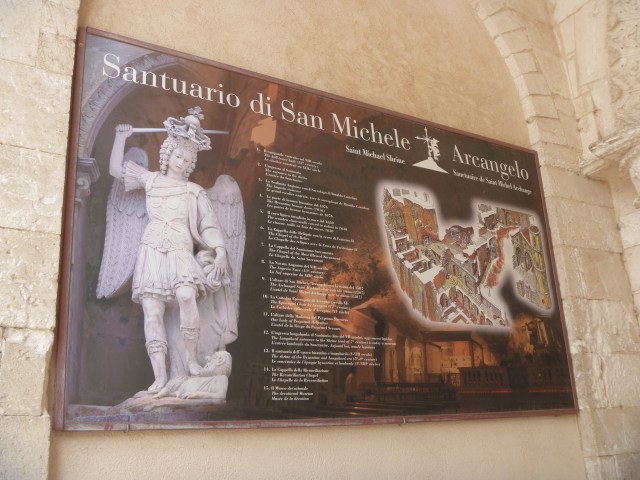
Walk along the coast then across a small plain before ascending an ancient pilgrim route, once used by crusaders before they embarked for the Holy Land. The route, now a grassy ravine with ruined monasteries on either side, leads to the ancient town of Monte Sant’Angelo (2,755ft), with its whitewashed houses, steep narrow alleys and stairways, and views across the bay of Manfredonia and coast to the south.” Pilgrim Route info boards along the way View back to Manfredonia The Pilgrim Route to Monte Sant’Angelo was memorably tough but very special and we enjoyed exploring the town the next day visiting the Sanctuary of St Michael the Archangel, churches and the Old Town (the JUNNO Medieval District) before heading off on the next stage (and getting soaking wet twice in the process) to our next stop, Mattinata. streets of Monte st  angelo

Shop

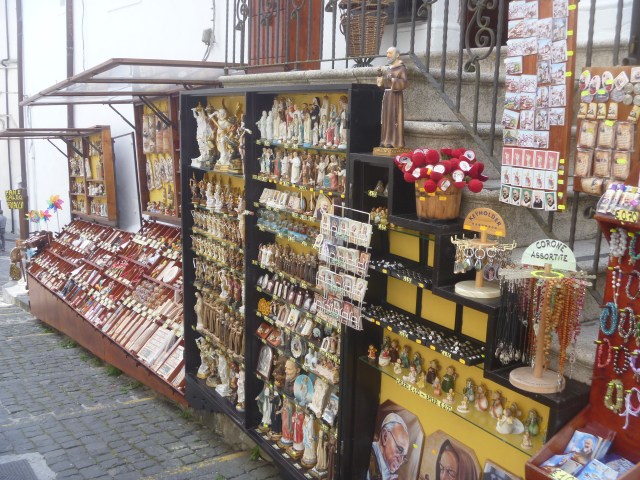
Shops selling religious mementoes abound in Monte Sant’Angelo

Santuario

Santuario door

The Santuario Door

santa maria door

Door to the Church of Santa Maria Maggiore

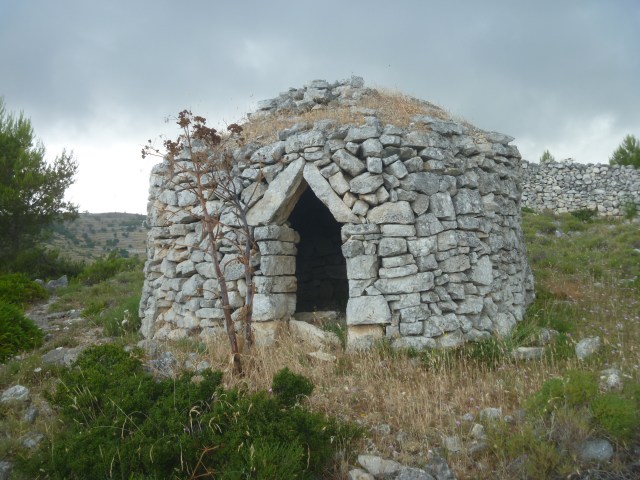
Time to explore the town and visit the famous cave church, venerated as being the last place St Michael appeared on earth in 491 AD, before setting off down a well-made pilgrim path to the small town of Mattinata (650ft) set in olive groves, close to the coast.”You descend from 800m to sea level on rocky paths, stony mountainsides and through woods, with wide views of Mattinata and the coast, following the remains of an old mule track called ‘Strada Comunale Mattinata – Monte Sant’Angelo’, which was once the only way up!” pagliaio On this section we came across pagliaio: shelters that were once used by shepherds to keep grain and straw for their herds and to sleep in if necessary. We had lunch in the shelter of one as it poured with rain. Later in another, even worse, downpour we sheltered under some trees but these made little or no difference. a pagliaio and storm clouds

A Pagliaio with storm clouds brewing

Mattinata looked like a nice town but we didn’t stop to find out as the shops were closed in the early Saturday afternoon and we needed badly to dry out our boots and clothes. The local museums had strange opening hours. The Museo Civico 5-10pm Tuesdays and Saturdays and a Museum in the local pharmacy was also open on that Saturday evening. In the end we just couldn’t face getting wet again.

Sunday dawned bright and clear and the walk on that lovely day was virtually over by lunchtime when we arrived at the beach. We ate a leisurely lunch then hiked the final couple of kilometres to our hotel. lunch venue

We looked rather out of place in our hiking gear!

The route undulates across two valleys following surfaced road, grassy and stony paths and along a high ridgeline path with wide views east and west to the sea, before descending and across a wide plain. The route brings you close to the shore and along it before a brief section on road to the hotel.” beach

The Beach from our dinner table

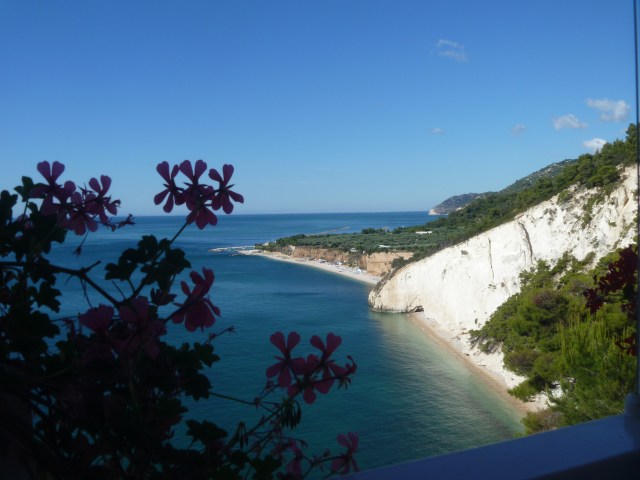
Except for Monte Sant’Angelo and Vieste our hotel arrangements were on a half board basis. This is ATG policy when a hotel is not near a choice of good restaurants. The Hotel Villa Scapone is set on a cliff: walk down to the pool and up to the restaurant from our individual room with separate entrance and private terrace. It was a wonderful place to spend a relaxing Sunday evening halfway through our journey. Hotel Scapone

The Hotel Villa Scapone, Baia Fontana delle Rose

Crom Estate Walk

One of my favourite kinds of walk is on well marked paths around estates such as Fountains Abbey, Endsleigh, Astley Castle and Hackfall with an interesting variety of landscapes and views and ‘eye-catcher’ structures to add to the interest.

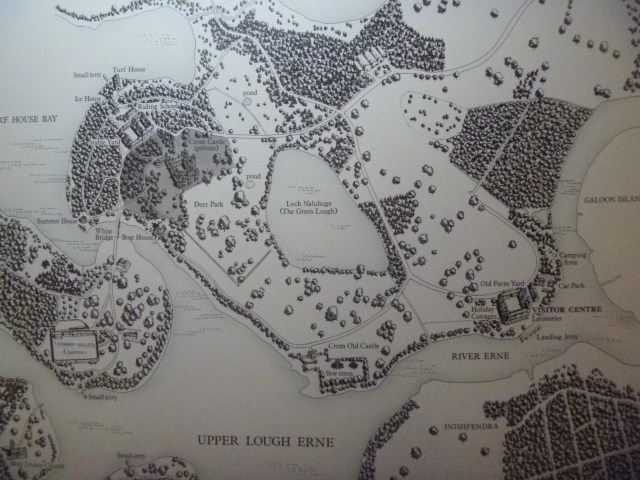
Crom Map

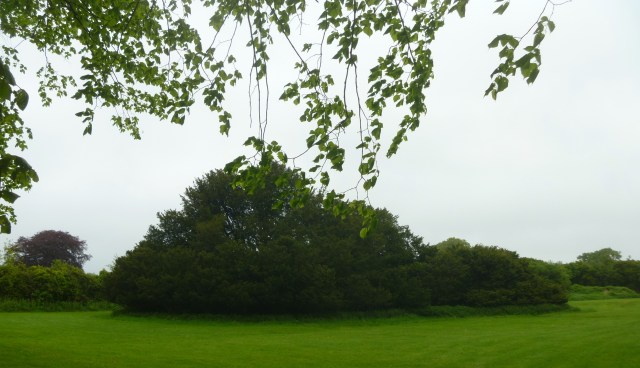
Despite the rain this afternoon I set out on such a walk here at The Crom Estate in Co. Fermanagh, Northern Ireland. The estate comprises almost 2,000 acres of woodland, wetlands, farmland and parkland on the shores of Upper Lough Erne. According to the map leaflet it was laid out in 1838 and is one of the best preserved and most extensive landscapes designed by William Gilpin in the British Isles. Its unique character rests upon the scale and relationship of water, wetland, woods and parkland with its veteran trees. The Great Yew Tree is located at the Old Castle ruins and was nominated as one of 50 Great British Trees for the Queens Jubilee Year 2002.

old yew

The Ancient Yews in the Castle Ruins

There are many fine buildings on the estate walk. Crom Old Castle was built on the shore by Michael Balfour, Laird of Mountwhinney in 1610. It withstood two sieges in 1689 but was destroyed by an accidental fire in 1764. The yew trees within the ruins are reputed to be the oldest in Ireland.

approaching the old castle

Approaching the Castle Ruins

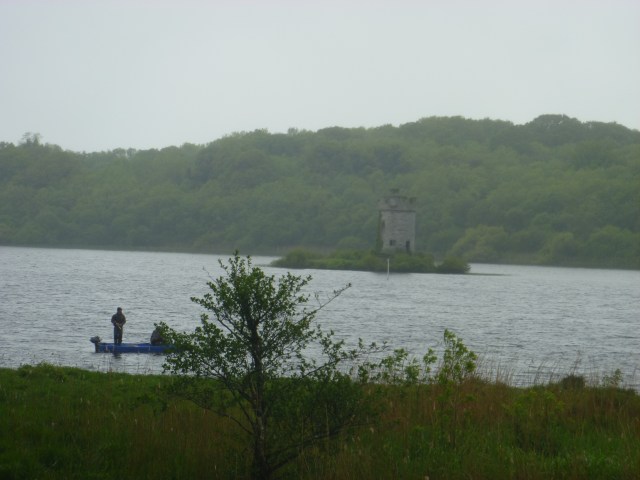
lough erne

The Crichton Tower was built on Gad Island in 1848. Its architect is unknown.

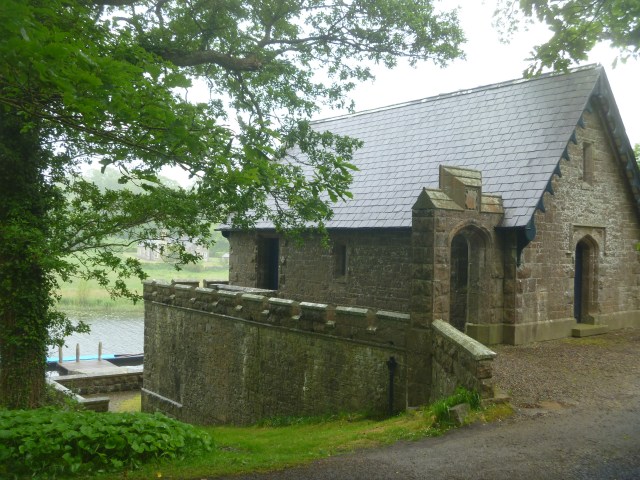
The Boathouse is a complex structure with decorated bargeboards and battlements designed in 1841 by Edward Blore. For many years it was the Lough Erne Yacht Club and the social centre for the Victorian houses in the area.

boathouse

The Boathouse

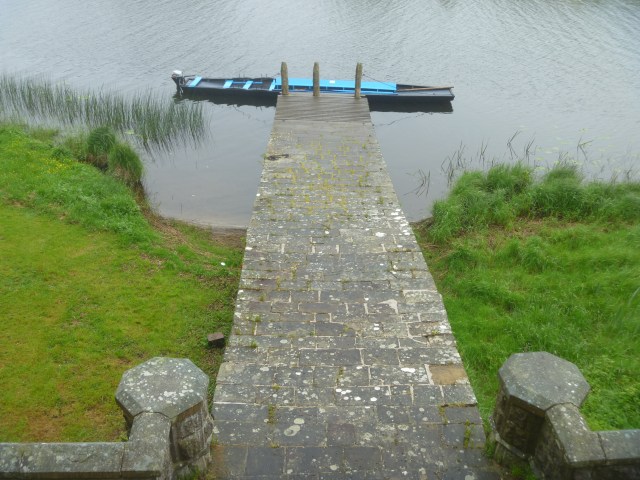
jetty

Boathouse Jetty

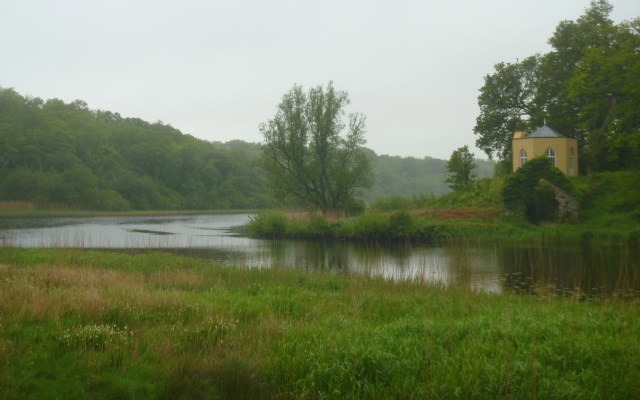
The Summer House was built around 1880 out of the structure of an old school house on the site. It was built for Lady Florence who used it as a picturesque retreat. Rustic inside, it had a woven straw mat, a cupboard above the fireplace with cups and other teatime items, a round table and chairs and a box for firewood. The original boathouse of the demesne, later made into a folly, lies below the summer house.

summerhouse

The Summer House

summer house view

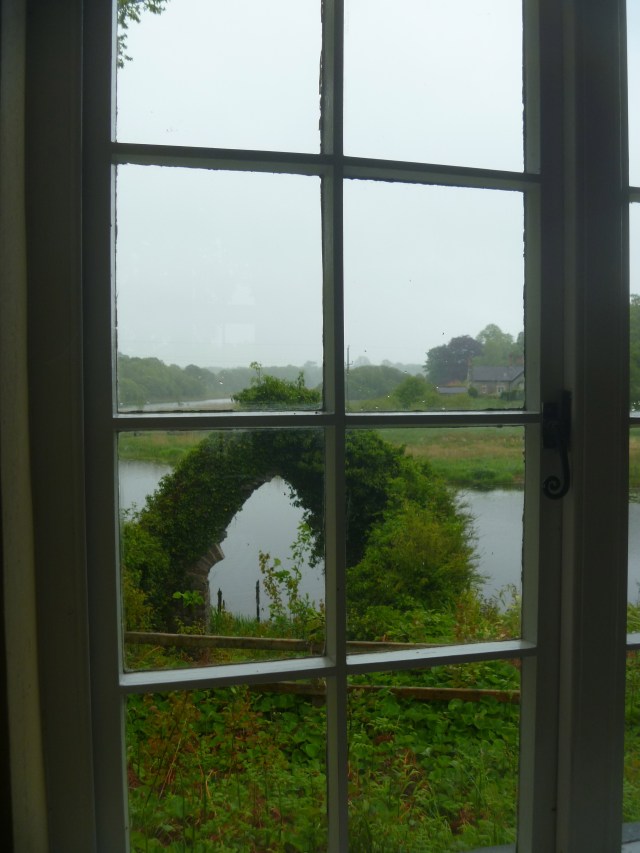
View from The Summer House

A white iron bridge connects the mainland with Inisherk (Inis means island in Irish) and a track leads straight across to another small jetty. There are two cottages – Bridge and Gamekeeper’s – and the remains of a Walled Garden.

garden gate

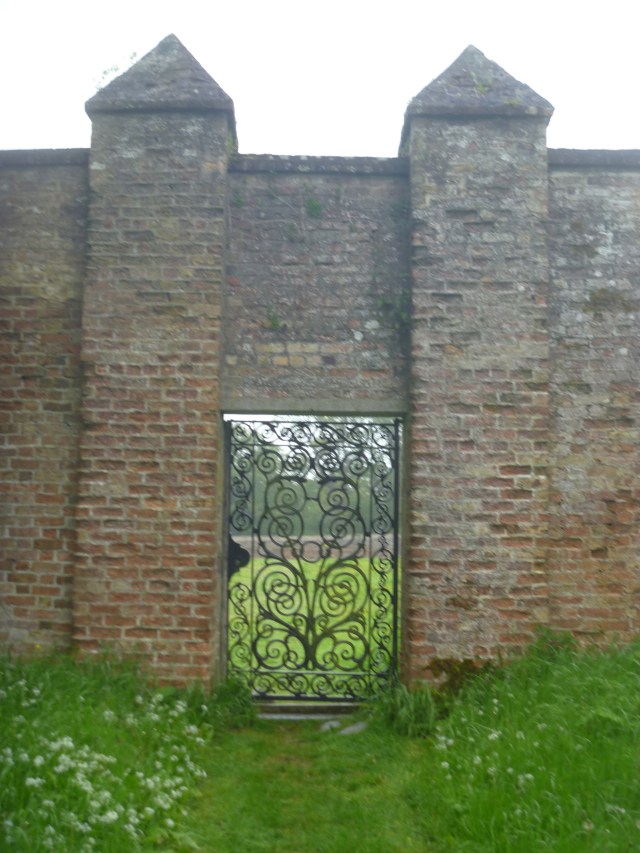
Gate to The Walled Garden

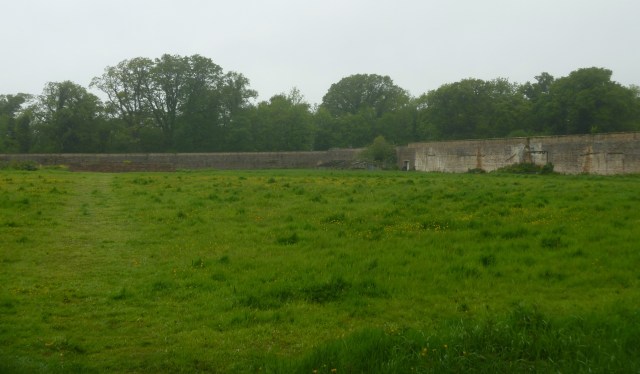
The Garden was completed in 1833 and included a hot house, potting sheds and a propagating house, built in later years. The Garden remained in use until the 1950s. Lately the Trust has carried out extensive repairs to the walls including the rebuilding of a large section of south wall.

extensive garden

The extensive Walled Garden

Returning over the bridge a track through woodland brought me to the Stable Yard (now NT Offices) and The Riding School (apparently never used as such as it was commandeered by the US Air Force for D-Day preparations/training).

saplings

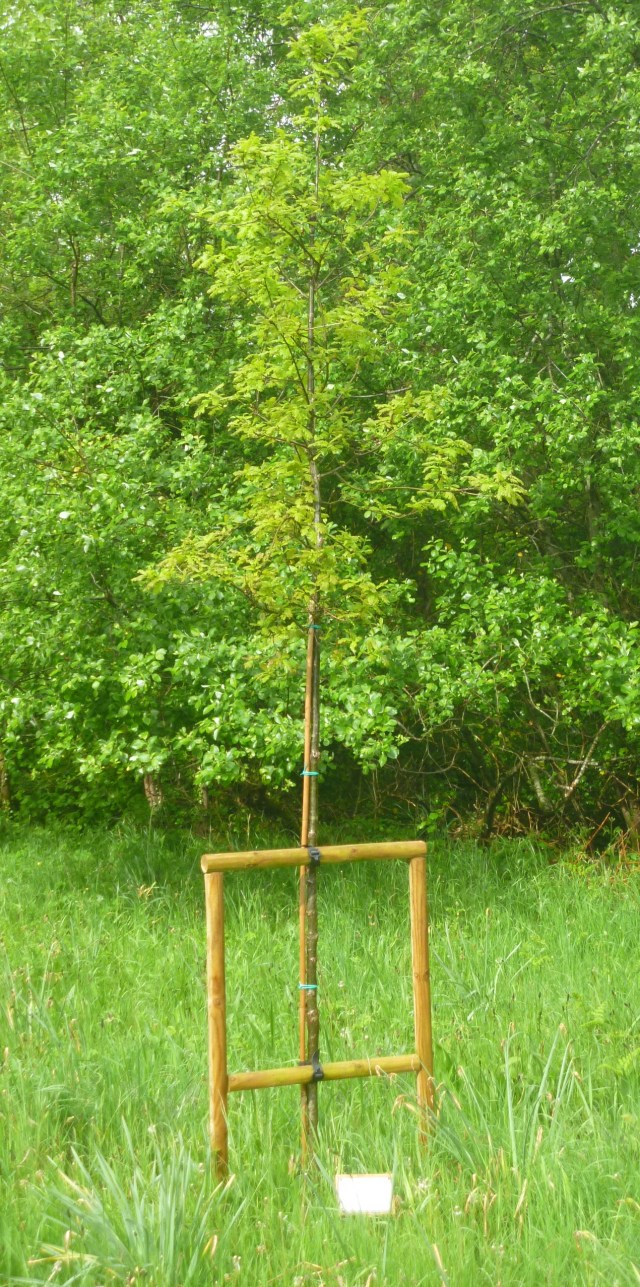
Oak Sapling Commemorating the USAF Presence

“This oak tree was planted on 6th June 2014 to commemorate the 70th anniversary of D-Day and the United States forces stationed here in WWII”

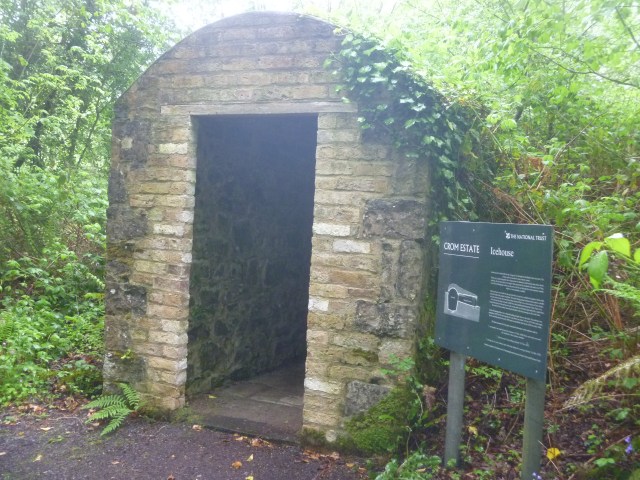
ice house

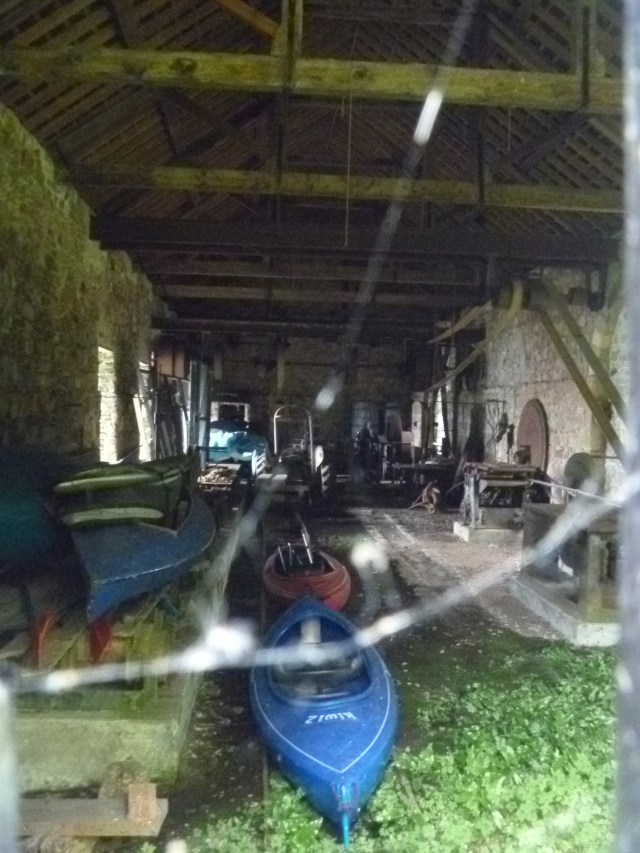
Nearby are The Turf House, also designed by Blore and built with an adjacent pier in 1840 for peat fuel to be originally unloaded here for the castle later in the century a sawmill was established, and an Ice House.

in turf house

Inside the Turf House today

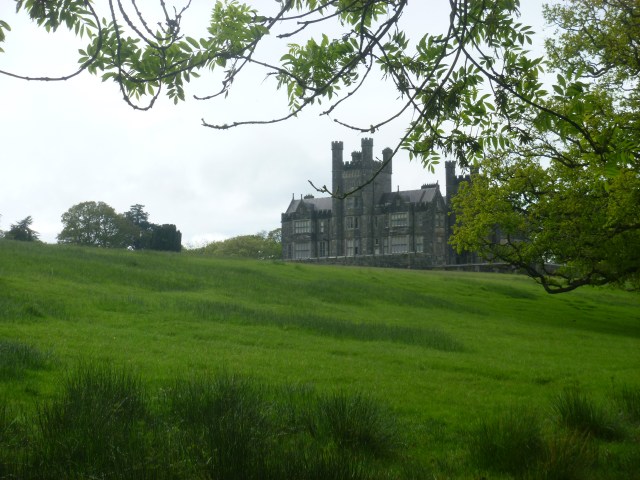
From the Stable Yard area the track continues through woodland after which I joined a grassy path alongside the Deer Park fencing with views of Crom Castle itself which is still a private residence and not open to the public.

crom castle

Crom Castle and Deer Park

And so back to dear Alder Cottage to dry off after a fascinating two hour walk.

Alder Cottage

Alder Cottage

A Roman Road : Walking The Appian Way

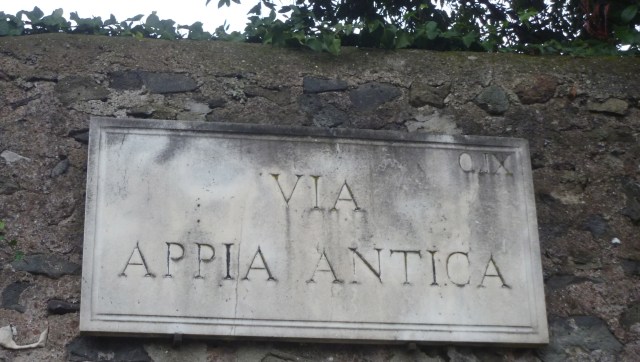
AA wall sign

A walk along the Appian Way was something I’d read about in my Quiet Rome book and in other guides so I’d added it to my ‘to-do’ list for when I was next in Rome. I studied various ways to approach the way and in the end booked the excursion ‘Catacombs and Roman Countryside Group’ with Enjoy Rome. I’ve written about the Catacombs and Aqueduct visits already. Now its the turn of The Appian Way. You’ll have noticed already that it was a rainy day but nevertheless we did manage a brief walk for a few hundred metres and now, maybe on a future visit, I feel confident to take public transport and do a further walk like the 90-Minute one described in the Dorling Kindersley Eyewitness Guide.

cecilia metella

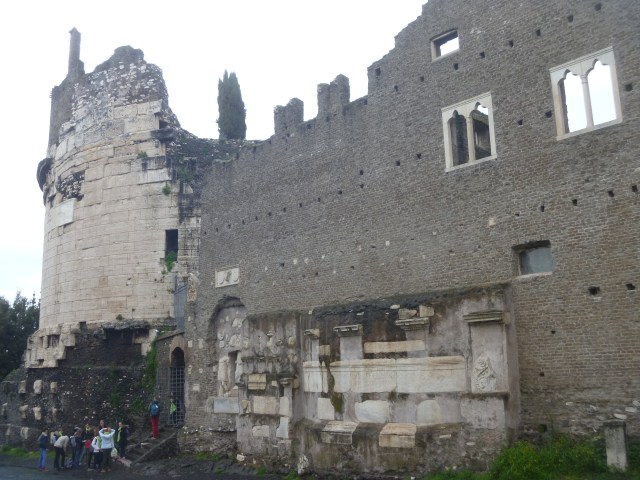
Mausoleum of Cecilia Metella

We were a small group of 15 and the half-day excursion included travel by minibus from the ER offices near Termini Station and back. From the Catacombs we bumped and jostled (I don’t recommend doing this by car!) along the Way and finally parked opposite the Mausoleum of Cecilia Metella on the Third Mile Section.

wet way

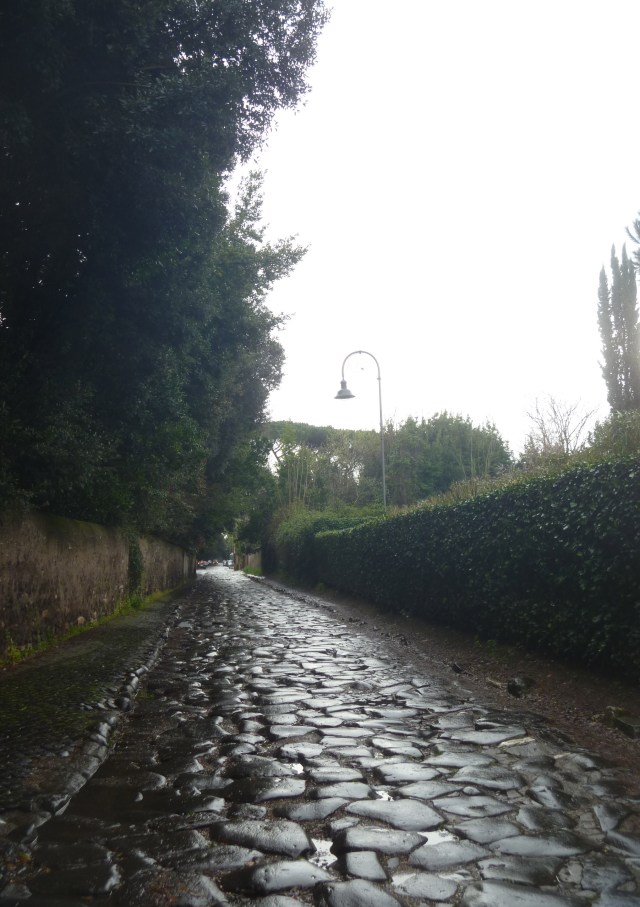
A wet Appian Way

From here we took to the wet cobbles of the road which had been built to link Rome with Brindisi in southeast Italy. The road is named after Appius Claudius Caecus, the Roman censor who began and completed the first section as a military road to the south in 312 BC. It is a Roman standard 4 metres wide surfaced with ancient basalt flagstones and flanked on either side by private villas (many built upon the original Roman foundations), cypress trees and pines. Needless to say the basalt cobbles were rather slippery when wet.

AA Villa

Villa along the Way

AA Cafe

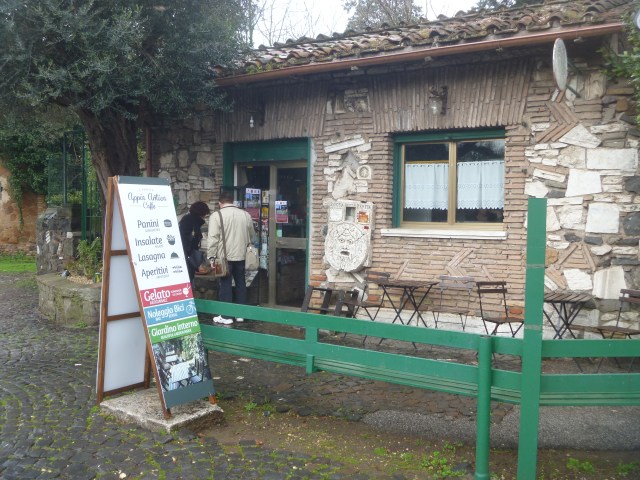
The Bar Caffe del Appia Antica

Refreshment stops along the Way are few and far between but this cafe hires out bikes in summer and is (apparently) near the bus stop for the 660 which would take you to Metro Station San Giovanni – but don’t take my word for it!!

St Nicholas church

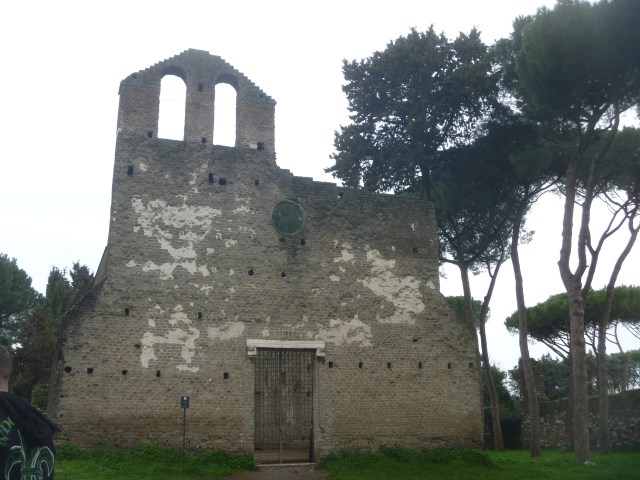
St Nicholas Church on The Appian Way

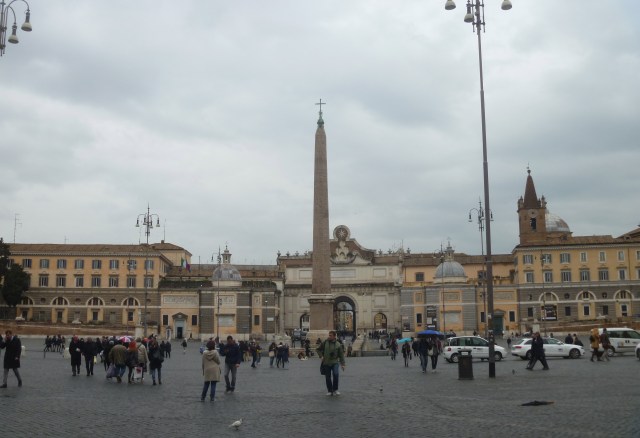
After the excursion I took the Metro to the Piazza del Popolo, crossed it in the rain and took shelter at Canova to eat a five cheese lunch and watch the dripping brollies go by!

Piazza del Popolo

Piazza Del Popolo

Canova lunch

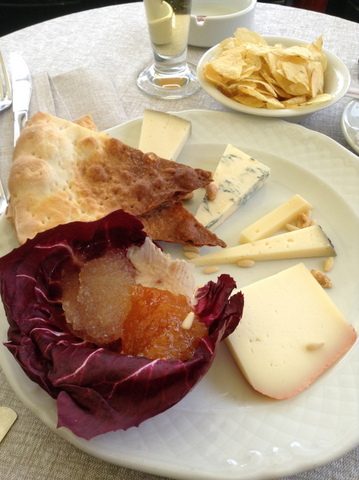
Five Cheeses and What looks like Jelly but tastes like Hot Mustard!

Death in Rome : The Protestant Cemetery and The Catacombs of San Callisto

One visit I had promised myself on this trip to Rome was pay to a call at the Cimitero Acattolico or, as usually known in English, The Protestant Cemetery at Rome.
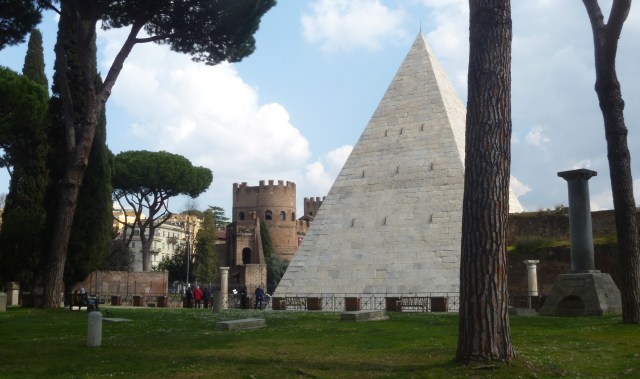
pyramid

“The cemetery is an open space among ruins, covered in winter with violets and daisies. It might make one in love with death, to think one should be buried in so sweet a place”

Percy Bysshe Shelley: Adonais: an elegy on the death of John Keats (1821)

I checked the website carefully before leaving home and made extra sure that Saturday 14 March was not a holiday and so after taking the train from Tivoli to Rome I made my way to the cemetery. When you emerge from the Pyramide Metro Station you can’t miss the huge Pyramid to Gaius Cestius and the cemetery is right next door: but you risk life and limb when crossing the roads to get to it!

Thomas Hardy wrote a poem entitled

“Rome at the Pyramid of Cestius Near the Graves of Shelley and Keats (1887)”

Who, then, was Cestius,
And what is he to me? –
Amid thick thoughts and memories multitudinous
One thought alone brings he.

I can recall no word
Of anything he did;
For me he is a man who died and was interred
To leave a pyramid

Whose purpose was exprest
Not with its first design,
Nor till, far down in Time, beside it found their rest
Two countrymen of mine.

Cestius in life, maybe,
Slew, breathed out threatening;
I know not. This I know: in death all silently
He does a kindlier thing,

In beckoning pilgrim feet
With marble finger high
To where, by shadowy wall and history-haunted street,
Those matchless singers lie . . .

–Say, then, he lived and died
That stones which bear his name
Should mark, through Time, where two immortal Shades abide;
It is an ample fame.
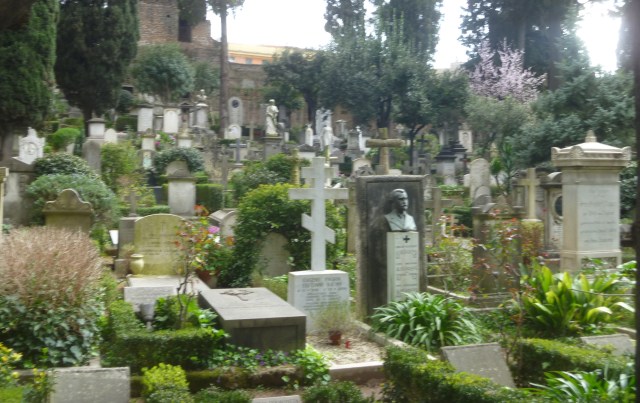
cemetery

I was not disappointed. It’s truly an oasis of peace and tranquility. It’s divided into sections pre- and post- 1821; which is why Shelley’s ashes are not buried near Keats’s grave.
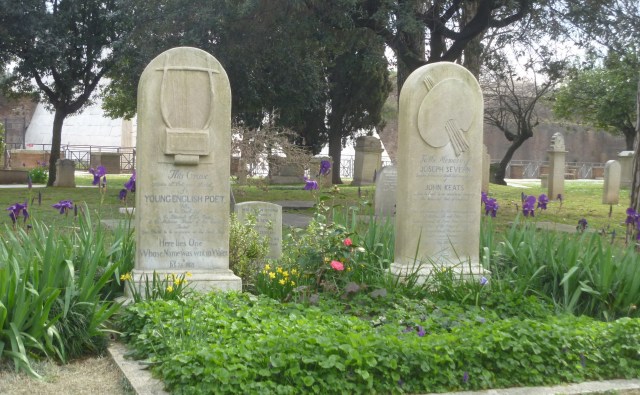
keats and severn

The Graves of Keats and Severn (and Severn’s son)

‘Here Lies One Whose Name Was Writ in Water’ [The only words Keats wished to be on his gravestone]

‘This Grave contains all that was mortal, of a YOUNG ENGLISH POET, who on his Death Bed, in the Bitterness of his heart, at the Malicious Power of his enemies, desired these words to be Engraven on his Tomb Stone’ [Words added by his friends Joseph Severn and Charles Brown]
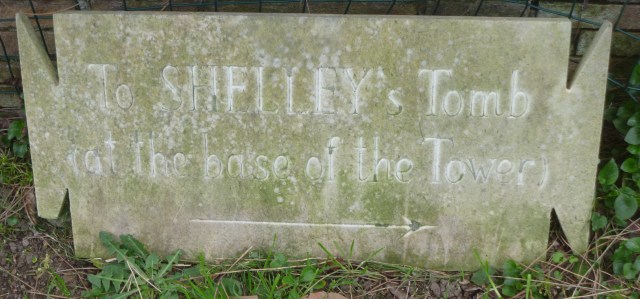
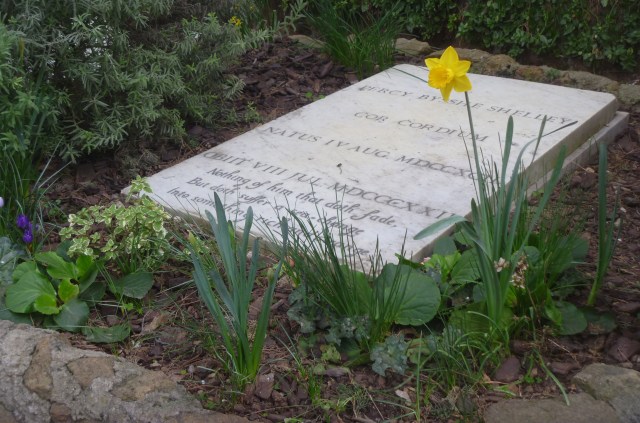
To Shelley's

shelley's

‘Nothing of him that doth fade
But doth suffer a sea-change
Into something rich and strange’

From Shakespeare’s The Tempest [Shelley was drowned and only his ashes are buried here]

There is an especially good chapter about the cemetery in Peter Stanford’s “How to read a graveyard“.
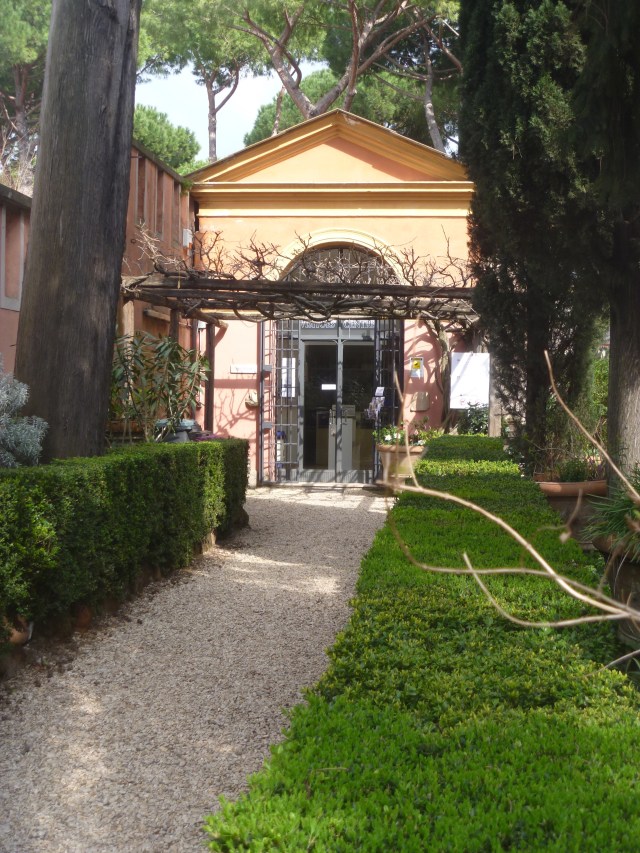
shop and info

There’s a small bookshop and information office (above) near the entrance and the English guide helped me to pinpoint the grave of a little-known Australian author whose books I enjoy : Martin Boyd.
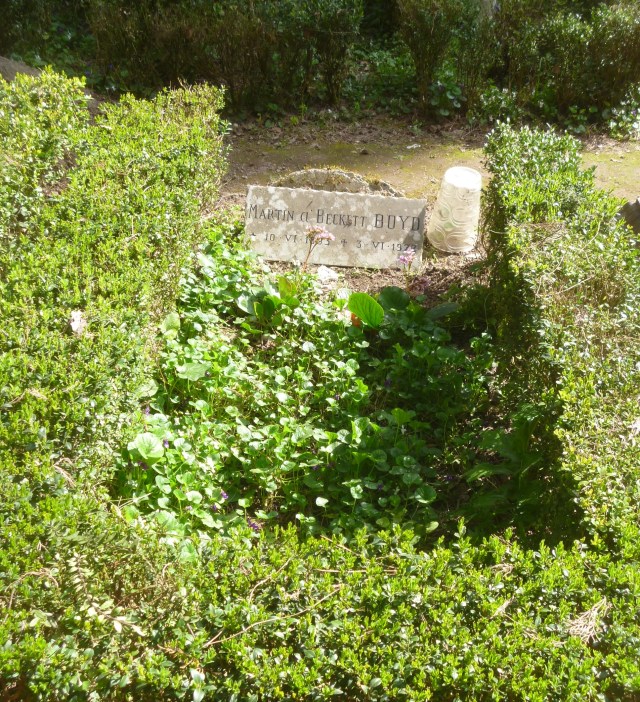
MB grave

His best-known book is “Lucinda Brayford” but I’ve enjoyed reading his Langton tetralogy lately :

The Langton tetralogy which, though not published as a series during his lifetime, is now referred to as a collective:
The Cardboard Crown (London, England: Cresset Press, 1952.)
A Difficult Young Man (London, England : Cresset Press, 1955.)
Outbreak of Love (London, England: John Murray, 1957.)
When Blackbirds Sing (London, England: Abelard-Schuman, 1962.)
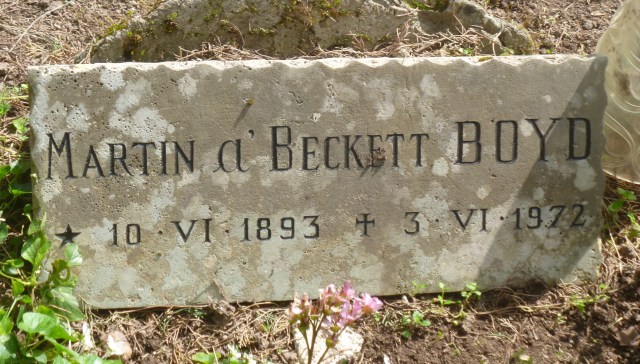
MB headstone

Martin Boyd’s Headstone

Even though the Protestant Cemetery was high on my list this visit I also hoped to walk some of the famous Appian Way, the Roman road that connects Rome with Brindisi in southeast Italy. I read in my guidebooks how to get there and which were the best parts to see then noticed in small inset box this note : Enjoy Rome offers a 3-hour bus and walking tour of the Appia Antica … Call for tour times.
At Catacomb

At the Catacombs

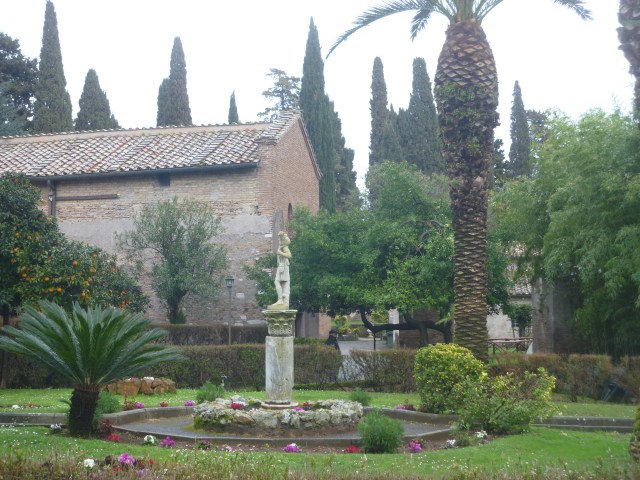
I discovered that the Enjoy Rome office is very near to Termini Station so I bought a ticket for the Tuesday 10am departure. The first stop of the excursion is at The Catacombs of San Callisto. We were able to descend into a maze of tunnels and see various types of burial chambers with and without mural decorations.

entrance

“Ancient Roman law forbade burials, regardless of religion, inside the city walls. San Callisto is one of the most famous of over 60 catacombs in the city area. There are multiple levels of 1900 year old hand-dug corridors, past a mind-boggling number of tomb niches. Christian-themed inscriptions and frescoes, often endearingly simplistic but carrying strong messages of faith, are everywhere in the catacombs.” [Adapted from Frommer’s Rome Day-By-Day] Several Popes were entombed here.

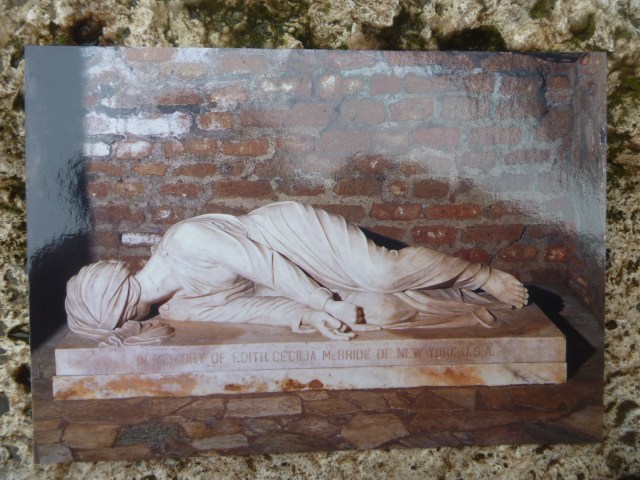
“The Crypt of St. Cecilia: the popular patron saint of music. Of a noble Roman family, she was martyred in the 3rd c. and entombed where the statue now lies. She was venerated in this crypt for at least five centuries. In 821 her relics were transferred to Trastevere, in the basilica dedicated to her.
St Cecilia pc

The statue of St. Cecilia is a copy of the celebrated work sculptured by Stefano Maderno in 1599.
The crypt was all covered with mosaics and paintings (beginning of the IX Century). On the wall, near the statue, we see an ancient painting of St. Cecilia in an attitude of prayer; lower down, in a small niche, is a fresco representing Christ holding a Gospel. On the right side is the figure of St.Urban. On the wall of the shaft is the painting of three martyrs: Polycamus, Sebastian and Quirinus.” [Source]

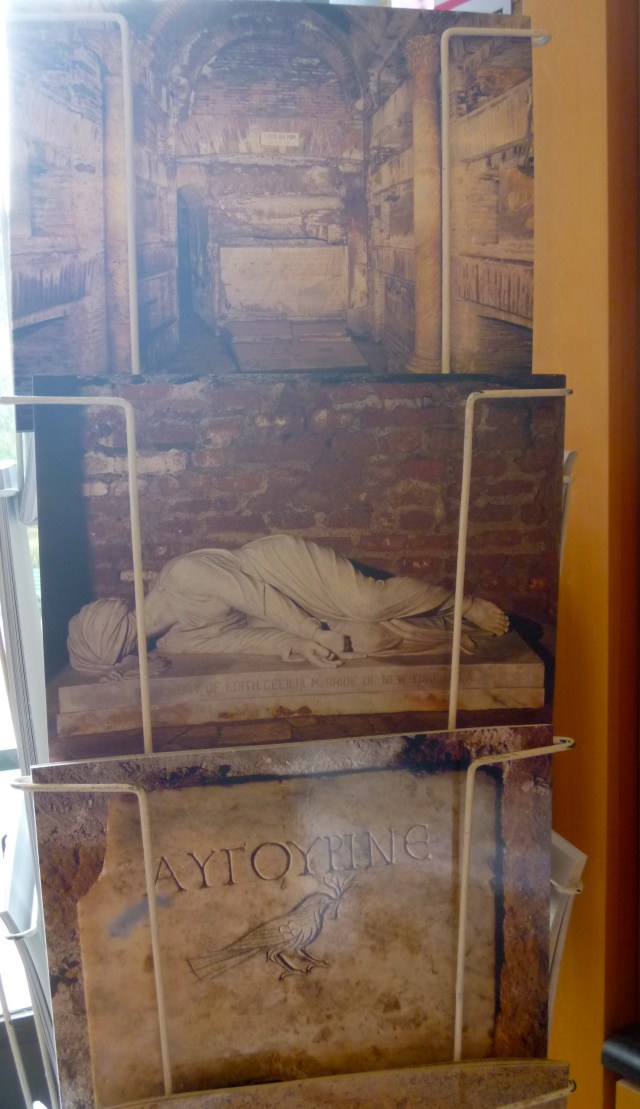
No photography is allowed in the catacombs but I snapped a couple of postcards showing what it’s like down in the depths!
what it's like inside

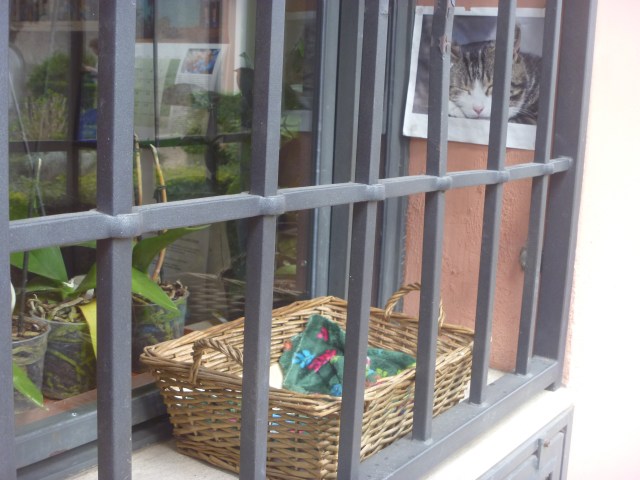
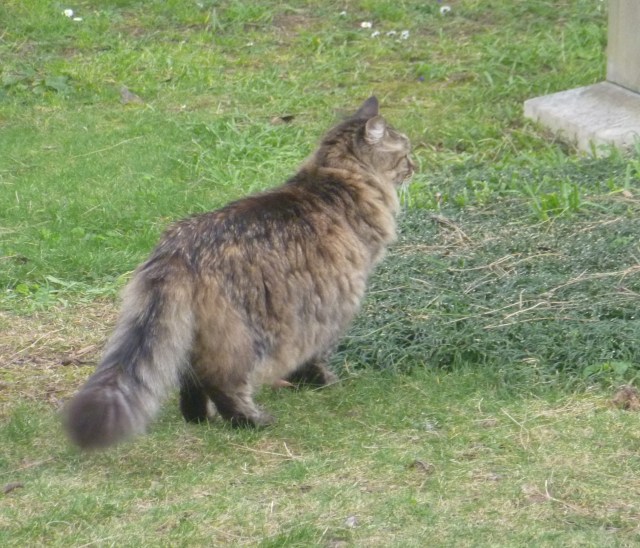
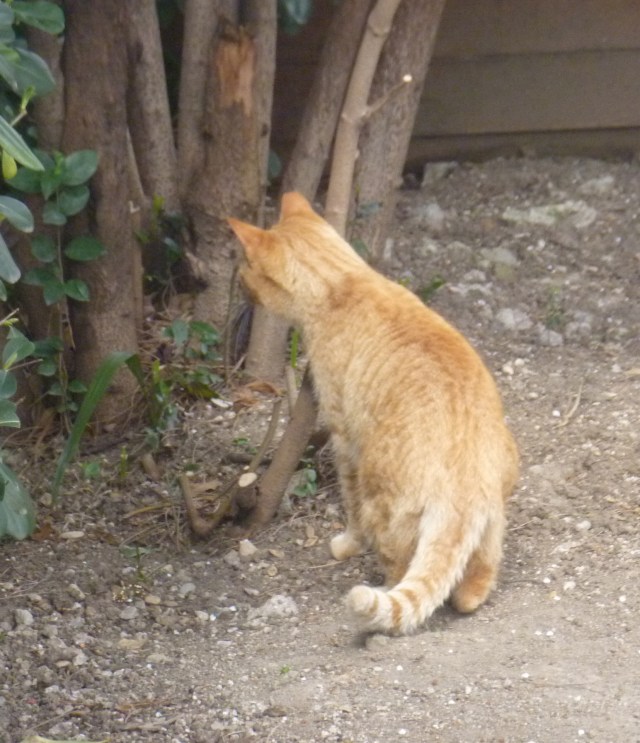
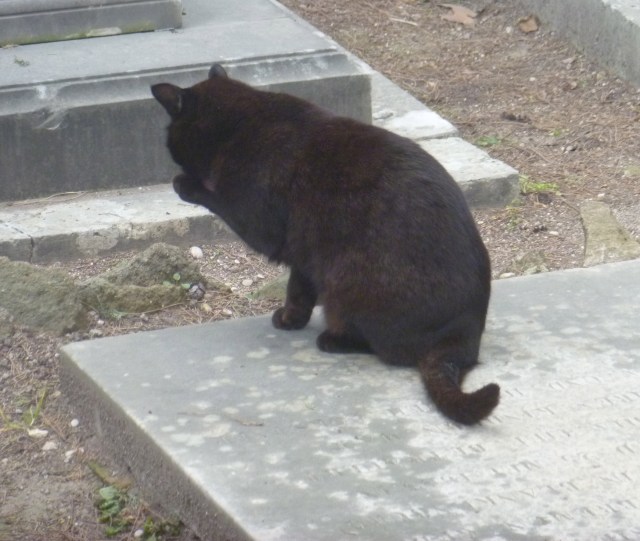
Back at the Cemetery the cats are looked after by volunteers and even have their own website.
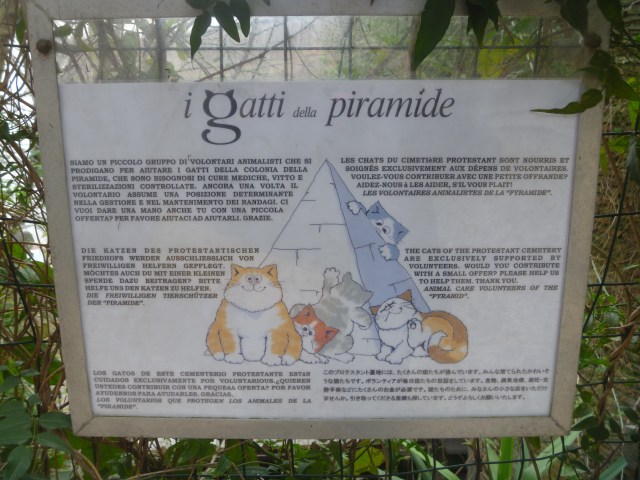
i gatti

empty cat basket

Empty Basket – Where can they be?
cat 1

cat 2

cat 3

Constable Country : Dedham Vale Area of Outstanding Natural Beauty

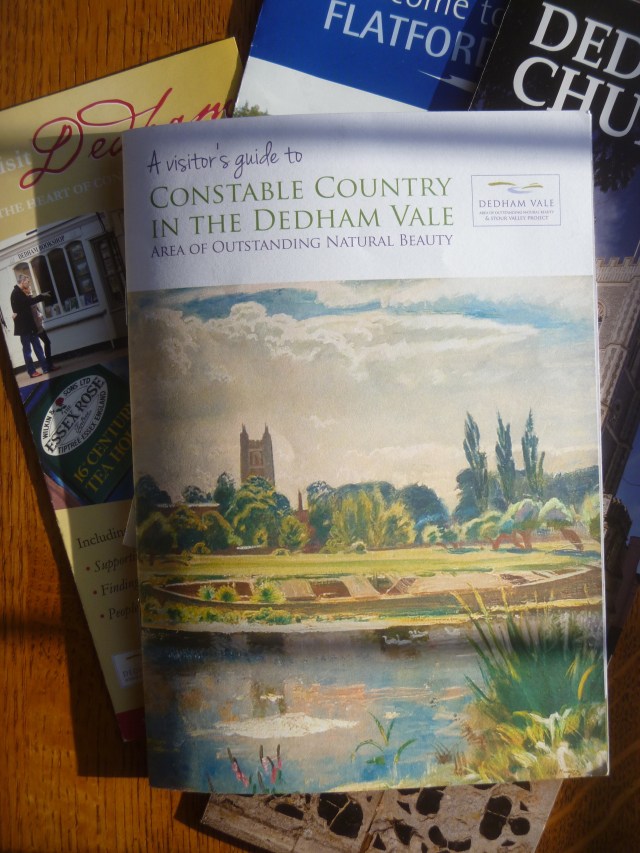
We’d planned to make one excursion from Colchester and that was to nearby Constable Country to Dedham in Essex and Flatford in Suffolk. On our first visit to the Tourist Information Office we picked up a lovely little brochure “A Visitor’s Guide to Constable Country in the Dedham Vale”. Across the centre fold is a sketch map of the area showing footpaths and locations where John Constable (1776-1837) painted scenes.

Brochure

That evening we noticed this at the bottom of the page :

“Take the Train…
Did you know it only takes 40 minutes to walk from Manningtree Station to Flatford, and around
40 more from Flatford to Dedham? Avoid the traffic and enjoy a relaxing day out by train.”
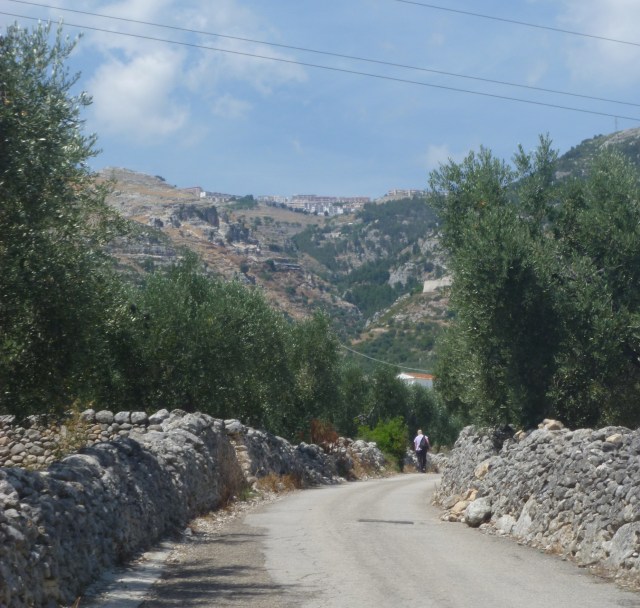
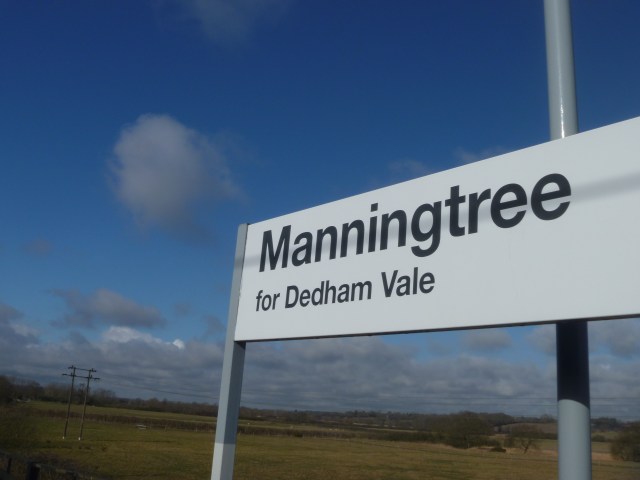
Manningtree

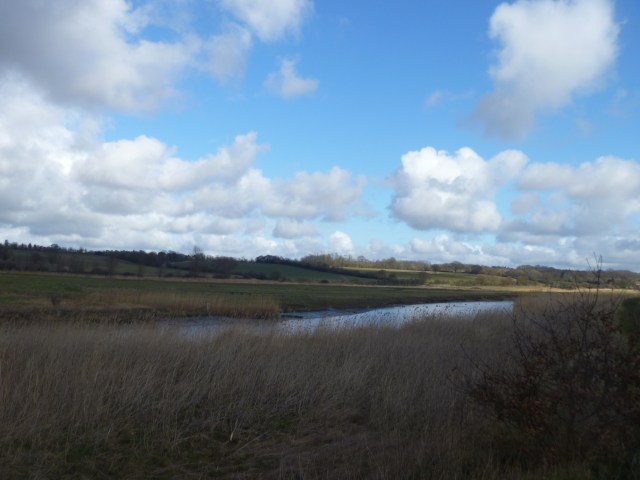
The perfect way to go, we thought. The next day we travelled to Manningtree and the walk began well along a country lane until we reached the first actual footpath. Horror! It was a mud bath. We managed to manoeuvre ourselves along the overgrown edge but it soon became impossible. In addition, all the footpath signs after leaving the station were broken off. A sad state of affairs. In the end we took a raised path, still very muddy in places, alongside the River Stour to the A137. Luckily there’s a pavement along the road back to the railway station.

River Stour 1

River Stour 2

River Stour

Our second attempt was more successful. We decided to take a short detour from our route up to Norwich.

Dedham main st

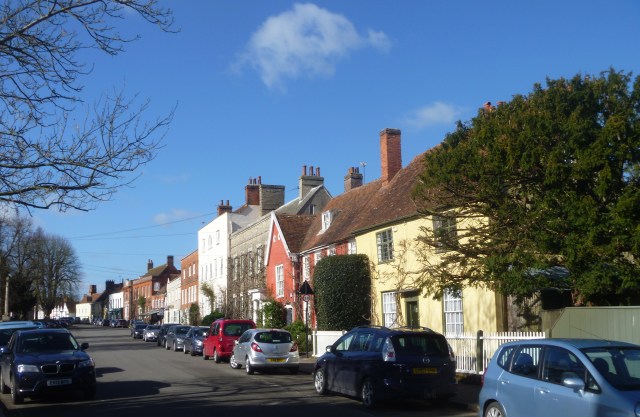
First stop was the pretty, large village of Dedham, still in Essex. The main street is lined with Georgian buildings. We did a little shopping and had lunch in the Arts and Craft Centre which occupies a former historic church on the edge of the village.

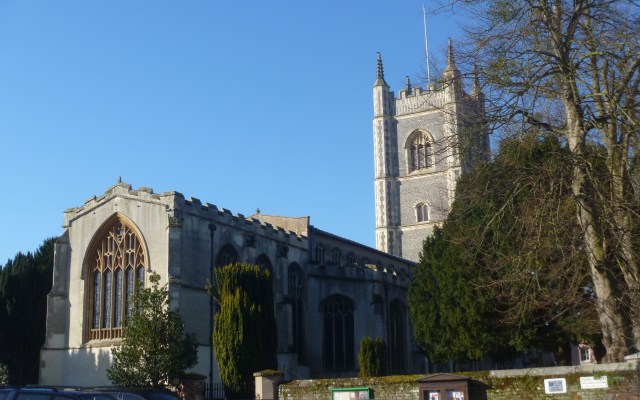
Dedham church

Dedham Parish Church – Dedicated to St Mary the Virgin in 1492

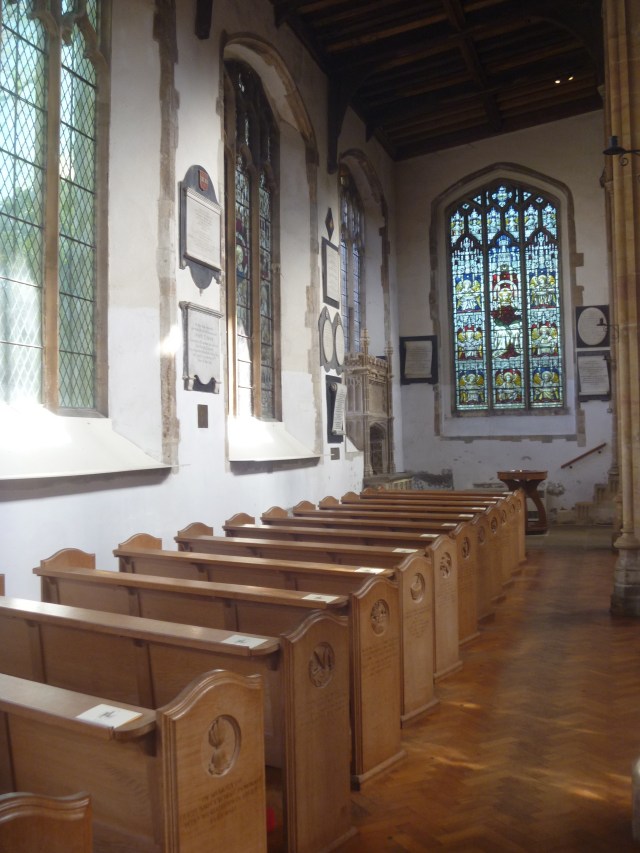
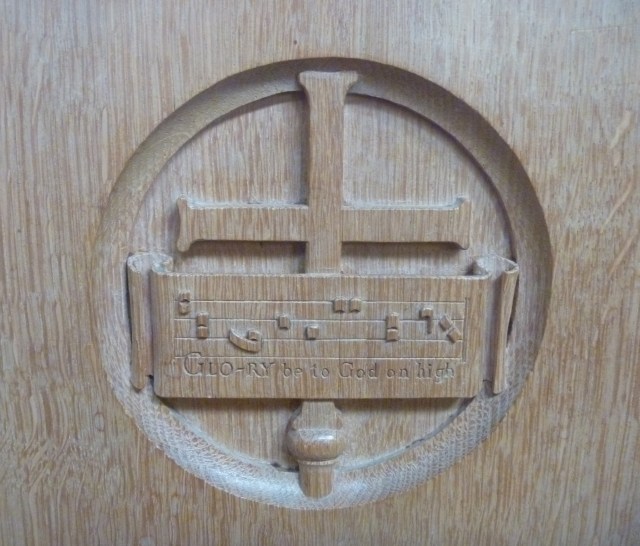
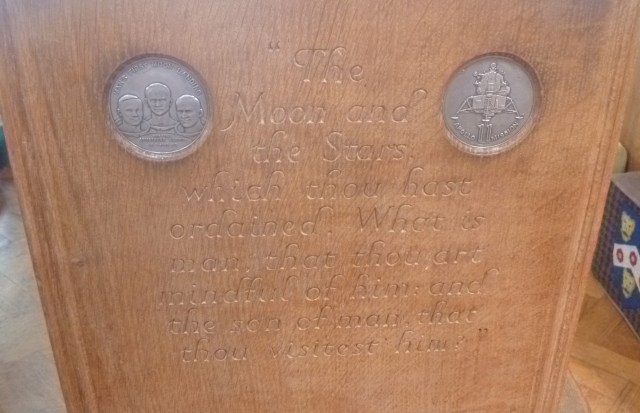
The main parish church is well worth a visit. An excellent colour guide indicates the main points of interest. The modern pew ends are a particular feature of the church. They have distinctive carvings and inscriptions and dedications. They were made by Mabbitts of Colchester over more than a decade.

Dedham pews

Musical

moon pew

These insets commemorate the first Moon Landing

Sherman window

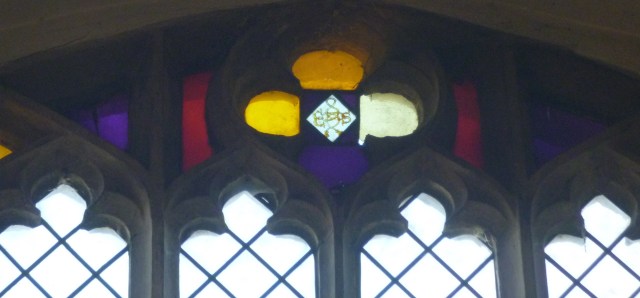
At the top of the window are fragments of 17th century glass.

Dedham window

In the apex of the window above the Webbe Tomb are some fragments of old glass showing the initials E.S. commemorating Edmund Sherman who, at his death in December 1600, left his house opposite the church to the Governors of the Free Grammar School of Queen Elizabeth for a school to teach boys to ‘read, write and cast accounts’, that is to become local tradesmen rather than aspire to enter university or a profession.

Edmund Sherman, with his elder brother Henry and their father – also Henry, were named as Governors of the Grammar School when it was endowed in 1571 and were also nominated in the Charter granted by Queen Elizabeth four years later.

At least eleven descendants of old Henry and these two sons, Henry and Edmund are known to have emigrated to New England between 1633 and 1640. They and their descendants included a co-founder of Rhode Island; a signer of the Declaration of Independence and framer of the Constitution of the United States; the famous General W.T. Sherman of Civil War fame and his brother, Secretary to the US Treasury; a Vice-President of the USA 1908 to 1912; and two famous Admirals in the Second World War, one of whom later became Chief of Naval Operations for the USA.” [source]

Dedham Constable

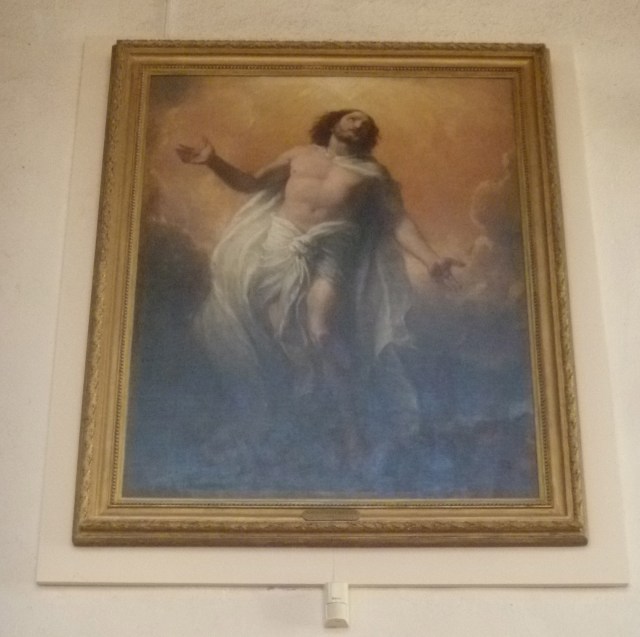
The church displays a Constable painting “The Ascension” originally commissioned for Manningtree church and currently on loan from the Constable Trust.

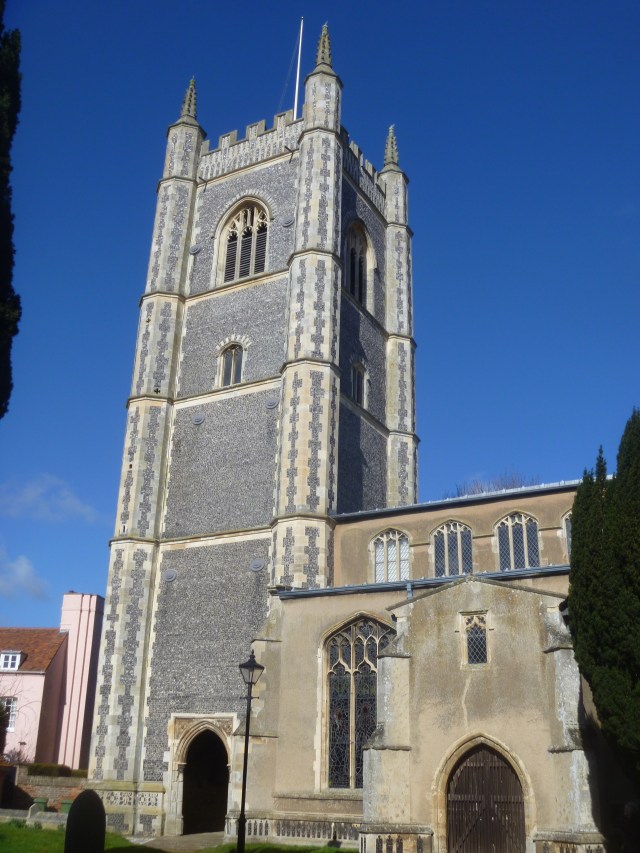
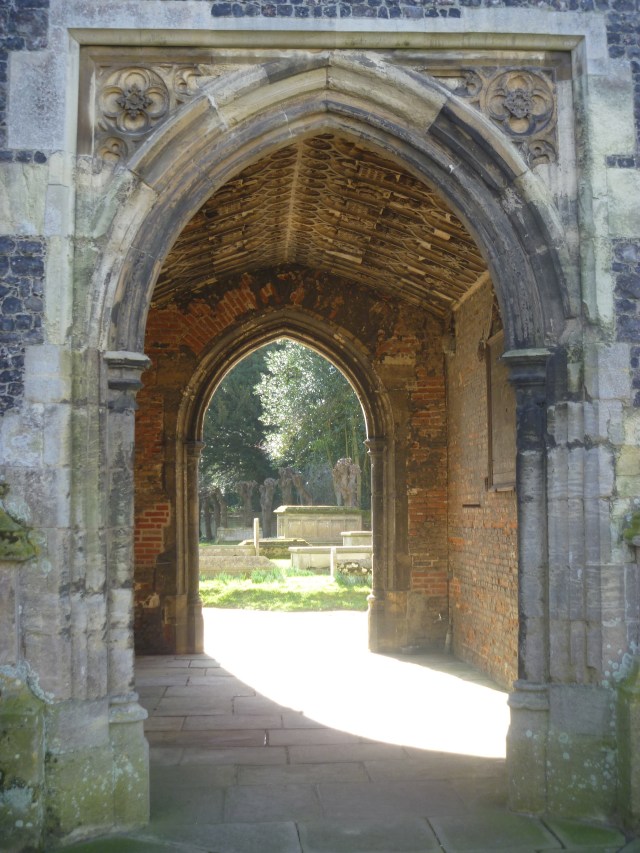
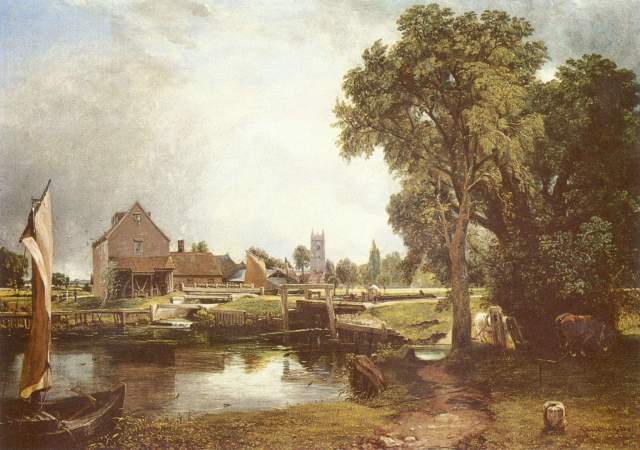
The church tower is particularly fine and very high – over 40m: perhaps the largest medieval flint tower ever built. It appears in many of Constable’s paintings including his ‘Dedham Mill Lock’. It was completed in 1519 and is unusual because it has an archway underneath it. This is sometimes called a ‘Galilee’ to remind worshippers of how Christ led his disciples into Galilee after His resurrection. If it had been a summer weekend we’d have climbed the 132 steps to the recently completed viewing platform.

Dedham church twr

Dedham arch

The ‘Galilee’ with Tudor heraldic symbols on the ceiling

Before leaving Dedham for Flatford we walked to Dedham Mill the scene of one his paintings.

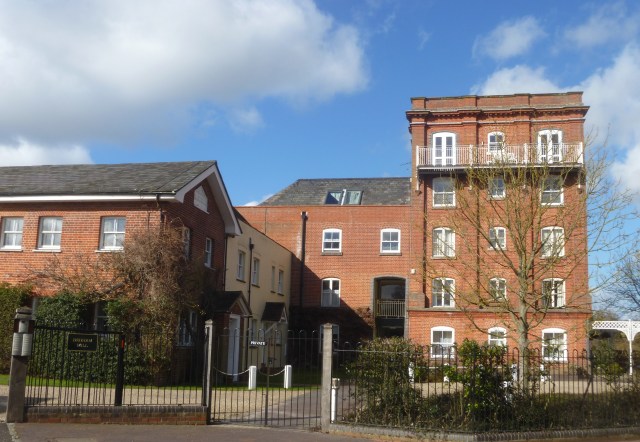
dedham-lock-and-mill-1820

Constable’s Dedham Mill (1820) – and there is the church, too [source]

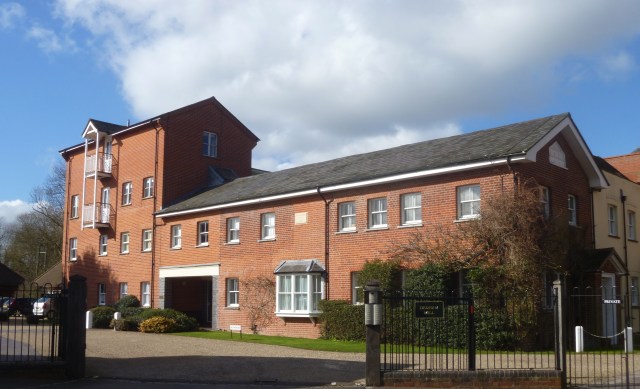
Here is the much-expanded and changed Mill today :

Dedham Mill 1

Dedham Mill 2

Dedham Mill Today – now prestigious flats

Dedham Lock today

Dedham Lock today

Flatford, just in Suffolk, is now owned and managed by the National Trust. It wasn’t ‘open’ on the day of our visit but there were a lot of staff and volunteers around probably preparing for the new ‘season’ which was to begin the following week (i.e. this week).

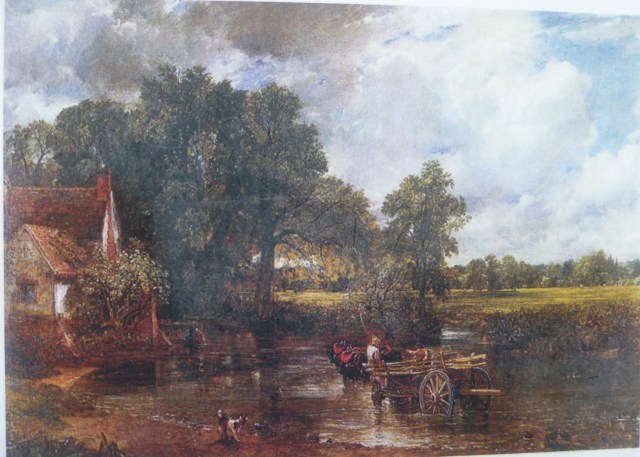
There’s a path/lane from the car park to Willy Lott’s House and the site of Constable’s famous painting ‘The Hay Wain’. I could vaguely recognise it as it is much less changed than Dedham Mill.

The Hay Wain

The Hay Wain, by John Constable

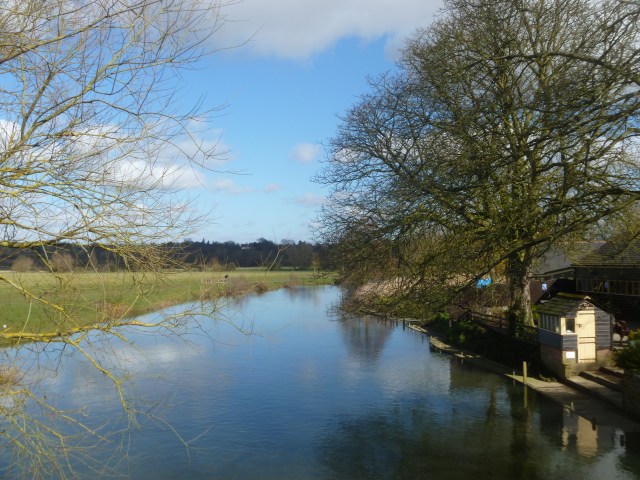
Hay Wain scene

The Hay Wain scene last week

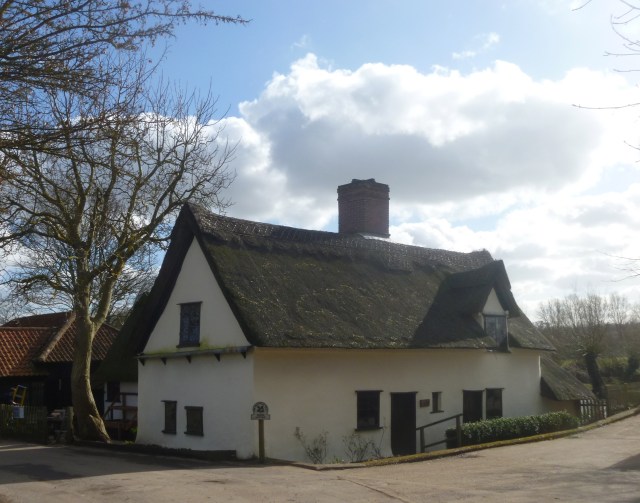
Flatford Willy Lotts

The house on the left hand side of the painting and photo is Willy Lott’s House.

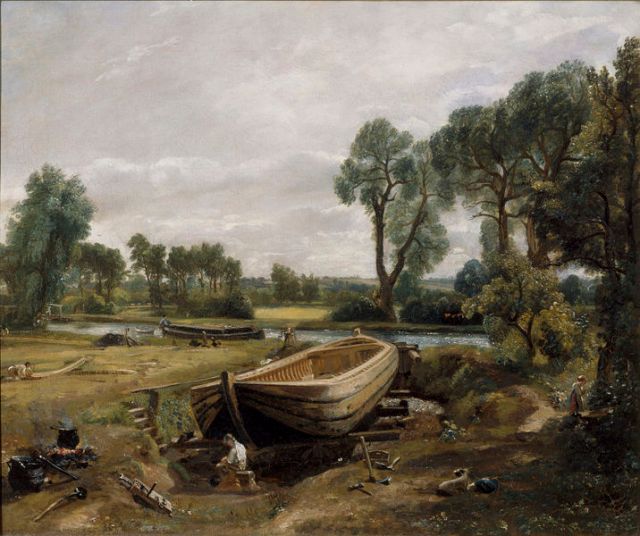
Boat Building at Flatford

Another Flatford scene Constable painted in the open air was ‘Boat Building at Flatford‘. Many Constables also owned Flatford Mill. There’s an article on the NT website about the Mill ownership and the Constable family here.

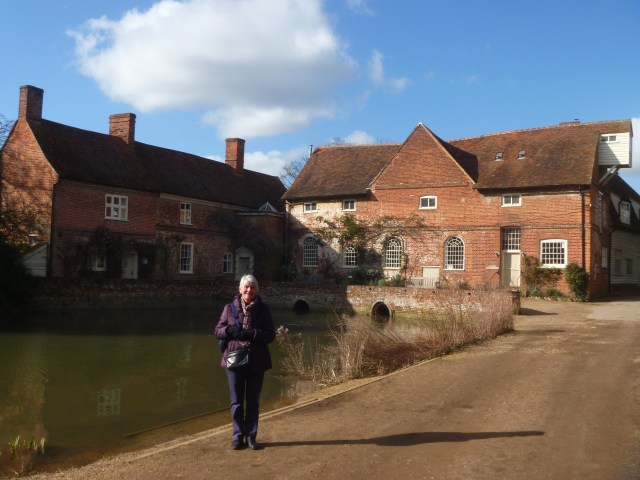
K at F Mil

Flatford Mill

Before leaving we walked over the bridge to join the footpath we should have arrived by on the Wednesday. We definitely made the right decision!

Colchester Heritage Trail : Roman Recycling

What surprised us most and became ‘themes’ as we walked around on our recent visit to Colchester was the recycling of Roman bricks and (I’ve mentioned this before) the number of superlatives applied to buildings and monuments throughout the town.

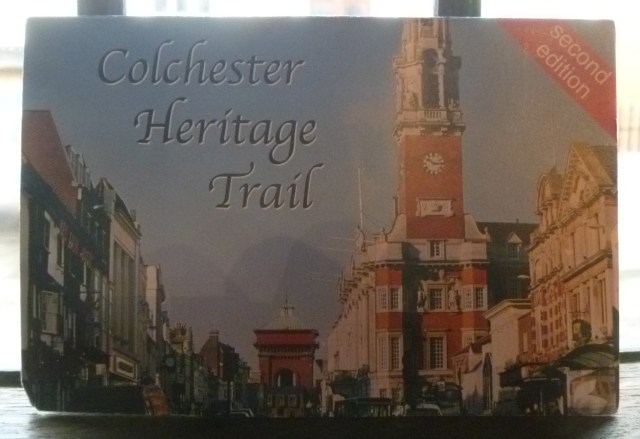
The trail

Colchester Heritage Trail is an excellent guide to the historic centre of Colchester. We didn’t follow the Trail step by step but fitted it all in over the several days we were there. The Trail starts and finishes at the Castle/War Memorial and only includes the old centre of town. Much of the following text is taken or adapted from the Trail leaflet. Some places were difficult to photograph and one day it poured with rain but otherwise I was able to snap most buildings, plaques and monuments.

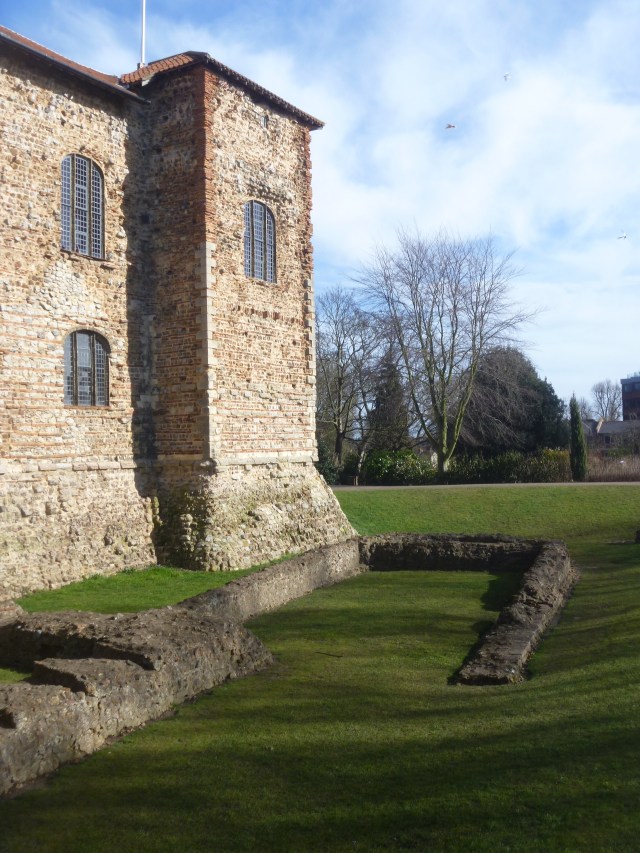
Remains of temple

The Temple Foundations

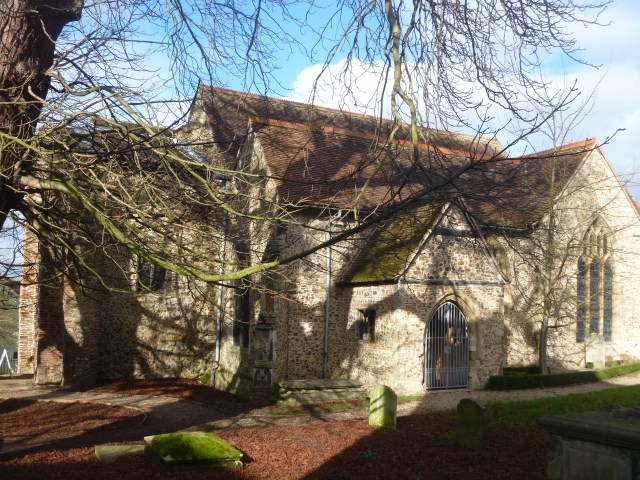
Colchester Castle itself was constructed mainly of brick and stone recycled from the old Roman town. It was built in 1076 over the foundations of the Temple of Claudius which itself was erected after his death in AD 54. John Weeley bought the redundant Castle in 1683 and removed parts of the upper floors to reclaim the building material so the original height of the fortress is unknown.

St Martins

St Martin’s Church, West Stockwell Street

St Martin’s Church is cared for the Churches Conservation Trust which protects historic churches. We were very pleased to find the church open last Wednesday.

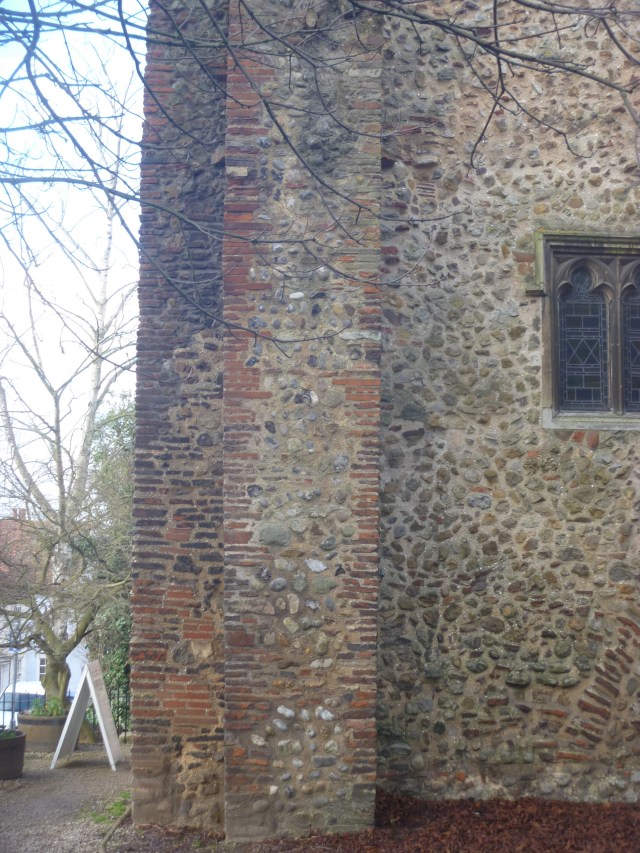
The tower is Norman although the rest of the church is medieval. The tower also stands no higher than the nave as a result of damage caused by cannon fire during the Siege of Colchester (1648). Colchester was besieged by the Parliamentary army for 11 weeks. The townspeople starved and many buildings were badly damaged. The Siege also crops several times along the Trail.

St M's bricks

“Note the recycled Roman bricks in the tower structure.”

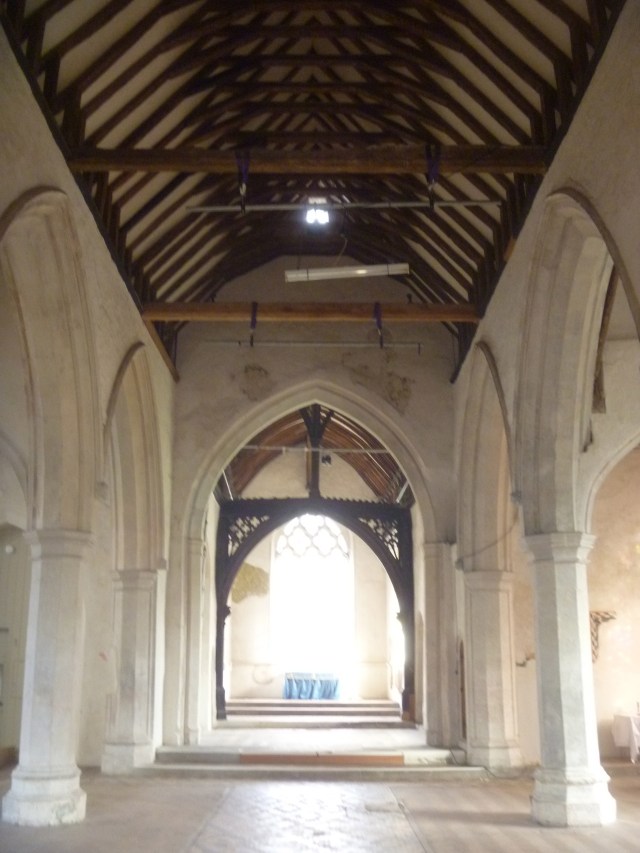
St M's - Gilbert Scott

The Chancel, St Martin’s Church

Sir Giles Gilbert Scott was responsible for uncovering the fine wagon roof in the chancel in the late nineteenth century.

Balkerne

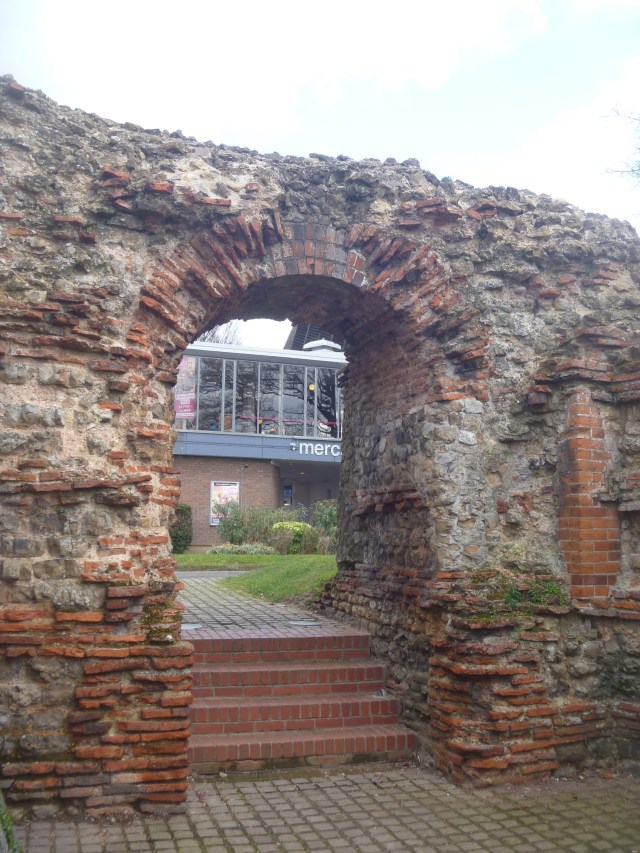
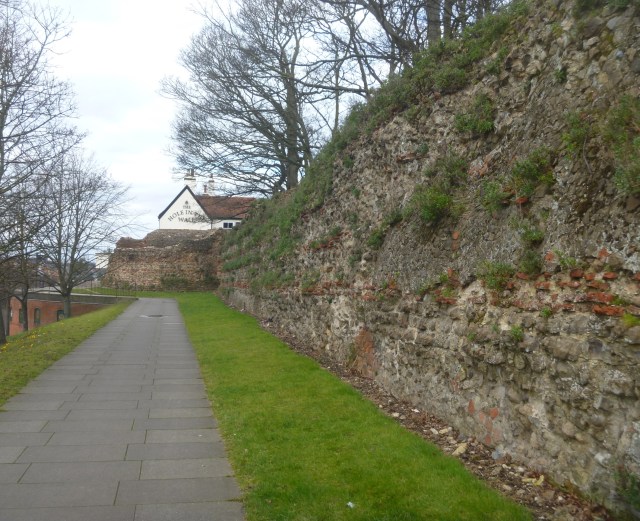
The Balkerne Gateway is the oldest surviving Roman gateway in Britain. It was the main entrance to the town. The best preserved section of the Roman wall extends from the gateway remains. The wall is 2.5m thick and stands near to its former height. It was built almost entirely from fragments of Roman brick and septaria stone but only on the inner and outer surfaces. The core of the wall is filled with rubble and hardcore.

Best wall remains

Best Roman Wall Remains

St Marys at walls

St Mary’s at The Walls

St Mary’s was one of many buildings damaged during the Siege. Both the church and graveyard were used as a fort by the Royalist defenders who managed to raise a small cannon to the top of the tower. It was targeted by the Parliamentarians and this caused severe damage to the building and the demise of the canon and its marksman. The church was rebuilt in the early 18th century but the chancel and nave are Victorian.

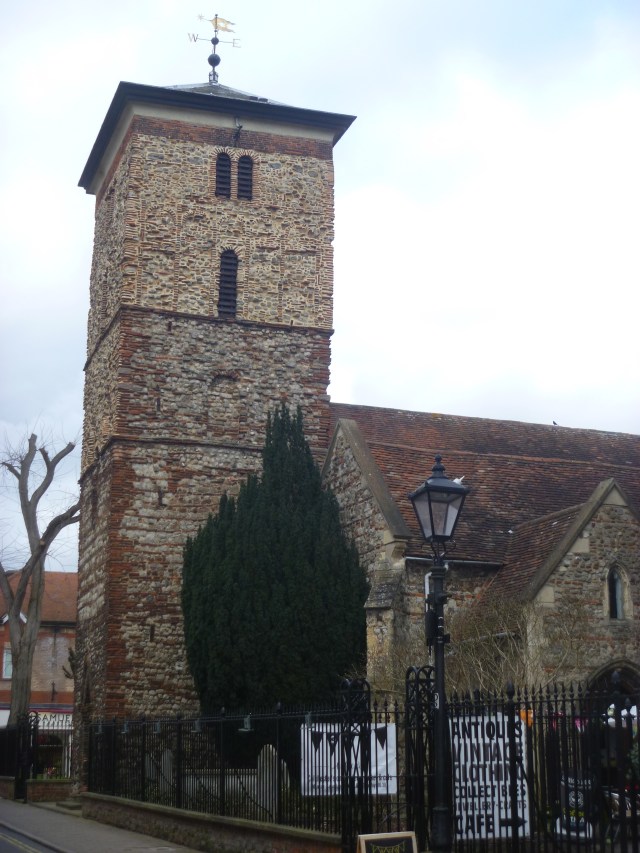
Holy Trinity

Holy Trinity Church

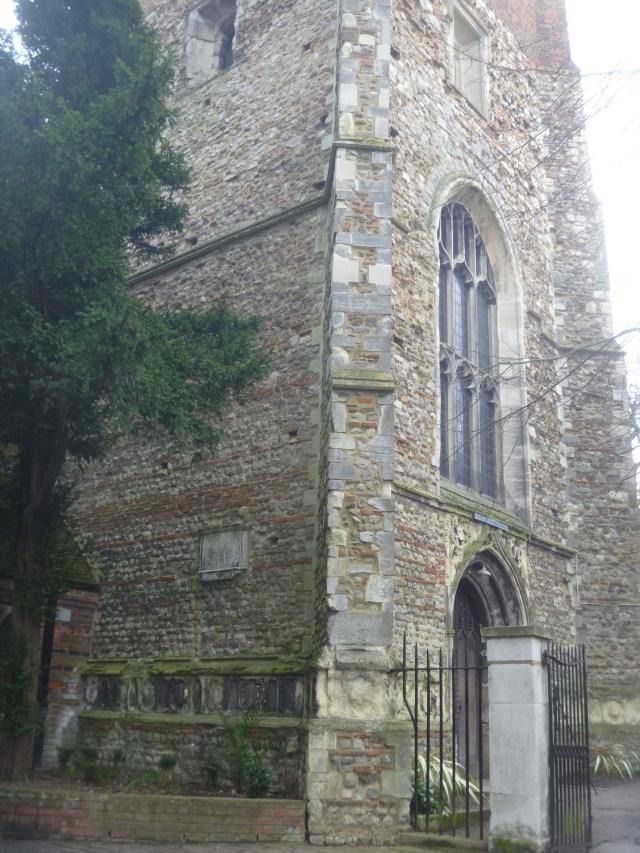
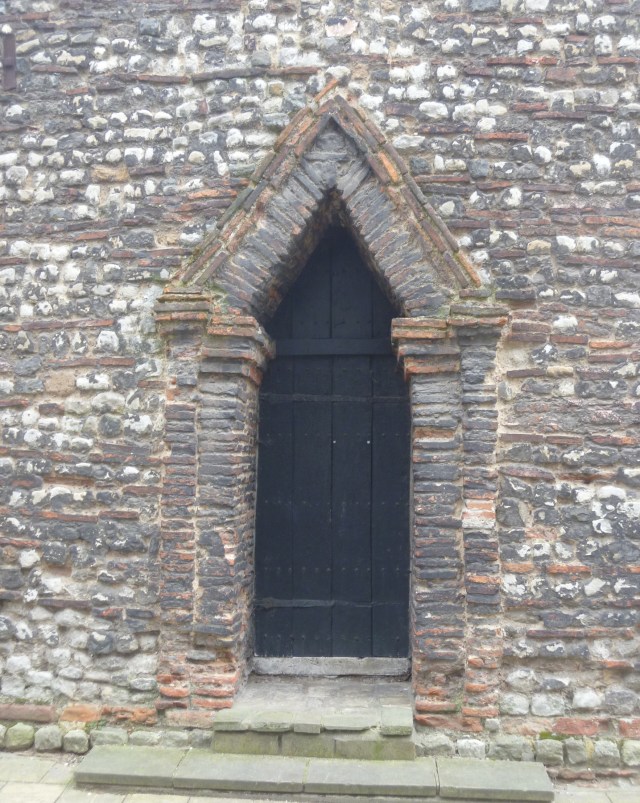
Holy Trinity is the town’s only Saxon monument. It dates from 1000 AD and incorporates an arrow-head doorway composed entirely of re-used Roman bricks.

HT door

Arrow-Head Doorway

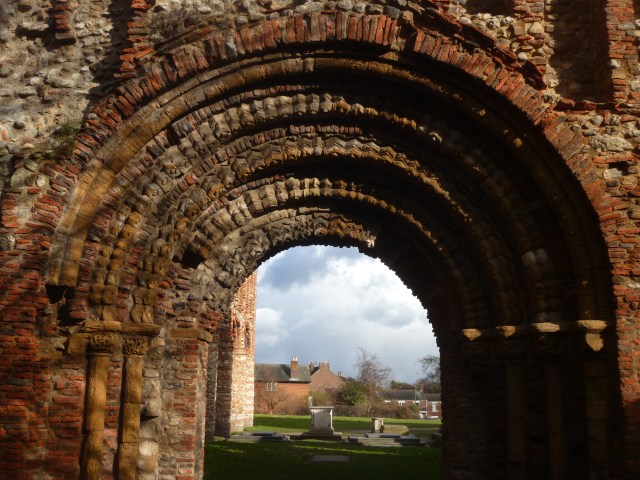
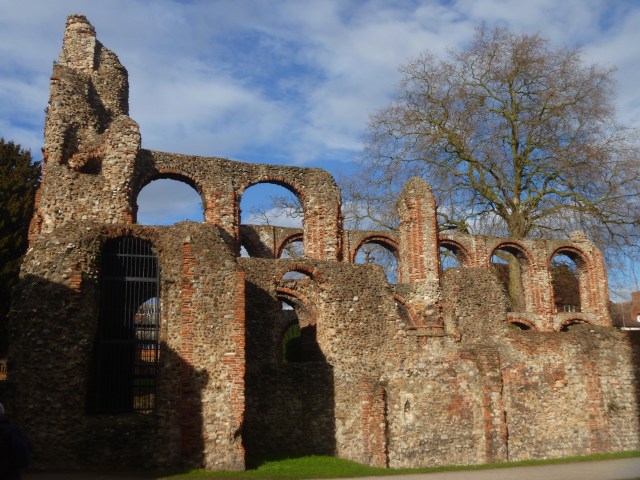
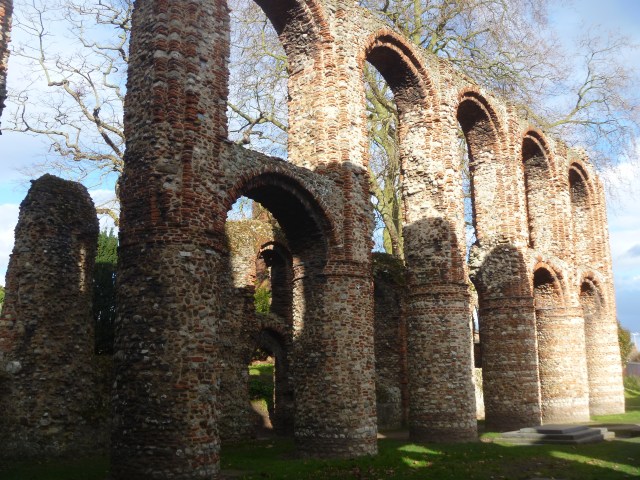
St Botolph’s Priory was founded around 1100 and was the first house of Augustinian Canons in England. All that remains today, however, is part of the original western front, with its superbly carved Norman archway, and a section of the nave.

Norman Arch St B's

Splendid Norman Archway

St Botolph's

Note the liberal use of Roman brick in the Priory construction

St B's Priory

There’s lots more to Colchester than re-used Roman bricks – nursery rhymes, a water tower, a theatre and lovely black and white Tudor buildings plus another trail. All coming up in the next post.

Walking and Talking on Hampstead Heath : The Garden of the Finzi-Continis

Walking Book Group

This post is not a discussion or review of the book in question: Emily does that so much better than I could.

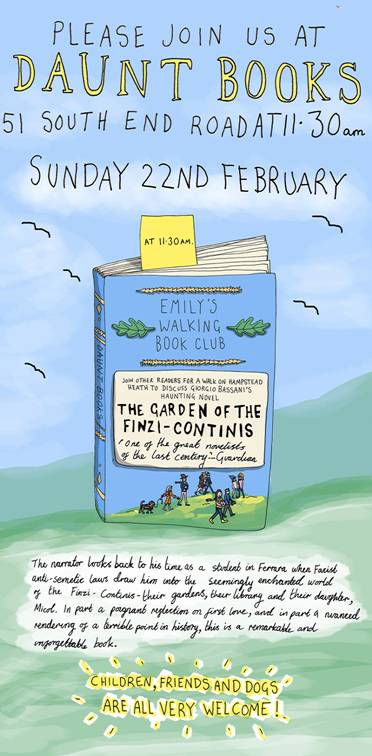
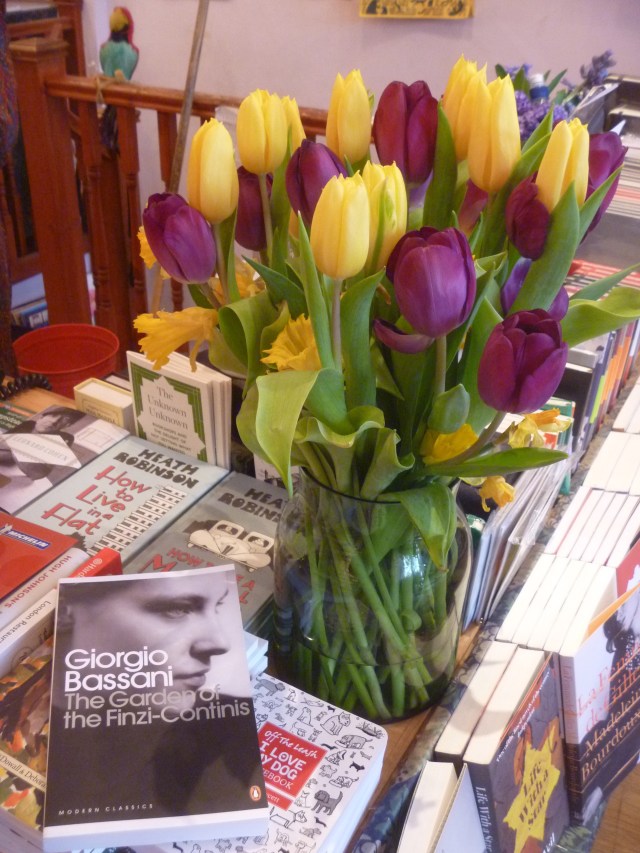
The Garden of the Finzi-Continis

Rather, I’d like to tell you about how a Walking Book Club works.

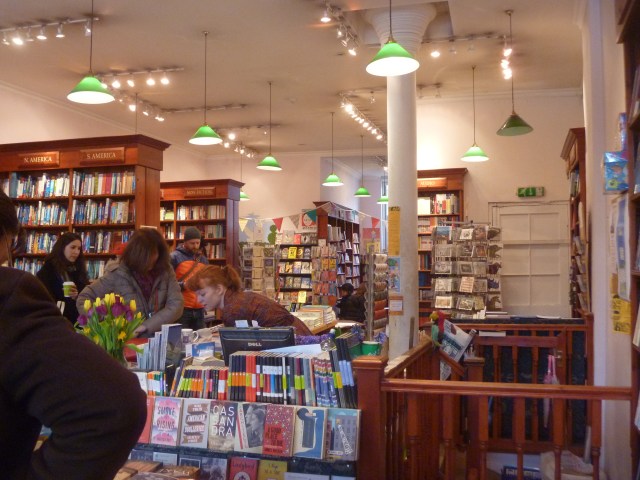
Daunt Shop

 Inside Daunt Books South End Road

You may remember that I mentioned  Daunt Books‘ Walking Book Group in a previous post. Well, at last I have managed to coincide my visit to London with a Sunday meeting of the group. Only a couple of weeks ago did I discover that the group was back in action after Emily’s baby, Vita, was born just 4 months ago.

A group of about a dozen or so keen walker-readers gathered together at the shop on Sunday 22 February to walk on Hampstead Heath to talk about the chosen book – The Garden of the Finzi-Continis by Giorgio Bassani. As I’d only discovered this about a week before and as it wasn’t available from my library ordered a copy directly from Daunts. I just managed to finish reading it on the train down from Leeds. This was good as it meant that the book was fresh in my mind. Also, the evening before I had just watched the dvd version of the 1970 film.

Finzi-Continis

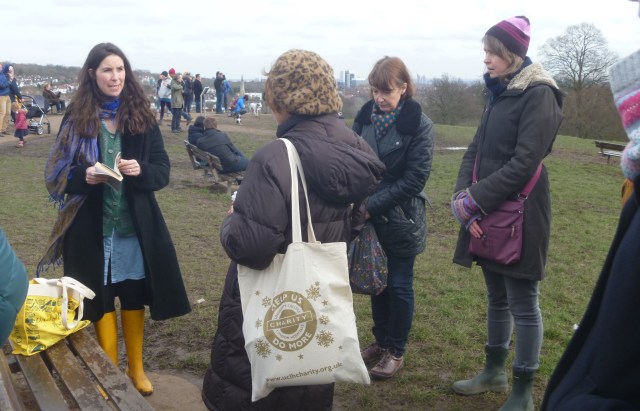
At 11.30 we left the shop, crossed the road and before setting off Emily introduced herself : some of the group were regular reader-walkers, some occasional and others, like me, were there for the first time. The only man was later joined by a couple more; we were delighted to have two Italian nationals amongst us who had read the book in its original and were able to offer us other insights into Italian life and culture relevant to our discussions.

Emily Left

Book talk with Emily [left]

We set off walking and talking in pairs or small groups and every ten minutes or so Emily would bring us all together to sum up, ask questions, provide answers and suggest further topics for conversation. We would then find we started discussion with someone else. The formula works very well. At the highest point of the walk, with long views over London, Emily shared her home-baked cake with us.

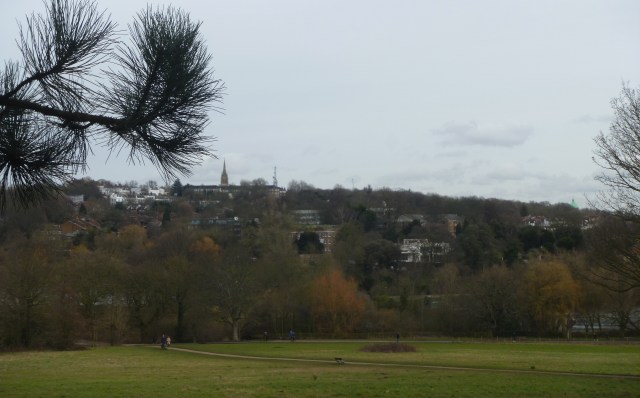
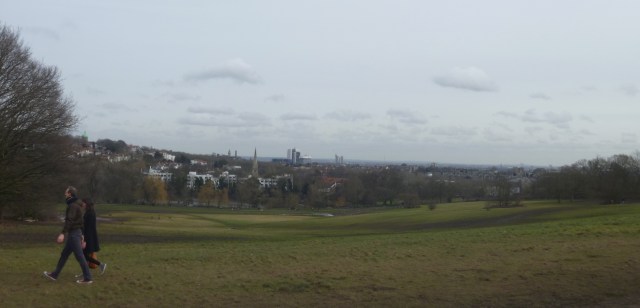
Highgate

Highgate from The Heath

London from Heath

View from the Heath

Somehow after about an hour we found ourselves back where we started and Emily summed up the discussion, distributed copies of the 2015 2nd Daunt Books Festival programme (there’ll be a walking book group from the Marylebone shop on 20 March) and told the group the next date and book for the regular Sunday Heath walk : 19th April “the Living Mountain” by Nan Shepherd :

“Shepherd wrote a short nonfiction book, The Living Mountain, during the 1940s. The Living Mountain is a reflection her experiences walking in the Cairngorm Mountains. Having completed it, Shepherd chose not to publish the book until 1977.” (Source)

If you’d like to hear a Walking Book Club session in progress you can listen here to Clare Balding who joined Emily on one of her walks in February two years ago.