Death in Rome : The Protestant Cemetery and The Catacombs of San Callisto

One visit I had promised myself on this trip to Rome was pay to a call at the Cimitero Acattolico or, as usually known in English, The Protestant Cemetery at Rome.
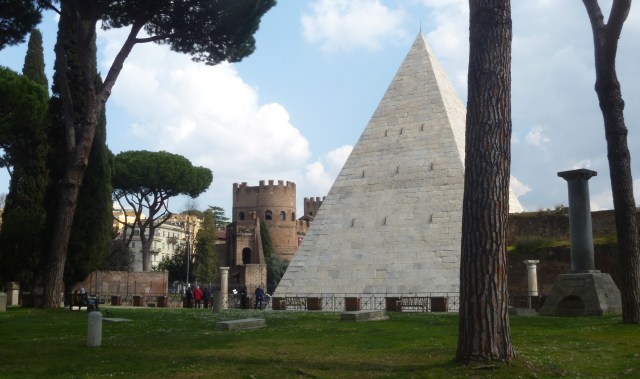
pyramid

“The cemetery is an open space among ruins, covered in winter with violets and daisies. It might make one in love with death, to think one should be buried in so sweet a place”

Percy Bysshe Shelley: Adonais: an elegy on the death of John Keats (1821)

I checked the website carefully before leaving home and made extra sure that Saturday 14 March was not a holiday and so after taking the train from Tivoli to Rome I made my way to the cemetery. When you emerge from the Pyramide Metro Station you can’t miss the huge Pyramid to Gaius Cestius and the cemetery is right next door: but you risk life and limb when crossing the roads to get to it!

Thomas Hardy wrote a poem entitled

“Rome at the Pyramid of Cestius Near the Graves of Shelley and Keats (1887)”

Who, then, was Cestius,
And what is he to me? –
Amid thick thoughts and memories multitudinous
One thought alone brings he.

I can recall no word
Of anything he did;
For me he is a man who died and was interred
To leave a pyramid

Whose purpose was exprest
Not with its first design,
Nor till, far down in Time, beside it found their rest
Two countrymen of mine.

Cestius in life, maybe,
Slew, breathed out threatening;
I know not. This I know: in death all silently
He does a kindlier thing,

In beckoning pilgrim feet
With marble finger high
To where, by shadowy wall and history-haunted street,
Those matchless singers lie . . .

–Say, then, he lived and died
That stones which bear his name
Should mark, through Time, where two immortal Shades abide;
It is an ample fame.
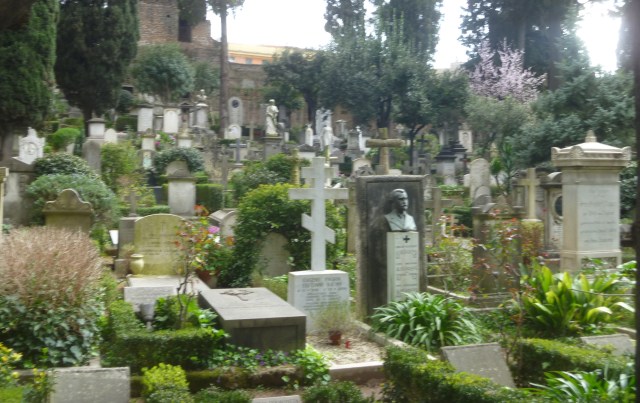
cemetery

I was not disappointed. It’s truly an oasis of peace and tranquility. It’s divided into sections pre- and post- 1821; which is why Shelley’s ashes are not buried near Keats’s grave.
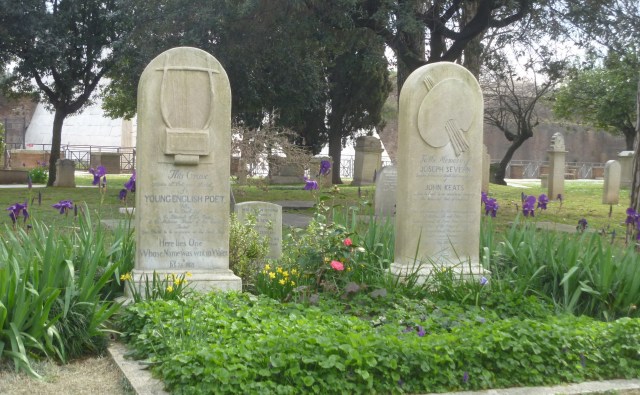
keats and severn

The Graves of Keats and Severn (and Severn’s son)

‘Here Lies One Whose Name Was Writ in Water’ [The only words Keats wished to be on his gravestone]

‘This Grave contains all that was mortal, of a YOUNG ENGLISH POET, who on his Death Bed, in the Bitterness of his heart, at the Malicious Power of his enemies, desired these words to be Engraven on his Tomb Stone’ [Words added by his friends Joseph Severn and Charles Brown]
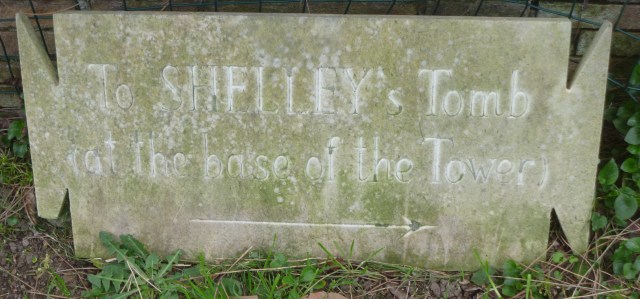
To Shelley's

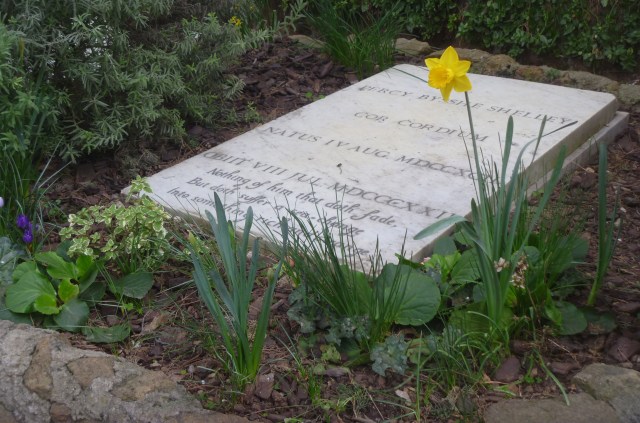
shelley's

‘Nothing of him that doth fade
But doth suffer a sea-change
Into something rich and strange’

From Shakespeare’s The Tempest [Shelley was drowned and only his ashes are buried here]

There is an especially good chapter about the cemetery in Peter Stanford’s “How to read a graveyard“.
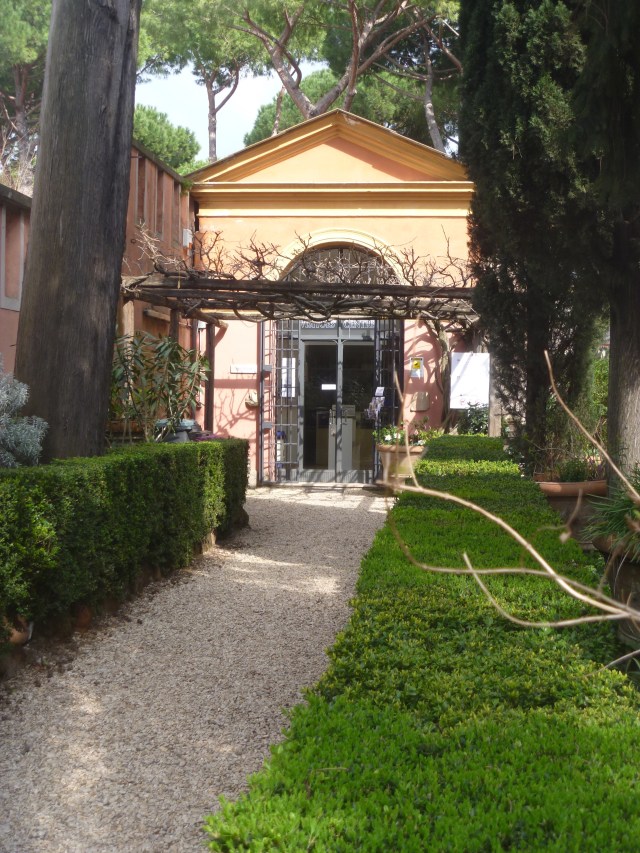
shop and info

There’s a small bookshop and information office (above) near the entrance and the English guide helped me to pinpoint the grave of a little-known Australian author whose books I enjoy : Martin Boyd.
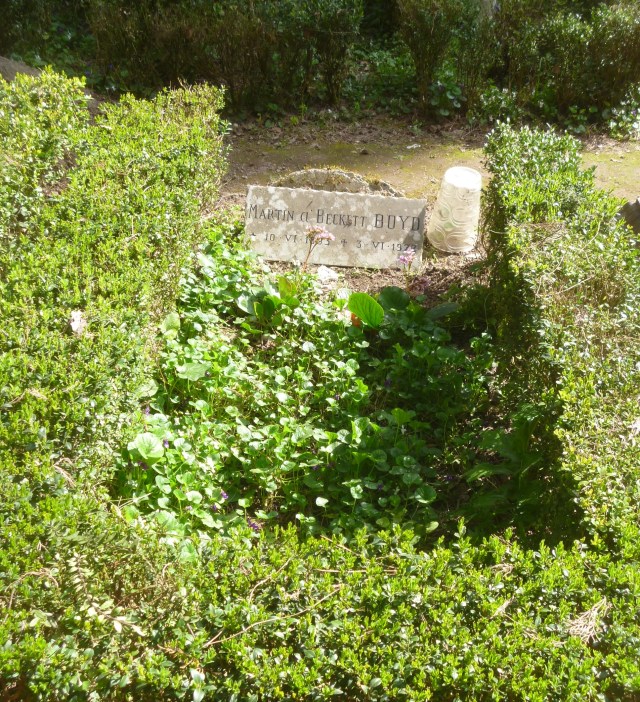
MB grave

His best-known book is “Lucinda Brayford” but I’ve enjoyed reading his Langton tetralogy lately :

The Langton tetralogy which, though not published as a series during his lifetime, is now referred to as a collective:
The Cardboard Crown (London, England: Cresset Press, 1952.)
A Difficult Young Man (London, England : Cresset Press, 1955.)
Outbreak of Love (London, England: John Murray, 1957.)
When Blackbirds Sing (London, England: Abelard-Schuman, 1962.)
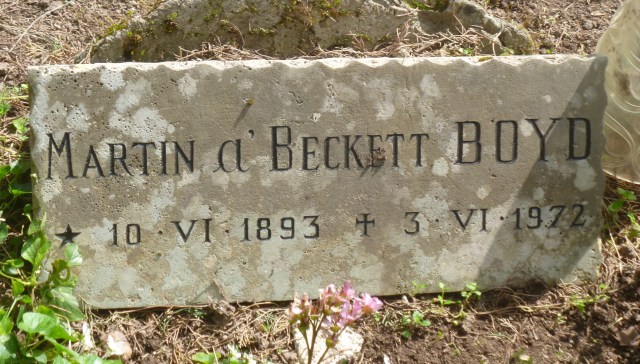
MB headstone

Martin Boyd’s Headstone

Even though the Protestant Cemetery was high on my list this visit I also hoped to walk some of the famous Appian Way, the Roman road that connects Rome with Brindisi in southeast Italy. I read in my guidebooks how to get there and which were the best parts to see then noticed in small inset box this note : Enjoy Rome offers a 3-hour bus and walking tour of the Appia Antica … Call for tour times.
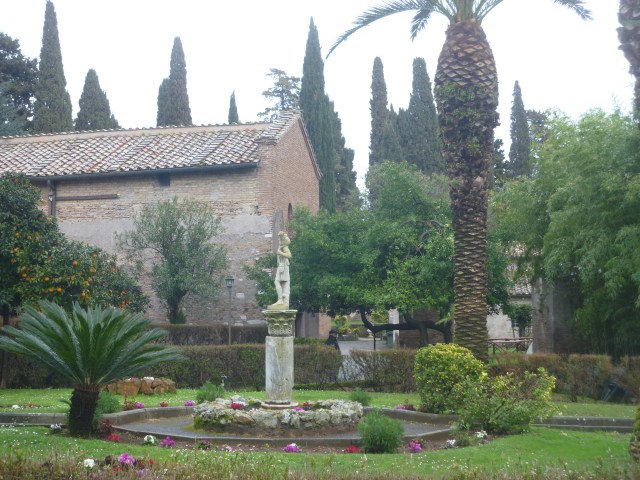
At Catacomb

At the Catacombs

I discovered that the Enjoy Rome office is very near to Termini Station so I bought a ticket for the Tuesday 10am departure. The first stop of the excursion is at The Catacombs of San Callisto. We were able to descend into a maze of tunnels and see various types of burial chambers with and without mural decorations.

entrance

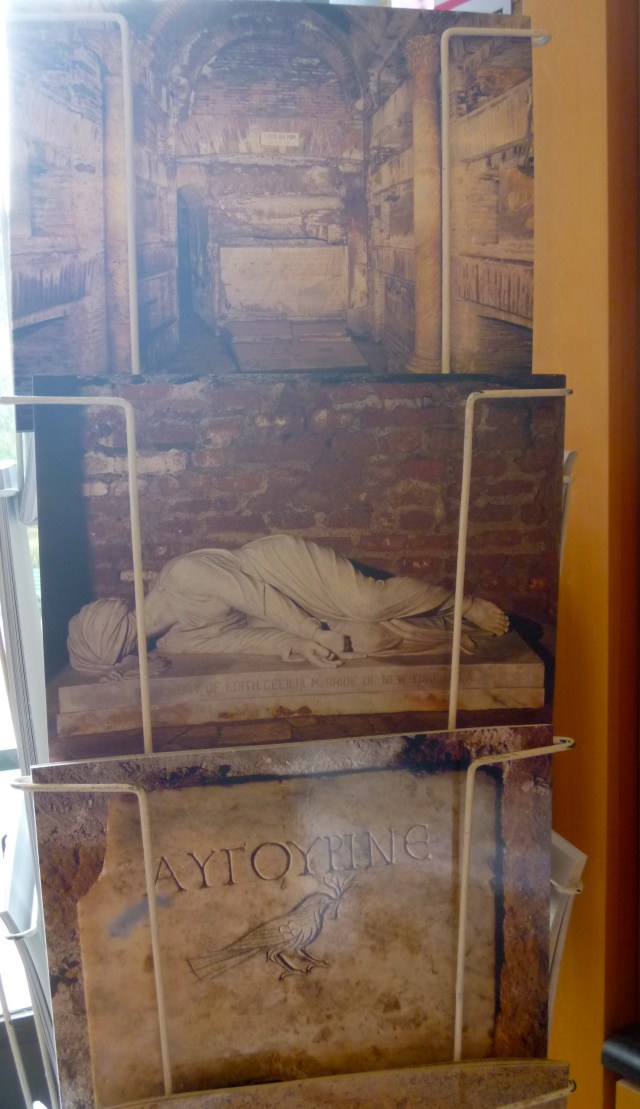
“Ancient Roman law forbade burials, regardless of religion, inside the city walls. San Callisto is one of the most famous of over 60 catacombs in the city area. There are multiple levels of 1900 year old hand-dug corridors, past a mind-boggling number of tomb niches. Christian-themed inscriptions and frescoes, often endearingly simplistic but carrying strong messages of faith, are everywhere in the catacombs.” [Adapted from Frommer’s Rome Day-By-Day] Several Popes were entombed here.

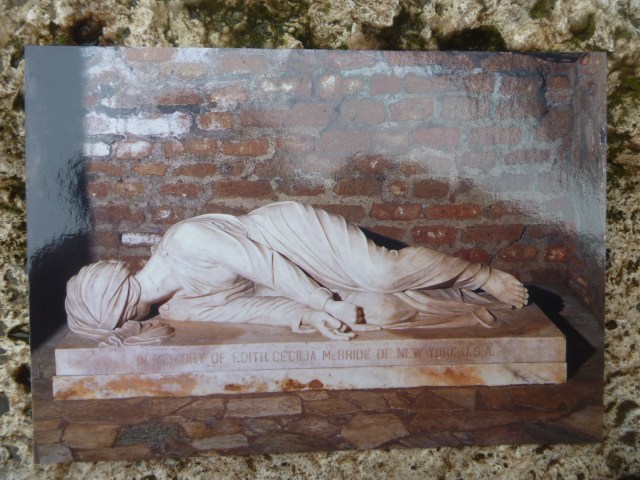
“The Crypt of St. Cecilia: the popular patron saint of music. Of a noble Roman family, she was martyred in the 3rd c. and entombed where the statue now lies. She was venerated in this crypt for at least five centuries. In 821 her relics were transferred to Trastevere, in the basilica dedicated to her.
St Cecilia pc

The statue of St. Cecilia is a copy of the celebrated work sculptured by Stefano Maderno in 1599.
The crypt was all covered with mosaics and paintings (beginning of the IX Century). On the wall, near the statue, we see an ancient painting of St. Cecilia in an attitude of prayer; lower down, in a small niche, is a fresco representing Christ holding a Gospel. On the right side is the figure of St.Urban. On the wall of the shaft is the painting of three martyrs: Polycamus, Sebastian and Quirinus.” [Source]

No photography is allowed in the catacombs but I snapped a couple of postcards showing what it’s like down in the depths!
what it's like inside

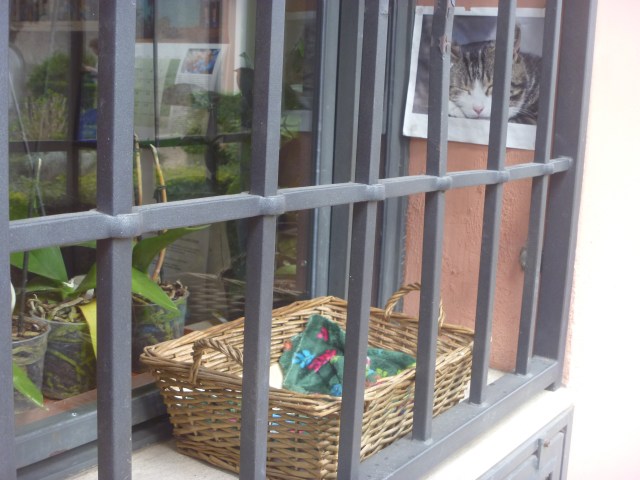
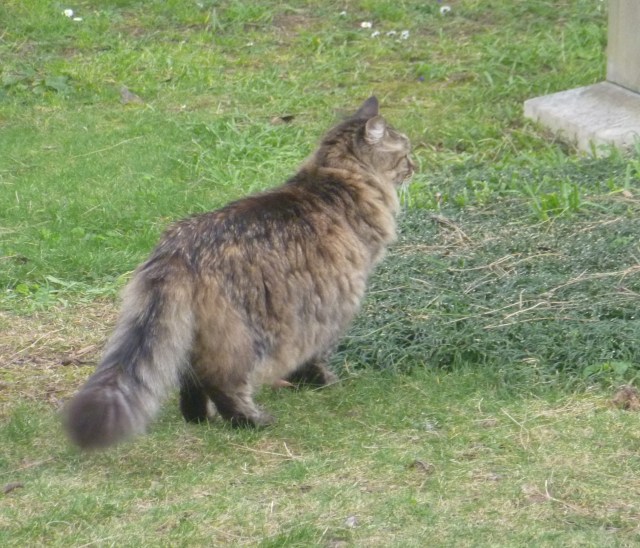
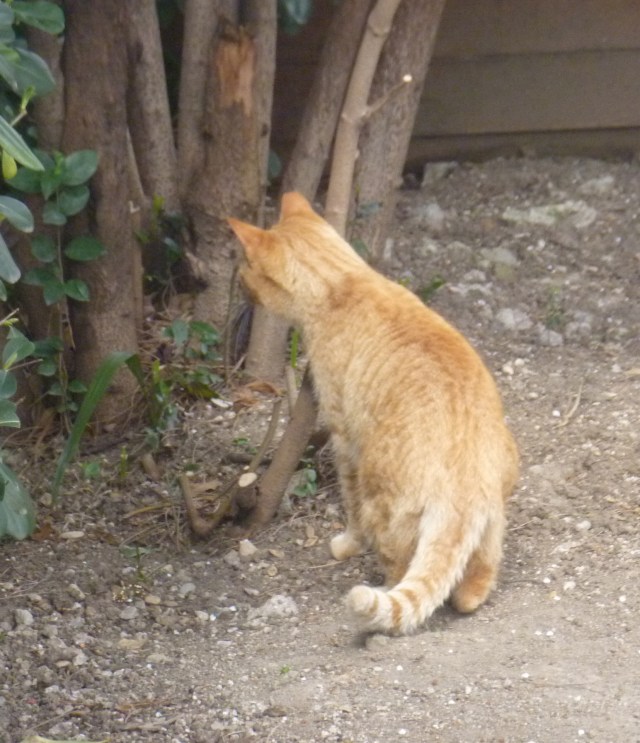
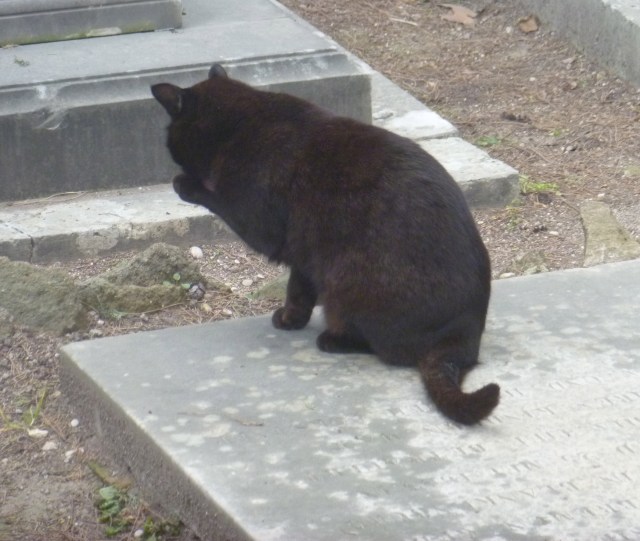
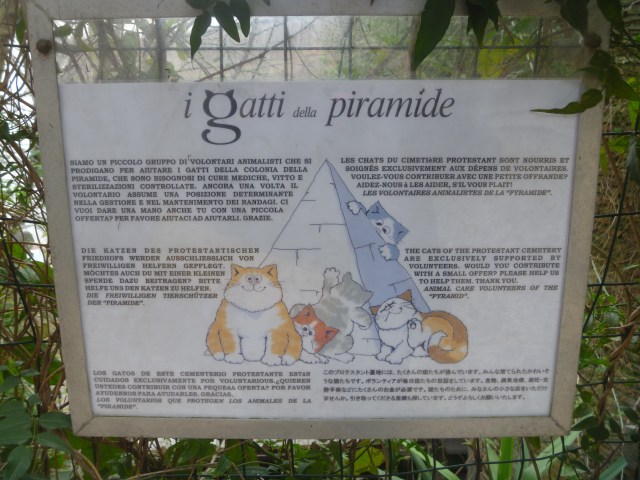
Back at the Cemetery the cats are looked after by volunteers and even have their own website.
i gatti

empty cat basket

Empty Basket – Where can they be?
cat 1

cat 2

cat 3

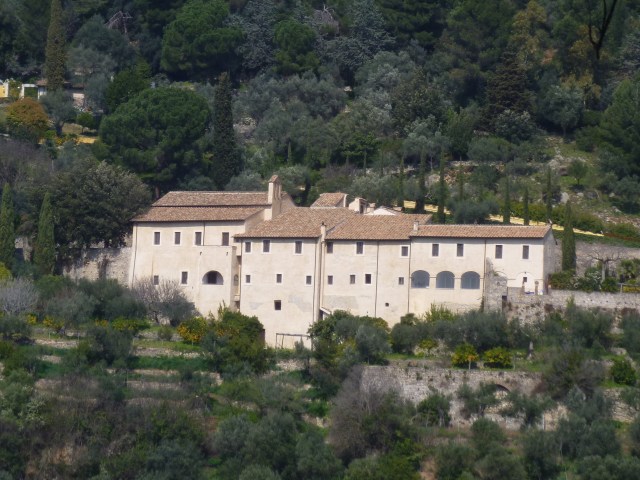
At Horace’s House : Sant’ Antonio, Tivoli

Sant' Antonio

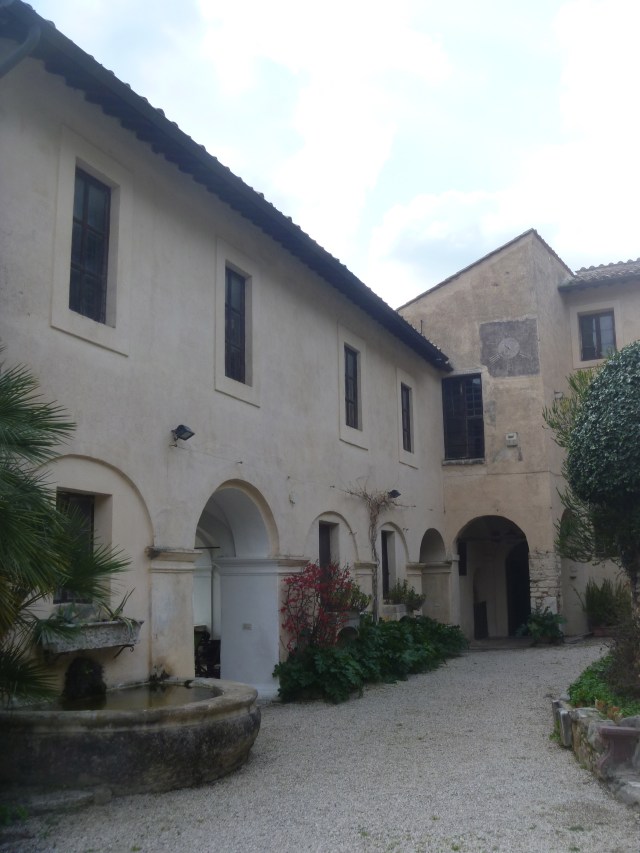
In the summer of 2013 I had the great good luck to be offered a room and to stay with fellow Landmarkers in the Italian countryside near Tivoli, about 20 miles northeast of Rome. I leapt at the chance and finally last week the trip became a reality. I have just spent a fabulous week at Sant’ Antonio and made a few excursions too when I could manage to drag myself away from this wonderful old house.

According to the History Album Sant’ Antonio was built around 100 BC.  The upper parts were rebuilt in the late 16th and early 17th centuries: the monastery between 1583 and 1590; the east wing about 1625 and the church in 1647. It was acquired for preservation by Frederick Searle in 1879. The present owner, Vicomte Roger de Brisis, is his descendant but Sant’ Antonio has been managed by The Landmark Trust since 1995. It consists of a medieval monastery grafted onto a Roman villa of the time of Caesar Augustus, or maybe even before. It was rescued from abandon in 1879 by an Englishman newly returned from West Indies.

vesta temple

Temple of Vesta, Tivoli

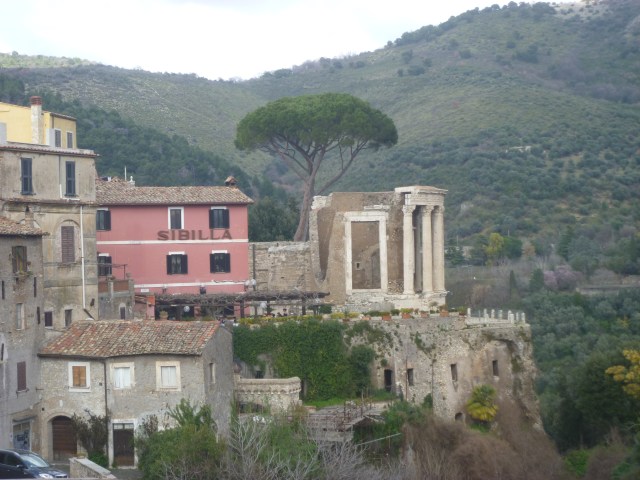
A well-founded belief is that a frequent guest, if not an early owner, was the poet Horace. Across the ravine thunders the water of Anio, with temples of Vesta and the Sibyl poised above it. All these on the outskirts of Tivoli, the Roman Tibur, and you are approaching something very near the heart of the civilisation that has moulded Europe for two millennia.

It is fitting that the revival of this place should have fallen to an Englishman, because those two names – Horace and Tivoli have a particular resonance for his countrymen. From the Middle Ages , English boys learned their reading and writing by means of Horace’s Odes and Satires, along with the works of Virgil and other writers of the Augustan Age. Only in the late 20th century has academic education ceased to be built on these cornerstones.

In the 17th century Englishmen first began to visit Italy in large numbers and carried its influence home in the most direct manner, in their paintings, and their buildings and their gardens. The dramatic influence of Tivoli appealed strongly to painters, notably the great French creators of an ideal classical world: Claud Lorrain and Gaspard Dughet. The English imitators eg Richard Wilson, followed them here. Writers like Joseph Addison sought the places which the best paintings might be composed and the. Murmured to themselves of “Tivoli’s delightful shades and Anio rolling in cascades.”

In 1879 Frederick Searle was searching for a place to sketch the waterfall when he first saw Sant’ Antonio – “La casa di Orazio”. He made it his home; spent 20 years renovating and repairing it and encouraged scholars and archaeologists to share his discoveries. His daughter Georgina and her husband George Hallam and then her great-niece Lucy d’Aihaud de Brisis continued the tradition. In this generation Count Roger de Brisis took on the care of Sant’ Atonio and with Landmark’s help has made it possible for guests to stay here. Sant’ Antonio has long enjoyed the soubriquet ‘Horace’s Villa’ . There are several schools of thought relating to whether Horace lived here or not. It is known through the writings of Suetonius that Horace lived in Tibur (Tivoli).

The Sant’ Antonio History Album goes on to give various scholars’ opinions on the exact location of Horace’s Villa but I like to think that it was Sant’ Antonio and unless some future academic gives me proof to the contrary I will stick with this theory and the celebrity link with the house.

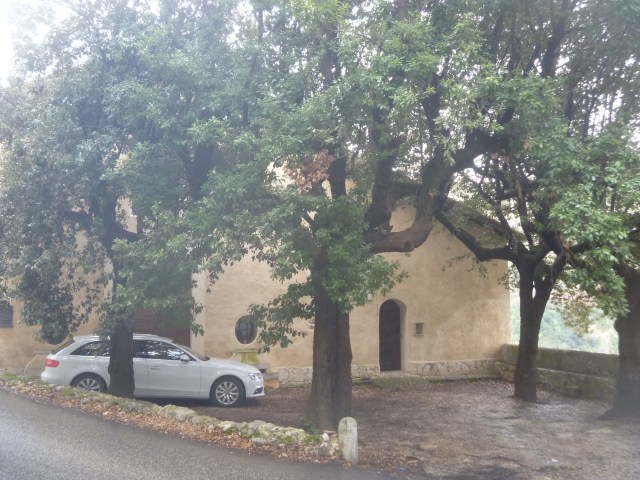
The Franciscan Friars took over the remains of a Roman villa – it had continued operating as a villa farm – with ample storage spaces, good water supply and fertile terraces. By becoming a monastery its survival was ensured for a further five centuries. Sant’ Antonio was a monastery complex of the lesser kind; common in the mountains of central Italy. The little church of this monastery is still an object of devotion for the many Catholics of the town. The feast day of St Anthony is 13 June.

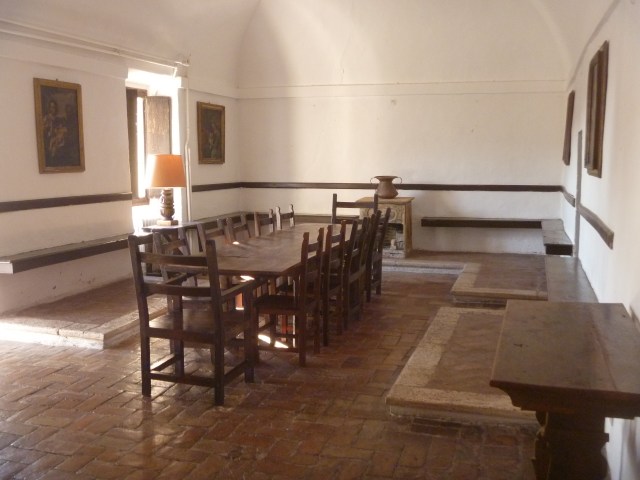
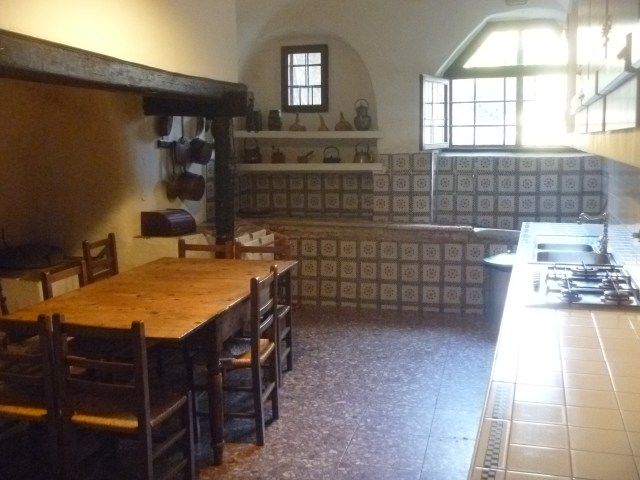
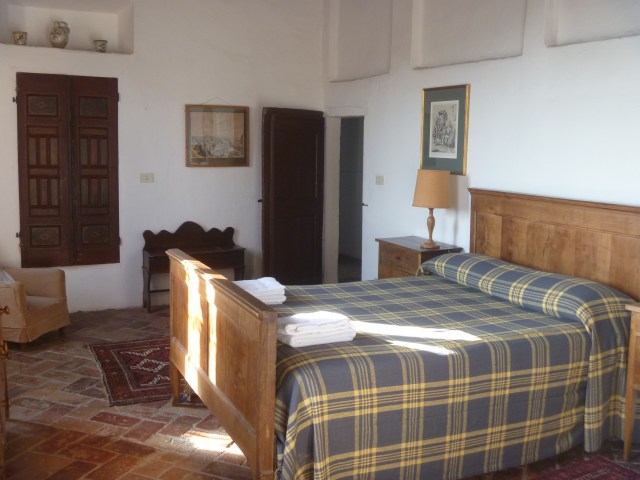
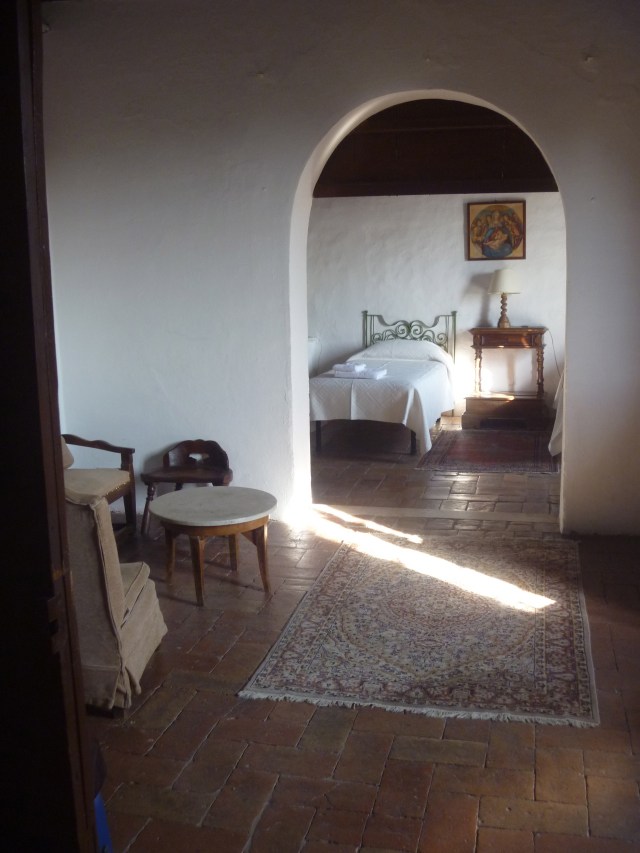
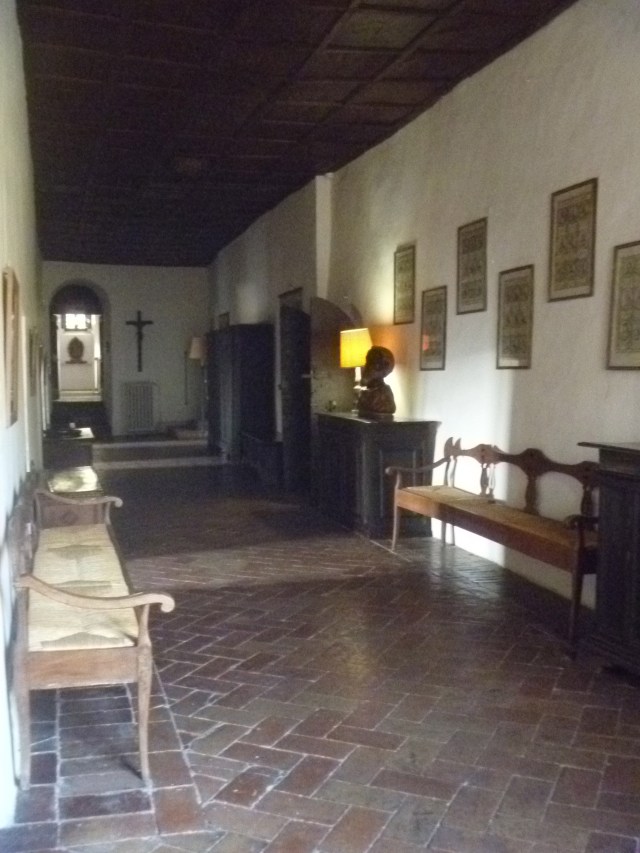
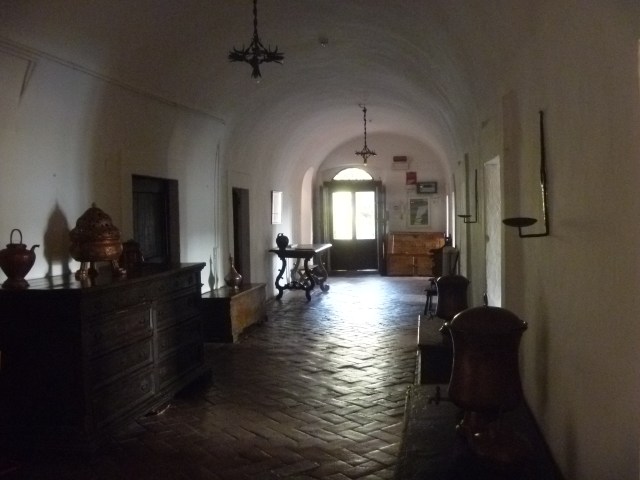
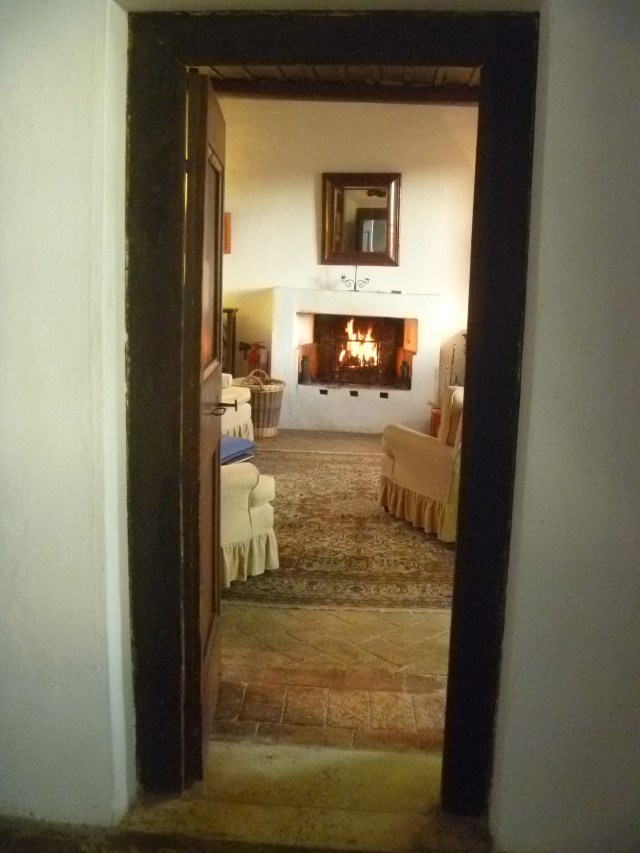
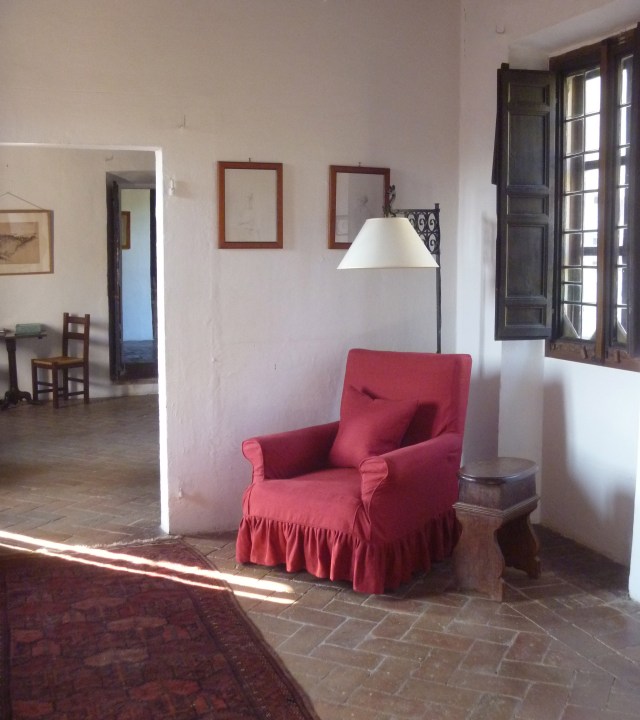
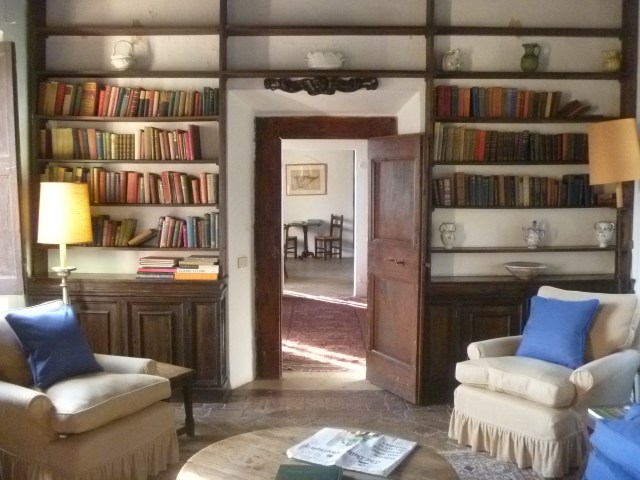
Having read details of the architectural plans of the monastery it would appear that the arrangement of the rooms and their various uses has changed little over the centuries. We dined in the Refectory, cooked in the kitchen, slept in the monks’ cells (the numbers still painted on the doors) off long wide corridors decorated with church ornaments, crucifixes and reliquaries. Our sitting rooms – a range of three – occupy a northeast projecting wing. The main floors are of rectangular terracotta bricks laid in coursed and herringbone patterns with borders, a technique common to Italy. The small casement windows are a rare feature to have lasted so long in Italy, the details of the dark unpainted wood, the panes of glass and their fixings, and the modest catches all being precious survivals.

Welcome to Sant’ Antonio – come and have a look inside.

Refectory

The Refectory

kitchen

The Kitchen

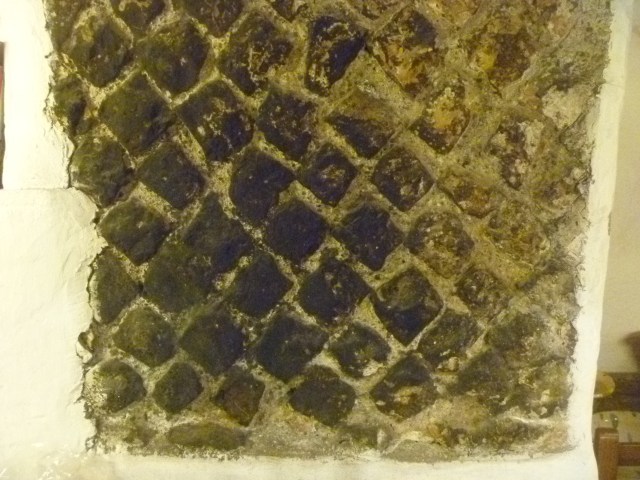
Roman wall in kitchen

Roman Wall in the Kitchen

a dble room

A Double Bedroom with Herringbone Pattern Floor

Twin bedroom

A Twin Room with Sitting Area

Upper floor

Upper Corridor

lower floor

Lower Corridor

reliquary

One of the Reliquaries

sitting room

The Sitting Room

a reading corner

A Quiet Reading Corner

sitting rm

Three Sitting Rooms

Anio falls and window

The “Anio Rolling In Cascades” seen through a Casement Window

SA Garden

Former Main Entrance now Rear Door into the Garden

Main Entrance

Today’s Entrance Approached from the Main Road

Constable Country : Dedham Vale Area of Outstanding Natural Beauty

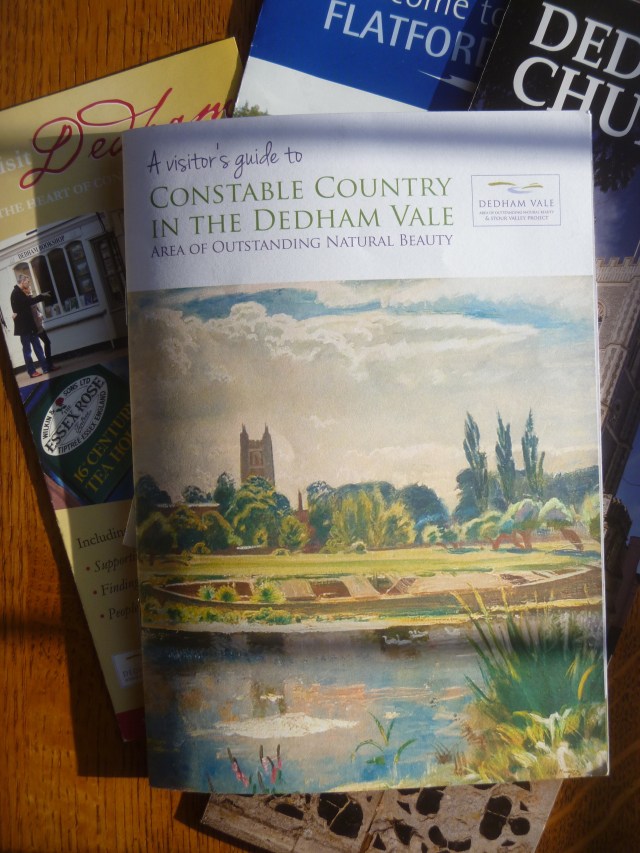
We’d planned to make one excursion from Colchester and that was to nearby Constable Country to Dedham in Essex and Flatford in Suffolk. On our first visit to the Tourist Information Office we picked up a lovely little brochure “A Visitor’s Guide to Constable Country in the Dedham Vale”. Across the centre fold is a sketch map of the area showing footpaths and locations where John Constable (1776-1837) painted scenes.

Brochure

That evening we noticed this at the bottom of the page :

“Take the Train…
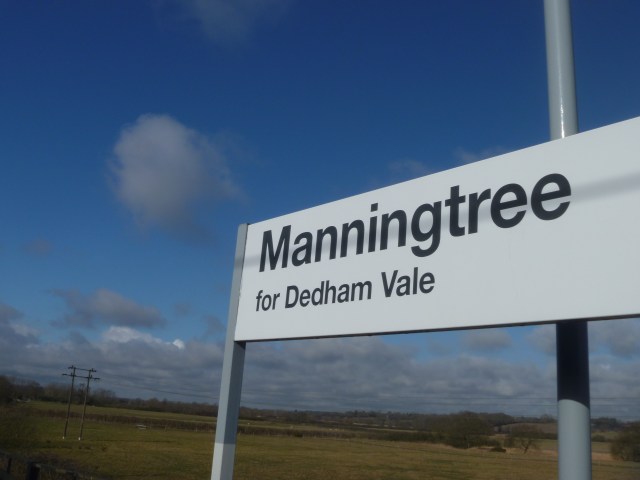
Did you know it only takes 40 minutes to walk from Manningtree Station to Flatford, and around
40 more from Flatford to Dedham? Avoid the traffic and enjoy a relaxing day out by train.”

Manningtree

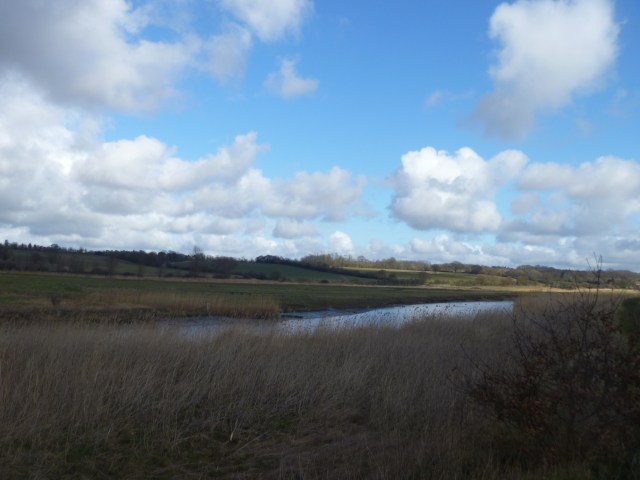
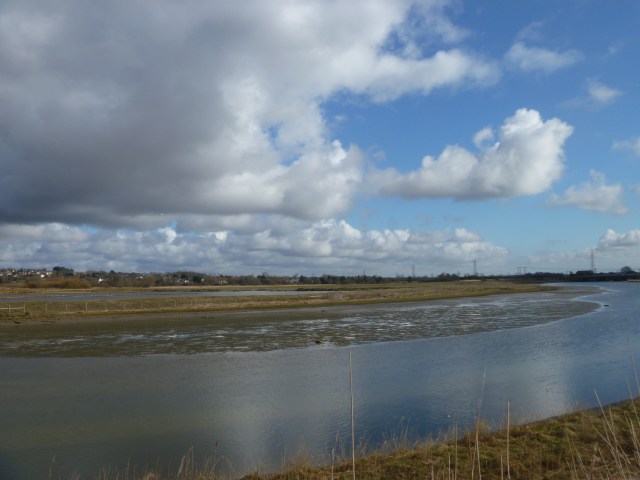
The perfect way to go, we thought. The next day we travelled to Manningtree and the walk began well along a country lane until we reached the first actual footpath. Horror! It was a mud bath. We managed to manoeuvre ourselves along the overgrown edge but it soon became impossible. In addition, all the footpath signs after leaving the station were broken off. A sad state of affairs. In the end we took a raised path, still very muddy in places, alongside the River Stour to the A137. Luckily there’s a pavement along the road back to the railway station.

River Stour 1

River Stour 2

River Stour

Our second attempt was more successful. We decided to take a short detour from our route up to Norwich.

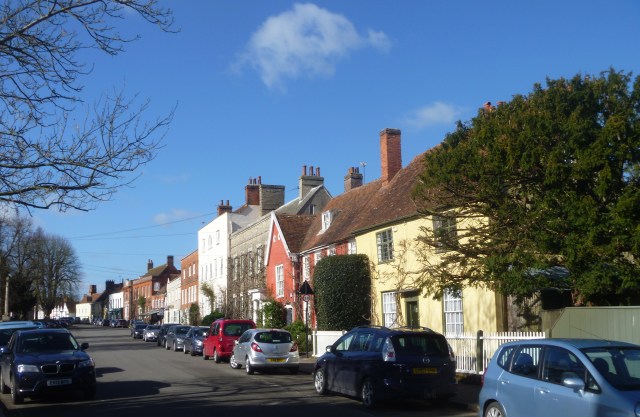
Dedham main st

First stop was the pretty, large village of Dedham, still in Essex. The main street is lined with Georgian buildings. We did a little shopping and had lunch in the Arts and Craft Centre which occupies a former historic church on the edge of the village.

Dedham church

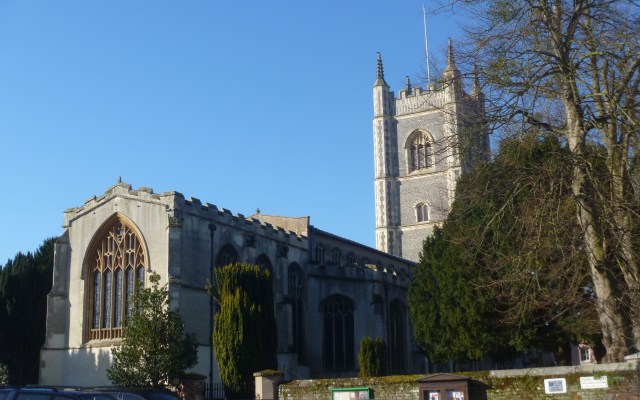
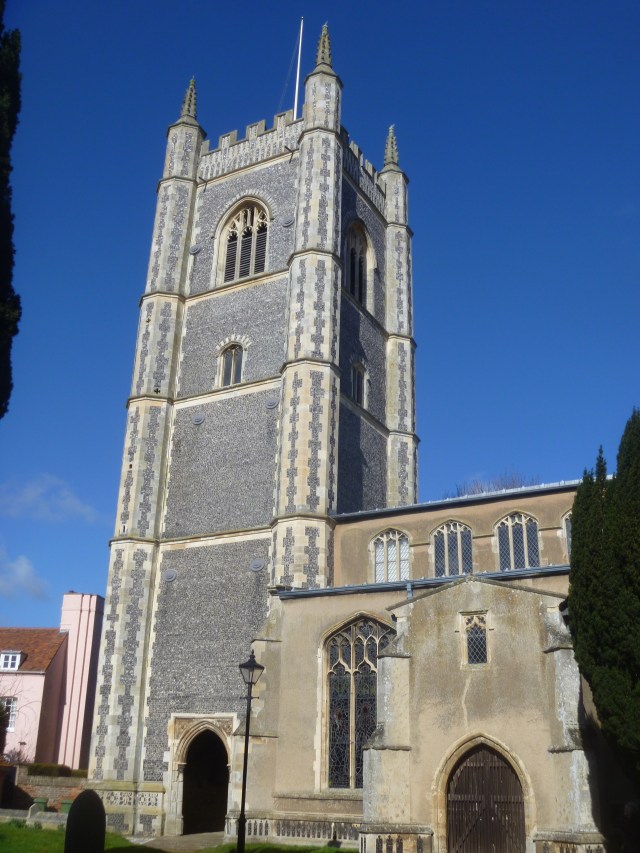
Dedham Parish Church – Dedicated to St Mary the Virgin in 1492

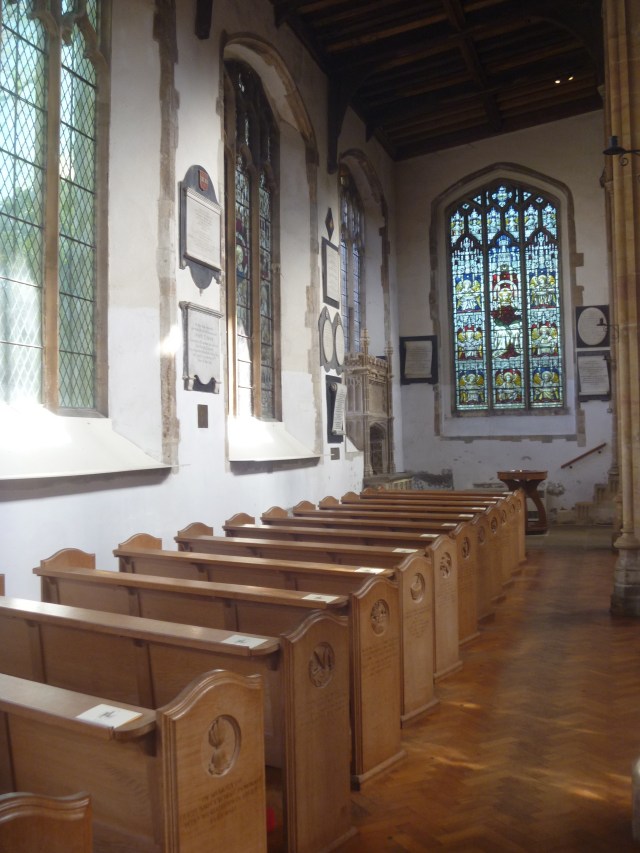
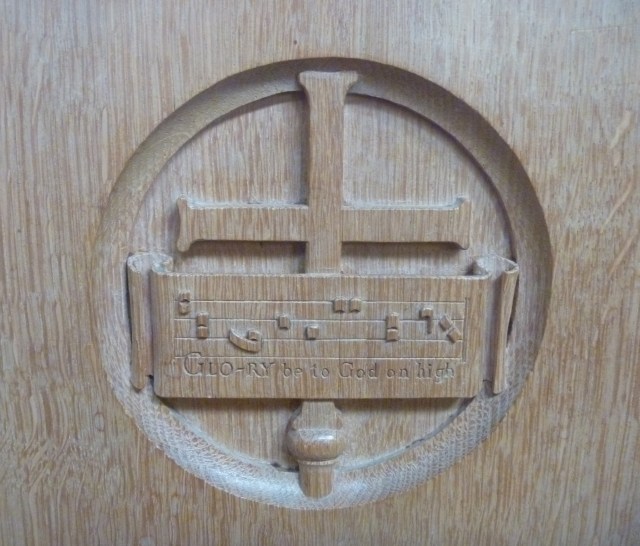
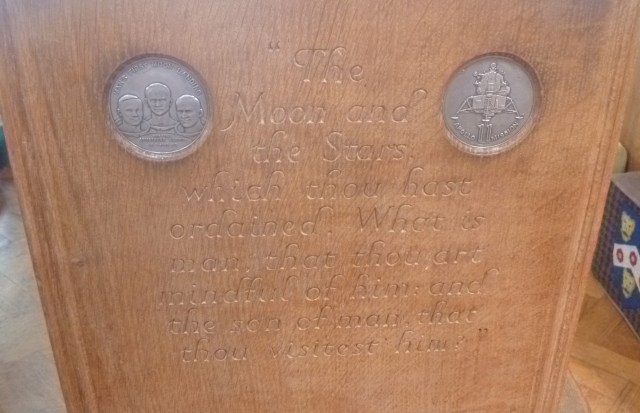
The main parish church is well worth a visit. An excellent colour guide indicates the main points of interest. The modern pew ends are a particular feature of the church. They have distinctive carvings and inscriptions and dedications. They were made by Mabbitts of Colchester over more than a decade.

Dedham pews

Musical

moon pew

These insets commemorate the first Moon Landing

Sherman window

At the top of the window are fragments of 17th century glass.

Dedham window

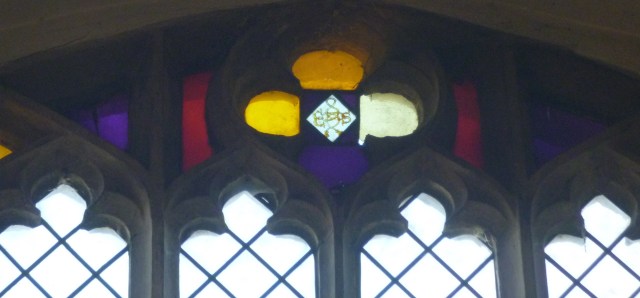
In the apex of the window above the Webbe Tomb are some fragments of old glass showing the initials E.S. commemorating Edmund Sherman who, at his death in December 1600, left his house opposite the church to the Governors of the Free Grammar School of Queen Elizabeth for a school to teach boys to ‘read, write and cast accounts’, that is to become local tradesmen rather than aspire to enter university or a profession.

Edmund Sherman, with his elder brother Henry and their father – also Henry, were named as Governors of the Grammar School when it was endowed in 1571 and were also nominated in the Charter granted by Queen Elizabeth four years later.

At least eleven descendants of old Henry and these two sons, Henry and Edmund are known to have emigrated to New England between 1633 and 1640. They and their descendants included a co-founder of Rhode Island; a signer of the Declaration of Independence and framer of the Constitution of the United States; the famous General W.T. Sherman of Civil War fame and his brother, Secretary to the US Treasury; a Vice-President of the USA 1908 to 1912; and two famous Admirals in the Second World War, one of whom later became Chief of Naval Operations for the USA.” [source]

Dedham Constable

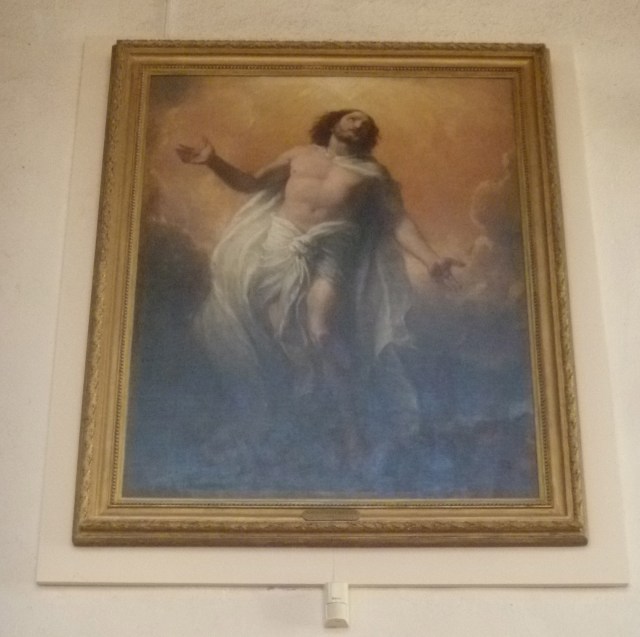
The church displays a Constable painting “The Ascension” originally commissioned for Manningtree church and currently on loan from the Constable Trust.

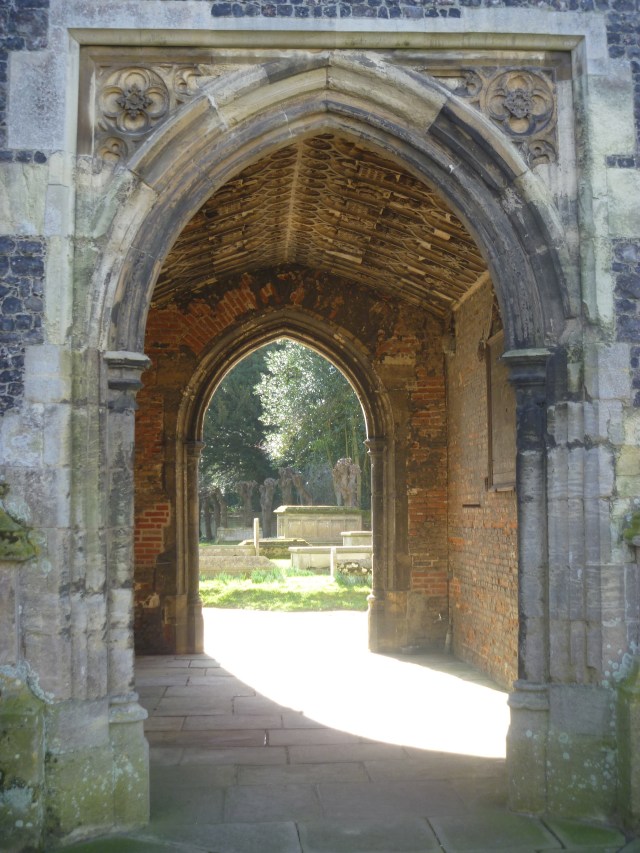
The church tower is particularly fine and very high – over 40m: perhaps the largest medieval flint tower ever built. It appears in many of Constable’s paintings including his ‘Dedham Mill Lock’. It was completed in 1519 and is unusual because it has an archway underneath it. This is sometimes called a ‘Galilee’ to remind worshippers of how Christ led his disciples into Galilee after His resurrection. If it had been a summer weekend we’d have climbed the 132 steps to the recently completed viewing platform.

Dedham church twr

Dedham arch

The ‘Galilee’ with Tudor heraldic symbols on the ceiling

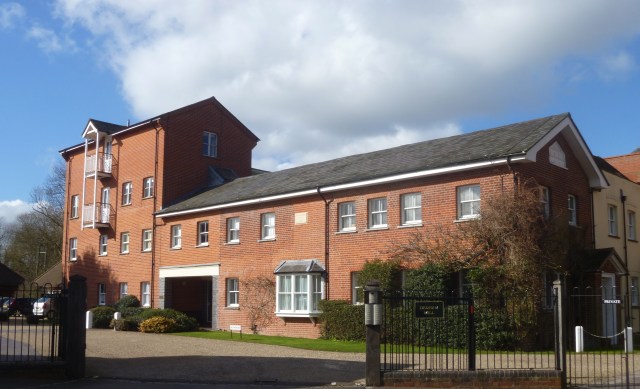
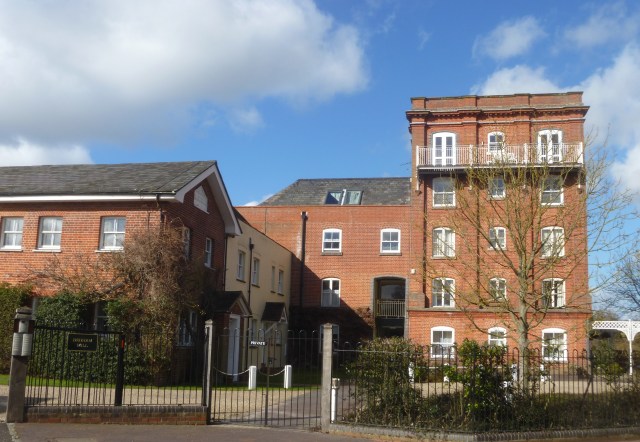
Before leaving Dedham for Flatford we walked to Dedham Mill the scene of one his paintings.

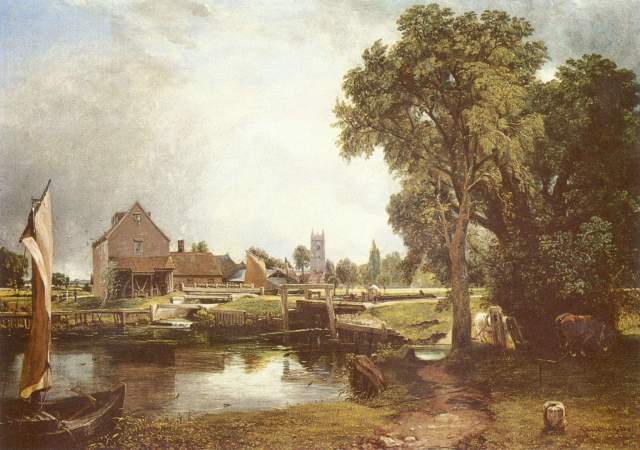
dedham-lock-and-mill-1820

Constable’s Dedham Mill (1820) – and there is the church, too [source]

Here is the much-expanded and changed Mill today :

Dedham Mill 1

Dedham Mill 2

Dedham Mill Today – now prestigious flats

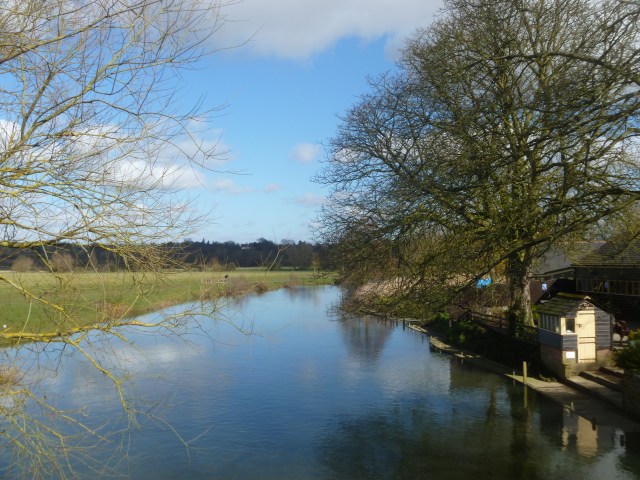
Dedham Lock today

Dedham Lock today

Flatford, just in Suffolk, is now owned and managed by the National Trust. It wasn’t ‘open’ on the day of our visit but there were a lot of staff and volunteers around probably preparing for the new ‘season’ which was to begin the following week (i.e. this week).

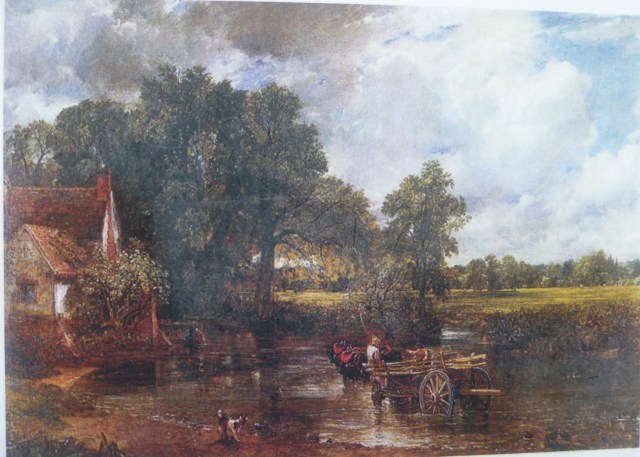
There’s a path/lane from the car park to Willy Lott’s House and the site of Constable’s famous painting ‘The Hay Wain’. I could vaguely recognise it as it is much less changed than Dedham Mill.

The Hay Wain

The Hay Wain, by John Constable

Hay Wain scene

The Hay Wain scene last week

Flatford Willy Lotts

The house on the left hand side of the painting and photo is Willy Lott’s House.

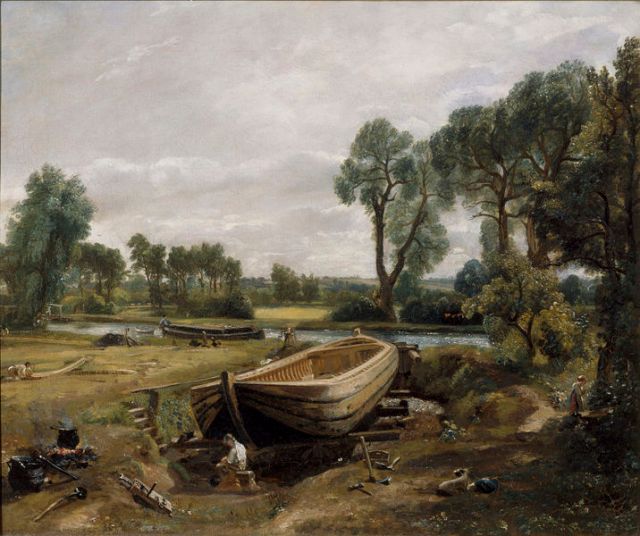
Boat Building at Flatford

Another Flatford scene Constable painted in the open air was ‘Boat Building at Flatford‘. Many Constables also owned Flatford Mill. There’s an article on the NT website about the Mill ownership and the Constable family here.

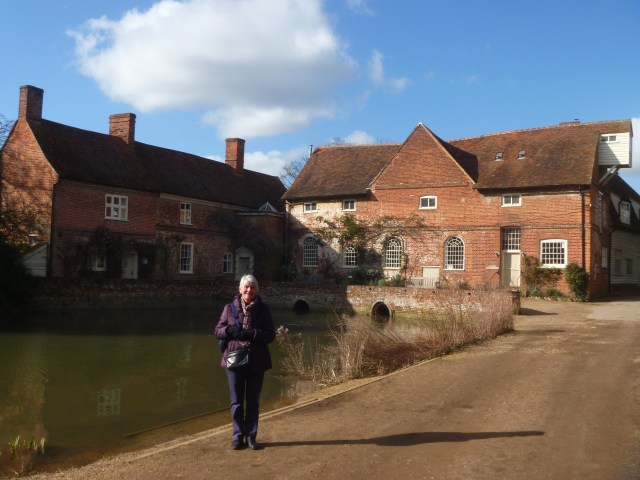
K at F Mil

Flatford Mill

Before leaving we walked over the bridge to join the footpath we should have arrived by on the Wednesday. We definitely made the right decision!

A Further Selection of Colchester Landmarks

There is, of course, more to Colchester than just recycled Roman bricks. Peake’s House is in the Dutch Quarter which was named after the Flemish weavers who settled here during the 16th century.

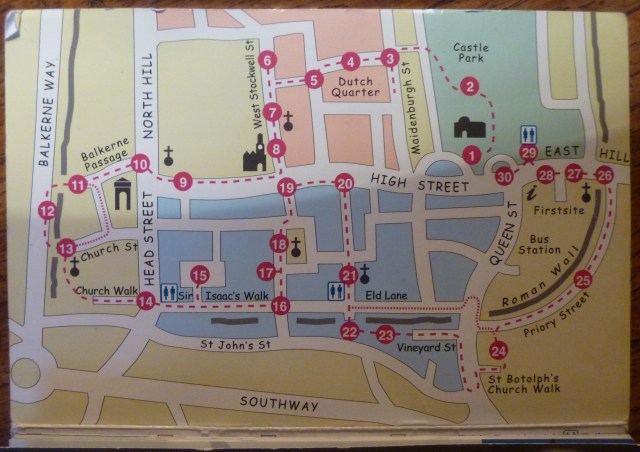
Heritage route

 Heritage Trail Route

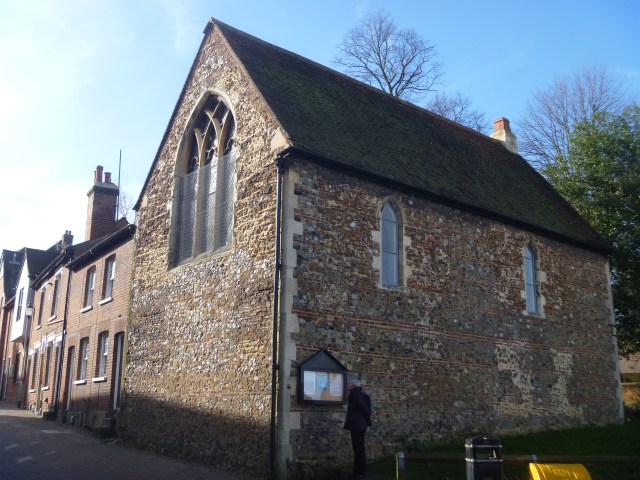
St Helen’s (just a few steps from East Stockwell Street) was first recorded in 1097 but its history goes back to the 3rd century AD. It was founded by Empress Helena (St Helena is Colchester’s patron saint). She was the daughter of King Coel (of Old King Cole nursery rhyme fame) and mother of Emperor Constantine the Great who was born in Colchester.

St helen's Chapel

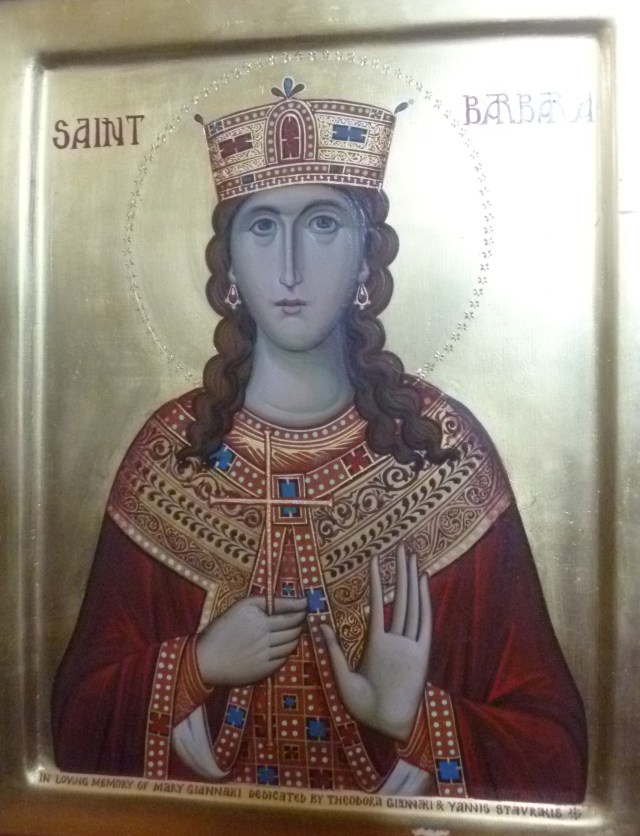
Since 2000 AD the chapel has been a Greek Orthodox parish church of the Patriarchate of Antioch. Inside the tiny church the walls are hung with icons to the various saints including Saint Helena and Saint Barbara.

Saint Barbara

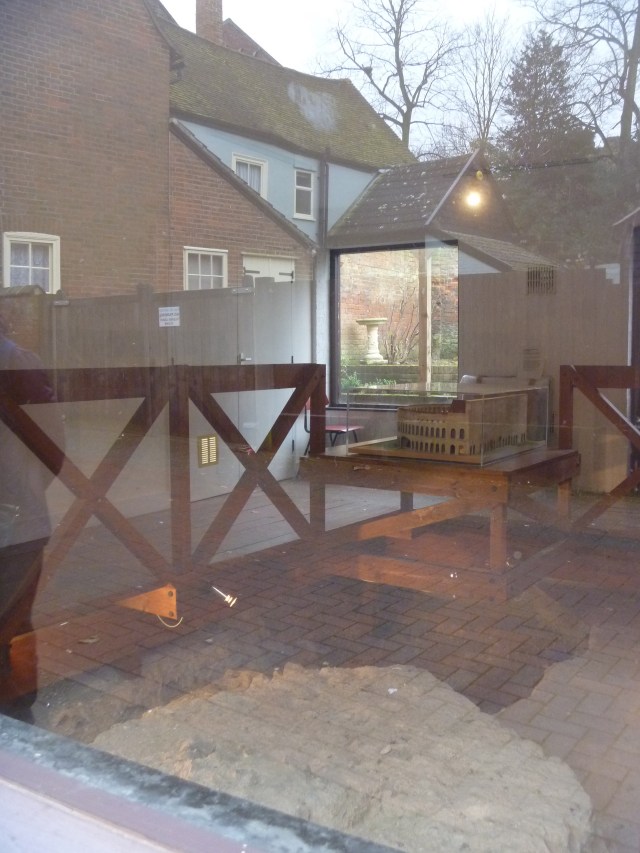
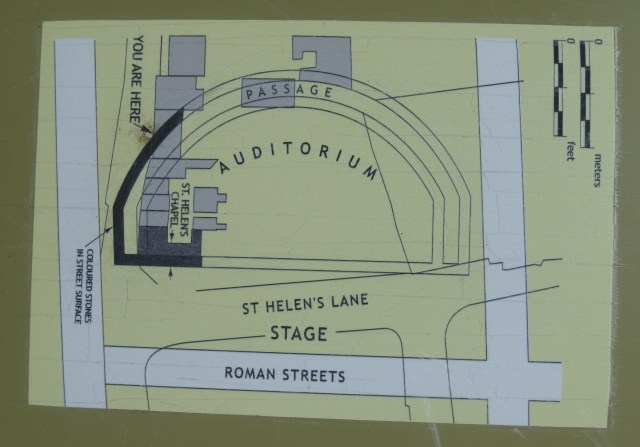
Next to the chapel on one side is a former Quaker burial ground and on the other a line of black bricks leads slightly uphill to a window through which you can see some of the remains of a vast Roman theatre that had been capable of seating 3,500 people. A mural on the wall shows an artist’s impression of the theatre when it was in use.

Theatre and reflection

The Roman Theatre Foundations – a Reflections of the Street

Roman theatre

Plan of the Roman Theatre superimposed onto a modern street map

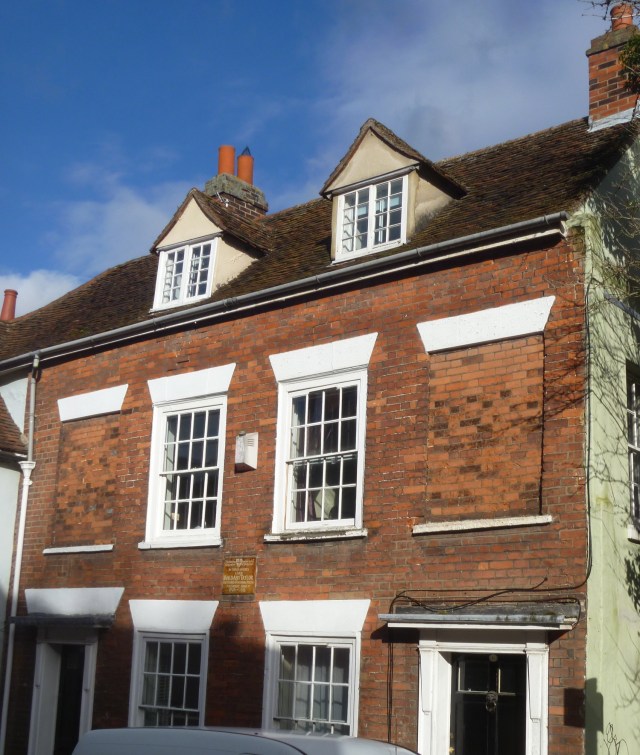
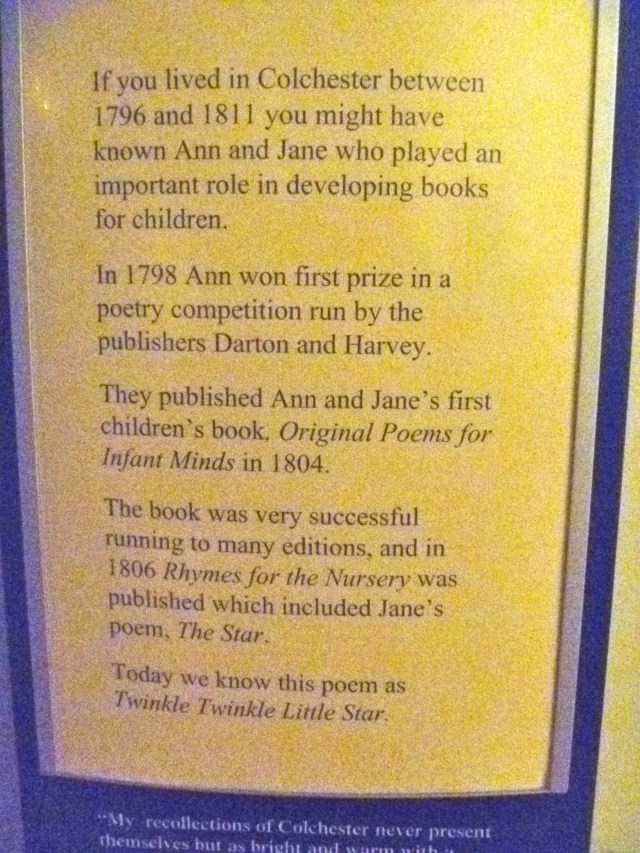
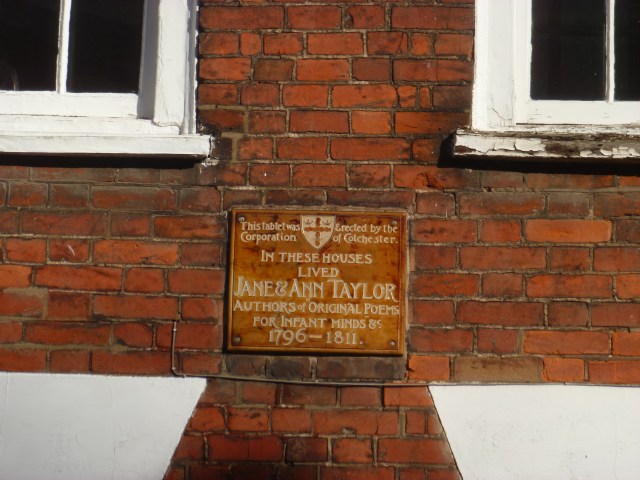
Nearby, on West Stockwell Street, is the former home of Jane and Ann Taylor who were famous for writing verse. Jane Taylor wrote the nursery rhyme ‘Twinkle, twinkle little star’ in 1806.

Twinkle house

Home of Jane and Ann Taylor

about taylors

We read about the Taylors in Colchester Museum

Twinkle twinkle

Colchester Town Hall on the High Street has an impressive tower designed by John Belcher and opened in 1902. It rises 50m above the street and is surmounted by a statue of St Helena and other historical figures connected with Colchester including Queen Boudicea of the Iceni. She led a rebellion against the Romans in 60 AD.

Town Hall

Colchester Town Hall

We sought out Tymperleys the former home of Dr William Gilberd a scientist and physician to Queen Elizabeth I. It’s now a tea room and until very recently had housed a large collection of Colchester-made clocks. Bernard Mason who had collected the clocks and lived at Tymperleys left the entire collection and the house to the borough. Now only a very small selection may be seen in the Colchester Museum.

Tymperleys

Tymperleys

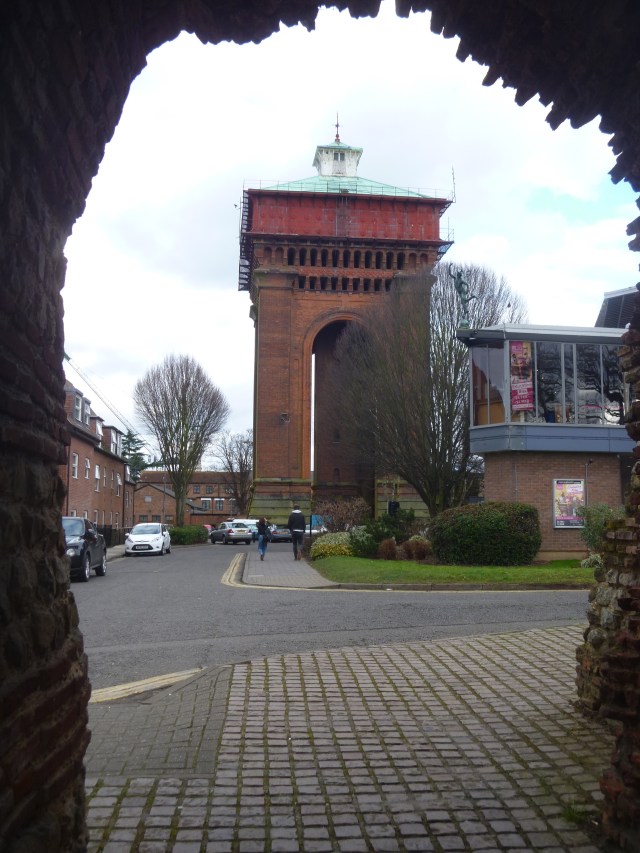
You can’t miss Jumbo! It’s a huge brick water tower built in 1882 and named for a famous elephant at London Zoo. The Rev John Irvine who lived in his rectory on the site of the present Mercury Theatre was not happy about the giant structure erected at the bottom of his garden and described the monstrosity as a Jumbo. The name stuck and the builders added a brass elephant to the weathervane as a reminder to the unhappy clergyman.

Jumbo and theatre Balkerne

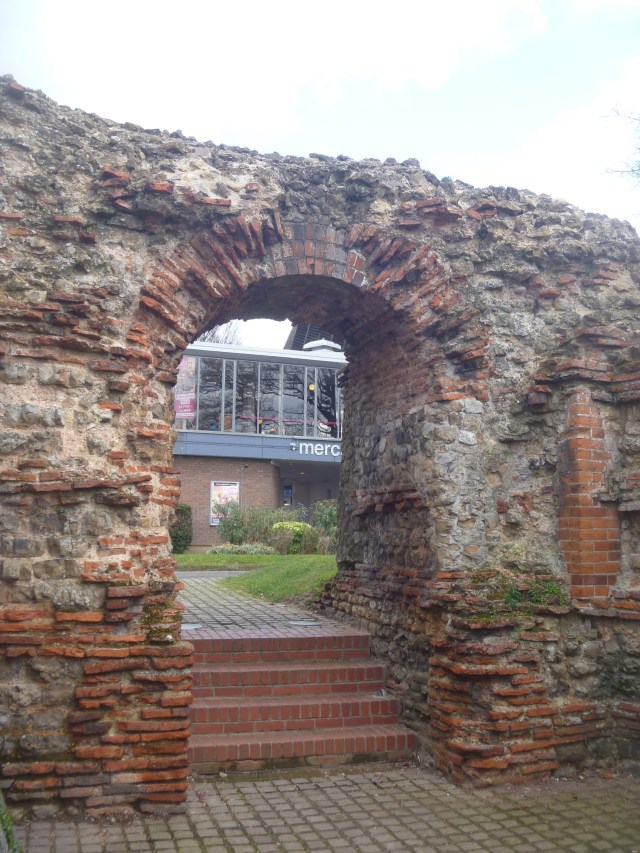
Jumbo and the Mercury Theatre seen through Balkerne Gate

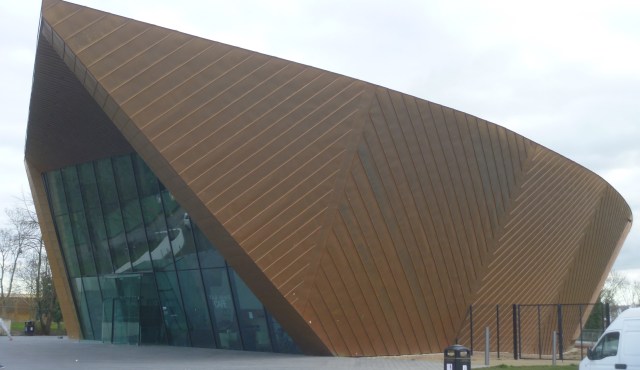
In addition to the Heritage Trail we also followed the Town to Sea Trail : Colchester and its historic port, the Hythe. “A unique art trail, designed for walkers and cyclists, follows the tidal River Colne through some lesser known areas of Colchester”.  We followed the whole of the 2 mile trail from its start at firstsite, an arts centre near the castle, to the end at the Hythe, a mixture of deserted or renovated quayside warehouses and modern out of town flats and shopping centre. We had a coffee in B&Q at Colne Causeway.

Firstsight

firstsite

oyster shells

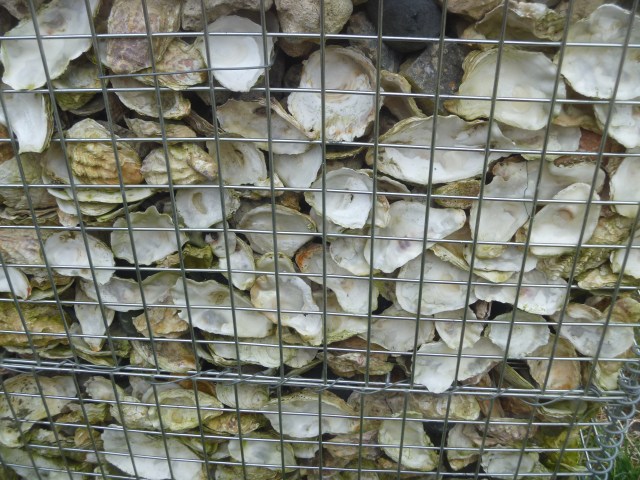
oysters

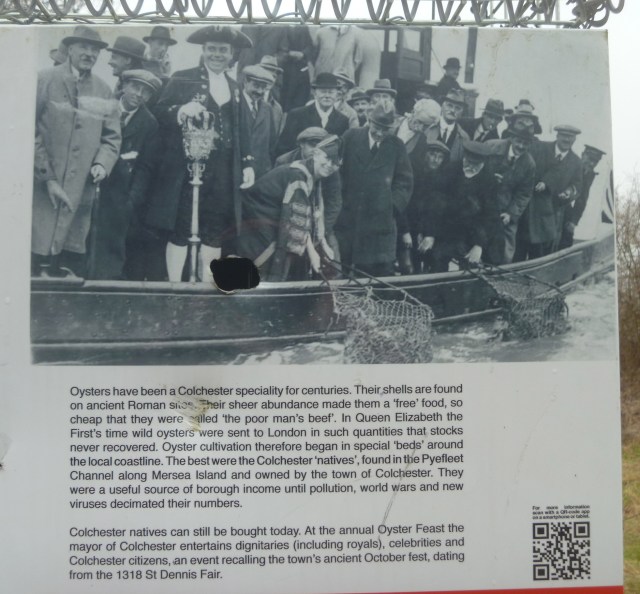
Information Board : Colchester Oysters are the best!

R Colne in its heyday

The River Colne in its Heyday

The Hythe

The Hythe today

Tidal river colne today

The Tidal River Colne Today

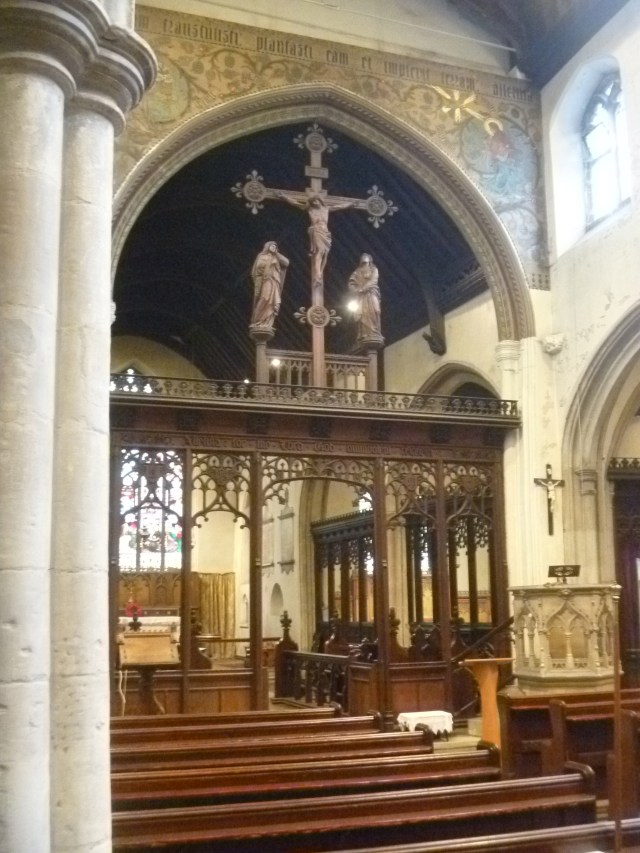
The highlight of the walk, but on a slight detour, was the Church of St Leonard at the Hythe; preserved by the Churches Conservation Trust its opening hours are limited but we were lucky again.

St leonard

St Leonard-at-the-Hythe

Interior

Interior : Early 20th Century Wall Paintings above the Arch once covered the whole Church

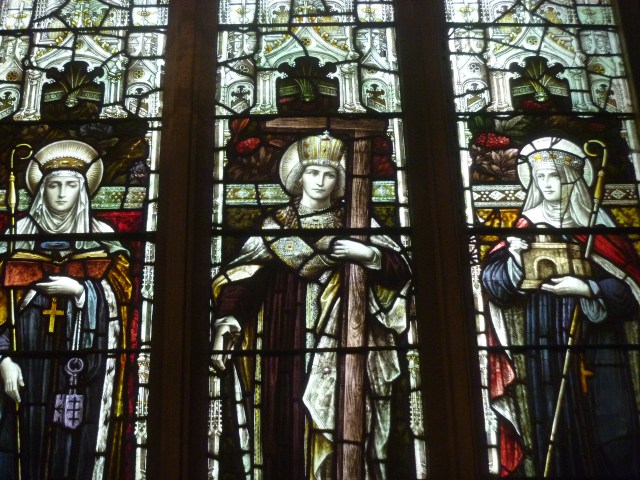
Windows St leon.

Early 20th Century Stained Glass : Sts Osyth, Helena and Ethelburga

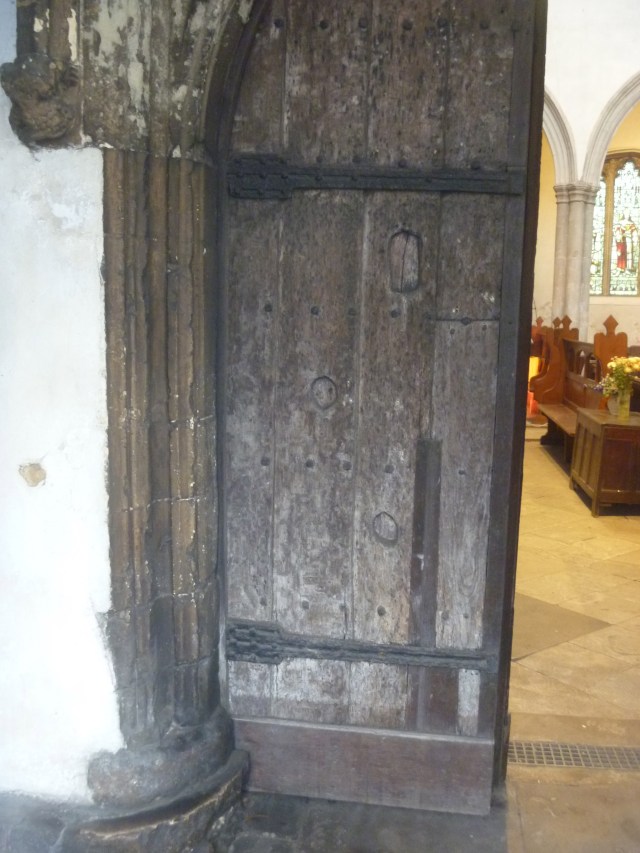
Door musket holes

The Medieval door of this old port church still bears the holes made by troops to put muskets through during the English Civil War.

“Perhaps it is little known that Twinkle, Twinkle Little Star actually consists of 5 verses, with the fifth verse rarely sung. Here’s the complete 5 verses, taken from the Oxford Dictionary of Nursery Rhymes (2nd edition, 1997), with the repetition of the first two lines added to fit the melody.” [source]

Twinkle, twinkle, little star,
How I wonder what you are!
Up above the world so high,
Like a diamond in the sky.
Twinkle, twinkle, little star,
How I wonder what you are!
****
When the blazing sun is gone,
When he nothing shines upon,
Then you show your little light,
Twinkle, twinkle, all the night.
Twinkle, twinkle, little star,
How I wonder what you are!
****
Then the traveller in the dark,
Thanks you for your tiny spark,
He could not see which way to go,
If you did not twinkle so.
Twinkle, twinkle, little star,
How I wonder what you are!
****
In the dark blue sky you keep,
And often through my curtains peep,
For you never shut your eye,
Till the sun is in the sky.
Twinkle, twinkle, little star,
How I wonder what you are!
****
As your bright and tiny spark,
Lights the traveller in the dark,—
Though I know not what you are,
Twinkle, twinkle, little star.
Twinkle, twinkle, little star,
How I wonder what you are!

Colchester Heritage Trail : Roman Recycling

What surprised us most and became ‘themes’ as we walked around on our recent visit to Colchester was the recycling of Roman bricks and (I’ve mentioned this before) the number of superlatives applied to buildings and monuments throughout the town.

The trail

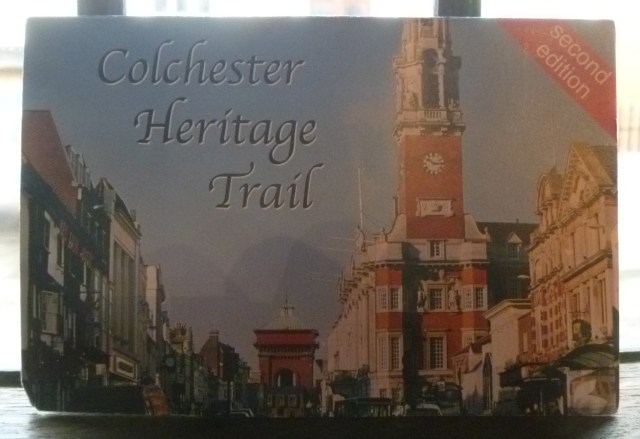
Colchester Heritage Trail is an excellent guide to the historic centre of Colchester. We didn’t follow the Trail step by step but fitted it all in over the several days we were there. The Trail starts and finishes at the Castle/War Memorial and only includes the old centre of town. Much of the following text is taken or adapted from the Trail leaflet. Some places were difficult to photograph and one day it poured with rain but otherwise I was able to snap most buildings, plaques and monuments.

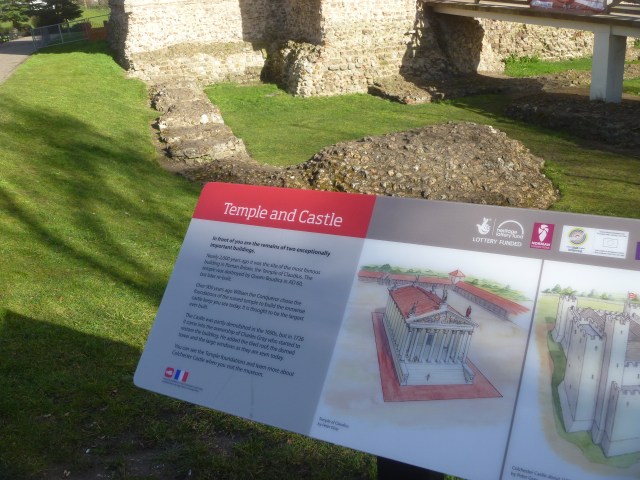
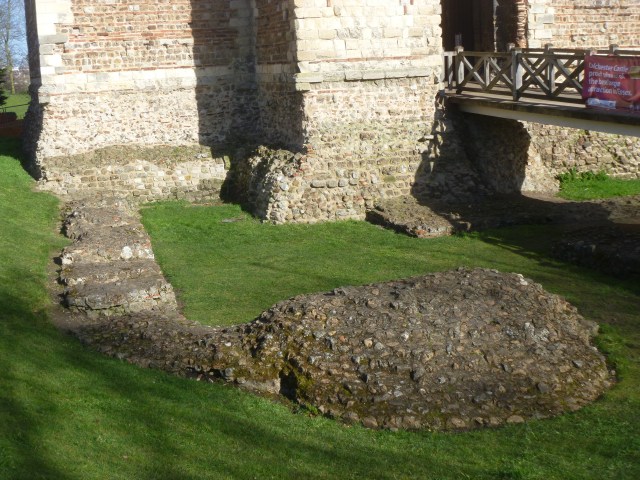
Remains of temple

The Temple Foundations

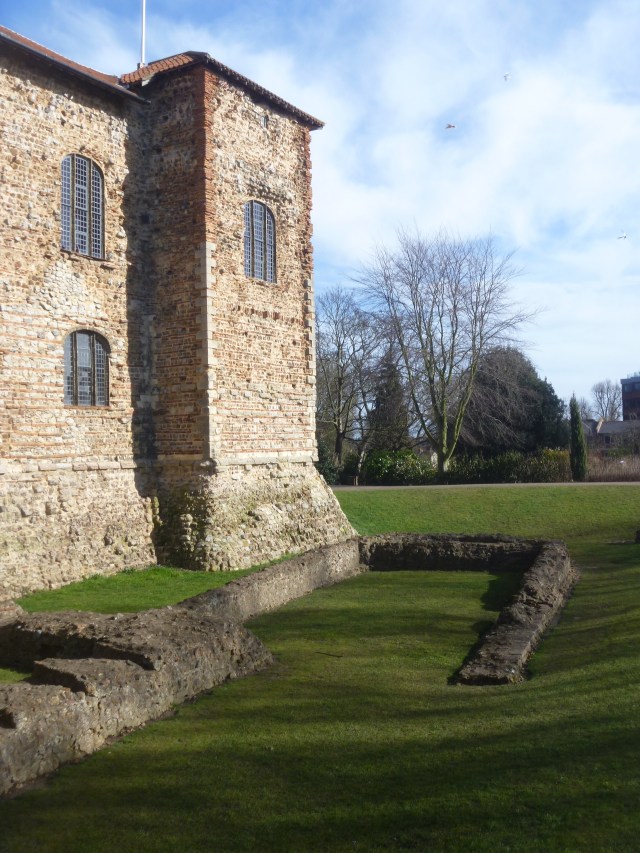
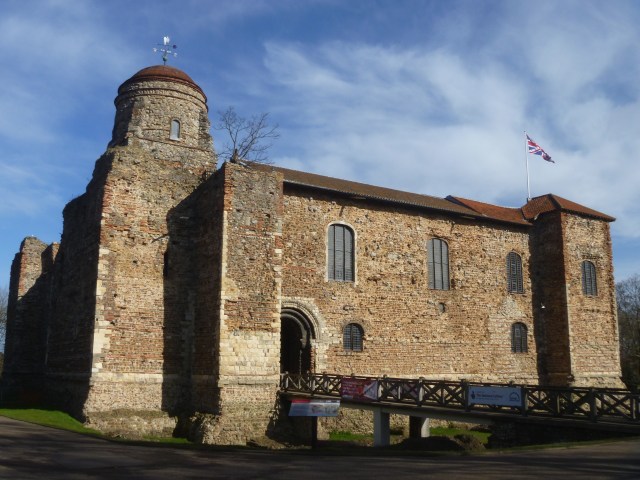
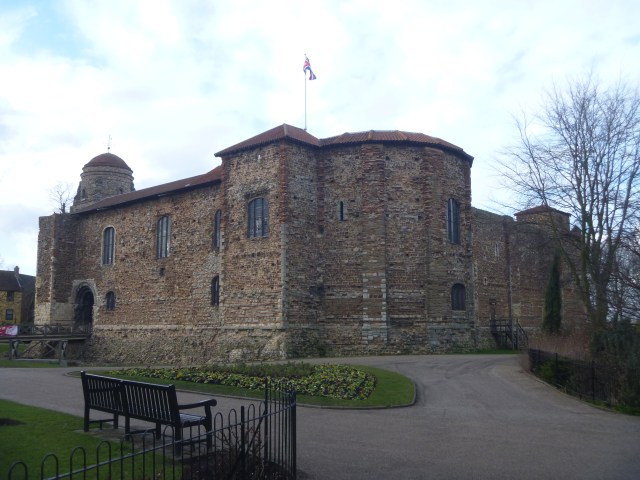
Colchester Castle itself was constructed mainly of brick and stone recycled from the old Roman town. It was built in 1076 over the foundations of the Temple of Claudius which itself was erected after his death in AD 54. John Weeley bought the redundant Castle in 1683 and removed parts of the upper floors to reclaim the building material so the original height of the fortress is unknown.

St Martins

St Martin’s Church, West Stockwell Street

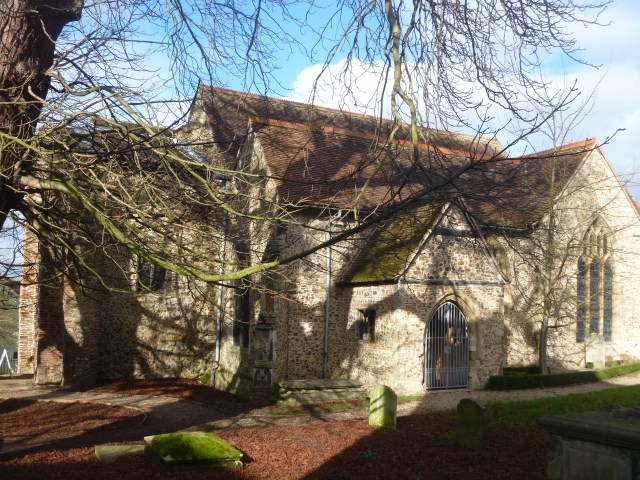
St Martin’s Church is cared for the Churches Conservation Trust which protects historic churches. We were very pleased to find the church open last Wednesday.

The tower is Norman although the rest of the church is medieval. The tower also stands no higher than the nave as a result of damage caused by cannon fire during the Siege of Colchester (1648). Colchester was besieged by the Parliamentary army for 11 weeks. The townspeople starved and many buildings were badly damaged. The Siege also crops several times along the Trail.

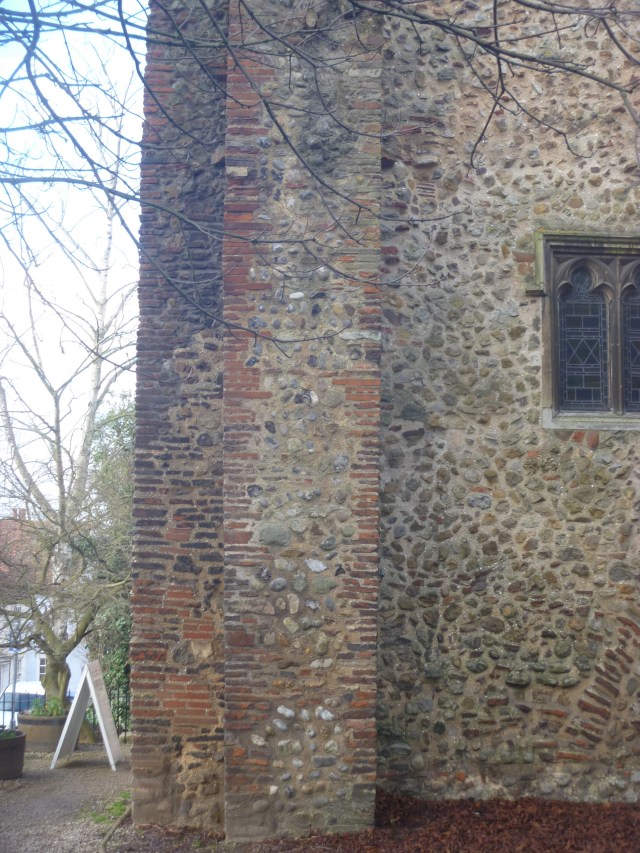
St M's bricks

“Note the recycled Roman bricks in the tower structure.”

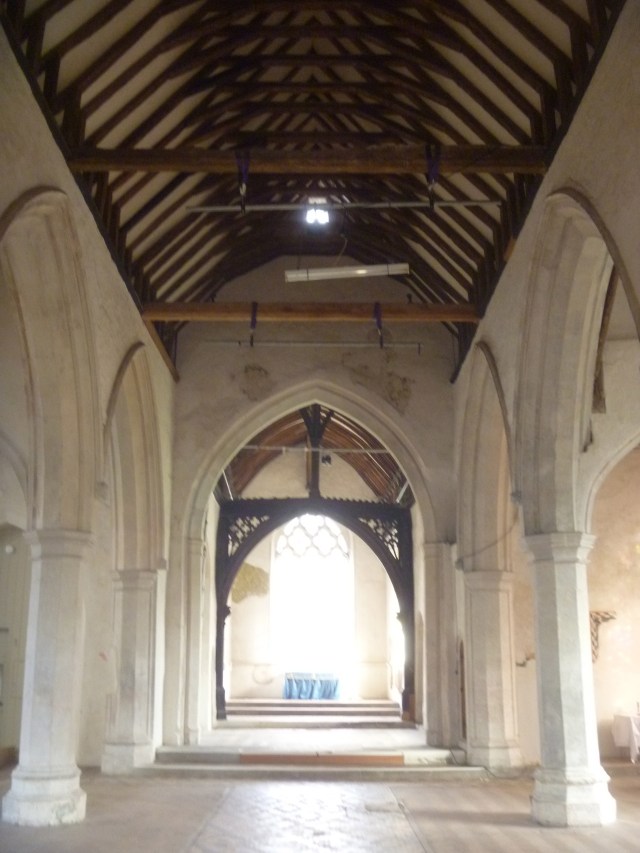
St M's - Gilbert Scott

The Chancel, St Martin’s Church

Sir Giles Gilbert Scott was responsible for uncovering the fine wagon roof in the chancel in the late nineteenth century.

Balkerne

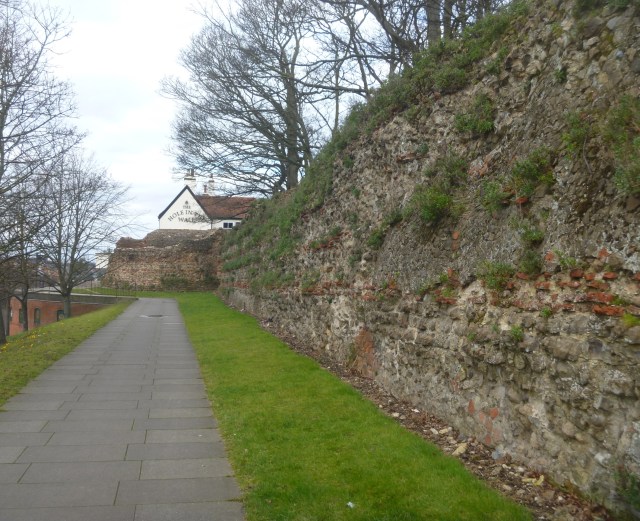
The Balkerne Gateway is the oldest surviving Roman gateway in Britain. It was the main entrance to the town. The best preserved section of the Roman wall extends from the gateway remains. The wall is 2.5m thick and stands near to its former height. It was built almost entirely from fragments of Roman brick and septaria stone but only on the inner and outer surfaces. The core of the wall is filled with rubble and hardcore.

Best wall remains

Best Roman Wall Remains

St Marys at walls

St Mary’s at The Walls

St Mary’s was one of many buildings damaged during the Siege. Both the church and graveyard were used as a fort by the Royalist defenders who managed to raise a small cannon to the top of the tower. It was targeted by the Parliamentarians and this caused severe damage to the building and the demise of the canon and its marksman. The church was rebuilt in the early 18th century but the chancel and nave are Victorian.

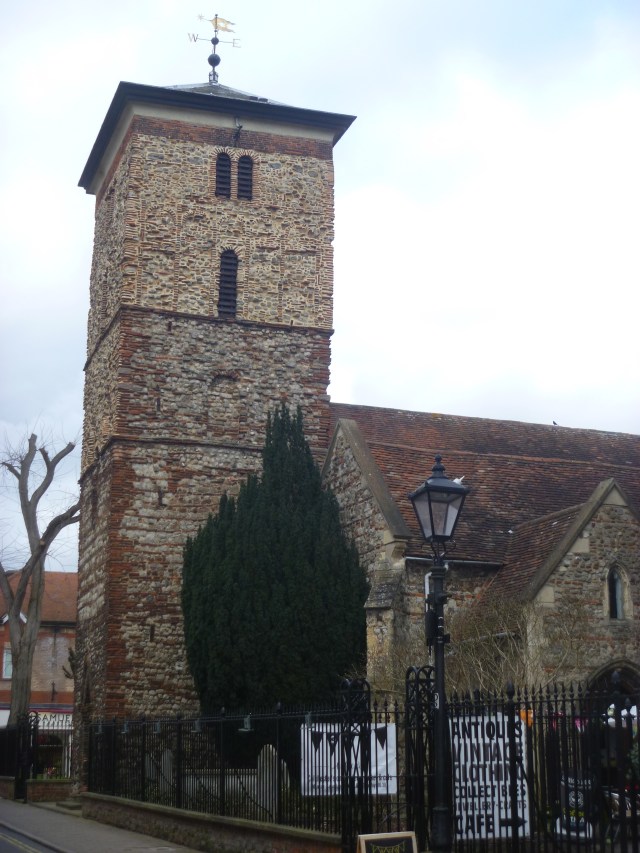
Holy Trinity

Holy Trinity Church

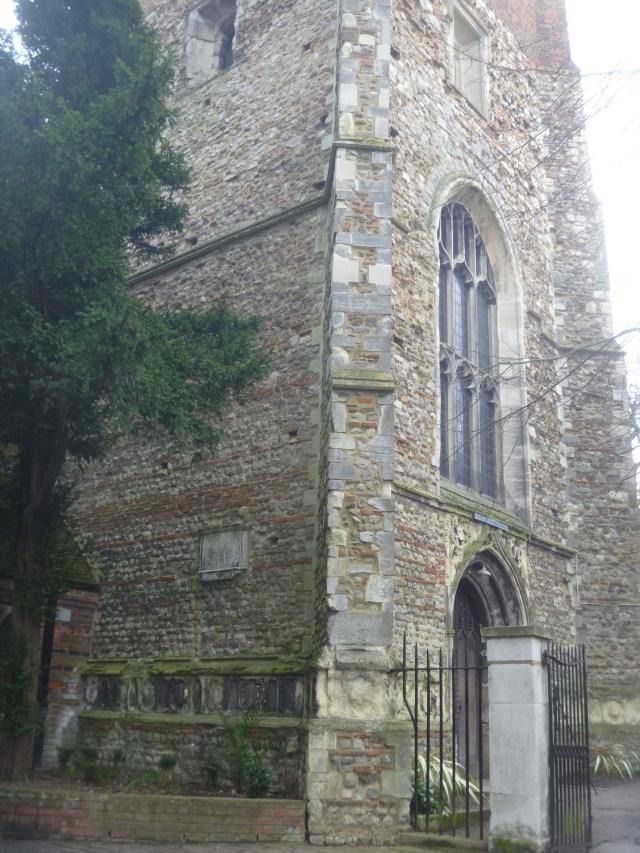
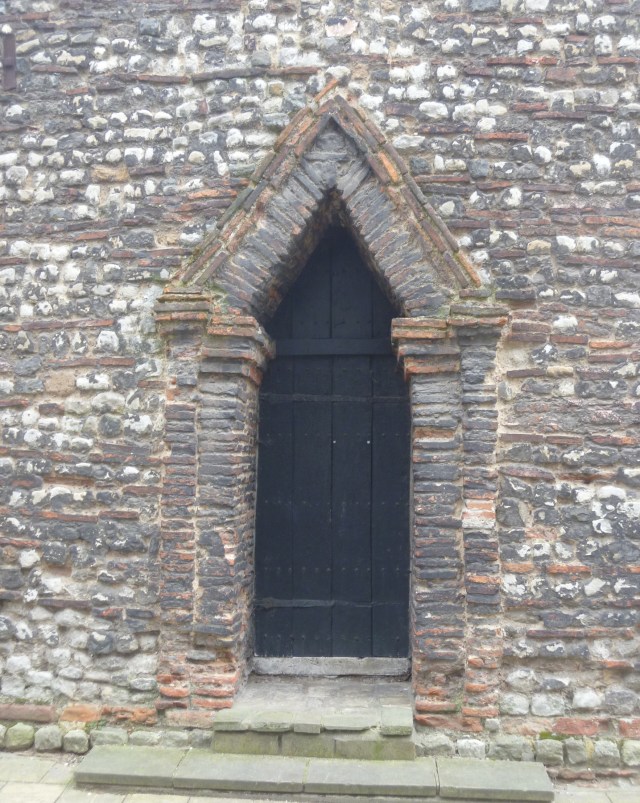
Holy Trinity is the town’s only Saxon monument. It dates from 1000 AD and incorporates an arrow-head doorway composed entirely of re-used Roman bricks.

HT door

Arrow-Head Doorway

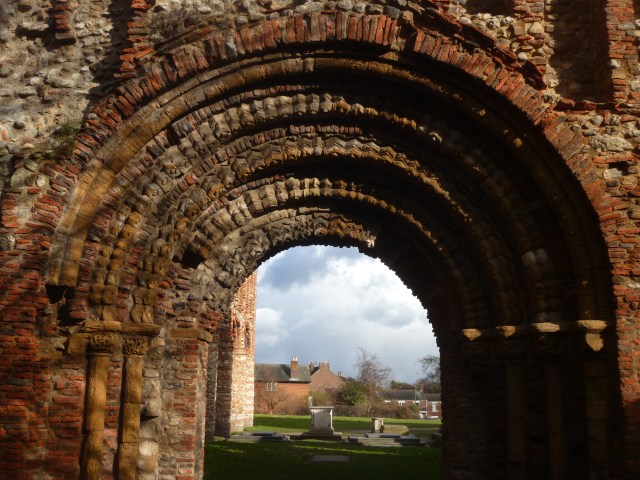
St Botolph’s Priory was founded around 1100 and was the first house of Augustinian Canons in England. All that remains today, however, is part of the original western front, with its superbly carved Norman archway, and a section of the nave.

Norman Arch St B's

Splendid Norman Archway

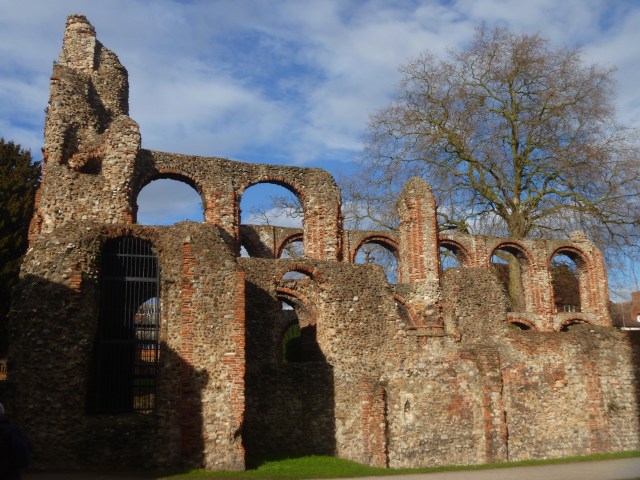
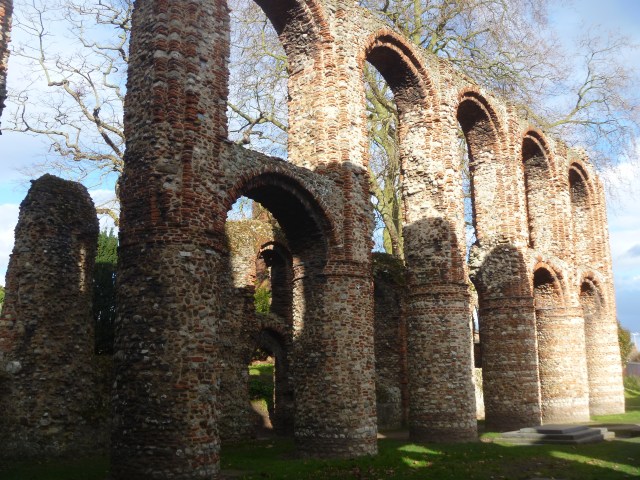
St Botolph's

Note the liberal use of Roman brick in the Priory construction

St B's Priory

There’s lots more to Colchester than re-used Roman bricks – nursery rhymes, a water tower, a theatre and lovely black and white Tudor buildings plus another trail. All coming up in the next post.

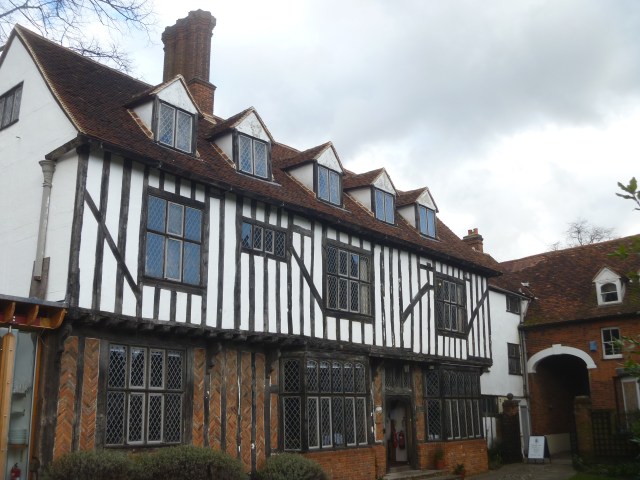
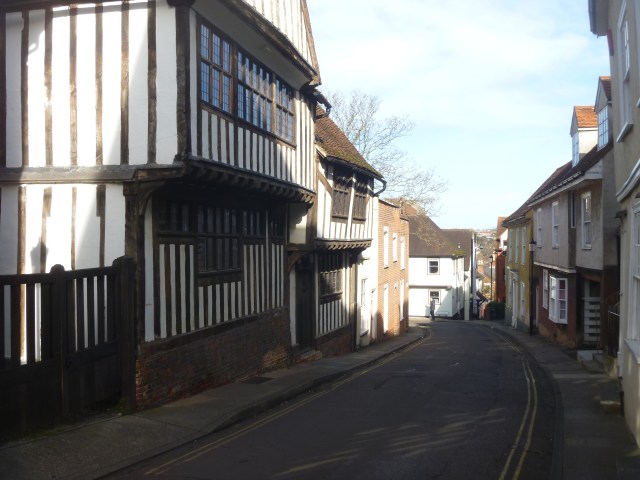
Staying at Mr Peake’s House

It’s not easy driving in Colchester. Even with very concise instructions as to how to reach the Landmark Trust’s Peake’s House we managed to take wrong turnings and narrowly missed driving in a bus lane. It was a big relief to reverse the car into the parking space provided and leave it there for the rest of our stay.

Stockwell Street

East Stockwell Street, Colchester. Peake’s House is the timbered building on the left.

Here’s what the Trust say about it :

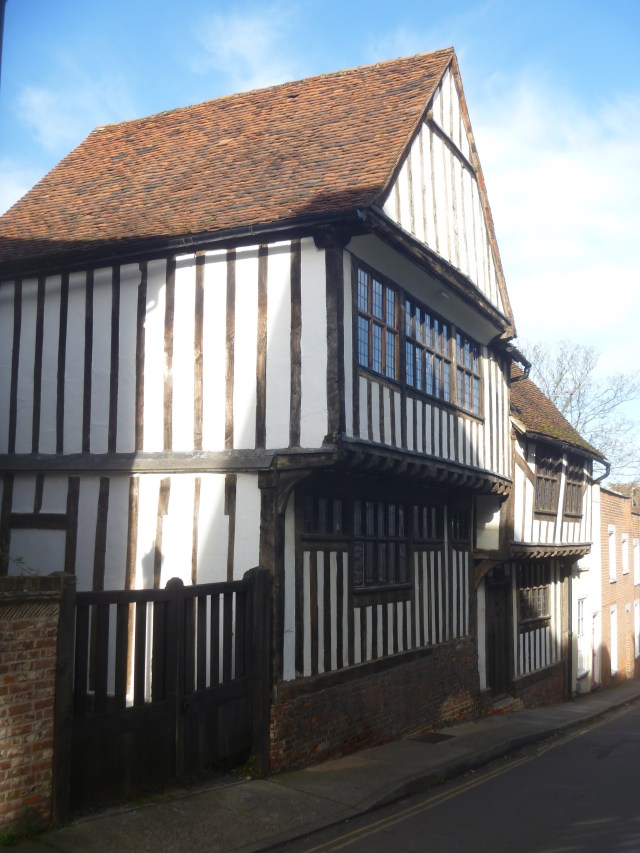
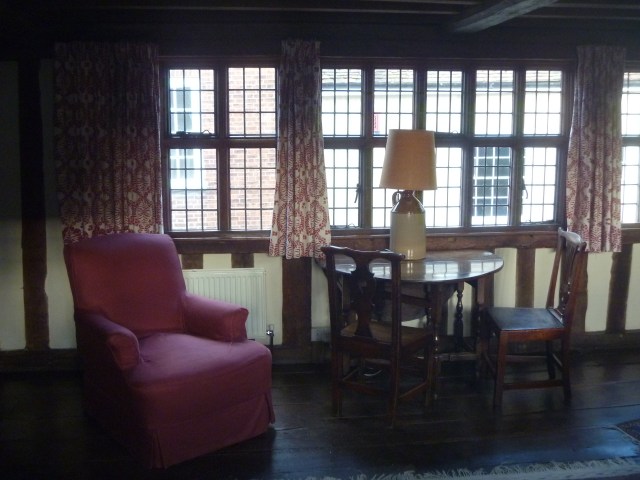
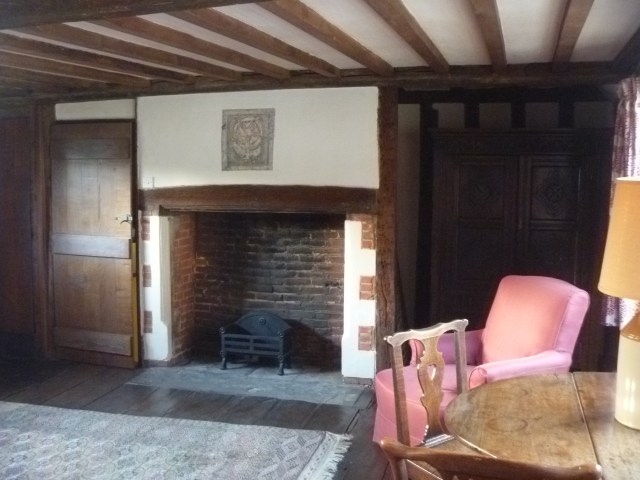
“Originally three cottages at the centre of Colchester’s cloth trade, the long mullioned windows were designed to give light to the weavers at their looms. It is a snug retreat from which you can explore the historic town surrounding you.

Peake's House

Peake’s House stands in the Dutch Quarter, north of the High Street, which has retained its old layout as well as many of its older houses, making its atmospheric streets a delight to wander. Here Flemish weavers settled in the 1570s, driven into exile by religious persecution.

The satisfying, late-Elizabethan interiors of this merchant’s house provide a particularly atmospheric existence within its walls. Workmanly, evenly set wall timbers inside and out give the house its character. The interiors of Peake’s House have barely changed since those weavers made themselves a prosperous new life.”

Mr Peake had been the last owner before he generously gave it to the Borough Council in 1946, specifying that it was to be used for social and cultural purposes only. The Landmark Trust secured a 99 year lease on the house in 1995. A detailed history can be read on the Trust’s website.

Here is a brief tour of this wonderful old house:

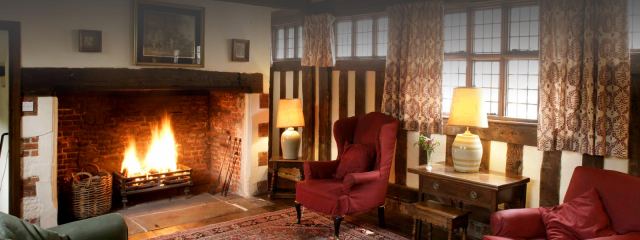
peakes-house-2

Sitting Room with Large Inglenook Fireplace [source]

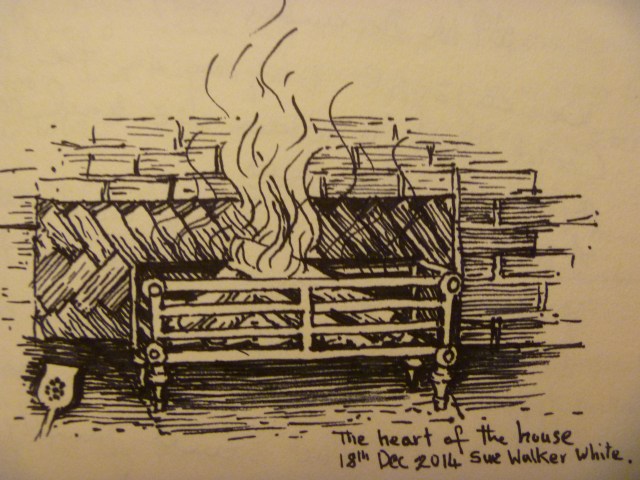
PH logbook fire

Log Book Fire

PH Library

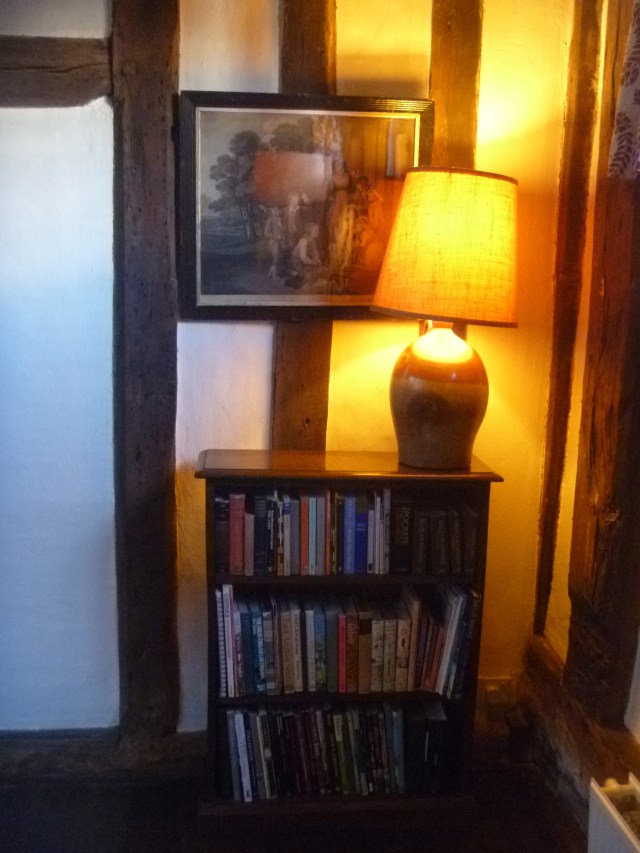
The Landmark Library (rather dimly lit)

Peake's House Table

Peake's House kitchen

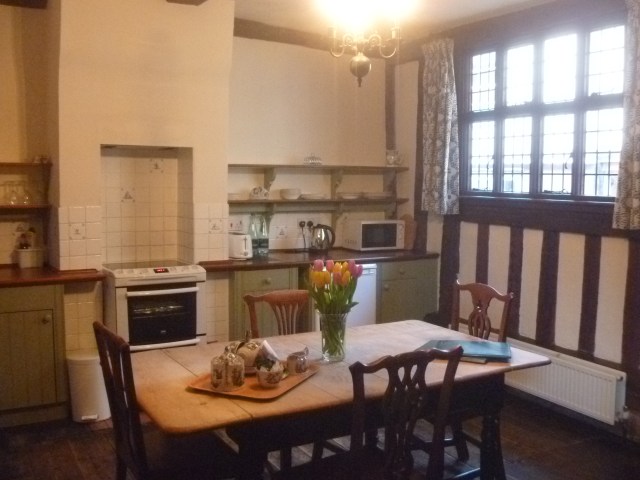
Welcoming, fully equipped kitchen

Kitchen Clock

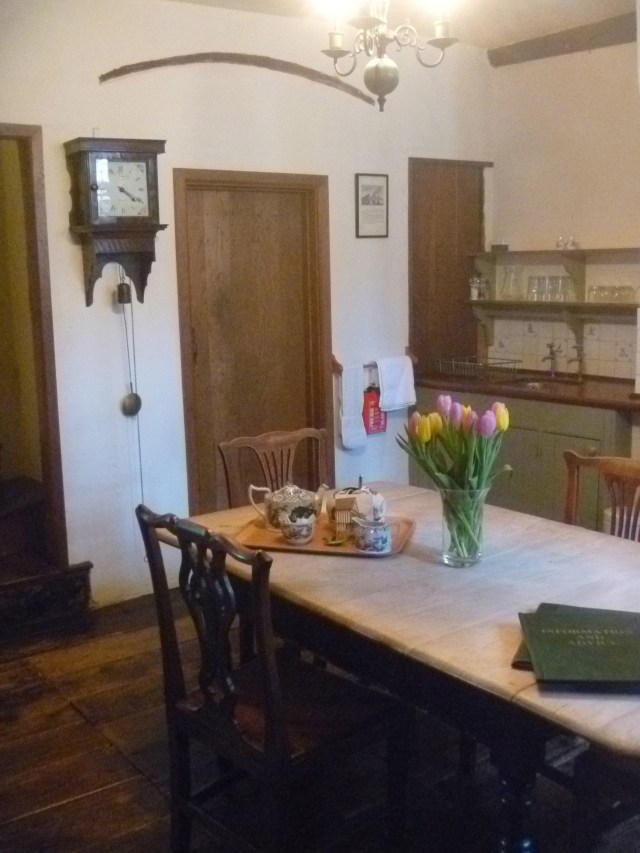
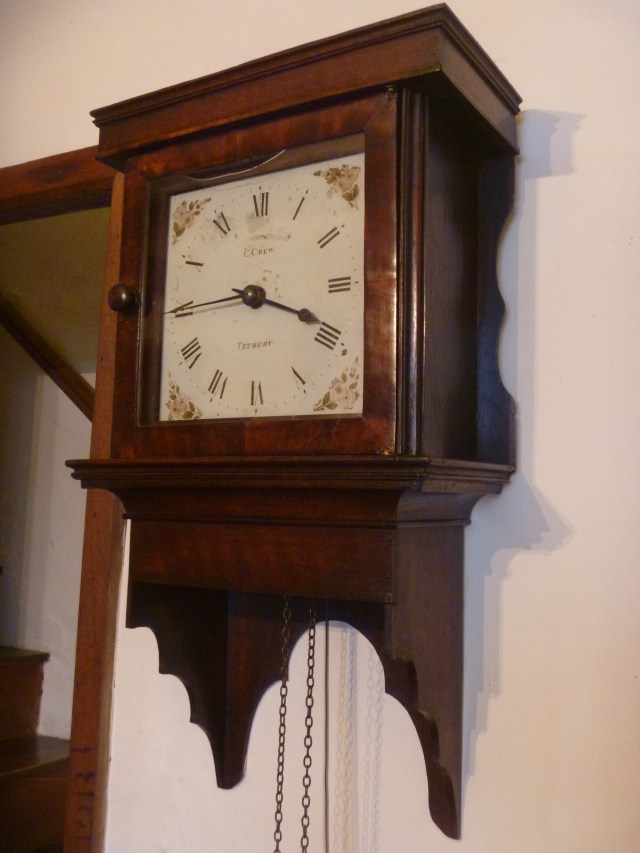
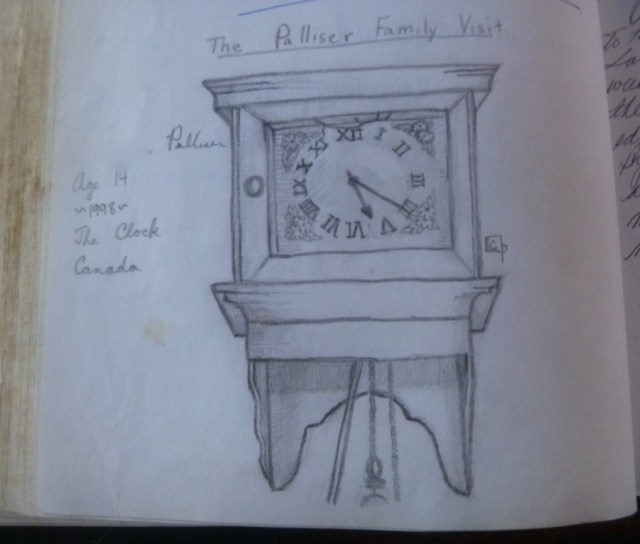
The Clock was a great point of interest

Logbook clock

Clock in the Log Book

Clock instructions

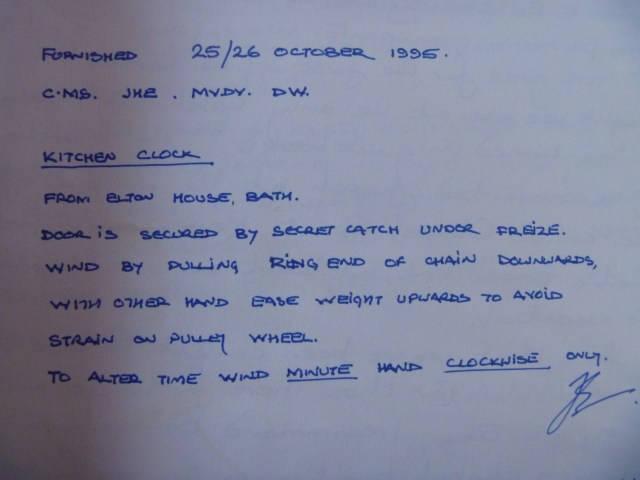
Clock Winding Instructions from the Log Book

PH twin room

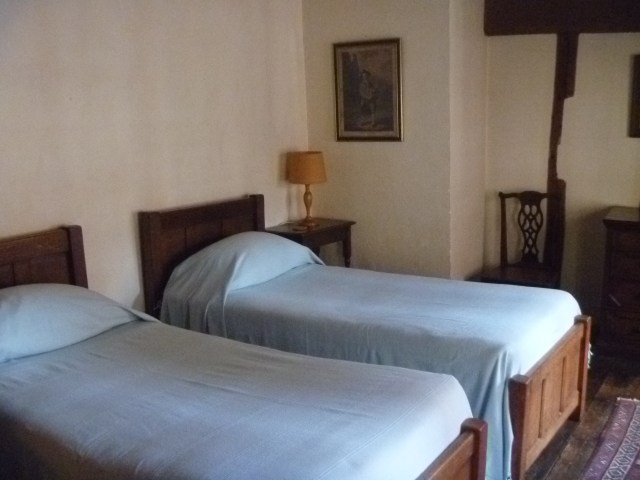
The Twin Bedroom

PH double room

Double room PH

Peake's double rm

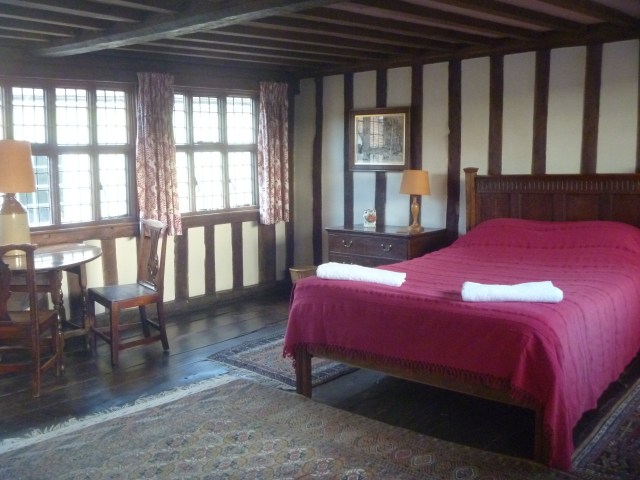
The Double Bedroom (all 3 pictures above)

Curtain print

The specially printed curtain fabric. Lady Smith, wife of the Landmark Trust founder John Smith, designed and hand printed the curtain fabric for each individual property.

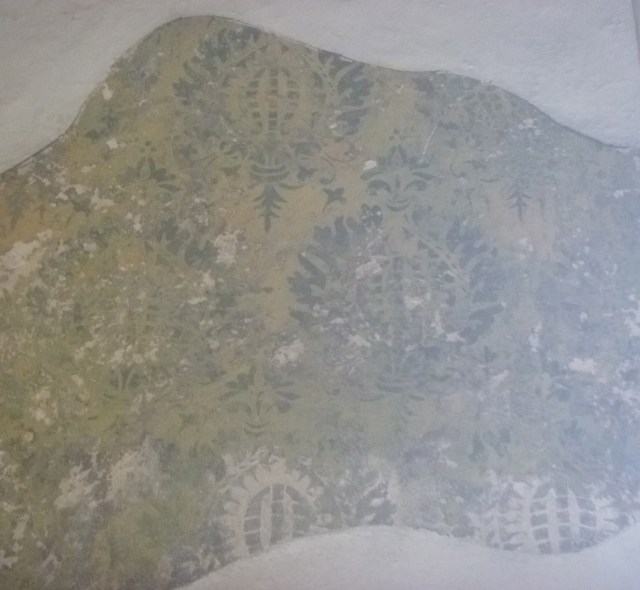
Wall Painting

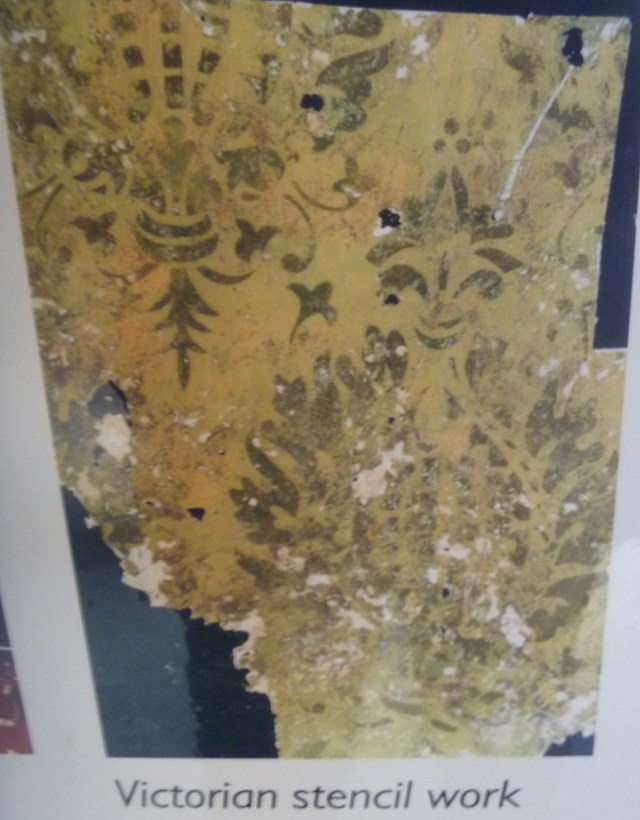
Could the design for Peake’s House curtains have come from the wall painting in nearby St Martin’s Church? Not quite, but very similar.
Victorian Stencil Work

Photograph on the Church Display Board

Curtains

Lovely Effective Curtains

Colchester Castle Now Open!

Colchester Castle

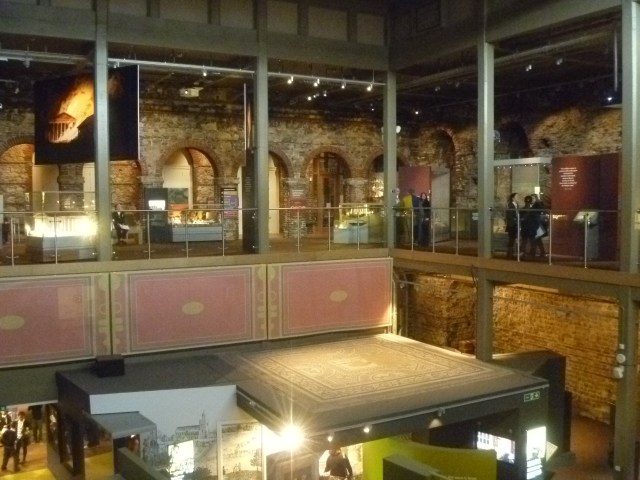
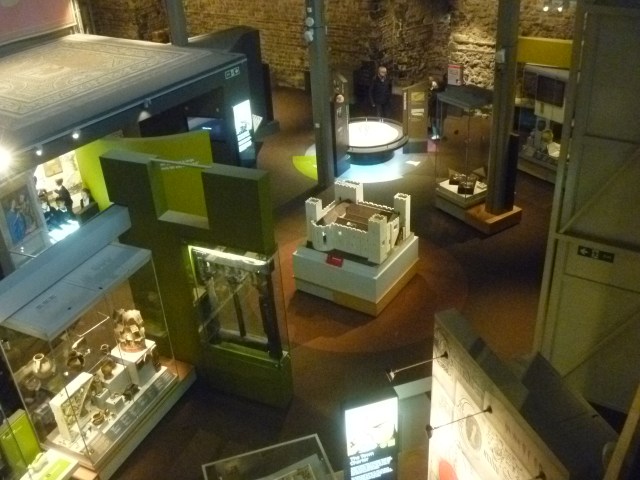
After a 16 month closure and a budget of £4.2 million Colchester Castle Museum reopened last summer (2014). With Art Fund membership cards we gained free admission and spent over two hours inspecting and admiring the amazing contents – here are quality and quantity – a magnificent collection of Roman and other antiquities.

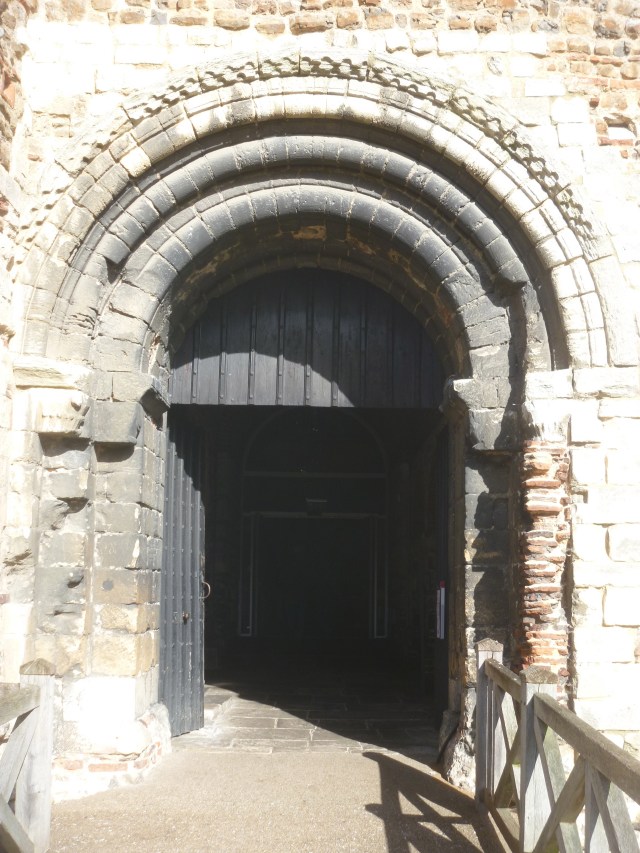
Castle keep door

Welcome to Colchester Castle – come on in!

Built on top of the foundations of the Roman Temple of Claudius you can read about the castle (the largest Norman castle keep in Europe) and its contents elsewhere so here I’ve just selected a few of the contents that particularly impressed me.

Castle built on temple

The Castle was Built on the Temple Foundations

Temple remains

You follow the preferred route proposed on a plan : Castle hub then upstairs to Iron Age, through the Roman invasion, and its heyday and decline to Saxon/Norman, medieval, the Civil War siege and finally a bit of modern thrown in (and a sit-down too) to watch video extracts of interviews with present day serving and ex soldiers from the Colchester Garrison and hearing plans for the future for the garrison and the organisation of British armed forces in general.

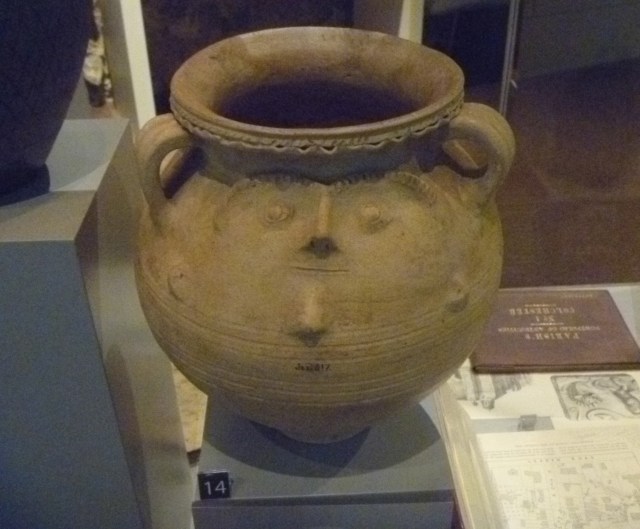
Roman Jar

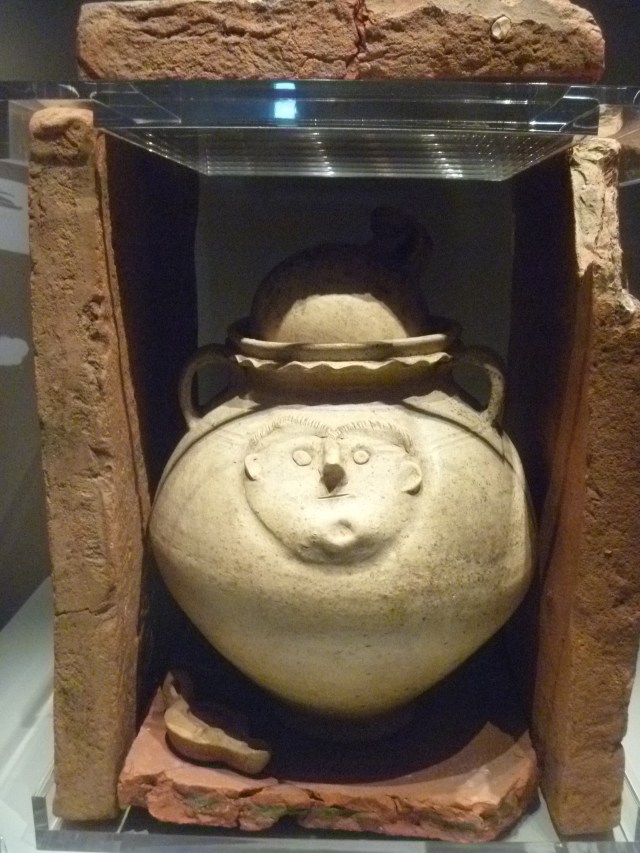
Roman Face Pot : Type of pot associated with military burials

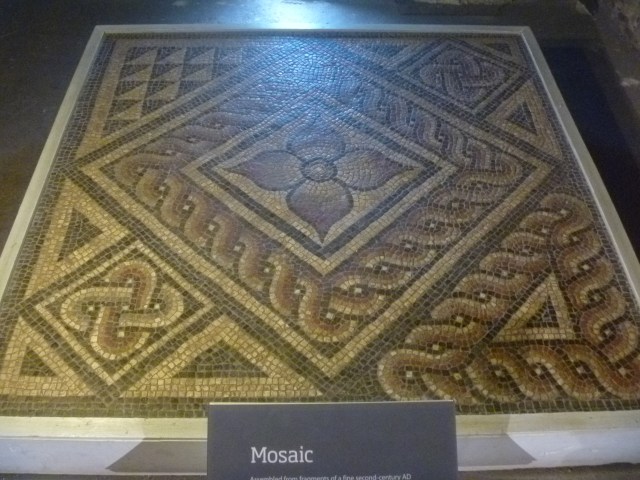
Mosaic Floor

Mosaic Floor : Assembled from fragments of a fine 2nd century  AD Roman mosaic floor found in a garden in North Hill in 1865. Research indicates that the components of the mosaic have been re-arranged.

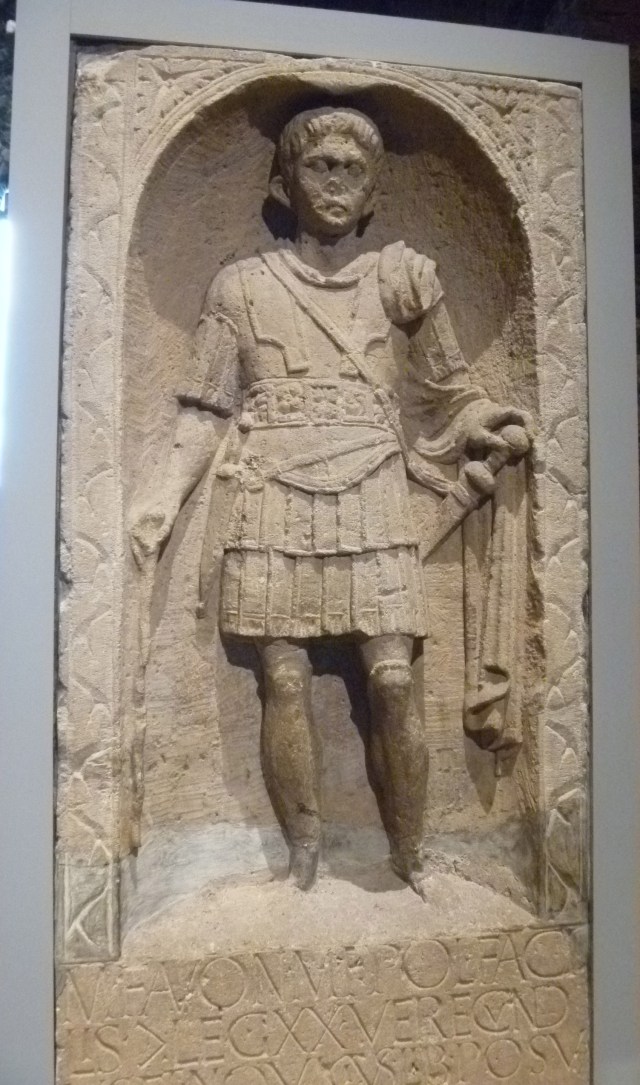
Tombstone 2

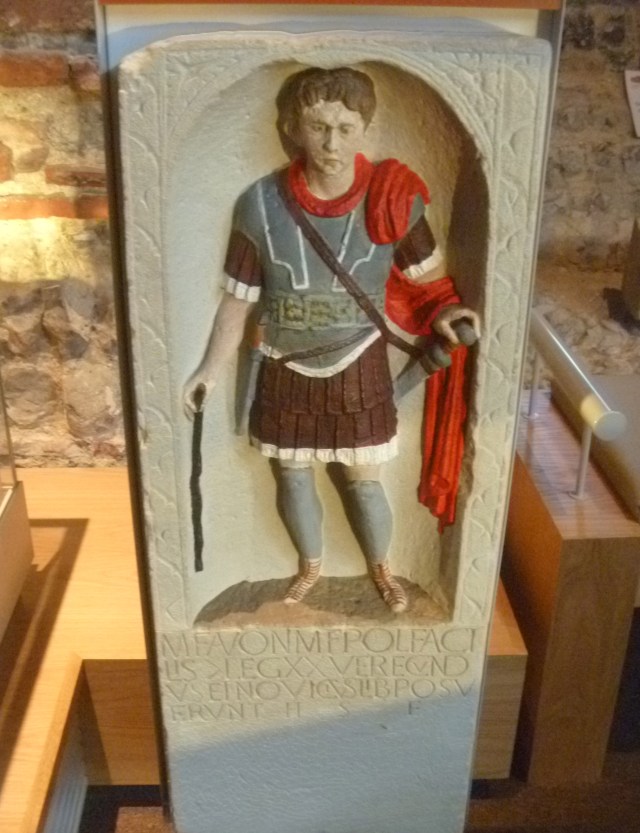
Tombstone of Marcus Favonius Facilis : the earliest Roman sculpture in Britain, and the finest. Facilis was a Centurion officer in the twentieth legion one of the regiments based at Colchester. He died a few years after the 43AD invasion of Britain and was buried in a cemetery along the main road to London. The style of sculpture represented by the tombstone developed in what is now the Rhineland area of Germany where the 20th legion had been based.

Tombstone 2.2

How the tombstone would have looked originally

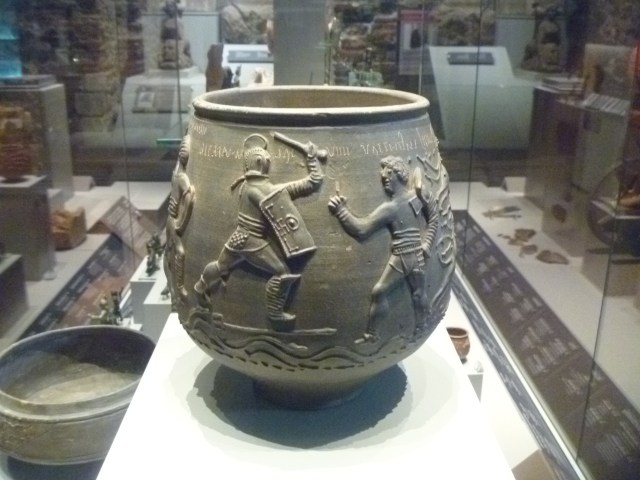
Colchester vase

The Colchester Vase is the most famous pot from Roman Britain. It was found in a grave dated between AD 175 and  AD 200 at West Lodge in Colchester. The pot is decorated with detailed scenes showing a fight between two gladiators, a man beating a bear with a whip and a hunting dog in hot pursuit of two stags and a hare. The inscription scratched around the rim of the pot tells us the names of the people represented in the scenes and gives some details of their lives.

Sphinx

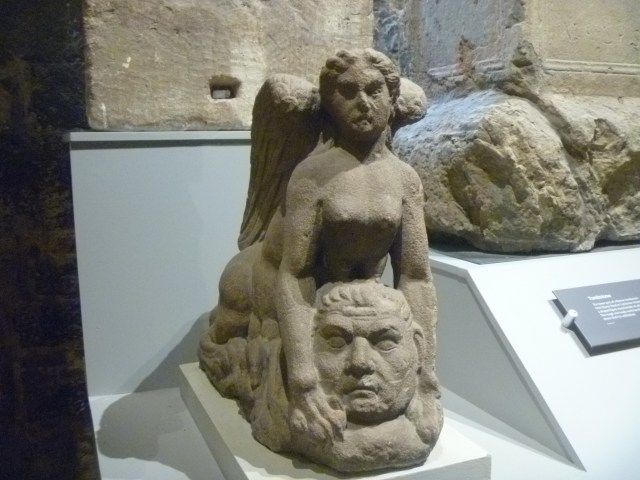
The Colchester Sphinx is a sculpture from an elaborate Roman tomb. It was found where the Essex County Hospital on Lexden Road stands today. This mythological creature is associated with death: she has the body of a winged lion and the face, arms and breasts of a woman. She was carved in the early Roman period AD 43-75. Here she represents the triumph of death over life. She is shown crouched over a pile of bones, clutching the head of the deceased in her claws.

Another face pot

Another Face Pot (contains cremated bones)

Mercury

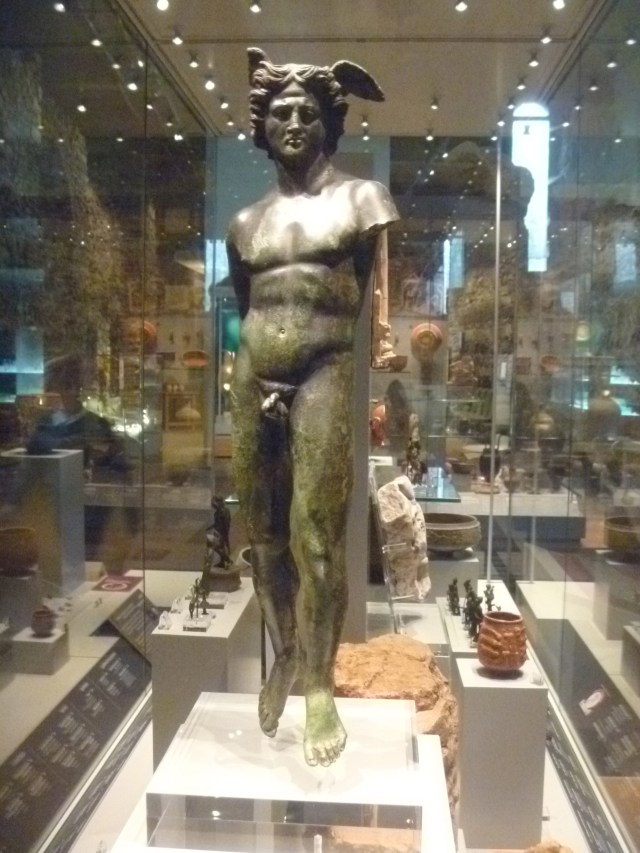
The Colchester Mercury is one of the finest statues from Roman Britain. It was found at Gosbecks, an area of countryside outside Colchester where there was a theatre and temple. This bronze statue was made in the northern part of the Roman Empire in the second century AD. Mercury was the messanger of the gods and can be recognised by the wings on his head. He was also the god of movement which made him popular with travellers, traders and even thieves.

Inside the keep 1

Inside the keep 2

Inside Views of the Keep

We already realised that Colchester is not just the first recorded town in Britain it has a wealth of history and superlatives – first, largest, best, oldest, finest.

Castle Keep

Walking and Talking on Hampstead Heath : The Garden of the Finzi-Continis

Walking Book Group

This post is not a discussion or review of the book in question: Emily does that so much better than I could.

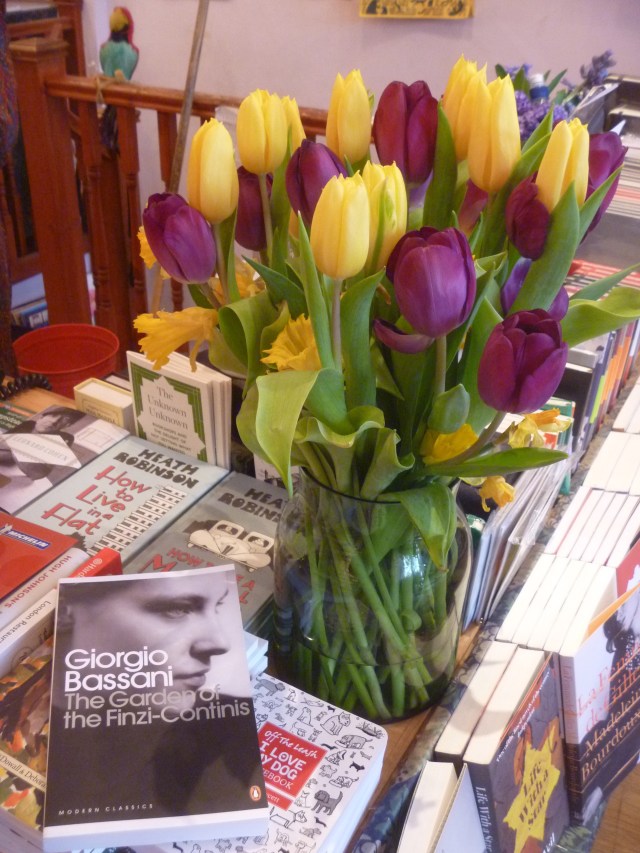
The Garden of the Finzi-Continis

Rather, I’d like to tell you about how a Walking Book Club works.

Daunt Shop

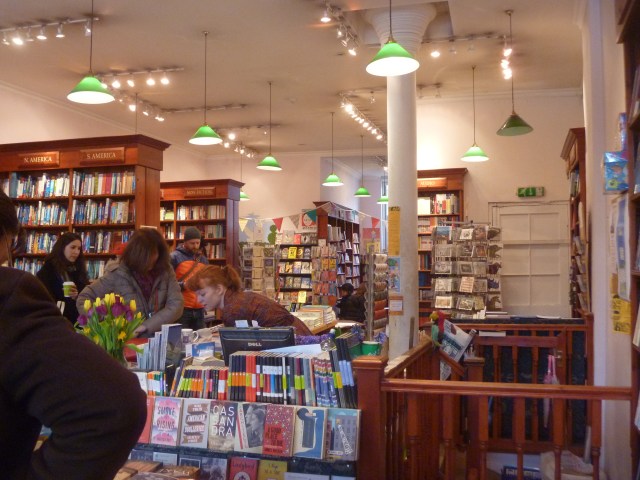
 Inside Daunt Books South End Road

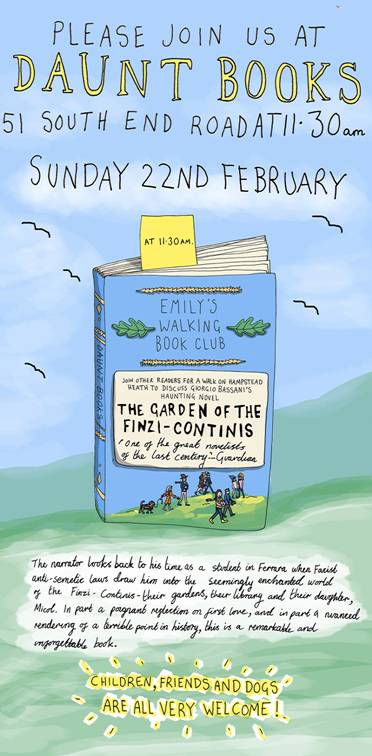
You may remember that I mentioned  Daunt Books‘ Walking Book Group in a previous post. Well, at last I have managed to coincide my visit to London with a Sunday meeting of the group. Only a couple of weeks ago did I discover that the group was back in action after Emily’s baby, Vita, was born just 4 months ago.

A group of about a dozen or so keen walker-readers gathered together at the shop on Sunday 22 February to walk on Hampstead Heath to talk about the chosen book – The Garden of the Finzi-Continis by Giorgio Bassani. As I’d only discovered this about a week before and as it wasn’t available from my library ordered a copy directly from Daunts. I just managed to finish reading it on the train down from Leeds. This was good as it meant that the book was fresh in my mind. Also, the evening before I had just watched the dvd version of the 1970 film.

Finzi-Continis

At 11.30 we left the shop, crossed the road and before setting off Emily introduced herself : some of the group were regular reader-walkers, some occasional and others, like me, were there for the first time. The only man was later joined by a couple more; we were delighted to have two Italian nationals amongst us who had read the book in its original and were able to offer us other insights into Italian life and culture relevant to our discussions.

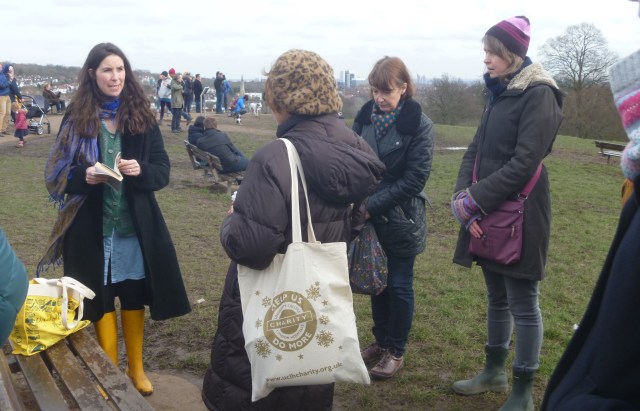
Emily Left

Book talk with Emily [left]

We set off walking and talking in pairs or small groups and every ten minutes or so Emily would bring us all together to sum up, ask questions, provide answers and suggest further topics for conversation. We would then find we started discussion with someone else. The formula works very well. At the highest point of the walk, with long views over London, Emily shared her home-baked cake with us.

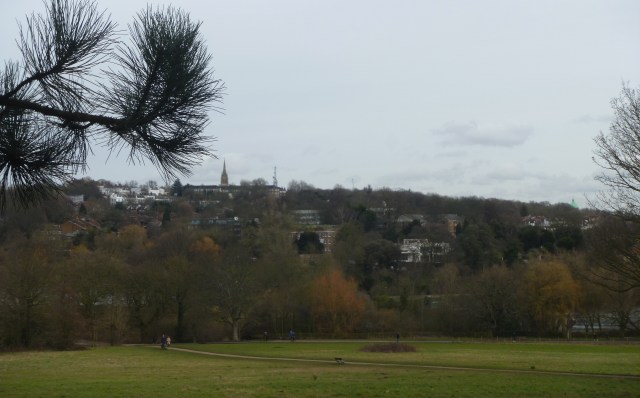
Highgate

Highgate from The Heath

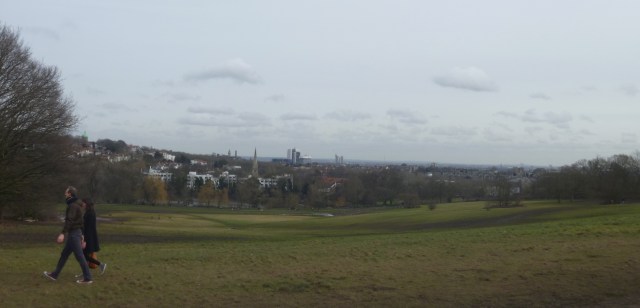
London from Heath

View from the Heath

Somehow after about an hour we found ourselves back where we started and Emily summed up the discussion, distributed copies of the 2015 2nd Daunt Books Festival programme (there’ll be a walking book group from the Marylebone shop on 20 March) and told the group the next date and book for the regular Sunday Heath walk : 19th April “the Living Mountain” by Nan Shepherd :

“Shepherd wrote a short nonfiction book, The Living Mountain, during the 1940s. The Living Mountain is a reflection her experiences walking in the Cairngorm Mountains. Having completed it, Shepherd chose not to publish the book until 1977.” (Source)

If you’d like to hear a Walking Book Club session in progress you can listen here to Clare Balding who joined Emily on one of her walks in February two years ago.

Writers’ Gardens

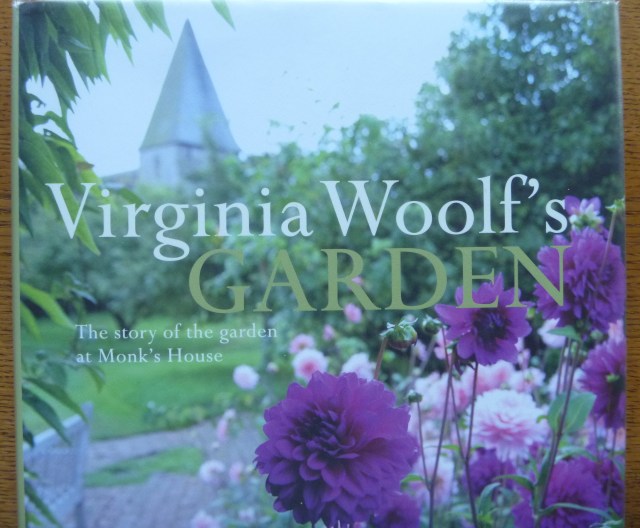
In these the dull, grey February days it’s been a great pleasure for me to read two coffee table-style books back-to-back with glorious photographs but also very informative text. VW's Garden The first was Virginia Woolf’s Garden by Caroline Zoob. There’s lots of nice background information about Leonard and Virginia Woolf but also about the author. Caroline Zoob and her husband were the National Trust tenants in the house for about 10 years. They also took responsibility for the garden. Endpaper VW's

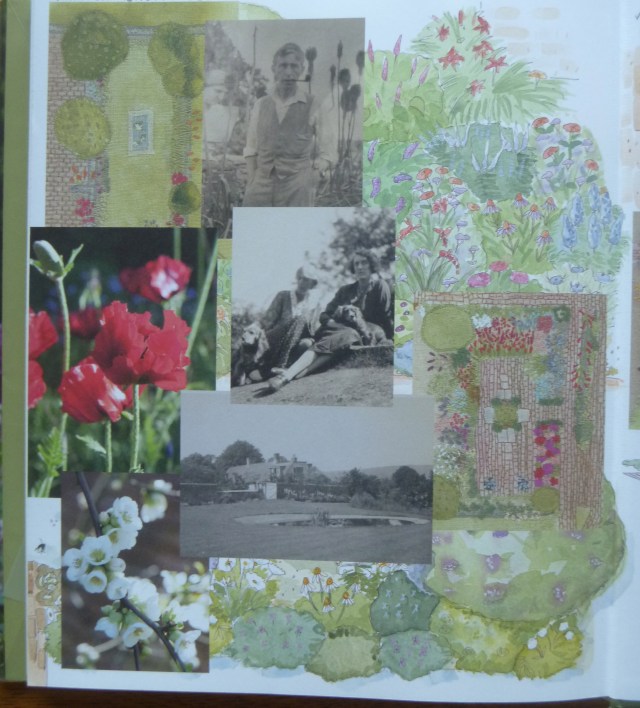
Endpaper Collage

Really the book should be called Leonard Woolf’s Garden since it was almost entirely his creation and Virginia admits to doing little more than a bit of dead-heading and, of course, being inspired by gardens in general for her writing.

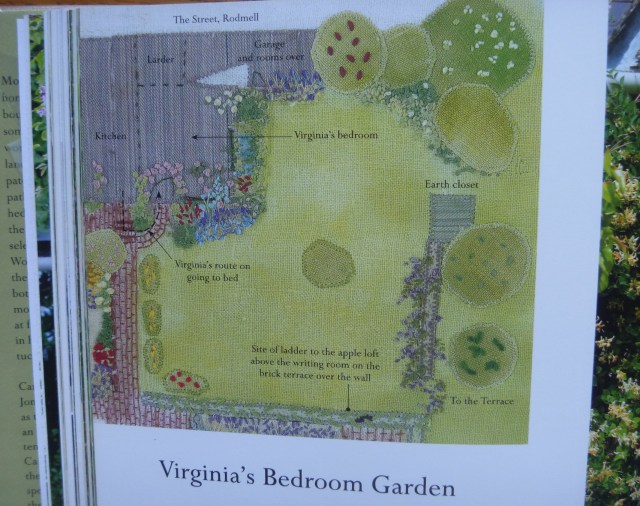
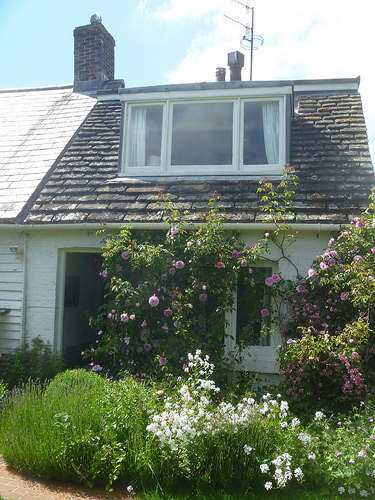
VW Bedroom Garden
VW bedroom garden
Virginia Woolf’s Bedroom Garden May 2014
Reading it and studying the lovely photos I was reminded of my visit to Monk’s House last May. I preferred it to Charleston as it had a very much more relaxed atmosphere. I’ve written here already about my visit to Virginia and Leonard Woolf’s home and garden at Rodmell in East Sussex.
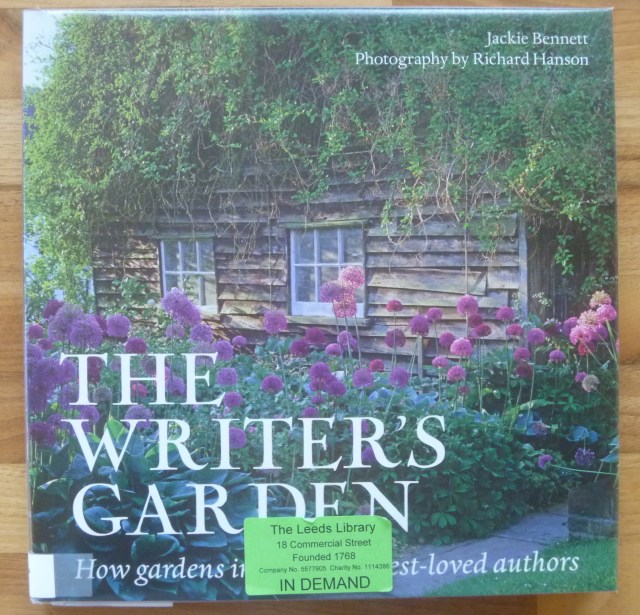
The writer's garden
The Writer’s Garden : how gardens inspired our best-loved authors is by Jackie Bennett.
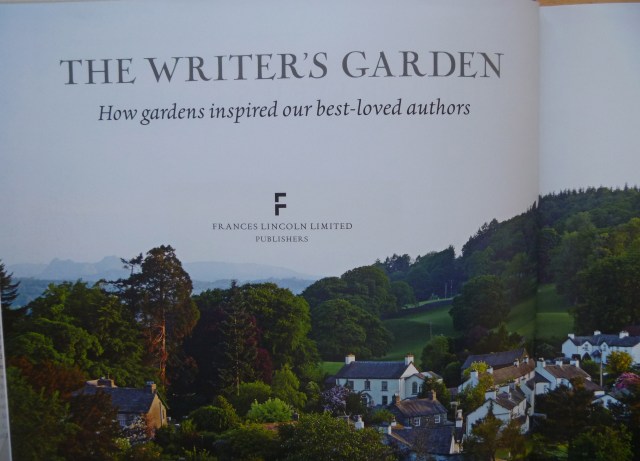
Writer's garden
Title Page – Near Sawrey in the Lake District with Beatrix Potter’s Hill Top in the Bottom Left Corner
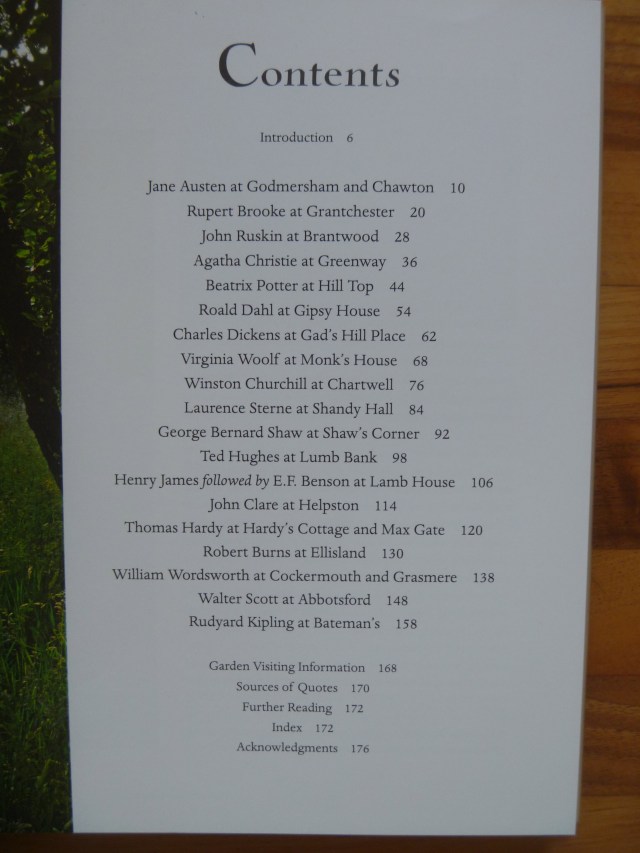
Contents Page
Contents Page
Many of the gardens mentioned I have already visited – Jane Austen’s in Chawton in Hampshire long before the digital photography; same goes for Ruskin’s Brantwood which we approached from Lake Coniston by Gondola; Agatha Christie’s Greenway in 2009; Beatrix Potter’s Hill Top in 2005 or 2006; Laurence Sterne’s Shandy Hall the topic of one my first posts here and, of course, Virginia Woolf’s garden mentioned above.  I do hope I can get to the ones I haven’t visited some time as all were inspiring, not to say, beautiful.
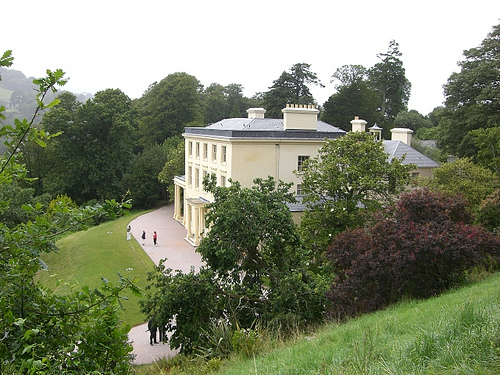
Greenway
Agatha Christie’s Greenway overlooking the Dart Estuary in Devon
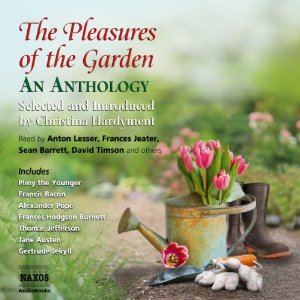
I borrowed both books from the library but also by coincidence my current audio listen is Christina Hardyment’s The Pleasures of the Garden: an anthology. It’s selected and introduced by Christina and includes passages by Pliny The Younger, Francis Bacon, Frances Hodgson Burnett (The Secret Garden, of course), Thomas Jeffereson, Jane Austen and Gertrude Jekyll.
51KTun4xj8L._SL300_
Having said all this – I am not, myself, a gardener! I love to visit gardens and read about them but I know nothing at all about plants and their care.
unnamed
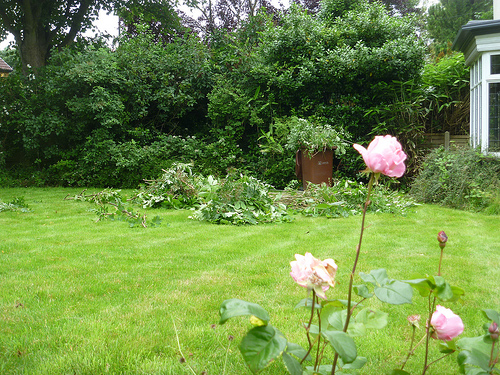
My title for this photo on Flickr is “You won’t catch me gardening!”

Germany : Memories of Vacations

Reading Germany: Memories of a Nation lately has made me think about the trips I’ve made to that country.

Berlin map and cards

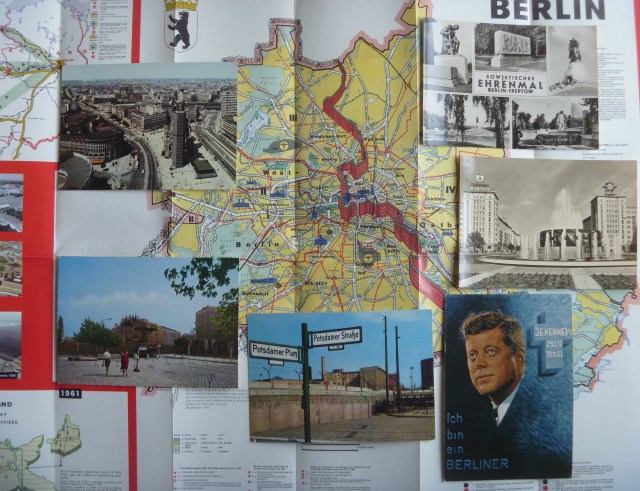
My first visit was brief but made a huge impression on me. It involved two days in Berlin and one in Cologne. It was part of a school trip to Moscow and Leningrad in 1968. We travelled to Leningrad by ship from Tilbury via stops for full days in Copenhagen and in Helsinki. We then travelled by train from Leningrad to Moscow and, again by train, from Moscow to Ostend via the two nights in Berlin and day in Cologne. What an adventure!

bernauer st

Bernauer Street 1960s

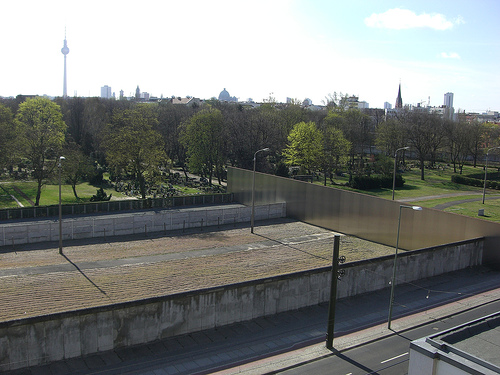
Bernauerstrasse

Bernauer Street in 2007 – part of the Wall and ‘Death Strip’ preserved today

This being during Cold War days we had to cross the Wall into East Berlin via Checkpoint Charlie. Quite exciting! We stayed at a small hotel just off the Kurfurstendam in the western sector where we noticed the stark contrast between the bright lights there and the dark and grey atmosphere in the East.

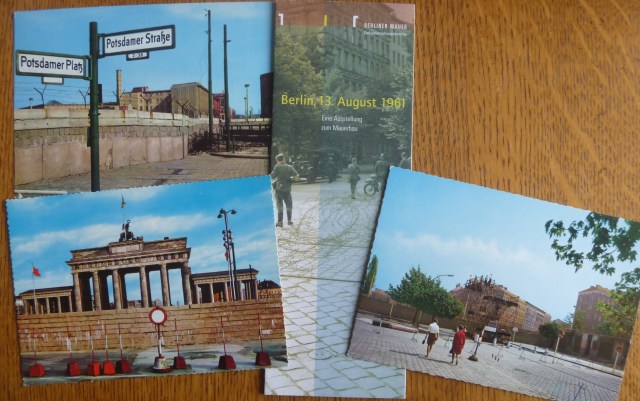
The wall

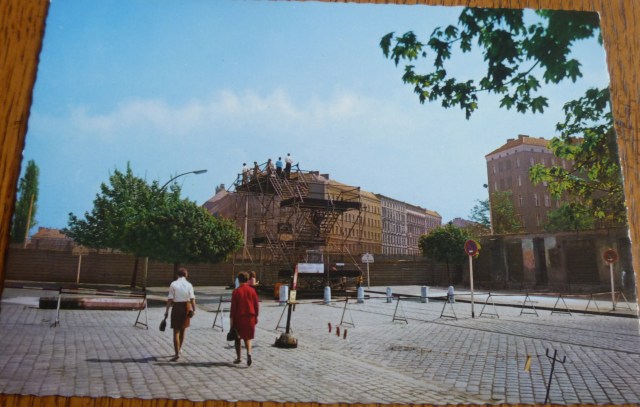
Berlin Wall postcards from 1968

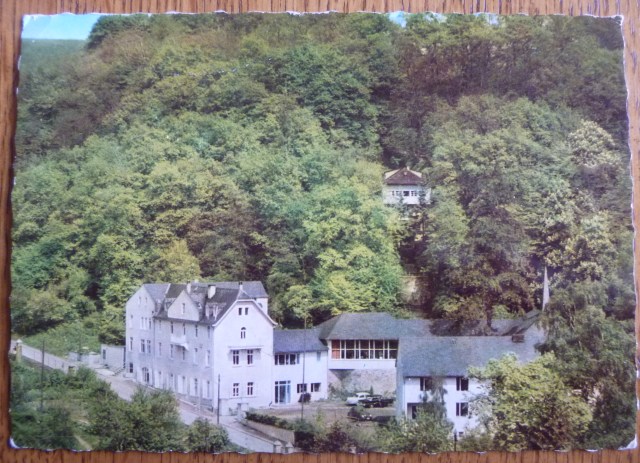
My next trip was the following year with a local Norwich church youth group lead by Ron Ingamells the Bishop’s Chaplain for Youth. We travelled by coach from Norwich and stayed about two weeks at Hedwig-Dransfeld-Haus at Bendorf-am-Rhein. I have managed to dredge up a picture postcard sent home to my family on the 9th August 1969 assuring them that we had arrived safely after a smooth crossing!

 H Dransfeld Haus

Hedwig-Dransfeld Haus, Bendorf am Rhein

I remember we made excursions by coach to Bonn and Cologne, to the city of Koblenz (twinned with Norwich) and did two Rhine boat trips – one past the Lorelei Rock and the vineyards to Oberwesel where we were welcomed by the mayor and given local wine and hors d’oeuvres and the other on a Saturday evening to watch the local fireworks – Rhein in Flammen. 

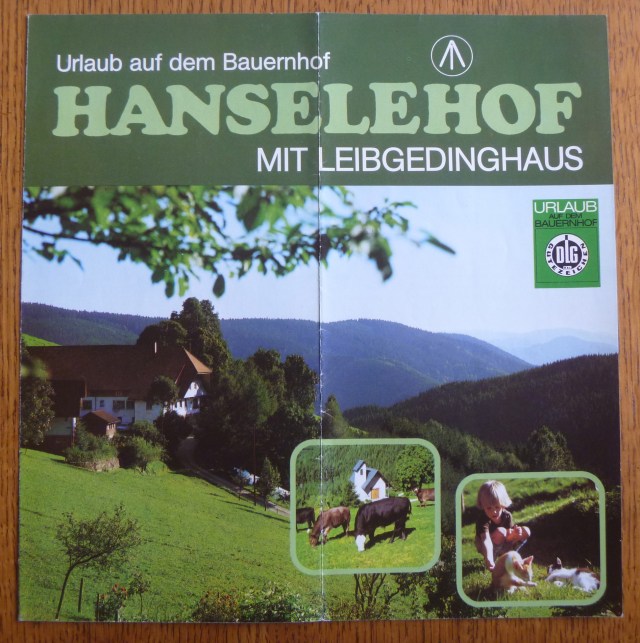
Hanselehof

In the late 1980s we enjoyed two family holidays staying at the same farmhouse in the Black Forest. We have always meant to go back. We had a modern pine wood furnished apartment within a huge old farmhouse – The Hanselehof. Despite having a full kitchen in the flat we enjoyed the half-board arrangement and practising our German on other guests. We made excursions to the nearby towns of Freudenstadt and Freiburg plus visits to a lido, museums and abbeys and made local forest walks. My photos from those trips are now rather faded and very poor quality.

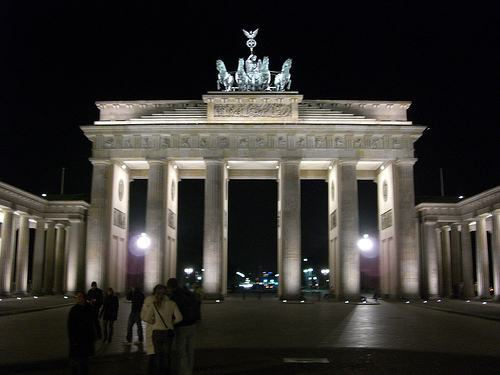
Brandenburg gate

The Brandenburg Gate in 2006 [Chapter 1 of Germany : Memories of a Nation ‘The View from the Gate’]

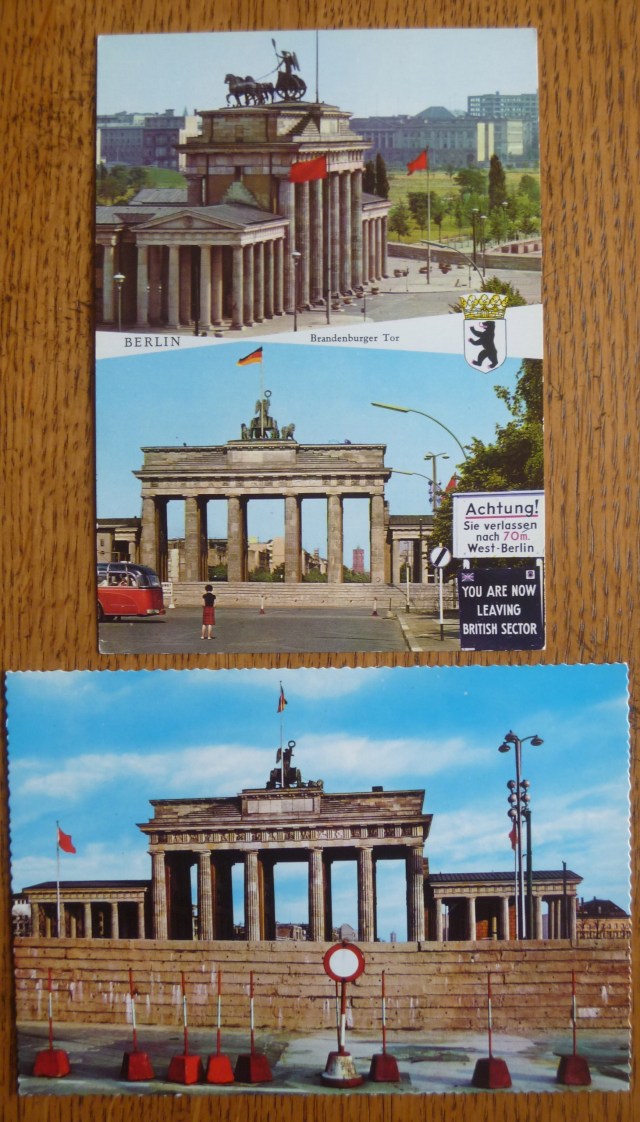
BG Cards

1960s Picture Postcard Views of the Brandenburg Gate ‘just’ in East Berlin

A long time passed before I spent any time in Germany again. By this time the Cold War was over, the Berlin Wall had come down and East and West Germany had achieved reunification. In 2006, 2007 and 2009 I made 3 five day visits to Berlin staying in Mitte in former East Berlin. It was interesting to witness the changes and yet remember my previous visit about 40 years before.

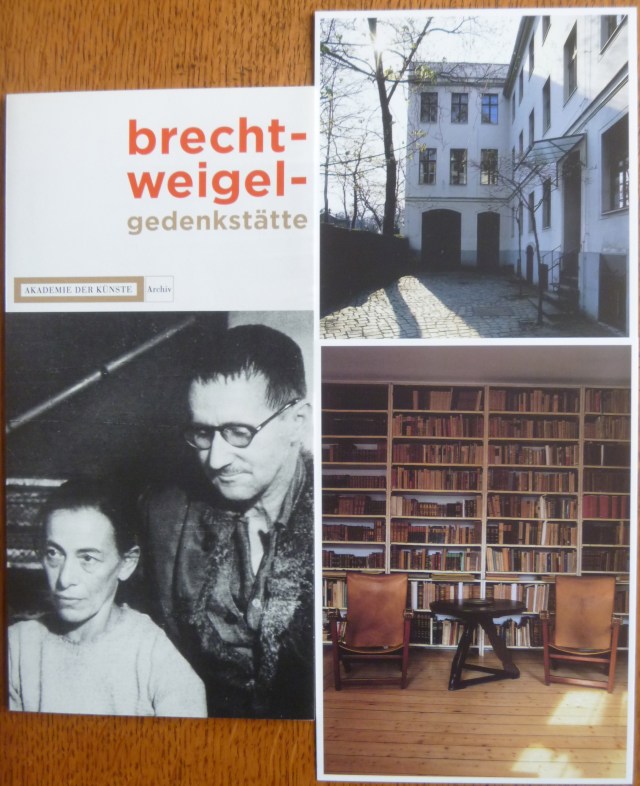
Brecht Weigel house

Bertolt Brecht’s play “Mother Courage and her Children” is discussed in the Memories book in Chapter 26 ‘Germans displaced’

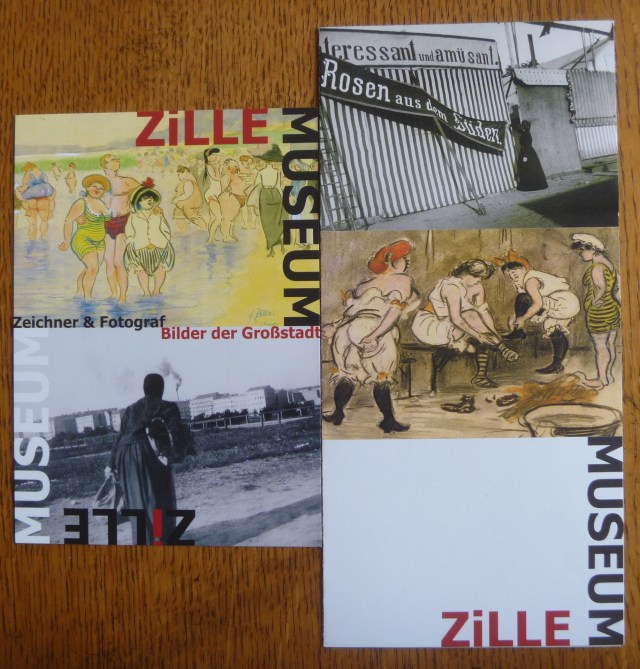
zille museum

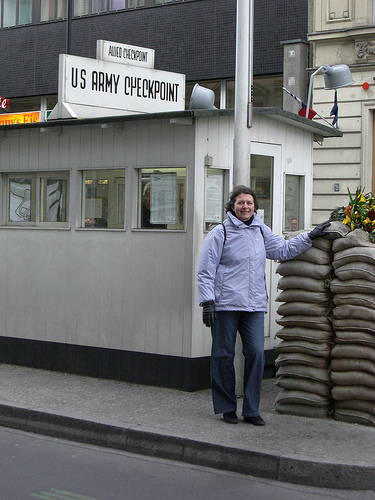
We visited Checkpoint Charlie now a tourist trap; the Brandenburg Gate and Unter den Linden now open to all comers; various museums from the Pergamon to the Jewish Museum and the former home of playwright Bertolt Brecht and his actress wife Helene Weigel; the Museum dedicated to artist Heinrich Zille (1858-1929) in the pretty Nikolaiviertel and many many other museums and landmarks, cafes and restaurants plus I made two trips to Potsdam to the palace of Frederick the Great – Sans-Souci.

checkpoint charlie

At Check Point Charlie in 2007

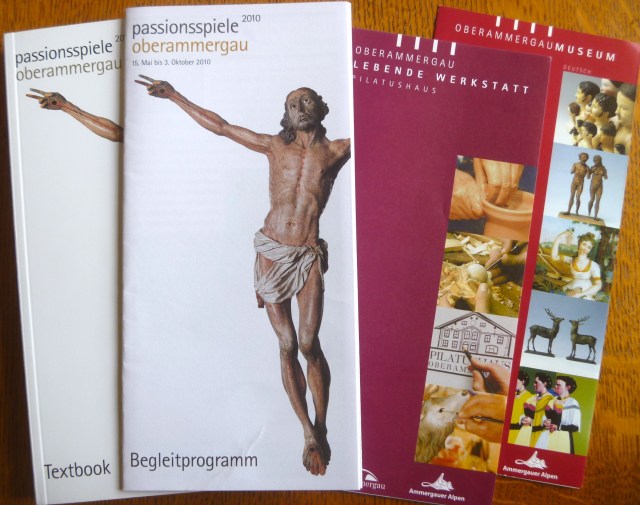
My most recent stay in Germany was only for one night but was very special. I took my mum to see the 2010 Passion Play at Oberammergau. We travelled with Saga Holidays to the pretty village of Mutters near Innsbruck and a trip to Oberammergau was included in the package. I was surprised how, despite the hundreds of visitors during the play season, very uncommercialised Oberammergau seemed. It is a pretty wood-carving village with a fascinating history and I would love visit again.

Oberammergau


passion play

PPProgrammes

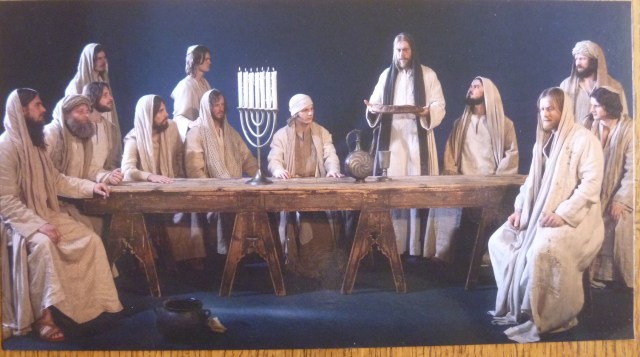
The play

Postcard Scene from the 2010 Passion Play

In future I’m hoping one day to have a walking holiday on the island of Rugen on the German Baltic coast and also to visit the origins of the Bauhaus movement and former of home of playwrights Goethe and Schiller – Weimar.