Rhubarb, Rhubarb, Rhubarb : Colclough Walled Garden


Walled garden

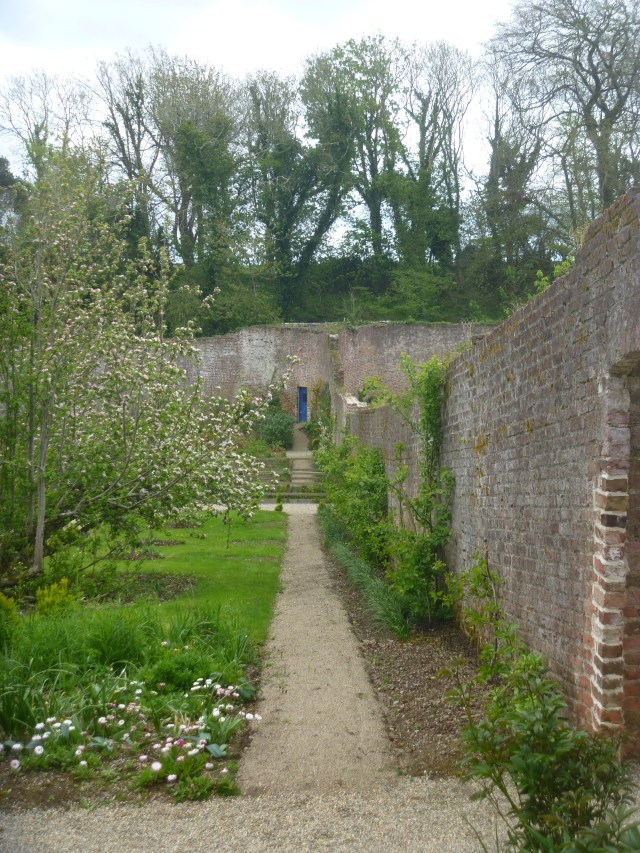
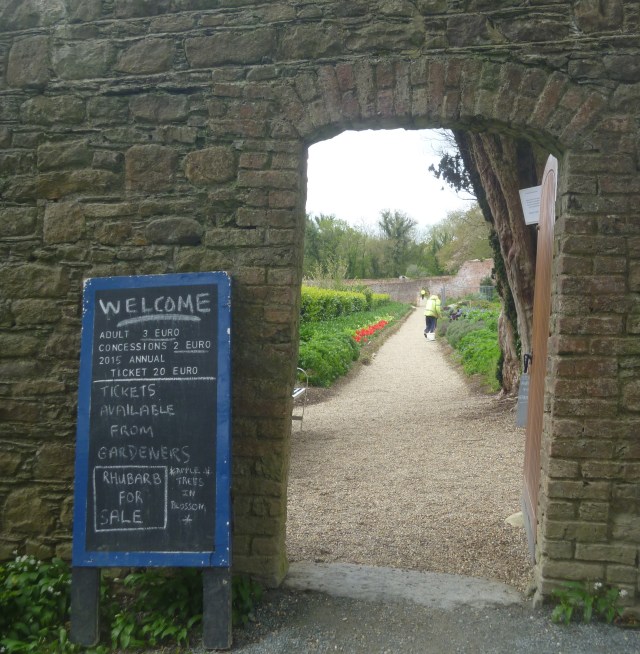
Established over 200 years ago and abandoned after Lucey Marie left Tintern Colclough (pronounced Coke-lee) Walled Garden has undergone a transformation in the past 4 or so years. The original layout has been reinstated using an Ordnance Survey Of Ireland historical map dated 1838. The map showed path structure, bridges, location of vegetable garden and fruit trees. It finally reopened in 2012.

At Tintern Abbey I joined Heritage Ireland and the card admitted me also to the Walled Garden.

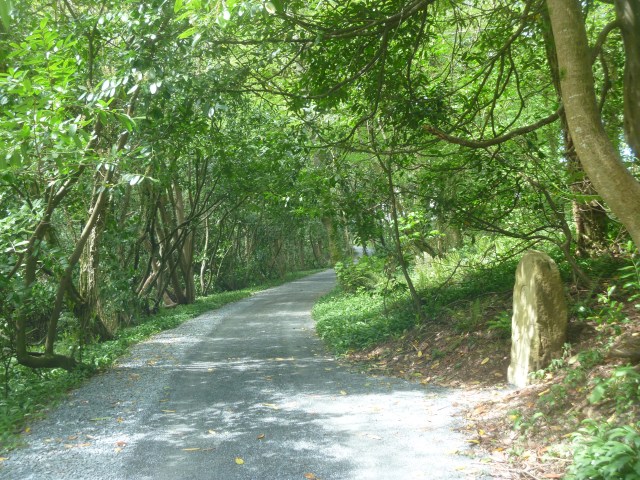
Woodland path

The approach from the Abbey is through the former village of Tintern and along a woodland path with a strong smell of garlic and fading bluebells.

edge of ornamental

The Edge of the Ornamental Garden

Veg garden

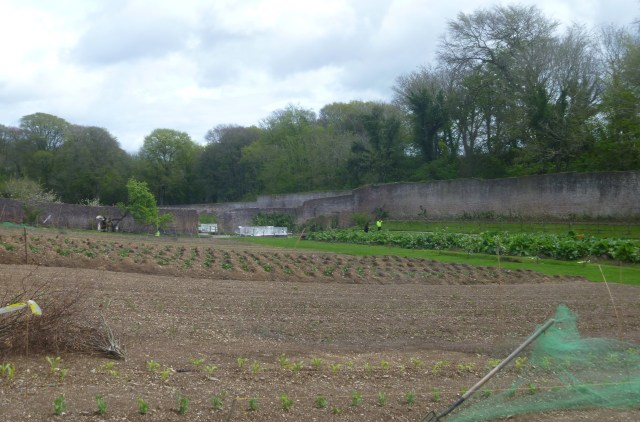
The Kitchen Garden

The garden is divided into an Ornamental Garden and a Kitchen Garden.

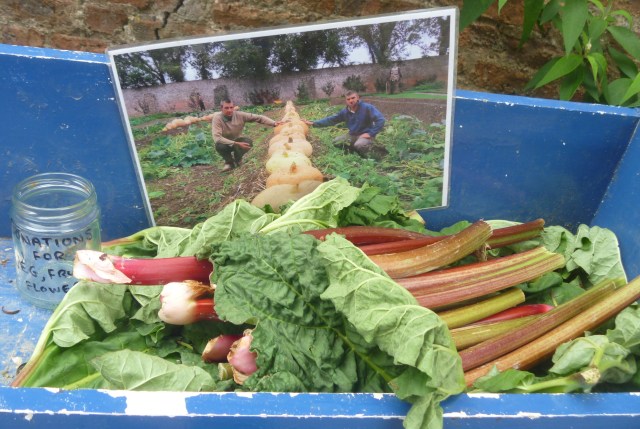
Rhubarb for sale

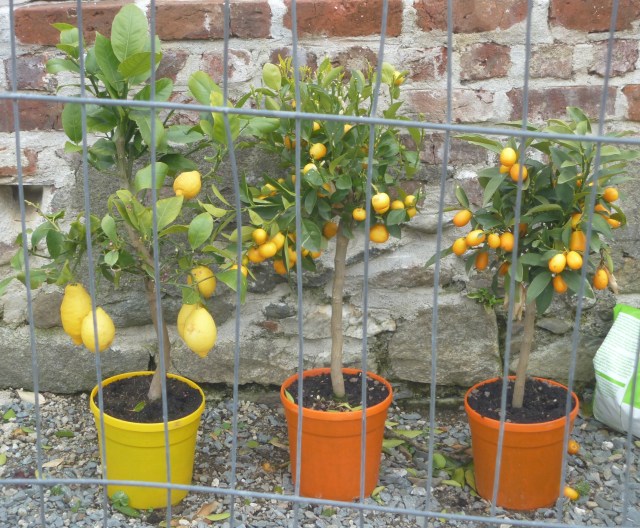
Rhubarb seems to a popular vegetable for May. The south-facing sheltered garden also supports Mediterranean fruits and efforts are made to garden as ecologically and organically as possible.

sheltered and south facing

Oranges and Lemons

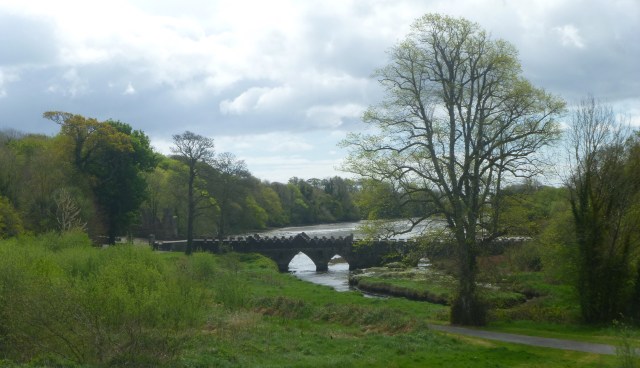
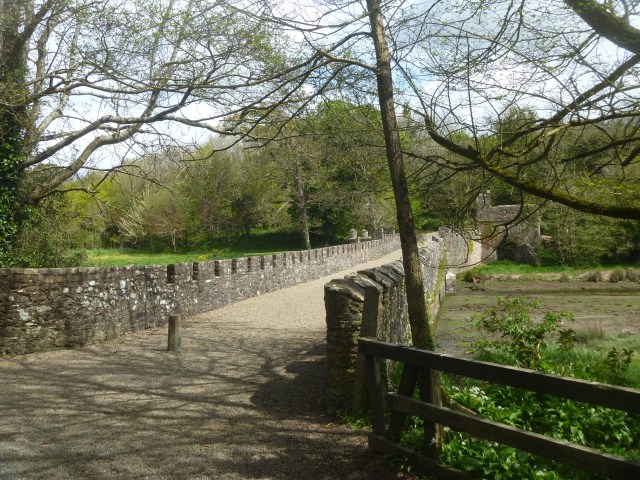
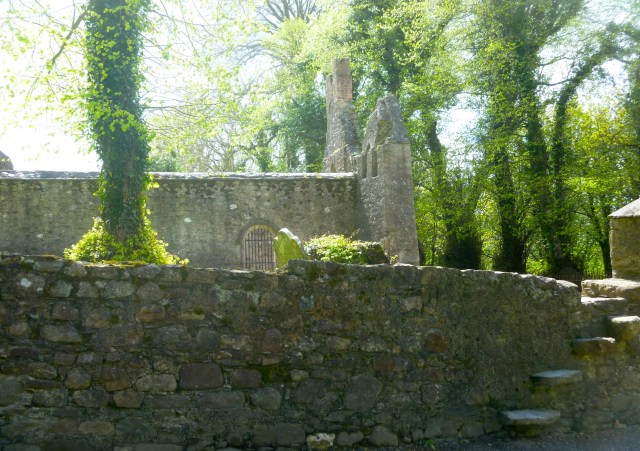
Returning to the Abbey and Car park I followed the longer route over the Battlemented Abbey Bridge and past the ruined church and burial ground.

Battlemented Abbey Bridge


Bridge


TA Church

Ruined Church and Graveyard

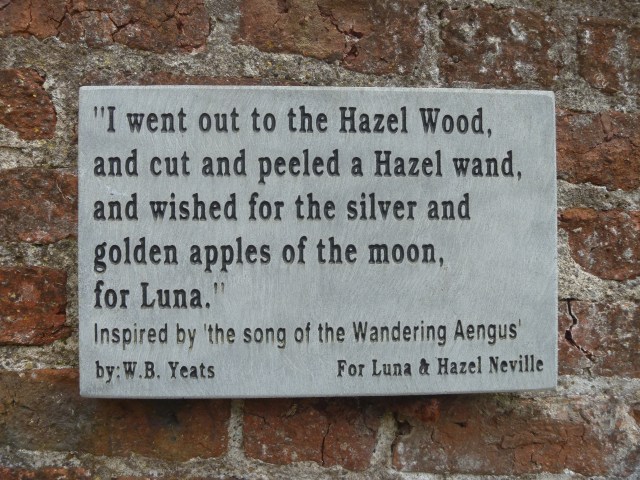
hazel wood quotation

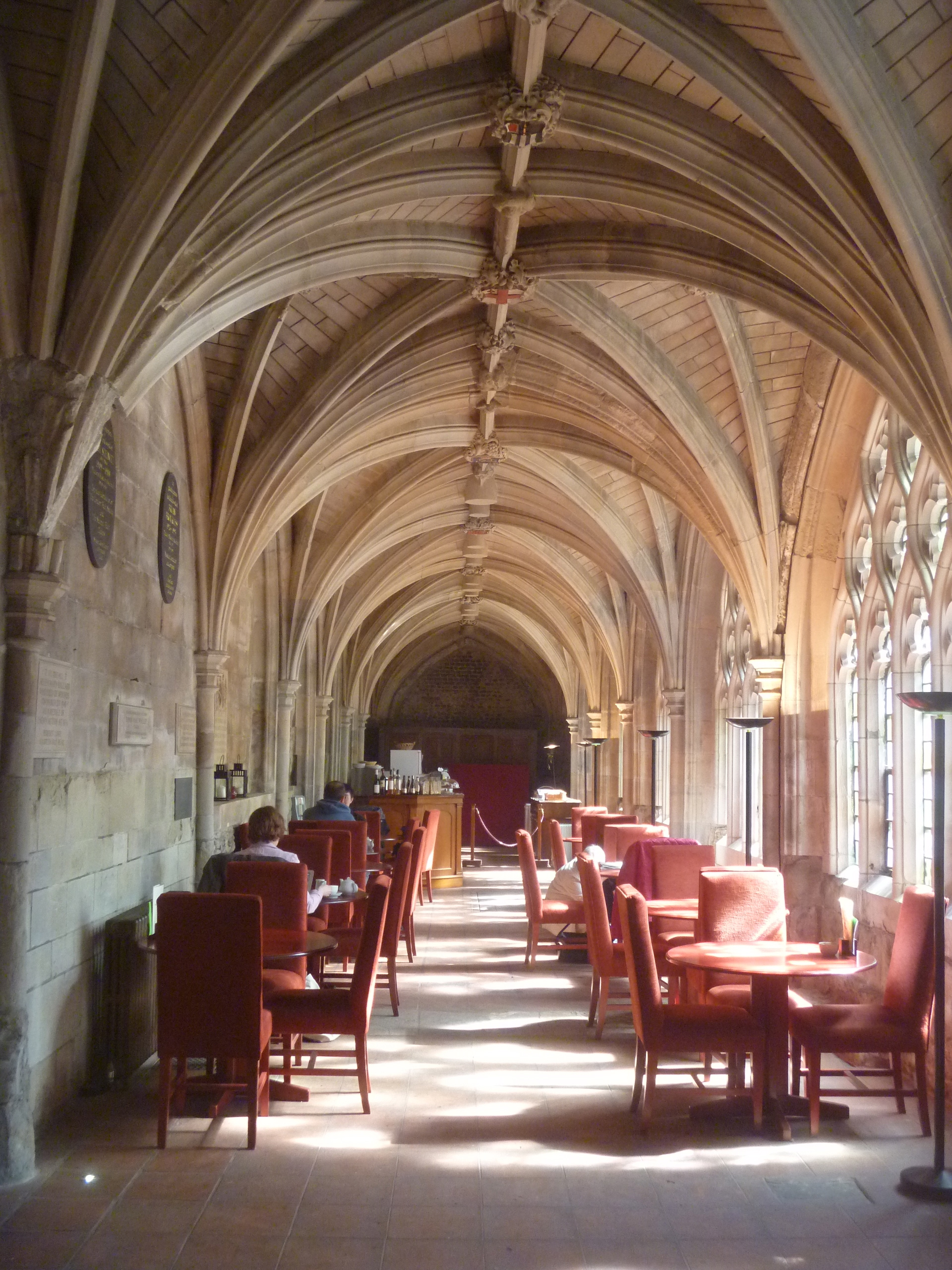
The Cloister Cafe Great St Bartholomew’s

There are three new Quiet London books. In the volume “food and drink” there are lots of ‘new’ listings. Flicking through I noticed that a cafe has now opened in the cloister of St Bartholomew The Great church, West Smithfield. Over the years I’ve stayed half a dozen times at 45A Cloth Fair one of three Landmark Trust properties in Central London.

cloister

Last week a friend of mine was staying there and invited me to join her on Thursday afternoon. I travelled down that morning for a big event on Saturday (more later). We decided to try out the cafe and it was indeed quiet. But then it was a lovely warm day and there were plenty of people in the churchyard having their offices lunches in the sunshine.

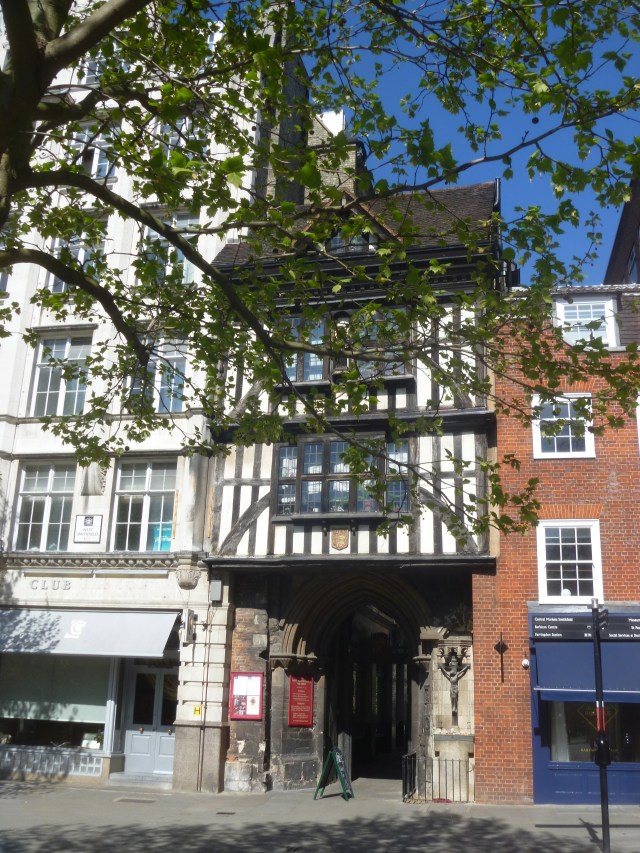
Gatehouse

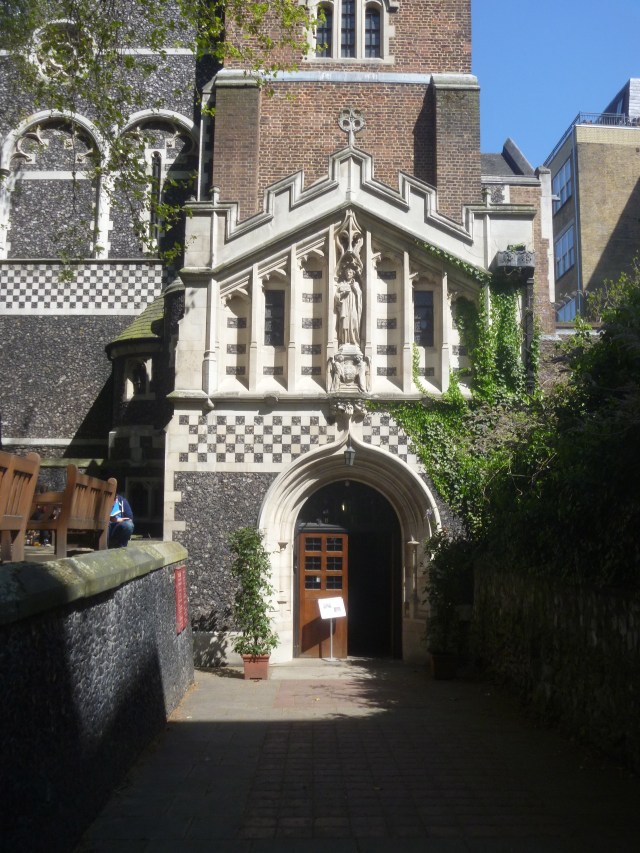
Enter the beautiful Great St Bartholomew’s church by passing underneath the Elizabethan gatehouse” writes Siobhan Wall.

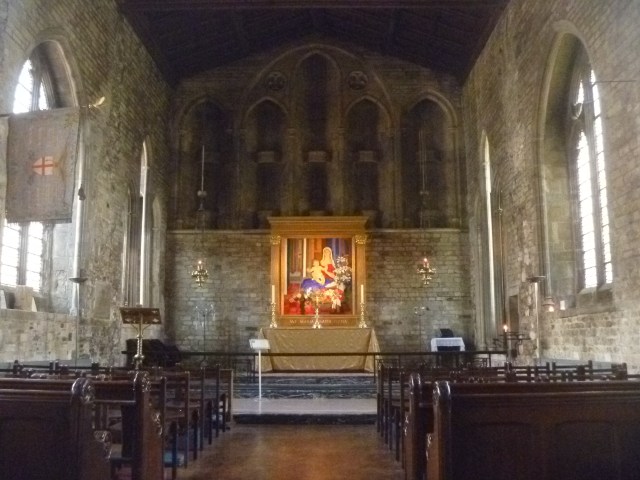
Inside St Barts

After slowly wandering round its hallowed interior,  find a table in this tranquil cafe to the right of the main porch.”

main porch

Main Porch

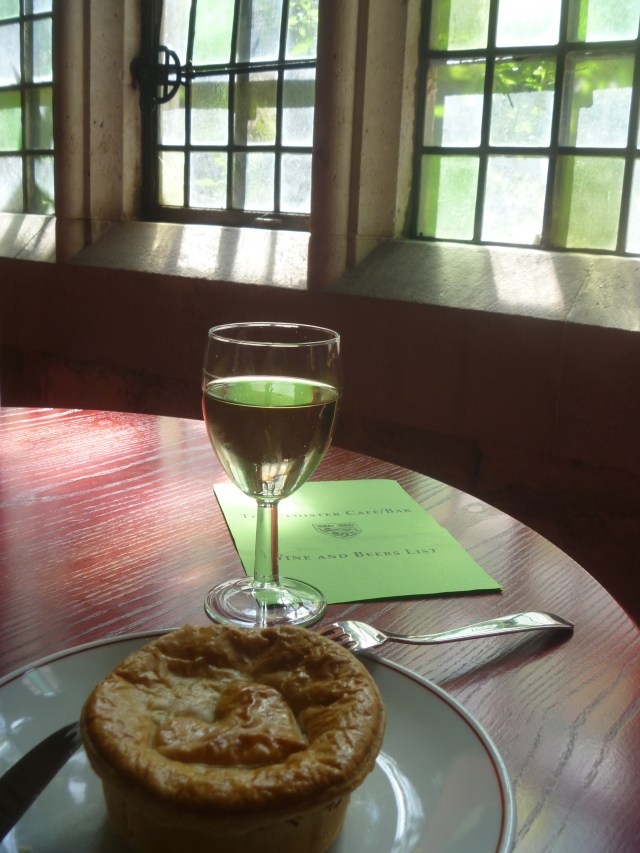
higgidy pie

There aren’t many places where you can sit and have a slice of chocolate cake [or a Higgidy pie, for that matter] among fifteenth-century cloisters, but the ancient surroundings make this one of the nicest cafes in London to have afternoon tea.”

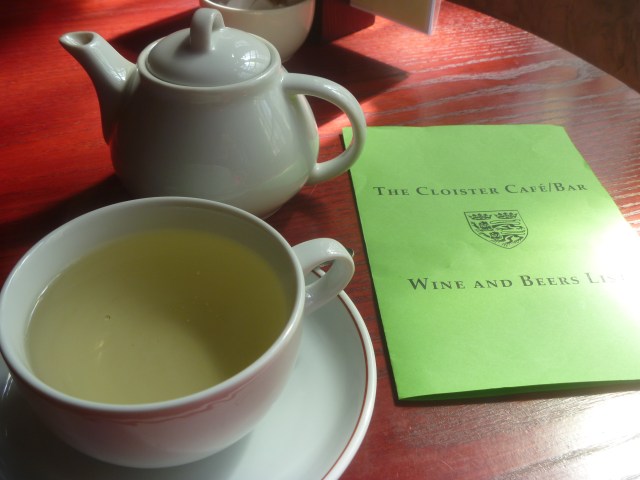
green tea

Fresh mint tea is served in white china pots, and with the pale green light filtering through the leaded glass windows this is one of the most peaceful corners in England.”

Constable Country : Dedham Vale Area of Outstanding Natural Beauty

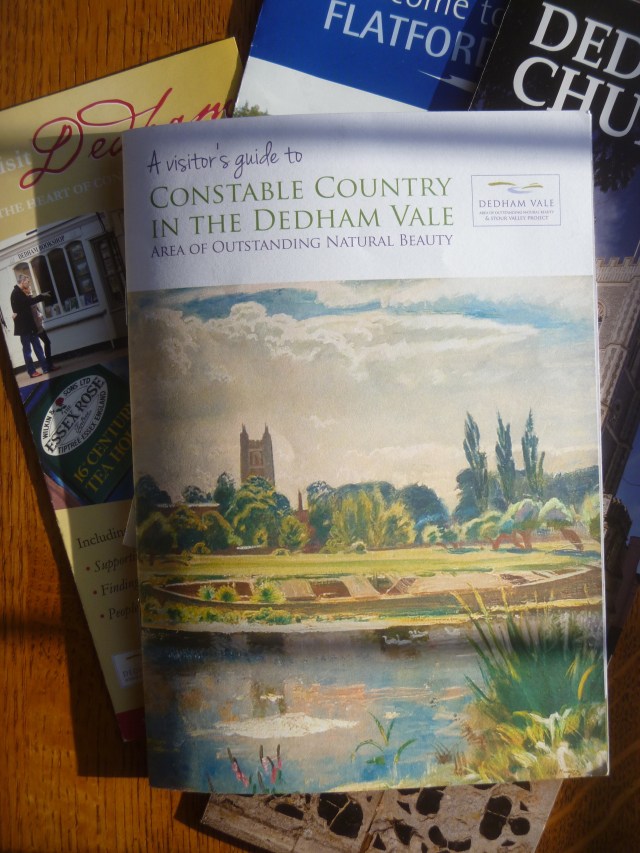
We’d planned to make one excursion from Colchester and that was to nearby Constable Country to Dedham in Essex and Flatford in Suffolk. On our first visit to the Tourist Information Office we picked up a lovely little brochure “A Visitor’s Guide to Constable Country in the Dedham Vale”. Across the centre fold is a sketch map of the area showing footpaths and locations where John Constable (1776-1837) painted scenes.

Brochure

That evening we noticed this at the bottom of the page :

“Take the Train…
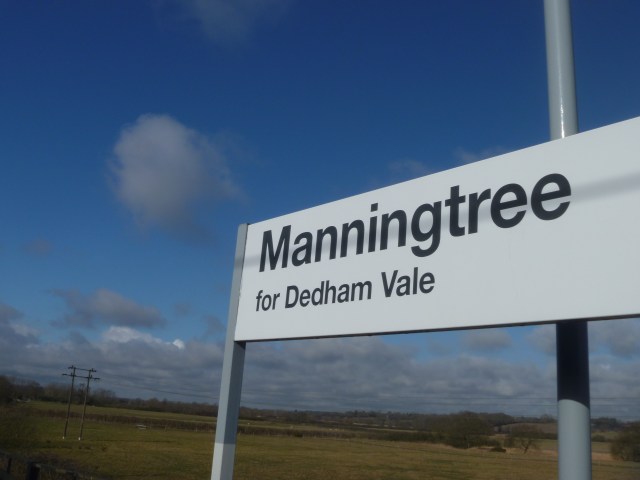
Did you know it only takes 40 minutes to walk from Manningtree Station to Flatford, and around
40 more from Flatford to Dedham? Avoid the traffic and enjoy a relaxing day out by train.”

Manningtree

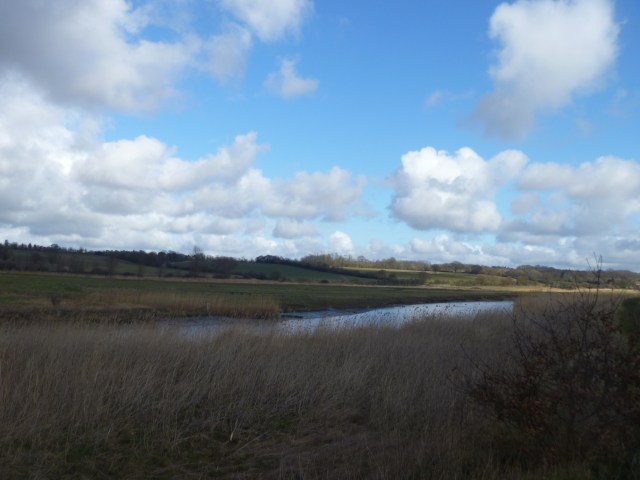
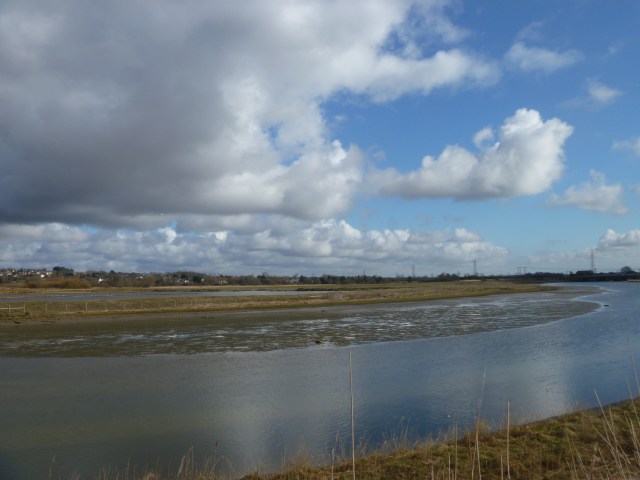
The perfect way to go, we thought. The next day we travelled to Manningtree and the walk began well along a country lane until we reached the first actual footpath. Horror! It was a mud bath. We managed to manoeuvre ourselves along the overgrown edge but it soon became impossible. In addition, all the footpath signs after leaving the station were broken off. A sad state of affairs. In the end we took a raised path, still very muddy in places, alongside the River Stour to the A137. Luckily there’s a pavement along the road back to the railway station.

River Stour 1

River Stour 2

River Stour

Our second attempt was more successful. We decided to take a short detour from our route up to Norwich.

Dedham main st

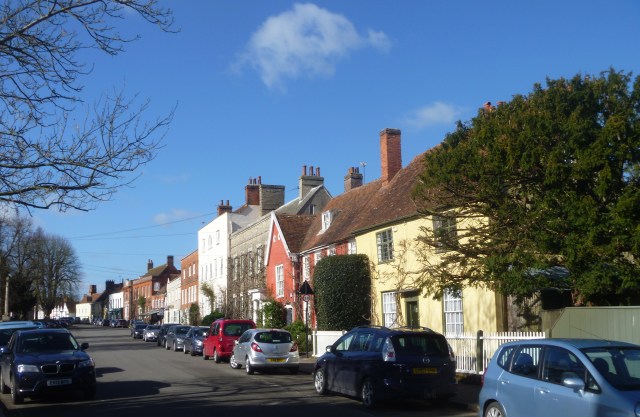
First stop was the pretty, large village of Dedham, still in Essex. The main street is lined with Georgian buildings. We did a little shopping and had lunch in the Arts and Craft Centre which occupies a former historic church on the edge of the village.

Dedham church

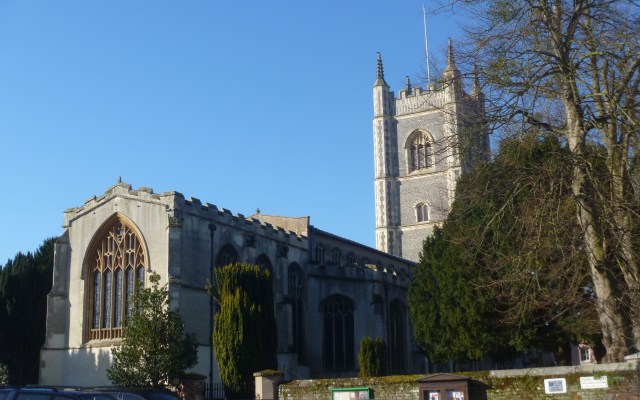
Dedham Parish Church – Dedicated to St Mary the Virgin in 1492

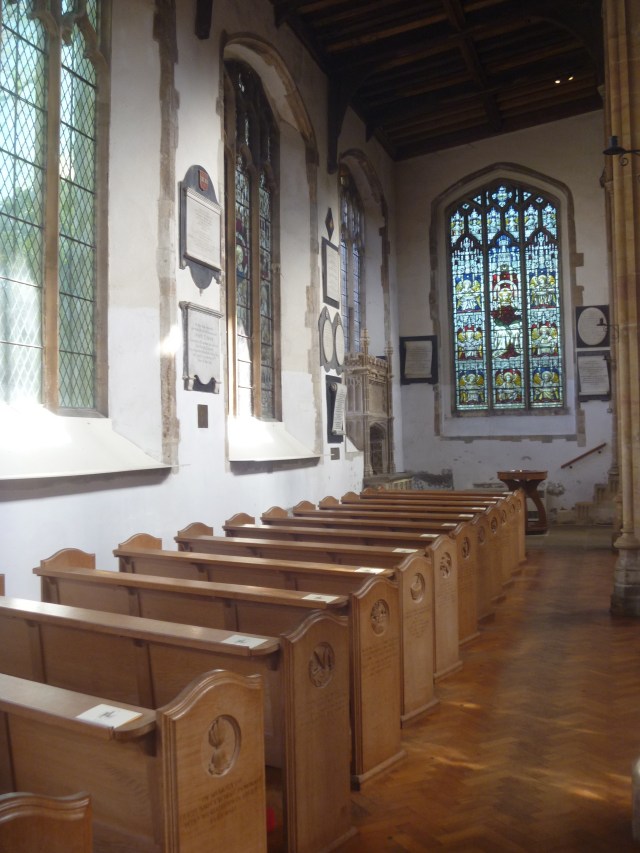
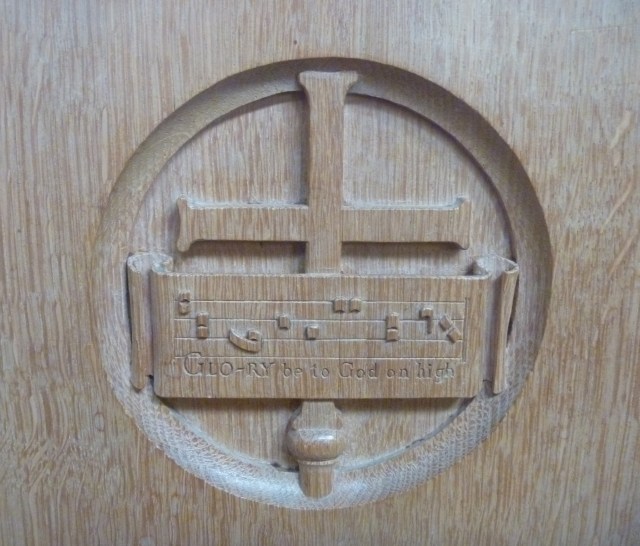
The main parish church is well worth a visit. An excellent colour guide indicates the main points of interest. The modern pew ends are a particular feature of the church. They have distinctive carvings and inscriptions and dedications. They were made by Mabbitts of Colchester over more than a decade.

Dedham pews

Musical

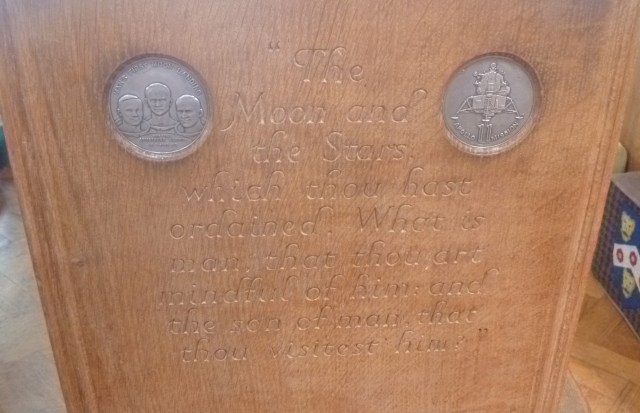
moon pew

These insets commemorate the first Moon Landing

Sherman window

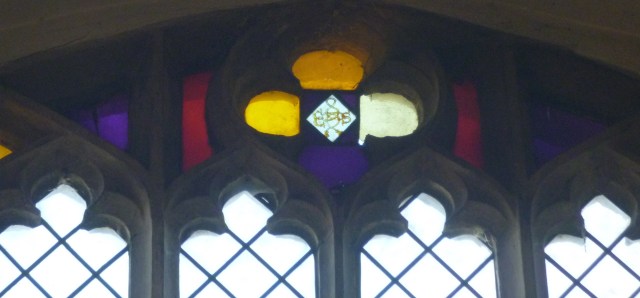
At the top of the window are fragments of 17th century glass.

Dedham window

In the apex of the window above the Webbe Tomb are some fragments of old glass showing the initials E.S. commemorating Edmund Sherman who, at his death in December 1600, left his house opposite the church to the Governors of the Free Grammar School of Queen Elizabeth for a school to teach boys to ‘read, write and cast accounts’, that is to become local tradesmen rather than aspire to enter university or a profession.

Edmund Sherman, with his elder brother Henry and their father – also Henry, were named as Governors of the Grammar School when it was endowed in 1571 and were also nominated in the Charter granted by Queen Elizabeth four years later.

At least eleven descendants of old Henry and these two sons, Henry and Edmund are known to have emigrated to New England between 1633 and 1640. They and their descendants included a co-founder of Rhode Island; a signer of the Declaration of Independence and framer of the Constitution of the United States; the famous General W.T. Sherman of Civil War fame and his brother, Secretary to the US Treasury; a Vice-President of the USA 1908 to 1912; and two famous Admirals in the Second World War, one of whom later became Chief of Naval Operations for the USA.” [source]

Dedham Constable

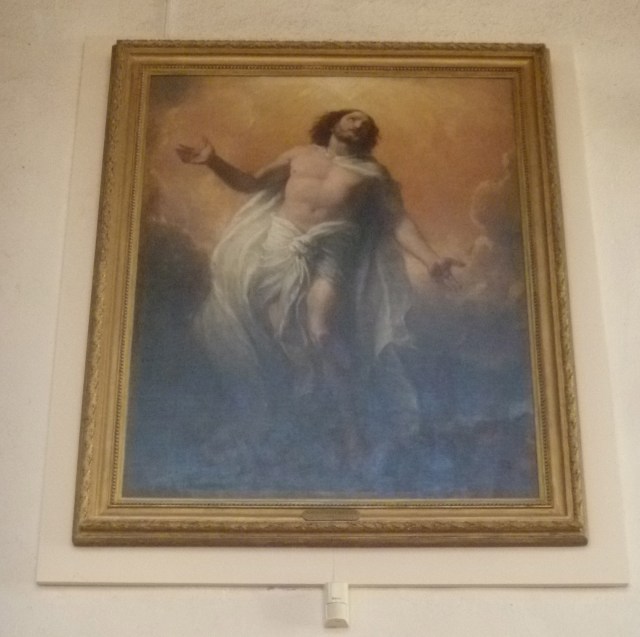
The church displays a Constable painting “The Ascension” originally commissioned for Manningtree church and currently on loan from the Constable Trust.

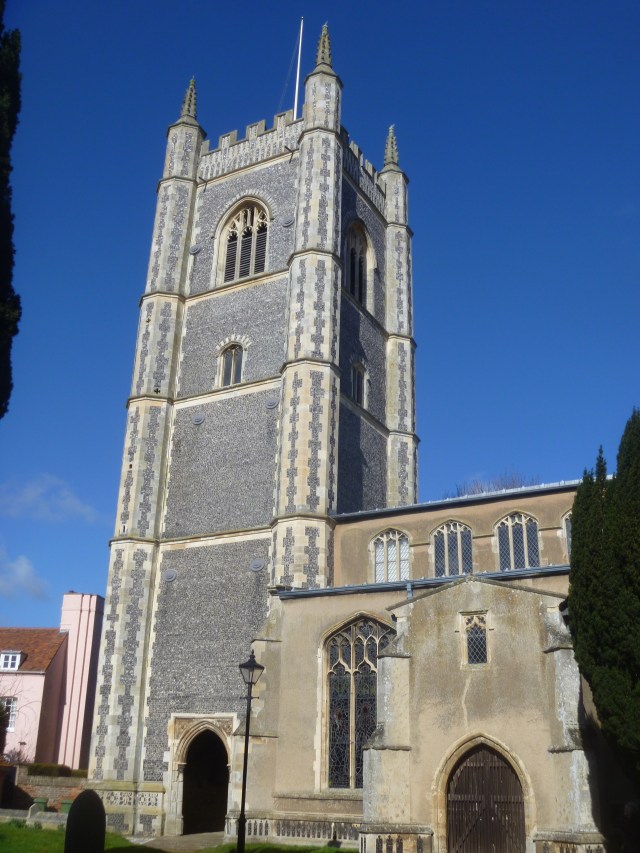
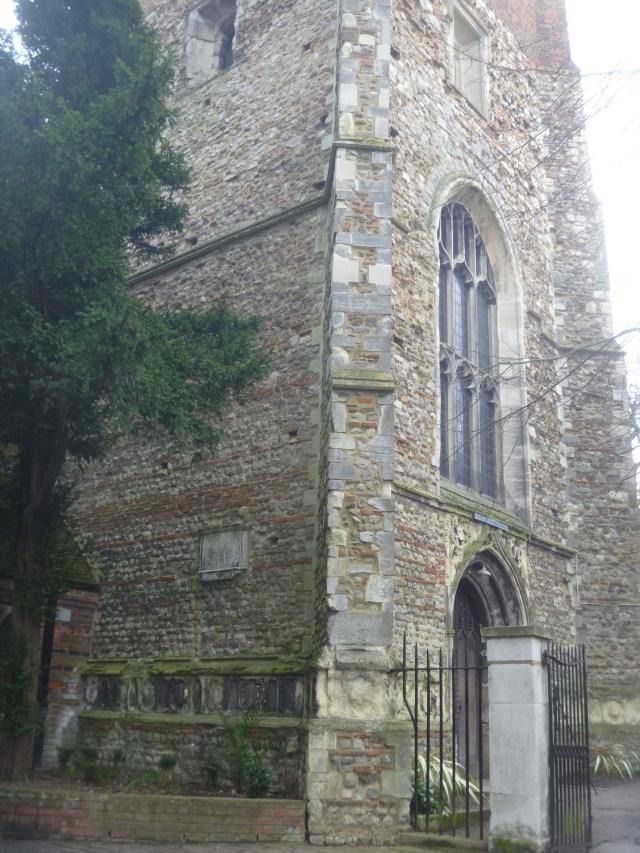
The church tower is particularly fine and very high – over 40m: perhaps the largest medieval flint tower ever built. It appears in many of Constable’s paintings including his ‘Dedham Mill Lock’. It was completed in 1519 and is unusual because it has an archway underneath it. This is sometimes called a ‘Galilee’ to remind worshippers of how Christ led his disciples into Galilee after His resurrection. If it had been a summer weekend we’d have climbed the 132 steps to the recently completed viewing platform.

Dedham church twr

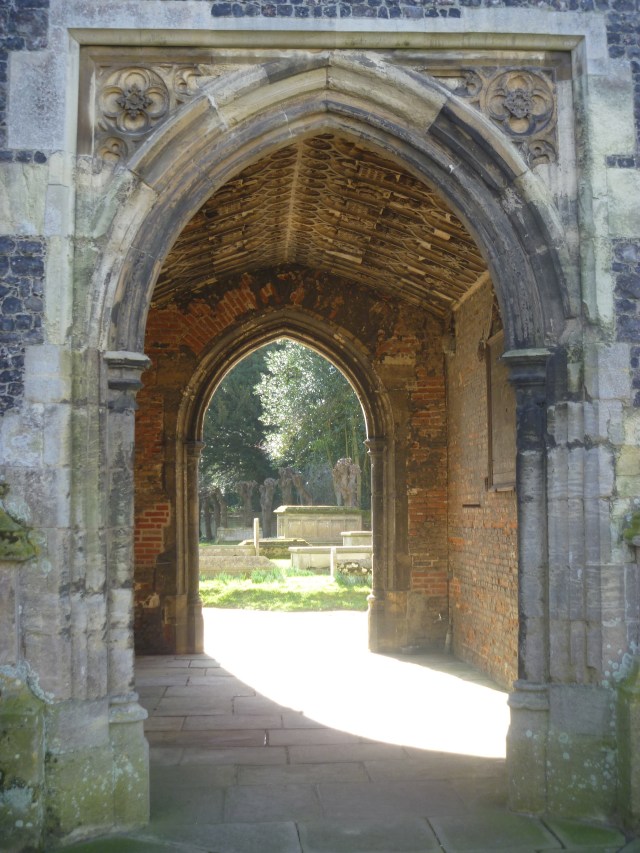
Dedham arch

The ‘Galilee’ with Tudor heraldic symbols on the ceiling

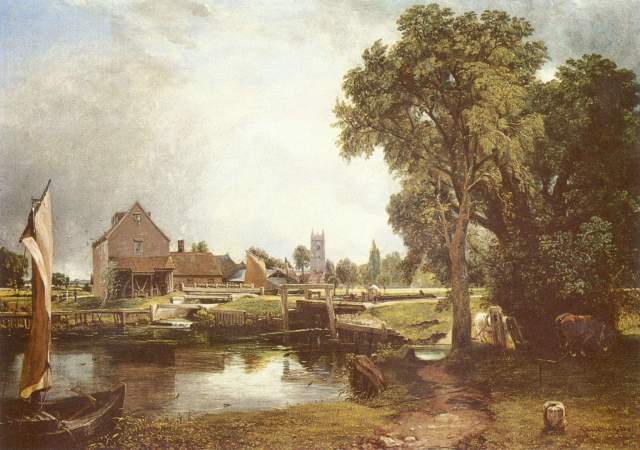
Before leaving Dedham for Flatford we walked to Dedham Mill the scene of one his paintings.

dedham-lock-and-mill-1820

Constable’s Dedham Mill (1820) – and there is the church, too [source]

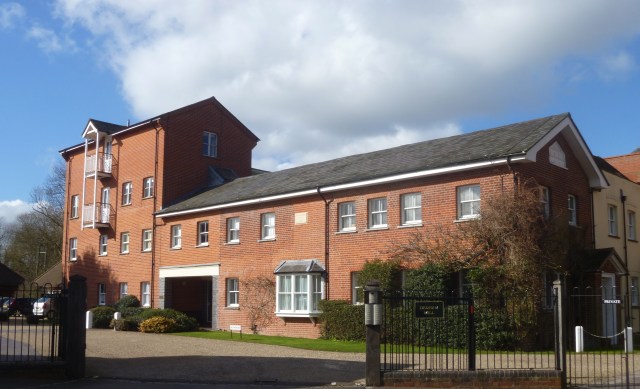
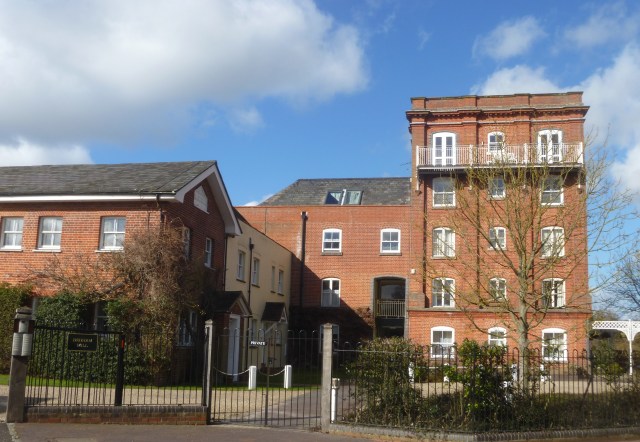
Here is the much-expanded and changed Mill today :

Dedham Mill 1

Dedham Mill 2

Dedham Mill Today – now prestigious flats

Dedham Lock today

Dedham Lock today

Flatford, just in Suffolk, is now owned and managed by the National Trust. It wasn’t ‘open’ on the day of our visit but there were a lot of staff and volunteers around probably preparing for the new ‘season’ which was to begin the following week (i.e. this week).

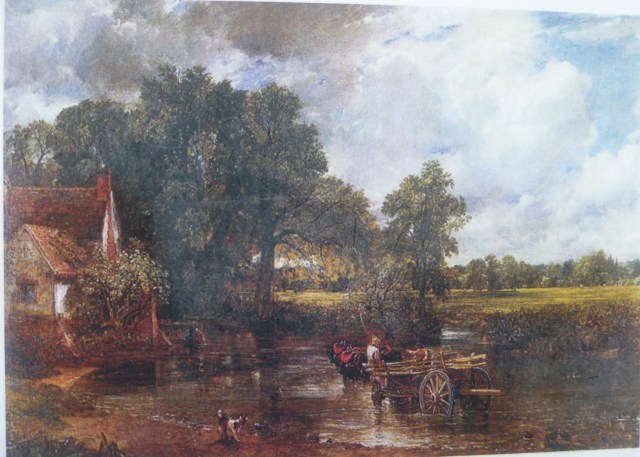
There’s a path/lane from the car park to Willy Lott’s House and the site of Constable’s famous painting ‘The Hay Wain’. I could vaguely recognise it as it is much less changed than Dedham Mill.

The Hay Wain

The Hay Wain, by John Constable

Hay Wain scene

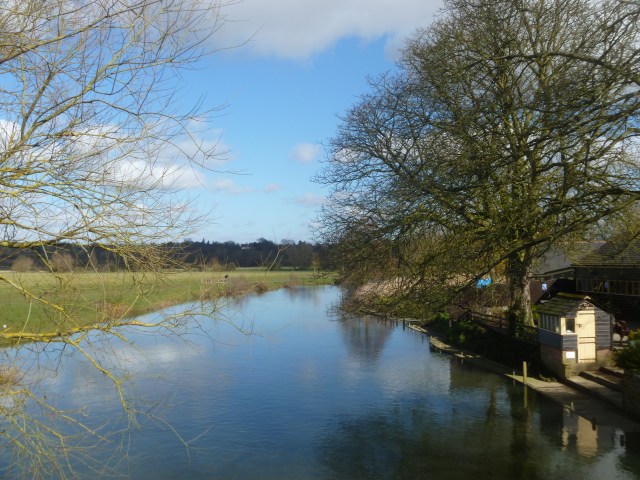
The Hay Wain scene last week

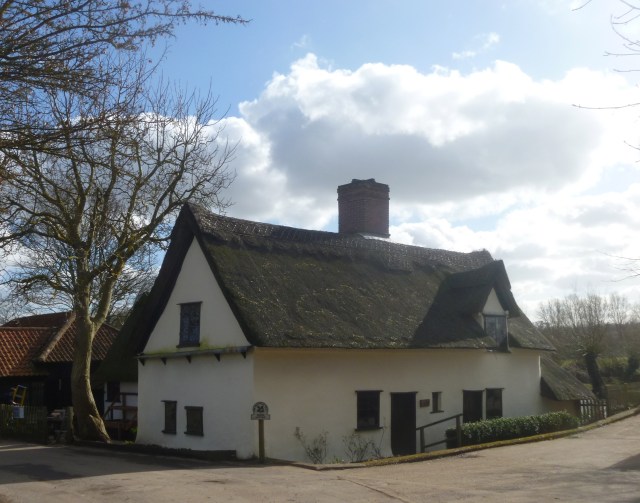
Flatford Willy Lotts

The house on the left hand side of the painting and photo is Willy Lott’s House.

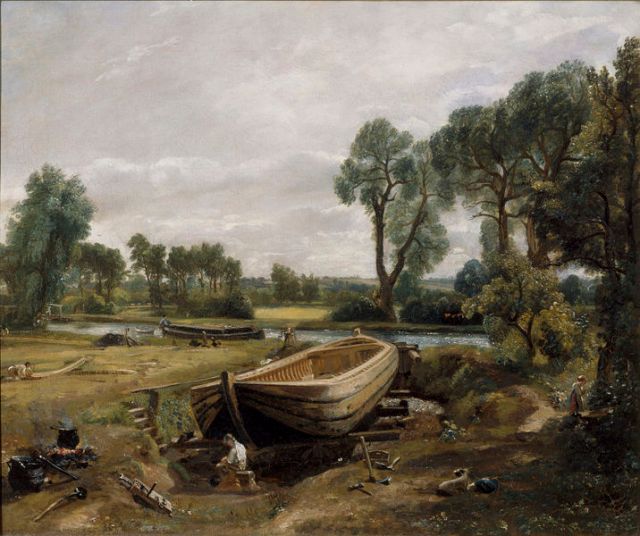
Boat Building at Flatford

Another Flatford scene Constable painted in the open air was ‘Boat Building at Flatford‘. Many Constables also owned Flatford Mill. There’s an article on the NT website about the Mill ownership and the Constable family here.

K at F Mil

Flatford Mill

Before leaving we walked over the bridge to join the footpath we should have arrived by on the Wednesday. We definitely made the right decision!

A Further Selection of Colchester Landmarks

There is, of course, more to Colchester than just recycled Roman bricks. Peake’s House is in the Dutch Quarter which was named after the Flemish weavers who settled here during the 16th century.
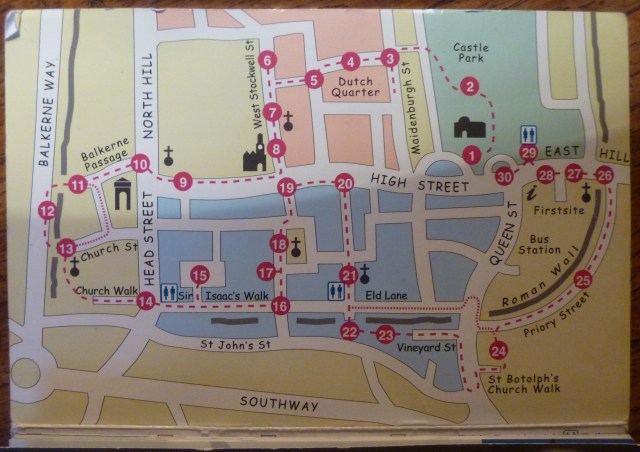
Heritage route

 Heritage Trail Route

St Helen’s (just a few steps from East Stockwell Street) was first recorded in 1097 but its history goes back to the 3rd century AD. It was founded by Empress Helena (St Helena is Colchester’s patron saint). She was the daughter of King Coel (of Old King Cole nursery rhyme fame) and mother of Emperor Constantine the Great who was born in Colchester.
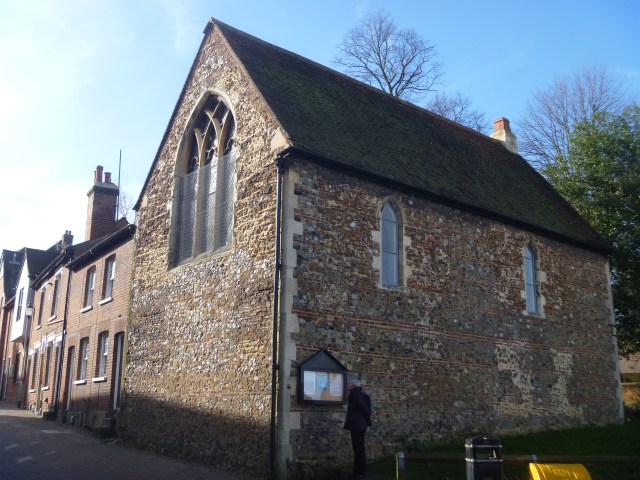
St helen's Chapel

Since 2000 AD the chapel has been a Greek Orthodox parish church of the Patriarchate of Antioch. Inside the tiny church the walls are hung with icons to the various saints including Saint Helena and Saint Barbara.
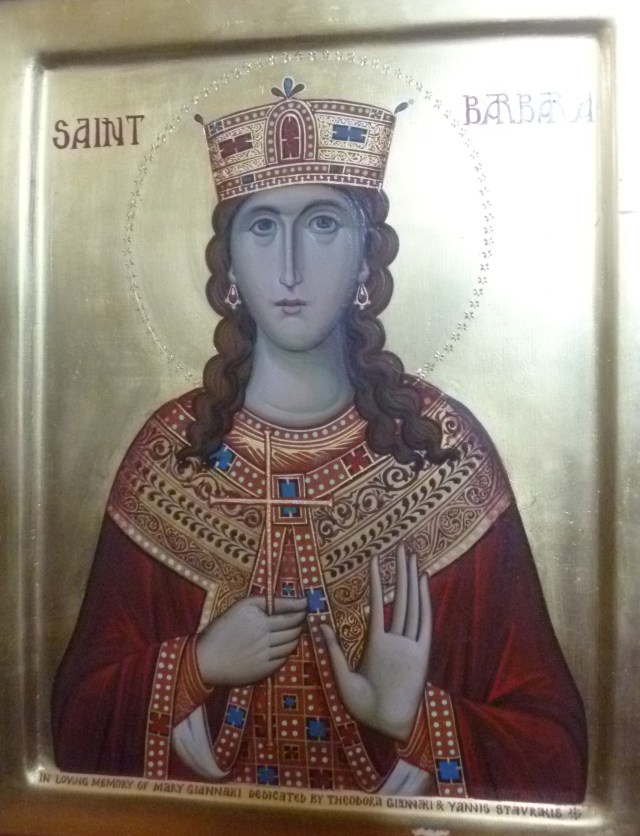
Saint Barbara

Next to the chapel on one side is a former Quaker burial ground and on the other a line of black bricks leads slightly uphill to a window through which you can see some of the remains of a vast Roman theatre that had been capable of seating 3,500 people. A mural on the wall shows an artist’s impression of the theatre when it was in use.
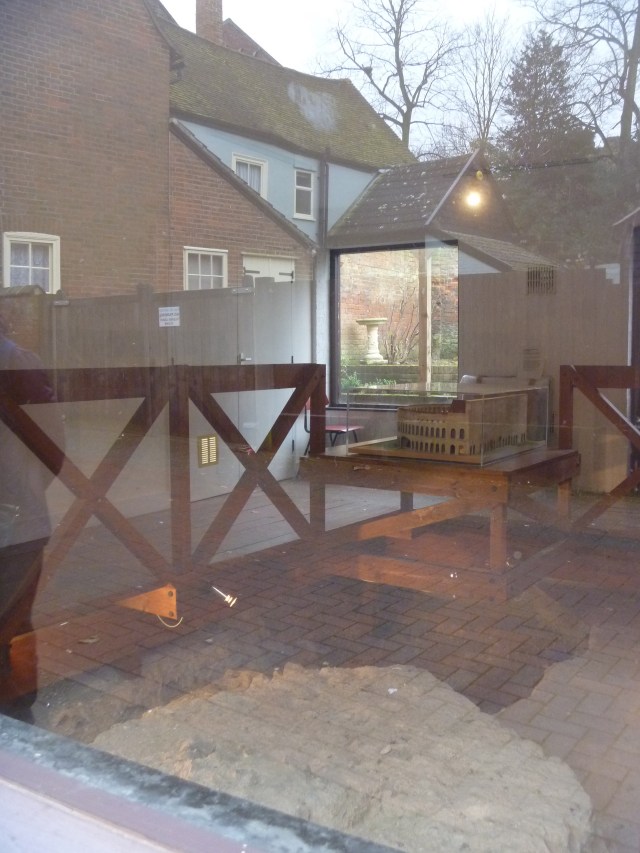
Theatre and reflection

The Roman Theatre Foundations – a Reflections of the Street
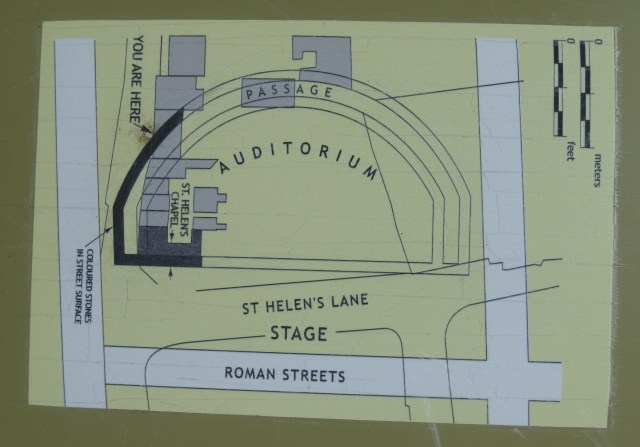
Roman theatre

Plan of the Roman Theatre superimposed onto a modern street map

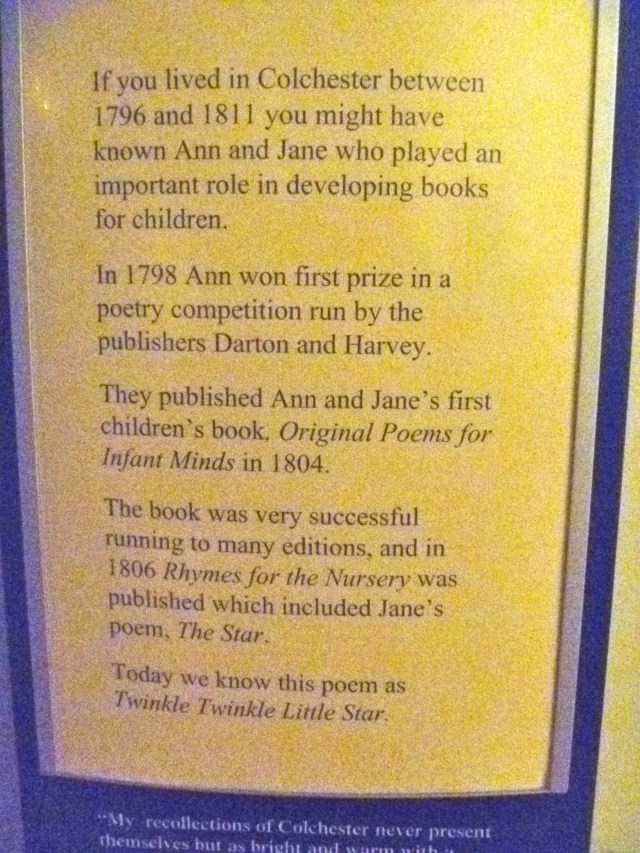
Nearby, on West Stockwell Street, is the former home of Jane and Ann Taylor who were famous for writing verse. Jane Taylor wrote the nursery rhyme ‘Twinkle, twinkle little star’ in 1806.
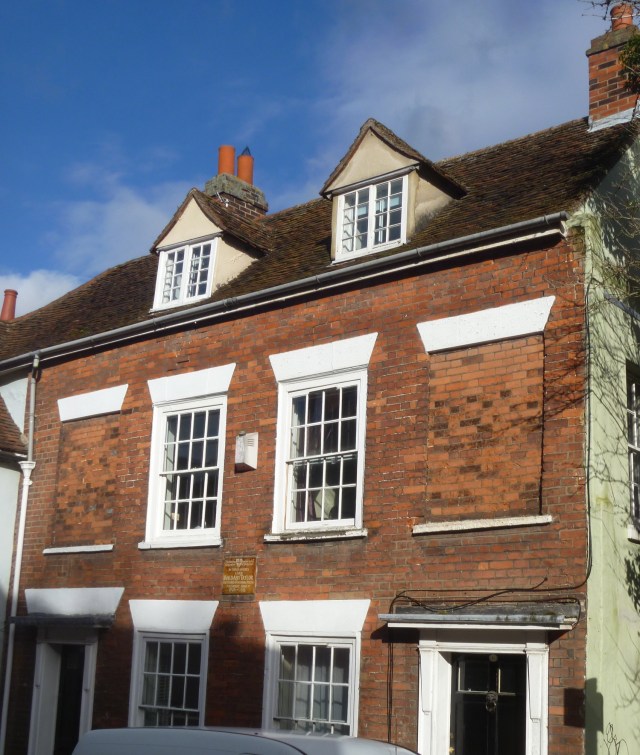
Twinkle house

Home of Jane and Ann Taylor

about taylors

We read about the Taylors in Colchester Museum
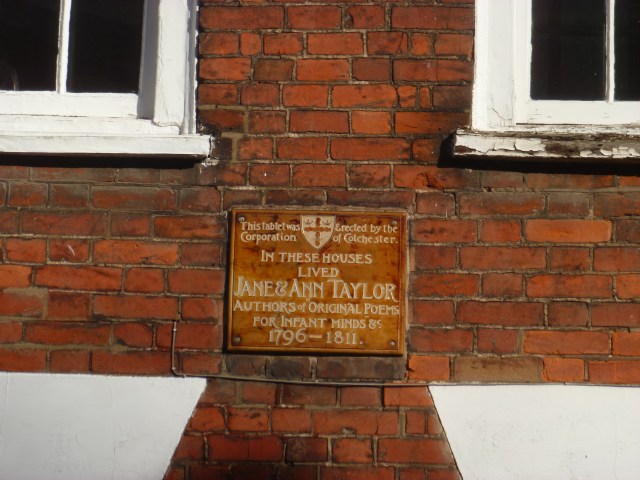
Twinkle twinkle

Colchester Town Hall on the High Street has an impressive tower designed by John Belcher and opened in 1902. It rises 50m above the street and is surmounted by a statue of St Helena and other historical figures connected with Colchester including Queen Boudicea of the Iceni. She led a rebellion against the Romans in 60 AD.

Town Hall

Colchester Town Hall

We sought out Tymperleys the former home of Dr William Gilberd a scientist and physician to Queen Elizabeth I. It’s now a tea room and until very recently had housed a large collection of Colchester-made clocks. Bernard Mason who had collected the clocks and lived at Tymperleys left the entire collection and the house to the borough. Now only a very small selection may be seen in the Colchester Museum.
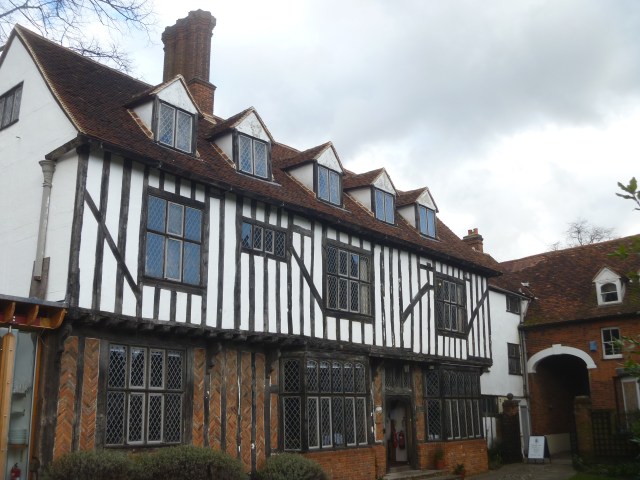
Tymperleys

Tymperleys

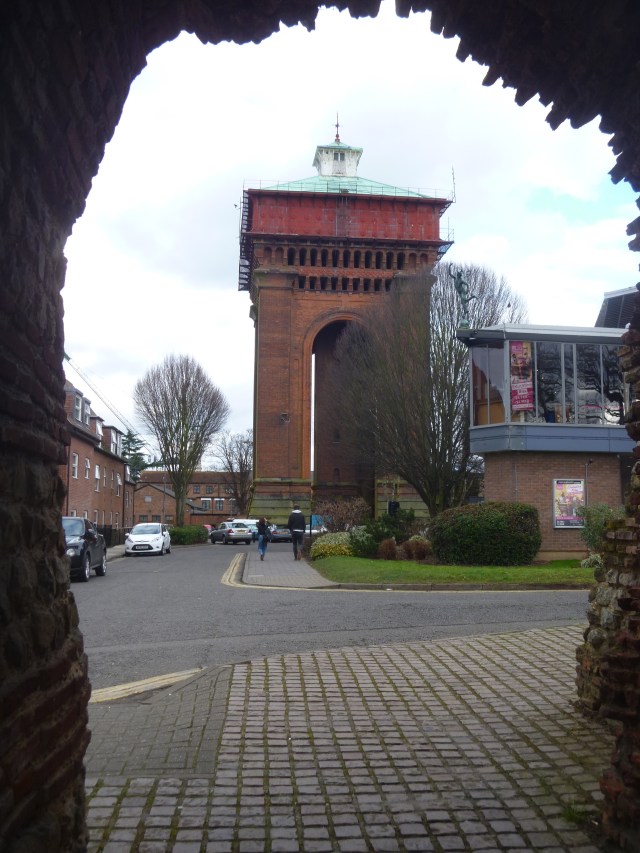
You can’t miss Jumbo! It’s a huge brick water tower built in 1882 and named for a famous elephant at London Zoo. The Rev John Irvine who lived in his rectory on the site of the present Mercury Theatre was not happy about the giant structure erected at the bottom of his garden and described the monstrosity as a Jumbo. The name stuck and the builders added a brass elephant to the weathervane as a reminder to the unhappy clergyman.
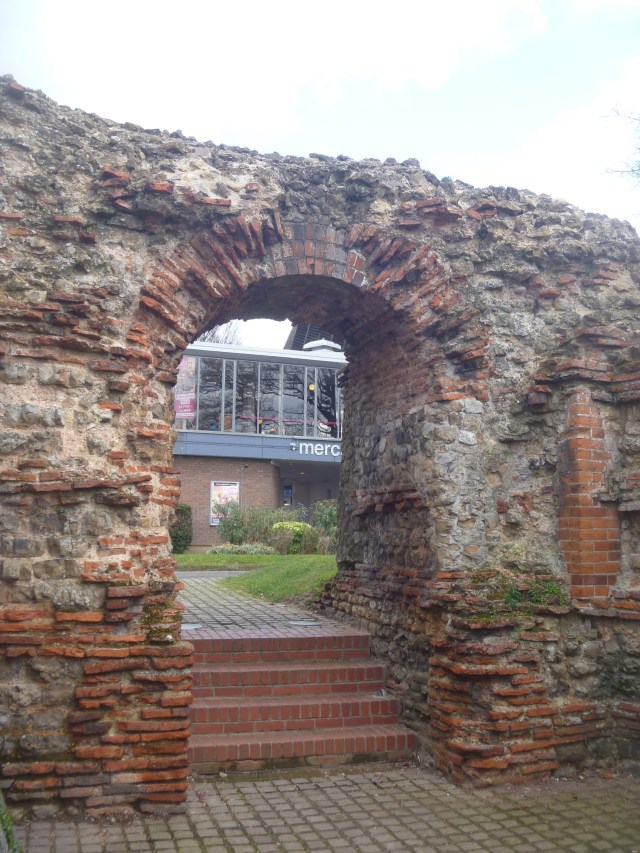
Jumbo and theatre Balkerne

Jumbo and the Mercury Theatre seen through Balkerne Gate

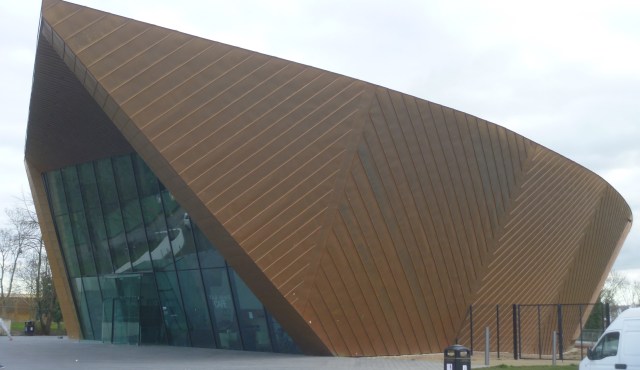
In addition to the Heritage Trail we also followed the Town to Sea Trail : Colchester and its historic port, the Hythe. “A unique art trail, designed for walkers and cyclists, follows the tidal River Colne through some lesser known areas of Colchester”.  We followed the whole of the 2 mile trail from its start at firstsite, an arts centre near the castle, to the end at the Hythe, a mixture of deserted or renovated quayside warehouses and modern out of town flats and shopping centre. We had a coffee in B&Q at Colne Causeway.
Firstsight

firstsite

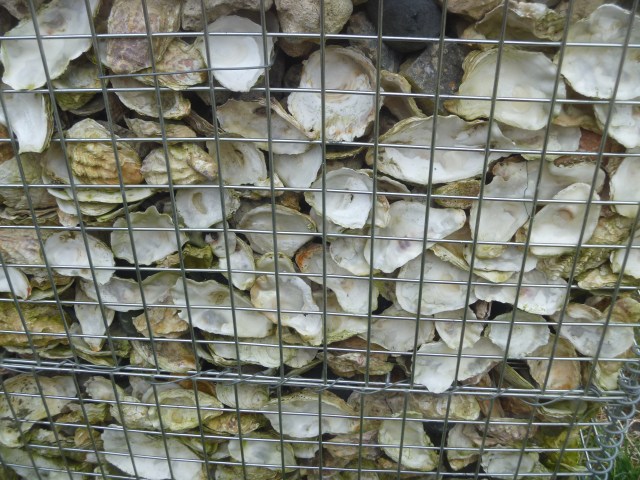
oyster shells

oysters

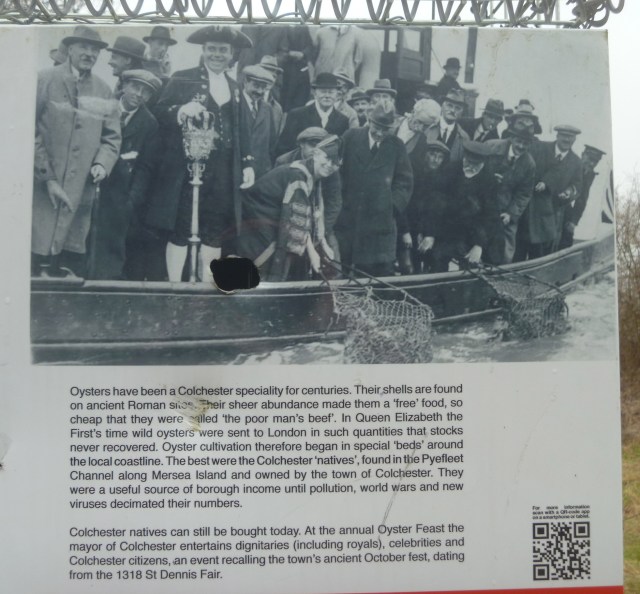
Information Board : Colchester Oysters are the best!
R Colne in its heyday

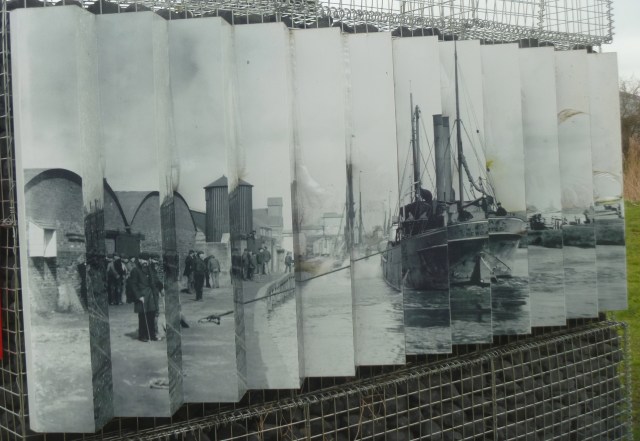
The River Colne in its Heyday

The Hythe

The Hythe today

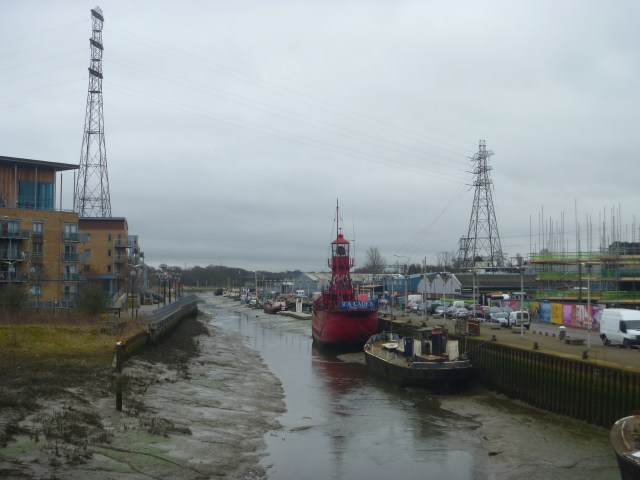
Tidal river colne today

The Tidal River Colne Today

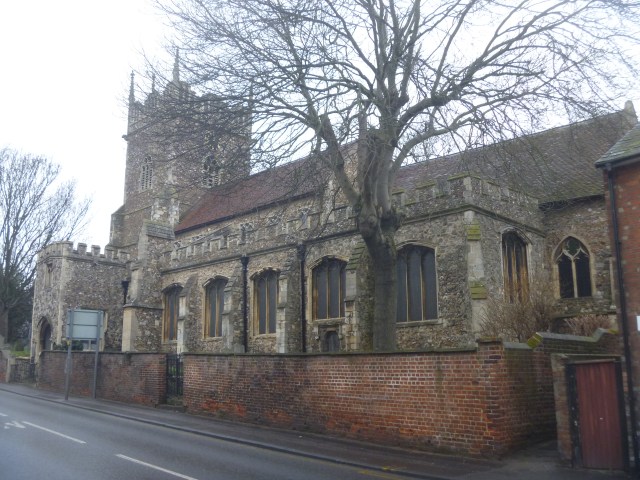
The highlight of the walk, but on a slight detour, was the Church of St Leonard at the Hythe; preserved by the Churches Conservation Trust its opening hours are limited but we were lucky again.
St leonard

St Leonard-at-the-Hythe

Interior

Interior : Early 20th Century Wall Paintings above the Arch once covered the whole Church
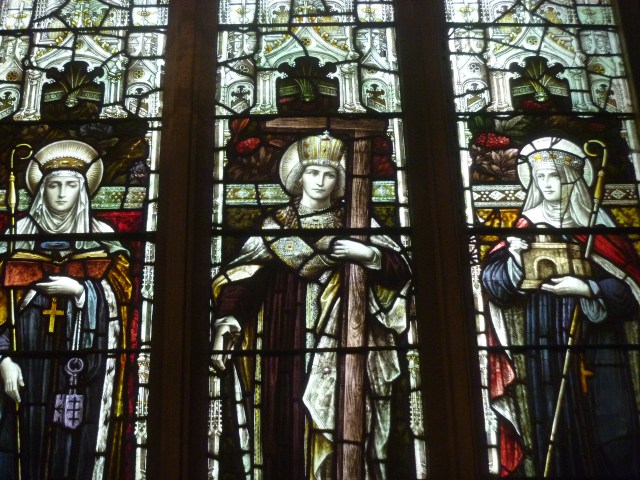
Windows St leon.

Early 20th Century Stained Glass : Sts Osyth, Helena and Ethelburga
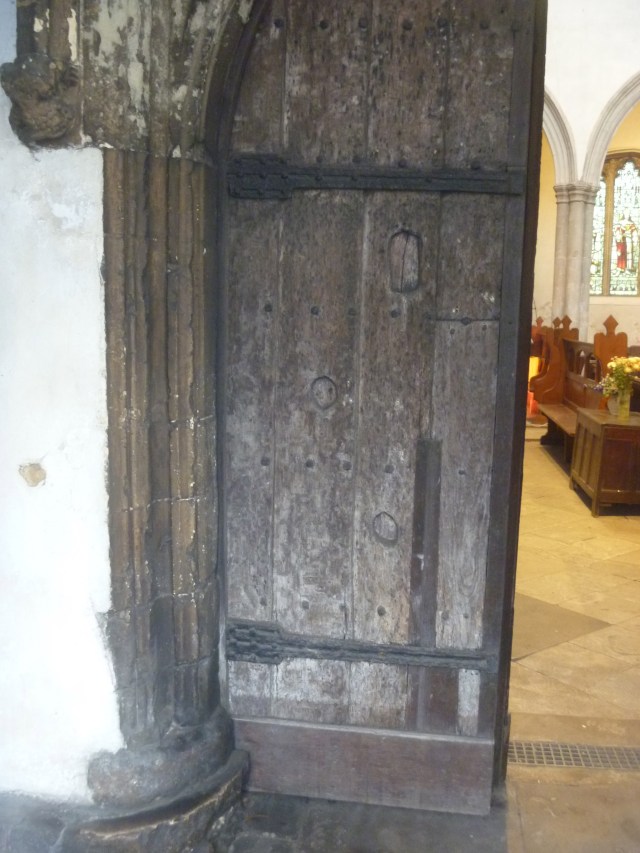
Door musket holes

The Medieval door of this old port church still bears the holes made by troops to put muskets through during the English Civil War.

“Perhaps it is little known that Twinkle, Twinkle Little Star actually consists of 5 verses, with the fifth verse rarely sung. Here’s the complete 5 verses, taken from the Oxford Dictionary of Nursery Rhymes (2nd edition, 1997), with the repetition of the first two lines added to fit the melody.” [source]

Twinkle, twinkle, little star,
How I wonder what you are!
Up above the world so high,
Like a diamond in the sky.
Twinkle, twinkle, little star,
How I wonder what you are!
****
When the blazing sun is gone,
When he nothing shines upon,
Then you show your little light,
Twinkle, twinkle, all the night.
Twinkle, twinkle, little star,
How I wonder what you are!
****
Then the traveller in the dark,
Thanks you for your tiny spark,
He could not see which way to go,
If you did not twinkle so.
Twinkle, twinkle, little star,
How I wonder what you are!
****
In the dark blue sky you keep,
And often through my curtains peep,
For you never shut your eye,
Till the sun is in the sky.
Twinkle, twinkle, little star,
How I wonder what you are!
****
As your bright and tiny spark,
Lights the traveller in the dark,—
Though I know not what you are,
Twinkle, twinkle, little star.
Twinkle, twinkle, little star,
How I wonder what you are!
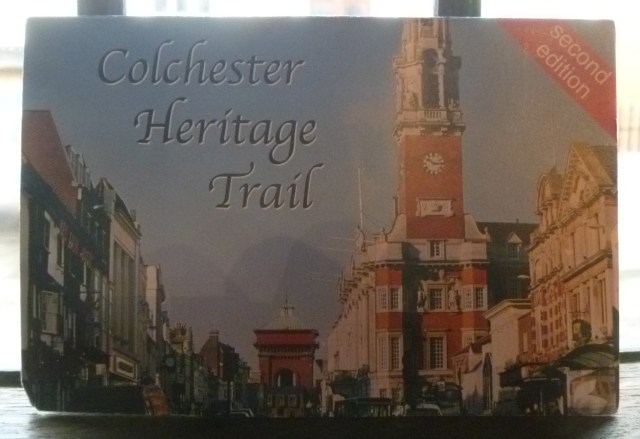
Colchester Heritage Trail : Roman Recycling

What surprised us most and became ‘themes’ as we walked around on our recent visit to Colchester was the recycling of Roman bricks and (I’ve mentioned this before) the number of superlatives applied to buildings and monuments throughout the town.

The trail

Colchester Heritage Trail is an excellent guide to the historic centre of Colchester. We didn’t follow the Trail step by step but fitted it all in over the several days we were there. The Trail starts and finishes at the Castle/War Memorial and only includes the old centre of town. Much of the following text is taken or adapted from the Trail leaflet. Some places were difficult to photograph and one day it poured with rain but otherwise I was able to snap most buildings, plaques and monuments.

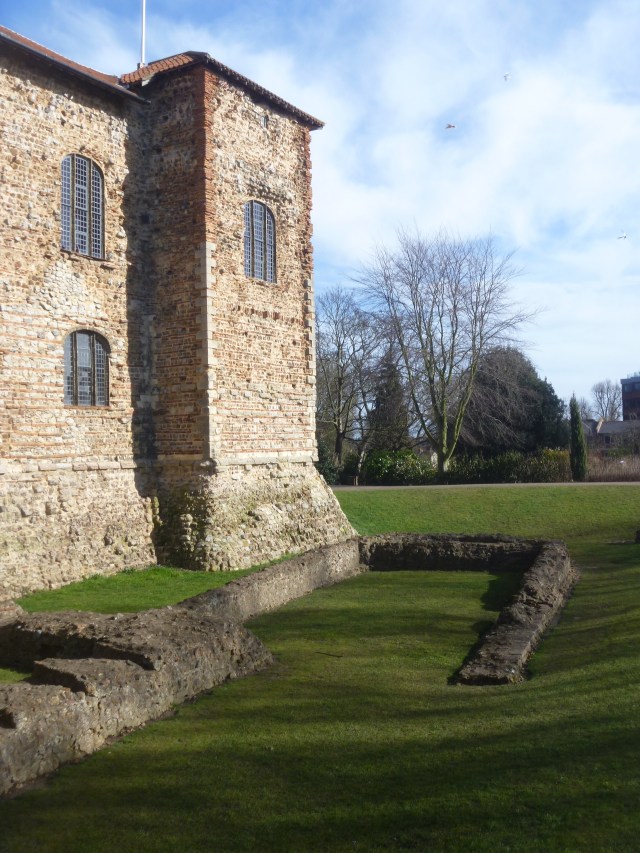
Remains of temple

The Temple Foundations

Colchester Castle itself was constructed mainly of brick and stone recycled from the old Roman town. It was built in 1076 over the foundations of the Temple of Claudius which itself was erected after his death in AD 54. John Weeley bought the redundant Castle in 1683 and removed parts of the upper floors to reclaim the building material so the original height of the fortress is unknown.

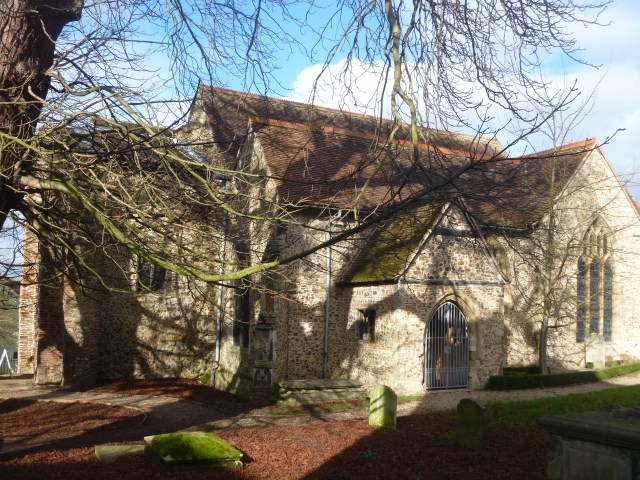
St Martins

St Martin’s Church, West Stockwell Street

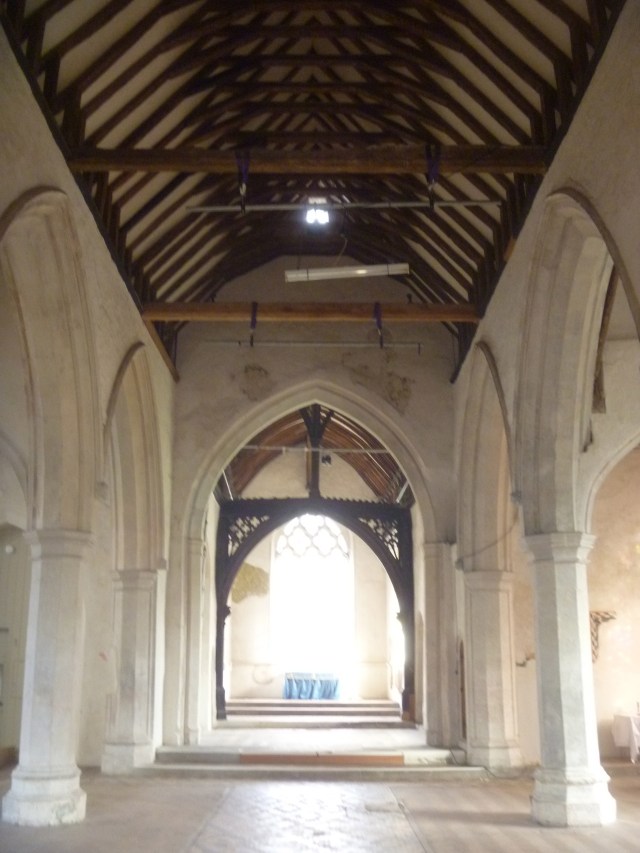
St Martin’s Church is cared for the Churches Conservation Trust which protects historic churches. We were very pleased to find the church open last Wednesday.

The tower is Norman although the rest of the church is medieval. The tower also stands no higher than the nave as a result of damage caused by cannon fire during the Siege of Colchester (1648). Colchester was besieged by the Parliamentary army for 11 weeks. The townspeople starved and many buildings were badly damaged. The Siege also crops several times along the Trail.

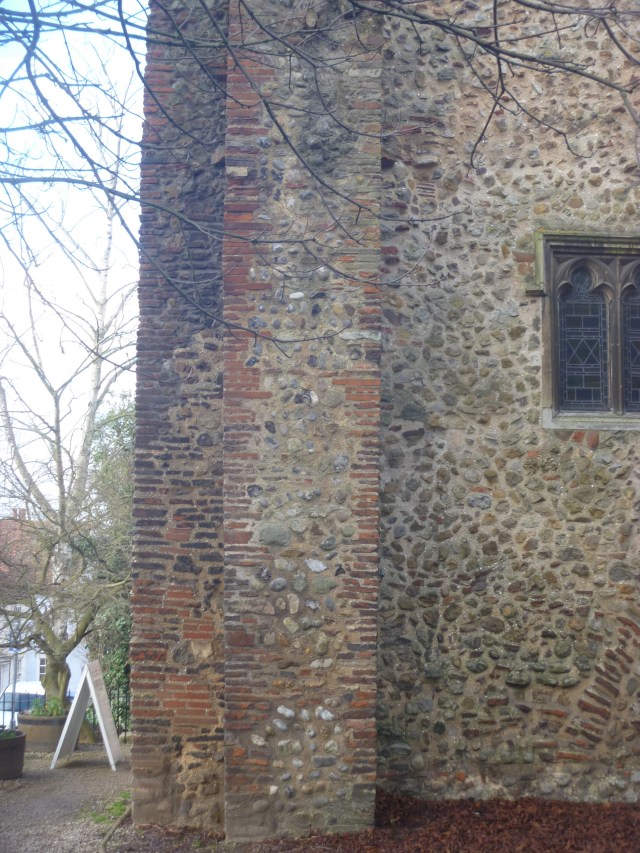
St M's bricks

“Note the recycled Roman bricks in the tower structure.”

St M's - Gilbert Scott

The Chancel, St Martin’s Church

Sir Giles Gilbert Scott was responsible for uncovering the fine wagon roof in the chancel in the late nineteenth century.

Balkerne

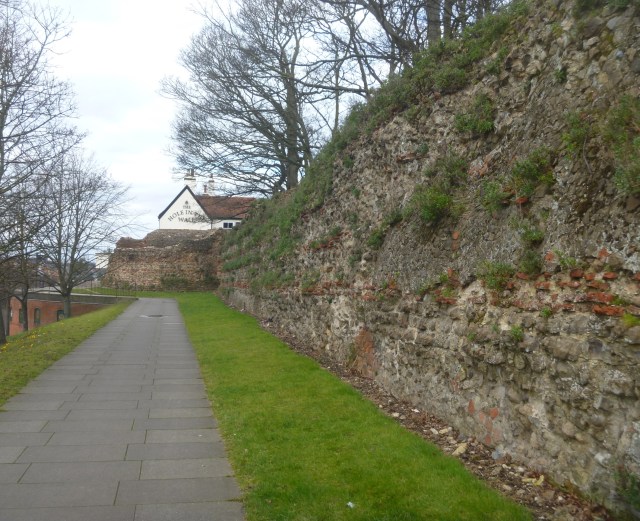
The Balkerne Gateway is the oldest surviving Roman gateway in Britain. It was the main entrance to the town. The best preserved section of the Roman wall extends from the gateway remains. The wall is 2.5m thick and stands near to its former height. It was built almost entirely from fragments of Roman brick and septaria stone but only on the inner and outer surfaces. The core of the wall is filled with rubble and hardcore.

Best wall remains

Best Roman Wall Remains

St Marys at walls

St Mary’s at The Walls

St Mary’s was one of many buildings damaged during the Siege. Both the church and graveyard were used as a fort by the Royalist defenders who managed to raise a small cannon to the top of the tower. It was targeted by the Parliamentarians and this caused severe damage to the building and the demise of the canon and its marksman. The church was rebuilt in the early 18th century but the chancel and nave are Victorian.

Holy Trinity

Holy Trinity Church

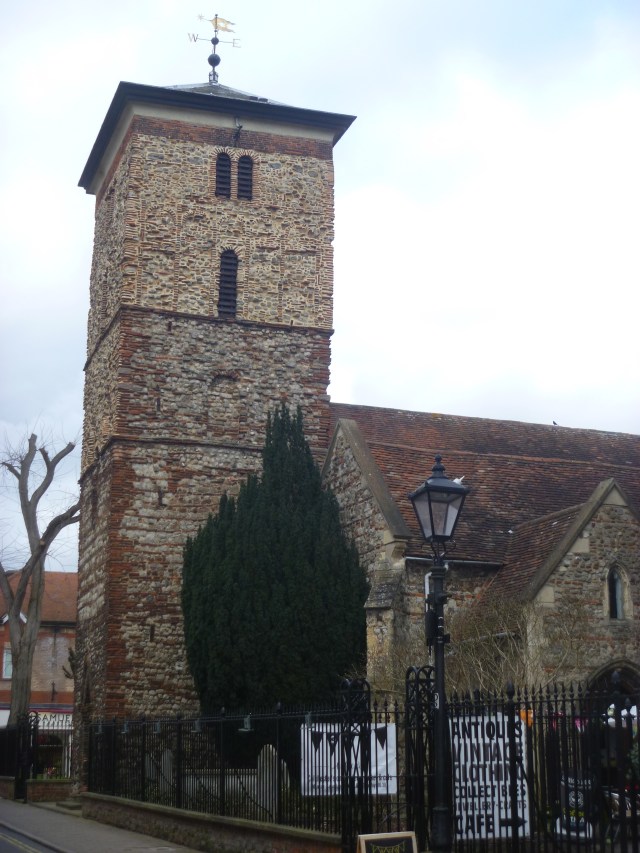
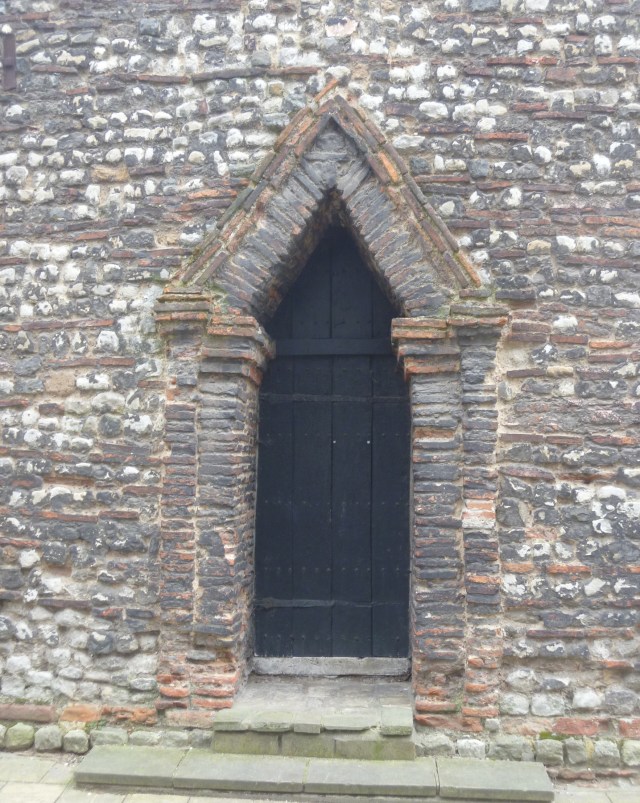
Holy Trinity is the town’s only Saxon monument. It dates from 1000 AD and incorporates an arrow-head doorway composed entirely of re-used Roman bricks.

HT door

Arrow-Head Doorway

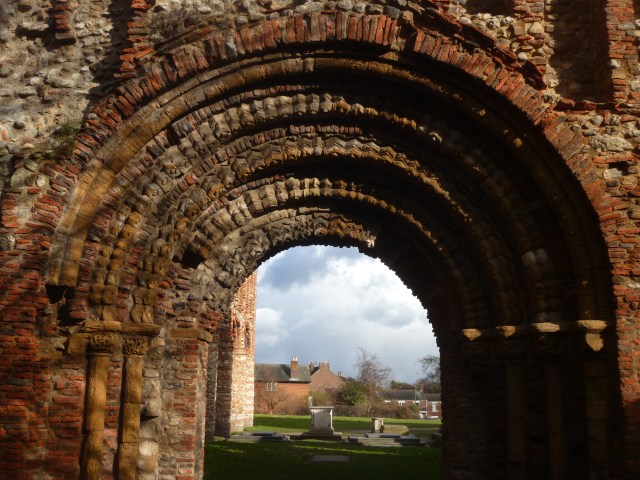
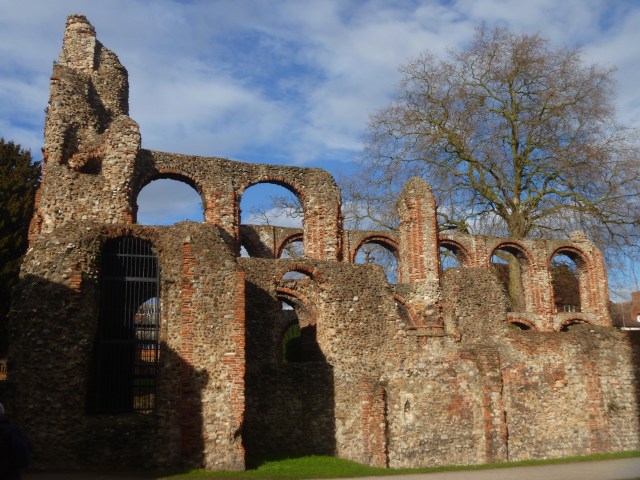
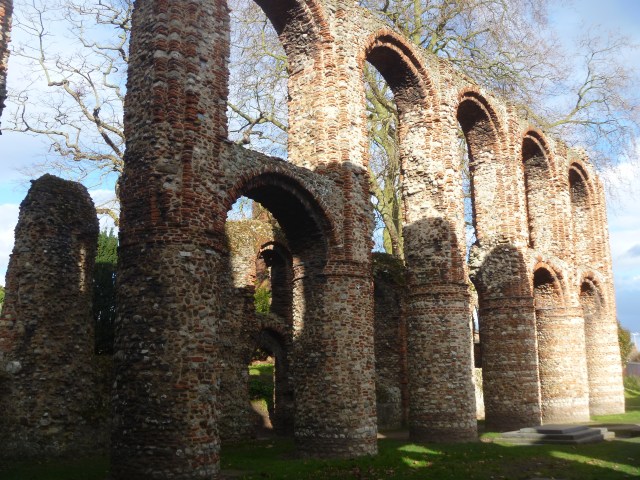
St Botolph’s Priory was founded around 1100 and was the first house of Augustinian Canons in England. All that remains today, however, is part of the original western front, with its superbly carved Norman archway, and a section of the nave.

Norman Arch St B's

Splendid Norman Archway

St Botolph's

Note the liberal use of Roman brick in the Priory construction

St B's Priory

There’s lots more to Colchester than re-used Roman bricks – nursery rhymes, a water tower, a theatre and lovely black and white Tudor buildings plus another trail. All coming up in the next post.

St Martin’s in the Bull Ring : Defiant Gothic … and what we learned there

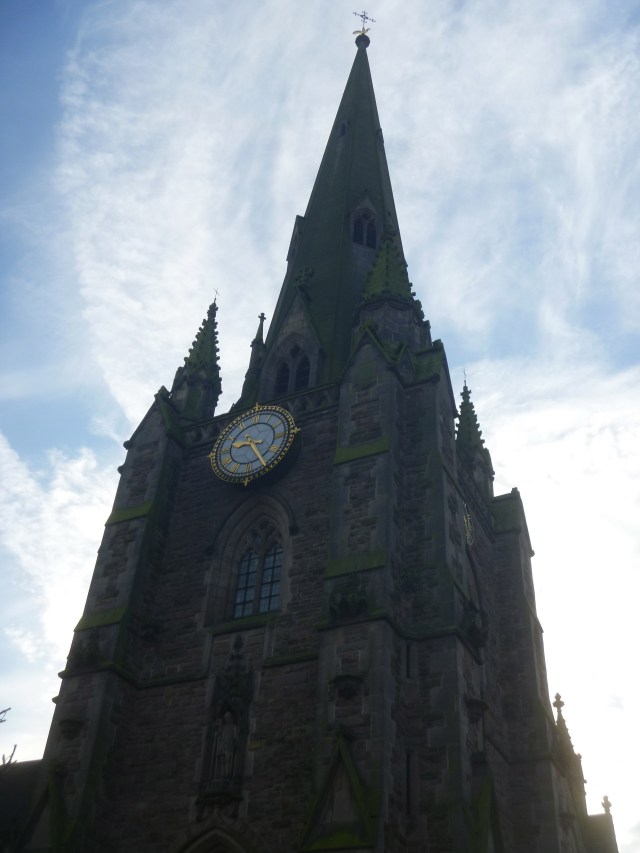
St Martin's clock

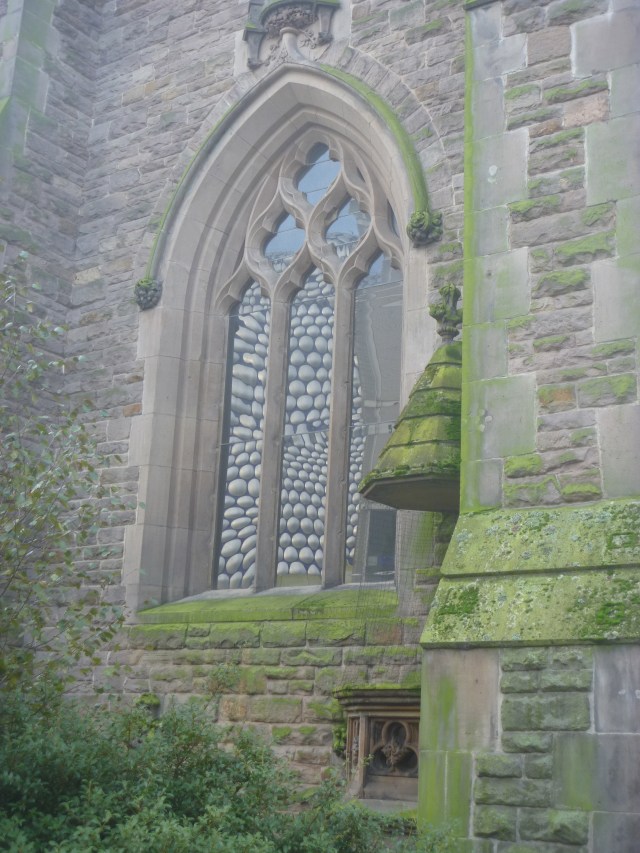
“Defiant City Centre Gothic” writes Simon Jenkins in church crawler‘s ‘bible‘ of St Martin’s church in Birmingham city centre.

“It once towered over the old Bull Ring market place, dramatically clinging to a hillside. Today the site is desperate, squeezed between what survives of the market and an inhuman whirl of urban roads and concrete blocks. Rescue is planned, but the cost of rectifying the horrors of the 1960s and 1970s will be huge. For the moment, St Martin’s is a beacon in a wilderness.” [England’s Thousand Best Churches]

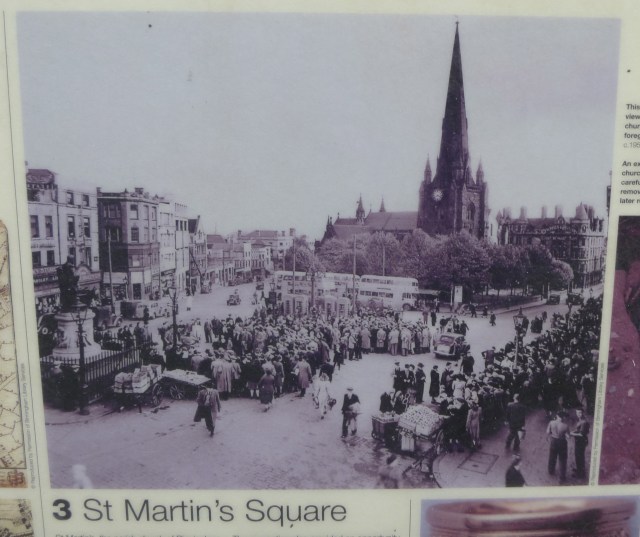
Square in c1950

Looking towards St Martin’s Church with the Bull Ring Market in the foreground (c1950)

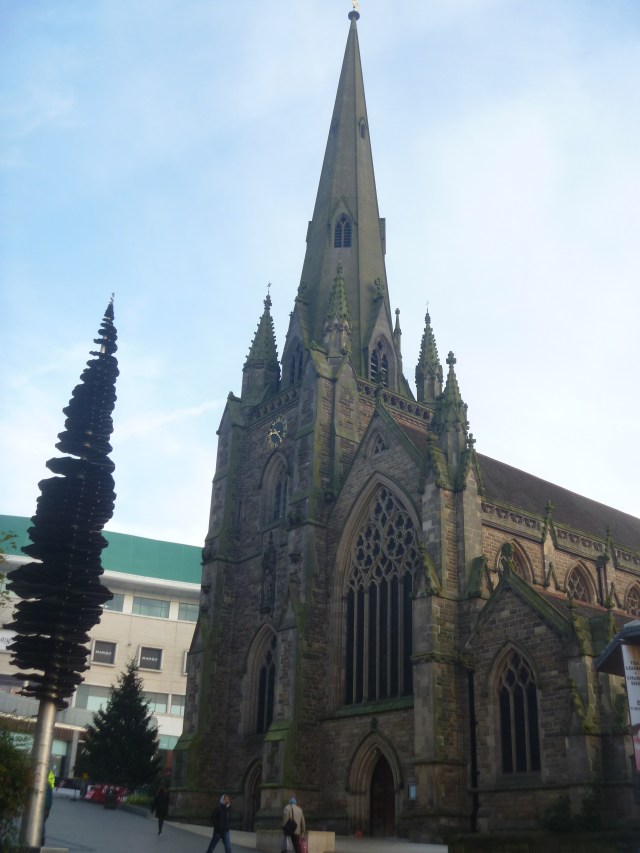
St Martin's 1

It is now almost impossible to take a photograph of St Martin’s

We found that St Martin’s (the only Birmingham church listed by Jenkins) was literally a few minutes walk from our Back-to-Back ‘experience’. So it became the excursion on the final morning of our stay before checking out at 10 and catching our trains before 11.

Although the opening time is 10am we noticed a cafe and office attached to the church and a figure moving about. The very kind receptionist understood our ‘plight’ and allowed us to go inside and take a look at the Pugin-influenced building, rebuilt on the site of an older church, in 1873-75 by J.A.Chatwin who had worked with A.W.N.Pugin.

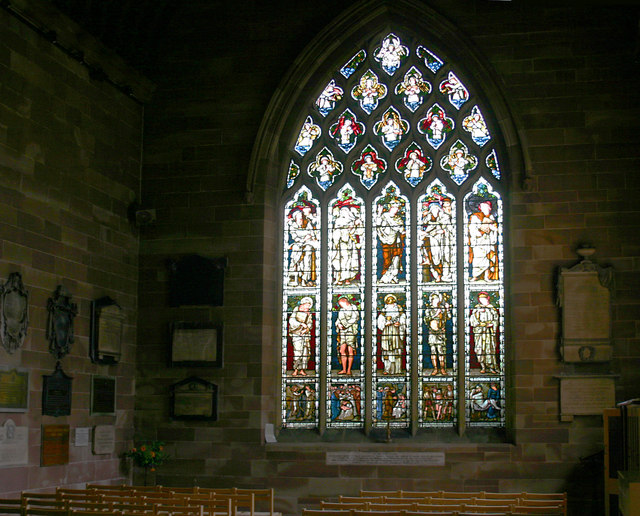
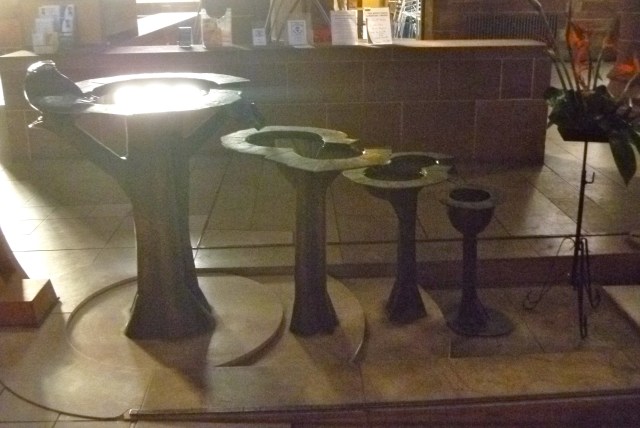
There’s a hammerbeam roof, a modern font, Decorated arches, 14th century alabaster effigies and a beautiful, early Burne-Jones stained glass window.

Burne-Jones Window

Burne-Jones  Window [source]

Font

The Modern Baptismal Font Cast in Bronze by Jacqueline Gruber Stieger in 2002.

Our helpful guide also told us two other facts. The first was that the church has a rare outdoor pulpit and the second, nothing to do with ecclesiastical facts at all, was how to make an ‘infinity scarf’ (another term, new to me, for a snood or cowl) by the ‘arm-knitting method‘!
Outdoor pulpit

Outdoor Pulpit and reflection of Selfridges.

Arm Knitting Demonstration

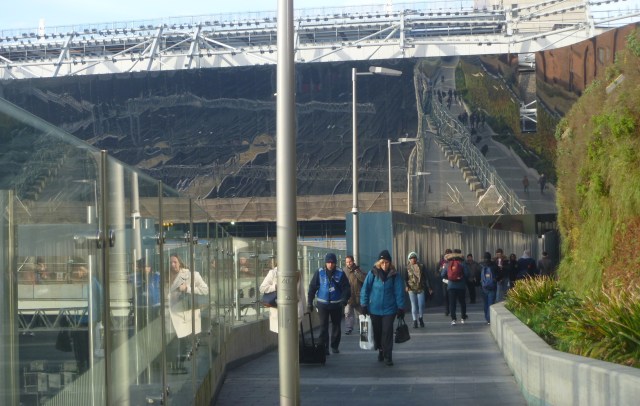
New St Reflections

Birmingham New Street Station Reflections as we leave

The Head of Nidderdale

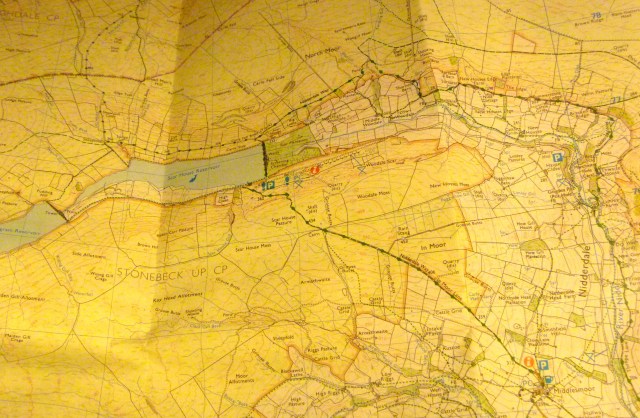
map

Today’s Dalesbus Walk took us right up to the head of Nidderdale where we took the circular path around Scar House Reservoir then climbed over to the hilltop village of Middlesmoor. Two of us then took the footpath down to Lofthouse where we caught the bus back to Pateley Bridge.

Main Street Pateley Bridge

Pateley Bridge on Sunday morning

SUNDAY 7TH DECEMBER: THE HEAD OF NIDDERDALE
Explore the wild and remote country at the head of Nidderdale before finishing in one of its highest villages.
Start: Scar House Reservoir: 11.25
Finish: Middlesmoor: Approx. 15.00
Distance/Grading: 6 miles / Moderate
TRAVEL: Outward: Bus 823/825 from Pateley Bridge (10.50).
Return: Bus 825 to Pateley Bridge, Harrogate and beyond for onward connections.
Walk Leader: Jim

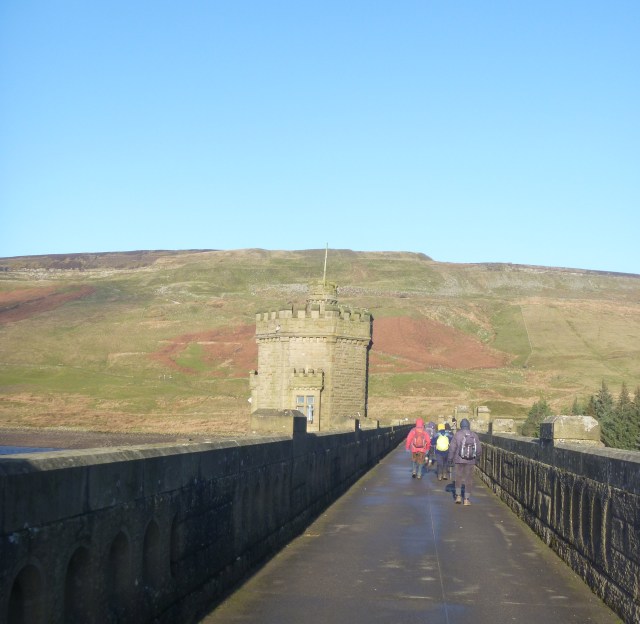
Ornate waterworks

Setting off over the Scar House Dam in bright sunshine

We experienced all weathers as we circled the Scar House Reservoir which forms part of the Bradford water supply. A huge building project and feat of engineering around the end of the 19th and beginning of the 20th century sent water from the Nidderdale reservoirs (by gravity only – no pumping) to the city of Bradford and supplied work for hundreds of navvies :

Scar House Reservoir, Upper Nidderdale
Work on Scar House Reservoir began on 5 October
1921 and took 15 years to complete. Developing
such a vast scheme changed the landscape of Upper
Nidderdale for ever. Less than 100 years ago the
site was a noisy and dangerous work site buzzing
with activity. Huge amounts of manpower had to
be drafted in to build the reservoir and as a result a
whole village was created.

Peaceful Scar House
Now Scar House is characterised by its peace and
solitude. You can still see the remains of where the
village once stood and the landscape is scarred
by the old quarries and railway lines. With a bit of
imagination you can picture the thriving community.

[source]

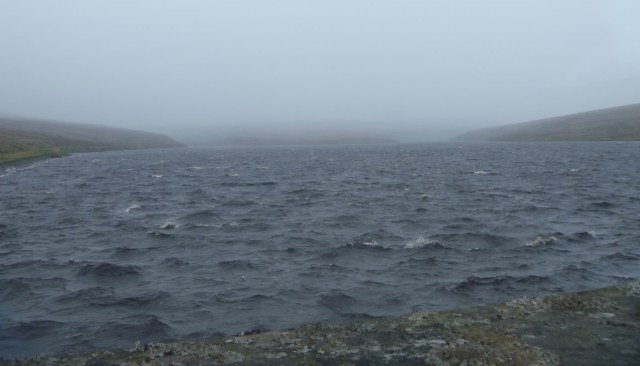
Scar House sudden weather change

Weather can change suddenly!
It’s amazing to think that water piped from here eventually ends up in the taps of houses over 40 miles away by road.

The reservoir above Scar House is Angram also built to serve Bradford and completed in 1916.

Rough Angram waters

 Rough Angram Waters

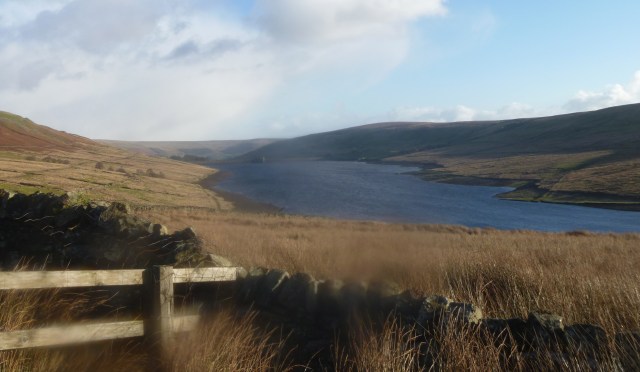
Angram to Scar House

Scar House from Angram Dam

Luckily after crossing the Angram Dam there is a hut where we were able to shelter from the bitterly cold high winds to eat our lunch.

Sheltering from wind

Sheltering from the winds

View from hut

View from the hut

The walk continued to almost complete the circle round Scar House but we took a steep track (In Moor Lane – part of the Nidderdale Way) away from the reservoir and headed up and over the ridge to arrive eventually at the tiny hilltop village of Middlesmoor and the welcome log stoves and open fires of the Crown Public House.

St Chad's

St Chad’s, Middlesmoor and view to Gouthwaite

St Chad's cross

St Chad’s Cross

The cross dates from the 7th century. It commemorates St Ceadda (St Chad) leader of Celtic Christianity in the north. He was the first bishop of Lichfield and he died in AD 672. It was placed here after being discovered during restoration of the church in the early 1900s.

Path to Lofthouse

Footpath – three-quarters of a mile – to Lofthouse

After warming up by the fire and with an hour to fill before the bus was to leave Middlesmoor I decided to explore the church, enjoy the view from it (one of the best in the country according to Colin Speakman who came along on the walk) and then to head down a further three-quarters of a mile to the lower village of Lofthouse where the bus picked us up in the gloomy dusk to bring us back to Pateley Bridge.

A Castle, A Church and A Cowslip with Dovegreyreader

My friend Lynne, alias Dovegreyreader, lives not a stone’s throw from Endsleigh and it was my pleasure to spend a day with her during my stay at Pond Cottage.

The Wednesday dawned grey and misty but not deterred we met at the hotel car park and swanned off in her car to Launceston in nearby Cornwall. “We be in Cornwall now” declared Lynne in authentic Cornish accent as we crossed the Tamar bridge that separates it from Devon. During the short journey Lynne pointed out landmarks such as the church at Milton Abbot and other Endsleigh cottages lived in by Horace Adams.

Launceston : ‘a real Cornish town’ says the tourist leaflet picked up at the TIC our first stop in the town. Interestingly, and isn’t always the same when you live somewhere? Lynne had thought she had never been to the Castle; at least not in the last few decades, maybe when the children were very small.

Welcome to L Castle

Welcome to Launceston Castle

“The town is notable for its impressive castle built by Brian de Bretagne, the first Norman Earl of Cornwall. It has never been besieged or captured.” Well, I’m not surprised it’s a short, steep climb up the mound to the keep and the the walls are several feet thick. In fact the steps up to the battlements are built within the thickness of the walls.

The castle is now in the care of English Heritage who have created a small exhibition with displays and information boards that set the scene.

Launceston Castle

 The Approach to Launceston Castle – on a dull day

As with all climbs, it was worth the effort for the views from the top. On a good day they would have been exceptional but on this day we could really only study the town in the foreground.

Launceston from battlements

The View NW from the Battlements – in the foreground on the right is Castle Street. Sir John Betjeman called it “the most perfect collection of 18th century townhouses in Cornwall” the tourist leaflet declares. In the middle in the distance is the location of the Cowslip Workshops which we visited later.

Misty Cornwall from LC

Looking west from the castle to a very misty Cornwall: the Earl’s hunting park stretched towards Bodmin Moor

LC Church from castle

East of the castle is the Church of St Mary Magdalene

In fact the Church was our next port-of-call.

P1150025

A striking brass with inscription commemorating an unidentified 16th century lady

Disturbing memorial

A rather disturbing memorial

Altar tryptich

The Altar Triptych : The Nativity of Our Lord; The Adoration of the Magi; The Presentation of Our Lord in the Temple (sorry photo doesn’t do it justice)

The poet Charles Causley was born in Launceston in 1917 and spent most of his life there. I discovered the Causley Society website which includes his biography and a Causley trail around the town. He wrote a poem about St Mary Magdalene which is available on a little leaflet from the church.

C Causley poem

Mary Magdalene Poem :

Mary, Mary Magdalene
Lying on the wall
I throw a pebble on your back
Will it lie or fall?

A relief of Mary Magdalene is to be found on the east wall of St Mary Magdalene church. It is said that a stone lodged on her back will bring good luck.

Mary Magdalen stained glass

The Mary Magdalene Stained Glass Window

By this time we were ready for something to eat and Lynne drove us out of town to the Cowslip Workshops.

Misty Launceston from Cowslip

View of Launceston from the Cowslip Workshops

Anyone, even the least artistic person, would find something to interest here. The Workshops are based at a very working farm, there’s a café, where we had soup for lunch, sewing classes, a fabric shop which also sells pottery by Nicholas Mossse, a gallery, and a farmhouse/kitchen garden. On a good day there will also be distant views!

Cowslip allotment

The Farmhouse Garden

IMG_0827

Inside the Fabric Shop

Much as we were tempted by the cakes and pastries in the cafe we knew that very soon we would be back at Pond Cottage and tucking in to Bettys Yorkshire treats as Lynne came back with me for tea and to meet my friends. Thanks again, for showing me your local area, Lynne. What a lovely part of the country you live in!

Cape Cod : Woods Hole and Martha’s Vineyard and More

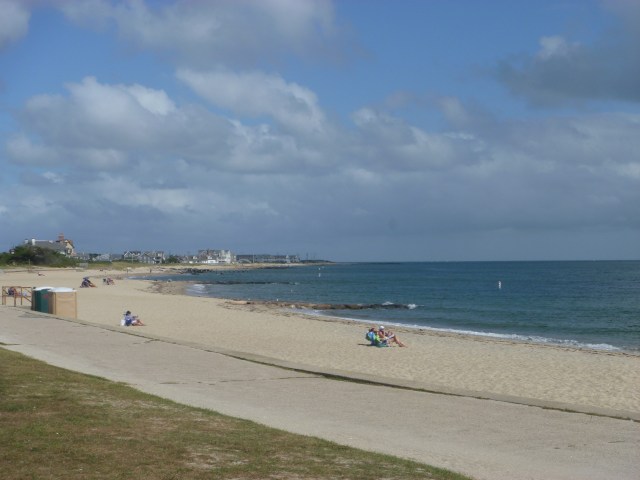
Beach at Falmouth

The Beach at Falmouth

It’s time to re-visit my summer holiday and go right back to the first week and a half that we spent on Cape Cod. We had marvellous weather and it’s strange to us but after Labor Day (the first Monday in September) many places close down and the locals more or less have the place to themselves again. It’s the way we like it. The weather is still good but you can find a table at a restaurant without queuing, the roads and beaches are almost empty but most of the local shops are still open.

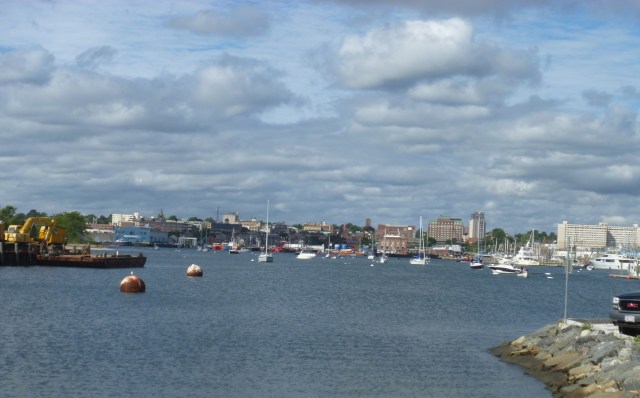
Estuary Fairhaven

The Estuary at Fairhaven

We don’t usually travel far from our digs but we always make one excursion out of our Cape Cod Comfort Zone and that is to visit my online book group friend sherry who lives in Marion, Massachusetts on the other side of Buzzards Bay. This time our excursion included a new activity as my husband has taken up sailing and as it was impossible for us to find a sailing school open on the Cape he signed up for 16 hours tuition over two days (and including a one hour written exam at the end) at Sail Buzzards Bay  (Fair Winds and We’ll See You on the Water!) based in Fairhaven, Mass. just a few miles from Marion.

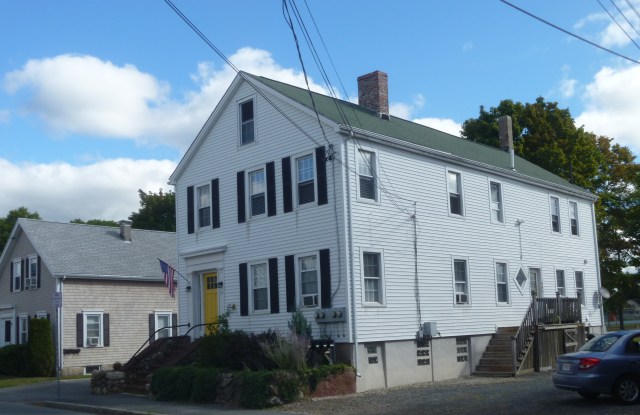
101 Main St Fairhaven

Sail Buzzards Bay HQ, Main Street, Fairhaven

Preparation for sailing

Preparation for Sailing School

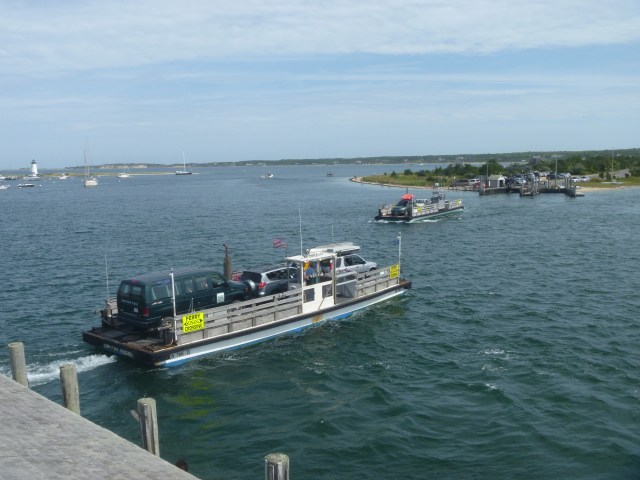
Needless to say the watery theme continued throughout the trip. One day we took the ferry to nearby Martha’s Vineyard. The ferry from Falmouth to Oak Bluffs on the Vineyard takes just 35 minutes and during the autumn season there are just two sailings in each direction each day (Monday to Thursday – more sailings at the weekend). We understood that it was worth taking the bus to Edgartown where we had lunch, watched the three vehicle five minute journey Chappaquidick Ferry and had a wander around the compact centre of town.

Main St Edgartown

The Main Street, Edgartown, MV

Here’s how the tourist leaflet describes Edgartown :

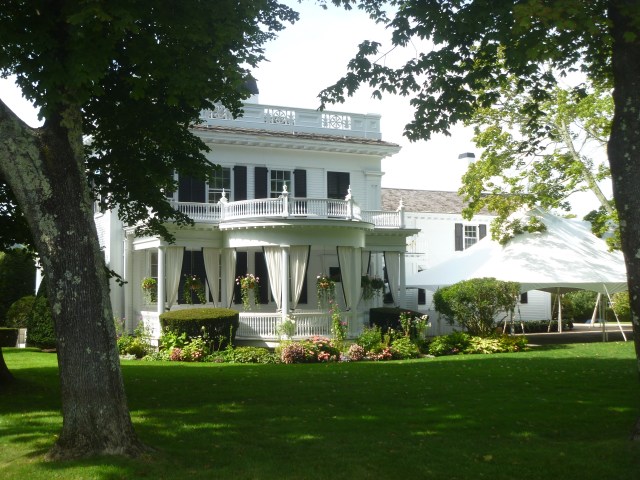
“One of New England’s most elegant communities, Edgartown was the Island’s first colonial settlement and it has been the county seat since 1642. The stately white Greek Revival houses built by the whaling captains have been carefully maintained. They make the town a museum-piece community, a seaport village preserved from the early 19th century.”

Chappaquidick Ferry

The Tiny Chappaquidick Ferry

Daniel Fisher House

The Grand Daniel Fisher House (1840)

I’d hoped to visit the Whaling Church but it was included on an organised tour from the museum (which also included a visit to Daniel Fisher House) and we just didn’t have time before taking the bus back to Oak Bluffs for our return to the mainland.

MV Museum

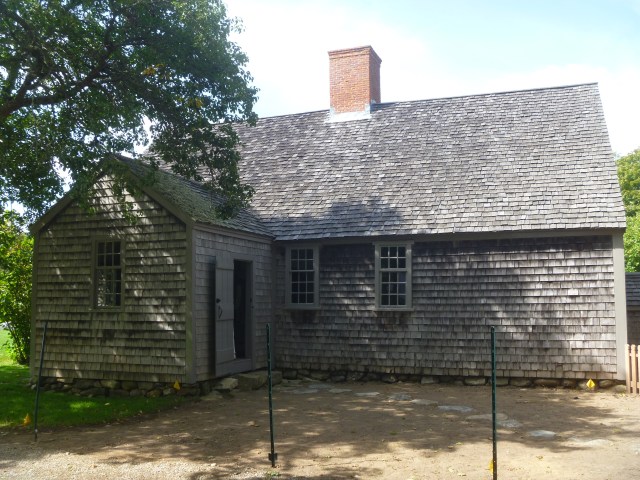
The Very Old Vincent House Museum

Whaling Church Edgartown

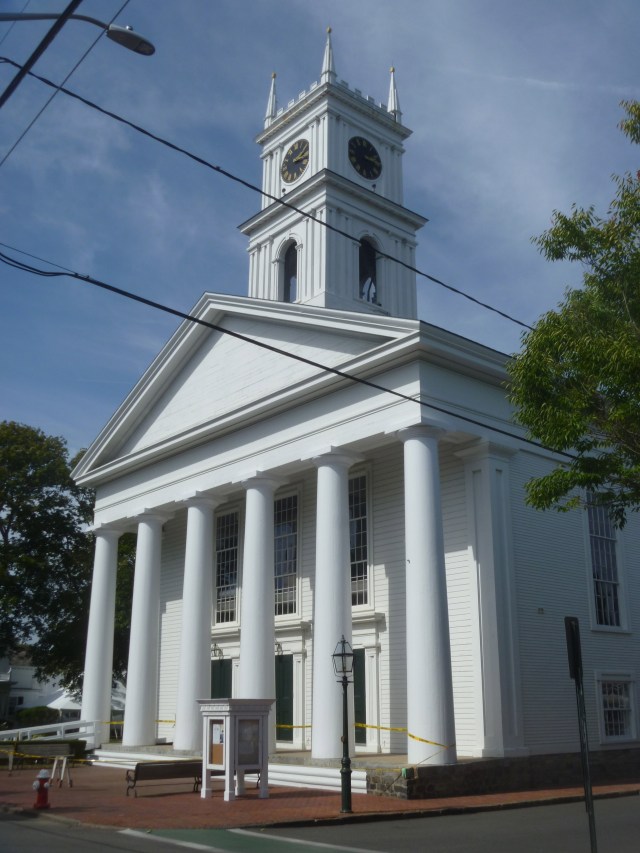
The Impressive Whaling Church

On several days we would drive down to Woods Hole the village attached to the extensive Woods Hole Oceanographic Institute that dominates the area. There are some good seafood restaurants with docks onto the marina – all very nautical.

Woods Hole Marina


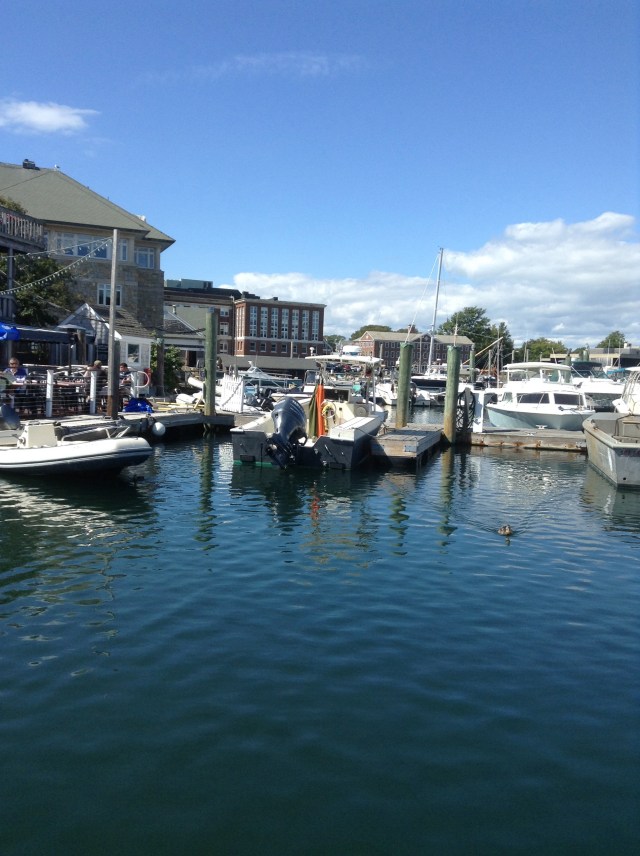
Dining at Woods Hole Marina

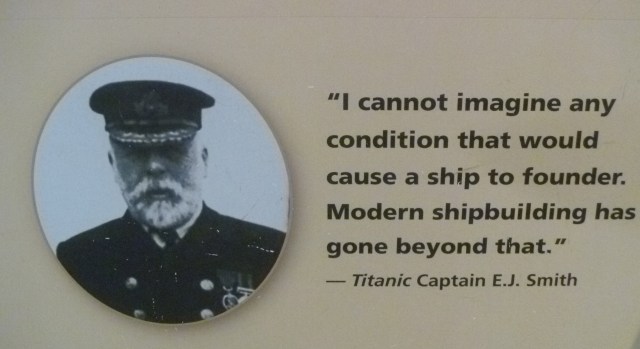
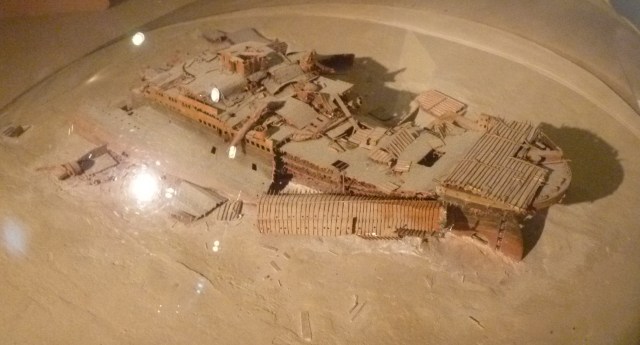
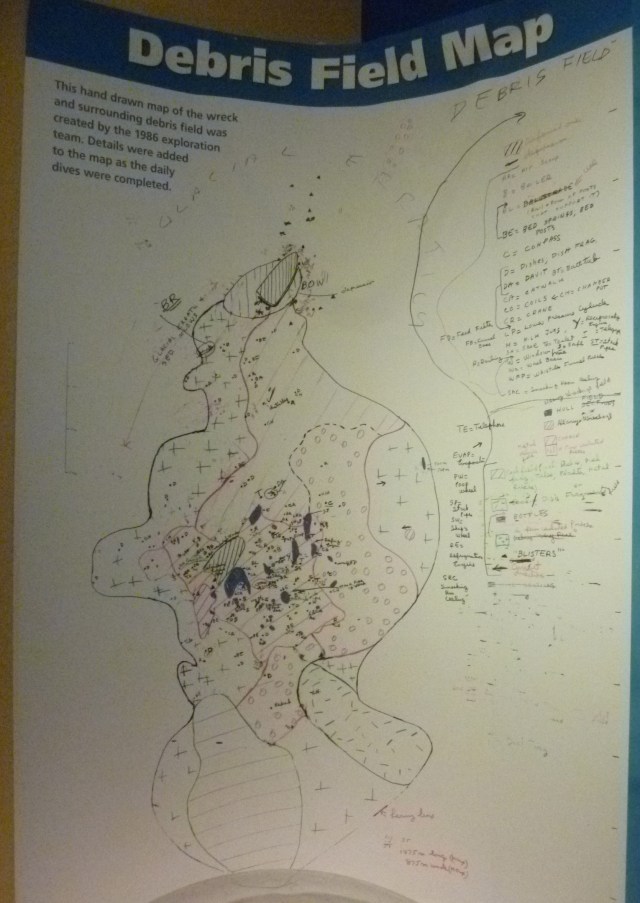
We also called in to see the displays at the WHOI Visitor Centre. The main exhibition highlight is the 1985-1986 discovery and exploration of the wreck of the Titanic.

Titanic 1


Titanic 2


Titanic 3

“This 1/570 scale model of the Titanic stern is on loan to WHOI from Roy Mengot of Plano, TX. Roy’s model is based on WHOI data and imagery and is among the best representations of the Titanic wreck as it was found during the 1985 and 1986 WHOI expeditions. The completed bow and stern models took 3,000 hours to build.”

Titanic 4

In addition to the Oceanographic Institute Woods Hole is also home to The Marine Biological Laboratory (MBL), The National Marine Fisheries Service, the Sea Education Association, The United States Geological Survey and the Woods Hole Research Center. Wow! That’s home to a lot of eggheads.

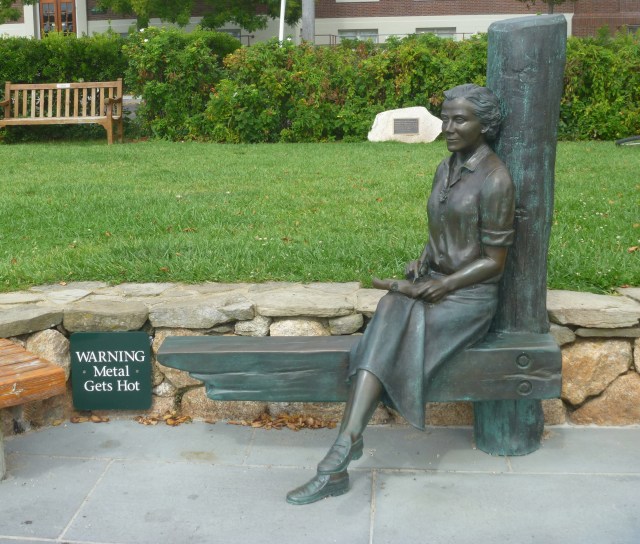
There’s a memorial statue to Rachel Carson author the far-reaching text “The Silent Spring”.

“I had my first prolonged contact with the sea at Woods Hole. I never tired of watching the tidal currents pouring through the Hole – that wonderful place of whirlpools, and eddies and swiftly racing water” Rachel Carson, author of  The Sea Around Us; The Edge of the Sea; Under the Sea Wind; Silent Spring. Scientist, writer and colleague at MBL, NOAA and WHOI 1907-1964

Rachel Carson on the hot seat

Rachel Carson on the hot seat!

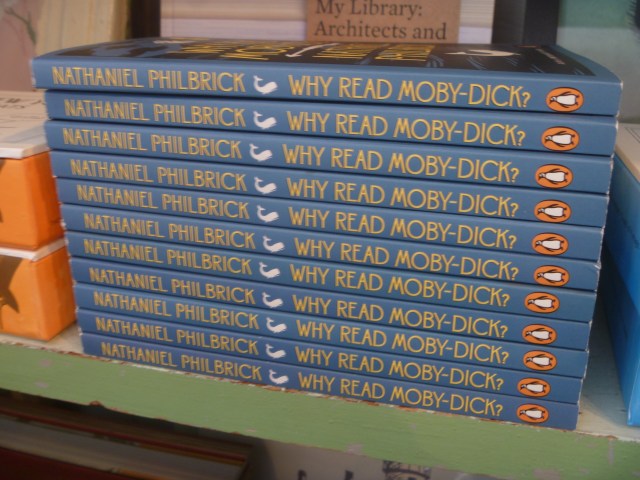
Finally, I still haven’t got round to reading it but maybe I should read this first :

Moby Dick Book


Movement and Light … and More : St Germanus Church, St Germans, Cornwall

NB This post was prepared in July during the Port Eliot Festival

P1140258

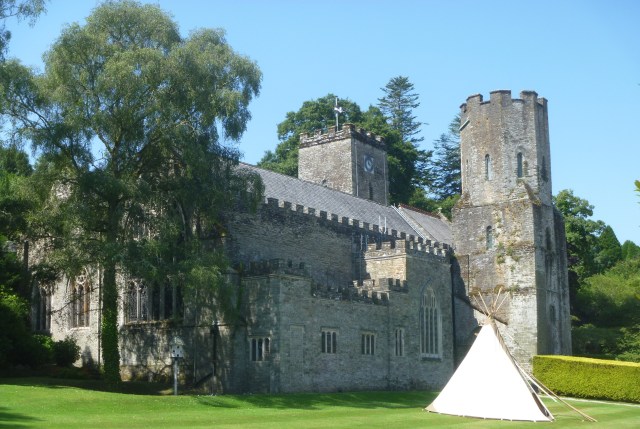
St Germanus Church (the teepee is part of the festival!)

Last Sunday, the final day of the Port Eliot Festival 2014, my train was not due to arrive at St Germans until 11.29. Lynne was scheduled to speak with our first author of the day Peter Benson (“The Farm” and “The Valley”) at 11am. So when I arrived I made straight for the church. Sunday was the only day on which it was open and I joined the last 20 minutes of the local parish Service. I had read great things about this church. It achieves three stars in my Simon Jenkins “Bible” – England’s 1000 Best Churches; its description runs to 5 pages in Pevsner’s Cornwall  and I read an article about just one of its monuments in Country Life earlier this year. P1140345

Peter Beacham signs his ‘other’ book “Down the Deep Lanes” in the DGR Tent

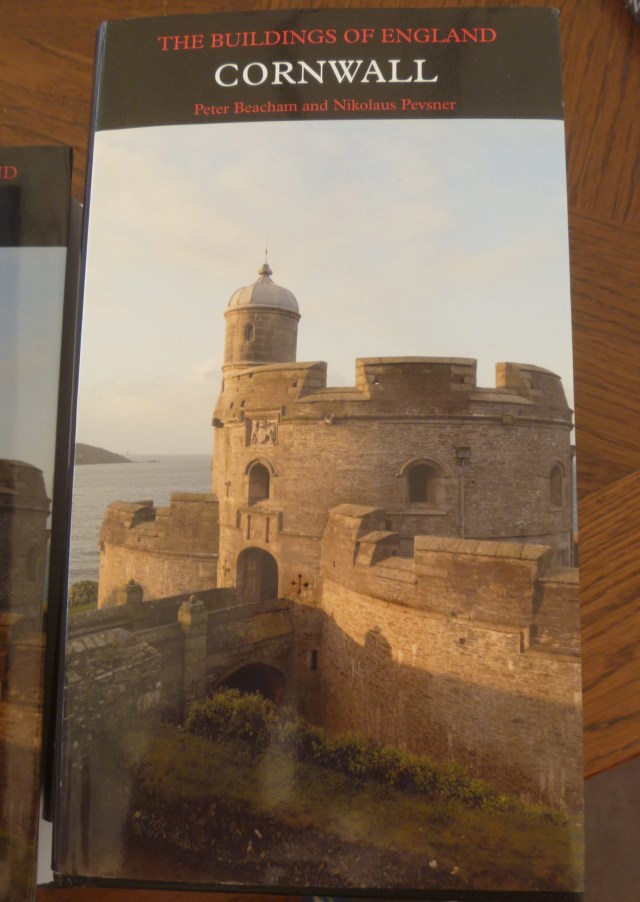
Peter Beacham, who updated the Pevsner Guide to Cornwall (published in May this year), was one of the guests in the Dovegreyreader Tent last Sunday.

P1140347

Pevsner’s Cornwall

But back to St Germanus itself. My heading is taken from the Country Life article which I have been unable to find a link to so will copy out here.

P1140330

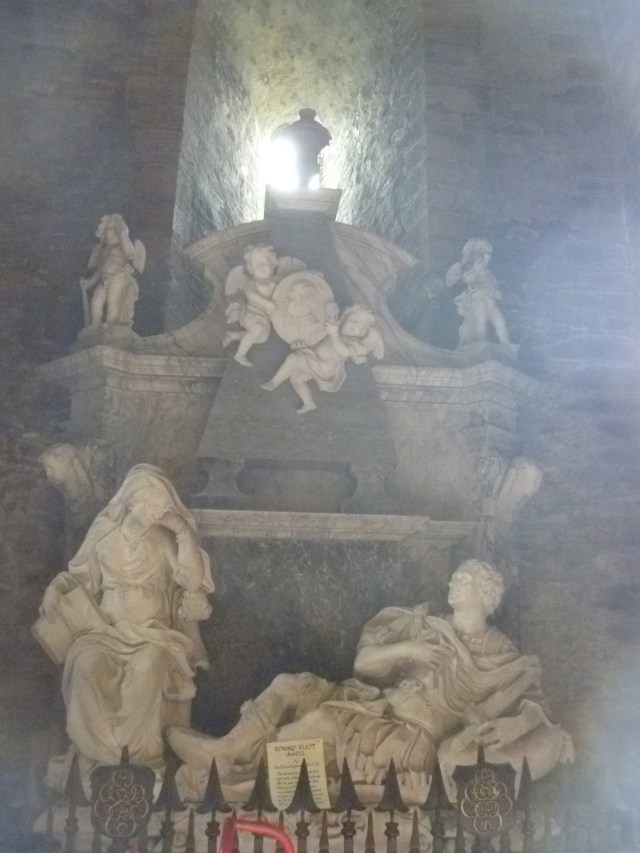
My picture doesn’t do justice to the monument

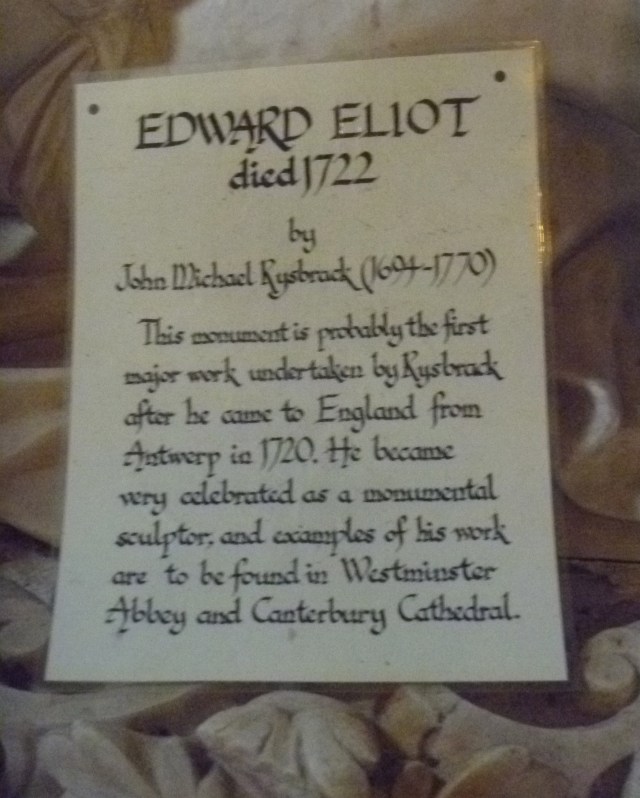
Set in the base of the north-west tower of the former priory church in St Germans, Cornwall, is the large monument to the MP and landowner who died at the age of 38, in 1722. It was commissioned by his widow and is enclosed by a fine iron railing. The monument is one of the earliest English works of the brilliant Antwerp-born sculptor John Michael Rysbrack, who settled in London in 1720.

With its obelisk and animated figures, it is ultimately inspired by Roman Baroque example. It could have been designed by the architect James Gibbs, an early associate of Rysbrack in England, who trained in Rome.

The subtle lighting of the space in which the monument stands sets off its carefully arranged constituent marble – white, veined-grey and dark-grey – to superb effect. Eliot, in Roman armour, stares upwards, with a mourning figure at his feet. On the obelisk is a roundel portrait – presumably his deceased first wife – supported by cherubs.

The relative simplicity of the architectural elements focuses the visitor’s attention on the interrelationship of the different figures that is suggested by their gestures and lines of sight. Busy drapery also adds to the illusion of movement and life that Baroque artists struggled so hard to capture.”

[Text by John Goodall. Country Life 22 January 2014, p.36]

P1140331

Text of the description attached to the monument

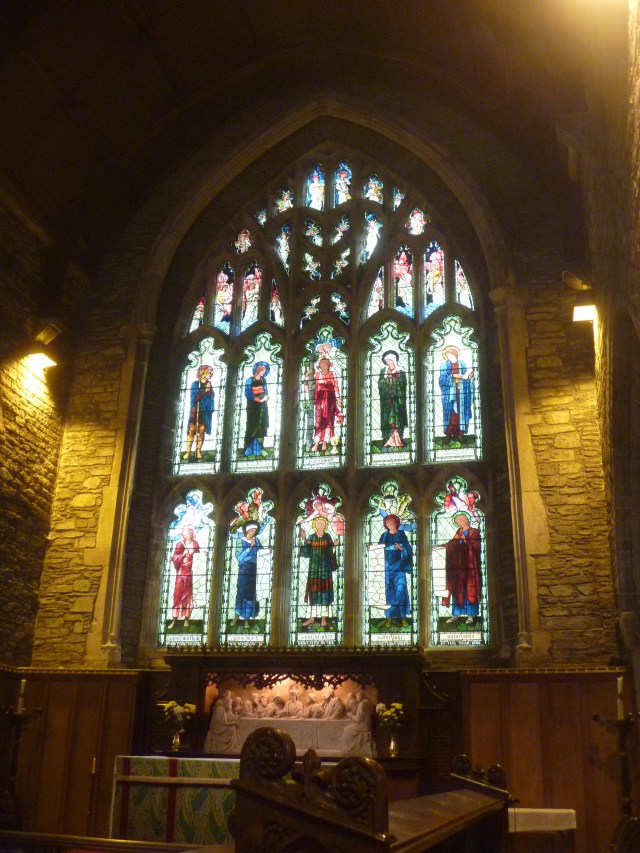
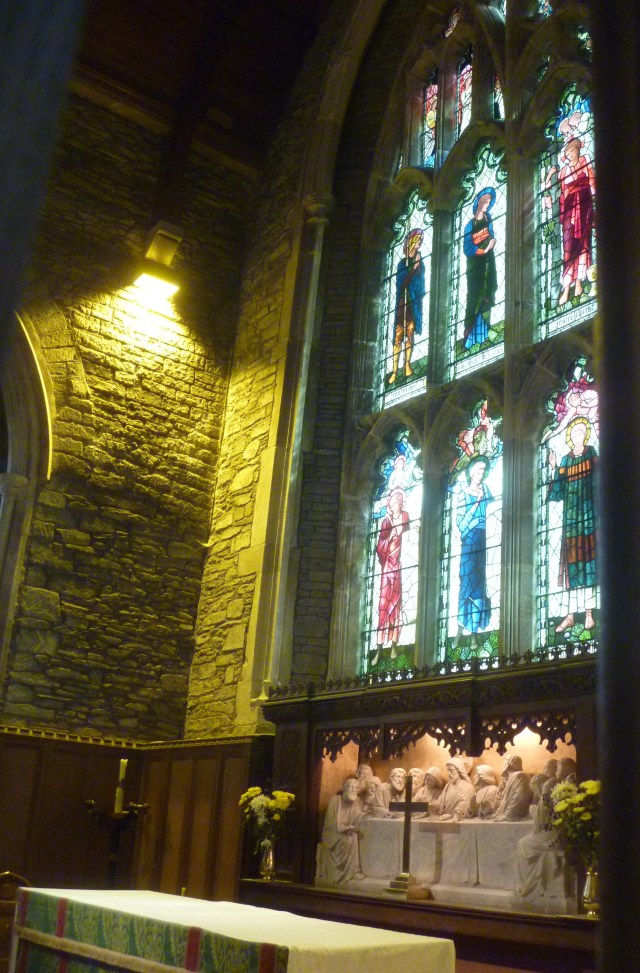
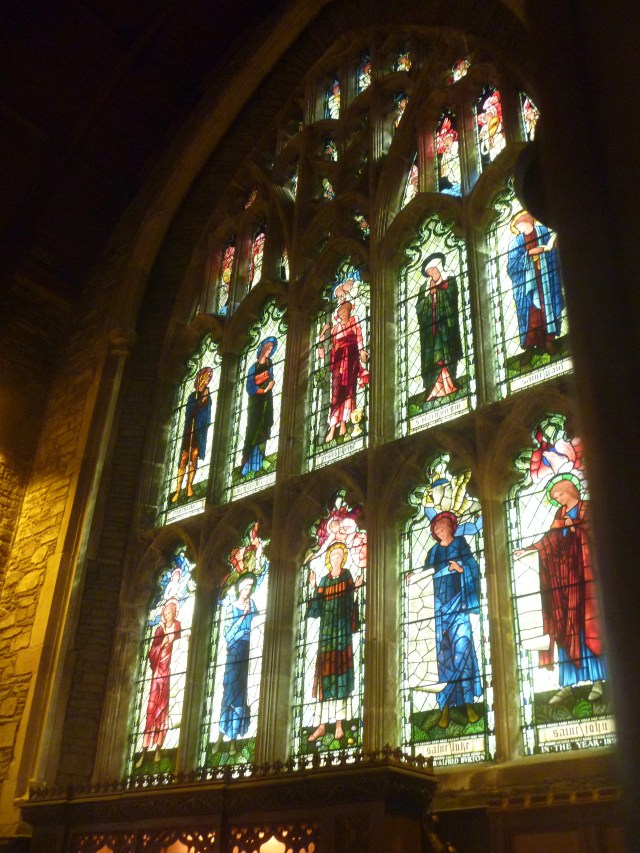
Simon Jenkins comments on the first-rate Morris & Co. Burne-Jones windows.

P1140329

P1140325

P1140326

The East Windows

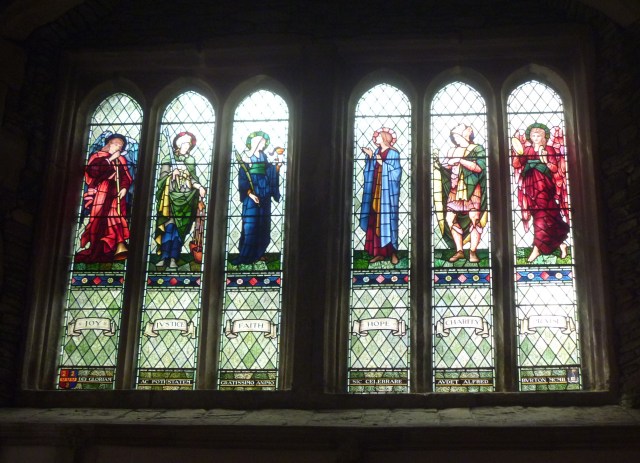
The east window is a Burne-Jones masterpiece, a ten-light composition in his most mature style. The background is soft green-yellow, leaving figures in red and blue to glow even more vividly in half-light. Burne-Jones also designed a window in the south wall of the aisle.” Representing Joy, Justice, Faith, Hope, Charity and Praise

P1140327

Window on South Wall

As Peter Beacham expresses it at the beginning of the St German’s section of Pevsner’s Cornwall “The memorably picturesque ensemble of church, house and park is of the highest architectural and historic interest“. I wonder what the Anglo-Saxon Bishops responsible for the creation of St German’s Priory would have said if they had seen last weekend’s picturesque ensemble of tents and stalls scattered over the estate.